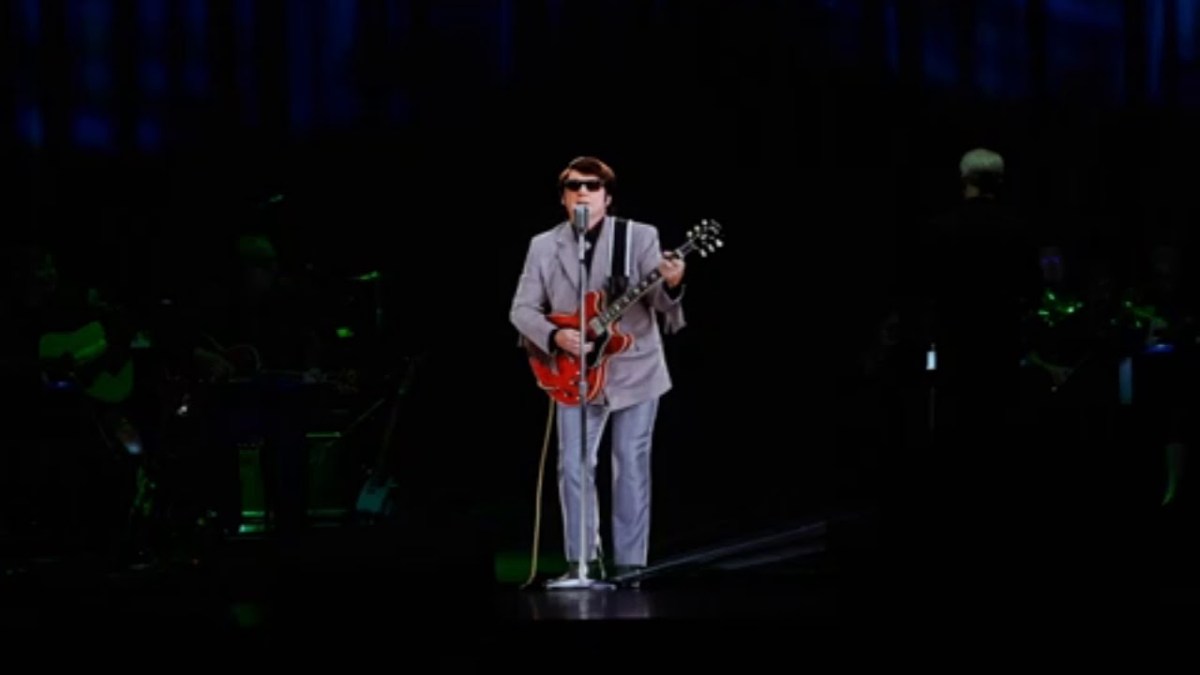
It’s gone past simple holograms…they are now avatars (the ABBA reunion). For the sake of this post… I’ll call them holograms. This post is basically me arguing with myself and wanting some input.
I’ve thought about the subject of the dead rock star hologram tours off and on. I apologize for putting it so bluntly but that is what it is. Something in me just tells me there is something inherently wrong about this. So I hate to ask myself this…but would I want to go to a Jimi Hendrix show playing near me? Uh…yes I would and I feel bad about saying that. I would probably go and then hate the decision later. How could they capture Jimi Hendrix? I don’t see how someone could capture a performer like him…who was different every time he played.
I was surprised at my answer that I would even go. On the other hand, we have laser shows with bands’ music…so what is the big difference? We also have duets with Paul McCartney singing with John Lennon right now on Paul’s tour. When I saw The Who, there was Keith Moon singing “Bell Boy” in a film from a concert in the 70s while the current Who was playing. I also got to see Beatlemania with artists dressed up as The Beatles…somewhat different than this but is it really?
It’s something that I think will happen in the near future for different stars no matter if we like it or not. Holograms have been around for a while. In 1977 The Who presented a promotional event just for their fans with this Keith Moon hologram (with the real Keith Moon in attendance) and in another event in 2009…obviously without the real Keith in attendance.
Keith is near the end of his life in this version…you can tell it’s older with the greenwash all around. The big difference is now …the holograms sing, move, and play their instruments or rather they appear to do that. There have been shows now built around Buddy Holly, Roy Orbison, Elvis, Ronnie James Dio, ABBA (who are very much alive), Whitney Houston, Tupac, Billie Holiday, Wilson Pickett, and more.
The families are in control now and will decide. I’ll ask myself again…would I want to see the Hamburg or Cavern Beatles? The 1972 Rolling Stones? the 1969 Who? The 1950’s Elvis? AC/DC with Bon Scott? 1970 Janis Joplin? The Doors?
Yes to all the questions I asked but…I’m not sure how I would feel.
What do you think? Would it be unsettling to see a long-gone performer in their prime again a few feet from you? Would you go see a show (not really a concert) of your favorite deceased performer?
Now, on the other hand, there is another angle. If Bob Dylan, who is very much alive, would announce tomorrow that a 1966 version of himself was going on tour…would I go? Oh yes, I would and I would not feel bad at all. ABBA just did this also. So why do I think I would feel different about seeing Jimi, Lennon, Janis, or someone else that has long been gone?
Before you answer…now, current bands can play in Washington and be projected as holograms in London simultaneously…so it’s taken a huge jump. See the bottom video. No traveling in stuffy vans….just play at your local pizza joint and be somewhere else also. So our band could play in my garage and be on stage at Carnegie Hall and interact with the audience. I have to wonder how far it will go?
On July 12, 1979, Skylab fell back to the earth. Today is the anniversary.
In 1979 I was twelve and heard the news that a space workstation named Skylab was falling to earth. It was exciting for me…I was hoping that a piece of it would fall near so I could touch something that had been flying through space.
That didn’t happen because unless I was Australian I wasn’t going to see any debris. In school, our science teacher went over the event and I do remember people wearing Skylab t-shirts, hats, and buttons. Everyone was looking up hoping to see something…anything. Some kids were scared they were going to get crushed…that is when I learned…what goes up must go down.
Watching the news…there were some people panicking and…some partying. This is from Newsweek in 1979
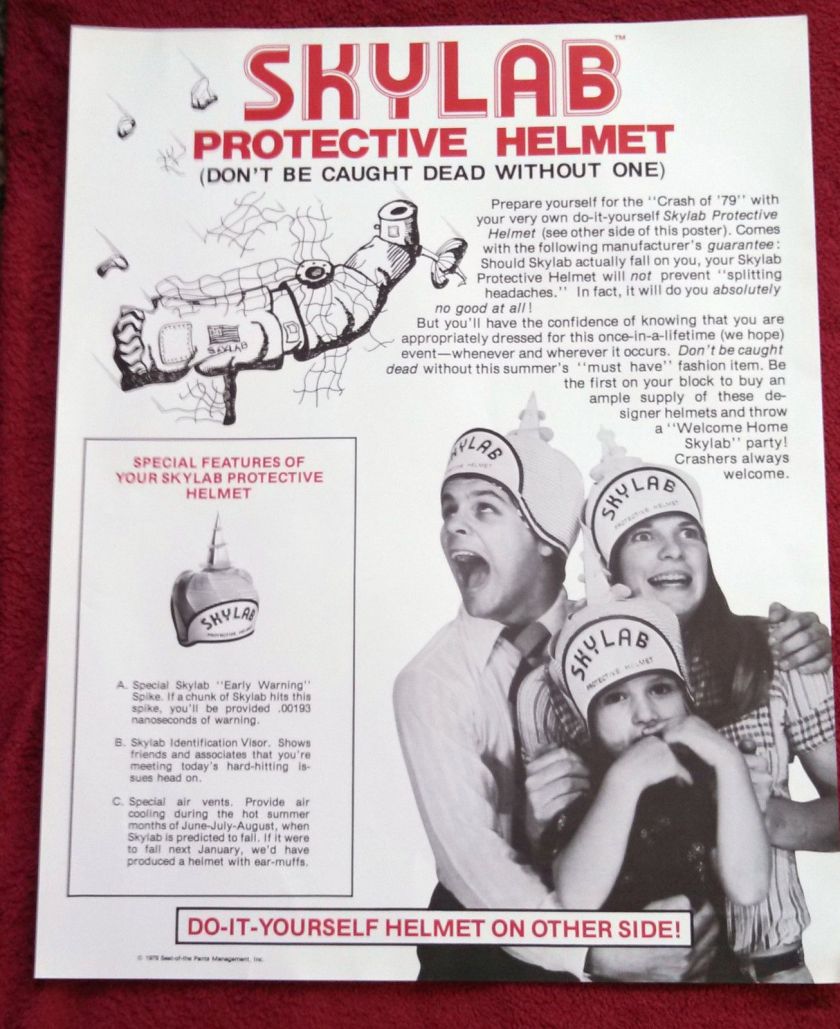
In various parts of the country, wags painted X’s on their neighbors’ roofs or sported T-shirts with targets on the back. Entrepreneurs sold plastic helmets and Skylab survival kits compete with bags for collecting stray parts of the spacecraft and letters suing NASA for damages. “I don’t know how much we’re making, but we’re having fun,” said Steven Danzig, 25, of Bloomington, Ind., who sold more than 20,000 such kits. In Washington, a bar called Mr. Smith’s sold a concoction dubbed the Chicken Little Special.
Around the U.S., there were Skylab parties to coincide with the crash, and betting pools on precisely when or where the debris would come streaking back to earth.
Skylab was designed to go up but not come back down. It was launched in 1973 and was occupied for almost 24 weeks. There was a lot of time and money spent on how to get it up there but not much time on how to get it down. It only had a 9-year life span, to begin with. In 1979 it was clear that Skylab was rapidly descending orbit.
On July 12, 1979, Skylab came back to earth in the Indian Ocean and in Western Australia. No one was injured by the falling debris.
The San Francisco Examiner offered a $10,000 reward for anyone bringing a part of Skylab to their office. They knew it wasn’t going to hit America so it was a safe bet they would not have to pay…but Stan Thornton…an Australian truck driver heard about the reward, grabbed a piece of debris, and jumped on a plane to San Francisco and got the reward.
Damn…this is such a great song. Duane Allman came into the Derek and the Dominos sessions and made a suggestion to record a Jimi Hendrix song, Little Wing. This is what he did in the Wilson Pickett sessions with the song Hey Jude.
After the Layla sessions were completed, Clapton returned to England with a rare left-handed Fender Stratocaster, a gift for Jimi Hendrix. He wanted him to hear the Dominos’ recording of Hendrix’s Little Wing, a tribute he and Duane had recorded for him. They both greatly admired Hendrix and Duane planned to meet him when Jimi came back from Europe. On the morning of September 18, 1970, Jimi Hendrix was found unconscious in a Notting Hill apartment in London. He died that afternoon at the hospital, having apparently suffocated while under the heavy sedation of sleeping pills.
The album peaked at #16 in 1970 on the Billboard 100. Although Derek and the Dominos were poised to record a follow-up album in 1971… tensions and drug abuse among the band members, along with the tragic death of Duane Allman ended that idea.
Jimi wrote this song and it was inspired by the 1967 Monterey Pop Festival, a concert held for 3 days in 1967. It was attended by around 200,000 music fans, it happened 2 years before Woodstock. Jimi wrote about the atmosphere at the festival as if it was a girl. He described the feeling as “Everybody really flying and in a nice mood.” He named it “Little Wing” because he thought it could just fly away.
The song was on Axis: Bold as Love released in 1967. The album peaked at #3 on the Billboard 100 in 1968.
Bobby Whitlock keyboard player: We had two leaders then. We had Eric and Duane. Eric backed up and gave Duane a lot of latitude, a lot of room, so he could contribute up to his full potentiality, and Duane was full of fire and ideas. He’d just go, “Hey, how about we try ‘Little Wing’?”—that was completely his idea and he came up with the intro by himself. He just started playing it.
Duane was very, very good in the studio. Working with the finest musicians and engineers on the planet really paid off for him. When he had the opportunity to be thrust into that environment, he absorbed what was right and righteous and then used it to killer advantage.
Little Wing
Well, she’s walking through the clouds
With a circus mind that’s running around
Butterflies and zebras and fairy tales
That’s all she ever thinks about
And when I’m sad, she comes to me
A thousand smiles she gives to me free
Said it’s all right, take anything you want from me
(Anything you want, babe) (Anything)
Well, she’s walking through the clouds
With a circus mind that’s running around
Butterflies and zebras and fairy tales
That’s all she ever thinks about
And when I’m sad, she comes to me
With a thousand smiles she gives to me free
Said it’s all right, take anything you want from me, baby
(Anything you want) (Anything)
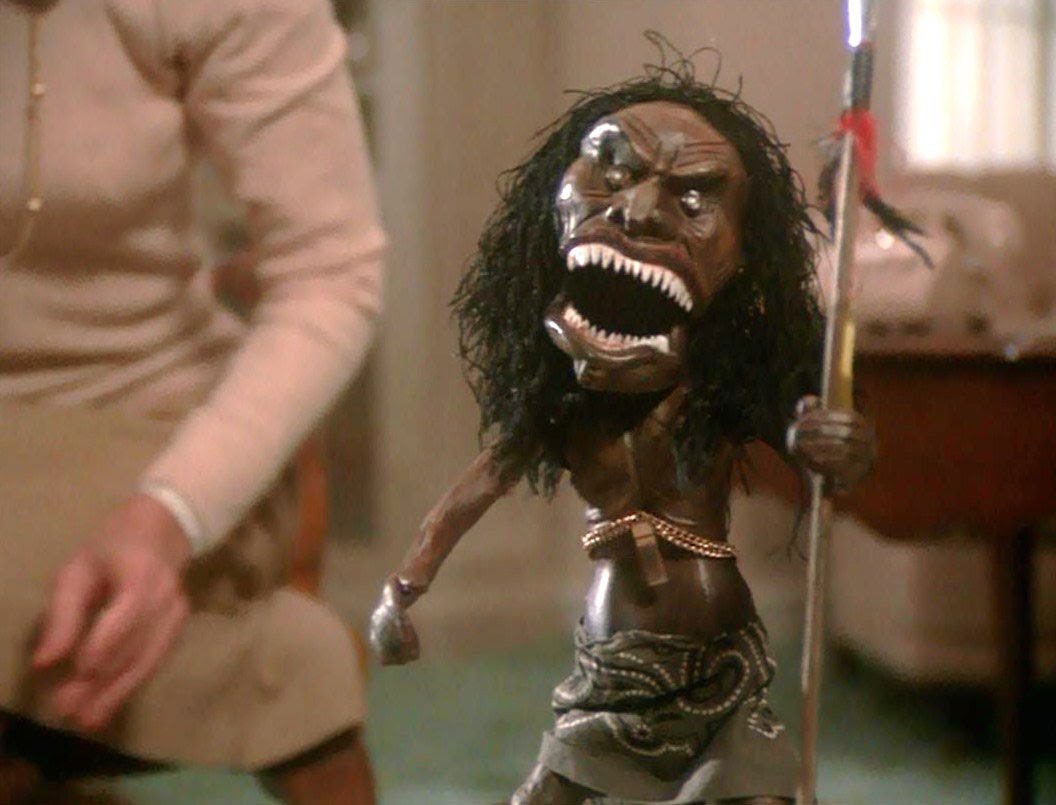
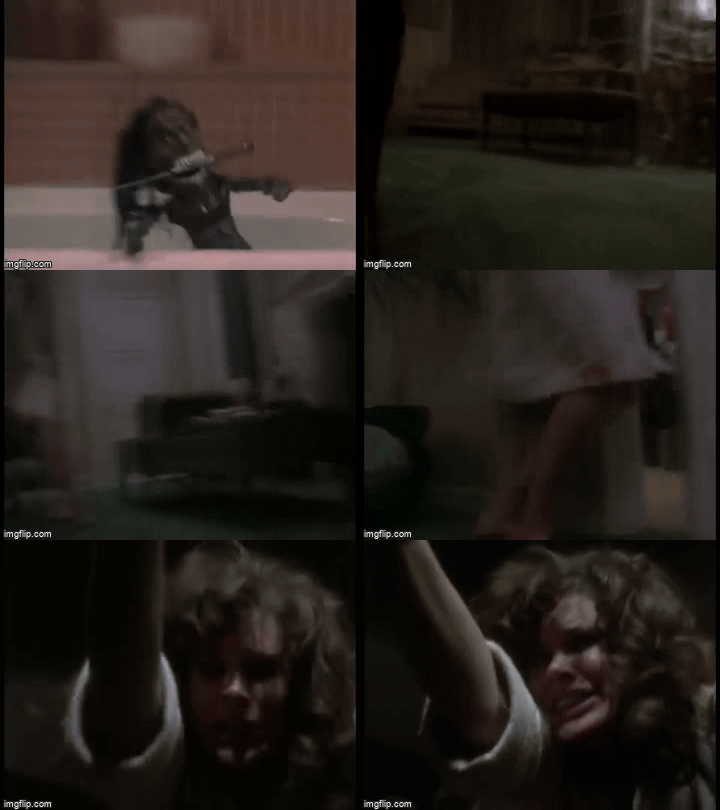
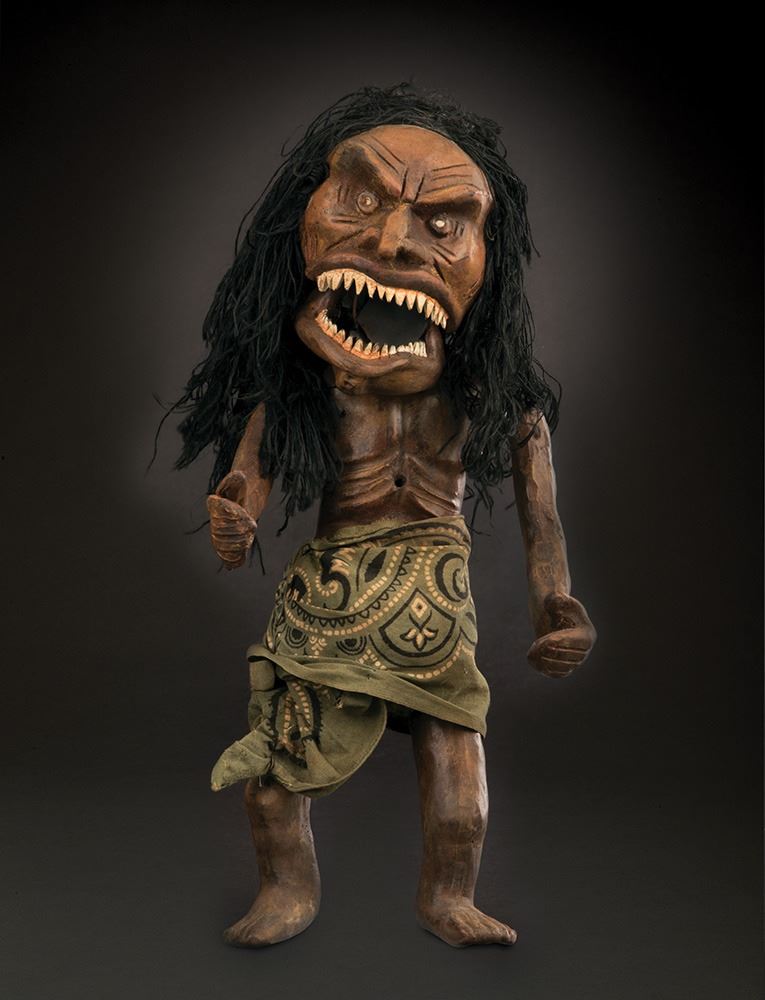
I did a few “Where is” posts a year or so ago and they were fun. I thought I would add this to the list. Most 1970s kids know this doll from the 1975 TV horror Trilogy of Terror. Karen Black starred and played 4 different charters in this horror anthology. Three stories are interwoven together. The first is about a college student infatuated with his teacher. The second is a paranoid tale of two sisters – one good, the other evil, and the third one is about a tribal doll that comes to life and terrorizes a woman in her apartment when it’s golden chain comes off.
It’s the third one that most people remember although the first one is really good also. This doll terrorizes Karen Black’s character Amelia in her apartment and they did a good job on the special effects. They showed the doll just enough and not too much to make it look real. The story was based on Prey Prey written by the great Richard Matheson. In this presentation…this story is called Ameilia.
I watched this again for the 6th or 7th time and I wondered…did one of the dolls they used to film this survive? Yes, one survived and it was sold at auction. According to different sites… In 2019 when the Zuni doll went up for auction at “Profiles in History” a few years ago, it was expected to go for a price in the $12,000 to $15,000 range. Instead, it sold for more than $200,000! Including the buyer’s premium, the doll was purchased for a total of $217,600.
If you want one of these dolls (a copy of course) a little more affordable…you can get one on ebay. It would be a good conversation piece…just don’t turn your back on it.
I love the horns in this song. It wasn’t George Harrison’s best on the album…that would be While My Guitar Gently Weeps but this one is fun.
George was good friends with Eric Clapton and was watching his friend with toothaches and getting dental work. Clapton’s weakness was candy and he would eat all of it until it was gone.
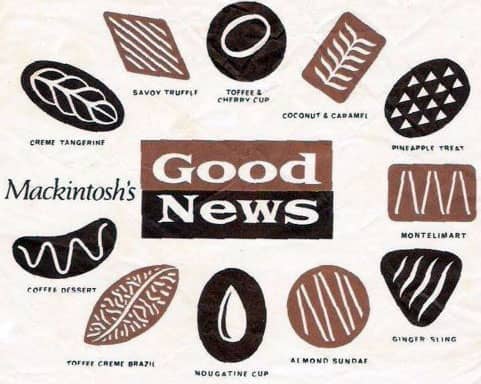
Harrison got the lyrics for this from the inside lid of a box of chocolates. Montelimar, Ginger Sling, Cream Tangerine, and Coffee Dessert were names of candies in the Mackintosh “Good News” assortment. The names “Cherry Creme” and “Coconut Fudge” were invented by George, however, to round out the verses.
Press agent Derek Taylor came up with the line ‘You know that what you eat you are‘.
Derek Taylor: “George said, ‘We need a bit here, da da, da da da da, da da,’ and I thought again of my good friend, Alan Pariser. He had done a film called ‘You Are What You Eat,’ which was a very pippy thing; ‘Don’t eat meat, man, or you’ll be filled with the adrenaline of frightened animals.’ So I said to George, ‘You know that what you eat you are.’
The MacIntosh’s Good News box where George got some of the lyrics.
Harrison wrote the line “We all know Obla-Di-Bla-Da” as an in-joke with the band. McCartney had pushed Obla-Di-Bla-Da so much that the band played endless versions of it and were not happy about it.
The White Album was released in 1968 and peaked at #1 in the Billboard Album Chart, #1 in Canada, #1 in the UK, and #1 about everywhere else…and it would be #1 as well on my list.
The White Album is as diverse as you can get… Pop, Rock, Country, Folk, Reggae, Avant-Garde, Blues, Hard Rock, and some 20’s British Music Hall thrown in the mix. It has plenty of songs that you have heard of and many that the masses have not heard. The Beatles more than many bands could bend to a style of music and play that style well.
Some critics said they should have taken the best of the two albums and slimmed it down to one. I understand that argument but as a Beatle fan…Nahhhhh. It’s the Beatles White Album!
George Harrison: “At that time he had a lot of cavities in his teeth and needed dental work. He always had a toothache but he ate a lot of chocolates – he couldn’t resist them, and once he saw a box he had to eat them all. He was over at my house, and I had a box of ‘Good News’ chocolates on the table and wrote the song from the names inside the lid: ‘Creme Tangerine, Montelimart’…”
“He’d got this real sweet tooth and he had just had his mouth worked on. His dentist said he was through with candy. So, as a tribute, I wrote ‘You’ll have to have them all pulled out, after the Savoy Truffle.’ The truffle was some kind of sweet, just like all the rest, ‘crème tangerine,’ ‘ginger sling,’ just candy, to tease Eric.”
Savoy Truffle
Creme tangerine and montelimar A ginger sling with a pineapple heart A coffee dessert, yes you know it’s good news But you’ll have to have them all pulled out After the Savoy truffle
Cool cherry cream, a nice apple tart I feel your taste all the time we’re apart Coconut fudge, really blows down those blues But you’ll have to have them all pulled out After the Savoy truffle
You might not feel it now But when the pain cuts through You’re going to know, and how The sweat is going to fill your head When it becomes too much You shout aloud
You’ll have to have them all pulled out After the Savoy truffle
You know that what you eat you are, But what is sweet now, turns so sour We all know Obla-Di-Bla-Da But can you show me, where you are?
Creme tangerine and montelimar A ginger sling with a pineapple heart A coffee dessert, yes you know it’s good news But you’ll have to have them all pulled out After the Savoy truffle Yes you’ll have to have them all pulled out After the Savoy truffle
You won’t find this song on one of their original studio albums. They recorded it for Some Girls but could not include this on that 1978 album because of legal issues. It’s a cool country-sounding song covering a grim subject. The song’s official release date was November 21, 2011. It appears as track number 1 on the 2011 deluxe edition of the Stone’s Some Girls album.
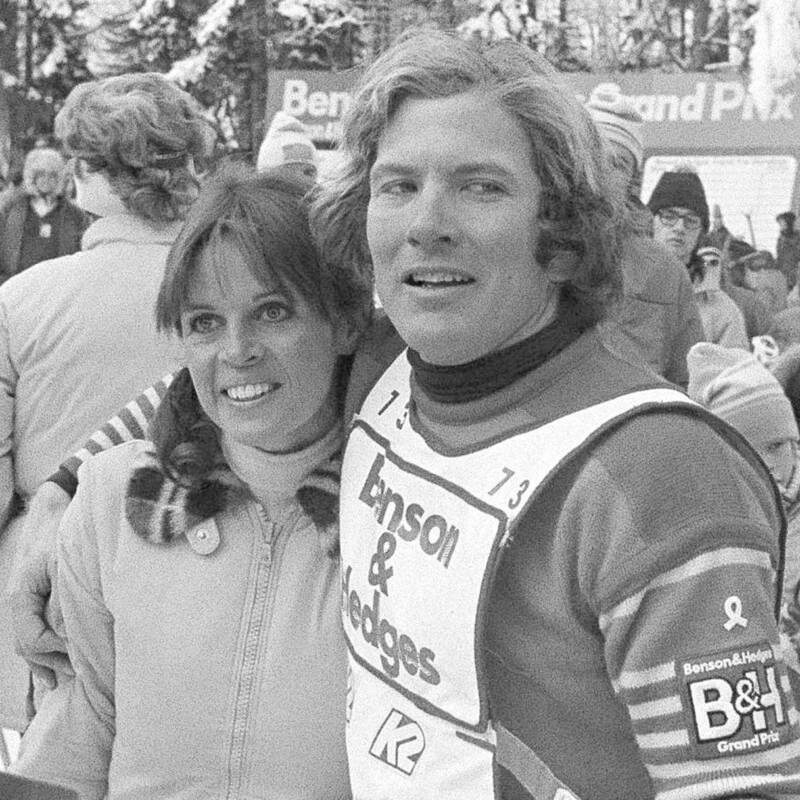
Claudine Longet and Spider Sabich
Claudine Longet was charged with fatally shooting her boyfriend, Olympic skier Vladimir “Spider” Sabich on March 21, 1976. At the trial, Longet claimed the gun discharged accidentally as Sabich was showing her how it worked. Throughout the whole court case, her former husband, the singer Andy Williams was by her side as she told her story.
Sabich was one of the most well know American ski racers in the late 60s and early 70s. Claudine claimed that she was showing the gun to him when it went off. She informed detectives that their relationship was under no duress. Friends of the couple said he was about to leave her at the time. Claudine Longet and Spider Sabich met in 1972. Claudine was a well-known French actress and singer…likely most famous for her marriage and subsequent divorce to Andy Williams. They were the Aspen celebrity couple.
Longet was only charged with a felony of reckless manslaughter which resulted in spending just a few weeks in jail, at her convenience. This was because she had children from her previous marriage and the judge didn’t want her to be away from her children for too long. With that, Longet spent most of her jail time over weekends. She took years to serve her sentence of 30 days.
Cocaine was alleged to have been found in her system, and details in her diary allegedly contradicted what she had told the police about her and Spider’s relationship. However, in a blow to the prosecution, the blood and diary were deemed inadmissible to the case because they were apprehended without a warrant.
At the time Saturday Night Live also got on board with this story with a skit called The Claudine Longet Invitational
You had the SNL announcers describing someone skiing down a hill and then…
Uh-oh! He seems to have been accidentally shot by Claudine Longet! Yes.. and I’m afraid Helmut Kindle is out of this race!
Longet’s lawyer wasn’t laughing, and he sent SNL a cease-and-desist letter. In the following week’s episode, the announcer Don Pardo read a statement on air…the show’s first public apology: “It is desirable to correct any misunderstanding that a suggestion was made that, in fact, a crime had been committed. The satire was fictitious and its intent only humorous. This is a statement of apology if the material was misinterpreted.”
Claudine is 80 years old now and stays out of the news.
Keith Richards: I wished, and I think all of us did at the time, that that should have been on the original album, but there was some legal difficulties and stuff. But otherwise, she was a perfect ‘Some Girl.’
Claudine Longet: He was my best friend
Claudine
Claudine’s back in jail again
Claudine’s back in jail again
Claudine’s back in jail again, Claudine
Claudine’s back in jail again
Claudine’s back in jail again
She only does it at weekends
Claudine
Now only Spider knows for sure
But he ain’t talkin’ about it anymore
Isn’t it, Claudine?
There’s blood in the chalet
And blood in the snow
She washed her hands of the whole damn show
Claudine
She shot him once right through the head
She shot him twice right through the chest
The judge says ruled it was an accident Claudine
Accidents will happen
And Claudine’s back in jail again
Claudine’s back in jail again
Claudine’s back in jail again, Claudine
Claudine’s back in jail again
Claudine’s back in jail again
Claudine’s back in jail again, Claudine
Hey go baby
Go baby
Claudine’s back in jail again
Claudine’s back in jail again
Claudine’s back in jail again, Claudine
Oh Claudine
Oh Claudine
Oh Claudine
Now I threaten my wife with a gun
But I always leave the safety on
I recommend it, Claudine
Yea she pistol-whipped me once or twice
But she never tried to take my life
What do you think about that
Claudine
Claudine’s back in jail again
Claudine’s back in jail again
She only does it at weekends Claudine
Oh Claudine
Oh Claudine
Oh Claudine
What about the children, Claudine?
Poor, poor children
You’re prettiest girl I ever seen
Only see you on the movie screen
Hope you don’t try to make a sacrifice of me Claudine
Don’t get
Don’t get too trigger happy with me Claudine
Itchy fingers
Yeah Claudine’s back in jail again
Claudine’s back in jail again
Claudine’s back in jail again Claudine
Yeah Claudine’s back in jail again
Claudine’s back in jail again Claudine
Uh uh Claudine
Poor, poor, poor Claudine
What better way to celebrate July 4th than to play a Chuck Berry song. It’s nice to be back to music. I’m traveling today so I may not be able to comment until later on.
Chuck’s guitar playing got most of the publicity but his storytelling of his time is what I like best. Was it poetry? I’m not qualified to answer that but his words flowed like water and he puts you in the lunch room, classroom, dance hall, and riding in a coffee color Cadillac.
Music critic and opera composer Gregory Sandow calls him “a poet of the practical life.” John Lennon reports that Berry’s lyrics influenced his own and calls him “the greatest rock and roll poet.” Keith Richards invokes the tradition of troubadour to emphasize the poetic qualities of Berry’s lyrics. In the end, I don’t guess it matters but what we get are self-contained stories that live on today.
This was a double A-sided single…the B side was Memphis Tennessee. The song peaked at #37 on the Billboard 100 and #16 in the Billboard R&B Charts.
This song has the same sound as Roll Over Beethoven but I can’t blame Chuck for sounding like Chuck. If he could have sued everyone that ripped off his riffs…he would have lived in a courtroom.
When Berry wrote this… he was returning to the United States following a trip to Australia and witness the living standards of Australian Aborigines. This song inspired Paul McCartney to put a twist on it and he wrote Back In The U.S.S.R. on the White Album.
Linda Ronstadt covered this in 1978. Her version went peaked at #16 on the Billboard 100, #8 in Canada, #24 in New Zealand.
Chuck and Linda played the song in the highly entertaining Hail! Hail! Rock and Roll and Linda’s voice is just incredible.
Back In The USA
Oh well, oh well, I feel so good today We touched ground on an international runway Jet propelled back home, from over the seas to the U.S.A.
New York, Los Angeles, oh, how I yearned for you Detroit, Chicago, Chattanooga, Baton Rouge Let alone just to be at my home back in ol’ St. Lou
Did I miss the skyscrapers, did I miss the long freeway? From the coast of California to the shores of Delaware Bay You can bet your life I did, till I got back to the U.S.A.
Looking hard for a drive in, searching for a corner cafe Where hamburgers sizzle on an open grill night and day Yeah, and a jukebox jumping with records like in the U.S.A.
Well, I’m so glad I’m livin’ in the U.S.A. Yes, I’m so glad I’m livin’ in the U.S.A. Anything you want, we got right here in the U.S.A.
Welcome to the Hanspostcard TV Draft. I hope you will enjoy it! Today’s post was written by Paula at http://paulalight.com
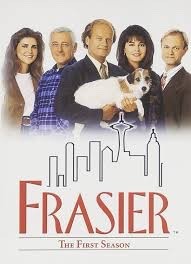
FRASIER
Frasier is a spin-off from Cheers, starring Kelsey Grammer as Dr. Frasier Crane, a psychiatrist who leaves Boston (where Cheers was set) to return to his hometown of Seattle as a radio show host. Costarring is David Hyde Pierce as Frasier’s brother Niles, also a psychiatrist, and it’s amazing how much the two actors resemble one another. They’re both drolly hilarious as well and play off each other superbly ~ though the writers didn’t originally intend for Niles to have such a large part, they reconsidered after discovering how much Niles added to the show. John Mahoney (RIP) plays their father, Martin, a retired cop, who frequently argues with his sons, and there are two funny women on the show in recurring roles ~ Peri Gilpin as Roz (Frasier’s producer) and Jane Leeves as Daphne (Martin’s caretaker/physical therapist). The show won 37 Primetime Emmy Awards, which was a record at the time. It also won the Emmy for Outstanding Comedy Series for five consecutive years. Supposedly there is a “revival” coming at some point, starring the brothers. The original ran for 11 seasons, beginning in 1993 and ending in 2004.
If you recall, during Cheers Frasier was married to fellow psychiatrist Lilith (wonderfully played by Bebe Neuwirth), and they are divorced when Frasier begins, with Lilith having primary custody of their son Frederick. Immediately thwarting Frasier’s plans for a wild single life is his father, injured on duty, and requiring 24/7 assistance. Frasier brings Martin and his annoying dog Eddie to live with him, and they hire Daphne, a British caregiver. Niles makes frequent appearances, and one recurring motif is that his wife Maris is an impossible person, whom he constantly complains about, yet we never see her face (same as Norm’s wife on Cheers). Niles falls in love with Daphne, and eventually he leaves Maris and marries Daphne. Frasier and Niles are snobby intellectuals (though endearing in their inability to solve their own problems while helping others), and Martin is more of a “regular guy,” so that dichotomy generates clashes. Lilith makes several appearances on Frasier under various premises, from calling in to his radio show to sleeping with Niles due to despair that her next husband left her for a man.
One amusing piece of trivia is that Frasier had announced on Cheers that his father died. That had to be retconned into the Frasier universe by revealing that Frasier had lied about his father dying. The fab theme song “Tossed Salads and Scrambled Eggs” was composed by Bruce Miller and sung by Grammer. Though the show is very Seattle-centric, only one episode was actually filmed there; the rest were shot at Paramount Studios and around Los Angeles. (All info from Wikipedia.)
~*~
Paula Light is a poet, novelist, flash fiction fan, cupcake connoisseur, mom, grandma, cat mommy, etc. Her blog can be found at http://paulalight.com.
Welcome to the Hanspostcard TV Draft. I hope you will enjoy it! Today’s post was written by Liam at https://othemts.wordpress.com/
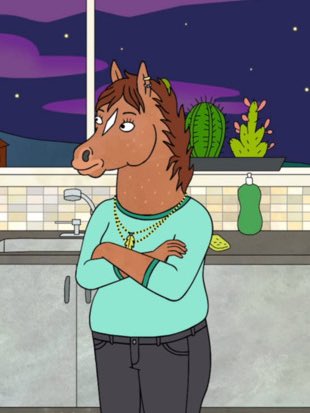
BoJack Horseman (2014-2020) – Netflix
BoJack Horseman is a comedy series that satirizes the vapidity of Hollywood (or “Hollywoo” as it is known in one of the show’s running gags) and the Southern California lifestyle. But it also is a deeply human show that realistically deals with depression, substance abuse, generational trauma, and other human vulnerabilities. Oh, and it’s also an animated series about a talking horse.
Raphael Bob-Waksberg created the show and served as showrunner (as well as a writer and voice actor) while illustrator/cartoonist Lisa Hanawalt was the show’s production designer. BoJack Horseman ran for 6 seasons with 77 episodes on Netflix and was later syndicated on Comedy Central and MTV2. Every episode opens with a fantastic title sequence set to a groovy jazz funk tune.
Let’s meet the main characters!
Main Characters
BoJack Horseman (Will Arnett) – an anthropomorphic horse, BoJack became famous and wealthy starring in a 1990s sitcom about a horse who raises three human orphan children called Horsin’ Around. As the series begins, BoJack is living on his past success while trying to revive his career. He suffers from depression and alcoholism and his deep bitterness has made him cantankerous. I’ll be perfectly clear here that BoJack does some despicable things and it’s a testament to the show that he still manages to be a sympathetic character.
Diane Nguyen (Alison Brie) – a human writer of Vietnamese origin but raised by an adoptive Irish American family in Boston. As the show begins, Diane is hired to be a ghostwriter for BoJack’s memoir. Despite her introversion and repulsion at BoJack’s womanizing, they become close friends. They share a bond of suffering from depression and a neglectful upbringing. A running gag in the show is that Diane’s ringtone is the voice of various public radio personalities.
Mr. Peanutbutter (Paul F. Tompkins) – an optimistic and outgoing Labrador retriever who starred in a 90s sitcom that was a knockoff of Horsin’ Around. He believes this makes him BoJack’s peer and never understands why BoJack resents him. Mr. Peanutbutter is introduced as Diane’s fiancé and they eventually marry. His character began as kind of one-note joke of the type of person who would irritate BoJack but evolved over the course of the show into a more complex character.
Todd Chavez (Aaron Paul) – a human young man who has been living as houseguest on BoJack’s couch for several years before the show begins. BoJack verbally berates Todd but secretly considers him a close friend. Todd has a quirky personality and frequently comes up with various wacky ideas (often working with Mr. Peanutbutter), and a penchant for “failing up” when these ideas succeed. He’s also something of the conscience of the show having a way of confronting BoJack in the most disarming way. In season 3 he comes out as asexual and over the rest of the series learns what asexuality means for him.
Princess Carolyn (Amy Sedaris) – a Persian cat who is BoJack’s agent and a former girlfriend. Princess Carolyn represents the struggle for women to “have it all” working hard to eventually start her own agency and adopt a child. Sedaris’ voice work is particularly notable on the show especially when she’s frequently given tongue twisters in her dialogue.
Supporting Characters
Sarah Lynn (Kristen Schaal) – a human actress who portrayed the youngest child on Horsin’ Around. Sarah Lynn falls into the former child actor trope of seeking pop music stardom and engaging self-destructive behavior. It’s revealed that she looked to BoJack as a father figure and was traumatized by his antisocial behavior. When they reunite when Sarah Lynn is an adult it unfortunately leads to a codependent relationship and a downward spiral to the worst thing that BoJack does in the entire show.
Herb Kazzaz (Stanley Tucci) – a human who served as the initial producer for Horsin’ Around and a friend of BoJack’s. When Herb’s homosexuality becomes public, BoJack does not support him when the network removes Herb from his job. At the beginning of the series, Herb is dying of cancer and is reunited with BoJack and they have to deal with their troubled past.
Hollyhock (Aparna Nancherla) – a teenage horse who believes she is BoJack’s illegitimate child and comes to Hollywoo to have BoJack help find her mother. BoJack grows attached to Hollyhock as one of his few living relatives but as often happens in this show, there’s trouble in their relationship.
Beatrice Horseman (Wendie Malick) – a horse who is BoJack’s verbally abusive mother. A lot of the trauma that BoJack deals with is traced to the cruel parenting from Beatrice and his father Butterscotch (also voiced by Will Arnett). The show depicts BoJack and Beatrice’s hostile relationship in her final years with several flashbacks to BoJack’s childhood and even to Beatrice’s life before BoJack was born.
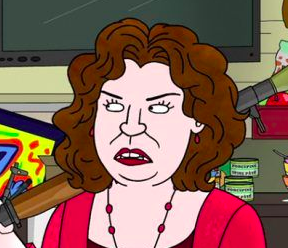
Character Actress Margo Martindale (Margo Martindale) – a real life human actor voices a criminally insane version of herself who gets involved in absurd schemes with the main characters.
Okay, I have a feeling that the description of the characters makes the show sound kind of like a bummer. But it is also wildly funny with clever dialogue and endless sight gags. And the characters who are animals frequently exhibit their animal characteristics in creative ways. The show also pushes the boundaries with what an animated show can do. Some of the standout episodes include:
“Hank After Dark” (Series 2, episode 7) – a thinly-veiled take on Bill Cosby that involves the way that media and the entertainment industry collude to protect sexual predators.
“Fish Out of Water” (series 3, episode 4) – a brilliant experimental episode where BoJack attends a film festival under the ocean that is done almost entirely in pantomime with fantastic visuals.
“The Old Sugarman Place” (Series 4, episode 2) – BoJack visits his mother’s dilapidated family vacation home and flashbacks of Beatrice’s childhood trauma are shown.
“Stupid Piece of Sh*t” (Series 4, episode 6) – We hear BoJack’s inner monologue as he goes about his daily activities offering insight into his depression and self-destructive behavior. This episode hit me hard.
“Free Churro” (Series 5, episode 6) – the entire episode is BoJack delivering a rambling eulogy at his mother’s funeral, and it’s powerful.
“A Quick One, While He’s Away” (Series 6, episode 8) – none of the main characters appear in this episode where an investigative reporter unearths BoJack’s hidden secrets by talking to various ancillary characters.
“The View From Halfway Down” (Series 6, episode 15) – BoJack has a near-death experience which results in a surreal, nightmare vision of meeting with several deceased family members and friends.
One more thing I have to point out is that an incredible amount of talented people who lent their voices to this show. A selection of celebrities who provided voices to one-time or recurring characters:
Patton Oswalt, Lin-Manuel Miranda, Matthew Broderick, Jane Krakowski, Olivia Wilde, Ilana Glazer, J.K. Simmons, Aisha Tyler, Maria Bamford, Adam Conover, Keith Olbermann, Wyatt Cenac, Kristin Chenoweth, Cedric Yarbrough, Ken Jeong, Keegan-Michael Key, Jason Beghe, Brandon T. Jackson, Lisa Kudrow, Abbi Jacobson, Ben Schwartz, Philip Baker Hall, Lake Bell, Andre Braugher, Angela Bassett, Stephanie Beatriz, LaKeith Stanfield, Hilary Swank, Stephen Colbert, Anjelica Huston, Chris Parnell, Fred Savage, Amy Schumer, Tatiana Maslany, Garry Marshall, Ali Wong, Liev Schreiber, Ricky Gervais, Jeffrey Wright, Mara Wilson, Lorraine Bracco, Candice Bergen, “Weird Al” Yankovic, RuPaul, Kristen Bell, Whoopi Goldberg, Randall Park, John Leguizamo, Eva Longoria, David Sedaris, Daveed Diggs, Issa Rae, Wanda Sykes, Audra McDonald, Gabe Kaplan, Richard Lewis, Stephen Root, Samantha Bee, and Alan Arkin.
Some celebrities who provided voices to animated versions of themselves:
Naomi Watts, Wallace Shawn, Henry Winkler, Paul McCartney, Scott Wolf, Daniel Radcliffe, Lance Bass, Jessica Biel, Leonard Maltin, Zach Braff, Felicity Huffman, Sir Mix-A-Lot, and Laura Linney.
If you’re interested in reading more about BoJack Horseman, I wrote a review of each season at the time they were released.
Tomorrow morning we will kick off our last TV draft round! We have 8 more TV Shows coming…we all want to thank you… the readers who have made this possible and a fun experience.
I also want to thank the bloggers who have reviewed all of these shows and we have covered every decade from the 1950s until now. Below are the picks that began in January and will end on July 3.
Thank you… Paula, Lisa, Dave, John, Keith, Mike, Liam, Vic, Hanspostcard (who started it), and Kirk for all of the reviews below.
I wanted to do a more modern show other than Life On Mars…and this would qualify as it…kinda. It has been on the air since 1975… a whopping 47 years. It’s been on life support at times but has always pulled through. It’s an institution at this point. There is not enough room on a post to go over every cast. Everyone has their favorites some were extremely funny and some were extremely bad (1980 – 1981 cast) and they all make up the history of this show.
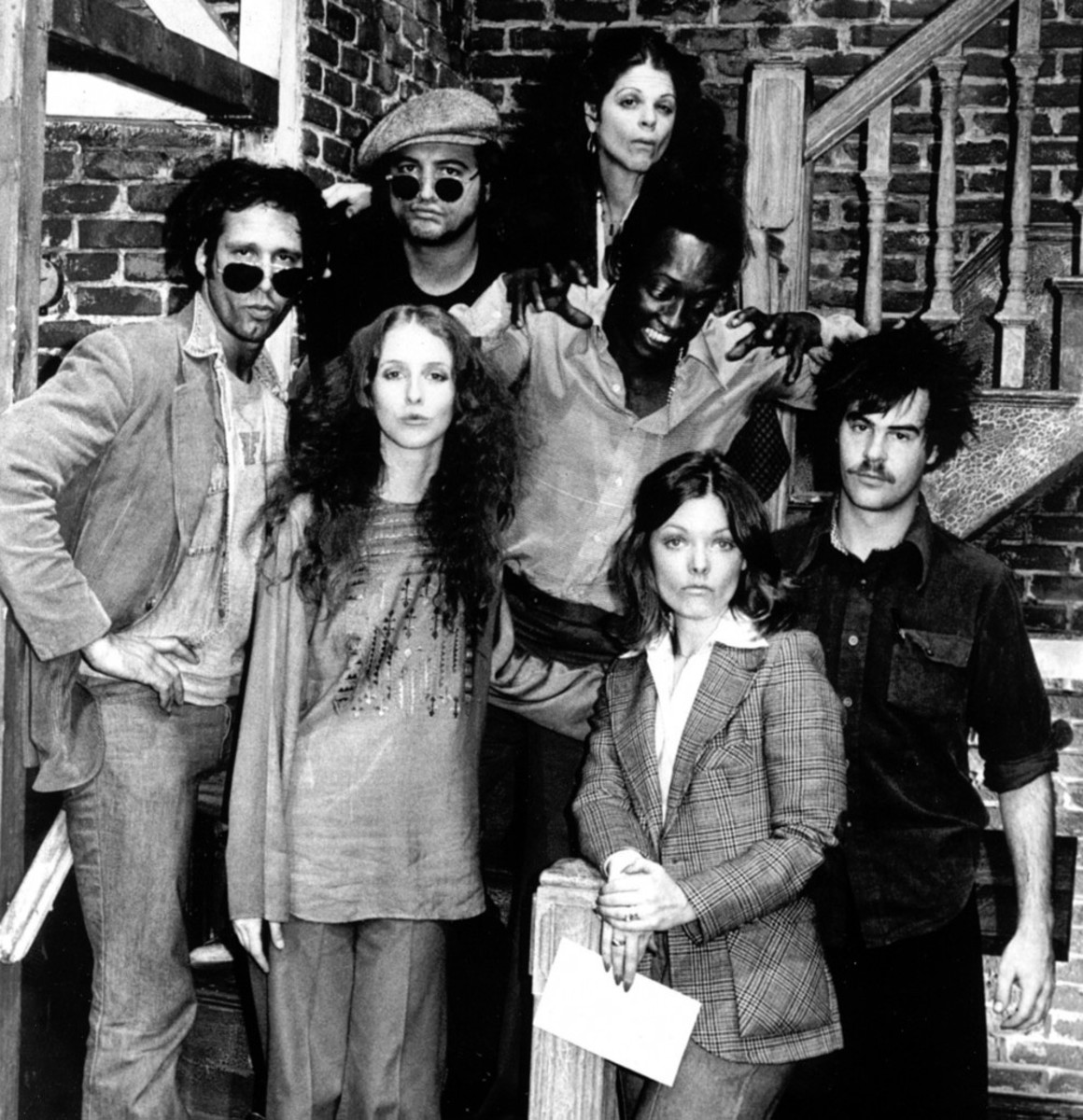
I’m going to concentrate on the original cast and how the show became SNL. Most of you have favorite different casts…usually, the one you grew up with.
Even if you don’t like this show or what it’s become…it was a cultural landmark and no one can deny that. It changed television forever. The show started because Johnny Carson wanted more time off. NBC had been airing reruns of Johnny Carson’s Tonight Show on the weekends to fill space in their lineup. This allowed them to double-dip on profits from Carson’s outrageously popular show without spending another dime on production costs. He told NBC he would only be making four shows a week, which meant that best-of Carson shows that had been airing on Saturday nights would now need to be moved to a weeknight.
NBC executive Herbert Schlosser sought to create a new show with an old format…a variety show to fill the slot on Saturday Night. He picked Lorne Michaels, a Canadian writer who only had a handful of credits to be the producer. Michaels started a show that was far different than Schlosser imagined but to his credit… Schlosser was behind it and pushed for it to be on the air. The first two shows were experiments but by the third show, they found the format they would keep to this day. The funny thing is…Johnny Carson never liked the show.
Lorne Michaels made the show to appeal to baby boomers with a touch of Avant-Garde and “guerrilla-style comedy.” It was a game-changer much like All In The Family was to sitcoms. Late-night was never again a wasteland. This show helped open the doors for David Letterman and other shows to follow it.
It started out as “Saturday Night.” The Saturday Night Live title belonged to ABC for a show hosted by Howard Cosell who was out of his league. After Cosell’s show was cancelled, ABC let Saturday Night have the “Live” part.
Who was the best cast through the years? This is a question that is debated over and over again. People argue and usually pick the cast they grew up with. I grew up in the Eddie Murphy and Joe Piscopo era. Personally, I always thought the original cast was the best era of the show. Yes, I thought the Murphy and Piscopo casts were very funny along with later casts that had Dana Carvey, Michael Myers, Chris Farley, Chris Rock, and many others that followed. The first five seasons had something extra that others would not and could not have. It had an underground feel that vanished after it became a pure comedy show. They had a massive amount of talent in that first class.
John Belushi, Dan Ackroyd, Chevy Chase (though I liked his replacement better…Bill Murray), Gilda Radner, Jane Curtin, Garrett Morris, and my favorite overlooked cast member Laraine Newman. They were the perfect cast for that time.
Why do I like the original cast the most? They tried new things and went out on a limb. Some of the skits succeeded some fell flat but they were different from anything on TV at that time…and also at this time. That cast pushed the envelope and made the network executives worry. The host each week was usually under the radar actors, writers, comedians musicians, and sometimes athletes. The musical guests were mostly rarely seen performers that weren’t on tv…prime time or otherwise. Frank Zappa, Leon Redbone, The Kinks, Patti Smith, Ry Cooder, Kinky Friedman, and others. You would have more popular musicians like Paul Simon but the show gave you a great variety.
No way would Michaels ever dream of that now…he usually gets whoever is the most popular to draw in ratings. He can no longer do what he did in the 70s because of that. He also used the complete ensemble. It was not Eddie Murphy, Joe Piscopo, and everyone else of the early eighties. It was about building an unknown cast and all of them having a shot…not a star-driven show that gave all the best bits to the big names. He made sure the entire cast had a lead in skits and parody commercials. Dick Ebersol who followed Lorne Micheals, was famous for getting stars in the cast and the show revolving around them.
A lot of the skits are now famous… Ackroyd’s Bassomatic, the Samurai, the uncomfortable but funny Word Association with Richard Pryor, The Killer Bees, The Mr. Bill Show, Weekend Update, Roseanne Rosannadanna, Land Shark, Bag of Glass, The Wild and Crazy Guys, the Coneheads, The Lounge Singer, Mr. Mike, The Blues Brothers and many more.
The writers for the show were not in the variety show comedy vein..they were not in the current SNL vein either. The style was more aggressive, especially with Michael O’Donoghue. He was a comedy trailblazer with National Lampoon and added black humor to SNL. Other writers were Franken and Davis, Rosie Shuster, Alan Zweibel, Marilyn Miller, Anne Beatts, Herb Sargent, Tom Schiller, and also Ackroyd and Chase.
The original group also did some serious skits along with comedy and trips into the bizarre (See the ultra-dark “Mr. Mike”). …It separated the original from any other cast.
I like the feel of the underground the first five years had but you can only be that for so long…popularity takes over. Those first 5 years (the first four were great…the fifth very good) set the foundation that holds to this day…just without the daring and danger.
Ann Beatts was one of the original writers who saw the popularity of the show rise beyond anything she ever imagined. She knew the risk-taking traits in the show would have to end because of it. “You can only be avant-garde for so long until you become garde.”
By the 5th season (1979-1980), it was a circus grown out of proportion. The cast by that time were usually bigger stars than the guest hosts. Everyone left after that season along with Lorne Michaels. The show went on without him until 1985 when he rejoined. It was never the same again. Sometimes it was funny and sometimes not but it was never the same experimental show it was at the start.
What other show would introduce “Acapulco Gold” and “Orange Sunshine” to a national television audience?
The Bassomatic…something you cannot explain with words.
Welcome to the Hanspostcard TV Draft. I hope you will enjoy it! Today’s post was written by Dave at https://soundday.wordpress.com/
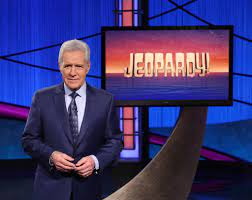
Today I’ll take “Great TV Shows” for $400. As you might have guessed the answer, and my next show to cover for this event, is Jeopardy!
Jeopardy! is a show so familiar it seems to hardly need any description. After all, it’s been around longer than many of its contestants, and longer than I (or many of the other columnists taking part here) have been. It’s been parodied on Saturday Night Live, sung about jokingly by Weird Al Yankovic and plays a part in the plot of Groundhog Day. Few and far between are those of us who’ve not at least seen part of an episode in passing somewhere along the line. Such an iconic part of the culture it’s become that even the opening theme with booming introduction – “this is JEOPARDY!” – is instantly identifiable by most. But that aside, let’s look at the show a little anyway.
Jeopardy! Is a long-running game show, in which three contestants play against each other trying to answer questions correctly to win. Or actually, answer “answers”…we’ll get to that. How long-running? It premiered in 1964, and has been running most of the time since, although in slightly different formats and shown on different providers. The current version has been running daily since 1984. Merv Griffin created it and also created the similarly-popular Wheel of Fortune which not coincidentally often runs right before or after Jeopardy! in many markets. Although he’s credited with creating it, and his name appears on the credits day after day, he credits his wife with being the one who had the basic idea.
Back around the end of 1963, he and his wife were sitting around, talking about his desire to create a game show for TV. She commented that quiz shows were popular and quite good, but there hadn’t been any since the 1958 “Game Show Scandal”, in which it was found certain contestants on the shows Dotto and Twenty-one had been given the answers so the producers could control who would win and come back, based on who they felt would be most popular with their viewers rather than their skill or even luck. The game idea was still good, but the concept had been tarnished. They wagered almost six years was enough time passed to give it another go. She then suggested the twist – why not give answers and have contestants guess the question. Merv recalled “she fired a couple of answers at me – ‘5280’ – and the question of course would be ‘how many feet in one mile?’” He liked it and quickly took the idea to NBC, who bought it sight unseen.
NBC ran it, filming in New York, weekdays from 1964 through ’75, and added a nighttime weekly version which they syndicated in 1974. All the time, Art Fleming was the host who introduced the contestants and asked the, err “answers.” It had finally run its course by summer ’75, but they resurrected it again for the ’78-79 season, again with Fleming at the helm in the Big Apple. That lasted just one season, but it didn’t stay gone too long. In 1984, a new version began, running daily (five days a week), still produced by Griffin’s company, but this time shot in L.A. and sold for syndication. It wasn’t exclusive to one network, but most local stations in the U.S. had an hour of free time to program what they wanted between the evening news and “primetime shows”, so in the vast majority of cities, (as well as in Canada), one station or another ran Jeopardy! The basic show was still the same, but this time there was a new host – big-haired, moustached Alex Trebek, a Canadian with limited experience as a game show host but a personality that fit.
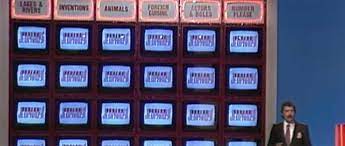
In case you’ve not seen it, the game is broken into three parts, “Jeopardy”, “Double Jeopardy” and “Final Jeopardy.” The first two take up most of the show, and consist of contestants picking mystery questions (or “answers”) from a board, which is made up of a grid of 30 boxes. There are six categories, and five question/answers in each. Each one is worth a certain value, in the first round being $200, 400, 600, 800 and 1000 and in “double Jeopardy” , you guessed it, double that amount. (If you didn’t guess it, you might not quite be Jeopardy! material.) Players who buzzed in first and gave the correct response for each won that amount of money…but if they were wrong, the amount was subtracted from their score. So it paid to be quick on the buzzer…and sure of your knowledge of the category. “Final Jeopardy” consisted of one answer all three would be given and had to answer (with the question) in 30 seconds. They could wager any or all of the amount of money they’d accrued so far in the game, and like the earlier bits, they’d win it if they were right, but lose it if wrong. Put together a run of correct answers and a bit of moxie in “Final Jeopardy” and you can do very well – James Holzhauer won a record $131127 in a 2019 episode. The game winner went home with that money, and got invited back to play the next day, whereas the second and third place finishers got a small consolation prize – typically $1000 and $2000 , which some bitterly noted didn’t pay their costs to actually go to L.A. and pay for a hotel … the show doesn’t pay expenses.
The game demands quick reflexes and a good, wide-ranging knowledge of…well, the more the better. While Art Fleming has criticized the “new” version (new as in the past 38 years), for being “dumbed down” by Hollywood, and it is true there are often some questions about pop culture, there are also still more about things like ancient history or American geography. Esquire tabulated many years of shows and found the most frequently-used categories were “Before and After”, “Literature”, “Science” , “Word Origins” and “American History” while the most-used ones for Final Jeopardy are “American Presidents” and “Word Origins.” Readers Digest compiled the ten that seemed to be hardest for contestants, and they included “Classical Music”,and “Canadian Cities” (sample : “Residents of this Saskatchewan city are called ‘Moose Javians’” , for question “What is Moose Jaw?”) . But it wasn’t only Canadian geography the mostly-American contestants had trouble with; so too did their own American because “States that Flow Together” also made the difficult list. That one had two states, with the last letter of one being the first of the next. Somehow no one could figure out “MissourI and Illinois” for the clue “one has St. Louis, the other has East St. Louis!” Of course, sometimes they like to have a little fun too, and at times the categories seem a little loopy – “Superb Owl” (all about owls on , yes Super Bowl week); “Songs for Your Cat,” “Hertz so Good” (about electricity)…
The show seems to hit the sweet spot between being so esoteric it requires a phD and so simple or celebrity-based anyone who watches Entertainment Tonight could run the board. Similarly, Alex Trebek hit the perfect spot as the host (for over 8000 episodes from ’84 until his death late in 2020; the final one he made aired in January ’21; until the final days of his illness he missed just one show…an April 1 edition where he traded places with Wheel of Fortune‘s Pat Sajak as an April Fool’s joke); warm and fatherly enough, with just enough self-deprecating humor to balance his occasional raised eyebrow and seeming hint of condescension when dealing with less-than-swift contestants. He won seven Emmys for it and became a household name and beloved celebrity; so much so that just who was going to replace him became headline news for months. So far, the answer appears to be Ken Jennings, who along with Big Bang Theory-alum Mayim Bialik have hosted the vast majority of post-Trebek shows. Jennings is an obvious choice, himself being the most famous, and by some accouts, most successful contestant ever on Jeopardy! Jennings won 74-straight shows in 2004, winning over $2.5 million and later won $1 million more on a “Greatest of All Time” tournament between past big winners. (From time to time, they have special tournaments, like ones for college students and “Celebrity Jeopardy!” where stars – mainly actors, but some athletes, writers, even politicians – try to win money for charity. Takeaway from those – no wonder Stephen King can cram so many details into his novels. The man seems to know everything!) Jennings turned his run on Jeopardy! Into several books, online and magazine columns and a rare level of celebrity based on…just being pretty darn smart!
The hype, for lack of a better word, surrounding Trebek’s unfortunate demise (losing a long battle to cancer) and picking his replacement has only helped Jeopardy! Its ratings have risen of late, with some of Trebek’s final episodes being watched by over 14 million at time or airing and many more later on streaming services; Entertainment Weekly reported this year that it currently is the most-watched “regular” TV show based on viewers watching it live…an amazing feat for a game show which through syndication doesn’t even necessarily play in every market. Maybe it’s Trebek and Ken Jennings, or maybe I hold out hope, it’s something different. At a time when everything seems to be being dumbed down from our news to our movies to our elected officials, maybe some of us are appreciating a show where it actually pays to be smart… to know a little about the Nile River or European history or great American literature.
Jeopardy! is a show I’ve enjoyed now and then since I was a kid and Trebek was young and had a huge Afro. As I got older and Trebek’s facial hair shrank, I actually found myself watching more, playing along. It was also one of the few shows my parents were both fond of too; my Mom sometimes would phone me up and ask in exasperation “did you see Final Jeopardy? How did they not know Dickens was the answer!!” or the like; when I spent about half a year living with my Dad as he got on in years, it became nearly a nightly routine for us to go down to the basement after dinner and watch Jeopardy!, trying to shout out the answers fastest. He never did well if it was about Lady Gaga or baseball, but he could rock the history and current events categories. Needless to say, I miss both my parents, and also Alex Trebek but I’m pretty glad I can still try to fit a bit of Jeopardy! in to the routine still and learn a little something with it. Memorable contestants, every topic under the sun, learning while playing… what is “great game show” Merv?
I’ve read a few books about the Dead but this one is probably the best I’ve read. I just finished re-reading it after finishing it three years ago. It is their complete history from beginning to end. The book I enjoyed the most was Deal: by Bill Kreutzmann The Deads drummer. He has some great stories and Steve Parish’s book is good also…but as far as the history…this has been the best.
This is not like reading a book about the Beatles, Stones, Dylan, or even the Allman Brothers. The Grateful Dead were totally different in the way they came about and what path they took. They were such a hippy band but along the way they turned into a corporate organization…a different kind of organization but one all the same. Their crew was known to be loud and sometimes violent along with the Hells Angels by the mid-seventies and the craziness wore off on everyone around them.
I always thought of them as this loose ensemble that just loved playing. Yes, they loved playing but they weren’t above pointing fingers when something went wrong on stage. At one point Weir and Pigpen were “fired” although accounts differ on if they really were let go. In other words, they were human… like anyone else. They did however think differently and for a bunch of hippies…they were very ambitious.
Speaking of Pigpen (Ron McKernan)… that was a wonderful thing about this book…his importance is highlighted and you see how important he was to the Grateful Dead. Jerry wasn’t the key focus when they started…it was Pigpen. Although he looked like a biker…he was described as an incredibly nice and sensitive man. He was the showman of the band and Jerry commented that he was the best musician in the band in the beginning.
The book covers their entire career and along with the way, there are many twists and turns. They cover Garcia’s slide down until his diabetic coma in 1986 when he had to re-learn how to play guitar again. Less than a year later they were back on the road and then recorded the In The Dark album.
The band never had a big hit single and now…over 20 years of being together and touring they were suddenly huge with the song Touch Of Grey. They even agreed to play the game with the record company and they made a video. They were signed to Arista Records and the record company and band were at a meeting. Garcia suddenly asked, “I don’t have to do Dick Clark, do I?” With that, the executives laughed at the thought of the Grateful Dead appearing on American Bandstand.
There were points where it looked like Garcia would beat his addictions but the threat of him going back to heroin was always there. They also cover all the members rather well…Garcia wasn’t the only one with drug problems but his problem probably affected the band the most.
If you want to learn about their history…this is a really good read.
Welcome to the Hanspostcard TV Draft. I hope you will enjoy it! Today’s post was written by Keith at https://nostalgicitalian.com/
Sherlock
We have come to the eighth round of the Hanspostcard TV Show Draft. I have already picked Columbo and Perry Mason, and for this round I have another mystery show. I’ve noticed a few of the other participants have picked some great BBC shows, so I guess it is now my turn. For this round, I pick Sherlock.
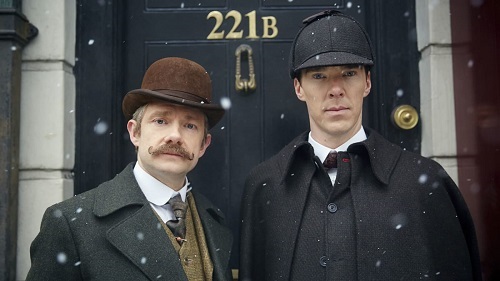
The series ran from 2010 – 2017. Series 1 aired in 2010, Series 2 in 2012, a Christmas mini-episode ran in 2013, Series 3 ran in 2014, a special “period” show aired in 2016, and Series 4 aired in 2017. What I love about this show is the modern take on a classic character. Having Sherlock Holmes solving crimes in modern day was the draw for me and it did not disappoint.
The Premise
The show features Sherlock Holmes, who is a “consulting detective”, along with his flatmate Dr. John Watson solving crimes in a modern-day London. He helps Detective Inspector Greg Lestrade, who at first is a bit suspicious of Sherlock. Over time, however, he realized Sherlock’s intelligence and ability to help solve various crimes and considers him an asset.
Dr. Watson documents their adventures on his personal blog and Sherlock becomes a sort of celebrity. This leads to a lot of press coverage and ordinary people and the British government seeking out Sherlock for help with cases.
The show features various crimes and villains, however, a recurring feature is the battle between Holmes and his archenemy, Jim Moriarty. Many of the stories in the series have been adapted from Sir Arthur Conan Doyle’s Sherlock Holmes books.
Who’s Responsible?
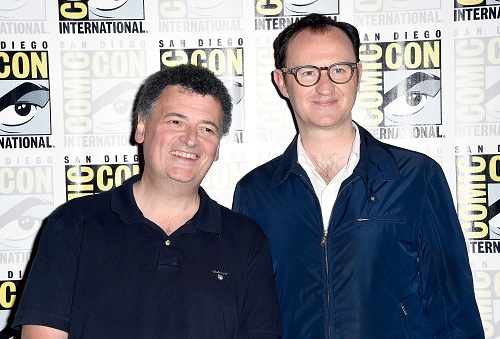
Steven Moffat and Mark Gatiss were both writers for another BBC show – Dr. Who. They were both huge fans of Sherlock Holmes. They were both no stranger to taking Victorian stories and adapting it for television. The two men spent many hours during train rides discussing creating a new series featuring Sherlock Holmes. Moffat’s wife suggested that the two begin developing the show before someone else stole the idea.
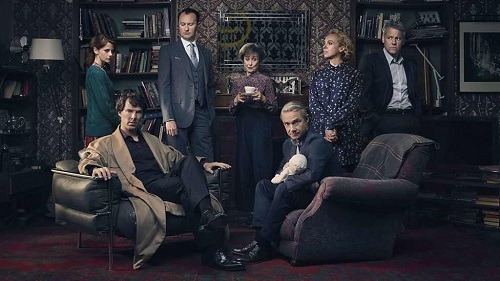
The Cast
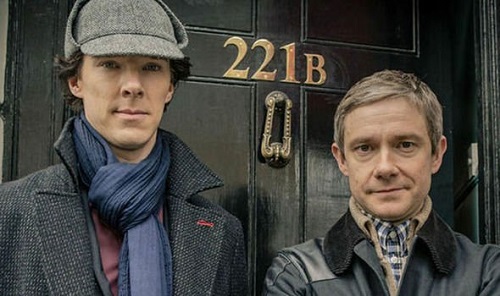
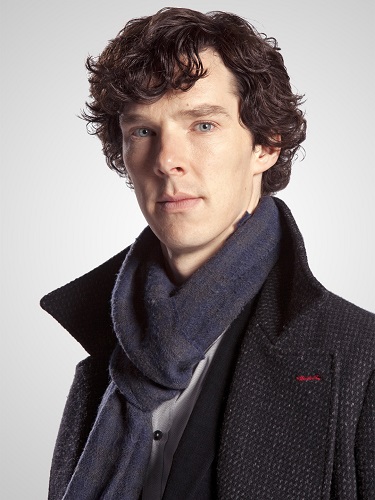
Sherlock Holmes – Benedict Cumberbatch
According to Moffat and Gattis, Benedict Cumberbatch was immediately the guy they wanted to play Holmes. They had seen him perform in Atonement and thought he was perfect. A producer said that he was the only one they actually saw for the role. According to one article: “The part is modelled as a charismatic secondary psychopath or “High functioning sociopath” as Sherlock self-describes, unlike Doyle’s rendering as a primary psychopath, thereby allowing more opportunity or ambiguity for traits of empathy.” Cumberbatch told the Guardian, “There’s a great charge you get from playing him, because of the volume of words in your head and the speed of thought—you really have to make your connections incredibly fast. He is one step ahead of the audience and of anyone around him with normal intellect. They can’t quite fathom where his leaps are taking him.”
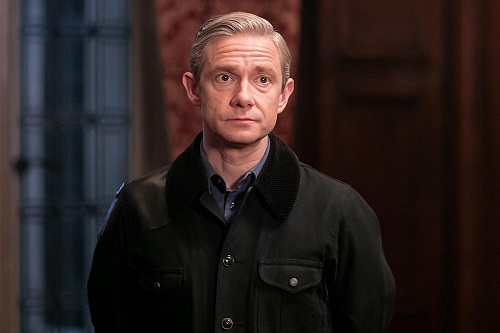
Dr. John Watson – Martin Freeman
Actor Matt Smith was originally the actor Moffat and Gattis had in mind to play Watson, but there was something about him, the chemistry with Cumberbatch, and the way he played the character that they didn’t like (They would eventually cast him in Dr. Who). Eventually, Martin Freeman won the role. Moffat says of Freeman, (he is) “the sort of opposite of Benedict in everything except the amount of talent… Martin finds a sort of poetry in the ordinary man. I love the fastidious realism of everything he does.” Freeman, when considering his character, says he is “a ‘moral compass’ for Sherlock, who does not always consider the morality and ethics of his actions.”
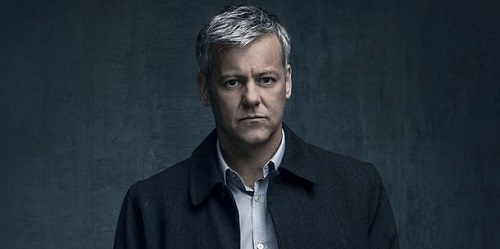
DetectiveInspector Lestrade – Rupert Graves
According to Moffat and Gattis, many auditioned for the role, but they all seemed to have a comedic take on the role. The creators liked Graves’ approach to it and he was cast. There is some great interplay between Lestrade and Holmes throughout the series. He works for Scotland Yard.
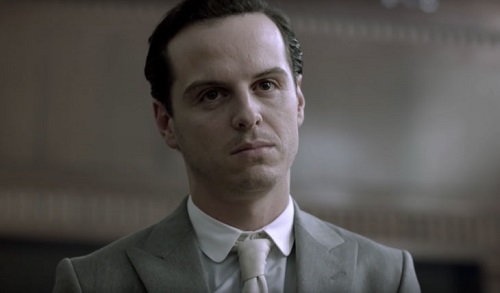
Jim Moriarty – Andrew Scott
Scott is fantastic as Moriarty! Moffat said, “We knew what we wanted to do with Moriarty from the very beginning. Moriarty is usually a rather dull, rather posh villain so we thought someone who was genuinely properly frightening. Someone who’s an absolute psycho.” They certainly achieved this. There were times I was genuinely freaked out by his performance! The creators never intended to have a “confrontation” scene between Holmes and Moriarty, but then they saw Scott’s audition and they knew that they HAD to!
Other Cast Members
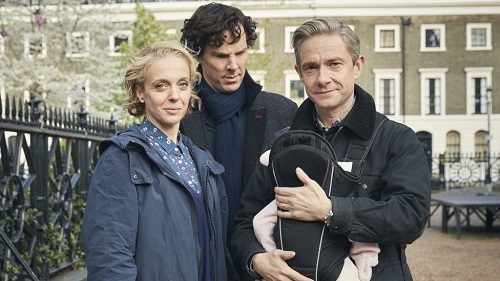
Amanda Abbington – Mary (Morstan) Watson
At the time of the series, Amanda Abbington was Martin Freeman’s real life partner. She was cast to play John Watson’s girlfriend/wife.
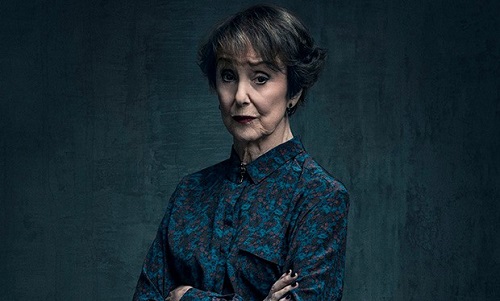
Mrs. Hudson – Una Stubbs
Mrs. Hudson is Holmes’ and Watson’s landlady. She brings a wonderful bit of comedic dialog to every interaction and scene. Interesting story – Una has known Benedict Cumberbatch since he was 4 years old and she has worked with his mother!
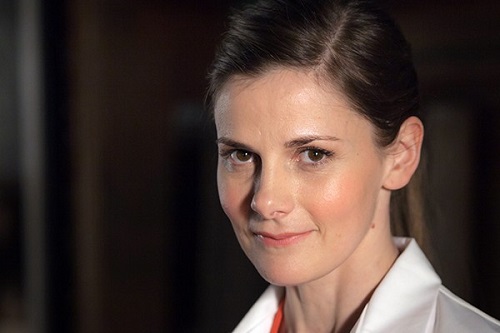
Molly Hooper – Louise Brealey
Molly Hooper works at a morgue at a London hospital. She also has an apparent crush on Sherlock. Because of her work position and crush on him, Sherlock frequently exploits her to let him examine or perform experiments on victims’ bodies. In the first episode of the series she allows him to hit a corpse with a riding crop to see how it might bruise in post mortum.
Mycroft Holmes – Mark Gattis
(SPOILER ALERT) When Mycroft first appears in the series, you really have no idea who he is. He is this mysterious man who tries to get Watson to spy on Sherlock for him. You only learn later on that he is Sherlock’s brother. Mycroft is even more skilled at deduction, correcting Sherlock on occasion and beating him in deduction exercises, as well as lacking enthusiasm for “legwork”. His intellect is borderline superhuman. The sibling rivalry between the two lead to some very good scenes.
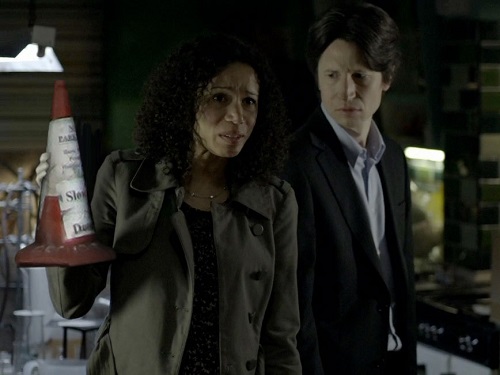
Sally Donovan & Phillip Anderson – Vinette Robinson & Jonathan Aris
Srgt. Sally Donovan often works with Lestrade on cases. She resents Sherlock’s presence at crime scenes and treats him with extreme disrespect and rudeness, cruelly calling him a “freak” to his face, and warns Watson that Sherlock is a psychopath who will one day get bored of catching killers and become one himself.
Phillip Anderson is originally a member of the Metropolitan Police’s Forensic Services. From the series opening, it is clear that Anderson and Sherlock have history of mutual dislike with Sherlock repeatedly humiliating Anderson and Anderson refusing to assist him at crime scenes.
Why I Picked It
Growing up, I had read a few of the Sherlock Holmes books. I has seen Basil Rathbone as Sherlock Holmes in movies, and certainly heard many old time radio shows featuring Holmes and Watson. I was intrigued to see just how Sherlock would play out in modern times.
I began to watch the first episode and all it took was the first meeting of Sherlock and Watson, and I was hooked. The way Sherlock is able to tick off things about Watson after just a couple minutes was awesome. Here is that scene:
Pardon me while I sort of digress for a moment.
One of the shows I considered picking in the draft was House, M.D. starring Hugh Laurie. I had heard it said that House was based on Sherlock Holmes. House would often make brilliant deductions about the his patients, and often was able to rattle off things about people because of his keen sense of observation – just like Sherlock Holmes. When I began to watch Sherlock, I immediately noticed just how much the two were alike.
The two characters are very similar. Check out the following links:
Now, back to why I picked it. I love a good mystery, obviously. I was fascinated by the way Sherlock worked and how he figured things out. Sherlock is a bit different that my earlier picks of Columbo and Perry Mason. I loved watching him sort through all the things that helped get him to the final conclusion.
I love good characters. This show is full of them. There are times I laugh out loud at some of the interactions. One of my favorite exchanges between Sherlock and Lestrade happens in the first episode. Sherlock, Watson and Lestrade are in a room and Sherlock yells, “Shut up!” Lestrade answers back, “I didn’t say anything.” Sherlock adds quickly, “You were thinking. It’s annoying!”
Holmes and Watson are the perfect team. They play well off each other. The same holds true for Cumberbatch and Freeman. Their chemistry is magical. I remember seeing the Sherlock Holmes movies with Robert Downey Jr. and Jude Law and thinking they had good chemistry, but Cumberbatch and Freeman’s chemistry is far superior.
In between Series 3 & 4, Sherlock aired a special on New Years Day of 2016. The Abominable Bride was set in Victorian London. Set in the time of the original books, it takes Sherlock out of the modern day and places him back where we all know him from. Moffat stated that “The special is its own thing. We wouldn’t have done the story we’re doing, and the way we’re doing it, if we didn’t have this special. It’s not part of the run of three episodes. So we had this to do it … It’s kind of in its own little bubble.”
The special won an Emmy for Outstanding Television Movie at the 2016 Primetime Emmy Awards. If you only watch one episode – I’d suggest this one.
The final episode of Sherlock aired in 2017. Steven Moffat stated that He and Mark Gattis had fifth series plotted out, but weren’t ready to fully produce it. Whether or not a new series of shows will come to fruition is still up in the air.
When Benedict Cumberbatch was asked about whether or not Sherlock would make more episodes, he said, “I’m the worst person to ask because my slate’s pretty, pretty full at the moment, as is Martin’s and all the other key players involved. So, who knows? Maybe one day, if the script’s right. And I say ‘the script,’ maybe it could be a film rather than the series. Who knows?”
Sherlock is a multi award winning show full of mystery, adventure, comedy, and fun. If you have never seen it, I highly recommend it.
Welcome to the Hanspostcard TV Draft. I hope you will enjoy it! Today’s post was written by Liam at https://othemts.wordpress.com/
Opening Soon at a Theater Near You (1975–1977) – WTTW, Chicago
Sneak Previews (1977–1982) – PBS
At the Movies (1982–1986) – Syndication
Siskel & Ebert & the Movies (1986–1999) – Syndication
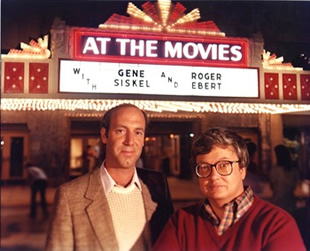
In 1975, WTTW-TV (the local PBS outlet for Chicago) brought together two film critics, Gene Siskel and Roger Ebert for a movie review show called Opening Soon at a Theater Near You. Siskel wrote film reviews for the Chicago Tribune starting in 1969 while Ebert began his career as a film critic at the Chicago Sun-Times in 1967. In 1975, Ebert became the first film critic to receive a Pulitzer Prize. This was a time when there was a heated rivalry between the two Chicago newspapers, and members of the small field of film criticism, there was a professional rivalry between Siskel and Ebert as well, bordering on animosity.
The show started off roughly as each critic attempted to assert their personality and get one over on their opponent (not to mention that neither one had much experience in front of a camera). Over time they gradually eased up and started having more of a conversation about the movies. Working together proved to be more effective inspiring one another with insights. Siskel and Ebert started to become friends in real life as well. Despite all of this, some of the best TV drama came when they disagreed and argued about a movie, but always with respect for their opponent as an individual.
After two seasons on WTTW, the show was retooled as Sneak Previews and broadcast nationally on PBS. The pair left PBS in 1982 for a syndicated show produced by Tribune Entertainment called At the Movies. In 1986, after a contract dispute, they created another syndicated show called Siskel & Ebert & the Movies (later shortened to Siskel & Ebert) produced by Walt Disney television. All the shows shared some common characteristics, reviewing a handful of new releases in each episode, with special episodes focusing on the Oscars, Siskel & Ebert’s best movies of the year, and a deep focus on the work of an individual artists. The shows ended with a roundup of the movies discussed with Siskel & Ebert each giving a thumbs up or thumbs down for each movie. “Two thumbs up” became a coveted phrase for movie promoters to include in their advertisements.
It’s unfortunate that the whole thumbs up/thumbs down thing became such a cultural touchstone, because Siskel & Ebert offered a much deeper appraisal of movies than that shorthand could ever offer. I found a website called Siskel & Ebert Movie Reviews where full episodes of the show have been uploaded. Watching some shows reminds me how deep they would go into their discussion of the films as well as sharing extended clips of the movies. It seems a foreign concept today when everyone is so worried about “spoilers,” but I remember going to the movies back in the 1980s knowing a whole lot about what I was going to see thanks to Siskel & Ebert, and it helped me enjoy the movies more.
Siskel & Ebert essentially democratized film criticism. When the show started in the 1970s, it was a time when foreign films were getting screened regularly in the U.S. for the first time, and older American movies were getting rereleased. Siskel & Ebert loved “highbrow” art movies, and promoted them on their show but never in a snooty manner. Instead they made these films more accessible to wider audiences. In the 1980s, home video made even more movies more widely available and the always included home media releases in their shows as well. The duo could also find great entertainment in “lowbrow” Hollywood movies and weren’t afraid to say what they liked and why they were still great movies. Of course, they also didn’t hold back on bad movies, and covered them in features like “Dog of the Week” with Spot the Wonder Dog barking an introduction.
Gene Siskel died of a brain tumor in 1999. A private man he did not share the extent of his illness outside his family so his sudden death took his partner Roger Ebert off guard. Ebert continued the show with rotating guest hosts for a time before partnering up with Richard Roeper from 2000 to 2008. Ebert was struck with cancer of the thyroid and salivary glands in 2002 and in 2006 had his lower jaw surgically removed. Always contrary to Siskel, Ebert was open to sharing his health problems with the public, particularly in the intimate documentary movie Life Itself. Unable to speak, Ebert continued to review movies in print, publishing them on his website RogerEbert.com until his death in 2013.




















 PowerPop... An Eclectic Collection of Pop Culture