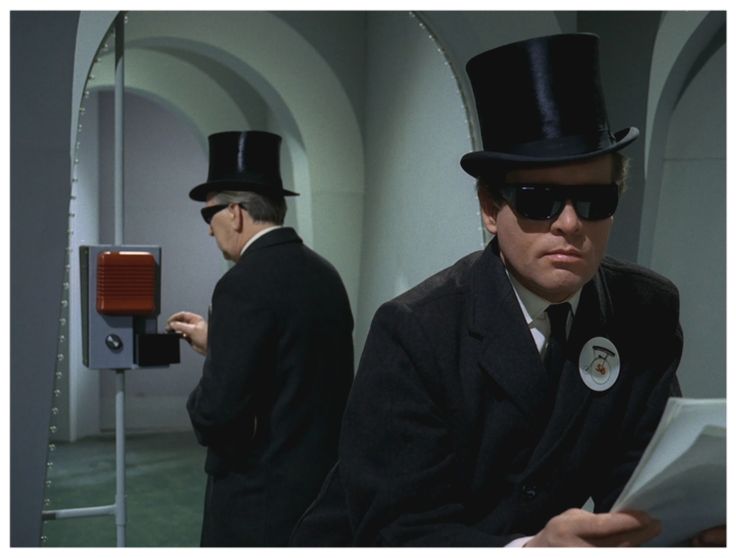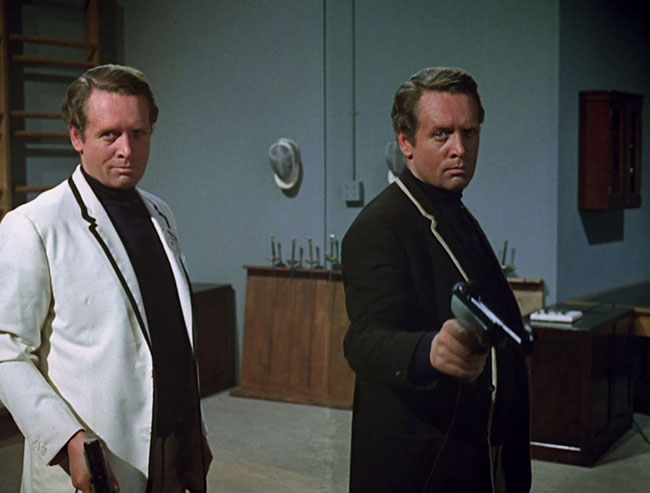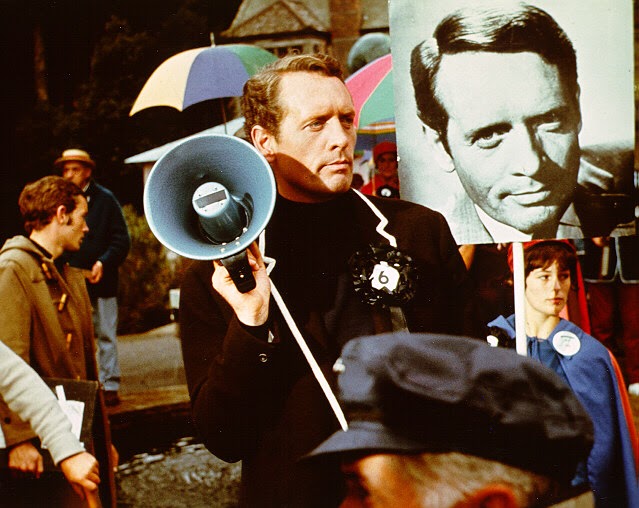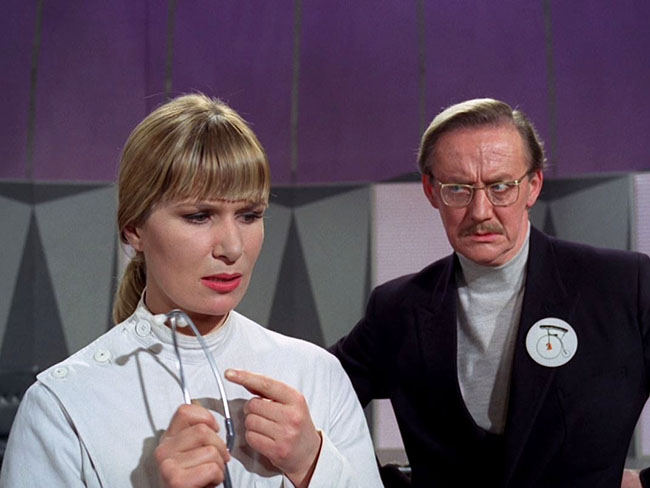
The Prisoner – Once Upon A Time

January 25, 1968 Season 1 Episode 16

If you want to see where we are…HERE is a list of the episodes.

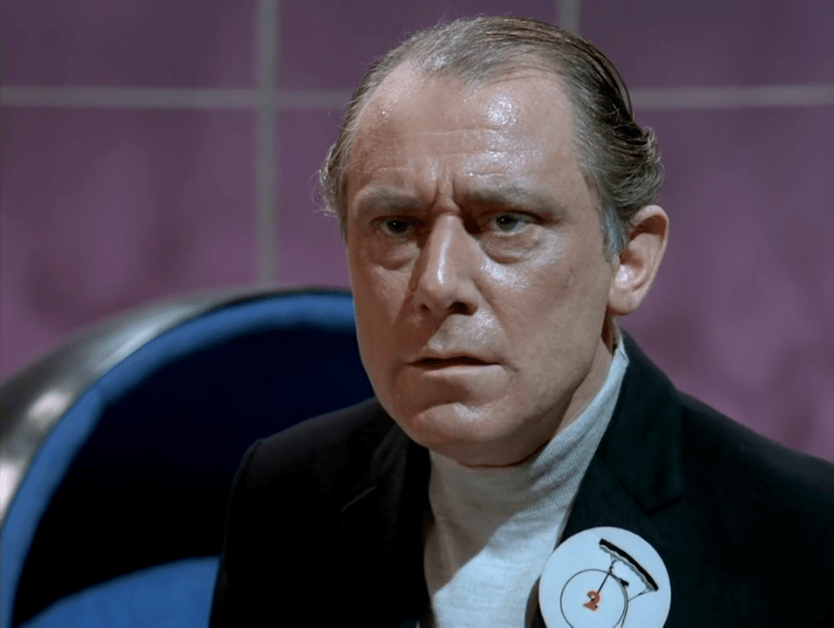
This episode is basically a two-person show. Some of the best acting happens in this episode, and it is a life-and-death match between Number 2 and 6. One thing about this episode. It was recorded much earlier; it was the 6th show filmed. That is why Leo McKern, who appears in this, has a slightly different look in the last one.

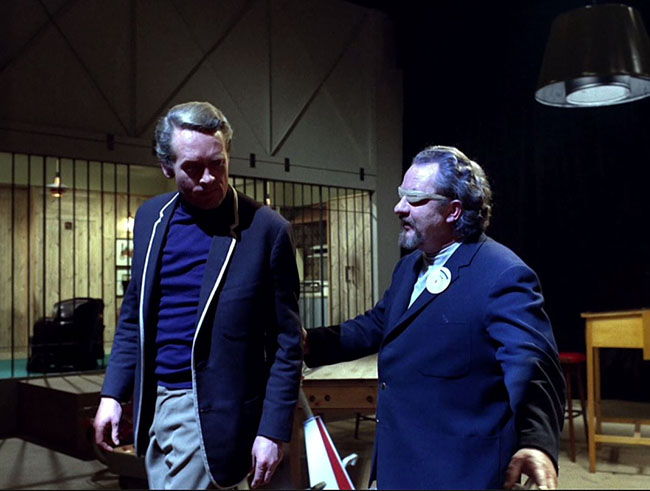
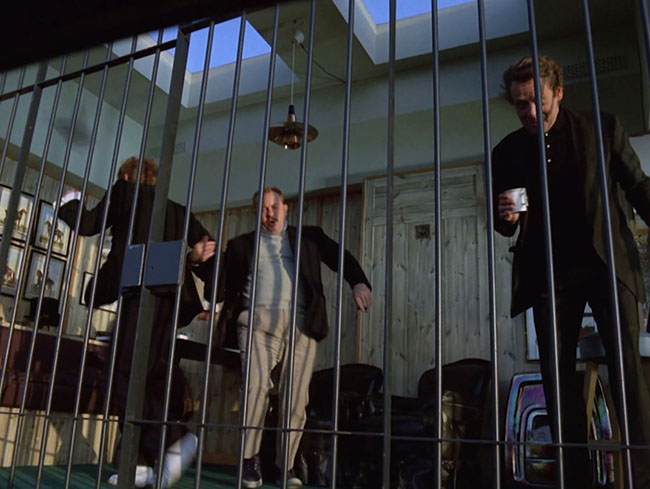
As the series nears its end, Number Two decides there is only one way left to break Number Six. He takes him deep beneath the Village and subjects him to a process called “Degree Absolute.” The method strips away layers of a person’s life and personality. Number Six is forced to relive stages of his past. He moves backward through adulthood, youth, childhood, and even infancy. Number Two hopes that somewhere along the way he will discover why Number Six resigned and finally make him reveal his secrets.

Some of the very best acting is in this episode between Patrick McGoohan and a return of Leo McKern as Number 2. It is one of my favorite episodes. I’ll drop a little trivia here before we continue. The strain of filming this episode caused Leo McKern to suffer either a nervous breakdown or a heart attack (accounts differ), forcing production to stop for a time. You can tell how tense it was by just watching.

Most of the episode takes place in a single room. There are few sets and very little action. Instead, it becomes a contest between the two men. Number Two pushes and tries very much to manipulate. Number Six resists every step of the way. It’s like an emotional chess or tennis match. At times the process seems to be working. At other times Number Six turns the tables on Number 6. The line between prisoner and interrogator begins to blur. Patrick McGoohan and Leo McKern carry nearly the entire episode by themselves.

By the end, the strain becomes too much for both men. Number Six refuses to surrender the one thing he has fought to protect throughout the series, his individuality. The contest leaves both men exhausted and broken. Rather than finding the answers he wants, Number Two finds himself trapped by the very process he hoped would beat Number Six. It is one of the most intense episodes of The Prisoner. Two powerful personalities locked in a struggle over freedom and control. There is more, but I’ll let you watch and find out.

This was originally going to be the final episode of the first season. When it was decided to end the series, McGoohan used it as the springboard for the final episode he filmed to sum up the story. McGoohan has said this was his favorite episode of the series. Be Seeing You!

The Prisoner – The Girl Who Was Death

January 18, 1968 Season 1 Episode 15

If you want to see where we are…HERE is a list of the episodes.

The script for this show was a leftover script from McGoohan’s earlier show Danger Man. They turned it into a Prisoner episode, and yes, it gets confusing. I’ll do my best to explain this one, but explaining the next two episodes will be hard. I watched this episode, and I was wondering how they could make it make sense. They do!

This is one of the most unusual episodes of The Prisoner. Number Six is enjoying a rare day outside the Village (you don’t know how or why) when he encounters a mysterious young woman who seems determined to kill him after she already killed someone else. She uses one elaborate trap after another. She has already killed another spy. Number Six barely escapes each one. At first, he has no idea why he is being targeted. The episode is more like a spy adventure than a typical Village story.

It quickly turns into something closer to a comic-strip adventure. A glamorous assassin and a smug announcer push the story into a world where danger is real, but everything is staged like entertainment. The Girl herself is the main weapon; she’s charming, always one step ahead, and the whole thing plays out like a game designed to break his rhythm and make him look foolish.

As the story unfolds, Number Six discovers that the woman is working for her father, a dangerous scientist who has created a weapon capable of threatening Britain. The scientist hides his plans behind riddles, clues, and puzzles. Number Six follows the trail across the countryside. Along the way, he faces more traps and narrow escapes. The episode is filled with disguises, secret messages, and a sense of fun that is very different from the darker episodes of the series.

In the end, Number Six uncovers the scientist’s plan and races to stop the weapon before it can be used. The final confrontation reveals that things are not quite what they seem. That’s all I’ll say, or I would give it away. That’s what makes this show fun. They can explain almost anything with the Village. It remains one of the most debated and unique episodes in the entire series that is full of them.

The character “Bowler” is portrayed by an actor named John Drake. Not only is John Drake the name of Patrick McGoohan’s character in his old show Danger Man, but it is also possibly the true identity of Number 6 in this show. McGoohan hired Drake because he was amused by the coincidence. Be Seeing You!

The Prisoner – Living In Harmony

December 29, 1967 Season 1 Episode 14

If you want to see where we are…HERE is a list of the episodes.

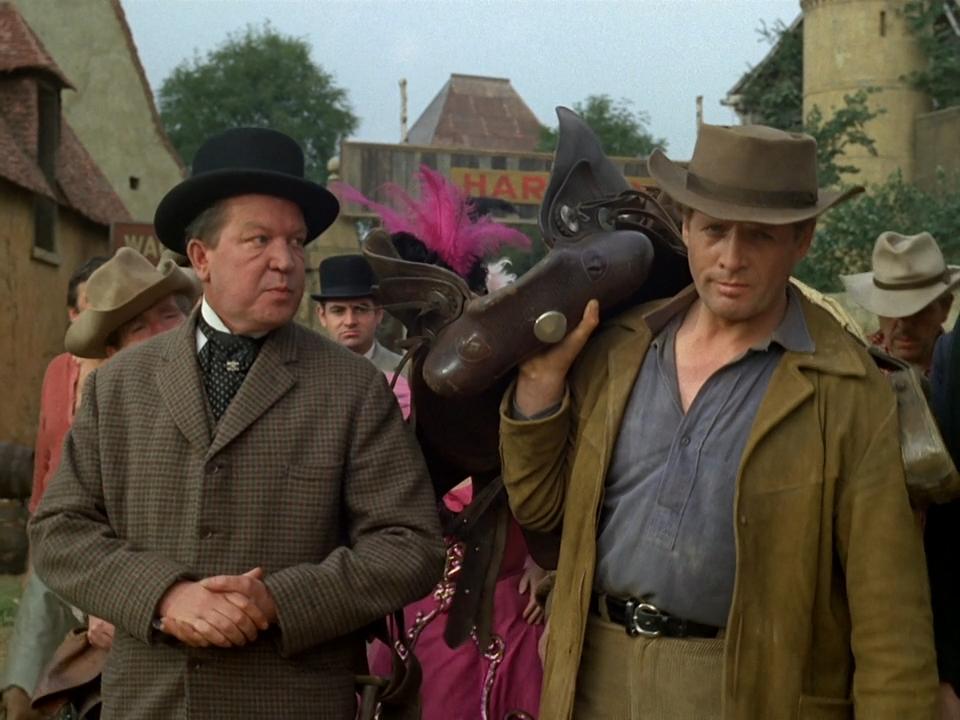
And away we go! We trade the village scenery for the Old West. This one does away with the regular intro, and we start off with Number 6 riding a horse in the town of Harmony after a fight. This was Patrick McGoohan’s favorite episode to make. This episode is one of the strangest episodes of The Prisoner, and that is saying something. When it starts, you are wondering what is going on. Is this the right show? Then everything starts falling into place after a few minutes. It’s now an episode that I love.

Number Six suddenly finds himself in what looks like the American Old West. This town, Harmony which is run by the Judge, with the Kid, a young gunslinger, as his murderous assistant. Number 6 is a former sheriff who has resigned his position, much like he resigned from his old life before arriving in the Village. The townspeople do not trust him. The new authorities want him gone. No matter where he turns, he is pressured to explain why he resigned. Just like in the Village, nobody accepts his right to make his own choices.

As the story moves on, Number Six faces harassment and constant attempts to break his spirit. The Western setting is different, but the methods are familiar. The town is really another form of prison. The people around him are playing assigned roles. The authorities try to push him into violence or force him to submit. Number Six refuses to give them what they want. He continues to resist even when the odds are against him.

Near the end, the illusion begins to crack. The western town is revealed to be another experiment designed to control and study him. They try to make him more disposed to killing. The familiar faces of the Village return. Number Six learns that changing the scenery changes nothing. Whether he is in a modern Village or a frontier town, the battle remains the same. It is a fight for freedom, individuality, and the right to remain his own man. Be Seeing You!

The Prisoner – Do Not Forsake Me Oh My Darling

December 22, 1967  Season 1 Episode 13

If you want to see where we are…HERE is a list of the episodes.

This is where the show started to become more chaotic. Before resigning, Number Six had worked on a mind transfer experiment with Professor Seltzman. The Village wants to kidnap the professor (Seltzman) to get information from him. The professor had a machine that could transfer a person’s thoughts and consciousness into another. The Village could transfer someone’s thoughts and consciousness into another person like the professor, but they could not reverse it. For that, they would have to track the Professor down.

The best way was to transfer Number 6’s consciousness to another person, and then he would be forced to find Professor Seltzman and reverse it. They knew Seltzman wouldn’t give up information freely, so they placed Number Six’s consciousness into another man. That man is Colonel Sinclair, who is loyal to Number 1. Now, Number 6 is inhabiting Sinclair. From here on out until we get to the end, Number 6 is in Sinclair’s body. Sinclair’s thoughts are back at the village in Number 6.

This unique “freaky Friday” style body-swap plot was actually written out of necessity. Actor and series creator Patrick McGoohan needed to travel to the United States to film his role in the feature film Ice Station Zebra, so the writers created a storyline that allowed another actor (Nigel Stock) to stand in as Number Six. So until the end, Sinclair is really Number 6

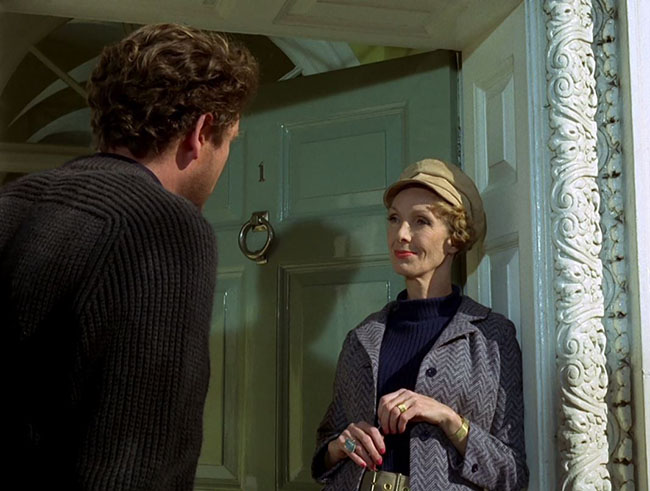
Sinclair leaves the Village and heads back to London to his home. He tries to contact people from Number Six’s old life. Nobody recognizes him because he no longer looks like himself. Sinclair also reconnects with Number Six’s former fiancée. She begins to believe his story after hearing details only Number Six would know.

We have some serious spy business as well. My favorite part of this episode is when Sinclair gets a note that was given to his fiancée before he was kidnapped. It’s a number to pick up some picture slides from a photo business. The government has already seen them, but they couldn’t figure the code out. Sinclair works through them to get the message. Now Sinclair (again Number 6) is going to reconnect with Professor Sinclair, and the Village knew that he would, so they follow. That was the whole point of this.

They ended up kidnapping both of them. Sinclair returns with the professor, hoping to reverse the process before it becomes permanent. The transfer is finally reversed, and Number Six gets his own body back. This episode ranks near the bottom with a lot of fans and critics, but I thought it was fun and I liked the ending…it was a wonderful twist. Be Seeing You!

The Prisoner – A Change Of Mind

December 15, 1967  Season 1 Episode 12

If you want to see where we are…HERE is a list of the episodes.

Last week I said that this episode starts going into more different territory, but after rewatching it, it doesn’t go too far at all.  Overall, it does stay rooted more in what we have been seeing…but don’t worry, a change is coming. 

Number Six becomes the target of a campaign against people labeled “unmutual.” In the Village, that word is used for anyone who refuses to fit in. Citizens are expected to smile, cooperate, and agree with the system. Number Six does none of that. Soon, people begin turning against him in public meetings. They accuse him of being selfish and dangerous. The Village leadership pushes the idea that independent thinking is a disease that needs to be cured.

The episode plays heavily on public pressure and mob behavior. Number Six is brought before committees where crowds openly criticize him. Number 2, played by John Sharp, oversees the process and talks about “Instant Social Conversion” (a euphemism for a lobotomy). The treatment is supposed to remove aggression and rebellious behavior. The procedure was just a psychological trick, though. They did not use the lasers or anything to do a lobotomy. They just gave him drugs to alter his personality.  The reason for not really doing it is that it would destroy his brain and he would be useless to them. After he woke up from being knocked out on the table, Number Six wakes up smiling. He is not sure at first what was going on. 

He is back at his home, and the doctor (Number 86) is slipping a drug in his tea. He sees this and avoids taking it. She does it again later, and Number 6 switches the tea, and she drinks it. Now she is drugged, and he gets the truth out of her and hypnotizes her into telling Number 2 that the Instant Social Conversion worked on him. Before she does, Number 6 pays a visit to Number 2 and reinforces that the drugs are working. Number 6 is allowed to talk to the village and get other people with secrets to tell them. In other words, Number 6 sets up Number 2 like a bowling pin and, with the help of the drugged Number 86, turns the village against Number 2. It’s a wonderful thing to see! You know, after re-reading what I wrote, half the battle in describing this show is the lack of proper names. It gets confusing following Numbers.

Behind the scenes, McGoohan and the staff were exhausted. McGoohan drove everyone, including himself, to the brink. It started to show in the scripts and the different directions it would take. I’m sure I will repeat this in the future, but while some say the show got too bizarre, we are still talking about it almost 60 years later…all for a 17-episode spy drama in the late 1960s. So that is a success to me. Be Seeing You!

The Prisoner – It’s Your Funeral

December 8, 1967  Season 1 Episode 11

If you want to see where we are…HERE is a list of the episodes.

This is what I would call the last “normal” episode. After this, it gets confusing.

In this episode, Number Six notices something different going on in the Village. A woman comes to him about an assassination attempt, but he thinks that she was sent by the village. She actually didn’t know that the village was watching her (Number 2 admits this). At first, Six thinks it may be another trap aimed at him, but he slowly realizes there is a real power struggle happening inside the Village itself.

The planned assassination is tied to rival political factions within the Village, with some officials believing the older Number Two has become weak or ineffective. The Village leadership, which normally appears united and all-powerful, is shown here as divided and suspicious behind the scenes.

This is to happen during the “Appreciation Day” festival, a public ceremony honoring the Village leadership. Even though he has no loyalty to Number Two, Six does not want to see someone murdered as part of a political game. Patrick McGoohan plays the episode in a restrained way, with Six acting more like an investigator than a rebel this time around. All the while, trying to figure out who is behind the assassination and why everyone seems terrified to speak openly.

As Appreciation Day approaches, the Village rehearses the ceremony with the same rigid discipline seen in many Prisoner episodes. There are ceremonial banners and staged movements, masking the danger underneath. Although he has every reason to hate Number Two and the Village itself, he refuses to stand by while someone is murdered. That moral stubbornness is one of the things that separates him from the people running the Village.

The climax (and it’s a good one) comes during the Appreciation Day celebration itself, when the assassination attempt is finally carried out. Number Six manages to intervene, and there is quite a struggle. Number Six could have gotten rid of Number 2, either one of them. The end is suspenseful when the assassination is supposed to happen. It shows that even when you work for The Village, you are a target as well. Be Seeing You!

The Prisoner – Hammer Into Anvil

December 1, 1967  Season 1 Episode 10

If you want to see where we are…HERE is a list of the episodes.

I love this episode because Number 6 really plays mind games with Number 2. This one would be in my top 2-3 episodes. A lot of the episode’s punch comes from Patrick Cargill as Number Two. Number Six realizes the current Number Two is a sadistic person who enjoys breaking people mentally. He plays him as confident and controlling, but also touchy about status and easily rattled when things stop going his way. That’s a contrast to some of the more theatrical Number Twos, because Cargill’s version feels like a real administrator, a man who believes rules, regulations, and pressure will solve everything. Number 6 turns Number 2’s paranoia on himself. The last scene of this episode might be the best in the series.

The episode starts with an attempted suicide by a lady. Later, when she is upset in the hospital, Number 6 tries to help her, but she jumps out the window to her death. Number 6 has been mad before, but in this one, he is seething after that happened, and deservedly so. He was then essentially kidnapped to go see Number 2. This is where the games began. I won’t list the details because I don’t want to spoil it.

Number Two treats the Village like a machine, and he expects everyone, including Number Six, to fit into it. Number Six refuses, and instead of reacting predictably, he studies how the place works and looks for the weak points. As the episode unfolds, Six carefully manipulates the system around him. He uses coded messages, staged behavior, and the Village’s own surveillance against Number Two, making it appear that Two is losing control. Number Two, who thrives on control, begins to unravel under the pressure, seeing threats where there may be none and second-guessing everything he does.

The more Number Two tightens control, the more he reveals how dependent he is on being feared and obeyed. Number Six keeps his distance, letting the pressure build until Number Two starts making mistakes in public. Number Two collapses under the weight of his own tactics, and the Village will replace him like a broken part. The episode serves as a warning about control and what happens when a person becomes nothing but the role they play. This episode also shows that the administrators don’t even trust each other. Be Seeing You!

The Prisoner – Checkmate

November 24, 1967 Season 1 Episode 9

If you want to see where we are…HERE is a list of the episodes.

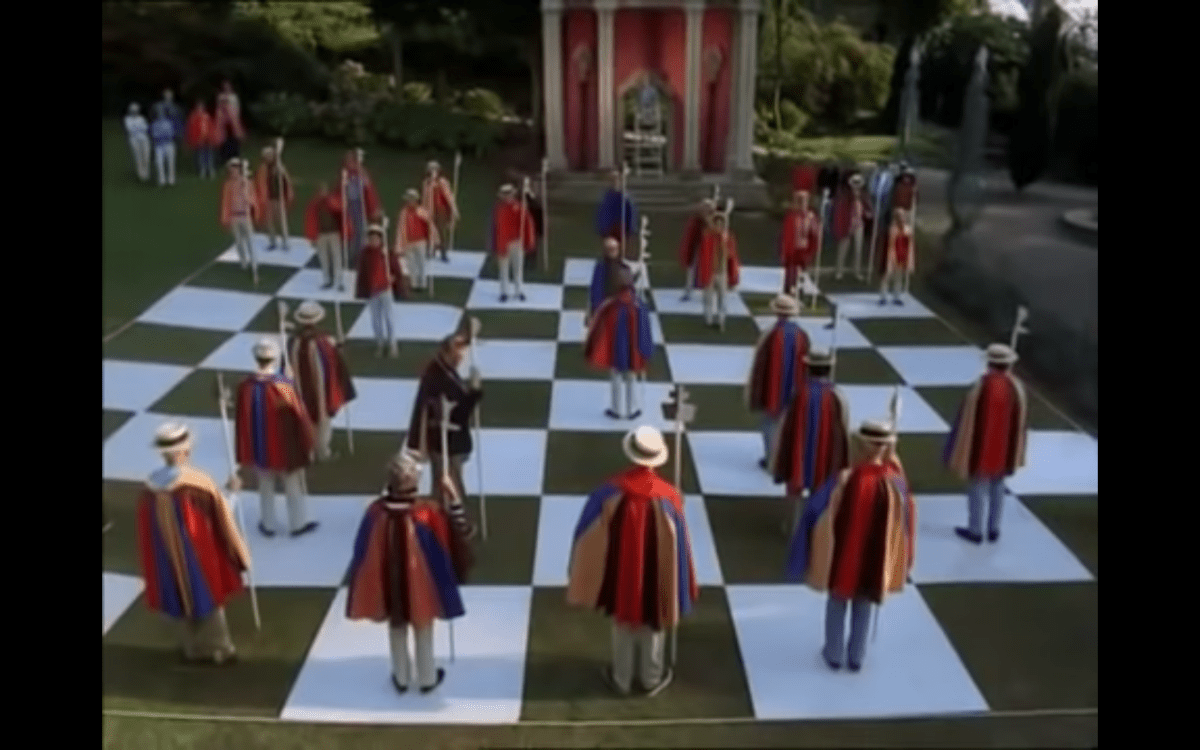
Hard to believe…we are over halfway through. Checkmate is one of my favorites. This episode drops Number Six into one of the Village’s more elaborate games, a human chess match where the residents are sorted into opposing sides. The setup looks like a harmless diversion, but the rules are social as much as they are strategic. People are pushed into roles, told who their allies are, and encouraged to treat the other side as the enemy. Number Six plays along long enough to understand the board, but he’s really watching how quickly the Village can turn a crowd into pieces.

It starts with a strange human chess game in the Village, where people stand in for the pieces and obey the moves given to them. Number Six notices that the “queen” seems different from the others; she still has some independent spirit. He later learns from the old chess master that in the Village, people can be divided into two groups: those who obey and those who command. Number Six thinks that idea might help him find allies for an escape.

He begins testing people to see who still has a will of their own. He gathers a small group, including the Rook and a few others, and they build a raft in secret. The plan is to slip away by sea, but the Village is always built on suspicion. The problem is not just the guards or Rover; it is trust. Number Six believes he has found the difference between prisoners and collaborators, but the Village turns that against him.

Number Six tries to break that rhythm of the village by talking to both sides, refusing to treat the other group as less human. He looks for weak points in the setup, not just to win the game, but to prove the whole thing can be disrupted if people stop obeying the script.

The rook and Number 6 devise an escape plan, and this time, the rook is not really a stooge of the village…but he was suspicious, just like Number 6, which didn’t help with the plan. The chessboard is a symbol, but the message is clear: keep people separated, keep them competing, and they won’t unite against the ones running the game. In the Village, even play is a trap, and every move is watched, but he keeps aiming for the one move they can’t plan for, refusing to be just another piece. Be Seeing You!

The Prisoner – Dance of the Dead

November 17, 1967 Season 1 Episode 8

If you want to see where we are…HERE is a list of the episodes.

The dance macabre, or the dance of death, was an allegorical motif in medieval art to remind us that death is everywhere and unexpected. In this one, we have Mary Morris playing Number 2. The Village is trying to extract information from Number 6, who is under electronic hypnosis. They have an older colleague (number 42) of Number 6 asking him for information, but it doesn’t work. Number 2 makes it clear she doesn’t want Number 6 broken, but for him to agree voluntarily. This episode feels like it should have been earlier in the series.

Following a seemingly impromptu yet half-hearted escape attempt that leaves him collapsed on the beach, Number Six awakes to find that a dead man has washed up on the shore. This Number Six uses some kind of radio on the body in an attempt to contact the outside world about his plight. Of course, though, the Village knows about it already.

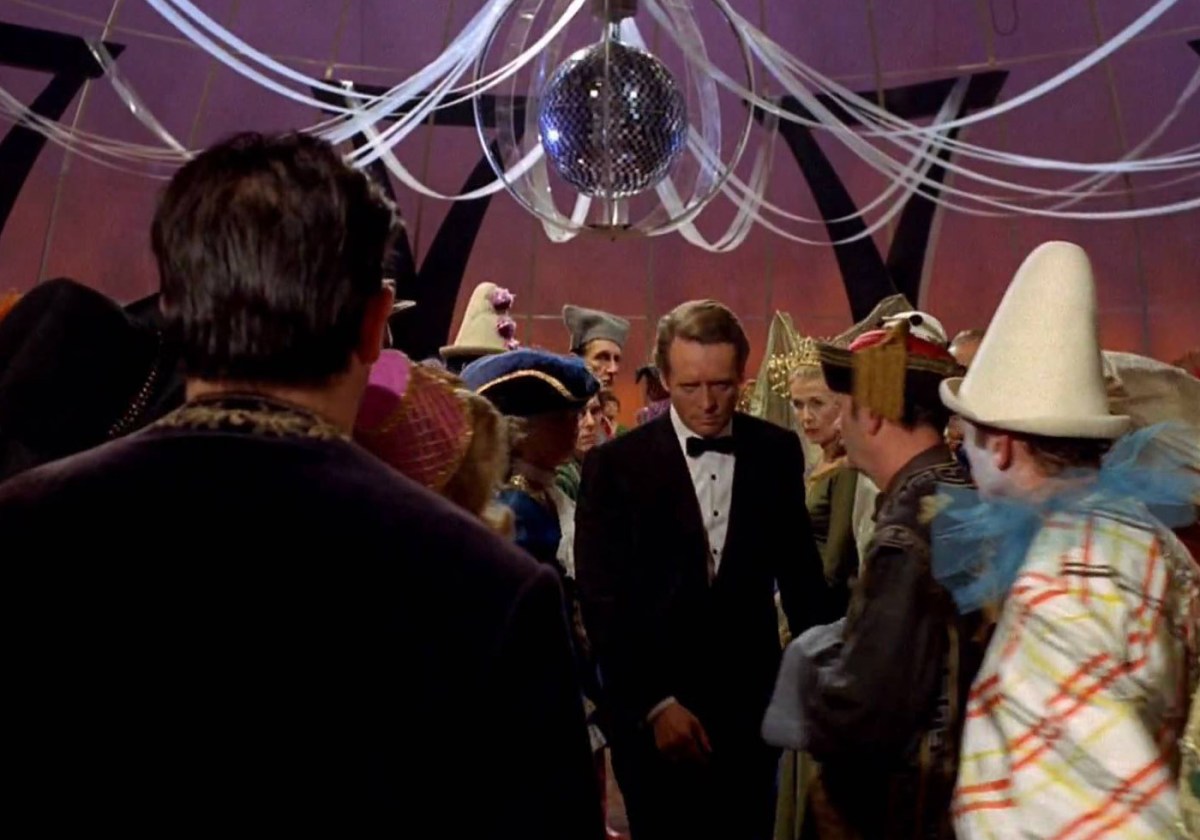
While all of this is going on, preparations are underway for a strange Carnival celebration, complete with masks, costumes, and a sense that the entire Village is waiting for some kind of performance. The episode never fully explains every detail, which gives it a dreamlike quality, as though Number Six has stepped into a ritual that has happened many times before. Number 6 does some spy work before that, exploring some rooms. He finds the man who washed ashore, whose info the village has altered the dead man’s info so when he is “found,” they will think it’s Number 6.

As the celebration begins, the atmosphere turns darker. The Carnival becomes a public trial, with Number Six placed in front of the crowd and forced into a role he never agreed to play. The villagers act as spectators and participants at the same time, blurring the line between justice and entertainment. He does call his old friend (dressed as a court jester) as a witness, but the village has destroyed him completely. He looks more like a living dead man. Like many episodes of The Prisoner, this one is less about plot and more about mood, control, and the way the Village tries to rewrite a person’s sense of reality. Be Seeing You!

The Prisoner – Many Happy Returns

November 10, 1967 Season 1 Episode 7

If you want to see where we are…HERE is a list of the episodes.

This episode is in my top 3 episodes. The beginning of this one surprised me. It opens with the Village feeling empty for once. Number Six wakes up, walks outside, and finds no guards, no announcements, no smiling faces watching him. For a moment, it looks like the whole place has shut down, and he finally has a clean path out. He takes supplies, follows the shoreline, and escapes by boat, pushing forward with the cautious hope that this time it’s real. This is what I have been waiting for through the series so far, and now he will get to leave.

He makes it back to London and walks into a world that should feel familiar, but doesn’t. His old life isn’t the same: his home, his friends, his old co-workers all seem slightly off. On top of that, a lady named Miss Butterworth is living in his home now and driving his car.

The people around him act like they know him, but they don’t react the way he expects, and he doesn’t get straight answers. The episode shows how hard it is for him to trust anything after the Village. Even freedom can feel staged when you’ve been trapped long enough.

The final segment drives home the episode’s point. The escape is part of the experiment, another method to test him, track him, and see what he’ll do when he thinks he’s safe. This one is less about action and more about doubt, how the Village follows him even when it isn’t there. Number Six ends up back where he started, not because he gives up, but because the trap is built to reset. The birthday greeting isn’t a joke; it’s a reminder that the system has patience and it can wait.

This episode was originally to be directed by Michael Truman (who fell ill); McGoohan took over directorial duties himself, crediting the result to ‘Joseph Serf’. Be Seeing You!

The Prisoner – The General

November 3,1967 Season 1 Episode 6

If you want to see where we are…HERE is a list of the episodes.

On the surface, I thought what a great idea, but then, as the show progressed, I saw how evil it could be.

This one is one of The Prisoner episodes that looks simple on the surface, then keeps getting stranger the longer you sit with it. Number Six is dragged into the Village’s latest civic craze, a bright, friendly educational program called “Speed Learn.” It’s sold as progress, a way to teach people anything in 3 minutes, and the whole place treats it like the future has arrived. Number Six doesn’t buy it. He watches how quickly people accept it, how eager they are to be improved, and he starts asking the one question the Village never wants asked: who benefits?

The episode turns into a battle over information, and not in the usual spy-movie way. Speed Learn isn’t just about learning faster; it’s about removing the messy parts of thinking, doubt, and choice. The most important part is: what are they going to encode in the machine for you to learn?  Number Six pushes back by doing what he always does…he refuses to play along. The deeper he digs, the clearer it becomes that the message is all about control. Either you think like everyone else, or you are out of bounds. 

By the end, this episode feels like a warning. It’s not about technology being evil; it’s about how easily it becomes a shortcut to obedience when it’s run by the wrong hands. The episode keeps its tone light on purpose, but the point is blunt. A society that treats knowledge like a product can also treat people like human containers. Number Six’s resistance shows the one thing they can’t fully automate and control… a mind that won’t surrender.

I thought the ending could have been better with this one. That doesn’t mean I didn’t like it, though. This episode also urges caution regarding the up-and-coming computer age. I was thinking of TikTok while watching this episode.  Be Seeing You!

The Prisoner – The Schizoid Man

October 27, 1967 Season 1 Episode 5

If you want to see where we are…HERE is a list of the episodes.

I highly recommend this one. The episode is grounded in behavioral science, and there’s something very unsettling about this one. It’s a little too real. Number 6 awakens to discover he’s grown a mustache, his hair is darker, and he’s left-handed. Oh, and now he’s Number 12 (6+6 = 12). I like many of these episodes, but this might be my favorite episode. I do give some things away in this review; it’s hard not to with this one. 

Having a character encounter their double is a common movie or television ploy (even two of the castaways on “Gilligan’s Island” met their doubles), but few examples are as effective as Number Six confronting his spitting, smirking image. It’s not just one of the best interrogation episodes but one of the best I’ve seen. Number 6 and Number 12 are going at it. 

They try to break him by splitting his life in two. The Village creates a “new” Number Six who smiles, cooperates, and actually fits in, while the other one is treated like a problem.  It’s about making Six doubt himself and making his resistance look like he’s insane. 

Number Six wakes up after being drugged and tampered with. When he awakens, he is not in his usual dwelling, and when he looks in a mirror, he sees his appearance has been altered with darker hair and a mustache. At the Green Dome, Number Two addresses him as ‘Number Twelve’, and acts as though he is on his side. Number Six is given his ‘orders’ to break himself! After having his hair dyed back to its original colour and the moustache shaved, Number Six returns to his original dwelling. Who should be in residence but…Number Six! Confused? Of course, the Number Six coming back is actually Number Twelve.

As he is released back into the Village, officials test him by placing him in situations meant to trigger his old defiant behavior. Each time, he hesitates or reacts differently, which convinces them the procedure worked. They assign him a new job and surround him with friendly villagers who reinforce his new identity. Meanwhile, viewers see the Control Room watching every move, adjusting the experiment as they go.

Over time, cracks appear. Small details bring back flashes of who he really is, and he begins to suspect the whole transformation is an act forced onto him. When the Village authorities push him too hard, his old instincts return. He confronts the people manipulating him and exposes that the “new identity” was created through psychological conditioning rather than real memory loss.

What makes this episode work is how it turns identity into a weapon. Number Six fights with logic and willpower, but he’s also fighting a system that is against him. The episode keeps the pressure on, then ends with the Village still ready for the next move. 

This one was very hard to write up. It’s best to see it, and I think you will enjoy it. Some have ranked this as the top episode or at least in the top 3. Be Seeing You!

The Prisoner – Free For All

October 20, 1967 Season 1 Episode 4

If you want to see where we are…HERE is a list of the episodes.

This episode can become confusing quickly if you don’t pay attention. The editing in parts of this is fast. This one shows off the Village really well with its pastel colors. Number 6 is tested more in this episode than in the other ones so far. You can tell in parts that they are getting to him mentally.

Number Six is suddenly treated less like a prisoner and more like a public figure when the Village announces an election for Number Two. He is encouraged to stand as a candidate himself. It sounds like a chance to speak out and maybe even expose the whole setup. He might be able to turn the Village’s own system against itself.

As the campaign gets going, it becomes clear that this election is not really about freedom, choice, or public debate. Number Six is coached and packaged for the crowd. The Village turns politics into another form of control. Rallies, speeches, and promises are all part of the performance. The people around him act like voters, but the whole thing has the feeling of a trap, with every move watched.

He tries to speak honestly, telling people not to trust the system, but the message gets twisted into the campaign. The more he resists, the more popular he becomes. It’s all about power and control. Number 6 can’t separate what’s real from what’s being done to him. By the end, the election was a way to break him down and test him. The campaign itself seems like just another prison. Be Seeing You!


The Prisoner – A. B. and C.

October 13, 1967 Season 1 Episode 3

If you want to see where we are…HERE is a list of the episodes.

This episode turns the Village into a lab. Number Six is drugged and pulled into a three-part dream program, each scenario designed to crack him open and find out why he resigned. The title is literal, three separate “tests,” and the method is modern for the late 60s, not fists threats, but psychology, repetition, and control of the setting. I love dream sequences in shows, so I’m really happy with this one. 

The first sequence drops him into a rough version of his old life, with familiar faces and a push toward panic. The second shifts the tone, calmer on the surface and built to steer him into the same trap from a different angle. The third is the tightest and most direct. Number 2 is trying to guide him to a single answer through suggestion and pressure.  He keeps fighting for any piece of truth he can find. Each segment feels like a different door leading to the same room.

What makes this one stick is how it shows the Village evolving. They are less interested in punishment and more interested in results. Number Two isn’t just managing the place; he’s running experiments and taking notes. He is trying to solve a human being. Number Six, even half-awake and off-balance, still won’t give them the one thing they want. The episode ends without any comfort at all. They can trap you, study you, and even rewrite your reality for an hour.  But they still can’t own what you choose to keep. Another one where Number 6 turns the tables on Number 2. Be Seeing You!

The Prisoner – The Chimes of Big Ben

October 6, 1967 Season 1 Episode 2

If you want to see where we are…HERE is a list of the episodes.

Both sides are becoming identical. An International community, a perfect blueprint for world order….Number 2

The show has such a good premise. What does a super spy do when he/she retires? Most likely, they won’t be able to live their life in peace, but where do they go?

This was the 5th episode filmed, but it’s the second one aired. This explains the reason a few months have passed in time since he arrived. It’s one of my favorite episodes. The sugar cubes scene is very telling. They have it in his file how many cubes he uses in his tea. Just to mess with them, he changes the number he usually takes. Number 2 looks on in disbelief because Number 6 will not join quietly like some others did.

This episode really pushes the series into spy territory, playing with the idea that escape might be possible. Number Six encounters another prisoner who claims that she has outside contacts and a plan, and for the first time, the Village seems less sealed than it did in Arrival. She insists she knows a way to escape from the Village, and Number 6 builds a raft. After carefully planning their attempt, the two manage to leave the Village and drift out to sea. You think, hmmm, maybe he will break out of there…and he does, but then comes a twist.

The episode borrows the spy checklist… coded messages, double agents, and quiet deals, which suggests a more familiar path forward. You also see in what lengths the village will go to tame Number 6, and it’s out there. It also makes clear that intelligence work itself can be a trap. Trust becomes a liability, and the system Number Six once served is resembling the one now holding him.

It really drives home that escape is not just physical; it is psychological. It reinforces the idea that resistance is expected, managed, and often used against those who attempt it. It’s a great episode with who I think made the best Number 2, Leo McKern. He is one of the few who will return at the end. Be Seeing You!