

December 22, 1967 Season 1 Episode 13
If you want to see where we are…HERE is a list of the episodes.
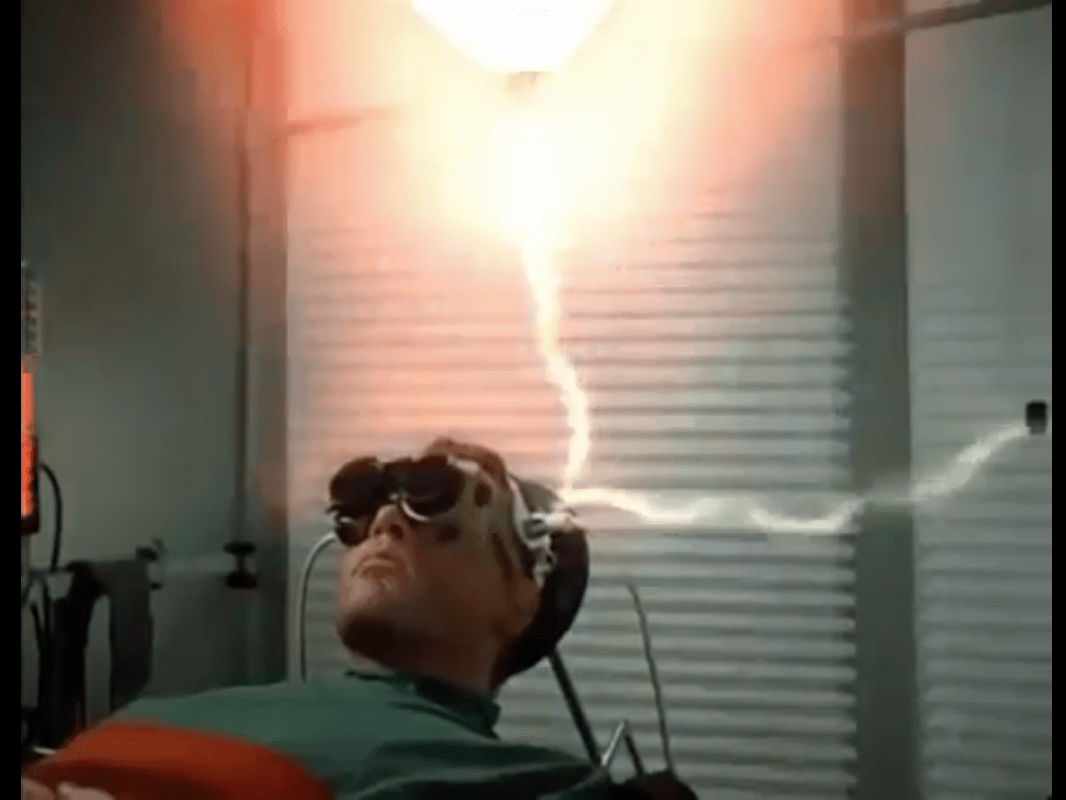
This is where the show started to become more chaotic. Before resigning, Number Six had worked on a mind transfer experiment with Professor Seltzman. The Village wants to kidnap the professor (Seltzman) to get information from him. The professor had a machine that could transfer a person’s thoughts and consciousness into another. The Village could transfer someone’s thoughts and consciousness into another person like the professor, but they could not reverse it. For that, they would have to track the Professor down.
The best way was to transfer Number 6’s consciousness to another person, and then he would be forced to find Professor Seltzman and reverse it. They knew Seltzman wouldn’t give up information freely, so they placed Number Six’s consciousness into another man. That man is Colonel Sinclair, who is loyal to Number 1. Now, Number 6 is inhabiting Sinclair. From here on out until we get to the end, Number 6 is in Sinclair’s body. Sinclair’s thoughts are back at the village in Number 6.
This unique “freaky Friday” style body-swap plot was actually written out of necessity. Actor and series creator Patrick McGoohan needed to travel to the United States to film his role in the feature film Ice Station Zebra, so the writers created a storyline that allowed another actor (Nigel Stock) to stand in as Number Six. So until the end, Sinclair is really Number 6
Sinclair leaves the Village and heads back to London to his home. He tries to contact people from Number Six’s old life. Nobody recognizes him because he no longer looks like himself. Sinclair also reconnects with Number Six’s former fiancée. She begins to believe his story after hearing details only Number Six would know.
We have some serious spy business as well. My favorite part of this episode is when Sinclair gets a note that was given to his fiancée before he was kidnapped. It’s a number to pick up some picture slides from a photo business. The government has already seen them, but they couldn’t figure the code out. Sinclair works through them to get the message. Now Sinclair (again Number 6) is going to reconnect with Professor Sinclair, and the Village knew that he would, so they follow. That was the whole point of this.
They ended up kidnapping both of them. Sinclair returns with the professor, hoping to reverse the process before it becomes permanent. The transfer is finally reversed, and Number Six gets his own body back. This episode ranks near the bottom with a lot of fans and critics, but I thought it was fun and I liked the ending…it was a wonderful twist. Be Seeing You!
Discover more from PowerPop... An Eclectic Collection of Pop Culture
Subscribe to get the latest posts sent to your email.


I’m not sure I agree that this episode is more chaotic than previous, but I look forward to the remaining weeks as I’m sure the number of times I disagree with you will rise. As always, I love the fact that this show allows for such a differing of opinion. Allows? It begs for it.
I took notice immediately that this episode starts differently. Usually the episode starts with the kidnapping to the Village. In this episode there is footage, and important footage, before the standard resignation footage. Not out of step, but different.
If you pay attention, the plot of this episode is no more confusing than others. Recognize, of course, that one of the mainstays of the show is, and was, to make the viewer think. That leads to strange situations. No one’s opinion is wrong, but community agreement is, and this is intentional, discouraged.
Max, I can only bow my head to you. Going through this short show like you are doing is hard work and intellectually uplifting. THANKS.
LikeLiked by 1 person
Thanks Arthur…but have you noticed now…I’m just really telling the plot…more than what I feel…because putting this show in words…is getting harder and wait til the next ones!
Yeah…it’s not too different…and I can’t express this in words I don’t think…but…before this it was more, dare I say, believable? The reason being it’s them messing with is mind…but NOT in a physical sense…But wait til the next one!
Thanks again Arthur…I rewrote this 3 times…because I couldn’t follow myself at times.
My biggest gripe…was the unusally sloppy fight scenes and them showing McGoohan driving a car when he is supposed to be Sinclair!
LikeLiked by 1 person
Just limiting yourself to the plot with this show is incredibly difficult. The show wants you to move beyond the plot and get into the ideas. And, the show’s continuity is horribly flawed. I think there are issues with every single episode.
But who cares? You aren’t supposed to notice such things. The point of the show is to get you to think.
Believable? Absolutely. But the producers keep the story wrapped in what we consider a kind of television comfort level. In this episode they invoke the Frankenstein concept, which is fiction. They use that comfort level as a safety net.
No, Max. What you are doing is incredibly difficult. And you are doing an excellent job. By limiting yourself to just the facts, as they are presented, you build strength in your position of presenter. You got a lot of cahones presenting a discussion of a show that is so carefully designed to evoke response and by staying with the facts you make this a safe place to discuss what are essentially difficult questions of humanity.
You are doing an incredible job.
LikeLike
This comment has nothing to do with the Prisoner. I watch each episode on the weekend. The Friday prior to this episode one of the lesser known networks on my cable (stream? Hah!) played Young Frankenstein, the Mel Brooks movie. A great movie.
I wonder why the transfer of brain matter is commonly portrayed as electric? Memory and knowledge are not things I would consider of an electrical nature. The brain receives electric stimuli from the nerves, but the brain takes this electrical stimuli (or data, if you wish) and transfers it into something else.
I understand why the Prisoner folks use the same device, ever since the original Frankenstein (and probably before, I have not done the research) electrical transference is the accepted. But I wonder.
Of course, there are a couple of jokes, mostly featured around the Teri Garr character, where Brooks (or Wilder, a main writer of the script) that question whether the transfer affects the monster’s, ahem, anatomy.
Just wondering.
LikeLiked by 1 person
Oh… Young Frankenstein is one of the greats to me…I am a Mel Brooks fan…
Yea it was basically the same device in The Prisoner. Thats a good question…why electricity…and who knows what it gets…or doesn’t.
LikeLike
Sorry Max, no time today, I’ll watch it tomorrow. Then I’ll ‘be seeing it.’🙄
LikeLiked by 1 person
Wacky stuff!
LikeLiked by 1 person