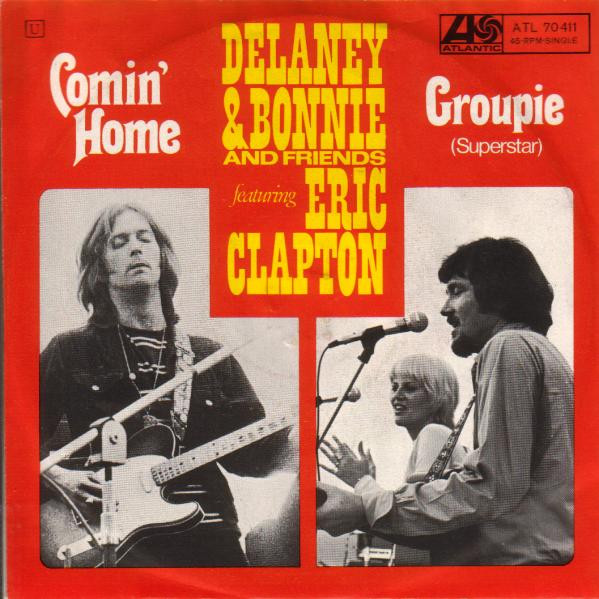
In the past few years, I’ve learned more about this group of musicians. The first time I noticed Delaney and Bonnie was in the great movie Vanishing Point.
There’s a carefree spirit to Comin’ Home that feels like a blend of Rock, Soul, and Blues. It was released in 1969 on On Tour with Eric Clapton, and after listening to the album…I wish I could have seen that tour. Delaney & Bonnie were leading a rotating group of talented players at the time, and you can hear that sense of a band finding its way together perfectly.
By this time, they had built a strong live band that mixed rock, gospel, and soul, and it caught the attention of Eric Clapton, who was looking for a way out of the pressure surrounding Blind Faith. Clapton joined their touring group, not as a headline name, but as part of the band. He also occasionally brought his friend George Harrison to join in.
Clapton’s guitar work sits along with his work with Blind Faith at the time. The sound tilts toward gospel and Southern soul, which makes for some great roots music. The tour itself ran through the UK in December 1969, with a lineup that was deep to say the least! The backing band featured Leon Russell, Delaney Bramlett, Bonnie Bramlett, Rita Coolidge, Dave Mason, Bobby Whitlock, Carl Radle, Jim Gordon, George Harrison (on some shows), Tex Johnson, Bobby Keys, and Jim Price.
If you wanted a big tour back then, you grabbed Leon Russell. He would soon be on the notorious Mad Dogs and Englishmen tour of Joe Cocker. The recordings were taken from shows in cities like London and Birmingham, captured on the fly rather than built in a studio. Producer credit went to Delaney Bramlett, and the goal was simple: to document the band as it sounded in the room.
What gets me is the looseness of the recordings. Songs like Things Get Better and Only You Know and I Know stretch out, driven by Russell’s piano, while Clapton adds fills and does his thing.
The album also mattered for what came next. Clapton carried this experience forward into Derek and the Dominos, both in personnel and in feel. The Dominos were all in this band except Duane Allman. The idea of a band built around feel and fluidity hit home for Clapton. He would not be the spotlight of that band, just a member. In that sense, On Tour with Eric Clapton works as a bridge record, a live document of one group, and the starting point for another.
You want to listen to a great live album that sounds like the musicians are in the room with you? Listen to this album and hear some of the greatest musicians of the era. The album peaked at #29 on the Billboard Album Charts and #12 in Canada in 1969. The single Comin’ Home peaked at #84 on the Billboard 100 and #55 in Canada.
Comin’ Home
Been out on the road ’bout six months too long. I want you so bad, I can hardly stand it. I’m so tired and I’m all alone. We’ll soon be together and that’s it; I’m comin’ home to your love.
Hitchhiking on the turnpike all day long. Nobody seemed to notice, they just pass me on by. To keep from going crazy, I got to sing my song. Got a whole lot of loving and baby that’s why I’m comin’ home to your love.
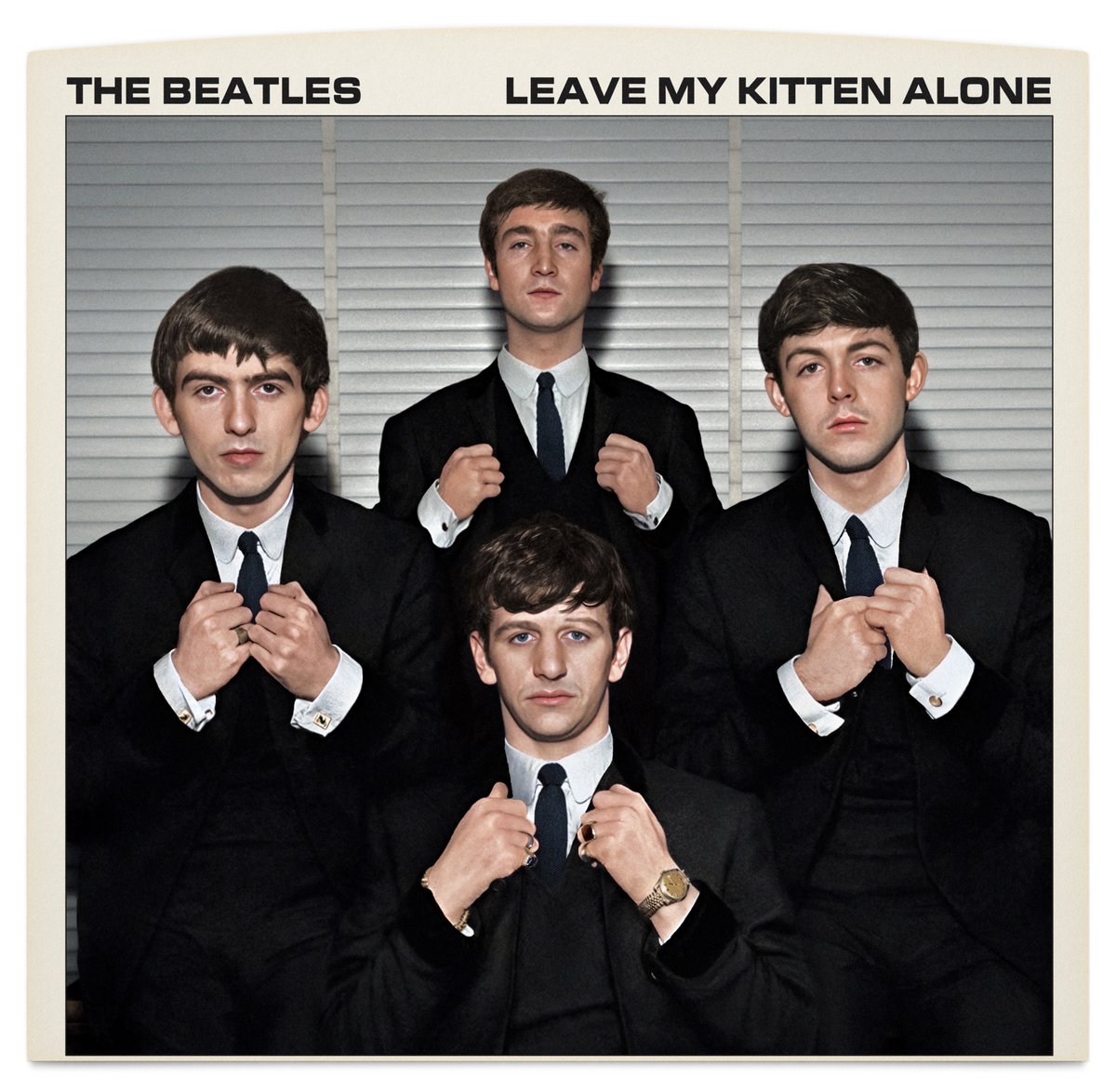
It’s one of those Beatles covers that I read about but never heard until the Anthology came out. This song belongs in their pre-early period, as far as playing it. They played this in Hamburg and The Cavern.
This was recorded during the Beatles for Sale sessions in 1964; it captures the band hard into their early rock and R&B roots. John Lennon takes the lead with a sharp vocal that cuts through the song like all of his other vocals. It’s the kind of song that feels like it could’ve torn up the stage at the Cavern Club and Hamburg. It was excluded from the album at that time.
The Beatles were huge fans of that early American R&B and rock ’n’ roll, and this one fit right into their club repertoire, tough, fast, and built to move a crowd. Their version keeps that same bite, just filtered through their Liverpool interpretation. They don’t go raw like Bad Boy (one of my favorite covers they did), but it’s good.
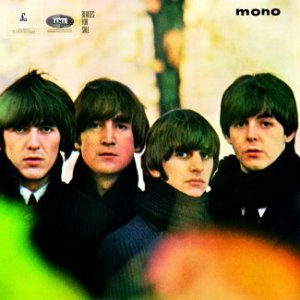
Beatles For Sale was made when they were just plain worn out (look at their faces above, on the album cover). Beatlemania was getting on their nerves, what nerves they had left. George Harrison said Beatlemania was an attack on their nervous system. He explained it well; he said that they didn’t change as much, but the people all around, plus the public, went nuts. They lived inside this bubble until 1966, when they finally said no more touring after that year. It was probably, in some ways, the best decision they ever made. It might have prolonged the band’s life a little.
I looked up the reason why this song was excluded from Beatles For Sale. The only thing I could find is that George Martin thought there were too many covers on the album already. I would agree with that, but why not leave off “Mr. Moonlight” instead of this? This is a totally personal opinion, but Mr. Moonlight (besides Lennon’s vocal, which is special in it) is in the top 5 of my most disliked Beatles songs, not just covers, which it is, but all Beatles songs.
They just didn’t have the time to write more originals. Everyone was waiting for “the bubble to burst” on their success, but it never did. Hell, I’m still posting about them 60 years later. They only had 8 original songs on this album, and filled out the rest with covers they did in Hamburg and Liverpool. Leave My Kitten Alone was not an original; it was written by Little Willie John, Titus Turner, and James McDougal and released in 1959 by Little Willie John.
Leave My Kitten Alone
You better leave my kitten all alone You better leave my kitten all alone Well, I told you, big, fat bulldog You better leave her alone
You better leave my kitten all alone You better leave my kitten all alone This dog is gonna get you If you don’t leave her alone
Well, Mister Dog I’m gonna hit you on the top of your head That child is gonna miss you You’re gonna wish That you were dead
If you don’t leave my kitten all alone Well, I told you, big, fat bulldog You better leave her alone
Well, alright!
Well, Mister Dog I’m gonna hit you on the top of your head That gal is gonna miss you You’re gonna wish That you were dead
If you don’t leave my kitten all alone, oh yeah Well, I told you, big, fat bulldog You better leave her alone
Hey, hey You better leave You better leave You better leave Yeah, you better leave You better leave Oh, you got to leave Yeah, hey Well, I told you, big, fat bulldog
I wrote this for Dave’s site for Turntable Talk. He wanted us to write about a song with an animal in the title or lyrics.
This is the Beatles at their most caffeinated, most chaotic, and most cracked. It’s them turning up the thermostat on rock & roll just to see if the walls start to melt. I liked the chaos and music they put to this song. It’s intense and doesn’t let up throughout the song. It’s like a cousin to Helter Skelter, but hopped up on confusion. That said, the song is very tight musically underneath the chaos. This is yet another reason I love the White Album. You have this on the same album as Blackbird and Rocky Raccoon. The Beatles, more than many bands, could adapt to a style of music and play it well.
Lennon sounds giddy, high on something, probably Yoko, maybe drugs, definitely freedom. The monkey might be Yoko. It might be his own self-made madness. Or maybe it’s a giant middle finger to everyone trying to box him in. What was it about? John said he, Yoko, and Paul thought it was drugs. Whatever it was made an interesting recording that still grabs my ear.
The Beatles began working on this song, which continued until 3 a.m. The session was not a keeper, and the tape was to be taped over (EMI saving money), but in 2018, while remastering the album, they found an alternative version of this song that was recorded on the first night. Someone didn’t tape over it. Geoff Emerick, the Beatles’ sound engineer, had said that they recorded this song and Helter Skelter at maximum volume in the studio, and it showed in the final recording.
It has one of my favorite song titles of all time. Chaos reigns in this song, and Paul adds a great short bass run…not to mention a fire bell ringing throughout. Lennon once said it was inspired by something Maharishi Mahesh Yogi would say (Take off your clothes and jump in the water type enlightenment), but by the time it was recorded for the White Album in June ’68, John had already dropped the Maharishi and picked up Yoko Ono.
The White Album was released in 1968 and peaked at #1 on the Billboard Album Chart, #1 in Canada, #1 in the UK, and #1 about everywhere else…and it would be #1 as well in Max’s heart.
If you’re looking for one of the most purely energetic cuts in the Beatles’ catalog, something that draws a direct line to punk, garage, and all the future people who liked their rock sweaty and unfiltered, this is your monkey.
John Lennon: About me and Yoko. Everybody seemed to be paranoid except for us two, who were in the glow of love.
Paul McCartney: “He was getting into harder drugs than we’d been into and so his songs were taking on more references to heroin. Until that point we had made rather mild, rather oblique references to pot or LSD. Now John started to be talking about fixes and monkeys and it was a harder terminology which the rest of us weren’t into. We were disappointed that he was getting into heroin because we didn’t really see how we could help him. We just hoped it wouldn’t go too far. In actual fact, he did end up clean but this was the period when he was on it. It was a tough period for John, but often that adversity and that craziness can lead to good art, as I think it did in this case.”
Fats Domino covered this song.
Everybody’s Got Something To Hide Except Me And My Monkey
Come on come on come on come on Come on is such a joy Come on is such a joy Come on take it easy Come on take it easy Take it easy take it easy Everybody’s got something to hide except for me and My monkey.
The deeper you go the higher you fly The higher you fly the deeper you go So come on come on Come on is such a joy Come on is such a joy Come on make it easy Come on make it easy.
Take it easy take it easy Everybody’s got something to hide except for me and My monkey.
Your inside is out and your outside is in Your outside is in and your inside is out So come on come on Come on is such a joy Come on is such a joy Come on make it easy Come on make it easy Make it easy make it easy Everybody’s got something to hide except for me and My monkey.
At this point during recording, Revolver was nearly finished. They were worn down and creatively drained, but also ambitious. This song was the final track recorded for the album, and it came under a lot of pressure. They had to nail it quickly because the album deadline was looming. It has been said that this song was the first time an LSD experience directly influenced a song by them.
George Harrison deserves an assist credit with this song. Lennon had the core of the song but was struggling to pull the parts together. George Harrison jumped in to help him link two unfinished song fragments, the “She said / I know what it’s like to be dead” part and the “When I was a boy” section. This last-minute patchwork was crucial: without Harrison, it’s possible She Said She Said wouldn’t have been finished in time.
Love the guitar sound and the brilliant bridge to this song. It was inspired by the actor Peter Fonda, who was on an acid trip along with George Harrison and John Lennon while they were together in a mansion in California. Accounts vary as to how events unfolded, but there is a consensus that Fonda kept saying “I know what it’s like to be dead,” which ended up being a key line in the lyric.
This is one Beatles song that Paul did not play on. He got in an argument with the rest of them and walked out the door before they recorded it, so George Harrison is playing bass. The song was on Revolver, which is considered by many the best album the Beatles produced…and by some the best by anyone.
George Harrison: “I don’t know how, but Peter Fonda was there. He kept saying, ‘I know what it’s like to be dead, because I shot myself.’ He’d accidentally shot himself at some time and he was showing us his bullet wound. He was very uncool.”
She Said She Said
She said, “I know what it’s like to be dead. I know what it is to be sad.” And she’s making me feel like I’ve never been born
I said, “Who put all those things in your head? Things that make me feel that I’m mad. And you’re making me feel like I’ve never been born.”
She said, “You don’t understand what I said.” I said, “No, no, no, you’re wrong. When I was a boy everything was right, Everything was right.”
I said, “Even though you know what you know, I know that I’m ready to leave ‘Cause you’re making me feel like I’ve never been born.”
She said, “You don’t understand what I said.” I said, “No, no, no, you’re wrong. When I was a boy everything was right, Everything was right.”
I said, “Even though you know what you know, I know that I’m ready to leave ‘Cause you’re making me feel like I’ve never been born.”
She said, “I know what it’s like to be dead. I know what it is to be sad. I know what it’s like to be dead…”
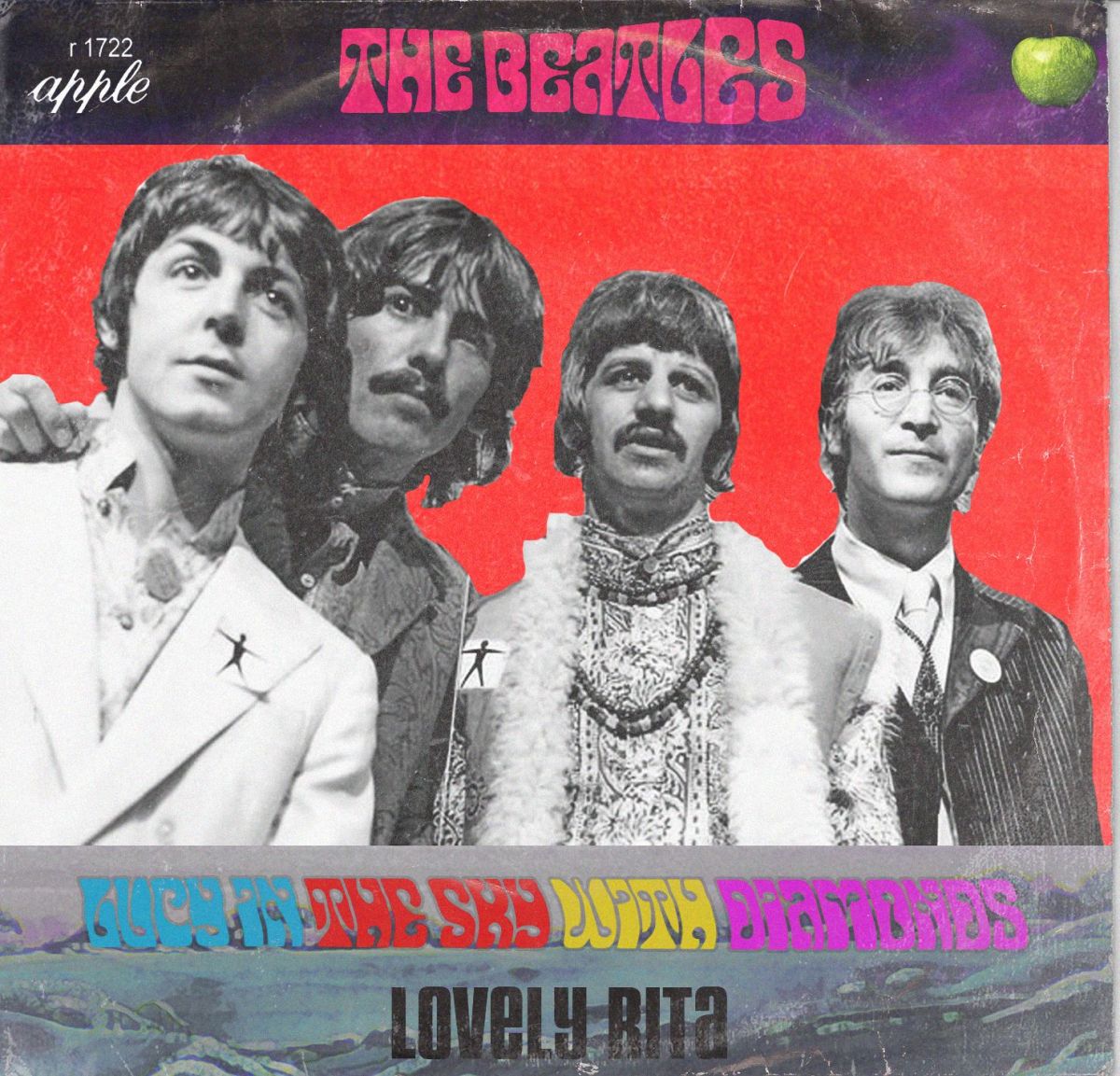
I got Sgt Pepper in 1977 when I was 10. I sat there for hours, staring at the cover and listening to this music I had never heard before. This is one of the songs that grabbed my attention. I liked Lucy in the Sky with Diamonds, Good Morning, Good Morning, and Lovely Rita, but that quickly expanded.
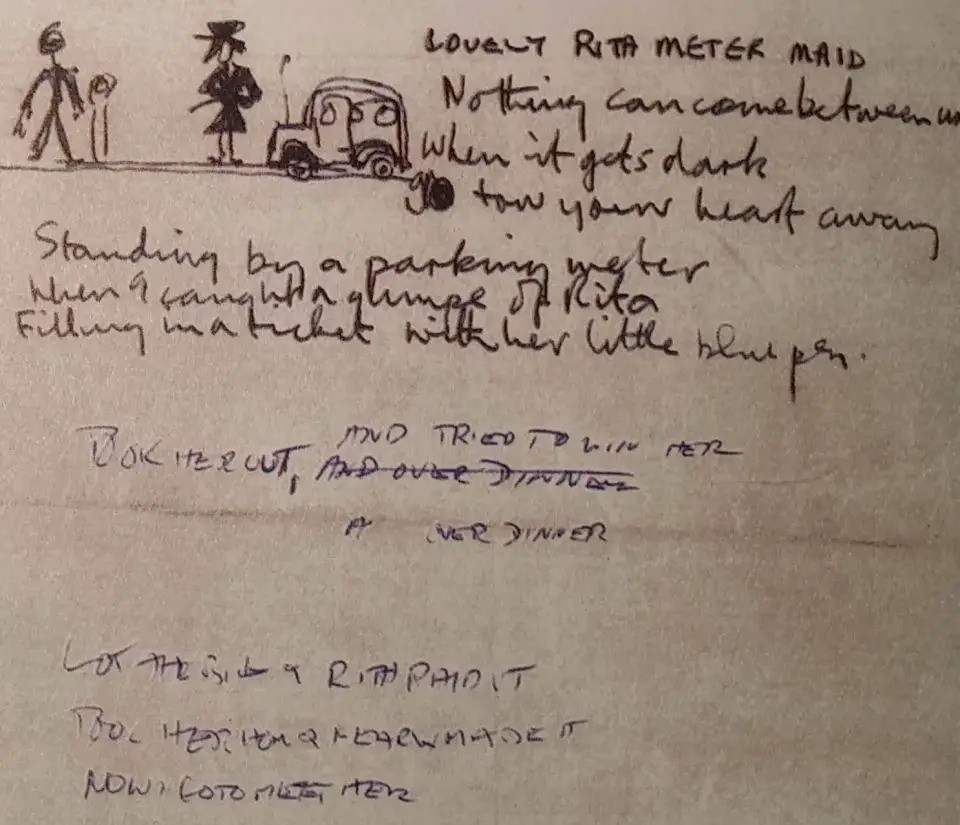
This song isn’t about a real person. It was Paul making up the character (I have his quote below) after hearing in America that they called Parking Meter Women “Meter Maids.” John didn’t particularly like the song because he liked songs about real things. He hardly ever just made things up…Lennon would write about people he knew or his experiences.
The Beatles recorded their debut album, Please Please Me, in a remarkably short amount of time. The entire recording process for the album took approximately 9 hours and 45 minutes of studio time. Now let’s fast forward 5 years from 1962 to 1966-67.
The Beatles spent up to 700 hours in the studio recording Sgt. Pepper’s Lonely Hearts Club Band. One of the main reasons was their desire to go beyond the limitations of the standard four-track recorder. To achieve this, they linked two four-track machines together—an innovative move at the time—and experimented throughout the process. While this technique wasn’t commonly used, it allowed them to push the boundaries of what was possible in the studio. Sgt. Pepper’s remains one of the most important albums in music history, not just for its songs, but for the groundbreaking recording techniques that helped shape the future of music.
The following year, The Band changed the course of music in some ways. They released Music From The Big Pink and influenced a generation. Bands started to play more earthy…more roots-oriented music. The Beatles did that by recording the rootsy White Album.
Paul McCartney: “I was bopping about on the piano in Liverpool when someone told me that in America, they call parking-meter women meter maids. I thought that was great, and it got to ‘Rita Meter Maid’ and then “Lovely Rita Meter Maid’ and I was thinking vaguely that it should be a hate song: ‘You took my car away and I’m so blue today’ and you wouldn’t be liking her; but then I thought it would be better to love her and if she was very freaky too, like a military man, with a bag on her shoulder. A foot stomper, but nice. The song was imagining if somebody was there taking down my number and I suddenly fell for her, and the kind of person I’d be, to fall for a meter maid, would be a shy office clerk and I’d say, ‘May I inquire discreetly when you are free to take some tea with me.’ Tea, not pot. It’s like saying ‘Come and cut the grass’ and then realizing that could be pot, or the old teapot could be something about pot. But I don’t mind pot and I leave the words in. They’re not consciously introduced just to say pot and be clever.”
John Lennon: That’s Paul writing a pop song. He made up people like Rita, like a novelist. You hear lots of McCartney influence going on now on the radio: these stories about boring people being postmen and writing home.
Lovely Rita
(Lovely Rita, meter maid) (Lovely Rita, meter maid)
Lovely Rita, meter maid Nothing can come between us When it gets dark I tow your heart away
Standing by a parking meter When I caught a glimpse of Rita Filling in a ticket in her little white book In a cap she looked much older And the bag across her shoulder Made her look a little like a military man
Lovely Rita, meter maid May I inquire discreetly When are you free to take some tea with me?
Rita
Took her out and tried to win her Had a laugh and over dinner Told her I would really like to see her again
Got the bill and Rita paid it Took her home, I nearly made it Sitting on the sofa with a sister or two
Oh, lovely Rita, meter maid Where would I be without you Give us a wink and make me think of you
(Lovely Rita, meter maid) (Lovely Rita, meter maid) (Lovely Rita, meter maid) (Lovely Rita, meter maid)
I was so much older then, I’m younger than that now
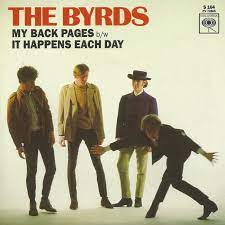
This is my favorite song by the Byrds. I like the Byrds’ arrangement of this great Bob Dylan song. Roger McGuinn’s voice plus Rickenbacker is always a winning combination. Dylan recorded his version in 1964 on his Another Side of Bob Dylan album. I fell for the song because of the line, I was so much older then, I’m younger than that now. Just a great phrase from a catalog that is full of them.
On the countless Dylan songs that are covered, I will usually like Dylan’s version better…on this one, I prefer the Byrds. The song peaked at #30 on the Billboard 100 in 1967. It’s one of those songs that I so wish I could have written. Even the title is cool because “My Back Pages” is not uttered in the song.
Bob Dylan helped the Byrds a lot with Mr. Tambourine Man and other songs. The Byrds, in turn, helped widen Bob’s popularity to the new rock audience that was developing, which may not have heard some of these songs as much.
In 1992 the Bob Dylan 30th Anniversary Concert happened, and my cousin had the complete concert on VHS. He had a satellite, so I didn’t have to wait for it to be released almost a year later. I’ll never forget this song being played with Roger McGuinn sharing the stage with Dylan, Tom Petty, George Harrison, Eric Clapton, and Neil Young.
Roger McGuinn: “I don’t try to interpret what Bob meant when he wrote the song. He doesn’t do that, and to do that, you spoil it for people who have a different meaning of the song.”
The song being played at Bob Dylan’s 30th Anniversary concert. Bob Dylan, Roger McGuinn, Neil Young, George Harrison, Eric Clapton, and a bunch more.
My Back Pages
Crimson flames tied through my ears Rollin’ high and mighty traps Countless with fire on flaming roads Using ideas as my maps We’ll meet on edges, soon, said I Proud ‘neath heated brow
Ah, but I was so much older then I’m younger than that now Half-wracked prejudice leaped forth Rip down all hate, I screamed Lies that life is black and white Spoke from my skull I dreamed Romantic facts of musketeers Foundationed deep, somehow Ah, but I was so much older then I’m younger than that now
In a soldier’s stance, I aimed my hand At the mongrel dogs who teach Fearing not that I’d become my enemy In the instant that I preach Sisters fled by confusion boats Mutiny from stern to bow Ah, but I was so much older then I’m younger than that now
Ah, but I was so much older then I’m younger than that now
My guard stood hard when abstract threats Too noble to neglect Deceived me into thinking I had something to protect Good and bad, I define these terms Quite clear, no doubt, somehow Ah, but I was so much older then I’m younger than that now
I remember being a kid and how ABC, which was our “channel 2,” never came in clearly. The picture was snowy, but I still recall catching glimpses of The Dick Cavett Show. Of course, I also remember Johnny Carson—he and Cavett were the two big talk show hosts of the time. While it might be sacrilegious to say, I always favored Cavett over Carson. Even as a kid, Cavett seemed more interesting.
The Dick Cavett Show on ABC was a smart alternative to The Tonight Show with Johnny Carson. Cavett frequently booked intellectuals and gave them time for extended, in-depth conversations. You truly got to know his guests—he took more than 10 minutes, unlike the rushed format of today. There were no distractions, no flashy sets, just meaningful conversations. That was the key: Cavett didn’t just interview his guests… he had real conversations with them. No gimmicky skits, just an authentic exchange.
Cavett had his critics. Some called him a snob, a name-dropper, or too controversial. All three were true—and I loved it. Yes, he went to Yale, and yes, he dropped names. But honestly, if I’d spent time with people like Groucho Marx, I’d name-drop too. Cavett’s guest list was legendary: John Lennon, Jimi Hendrix, Katharine Hepburn, Bette Davis, and so many more. He embraced the counterculture, but he also joked about the counterculture, staying balanced in his approach. In modern times, Conan O’Brien and David Letterman came closest to that spirit…and Charlie Rose as far as having conversations.
One of Cavett’s trademarks was his unique mix of guests. Where else would you see Janis Joplin, Raquel Welch, and Gloria Swanson sharing the same stage? His early 1970s ABC show was the pinnacle of his career. When he booked a rare or special guest, he often dedicated the entire episode to them. Bette Davis and Katharine Hepburn each had an entire show to themselves. Can you imagine that happening today? Is it because today’s stars aren’t as compelling, or has the audience’s attention span shrunk too much to appreciate such depth?
Cavett also thrived on risk. He hosted Norman Mailer and Gore Vidal, who famously clashed, and another episode featured Salvador Dalí, Lillian Gish, and Satchel Paige. These combinations were bold, and they worked. Even Johnny Carson admitted that Cavett was the only talk show host who could’ve seriously challenged him, though ABC’s third-place standing in the network race kept Cavett from overtaking Carson’s dominance.
This isn’t a knock on Johnny at all—his show set the blueprint for today’s talk shows. But Cavett offered something different: a smarter, more thoughtful experience. Watching his episodes now feels like opening a time capsule. While some moments are tied to their time, much of it remains timeless. Hearing from legends like Marlon Brando and Katharine Hepburn, who rarely did talk shows, is especially fascinating.
It wasn’t one of those “Hi, my name is Miss/Mr. So-and-So, my favorite color is blue, and goodbye until next time I have something to promote” situations. With Dick Cavett, you really got to know the person. He had a knack for drawing out something truly interesting. My favorite interview is the one with George Harrison. It didn’t seem promising at first—George wasn’t particularly eager to be on any show at the time—but Dick managed to get him to open up. You could see Cavett’s relief when George finally warmed up. This interview, which came right after John and Yoko’s appearance, turned out to be one of George’s best.
Here are some YouTube comments for these older talk shows:
I’m amazed when I go back and watch interviews from older talk shows, because it’s more quiet and the celebrity hosts and celebrity guests actually engage in authentic conversation with pure respect.
Jimmy Fallon should watch this video. No stupid laughing constantly, no sound effects and no fake laughter from the host. Just a meaningful conversation
Man no wonder podcasts have taken over. This interview was far more interesting and informative than any late night tv interview we get these days.
I posted this on February 14, 2021, and every year this is the first song that comes to mind on Valentine’s Day. I then thought…enough time has gone by so I’m posting it again. Sorry to cheat but to me, it is such a Valentine’s song that I just had to.
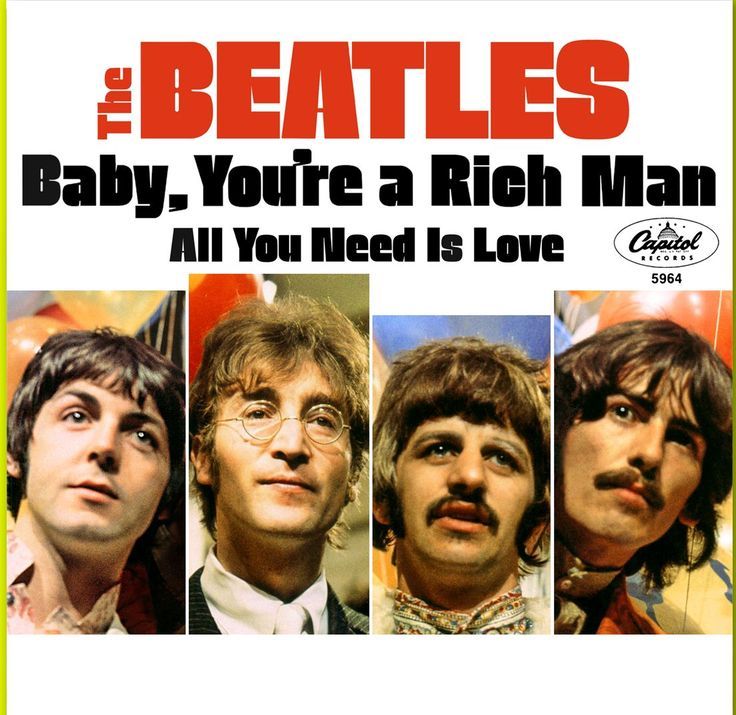
I hope all of you have a great Valentine’s Day… let’s join the Beatles on June 25, 1967, for All You Need Is Love. There’s nothing you can do that can’t be done…
How nerve-racking this had to be even if you were a Beatle. They performed this on one of the first Satellite hookups around the world. An estimated 350 million people were watching. This performance was a rock and roll milestone…they were in front of the world.
The show was called “Our World”, the first worldwide TV special. Broadcast in 24 countries on June 25, 1967, the show was six hours long and featured music from 6 continents, with The Beatles representing Britain. At the Beatles’ feet were members of The Rolling Stones, The Who, Cream, The Hollies, and The Small Faces helping by singing along.
John wrote the song to be simple enough to be understood by the entire world. Simple verses and music with a slogan-type chorus. He thought Peace and Love could be understood by all. He had said: I like slogans. I like advertising. I love the telly. And when you think about it he did have some slogan songs like Power To The People and others.
The song peaked at #1 almost everywhere and probably even in Venus and Mars in 1967.
Musically, this song is very unusual. The chorus is only one note, and the song is in a rare 7/4 tempo. In the orchestral ending, you can hear pieces of both “Greensleeves,” a Bach two-part invention (by George Martin), and Glenn Miller’s “In The Mood.” Royalties were paid to Miller for his contribution.
Just think of all of the bits of paper all of them wrote or scribbled on and threw away. John Lennon’s hand-written lyrics for this song sold for one million pounds in the summer of 2005. Lennon left them in the BBC studios after this appearance, and they were salvaged by a very smart BBC employee.
Sean Lennon: “My list of favorite things changes from day to day. I like when my dad said: ‘There’s nothing you can know that isn’t known/ Nothing you can see that isn’t shown/ Nowhere you can go that isn’t where you’re meant to be.’ It seems to be a good representation of the sort of enlightenment that came out of the ’60s.”
All You Need Is Love
Love, love, love Love, love, love Love, love, love
There’s nothing you can do that can’t be done Nothing you can sing that can’t be sung Nothing you can say, but you can learn how to play the game It’s easy Nothing you can make that can’t be made No one you can save that can’t be saved Nothing you can do, but you can learn how to be you in time It’s easy
All you need is love All you need is love All you need is love, love Love is all you need
There’s nothing you can know that isn’t known Nothing you can see that isn’t shown There’s nowhere you can be that isn’t where you’re meant to be It’s easy
All you need is love All you need is love All you need is love, love Love is all you need
All you need is love (all together now) All you need is love (everybody) All you need is love, love Love is all you need
Love is all you need (Love is all you need) Love is all you need (Love is all you need) Love is all you need (Love is all you need) Love is all you need (Love is all you need) Love is all you need (Love is all you need) Love is all you need (Love is all you need) Love is all you need (Love is all you need) Love is all you need (Love is all you need) Love is all you need (Love is all you need) Love is all you need (Love is all you need) Love is all you need (Love is all you need) (Love is all you need) (Love is all you need) (Love is all you need) Yesterday (Love is all you need) Oh Love is all you need Love is all you need Oh yeah Love is all you need (She love you, yeah, yeah, yeah) (She love you, yeah, yeah, yeah) (Love is all you need) (Love is all you need)
When I played music as I was younger our singer could sing Journey songs and AC/DC songs (from both singers) but when it came to Orbison…a totally different story. Mark is a very good singer but he balked at Roy Orbison. He told me that couldn’t happen…at least not in the way Roy did it.
Not only did the man have a once in a generation voice he was also known to be an extremely nice and good guy. He went through so many tragedies in his short life. He lived around 30 minutes from me but I never got to catch him in concert or just seeing him.
There was a quote that Tom Petty gave…that when he joined the Wilburys he called his mom and told her “Mom, I’m in a band with Roy Orbison!” Not Mom I’m in a band with Bob Dylan or a Beatle George Harrison…no it was Roy. That voice was golden and magical but he paid for his success dearly as you will read below.
In 1957, Orbison married his sweetheart, Claudette Frady. She was 17 at the time and he was 21. As the young couple’s romance was soon thrust into jeopardy given Orbison’s rapid rise to fame, cracks began to appear. In November 1964, Orbison divorced Claudette over her alleged infidelities. However, within ten months, the pair had reconciled their differences and were once more in a loving relationship. They had three children.
It started on June 6, 1966, when Claudette and Roy were riding motorcycles. Claudette hit the door of a pickup truck and was killed instantly. Orbison poured himself into his work after that. He wrote and toured but was out of step with the mid to late-sixties music. It was in Birmingham, England in September 1968 when catastrophe struck once more. News reached Orbison that a fire had broken out at his home in Tennessee and that his two eldest sons had tragically passed away. His younger child went to live with his grandparents.
This song was written by Orbison and Joe Melson and released in 1961. It was a smash here, peaking at #2 on the Billboard 100, #3 in Canada, #11, and #25 in the UK. It would hit again in 1980-81, with Don Mclean covering it. It peaked at #5 on the Billboard 100, #1 on the Canadian Country Charts, #7 in Canada, #11 in New Zealand, and #1 in the UK.
Roy Orbison died suddenly on December 6, 1988, in Hendersonville Tennessee. His new album Mystery Girl would be released around a month and a half after Roy passed. The album was hugely successful peaking at #5 in America and #4 in Canada.
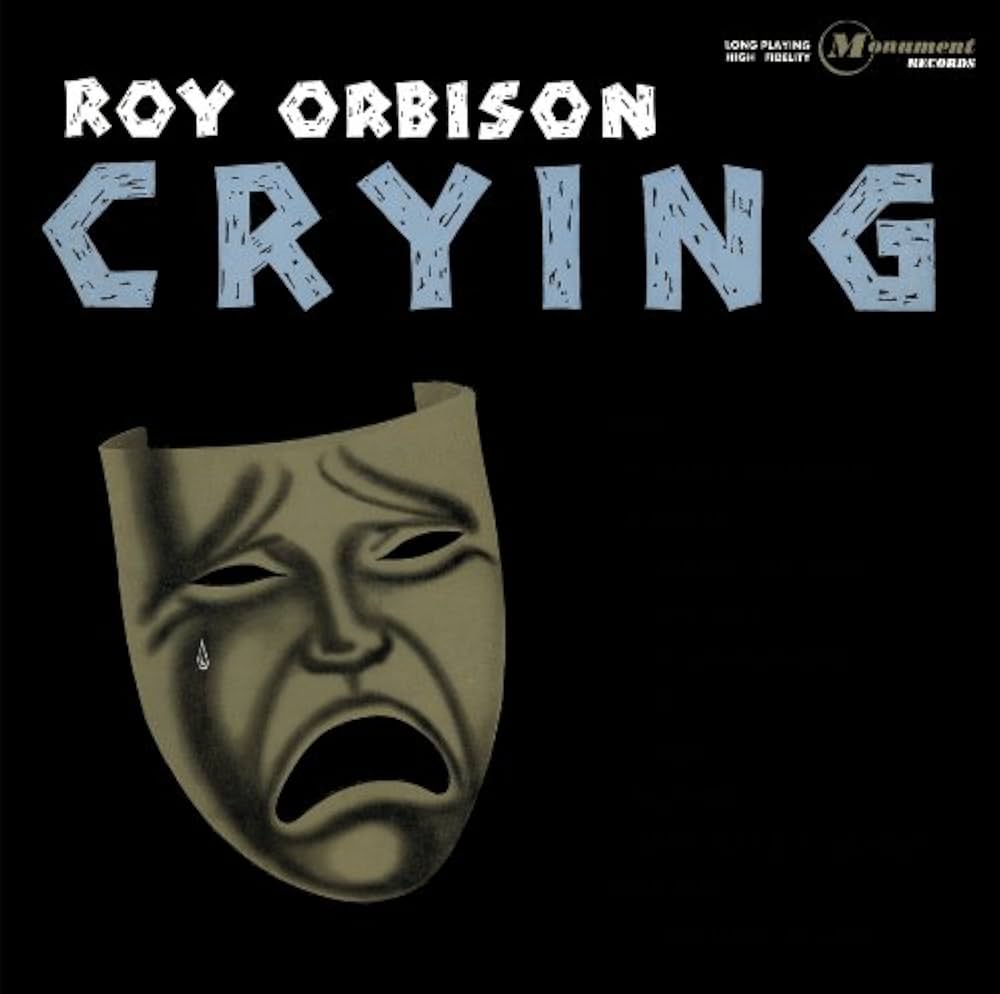
Crying
I was alright for a while, I could smile for a while Then I saw you last night, you held my hand so tight When you stopped to say, “Hello” You wished me well, you couldn’t tell
That I’d been crying over you Crying over you then you said, “So long” Left me standing all alone Alone and crying,
Crying, crying, crying It’s hard to understand That the touch of your hand Can start me crying
I thought that I was over you But it’s true, so true I love you even more than I did before But darling what can I do? For you don’t love me and I’ll always be
Crying over you Crying over you Yes, now you’re gone And from this moment on I’ll be crying, crying, crying, crying, Crying, crying, over you
The king of Marigold was in the kitchen Cooking breakfast for the queen The queen was in the parlor Playing piano for the children of the king
One song off the White Album that I found when I was 13 years old. It’s a good reason why I’m happy they kept it as a double album. I wouldn’t have this song and a few more. When the chorus kicks in it sticks in your head. That is the beauty of the White Album…it has something for everyone. Lennon had a way of delivering sometimes dark imagery, forming it around a catchy melody and it worked. It’s just part of the album’s huge tapestry.
The track includes a coda not originally part of the song… a snippet of Paul McCartney singing a few lines known as “Can You Take Me Back?” That was an unfinished song by Paul. This fragment segues into Revolution 9 on the album and adds an eerie, unresolved feeling to the end of the track. They would explore this more on the B side of Abbey Road.
Although the songs differ in style they all have that Beatles touch to them whether it be the hard Helter Skelter, country Rocky Raccoon, or even the fairytale-like Cry Baby Cry. The sessions were not the happiest time for the band (the Esher Demos were though) but they came up with the most eclectic batch of songs they ever produced. The demos they made gave another look at the song.
When John Lennon was killed in 1980 there were three albums I bought that long winter. Double Fantasy, The White Album, and Abbey Road. I’m back there again in that 1980-81 winter and spring when I hear this album.
The White Album is as diverse as you can get… Pop, Rock, Country, Folk, Reggae, Avant-Gard, Blues, Hard Rock and some 20’s British Music Hall thrown in the mix. It has plenty of songs that you have heard of and many that the masses have not heard as much. John Lennon wrote one of his best songs for this album… Dear Prudence.
The Beatles more than many bands could bend to a style of music and play that style well.
Of all the songs I heard on this album…this is the one where I thought…hmmm… John Lennon was so different in writing songs compared to Paul. I love this example of John’s fairytale. He wrote the song in 1967, inspired by a commercial jingle he heard on Television. The lyrics play on the nursery rhyme Sing a Song of Sixpence, with lines like Cry baby cry, make your mother sigh evoking a fairy-tale atmosphere.
Ian MacDonald, in his book Revolution in the Head, described this song as “a charmingly wayward waltz” with “a whimsical, mildly satirical undertone.”
The White Album was released in 1968 and peaked at #1 in the Billboard Album Chart, #1 in Canada, #1 in the UK, and #1 about everywhere else
The demo of Cry Baby Cry. You can hear John double his voice.
Cry Baby Cry
Cry, baby, cry Make your mother sigh
The king of Marigold was in the kitchen Cooking breakfast for the queen The queen was in the parlor Playing piano for the children of the king
Cry, baby, cry Make your mother sigh She’s old enough to know better So cry, baby, cry
The king was in the garden Picking flowers for a friend who came to play The queen was in the playroom Painting pictures for the children’s holiday
Cry, baby, cry Make your mother sigh She’s old enough to know better So cry, baby, cry
The duchess of Kirkcaldy always smiling And arriving late for tea The duke was having problems With a message at the local bird and bee
Cry, baby, cry Make your mother sigh She’s old enough to know better So cry, baby, cry
At 12 o’clock, a meeting ’round the table For a seance in the dark With voices out of nowhere Put on specially by the children for a lark
Cry, baby, cry Make your mother sigh She’s old enough to know better So cry, baby, cry Cry, baby cry Make your mother sigh She’s old enough to know better So cry, baby, cry
Cry, cry, cry Make your mother sigh She’s old enough to know better So cry, baby, cry
It’s that time of year…and this is one-holiday song that is on my list and not worn out. I first heard this in 1994 when I bought the Beatles Anthology album. I never knew of this song before. This song was never officially released until it appeared as the B-side to “Free As A Bird” in 1994. I’ve posted it every year since I’ve blogged and will continue to do so…it’s repetitive but I like it…it drives home the point.
My friend Dave posted this song in 2021 and he has more info than I do so check it out.
The song is credited to Lennon-McCartney-Harrison-Starkey. The original version was distributed to The Beatles fan club in 1967. It’s the only song written specifically for the Beatles Fan Club members. Along with the Beatles…actor Victor Spinetti and roadie Mal Evans were on the recording.
Between December 1963 and December 1969, they sent out 7 flexi discs that had spoken and musical messages to their official fan clubs in the UK and the US at Christmas time.
The Beatles recorded this in 1967 and wasn’t released until 1994 paired with “Free As A Bird”. It is a fun Christmas song that will stick in your head. The Beatles did not release a Christmas song commercially… only to their fan club when they were active.
I like the end where each Beatle tells you Merry Christmas and Happy New Year.
Many performers of this era like The Beach Boys and The Four Seasons released Christmas songs, but The Beatles never had an official Christmas release.
Christmas time is here again
Christmas time is here again Christmas time is here again Christmas time is here again Christmas time is here again
Ain’t been round since you know when Christmas time is here again O-U-T spells “out”
Christmas time is here again Christmas time is here again Christmas time is here again Christmas time is here again
Ain’t been round since you know when Christmas time is here again O-U-T spells “out”
Christmas time is here again Christmas time is here again Christmas time is here again Christmas time is here again
Ain’t been round since you know when Christmas time…[music continues and fades to background]
[spoken]
This is Paul McCartney here, I’d just like to wish you everything you wish yourself for Christmas.
This is John Lennon saying on behalf of the Beatles, have a very Happy Christmas and a good New Year.
George Harrison speaking. I’d like to take this opportunity to wish you a very Merry Christmas, listeners everywhere.
This is Ringo Starr and I’d just like to say Merry Christmas and a really Happy New Year to all listeners
[a John Lennon pastiche at this point, very hard to understand]
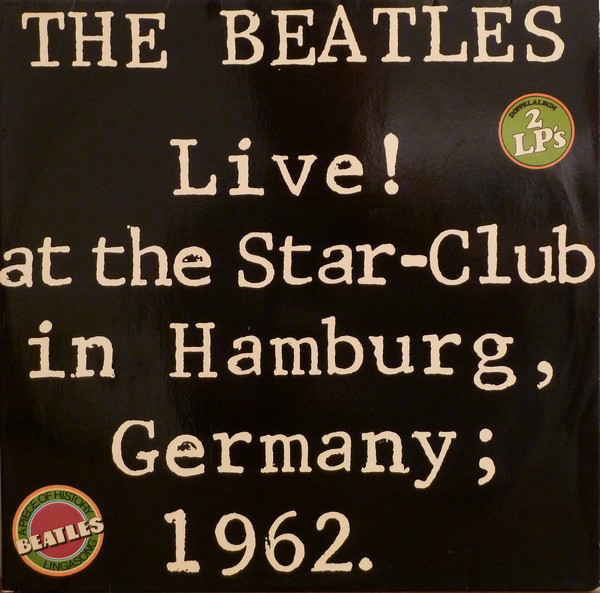
When I got this album I loved it but at first didn’t understand why the quality was so low but the music makes up for it. The recordings are from 1962 in their last engagement in Hamburg and they didn’t want to be there. I have mentioned this album with some posts but never really went over it.
These are the punk Beatles. Raw and relentless playing fast and furious. The Beatles before the world was paying attention to them. This was recorded on an old reel-to-reel recorder at the slowest speed to conserve tape. It was not meant to be an album or anything commercial. A friend named Ted “King Sized” Taylor the leader of a band called the Dominoes, put a microphone near the stage to record them. The quality is poor, to say the least.
Peter Jackson has mentioned that he would love to work on this album. He could improve the sound a lot using modern technology and I wish they would let him try it. It was released in 1977 and the record company sunk 100,000 dollars just to make the audio listenable. Ted Taylor did ask the Beatles before he recorded and they had no qualms with it. Later on, they tried to sue to block its release but obviously were unsuccessful. I’m glad they were…this is a fun and historic listen.
The Beatles were playing to an audience of sailors, prostitutes, drunks, and gangsters. They would rip through songs at such a speed that only 2 songs on this double album are over 3 minutes long. It was like the Beatles doing a future Ramones imitation. They were “enhanced” by prellies (Preludin) that sped them up quite a bit.
They are a great band here. You catch them with their guard down and acting completely natural. The Beatles were on their last club dates in Hamburg. They had already recorded Love Me Do and it was on the charts. They did not want to be back in Hamburg but they honored a previous agreement and were there. They didn’t mail the performances in but they were loose and relaxed.
It contains mostly cover songs with very few originals. The track listing is at the bottom of the post. This is close to what Brian Epstein heard when he first saw them, this is why they took over Liverpool and this is why they got signed.
Casual fans will not want this album but serious Beatles fans will love it. This is more than a low-fidelity album…it is history. John Lennon always said that the world didn’t hear the best of the Beatles live…I agree. By this time in Hamburg they were getting lazy as well. They didn’t want to be there because they were sitting on Please Please Me waiting for it to get released in the following year.
After they became THE Beatles…they could not hear themselves play because of the long constant jet taking off screaming. On this album, you hear them as they were before the screams. I was 11 when I bought this and I didn’t get the importance until a few years later.
This is out of the book Tune In… Without a doubt the best book out on the Beatles. It’s the first of three volumes.
Their playing is adept and hyper-energetic, and the microphone catches many important moments. The tape’s value has been downplayed on the basis that the Beatles are musically sloppy and perhaps even lazy, knowing they’ve one foot out of the door, but this is to ignore its virtues. The Beatles did hate being in Hamburg this last time … but the recording shows them still cutting the mustard on stage. They’re sloppy because, here, they can be, but they’re not lazy, and they’re not playing with extra care because they’re being recorded: this is an authentic eavesdrop on their club act, not something fizzed-up for the tape machine.
At least three sets were recorded, and because the Beatles rarely repeated themselves in Hamburg, there are only five duplicates among the thirty-seven songs. The repertoire is a real surprise. The only self-written pieces are “Ask Me Why” and “I Saw Her Standing There” (twice), so there’s no “Love Me Do,” “PS I Love You,” “Please Please Me,” “One After 909” or any of several other possibilities, and there are few of the songs from the spine of their all-conquering 1962 stage sets—no “Some Other Guy,” “Soldier of Love,” “Please Mr. Postman,” “Don’t Ever Change,” “A Shot of Rhythm and Blues,” “Devil in Her Heart,” “Baby It’s You,” “Will You Love Me Tomorrow,” “If You Gotta Make a Fool of Somebody,” “Hey! Baby, A Picture of You,” and so on. What’s here is an idiosyncratic selection of old rock numbers all played at breakneck speed—Prellies pace. The nights of half-hour “What’d I Say” marathons are past: everything is high velocity, only three numbers tipping into three minutes.
Side one
Introduction/”I Saw Her Standing There” (John Lennon, Paul McCartney) – 0:34/2:22
“Roll Over Beethoven” (Chuck Berry) – 2:15
“Hippy Hippy Shake” (Chan Romero) – 1:42
“Sweet Little Sixteen” (Berry) – 2:45
“Lend Me Your Comb” (Kay Twomey, Fred Wise, Ben Weisman) – 1:44
“Your Feet’s Too Big” (Ada Benson, Fred Fisher) – 2:18
Side two
“Twist and Shout” (Phil Medley, Bert Russell) – 2:03
“Mr. Moonlight” (Roy Lee Johnson) – 2:06
“A Taste of Honey” (Bobby Scott, Ric Marlow) – 1:45
Thanks to Dave from A Sound Day for publishing this post on October 25, 2024. It was part of his Turntable Talk: Our guest columnists are invited to go on a magical musical road trip and visit any musical location they want to – past or present – and see it in all its glory.
I would love to go to the Cavern. The Beatles would not have to be there for me to enjoy its dark wet walls. They have built a new one but it’s not the same location of the original. That is great for the tourists but what’s the point? I would love to go back to 1957 – 1972 to walk into the cavern. Just to feel the history inside of that place. The Beatles were not the only big name to play there as you will see. A small cellar club that would be known around the world…including a small town in Tennessee.
The original Cavern Club was founded on January 16, 1957, by Alan Sytner. Sytner was inspired by jazz clubs he had visited in Paris such as the Le Caveau de la Huchette. The Cavern Club was initially a jazz club, with early performances focusing on traditional jazz and skiffle, a blend of folk and jazz. No rock and roll or blue jeans were allowed in the club. Ringo Starr debuted there on July 31, 1957, playing drums in the Eddie Clayton Skiffle Group. John Lennon would appear there on August 7, 1957, with the Quarrymen Skiffle Group. That year Big Bill Broonzy played there along with jazz great Ronnie Scott. In 1959 Sonny Terry and Brownie McGhee played there as well.
In the early 1960s, rock ‘n’ roll became popular in Liverpool, with skiffle bands embracing electric guitars and rhythm. The Beatles made their first appearance on February 9, 1961. They performed there 292 times between 1961-1963. Brian Epstein ran a record store called NEMS and when a teen asked for My Bonnie by Tony Sheridan and The Beatles…Brian wanted to find it. He was told that The Beatles played at the Cavern so on November 9, 1961, Brian walked down the steps in the Cavern to discover The Beatles’ playing.
In less than a year he had them sign an EMI contract and Ringo replaced Pete Best in August of 1962. A year later on August 3, 1963, the Beatles played their last show there…they had outgrown the Cavern and had to start touring nationally. After The Beatles left, other bands came there to play in Liverpool. The Cavern became a hotspot for other British acts, including The Rolling Stones, The Who, The Kinks, Queen, The Yardbirds, Black Sabbath, Elton John, and The Hollies.
Paul McCartney didn’t forget the place. In 1968 he and Linda went back to visit the Cavern. The band Curiosity Shop was rehearsing, and Paul decided to join them by helping on the drums. Before getting on stage with the band Paul got behind the piano in the lounge and performed a solo performance of Hey Jude.
After struggling with financial issues, the original club was closed in 1973 due to the construction of a railway ventilation shaft. Much of the original Cavern was demolished, though some bricks were saved. A lot of the Cavern was filled in by rubble. In the early eighties architect David Backhouse said that the plans to excavate and re-open the Cavern Club in its original form would not be possible for structural reasons. Tests had revealed the arches of the old cellar had been too badly damaged during the demolition of the ground floor of the Cavern Club and the warehouses above.
There is a new Cavern as I said at the beginning and if I make it over there yes, I will see it but it would not be the same as seeing the real deal. That got me thinking…is that stage still there just covered with rubble from 1973? Dave, Obbverse, Randy, Keith, John, and Christian…grab a shovel and meet me there now!
I’ve been reading about the Beatle’s early days when they were leather-bound hoodlums on the streets of Hamburg and Liverpool. Liverpool had a lot of bands and they tended to do the same songs. The Beatles broke out of that by picking B sides rather than playing a top 40 hit every time. They had excellent taste. They played this one in Hamburg at the Star Club. If you haven’t heard the low-quality album Beatles Live At the Star Club…it’s worth listening to. It’s The Beatles in rock/punk mode.
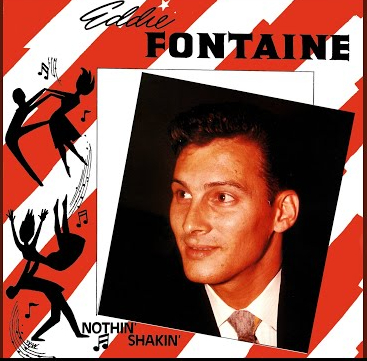
Eddie Fontaine, singer and actor, released this song in 1958. It has it all…twangy 1950s guitar and a cool lyric to boot. Eddie Fontaine never became a major name in rock and roll but his song left an impression on a generation of young rockers.
Eddie was from Massachusetts and RCA signed him in 1954 as a vocalist. He first gained attention as a singer with his single Cool It, Baby in 1956, which had moderate success. It was featured in the film The Girl Can’t Help It. However, Nothin’ Shakin in 1958 brought him more recognition, especially within the rockabilly crowd.
Eddie was an actor as well. He has 27 actor credits in IMDB. He appeared in TV shows like 77 Sunset Strip, The Wild Wild West, Ironside, Kojak, Planet of the Apes, Baretta, and many more.
This song peaked at #64 on the Billboard 100 in 1958. Below is a more refined Beatles version they did on the BBC radio and the original by Eddie himself.
Nothin’ Shakin’
I’m finding out what love is all about And every day at three when school lets out I see my baby I get weak in the knees There’s nothin’ shakin’ but the leaves on the trees Why must she be such a doggone tease? There’s nothin’ shakin’ but the leaves on the trees
We meet the gang and go to Rockin’ Joe’s The cats are stompin’ on their heels and toes I grab my baby, tried to give her a squeeze Nothin’ shakin’ but the leaves on the trees My daddy told me there’d be times like these There’s nothin’ shakin’ but the leaves on the trees
She’s got a way that makes me act like a fool Oh, she spends my money then she plays me cruel I’m beggin’ her for kisses on bended knees Gimme some lovin’ baby, please, please, please
But I keep trying hard to make her mine Someday the wind will blow, the sun will shine Until that time she puts my heart at ease There’s nothin’ shakin’ but the leaves on the trees She locked my heart and threw away the keys There’s nothin’ shakin’ but the leaves on the trees Ha ha ha!
Nothin’ shakin’ but the leaves on the trees She’s got a way that makes me act like a fool Oh, spends my money then she plays me cruel I’m beggin’ for her kisses on bended knees Why don’t ya gimme some lovin’ baby, please, please, please
But I keep trying hard to make her mine Someday the wind will blow, the sun will shine Until that time she puts my heart at ease There’s nothin’ shakin’ but the leaves on the trees Why must she be such a doggone tease? There’s nothin’ shakin’ but the leaves on the trees Nothin’ shakin’ but the leaves on the trees Nothin’ shakin’, oh shakin’
Thanks to Dave who published this on TurnTable Talk. This time the subject was more of rock’s arty album covers…well of course I had to pick this one.
I’ll never forget buying the Sgt Pepper album. I bought it in 1977, 10 years after it was released, and I played it constantly. I remember opening it and finding this cool sheet of cardboard that contained a cutout mustache, paper pins, Sgt stripes, a cool photo of the Beatles, and Sgt Pepper himself! Thinking back…it’s cool that they included these 10 years after the release date. Here is what a 10-year-old Max found in the album. I wore that mustache for days.
I would venture to say that Sgt Peppers Lonely Hearts Club Band is probably the most famous album by anyone. Personally, I never thought it was their best, but I know many Beatles fans who do think that. If they had added “Strawberry Fields Forever” and “Penny Lane” (which most bands would have done) and maybe dropped “Lovely Rita” and “When I’m 64”, then I would have probably considered it the best. Now, after saying that…I like both of those songs, don’t get me wrong. “ Lovely Rita” as a 10-year-old caught my attention. I think Revolver is very hard to beat and that is their best album artistically…personally as most of you know I have a soft spot for “The White Album” and that is my personal #1.
Sgt. Pepper’s is their most ambitious artistic statement, I think, but I listen to Revolver more often, I think it has higher replay value to me anyway. That is like comparing a great work of art by your favorite painter – you love both but see something else in one so it’s very subjective. As far as packaging… now that is where Sgt Pepper knocks it out of the park.
For really the first time on a massive scale, an album was like a work of art. The Beatles standing as Sgt Pepper’s band with a massive audience behind them. Beside them includes the younger Beatles and behind includes everyone from WC Fields to Lenny Bruce. John wanted Jesus and Hitler on the cover but was talked out of it by Sir Joesph Lockwood, the chairman of EMI.
It was designed by artists Peter Blake and Jann Haworth. The cover features the band members dressed in colorful, military-style outfits standing in front of a collage of life-sized cardboard cutouts of famous people. Surrounding The Beatles are cutouts of various cultural icons, artists, actors, musicians, and other notable figures. Some of these include Bob Dylan, Marilyn Monroe, Marlon Brando, Karl Marx, and Oscar Wilde.
There are five people still alive who were on the cover as of right now. Bob Dylan (top right), Dion DiMucci (smiling blond guy above and to the left of Lennon), Larry Bell (between Lennon and Starr), and obviously Paul McCartney and Ringo Starr.
The cover cost approximately £25,000 ((equivalent to £573,000 in 2023)) to produce, which was a significant amount for an album cover at the time. In comparison, most album covers in the 1960s typically cost around £50. The high cost was due to the elaborate design, the custom-made costumes, the creation of the collage with life-sized cutouts, and the use of wax figures borrowed from Madame Tussauds.
The Beatles recorded their debut album Please Please Me in a remarkably short amount of time. The entire recording process for the album took approximately 9 hours and 45 minutes of studio time. Now let’s fast forward five years from 1962 to 1966-67. The Beatles used up to 700 hours of recording time to record Sgt Pepper. The reason why is because they wanted more tracks than just four. They connected two four-track machines together and recorded the album. That wasn’t done all of the time, and they experimented as they went. This album is one of the most important in music history if only because of the newer recording techniques and how far music advanced because of it.
Going off different memories of the albums by people who were there by the time. Some of them said that all you had to do was walk down a UK street and you would hear it from the windows. It was massively popular and peaked at #1 on the Billboard Album Charts, #1 in Canada, and #1 in the UK in 1967. It also peaked at #1 on the Billboard CD charts in 1987 when it was re-released.
The following year The Band changed the course of music in some ways. they released Music From The Big Pink and influenced a generation. Bands started to play more earthy, more roots-oriented music. The Beatles did that by recording the rootsy “White Album”.
To close out…Sgt. Pepper was a game changer. Not one single was released from the album…it does need to be listened to as a whole.
A Day In The Life
I read the news today, oh boy About a lucky man who made the grade And though the news was rather sad Well, I just had to laugh I saw the photograph
He blew his mind out in a car He didn’t notice that the lights had changed A crowd of people stood and stared They’d seen his face before Nobody was really sure if he was from the House of Lords
I saw a film today, oh boy The English Army had just won the war A crowd of people turned away But I just had to look Having read the book I’d love to turn you on
Woke up, fell out of bed Dragged a comb across my head Found my way downstairs and drank a cup And looking up, I noticed I was late Found my coat and grabbed my hat Made the bus in seconds flat Found my way upstairs and had a smoke And somebody spoke and I went into a dream
I read the news today, oh boy Four thousand holes in Blackburn, Lancashire And though the holes were rather small They had to count them all Now they know how many holes it takes to fill the Albert Hall I’d love to turn you on