Robert Johnson – Sweet Home Chicago

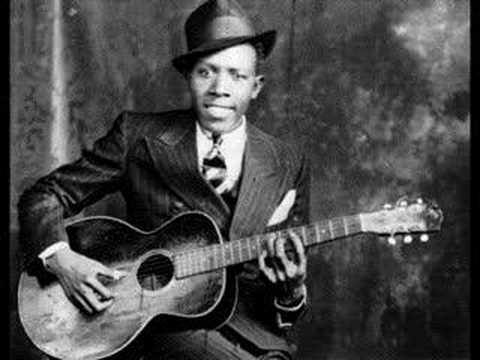
Was Robert Johnson the most influential guitarist in the history of blues and rock? That very possibly could be true. It wasn’t until the 80s that I started to read and hear more about him. Reading interviews with Clapton, Jimmy Page, and others…they all owed a huge debt to Johnson.

My introduction to Robert Johnson came from Eric Clapton while playing with Cream. Johnson was a great blues guitarist that supposedly sold his soul to the devil at the crossroads to be able to play the blues. Some of the songs he wrote played into this myth. He only cut 29 songs that he recorded in a two-year period between 1936 and 1937.

Movies such as the 1980s film Crossroads brought Johnson many more fans. Many people have searched for Johnson after listening to artists that were influenced by him. His voice will haunt you after you listen to his recordings. His songs are pure and timeless.

With this song…I heard it before I heard Robert Johnson’s version… I knew the Blues Brothers version of it the best. Robert Johnson is listed as the writer but the origins are before that.  Scrapper Blackwell’s “Kokomo Blues” and Kokomo Arnold’s “Old Original Kokomo Blues,” both similar to Johnson’s original right down to their “baby don’t you want to go” choruses, were recorded years before Johnson first entered a studio but Johnson owns it.

Now when it’s played in movies or sold on CDs… Stephen LaVere’s family gets half the royalties and Johnson’s the other half. LaVere entered the picture in 1973, persuading Johnson’s elderly half-sister Carrie Thompson to sign a contract ceding him 50 percent of the profits from Johnson’s music. He went out and marketed Johnson’s music and it paid off in millions for both parties. 

Sweet Home Chicago

Oh, baby, don’t you want to go?
Back to the land of California
To my sweet home Chicago

Oh, baby, don’t you want to go?
Back to the land of California
To my sweet home Chicago

Now one and one is two
Two and two is four
I’m heavy loaded, baby
I’m booked, I gotta go

Crying baby
Honey, don’t you want to go?
Back to the land of California
To my sweet home Chicago

And two and two is four
Four and two is six
You gonna keep monkeyin’ ’round here friend, boy
You’re gonna get you business all in a trick

Crying baby
Honey, don’t you want to go?
Back to the land of California
To my sweet home, Chicago

Now six and two is eight
Eight and two is ten
Friend-boy she trick you one time
She sure gonna do it again

But don’t cry, hey hey!
Baby, don’t you want to go?
Back to the land of California
To my sweet home Chicago

I’m going to California
From there to Des Moines Iowa
Somebody will tell me that you
Need my help someday

Crying, baby
Baby, don’t you want to go?
Back to the land of California
To my sweet home Chicago

Why The Beatles Are Still Relevant… and my 5th Year Anniversary.

This is my 5th-year anniversary on WP. Thank you all for still reading and commenting. 

This was part of Dave’s at A Sound Day “Turntable Talk” series…hope you like it. It’s also a more in-depth re-working of my first post on September 18, 2017. I never dreamed I would be accepted in such a large community of like-minded people. It’s not easy to meet Big Star fans in real life…here in this community, they come to you. My mission was…if I could get one person to at least give Badfinger, Big Star, or the Raspberries a listen…my job was done…but it’s been so much more than that because I’ve learned more than I’ve given. Yes, I love the Beatles but they don’t need my cheerleading.

I usually write shorter posts than this…but it was a lot to say on this subject.

So why are The Beatles still popular with older and younger generations? Their influence seems never-ending. It’s as though they have never left. There are other bands that left a legacy but nothing like the footprint of the Beatles.

The Beatles shaped culture instead of following it. Society changed after that appearance on the Ed Sullivan show. They cast such a large net in music compared to everyone else. They influenced everything from rock, folk-rock, power pop, psychedelia, progressive rock, and heavy metal. They practically invented the thought or image of a rock band. They moved passed that and have become a huge part of the culture they helped create.

The Beatle’s breakup was announced in 1970. Many rumors flew that they might regroup through the years but that ended on December 8, 1980, in New York with the assassination of John Lennon.

Through the seventies, the Beatles were still quite popular with the Red and Blue greatest-hits albums released in the early seventies. The greatest hits album Rock and Roll Music (terrible silver cover) was released in 1976. Capitol released Got To Get You In My Life as a single off of the album and it peaked at #1 in Canada and #7 in the Billboard 100 in 1976. This was 10 years after it was released as an album track on Revolver.

I bought my first Beatle album (Hey Jude Again) in 1975 when I was 8 and then bought the Rock and Roll Music album. So, I was a 2nd generation Beatles fan and there were many of us. The solo Beatles dominated the charts to the mid-seventies. After 1975 they had hits but not as many as before. Beatles’ popularity waned in the mid to late 70s when the “newer/ younger” generations considered the Beatles as belonging to their parents. Many youngsters believed Led Zeppelin, Queen, and all newer bands would replace the Beatles in scope and success.

Everything changed when Lennon was murdered. A newer generation heard the music. Their popularity would go up and down but with the first Beatle CDs released in 1987…again another generation heard the Beatles. Sgt Pepper was re-released 20 years after the original and it went to number one.

What really cemented them in the public’s mind happened on November 20, 1995. The Beatles Anthology CDs were released, and the documentary was viewed during prime time on ABC. Since then, they have never left. On November 13, 2000, they released the compilation album “1” which was the best-selling album of the decade worldwide. The Beatles were also the largest selling band between 2000-2010. In 2009 The Beatles Rock Band game came out and…yet another generation found their music. One was my son who was born in 2000.

Between 2010-2020 they remixed and reissued many of their classic albums with 50th-anniversary editions. The Get Back film by Peter Jackson is the latest project that has thrust them in the spotlight again…but really, they have never left.

The bottom line for their staying power is their music. The songwriting was outstanding. Even the early music was something new. They used minor chords, and different rhythms, along with harmonizing over the top. I’m not going to go into musical theory, but they never repeated themselves. Every album stands on its own.  John Lennon’s rhythm guitar was quirky and inventive, George Harrison brought in a Chet Atkins style along with jazz chords, Paul brought bass playing to a new level, and Ringo was a left-hander that played right-handed with an open high hat. The main thing was the songwriting, quality, and quantity that is rarely if ever seen.

Bob Dylan: “Their chords were outrageous, just outrageous, and their harmonies made it all valid.”

They rarely included their singles on albums. Most bands used singles to sell albums, but The Beatles treated both formats as different entities. Songs that weren’t released as singles include Norwegian Wood, You’ve Got To Hide Your Love Away, With A Little Help From My Friends, While My Guitar Gently Weeps, All My Loving, A Day In The Life, Back In The USSR, Lucy In The Sky With Diamonds, Helter Skelter, Michele, The Night Before, and one of the most popular Beatles song Here Comes The Sun, and many more. Any other band would have released these songs as singles but with the Beatles…they were just album cuts. That is how deep their songwriting was at the time, and from 1966 onward George was contributing to the quality as well. George developed into a great songwriter in the impossible situation of being with two of the best in history.

They had more variety than many others. They were rockers in Hamburg and The Cavern. They were pop stars in the Beatlemania years. They were rock-folk-pop in the middle period of Rubber Soul and Revolver. They were Psychedelic rockers during the Sgt Pepper and Magical Mystery Tour era. Then they went back to their roots and were rockers again with the White Album and Let It Be. Abbey Road saw them perfecting their craft in all genres. They knew when to make an exit…while still on top.

They broke up because they outgrew each other and were together constantly, much like brothers. John, Paul, and George grew up together in Liverpool and they knew Ringo well early on. They were never made to stay together like the Stones. The Stones developed a business/brand attitude, but the Beatles were more of a family and things were more personal.

They were not this clean polite band that Brian Epstein and the press created. In fact, the Stones and Beatles’ images should have been reversed… but to make it…they had to clean up to get through the international door. After they did, the door was open for all others. They did however speak of whatever was on their mind. They said things stars just didn’t say, even in the early days. There was something honest about them that is still there to this day.

They were symmetrical… John brought in Paul, Paul brought in George, and George brought in Ringo.

Their story adds depth to their legacy. The odds of them finding Brian Epstein, George Martin, Stuart Sutcliffe, and everyone on the way was nearly zero. If one key person would have would have gone the other way…the story would not be the same or might not have happened.

In a hundred years…the question will still be asked… why are the Beatles still relevant?

Lynyrd Skynyrd – Simple Man

This song was on their debut album (Pronounced Leh-Nerd Skin-erd ) but if it were up to their producer (Al Kooper) it wouldn’t have been recorded.

Kooper didn’t like how the song was sounding and wasn’t crazy about it in the first place. He kept on saying he didn’t want it on the album.

At the studio, Van Zant told him to go somewhere and not come back for a while. He then proceeded to walk Kooper outside and to his car…he opened the door and then waved Kooper goodbye.

They recorded the song while he was away and it stayed on the album. Kooper later overdubbed an organ on the song.  It’s a huge favorite with fans and has been featured in movies and commercials. It’s one of those album songs that has gotten more popular as the years go by.

Van Zant’s grandmother passed away around the same time, so Gary Rossington and Van Zant got together at Van Zant’s apartment to share memories of their grandparents. As they talked, the stories they passed back and forth suddenly began to form into a song. Rossington came up with a chord progression, and Van Zant wrote the lyrics based on advice the women had given them over the years. They wrote it in about an hour.

Rossington was raised by his mother, and Van Zant was like a father figure in his life, even though he was just a few years older than him. Van Zant taught the guitarist how to drive a car or the other things that youngsters needed to learn in their teenage years.

The song was not released as a single but it finally charted in 2021 on Billboard US Hot Rock & Alternative Songs.

Ed King: I really enjoyed working with Al Kooper. I believe, had it not been for Al, no one would’ve heard of Skynyrd. He was the visionary behind the band and how it should be presented to the world. We didn’t always agree with Al, but I certainly enjoyed his presence.
When we drove up to Atlanta to record “Simple Man,” we played the song for Al in the studio. He hadn’t heard it. He didn’t care for it and said “You’re not putting that song on the album.” Ronnie asked Al to step outside. He escorted Al to his Bentley and opened the car door. Al stepped in. Ronnie shut the door and stuck his head in thru the open window. “When we’re done recording it, we’ll call you.”
Al came back a few hours later, added the organ part and it was a keeper. I don’t think any band before or since, making its debut album, could get away with doing that to the record producer. There was a healthy respect happening there…and that is a really funny story that reflects that.

Gary Rossington: “We just put down in a song what our mama or grandma had said to us, they really wrote it, we just played it.”

Al Kooper: Early on I begged Skynyrd to change their name. It looked on paper like it was pronounced “Lie-nerd Sky-nerd.” It didn’t make any sense at first glance, and it certainly didn’t conjure up what their music was about. I tried everything, but to no avail. They would not budge. So, I decided if I was stuck with it, I’d make the best of it.
They were also always getting in fistfights. If they couldn’t find anyone to fight, they’d fight each other. I decided to paint a rough-house image for them. I designed a skull head and spelled their name out in a bones typeface. 

Simple Man

Mama told me when I was young
“Come sit beside me, my only son
And listen closely to what I say
And if you do this it’ll help you some sunny day”

“Oh, take your time, don’t live too fast
Troubles will come and they will pass
You’ll find a woman and you’ll find love
And don’t forget, son, there is someone up above”

“And be a simple kind of man
Oh, be something you love and understand
Baby be a simple kind of man
Oh, won’t you do this for me, son, if you can”

“Forget your lust for the rich man’s gold
All that you need is in your soul
And you can do this, oh baby, if you try
All that I want for you, my son, is to be satisfied”

“And be a simple kind of man
Oh, be something you love and understand
Baby be a simple kind of man
Oh, won’t you do this for me, son, if you can”

Oh yes, I will

“Boy, don’t you worry, you’ll find yourself
Follow your heart and nothing else
And you can do this, oh baby, if you try
All that I want for you, my son, is to be satisfied”

“And be a simple kind of man
Oh, be something you love and understand
Baby be a simple kind of man
Oh, won’t you do this for me, son, if you can”

Baby, be a simple, really simple man
Oh, be something you love and understand
Baby, be a simple, kind of simple man

Merie Earle and Burt Mustin

I grew up watching these two elder character actors. I did a post on Burt Mustin earlier but I always liked Merie Earle also. I’m going to cover both in this one. If you are a child of the 60s, 70s, and 80s you probably know these two. I first remembered Merie on the Waltons as a character named Maude but she was on a lot of things.

To my immense disappointment…Burt and Merie never appeared together on screen from what I can find. They were in some of the same tv programs but not the same episode.

Merie Earl was one of the cutest older ladies I’ve ever seen. She didn’t start acting till she was 77 years young. She was born Goldie Merie Ireland on May 13, 1889. She grew up in Columbus Ohio. She got married in 1909 and moved to New York because of her husband’s job as an engineer.

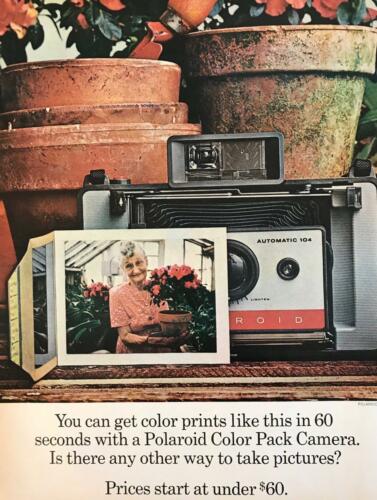
After her husband retired they moved to California to be near their daughter. Her husband Lawrence Nathan Earls passed away in 1954. Marie was later discovered by an agent while performing in a play at a Methodist church. In 1967 she started to do print ads for Polaroid. In 1967 she took the jump to motion pictures. Her first film role was in  Fitzwilly starring Dick Van Dyke.

She went on to perform on television and TV movies in the 60s, 70s, and yes into the 80s! She was on tv shows such as Petticoat Junction, Green Acres, All In The Family, Alice, Whiz Kids, etc.  Merie worked until she passed away in 1984 at the age of 95. What an incredible woman…Burt Mustin had more credits but he was a bit younger than Merie. She had no formal training and she said she was sometimes snubbed in auditions.

Merie Earle on going to auditions: “They’re old-timers in show business, so they just kind of snort and recite all their Broadway credits and film credits and things like that, that doesn’t bother me, though, and sometimes I even beat them out for the parts. But if I don’t, that doesn’t bother me too much either. It doesn’t take much money for me to live, anyway.”

On her acting style… “Oh dear, I guess I don’t have any acting style, All I try to do is just to be myself.”

Merie Earle2

What a life Burt Mustin lived. He didn’t start acting until he was 67 and he appeared in over 150 film and television productions. I first remembered him as Gus in Leave it to Beaver, Judd in The Andy Griffith Show, Bonanza, The Monkees, Gomer Pyle…the list is too long. He was also at the first World Series in 1903 to root on his hometown team, The Pittsburgh Pirates playing against the Boston Red Sox.

Burt was born on February 8, 1884, in Pittsburgh. After graduating from the Pennsylvania Military College in 1903 with a degree in engineering, Mustin became a car salesman. It was a rather new profession.  He also worked for the Better Business Bureau, Mustin dabbled in amateur acting and singing. He belonged to the Barbershop Harmony Society and popped up in productions by the Pittsburgh Opera.

Mustin and his wife eventually retired to Arizona. In Tucson, the retiree took in a role in a local production of the play Detective Story. William Wyler — who would go on to direct Ben-Hur, Roman Holiday and Funny Girl — happened to catch the show and offered Mustin a role in his screen adaptation of Detective Story.

Thus, Burt Mustin made his screen debut at the age of 67 in 1951 and acted until he died in 1977 at the age of 92.

Below is Burt… on the Johnny Carson show talking about being at the first World Series.

Beatles – In My Life

What other band in the world would not release this song as a single? That alone shows that they had quality as well as quantity. It was on Rubber Soul released in 1965. I always considered Revolver and Rubber Soul sister and brother albums. Rubber Soul was released first and Revolver could have been the continuation of Rubber Soul or the wilder older brother/sister.

This song is one of the most beautiful songs ever written. We have a short journey through John Lennon’s life up to that point. This song is as close to perfection as you can get.

Lennon said that a reporter asked him ” why don’t you put some of the way you write in the book in the songs?’ or ‘Why don’t you put something about your childhood into the songs?” and that spurred him on to write this personal song.

Pete Pete Shotton, who was a close childhood friend of John, has related how John once told him that the lyric about the friends who were “dead” and “living” was about Stuart Sutcliffe, a close friend and former Beatle who died of a brain tumor in April of 1962, and Pete himself as the “living” friend.

John was picky with Beatle songs. There were some he claimed not to like but this one was one of the songs he was most proud of.

Before his death, Lennon gave an extensive interview with Playboy magazine and the interviewer went down a list of Lennon and McCartney songs. Lennon gave his feelings about each song and who wrote what. McCartney, later on, agreed with most of all John’s memories on who wrote what…except on a couple of songs. John and Paul seem to disagree on two songs in particular: “Eleanor Rigby” and this song.

John claims he wrote everything except the middle eight, which he attributed to Paul. Paul has said that he wrote most of the melody and helped with the lyrics. I tend to believe Paul on this but I’m amazed that they both seemed to agree on most of the other songs. John could write some beautiful melodies but this one sounds like Paul had a lot to do with it.

In the studio, something seemed to be missing so George Martin slowed down the tape and recorded an Elizabethan piano solo. Not that Ringo Starr needs any defending…but people seem to downgrade him because he wasn’t like Keith Moon or John Bonham. No Ringo played for the song…this song is a great example. If he would have been busy it would have ruined it. Ringo played this one perfectly as he did with most other Beatles songs.

This was voted the best song of all time by a panel of songwriters in a 2000 Mojo magazine poll.

Paul McCartney on writing the song: “So I recall writing the whole melody. And it actually does sound very like me, if you analyze it. I was obviously working to (John’s) lyrics. The melody’s structure is very me. So my recollection is saying to John, ‘Just go and have a cup of tea or something. Let me be with this for ten minutes on my own and I’ll do it.’ And with the inspiration of Smokey and The Miracles, I tried to keep it melodic but a bit bluesy, with the minors and little harmonies, and then my recollection is going back up into the room and saying, ‘Got it, great! Good tune, I think. What d’you think?’ John said, ‘Nice,’ and we continued working with it from then, using that melody and filling out the rest of the verses. As usual, for these co-written things, he often just had the first verse, which was always enough: it was the direction, it was the signpost and it was the inspiration for the whole song. I hate the word but it was the template.”

“We wrote it, and in my memory we tagged on the introduction, which I think I thought up. I was imaging the intro of a Miracles record, and to my mind the phrases on guitar are very much Smokey and The Miracles. So it was John’s original inspiration, I think my melody, I think my guitar riff. I don’t want to be categorical about this. But that’s my recollection. We then finished it off and it was a fine song which John sang.”

John Lennon: “’In My Life’ was, I think, my first real, major piece of work. Up until then it had all been glib and throw-away. I had one mind that wrote books and another that churned out things about ‘I love you’ and ‘you love me,’ because that’s how Paul and I did it…It was the first song that I wrote that was really, consciously, about my life…a remembrance of friends and lovers of the past.”

John Lennon:  “I wrote that in Kenwood (his home at the time). I used to write upstairs where I had about ten Brunell tape recorders all linked up, I still have them, I’d mastered them over the period of a year or two – I could never make a rock and roll record but I could make some far out stuff on it. I wrote it upstairs, that was one where I wrote the lyrics first and then sang it.” He added that was usually the case with songs such as this one and “Across the Universe” and “some of the ones that stand out a bit.”

In My Life

There are places I’ll remember
All my life though some have changed
Some forever not for better
Some have gone and some remain

All these places had their moments
With lovers and friends I still can recall
Some are dead and some are living
In my life I’ve loved them all

But of all these friends and lovers
There is no one compares with you
And these memories lose their meaning
When I think of love as something new

Though I know I’ll never lose affection
For people and things that went before
I know I’ll often stop and think about them
In my life I love you more

Though I know I’ll never lose affection
For people and things that went before
I know I’ll often stop and think about them
In my life I love you more

In my life I love you more

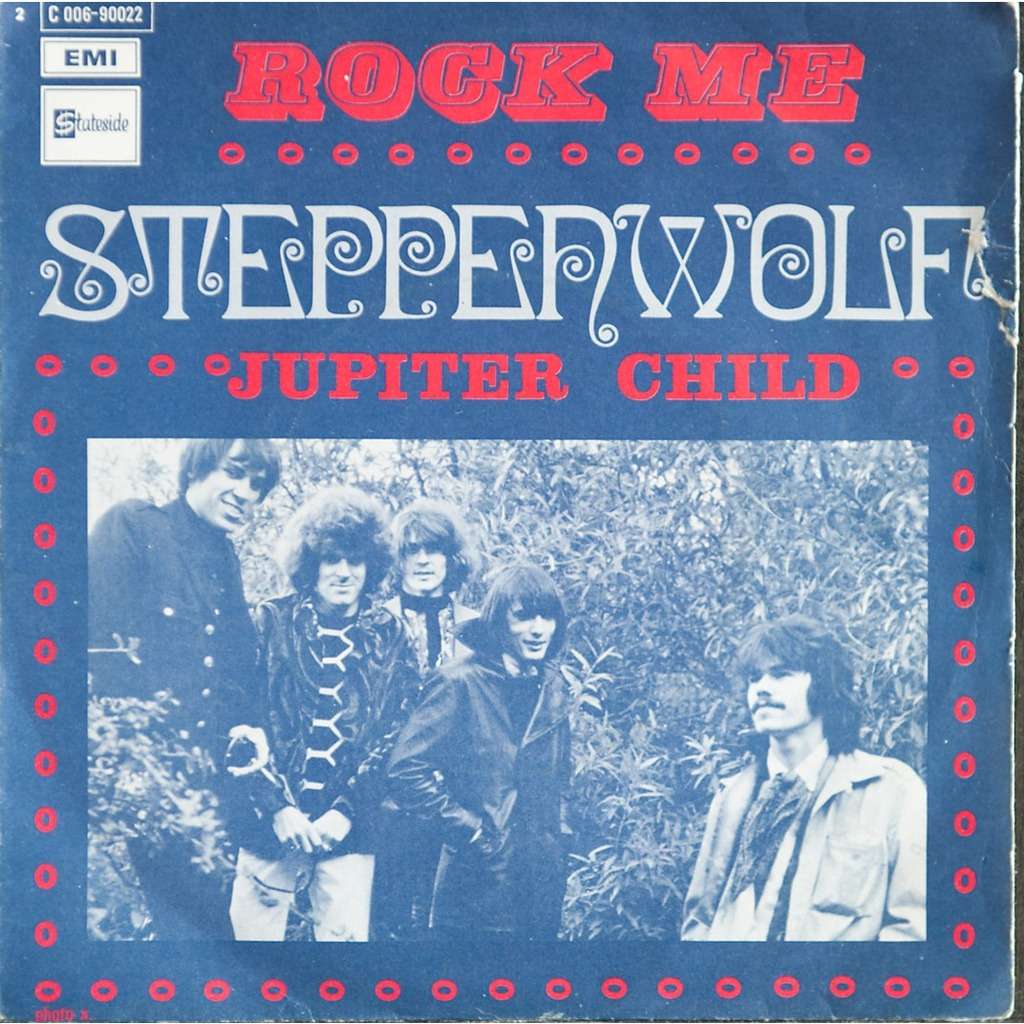
Steppenwolf – Rock Me

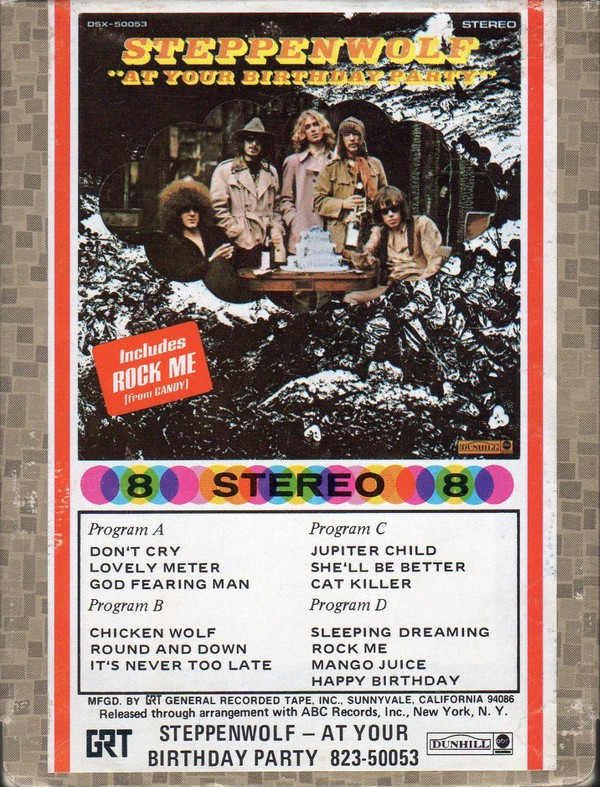
This song was their 3rd top ten hit of 1968-1969. The song was on their album At Your Birthday Party released in 1969.

steppenwolf - At your Birthday Party

The song peaked at #10 on the Billboard 100 and #4 in Canada in 1969. This song was originally the B side to Jupiter’s Child but later on, they were reversed. This song followed the top ten hits of Born To Be Wild and Magic Carpet Ride. John Kays voice is one of those voices that you can pick out from a crowd. Like Neil Young, John Fogerty, Van Morrison, and other unique singers. 

I usually don’t research the meaning of a lot of songs but this one is interesting. The different meanings people get out of this one. Some say it’s a young woman looking for one good man, others say it’s about Mother Nature, and others say it’s about America at the time it was written. 

John Kay’s songwriting gets overlooked…he is a fine songwriter with usually a message. He wrote Rock Me, which benefitted from being in the 1968 feature film Candy, a period piece of permissiveness featuring Marlon Brando, Richard Burton, and even Ringo Starr.

John Kay: The recording sessions for “At Your Birthday Party” started to show the wear and tear of the road on all of us. In addition, some band members for the first time, tried their hand at songwriting and I had run out of tunes to contribute. This album nevertheless includes some of my favorite Steppenwolf tracks such as “Happy Birthday”, “Jupiter’s Child” and “Rock Me”. Nick St. Nicholas (who had replaced our original bassist Rushton Moreve) had an idea for a song titled “It’s Never Too Late”, which triggered me to work out the rest of the song. That one is an all time favorite of mine. Gabriel Mekler (our Producer) had his hands full trying to be fair to all band members and stay neutral to allow us to work out the difficulties on our own. The fact that the song “Rock Me” (which had been written for the soundtrack of the motion picture “Candy”) had already been a hit single before it was included in the “Birthday album” may have reduced the impact of the album because the initial sales of the LP were not what we had hoped for, although over the years, it became quite popular with many of our fans.

Rock Me

She asked me maybeI would share her sorrowFor all the men that tried to treat her wrong

Though just a babyA waiting her tomorrowIt’s rock me baby, rock me babyAll night long

She needs an answer to her confusionSomeone to guide her with tendernessBut if she’s asking for a solutionAll that she getsYou know it’s something like this

I don’t know where we come fromI don’t know where we’re going toBut if all of this should have a reasonWe would be the last to knowSo let’s just hope there is a promised landHang on till then as best you can

Everybody’s ills you know itFills her with compassionThat’s why she tries to save the world aloneShe helps the needy in her own fashionAnd tries to give them all her own

She needs an answer for her confusionSomeone to guide her with tendernessBut when she’s asking for a solutionAll that she gets you know it’s something like this

I don’t know where we come fromI don’t know where we’re going toBut if all of this should have a reasonWe would be the last to knowSo let’s just hope there is a promised landHang on till then as best you can

Rock me baby, rock me baby all night longRock me baby, rock me baby all night longRock me baby, rock me baby all night longRock me baby, rock me baby all night longRock me baby, rock me baby all night longRock me baby, rock me baby all night longRock me baby, rock me baby all night long

Allman Brothers – Trouble No More

Gregg Allman sounded like an old man in his early twenties and when he WAS an older man. He could sing like he lived every bit of the blues he was singing about. This was the first song the Allman Brothers ever played in front of an audience.

It’s hard to believe that their first two albums didn’t go anywhere in the charts. The first two were made up of many of their classic songs. Their first album The Allman Brothers Band contained Whipping Post, Trouble No More, It’s Not My Cross To Bear, and one of their signature songs Dreams.

Their second album Idlewild South contained In Memory of Elizabeth Reed, Midnight Rider, and Hoochie Koochie Man. It took their third album At Fillmore East to kickstart their career to the top. Many of those songs on the first two albums would be classic now thanks to the live treatment they were given on the double live album.

After Duane was killed on a motorcycle on October 29, 1971 the band finished up the album that was started a few months before. Eat A Peach was released in 1972 with studio cuts and some live cuts that were left over from the At Fillmore East album including Trouble No More. The album was a massive hit and a perfect followup to At Fillmore East. The album had radio-friendly songs plus great live versions of songs they had been playing in their set.

This was a popular Muddy Waters song. It’s based on a 1935 song called “Someday Baby Blues” by a country-blues singer named Sleepy John Estes. Waters transformed the song with his Chicago blues style, adding a much more prominent guitar. On the Muddy recording….Little Walter played the harmonica and Jimmy Rogers played the guitar.

The Allman Brothers did their own interpretation of blues songs and usually with an extra charge. The first time they played the song was on May 11, 1969, when they played at Piedmont Park in Atlanta at a free festival sponsored by an underground newspaper… the paper gave them a glowing review and put them on the map outside of Macon.

On October 28, 2014, the band played their final show, the farewell concert at the Beacon Theater in New York City. Their final song was Trouble No More.

Trouble No More

Don’t care how long you gone
I don’t care how long you staying
But, good kind treatment
Gonna bring you home someday
But someday baby
You ain’t gonna trouble poor me anymore

You just keep on betting
That the dice won’t pass
Well you know, darling
You are living too fast
But someday, baby
You ain’t gonna trouble poor me anymore

I’m gonna tell everybody
In your neighborhood
That you’s a sweet little girl
But, you don’t mean me no good
But someday baby
You ain’t gonna trouble poor me anymore

Well, I know you’re leavin
Well, you call that gone
Well, without love
You can’t stay long
But someday baby
You ain’t gonna trouble poor me anymore

Well, goodbye baby
Come on, shake my hand
I don’t want no woman
You can have a man
But someday baby
You ain’t gonna trouble poor me anymore

David and David – Boomtown

Out of the Blue… What are some great debuts that probably took you by surprise? I wrote this for Dave’s site a while back.

I thought about the question that Dave proposed. There were some great debuts that I loved in my lifetime. I wanted to take a debut album out of the 80s… that decade has always been a bit dodgy for me. I thought about The Georgia Satellites or The Black Crowes but I wanted something that wasn’t automatic for me…that really caught my attention and sounded a little different from the usual things I liked.

I came up with David and David. Their album was called Boomtown. I’ve always thought of this album as a lost classic of the 1980s. I bought the cassette the minute I heard Swallowed By The Cracks. I had heard and liked the Welcome to the Boomtown single a little earlier. This album has an eighties sound which I usually don’t like but the synth here creates an atmosphere not a dominate force and it fits. These are some really good songs that the slick production doesn’t bring down.

The two Davids were David Baerwald and David Ricketts. They were a good team that would prove successful outside of this album. Both of them helped write Sheryl Crow’s debut album (Tuesday Night Music Club)…Baerwalk ended up co-writing 7 songs and Ricketts co-wrote 4.  David and David broke up after their only studio album which really disappointed me because I was really looking forward to their follow-up. Many years later…in 2016 it was reported that they were working on their second album but that seem to stall.

The reason I liked the album was their storytelling songwriting and Bearwald’s voice. It wasn’t the usual monotoned singing voice that was popular in the 80s. Bearwald doesn’t have the greatest voice in the world… but it has so much character that he is inside the people he is singing about.

The album was not a collection of pick-me-up songs. The songs reflect a grim reality of a cast of characters struggling to get by in mid-1980s America. The characters in Boomtown clearly aren’t in places where they thought they’d be. I was just 19 in 1986 and I was afraid I would be able to relate to these characters in a few short years to come. I worked with these people every day while taking a year off after high school graduation…waiting to go into college.

The album dwells on dreams and broken promises. Don’t think this album is in any way a downer to listen to though. These are the stories of real life and real people. You can feel the Springsteen vibe with all of the self-contained story songs but without sounding like Springsteen.

Let’s look at the first single from the album…Welcome To The Boomtown. It starts off with a killer line: Ms. Cristina drives a nine four four and goes on with a tale of decadence. That first line caught me and never let me go. You have the popular guy everyone knew in school…in this case, Kevin: Handsome Kevin got a little off track, Took a year off of college, And he never went back, Now he smokes too much, He’s got a permanent hack
Deals dope out of Denny’s, Keeps a table in the back.

“Deals dope out of Denny’s”… is pure Americana in a warped way…but Americana all the same. I knew a Kevin or two that fit this description. The song peaked at #37 in the Billboard 100 in 1986.

Now for my favorite song on the album and the one that hit home more than any other. The song Swallowed By The Cracks had me thinking…this could easily happen to me and my friends…and some of it did. It carries the theme that things don’t always turn out as you thought they would. I was an old soul at 19…I really thought I was old so these songs not only seemed possible…it seemed probable.

You get a little optimism going and then it falls back to the reality of what really happens.

Maybe it ain’t over I can see it’s up to me
You only out when you stay out you stay out when you don’t
Believe we could drive around in circles getting nowhere
All night long getting drunk with strangers telling lies
And singing along with the jukebox baby

Now for the last single, that was released…Ain’t So Easy.

The album was successful. It peaked at #39 on the Billboard Album Charts, #39 in Canada, and  #33 in New Zealand from 1986-87. It wasn’t just a 3 single album…there is not a track that I don’t like. They cover a lot of ground with the reggae inflections of Being Alone Together, funky grooves of Swimming In The Ocean, and even a slightly country twang to the closer Heroes.

An album that deserved to do better and still stands up today in our times.


Turn It UP! My years with Lynyrd Skynyrd…. by Ron Eckerman

Not long ago I had to fly somewhere and I’m a nervous flyer. I usually dread getting into a plane but I was determined I would enjoy this flight to Texas and then Colorado. We got into the air with my right ear-popping like crazy and I decided to listen to an audiobook once we were flying. I opened my audible library selection and just picked one at random. Well, needless to say, I picked this one. I was 30 minutes into the book before I discovered the irony of the situation. I quickly picked another book (Grateful Dead bio) and listened to that but…I finished this one on the way back while… driving safely on the ground.

This is not an autobiography of the band… it is an account of their mid to late-70s tours. The book was written by an insider (the road manager) book from 1974 to the 1977 plane crash. Lynyrd Skynyrd was a wild bunch who was ruled by lead singer Ronnie Van Zant with an iron fist. It was partly about babysitting a bunch of up-and-coming rock stars and yes…very entertaining. These guys learned from the best… they had opened for The Who on the Quadrophenia tour in 1973. Keith Moon showed them the path to destruction in hotels across the globe. They took it to a new level though…not only fighting with people who annoyed them…they fought each other. Contrary to popular belief…most of them were well-read and intelligent men but with a wild side. 

The band was managed by Peter Rudge who was known to be very cheap with bands. He also managed the Stones and The Who. It was Ron Eckerman’s (tour manager) job to collect the money and figure out the most economical way of traveling. In early 1977 he saw that traveling by plane would be cheaper than by bus. The band toured constantly and was rarely at home adding to the short tempers. They lost their guitar player Ed King in 1975 because of that plus madness exploding out of pure exhaustion. Keeping a road crew together while you are not touring was near impossible unless you play over 200 – 250 shows a year. 

Reading this book is truly like being transported in time back in the seventies rock world. It was back to a time when bands had to build up an audience. It didn’t happen with a youtube video or a Facebook page. There were no auto-tune or backing tracks to save you in concert. Lynyrd Skynyrd was one of the best live bands around. They played at Knebworth in 1976 and were heralded in the press as the next great band in league with the Stones and Who. They never got that chance and were different than most bands. They had no production values at all…just a mirror disco ball. Ronnie Van Zant did not dance around like Mick Jagger or Steven Tyler…he was more like a field general directing his troops to conquer the audience. 

After losing Ed King, a great California guitarist… they picked up Oklahoma native Steve Gaines who would have had a chance to be a huge star. Gaines was an absolute phenom on guitar and had he not died at 28 in the plane crash, he might well be a guitar legend now. The book is hilarious in places but you know what is coming. They climbed the rock ladder and the new album Street Survivors showed what they might do. The album was not a “southern rock” album…it was a rock album by a band from the south. 

They never would get a chance to fulfill their promise. The new album was their biggest yet and in two weeks’ time, they would have headlined Madison Square Garden for the first time. It really did look like they were about to be elevated to the top bracket of touring rock bands.

I was a kid when all of this was going on but I am amazed at how much the world has changed since then. If a band, no matter how successful, would do what they did in today’s world…the band would be in jail and shunned. Not only Lynyrd Skynryd but Led Zeppelin, The Stones, The Who, and a host of other rock bands. The book will truly transport you back to that time. Even if you are a fan or not…it’s worth a read. Ron Eckerman was in the plane when it crashed and his description is truly chilling. 

Eckerman took the blame for the crash but it wasn’t one man’s fault. A short while after releasing the book he died of acute myeloid leukemia. His wife said he never got over the guilt for the crash and he died three years after the book was published. 

Doors – The End

There is one thing I think of when I hear this song, and that is Apocalypse Now. The intro to the song really sounds like the end is coming. Robby Krieger’s use of slighty off notes adds to it.

Ray Manzarek: “To sit back in an audience and hear ‘The End’ come on at the beginning of Apocalypse Now, it’s absolutely thrilling.”

The song was on their self-titled debut album released in 1967. It ranked at number 336 on 2010 Rolling Stone magazines list of The 500 Greatest Songs of All Time.

The Doors developed this song during live performances at the Whisky a Go Go, a Los Angeles club where they were the house band in 1966. They had to play two sets a night, so they were forced to extend their songs in order to fill the sets. This gave them a chance to experiment with their songs.

They always played The End as the last song, but Morrison decided to play it early in the set, and the band went along. When they got to the part where he could do a spoken improvisation, he started talking about a killer, and said, “Father, I want to kill you. Mother, I want to f–k you!” The crowd went nuts, but the band was fired right after the show. The Doors had recently signed a record deal and they had established a large following, so getting fired from the Whisky was not a crushing blow.

Morrison sang this live as F–k the mother, rather than “Screw the mother.” At the time, the band couldn’t cross what their engineer Bruce Botnick called “the f–k barrier,” so they sanitized the lyric on the album. When Botnick remixed the album for a 1999 reissue, however, he put Morrison’s “f–k”s back in, which is how the song was intended.

Jim Morrison's Heartbreaker: Mary Werbelow's Abandoned Notebook - GonzoToday

“The End” began as Jim Morrison’s farewell to Mary Werbelow, his girlfriend who followed him from Florida to Los Angeles. It developed into an 11-minute  epic. Doors drummer John Densmore has said that Morrison wrote Crystal Ship about Mary also. That song was another goodbye song also. Werbelow and Morrison broke up in 1965 but saw each other off and on until she moved to India in 1969. He reportedly told her that the first four Doors albums were about her…Manzarek has said that parts of them were.

Mary Werbelow is a mystery to many. People still want to know if she is still alive. She gave a short interview in 2005 but has not been heard from since. She said in that interview that she never wants to talk about Jim again. Mary says she is tired. She has trouble sleeping. She says she’s not sure if she has done right by talking so much. She’s worried that others will seek interviews that she does not want to give. She wants that made clear: She does not want to talk about Jim anymore.

On July 3, 1971, Pamela Courson reported that she found him dead in the bathtub of their apartment in Paris. The cause of death was listed as heart attack; drugs were suspected. There was no autopsy. The coffin was sealed before his family or the American Embassy were notified. It was not until six days later that the Doors’ manager announced Morrison’s death to the world.

The End

This is the end
Beautiful friend
This is the end
My only friend, the end

Of our elaborate plans, the end
Of everything that stands, the end
No safety or surprise, the end
I’ll never look into your eyes again

Can you picture what will be?
So limitless and free
Desperately in need
Of some stranger’s hand
In a desperate land

Lost in a Roman wilderness of pain
And all the children are insane
All the children are insane
Waiting for the summer rain, yeah

There’s danger on the edge of town
Ride the King’s Highway, baby
Weird scenes inside the gold mine
Ride the highway west, baby
Ride the snake, ride the snake
To the lake, the ancient lake, baby
The snake, he’s long, seven miles
Ride the snake
He’s old and his skin is cold
The west is the best
Get here and we’ll do the rest
The blue bus is calling us
Driver, where you taking us?

The killer awoke before dawn
He put his boots on
He took a face from the ancient gallery
And he walked on down the hall
He went into the room where his sister lived, and then he
Paid a visit to his brother, and then he
He walked on down the hall, and
And he came to a door
And he looked inside
“Father?” “Yes, son?” “I want to kill you”
“Mother? I want to…”

Come on baby, take a chance with us
And meet me at the back of the blue bus
Doin’ a blue rug, on a blue bus, doin’ a
Come on yeah
Fuck, fuck-ah, yeah
Fuck, fuck
Fuck, fuck
Fuck, fuck, fuck yeah!
Come on baby, come on
Fuck me baby, fuck yeah
Whoa
Fuck, fuck, fuck, yeah!
Fuck, yeah, come on baby
Fuck me baby, fuck fuck
Whoa, whoa, whoa, yeah
Fuck yeah, do it, yeah
Come on!
Huh, huh, huh, huh, yeah
Alright
Kill, kill, kill, kill, kill, kill

This is the end
Beautiful friend
This is the end
My only friend, the end

It hurts to set you free
But you’ll never follow me
The end of laughter and soft lies
The end of nights we tried to die
This is the end

Rock Star Hologram Tours

It’s gone past simple holograms…they are now avatars (the ABBA reunion). For the sake of this post… I’ll call them holograms. This post is basically me arguing with myself and wanting some input.

I’ve thought about the subject of the dead rock star hologram tours off and on. I apologize for putting it so bluntly but that is what it is. Something in me just tells me there is something inherently wrong about this. So I hate to ask myself this…but would I want to go to a Jimi Hendrix show playing near me? Uh…yes I would and I feel bad about saying that. I would probably go and then hate the decision later. How could they capture Jimi Hendrix? I don’t see how someone could capture a performer like him…who was different every time he played.

I was surprised at my answer that I would even go. On the other hand, we have laser shows with bands’ music…so what is the big difference? We also have duets with Paul McCartney singing with John Lennon right now on Paul’s tour. When I saw The Who, there was Keith Moon singing “Bell Boy” in a film from a concert in the 70s while the current Who was playing. I also got to see Beatlemania with artists dressed up as The Beatles…somewhat different than this but is it really?

It’s something that I think will happen in the near future for different stars no matter if we like it or not. Holograms have been around for a while. In 1977 The Who presented a promotional event just for their fans with this Keith Moon hologram (with the real Keith Moon in attendance) and in another event in 2009…obviously without the real Keith in attendance.

Keith is near the end of his life in this version…you can tell it’s older with the greenwash all around. The big difference is now …the holograms sing, move, and play their instruments or rather they appear to do that. There have been shows now built around Buddy Holly, Roy Orbison, Elvis, Ronnie James Dio, ABBA (who are very much alive),  Whitney Houston, Tupac, Billie Holiday, Wilson Pickett, and more.

The families are in control now and will decide. I’ll ask myself again…would I want to see the Hamburg or Cavern Beatles? The 1972 Rolling Stones? the 1969 Who? The 1950’s Elvis? AC/DC with Bon Scott? 1970 Janis Joplin? The Doors?

Yes to all the questions I asked but…I’m not sure how I would feel.

What do you think? Would it be unsettling to see a long-gone performer in their prime again a few feet from you? Would you go see a show (not really a concert) of your favorite deceased performer?

Now, on the other hand, there is another angle. If Bob Dylan, who is very much alive, would announce tomorrow that a 1966 version of himself was going on tour…would I go? Oh yes, I would and I would not feel bad at all. ABBA just did this also. So why do I think I would feel different about seeing Jimi, Lennon, Janis, or someone else that has long been gone?

Before you answer…now, current bands can play in Washington and be projected as holograms in London simultaneously…so it’s taken a huge jump. See the bottom video. No traveling in stuffy vans….just play at your local pizza joint and be somewhere else also. So our band could play in my garage and be on stage at Carnegie Hall and interact with the audience. I have to wonder how far it will go?

Skylab was Falling! 43 Years Ago Today

On July 12, 1979, Skylab fell back to the earth. Today is the anniversary.

In 1979 I was twelve and heard the news that a space workstation named Skylab was falling to earth. It was exciting for me…I was hoping that a piece of it would fall near so I could touch something that had been flying through space.

That didn’t happen because unless I was Australian I wasn’t going to see any debris. In school, our science teacher went over the event and I do remember people wearing Skylab t-shirts, hats, and buttons. Everyone was looking up hoping to see something…anything. Some kids were scared they were going to get crushed…that is when I learned…what goes up must go down.

Watching the news…there were some people panicking and…some partying. This is from Newsweek in 1979

In various parts of the country, wags painted X’s on their neighbors’ roofs or sported T-shirts with targets on the back. Entrepreneurs sold plastic helmets and Skylab survival kits compete with bags for collecting stray parts of the spacecraft and letters suing NASA for damages. “I don’t know how much we’re making, but we’re having fun,” said Steven Danzig, 25, of Bloomington, Ind., who sold more than 20,000 such kits. In Washington, a bar called Mr. Smith’s sold a concoction dubbed the Chicken Little Special.

Around the U.S., there were Skylab parties to coincide with the crash, and betting pools on precisely when or where the debris would come streaking back to earth.

skylabshirt.jpgskylabhelmet.jpg

Skylab was designed to go up but not come back down. It was launched in 1973 and was occupied for almost 24 weeks. There was a lot of time and money spent on how to get it up there but not much time on how to get it down. It only had a 9-year life span, to begin with. In 1979 it was clear that Skylab was rapidly descending orbit.

On July 12, 1979, Skylab came back to earth in the Indian Ocean and in Western Australia. No one was injured by the falling debris.

The San Francisco Examiner offered a $10,000 reward for anyone bringing a part of Skylab to their office. They knew it wasn’t going to hit America so it was a safe bet they would not have to pay…but Stan Thornton…an Australian truck driver heard about the reward, grabbed a piece of debris, and jumped on a plane to San Francisco and got the reward.

stan thornton.jpg
Stan Thornton collecting his $10.000

skylabadvertistment.jpg

skylabfalling.png

Derek and the Dominos – Little Wing

Damn…this is such a great song. Duane Allman came into the Derek and the Dominos sessions and made a suggestion to record a Jimi Hendrix song, Little Wing. This is what he did in the Wilson Pickett sessions with the song Hey Jude.

After the Layla sessions were completed, Clapton returned to England with a rare left-handed Fender Stratocaster, a gift for Jimi Hendrix. He wanted him to hear the Dominos’ recording of Hendrix’s Little Wing, a tribute he and Duane had recorded for him. They both greatly admired Hendrix and Duane planned to meet him when Jimi came back from Europe. On the morning of September 18, 1970, Jimi Hendrix was found unconscious in a Notting Hill apartment in London. He died that afternoon at the hospital, having apparently suffocated while under the heavy sedation of sleeping pills.

The album peaked at #16 in 1970 on the Billboard 100. Although Derek and the Dominos were poised to record a follow-up album in 1971… tensions and drug abuse among the band members, along with the tragic death of Duane Allman ended that idea.

Jimi wrote this song and it was inspired by the 1967 Monterey Pop Festival, a concert held for 3 days in 1967. It was attended by around 200,000 music fans, it happened 2 years before Woodstock. Jimi wrote about the atmosphere at the festival as if it was a girl. He described the feeling as “Everybody really flying and in a nice mood.” He named it “Little Wing” because he thought it could just fly away.

The song was on Axis: Bold as Love released in 1967. The album peaked at #3 on the Billboard 100 in 1968.

Bobby Whitlock keyboard player: We had two leaders then. We had Eric and Duane. Eric backed up and gave Duane a lot of latitude, a lot of room, so he could contribute up to his full potentiality, and Duane was full of fire and ideas. He’d just go, “Hey, how about we try ‘Little Wing’?”—that was completely his idea and he came up with the intro by himself. He just started playing it.

Duane was very, very good in the studio. Working with the finest musicians and engineers on the planet really paid off for him. When he had the opportunity to be thrust into that environment, he absorbed what was right and righteous and then used it to killer advantage.

Little Wing

Well, she’s walking through the clouds
With a circus mind that’s running around
Butterflies and zebras and fairy tales
That’s all she ever thinks about

And when I’m sad, she comes to me
A thousand smiles she gives to me free
Said it’s all right, take anything you want from me
(Anything you want, babe) (Anything)

Well, she’s walking through the clouds
With a circus mind that’s running around
Butterflies and zebras and fairy tales
That’s all she ever thinks about

And when I’m sad, she comes to me
With a thousand smiles she gives to me free
Said it’s all right, take anything you want from me, baby
(Anything you want) (Anything)

Whoo…
Fly on little wing
Baby, baby

Where is… The Zuni Fetish Doll from the Trilogy of Terror Now?

I did a few “Where is” posts a year or so ago and they were fun. I thought I would add this to the list. Most 1970s kids know this doll from the 1975 TV horror Trilogy of Terror. Karen Black starred and played 4 different charters in this horror anthology. Three stories are interwoven together. The first is about a college student infatuated with his teacher. The second is a paranoid tale of two sisters – one good, the other evil, and the third one is about a tribal doll that comes to life and terrorizes a woman in her apartment when it’s golden chain comes off. 

Zuni Doll - Trilogy of Terror - Imgflip

It’s the third one that most people remember although the first one is really good also. This doll terrorizes Karen Black’s character Amelia in her apartment and they did a good job on the special effects. They showed the doll just enough and not too much to make it look real. The story was based on Prey Prey written by the great Richard Matheson. In this presentation…this story is called Ameilia. 

I watched this again for the 6th or 7th time and I wondered…did one of the dolls they used to film this survive? Yes, one survived and it was sold at auction. According to different sites… In 2019 when the Zuni doll went up for auction at “Profiles in History” a few years ago, it was expected to go for a price in the $12,000 to $15,000 range. Instead, it sold for more than $200,000! Including the buyer’s premium, the doll was purchased for a total of $217,600.

If you want one of these dolls (a copy of course) a little more affordable…you can get one on ebay. It would be a good conversation piece…just don’t turn your back on it. 

If you want to see the other “Where Is” objects…go to https://powerpop.blog/70s-games-items-and-events/

Here is the doll now…he doesn’t look bad for being 47 years old. 

Zuni Doll Now

The Complete Anthology… if you want to see JUST Amelia…go to 45:50

Beatles – Savoy Truffle

I love the horns in this song. It wasn’t George Harrison’s best on the album…that would be While My Guitar Gently Weeps but this one is fun.

George was good friends with Eric Clapton and was watching his friend with toothaches and getting dental work. Clapton’s weakness was candy and he would eat all of it until it was gone.

Harrison got the lyrics for this from the inside lid of a box of chocolates. Montelimar, Ginger Sling, Cream Tangerine, and Coffee Dessert were names of candies in the Mackintosh “Good News” assortment. The names “Cherry Creme” and “Coconut Fudge” were invented by George, however, to round out the verses.

Press agent Derek Taylor came up with the line  ‘You know that what you eat you are‘.

Derek Taylor: “George said, ‘We need a bit here, da da, da da da da, da da,’ and I thought again of my good friend, Alan Pariser. He had done a film called ‘You Are What You Eat,’ which was a very pippy thing; ‘Don’t eat meat, man, or you’ll be filled with the adrenaline of frightened animals.’ So I said to George, ‘You know that what you eat you are.’

good-news-chocolates

The MacIntosh’s Good News box where George got some of the lyrics.

Harrison wrote the line “We all know Obla-Di-Bla-Da” as an in-joke with the band. McCartney had pushed Obla-Di-Bla-Da so much that the band played endless versions of it and were not happy about it.

The White Album was released in 1968 and peaked at #1 in the Billboard Album Chart, #1 in Canada, #1 in the UK, and #1 about everywhere else…and it would be #1 as well on my list.

The White Album is as diverse as you can get… Pop, Rock, Country, Folk, Reggae, Avant-Garde, Blues, Hard Rock, and some 20’s British Music Hall thrown in the mix. It has plenty of songs that you have heard of and many that the masses have not heard. The Beatles more than many bands could bend to a style of music and play that style well.

Some critics said they should have taken the best of the two albums and slimmed it down to one. I understand that argument but as a Beatle fan…Nahhhhh. It’s the Beatles White Album!

George Harrison: “At that time he had a lot of cavities in his teeth and needed dental work. He always had a toothache but he ate a lot of chocolates – he couldn’t resist them, and once he saw a box he had to eat them all. He was over at my house, and I had a box of ‘Good News’ chocolates on the table and wrote the song from the names inside the lid: ‘Creme Tangerine, Montelimart’…” 

“He’d got this real sweet tooth and he had just had his mouth worked on. His dentist said he was through with candy. So, as a tribute, I wrote ‘You’ll have to have them all pulled out, after the Savoy Truffle.’ The truffle was some kind of sweet, just like all the rest, ‘crème tangerine,’ ‘ginger sling,’ just candy, to tease Eric.” 

Savoy Truffle

Creme tangerine and montelimar
A ginger sling with a pineapple heart
A coffee dessert, yes you know it’s good news
But you’ll have to have them all pulled out
After the Savoy truffle

Cool cherry cream, a nice apple tart
I feel your taste all the time we’re apart
Coconut fudge, really blows down those blues
But you’ll have to have them all pulled out
After the Savoy truffle

You might not feel it now
But when the pain cuts through
You’re going to know, and how
The sweat is going to fill your head
When it becomes too much
You shout aloud

You’ll have to have them all pulled out

After the Savoy truffle

You know that what you eat you are,
But what is sweet now, turns so sour
We all know Obla-Di-Bla-Da
But can you show me, where you are?

Creme tangerine and montelimar
A ginger sling with a pineapple heart
A coffee dessert, yes you know it’s good news
But you’ll have to have them all pulled out
After the Savoy truffle
Yes you’ll have to have them all pulled out
After the Savoy truffle