It’s been a long while since I posted a Cat Stevens number. One of the first albums I had was Tea For The Tillerman. I got it for one song, Wild World but heard so many others off the album that were just as good. His music makes me feel calm and relaxed, but not in a boring way.
The song grew out of Stevens’ surroundings at this time. Britain was changing fast, with a lot of focus on growth and progress. He started questioning what was being traded away. Instead of writing a protest song in the usual sense, he kept it simple. The lyrics ask a question and then keep circling back to it: What happens when everything is built up, and there’s no space left for kids to just be kids?
Musically, it’s stripped down. Acoustic guitar carries most of it, with light orchestration that never gets in the way. That was part of the approach Stevens and producer Paul Samwell-Smith used on the album. Let the song do the work. No excess, no push. It sounds calm, but the message underneath it isn’t.
What’s interesting is how the song has held up. It wasn’t released as a major single, but it became one of the key tracks on Tea for the Tillerman. Over time, it’s been picked up in films, environmental discussions, and documentaries because the song is still relevant. The idea of progress versus what gets lost along the way hasn’t gone anywhere.
He just asked the question and left it there for us to decide. That’s probably why people keep coming back to it.
As most of you know, I’m a huge fan of dogs and animals in general. Will I hug a King Cobra? No, but I do love animals. Dogs (yes, I’m counting the prairie variety as well) are part of that list, and I’ve probably been closer to dogs than to any other animal. I started to think…hmmm…what are some songs that were about dogs? I’ll keep this brief except for the Neil Young description…he rambles a bit.
The Bottle Rockets – I Love My Dog
The Bottle Rockets came out of Festus, Missouri, in the early 1990s. They were part of the wave that later got labeled alt-country. At the time, it was just a bunch of bands mixing country, rock, and whatever else they grew up on. Brian Henneman had been around the scene already, even doing a stint as a guitar tech and occasional player for Uncle Tupelo, which put him right in the middle of that movement as it was forming.
Just a person, and their dog, and the sense that the dog might be the most dependable thing in their life. There is some humor in this, but it never turns into a jokey kind of song. I also love the jangle that came with this song. I’m going to revisit this band in the future. It’s hard to resist this video, especially with Carlene Carter and her dog Sparky starting it off!
This is such a cool video and song. Many happy humans, along with their owners.
Cat Stevens – I Love My Dog
This song was released in 1966 as a single and the following year on Stevens’ debut album Matthew and Son. He wrote the lyrics to the music of Yusef Lateef’s song The Plum Blossom. He credited the song to Lateef, and they shared the songwriting royalties. The song peaked at #28 in the UK, #47 in Canada, and #118 on the Billboard 100 in 1966.
Beatles – Martha My Dear
Our Saint Bernard was named after this song. Paul McCartney wrote this song about his English Sheepdog. Paul got the dog in 1966, and Martha lived a long life with Paul until 1981. Paul had Martha’s descendants, but I’m not sure about them currently. Paul has said that the riff to this song is one of the most difficult ones he came up with on piano. The song has a special place in my household. In fact, she is under my feet now as I type this.
Neil Young – Old King
This one is about Neil’s dog named Elvis. It was released in 1992 on the Harvest Moon album. This Neil Young quote is from a concert talking about this song. It’s rambling…but it’s Neil!
Neil Young: “This a song about my dog. His name is Elvis. Elvis is riding on Jimi Hendrix’s bus now. He traveled with me for many years. Well, I changed his name to ‘King’ in the song to avoid any confusion. Elvis had quite a nose. That was his whole thing, was his nose. But, you know, he was very sensitive about it. I’ll tell you a little story about him. He used to go on the road with me all the time, and, you know, he kind of smelled like a hound, ’cause… he was a hound. But it smelled good to him, and uh, you know, we would take him to a veterinarian’s place or something, and they’d clean him up a little bit so when he got on the bus, he wasn’t too comfy, you know?
After a while we all kind of got used to each other on the bus, so it was okay, but right at first he was a little strong, so. . . so anyway, once, uh, someone took him that usually doesn’t take him and took him to some fifi dog place. He came back smelling, uh, kinda like some bad toilet paper or something? Non-environmental and all. It had this odor to it that was like,(groaning)’oh no, wow.’ He kind of smelled like one of those things that hang on people’s mirrors, you know, that smell? Anyway, it was bad for me, but to him it was hell, ’cause he was, you know, sensitive.
And uh, so I was sleeping on the side of the road, I was on my way out to Eureka, California to play this gigantic gig… And ah, uh, you know, he woke me up, it was about six o’clock in the morning, I get this nose, you know, ‘snnnfff, snnnffff, snnff, snnff,’ He woke me up… I’m going, ‘What’s happening?
It’s this, this big nose, it’s lookin’ at me, kinda, you know, desperate. You know, I said, ‘God, you smell terrible. You stink.’ And he knew he stunk. He wanted off the bus. He said, ‘I want to go roll in some cowshit on the side of the road.So, you know, he was a smart dog, and he was purebred, actually, he was a beautiful hound, and uh, he had all his senses that he needed, he knew how to get back. You know, hounds will circle, uh, an area, and keep going in wider and wider circles, and they count how many times, somehow they know how many times they’ve been around it, so when they come back in they just count it like the, like the lifelines on a tree or somethin’, you know, you just come right back in and, right to the core and that’s where you started from, you know. Anyway, he knew that. He taught me that. And uh, so, I said, ‘Okay Elvis, take a shot.
He took off, I let him go. And uh, there’s only one thing that can go wrong if you do that. That’s if it rains, then, and then he can’t find his way back, ’cause he can’t smell over the little rains, you know. He just loses it. So, he lost it, he got lost. It’s like three o’clock in the afternoon, we’re still waiting for him to come back, and we gotta go to the gig pretty soon or we’re gonna be late, you know, and I’m going, ‘Shit, I lost my dog. What am I gonna tell everybody?’ You know, I can’t leave him behind, I can’t, you know, what can I do? So I went out hunting for him.
There was a railroad track there, and I walked up and down the railroad track. I was going all by myself up there, from the railroad track, (in a loud, anguished shriek) ‘Elvis!!!!’ And uh, I couldn’t hear a thing, not a hound around, and uh, so I gave up after a while, ’cause this Rolling Stone guy was following me around, taking random notes. You know, I saw him write it down, you know, I was out on this railroad track in the middle of nowhere yelling out Elvis, and uh, so I got, I knew that wouldn’t be good for my image.
“So I went back to the bus, and uh, I got out my lucky shirt, which I don’t have with me tonight, you may have noticed. I know, but it’s too hot for my lucky shirt. So anyway, I, he, I took it out there, and I put it down by the bowl, put his bowl out there, and left the shirt; he’d come back eventually, you know, find his way back to the shirt. And I’d figured after the gig I could come back. So, I get back on the bus to take off. So I’m leaving, and this guy in a pick up truck pulls up and says, ‘Hey Neil, what’re you doing?’ Well, so, I told him, I’m not gonna tell it again here, I told him, and then, uh, then uh, he said ‘Well that’s okay, Neil, I’ll, me and, I’ll go get my wife, and we’ll wait, we’ll wait right here until he comes back, and then we’ll bring him to you in Eureka.’
“I said, ‘Wow, what a great guy, you’re, you’re great.’ Yeah, so he did. You know, so I took off, and uh, just before, uh, I was about half an hour late – nothin’ like Guns n’ Roses or nothin’, but uh. . . but I lost my dog… What did they lose, you know what I mean? So, uh, so I, so I got there. Ah, hey, that’s rock n’ roll, you gotta do what you do. And ah, you know, just as I was going on he called me and said they found him.
Pink Floyd – Seamus
This blues song goes beyond writing a song about a dog. It features a dog singing! This song was on the 1971 album Meddle. The band was moving away from the early psychedelic singles and into longer, more intricate pieces, and this track, though, shows another side built around a simple, short blues pattern.
The song was about and featured Steve Marriott’s dog Seamus, whom Gilmour was dog-sitting for. Gilmour played the harmonica while Seamus was howling away. So that I’m straight on this…seventies rock stars dog sat! I would have never guessed.
I’m playing this loud…Martha is looking around everywhere.
I’ve wanted to revisit Jerry Jeff Walker for a long time. I picked an easy one, but the song has always meant a lot to me. It’s for the personal connection that I picked this one. I first heard this song by the Nitty Gritty Dirt Band, but I love this version as well. Only a few songs can make me feel emotional, and this one does. The song gets me emotionally involved with the story, and then comes the line, his dog up and died. I can feel that, and it hurts every time.
The inspiration for the song started in the mid-60s, before Walker was known. He was passing through New Orleans and ended up spending a night in a jail cell on a minor charge. While there, he met an older man who began talking to pass the time. The man said his name was Mr. Bojangles, not his real name, but as something he used to avoid giving his identity to the police.
During the conversation, the man talked about his life as a street dancer. He described performing for tips, moving from place to place, and how he used dance to get by. At one point, the mood shifted. He spoke about his dog that had died, and how that loss affected him. Then, almost as a way to break the tension in the cell, he started tapping and dancing a little. This meeting stayed with Walker.
After getting out, Walker wrote the song based on that encounter. He didn’t try to document the man exactly. Instead, he shaped the story into something broader, a character built from memory. The name itself came from the man’s habit of using it in place of his real one, which also echoed the stage name of dancer Bill Robinson, though the song is not about Robinson. I thought it was when I found out about Robinson.
This song has stood the test of time. I hardly use that worn-out phrase, but it does. Just like some movies are classics, this is because of that story. It’s a great story song, and you get a full look at the characters. It’s some excellent songwriting in that.
Walker was born in New York but drifted around the country in the 60s. In the early 1970s, Walker relocated to Austin, Texas, where he became part of the burgeoning outlaw country music scene. He helped define that genre. He was part of the Texas songwriters such as Willie Nelson, Guy Clark, and Townes Van Zandt. He is not technically a natural-born Texas singer-songwriter, but he is remembered by many as one.
Walker recorded the first version of the song, and it peaked at #77 on the Billboard 100 in 1968. The Nitty Gritty Dirt Band recorded their version the next year, releasing it in 1970, and it peaked at #9 on the Billboard 100, #2 in Canada, and #2 in New Zealand in 1971.
Mr Bojangles
I knew a man Bojangles and he’d dance for you In worn out shoes Silver hair and ragged shirt and baggy pants He did the old soft shoe He jumped so high He jumped so high Then he’d lightly touch down
I met him in a cell in New Orleans I was down and out He looked to me to be the eyes of age As he spoke right out He talked of life He talked of life He laughed slapped his leg a step
He said the name Bojangles and he danced A lick across the cell He grabbed his pants a better stance Then he jumped so high He clicked his heels He let go a laugh oh he let go a laugh Shook back his clothes all around
He danced for those at minstrel shows and county fairs Throughout the South He spoke with tears of fifteen years how his dog And him traveled about His dog up and died He up and died After twenty years he still grieves
He said I dance now at every chance in honky-tonks For drinks and tips But most o’ the time I spend behind these county bars Hell I drinks a bit He shook his head and as he shook his head I heard someone ask him please
I love this genre…I made Part 1 a couple of years ago, but never followed up. Sometimes soul blends with pop and is closely related to R&B. Below are a few that I have always liked.
Freda Payne – Band Of Gold
I’ve always liked this song. It’s a bit of a soap opera but it’s a really good soul song. The song peaked at #3 on the Billboard 100 in 1970. The guitar had a rubberband-type effect that was used in this song.
Because of the subject matter, Freda Payne did not want to record this at first. She thought the song was about a woman who was a virgin or sexually naïve and felt it was more suitable for a teenager. When Payne objected to this song, Ron Dunbar (co-writer of the song) said to her, “Don’t worry. You don’t have to like them! Just sing it,” and she did. Little did she know that this song would become her biggest hit and would give her her first record of gold.
Aretha Franklin – Baby I Love You
This is my personal favorite song of Aretha Franklin…and she has a boatload of great songs to pick from. She could bring soul to You Light Up My Life and THAT is saying something. I’ve said this a lot but Aretha Franklin and Janis Joplin are my top female singers.
This Aretha Franklin song was released in 1967 and it was on the Aretha Arrives album. It peaked at #4 on the Billboard 100, #3 in Canada, and #39 in the UK in 1967. Her sisters Carolyn and Erma provided backing vocals along with the Sweet Inspirations, an R&B girl group founded by Cissy Houston. Musicians who were featured on the track included engineer Tom Dowd and Muscle Shoals players Jimmy Johnson and Joe South on guitars, Tommy Cogbill on bass, Spooner Oldham on electric piano, and Roger Hawkins on drums. Truman Thomas also played the organ.
Franklin recorded this with Atlantic producer Jerry Wexler in New York City during the same session as Chain Of Fools. The song was written by Ronnie Shannon, who was also responsible for another hit for Aretha with I Never Loved A Man (The Way I Love You).
Temptations – I Wish It Would Rain
It sure got A LOT of play when I went through my first real hard breakup. You break up with someone…the Temptations have your back. Their greatest hits were more like advice than songs, which I loved.
David Ruffin sings this song, and you can feel the sadness and pain in his voice. The man had a tremendous voice. Naming my favorite Temptations song would be hard, but this one would be near the top.
The song has been covered by Gladys Knight and the Pips, Marvin Gaye, Aretha Franklin and The Faces. This song was released right before the psychedelic soul hit Cloud Nine, and the band’s style began to change.
Stevie Wonder – I Was Made To Love Her
Of all Stevie Wonder songs…this one is at the top of the list for me.
Anything Stevie does, I like. Sometimes when I hear a song, it takes a few times for me to like it, but this one…hooked me the first time. This song peaked at #2 on the Billboard 100, #5 in Canada, and #5 in the UK Charts in 1967. The song was written by Wonder, Lula Mae Hardaway, Henry Cosby, and Sylvia Moy. Lula Mae Haraway was Stevie Wonder’s mother.
Jimmy Ruffin – What Becomes of the Broken Hearted
Jimmy Ruffin was the brother of then Temptation David Ruffin. This was written by Motown writers Jimmy Dean, Paul Riser, and William Witherspoon. They wrote it for The Detroit Spinners, but Ruffin convinced the Motown writers to let him try it, and they liked what they heard.
I think Motown has been the soundtrack to more breakups than anyone else. This song peaked at #7 in the Billboard 100 in 1966. The great Smokey Robinson produced this track. He worked on many Motown classics as an artist, writer, and producer. This would be Jimmy’s biggest hit of his career.
I have to thank obbverse for introducing this song. This song was on the 1976 album The Best Of The Band. It was also released as a non-album single in 1975, along with “The Weight” in the UK.
This is one I didn’t pay much attention to at first. It sat on that best of record surrounded by their giant songs. But over time, I would give it a listen or two. When obbverse mentioned it…I kept it on my playlist and realized how great a song it is. I also found an alternative version with Levon singing it. Something about Danko’s version, though, that makes it sound so personal.
The song was written by Robbie Robertson; like most Band material, it was shaped by everyone in the room. The sound is rooted in the group’s style, but the direction feels more centered.
Some bands have great voices and tight harmonies. The Beatles and The Beach Boys, to name a few, but The Band’s harmonies were loose, yet at the same time just as tight in their own way. They had that back porch and bluegrass sound. Their music sounded spontaneous, but it was well-crafted. They always left enough raw edge to keep it interesting.
Robbie Robertson’s words and melodies were Americana flowing through a Canadian who had part-Jewish and Native-Canadian roots. He would read one movie screenplay after another. It helped him with his songwriting to express the images he had in his head. Robbie also took stories Levon told him of the South and shaped them into songs.
Twilight
Over by the wildwood Hot summer night We lay in the tall grass Till the mornin’ light If I had my way I’d never Get the urge to roam But a young man serves his country An old man guards the home Don’t send me no silly salutations Or silly souvenirs from far away Don’t leave me alone in the twilight ‘Cause twilight is the loneliest time of day I never gave it a second thought It never crossed my mind What’s right and what’s not I’m not the judgin’ kind I can take the darkness, oh Storms in the skies But we all got certain trials Burnin’ up inside Don’t put me in a frame upon the mantel ‘Fore memories grow dusty old and gray You don’t leave me alone in the twilight ‘Cause twilight is the loneliest time of day And don’t leave me alone in the twilight ‘Cause twilight is the loneliest time of day
I wrote this for Lisa’s WMM (Women Music March) as I have proudly done for the past few years in March. Lisa was one of the first followers I had when starting out, and she is one of the readers who helped build my site in a lot of ways. Please go see the original post and visit her site. Thanks, Lisa!
It’s a shame she is more remembered for what may or may not have happened to her than for her music. She has been hailed for being ahead of her time, and she was. I plead with everyone reading this, please look her up and read some things about her. I have barely scratched the surface with this post.
Connie Converse is one of the most unusual stories in folk music or music in general. She wrote quiet, thoughtful songs in the early 1950s. That was years before the folk revival made that style popular. At the time, almost no one outside a small circle of friends heard her music. Decades later, people realized she had been doing something new long before it became fashionable.
She was born Elizabeth Eaton Converse in 1924 in New Hampshire. She grew up in a strict Baptist family and showed an early interest in writing and music. After leaving college, she moved to New York City in the late 1940s. She went there hoping to find a place in the arts. Instead of the louder folk style that would come later, Converse wrote reflective songs that sounded closer to personal thoughts or even letters.
During the early 1950s, she performed occasionally in New York apartments and small gatherings. Her friend Gene Deitch, who later worked in animation, recorded many of her songs at home on a tape machine. In 1954, she appeared on The Morning Show on CBS, singing several of her compositions. The appearance did not lead to a recording contract, and by the end of the decade, she stepped away from performing.
In the early 1960s, Converse moved to Michigan and worked in publishing and writing. Music slowly faded from her life, and she became a huge activist on racism. On August 10, 1974, she wrote letters to friends and family and packed her belongings into a Volkswagen Beetle and drove away from her Ann Arbor, Michigan home. She was never heard from again, and her disappearance remains unexplained. She left letters indicating a desire to start a new life and instructed friends/family not to look for her. No traces of her or her car were ever found. There have been theories about her. While she may have started a new life, the most widely discussed theories include suicide (possibly by driving into a body of water) or death by misadventure.
Several years after she left, someone told her brother Philip that they had seen a phone book listing for “Elizabeth Converse” in either Kansas or Oklahoma, but he never pursued the lead. About ten years after she disappeared, the family hired a private investigator in hopes of finding her. The investigator told the family, however, that even if he did find her, it was her right to disappear, and he could not simply bring her back. After that, her family respected her decision to leave and ceased looking for her.
Her music might have stayed unknown if Gene Deitch had not preserved those early tapes. In 2009, the label Squirrel Thing Recordings released a collection of her recordings. For the first time, people heard the songs she had written more than fifty years earlier. Listeners were struck by how modern they sounded, both in their lyrics and their quiet delivery.
Today, Connie Converse is often mentioned as a lost pioneer of singer-songwriter music. She worked alone with a guitar, writing direct songs about daily life, loneliness, and independence, years before artists in the 1960s folk revival made that approach common.
What makes Connie Converse interesting is timing. She was writing personal, singer-songwriter-style material in the early 1950s, almost a decade before that approach became common. If these songs had been recorded during the 1960s folk revival, her story might look very different.
Connie Converse: “Human society fascinates me and awes me and fills me with grief and joy; I just can’t find my place to plug into it”
“I believe all true art is, in this sense, impersonal: its value does not depend on knowing or thinking anything about its maker. Art is not an extension of the artist’s personality, but has its own life”
“The problem, or at least a problem, I’ve been told — is that I am not very concerned about being missed upon any of my exits, not the ones that are voluntary nor the ones that swoop down without warning to cover me in a quilt of dark feathers”.
The word ambiguity pops up in my head when I watch this movie. It’s part of its allure. His later movie, Pale Rider, has some things in common with this one. But this movie is more raw and gritty. That reminds me why I love seventies filmmaking. Yes, it’s called a revenge movie, but I don’t see it as revenge. I see it as a movie about justice. This is not an innocent town; many of its citizens have witnessed things they could have tried to stop but refused to.
This movie is not one I’ve watched all of my life. My son, Bailey, turned me on to this movie not long ago. How did I miss this movie? It’s now high on my movie list. It’s uncomfortable to watch at times, and it has mystery. That’s probably the reason we are still talking about it 53 years after it was released.
It’s not a total spaghetti-type western, and it’s not a total Hollywood western movie. It’s on its own in a special category. Everything in this movie has a purpose and a reason, so nothing is random. This is the first western that Eastwood directed, and he didn’t miss a beat. He learned from two of the best, Don Siegel and Sergio Leone. He even put their names in the town’s graveyard as a tribute (see below).
This movie is a 1973 western directed by and starring Clint Eastwood. It arrived during the era when westerns were getting darker and stranger. The film blends the revenge themes of spaghetti westerns with something closer to a ghost story. Eastwood plays a nameless stranger who rides into the small mining town of Lago, a place that clearly has problems it would rather forget.
The town hires the stranger for protection. Three outlaws are about to be released from prison and are coming back for revenge, and the people of Lago know they cannot defend themselves. The stranger agrees to help, but he does it on his own terms. He quickly takes control of the town, training them and pushing the citizens in ways that make them uncomfortable. The more he does, the clearer it becomes that the town is hiding something about its past.
Without giving away too much, the stranger’s actions start to feel less like protecting and more like judgment. Lago is slowly turned into something resembling a trap for the returning outlaws. The film’s tone grows darker and more eerie as it approaches the final showdown. Eastwood keeps the audience wondering who the stranger really is and why he seems to know so much about the town.
As I said before, in this movie you will find surrealism, darkness, and symbolism…not a typical Western. Plus some wonderful character actors like Mitchell Ryan, John Hillerman, Geoffrey Lewis, Verna Bloom, Billy Curtis, Marianna Hill, Walter Barnes, and more. .
I’ve liked how this one feels different from most westerns. It’s not just gunfighters and dusty streets. There’s a sense that something bigger is going on beneath the surface. Eastwood had already made his mark in westerns, but here he pushed the genre into darker territory. The mystery surrounding the stranger keeps the film interesting, and it leaves you thinking about it after it ends. This movie shows a lot of violence and uncomfortable scenes, so if that bothers you, beware before you watch it. It also gives the phrase “painting the town red” another meaning altogether.
Fun Fact…the graveyard also had a few other directors besides the ones I mentioned, and Eastwood was quoted as saying, “I buried my directors.“
This is one of those tracks I didn’t hear on the radio much growing up, but when I finally caught it, it stuck. It feels like a road song, not romantic, just moving forward. The keyboard hook is what pulls me back every time.
This showed up on the album Watch in 1978, but the song had already lived a life before Manfred Mann’s Earth Band got to it. It was written by producer John Simon and Robbie Robertson, and first recorded by John Simon in 1970. Like a lot of Mann’s best work, the band took an overlooked track and rebuilt it into something that felt bigger and more direct.
The album was a studio album, but with two live songs. This is one of them, and the other was Dylan’s Mighty Quinn. This version runs on momentum. and the groove is steady. Chris Thompson handles the vocals with control, letting the melody carry the weight. Then Mann’s keyboards come in, especially the Minimoog lines, which give the track its identity.
It fits the late 70s; I’m worn out by the road, theme, without spelling everything out. The band keeps their performance grounded. No over-the-top excess, just steady music. The song became one of their biggest live and chart successes, especially in Europe, and helped define this period of the band. Like their version of Blinded by the Light, it shows how Manfred Mann had a knack for finding songs and reshaping them without losing their core.
The song peaked at #6 in the UK in 1978. The album Watch peaked at #33 in the UK, #83 on the Billboard Album Charts, #29 in New Zealand, and #85 in Canada.
Davy’s On The Road Again
Davey’s on the road again Wearing different clothes again Davey’s turning handouts down To keep his pockets clean All his goods are sold again His word is good as gold again Says if you see Jean Now ask her please to pity me
Jean and I we’ve moved along Since that day down in the hollow When the mind went drifting on And the feet were soon to follow
Davey’s on the road again Wearing different clothes again Davey’s turning handouts down To keep his pockets clean Said his goodbyes again Wheels are in his eyes again Says if you see Jean Now ask her please to pity me
Downtown is a big town Gonna set you back on your heels With a mouth full of memories And a load of stickers for the windshield
Shut the door, cut the light Davey won’t be home tonight You can wait till the dawn rolls in You won’t see our Davey again
Davey’s on the road again Davey’s on the road again Davey’s on the road again
Wearing different clothes again Davey’s turning handouts down To keep his pockets clean All his goods are sold again His word is good as gold again Says if you see Jean Now ask her please to pity me
Jean and I we’ve moved along Since that day down in the hollow When the mind went drifting on And the feet were soon to follow
Davey’s on the road again Wearing different clothes again Davey’s turning handouts down To keep his pockets clean Said his goodbyes again Wheels are in his eyes again Says if you see Jean Now ask her please to pity me
I like the Stooges because I like raw and uncooked…and that is them. This song was the title track of their second studio album. This one is not just loud guitar and vocals. If you are a saxophone fan, you will like this. Steve Mackay plays the tenor saxophone in this and tears it up.
When they entered the recording studio in 1970, the band wanted to capture what their shows sounded like. Producer Don Gallucci helped them set up the room so the group could play together, loud and loose as normal for them. Out of those sessions came this song, a track that shows how far the band had moved from the more structured songs on their first album.
The lineup at the time was Iggy Pop, guitarist Ron Asheton, drummer Scott Asheton, and bassist Dave Alexander. The song runs on a repeating riff from Ron Asheton while the rhythm section locks into a groove that sticks. Instead of building toward a traditional chorus, the song stretches out. When saxophonist Steve Mackay joins in, adding a free-form part that pushes the music further into chaos.
I love Iggy’s voice in this one. His vocals often move between spoken lines and shouted phrases. The recording keeps the rough edges…which was the goal of the sessions. The band wanted something closer to the stage than to a polished studio track. I tend to write that a lot in my reviews… because well…raw and uncooked remember? That’s what I like.
When the saxophone really kicks in, and the rhythm keeps rolling, it feels like the walls of the room are closing in…and I like that.
Fun House
Blow right on it, now! Blow, Steve! I feel alright Yeah, I feel alright Let me in Hey, let me in ‘Ey, bring it down
Callin’ from the fun house with my song We been separated, baby, far too long A-callin’ all you whoop-dee pretty things Shinin’ in your freedom, come and be my rings
Hold me tight, callin’ from the fun house Hold me tight, callin’ from the fun house
Yeah, I came to play and I mean to play around Yeah, I came to play and I mean to play real good Yeah, I came to play
Alright Hey, let me in Take it down I feel alright A-take it down
Little baby girlie, little baby boy Cover me with lovin’ in a bundle o’ joy Do I care to show you what I’m dreamin’ of Do I dare to whoop y’all with my love
Every little baby knows just what I mean Livin’ in division in a shiftin’ scene
Hold me tight, callin’ from the fun house Hold me tight, callin’ from the fun house
Blow Yeah, I came to play I came to play Blow, Steve!
Hey Hey now Let me in One more time Take it down Take it down A-take it down
We been separated We been separated A little too long
Blow Yeah, I came to play Yeah, fun house, boy, will steal your heart away Yeah, fun house, boy, will steal your heart away Steal Yeah I came to play I came to play I came to play This is it Baby Yeah, I came to play I came to play
Gilmour is one of those guitarists who you know by his tone. That’s all it takes to recognize him playing without knowing it. In the 1980s, Paul McCartney released “No More Lonely Nights,” and I knew right away that he must have called David Gilmour to do the solo…and he did. Gilmour is like Hendrix in that regard; it’s not hard to pick out his sound.
I will admit, my favorite Pink Floyd music is the Syd Barrett years, although I do like some of the 1970s as well. Listening to Gilmour’s debut solo album, I’m really impressed. His songs were on point and not much wandering into Floyd land. Of course, you hear some; it’s hard not to with his voice.
When David Gilmour began work on his first solo album, David Gilmour, the idea made sense. He wanted a break from the structure and pressure that surrounded Pink Floyd in the 1970s. As he said, to establish his own identity outside of the “claustrophobic shadow of Pink Floyd.” The band had just finished the massive tour for Animals, and was entering a tense period that would lead to The Wall. Recording a solo record gave Gilmour a chance to work at his own pace and record songs that didn’t need to fit a concept.
Some songs came from outside writers. This song was written by Ken Baker and had first appeared on a record by the British country-rock group Unicorn. Gilmour liked the song and reshaped it with a heavier guitar sound and a slower feel to fit him perfectly. Once he puts that guitar on a song, it becomes a Gilmour song.
The songs on this album were shorter and more straightforward. The guitar stayed at the center of the sound. It didn’t try to compete with the HUGE scale of Pink Floyd’s records. Over time, the album has come to be seen as a snapshot of where he was just before the The Wall era began.
The album peaked at #17 in the UK, #29 on the Billboard Album Charts, and #22 in New Zealand in 1978.
There’s No Way Out of Here
There’s no way out of here When you come in You’re in for good There was no promise made The part you played The chance you took
There are no boundaries set The time and yet You waste it still So it slips through your hands Like grains of sand You watch it go There’s no time to be lost You’ll pay the cost So get it right
There’s no way out of here When you come in You’re in for good
And never was there an answer There an answer Not without listening Without seeing
There are no answers here When you look out You don’t see in There was no promise made The part you played The chance you took
There’s no way out of here When you come in You’re in for good
And never was there an answer There an answer Not without listening Without seeing
There’s no way out of here When you come in You’re in for good There are no answers here When you look out You don’t see in
There was no promise made The part you played The chance you took
I wrote this for Randy’s site for a series he is having called “Herstory.” Here is the criteria:
We have laid out three criteria to focus on women in music. Each article will include one or more of these.
Songs written by men but sung by a woman with a female POV.
Songs written by a woman and sung by themselves or for/with another woman
Collaborative efforts. Written with input from both a woman and a man but sung by a woman.
First of all, I’m honored to be part of this and to be asked by Randy. Thank you for posting this last week. My posts are usually personal, and this one won’t be any different, unfortunately. It’s the only way I know how to write. I could never be a critic because I’m too much of a fan.
When Janis Joplin recorded this song, it wasn’t meant to be the centerpiece of the album. The song, written by Kris Kristofferson, had already been around the country and folk circuits, covered by Roger Miller and others. Joplin cut her version in 1970 during sessions for Pearl, not long before her death. She injected life into this song. The lyric about losing love and finding freedom sounded like something she had lived rather than learned.
Me and Bobby McGee quickly became Joplin’s signature song. This was a slightly different vocal for Janis. There is more control in her voice in this one. The producer Paul A. Rothchild was working with Janis to use her voice more efficiently so she could continue to sing later on in her career. Unfortunately, she never got a chance.
The Full Tilt Boogie Band keeps it simple behind her, soft rhythm, light piano, no clutter. That space lets Joplin carry the whole thing. She starts gently, almost timidly (for her), then slowly lets her voice go. The dynamic is incredible to hear, and it never gets old. By the final verse, it feels less like singing and more like remembering. It’s the sound of someone in pain. You feel that pain with Janis; you ALWAYS felt pain with Janis.
Plenty of artists have covered this song. Janis Joplin lived it for just four minutes, but those 4 minutes have turned into 56 years and counting. Kristofferson wrote a strong song, but Joplin turned it into an epic masterpiece. It isn’t about the road, or even about Bobby. It’s about how freedom can feel empty when the person you shared it with is gone. That’s why her version stayed, and the others faded. Without knowing it, she put a claim on that song, and she owns it like no other ever will.
This was Janis Joplin’s only top ten hit, although her songs are still played today. This was released after Joplin passed away. Her death gave the album a lot of attention, and Pearl went to #1 on the Billboard Album Chart in 1971. It was the second song to hit #1 in the US after the artist had died. Dock Of The Bay by Otis Redding was the first. Janis idolized Otis, so she would probably have liked that.
Kris Kristofferson:“I had just gone to work for Combine Music. Fred Foster, the owner, called me and said, ‘I’ve got a title for you: ‘Me and Bobbie McKee,’ and I thought he said ‘McGee.’ I thought there was no way I could ever write that, and it took me months hiding from him because I can’t write on assignment. But it must have stuck in the back of my head. One day I was driving between Morgan City and New Orleans. It was raining and the windshield wipers were going. I took an old experience with another girl in another country. I had it finished by the time I got to Nashville.”
“For some reason, I thought of La Strada, this Fellini film, and a scene where Anthony Quinn is going around on this motorcycle and GiuliettaMasina is the feeble-minded girl with him, playing the trombone. He got to the point where he couldn’t put up with her anymore and left her by the side of the road while she was sleeping. Later in the film, he sees this woman hanging out the wash and singing the melody that the girl used to play on the trombone. He asks, ‘Where did you hear that song?’ And she tells him it was this little girl who had showed up in town and nobody knew where she was from, and later she died. That night, Quinn goes to a bar and gets in a fight. He’s drunk and ends up howling at the stars on the beach. To me, that was the feeling at the end of ‘Bobby McGee.’ The two-edged sword that freedom is. He was free when he left the girl, but it destroyed him. That’s where the line ‘Freedom’s just another name for nothing left to lose’ came from.
“The first time I heard Janis Joplin’s version was right after she died. Paul Rothchild, her producer, asked me to stop by his office and listen to this thing she had cut. Afterwards, I walked all over L.A., just in tears. I couldn’t listen to the song without really breaking up. So when I came back to Nashville, I went into the Combine [Publishing] building late at night, and I played it over and over again, so I could get used to it without breaking up. [Songwriter and keyboardist] Donnie Fritts came over and listened with me, and we wrote a song together that night about Janis, called ‘Epitaph’.
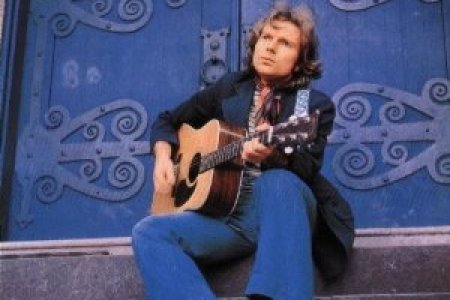
Dave posted this on his TurnTable Talk on February 19. The topic that he gave us was simple enough…a song with the word love in it. This song and Crazy Love came to mind from Van so I went with this one, you don’t hear this one as often.
In 1986-87 I bought the Van Morrison album Hard Nose the Highway, and this song, among others, caught my attention. The album is not up there with Moondance or Astral Weeks, but it’s a good album. When I heard this song on the album, I got the feeling I’d heard it before. It did peak at #66 in Canada in 1973. I’m sure I heard it on AM radio when I was a kid. It sounds like a hit. I just fell and am still over his wide-open songs, such as the title track, the previous album track, and “Saint Dominic’s Preview.”
When I got into Van…I really got into him. I ended up buying his first 9 albums (not counting the early Bang years), from the 1968 album Astral Weeks to the 1978 Wavelength album. I also ordered a hard-to-find Them album from England. An album I still have with me, one of the very few that survived my many moves in my younger days.
I always thought Warm Love was the sister song to Crazy Love off his Moondance album from 3 years before. Coming off the open sound of Saint Dominic’s Preview, Van Morrison went into Hard Nose the Highway in 1973 in a different headspace. The sessions were very successful, and they recorded over 30 songs. Morrison originally wanted to make it a double album, but the record company talked him into a single one.
The songs that caught my attention on first listen were this song, the title track, and a song called The Great Deception. He also did a cover of Kermit! Yes, Van covered Being Green on this album. It’s a good album and always a joy to listen to. Van had a band at this time called The Caledonia Soul Orchestra, and they were tight. Some of them played on this album.
The Caledonia Soul Orchestra was the road band that powered Van Morrison through one of the strongest stretches of his career, roughly 1972 to 1974. After the success of Moondance and the more reflective albums that followed, Morrison wanted a band that could move between jazz, R&B, folk, and soul without losing momentum. He found it in a large ensemble built around horns, a tight rhythm section, and backing vocalists who could follow his changes in real time.
A huge talent of Van is to make songs that feel off the cuff but polished at the same time. As with most of the album, it was built around live takes, with horns and backing vocals added only where they felt natural.
The album peaked at #27 on the Billboard Album Charts, #18 in Canada, and #22 in the UK in 1973. This live version is the best one I’ve heard, but it won’t let me embed it here.
Van Morrison: It is just a boy and girl song, walking on the beach. It’s a young song. I can’t really add to that, except to note that this is a musical love affair, with the girl bringing her guitar.
Warm Love
Look at the ivy on the old clinging wall Look at the flowers and the green grass so tall It’s not a matter of when push comes to shove It’s just a hour on the wings of a dove
It’s just warm love It’s just warm love
I dig it when you’re fancy dressed up in lace I dig it when you have a smile on your face This inspiration’s got to be on the flow But these invitation’s got to see it and know
It’s just warm love It’s just warm love
And it’s ever present everywhere And it’s ever present everywhere Warm love And it’s ever present everywhere And it’s ever present everywhere That warm love
To the country I’m going Lay and laugh in the sun You can bring your guitar along We’ll sing some songs, we’ll have some fun
The sky is crying and it’s time to go home And we shall hurry to the car from the foam Sit by the fire and dry out our wet clothes It’s raining outside from the skies up above
Inside, it’s warm love Inside, it’s warm love
And it’s ever present everywhere And it’s ever present everywhere That warm love And it’s ever present everywhere And it’s ever present everywhere That warm love, I can feel it
And it’s ever present everywhere And it’s ever present everywhere That warm love, hey And it’s ever present everywhere And it’s ever present everywhere That warm love, hey And it’s ever present everywhere And it’s ever present everywhere That warm love
Yes, I posted Sahm recently, but here he is leading the way with Uncle Tupelo. What a great and natural combination. Running across this was just fantastic! I can’t put into words how much I love the down-home sound of this. One more legend is on this album that I will reveal at the bottom of the post…no skipping or peaking!
When Uncle Tupelo teamed up with Doug Sahm on this song, it felt less like a guest spot and more like a handoff between two generations. Sahm had already lived a lifetime in Texas blues, country, and rock and roll. Uncle Tupelo were still mapping out what roots rock could sound like in the early ’90s. The song sits right in the middle of that meeting point.
Sahm sounds relaxed, like he’s telling a story on a porch. Jay Farrar and Jeff Tweedy hang back just enough to let the song lead. I always liked Uncle Tupelo anyway, but add Doug Sahm? Oh hell yes! I could listen to this type of music all day and twice on Sunday, as the saying goes. It gives me a great feeling, and it just fits all together so well. The backup vocals are on target, but also riding around the edges; it’s such a lived-in sound that I love. There is no overdubbing or big production…just back porch sounding goodness.
This track shows what Uncle Tupelo were always good at, connecting past and present without making it sound like a museum piece. Doug Sahm doesn’t feel like a legend that was just dropped in for credibility. He feels like part of the band, which in this he is. Doug Sahm wrote this song, and it was on the Uncle Tupelo album called Anodyne, released in 1993. He first released it as Sir Doug and the Texas Tornados in 1976.
There is one more legend on this album doing some vocals…the one and only Joe Ely. He did the lead vocals on Are You Sure Hank Done It This Way?
Give Back The Key To My Heart
Take my picture off the wall It don’t matter to me at all Said I was headed for a fall But you wanted me to crawl
Give back my TV It don’t mean that much to me While you’re giving back my things Give me back the key to my heart
Give back the key to my heart Give back the key to my heart And let my love flow like a river Straight into your heart, dear
Well, you say I was the one To blame for the wrong that’s been done Well, you got a friend named cocaine And to me, he is to blame
He has drained life from your face He has taken my place While you’re alone in San Antone Give me back the key to my heart
Give back the key to my heart Give back the key to my heart And let my love flow like a river Straight into your heart, dear
If you want to see where we are…HERE is a list of the episodes.
First of all, thank you all for following this series. This is the final episode, unfortunately. It’s been a fun trip down this lane! It was a lot of fun watching these again after at least a decade for me. Sometimes older shows, even 5 years old, don’t hold up as well. These really do, and even the weaker episodes have something to offer. Not many times can I say I watched a complete series without one clunker. I can see why this series is a cult favorite.
What were you doing on March 28, 1975? I was 8 and probably in bed when this came on, but now I’m catching up. In this one, we have Kathie Browne (Star Trek, Wink of an Eye episode, Gunsmoke, etc, 93 acting credits) as Lieutenant Irene Lamont. She was also Darren McGavin’s real-life wife. Their chemistry is evident, and it strengthens this episode. She knows how to handle Kolchak, about as well as you can anyway. If the show had gone on to another season, it would have been smart to bring her in to play Lieutenant Irene Lamont for good. Unlike the other reporters, Kolchak is not charmed by a pretty face like the other reporters were.
Tom Bosley (Mr. C on Happy Days) also guest stars as Jack Flaherty, who works at an underground data-storage facility where the trouble begins. The data storage was there in case of nuclear war. Companies can have all their records stored safely, and for personal items.
This episode started at the end with a flashback, with Kolchak racing down a long corridor in a golf cart. He is being chased by something, and then the story begins as he talks into his recorder. Before this, a wave of violent attacks in the data storage center tunnels happened in Chicago. Victims are found torn apart, and police believe a large animal may be responsible. Carl Kolchak notices the injuries don’t match any known animal in the area and begins tracing the incidents to locations connected by buried passageways beneath the city.
Kolchak impersonates a doctor to be there for an autopsy and an insurance man to get information out of a data storage worker. Just a typical day for him. Conning his way into the underground facility, Kolchak sees a large, reptilian creature, and when he tries to tell the police, he discovers what appears to be a government and military cover-up. He also realizes that the exciting geologic find, which appears to be rock are actually a nest of eggs.
In the final moments, Kolchak follows the creature into the tunnels and comes face-to-face with it again. He finishes his report, aware it will likely never be published, yet again.
Anyone familiar with Star Trek will recognize this plot as a close remake of the classic episode, “The Devil In The Dark” in which a creature with the ability to travel through solid rock kills miners who have mistakenly destroyed its eggs.
So long, Carl, we thank you for being such a truly iconic character.
Closing Narration
I know what’s gonna happen now. As far as the authorities are concerned, the events of April twentieth and twenty-first will never have occurred. They-They’re gonna tell me that if I ever breathe a word of this, they’re gonna break me like a straw man. Now what about the sentry? Will its eggs hatch in the warm, dark dank dampness of its nesting place? Who knows? Maybe the government will find the nest, maybe they won’t. We’ll probably never know. But if you’re in the subway or in a pedestrian tunnel underneath a ballpark and you think you hear something moving in the walls, it may not be your imagination. Take my advice, don’t walk, run to the nearest exit.
If you want to see where we are…HERE is a list of the episodes.
We have the very lovely Cathy Lee Crosby in this episode as Helen Surtees. She runs the Max-Match Corporation, a dating service. It also had John Fiedler, whose voice is very thin and right above a whisper. His voice was probably more well-known than he was. John Fiedler voiced Piglet in Disney’s Winnie the Pooh franchise for 37 years, from 1968 to 2005. He was on Star Trek and guested on The Bob Newhart Show many times as one of Bob’s patients. George Savalas, Telly’s brother, played Demosthenes, which, funny enough, was his real middle name. A nice support from a funny Kathleen Freeman as Bella Sarkof, a matchmaker hoping to find Kolchak a wife (she may, in fact, still be waiting for Kolchak’s return call).
This episode opens with a string of murders where older men and women are found with their bodies showing signs of extreme aging in a short time. Police think it is a normal homicide case with strange medical results, but Kolchak notices that every victim had recently crossed paths with the same young person.
He uncovers records going back decades showing the same face connected to deaths. Doctors confirm the victims lost years of life in hours. Kolchak realizes the killer is not just murdering but absorbing life itself, using it to stay young. The trail leads to Max-Match.
In the final stretch, Kolchak confronts the problem and forces a showdown that reveals the truth and stops the killing. Kolchak files another report that will likely be buried, while the city moves on as if nothing unusual happened. It’s an odd episode. It has some very funny and entertaining scenes in this one, but overall, it’s not one of the top episodes.