I remember this one…how could I forget? It is an 80’s time capsule…not a polite one but a time capsule all the same.
By the way…anyone who is easily offended…should NOT listen to the song.
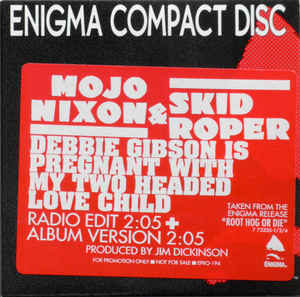
This dandy song was released in 1989 on Mojo’s album Root Hog or Die. Not only does he have fun with Gibson but he also mentions Rick Astley, Tiffany, Spuds MacKenzie, and Joan Collins as well.
I remember the video really well… Winona Ryder played Debbie Gibson and it’s as goofy as you would think…but fun. They lookalikes for Tiffany, Astley and Collins…and of course Spuds.
Debbie Gibson Is Pregnant With My Two Headed Love Child
Debbie Gibson is pregnant with my two headed love child
It’s a bigfoot baby, all covered in fur now
Stark-raving naked in the fornication nation
We were secretly married out in Las Vegas
At a little-bitty chapel, Joan Collins married us
Rootin’ tootin’, ain’t high falutin’
Rick Astley is a pantywaist, mash my butt in his face
His teeny-tiny, two inches of terror, they’re all gonna scare you
Hairbrained cockamamie knuckleheaded idjit galoot
No truth to the rumor about Spuds and Debbie G
Only went to the motel just to watch a little TV
Hate that dog, he must die
Tiffany is wrestling in jello
Body-slamming Debbie G, they’re covered head to toe
Hard on, my hard on
Debbie Gibson is pregnant with my two headed love child
It’s a bigfoot baby, all covered in fur now
Stark-raving naked in the fornication nation
I’m stark-raving naked in the fornication nation
Stark-raving naked in the fornication nation
A nice guitar riff to start this song off by Throwing Muses.
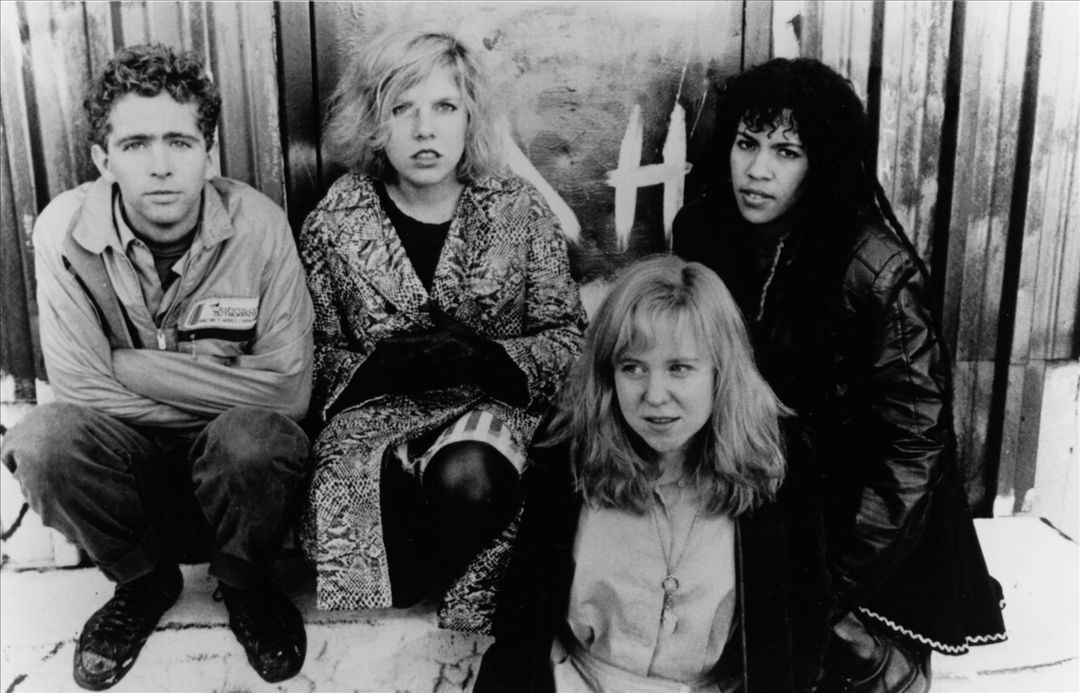
The band was formed in 1981 by step-sisters Kristin Hersh (vocals/guitar) and Tanya Donelly (guitar/vocals), who were both at high school at the time. Initially called Kristin Hersh And The Muses, the line-up was completed by bassist Leslie Langstons and drummer David Narcizo.
They lived close to Providence, Boston and New York and so they could play a club quite often in both places. They had a lot of colleges and some local newspapers, magazines, and radio stations to promote them.
They were the first American band signed to the British 4AD label. An eclectic blend of jerky guitar pop and songwriter Kristin Hersh’s eccentric vocals, the early work by Throwing Muses was quite different than their peers. A year later 4AD would sign Pixies based in part on the band’s connection to Throwing Muses, and by the mid-1990s much of the label’s roster was made up of American bands.
This song was on their self-titled album Throwing Muses in 1986. The song was written by guitar player and singer Kristin Hersh. She wrote every song on the album except one.
Their latest album Sun Racket was released on Fire Records on September 4, 2020.
Kristin Hersh: “We didn’t mean to ever be strange. I guess we were because everybody says we were,” “It’s almost like speaking your own language. I find we kept people out of our world by doing that.”
Hate My Way
I could be a smack freak And hate society I could hate God And blame Dad I might be in a Holocaust Hate Hitler Might not have a child And hate school I could be a sad lover And hate death I could be a neuro And hate sweat No I hate my way
I make you in to a song I can’t rise above the church I’m caught in a jungle Vines tangle my hands I’m always so hot and it’s hot in here I say it’s all right
My pillow screams too But so does my kitchen And water And my shoes And the road
I have a gun in my head I’m invisible I can’t find the ice
A slug I’m TV I hate
A boy, he was tangled in his bike forever A girl was missing two fingers Gerry Ann was confused Mr. Huberty Had a gun in his head
So I sit up late in the morning And ask myself again How do they kill children? And why do I wanna die? They can no longer move I can no longer be still
We are gonna lighten up today with a song from Mojo Nixon. Hope all of you are doing well on this holiday weekend… look around…Elvis is everywhere.
I was commenting with Paul and he brought up Mojo Nixon and it’s probably been since the 1980s that I heard him. A popular Nashville rock station WKDF in the 80s would play this song and a few more by Mojo.
Mojo Nixon (Neill Kirby McMillan, Jr) started in the early eighties and he teamed up with Skid Roper (Richard Banke). Mojo and Skip Roper wrote this song.
This song was released in 1987 and it was on his album Bo-Day-Shus!!!. Mojo has some fun music. I forgot about his songs until Paul pointed me toward him again and they came back to me. I’ll post one tomorrow also.
Nixon announced that he retired from the music business in 2004, playing his last live show in Austin, Texas. In 2009 he announced his “unretirement” and for a short time let anyone download his albums for free with this statement:
Can’t wait for Washington to fix the economy. We must take bold action now. If I make the new album free and my entire catalog free it will stimulate the economy. It might even over-stimulate the economy. History has shown than when people listen to my music, money tends to flow to bartenders, race tracks, late night greasy spoons, bail bondsman, go kart tracks, tractor pulls, football games, peep shows and several black market vices. My music causes itches that it usually takes some money to scratch
Elvis Is Everywhere
When I look out into your eyes out there When I look out into your faces You know what I see? I see a little bit of Elvis In each and every one of you out there
Lemme tell ya… Weeeeeeeeeellllllll… Elvis is everywhere Elvis is everything Elvis is everybody Elvis is still the king
Man o man What I want you to see Is that the big E’s Inside of you and me
Elvis is everywhere, man! He’s in everything He’s in everybody…
Elvis is in your jeans He’s in your cheesburgers Elvis is in Nutty Buddies! Elvis is in your mom!
He’s in everybody He’s in the young, the old The fat, the skinny The white, the black The brown and the blue People got Elvis in ’em too
Elvis is in everybody out there Everybody’s got Elvis in them! Everybody except one person that is… Yeah, one person! The evil opposite of Elvis The Anti-Elvis
Anti-Elvis got no Elvis in ’em Lemme tell ya
Michael J. Fox has no Elvis in him
And Elvis is in Joan Rivers But he’s trying to get out, man! He’s trying to get out! Listen up Joanie Baby!
Elvis is everywhere Elvis is everything Elvis is everybody Elvis is still the king
Man o man What I want you to see Is that the big E’s Inside of you and me
Man, there’s a lot of unexplained phenomenon Out there in the world Lot of things people say What the heck’s going on?
Let me tell ya!
Who built the pyramids? ELVIS! Who built Stonehenge? ELVIS!
Yeah, man you see guys Walking down the street Pushing shopping carts And you think they’re talking to allah They’re talking to themself Man, no they’re talking to ELVIS! ELVIS! ELVIS!
You know whats going on in that Bermuda Triangle? Down in the Bermuda Traingle Elvis needs boats Elvis needs boats Elvis Elvis Elvis Elvis Elvis Elvis
If you want to see The Twilight Zone now that Netflix lost the rights to it…you can see it on Hulu.
Rod Serling could write about a certain kind of character better than most. The small time criminal who is a loser. They are not or ever will be a successful crook or human being just the B level kind…forever bench warmers.
In this episode Rod took a different approach to the crook (Jackie Rhoades) played by Joe Mantell and you have some sympathy for him…which usually is not the case in the Twilight Zone. In Jackie you can find a trace of conscious although it’s buried in his cowardice.
Jackie battles himself in this episode and Mantell pulls this off wonderfully. Like King Nine Will Not Return, Mantell turns this into a one man show for most of the episode. His boss (George) played by William D. Gordon takes advantage of the coward Jackie and wants him to do the ultimate crime. The battle begins between Jackie and himself in his hot cheap motel room.
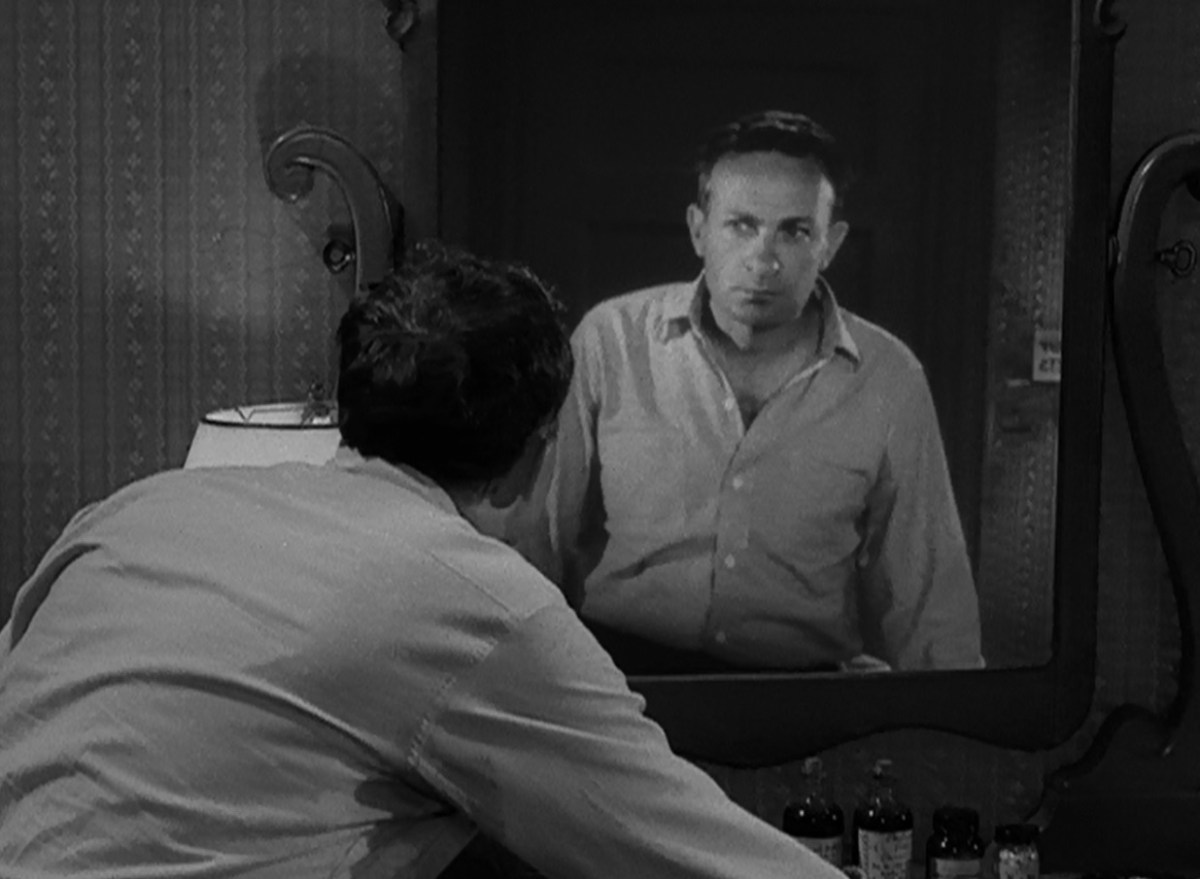
The special effects with the mirror in this one are really good.
This one is about redemption or the chance of redemption if you can find it in yourself.
Something I noticed in this episode is Joe Mantell talking into the mirror at himself said “You talking to me?” and I had to wonder if Martin Scorsese was taking notice before he made Taxi Driver.
This show was written by Rod Serling
Rod Serling’s Opening Narration:
This is Mr. Jackie Rhoades, age thirty-four, and where some men leave a mark of their lives as a record of their fragmentary existence on Earth, this man leaves a blot, a dirty, discolored blemish to document a cheap and undistinguished sojourn amongst his betters. What you’re about to watch in this room is a strange mortal combat between a man and himself, for in just a moment, Mr. Jackie Rhoades, whose life has been given over to fighting adversaries, will find his most formidable opponent in a cheap hotel room that is in reality the outskirts of The Twilight Zone.
Summary
The loser is locked in his self imposed cell. He has failed his entire life. He is a two bit crook who does jobs when he is told. He is a bootlicker, full of fear and anxiety and self loathing. He is a throwaway and knows that some day he will be caught and put away forever. Enter his alter ego who talks to him from behind a mirror. This is his good self, his productive self. Most of the episode is a nicely done dialogue between man and image. It gets at the roots of the problem. A psychologist may pick this apart and put it back together. It is about unrealized potential and reformation. It is also a very satisfying story of a man who has a chance to reclaim his soul.
Rod Serling’s Closing Narration:
Exit Mr. John Rhoades, formerly a reflection in a mirror, a fragment of someone else’s conscience, a wishful thinker made out of glass, but now made out of flesh, and on his way to join the company of men. Mr. John Rhoades, with one foot through the door and one foot out of the Twilight Zone.
CAST
Joe Mantell … Jackie Rhoades
William D. Gordon … George
Rod Serling … Narrator / Self – Host (uncredited)
First of all…Happy 4th of July to those that celebrate it! I also want to thank CB for bringing this song up last year on July 4th. I have posted the X version as well as Dave Alvin’s (who wrote the song) solo version of this song…I also threw in a live version from the Blasters.
This song was released in 1987 on X’s See How We Are album. The album peaked at #107 in the Billboard Album Charts.
This was written by the guitarist Dave Alvin, who had recently replaced Billy Zoom in X. Alvin still had ties with his former band, the Blasters, when he wrote the song, and in early 1986 he recorded the song with the group, with Nick Lowe producing. The sessions when downhill when Lowe decided that Dave should sing the song, not the group’s lead singer, his older brother Phil Alvin. The Blasters album was never released, and it ended up being an X song, with their vocalist John Doe singing it.
Nick Lowe told Dave Alvin something in these sessions that was interesting and career changing. Dave Alvin wrote the song but didn’t think he could sing it but Nick wanted him to. Lowe told him “I can’t sing either, but I’ve somehow made a living doing it.”
Lately I’ve been listening to a lot of Blaster’s music. Dave Alvin seems to cover everything from blues, rock, rockabilly, country, Americana and more. Here is a quote from him
I’ve always considered myself as basically a blues guy
but I don’t want to limit myself to what some people define as
blues. The “blues form” and the “blues scale” is a constant
in just about all American folk and roots music as well as jazz
and pop. Because of that, I can hear the blues in country music
as well as in the loud garage band down the block.
As a songwriter, if I feel like writing a polka one day,
I’ll write a polka. If I feel like writing a country song
or a rockabilly song, then I’ll do it. It’s hard enough
writing songs to have to bother yourself with somebody’s
categories.
Dave Alvin: “I wrote a long poem is how it really started,” Alvin said in the Zoo Bar’s upstairs dressing room before his latest show there last month. “It’s based on a true story in my life, back when I was a fry cook in Downey (California). Everything in the song is true,” “There was this little cul-de-sac and there were all these beat-up duplexes. We lived in the upstairs duplex. She didn’t want smoking in the place, so I’d sit on the top of the stairs and just stare at the cul-de-sac.”
“I was just trying to capture that moment. This is long before I even thought of being a songwriter. I was 21, 22 and I looked at the Mexican kids shooting fireworks and I looked at everything and I thought, ‘This is a song.’ Eight years later, I finally wrote it.”
From Songfacts
Alvin wrote a third verse, but decided the song had more impact without it, as it leaves the ending up to the listener. He told us: “When X wanted to record the song and we recorded a couple of demos for Elektra, one of the producers, who is a notable musician who shall remain nameless, said, ‘I’m not getting enough. It needs more.’ So, I thought, well, maybe I should pull that third verse back into it? But then I thought, no, it’s getting the point across. They’re either breaking up or they’re staying together.'”
This song is beloved by the band’s fans and has grown in popularity, but it was never a hit. A victim of timing, the late ’80s found X out-of-favor at radio stations, as anything perceived as “Punk” had a hard time getting airplay (Billy Idol excepted). A few years later, Nirvana knocked down that wall, but it was too late for “4th Of July.”
Live Blasters
Dave Alvin’s version
X 4th of July
4th of July
She’s waitin’ for me When I get home from work Oh, but things ain’t just the same She turns out the light And cries in the dark Won’t answer when I call her name
On the stairs I smoke a Cigarette alone Mexican kids are shootin’ Fireworks below Hey baby, it’s the Fourth of July Hey baby, it’s the Fourth of July
She gives me her cheek When I want her lips But I don’t have the strength to go On the lost side of town In a dark apartment We gave up trying so long ago
On the stairs I smoke a Cigarette alone Mexican kids are shootin’ Fireworks below Hey baby, it’s the Fourth of July Hey baby, it’s the Fourth of July
What ever happened I Apologize So dry your tears and baby Walk outside, it’s the Fourth of July
On the stairs I smoke a Cigarette alone Mexican kids are shootin’ Fireworks below Hey baby, it’s the Fourth of July Hey baby, Baby take a walk outside
This is a dark take on the Genie in the Bottle/Monkey’s Paw…but what else would you expect in the Twilight Zone? It’s another be careful for what you wish for episode and it’s a good one.
Luther Adler and Vivi Janiss play Arthur and Edna Castle, a poor couple running a pawn shop. They are near bankruptcy but with kind hearts…helping those around them. There is always a price to be paid for anything you get…something Arthur and Edna learn really quick.
Again casting got this one perfect. Joseph Ruskin plays the Genie and creepy is a nice word for him. This is not your Genie in a turban or Barbara Eden in a skimpy outfit. This Genie doesn’t play…he is honest to a fault and you are not going to slip something by him. As the wishes count up…. Arthur loses his cool and himself.
The third wish I won’t talk about here…but it’s got plenty of consequences for Arthur. Appreciate what you have is the message that I get.
This show was written by Rod Serling
Rod Serling’s Opening Narration:
“Mr. and Mrs. Arthur Castle, gentle and infinitely patient people whose lives have been a hope chest with a rusty lock and a lost set of keys. But in just a moment that hope chest will be opened and an improbable phantom will try to bedeck the drabness of these two people’s failure laden lives with the gold and precious stones of fulfillment. Mr. and Mrs. Arthur Castle, standing on the outskirts and about to enter the Twilight Zone.”
Summary
Arthur and Edna Castle run a small antique shop but business is not good and they’re having trouble paying their bills. Despite that, the good-hearted Arthur buys an old wine bottle from the desperate Mrs. Gumley for a dollar. When he knocks the bottle open, a genie appears offering them four wishes. They soon find that their wishes don’t lead them to the outcomes they had hoped for and certainly don’t lead to happiness.
Rod Serling’s Closing Narration:
A word to the wise, now, to the garbage collectors of the world, to the curio seekers, to the antique buffs, to everyone who would try to coax out a miracle from unlikely places. Check that bottle you’re taking back for a two-cent deposit. The genie you save might be your own. Case in point, Mr. and Mrs. Arthur Castle, fresh from the briefest of trips into The Twilight Zone.
CAST
Rod Serling … Narrator / Self – Host (uncredited)
Luther Adler … Arthur Castle
Vivi Janiss … Edna Castle
Joseph Ruskin … Genie
Olan Soule … IRS Man (as Olan Soulé)
Lisa Golm … Mrs. Gumley
Peter Coe … German (uncredited)
Albert Szabo … German Officer #2 (uncredited)
I Ain’t the One has a great opening riff and it was written by guitarist Gary Rossington and lead singer Ronnie Van Zant, and was featured as the first track on Skynyrd’s debut album (pronounced ‘Lĕh-‘nérd ‘Skin-‘nérd).
The album was one of the great rock debut albums. When you listen to this album you can hear a little of Cream, Stones, and Free. British rock was a huge influence on Lynyrd Skynyrd.
There is a great version of this song of them playing it at the Knebworth Festival in England. Although the headliner was The Rolling Stones but Skynyrd was the band that grabbed the notices of that festival.
At a gig in Atlanta in 1972 they were discovered and signed by musician, producer, and founding member of Blood, Sweat, and Tears and The Blues Project, Al Kooper.
After two songs into recording bassist Leon Wilkeson quit so he was replaced by ex-Strawberry Alarm Clock guitarist Ed King who originally wanted to play guitar with the band.
After they finished recording Ronnie Van Zant decided that King, who had added some guitar to the record, would be better on lead guitar so he asked Wilkeson to rejoin.
With Wilkeson back the now seven-man band was complete and would remain that way until Ed King and Bob Burns left the band in 1975. The guitarist Steve Gaines would join in 1976.
I Ain’t The One
Well, I’ll tell you plainly baby What I plan to do ‘Cause I may be crazy baby But I ain’t no fool Your daddy’s rich, mama You’re overdue But I ain’t the one, baby Been messing with you Got bells in your mind, mama So won’t you pardon me I think its time for me to move along I do believe
Now you’re talking jive, woman When you say to me Your daddy’s gonna take us in baby ‘N take care of me You know and I know, woman I ain’t the one I never hurt you sweet heart I never pulled my gun Got bells in your mind, baby So won’t you pardon me? I think its time for me to move along I do believe Time for me to put my boots out in the street baby Are you ready boots — walk on
All right there missy, let me tell you a thing or two Now you’re talking jive, woman When you say to me Your daddy’s gonna take us in baby ‘N take care of me When you know and I know, woman I ain’t the one That ain’t my idea — uh unh — of having fun Got rings in your eyes lady So won’t you pardon me I think its time for me to move along I do believe I must be in the middle of some kind of conspiracy
Power pop was well and alive during the 1990s. I remember this song in the early 90s but I never caught who did it. I heard it on our local alternate channel Lightning 100.
This band was from Scotland and they formed in Bellshill near Glasgow in 1989. They were influenced by Big Star, Badfinger, and the Byrds. They signed to the indie label Creation Records in Britain.
This song was off of their 3rd album Bandwagonesque and it was released in 1991. This was their breakthrough album in the US where it was distributed by Geffen Records. The album was voted album of the year by Spin magazine beating out Nevermind by Nirvana. Some critics called this album Big Star’s 4th because of the influence.
The album had several Top 20 hits on Billboard’s Modern Rock Tracks chart, including Star Sign, The Concept, and this song What You Do to Me. They played this song on Saturday Night Live on April 27, 1992.
Singer guitarist Norman Blake wrong this song.
The song peaked at #31 in the UK and #19 on the US Alternate Charts in 1991. The album peaked at #22 in the UK and #137 in the Billboard Album Charts. The album was #1 in the Billboard Heatseeker Album Charts.
From Wiki: The cover is designed by Sharon Fitzgerald. When Kiss member Gene Simmons, who had trademarked the logo of a moneybag with dollar symbol, was made aware of the record he sent a letter to Geffen Records, who in turn gave in and sent Simmons a cheque, according to Simmons’s book Sex Money Kiss.
The band is still together and has released a total of 11 studio albums.
What You Do To Me
What you do to me… I know, I can’t believe There’s something about you Got me down on my knees.
What you do to me… I know, I can’t believe There’s something about you Got me down on my knees.
What you do to me… What you do to me… What you do to me… What you do to me…
What you do to me… I know, I can’t believe There’s something about you Got me down on my knees.
What you do to me… I know, I can’t believe There’s something about you Got me down on my knees.
What you do to me… What you do to me… What you do to me… What you do to me…
What you do to me… What you do to me… What you do to me… What you do to me…
After hearing the song and seeing the video you would think 1965 NOT 1985. I would have loved to hear this in the eighties. This I could have gotten into a lot.
They debuted in March 1984 and released a series of independent records on Sydney’s Citadel Records. Each release made it to number one on the Australian alternative charts.
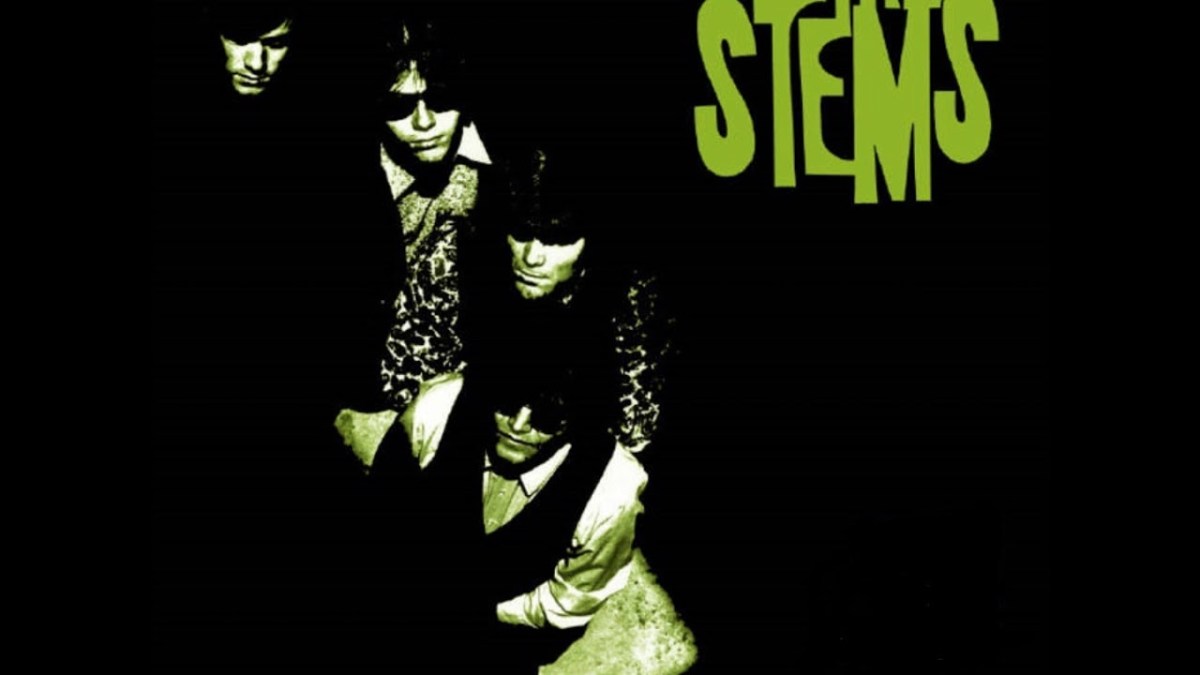
The Stems were a garage punk band formed in Perth, Western Australia in late 1983. They were hugely popular in Australia. They released this song in 1985 with a song “Cant Resist” as the B side. They would release 7 singles, 2 albums, and 2 EP’s between 1985-1987.
They broke up in 1987. Guitarist Dom Mariani explained: “I was not very happy with the way things were going towards the end of The Stems. We got quite big, and there are the usual problems that happen with that. People tend to drift apart, there are internal conflicts, egos going wild, and bad management was probably the major factor that contributed to The Stems breakup.”
The Stems regrouped in 2003 and played to packed houses across Australia and Europe. They disbanded again in 2009 and regrouped in 2013 and still play from time to time.
Tears Me In Two
All those things that you never said All those words going through my head Time after time I let her cry I laughed and I laughed And she waved goodbye
She waved goodbye She waved goodbye She waved goodbye She waved goodbye I said my prayers and shed my tears All my dreams have become my fears I wrote her letters that I could not send My memories are my only friend
She waved goodbye She waved goodbye She waved goodbye She waved goodbye Everyone thinks that I am crazy I can’t stand the things that they say Think that I’ve been oh-so-cruel Commit me with lies I did not do I didn’t do them You know I didn’t do them Don’t tell me that I did them You know I didn’t do them I didn’t do them
I couldn’t stand it for a second more I turn it down for, I want love for Why can’t my heart leave me be Tears me in two, can’t you see I can’t stand it for a second more I turn it down for, I want love for Why can’t my heart leave me be Tears me in two ways, can’t you see Tears me in two ways Come on baby Take an look down there Tears me in two ways
This is an episode about survivor’s guilt….how Captain Embry thinks he should have been with his crew . Robert Cummings plays Captain James Embry and the episode is driven by him. Cummings does a fantastic one man show for the first of the episode.
This revisits the pilot episode’s plot and it would explore again in the fourth season with The Thirty-Fathom Grave. The scenery and they way they present this episode is realistic.
The episode was based on a real event – the discovery of the B-24 Liberator four engine bomber Lady Be Good. The plane lost course during a WWII raid over Italy in 1943, and crashed deep in the Libyan desert. In 1959, a team of British geologists stumbled upon the wreckage — discovering that while the supplies were intact, the nine-man team were nowhere to be found. In the episode, the marker of a grave of a member of the crew of King Nine is dated “5 April, 1943,” the day on which the Lady Be Good was lost.
The bomber aircraft used in this episode was a North American Aviation B-25C-10NA 42-32354, which still exists in storage with Aero Trader, Borrego Springs, California. The plane was bought from the air force for $2500 (rather than the original cost — $345,000). It was disassembled, flown to set, and reassembled there.
This show was written by Rod Serling
Rod Serling’s Opening Narration:
This is Africa, 1943. War spits out its violence overhead, and the sandy graveyard swallows it up. Her name is King Nine, B-25, medium bomber, Twelfth Air Force. On a hot, still morning, she took off from Tunisia to bomb the southern tip of Italy. An errant piece of flak tore a hole in the wing tank and, like a wounded bird, this is where she landed, not to return on this day, or any other day.
Summary
The pilot of a downed B-25, Capt. James Embry, awakens in the desert, with no memory of how he got there. More worrisome, his crew’s nowhere to be found. He begins to wonder if he’s hallucinating, especially after he sees one of his men, sitting in the cockpit. When he awakens in hospital, he thinks it might’ve all been a dream, but wonders: did any of this really happen?
Rod Serling’s Closing Narration:
Enigma buried in the sand, a question mark with broken wings that lies in silent grace as a marker in a desert shrine. Odd how the real consorts with the shadows, how the present fuses with the past. How does it happen? The question is on file in the silent desert, and the answer? The answer is waiting for us – in the Twilight Zone.
CAST
Rod Serling … Narrator / Self – Host (uncredited)
Robert Cummings … Capt. James Embry (as Bob Cummings)
Gene Lyons … Psychiatrist
Paul Lambert … Doctor
Jenna McMahon … Nurse
Richard Lupino … Blake (uncredited)
I posted a song called Watusi Rodeo by Guadalcanal Diary a while back and I got a great response. I’ve been listening to these guys and it gets better and better. This band had a sophisticated and spiritual bent to the band’s lyrics.
This song is off of the EP Watusi Rodeo released in 1983. The songwriting in this band was a step above many of their peers…clever lyrics with a mixture of jangle and country. When you start listening to this band later on you can see a lot of eclecticism as they could bounce from one style to another.
They did get picked up by a major label after this release. Their LP Jamboree released in 1986 was on Elektra. They unsuccessfully attempted a commercial breakthrough, adopting the style of a country-rock band with some religious sentiment.
Jeff Walls and singer Murray Attaway were friends in high school in Marietta, Ga., just outside of Atlanta. Along with bassist Rhett Crowe and drummer John Poe, they formed Guadalcanal Diary.
In 2011, Guadalcanal Diary briefly reunited to play Athfest, and celebrated their 30th anniversary there. Jeff Walls died, May 29, 2019, of a rare pulmonary disease.
Trail Of Tears
The Sun hangs low in the Western sky I bow my head and remember now Someone’s lips pressed close to mine Her cool hand upon my brow
Hell burns hot for a killer ‘s heart A shallow grave in an unmarked plot Crack of gunfire in the dark Hand in hand we’ll walk at daybreak
One wore black One wore black One wore black
The trail of tears is winding on Many pass along the road Dusty soldiers march along As they file one by one
One wore black One wore black One wore black
Trail of tears is winding on Frightened soldier run no more Arm and arm with lovers gone No one passes on the road
Two girls wait at the railroad track For their soldiers to come back Knowing this will be their last One wore blue and one wore black
This is a perfect song to remember alternative radio with today. This is Paul Westerberg’s tribute to college radio in the 1980s. Of all the bands I’ve covered on Mondays…this band is my favorite of them all. They were more straight rock and roll with some quirks thrown in for good measure.
Left of the Dial celebrates the spirit of the eighties American indie rock scene and was a tribute to the tiny watt college stations populating the far end of the FM radio band—many let the Replacements crash after shows at campuses. Westerberg had said that is where they got most of their airtime…“We ended up going to college in an odd kind of way.”
The song is also about Westerberg’s infatuation with Lynn Blakey, singer-guitarist for North Carolina’s Let’s Active. They’d met when the bands shared a bill at San Francisco’s I-Beam in the fall of 1983. “He followed me around and bummed cigarettes off me,” recalled Blakey. The following night, after a show in Berkeley, the two spent hours walking together. They would exchange calls and letters as Blakey moved to Athens, Georgia, where she joined Michael Stipe’s sister Lynda in the band Oh-OK.
“I figured the only way I’d hear her voice was with her band on the radio . . . on a college station,” said Westerberg. “And one night we were passing through a town somewhere, and she was doing an interview on the radio. I heard her voice for the first time in six months for about a minute. Then the station faded out.” The moment provided the song’s lyric “If I don’t see ya, in a long, long while / I’ll try to find you / Left of the dial.”
The song was on the album Tim and it was released in 1985.
Left of the Dial
Read about your band in some local page Didn’t mention your name, didn’t mention your name The sweet Georgia breezes, safe, cool and warm I headed up north, you headed north
On and on and on and on What side are you on? On and on and on and on What side are you on?
Weary voice that’s laughin’, on the radio once We sounded drunk, never made it on Passin’ through and it’s late, the station started to fade Picked another one up in the very next state
On and on and on and on What side are you on? On and on and on and on and
Pretty girl keep growin’ up, playin’ make-up, wearin’ guitar Growin’ old in a bar, ya grow old in a bar Headed out to San Francisco, definitely not L.A. Didn’t mention your name, didn’t mention your name
And if I don’t see ya, in a long, long while I’ll try to find you Left of the dial Left of the dial Left of the dial Left of the dial Left of the dial Left of the dial Left of the dial Left of the dial
This is an extra post today after todays Twilight Zone…A World Of His Own
What a debut season! Out of 36 episodes we only had one episode below the Twilight Zone standards. That would be The Fever. We had nine 5 star episodes and it very easily could have been 12.
I thought I would post a tally for season 1 of this great series. There are a few I wish I would have bumped up from 4 1/2 to 5… Those would be The Lonely, Long Live Walter Jameson, and The Last Flight.
Do any of you have any different thoughts on the rankings below?
I would like to link to two different bloggers doing other tv shows. The will be going through show by show like I’m doing here. Join in if you have a favorite show that you like. I’ll continue to have the Twilight Zone every Saturday, Sunday, and Wednesday.
We have some to the last episode of the first season!
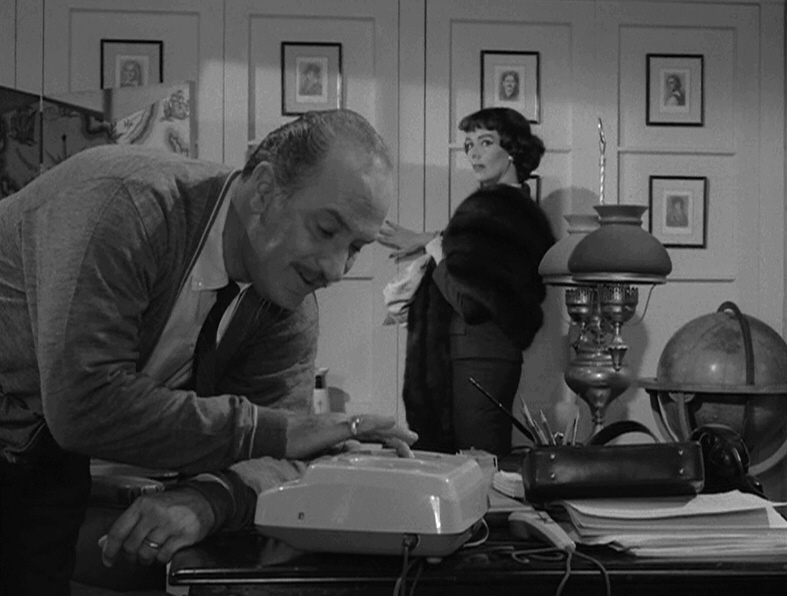
This episode features Rod Serling briefly interacting into the episode…not just giving a narration. It’s a clever story and it’s wrapped up in a light hearted episode and it’s one of the better ones. This episode has grown on me through the years. There is a small cast in this one. Keenan Wynn portrays playwright Gregory West who can do something extraordinary with his Dictaphone.
Phyllis Kirk plays his unlikable wife to perfection. This is an interesting episode because the power that Gregory West has… could have been quite dangerous in the hands of another person. The show closes season 1 on a lighter note.
Years later Stephen King would write a story similar to this one called Word Processor of the Gods that would be turned into a Tales From The Darkside.
Rod Serling’s cameo at the end of the episode marked his first onscreen appearance in the show. Although Serling appeared on-screen at the end of most first season Twilight Zone episodes to plug the following week’s show, this is the only episode in the first season in which Rod Serling appears on-screen within the episode itself and not in a separate “coming next week” segment. This is also one of only two episodes of the entire series where Serling appears on camera at the conclusion of the episode.
This show was written by Richard Matheson
Rod Serling’s Opening Narration:
The home of Mr. Gregory West, one of America’s most noted playwrights. The office of Mr. Gregory West. Mr. Gregory West—shy, quiet, and at the moment, very happy. Mary—warm, affectionate…And the final ingredient: Mrs. Gregory West.
Summary
Peeking into the window of her husband Gregory’s study, Victoria West sees him with a beautiful woman. When she finally gets into the room however, the woman is nowhere to be found. His explanation is preposterous – he claims that when he speaks into his dictation machine, the characters for his play come to life before his eyes. Victoria’s first reaction is that her husband should be committed and a demonstration still doesn’t quite convince her. Gregory has something else to show her.
Rod Serling’s Closing Narration:
Leaving Mr. Gregory West—still shy, quiet, very happy… and apparently in complete control of The Twilight Zone.
CAST
Rod Serling … Narrator / Self – Host (uncredited)
Keenan Wynn … Gregory West
Phyllis Kirk … Victoria West
Mary LaRoche … Mary (as Mary La Roche)
Modoc … Elephant (uncredited)
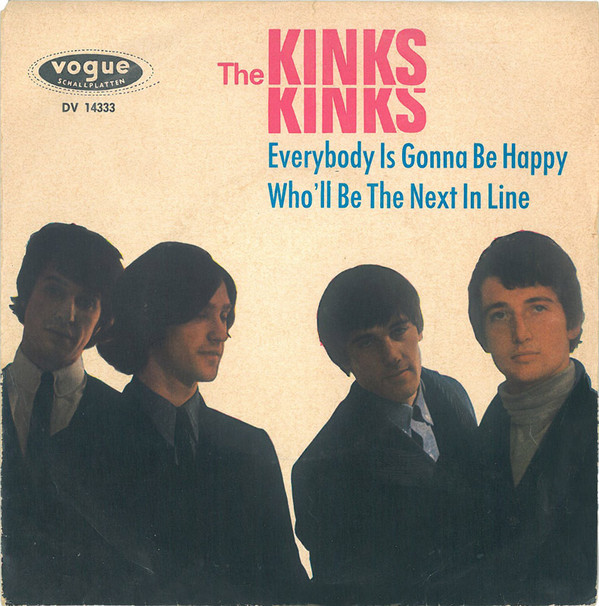
I never get tired of the Kinks. In July 1965, The Kinks released Who’ll Be The Next In Line as a single. This one is a very rocky song with a Kinks riff.
It was first released as the B-side to “Everybody’s Gonna Be Happy” in Britain. The single only made to #17 in the UK. Reprise in America thought Who’ll Be The Next In Line was the best song and released it as the A side with Evrybody’s Gonna Be Happy” as the B.
The song peaked at #34 in the Billboard 100 and #25 in Canada in 1965.
Running to just under two minutes, the song title has no question mark, although its authorship does. Released on the Reprise label, the B-side of “Everybody’s Gonna Be Happy” is credited on the record itself to R. Davies (Ray Davies) and on another pressing as R. Davies/Kassner. This latter appears to be a misprint; Edward Kassner was the man who launched the band’s career, and his name should have appeared below the songwriter credit rather than as part of it.
Here is the B side Everybody’s Gonna Be Happy
Who’ll Be The Next In Line
Who’ll be the next in line? Who’ll be the next in line for heartache? Who’ll make the same mistakes I made over you? Who’ll be the next in line? Who’ll be the next in line? For you? Who’ll be the next in line? Who’ll be the next to watch your love fade? All your affections finally fade away. There’ll be no use in sighing. Who’ll be the next in line? For you? One day you’ll find out when I’m gone, I was the best one you had, I was the one who gave you love. Who’ll be the next in line? Who’ll be the next in line for heartaches? Who’ll make the same mistakes I made over you? There’ll be no use in sighing. Who’ll be the next in line? For you? One day you’ll find out when I’m gone, I was the best one you had, I was the one who gave you love. Who’ll be the next in line? Who’ll be the next in line for heartaches? Who’ll make the same mistakes I made over you? Who’ll be the next in line? Who’ll be the next in line? For you? For you?








 PowerPop... An Eclectic Collection of Pop Culture