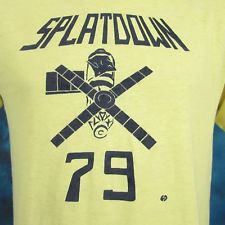
On July 12, 1979, Skylab fell back to the earth. Today is the anniversary.
In 1979 I was twelve and heard the news that a space workstation named Skylab was falling to earth. It was exciting for me…I was hoping that a piece of it would fall near so I could touch something that had been flying through space.
That didn’t happen because unless I was Australian I wasn’t going to see any debris. In school, our science teacher went over the event and I do remember people wearing Skylab t-shirts, hats, and buttons. Everyone was looking up hoping to see something…anything. Some kids were scared they were going to get crushed…that is when I learned…what goes up must go down.
Watching the news…there were some people panicking and…some partying. This is from Newsweek in 1979
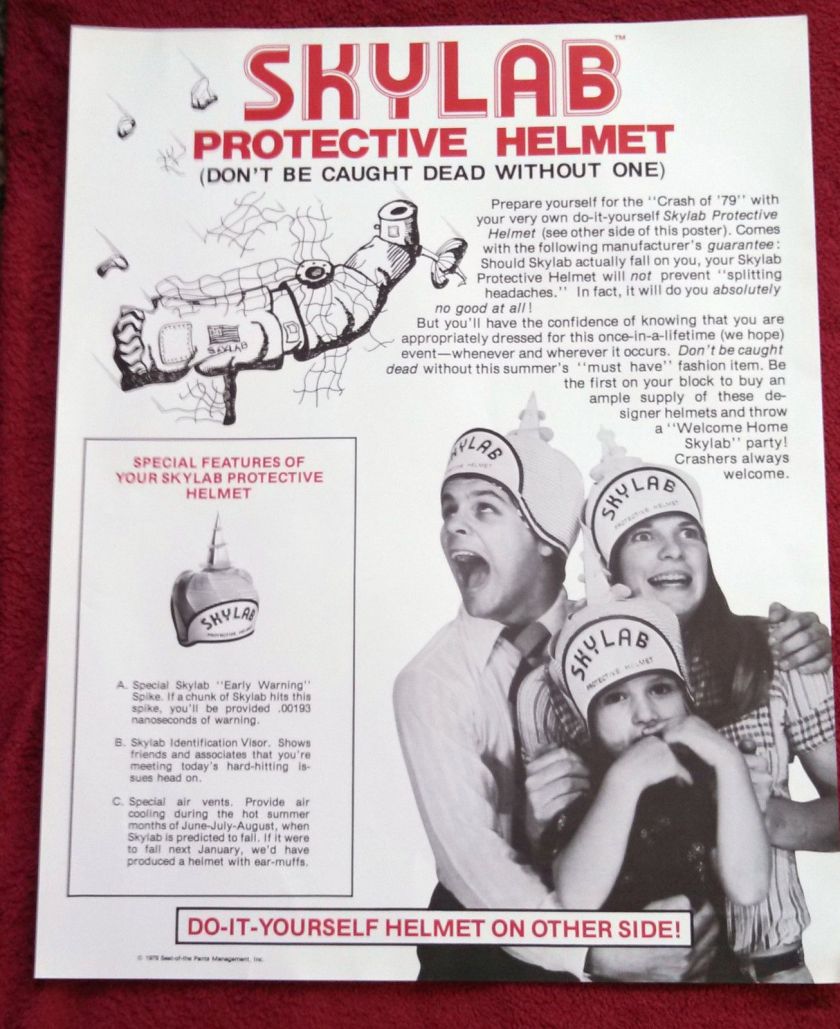
In various parts of the country, wags painted X’s on their neighbors’ roofs or sported T-shirts with targets on the back. Entrepreneurs sold plastic helmets and Skylab survival kits compete with bags for collecting stray parts of the spacecraft and letters suing NASA for damages. “I don’t know how much we’re making, but we’re having fun,” said Steven Danzig, 25, of Bloomington, Ind., who sold more than 20,000 such kits. In Washington, a bar called Mr. Smith’s sold a concoction dubbed the Chicken Little Special.
Around the U.S., there were Skylab parties to coincide with the crash, and betting pools on precisely when or where the debris would come streaking back to earth.
Skylab was designed to go up but not come back down. It was launched in 1973 and was occupied for almost 24 weeks. There was a lot of time and money spent on how to get it up there but not much time on how to get it down. It only had a 9-year life span, to begin with. In 1979 it was clear that Skylab was rapidly descending orbit.
On July 12, 1979, Skylab came back to earth in the Indian Ocean and in Western Australia. No one was injured by the falling debris.
The San Francisco Examiner offered a $10,000 reward for anyone bringing a part of Skylab to their office. They knew it wasn’t going to hit America so it was a safe bet they would not have to pay…but Stan Thornton…an Australian truck driver heard about the reward, grabbed a piece of debris, and jumped on a plane to San Francisco and got the reward.
Damn…this is such a great song. Duane Allman came into the Derek and the Dominos sessions and made a suggestion to record a Jimi Hendrix song, Little Wing. This is what he did in the Wilson Pickett sessions with the song Hey Jude.
After the Layla sessions were completed, Clapton returned to England with a rare left-handed Fender Stratocaster, a gift for Jimi Hendrix. He wanted him to hear the Dominos’ recording of Hendrix’s Little Wing, a tribute he and Duane had recorded for him. They both greatly admired Hendrix and Duane planned to meet him when Jimi came back from Europe. On the morning of September 18, 1970, Jimi Hendrix was found unconscious in a Notting Hill apartment in London. He died that afternoon at the hospital, having apparently suffocated while under the heavy sedation of sleeping pills.
The album peaked at #16 in 1970 on the Billboard 100. Although Derek and the Dominos were poised to record a follow-up album in 1971… tensions and drug abuse among the band members, along with the tragic death of Duane Allman ended that idea.
Jimi wrote this song and it was inspired by the 1967 Monterey Pop Festival, a concert held for 3 days in 1967. It was attended by around 200,000 music fans, it happened 2 years before Woodstock. Jimi wrote about the atmosphere at the festival as if it was a girl. He described the feeling as “Everybody really flying and in a nice mood.” He named it “Little Wing” because he thought it could just fly away.
The song was on Axis: Bold as Love released in 1967. The album peaked at #3 on the Billboard 100 in 1968.
Bobby Whitlock keyboard player: We had two leaders then. We had Eric and Duane. Eric backed up and gave Duane a lot of latitude, a lot of room, so he could contribute up to his full potentiality, and Duane was full of fire and ideas. He’d just go, “Hey, how about we try ‘Little Wing’?”—that was completely his idea and he came up with the intro by himself. He just started playing it.
Duane was very, very good in the studio. Working with the finest musicians and engineers on the planet really paid off for him. When he had the opportunity to be thrust into that environment, he absorbed what was right and righteous and then used it to killer advantage.
Little Wing
Well, she’s walking through the clouds
With a circus mind that’s running around
Butterflies and zebras and fairy tales
That’s all she ever thinks about
And when I’m sad, she comes to me
A thousand smiles she gives to me free
Said it’s all right, take anything you want from me
(Anything you want, babe) (Anything)
Well, she’s walking through the clouds
With a circus mind that’s running around
Butterflies and zebras and fairy tales
That’s all she ever thinks about
And when I’m sad, she comes to me
With a thousand smiles she gives to me free
Said it’s all right, take anything you want from me, baby
(Anything you want) (Anything)
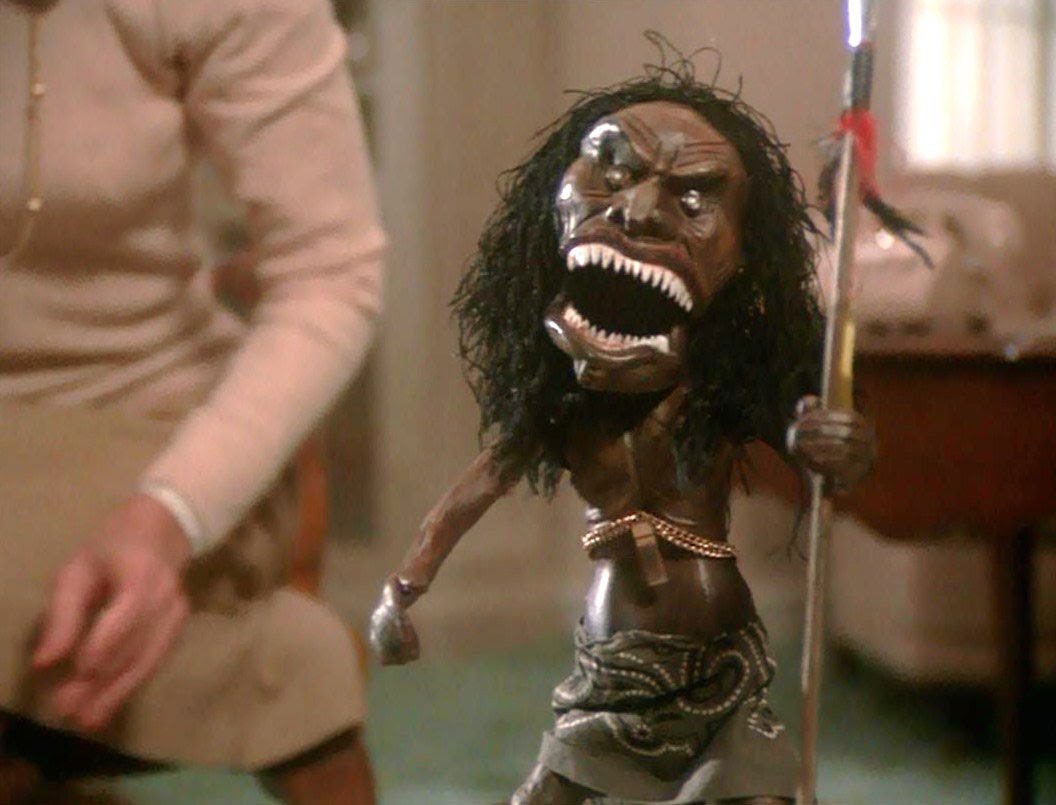
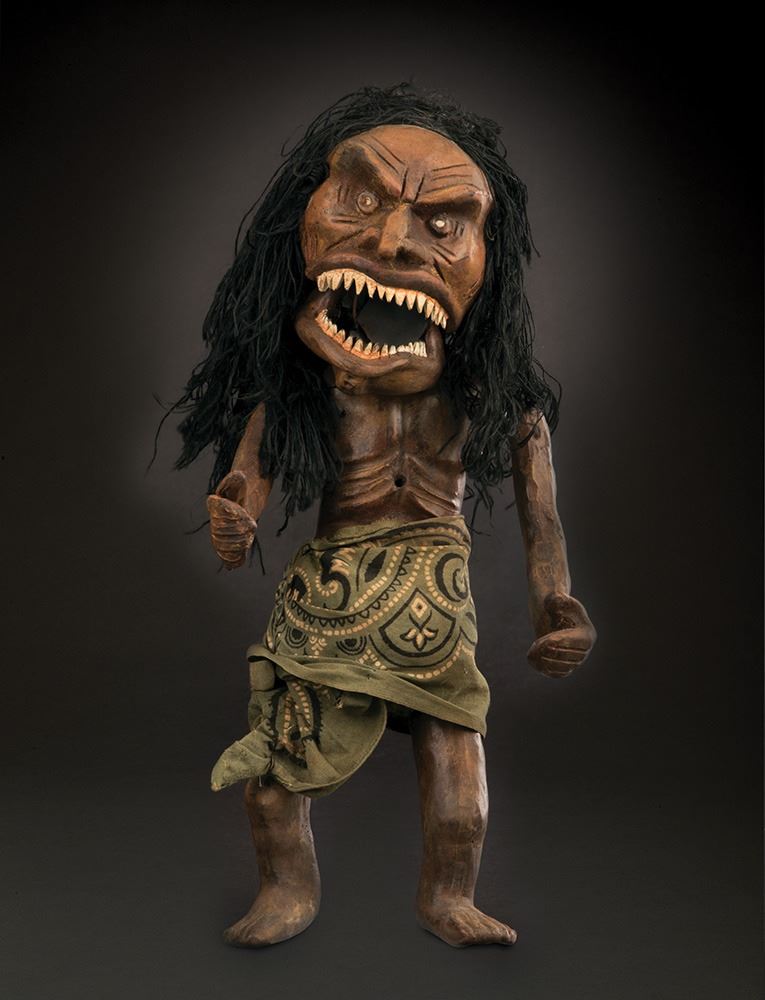
I did a few “Where is” posts a year or so ago and they were fun. I thought I would add this to the list. Most 1970s kids know this doll from the 1975 TV horror Trilogy of Terror. Karen Black starred and played 4 different charters in this horror anthology. Three stories are interwoven together. The first is about a college student infatuated with his teacher. The second is a paranoid tale of two sisters – one good, the other evil, and the third one is about a tribal doll that comes to life and terrorizes a woman in her apartment when it’s golden chain comes off.
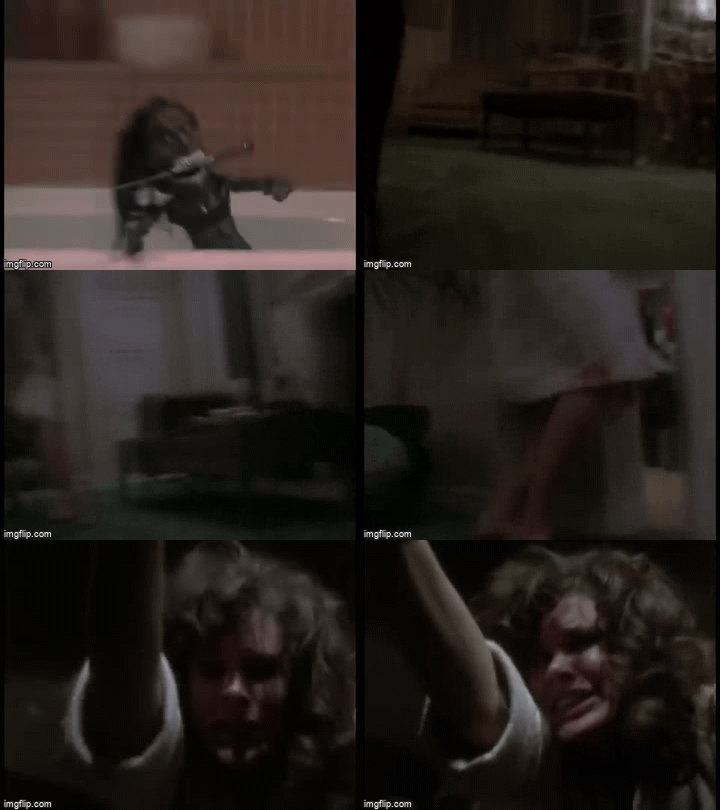
It’s the third one that most people remember although the first one is really good also. This doll terrorizes Karen Black’s character Amelia in her apartment and they did a good job on the special effects. They showed the doll just enough and not too much to make it look real. The story was based on Prey Prey written by the great Richard Matheson. In this presentation…this story is called Ameilia.
I watched this again for the 6th or 7th time and I wondered…did one of the dolls they used to film this survive? Yes, one survived and it was sold at auction. According to different sites… In 2019 when the Zuni doll went up for auction at “Profiles in History” a few years ago, it was expected to go for a price in the $12,000 to $15,000 range. Instead, it sold for more than $200,000! Including the buyer’s premium, the doll was purchased for a total of $217,600.
If you want one of these dolls (a copy of course) a little more affordable…you can get one on ebay. It would be a good conversation piece…just don’t turn your back on it.
You won’t find this song on one of their original studio albums. They recorded it for Some Girls but could not include this on that 1978 album because of legal issues. It’s a cool country-sounding song covering a grim subject. The song’s official release date was November 21, 2011. It appears as track number 1 on the 2011 deluxe edition of the Stone’s Some Girls album.
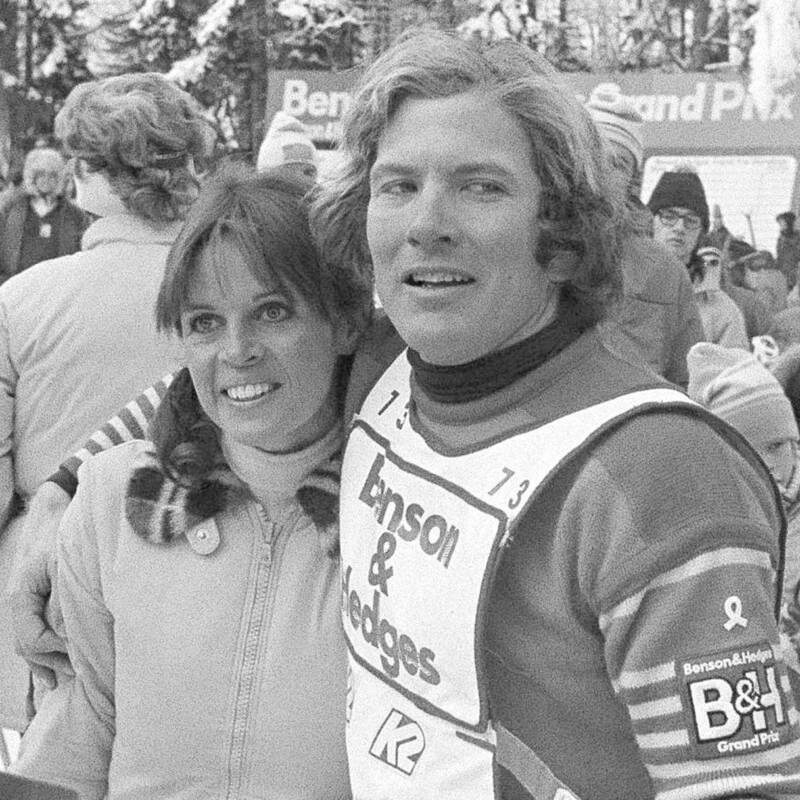
Claudine Longet and Spider Sabich
Claudine Longet was charged with fatally shooting her boyfriend, Olympic skier Vladimir “Spider” Sabich on March 21, 1976. At the trial, Longet claimed the gun discharged accidentally as Sabich was showing her how it worked. Throughout the whole court case, her former husband, the singer Andy Williams was by her side as she told her story.
Sabich was one of the most well know American ski racers in the late 60s and early 70s. Claudine claimed that she was showing the gun to him when it went off. She informed detectives that their relationship was under no duress. Friends of the couple said he was about to leave her at the time. Claudine Longet and Spider Sabich met in 1972. Claudine was a well-known French actress and singer…likely most famous for her marriage and subsequent divorce to Andy Williams. They were the Aspen celebrity couple.
Longet was only charged with a felony of reckless manslaughter which resulted in spending just a few weeks in jail, at her convenience. This was because she had children from her previous marriage and the judge didn’t want her to be away from her children for too long. With that, Longet spent most of her jail time over weekends. She took years to serve her sentence of 30 days.
Cocaine was alleged to have been found in her system, and details in her diary allegedly contradicted what she had told the police about her and Spider’s relationship. However, in a blow to the prosecution, the blood and diary were deemed inadmissible to the case because they were apprehended without a warrant.
At the time Saturday Night Live also got on board with this story with a skit called The Claudine Longet Invitational
You had the SNL announcers describing someone skiing down a hill and then…
Uh-oh! He seems to have been accidentally shot by Claudine Longet! Yes.. and I’m afraid Helmut Kindle is out of this race!
Longet’s lawyer wasn’t laughing, and he sent SNL a cease-and-desist letter. In the following week’s episode, the announcer Don Pardo read a statement on air…the show’s first public apology: “It is desirable to correct any misunderstanding that a suggestion was made that, in fact, a crime had been committed. The satire was fictitious and its intent only humorous. This is a statement of apology if the material was misinterpreted.”
Claudine is 80 years old now and stays out of the news.
Keith Richards: I wished, and I think all of us did at the time, that that should have been on the original album, but there was some legal difficulties and stuff. But otherwise, she was a perfect ‘Some Girl.’
Claudine Longet: He was my best friend
Claudine
Claudine’s back in jail again
Claudine’s back in jail again
Claudine’s back in jail again, Claudine
Claudine’s back in jail again
Claudine’s back in jail again
She only does it at weekends
Claudine
Now only Spider knows for sure
But he ain’t talkin’ about it anymore
Isn’t it, Claudine?
There’s blood in the chalet
And blood in the snow
She washed her hands of the whole damn show
Claudine
She shot him once right through the head
She shot him twice right through the chest
The judge says ruled it was an accident Claudine
Accidents will happen
And Claudine’s back in jail again
Claudine’s back in jail again
Claudine’s back in jail again, Claudine
Claudine’s back in jail again
Claudine’s back in jail again
Claudine’s back in jail again, Claudine
Hey go baby
Go baby
Claudine’s back in jail again
Claudine’s back in jail again
Claudine’s back in jail again, Claudine
Oh Claudine
Oh Claudine
Oh Claudine
Now I threaten my wife with a gun
But I always leave the safety on
I recommend it, Claudine
Yea she pistol-whipped me once or twice
But she never tried to take my life
What do you think about that
Claudine
Claudine’s back in jail again
Claudine’s back in jail again
She only does it at weekends Claudine
Oh Claudine
Oh Claudine
Oh Claudine
What about the children, Claudine?
Poor, poor children
You’re prettiest girl I ever seen
Only see you on the movie screen
Hope you don’t try to make a sacrifice of me Claudine
Don’t get
Don’t get too trigger happy with me Claudine
Itchy fingers
Yeah Claudine’s back in jail again
Claudine’s back in jail again
Claudine’s back in jail again Claudine
Yeah Claudine’s back in jail again
Claudine’s back in jail again Claudine
Uh uh Claudine
Poor, poor, poor Claudine
Welcome to the Hanspostcard TV Draft. I hope you will enjoy it! Today’s post was written by Paula at http://paulalight.com
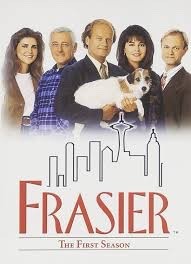
FRASIER
Frasier is a spin-off from Cheers, starring Kelsey Grammer as Dr. Frasier Crane, a psychiatrist who leaves Boston (where Cheers was set) to return to his hometown of Seattle as a radio show host. Costarring is David Hyde Pierce as Frasier’s brother Niles, also a psychiatrist, and it’s amazing how much the two actors resemble one another. They’re both drolly hilarious as well and play off each other superbly ~ though the writers didn’t originally intend for Niles to have such a large part, they reconsidered after discovering how much Niles added to the show. John Mahoney (RIP) plays their father, Martin, a retired cop, who frequently argues with his sons, and there are two funny women on the show in recurring roles ~ Peri Gilpin as Roz (Frasier’s producer) and Jane Leeves as Daphne (Martin’s caretaker/physical therapist). The show won 37 Primetime Emmy Awards, which was a record at the time. It also won the Emmy for Outstanding Comedy Series for five consecutive years. Supposedly there is a “revival” coming at some point, starring the brothers. The original ran for 11 seasons, beginning in 1993 and ending in 2004.
If you recall, during Cheers Frasier was married to fellow psychiatrist Lilith (wonderfully played by Bebe Neuwirth), and they are divorced when Frasier begins, with Lilith having primary custody of their son Frederick. Immediately thwarting Frasier’s plans for a wild single life is his father, injured on duty, and requiring 24/7 assistance. Frasier brings Martin and his annoying dog Eddie to live with him, and they hire Daphne, a British caregiver. Niles makes frequent appearances, and one recurring motif is that his wife Maris is an impossible person, whom he constantly complains about, yet we never see her face (same as Norm’s wife on Cheers). Niles falls in love with Daphne, and eventually he leaves Maris and marries Daphne. Frasier and Niles are snobby intellectuals (though endearing in their inability to solve their own problems while helping others), and Martin is more of a “regular guy,” so that dichotomy generates clashes. Lilith makes several appearances on Frasier under various premises, from calling in to his radio show to sleeping with Niles due to despair that her next husband left her for a man.
One amusing piece of trivia is that Frasier had announced on Cheers that his father died. That had to be retconned into the Frasier universe by revealing that Frasier had lied about his father dying. The fab theme song “Tossed Salads and Scrambled Eggs” was composed by Bruce Miller and sung by Grammer. Though the show is very Seattle-centric, only one episode was actually filmed there; the rest were shot at Paramount Studios and around Los Angeles. (All info from Wikipedia.)
~*~
Paula Light is a poet, novelist, flash fiction fan, cupcake connoisseur, mom, grandma, cat mommy, etc. Her blog can be found at http://paulalight.com.
A fun British sitcom that aired from 1972-to 1985. This comedy is not subtle…it’s obvious and in the open. The three UK sitcoms I’ve watched the most are Fawlty Towers, The Good Life, and Are You Being Served. My favorite by a mile is Fawlty Towers but this one is a lot of fun.
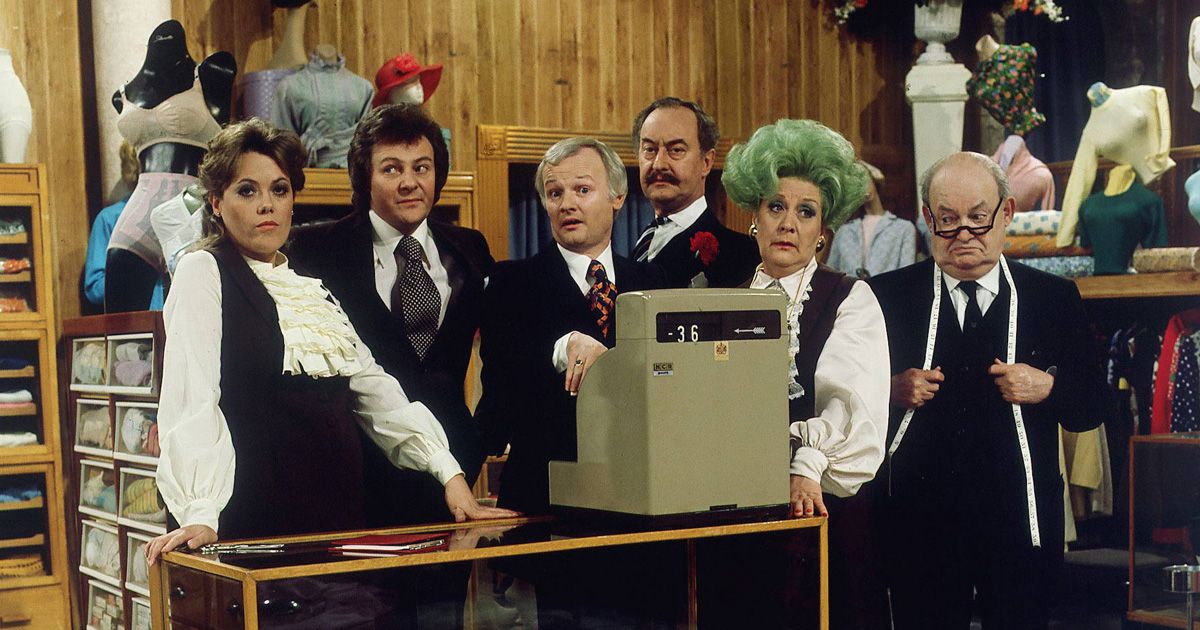
The show is about a department store called Grace Bros. owned by the elderly Grace brothers. It is operated with the old British class system. The show highlighted the Menswear and Womenswear departments and also the Floor Walker the pretentious Captain Peacock. It also featured the incompetent floor manager…Mr. Rumbold. As far as the class system…it’s hard to believe that once upon a time this was in effect.
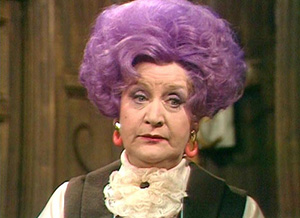
The Women’s department was run by Miss Slocombe. A lady that is known for her hair color changing every day and the love of her pussy cat…they get a lot of mileage out of that. She tries to elevate herself over the working class but that is just what she is. Her assistant is the young very pretty Miss Brahms who talks with a cockney accent and is proud of being thought of as working class.
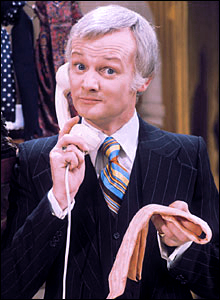
The head of the Men’s department is Mr. Granger who is older and near retirement and seems to be in a sour mood most of the time. Two more men work in the department… The junior in the department is Mr. Lucas who is always late and flirting with Miss Brahms, never has money, and always has to wait his turn before he can serve anyone and make money because the other two men have seniority, the other man is Mr. Humphries…probably the most popular character of the show. He hints at being gay every episode but never comes out and says it…this is really played up…remember it is the 70s. The writers go for the obvious jokes many times but it’s still funny.
The Grace brothers owned the store and “Young” Mr. Grace was in fact not young at all. He is quite stingy and he always had a very young attractive girl by his side. Overall though a nice older man.
The maintenance men Mr. Mash and Mr. Harmon were great. They would make the devices to advertise the merchandise. Sometimes the machine they made would blow up or show some naughty things to the customers. They were union and they thumbed their nose at higher-up staff.
Mix these personalities and you got a funny show. The purpose of the sitcom basically was to expose the class system and parody it.
The customers that shopped at Grace Bros department store usually left disappointed. The phrases I remember the most are “Are you free?” and while having a customer try on pants that obviously don’t fit…You would hear an employee say don’t worry” They’ll ride up with wear.”
Some of the cast left and past away during the run of the show. They were replaced with different characters and the show went on. When the show ended in 1985 a spin-off was made called Grace and Favour.
The core cast was strong, and the show was very good until the start of the 80s like most shows, they were reaching more for stories and repeating themselves. In 1979 when Trevor Bannister who played Mr. Lucas left it started to go down.
I wouldn’t compare this to Fawlty Towers because Fawlty Towers was better written… but this is a fun sitcom nonetheless. I remember watching it when I was young being broadcast on PBS. It is worth a watch if you like British humor.
The sitcom had 69 episodes and a movie in 1977… well, you can say 70 episodes because in 2016 a new episode was made with different actors playing the same characters but it fell flat.
The original show is still popular in syndication after all of these years.
Tomorrow morning we will kick off our last TV draft round! We have 8 more TV Shows coming…we all want to thank you… the readers who have made this possible and a fun experience.
I also want to thank the bloggers who have reviewed all of these shows and we have covered every decade from the 1950s until now. Below are the picks that began in January and will end on July 3.
Thank you… Paula, Lisa, Dave, John, Keith, Mike, Liam, Vic, Hanspostcard (who started it), and Kirk for all of the reviews below.
This post is a 4-in-1 deal…Let’s Stick Together was on Bob Dylan’s album Down In The Groove…considered his worst album by some critics. I never thought that…I bought it when it came out and it’s not that bad. The worse Bob Dylan album is much better than a lot of others.
This song has been covered by a lot of artists. The confusing part is the song not only goes by Let’s Stick Together but also Let’s Work Together.
Our band covered this one and we did it with the arrangement that Dylan laid down. I like this song no matter who covers it. I like Bryan Ferry, Canned Heat, and Wilbert Harrison’s version.
Wilbert Harrison originally wrote and recorded this blues-style R&B number as “Let’s Stick Together,” a plea for fidelity in a fractured marriage. That version, released in 1962, didn’t make the charts (until Bryan Ferry covered it in 1976) but never left Harrison’s mind. Seven years later, he resurrected the song, keeping the melody but changing the lyrics. “I thought I’d put some words to it that meant a bit more.”
Changing the title to “Let’s Work Together,” Harrison’s new message of unity was aimed at a nation rife with conflict over the Civil Rights Movement and the Vietnam War.
Canned Heat didn’t want to overshadow Harrison with their version. In fact, if they’d known the singer was going to have success with it, they never would have recorded it in the first place. They first heard the tune when it was still making the rounds at underground radio stations. Their new guitarist Harvey Mandel played it for the rest of the guys and suggested they cover it, but their co-vocalist, Bob “The Bear” Hite, wanted to wait a few months to see if Harrison would chart first. According to drummer Adolfo de la Parra, Hite didn’t like taking songs away from living black musicians unless they weren’t hits.
Bryan Ferry had success with the song…peaking at #4 in the UK in 1976 and #1 in Australia. In 1988 Ferry did an updated version of the song, re-mixed by Bruce Lampcov & Rhett Davies. This re-recording reached #12 in the UK chart. Ferry had the most success with the song.
Let’s Stick Together
Well, a marriage vow, you know, it’s very sacred The man put us together, now, you wanna make it Stick together Come on, come on, stick together
You know, you made a vow, not to leave one another, never Well, ya never miss your water ’til your well runs dry Now, come on, baby, give our love a try, let’s stick together Come on, come on, stick together
We made a vow, not to leave one another, never Well, ya never miss your water ’til your well runs dry Come one, baby, give our love a try, let’s stick together Come on, come on and stick together You know, we made a vow, not to leave one another, never
It might be tough for a while, but consider the child Cannot be happy without his mom and his papi
Let’s stick together Come on, come on, stick together You know, we made a vow, not to leave one another, never
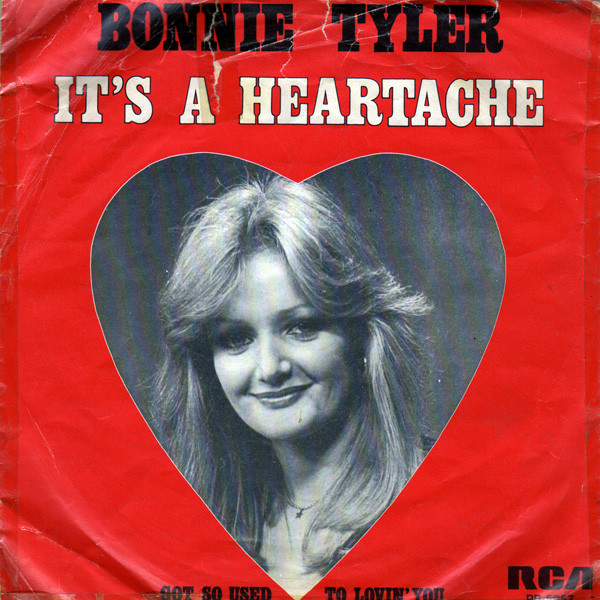
Late seventies at the skating rink…this one was played and that is what I think of. I knew enough about Rod Stewart at the time I was 10-11 to think this was him for a while. My sister got the single and I loved it. Rod Stewart finally covered the song in 2007.
It’s a Heartache was released in 1978 and peaked at #3 in the Billboard 100, #4 in the UK, and #1 in Canada. It also crossed over to the country charts at #10. The single sold over 6 million copies. This song fits Bonnie Tyler’s voice perfectly. The song was written by Ronnie Scott and Steve Wolfe.
Bonnie Tyler had throat problems severe enough to require surgery in 1976, the procedure can often be career-threatening. In this case, however, the nodules that she developed singing in nightclubs in her native Wales turned out to be career-making. She was told not to speak 6 weeks after her surgery but she did and it helped cause the rasp.
Some useless trivia… The two weeks that “It’s A Heartache” was at #3, for those two weeks the #1 record was “Shadow Dancing” by Andy Gibb and at #2 was “Baker Street” by Gerry Rafferty
The drummer on this song was Mike Gibbons of Badfinger.
It’s a Heartache
It’s a heartache Nothing but a heartache Hits you when it’s too late Hits you when you’re down
It’s a fool’s game Nothing but a fool’s game Standing in the cold rain Feeling like a clown
It’s a heartache Nothing but a heartache Love him ’til your arms break Then he let’s you down
It ain’t right with love to share When you find he doesn’t care for you It ain’t wise to need someone As much as I depended on you
Oh, it’s a heartache Nothing but a heartache Hits you when it’s too late Hits you when you’re down
It’s a fool’s game Nothing but a fool’s game Standing in the cold rain Feeling like a clown
It ain’t right with love to share When you find he doesn’t care for you It ain’t wise to need someone As much as I depended on you
Oh, it’s a heartache Nothing but a heartache You love him ’til your arms break Then he let’s you down
It’s a fool’s game Standing in the cold rain Feelin’ like a clown It’s a heartache Love him ’til your arms break Then he let’s you down It’s a fool’s game
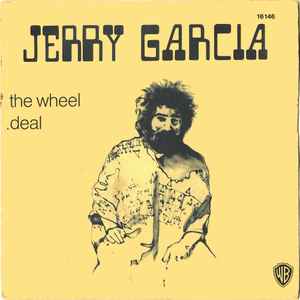
I haven’t heard this song as much as Sugaree but I like it almost just as well.
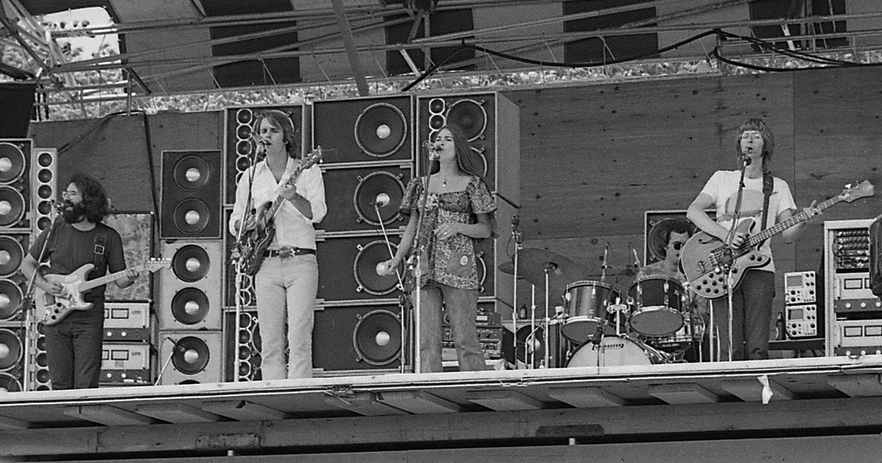
It is so well crafted and it swings with the best of them. This was off of his debut Garcia album and his voice is in perfect form. When I think of Jerry Garcia I never think…hmm great vocalist… but this changes my mind. His voice is so clear…it shows what a good vocalist Garcia could be. Robert Hunter’s words flow through you while Garcia’s guitar dances all around. He tops it off with a versatile solo.
The album is a mix of folk, country, blues, jazz, experimental, and rock. I love the roots music because it’s so clean and genuine. He made the album in 1971 with mostly himself. Bill Kreutzmann (Dead Drummer) was the only other musician credited on Garcia, which was recorded at Wally Heider’s Studio D in San Francisco in July 1971 and released in January 1972.
Garcia also did the album for a cash infusion to buy a house for himself and Carolyn Adams (Mountain Girl) and two children. This was recorded a year after Working Man’s Dead and American Beauty…considered two of the best Grateful Dead albums. Many of the songs on this album became staples for the Grateful Dead in concert.
Bill Kreutzmann was credited as co-writer on 5 of the tracks and Garcia and Hunter on 5 tracks. Robert Hunter also collaborated with Bob Dylan on songs Duquesne Whistle, Ugliest Girl In The World, and the minor hit Silvio. He also co-wrote all but one track on the Bob Dylan album Together Through Life released in 2009.
Jerry Garcia on making the album: I’m doing it to be completely self-indulgent—musically. I’m just going on a trip. I have a curiosity to see what I can do and I’ve a desire to get into 16-track and go on trips which are too weird for me to want to put anybody else I know through. And also to pay for this house!
Jerry Garcia: I’ll probably end up doing it with a lot of people. So far I’m only working with Bill Kreutzmann because I can’t play drums. But everything else I’m going to try to play myself. Just for my own edification. What I’m going to do is what I would do if I had a 16-track at home, I’m just going to goof around with it. And I don’t want anyone to think that it’s me being serious or anything like that—it’s really me goofing around. I’m not trying to have my own career or anything like that. There’s a lot of stuff that I feel like doing and the Grateful Dead, just by fact that it’s now a production for us to go out and play, we can’t get as loose as we had been able to, so I’m not able to stay as busy as I was. It’s just a way to keep my hand in so to speak, without having to turn on a whole big scene. In the world that I live in there’s the Grateful Dead which is one unit which I’m a part of and then there’s just me. And the me that’s just me, I have to keep my end up in order to be able to take care of my part of the Grateful Dead. So rather than sit home and practice—scales and stuff—which I do when I’m together enough to do it—I go out and play because playing music is more enjoyable to me than sitting home and playing scales.
Deal
Since it costs a lot to win, and even more to lose, You and me bound to spend some time wond’rin’ what to choose. Goes to show, you don’t ever know, Watch each card you play and play it slow, Wait until that deal come round, Don’t you let that deal go down, no, no.
I been gamblin’ hereabouts for ten good solid years, If I told you all that went down it would burn off both of your ears. Goes to show you don’t ever know Watch each card you play and play it slow, Wait until that deal come round, Don’t you let that deal go down, no, no.
Since you poured the wine for me and tightened up my shoes, I hate to leave you sittin’ there, composin’ lonesome blues. Goes to show you don’t ever know Watch each card you play and play it slow, Wait until that deal come round, don’t you let that deal go down.
Wait until that deal come round, don’t you let that deal go down, Wait until that deal come round, don’t you let that deal go down, Don’t you let that deal go down, don’t you let that deal go down.
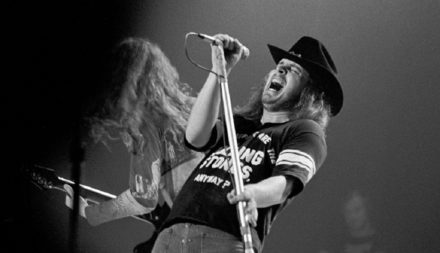
This band was known mostly for Sweet Home Alabama, Gimme Three Steps, Simple Man, and Free Bird for the most part. It’s a shame really because they have some outstanding album cuts.
I’ve had love-hate feelings with them because people automatically think you have to like them…if you are from the south. Our band would refuse to play their music for the longest time. Now I’m embarrassed we thought that way.
After a little time, I started to realize how great of a rock band they were…southern or not. Their influences were The Stones, Yardbirds, and most of all Cream…and it showed. At the time of their crash in 1977, Street Survivors had just been released 3 days and it was moving fast up the charts. This was going to be their big breakthrough album…and it was. They were a double-threat band…they could hit with singles and make superb rock albums. If not for the crash they would have been up in the stardom league of Aerosmith at least.
Ronnie Van Zant was a fantastic songwriter and a good singer. He is a singer who knew his limits and stayed within them. He would never write any words down…he would walk around the band during rehearsal and start to make up verses while hearing riffs and he would have a finished song.
I was really surprised by this song. I always liked it but…it sounded different from the other songs and I never knew why. I assumed that this song was recorded in 1977 but I was wrong. One More Time was recorded back in 1970 – 1971 when they were making demos and just starting their recording career. That was 2 years before they released their first album.
It was written by Van Zant and guitarist Gary Rossington. They worked on this album for a long time…they re-recorded every song on Street Survivors twice except this one. They dropped some other songs they worked on and pulled out this demo from the vaults and used it. The band re-mixed it and it blended in with the other new songs but I can hear now while listening to What’s Her Name and others on the album.
Street Survivors peaked at #5 in the Billboard Album Charts and #3 in Canada in 1977. The band has sold 28 million albums in the US since 1991 when Nielsen SoundScan started tracking sales, not including album sales for the band’s first 17 years.
His voice sounds a little different in this song because it was so early in their career and he was learning. Van Zant sings this song in a controlled cool while delivering this line.
So I’ll take the word of a liar One more time, one more time
One More Time
How can you stand there smilin’ After all you’ve done You know it seems to make you happy When you’ve hurt someone Twice before you fooled me With your deceivin’ and lyin’ Come in and close the door One more time, one more time
Yeah you’ve been gone so long No one knows where And you say that you still love me Then show me you care ‘Cause you got what it takes sweet mama To make a man feel fine So I’ll take the word of a liar One more time, one more time
Girl you’ve got me hungry Losin’ my mind I know I’m playin’ with fire Get burned every time Yes I’m a fool for you baby I can’t deny But I got to have your sweet love One more time, one more time
Girl you’ve got me hungry Losin’ my mind I know I’m playin’ with fire I get burned every time Yes I’m a fool for you mama I can’t deny But I got to have your sweet love One more time, one more time
Yes I’m her fool once more I can read her brown eyes But when the rooster crows tomorrow Well its her turn to cry I’m headed down that old road She lost her free ride So tonight I’ll take what I paid for One more time, one more time One more time
The Who’s Next album was released in 1971 and is one of the greatest classic rock albums ever released. This song is a song one clocking in at a short 2:11 and unlike most of the album…this one is softer. Pete Townshend originally wrote this for his Lifehouse project, where the character of Ray, a Scottish farmer, was intended to sing the song, which expresses the sentiment that love is meant to be shared.
The song was originally recorded several months prior to Who’s Next, as a four-minute electric version with Townshend singing lead and playing rhythm guitar, and the lead solos performed by Leslie West, the guitarist for New York power trio Mountain. The Who was recording at the Record Plant in New York, and Townshend reportedly didn’t want to spend time on overdubs, so West was called in to play on the track.
After a falling out with producer Kit Lambert, the band recorded an acoustic version that was used on the album. The Who often played the harder Rock version at their concerts. This version can be heard on their 1974 Odds & Sods album.
If two versions weren’t enough… Townshend’s original demo of the song appears on the six-disc Lifehouse Chronicles, songs from Townshend’s never fully-completed Lifehouse rock opera. This demo clocks in at 1:31, with no solo and Townshend taking advantage of the then-novel oscillator bank on his Arp synthesizer.
The album peaked at #4 in the Billboard Album Charts, #5 in Canada, and #1 in New Zealand in 1971.
Love Ain’t For Keeping
Layin’ on my back In the newly mown grass Rain is coming down But I know the clouds will pass You bring me tea Say “the babe’s a-sleepin'” Lay down beside me Love ain’t for keeping
Black ash from the foundry Hangs like a hood But the air is perfumed By the burning firewood The seeds are bursting The spring is a-seeping Lay down my darling Love ain’t for keeping Lay down beside me Love ain’t for keeping
Lay down beside me Love ain’t for keeping Lay down my darling Love ain’t for keeping
I can imagine listening to this song floating down the river on a warm southern day. How could anyone not like that title? I first heard this song in the 80s from a friend’s brother who was a complete Dead Head.
Hello baby, I’m gone, goodbye Half a cup of rock and rye
While Robert Hunter and Jerry Garcia were writing the song, Garcia had a problem with one particular word in this line: Cueball’s made of styrofoam and no one’s got the time.
Robert Hunter said that Garcia argued: “This is so uncharacteristic of your work, to put something as time-dated” or whatever that word would be “as Styrofoam into it.” I’ve never sung that song without regretting I put that line in. Jerry also didn’t like songs that had political themes to them, and in retrospect, I think this was wise because a lot of the stuff with political themes from those days sounds pretty callow these days.”
The song was a popular one in concert…It was performed over 230 times live by The Grateful Dead over the years.
The song was on the Wake of the Flood album released in 1973… but not without its problems. It came three long years after the Dead’s previous studio album, American Beauty. Now, this would be normal but back in the seventies that was a lifetime.
The Dead had just left Warner Bros and were without a record deal. Then manager Ron Rakow talked to Garcia about starting the label and soon it was agreed. They made a decision to start their own record label like The Beatles and Stones did…except for one thing. They had no one to distribute them. Phil Lesh said: “We already owned our own sound system. Booking and travel were in-house. It seemed as if being our own record company would be worth a try. No one could see a downside.”
Rakow talked for a while about distributing records by ice cream trucks. Yes…fans would place their order through the local ice cream truck vendor and you would pick up your album with… a snowcone I guess. The voice of reason soon prevailed and they eventually got United Artists to distribute their records.
Wake of the Flood was their first studio album released on their new Grateful Dead Records. They did release two singles before that. They had problems after the release. They took a call from one distributor… the copies he’d received of Wake of the Flood sounded so bad, he said, that kids were bringing them back to the stores. The Dead office thought it was a hustle…retailers wanting records sent to them for free until he asked yet another grousing store owner to send him a copy of the supposedly flawed record. What arrived in the mail at the Dead office was a truly fake Wake of the Flood… a cover that amounted to a mimeographed photo of the artwork and an LP with music that sounded as if it had been copied from a cassette, complete with hissing noises. They’d been bootlegged.
One source says the label was told in advance by shadowy figures in Brooklyn that any release on Grateful Dead Records would be bootlegged and that they would have no choice but to go along with it. Soon after that batch, the bootlegs stopped and it was over as quick as it started. The band lost up to 90,000 because of the bootlegs.
Soon after the album’s release, Warner Bros released a greatest hits album called Skeletons in the Closet. Wake of the Flood peaked at #18 in the Billboard Album Charts and #30 in Canada in 1973.
Garcia talked about the line: I lost my boots in transit babe A pile of smoking leather
“I was in an automobile accident in 1960 with four other guys… 90-plus miles an hour on a back road. We hit these dividers and went flying, I guess. All I know is that I was sitting in the car and there was this… disturbance… and the next thing, I was in a field, far enough away from the car that I couldn’t see it.
“The car was crumpled like a cigarette pack… and inside it were my shoes. I’d been thrown completely out of my shoes and through the windshield. One guy did die in the group. It was like losing the golden boy, the one who had the most to offer. For me it was crushing, but I had the feeling that my life had been spared to do something, to either go whole hog or not at all…That was when my life began. Before that I had been living at less than capacity. That event was the slingshot for the rest of my life. It was my second chance, and I got serious.”
Mississippi Half-Step Uptown Toodeloo
On the day that I was born
Daddy sat down and cried
I had the mark just as plain as day
which could not be denied
They say that Cain caught Abel
rolling loaded dice,
ace of spades behind his ear
and him not thinking twice
Half-step
Mississippi Uptown Toodleloo
Hello baby, I’m gone, goodbye
Half a cup of rock and rye
Farewell to you old southern sky
I’m on my way – on my way
If all you got to live for
is what you left behind
get yourself a powder charge
and seal that silver mine
I lost my boots in transit babe
A pile of smoking leather
Nailed a retread to my feet
and prayed for better weather
Half-step
Mississippi Uptown Toodleloo
Hello, baby, I’m gone, good-bye
Half a cup of rock and rye
Farewell to you old southern sky
I’m on my way – on my way
They say that when your ship comes in
the first man takes the sails
The second takes the afterdeck
The third the planks and rails
What’s the point to callin shots?
This cue ain’t straight in line
Cueball’s made of styrofoam
and no one’s got the time
Half-step
Mississippi Uptown Toodleloo
Hello baby, I’m gone, goodbye
Half a cup of rock and rye
Farewell to you old southern sky
I’m on my way – on my way
Across the Rio Grand-eo
Across the lazy river
Across the Rio Grand-eo
Across the lazy river
I wanted to do a more modern show other than Life On Mars…and this would qualify as it…kinda. It has been on the air since 1975… a whopping 47 years. It’s been on life support at times but has always pulled through. It’s an institution at this point. There is not enough room on a post to go over every cast. Everyone has their favorites some were extremely funny and some were extremely bad (1980 – 1981 cast) and they all make up the history of this show.
I’m going to concentrate on the original cast and how the show became SNL. Most of you have favorite different casts…usually, the one you grew up with.
Even if you don’t like this show or what it’s become…it was a cultural landmark and no one can deny that. It changed television forever. The show started because Johnny Carson wanted more time off. NBC had been airing reruns of Johnny Carson’s Tonight Show on the weekends to fill space in their lineup. This allowed them to double-dip on profits from Carson’s outrageously popular show without spending another dime on production costs. He told NBC he would only be making four shows a week, which meant that best-of Carson shows that had been airing on Saturday nights would now need to be moved to a weeknight.
NBC executive Herbert Schlosser sought to create a new show with an old format…a variety show to fill the slot on Saturday Night. He picked Lorne Michaels, a Canadian writer who only had a handful of credits to be the producer. Michaels started a show that was far different than Schlosser imagined but to his credit… Schlosser was behind it and pushed for it to be on the air. The first two shows were experiments but by the third show, they found the format they would keep to this day. The funny thing is…Johnny Carson never liked the show.
Lorne Michaels made the show to appeal to baby boomers with a touch of Avant-Garde and “guerrilla-style comedy.” It was a game-changer much like All In The Family was to sitcoms. Late-night was never again a wasteland. This show helped open the doors for David Letterman and other shows to follow it.
It started out as “Saturday Night.” The Saturday Night Live title belonged to ABC for a show hosted by Howard Cosell who was out of his league. After Cosell’s show was cancelled, ABC let Saturday Night have the “Live” part.
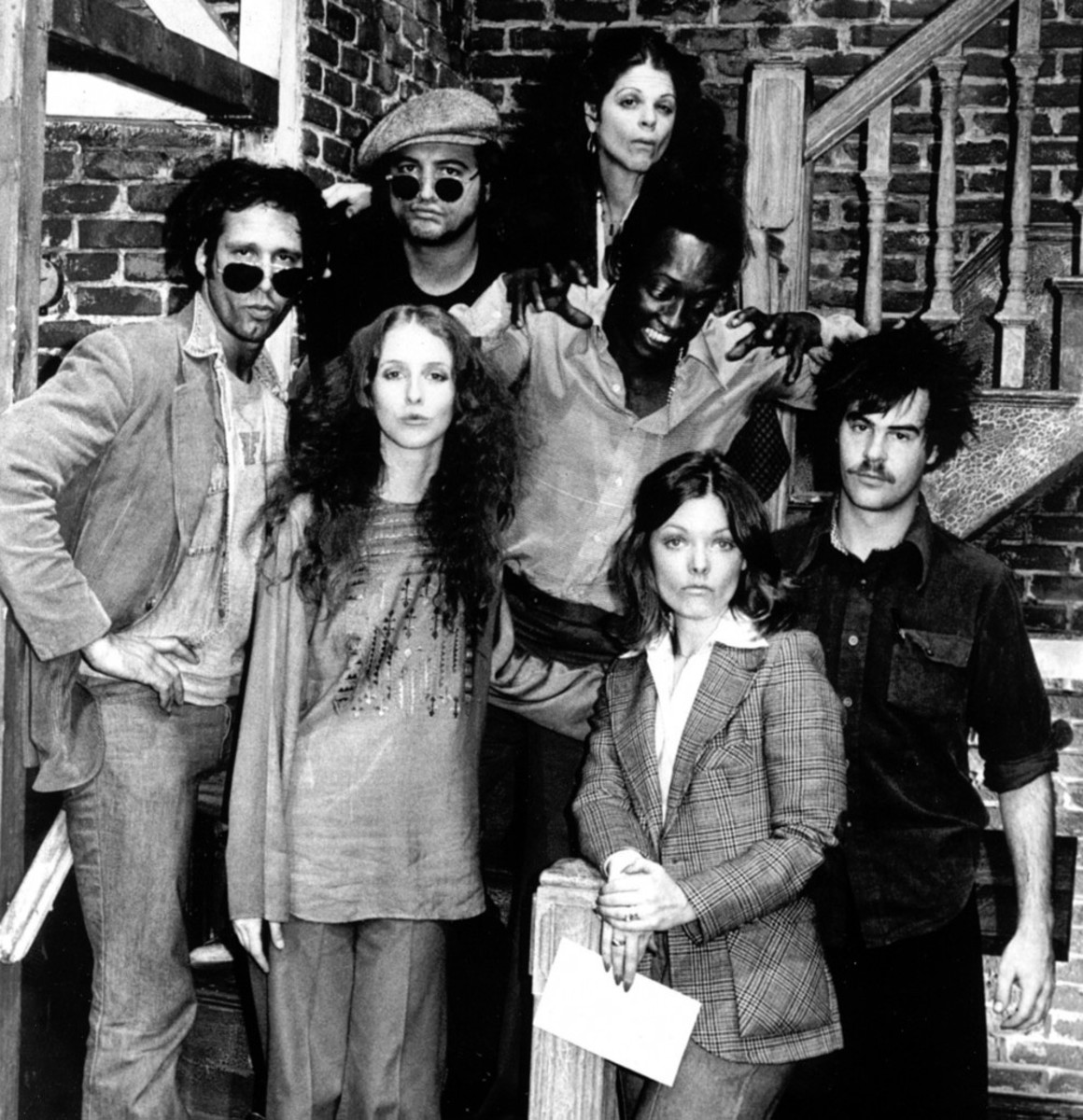
Who was the best cast through the years? This is a question that is debated over and over again. People argue and usually pick the cast they grew up with. I grew up in the Eddie Murphy and Joe Piscopo era. Personally, I always thought the original cast was the best era of the show. Yes, I thought the Murphy and Piscopo casts were very funny along with later casts that had Dana Carvey, Michael Myers, Chris Farley, Chris Rock, and many others that followed. The first five seasons had something extra that others would not and could not have. It had an underground feel that vanished after it became a pure comedy show. They had a massive amount of talent in that first class.
John Belushi, Dan Ackroyd, Chevy Chase (though I liked his replacement better…Bill Murray), Gilda Radner, Jane Curtin, Garrett Morris, and my favorite overlooked cast member Laraine Newman. They were the perfect cast for that time.
Why do I like the original cast the most? They tried new things and went out on a limb. Some of the skits succeeded some fell flat but they were different from anything on TV at that time…and also at this time. That cast pushed the envelope and made the network executives worry. The host each week was usually under the radar actors, writers, comedians musicians, and sometimes athletes. The musical guests were mostly rarely seen performers that weren’t on tv…prime time or otherwise. Frank Zappa, Leon Redbone, The Kinks, Patti Smith, Ry Cooder, Kinky Friedman, and others. You would have more popular musicians like Paul Simon but the show gave you a great variety.
No way would Michaels ever dream of that now…he usually gets whoever is the most popular to draw in ratings. He can no longer do what he did in the 70s because of that. He also used the complete ensemble. It was not Eddie Murphy, Joe Piscopo, and everyone else of the early eighties. It was about building an unknown cast and all of them having a shot…not a star-driven show that gave all the best bits to the big names. He made sure the entire cast had a lead in skits and parody commercials. Dick Ebersol who followed Lorne Micheals, was famous for getting stars in the cast and the show revolving around them.
A lot of the skits are now famous… Ackroyd’s Bassomatic, the Samurai, the uncomfortable but funny Word Association with Richard Pryor, The Killer Bees, The Mr. Bill Show, Weekend Update, Roseanne Rosannadanna, Land Shark, Bag of Glass, The Wild and Crazy Guys, the Coneheads, The Lounge Singer, Mr. Mike, The Blues Brothers and many more.
The writers for the show were not in the variety show comedy vein..they were not in the current SNL vein either. The style was more aggressive, especially with Michael O’Donoghue. He was a comedy trailblazer with National Lampoon and added black humor to SNL. Other writers were Franken and Davis, Rosie Shuster, Alan Zweibel, Marilyn Miller, Anne Beatts, Herb Sargent, Tom Schiller, and also Ackroyd and Chase.
The original group also did some serious skits along with comedy and trips into the bizarre (See the ultra-dark “Mr. Mike”). …It separated the original from any other cast.
I like the feel of the underground the first five years had but you can only be that for so long…popularity takes over. Those first 5 years (the first four were great…the fifth very good) set the foundation that holds to this day…just without the daring and danger.
Ann Beatts was one of the original writers who saw the popularity of the show rise beyond anything she ever imagined. She knew the risk-taking traits in the show would have to end because of it. “You can only be avant-garde for so long until you become garde.”
By the 5th season (1979-1980), it was a circus grown out of proportion. The cast by that time were usually bigger stars than the guest hosts. Everyone left after that season along with Lorne Michaels. The show went on without him until 1985 when he rejoined. It was never the same again. Sometimes it was funny and sometimes not but it was never the same experimental show it was at the start.
What other show would introduce “Acapulco Gold” and “Orange Sunshine” to a national television audience?
The Bassomatic…something you cannot explain with words.
Some songs you don’t expect to hear a cover of…this is one of them.
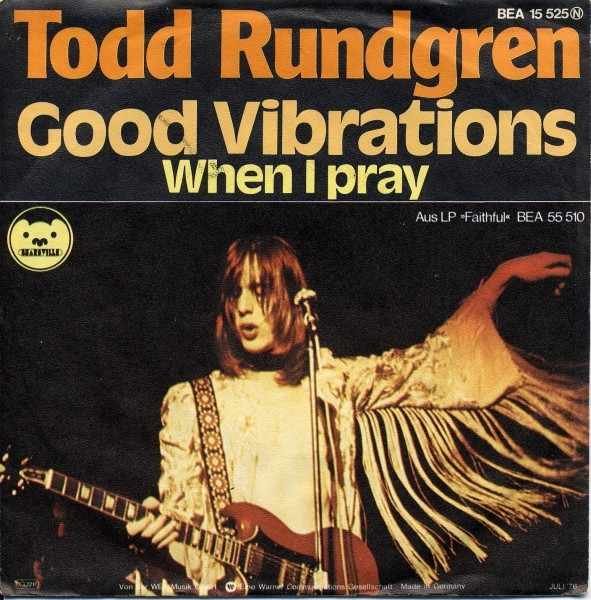
I bought this single in 1976 in a local record store we had in our small town called Sounds and Scenes (long gone but I love the name). I liked the song Good Vibrations and didn’t know at the time who did the original version. I was only 9 years old and thought I had the real thing.
He made an album called Faithful, full of covers and he performed them to the letter. I’ve listened to the album and they are close but this one is really on it. He did Rain, Strawberry Fields, If Six Was Nine, and Bob Dylan’s Most Likely You Go Your Way And I’ll Go Mine.
Todd’s version of the song peaked at #34 in the Billboard 100 and #28 in Canada in 1976. The album Faithful peaked at #54 in the Billboard Album Charts.
Todd Rundgren is very talented and I’m a fan of him. He did a fantastic duplicate version of this song. My question now is why? He got so close…you have to wonder why he did it in the first place. But…who am I to question Todd Rundgren?
I usually don’t like when an artist covers a song and changes it so much you cannot tell what the song is… not a problem with this one. Todd does exactly what he says in the album name… he was very faithful to these songs.
Later on, Todd was asked what he gained after doing this album of covers.
Todd Rundgren: Well, you gain an education. I haven’t done so many of those lately. In fact, I can’t recall anything since, for instance, The Ever Popular Tortured Artist Effect or a Small Faces song. Everything since then has been originals. In that particular instance, on Faithful, that was like 10 years after I had gotten into the music business and I was trying to give people who either had never experienced it or had forgotten it, a taste of what it was like to move through the culture at that time. What was on the radio, what they were playing in the boutiques or in the record stores, the kind of songs you would hear. So I took a cross-section of mostly songs that were popular in 1966 and did them as dead-on as I could. People were supposed to pretend that they were listening to ’66 radio or going from store to store in a hip neighborhood in 1966 and hearing what people were listening to then.
Good Vibrations
I love the colorful clothes she wears And the way the sunlight plays upon her hair I hear the sound of a gentle word On the wind that lifts her perfume through the air
I’m picking up good vibrations She’s giving me excitations Good bop bop, good vibrations Bop bop, excitations Good, good, good, good vibrations
Close my eyes, she is somehow closer now Softly smile, I know she must be kind When I look in her eyes She comes with me to a blossom world I don’t know where but she sends me there
Oh my my my, what a sensation
Oh my my, what elation
Got to keep those loving good vibrations Happening with her



















 PowerPop... An Eclectic Collection of Pop Culture