International Submarine Band – Luxury Liner

It’s always great to hear Gram Parsons solo, with the Byrds, or with the Flying Burrito Brothers. I’ve heard of these guys but never listened to them. I’m happy I did now. It’s the so-called country rock, but with harmonizing that sounds great. 

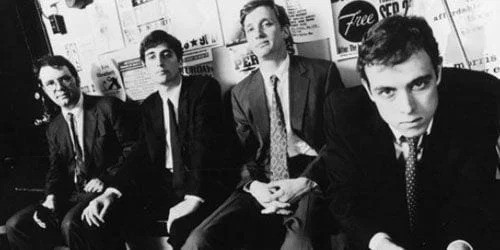
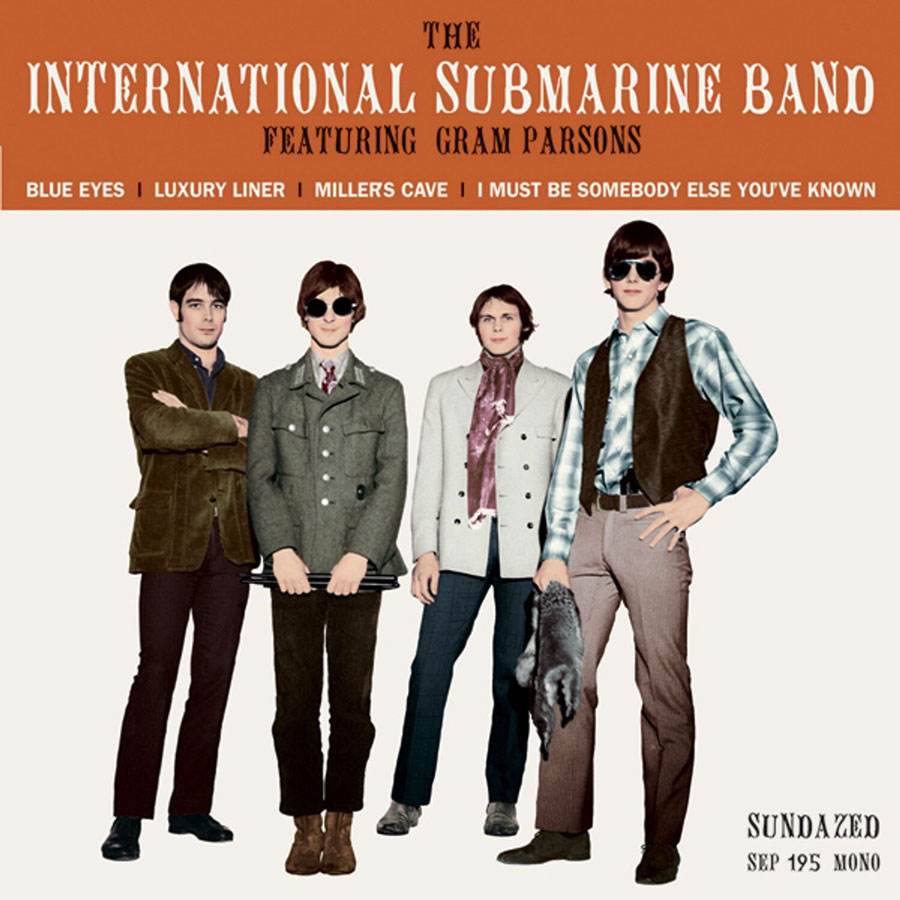
They were one of those bands that existed for only a short time but left a legacy. They formed in Los Angeles in 1966, and the band was built around singer, songwriter, and guitarist Gram Parsons. Parsons was interested in mixing traditional country music with rock, soul, and folk, long before the style had a name. At a time when psychedelic rock was dominating California, they were heading in the opposite direction. They were more toward pedal steel guitars and country storytelling.

The original lineup shifted a few times, but the best-known version included Parsons alongside bassist Chris Ethridge, guitarist John Nuese, and drummer Jon Corneal. The group played clubs around Los Angeles during a period when country music was still looked down on by much of the rock crowd. Parsons admired artists like George Jones and Merle Haggard, and he wanted to bring that sound into a younger rock audience. The band shared stages with folk-rock and psychedelic acts while carving out a different identity.

In 1968, the band released its only album, Safe at Home. Though it did not sell well at the time, the record later became recognized as an early blueprint for country rock. By the time the album arrived, Parsons had begun drifting toward The Byrds, where he would push country influences even further on Sweetheart of the Rodeo.

Years later, he revisited this song during his solo period, and it became one of the songs most tied to him. It also found new life when Emmylou Harris recorded it for her 1977 album Luxury Liner, helping introduce it to a wider audience.

Luxary Liner

Well a luxury liner, forty tons of steelIf I don’t find my baby now then I guess I never will

I’ve been a long lost soul for a long long timeI’ve been around, everybody ought to know what’s on my mindYou think I’m lonesome?So do I, so do I

Well I’m the kind of guy that likes to make a livin’ runnin’ ’roundAnd I don’t need a stranger to tell me that my baby’s let me downYou think I’m lonesome?So do I, so do I

Well a luxury liner, forty tons of steelNo one in this whole wide world can change the way I feel

I’ve been a long lost soul for a long long timeI’ve been around, everybody ought to know what’s on my mindYou think I’m lonesome?So do I, so do I

Patsy Cline – Crazy

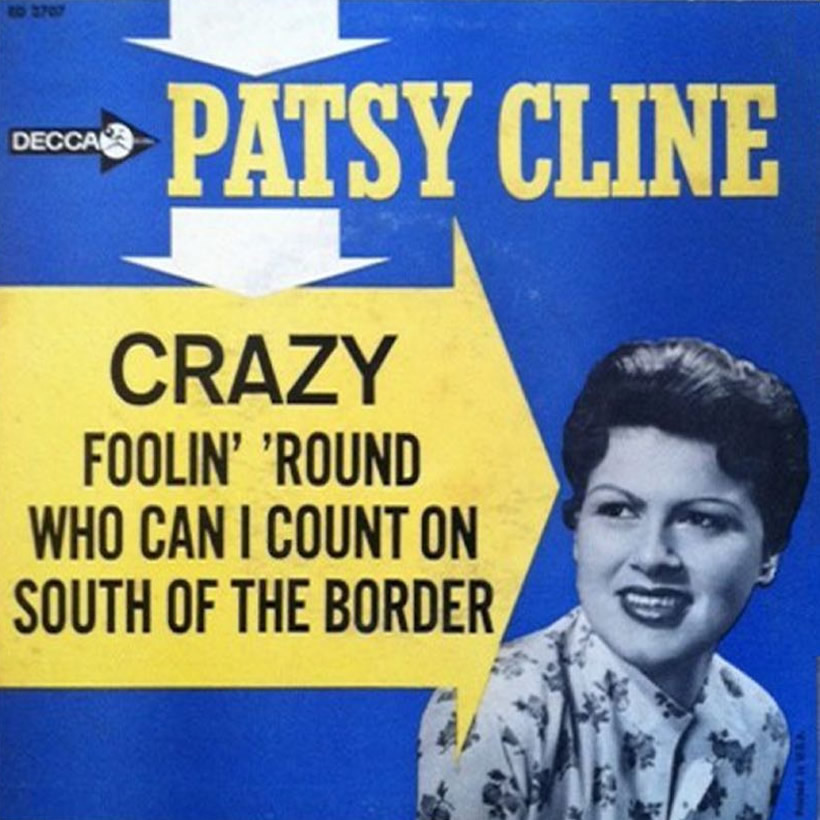
I’ve heard and heard of Patsy Cline since I can remember. Where I live, she has never been forgotten. She was and still is a huge country star, but I never really considered a lot of her music pure country. I don’t mean that as a put-down, but it also had some jazz influence in there. One of the best voices in music, period. 

She was born Virginia Patterson Hensley. Known in her youth as “Ginny,” she began to sing with local country bands while a teenager, sometimes accompanying herself on guitar. By the time she had reached her early 20s, Cline was promoting herself as “Patsy” and was on her way toward music stardom.

This song wasn’t a Patsy Cline-written song. It came from a young Willie Nelson, still trying to get a break in Nashville. He wrote it as a slow ballad, built around a melody that moved in ways most country songs at the time didn’t. Nelson pitched it around town, and it eventually reached producer Owen Bradley, who was creating what became known as the Nashville Sound: smoother arrangements, piano, light rhythm, and restrained backing vocals.

When Cline first heard it, she wasn’t much into it. The melody felt awkward, the phrasing didn’t land right, and it didn’t sit naturally in her voice on the first try. But Bradley heard something in it and pushed forward. The session took place at Bradley’s Quonset Hut studio in 1961. There was a problem from the start. Cline had recently been in a car accident and still had bruised ribs. That mattered because the song required long, controlled lines and soft phrasing, the kind that needs steady breath support.

The band included pianist Floyd Cramer, whose playing style gave the song its gentle feel. Cline struggled on the first attempts. The phrasing, especially the opening line, “Crazy, I’m crazy for feeling so lonely,” kept slipping out of place. They stopped the session and came back later. When she returned, she approached it differently by stretching the lines.

That second take is the one that stuck. The way she adapted it to her style because of the injuries ended up helping it. She doesn’t oversing it. She lets the pauses sit and it worked out beautifully. The song became one of Cline’s defining recordings and one of the most well-known songs in country and pop crossover history. It also helped establish Nelson as a songwriter to watch, even before his own recording career took off. 

The song peaked at #9 on the Billboard 100, #2 on the Billboard Country Charts, and #8 in Canada in 1961. 

Crazy

CrazyI’m crazy for feelin’ so lonely

I’m crazyCrazy for feelin’ so blue

I knewYou’d love me as long as you wantedAnd then somedayYou’d leave me for somebody new

WorryWhy do I let myself worry

Wonderin’What in the world did I do?

Oh… crazyFor thinking that my love could hold youI’m crazy for tryingAnd crazy for cryingAnd I’m crazy for loving youCrazyFor thinking that my love could hold youI’m crazy for tryingAnd crazy for cryingAnd I’m crazy for lovingYou

Jerry Jeff Walker – Mr. Bojangles

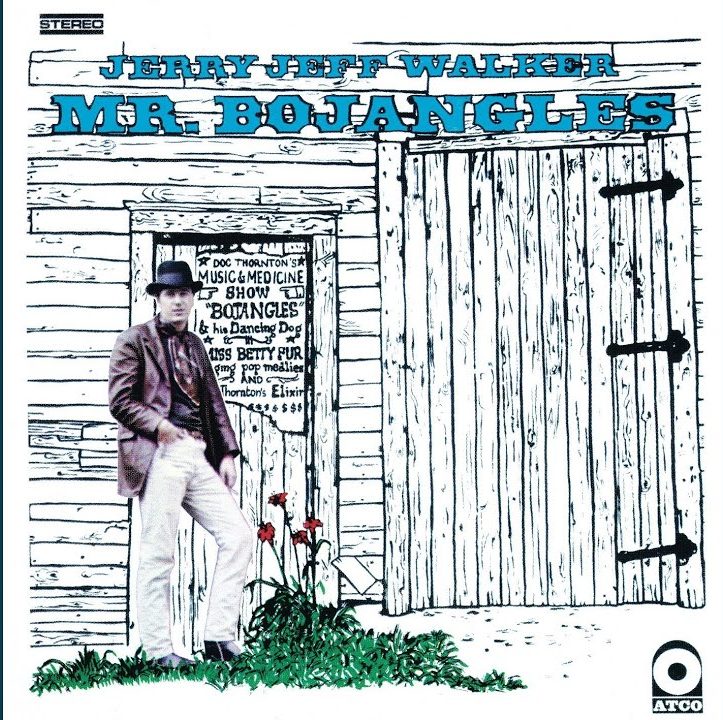
I’ve wanted to revisit Jerry Jeff Walker for a long time. I picked an easy one, but the song has always meant a lot to me. It’s for the personal connection that I picked this one. I first heard this song by the Nitty Gritty Dirt Band, but I love this version as well. Only a few songs can make me feel emotional, and this one does. The song gets me emotionally involved with the story, and then comes the line, his dog up and died. I can feel that, and it hurts every time. 

The inspiration for the song started in the mid-60s, before Walker was known. He was passing through New Orleans and ended up spending a night in a jail cell on a minor charge. While there, he met an older man who began talking to pass the time. The man said his name was Mr. Bojangles, not his real name, but as something he used to avoid giving his identity to the police.

During the conversation, the man talked about his life as a street dancer. He described performing for tips, moving from place to place, and how he used dance to get by. At one point, the mood shifted. He spoke about his dog that had died, and how that loss affected him. Then, almost as a way to break the tension in the cell, he started tapping and dancing a little. This meeting stayed with Walker.

After getting out, Walker wrote the song based on that encounter. He didn’t try to document the man exactly. Instead, he shaped the story into something broader, a character built from memory. The name itself came from the man’s habit of using it in place of his real one, which also echoed the stage name of dancer Bill Robinson, though the song is not about Robinson. I thought it was when I found out about Robinson. 

This song has stood the test of time. I hardly use that worn-out phrase, but it does. Just like some movies are classics, this is because of that story. It’s a great story song, and you get a full look at the characters. It’s some excellent songwriting in that. 

Walker was born in New York but drifted around the country in the 60s. In the early 1970s, Walker relocated to Austin, Texas, where he became part of the burgeoning outlaw country music scene. He helped define that genre. He was part of the Texas songwriters such as Willie Nelson, Guy Clark, and Townes Van Zandt. He is not technically a natural-born Texas singer-songwriter, but he is remembered by many as one. 

Walker recorded the first version of the song, and it peaked at #77 on the Billboard 100 in 1968. The Nitty Gritty Dirt Band recorded their version the next year, releasing it in 1970, and it peaked at #9 on the Billboard 100, #2 in Canada, and #2 in New Zealand in 1971.

Mr Bojangles

I knew a man Bojangles and he’d dance for you
In worn out shoes
Silver hair and ragged shirt and baggy pants
He did the old soft shoe
He jumped so high
He jumped so high
Then he’d lightly touch down

I met him in a cell in New Orleans
I was down and out
He looked to me to be the eyes of age
As he spoke right out
He talked of life
He talked of life
He laughed slapped his leg a step

He said the name Bojangles and he danced
A lick across the cell
He grabbed his pants a better stance
Then he jumped so high
He clicked his heels
He let go a laugh oh he let go a laugh
Shook back his clothes all around

Mister Bojangles
Mister Bojangles
Mister Bojangles
Dance

He danced for those at minstrel shows and county fairs
Throughout the South
He spoke with tears of fifteen years how his dog
And him traveled about
His dog up and died
He up and died
After twenty years he still grieves

He said I dance now at every chance in honky-tonks
For drinks and tips
But most o’ the time I spend behind these county bars
Hell I drinks a bit
He shook his head and as he shook his head
I heard someone ask him please

Mister Bojangles
Mister Bojangles
Mister Bojangles
Dance

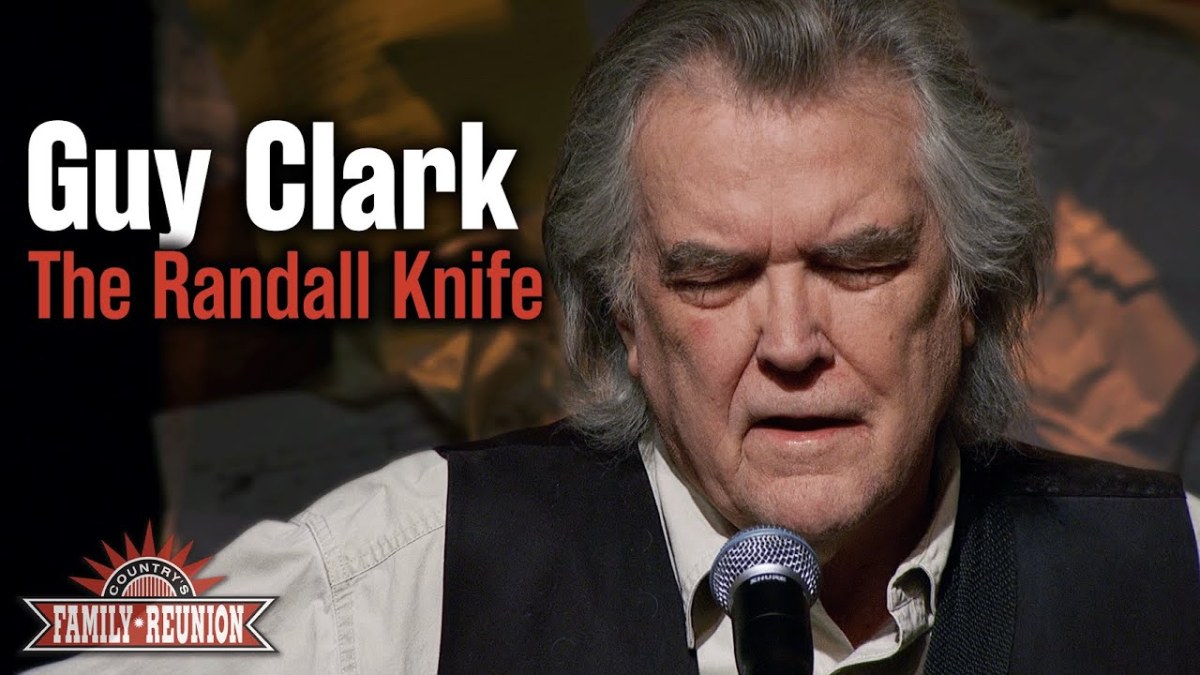
Guy Clark – The Randall Knife

Finding Guy Clark in the past few years has been amazing. Song after song that I can relate to with words that always fit. I lost my dad in 2005, so I can totally relate to this song. I have some of his tools for making guitars and an old wooden case he made for them.  This song brought back a lot of memories. This song is a true story song in every sense of the word. I’m usually a little more hesitant on partial talking songs…but this one is a winner.

The song was on the album Dublin Blues, which was released in 1995. The musicians on this album were staggering. Rodney Crowell, Ramblin’ Jack Elliot, Nanci Griffith, Emmylou Harris, Kathy Mattea, and more. This song closed the album, and that’s where it belongs because it would have been hard to follow this song. 

The song centers on a knife passed down from his father, a Randall Made Knives blade with history behind it. Clark doesn’t treat it like an object; it’s more like a stand-in for memory and loss. He talks about using it, holding it, and what it meant to his dad. By the end, the knife becomes a way of holding on to someone who’s gone.

The arrangement stays simple, and nothing pulls attention from the lyric. You can hear the same mindset in writers like Townes Van Zandt and Steve Earle, where detail matters more than volume. Every line feels and is important.

It’s about one knife, one father, one set of memories. But it doesn’t stay there. Anyone who’s held on to something after losing someone will recognize it. Clark never says more than he needs to, and that’s the reason it holds up. 

The Randall Knife

My father had a Randall knifeMy mother gave it to himWhen he went off to World War IITo save us all from ruinNow if you’ve ever held a Randall knifeYou’ll know my father wellAnd if a better blade was ever madeIt was probably forged in hell

My father was a good manHe was a lawyer by his tradeAnd only once did I ever seeHim misuse the bladeWell, it almost cut his thumb offWhen he took it for a toolThe knife was made for darker thingsYou could not bend the rules

Well, he let me take it camping onceOn a Boy Scout jamboreeAnd I broke a half an inch offTrying to stick it in a treeWell, I hid it from him for a whileBut the knife and he were oneHe put it in his bottom drawerWithout a hard word one

There it slept and there it stayedFor 20 some odd yearsSort of like ExcaliburExcept waiting for a tear

My father died when I was 40And I couldn’t find a way to cryNot because I didn’t love himNot because he didn’t tryWell, I’d cried for every lesser thingWhiskey, pain and beautyBut he deserved a better tearAnd I was not quite ready

So we took his ashes out to seaAnd poured ’em off the sternAnd then threw the roses in the wakeOf everything we’d learnedAnd when we got back to the houseThey asked me what I wantedNot the law books, not the watchI need the things he’s haunted

My hand burned for the Randall knifeThere in the bottom drawerAnd I found a tear for my father’s lifeAnd all that it stood for

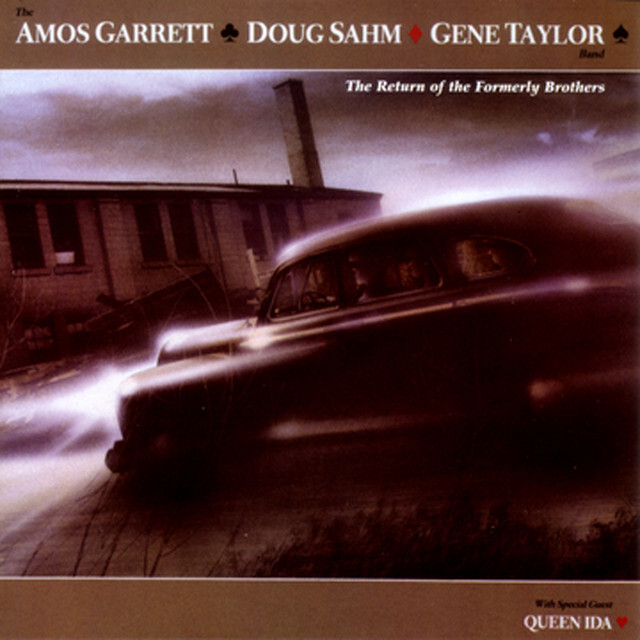
Formerly Brothers – The Return of the Formerly Brothers …album review

A while back, I really started to get into Doug Sahm because the guy was quality, period. Everything I’ve heard from him I’ve liked. Thanks to halffastcyclingclub for more information about Doug. He was born in 1941 and had singles out when he was 14 in 1955. He was a child prodigy and a proud Texan. 

The Formerly Brothers brought together three players who already had long histories: Amos Garrett, Doug Sahm, and Gene Taylor. I’m grateful they did, and the reason I first listened was because of Doug Sahm, but he is far from the only one on this album. When three artists of this caliber get together, sometimes it can feel forced, but this one doesn’t. The album was released in 1987. 

They got their name from the press always introducing them individually as “formerly of” different bands. They started this album after appearing at the 1986 Edmonton Folk Festival. The project came together as a collaboration between these artists who had crossed paths for years. 

Doug Sahm founded, with Augie Meyers, The Sir Douglas Quintet. He would go on to have a solo career and also play with The Texas Tornados, among many others. The American-Canadian Amos Garrett became known for session work, including his time with Paul Butterfield and his guitar on Maria Muldaur’s Midnight at the Oasis. Gene Taylor worked with many artists, including Canned Heat and, later, The Blasters, but he was always in demand for his piano playing.

By all accounts, they got along well, and the music shows this. It sounds like very talented musicians having fun at a party, but the music stays precise, yet not rigid. What makes the record work is that it doesn’t try to give us any new style of music. It sticks with styles like blues structures, R&B grooves, barroom riffs, and pure country. Sometimes bundled all together for our listening pleasure. 

The music slips easily into different styles like changing socks. The first song that got my attention on this album is the song Teardrops On Your Letter for its soulful sound and that tremelo guitar to open it. Sahm knocks that vocal out of the park.  They cover Dylan with Just Like A Woman and it is a version I will go back to.

Louis Riel is another song that caught me right away. Again, it was the soulful voice of Sahm.  The opener Smack Dab In The Middle is somewhere in the middle of R&B and Country. Big Mamou is pure old school country. Probably my favorite on the album is Queen of the Okanagan

The record blends blues, R&B, country, and Texas roots music while blurring the lines between them. Sahm’s voice carries a lot of it while Garrett’s guitar fills the spaces with that clean tone and bending style. Gene Taylor’s piano is a big part of this album as well. 

There’s a loose feel across the album, but it’s not sloppy. It’s the kind of looseness that comes from experience. If you’ve spent time with Sahm’s solo records or the Texas Tornados, this sits right alongside that world, just scaled down a bit.

The album won the Juno Award for Best Roots & Traditional Album at the Juno Awards of 1989. Also, here is a 15-minute interview with Doug Sahm. He tells a lot about his history in this one. 

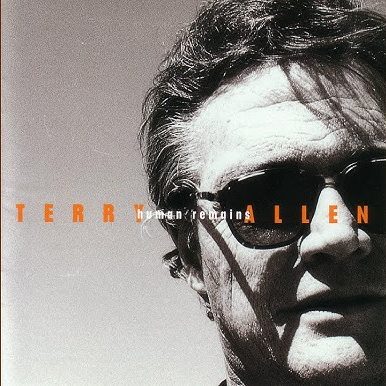
Terry Allen – Human Remains … album review

When I hear about a Texas singer-songwriter, I have to listen. Terry Allen is no exception, and yes, I love the styles he has and the songwriting. I couldn’t pick one from the album, so I thought, let’s go over the album. I listened to this album this week, over and over, and now while I’m writing this. It’s different, and that is a good thing. 

Terry Allen was born in 1943 in Lubbock, Texas, the same West Texas town that produced Buddy Holly. While Holly went straight into rock and roll, Allen took a different path. He studied art at Chouinard Art Institute in California during the 1960s and built a career as a respected visual artist before becoming widely known as a songwriter.

He has never really fit in one category. He came out of Texas in the 1970s, making records that mixed country, folk, and storytelling. The thing about Allen that sets him apart is that he is a songwriter who thinks like a novelist. By the mid-90s, he released this album, Human Remains, an album that sounded loose but carried the stories of people and places. He made this album with the help of Lloyd Maines, David Byrne, Joe Ely, Lucinda Williams, and many others.

It feels like a set of sketches from the American West and Southwest. The songs deal with memory, loss, odd characters, and the passing of time. It’s not a polished “Nashville” production. The record sounds live, with guitars, accordion, and rhythm sections that set the mood. The album is full of characters, wisdom, and plenty of commentary.

The first song that really caught my ear was What of Alicia. I like everything about this song and the lyrics of two people during a time frame until they met. The album kicks off with a rolling number called Gone To Texas with the lyric Hey I don’t need no chickenshit business man, tellin’ me what to do, Even if you ain’t got no business, same thing goes for you. I thought, well, this is different, and I like it. Another song that is mixed with humor is Peggy Legg. There’s a one-legged woman, On the dance floor, An that one leg’s so pretty, She don’t need no more. I mean, that is imagination and clever. 

Flatland Boogie is an enjoyable song about cruising in a Ford in the southwest. I hope you give the album a try. The songwriting is top-notch, and he has wit to spare. The lyrics fit so well together, and the music makes this album accessible to everyone. 

I saw a review by a user, and he said this. I don’t know what kind of music this is. Okay, it’s definitely country,  but it’s not normal country; it’s something different. Can’t put my finger on it. It’s not “rock & roll” country, and it’s not Neo-Traditionalist Country. It’s not folksy, and it’s not artsy. I don’t think any traditional genre would claim this stuff. It’s just Terry Allen.

That’s really close to what I think as well, and it’s a huge compliment. Allen has his own thing going on here, and I respect and enjoy it. Terry Allen, as I said, is a well-known visual artist, and you can see some of his work here. Some of his art is in museums. 

What Of Alicia

Well he just turned 17
When he left old Abilene
With his bag
And permission from the kin
Yeah but things just weren’t the same
After his Momma signed her name
And let the navy…take him in

Ahhh
What of Alicia
Española
13 years old
Child of Mexico

And he just turned 19 years
When he learned to face his fears
Of growing up
And acting like a man
He just cocked his sailor cap
Stuck his hands down in his lap
Leaned back and stroked them girls in Japan

Ahhh
What of Alicia
Española
15 years old
Girl of Mexico

An he just turned 23
When he finally took his final leave
Anchored in the port of San Diego
Yeah he met this border girl
An he fancied her body’s curl
So he married her
Then carried her to Colorado

Ahhh
What of Alicia
Española
19 years old
An old woman
But out of Mexico

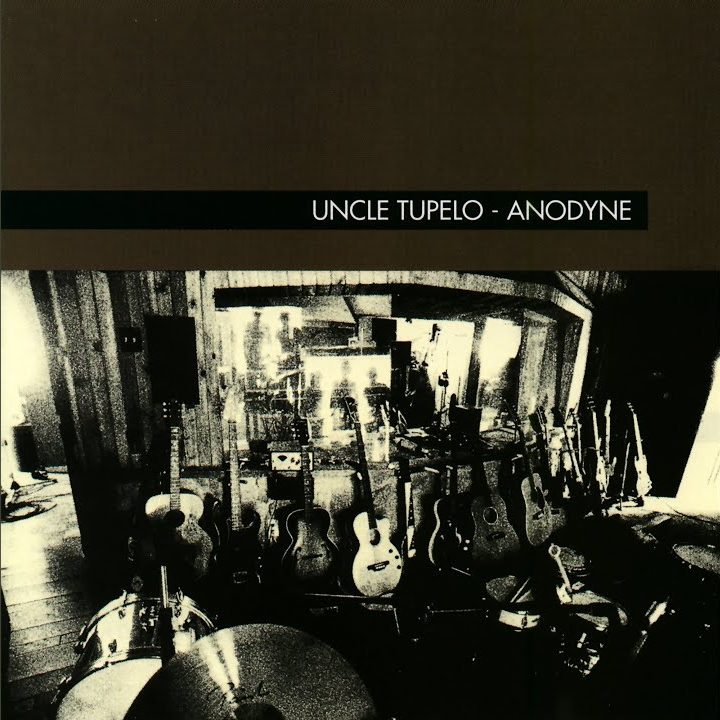
Uncle Tupelo w/Doug Sahm – Give Back The Key To My Heart

Yes, I posted Sahm recently, but here he is leading the way with Uncle Tupelo. What a great and natural combination. Running across this was just fantastic! I can’t put into words how much I love the down-home sound of this. One more legend is on this album that I will reveal at the bottom of the post…no skipping or peaking!

When Uncle Tupelo teamed up with Doug Sahm on this song, it felt less like a guest spot and more like a handoff between two generations. Sahm had already lived a lifetime in Texas blues, country, and rock and roll. Uncle Tupelo were still mapping out what roots rock could sound like in the early ’90s. The song sits right in the middle of that meeting point.

Sahm sounds relaxed, like he’s telling a story on a porch. Jay Farrar and Jeff Tweedy hang back just enough to let the song lead. I always liked Uncle Tupelo anyway, but add Doug Sahm? Oh hell yes! I could listen to this type of music all day and twice on Sunday, as the saying goes. It gives me a great feeling, and it just fits all together so well. The backup vocals are on target, but also riding around the edges; it’s such a lived-in sound that I love. There is no overdubbing or big production…just back porch sounding goodness. 

This track shows what Uncle Tupelo were always good at, connecting past and present without making it sound like a museum piece. Doug Sahm doesn’t feel like a legend that was just dropped in for credibility. He feels like part of the band, which in this he is. Doug Sahm wrote this song, and it was on the Uncle Tupelo album called Anodyne, released in 1993. He first released it as Sir Doug and the Texas Tornados in 1976. 

There is one more legend on this album doing some vocals…the one and only Joe Ely. He did the lead vocals on Are You Sure Hank Done It This Way?

Give Back The Key To My Heart

Take my picture off the wallIt don’t matter to me at allSaid I was headed for a fallBut you wanted me to crawl

Give back my TVIt don’t mean that much to meWhile you’re giving back my thingsGive me back the key to my heart

Give back the key to my heartGive back the key to my heartAnd let my love flow like a riverStraight into your heart, dear

Well, you say I was the oneTo blame for the wrong that’s been doneWell, you got a friend named cocaineAnd to me, he is to blame

He has drained life from your faceHe has taken my placeWhile you’re alone in San AntoneGive me back the key to my heart

Give back the key to my heartGive back the key to my heartAnd let my love flow like a riverStraight into your heart, dear

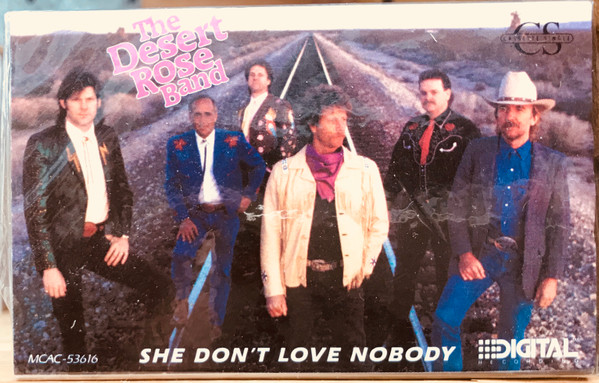
Desert Rose Band – She Don’t Love Nobody

A few months ago, around September, I met Arthur when he was commenting on my blog. He is better known as purplegoatee2684b071ed. We have had some wonderful conversations, and I told him if you ever want to post a music post…I would be honored to do it. He took me up on my offer, and he wrote up a post about The Desert Rose Band. I do appreciate Arthur writing this up. Here is Arthur!

I am Purplesomething or other.  My name is Art Schaak.  I have no idea where WordPress got the name for me.  When I found this incredible blog I signed up for WordPress and they told me my e-mail, which is fairly unique, was already assigned to this Purple guy.  purplegoatee2684b071ed, that’s what they call me.  For years I had a full beard, now I am clean shaven (when I shave) and I’ve never sported a goatee.  I have been called an old goat, and old other things, and I honestly find it hard to deny.

I have been reading and commenting on this blog since September of 2025, a relative newcomer.  I am much more impressed with the community and its individual members than you should be of me. 

I am 72 years old.  I have been a big music fan as long as I can remember.  I skirted the peripheries of the music industry in the mid 70s until I realized I was not a follower of fashion, dedicated or not.  I know a little about this stuff, am horribly opinionated, and have very eclectic tastes. 

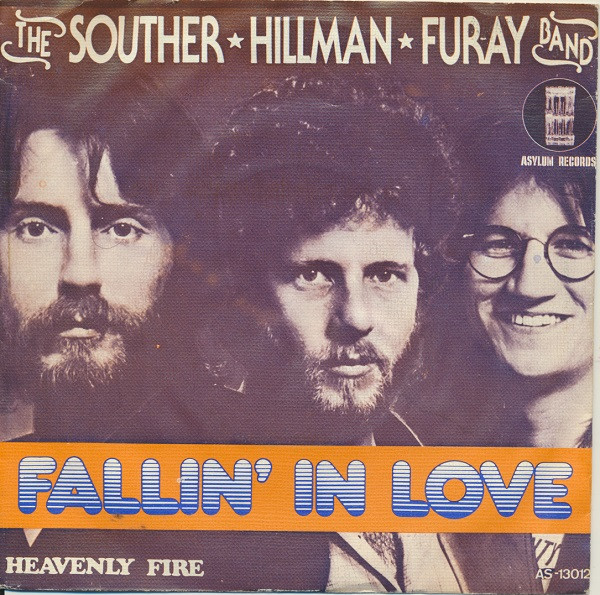
The Desert Rose Band was Chris Hillman, Herb Pedersen, John Jorgenson, Bill Bryson, Jay Dee Maness, and Steve Duncan.  This song, written by John Hiatt, reached #3 on Billboard’s US Hot Country Songs and was awarded the 1989 Best Country Performance by a Duo or Group Grammy.  It wasn’t their biggest hit, but it is my favorite.

The magic lies in the music.  Give it a listen. It is the energy.  The harmonies are tight.  The performance is together.  It might be too perfect, considering some of the opinions offered elsewhere on this blog, but I can’t call that a problem.  This tune just delightfully pops along.

Hiatt’s lyrics are a lot of fun.  Yes, I am a fan and have been since his Hanging Around The Observatory debut on Epic way back in the 70’s.  By the way, Hiatt did two songs on the second White Duck album on Uni that I was amazed I found at a 25-cent parking lot sale at Rhino Records; I played it once, and that was more than it deserved.

Jorgeson continues to play, but his recent performances in the Los Angeles area have been with his bluegrass ensemble and his hot jazz ensemble.  A long way from the Desert Rose Band or his tenure with the Elton John band.  He is a great guitar player with an even greater sense of the overall music he is producing, kind of like Ry Cooder, where one can groove on his expertise or just be amazed at the incredible music he is putting out.

By the way, the web says the last performance of the Desert Rose Band, Live at the Country Music Hall of Fame CMA Theater, October 2, 2022, is due to be released in March of 2026. 

And Chris Hillman seems extremely active (considering his age and such), according to his website, chrishillman.com.

Like I said, give it a listen.

She Don’t Love Nobody

From my humble point of view
She don’t love nobody
Nothin’ borrowed, nothin’ blue
She don’t love nobody

Behind the green eyes I detect
She don’t love nobody
Her heart no kiss could resurrect
She don’t love nobody

All of her life
She’s been told to hang on tight
There’s a man who’d make her his wife
But she’s not interested in anything mama said

She throws passion to the wind
She don’t love nobody
She don’t give out but she don’t give in
She don’t love nobody

And if I could I’d make her mine
But she don’t love nobody
And she would never walk that line
She don’t love nobody

All of my life
I’ve been told to hang on tight
There’s a girl who’d be my wife
But I’m not interested in anything mama said

I want the girl who does not need
She don’t love nobody

She’s the one my heart receives
She don’t love nobody

She don’t love nobody

She don’t love nobody

She don’t love nobody

Whiskeytown – Faithless Street …album review

I really like this band. I spent the week living with their album Faithless Street, and what a tight album. Not just musically but vocally. It’s a true album, one song blends into another smoothly, and like I said, tight but loose in just the right spots.

Whiskeytown had one member that you might know. They were an alternative country band from Raleigh, North Carolina. They were active from 1994 to 2000. The band was led by Ryan Adams, who played a role in popularizing the alt-country genre in the 1990s. He blended traditional country with rock and indie influences. They fit in well with The Jayhawks and Wilco in that era.

Faithless Street was made fast and cheap, with a band that was still figuring itself out. It was recorded in North Carolina in 1994, and the sessions were about capturing what Whiskeytown sounded like in real time. They were limited on studio hours, so songs were often tracked live with only a few overdubs. If something felt right, it stayed, even if it wasn’t clean.

Ryan Adams was writing constantly and pushing the group to cut new material almost as quickly as it came together. Some songs had been played on stage for months. Others were nearly brand new. That mix gave the album its loose feel. You can hear moments where the band sticks to a groove and others where they’re holding it together by instinct, off the cuff.

The record opens with Midway Park, and right away, you get the blueprint. Country structure with rock volume. I love that welcoming opening riff that drives that song. Songs like 16 Days and Excuse Me While I Break My Own Heart Tonight ” go into classic barroom sound with the pedal steel and open choruses. There’s also Houses on the Hill, which would later become one of Adams’ calling cards. Even in this early version, the melody sticks. 

Songs like Lo-Fi Tennessee Mountain Angel (For Kathy Poindexter) and Too Drunk to Dream go back to roots country. You also have acoustic-driven songs like Factory Girl that to me is as close to perfect as you can get. 

The production is spare. Guitars are up front. The drums don’t dominate. The vocals aren’t smoothed out, but they are tight. That raw edge became the album’s identity. Within a few years, Whiskeytown would shift lineups, and Adams would get more well-known.

He has a successful solo career and has also produced albums for Willie Nelson and collaborated with the Counting Crows, Weezer, Norah Jones, America, Minnie Driver, Cowboy Junkies, and Toots & the Maytals. He has written a book of poems, Infinity Blues, and Hello Sunshine, a collection of poems and short stories.

I hope you all will give this album a listen.

Flying Burrito Brothers – Christine’s Tune (Devil in Disguise)

I love this band, and I need to post more by them. Today, I have a theme going: alt-country, with one of the pioneers and one that picked up the mantle a little longer down the line. Like Little Feat, this band was more popular with other musicians than with the public. So the public missed something special here. 

This was the opening song on the album The Gilded Palace of Sin. They didn’t ease you in… they hit you hard with this country song with rock attitude. It’s built around a cool rhythm and sharp harmonies. I like how it had a Bakersfield sound mixed with rock’s drive. It was written by Gram Parsons and Chris Hillman. 

This song showed how country music could carry an edge without losing its roots. What makes it work is how natural it sounds, blending those two styles. Pedal steel in the background while the rhythm section drives like a rock band. It set the tone for the whole Burritos sound.

This song, like the album, barely made a dent in the music world of 1969. They developed a cult following upon its release that included Bob Dylan and The Rolling Stones. Over time, it turned into a blueprint for country-rock.

Christine’s Tune (Devil in Disguise)

She’s a devil in disguiseYou can see it in her eyesShe’s telling dirty liesShe’s a devil in disguiseIn disguiseNow a woman like that all she does is hate youShe doesn’t know what makes a man a manShe’ll talk about the times that she’s been with youShe’ll speak your name to everyone she canShe’s a devil in disguiseYou can see it in her eyesShe’s telling dirty liesShe’s a devil in disguiseIn disguise

Unhappiness has been her close companionHer world is full of jealousy and doubtIt gets her off to see a person cryingShe’s just the kind that you can’t do withoutShe’s a devil in disguiseYou can see it in her eyesShe’s telling dirty liesShe’s a devil in disguiseIn disguise

Her number always turns up in your pocketWhenever you are looking for a dimeIt’s all right to call her but I’ll bet youThe moon is full and your just wasting time

She’s a devil in disguiseYou can see it in her eyesShe’s telling dirty liesShe’s a devil in disguiseIn disguise (in disguise)In disguise (in disguise)In disguise (in disguise)In disguise

Doug Sahm – Is Anybody Goin’ to San Antone

I’ve posted a few of Sahm’s tracks in the past 4-5 months. I was inspired this time to post again. I have been reading 11.22.63 by Stephen King, and it’s about a man who was told about a time portal that takes you to September 9, 1958. He walked through and was going back to stop Oswald from killing JFK if Oswald was the one. The book is interesting because of the time he has to kill between 1958 and 1963, and the side trips he takes.

One of them is in Texas in a fictional town called Jodie. He is at a picnic, and this is the paragraph that caught my attention: I got my beer in a paper cup and walked closer to the bandstand. The kid’s voice was familiar. So was the keyboard, which sounded like it desperately wanted to be an accordion. And suddenly it clicked. The kid was Doug Sahm, and not so many years from now he would have hits of his own: “She’s About a Mover” for one, “Mendocino” for another. That would be during the British Invasion, so the band, which basically played Tejano rock, would take a pseudo-British name: The Sir Douglas Quintet.

Hey, inspiration may come from anywhere for a post. After reading that…I’ve been in a Doug Sahm mood. The recording blends country, soul, and Texas rhythm in a way that was natural for Sahm. The groove leans on a steady beat, light horns, and a melody that sticks without trying too hard. It came out during a period when he was working under his own name after years with Sir Douglas Quintet, and it showed how easily he could move between styles. The song had crossed over to country charts and pop audiences, which wasn’t common at the time.

You may remember the version by Charley Pride that peaked at #1 on the Country Charts in 1970. Sahm recorded this for his 1973 album Doug Sahm and Band. Something about Sahm’s version just sounds so authentic that I had to post his version. That is something about Sahm I’ve realized, everything he does sounds authentic. It was written by Glenn Martin and Dave Kirby. The first version was by Bake Turner in 1970. 

Doug Sahm and Band peaked at #125 on the Billboard Album Charts and #54 in Canada in 1973. This is another artist where the charts don’t tell the story. His albums are accessible and are full of good songs. 

Is Anybody Goin’ to San Antone

Rain drippin’ off the brim of my hatIt sure is cold todayHere I am walkin’ down 66Wish she hadn’t done me that way

Sleepin’ under a table in a roadside parkA man could wake up deadBut it sure seems warmer than it didSleepin’ in our king-sized bed

Is anybody goin’ to San AntoneOr Phoenix, Arizona?Any place is alright as long as ICan forget I’ve ever known her

Wind whippin’ down the neck of my shirtLike I ain’t got nothin’ onBut I’d rather fight the wind and rainThan what I’ve been fightin’ at home

Yonder comes a truck with the U.S. MailPeople writin’ letters back homeTomorrow, she’ll probably want me backBut I’ll still be just as gone

Is anybody goin’ to San AntoneOr Phoenix, Arizona?Any place is alright as long as ICan forget I’ve ever known her

Red Sovine – Phantom 309

Dave posted this on TurnTable Talk on November 1, 2025. The subject was:  to either pick a song about a spooky or scary person or event, or else just highlight a song that sounds that way to them.. 

I never thought I would ever post a trucker song, but here I am, posting a trucker song! It was one of the first singles I remember playing as a child. When I was a kid, this story scared me to death. There’s something about a good ghost story that never leaves you, especially when it’s told in a Southern drawl through the crackle of a CB radio. This Red Sovine song is one of those perfect country songs that is Americana, part Twilight Zone, and part 1960s country storytelling at its finest.

An eerie monologue about a hitchhiker picked up by a kind-hearted trucker named Big Joe. The kid hops out at a truck stop, orders a cup of coffee, and the waitress gives him the shocker: Big Joe died ten years ago, crashing his rig to save a school bus full of children. The twist lands like a punchline from beyond the grave. “Son, you just met Big Joe and the Phantom 309.” 4-year-old Max got goosebumps every time.

How this record was in my house when I was 4 is a mystery to me. My dad had Merle Haggard music, and my mom had Elvis albums, and my sister would never have this. Not one of them was into trucking songs…but there it was all the same. It was released in 1967… The song peaked at #9 on the Country Charts.

It inspired covers by artists from Tom Waits to the punkabilly of Mojo Nixon. Even Pee-wee’s Big Adventure tipped a hat to it when Pee-wee hitched a ride with “Large Marge.” That alone belongs in the Twilight Zone.

Phantom 309

I was out on the West Coast, tryin’ to make abuckAnd things didn’t work out, I was down on my luckGot tired a-roamin’ and bummin’ aroundSo I started thumbin’ back East, toward my home town.

Made a lot of miles, the first two daysAnd I figured I’d be home in week, if my luck held out this wayBut, the third night I got stranded, way out of townAt a cold, lonely crossroads, rain was pourin’ down.

I was hungry and freezin’, done caught a chillWhen the lights of a big semi topped the hill Lord, I sure was glad to hear them air brakes come onAnd I climbed in that cab, where I knew it’d be warm.

At the wheel sit a big man, he weighed about two-tenHe stuck out his hand and said with a grin“Big Joe’s the name”, I told him mineAnd he said: “The name of my rig is Phantom 309.”

I asked him why he called his rig such a nameHe said: “Son, this old Mack can put ’em all to shameThere ain’t a driver, or a rig, a-runnin’ any lineAin’t seen nothin’ but taillights from Phantom 309.”

Well, we rode and talked the better part of the nightWhen the lights of a truck stop came in sightHe said: “I’m sorry son, this is as far as you go‘Cause, I gotta make a turn, just on up the road.”

Well, he tossed me a dime as he pulled her in lowAnd said: “Have yourself a cup on old Big Joe.”When Joe and his rig roared out in the nightIn nothin’ flat, he was clean out of sight.

Well, I went inside and ordered me a cupTold the waiter Big Joe was settin’ me upAw!, you coulda heard a pin drop, it got deathly quietAnd the waiter’s face turned kinda white.

Well, did I say something wrong? I said with a halfway grinHe said: “Naw, this happens every now and thenEver’ driver in here knows Big JoeBut son, let me tell you what happened about ten years ago.

At the crossroads tonight, where you flagged him downThere was a bus load of kids, comin’ from townAnd they were right in the middle, when Big Joe topped the hillIt could have been slaughter, but he turned his wheel.

Well, Joe lost control, went into a skid And gave his life to save that bunch-a kidsAnd there at that crossroads, was the end of the lineFor Big Joe and Phantom 309

But, every now and then, some hiker’ll come byAnd like you, Big Joe’ll give ’em a rideHere, have another cup and forget about the dimeKeep it as a souvenir, from Big Joe and Phantom 309!”

Flatlanders – Long Time Gone

I truly love this band, but I try to limit posting them around once a year. I try that with everyone, but it gets hard at times. The last time I posted them was back in February of this fading year, so I thought it was time for another. I respect them so much because of what they came up with. Joe Ely, Jimmie Dale Gilmore, and Butch Hancock were inventing a whole new kind of Texas country while nobody in Nashville was bothering to look. Their loss!

The song selections and the harmonies hooked me long ago. Their songs are simple and straight to the point, and really catchy. This song was written by Leslie York, and the York Brothers were the first to record it. It’s been covered by The Everly Brothers, Sweethearts of the Rodeo, and The Gibson Brothers. There are other songs by that name by Tex Ritter and a different one by CSN.

They were formed in 1972 by three singer-songwriters: Jimmie Dale Gilmore, Joe Ely, and Butch Hancock. The band was born out of the music scene in Lubbock, Texas, where all three members grew up. They recorded their debut album in Nashville. Initially, the album was released only as an 8-track tape by Plantation Records, with the title “Jimmie Dale and the Flatlanders.” This limited release received little attention at the time, and the band members soon went their separate ways to pursue solo careers, but would reunite to release a total of 10 albums of studio and live.

This song was on the 2021 album Treasure of Love. All three members were songwriters, and all had unique voices that blended so well with each other. Treasure of Love was never intended to be an album, at least not at first. So when Joe Ely started gathering the trio in his home studio in Austin during the early and mid-2000s, it was not for some grand comeback. It was more like old friends swapping songs and capturing whatever happened to be good.

Long Time Gone

You cheated me and left me lonelyI tried to be your very ownThere’ll be a day you’ll want me onlyBut when I leave, I’ll be a long time goneBe a long time goneBe a long time goneYes, when I leave, I’ll be a long time goneYou’re gonna be sad, you’re gonna be weepin’You’re gonna be blue and all aloneYou’ll regret the day you seen me weepin’‘Cause when I leave, I’ll be a long time goneBe a long time goneBe a long time goneYes, when I leave, I’ll be a long time goneYou’ll see my face through tears and sorrowYou’ll miss the love you called your ownBaby, there’ll be no tomorrow‘Cause when I leave, I’ll be a long time goneBe a long time goneBe a long time goneYes, when I leave, I’ll be a long time gone

Link Wray – Link Wray …album review

I was really taken aback when I saw this album. I played it, expecting an instrumental, and when I heard a voice, I thought it was a different singer. When I think of Link Wray, I think of Rumble and instrumentals like that. I was surprised when I found this roots album by him, recorded in 1971. I want to thank Lisa for posting something that made me think of this rare Link Wray album.

After serving in the military, Wray contracted tuberculosis and lost a lung, which made singing difficult, and doctors advised him against it. Because of his breathing difficulties, Wray began to focus more on expressive and experimental guitar playing, leading him to become known for his instrumental hits. Wray was a Native American of Shawnee descent. He grew up in North Carolina. Wray later honored his heritage in his music, with songs like Apache and Comanche.

This album was recorded in a converted chicken shack. His brother, Ray Vermon Wray, helped produce it along with Bob Feldman and Steve Verroca. Instead of power chords and a leather jacket, Link traded distortion for Americana, funk, gospel, and storytelling. It was earthy, roots-driven, and deeply personal, almost a different artist altogether from the one I thought I knew. After being freed from label pressures, Link finally made the music he grew up with: gospel from church revivals, Native American rhythms from family heritage, country blues, and Southern soul.

There were still guitars, but now they sat behind the songs instead of smashing through them. Tracks like Fire and Brimstone, Juke Box Mama, and Ice People feel like they were born out of the dirt. The grooves are loose, almost like field recordings. His voice, rarely heard on record before this, carries a soulful and weathered sound. He didn’t sound like a rock guitarist trying to sing; he sounded like a weathered preacher who happened to play guitar.

You hear old-time country on Take Me Home Jesus, boogie on God Out West, and Native rhythms driving Black River Swamp. No other rock guitarist of his generation made anything remotely like this. Only one song retains his old tone, and that’s the intro to Tail Dragger. If anything, it pointed the way decades later for artists like Los Lobos and the entire alt-country movement. If you want to hear some authentic Americana, listen to this album.

Polydor gave the album a shot, but the public wanted Link the guitar guy, not Link the backwoods Americana prophet. Sales were modest, and critics were divided. However, like many records that were too authentic for their time, it grew in legend over time. Today, many fans call the 1971 album his true masterpiece

Black River Swamp

I was born down in the countryDown where the cotton growsTurnin’ off the main highwayGoin’ down that country road

There’s a place down in the countryWhere the pine trees grow so tallWalk across that old log bridgeStretching ‘cross Black River Swamp

I can hear them bullfrogs croakingIn the blackness of the nightCalling me back to my childhoodDown here in Black River Swamp

Saw my name carved on a big oak treeDown there by the fishing holeAnd the smell of old Black RiverWhere the waters are deep and cold

I can hear the hound dogs howlin’Chasin’ that old fox where I used to roamDown there in the countryCallin’ me to Black River Swamp

I can hear them hound dogs howlin’Chasin’ that old fox where I used to roamDown there in the countryCallin’ me to Black River Swamp

I was born in the countryDown where the cotton growsTurnin’ off the main highwayGoin’ down that country road

There’s a place down in the countryWhere the pine trees grow so tallGo across that log bridgeStretching ‘cross Black River Swamp

Goose Creek Symphony – Words Of Earnest

I wanted to throw something different at you today, and this is something different. As I was looking for some more roots music, I heard this and loved it. It took me a couple of listens…I haven’t stopped listening to it all week. It is roots music, no doubt, and heavy back porch bluegrass country with a tinge of rock. I love the melody, chord structure, and the dynamics they built in. It starts off as country as cornbread but switches gears with some horns, guitar breaks, and fiddle near the end. Although the country voice is there, the music is more rock structured. I’m not sure what to call it, but I’ll just call it good.

They were a very original band that blended country, rock, bluegrass, and psychedelic into something that didn’t fit anywhere. They were too twangy for the rock crowd, too trippy for Nashville, and too Kentucky-mountain raw for L.A.. When I listened to this song, I was won over.

This was the title track of their 1972 album. I’ve read reviews about this album, and some called it a masterpiece of cosmic Americana. The album should’ve been their big breakthrough, but Capitol didn’t know what to do with them since they didn’t fit neatly in a box.

Goose Creek Symphony was formed in the late 1960s by Charlie Gearheart,  a Kentucky songwriter with country and rock ‘n’ roll influences. Gearheart, whose real name was Paul “Charlie” Gearheart, had played around in bluegrass and psychedelic rock bar bands before deciding to mix the two, to let fiddles, horns, banjos, and Telecasters mix together.

He gathered a very talented bunch of musicians from Kentucky and Arizona, naming the group after a small town near his old Kentucky home: Goose Creek. Early members included Michael “Ted” Reeder on drums, Alvin Bennett, and William “Charlie” Prichard on guitar and fiddle, all guys who could swap instruments mid-song without losing the groove.

They did have a hit in 1972 with the cover of Janis Joplin’s Mercedes Benz. That was on this album as well.

Words of Earnest

Lived in the city and I lived in the wood;
Lived through the fire and I lived through the flood,
Lived through the summer when the creek went dry;
Guess I’ll keep living til the day I die,
I think I’ve done everything, In my time;
Everything I didn’t do wasn’t worth doing when I had that time, OH no

Talked to the prophets and I talked to the fool;
Even tried work and I even tried school,
Fell in love I got pushed through hate;
Even drove my car through a big steel gate,
I think I’ve done everything, In my time
Everything I didn’t do wasn’t worth doing when I had that time,

Deep in the hills of old Kentucky, Once lived a man I used to know;
He got up every morning at the crack of dawn, Earnest was his name you know
He was full of love an understanding, Never had a nickle or a dime;
Happiness is free, is what he said to me, Earnest was a friend of mine,
Friend of mine,

To many people on the same old road;
Loaded down with the same old load,
To live a good life you can’t do it that way;
Cause every day is different an it’s different every day,
Gotta do everything, in your time;
Everything you wanna do, Really worth do when I had that time, OH Yeah it is

Nobody knows when I’m lonely, Nobody knows when I’m blue;
Nobody knows when I’m happy, Nobody knows that I’m blue,
Nobody knows that I love everyone, Nobody knows that I’m fine;
Nobody ever gets in my way, Cause nobody’s on my mind