Power Pop fan, Baseball, Beatles, Alternative music, old movies, and tv show fan. Also anything to do with pop culture in the 60s and 70s... I'm also a songwriter, bass and guitar player. Not the slightest bit interested in politics at all.
I just had a Ricky Nelson song not long ago…sue me…I’ve been listening to him a lot lately.
“Poor Little Fool” was written by 17-year-old Sharon Sheeley when she was still attending high school in Newport Beach, California. Female songwriters were rare at the time, and when the song climbed to #1 in the US, she became the first woman to compose an American chart-topper on her own.
Sharon Sheeley was engaged to Eddie Cochran and was involved in the car wreck that killed Cochran and injured Gene Vincent. Sheeley suffered a broken pelvis, Vincent broke his ribs and collarbone and added further damage to his already weak leg.
Sheeley later collaborated with Jackie DeShannon on hits for artists like Brenda Lee, and Irma Thomas. Sheeley and DeShannon were the first female writing team to have significant success in the pop realm. She died in 2002 at the age of 62 of complications following a cerebral hemorrhage.
Ricky Nelson didn’t hear hit potential in this song, but his father, the popular bandleader Ozzie Nelson, did. Ozzie convinced Ricky’s label, Imperial Records, to issue it as a single, but Ricky refused to approve a photo for the cover and wouldn’t perform it on the family TV show, The Adventures of Ozzie and Harriet. Ozzie’s instincts were correct. Father knew best in this instance.
Poor Little Fool featured The Jordanaires, who were Elvis Presley’s backing singers. This song peaked at #1 in the Billboard Charts in 1958. This was Ricky’s first number one hit.
Poor Little Fool
I used to play around with hearts that hastened at my call But when I met that little girl I knew that I would fall Poor little fool oh yeah I was a fool uh huh (Uh huh poor little fool I was your fool oh yeah)
She played around and teased me with her carefree devil eyes She’d hold me close and kiss me but her heart was full of lies Poor little fool She told me how she cared for me and that we’d never part
And so for the very first time I gave away my heart Poor little fool The next day she was gone and I knew she’d lied to me She left me with a broken heart and won her victory
Poor little fool Well I’d played this game with other hearts but I never thought I’d see The day that someone else would play love’s foolish game with me Poor little fool
Today I’m guest hosting on “Once Upon a Time in the 70s.” If you can please give them a visit and leave a comment…I would appreciate it! They have a great site and they will be guest hosting my site one day this week! Now back to our song…
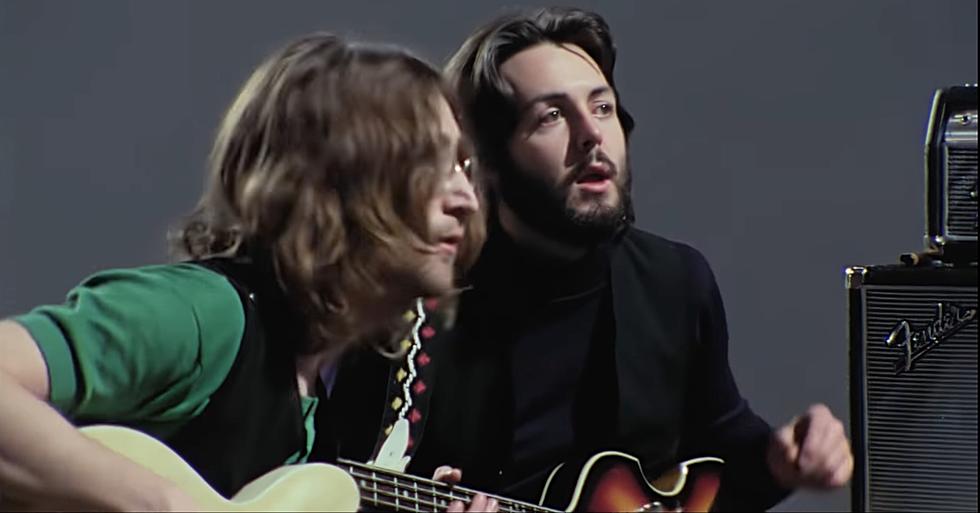
This one has always been a favorite of mine. Many people I know thought it was a religious song because of Mother Mary but Mother Mary was Paul’s mother. It does have a gospel feel though.
It’s always had a calming effect on me. The song is part of my DNA and although it’s been played quite a bit on radio…I can still enjoy it.
Paul McCartney has said he wrote “Let It Be” and “The Long and Winding Road” on the same day. How is that for a day’s work?
One thing that makes the song unique is what solo are you going to hear from George? The single version of the song has a good solo, but the album version has the best. On January 4, 1970, Paul, George, and Ringo went into the studio to clean up tracks for the album release. George put down one of my favorite solos of all time. It’s the solo that has some growl to it and is highly melodic. Later on, in 2003 when Let It Be Naked was released…yet another version of the solo was on there but not as good as the distorted version.
On October 31st, 1956, Paul’s mother Mary Patricia McCartney had passed away from breast cancer. Paul had said she was the unsung leader of their family. John and Paul bonded later on when John’s mother was killed by getting hit by a car.
The song was on the Let It Be Album. The album had the largest initial sales in US record history up to that time: 3.7 million advance orders. That is going out on top. Let It Be peaked at #1 in the Billboard 100, Canada, New Zealand and #2 in the UK. The album peaked at #1 in the Billboard Album Charts, Canada, and the UK in 1970.
At the time some critics didn’t like the album as much. I’ve always liked the raw feel of it. The album contained Let It Be, The Long and Winding Road, Get Back, and I’ve Got A Feeling…plus a song that could have been a single…The Two Of Us. It shows what high standards they were held to.
I bought the Let It Be at a yard sale when I was a kid. The single had a B side that I had never heard of at the time. The song is called You Know My Name (Look Up The Number). It’s so off the wall it has to be heard…not described. It is basically John and Paul making a comedy record…with Brian Jones of the Rolling Stones on sax.
Paul started to write this during the White Album sessions but instead of Mother Mary…it was Mother Malcome after their roadie Mal Evans. He also sings a ling about Brother Malcome in a video I have below. Mal Evans has said that during the White Album sessions Paul had a vision of him saying Let It Be. I have Mal’s quote below.
Mal Evans:“Paul was meditating one day, they were writing all the time, and I came to him in a vision. I was just standing there, saying, “Let it be, let it be,’ and that’s where the song came from. It was funny; I had driven him back from a session one night (at Twickenham Film Studios in London, January 1969) a few months later. It was three o-clock in the morning, it was raining, it was dark in London and we were sitting in the car, just before he went in, just laughing and talking. He said, ‘Mal, I’ve got a new song and it’s called “Let It Be,” and I sing about “Mother Malcolm,” but he was a bit shy. So, he turned to me and said, ‘Would you mind if I said, “Mother Mary,” because people might not understand?’ So, I said, ‘Sure.’ But, he was lovely.”
Paul McCartney:“One night during this tense time, I had a dream. I saw my mum, who’d been dead ten years or so. And it was so great to see her because that’s a wonderful thing about dreams: you actually are reunited with that person for a second; there they are and you appear to both be physically together again. It was so wonderful for me and she was very reassuring. In the dream she said, ‘It’ll be all right.’ I’m not sure if she used the words ‘Let it be’ but that was the gist of her advice. It was, ‘Don’t worry too much, it will turn out okay.’ It was such a sweet dream. I woke up thinking, ‘Oh, it was really great to visit with her again. I felt very blessed to have that dream. So that got me writing the song ‘Let It Be.’ I literally started off ‘Mother Mary,’ which was her name. ‘When I find myself in times of trouble,’ which I certainly found myself in. The song was based on that dream.”
“She was reassuring me, saying, ‘It’s going to be OK, just let it be.’ I felt so great. She gave me the positive words. I woke up and thought, ‘What was that? She said ‘Let It Be.’ That’s good.’ So I wrote the song ‘Let It Be’ out of positivity.”
From Songfacts
Since Let It Be was The Beatles’ last album, it made an appropriate statement about leaving problems behind and moving on in life. The album was supposed to convey an entirely different message. It was going to be called “Get Back,” and they were going to record it in front of an audience on live TV, with another TV special showing them practicing the songs in the studio. It was going to be The Beatles getting back to their roots and playing unadorned live music instead of struggling in the studio like they did for The White Album. When they started putting the album together, it became clear the project wouldn’t work, and George Harrison left the sessions. When he returned, they abandoned the live idea and decided to use the TV footage as their last movie. While the film was being edited, The Beatles recorded and released Abbey Road, then broke up. Eventually, Phil Spector was given the tapes and asked to produce the album, which was released months after The Beatles broke up. By then, it was clear “Let It Be” would be a better name than “Get Back.”
According to McCartney, this is a very positive song, owing to its inspiration. One night when he was paranoid and anxious, he had a dream where he saw his mother, who had been dead for ten years or so – she came to him in his time of trouble, speaking words of wisdom that brought him much peace when he needed it. It was this sweet dream that got him to begin writing the song.
Many have been moved by the song on a deeply personal level, including Corden, who broke down when they sang it together. “I remember my granddad, who was a musician, sitting me down and telling me, ‘I’m going to play you the best song you’ve ever heard,’ and he played me that,” he said. “If my granddad was here right now he’d get an absolute kick out of this.” McCartney replied, “He is.”
It was John Lennon who wanted Phil Spector to produce the album. Spector worked on Lennon’s “Instant Karma” and was known for his bombastic “Wall Of Sound” style. McCartney hated Spector’s production, and in 2003 he pushed to have the album remixed and released without Spector’s influence. The result was Let It Be… Naked, which eliminated most of Spector’s work and is much closer to what The Beatles intended for the album. “Maggie Mae” and “Dig It” were removed, and an entirely different guitar solo was used for this song.
The Beatles weren’t the first to release this song – Aretha Franklin was. The Queen of Soul recorded it in December 1969, and it was released on her album This Girl’s In Love With You in January 1970, two months before The Beatles released their version (she also covered The Beatles “Eleanor Rigby” on that album).
Aretha recorded it with the Muscle Shoals Rhythm Section, who were a group of musicians that owned their own studio in Alabama, but would travel to New York to record with Aretha. David Hood, who was their bass player, told us that Paul McCartney sent demos of the song to Atlantic Records (Franklin’s label) and to the Muscle Shoals musicians. Said Hood, “I kick myself for not grabbing that demo. Because I think they probably dropped it in the garbage. Our version was different. We changed it a little bit from his demo, where their version is different from that demo and from Aretha’s version, as well. Just slightly, but little things.”
In April 1987, this was released as a charity single in aid of The Sun newspaper’s Zeebrugge ferry disaster fund. Featuring Paul McCartney, Mark Knopfler, Kate Bush, Boy George and many others, it was called “Ferry Aid” and spent three weeks at #1 in the UK.
Billy Preston added organ and electric piano to this track. Preston was such a significant contributor to the Let It Be album that John Lennon floated the idea of making him a full band member. Preston’s contributions were more than musical: He came in after George Harrison got frustrated with the sessions and quit the band. After his bandmates agreed to his terms (including abandoning a live performance they had planned), Harrison returned to the sessions after 12 days and arranged for Preston to join them. Having Preston there kept tensions at bay and greased the creative gears, allowing them to complete the album that was looking precarious when he arrived.
This was the first Beatles song released in The Soviet Union. The single made it there in 1972.
In 2001, McCartney helped organize the “Concert For New York,” to benefit victims of The World Trade Center disaster. He closed the show with this, inviting the other acts and some New York cops and firefighters on stage to sing with him.
This song was played at Linda McCartney’s funeral.
On July 18, 2008, Paul McCartney joined Billy Joel onstage at Shea Stadium in New York and played this as the final song of the final concert at Shea. As a member of The Beatles, McCartney played the first stadium rock concert when they performed at Shea on August 15, 1965.
Until 1994 and the recordings for “Free As A Bird,” the session for this song on January 4, 1970 was the last Beatles recording session. Lennon wasn’t present that day, as he was on holiday.
A cover by American R&B artist Jennifer Hudson featuring the Roots, who are the house band on NBC’s Late Night with Jimmy Fallon, debuted at #98 on the Hot 100 in February 2010. She recorded it for the Hope For Haiti Now charity telecast after the earthquake that devastated the country. It was the third time the song had entered the US singles chart as Joan Baez’s version peaked at #49 in 1971.
A month after Jennifer Hudson’s version reached the Hot 100, Kris Allen took the song to the chart for a fourth time when his cover debuted at #63. Allen’s cut charted after he performed the song on American Idol, with proceeds from its digital sales benefiting Haiti earthquake relief efforts through the Idol Gives Back Foundation.
John Legend and Alicia keys performed this song on the tribute special The Beatles: The Night That Changed America, which aired in 2014 exactly 50 years after the group made their famous appearance on Ed Sullivan Show. Legend introduced it as “a song that has comforted generations with its beauty and its message.”
Sesame Street used this with the title changed to “Letter B.” The lyrics were changed to list words that begin with B.
Paul sings “Brother Malcolm” in this rough version near the end
Let It Be
When I find myself in times of trouble, Mother Mary comes to me Speaking words of wisdom, let it be And in my hour of darkness she is standing right in front of me Speaking words of wisdom, let it be
Let it be, let it be, let it be, let it be Whisper words of wisdom, let it be
And when the broken hearted people living in the world agree There will be an answer, let it be For though they may be parted, there is still a chance that they will see There will be an answer, let it be
Let it be, let it be, let it be, let it be There will be an answer, let it be
Let it be, let it be, let it be, let it be Whisper words of wisdom, let it be
Let it be, let it be, let it be, let it be Whisper words of wisdom, let it be, be
And when the night is cloudy there is still a light that shines on me Shinin’ until tomorrow, let it be I wake up to the sound of music, Mother Mary comes to me Speaking words of wisdom, let it be
And let it be, let it be, let it be, let it be Whisper words of wisdom, let it be
I have a bootleg concert of The Who in 1976 in Houston. This song is very dynamic and powerful live. This was released in August 1976 in Canada and the US with “Dreaming From The Waist” as its B side. It was on the album The Who By Numbers and it peaked at #8 in the Billboard Album charts, #7 in the UK, #9 in Canada and #29 in New Zealand in 1976.
The Who played this song in 1976 but after they didn’t play it much at all until the 50h anniversary tour.
Pete Townshend wrote this song, which uses imagery as metaphor for life in the music business. Much of the album deals with his frustrations with the industry, of being obsolete as a 30-year-old rock star. Oh, how times have changed now.
Pete usually wrote a lot of songs for the band to pick from for an album. This time they recorded everything he wrote because he was going through writer’s block at the time.
It’s one of my favorite Who album covers. They usually took turns on who would think of the album cover. It was John Entwistle’s turn and he drew the album cover along with numbers.
John Entwistle on the cover
“The first piece of artwork released is The Who by Numbers cover, which I never got paid for, so now I’m going to get paid. We were taking it in turns to do the covers. It was Pete’s turn before me and we did the Quadrophenia cover, which cost about the same as a small house back then, about £16,000. My cover cost £32
Pete Townshend:“‘Slip Kid’ came across as a warning to young kids getting into music that it would hurt them – it was almost parental in its assumed wisdom.”
Pete Townshend on The Who By Numbers: I felt partly responsible because the Who recording schedule had, as usual, dragged on and on, sweeping all individuals and their needs aside. Glyn worked harder on The Who by Numbers than I’ve ever seen him. He had to, not because the tracks were weak or the music poor but because the group was so useless. We played cricket between takes or went to the pub. I personally had never done that before. I felt detached from my own songs, from the whole record. Recording the album seemed to take me nowhere. Roger [Daltrey] was angry with the world at the time. Keith [Moon] seemed as impetuous as ever, on the wagon one minute, off the next. John [Entwistle] was obviously gathering strength throughout the whole period; the great thing about it was he seemed to know we were going to need him more than ever before in the coming year
Slip Kid
One, two, three, four, five, six, seven, eight …
I’ve got my clipboard, text books
Lead me to the station
Yeah, I’m off to the civil war
I’ve got my kit bag, my heavy boots
I’m runnin’ in the rain
Gonna run till my feet are raw
Slip kid, slip kid, second generation
And I’m a soldier at thirteen
Slip kid, slip kid, realization
There’s no easy way to be free
No easy way to be free
It’s a hard, hard world
I left my doctor’s prescription bungalow behind me
I left the door ajar
I left my vacuum flask
Full of hot tea and sugar
Left the keys right in my car
Slip kid, slip kid, second generation
Only half way up the tree
Slip kid, slip kid, I’m a relation
I’m a soldier at sixty-three
No easy way to be free
Slip kid, slip kid
Keep away old man, you won’t fool me You and your history won’t rule me You might have been a fighter, but admit you failed I’m not affected by your blackmail You won’t blackmail me
I’ve got my clipboard, text books Lead me to the station Yeah, I’m off to the civil war I’ve got my kit bag, my heavy boots I’m runnin’ in the rain Gonna run till my feet are raw
Slip kid, slip kid, slip out of trouble Slip over here and set me free Slip kid, slip kid, second generation You’re slidin’ down the hill like me No easy way to be free No easy way to be free No easy way to be free
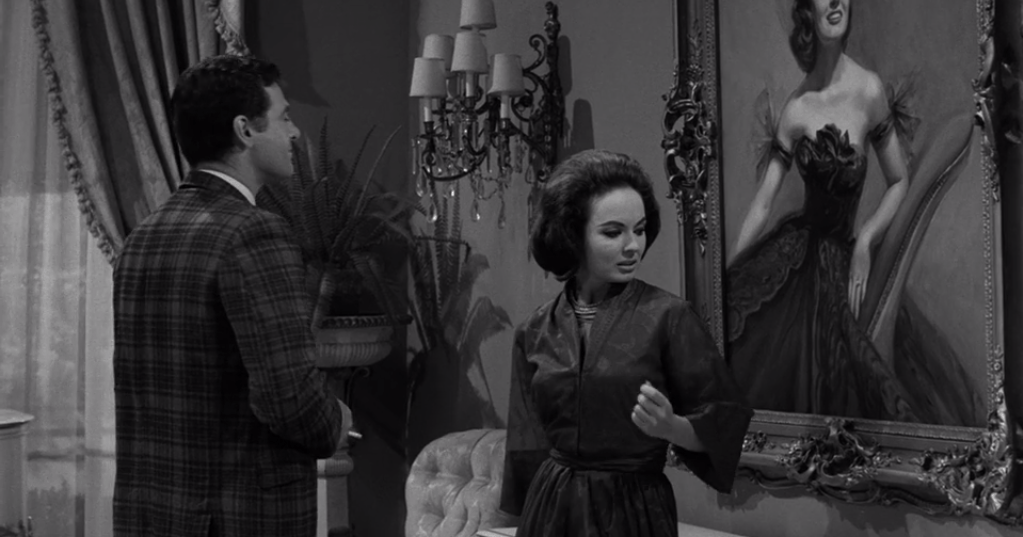
The Ring-A-Ding Girl is in the top ten of my favorite episodes. Maggie McNamara plays Bunny Blake and the character just sparkles. Bunny Blake is a little self-centered but likable. She is what you would think some stars of the 50s and 60s would have been like. It was written by Earl Hamner Jr…. the Waltons creator. He went on to write eight Twilight Zones. Some of his episodes are classics.
Bunny visits her sister in Howardville. The Founders Day picnic is the same day but Bunny has other ideas. You can see something is bothering her so she goes down to the TV station. She announces that she wants to do a one-woman play at the High School Gym. Everyone is upset because they think she is so full of herself that she is wanting people to come to see her and not go to the Founders Day picnic. Is she just full of herself because she is a big star? She has her reasons, and we find out at the end.
I cannot reccomend this one enough. It has a very original story.
IMDB Trivia
Bunny says to her sister Hildy, “Remember when we used to lie in bed on rainy nights and call to each other when we were kids?” This detail was inspired by the writer Earl Hamner Jr. and his seven younger siblings calling out to each other every night when they were children. It later served as the inspiration for the Walton children bidding each other goodnight at the end of every episode of The Waltons (1972), which was created by Hamner.
The headline of Bud’s newspaper, the Daily Bulletin Sports, reads “Jockey Banned from All U.S. Tracks.” This newspaper was a prop created for the earlier episode The Twilight Zone: The Last Night of a Jockey (1963).
The house set was previously used in The Twilight Zone: Living Doll (1963).
This show was written by Rod Serling and Earl Hamner Jr.
Rod Serling’s Opening Narration:
Introduction to Bunny Blake. Occupation: film actress. Residence: Hollywood, California, or anywhere in the world that cameras happen to be grinding. Bunny Blake is a public figure; what she wears, eats, thinks, says is news. But underneath the glamour, the makeup, the publicity, the buildup, the costuming, is a flesh-and-blood person, a beautiful girl about to take a long and bizarre journey into The Twilight Zone.
Summary
Actress Bunny Blake receives an invitation from her sister, to return home. She arrives on the same day as the town’s annual picnic, and feels a sense of dread. She doesn’t get much cooperation and takes matters into her own hands.
Rod Serling’s Closing Narration:
We are all travelers. The trip starts in a place called birth, and ends in that lonely town called death. And that’s the end of the journey, unless you happen to exist for a few hours, like Bunny Blake, in the misty regions of the Twilight Zone.
CAST
Rod Serling … Narrator / Self – Host (uncredited) Maggie McNamara … Barbara “Bunny” Blake Mary Munday … Hildy Powell David Macklin … Bud Powell Betty Lou Gerson … Cici Vic Perrin … State Trooper (Jim) George Mitchell … Dr. Floyd Bing Russell … Ben Braden Hank Patterson … Mr. Gentry Bill Hickman … Pilot
For some reason this post vanished from the reader this morning…so I’m trying a repost.
This is one of my favorite Aerosmith songs. I do prefer them in their 70s period because their sound was so dirty. This was the first single released from Aerosmith’s second album, Get Your Wings. (2 Loud 2 Old Music Review of the album )
The producer of this album caught my attention. Jack Douglas would later produce Cheap Trick and John Lennon’s Double Fantasy. Douglas brought in a horn section on this track.
Joe Perry came up with this riff in the Summer of 1973. The band were living together in a house on Beacon Sreet in Boston. Steven Tyler wrote the lyrics that went together with the riff. One lyric change was “Got you with the cocaine, found with your gun” was altered for the single version to “You shady looking loser, you played with my gun.”
Around this time Clive Davis had been let go from the record company for allegedly using company funds to bankroll his son’s bar mitzvah. He was replaced with Bruce Lundvall and Aerosmith’s management convinced him to put more effort into promoting Aerosmith this time, which he did.
This single didn’t chart but has remained on classic radio. The album peaked at #74 in the Billboard Album charts in 1974. Their next album Toys In The Attic would break them through.
Same Old Song And Dance wasn’t a hit, but it helped sell the album, which stayed on the Billboard album charts for nearly a year as Aerosmith hit the road, establishing themselves as an outstanding live act and growing their fan base.
Joe Perry:The tracks were the stuff we’d been working on at our apartment on Beacon Street in the summer of ’73. I wrote the riff to “Same Old Song and Dance” one night in the front room and Steven just started to sing along. “Spaced” happened the same way in the studio, with a lot of input from Jack. “S.O.S.” meant “Same Old Shit” and came from the rehearsals at the Drummer’s Image… “Lord of the Thighs” and “Seasons of Wither” were Steven’s songs. Of all the ballads Aerosmith has done, “Wither” was the one I liked best
Producer Jack Douglas:“To the best of my memory, the preproduction work for Get Your Wings started in the back of a restaurant that was like a Mob hangout in the North End. I commuted there from the Copley Plaza Hotel and they started to play me the songs they had for their new album. My attitude was: ‘What can I do to make them sound like themselves?'”
Same Old Song And Dance
Get yourself cooler, lay yourself low Coincidental murder, with nothing to show When the judge’s constipation go to his head And his wife’s aggravation, you’re soon enough dead It’s the same old story, same old song and dance, my friend It’s the same old story, same old song and dance, my friend
Gotcha with the cocaine they found with your gun No smoothy face lawyer to getcha undone Say love ain’t the same on the south side of town You could look, but you ain’t gonna find it around It’s the same old story, same old song and dance, my friend It’s the same old story, same old story Same old song and dance
Fate comes a-knockin’, doors start lockin’ Your old time connection, change your direction Ain’t gonna change it, can’t rearrange it Can’t stand the pain when it’s all the same to you, my friend
When you’re low down and dirty, from walkin’ the street With your old hurdy-gurdy, no one to meet Say love ain’t the same, on the south side of town You could look, but you ain’t gonna find it around It’s the same old story, same old song and dance, my friend It’s the same old story, same old story Same old song and dance, yeah
Ed Wynn plays Sam Forstmann, a sweet older gentleman who is attached to a grandfather clock. Although he is sent to a psychiatrist, Sam remains unshakable in his conviction that when the grandfather clock he has owned all his life comes to a stop, he will die. In the fifth season I’ve stated on more than one review that some episodes remind you of earlier ones. Ninety Years Without Slumbering reminds me of Nothing In The Dark with Robert Redford about the older lady who is afraid to die. The Twilight Zone is started to repeat itself a little during this season. I will say though with different results and the best episodes are still up there with the best of the series.
I like this episode. Ed Wynn carries this show. Carolyn Kearney and James T. Callahan play Marnie and Doug Kirk fine but they are a back drop to the legend Ed Wynn. Wynn also appears in an earlier episode called One For The Angels.
When George Clayton Johnson handed the story in called Tick of Time…William Froug had assumed the producer’s role. He was not pleased by Tick of Time. He paid Johnson, then hired another writer, Richard deRoy, to entirely revamp the script. The original story had a darker ending, and some say it would have fit the story more. Johnson never worked with Froug again and never submitted another Twilight Zone.
Clocks are made by men, God creates time. No man can prolong his allotted hours, he can only live them to the fullest—in this world or in the Twilight Zone. That is one of my favorite narrations Rod Serling presented.
This show was written by Rod Serling, Richard De Roy, and George Clayton Johnson
Rod Serling’s Opening Narration:
Each man measures his time; some with hope, some with joy, some with fear. But Sam Forstmann measures his allotted time with a grandfather’s clock, a unique mechanism whose pendulum swings between life and death, a very special clock that keeps a special kind of time—in the Twilight Zone.
Summary
Sam Forstman is an old man who lives with his granddaughter Marnie Kirk and her husband Doug. Sam lives a simple life and doesn’t sleep much anymore. He’s usually up at all hours tinkering on his grandfather clock, something that worries Marnie as his attention to the timepiece verges on the obsessive. The reason for that however is quite simple: he is convinced that should the clock ever stop, he will die.
Someone again had fun with this preview…beeping out words to make it sound like Ed Wynn was swearing.
Rod Serling’s Closing Narration:
Clocks are made by men, God creates time. No man can prolong his allotted hours, he can only live them to the fullest—in this world or in the Twilight Zone.
CAST
Rod Serling … Narrator / Self – Host (uncredited) Ed Wynn … Sam Forstmann Carolyn Kearney … Marnie Kirk James T. Callahan … Doug Kirk William Sargent … Dr. Mel Avery Carol Byron … Carol Chase Dick Wilson … Mover #1 Chuck Hicks … Mover #2 John Pickard … Police Officer
This song is off of the album Tim released in 1985. This was their first album on Sire Records with Warner Brothers. They had left the indie Twin/Tone records after the album Let It Be. Another song title that I had to listen to and I’m glad I did.
Bob Stinson’s imprint was heavy on Kiss Me on the Bus, which he turned into a showcase for his breakneck riffing. When Bob was right…he could give you the quickest most perfect riffs…but when he was off…he was off. It could be from song to song some nights.
This would be Bob’s last album with the band. He would leave a little while after this. Slim Dunlap would take his place in 1988.
Being on a big label meant they got a slot on SNL. They sounded ragged but great on the show. They played two songs… Bastards of Young and Kiss Me On The Bus. Paul Westerberg muttered the F word during Bastards of Young and Lorne Michaels berated the band before they played this song as their last song.
It would be the last time because they were barred from future SNL performances.
After their performance, they went to a party and then back to the hotel. Bob Stinson who had some emotional along with chemical problems caused a lot of damage in his room at the hotel.
Later when Michaels got the $1,100 bill for the hotel damages, he hit the roof again. He was threatening to ban not just the Replacements but any Warner Bros. act from appearing on SNL. In one night, the Replacements had managed to destroy a decade of cozy relations between the show and the label.
Paul Westerberg:“Rock-and-roll doesn’t always make for great television, but we were trying to do whatever possible to make sure that was a memorable evening.”
I could not find the SNL video, but the below clip is a European television appearance. Bob’s guitar playing is the highlight of this video.
Kiss Me On The Bus
On the bus, that’s where we’re riding On the bus, okay, don’t say “hi” then Your tongue, your transfer Your hand, your answer
On the bus, everyone’s looking forward On the bus, I am looking forward And it really ain’t okay I might die before Monday They’re all watching us
Kiss me on the bus Kiss me on the bus Oooo, if you knew how I felt now You wouldn’t act so adult now Hurry hurry, here comes my stop
On the bus, watch our reflection On the bus, I can’t stand no rejection C’mon let’s make a scene Oh baby don’t be so mean They’re all watching us
Kiss me on the bus Kiss me on the bus Oooo, if you knew how I felt now You wouldn’t act so adult now Hurry hurry, here comes my stop
Oooo, if you knew how I felt now You wouldn’t act so adult now They’re all watching us Kiss me on the bus Kiss me on the bus Kiss me on the bus Kiss me on the bus
Pop’s Pool Hall…did every small town have one? I was there in a small town in Tennessee as a 12-year-old when I first heard this song in that pool hall. The song had been out for a few years but this is when I really paid attention to it. It made me feel like I was looking back on my town at 12 years old. The guitar (Pete Carr) stands out in this song and any song that can make a 12-year-old look back works rather well.
What surprised me about this one is the Canadian love for this Seger song. Personally, I thought it did better in America than it did…but Canada really loved it. This song peaked at #1 in Canada and #24 in the Billboard 100 in 1977. The song was on his Night Moves album released in 1976. This was his breakthrough album and it peaked at #8 in the Billboard Album Charts and #12 in Canada.
The actual street Seger sings about in this song is Ann Street, which was off of Main Street in Ann Arbor. Seger has said he wrote this song about his high school years in Ann Arbor, Michigan. The song explores the promise of youth, and what Seger calls his “awakening” after being a quiet, awkward kid for most of his youth.
This is another song that Seger recorded at Muscle Shoals Sound Studios in Sheffield, Alabama. While most of Seger’s work was done with his Silver Bullet Band, he did make a few trips to Alabama to record at Muscle Shoals, taking advantage of the talented musicians and lack of distractions.
Bob Seger:“It was a club. I can’t remember the name of the club, but the band that played there all the time was called Washboard Willie. They were a Delta and Chicago blues band. Girls would dance in the window. They were a black band, and they were very good. That’s where I would go but I was too young to get in. It wasn’t in a great part of town but college students loved to go there.”
From Songfacts
The nostalgic tone of this song led many critics to compare Seger to Bruce Spingsteen, sometimes unfavorably. The NME wrote, “Leaning heavily on anyone so personally stylized as Springsteen has got to qualify as an error of judgment.”
Seger acknowledges Springsteen as an influence at that time, but insists he wasn’t going after Bruce’s sound or image. There weren’t many rock musicians writing introspective hit songs about life in working-class America at the time, and with Springsteen in a legal dispute with his manager that kept him from recording, Seger had 1977 to himself.
The studio was owned by four of the guys who played on the track: David Hood (bass), Jimmy Johnson (rhythm guitar), Roger Hawkins (drums) and Barry Beckett (keyboards). The lead guitarist on the session was Pete Carr.
This was the second single from the Night Moves album, following the title track. Both songs are very nostalgic and a departure from high-energy rockers that dominate his album Live Bullet, which was released in 1976 six months before Night Moves. By this time, Seger had been at it in earnest for over a decade and was just starting to break through to a national audience. Live Bullet was his first album to find a broad audience; many who bought it snatched up Night Moves when it came out, and weren’t disappointed. Both albums ended up selling over 5 million copies, making Seger a star.
Mainstreet
I remember standing on the corner at midnight Trying to get my courage up There was this long, lovely dancer in a little club downtown Loved to watch her do her stuff Through the long, lonely nights she filled my sleep Her body softly swaying to that smoky beat Down on Main Street Down on Main Street
In the pool halls, the hustlers and the losers Used to watch ’em through the glass Well I’d stand outside at closing time Just to watch her walk on past Unlike all the other ladies, she looked so young and sweet As she made her way alone down that empty street Down on Main Street Down on Main Street
Sometimes even now, when I’m feeling lonely and beat I drift back in time and I find my feet Down on Main Street Down on Main Street Down on Main Street Down on Main Street Down on Main Street Down on Main Street
I’ll start off with two talk show hosts going first. Carson, still is probably the most popular of them all. Cavett was great at what he did… he was funny but most of all he had conversations with his guests rather than interviewing them.
This will be the end of the Comedian Quotes…I thank all of you who have read and enjoyed them…also thanks for all of the suggestions.
I eat at this German-Chinese restaurant and the food is delicious. The only problem is that an hour later you’re hungry for power
If your parents never had children, chances are… neither will you
Censorship feeds the dirty mind more than the four-letter word itself
I don’t see the future as bright, language-wise. I see it as a glass half empty – and evaporating quickly
I would not ever try to be a show intellectual, which I was accused of doing a while on ABC. I thought you were supposed to read the guests’ books
I don’t feel old. I feel like a young man that has something wrong with him
Johnny Carson
I know a man who gave up smoking, drinking, sex, and rich food. He was healthy right up to the day he killed himself
People will pay more to be entertained than educated
Never use a big word when a little filthy one will do
I hated my last boss. He asked, Why are you two hours late? I said, I fell downstairs. He said, That doesn’t take two hours
Some sad news from Australia… the inventor of the boomerang grenade died today
Married men live longer than single men. But married men are a lot more willing to die
May you have the income of a Republican and the sex life of a Democrat!
Bill Burr
God’s everywhere, but I gotta go down (to church) to see him? Really? And he’s mad at me down there, and I owe you money?”
Deny your emotions and act like you have answers
You’re a kid, your whole life is awesome. It’s awesome, right? You had no money, no ID, no cell phone, no nothing, no keys to the house. You just ran outside into the woods. You weren’t scared of nothing. I challenge you to do that as an adult. All your IDs, all your credit cards – just run out of the house with no phone, turn the corner where you can’t see your house, and not have a full on panic attack
I gotta be honest with you. Im kind of jealous of the way my dad gets to talk to my mom sometimes. Where are all those old-school women you can just take your day out on? When did they stop making those angels?
People focus too much on whether there’s a Democrat or a Republican in office. It’s not like this guy Kim-Jong Un got into power the second Trump got into power. It’s not like he wasn’t a problem. It’s not like we haven’t had warmongers. It’s not like corporations haven’t been the main influence on what we’re doing around the world.
I can’t quite remember who I voted for president. It wasn’t Trump or Hillary, though. I didn’t like either one of them
Chris Rock
There are only three things that women need in life: food, water, and compliments.
Every man has to settle down eventually. You know why you gotta settle down eventually? Because you don’t want to be the old guy in the club.
Oprah is rich, Bill Gates is wealthy. If Bill Gates woke up tomorrow with Oprah’s money, he’d jump out a f***ing window and slit his throat on the way down saying, ‘I can’t even put gas in my plane!’
Gun control? We need bullet control! I think every bullet should cost 5,000 dollars. Because if a bullet cost five thousand dollar, we wouldn’t have any innocent bystanders.
Comedy is the blues for people who can’t sing.
People are always going to, you know, find something wrong with people who are not the exact same as them. That’s just what it is. Black, white, short, tall, religions, whatever. People are bad.
Jim Gaffigan
You wanna know how good bacon is? To improve other food, they wrap it in bacon.”
Whenever you correct someone’s grammar just remember that nobody likes you
There should be a children’s song: ‘If you’re happy and you know it, keep it to yourself and let your dad sleep
Isn’t it strange — when you’re single, all you see is couples, and when you’re part of a couple, all you see are hookers
Babies and toddlers are mostly what I’ve been exposed to at this point. I’m hoping parenting just gets much easier after this. It does, right?
Anyone know if the shuttles to Hell will have Wifi? Asking for a friend
Bob Saget
Beautiful clear day in Beverly Hills. The sweet smell of Botox is in the air.
My confidence wavers between being genuine and being insecure.
I’m going to be fifty this year. Soon I’m going to meet somebody around my own age, and she’s going to be smart and beautiful, and I’m going to date her daughter.
When you’re famous, you’re always famous. It doesn’t go away. Jon Lovitz. Jon, your act is like masturbation: you’re the only one who enjoys it, and you should be arrested for doing it in public.
My dad’s like, “If your mom and I are having sex and we videotape it and she falls out of bed funny, can I win ten-thousand dollars?”
Steve Allen
Radio is the theater of the mind; television is the theater of the mindless
Physical fitness is in. I recently had a physical fit myself
Thousands of years ago only Christ could walk on the water. Today anybody can do it; you just step on the garbage
Civilization itself . . . can easily be swept aside when mob passions are aroused
Humor is a social lubricant that helps us get over some of the bad spots
In a rational society we would want our presidents to be teachers. In our actual society we insist they be cheerleaders
Joey Bishop
The other day I started to take a course in psycho-ceramics. What is psycho-ceramics? It’s the study of crackpots
“Today you can go to a gas station and find the cash register open and the toilets locked. They must think toilet paper is worth more than money.
There are many things that I find attractive about a woman. Foremost to me, of course, would be a sense of humor-but that doesn’t come in a bottle
A woman driver went through a red light. The cop stopped her and said, Lady, didn’t you see that red light? The woman said, You’ve seen one, you’ve seen them all
This one dishes out some Twilight Zone poetic justice to one of the characters. Patrick O’Neal plays Harmon Gordon who marries a much younger woman and then fails to keep up with her. He seeks an experimental serum from his brother Raymond that Raymond is heistant to give him. The serum is designed to make people younger but it has not been tested enough.
Ruta Lee plays Flora Gordon and it’s clear that why she married Harmon. Harmon acts blind to the way Flora treats him but Raymond sees through the situation. I don’t feel a lot of sympathy for Harmon because he had to know what he was geting himself into. The ending is a twist that I didn’t see coming the first time I watched it.
It’s not in the upper class of the Twilight Zone but not a bad one to watch.
From IMDB:
Until episodes became available on VHS and DVD, this was one of four “lost” episodes of The Twilight Zone (1959) that were not included with syndication packages during the 1960s through the 1980s. The other three were The Twilight Zone: Miniature (1963), The Twilight Zone: Sounds and Silences (1964), and The Twilight Zone: The Encounter (1964). This episode, “Miniature,” and “Sounds and Silences” were excluded from the package because of lawsuits that had been filed claiming those episodes were plagiarized. “The Encounter” had drawn complaints of anti-Japanese prejudice and epithets expressed by one of the characters. The episodes were finally re-released for broadcast television in a 1983 special hosted by Patrick O’Neal, the lead actor of “Fountain”.
This show was written by Rod Serling and Lou Holtz
Rod Serling’s Opening Narration:
Picture of an aging man who leads his life, as Thoreau said, ‘in quiet desperation.’ Because Harmon Gordon is enslaved by a love affair with a wife forty years his junior. Because of this, he runs when he should walk. He surrenders when simple pride dictates a stand. He pines away for the lost morning of his life when he should be enjoying the evening. In short, Mr. Harmon Gordon seeks a fountain of youth, and who’s to say he won’t find it? This happens to be the Twilight Zone.
Summary
Harmon Gordon is now quite elderly but is married to Flora, an attractive woman some 40 years younger than him. She’s something of a gold digger and is now quite bored with her marriage. Harmon turns to his younger brother Raymond, a medical doctor who has been experimenting with cellular regeneration. Raymond’s experiments to date have been on lab animals and he’s reluctant to help Harmon as he has no idea what effect his youth serum might have on him. In the end, he administers his serum and by the next day Harmon is a new man, so to speak.
It happens to be a fact: as one gets older, one does get wiser. If you don’t believe it, ask Flora. Ask her any day of the ensuing weeks of her life, as she takes notes during the coming years and realizes that the worm has turned: youth has taken over. It’s simply the way the calendar crumbles…in the Twilight Zone.
CAST
Rod Serling … Narrator / Self – Host (uncredited) Patrick O’Neal…Harmon Gordon Ruta Lee…Flora Gordon Walter Brooke … Dr. Raymond Gordon
In the 90s our band would play this live. It was close to this version but when that second verse kicked in… we really kicked in full blast. A drunken patron at a bar once told me during a break…that it sounded great… like Hank Williams with 5 lines of blow. That made me smile anyway.
Hank Williams wrote this song and originally recorded it in 1952. Williams’ original peaked at #1 in the Country charts and also went to #20 on the US pop charts. Other artists to record this include Jo Stafford, Fats Domino, Brenda Lee and The Carpenters.
John Fogerty released the Blue Ridge Rangers album in 1973. This was his debut solo album after Creedence Clearwater Revival broke up. Some songs were written by country legends like Jimmie Rodgers and Hank Williams; some are traditional numbers, adapted by Fogerty in the style of those artists.
This was a one man album. Fogerty played every instrument himself. It was a risky move releasing a country cover album in the early seventies. He wanted to distance himself from CCR. While it wasn’t a large hit, it wasn’t a disaster considering what it was. The album peaked at #47 in the Billboard Album Charts and #59 in Canada in 1973.
Jambalaya (On The Bayou)
Goodbye, Joe, me gotta go, me oh my oh. Me gotta go, pole the pirogue down the bayou. My Yvonne, sweetest one, me oh my oh. Son of a gun, gonna have big fun on the bayou.
[CHORUS:] Jambalaya and a crawfish pie and fillet gumbo ‘Cause tonight I’m gonna see my ma cher amio. Pick guitar, fill fruit jar and be gayo, Son of a gun, gonna have big fun on the bayou.
Thibodeaux, Fontaineaux, the place is buzzin’, Kinfolk come to see Yvonne by the dozen. Dress in style, go hog wild, and be gayo. Son of a gun, gonna have big fun on the bayou.
[CHORUS:] Oh, guitar!
[CHORUS]
Oh, Lord! Hang tight, ooh Lord! Ah, take it out. He’s comin’, ah!
This is one of the first Queen songs I heard. I saw Queen’s popularity in America peak in with The Game. You couldn’t go anywhere without hearing Another One Bites the Dust. After that album, I didn’t hear as much from there here. Now they are peaking again after the Bohemian Rhapsody movie.
The first single from Queen’s third album, Sheer Heart Attack was released in 1974. The song peaked at #12 in the Billboard 100, #2 in the UK, #15 in Canada.
Killer Queen was their first song to chart outside their native UK, where “Seven Seas of Rhye,” from their previous album Queen II. Their breakthrough to superstardom came with their next album, A Night At The Opera, which has the epic Bohemian Rhapsody.
The Sheer Heart Attack album cover was shot by Mick Rock, who did the famous cover of their previous album, Queen II. Freddie Mercury typically drove the visual direction of the band, but it was drummer Roger Taylor who came up with the concept for the Sheer Heart Attack cover.
Roger Taylor wanted them to look like they had been thrown up from a shipwreck on some distant shore,’ so that’s what ick Rock shot. He said they were soaking wet with a lot of spraying going on.
Freddie Mercury :“It’s about a high class call girl. I’m trying to say that classy people can be whores as well. That’s what the song is about, though I’d prefer people to put their interpretation upon it – to read into it what they like.”
Brian May:“This is a perfect pop record and one of Freddie’s greatest songs. It’s beautifully constructed and it’s also got one of the solos I’m most proud of.” “Every slice of that record is pure pop perfection. Little things that visit once and come again, like the little bell in the second verse.”
From Songfacts
Regarding the line, “‘Let them eat cake’ she says, just like Marie Antoinette,” according to legend, Marie Antoinette (the Queen of France) said “Let them eat cake” after hearing how the peasants had no bread to eat. It’s more likely that the phrase was uttered by a French philosopher, not Antoinette.
The Marie Antoinette quote has gone down in history as justification for the French Revolution. It demonstrates how out of touch with the common folk the ruling class had become. According to legend, when informed that there was no bread for the people to eat, she replied, oblivious, “then let them eat cake!” It is said, that enraged by this incredibly ignorant response, the people revolted. In the song, it is used to demonstrate at what level this high priced prostitute sells her wares.
This was one of the first songs recorded at The Quadrangle, a studio opened at the Rockfield Studios complex in Wales in 1973. The following year, Queen recorded much of their Sheer Heart Attack album at Rockfield, and in 1975 they did the bulk of “Bohemian Rhapsody” there.
In Ben Elton’s musical We Will Rock You, Killer Queen is an evil matriarch who controls the music industry. Nevertheless, he was a little reticent at first about releasing it: “I was a little hesitant; I was thinking are we setting ourselves as something very light?” He relates this back to how initially the band were very heavy and rock-orientated, and “Killer Queen” was a major departure from that sound.
Californian pop princess Katy Perry named one of her fragrances after this tune. She told Women’s Wear Daily the song’s lyrics really spoke to her when she was a teenager. “Killer Queen has been in my vocabulary since I was 15,” Perry said. “Freddie Mercury painted the lyrics of this woman who I wanted to be. She seemed very powerful, and she captivated a room when she walked in.”
This song was covered by Sum 41 for the 2005 Queen tribute album Killer Queen.
In the video game Guitar Hero 3, one of the unlockable guitars called the “Card Sharp Special” can have a finish called “Killer Queen.” In the description it says: ” Something about dynamite and laser beams? what’s that all about? and who am I to deny it?”, which is a reference to the song lyrics.
Killer Queen
She keeps her Moet et Chandon In her pretty cabinet “Let them eat cake”, she says Just like Marie Antoinette A built-in remedy For Kruschev and Kennedy At anytime an invitation You can’t decline
Caviar and cigarettes Well versed in etiquette Extraordinarily nice
She’s a Killer Queen Gunpowder, gelatine Dynamite with a laser beam Guaranteed to blow your mind Anytime
Recommended at the price Insatiable an appetite Wanna try?
To avoid complications She never kept the same address In conversation She spoke just like a baroness Met a man from China Went down to Geisha Minah Then again incidentally If you’re that way inclined
Perfume came naturally from Paris (naturally) For cars she couldn’t care less Fastidious and precise
She’s a Killer Queen Gunpowder, gelatine Dynamite with a laser beam Guaranteed to blow your mind Anytime
Drop of a hat she’s as willing as Playful as a pussy cat Then momentarily out of action Temporarily out of gas To absolutely drive you wild, wild She’s all out to get you
She’s a Killer Queen Gunpowder, gelatine Dynamite with a laser beam Guaranteed to blow your mind Anytime
Recommended at the price Insatiable an appetite Wanna try? You wanna try
I owned Nazareth’s Hair of the Dog on 8-track tape (a book about 8-tracks from Deke) that was given to me as a kid. I still remember that CLICK during the title song. I expect to hear it when I listen to it today. The only version I knew of Love Hurts was Nazareth for the longest time. Later I found out it has been covered by many people including The Everly Brothers.
I saw Nazareth in the early 80s. Dan McCafferty’s voice was rough, loud, and great. Instead of talking to the audience he screamed through a very hot mic…but they were awesome. The opened up for Billy Squire but I would have loved to seem them headline.
The album this song was on was Hair of the Dog. It would be Nazareth’s biggest album. The album peaked at #17 in the Billboard Album Charts and #20 in Canada in 1975.
Nazareth released Love Hurts as a single late in 1974. Surprisingly, it tanked, but in April 1975 it became a hit in South Africa, prompting their label, A&M, to release it in America. It took a while, but radio stations in Texas started playing the song, and others around the country gradually followed suit.
The song peaked at #1 in Canada and #8 in the Billboard 100 and #41 in the UK. Nazareth got their name from the first line of the Band’s “The Weight” – “I pulled into Nazareth…”
The Everly Brothers may have been the first to cover it, but they never released the song as a single. They planned to release this as a single, but industry politics got in the way. The group was managed by Wesley Rose, who was part owner of the publishing company Acuff-Rose. After a string of hits for Cadence Records, they left for Warner Bros. in 1960, and continued to make hits but Rose wanted them to release singles for which Acuff-Rose owned the publishing, and when the duo recorded covers of “Lucille” and “Temptation” (a song from 1933), he protested, leading to a split and a legal dispute. Rose had another one of his clients, Roy Orbison, record “Love Hurts” and released it as the B-side to his #1 hit “Running Scared” in 1961.
Don Everly:“Wesley covered us with Roy Orbison, which was outlandishly selfish,” Don Everly said in Walk Right Back: The Everly Brothers On Warner Bros. “The arrangement was ours, and it was written for us. We couldn’t release it as a single because we didn’t know if Acuff-Rose would license it or not because we were in a lawsuit with them. It got that bitter.”
Pete Aginew Nazareth bassist: “We all loved the song. We often covered songs that we liked that we used to listen to on tape. Every now and then, we’d just go back and try to do something with one of these things. If you could change it and make it yours, we’d do it in the studio and see if we could do something about it. When we did Love Hurts, I believe there were 42 different versions recorded of it. The one we used to listen to was Gram Parsons and Emmylou Harris, off the “Grievous Angel” [1974] album. We used to have that in our van and we loved the song. […] We recorded “Love Hurts” as a b-side and that’s how we saw it. Of course, when I hear it now, it’s probably one of the best rock ballads of all time and definitely the vocal is in the top three.”
From Songfacts
Nazareth made this song a hit, but it was originally released by the Everly Brothers on their 1960 album A Date With The Everly Brothers. Like their heartbreak hit from 1957, “Bye Bye Love,” it was written by Boudleaux Bryant.
Young love is hot with passion, but it burns you when it’s hot. The guy in this song has just made this discovery, which is a revelation of sorts – all those singing the praises of love are fools who will soon be burned, as love is just a lie made to make you blue.
The original Everly Brothers version runs 2:23 and is delivered in their distinctive, pleasing harmonies. The Nazareth version is 3:03, with sandpaper vocals by lead singer Dan McCafferty screamed out as if he’s falling into the pit of despair.
The group is from Scotland and had three UK hits under their belts when Nazareth’s Stateside success was short lived: “Holiday” reached #87 in 1980, and “Love Leads To Madness” went to #105 in 1982, but none of their other songs charted there.
The album version runs 3:52, with a guitar solo by Manny Charlton that is not on the 3:03 single.
By the time Nazareth brought this song to life, the Everly Brothers had been split for three years. When they re-formed in 1983, they added the song to their setlists for the first time, starting with their reunion concert at Royal Albert Hall, which was released as a live album. In later years, it sometimes seemed like they were singing it to each other on stage, as their relationship had clearly soured.
The Everly Brothers recorded a new version on their 1965 album Rock’n Soul. Other artists to release it include Ray Peterson, Jimmy Webb, and Gram Parsons with Emmylou Harris. Jim Capaldi is the only other artist to chart with the song; he took it to #97 US in December 1975.
I like this one a lot. You learn some history and enjoy some Time Travel. Warren Oates, Randy Boone, and Ron Foster play three National Guardsmen on war game maneuvers on June 25th, 1964, near the Little Big Horn battlefield where, in 1876, General Custer held his famous last stand with the 7th cavalry against an army of Sioux, which led to their massacre. They find a canteen that appears brand new…but it was from 100 years ago.
As for the characters…There’s the true believer, the sergeant, who seems to have an unbelievably detailed knowledge of the historical event and the greenhorn kid. They all play their parts well. You will not see a lot of locations in this episode but you see the characters, even the skeptic, turn true into believers.
If I would have graded this on a personal scale…it would be a 5. I’m not sure it would be that for everyone. The funny thing is…the 5th season had some known classics and a few not graded so high. Two of those (near the ned) are two of my favorites but I try to grade this more on a masses scale when possible. The 5th season was a roller coaster.
From IMDB Trivia
The tank used is an M3A3 Stuart light tank.
Captain William Benteen, who is mentioned several times, previously served as the namesake of James Whitmore’s character in The Twilight Zone: On Thursday We Leave for Home (1963).
This episode takes place on June 25, 1876 and June 25, 1964.
The Battle of Little Bighorn occurred June 25-26, 1876 near Crow Agency, in Bighorn County, Montana. This is in the south central part of the state of Montana.
This show was written by Rod Serling
Rod Serling’s Opening Narration:
June twenty-fifth 1964—or, if you prefer, June twenty-fifth 1876. The cast of characters in order of their appearance: a patrol of General Custer’s cavalry and a patrol of National Guardsmen on a maneuver. Past and present are about to collide head-on, as they are wont to do in a very special bivouac area known as….the Twilight Zone.
Summary
A National Guard tank crew on war games suddenly find themselves back in time to June 25, 1876, the day General Custer fought and lost to the Sioux at the battle of the Little Big Horn. They report what they’ve seen and heard but the officer-in-charge is more than a little dubious about what they claim. They return to the area, and when the attack begins, they join the fight. When the commander goes to locate them, he finds something else entirely.
***Before you watch this…they had a bit of fun beeping words to make it sound bad. It is funny I will admit. This is the only one I could find that is not a drawn out review…like the one you are reading!***
Rod Serling’s Closing Narration:
Sergeant William Connors, Trooper Michael McCluskey, and Trooper Richard Langsford, who, on a hot afternoon in June, made a charge over a hill—and never returned. Look for this one under ‘P’ for phantom, in a historical ledger located in a reading room known as the Twilight Zone.
CAST
Rod Serling … Narrator / Self – Host (uncredited) Ron Foster…Sgt. William Connors Randy Boone…Pvt. Michael McCluskey Warren Oates…Cpl. Richard Langsford Greg Morris…Lieutenant Woodard Jeffrey Morris…Finnigan Wayne Mallory…Scout Robert Bray…Captain Dennet Lew Brown…Sergeant Jacques Shelton…Corporal
I love this song. Not many songs deal with a failed suicide, domestic abuse, and a brush with sadomasochism. I’m a huge Warren Zevon fan. His songs tend to be on the dark side…and anyone who has listened to Excitable Boy will testify to that.
When I heard Zevon’s version of this song for the first time I was sold. I first heard the Linda Ronstadt version and I loved it. I’m a Linda Ronstadt fan but something about Zevon’s version draws me in. It’s raw and crude and I love the way he sings it.
Zevon wrote and recorded the song and it appeared on his self-titled album in 1976. It became a hit when Linda Ronstadt covered it the next year. She cleaned up the song a little. Ronstadt’s cover was a cleaned-up version with the gender reversed. Still, her character fails at suicide, but the S&M (sadomasochism) references are gone.
Like other Zevon songs this is a pretty crude and risqué song. His character is such a disaster that he can’t even kill himself: he puts his head on the railroad tracks, but the train doesn’t run anymore.
I met a girl at the rainbow bar She asked me if I’d beat her She took me back to the hired house I don’t wanna talk about it, hut
It’s thought that the song was a friendly swipe at Jackson Browne, whose songs such as “Here Come Those Tears Again” and “Sleep’s Dark and Silent Gate” from The Pretender could be quite dark. The album was produced by Jackson Browne and had backing vocals by Lindsey Buckingham.
Another hit cover version of the song was recorded by Canadian country singer Terri Clark in 1996. It peaked at #1 in the Canadian Country Charts and #5 in the Billboard Country Charts.
Poor Poor Pitiful Me
I lay my head on the railroad tracks I’m waiting on the double E The railroad don’t run no more Poor poor pitiful me
Poor poor pitiful me and poor poor pitiful me These young girls won’t let me be Lord have mercy on me, woe is me
Well I met a girl in West Hollywood Well I ain’t naming names But she really worked me over good She was just like Jesse James
She really worked me over good She was a credit to her gender She put me through some changes Lord Sort of like a waring blender
Poor poor pitiful me, poor poor pitiful me These young girls won’t let me be Lord have mercy on me, woe is me
Poor poor pitiful me and poor poor pitiful me Oh these girls won’t let me be Lord have mercy on me, woe is me
I met a girl at the rainbow bar She asked me if I’d beat her She took me back to the hired house I don’t wanna talk about it, hut
Poor poor pitiful me Poor poor pitiful me Hut, never mind Poor poor pitiful me Yeah poor poor pitiful me