Merry Christmas everyone…this is a repost from last year but I have updated it another year older…and a new one just begun.
My favorite Christmas song hands down. Yea I’m biased because I am a Beatles fan but this one is great.
I think of High School when I hear this song. Our school had a Christmas poster contest and a buddy and I made a poster as a joke and wrote “So this is Christmas and what have you done another year over, and a new one just begun” and won first prize…with an assist from John.
John’s voice goes so well with this song. The song peaked at #2 in the UK charts in 1971….the song did peak at #42 in the Billboard 100 in 2019.
John Lennon and Yoko Ono wrote this in their New York City hotel room and recorded it during the evening of October 28 and into the morning of the 29th, 1971 at the Record Plant in New York. It was released in the US for Christmas but didn’t chart. The next year, it was released in the UK, where it did much better, charting at #2. Eventually, the song became a Christmas classic in America, but it took a while.
Lennon originally wrote this as a protest song about the Vietnam War, and the idea “that we’re just as responsible as the man who pushes the button. As long as people imagine that somebody’s doing it to them and that they have no control, then they have no control.”
The children’s voices are the Harlem Community Choir, who were brought in to sing on this track. They are credited on the single along with Yoko and The Plastic Ono Band.
From Songfacts.
John and Yoko spent a lot of time in the late ’60s and early ’70s working to promote peace. In 1969, they put up billboards in major cities around the world that said, “War is over! (If you want it).” Two years later this slogan became the basis for this song when Lennon decided to make a Christmas record with an anti-war message. John also claimed another inspiration for writing the song: he said he was “sick of ‘White Christmas.'”
Lennon and Ono produced this with the help of Phil Spector. Spector had worked on some of the later Beatles songs and also produced Lennon’s “Instant Karma.” It was not Spector’s first foray into Christmas music: he and his famous session stars (including a 17-year-old Cher) spent six weeks in the summer of 1963 putting together A Christmas Gift for You from Phil Spector, featuring artists like The Ronettes and Darlene Love. Unfortunately, the album was released on November 22, 1963, which was the same day US president John F. Kennedy was assassinated. The album sold poorly as America was focused on news of the killing.
This was originally released on clear green vinyl with Yoko Ono’s “Listen, The Snow Is Falling” as the B-side.
At the beginning of the song, two whispers can be heard. Yoko whispers: “Happy Christmas, Kyoko” (Kyoko Chan Cox is Yoko’s daughter with Anthony Cox) and John whispers: “Happy Christmas, Julian” (John’s son with Cynthia). >>
This being a Phil Spector production, four guitarists were brought in to play acoustic guitars: Hugh McCracken (who had recently played on the Paul McCartney album Ram), Chris Osbourne, Stu Scharf and Teddy Irwin. According to Richard Williams, who was reporting on the session for Uncut, when Lennon taught them the song, he asked them to “pretend it’s Christmas.” When one of the guitarists said he was Jewish, John told him, “Well, pretend it’s your birthday then.”
As for the other personnel, Jim Keltner played drums and sleigh bells, Nicky Hopkins played chimes and glockenspiel. Keltner and Hopkins were part of Lennon’s Plastic Ono Band, and a third member, Klaus Voorman, was supposed to play bass on this track, but got stuck on a flight from Germany. One of the guitarists brought in for the session covered the bass – which one nobody seems to remember.
John Lennon was shot and killed less than three weeks before Christmas in 1980. The song was re-released in the UK on December 20 of that year, reaching #2 (held off the top spot by “There’s No One Quite Like Grandma” by St. Winifred’s School Choir). It made the UK Top 40 again in 1981 (#28), 2003 (#32) and 2007 (#40). Also in 2003, a version sung by the finalists of the singing competition Pop Idol reached #5.
The Fray were the first to chart with this song in America, reaching #50 in 2006; Sarah McLachlan’s version went to #107 that same year. Other artists to cover it include The Alarm, The Cranes, The December People, and Melissa Etheridge (in a medley with “Give Peace a Chance”).
The Australian artist Delta Goodrem also covered it in 2003, taking it to #1 in her native country as a double-A-side single with “Predictable.”
This didn’t appear on an album until 1975, when it was included on Lennon’s Shaved Fish singles compilation. Most Christmas songs are compiled with other songs of the season, but Shaved Fish listeners got to hear it year round.
Happy Xmas (War is Over)
(Happy Christmas Kyoko) (Happy Christmas Julian)
So this is Christmas And what have you done Another year over And a new one just begun And so this is Christmas I hope you have fun The near and the dear one The old and the young
A very Merry Christmas And a happy new year Let’s hope it’s a good one Without any fear
And so this is Christmas For weak and for strong For rich and the poor ones The world is so wrong And so happy Christmas For black and for white For yellow and red ones Let’s stop all the fight
A very Merry Christmas And a happy new year Let’s hope it’s a good one Without any fear
And so this is Christmas And what have we done Another year over A new one just begun And so happy Christmas We hope you have fun The near and the dear one The old and the young
A very Merry Christmas And a happy new year Let’s hope it’s a good one Without any fear War is over, if you want it War is over now
This is obviously the 4th edition of this series. Part 1, Part2, and Part 3 we covered Brian May’s Red Special, Willie Nelson’s Trigger, George Harrison’s Rocky, Eddie Van Halen’s Frankenstrat, Bruce Springsteen’s guitar, and Neil Young’s Old Black guitar.
Part 5 will be right after the holidays. Next week I will have a post on a not so famous guitar…one of my guitars with an interesting back story.
Today we will look at two Alpha males of their bands. Plus an odd Bonus!
John Lennon’s Epiphone Casino and Keith Richard’s “Micawber” … + Bonus!
John was best best known for two guitars. His Rickenbacker 325 and this Epiphone Casino.
In 1964 Paul McCartney bought a 1964 Epiphone Casino and he would end up using on songs like Taxman and Paperback writer. In 1966 John Lennon and George Harrison would buy 1965 Casino’s for themselves.
John’s was a double-cutaway semi-hollow f-hole body, P-90 pickups, vintage tuners with small buttons, trapeze tailpiece and originally a sunburst finish. However, after hearing from Donovan Leitch that a guitar would sound better without a heavy finish, he decided to sand the paint off the instrument, leaving it with a natural wood finish.
John played this guitar on the White Album and Abbey Road. He continued to play it many times for the rest of his career.
Lennon was never a “gear” head. He was known as an impatient man and would just plug in and go. Rick Nielsen of Cheap Trick said he played around with the famous Rickenbacker at the Double Fantasy recording session but John didn’t play it on that album because it was in such bad shape. Rick said “the set list from Shea Stadium was still scotch-taped to the back of the guitar”…he said it was almost unplayable. It had rusty strings.
This video is about an Epiphone newer Casino model that was released it was inspired by Lennon’s guitar.
Bonus Guitar…John Lennon’s Sardonyx guitar
This is a “Bonus” guitar…the one John Lennon used on the Double Fantasy recordings. One of the oddest guitars I’ve ever seen. It is a Sardonyx guitar made in the seventies. It had built in effects and the rails acted as a guitar stand.
John Lennon bought this guitar from Matt Umanov’s guitar shop in Manhattan’s West Village… which is the shop where Jeff Levin sold many of his guitars through. Ken Schaffer actually sold most of them. Ken sold Jeff’s guitars to Ian Hunter, Howard Leese, Jeff Lynn, Pappy Castro, and a couple bass models to Phil Lynott and Bootsy Collins. It was Ken who sold John Lennon his Sardonyx, directly.
It’s not famous but it was so odd I had to include it.
Ken Schaffer:Months after John bought the guitar, I got a call from John’s personal assistant, who asked me to come to the Dakota. John had been impressed by the electronics I‘d stuffed into the Sardonyx, and asked to retain me to design the kill-all stereo he had in mind for the new apartment in the Dakota. In the small bedroom, which was to be Command Central for the system, hung above and behind the bed, vertically — the Sardonyx! MY Sardonyx! (Tears were welling up) … “Fred – you mean – John is using my guitar as a ($#%$&%*$) WALL ORNAMENT?!” Fred was John’s PA, and fought to settle me down, “No, man – wrong! He loves that guitar so much it hangs over his head when he’s sleeping!” (Tears dried) Whoa! And, in fact, there were pictures of this amazing guitar on the packaging of “Double Fantasy.” It was the guitar he used throughout.
Keith Richards’ Micawber
Micawber is a Butterscotch early fifties Telecaster Blackguard that Keith got around the recording of Exile on Main Street. The guitar was given to him by no other than Eric Clapton as a birthday present.
After the 1972 tour, Keith’s tech at the time, Ted Newman Jones III, replaced the neck pickup with a 50’s Gibson PAF humbucker upside down and the bridge pickup with a pickup out of a Fender lap steel which he chose because it was as close as he could find to the pickups used in a Broadcaster
In the 80’s Keith gave the guitar the nickname “Micawber” after a character in a Charles Dickens novel. Micawber has been Keith’s go-to for any song using Open G tuning.
In the eighties then guitar tech Alan Rogan made more modifications…Sperzel locking tuners and a modified brass bridge in which the low E saddle is removed to accommodate his five-string tuning.
I have used this 5 string tuning before. You can play a lot of the Stones catalog with that 5- string opening G tuning.
***Thanks to run-sew-read for pointing out this song by Barclay James Harvest called John Lennon’s guitar. It would be about the Epiphone Casino.
From Songfacts….Barclay James Harvest guitarist John Lees wrote this song. On the original recording of “Galadriel,” he played the Gibson Epiphone Casino that Lennon had played during the Beatles’ last ever live performance, in January 1969. This song describes that experience
John Lennon was primarily a rhythm guitar player but George Harrison briefly left the Beatles during the recording of Let It Be. John took the lead guitar part on this song and made a memorable solo. John was a very aggressive guitar player and on this one he was on the mark.
McCartney got the idea for the title “Get Back” from the line “Get back to where you should be” from a song George Harrison wrote called “Sour Milk Sea,” which was eventually recorded by Jackie Lomax. McCartney changed the line to, “Get back to where you once belonged”.
Early versions include the line “I dig no Pakistanis.” The song began as a commentary about immigration, telling people to “get back” to their own countries. It was meant to mock Britain’s anti-immigrant proponents. Paul McCartney, who wrote the song and sang lead, thought better of it and made the lyrics more palatable.
At the end of this album version, we hear cheering, followed by McCartney saying, “Thanks Mo” in response to Ringo’s wife, Maureen, who was clapping. Lennon then says, “I’d like to say thank you on behalf of the group and ourselves, and I hope we’ve passed the audition.” This part came from the live rooftop performance.
This song went number 1 everywhere. #1 in the Billboard 100, Canada, UK, New Zealand, The UK, Australia, Austria, Belgium, Ireland…and so on. The B side was Don’t Let Me Down…which personally I like more.
From Songfacts
“Get Back” was going to be the title of the album and the documentary film about making it. The Beatles stopped touring in 1966 and were worn thin by 1968, but they rekindled their passion for performance after shooting the “Hey Jude” promotional film in September that year before a live audience. Energized by the effort, they agreed to the documentary; the concept was The Beatles “getting back” to their roots and playing new songs for a live audience without any studio tricks.
The song “Get Back” came closest to capturing that spirit. Produced by George Martin, it was released as the follow-up single to “Hey Jude” in April 1969 (a month later in America) and was another blockbuster for the group, going to #1 in most territories.
The album became something completely different from the live set they planned. Glyn Johns, who engineered the sessions, was asked to put it together from what were really rehearsal tapes. After he assembled the album, it sat around while the Let It Be documentary was being edited from the film footage of The Beatles rehearsing in the studio and playing on the rooftop. During this time, The Beatles made the Abbey Road album, released it, and broke up.
Phil Spector, who had worked on John Lennon’s solo song “Instant Karma” (which George Harrison played on), was brought in to produce the Get Back album, which was re-titled Let It Be. Spector took the tapes and added orchestrations using his “Wall Of Sound” technique, and the album that was supposed to be the raw sound of The Beatles returning to their roots was released as a highly produced swan song on May 8, 1970, after they had broken up.
The Beatles famously performed this song from the rooftop of Apple Records on January 30, 1969, footage of which serves as the climax to their Let It Be documentary film. Knowing it would get shut down pretty quickly, the group kept mum about the performance, which was designed to promote the single and provide an ending for their film. They got in three takes of “Get Back” before police pulled the plug. The plan worked: Not only did they get their film ending, but the audio (including their banter) was used on various edits of “Get Back” to give it a live feel and add some character.
In their early days, The Beatles were musical warriors, playing in clubs for hours most nights. The “Get Back” single harkened to those days and was advertised as “The Beatles as nature intended.”
The single version runs 3:11 and contains a false ending at 2:34, after which McCartney comes back with a spoken verse:
“Get back Loretta, your mummy’s waiting for you, wearing her high-heeled shoes and her low-neck sweater, get back home, Loretta.”
The album version is a little shorter (3:09) and omits this section. It begins with a behind-the-scenes bit from the band tuning up during a session for the song on January 27, 1969. We hear John Lennon poke fun at the first line (“Jojo was a man who thought he was a loner, but he knew it couldn’t last”) by saying:
“Sweet Loretta fat she thought she was a cleaner, but she was a frying pan.”
Billy Preston played piano on this track and became the only guest artist to get a credit a Beatles single when it was credited to “The Beatles with Billy Preston.”
Preston was a salve and a spark for the group. On January 10, 1969, George Harrison quit and almost left for good. He came back to work on January 21, but the tension lingered. Preston showed up the next day and galvanized the group; he played on “Get Back” and “Don’t Let Me Down,” and participated in sessions for several other tracks.
The Beatles met Preston in 1962 when they were both playing in Germany, but they hadn’t seen each other since. It was Harrison’s idea to bring him in; after George left the Let It Be sessions, he saw Preston in concert with Ray Charles and arranged for him to join The Beatles. Having him in the studio eased the tension and made it easier for the group to put personal conflicts aside and record the album.
The press release to promote the single contains this quote from McCartney: “We were sitting in the studio and we made it up out of thin air… we started to write words there and then… when we finished it, we recorded it at Apple Studios and made it into a song to roller coast by.”
Lennon claimed this was basically a rewrite of their 1968 song “Lady Madonna.”
Beatles fans found lots of hidden meaning in their lyrics, and sometimes the band did too. In his 1980 Playboy interview, John Lennon claimed that Paul looked at Yoko in the studio when he sang the line “get back to where you once belong.” John was sure he was disrespecting her.
There was speculation that the character “JoJo” was based on Joseph Melville See Jr., Linda McCartney’s first husband, who was from Tucson, Arizona. McCartney denied this, explaining in his 1988 autobiography Many Years From Now that he and Linda were on good terms with See, who used the first name Melville, and that “JoJo” was “an imaginary character, half-man and half-woman.”
Linda attended the University of Arizona in Tucson, and in 1979 she and Paul bought a ranch there. As for Joseph Melville See, he never remarried, and in 2000 he killed himself in Tucson.
Billy Preston’s piano solo was spontaneous. he told New Jersey’s Asbury Park Press in 2000: “I was playing a Fender Rhodes on ‘Get Back.’ They just told me, ‘Take a solo!’ I wasn’t expecting to do a solo. When we were rehearsing, I wasn’t playing a solo.”
The last version of the song The Beatles played on the Apple rooftop can be heard in the widely bootlegged “rooftop sessions,” which finds McCartney mocking the police as they shut them down. You can hear him ad-lib the lines “You been out too long, Loretta! You’ve been playing on the roofs again! That’s no good! You know your mommy doesn’t like that! Oh, she’s getting angry… she’ll have you arrested! Get back!”
An edited version of the rooftop performances was released on the Anthology 3 collection in 1996.
Some of the artists to cover this song include: The Bee Gees, The Crusaders, Dizzy Gillespie, Al Green, Elton John, The London Symphony Orchestra, The Main Ingredient, Nitty Gritty Dirt Band, Billy Preston, Kenny Rogers, The Royal Philharmonic Orchestra, The Shadows, Status Quo, Rod Stewart, Ike and Tina Turner, and Sarah Vaughan.
In 2003, Paul McCartney and Ringo Starr gave permission to Apple Records to rework the album and remove Phil Spector’s production. The result is the stripped-down version called Let It Be… Naked, which McCartney claims is what the group intended.
McCartney played this at halftime of the 2005 Super Bowl. This was the year after Janet Jackson’s breast was exposed during the halftime show, so the NFL insisted on an act that wouldn’t incite controversy or push the envelope. McCartney fit the bill.
Get Back
Jojo was a man who thought he was a loner But he knew it wouldn’t last Jojo left his home in Tucson, Arizona For some California grass
Get back, get back Get back to where you once belonged Get back, get back Get back to where you once belonged Get back Jojo, go home
Get back, get back Back to where you once belonged Get back, get back Back to where you once belonged Get back Jo
Sweet Loretta Martin thought she was a woman But she was another man All the girls around her say she’s got it coming But she gets it while she can
Get back, get back Get back to where you once belonged Get back, get back Get back to where you once belonged Get back Loretta, go home
Get back, get back Get back to where you once belonged Get back, get back Get back to where you once belonged
Get back, get back Get back to where you once belonged Get back, get back, get back
December 8, 1980 remains a day I still don’t fully understand and I guess I never will. A couple of years ago I posted this on what I was doing on that day and the day after. Ever since he was murdered the mournful intro to this song connects me to that day again.
This song has been dissected to pieces and I wouldn’t even attempt to do it. It’s never been my favorite John Lennon song but it is his most important solo song…and a song that he is remembered by.
This may be the most popular song by an ex-Beatle. The song was released in 1971 and it peaked at #3 in the Billboard 100 and #1 in Canada. In 1981 the song peaked at #1 in the UK after Lennon’s death.
In 2002, this came in #2 in a poll by Guinness World Records as Britain’s favorite single of all time, edged out by “Bohemian Rhapsody.”
John Lennon:The concept of positive prayer … If you can imagine a world at peace, with no denominations of religion not without religion but without this my God-is-bigger-than-your-God thing then it can be true … the World Church called me once and asked, “Can we use the lyrics to ‘Imagine’ and just change it to ‘Imagine one religion’?” That showed [me] they didn’t understand it at all. It would defeat the whole purpose of the song, the whole idea
From Songfacts
Lennon was asking us to imagine a place where the things that divide us, like religion and possessions, did not exist. He felt that would be a much better place.
This song is a strong political message sugarcoated in a beautiful melody. Lennon realized the softer approach would bring the song to a wider audience, who hopefully would listen to his message: If you want peace, first you have to imagine it.
The imagine concept came from Yoko Ono, who was very much into open-mindedness and using your imagination. In 1964, she published Grapefruit, a book of “instructions and drawings” that established the lyrical concept for the song. Here are some examples of her “instructions”:
Imagine the clouds dripping
Dig a hole in your garden to put them in
Imagine myself crying and using my tears to make myself stronger
Grapefruit was re-issued in 1971 before the song was released. That July, John joined Yoko on a series of book signings where he wholeheartedly endorsed it, often wearing a T-shirt emblazoned with the book’s cover.
John Lennon wrote and recorded this song at his Tittenhurst Park estate in the English countryside where he and Yoko took up residence in the summer of 1969. When they moved to Tittenhurst, The Beatles hadn’t officially broken up, but they were on the outs and would never record together again (the last Beatles photo shoot took place there in August, 1969).
Lennon had released two avant-garde albums with Yoko: Unfinished Music No. 1: Two Virgins and Unfinished Music No. 2: Life with the Lions. At the end of 1969, they released another: Wedding Album, which contained sounds gathered at their wedding and “bed-in” honeymoon. In 1970, after a round of primal scream therapy, Lennon released his first commercially viable non-Beatles album, John Lennon/Plastic Ono Band, with contributions from Ringo Starr and production by Phil Spector.
In early 1971, Lennon worked up songs for a new album – “Imagine” was one of them. In May, he summoned several of his musical cohorts to Tittenhurst to record it, including Spector, George Harrison, bass player Klaus Voormann, piano man Nicky Hopkins, and drummers Alan White and Jim Keltner. They recorded on-campus in the studio Lennon had recently built, which he called Ascot Sound Studios. It was a genial atmosphere; footage from the sessions shows Lennon and his cohorts enjoying each others’ company, but also getting down to business when it came time to work – Phil Spector kept the sessions on track, and Lennon was exacting in his musical detail. “Imagine” was one of the first songs they recorded. With a very simple arrangement designed to spotlight the lyric, it required just Lennon’s vocals and piano, Voormann’s bass, and White’s drums. Strings were overdubbed later.
Lennon took the sole songwriter credit on this track, but later said that his wife, Yoko Ono, should have been credited as well. On December 6, 1980, two days before he was murdered, Lennon did a radio interview with Andy Peebles for the BBC where he explained: “That should be credited as a Lennon/Ono song because a lot of the lyric and the concept came from Yoko. But those day, I was a bit more selfish, a bit more macho, and I sort of omitted to mention her contribution. But it was right out of Grapefruit, her book.”
On June 14, 2017, the National Music Publishers’ Association announced that Yoko would finally be added as a songwriter for “Imagine.” This took place at a ceremony where Yoko was given the Centennial (song of the century) award for her contribution, which was followed by a Patti Smith performance of the song.
Hundreds of hours of footage was shot to document the Imagine sessions and subsequent events, including John and Yoko’s move to New York City shortly before the album was released. Music videos (or as they were known at the time, “promotional films”) were rare in 1971, but The Beatles were on the vanguard, creating them for some of their songs and also making five movies. Yoko Ono was a visual artist, so having cameras around wasn’t a big deal to the couple.
Every song on the album got a video, and in 1972 they were compiled into a film called Imagine. The clip for the song “Imagine” shows John and Yoko walking to the entrance of their home at Tittenhurst, where Lennon then plays the song on a grand piano in a white room. Yoko eventually sits next to him on the piano bench, where they share an intimate moment.
Footage for the project was later used in these films:
1988: The documentary Imagine: John Lennon 2000: Gimme Some Truth – The Making of John Lennon’s Imagine 2019: John & Yoko: Above Us Only Sky
There are two famous Steinway pianos associated with this song: a brown Model Z upright in Lennon’s studio and a white baby grand in one of the rooms of his estate. Film footage shows Lennon first writing the song on the upright, then working it out on the grand. He tried recording it on the grand, but the room was too big, which caused excessive reverberation, so he recorded it in the studio on the upright.
The grand is more associated with the song because it’s the one he plays in the music video and the one used in promotional images – it’s a more striking visual than the upright.
In 2000, George Michael paid over $2 million for the upright, and then donated it to the Beatles museum in Liverpool. It has since been “on tour” around the world to promoting peace. The grand Lennon had shipped to his apartment in New York City, where Yoko still lives. It’s assumed she still owns it.
A sidewalk mosaic spells out the word “Imagine” in a section of Central Park dedicated to Lennon. The area is called Strawberry Fields, and is located across from Lennon’s apartment where he was shot.
Released as a single in America, “Imagine” climbed to #3 in November 1971. In the UK, John and Yoko decided not to release it as a single to put focus on their Christmas peace anthem “Happy Xmas (War Is Over).” In 1975, “Imagine” was issues as a UK single for the first time, reaching #6. Soon after Lennon’s death in 1980, it was re-released in the UK and hit #1 on January 10, 1981, where it stayed for four weeks. On February 7, it was replaced at #1 by Lennon’s “Woman,” marking the first time an artist replaced himself on top of the UK charts since The Beatles followed “She Loves You” with “I Want To Hold Your Hand.”
This is credited to The Plastic Ono Band, the name Lennon used for some of his recordings after leaving The Beatles.
Lennon didn’t think the song had any hit potential when he wrote it. After recording a rough version in his home studio at his Tittenhurst Park estate, he made a demo record with “Imagine” as the flip side of his political screed “Gimme Some Truth.” He wanted some perspective on the songs, so he invited a few journalists and other associates over to have a listen. Ray Connolly of the London Evening Standard recalls Lennon playing him the demo and asking, “Is it any good?” Connolly and the others who heard it had to convince Lennon he had a hit on his hands with “Imagine.”
Yoko Ono performed this live at a show in Budapest, Hungary in 1986 that was included on the 1997 reissue of her album Starpeace. She included a studio version on her 2018 album Warzone.
On September 21, 2001, Neil Young performed this on a benefit telethon for the victims of the terrorist attacks on America. Almost 60 million people watched the special in the US.
At a 2001 tribute special to Lennon, Yolanda Adams sang this with Billy Preston on organ. Preston played keyboards on some Beatles songs, including “Get Back.”
Oasis used the piano intro on their 1996 song “Don’t Look Back In Anger.”
This song returned to the Hot 100 three times in the late 2000s thanks to cover versions by Jack Johnson (#90, 2007, for the compilation Instant Karma: The Amnesty International Campaign to Save Darfur), David Archuleta (#36, 2008) and The Glee Cast (#67, 2009). Other artists to cover it include Joan Baez, Bruce Hornsby, Ray Charles, Eva Cassidy, Our Lady Peace and A Perfect Circle.
This song plays a role in the movie Forrest Gump. Gump (played by Tom Hanks) appears on a talk show with Lennon, talking about a place where there are “no possessions” and “no religion.” It’s implied that Gump gave Lennon the idea for the song.
Some speculate that this song contains backwards messages. With a keen ear and vast imagination, you can barely make out the words “people war beside me” when reversing the line “imagine all the people.”
On September 13, 1980 Elton John played a free concert in New York’s Central Park, ending it with “Imagine.” This performance was three months before Lennon’s untimely death; before playing the song Elton said, “This is for a dear friend of mine who doesn’t live too far from here, so let’s sing it loud enough for him to hear it” (Lennon lived only a few blocks from that part of Central Park). The flamboyant Elton performed the song wearing a Donald Duck outfit.
Julian Lennon shared his thoughts on the song in the 2019 documentary Above Us Only Sky: “He’s not shoving it down people’s throats. It’s not religious and it’s not political – it’s humanity and life. We all really want what he’s singing about, and I think that’s why even today the song is still so important. The sad thing is, the world is still in a bad way. Why is it impossible to move forward in these dreams and make them a reality?”
The jazz musician Herbie Hancock recorded this as the centerpiece to his Imagine Project. His version features Jeff Beck, P!nk, Seal, India.Arie, Konono N°1 and Oumou Sangaré.
According to Yoko Ono, who controls the rights to John Lennon’s music, the most frequent request she gets comes from musicians who want to record “Imagine” but change the “no religion, too” lyric, a request she has always denied.
So, does this mean you can record any song, but you need special permission to alter the lyrics? Essentially, yes. Alex Holz at the music licensing and royalty service provider Limelight tells us: “Artists can be afforded ‘some’ leeway in adapting a track to your band’s style (so long as you don’t alter the fundamental character of the work), though lyric changes/alterations typically require direct permission from the publisher as a derivative work. Every songwriter/publisher/song is unique and requirements vary.”
This was the last song played on WABC before they switched from a Top 40 format to talk radio on May 10, 1982. Based in New York City, WABC was for decades the top AM radio station in the country. They debated long and hard to decide which song should be their farewell.
It’s a stretch, but some have wondered if Lennon included a message in the video for this song. Lennon wears a cowboy hat in the beginning, and Yoko wears jewelry that evokes Native American culture. This could be a kind of message about all cultures getting along. Or it could just be what they chose to wear. >>
A moving rendition of “Imagine” took place in Paris on November 14, 2015, at the Bataclan theater, where 89 people were killed by gunmen in terrorist attacks the previous night. The German pianist Davide Martello brought his grand piano to the theater and played the song while crowds mourned outside the venue.
Over the next few days, Martello brought the piano to every location in Paris where the attacks took place, performing the song in tribute.
When Nike used the Beatles song “Revolution” in 1987 TV commercials, Yoko Ono joined the surviving band members in suing the company. In the court proceedings, it was revealed that Yoko appeared in a Japanese TV commercial for a telephone company where “Imagine” plays. According to court documents, she authorized use of the song and was paid about $400,000. The “Revolution” case unified the Beatles in their opposition to having songs used in commercials, especially since they didn’t control those rights – Capitol Records and Michael Jackson did.
At the opening ceremony of the 2018 Winter Olympics in Pyeongchang, South Korea, four singers from that country performed “Imagine,” with each taking a verse. The singers represented a range of genres, including K-pop, with Ahn Ji-young of the duo Bolbbalgan4 performing along with Ha Hyun-woo of the rock band Guckkasten, Jeon In-Kwon of the rock band Deulgukhwa, and the solo artist Lee Eun-mi.
The theme of the ceremony was “Peace in Motion,” with a message of unity as athletes from North and South Korea entered under one flag.
Ben & Jerry’s, makers of “Cherry Garcia” and “Phish Food,” named an ice cream flavor after Lennon’s hit song in 2007. Retired since 2013, “Imagine Whirled Peace” was a caramel ice cream mixed with toffee cookie pieces and chocolate peace signs.
Imagine
Imagine there’s no heaven It’s easy if you try No hell below us Above us only sky
Imagine all the people Living for today (ah ah ah)
Imagine there’s no countries It isn’t hard to do Nothing to kill or die for And no religion, too
Imagine all the people Living life in peace
You may say that I’m a dreamer But I’m not the only one I hope someday you’ll join us And the world will be as one
Imagine no possessions I wonder if you can No need for greed or hunger A brotherhood of man
Imagine all the people Sharing all the world
You may say that I’m a dreamer But I’m not the only one I hope someday you’ll join us And the world will live as one
This was the second “new” song by the Beatles to be released in the 1990’s and it was on the Anthology 2 album. I liked the song but it didn’t resonate with me like Free As A Bird did. Real Love sounded more like a Lennon solo song with the Beatles backing him…but I love Lennon’s solo output so I did like it but it wasn’t as “Beatle-ly” to me than Free As a Bird.
The song was more fully realized than Free As a Bird and didn’t take as much input by the other three shaping it. This is the only Beatles song where the songwriting credit is John Lennon alone instead of Lennon-McCartney or all four Beatles.
Paul McCartney did his best John Lennon imitation to help the lead vocal because the recording of John’s voice was low and spotty in some places. The lead vocal is actually a John and Paul duet.
The song with Lennon’s early takes on “Real Love,” recorded with just guitar and vocals, had also appeared on the soundtrack of the Imagine: John Lennon documentary before the Beatles got to finish it.
The song peaked at #11 in the Billboard 100, #12 in Canada, and #4 in the UK in 1996.
From Songfacts
This was an unfinished song written by John Lennon that was completed by the remaining Beatles. It was the second “new” release for the Anthology 2 album (“Free As A Bird” was the first). Yoko Ono supplied Lennon’s demos and gave the remaining Beatles permission to use them.
Jeff Lynne from The Electric Light Orchestra put this together. He has produced albums for George Harrison and played with him in The Traveling Wilburys.
Lennon recorded his demo on a small tape recorder, which posed a challenge when Lynne tried to mix it with updated tracks. He was able to use a noise reduction system to improve the sound.
According to notes in the John Lennon album Acoustic, when Lennon wrote this song, the original title was “Girls and Boys.”
Real Love
All my little plans and schemes Lost like some forgotten dreams Seems that all I really was doing Was waiting for you
Just like little girls and boys Playing with their little toys Seems like all they really were doing Was waiting for love
Don’t need to be alone No need to be alone It’s real love, it’s real Yes, it’s real love, it’s real
From this moment on I know Exactly where my life will go Seems that all I really was doing Was waiting for love
Don’t need to be afraid No need to be afraid It’s real love, it’s real Yes, it’s real love, it’s real
Thought I’d been in love before But in my heart, I wanted more Seems like all I really was doing Was waiting for you
Don’t need to be alone Don’t need to be alone It’s real love, it’s real It’s real love, it’s real Yes, it’s real love, it’s real It’s real love, it’s real Yes, it’s real love, it’s real It’s real love, it’s real Yes, it’s real love, it’s real It’s real love, it’s real
We are wrapping up Hanspostcard’s album draft…100 albums in 100 days. We went into extra innings extending four more picks from these categories… favorite Soundtracks, Greatest Hits, music related movie and now ending with Box Sets. This is my pick for the final round…the Box Set I would take to the island: Beatles Anthology 1
Now for my last pick in our draft. I’ve come full circle with the Beatles…back in July (hard to believe it was that long ago) it was the White Album and now the 1996 release of Anthology 1 that focuses on a happier but hectic time in the Beatles history.
I can’t explain how excited I was for this release. I was working at a wood shop…just a few months away from my first corporate IT job and I was about to buy this new Beatle CD with a new song. For the first time in my life I could buy a Beatle song that wasn’t recorded in the sixties called Free As A Bird. I had a friend I worked with that doubled as a distribution center driver during holiday season. My plan was to head to lunch the day it was released and buy it in a record shop…remember those? My friend came in with a thick CD case and said here you go…it was Anthology 1 and he said Merry early Christmas.
Anthology 1 covered everything in the time span of 1958-1964. You got a rare McCartney/Harrison song and a Lennon/Harrison song included. Also home studio taped songs and early Decca demos that were shopped and that I only read about until then. Many of the songs were listed in books but had been locked away in EMI’s vault. Also on this were live performances and alternate takes of the songs.
The Anthology series introduced the Beatles to a new generation. I had a couple of cousins who were all into New Kids On The Block…when Anthology came out they called me and said now they understood why I liked the Beatles and to this day they still do.
The other thing it did was to help Paul McCartney’s standing. After John Lennon was murdered he was put on a pedestal and Paul was a square. It was unfair. After the Anthology Paul’s reputation as a great songwriter and singer started to move up again in it’s rightful place…
Now to the song that really excited me. The first official new Beatle song in decades. Free As A Bird still stands up to me. George’s slide just cuts through you and it sounds modern yet older at the same time.
The video is hands down my favorite music video. It was still the mid 90s and CGI wasn’t what it would become just a just a few years later but this works well.
In Spite of All the Danger… a McCartney/Harrison song…the only one to be credited as such was recorded in 1958! One of the first recordings they ever did. You can hear those raw harmonies forming and this was part of the birth of the Beatles. They never properly recorded this song later on which is a shame. I like George’s solo on this one also. Paul will perform it in concert on occasion.
The home/demos were great to hear. Before the Cavern, Hamburg, and worldwide stardom…the start of it all. Hallelujah I Love Her So.
This Anthology covers so much and to see them grow just between 1958-1964 is something special…not to mention how much they grew with the two other Anthologies. Every band grows but usually not to this extent. So to my fellow castaways we have enough to keep us entertained. Thanks to everyone and thanks to Hans for hosting this. Hope to see you all back when the next draft starts.
Remember Build-A-Bear? Well this is the rock edition. I think this post may go under…” looked great on paper but…” but lets give it a try. Have you ever thought about if you could have a pick of any musicians living or dead and bring them together in their prime…what combinations would you come up with?
Who would you pick if you could pick anyone? We have a time machine so don’t worry…Jimi Hendrix is just a trip away. This is a discussion my friends and I have once in a while. I always wondered what a band with Keith Richards and John Lennon together would have sounded like…probably as raw as you could have sounded…a band with Big Star’s Alex Chilton and the Beatles Paul McCartney? It would be interesting.
There are many musicians I have left out…most likely they were here in previous editions that I’ve gone through in the past few weeks.
Now… I would want to make at least two or three different bands…a rock, hard rock, and a pop/rock band. Now I could go on and on…Soul, Blues, Funk, Country/Rock, and even Heavy Metal. Who would you pick? What would your “dream” band be? If I had time I would have listed around 10 different kind of bands…but these 3 will do for now.
Rock band.
John Lennon – Rhythm Guitar/vocals
Keith Richards – Rhythm guitar/vocals
Duane Allman – Lead guitar
John Paul Jones (Led Zeppelin) – Bass
Charlie Watts – Drums
Leon Russell – Keyboards
Rod Stewart (early seventies version) – Lead Vocals
Hard Rock Band
Jimi Hendrix – Lead guitar and vocals
Eric Clapton – Lead guitar and vocals
John Entwistle – Bass
Keith Moon – Drums
Steve Marriott (Small Faces and Humble Pie) – Lead Vocals
If you want to hear an optimistic song look no further than this one. This is another Beatles song that was not released as a single. Harrison wrote it and sang lead, played acoustic guitar and used his newly acquired Moog synthesizer on this track. It was one of the first pop songs to feature a Moog.
George wrote “Here Comes The Sun” after he decided to not show up for a scheduled Apple business meeting in early Spring. He wrote this in Eric Clapton’s garden using one of Clapton’s acoustic guitars enjoying a spring day.
Here Comes the Sun was on the Beatles last studio album Abbey Road. The album contained two of George’s best known songs. Something and Here Comes the Sun. This is one of my favorite George songs.
George Harrison: “‘Here Comes The Sun’ was written at the time when Apple was getting like school, where we had to go and be businessmen: ‘Sign this’ and ‘sign that.’ Anyway, it seems as if winter in England goes on forever; by the time spring comes you really deserve it. So one day I decided I was going to sag off Apple and I went over to Eric Clapton’s house. The relief of not having to go and see all those dopey accountants was wonderful, and I walked around the garden with one of Eric’s acoustic guitars and wrote ‘Here Comes The Sun.'”
When The Beatles’ music was finally made available for download on iTunes in 2010, “Here Comes The Sun” was the top-selling song the first week.
From Songfacts
“It was just sunny and it was all just the release of that tension that had been building up on me,” Harrison said in a 1969 BBC Radio interview. “It was just a really nice sunny day, and I picked up the guitar, which was the first time I’d played the guitar for a couple of weeks because I’d been so busy. And the first thing that came out was that song. It just came. And I finished it later when I was on holiday in Sardinia.”
In the documentary The Material World, Eric Clapton talked about writing this song with Harrison: “It was one of those beautiful spring mornings. I think it was April, we were just walking around the garden with our guitars. I don’t do that, you know? This is what George brought to the situation. He was just a magical guy… we sat down at the bottom of the garden, looking out, and the sun was shining; it was a beautiful morning, and he began to sing the opening lines and I just watched this thing come to life.”
The music begins on the left channel and gradually moves to the right as Harrison’s vocal begins.
The instrumental break is similar to “Badge,” which Harrison helped Clapton write for his band Cream.
John Lennon did not play on this. Around this time, he was making a habit of not playing on Harrison’s compositions as the two were not on the best of terms. The two eventually settled their differences as George contributed quite a bit to Lennon’s album Imagine two years later.
The Beatles had stopped touring by the time they recorded this song, so they never played it live. The first time Harrison played it live was at the 1971 Concert for Bangla Desh, which he organized to bring aid to that country. He played it at a handful of appearances in the ’70s and ’80s, but didn’t perform it on a tour until 1991, when he joined Eric Clapton for 12 shows in Japan. This version can be heard on the album Live in Japan.
At the Concert for Bangla Desh, Harrison brought Badfinger lead singer Pete Ham to the front of the stage to sing it with him. Badfinger was signed to The Beatles’ Apple Records and had a hit months earlier with “No Matter What.” Harrison had them play on his first post-Beatles solo album, All Things Must Pass, in 1970, and used them as backing musicians at the concert. The Badfinger story, though, had a tragic ending. As Apple Records disintegrated, the group left the label and ended up in legal wranglings that left them angry and broke. Ham committed suicide in 1975.
In 1976, a cover by Steve Harley and Cockney Rebel was a #10 hit in the UK.
Richie Havens covered this in 1971. The Beatles’ version never charted, but his hit #16 in the US. Havens told DISCoveries magazine in 1994: “Fortunately, I can sing things that changed my mind and gave me articulation, like the songs of The Beatles. What they did was, they presented the language we speak in a very straightforward way. The images were totally clear. The influence of clarity – that was the whole influence of the British Invasion.”
Other popular covers were recorded by Nina Simone and Peter Tosh.
On November 20, 1976, Harrison performed this with Paul Simon on Saturday Night Live. On a previous show, producer Lorne Michaels offered The Beatles $3,000 (union minimum), to show up and perform. He said they could split it up any way they wanted, giving Ringo less if they felt like it. Lennon and McCartney were watching together in New York at the time and almost went. On the show when Harrison performed this, there is a skit where he is arguing with Michaels over the money. Michaels tries to explain that the $3000 was for the whole group, and he would have to accept less.
When Harrison died in 2001, many artists performed this at their concerts as a tribute. It was played at the induction ceremonies of the Rock and Roll Hall of Fame as part of the all-star jam.
George Harrison played a guitar solo that was placed at 1:02 into the song, but didn’t make the final cut. Here’s the clip where George Martin and Dhani Harrison listen to it.
Harrison released a follow-up song called “Here Comes The Moon” on his self-titled 1979 album. That song is a tribute to the moon, the “sun’s little brother” that acts like a mirror in the sky, reflecting our light.
In 2006, this was voted by the members of the GeorgeHarrison.com forum as their favorite song of his.
Take That’s Gary Barlow covered this for a 2012 advert for Marks and Spencer. It was the first song he’d recorded as a solo artist since his sophomore album, Twelve Months, Eleven Days in 1999. He said: “It’s a real a privilege to cover such an iconic track. You can’t better perfection but I hope we’ve given it a modern twist that will capture the mood of the nation and provide the perfect anthem for summer 2012.” The song’s exposure on the commercial resulted in the original Beatles recording charting in the UK singles top 75 for the first time.
Paul McCartney was also feeling the pain from Beatles’ business dealings around this time and wrote his own, far more pessimistic, song about it: “You Never Give Me Your Money,” which was also included on Abbey Road.
Tom Petty, who was Harrison’s good friend and played with him in the Traveling Wilburys, said of this song in Rolling Stone: “No piece of music can make you feel better than this. It’s such an optimistic song, with that little bit of ache in it that makes the happiness mean even more.”
At the 2016 Republican National Convention, Ivanka Trump, speaking before her father Donald took the stage, emerged with this song playing. The Harrison estate was not happy and voiced their displeasure on Twitter: “The unauthorized use of #HereComestheSun at the #RNCinCLE is offensive & against the wishes of the George Harrison estate. If it had been Beware Of Darkness, then we MAY have approved it!”
Naya Rivera and Demi Lovato sang this on the 2013 Glee episode “Tina in the Sky with Diamonds.”
Nina Simone’s version was used on the TV series Scandal in the 2015 episode “You Can’t Take Command.”
During the 2020 coronavirus pandemic, many found solace in this song. Some hospitals would play the song when a patient was discharged.
Harrison and Simon on SNL
Here Comes The Sun
Here comes the sun (doo doo doo) Here comes the sun, and I say It’s all right
Little darling, it’s been a long cold lonely winter Little darling, it feels like years since it’s been here
Here comes the sun (doo doo doo) Here comes the sun, and I say It’s all right
Little darling, the smiles returning to the faces Little darling, it seems like years since it’s been here
Here comes the sun Here comes the sun, and I say It’s all right
Sun, sun, sun, here it comes Sun, sun, sun, here it comes Sun, sun, sun, here it comes Sun, sun, sun, here it comes Sun, sun, sun, here it comes
Little darling, I feel that ice is slowly melting Little darling, it seems like years since it’s been clear Here comes the sun Here comes the sun, and I say It’s all right
Here comes the sun (doo doo doo) Here comes the sun It’s all right It’s all right
I like going back to the pioneers who started all of this. Those old raw recordings have been inspected, dissected, and copied to this day. All rock bands will do a Chuck Berry riff somewhere and most likely will cover at least one of his many songs.
I first was introduced to Chuck Berry by the Beatles faithful version. This song is a staple of early rock and roll. Everyone from George Harrison to Keith Richards were influenced by Chuck Berry. His songs were mini stories set against a fast guitar with a driving beat.
This song is about the rock ‘n’ roll craze that was taking over America. Beethoven and Tchaikovsky were classical composers who were being bumped aside by rock. At the time, many critics dismissed rock music as a passing fad…and the fad is still going on.
Berry started writing this song to rib his younger sister, Lucy, who played classical music on the family piano. Chuck was telling her to stop playing so he could play rock and roll.
The song peaked at #29 in the US Charts and #2 in the R&B Charts in 1956.
From Songfacts
Berry was careful to write lyrics that told a coherent story, which in this case follows a young many as he pursues his favorite music. Berry also took care to deliver his lyrics clearly so a wider audience could understand them. This helped him avoid the fate of many Little Richard songs: more popular, but sanitized covers by Pat Boone.
The line, “Early in the mornin’ I’m a givin’ you a warnin'” is a tribute to Louis Jordan’s 1947 track “Early In The Mornin’.”
Jordan, a jump-blues innovator, certainly earned the tribute: his 1946 song “Ain’t That Just Like A Woman” has a guitar intro (played by Carl Hogan) that Berry lifted for “Roll Over Beethoven.”
The Beatles released a version of this song in 1963, which they played at most of their early live shows. The following year, The Beach Boys released “Fun, Fun, Fun,” which copied the intro to “Roll Over Beethoven” nearly note for note.
This was used in the 1992 movie Beethoven, which is about a Saint Bernard.
The Electric Light Orchestra covered this in 1973, mixing in some of Beethoven’s music. It was their biggest hit at the time, going to #6 in the UK and #42 in the US.
ELO was inducted into the Rock and Roll Hall of Fame on April 7, 2017, less than a month after Berry’s death. They opened the ceremony with a performance of this song in tribute to Berry.
For a February 4, 1977 primetime special celebrating 25 years of American Bandstand, Berry performed this song joined by Seals & Crofts, Gregg Allman, Junior Walker, Johnny Rivers, the Pointer Sisters, Charlie Daniels and Doc Severinsen. This was one of the first “all-star jams” that would later become commonplace. This performance served as a showcase for the musicians, who were introduced as they performed by Paul Williams.
Iron Maiden spoofed this on their song “Roll Over Vic Vella,” which was used as the B-side to the single for “From Now to Eternity” It’s one of the few singles that featured a photograph of the band performing as cover art.
Leon Russell often covered this song. He performed it on the musical variety show Shindig! in 1964.
The Beatles version…the bands I’ve played in used more powerful amps in a small club than the Beatles had at that time for stadiums. They made it necessary to boost the power with larger amps…to this day I don’t see how they heard each other…they probably didn’t.
Roll Over Beethoven
Well, I’ma write a letter I’m gon’ mail it to my local DJ Yeah that’s the jumpin little record I want my jockey to play Roll over Beethoven, I gotta hear it again today
You know, my temperature’s risin’ The jukebox blowin’ a fuse My heart’s beatin’ rhythm And my soul keeps a-singin’ the blues Roll over Beethoven, tell Tchaikovsky the news
I got the rockin’ pneumonia I need a shot of rhythm and blues I caught the rollin’ arthritis Sittin’ down at a rhythm review Roll over Beethoven, they rockin’ in two by two
Well, if you feel and like it Go get your lover, then reel and rock it Roll it over and move on up just a Trifle further, then reel and rock it Wind another Roll over Beethoven, dig these rhythm and blues
Well in the mornin’ I’m givin’ you my mornin’ Don’t you step on my blue suede shoes Hey diddle diddle, I’ma play my fiddle Ain’t got nothin’ to lose Roll over Beethoven, tell Tchaikovsky the news
You know she wiggles like a glow worm Dance like a spinnin’ top She got a crazy partner Ya oughta see ’em reel and rock Long as she got a dime the music will never stop
Roll over Beethoven Roll over Beethoven Roll over Beethoven Roll over Beethoven Roll over Beethoven, dig these rhythm and blues
We wrapped up Hanspostcard’s album draft…100 albums in 100 days. We are going into extra innings and extending three more picks from these categories… favorite Soundtracks, Greatest Hits, and a music related movie. This is my pick for sountrack…Help! by the Beatles.
To avoid confusion I’m reviewing the UK version of Help! because that is the one that I own.
The movie Help! was an enjoyable movie. It was not nearly as good as A Hard Days Night but it had it’s moments. I love black and white movies but the color made Help! stand out. The Beatles knew it wasn’t as good as their first…John had a quote about it: “it was like being a frog in a movie about clams.” Nevertheless it was a fun movie and a pleasure to watch today.
They shot the movie in five different locations…London, Wiltshire, Berkshire, Austria, and the Bahamas.
It was the first Beatle movie I ever saw…I rented it from a video store in the mid-eighties. The Help! movie was the only Beatle movie they had at the time. With no internet, it was my only window to see the Beatles other than the documentary The Compleat Beatles.
The soundtrack is a great album on it’s own.
I picked this album/soundtrack because I always thought this was the transitional album between Beatlemania and The Beatles middle period. After this album would come Rubber Soul and the swinging sixties would officially be kicked off. Help! shows them making strides into the future. You can hear a some of their earlier work and get a hint of what was coming.
Here are a few songs…I’ll leave the big hits off of the preview.
You’ve Got to Hide Your Love Away is a good song with a noticeable Dylan influence.
One of my favorite songs on the album is The Night Before…I first heard it on the Beatles Rock and Roll Music compilation album. It’s another song that would have been a single for another band.
As soon as I heard I’ve Just Seen A Face…I learned it on guitar and have been playing it ever since. This is a song that you can see the change starting to take place…from the bouncy numbers to this folk influenced one. This song would be on the American version of Rubber Soul.
You’re Going to Lose That Girl has a catchy call and response chorus. The backup vocals are superb.
The title track is brilliant with John calling out for Help after being battered by Beatlemania. They also dipped into their club roots with a cover of the Larry Williams song Dizzy Miss Lizzy. The album had the hits of course…Help!, Yesterday, and Ticket To Ride…all #1 in the Billboard 100.
I’m ready to watch Help! now…can I smuggle a Blu-ray player on the island?
Help! The Night Before You’ve Got to Hide Your Love Away I Need You Another Girl You’re Going to Lose That Girl Ticket to Ride Act Naturally It’s Only Love You Like Me Too Much Tell Me What You See I’ve Just Seen a Face Yesterday Dizzy Miss Lizzy
The song was on their album Rubber Soul released in 1965. What stands out is the Motown type bass line being played by Paul while George doubled him on guitar. Paul played lead with slide guitar.
George Harrison suggested the R&B arrangement and it was implemented as the rhythmic style of the song. The introduction to the song is confusing to some though.
This is another song by Lennon/McCartney but with Lennon saying it was mostly Paul’s song. Lennon though did write a lot of the lyrics as Paul’s original lyrics were pretty bad…per Paul. It was not released as a single.
According to McCartney, “‘Drive my car’ was an old blues euphemism for sex”.This expression was more common in the pre-automatic shift era of automobiles.
The opening two measures of “Drive My Car” still leave studied “musicologists” scratching their heads to this day. Producer Mark Hudson, who had worked with Ringo on his solo career for ten years, has related how he asked the drummer about the song’s introduction, saying that “he could never figure it out.” Ringo couldn’t even explain it.
The Beatles seem to do that a lot… A Hard Days Night intro and the beginning to I Want To Hold Your Hand have musicologist debating how something was done…and how it worked.
Paul McCartney:“The lyrics were disastrous and I knew it. Often you just block songs out and words just come into your mind and when they do it’s hard to get rid of them. You often quote other songs too and you know you’ve got to get rid of them, but sometimes it’s very difficult to find a more suitable phrase than the one that has insinuated itself into your consciousness.” Other songs he used as a template in this case most likely include “Can’t Buy Me Love” and “I Feel Fine,” both of which include lines about buying a “diamond ring” for someone.
Paul McCartney: “”It was wonderful because this nice tongue-in-cheek idea came and suddenly there was a girl there, the heroine of the story, and the story developed and had a little sting in the tail like ‘Norwegian Wood’ had, which was ‘I actually haven’t got a car, but when I get one you’ll be a terrific chauffeur.’ So to me it was LA chicks…and it also meant ‘you can be my lover.’ ‘Drive my car’ was an old blues euphemism for sex, so in the end all is revealed. Black humor crept in and saved the day. It wrote itself then. I find that very often, once you get the good idea, things write themselves.”
From Songfacts
Laden with sexual innuendo, this song is about a guy who meets an aspiring actress, who tells him he can “drive my car,” as she has a keen interest in him, and might even be in love.
She keeps trying to lure him in (“I can show you a better time”), but when he finally agrees to take the job, she admits that she doesn’t have a car, but still wants him to be her driver. It’s pretty clear that all this driving talk is leading to sex, but there’s no proof that it isn’t just a song about a guy, a girl, and a car – making it another radio-friendly Beatles track.
Originally, it was a very different song lyrically, with the chorus, “I can give you golden rings, I can give you anything, baby, I love you.” Knowing that storyline would lead them nowhere good, they hashed it out until they came up with “Drive My Car” for the title, and changed the song so it was the woman soliciting the man.
Paul McCartney played bass, piano and lead guitar on this one; George Harrison played guitar and did backing vocals. John Lennon sang lead with McCartney and also played tambourine.
The “beep beep” refrain is a take-off on The Beatles own “yeah, yeah yeah”s in “She Loves You” as well as a nod to The Playmates song “Beep Beep” (a #4 US novelty hit in 1958).
Paul McCartney played this at halftime of the 2005 Super Bowl. The year before, Janet Jackson exposed a breast on live TV, which caused a great deal of controversy. McCartney was a solid choice because he was unlikely to offend anyone.
At the 2005 Live 8 Concert in London, McCartney performed this in a duet with George Michael.
The title of the album comes from “plastic soul,” a derogatory phrase McCartney had overheard black musicians using about Mick Jagger. (“Plastic” in those days meant anything fake or processed.) Paul can be heard using the phrase in studio chatter on June 14, 1965, during recording of the “Help!” B-side “I’m Down.” Reliably, he put his own spin on the phrase.
Drive My Car
Asked a girl what she wanted to be She said, “baby, can’t you see I want to be famous, a star on the screen But you can do something in between
Baby, you can drive my car Yes, I’m gonna be a star Baby, you can drive my car And maybe I’ll love you”
I told a girl that my prospects were good And she said, “baby, it’s understood Working for peanuts is all very fine But I can show you a better time
Baby, you can drive my car Yes, I’m gonna be a star Baby, you can drive my car And maybe I’ll love you”
Beep beep’m beep beep yeah
Baby, you can drive my car Yes, I’m gonna be a star Baby, you can drive my car And maybe I’ll love you
I told a girl I can start right away And she said, “listen, babe, I got something to say I got no car and it’s breaking my heart But I’ve found a driver and that’s a start
Baby, you can drive my car Yes, I’m gonna be a star Baby, you can drive my car And maybe I’ll love you”
Yesterday was John’s birthday 80th birthday…that just doesn’t seem right. He has been gone for 40 years…the same amount that he lived.
I’m Losing You is on the Double Fantasy album released in 1980.
There are two versions of this song that are well known. Co-producer Tom Douglas brought Rick Nielsen and Bun E. Carlos of the band Cheap Trick to play on this song, but it was eventually re-recorded with the studio musicians. That is the version that ended up on the album.
The Rick Nielsen and Ben E. Carlos version was included years later on the John Lennon Anthology Collection released in 1998.
Some say the edgier track with Nielsen and Carlos wasn’t used because Yoko didn’t like the version, the recording didn’t fit in with the rest of the album, or it sounded a little too much like Cold Turkey…a previous song by Lennon. If I had to guess I would say it was because the track would have stood out against the others. Personally I would have went with the Nielsen and Carlos version anyway.
While on vacation in Bermuda during the summer of 1980, Lennon tried to call Yoko Ono but couldn’t get through to her and wrote this song based on his frustration.
Double Fantasy peaked at #1 in the Billboard Album Charts, Canada, and The UK in 1981.
From Songfacts
This is a track from Double Fantasy, Lennon’s final album during his lifetime, released only three weeks before his murder. The song resulted from John’s inability to get Yoko on the phone at a time when he feared for their relationship.
Yoko Ono told Q November 2010 that this is one of her favorite Lennon songs. She said: “I’m Losing You is an incredible song. I think as a songwriter, that tops it all. Some of the songs I’m in. But it’s almost like Picasso drawing a lot of his wife because his wife was around. And I was very lucky I was his wife.”
Director Jay Dubin, whose work at the time included commercials for Crazy Eddie’s, was called in to shoot a music video to promote the Double Fantasy album. On August 10, 1980, he brought his team to the Hit Factory studio and captured Lennon performing this song, along with “I’m Moving On” and some cover tunes. The video was abandoned after Lennon’s death a few months later and the footage has never materialized.
Here are the two versions
I’m Losing You
Here in some stranger’s room Late in the afternoon What am I doing here at all? Ain’t no doubt about it I’m losing you I’m losing you
Somehow the wires have crossed Communication’s lost Can’t even get you on the telephone Just got to shout about it I’m losing you I’m losing you
Well, here in the valley of indecision I don’t know what to do I feel you slipping away I feel you slipping away I’m losing you I’m losing you
Well now you say you’re not getting enough But I remind you of all that bad, bad, bad stuff So what the hell am I supposed to do? Just put a band-aid on it? And stop the bleeding now Stop the bleeding now Well…
I’m losing you I’m losing you
Well, well, well I know I hurt you then But hell, that was way back when Well, do you still have to carry that cross? (Drop it!) Don’t wanna hear about it I’m losing you I’m losing you
This is one of McCartney’s best written songs. Like a lot of other great songs it builds… from McCartney’s lone voice and piano to a giant sing a long at the end. Hey Jude is one of the most famous songs in rock history.
This was their debut single for their new record company Apple. The A side was Hey Jude and the B side was Revolution. That is a great way to start. This was one of the best double A side singles ever.
The song was not on an album at the time. Hey Jude peaked at #1 in the Billboard 100, UK, Canada, and New Zealand in 1968.
Paul McCartney wrote this as “Hey Jules,” a song meant to comfort John Lennon’s 5-year-old son Julian as John and Cynthia were getting a divorce. The change to “Jude” was inspired by the character “Jud” in the musical Oklahoma! Paul went to visit Cynthia and Julian when the divorce was happening and he composed most of it then.
John wanted Revolution released as a single right away but when he heard this song he agreed to have Revolution as the B side.
It was the Beatles longest single, running 7:11. George Martin was afraid radio stations would not play it but John said ‘They will if it’s us.” When this became a hit, stations learned that listeners would stick around if they liked the song, which paved the way for long songs like “American Pie” and “Layla.”Disc jockeys loved it…they got a break.
The Beatles filmed a promotional video for this song, which was directed by Michael Lindsay-Hogg who directed Let It Be. He had the Beatles sing the song (the music was on a backing track) in front of an audience of about 100 people, who sang it with them. This was the closest the Beatles had come to a live performance since they had stopped touring two years earlier.
The clip first aired on the UK program The David Frost Show in 1968, and was quickly picked up by other shows, giving the song a big promotional push.
Paul McCartney:“I thought, as a friend of the family, I would motor out to Weybridge (John’s former home with Cynthia) and tell them that everything was all right: to try and cheer them up, basically, and see how they were. I had about an hour’s drive. I would always turn the radio off and try and make up songs, just in case…I starting singing: ‘Hey Jules – don’t make it bad, take a sad song, and make it better…’ It was optimistic, a hopeful message for Julian: ‘Come on, man, your parents got divorced. I know you’re not happy, but you’ll be OK.’ I eventually changed ‘Jules’ to ‘Jude.’ One of the characters in ‘Oklahoma’ is called Jude, and I like the name.”
Cynthia Lennon: “During the divorce proceedings, I was truly surprised when, one afternoon, Paul arrived on his own. I was touched by his obvious concern for our welfare and even more moved when he presented me with a single red rose accompanied by a jokey remark about our future. ‘How about it, Cyn? How about you and me getting married?’ We both laughed at the thought of the world’s reaction to an announcement like that being let loose. On his journey down to visit Julian and I, Paul composed the beautiful song ‘Hey Jude.’ He said it was for Julian. I will never forget Paul’s gesture of care and concern in coming to see us. It made me feel important and loved, as opposed to feeling discarded and obsolete.”
Paul McCartney:“I finished it all up in Cavendish (Paul’s home) and I was in the music room upstairs when John and Yoko came to visit and they were right behind me over my right shoulder, standing up, listening to it as I played it to them, and when I got to the line ‘The movement you need is on your shoulder,’ I looked over my shoulder and I said, ‘I’ll change that, it’s a bit crummy. I was just blocking it out,’ and John said, ‘You won’t, you know. That’s the best line in it!’ That’s collaboration. When someone’s that firm about a line that you’re going to junk, and he says, ‘No, keep it in.’
John Lennon:“He said it was written about Julian…but I always heard it as a song to me. If you think about it, Yoko’s just come into the picture. He’s saying: ‘Hey, Jude – hey, John.’ I know I’m sounding like one of those fans who reads things into it, but you can hear it as a song to me. The words ‘go out and get her’ – subconsciously he was saying, ‘Go ahead, leave me.’ But on a conscious level, he didn’t want me to go ahead. The angel inside him was saying, ‘Bless you.’ The devil in him didn’t like it at all, because he didn’t want to lose his partner.”
John Lennon:“Well, when Paul first played ‘Hey Jude’ to me…I took it very personally. ‘Ah, it’s me,’ I said, ‘it’s me.” He said, ‘No, it’s me!’ I said, ‘Check, we’re going through the same bit.’ So we all are. Whoever is going through a bit with us is going through it. That’s the groove.”
From Songfacts
This was named as the song most often referred to in literature in a list compiled by culture interpretation website Small Demons. Amongst the 55 books the site says it’s mentioned in are Stephen King’s Wolves of the Calla (“Why do people over here sing Hey Jude? I don’t know”) and Toni Morrison’s Paradise (“Soane had been horrified – and he drove off accompanying Hey Jude on his radio”).
Elvis Presley’s “Heartbreak Hotel” was runner-up on the list and Led Zeppelin’s “Stairway To Heaven” came in third place
In 1987 Julian ran into Paul in New York City when they were staying at the same hotel and he finally heard Paul tell him the story of the song firsthand. He admitted to Paul that growing up, he’d always felt closer to him than to his own father. In Steve Turner’s book The Stories Behind Every Beatles Song, Julian said: “Paul told me he’d been thinking about my circumstances, about what I was going through and what I’d have to go through. Paul and I used to hang out quite a bit – more than Dad and I did… There seem to be far more pictures of me and Paul playing at that age than me and Dad. I’ve never really wanted to know the truth of how Dad was and how he was with me. There was some very negative stuff – like when he said that I’d come out of a whisky bottle on a Saturday night. That’s tough to deal with. You think, where’s the love in that? It surprises me whenever I hear the song. It’s strange to think someone has written a song about you. It still touches me.”
The Beatles inner circle was shifting when Paul McCartney wrote this song. John Lennon had recently taken up with Yoko and cast off his first wife, Cynthia; McCartney had broken off his engagement with his longtime girlfriend Jane Asher. He was the only Beatle to reach out to Cynthia and Julian at this time.
The drive to the Lennon home in Surrey was one of reflection for McCartney, who thought about Julian and how difficult life could be as a child of divorce. He wrote the line, “Don’t make it bad, take a sad song and make it better” thinking about how he could encourage the boy.
Paul was conditioned to think up songs on this trip, as he used to drive to the home for songwriting sessions with John – there were instruments and recording equipment in the attic.
In a 2018 interview with GQ, Paul McCartney talked about how he came up with the idea for this song: “John and his wife Cynthia had divorced, and I felt a bit sorry for their son, who was now a child of a divorce. I was driving out to see the son and Cynthia one day and I was thinking about the boy whose name was Julian – Julian Lennon, and I started this idea, ‘Hey Jules, don’t make it bad, it’s gonna be OK.’ It was like a reassurance song.
So that was the idea that I got driving out to see them. I saw them and then I came back and worked on the song some more. But I like that name, Jude.”
This was the first song released on Apple Records, the record label owned by The Beatles. It was recorded at Trident Studios, London, on July 31 and August 1, 1968 with a 36 piece orchestra. Orchestra members clapped and sang on the fadeout – they earned double their normal rate for their efforts.
Paul McCartney on his songwriting partnership with John Lennon in Observer Music Monthly October 2007: “I have fond flashbacks of John writing – he’d scribble it down real quick, desperate to get back to the guitar. But I knew at that moment that this was going to be a good collaboration. Like when I did ‘Hey Jude.’ I was going through it for him and Yoko when I was living in London. I had a music room at the top of the house and I was playing ‘Hey Jude’ when I got to the line ‘The movement you need is on your shoulder’ and I turned round to John and said: ‘I’ll fix that if you want.’ And he said: ‘You won’t, you know, that’s a great line, that’s the best line in it.’ Now that’s the other side of a great collaborator – don’t touch it, man, that’s OK.”
This song hit #1 in at least 12 countries and by the end of 1968 had sold more than 5 million copies. It eventually sold over 10 million copies in the United States, becoming the fourth-biggest selling Beatles single there. Factoring in the price of records in 1968 vs. 1964, when the top-seller “I Want To Hold Your Hand” was released, “Hey Jude” might be the biggest earner.
When McCartney played this song for John Lennon and Yoko Ono, John interpreted it as being about him; he heard the line “You were made to go out and get her” as Paul imploring him to leave his first wife and go after Yoko (“I always heard it as a song to me,” said Lennon). This was one of Lennon’s more narcissistic moments, as he failed to grasp that the song was written for his son.
This was going to be the B-side to “Revolution,” but it ended up the other way around. It is a testament to this song that it pushed “Revolution” to the other side of the record.
George Harrison wanted to play a guitar riff after the vocal phrases, but Paul wouldn’t let him. Things got tense between them around this time as McCartney got very particular about how Harrison played on songs he wrote.
Julian Lennon didn’t find out that this song was written for him until he was a teenager. It was around this time that he reconnected with his dad, whom he would visit in New York from time to time until his death.
In terms of songcraft, this is one of the most studied Beatles songs. It starts with a vocal – Paul’s voice singing “Hey” – then the piano comes in (an F chord). The song gradually builds, with McCartney alone playing on the first verse, then the sounds of George Harrison’s guitar, Ringo’s tambourine, and harmony vocals by George and John. The drums enter about 50 seconds in, and the song builds from there, reaching a peak of intensity with McCartney delivering the “better… better… better” line punctuated by a Little Richard-style scream, then the famous singalong resolution.
The “na na na” fadeout takes four minutes. The chorus is repeated 19 times.
“Jude” is the German word for “Jew,” but nobody in the Beatles camp knew that. In 1967 and 1968, the group owned a retail store on Baker Street in London called the Apple Boutique, which they closed around the time this song was released. On the shuttered building, an employee scrawled the words “Revolution” and “Hey Jude” to promote the new Beatles single. Without proper context, this proved offensive to Jewish residents, who read it as hateful graffiti.
Wilson Pickett recorded this shortly after The Beatles did. His version hit #16 UK and #23 US and provided the name for his album. Duane Allman played on it and got a huge career boost when the song became a hit. He spent the next year as a session guitarist for many famous singers and then formed The Allman Brothers, who are considered the greatest Southern Rock band of all time.
Thanks to the communal nature of this song, it is sometimes used to pay tribute to those who have passed. When Paul McCartney and Ringo Starr appeared on the 2014 CBS special The Night That Changed America: A Grammy Salute to the Beatles, Paul dedicated the song John Lennon and George Harrison. Musicians who performed earlier in the show joined on stage for the ending, which closed the telecast.
In America, an album called Hey Jude (originally titled “The Beatles Again”) was released in 1970 containing this and several other Beatles songs that were released as singles or B-sides. The album has not appeared as a CD because Apple Records made the decision to copy only the British LP releases onto CD. In the ’60s the American record company managed to get extra LPs off the British releases by cutting down the number of tracks, then putting them out with singles and B-sides as additional albums.
As discussed in the DVD Composing the Beatles Songbook, while Paul wrote this song for Julian, in a lot of ways McCartney wrote this song about his brand-new relationship with Linda Eastman.
After the “Oh” in the crescendo, McCartney sings “YEAH!” in a non-falsetto voice. The note he hits is F Natural above male High C, a very difficult note for a male to hit in a non-falsetto voice.
The original 1968 version was recorded in mono, and many listeners find it far superior to the stereo remake from 1970, which is much more heavily produced.
On The Beatles Anthology 3, there is a version of this song with an introduction spoken by John and Paul: “From the heart of the black country: When I was a robber in Boston place You gathered round me with your fine embrace.”
“Boston place” (mentioned by Paul) is a small London street where The Beatles’ company Apple had just installed an electronics laboratory. In a more familiar scene, Boston Street was that street in which The Beatles ran for the title sequence of their film A Hard Day’s Night. John spoke of the “Black Country,” which was the name of the old smokestack industrial region in the middle of England.
Richie Havens played this at Woodstock when he opened the festival in 1969.
If you listen at about 2:55, you hear a sound from John Lennon while Paul keeps singing. It sounds like “Ohh!” at first, but it is really him saying “…chord!” You can barely hear it, but if you listen really closely, you can hear him say “Got the wrong CHORD.” He says “chord” much louder than the other words. And about two or three counts later, you can hear McCartney say “F**king hell.”
The song debuted at #10 in the Hot 100, and in doing so it made history by becoming the first ever single to reach the top 10 in its first week on the chart.
When the Beatles music was made available for download for the first time – on iTunes November 16, 2010 – “Hey Jude” was the most downloaded Beatles song that day.
McCartney played this at the 2005 Live8 concert in London. He started with “The Long and Winding Road” and flowed it into the end of “Hey Jude,” which closed out the Live8 concert.
Paul McCartney played this at the 2005 Super Bowl halftime show. He performed the year after Janet Jackson’s breast was exposed on stage, causing an uproar. McCartney was deemed a safe and reliable choice for a nudity-free performance.
Sesame Street did a parody of this (and tribute to healthy eating) called “Hey Food.”
With hundreds of crowd favorites to choose from in his catalog, Paul McCartney mixes up his setlists when he plays live, but this one always seems to stick. “I’ll switch up the songs, but I’ve got to do ‘Hey Jude’ because it is such fun and it’s great handing that over to the audience,” he told GQ. The greatest thing is, you feel this sense of community, and in these times when it’s a little dark and people are separated by politics and stuff, it’s so fantastic to see them all come together singing the end of ‘Hey Jude.’ I’m very happy about that, so I keep it in the show.”
This appears frequently throughout Stephen King’s The Dark Tower series, including the first installment, The Gunslinger (1982). The fantasy western is set in a parallel universe where a lone gunslinger is on a quest for revenge. King explained the significance of the song in a 1988 interview with The Guardian: “I see the gunslinger’s world as sort of a post-radiation world where everybody’s history has gotten clobbered and about the only thing anybody remembers anymore is the chorus to ‘Hey, Jude.'”
Hey Jude
Hey Jude, don’t make it bad Take a sad song and make it better Remember to let her into your heart Then you can start to make it better
Hey Jude, don’t be afraid You were made to go out and get her The minute you let her under your skin Then you begin to make it better
And anytime you feel the pain Hey Jude, refrain Don’t carry the world upon your shoulders For well you know that it’s a fool Who plays it cool By making his world a little colder Na-na-na, na, na Na-na-na, na
Hey Jude, don’t let me down You have found her, now go and get her (let it out and let it in) Remember to let her into your heart (hey Jude) Then you can start to make it better
So let it out and let it in Hey Jude, begin You’re waiting for someone to perform with And don’t you know that it’s just you Hey Jude, you’ll do The movement you need is on your shoulder Na-na-na, na, na Na-na-na, na, yeah
Hey Jude, don’t make it bad Take a sad song and make it better Remember to let her under your skin Then you’ll begin to make it better Better better better better better, ah!
Na, na, na, na-na-na na (yeah! Yeah, yeah, yeah, yeah, yeah, yeah) Na-na-na na, hey Jude Na, na, na, na-na-na na Na-na-na na, hey Jude Na, na, na, na-na-na na Na-na-na na, hey Jude Na, na, na, na-na-na na Na-na-na na, hey Jude (Jude Jude, Judy Judy Judy Judy, ow wow!) Na, na, na, na-na-na na (my, my, my) Na-na-na na, hey Jude (Jude, Jude, Jude, Jude, Jude) Na, na, na, na-na-na na (yeah, yeah, yeah) Na-na-na na, hey Jude (yeah, you know you can make it, Jude, Jude, you’re not gonna break it) Na, na, na, na-na-na na (don’t make it bad, Jude, take a sad song and make it better) Na-na-na na, hey Jude (oh Jude, Jude, hey Jude, wa!) Na, na, na, na-na-na na (oh Jude) Na-na-na na, hey Jude (hey, hey, hey, hey) Na, na, na, na-na-na na (hey, hey) Na-na-na na, hey Jude (now, Jude, Jude, Jude, Jude, Jude) Na, na, na, na-na-na na (Jude, yeah, yeah, yeah, yeah) Na-na-na na, hey Jude Na, na, na, na-na-na na Na-na-na na, hey Jude (na-na-na-na-na-na-na-na-na) Na, na, na, na-na-na na Na-na-na na, hey Jude Na, na, na, na-na-na na Na-na-na na, hey Jude Na, na, na, na-na-na na (yeah, make it, Jude) Na-na-na na, hey Jude (yeah yeah yeah yeah yeah! Yeah! Yeah! Yeah! Yeah!) Na, na, na, na-na-na na (yeah, yeah yeah, yeah! Yeah! Yeah!) Na-na-na na, hey Jude Na, na, na, na-na-na na Na-na-na na, hey Jude Na, na, na, na-na-na na Na-na-na na, hey Jude Na, na, na, na-na-na na Na-na-na na, hey Jude
George steps up to the plate on Revolver and knocks it out of the park. If you think you pay too much tax…The Beatles were in a 95% tax bracket.
At the time, high earners paid exorbitant taxes in England. Many successful entertainers left the country so they could keep more of their money. As a result, The Beatles, as well as The Who and The Rolling Stones, spent a lot of time in America and other parts of Europe as tax exiles.
This is a strong one by George and it was the opener for the album. On the song, it wasn’t George that played the solo…it was Paul. It’s a brilliant small solo and adds a lot to the song. Paul played it with an Indian feel for George.
Revolver is the only album on which Harrison has three songs. On all the others he only has two or fewer. On The White Album he had four, but it was a double album so he was only allotted his usual one track per side.
George Harrison:“You are so happy that you’ve finally started earning money – and then you find out about tax. In those days we paid nineteen shillings and sixpence out of every pound (there were twenty shillings in the pound), and with supertax and surtax and tax-tax it was ridiculous – a heavy penalty to pay for making money…It was, and still is, typical. Why should this be so? Are we being punished for something we have forgotten to do?…That was the big turn-off for Britain. Anybody who ever made any money moved to America or somewhere else.”
George Harrison: “‘Taxman’ was when I first realized that even though we had started earning money, we were actually giving most of it away in taxes.”
From Songfacts
George Harrison wrote this song. The music was inspired by the theme song for the popular 1960s TV series Batman, which was written and originally recorded by the conductor/trumpeter Neal Hefti, and covered by the surf rock group The Marketts early in 1966 in a version that hit #17 in the US. Harrison was a big fan of the show.
This was the first track on the Revolver album. It was the first song Harrison wrote that was given such prominent position, indicating that he was capable of writing songs as good as Lennon and McCartney’s.
“Mr. Wilson” and “Mr. Heath” are mentioned in the lyrics. They are British Prime Ministers Harold Wilson and Edward Heath, who were being scorned in the song for contributing to English tax laws. Before this song was released, Wilson had presented The Beatles with the award for England’s Show Business Personalities of 1963 at the Variety Club of Great Britain Annual Show Business Awards held on March 19, 1964 in London.
Over the next few years, George Harrison came to realize that money, when you have lots of it, is a rather ephemeral concept and does not translate to happiness. This played into his spiritual awakening. In 1969, he told BBC Radio: “No matter how much money you’ve got, you can’t be happy anyway. So you have to find your happiness with the problems you have and you have to not worry too much about them.”
The fade-out ending is a reprise of the guitar solo as all completed takes of the song ended with John and Paul singing “Taxman!”
There’s been a lot of confusion over who played lead guitar on this track. Harrison said in his 1977 Crawdaddy interview: “I helped out such a lot in all the arrangements. There were a lot of tracks though where I played bass. Paul played lead guitar on ‘Taxman,’ and he played guitar – a good part – on ‘Drive My Car.”
Jeff Emerick said in his book on recording the Beatles that Harrison just couldn’t get the solo right, so Paul played most of the guitar parts, including the solo. The repeat of the solo at the end of the song was the same “exact” solo by Paul, which Jeff dubbed from the middle of the song to another piece of tape and cut into the fade at the end.
Seth Swirsky, who worked as a staff songwriter before producing the Beatles documentary Beatles Stories, told Songfacts: “I think Paul McCartney was one of the greatest guitar players of the ’60s. Nobody really recognized him as an electric guitar player, or an acoustic guitar player, but his leads on ‘Taxman’ and on different songs that you think George played, they ripped. I think George is great, but when Paul played lead on some songs, they tore. They were just very unique. There’s no one like Paul McCartney in the history of the world.”
The guitar solo at the end is a straight copy of the middle-eight. This same solo was later reused as a tape spool on “Tomorrow Never Knows.” >>
“Weird Al” Yankovic recorded a parody of this song called “Pac-Man” in 1981. It was never officially released on any of his albums (possibly because Pac-Man Fever got there first), but a demo version can be found on Dr. Demento’s Basement Tapes No. 4. The song is very faithful to the Beatles’ original, plus some musical and well-placed Pac-Man sound effects. Sample lyrics:
I used to be a pinball freak
That’s where you’d find me every week
But now it’s Pacman
Yeah it’s the Pacman >>
This wasn’t the last Beatles song to question who else is getting their cash. On their 1969 Abbey Road album, Paul McCartney contributed “You Never Give Me Your Money,” where he takes aim at their unscrupulous business partners.
Blues guitarist Stevie Ray Vaughan covered this song. His version sounds very different, but the lyrics are identical.
Harrison put some math into the lyrics. In the beginning of the song, he sings, “There’s one for you, 19 for me” before “If 5 percent appears too small.” One of 19 is 5 percent.
In his 1987 reminiscence “When We Was Fab,” it was clear that the taxation of long ago was still on George Harrison’s mind, as he sang, “Income tax was all we had.”
In 2002, H&R Block used this in commercials for their tax preparation service. The ads aired shortly after Harrison died.
Taxman
Let me tell you how it will be There’s one for you, nineteen for me ‘Cause I’m the taxman, yeah, I’m the taxman
Should five per cent appear too small Be thankful I don’t take it all ‘Cause I’m the taxman, yeah I’m the taxman
If you drive a car, I’ll tax the street, If you try to sit, I’ll tax your seat. If you get too cold I’ll tax the heat, If you take a walk, I’ll tax your feet.
Don’t ask me what I want it for If you don’t want to pay some more ‘Cause I’m the taxman, yeah, I’m the taxman
Now my advice for those who die Declare the pennies on your eyes ‘Cause I’m the taxman, yeah, I’m the taxman And you’re working for no one but me.


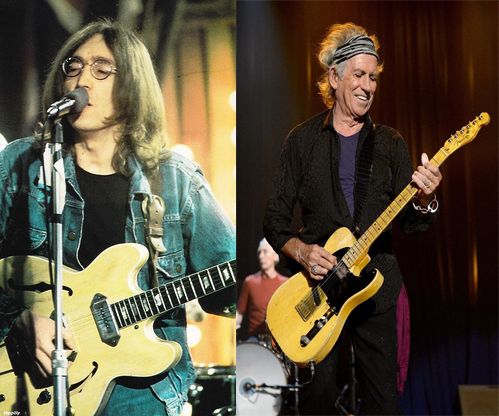


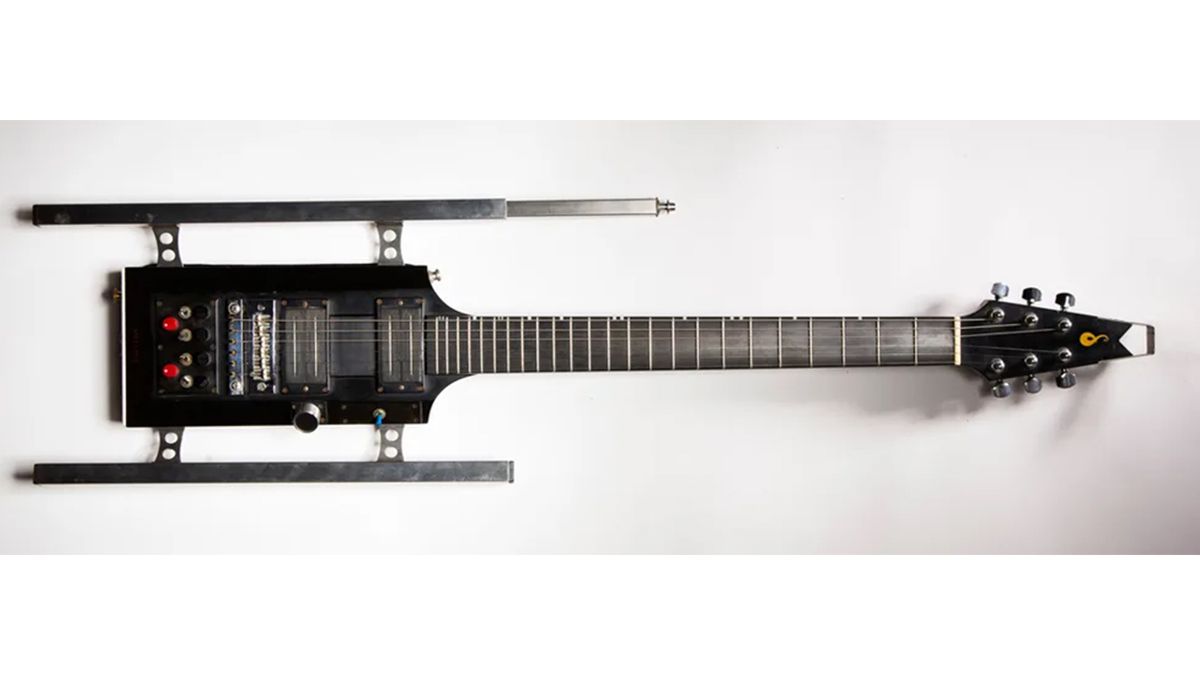






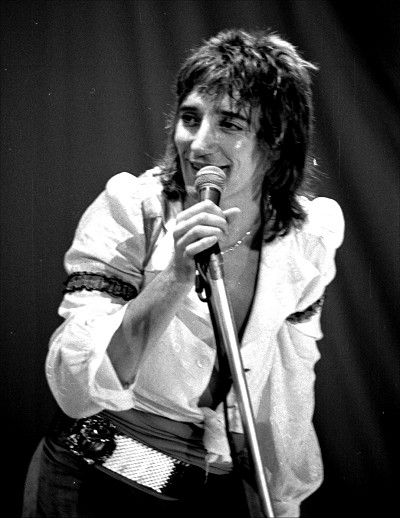
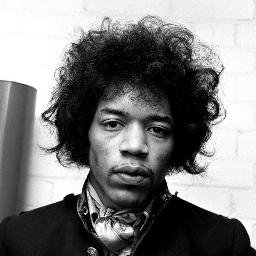





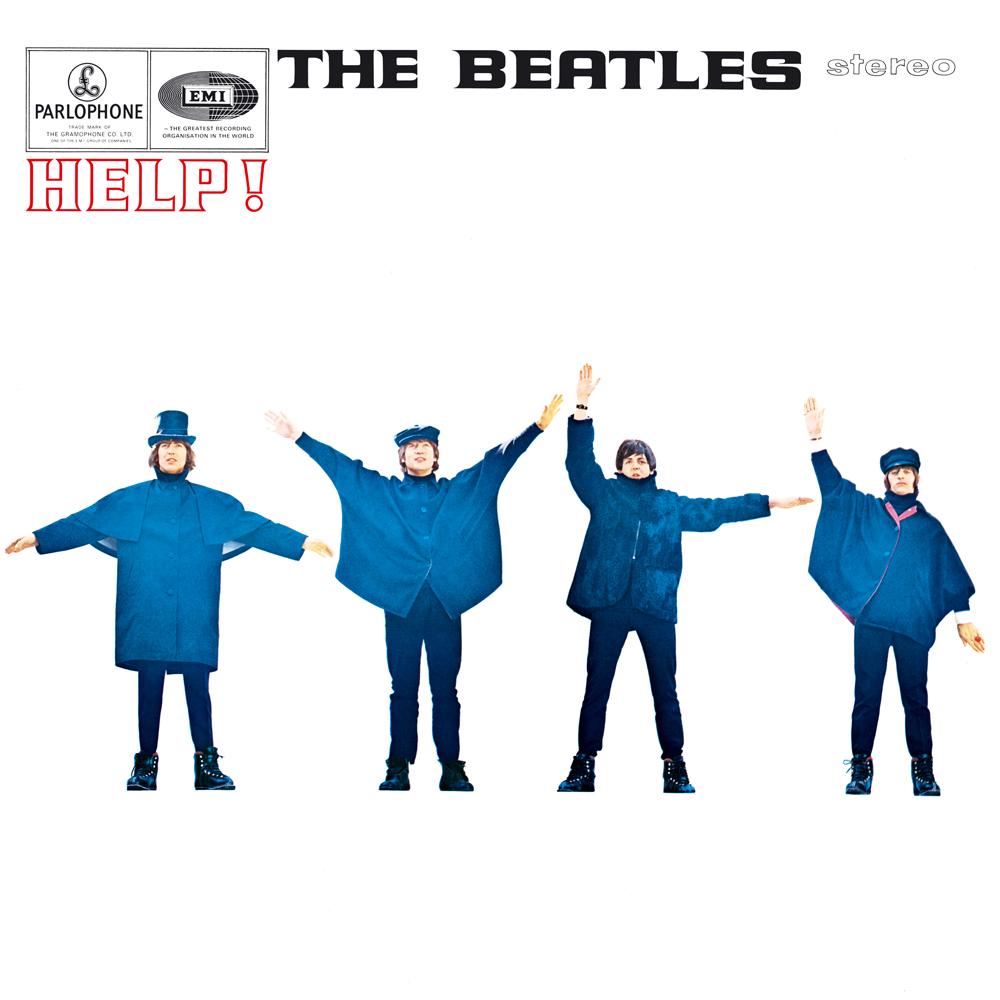

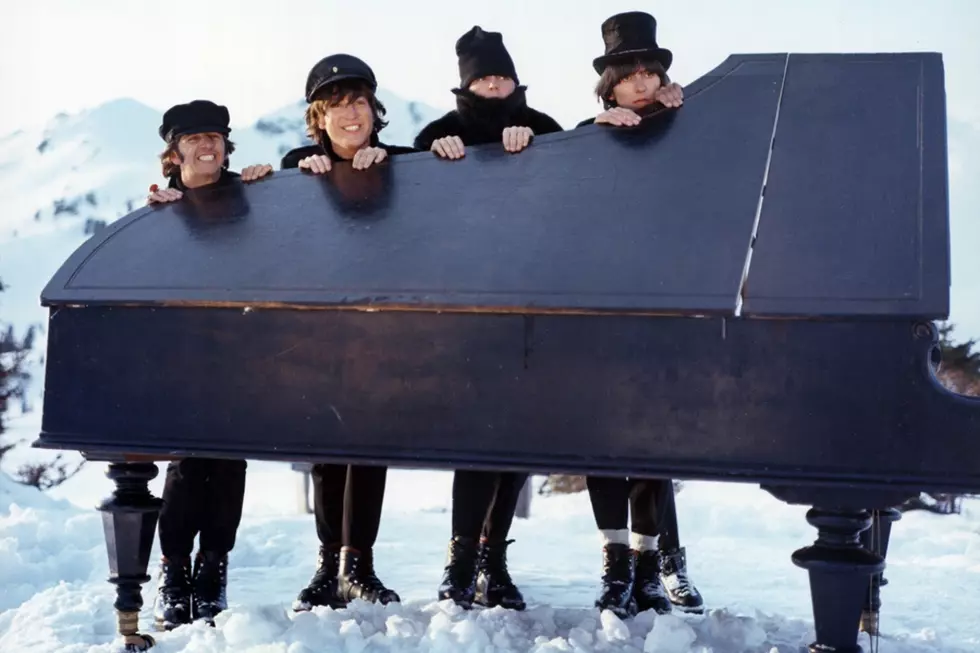


 PowerPop... An Eclectic Collection of Pop Culture