Drinking out of a garden hose, learning math and grammar from Schoolhouse Rock, playing pong, walking on the shag carpet in our bare feet, wearing mood rings, walking through beads instead of doors, and watching the Gong Show. That is what a lot of us were up to in the 1970s as kids and adults.
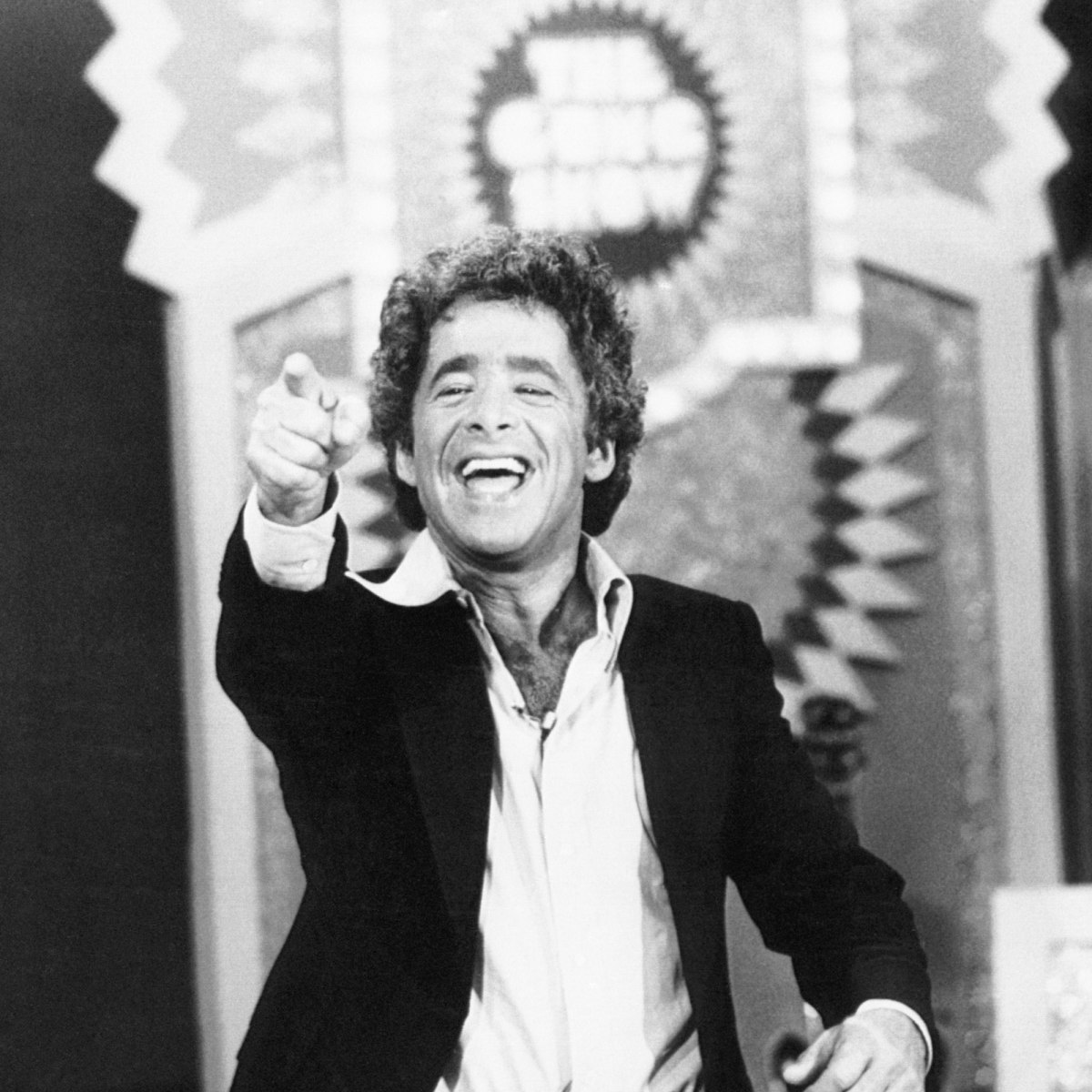
I watched this show and Dialing for Dollars on our local NBC affiliate when I was around 10 years old. Only in the seventies could this show happen. It was like amateur hour at a high school with celebrities judging the event for laughs. This show was so bad it was good. That is the heart of the show…so bad it’s good… If an act was bad…which many were the judges would bang a gong to show their dislike.
The winner would win $516.32… union scale at the time. It wasn’t about winning…it was about being in front of millions of viewers. The show ran from 1976 to 1978 and was in syndication for years and years. The show had a total of 501 episodes.
Chuck Barris was the emcee of this grand extravaganza. Some of the acts were bad and they knew it, some really thought they were good but were bad and a very few were actually good.
A few talented people appeared on the show at different times. Paul Reubens (Pee-Wee Herman), Steve Martin, Cheryl Lynn, Oingo Boingo, Michael Winslow, The Unknown Comic, and more. It’s fun spotting a future star in reruns.
The judges included Jamie Farr, Jaye P Morgan, Arte Johnson, Rip Taylor, Phyllis Diller, and Anson Williams. Jaye P. Morgan was fired off the show near the end of the show’s run. She often attempted to strip on the show, and usually got stopped. Except for one time, when she unbuttoned her shirt and flashed everyone while the camera was on her.
My favorite part of the show for some reason was a stagehand who would dance named Gene Gene the Dancing Machine. I also remember the popsicle twins. How the censors let the Popsicle Twins get through I don’t know… they were shown on the east coast but their segment never made it to the west coast.
The Gong Show was finally canceled because NBC warned Barris to tone down the racy elements of the show…he never did. The popsicle twins and Jaye P Morgan’s flashing didn’t help.
In the last show, Barris played in a country band called the “Hollywood Cowboys” and sang a modified Johnny Paycheck song “Take this job and shove it” and gave NBC the finger…which they blocked out of course.
Barris had his hand in a lot of shows. In 1965, he launched “The Dating Game,” which revolutionized TV game shows. Next came “The Newlywed Game,” “The Game Game” and a Mama Cass special, among others.
Chuck Barris, in his book, Confessions of a Dangerous Mind: An Unauthorized Biography, claimed to have been an assassin for the CIA. His wife said: “After I met Chuck, I read the book and I didn’t really place any judgment on it one way or the other. Chuck and I never talk about whether he really did it.” He would never answer when asked if it was true or not. In 2002 George Clooney directed a movie about the book.
Maxene Fabe wrote in TV Game Shows, that Barris was “the first man in America to realize how desperately ‘ordinary’ people want to be on television.” Hmmm…sounds like it holds true today with all of the reality shows that are on.
In 1980 “The Gong Show Movie” was released and it was written, directed, and starred Chuck Barris. The TV show was revived in 2017 and 2018 for twenty episodes with Mike Myers as host.
Chuck Barris passed away in 2017 at the age of 87.
When you think back on shows you watched when you were younger and you get a chance to watch them now…it’s usually different than you remembered…not this one. This one is exactly how I remembered.
Welcome to the Hanspostcard TV Draft. I hope you will enjoy it! Today’s post was written by Max at https://powerpop.blog
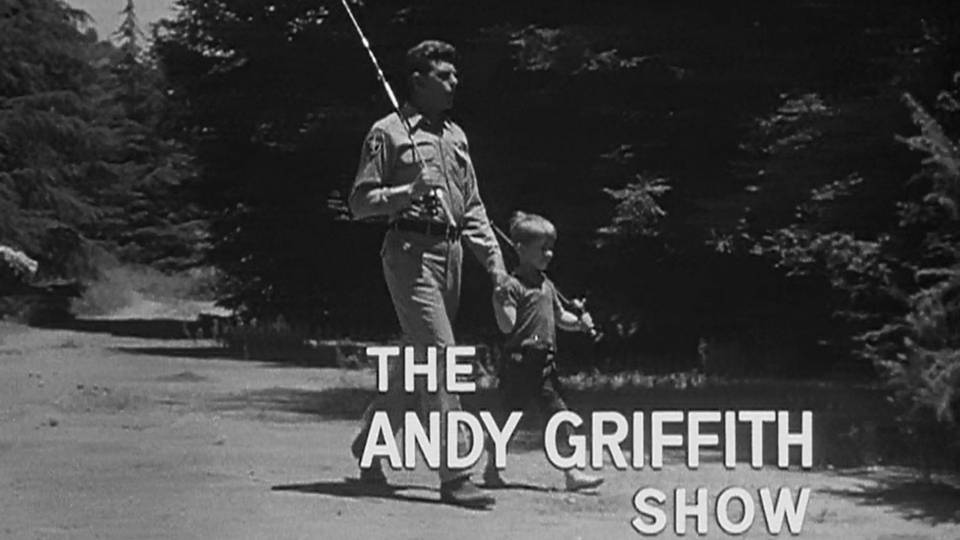
There has been so much written about this show and the writing will never stop. It was a show about the quirky citizens of a fictional town called Mayberry. The Andy Griffith Show is not just another show. The series will be around long after we are gone and still being discovered by future generations.
Some of the love I have for the show is about escapism. The low pressure of living in Mayberry is attractive. A place where you are allowed to live slowly and friends are only a few miles away. Nowadays our lives are so full of technology and rush that it would be tempting to walk through the screen to join Andy and Opie fishing out on Meyers Lake.
Mayberry was based on a small North Carolina town called Mount Airey where Andy grew up. Griffith has also said that although the show was in the sixties, Mayberry had a 1930s-1940s feel to it. When I’m asked where I grew up, I’ll say in a town kind of like Mayberry and they get what I’m saying.
The episode that best explains the show is… Man In A Hurry. A businessman’s car breaks down two miles from Mayberry on a Sunday. He has a business appointment in Charlotte the next morning. He walks to town and finds it deserted until church lets out. The garage is also closed on Sunday. Gomer is working but can only pump gas and Wally refuses to repair the car until Monday. The stranger can’t believe the pace of life in Mayberry and everyone’s lack of urgency. Andy tries to talk him into spending the night and getting the car fixed on Monday… he won’t have any of this non-sense… first but then he slowly realizes what great lives these people lead and ends up staying a little while longer than he could have.
Andy Griffith and Don Knotts were a great comedy team. I wish they would have made a few movies together. Knotts wanted to do that but Griffith always backed away from it. You can put them up there with other great comedy teams. Andy was a great straight man and Don played off of him well.
I’ve seen parents play episodes to their kids for lessons, schools play episodes for students, and heard of preachers writing sermons around episodes. The humor wasn’t dirty but it wasn’t sterile either. Most if not all of the first 5 season episodes are classics. It’s a show that you can catch at any time. During a rainout, between movies, and a binge-watch.
The show offered a little of everything… One of the things I liked was the bluegrass music of The Dillards who appeared on the show as the Darlings. Denver Pyle played Briscoe Darling Jr. and played the jug with the Dillards. They were and STILL are a bluegrass band that tours and releases albums.
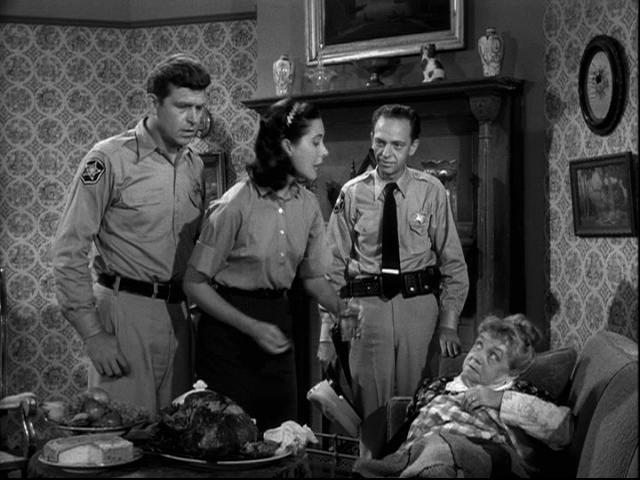
Andy had many girlfriends throughout the show. There was Ellie and she gave Andy all he could handle. Ellie, unfortunately, left after the first season. He saw the county nurse Mary Simpson (My favorite), Peggy McMillian, and then he met Helen Crump. Personally, I never liked Helen as much. Her nickname from some fans was Helen Grump because she could be a grump quite often. Andy ended up marrying Helen in the last season.
Thelma Lou was one of my favorite characters of the show. She put up with Barney’s shenanigans but was always there for him. Barney was foolish for letting her go but they finally got married. It didn’t happen on the show’s original run but they finally tied the knot in the reunion movie.
Then there was Aunt Bee Taylor. She took care of Andy and Opie and made sure they were fed well and came home to a clean house. Aunt Bee had a smile for everyone unless you got on her bad side. She could be stubborn and formidable when angered and she commanded the utmost respect from everyone. She was in a way, everyone’s Aunt.
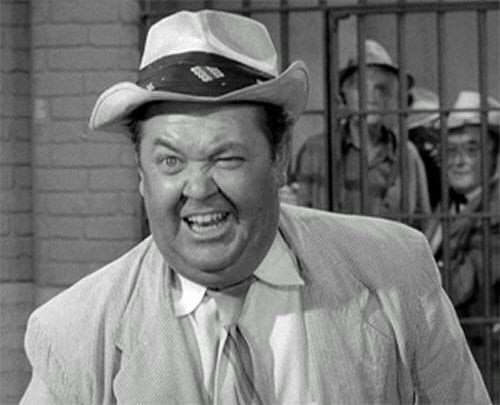
The two characters from Wally’s gas station were Gomer Pyle and Goober. Goober was a great mechanic and Gomer mostly filled your tank up with a story to go along with it. They were not the sharpest tools in the shed but both had hearts of gold and added to the show’s comedy.
Andy’s son from his only marriage was Opie Taylor. You never found out how Opie’s mother passed away but she did before we got to meet the Taylors. Opie is a super kid and Andy raised him the right way. He is kind and polite and when he does something wrong he usually had the sense to recognize that and correct the problem.
Otis Campbell… Otis was a good guy with only one problem. He was the town drunk. Andy and Barney knew him so well that they let Otis grab the jail key and let himself in when he was a bit intoxicated. During the reunion movie made in the 80s, he had given up the booze and was selling ice cream.
Seasons 1-5 were in Black and White with Don Knotts as Barney Fife. Don’s last season was the 5th season and seasons 6-8 were in color. I have all of the Griffith Show episodes but I will admit…I don’t really watch the color episodes as much as the black and white ones. Yes, there are some good later episodes but it’s Andy. He walks around Mayberry like he is owed money. Andy later admitted on many of the later episodes he was going through the motions.
He started to get a little tenser on screen in the 5th season but Barney was still there and kept things light. In the 6th season with Barney gone, Andy acted impatient with his fellow quirky citizens where at one time he enjoyed them. The show just changed dramatically with color. It remained at number 1 but it just wasn’t the same.
It was one of the most successful television shows ever. The Series went out on top and had a successful spinoff called Mayberry RFD.
In the early 70s Mayberry RFD and other shows such as The Beverly Hillbillies, Green Acres, Mister Ed, Lassie, Petticoat Junction, and Hee Haw were canceled because of the rural purge the network did… everything that had a tree got canceled it seemed. More important shows were coming like All In The Family and others but there was always room for others. In syndication these shows do great.
When I became a Beatles fan way back when I was 8 years old…and up to my teenage years I hardly ever heard this one mentioned by people. I’ve seen its popularity grow through the years. My biggest problem with it is they should have spent more time on it. Lennon accused McCartney of subconsciously trying to destroy it. You could see Paul let out a big yawn while rehearsing in the Let It Be film but that probably had more to do with him being tired after hours of playing in a studio…but maybe Lennon had a point.
One of the reasons John got upset with Paul was because instead of getting professional backup singers or a choir…Paul went out the Abbey Road door and grabbed two “Apple Scruffs” to sing backup on the song. That version did not go on the Let It Be album, however. That version was on a charity album.
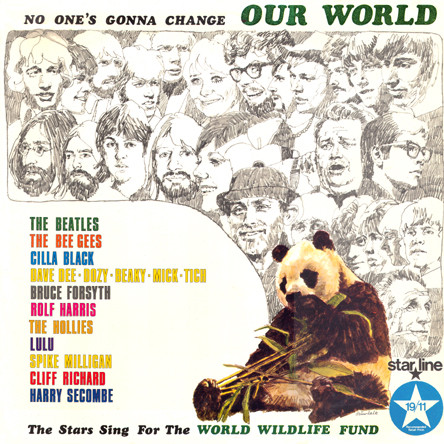
This first appeared on No One’s Gonna Change Our World, a 1969 charity album for the World Wildlife Fund. Bird noises were dubbed into this version to create a nature theme. It didn’t sound too bad.
When I bought the Let It Be album it took a few listens but soon this one intrigued me. The lyrics alone are enthralling because of the imagery. Since I first heard it, the song has taken on huge popularity.
It even had a movie that was made around its title and worked around Beatle lyrics in 2007. That alone boosted its popularity.
I always wondered about the Jai guru deva om phrase. “Jai guru deva, om” translates to “hail to the Heavenly Teacher” or “I give thanks to Guru Dev.” That was a mantra was invented by the Indian guru, Maharishi Mahesh Yogi – the late protégé of Guru Dev.
On February 4, 2008 “Across The Universe” became the first track to be beamed directly into space. It was transmitted through NASA’s antenna in the DSN’s Madrid Deep Space Communication Complex, towards the North Star, Polaris, 431 light-years from Earth. The broadcasting of the Beatles song was done to mark both NASA’s 50th birthday and the 40th anniversary of Across The Universe. Paul McCartney described the transmission as an “amazing feat” adding, “Well done, NASA. Send my love to the aliens!”
David Bowie also did a good version of this song. Liam Gallagher has cited this song as a huge influence on him starting to write songs.
John Lennon: “I was lying next to me first wife in bed, and I was irritated. She must have been going on and on about something and she’d gone to sleep and I kept hearing these words over and over, flowing like an endless stream. I went downstairs and it turned into sort of a cosmic song rather than an irritated song… it drove me out of bed. I didn’t want to write it, but I was slightly irritable and I went downstairs and I couldn’t get to sleep until I’d put it on paper.”
John Lennon: “It’s one of the best lyrics I’ve written. In fact, it could be the best.” He added: “It’s good poetry, or whatever you call it, without chewin’ it. See, the ones I like are the ones that stand as words, without melody. They don’t have to have any melody, like a poem, you can read them.”
John Lennon:“The Beatles didn’t make a good record of it. I think subconsciously sometimes we – I say ‘we’ although I think Paul did it more than the rest of us – Paul would, sort of subconsciously, try and destroy a great song… meaning we’d play experimental games with my great pieces, like ‘Strawberry Fields,’ which I always thought was badly recorded.”
The World Wildlife Fund
Across The Universe
Words are flowing out Like endless rain into a paper cup They slither wildly as they slip away across the universe Pools of sorrow waves of joy Are drifting through my opened mind Possessing and caressing me
Jai Guru Deva, Om Nothing’s gonna change my world Nothing’s gonna change my world Nothing’s gonna change my world Nothing’s gonna change my world
Images of broken light Which dance before me like a million eyes They call me on and on across the universe Thoughts meander like a Restless wind inside a letter box They tumble blindly as they make their way across the universe
Jai Guru Deva, Om Nothing’s gonna change my world Nothing’s gonna change my world Nothing’s gonna change my world Nothing’s gonna change my world
Sounds of laughter, shades of life Are ringing through my opened ears Inciting and inviting me Limitless undying love Which shines around me like a million suns It calls me on and on across the universe
Jai Guru Deva, Om Nothing’s gonna change my world Nothing’s gonna change my world Nothing’s gonna change my world Nothing’s gonna change my world
Jai Guru Deva Jai Guru Deva Jai Guru Deva Jai Guru Deva Jai Guru Deva
I should have posted this before I started the series so when I reached the end of 5th season I thought it was time to feature this one. CBS purchased a teleplay in 1958 that writer Rod Serling hoped to produce as the pilot of a weekly anthology series. “The Time Element” marked Serling’s first entry in the field of science fiction.
It’s a Time Travel episode and a good one. William Bendix as Peter Jenson goes back in time right before Pearl Harbor takes place.
This show premiered on November 24, 1958. Rod Serling wrote this episode and it appeared on the Westinghouse Desilu Playhouse. This one could have been a Twilight Zone.
Although this isn’t the pilot episode of The Twilight Zone, it was this Rod Serling production that eventually led to The Twilight Zone. It proved to be very popular with viewers, which led CBS to pursue a new series with Serling. Because TV viewers at the time were not used to the kind of surprise, twist endings for which Twilight Zone became noted (as in this episode), Desi Arnaz appeared on-screen at the end of the episode to offer his explanation of “what really happened.”
IMDB Trivia:
Martin Balsam (Dr. Arnold Gillespie) later played Admiral Husband Kimmel in Tora! Tora! Tora! (1970), which likewise concerned the attack on Pearl Harbor.
This episode takes place on October 4, 1958 and from December 6 to December 7, 1941.
Uses music that was later used in George A. Romero’s Night of the Living Dead (1968).
The man at the bar is Joe DeRita from The Three Stooges.
This show was written by Rod Serling
Summary
A man is sent back in time to December 6, 1941, to Pearl Harbor on December 5, 1941, two days before it is bombed. The episode relates his frantic efforts to warn military officials of the approaching catastrophe.
The complete episode
CAST
William Bendix…Peter Jenson Martin Balsam…Dr. Arnold Gillespie Darryl Hickman…Ensign Janoski Jesse White…Bartender Carolyn Kearney…Edna Janoski Jesslyn Fax…Maid Alan Baxter…Army Doctor Bartlett Robinson…Mr. Gibbons Don Keefer…Hannify Joe DeRita…Man at Bar (as Joe De Rita) Paul Bryar…Paul Bryar…… Bartender at Andy’s Desi Arnaz…Host Gene Coogan…Bar Patron (uncredited)
Welcome to the Hanspostcard TV Draft. The remaining 7 rounds will be posted here. I hope you will enjoy it! Today’s post was written byDave from https://soundday.wordpress.com/
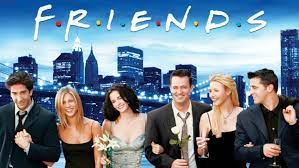
Some of our other participants have picked highly excellent, but “boutique” shows. Ones which are brilliant, and critically-praised, but not hugely viewed, often due to appearing on pay cable stations or obscure streaming services. This is actually great because it’s giving some of us insight into shows we’ve heard about but not seen. But for my second pick, I’ll stick with the 1990s and stick with a show of mass appeal…more mass appeal now than back then, one might guess: Friends. It was a show I sometimes watched, and quite liked back in the day but have watched a good deal more and come to enjoy more in the years since it ended. (In that it was somewhat like one of its companion shows on NBC, Seinfeld, looked at by Music City Mike already.)
NBC’s Thursday night lineup in the ’90s was a TV equivalent to baseball’s ’61 Yankees… a seemingly unstoppable powerhouse that kept throwing superstar after superstar at you. By 1993, it was already a juggernaut in the ratings and with critics with the combo of Seinfeld and Frasier. But they needed something to keep the momentum throughout the night and had had some difficulty finding another prime-time comedy to keep viewers on the Peacock network. Enter Marta Kauffman and David Crane,a couple of, well, friends who were writers. Struggling ones at that.
“We wanted to write something we would watch,” Kauffman said. They were in their early-30s and Crane says “not long before, we’d been living in New York, not doing TV. We’d been living it.” So they set upon the idea of a group of people like themselves who were out on their own but single, starting to find their way in the world with little but their close friends to help them through.
They came up with the basic idea and a few test scripts and pitched it to Fox, who said “it’s funny, but it’s not Fox funny. Can you make it more adult?” Instead, they landed at NBC, who saw some potential with it. Which was prescient of them, since like so many shows, the pilot was…well, not great. It was OK, but only hinted at the depth of the characters and the laughs that it would soon create. It might have been unwatchable if Rachel had stayed the spoiled princess, Ross the always sadsack downer or Joey the macho stud. Happily the characters and dialog evolved and quickly found their stride only a few weeks in.
As most know, the show revolved around a main cast of six “friends”…an unusually large ensemble for a sitcom that didn’t have one main star, ala say Bill Cosby on his eponymous show. There were the guys – Joey, the proudly Italian ladies-man and struggling actor; Chandler, the sarcastic and oft-frustrated office “suit” and Ross, the nerdy and awkward professor – and the girls. They were Monica, Ross’ sister, a compulsive neat freak and talented cook; Phoebe, the artsy-fartsy ’60s throwback hippie singer, and Rachel, the rich fashionista cut off from her family money and learning life lessons. With a “heart of gold” would be a modifier applied to all six. Through ten seasons, 1994- 2004, and 236 episodes they struggled with ordinary problems like so many of their fans – finding romantic partners, or at least dates, getting a good job, trying to keep afloat financially, and the like. All the while talking a lot and hanging out at the Central Perk, a local coffee shop. (Jennfier Aniston, “Rachel” once commented that it would be impossible to set it in the present day because it would now just be six people sitting staring at their phones.) At times they’d fight, but in the end, like the famous Rembrandts theme song (“I’ll Be There For You”) suggests, they were always there for each other.
Time magazine noted “the well-hidden secret of the show was that it was called ‘Friends’ and was really about family.” Or to put it another way, that when you get to be an adult, your friends can be your family, the rock you can rely on. In that it rather duplicated Seinfeld, or Frasier’s predecessor, Cheers. And like those shows, a good deal of the appeal was how perfect the actors chosen were for the roles. Unlike those two, by a few episodes in you were always rooting for those characters. It seemed like lightning struck in the casting. The creators had written the Ross part specifically with David Schwimmer in mind… they actually figured he would be the break-out star of the series. The others all came about by chance. They envisioned Courteney Cox to be Rachel, not Monica, but she liked the other role better. They liked Jennifer Aniston, but she was under contract to another, thankfully short-lived show at the time so they figured she wouldn’t be available. She was. Nancy McKeon was their first choice for Monica, but that fell through, and so on and so on. Now it seems impossible to think of Monica being anyone but Courteney, or anyone but Matt Leblanc being Joey, etc. And Jennifer Aniston? So intertwined with her character was she that her haircut swept the nation and was called “the Rachel.”
All six of the characters were flawed, and often not good at their jobs. The only thing as bad as Phoebe’s singing might be Joey’s on-stage acting chops or Ross’ attempt to win over students by speaking in a fake British accent. But their flaws made them seem like people we all knew and loved…or maybe, like ourselves. As years went by, they became our friends. We wanted Joey to keep that role on Days of Our Lives, we wanted Chandler to find a way not to be transferred to Tulsa, and of course, we wanted Ross and Rachel to figure out that they were in love with each other and just get together! I mean, come on – Ross said Rachel’s name instead of the girl he was supposed to be marrying (Emily) during his wedding vows!
Interestingly, just before Season 8 was about to begin, the world was shaken by 9/11. This posed a dilemma for the series, set in Manhattan. They didn’t know how to approach it. Finally, NBC decided “9/11 did happen in the World of Friends, but it would be acknowledged only by visual clues”… Joey sometimes wore an “NYFD” t-shirt, newspapers appeared on tables, the etch-a-sketch on Joey and Chandler’s door had more patriotic images on it but “no one would want to see ‘the one with the terrorist attack.’” It hit the actors hard, like everybody else, and they had to reconcile their job with the reality of the world. Lisa Kudrow, “Phoebe,” said “we’re not curing cancer. It’s not a big deal. But you know what? When you can offer people a break from some such a devastating reality, that is a big deal.” Aniston echoed, “this was the one place in the world it was still OK to laugh.” It was a big deal. The show, already a top 10 ratings hit, became the most-watched on television that season (the last sitcom to earn that distinction) and won the Emmy for Outstanding Comedy. The series finale, in which yes, Rachel didn’t get on the plane (and leave for France, rather, coming back to be with Ross) was the most-viewed regular TV episode of this century so far.
Like I said, I watched it at times then but appreciate it more now. Actually, thinking back, I was often too busy living my own version of Friends when it was on to tune in. Hanging out with buddies, looking for a lasting love, working late in the store, you name it. When I was fortunate enough to find my lasting love, it turned out Friends was one of her all-time favorite shows. She used to tell people back then not to call on Thursday until after 7:30 (it aired at 7PM in Central time, 8 in the East where I was watching) because she was tied up…with “friends”. We love watching reruns together, and when it left Netflix, I got her the set of DVDS. Or got us the set. I laugh at Ross’s consternation at his boss eating his Moist-maker sandwich or barista Gunther’s longing for Rachel (I guess I could relate to Gunther on that one!) as much as my sweetie does. If grilled cheese sandwiches might be a “comfort food”, Friends is “comfort watching” to us.
A couple of parting thoughts about Friends. First, to me it seems rather like most sitcoms these days have a tendency to copy it, but not as successfully. Groups of funny, inseparable friends. How I Met Your Mother… group of late-20-something friends who hang out together in a neighborhood bar and have little to do with their biological families. The at times cloying Big Bang Theory? Don’t get me started. Friends who are family to themselves, the nerdy professorial type destined to be with the super-sexy but sweet blonde (who like Rachel struggles as a waitress but finally finds success in a professional career), guys with no musical talent but abundant arrogance playing in the comic book store (much like both Ross and his keyboards and Phoebe’s bad songwriting)… they even stole the story of the male character who tried to get a spray on tan to impress a woman and ended up bright orange by accident.
And secondly, the show got back together in the right way. That is to say, by not regrouping. As much as they were being pressured to do a reunion, like so many other comedies from Will and Grace to Gilmore Girls had done, Friends decided to leave things as they were. There was the much-hyped reunion show last year,of course, but it was dealt with smartly… the six actors got back together and reminisced, showed a few classic clips and talked about what it was like back then. Brilliant restraint, because the magic of Friends was the characters remain forever young, and then left on high notes …they were happy, moving away from their New York apartment building to start new lives, full of love and optimism. Just as NBC realized we didn’t need “the one with the terrorist attack”, the cast understood we didn’t want “the one where Ross needs viagra now” or “the one with Gunther’s funeral.” They knew not to overstay their welcome, and leave us laughing.
We have now gone over every episode of the Twilight Zone. For those who have not seen every episode and you get curious or want an episode guide…please go here https://powerpop.blog/twilight-zone-episodes
If only one person watched an episode because of this series…I did my job. THANK YOU once again to all the readers who have followed me through this journey. Even if you just checked a few out. Thank you for agreeing and disagreeing…that is what this was all about. I started this on April 11, 2021, and now over a year later, we are finishing this up.
When I started this I thought I would end up not liking the show as much but the opposite has happened…I like it even more. I found some episodes that at one time I thought were only so-so…much better than I remembered. My appreciation grew for them after watching them again. Out of 156 shows…I only rated four shows under a 3…and my rating of 3 was an average good show. That ratio is a great run for any show.
The 5th season’s episodes are at the bottom of this post…. are there any that you disagree with the rating? Lisa brought up the interaction of the blog and that is what made me want to finish it. Some people found different meanings from episodes than I did and some episodes take on a new meaning for me now.
For one reason or another, Jim Aubrey [then president of CBS] decided he was sick of the show. He claimed that it was too far over budget and that the ratings weren’t good enough. In truth, Twilight Zone was still rated well, although not in the top ten but doing well, and the show was on budget.
To sum Jim Aubrey up…he had contempt for smart shows. Two of his successes were Gilligans Island and The Beverly Hillbillies… a quote from Mr. Aubrey: “The American public is something I fly over”
Executives have said his formula was “broads, bosoms, and fun” so The Twilight Zone didn’t have a chance. This is another quote by the magnificent Aubrey: Feed the public little more than rural comedies, fast-moving detective dramas, and later, sexy dolls. No old people; the emphasis was on youth. No domestic servants, the mass audience wouldn’t identify with maids. No serious problems to cope with. Every script had to be full of action. No physical infirmities.
ABC wanted the Twilight Zone but they would have had to change the name because CBS owned it. Serling said no. Daily Variety reported that Serling considered the odds of a sixth season unlikely…and then. Rod Serling:I decided to cancel the network.
The Twilight Zone is still watched and admired by new generations. Many science fiction works are judged against it. SNL, The Simpsons, Family Guy, and songs have referenced the show. It’s now in our pop culture and will never leave.
After the Twilight Zone, Rod Serling did another TV program called The Loner. The Loner was a terrific 1965 western program that hit on social issues set in the old west. In 1969 He did The Night Gallery but he didn’t have control over that like he did with the Twilight Zone. He later said he regretted not keeping more control. He also co-wrote the screenplay for Planet of the Apes.
Right before he passed away he did the promos for Fantasy Park in 1975.
From Wiki
In May 1975, Serling was admitted to a hospital after experiencing a mild heart attack. One month later, he was re-admitted for a coronary bypass operation. Complications arose after ten hours of open-heart surgery, and he died on June 28, 1975, in Rochester, New York. In all, he had lived fifty years, six months, and three days.
***Just a note…on Saturday I will be posting the precursor to the Twilight Zone and…I picked the show for the current ongoing TV Draft that will appear in a few weeks***
This is the last Twilight Zone episode. I will have a Twilight Zone 5th Season review Wednesday and a Twilight Zone precursor…a show that led to making the Twilight Zone on Saturday…also in our TV Draft…yea I’ll be covering this one in some round.
This is the last aired Twilight Zone episode. I love this episode but it’s not one of the more popular ones. It’s in my top twenty of Twilight Zones. This one I disagree with the majority of Twilight Zone fans. Being a child of divorce I can totally relate to the two main children in this episode. It always reminded me of Narnia a little bit. Instead of a wardrobe closet, it was a pool.
The biggest complaint of this episode happened when there was noise interference on the MGM back-lot during the pool sequences, and everyone had to be called back for post-dubbing. Actress Mary Badham who played Sport Sharewood had already flown back to Alabama and it was deemed too expensive to fly her back to Los Angeles. June Foray was brought in to dub her lines. It wasn’t the best dubbing job (not Foray’s fault) but it doesn’t interfere with the story.
Kids would love a place to hide from fighting parents. The kids, Sport and Jeb found such a place at a bottom of a pool. As their parents would not stop fighting they escaped to a tranquil place with other kids who were all looked after by Aunt “T.” Sometimes parents don’t understand what lengths kids will go to get away…real or imagined.
IMDB Trivia:
Both children speak with Southern accents while their urbane parents have generic American accents. The writer Earl Hamner Jr. (who later created The Waltons (1972)) hearkened back to the children in the film To Kill a Mockingbird (1962). In the film, the children were named Scout and Jem. In this episode, the children are Sport and Jeb. Mary Badham played both Scout and Sport.
This was essentially the series finale as the show was canceled a short time later in June 1964.
The swimming pool used in this is the same pool seen in the earlier “Queen of the Nile,” and season two’s, “The Trouble with Templeton”.
Earl Hamner, who wrote the script for this episode, said that he disliked the characterization of “Aunt T.” as played by actress Georgia Simmons. He stated that there were women whom he characterized as “earth mothers,” citing actress Patricia Neal as an example of the kind of portrayal he had envisioned for the role, and said that instead he found “Aunt T.” as depicted in the episode “too cute.” Patricia Neal would go on to create the role of Olivia Walton in the pilot, “The Homecoming,” of Hamner’s long-running series, “The Waltons.”
This show was written by Rod Serling and Earl Hamner Jr.
Rod Serling’s Opening Narration:
Right before the end of the introduction, as in a typical episode, Rod Serling appears on-screen and says:
A swimming pool not unlike any other pool, a structure built of tile and cement and money, a backyard toy for the affluent, wet entertainment for the well-to-do. But to Jeb and Sport Sharewood, this pool holds mysteries not dreamed of by the building contractor, not guaranteed in any sales brochure. For this pool has a secret exit that leads to a never-neverland, a place designed for junior citizens who need a long voyage away from reality, into the bottomless regions of the Twilight Zone.
After the opening credits are finished rolling, Serling, in voice-over, says:
Introduction to a perfect setting: Colonial mansion, spacious grounds, heated swimming pool. All the luxuries money can buy. Introduction to two children: brother and sister, names Jeb and Sport. Healthy, happy, normal youngsters. Introduction to a mother: Gloria Sharewood by name, glamorous by nature. Introduction to a father: Gil Sharewood, handsome, prosperous, the picture of success. A man who has achieved every man’s ambition. Beautiful children, beautiful home, beautiful wife. Idyllic? Obviously. But don’t look too carefully, don’t peek behind the façade. The idyll may have feet of clay.
Summary
Told by their parents that they are getting a divorce, Sport and Jeb Sharewood now have to decide who they are going to live with. They decide they would rather live with Aunt T, the woman they’ve met by traveling through a portal at the bottom of their swimming pool. At the other end is an idyllic world where children play and there are few adults. Aunt T is a kindly old woman but Sport is far more reluctant than Jeb to accept her invitation to stay with them.
Rod Serling’s Closing Narration:
A brief epilogue for concerned parents. Of course, there isn’t any such place as the gingerbread house of Aunt T, and we grownups know there’s no door at the bottom of a swimming pool that leads to a secret place. But who can say how real the fantasy world of lonely children can become? For Jeb and Sport Sharewood, the need for love turned fantasy into reality; they found a secret place—in the Twilight Zone.
CAST
Rod Serling … Host / Narrator – Himself Mary Badham … Sport Sharewood June Foray … Sport Sharewood (voice, outdoor scenes) Kim Hector … Witt Dee Hartford … Gloria Sharewood Jeffrey Byron … Jeb Sharewood Georgia Simmons … Aunt T Tod Andrews … Gil Sharewood
This episode goes a bit under the radar compared to others. It’s a good solid effort. Mark Richman as Trooper Robert Franklin and Hazel Court as Charlotte Scott work very well together. Scott is introduced as a bit of a snob but as the show goes on you find out the reason for that. I like the Trooper who isn’t a stereotypical small-time trooper but is smart, does his job well, and is worldly. In between the mysterious events, the two characters always find time to philosophize and bicker with each other but build a good relationship. You end up rooting for both characters as their chemistry builds throughout the show.
The story focuses on the fear of who (or what) is causing disturbances outside of Charlotte’s remote cabin. The two encounter some strange phenomena including flashing lights and strange noises. They eventually see a giant fingerprint on Robert’s car that has been moved. Who or what you will find out in the end. This one is worth investing some time in to watch.
IMDB Trivia:
Robert Franklin served in both World War II and the Korean War.
Although never identified as such, Trooper Franklin appears to be a New York state trooper.
Trooper Franklin’s (Peter Mark Richman) badge number is #810 for an unidentified state police agency.
This show was written by Rod Serling
Rod Serling’s Opening Narration:
The major ingredient of any recipe for fear is the unknown. And here are two characters about to partake of the meal: Miss Charlotte Scott, a fashion editor, and Mr. Robert Franklin, a state trooper. And the third member of the party: the unknown, that has just landed a few hundred yards away. This person or thing is soon to be met. This is a mountain cabin, but it is also a clearing in the shadows known as the Twilight Zone.
Summary
Trooper Robert Franklin stops by Charlotte Scott’s remote cabin to see if she’s alright. She is a big-city fashion editor who is looking for peace and quiet while Franklin is a local who sees her as a snob. They are soon drawn together when a giant creature seems to appear in the woods just outside Charlotte’s cabin. Franklin’s patrol car is overturned and her telephone is suddenly out of order. Together, they will have to overcome their fears and deal with the extra-terrestrial creature that has appeared, which turns out to be something altogether unexpected.
Rod Serling’s Closing Narration:
Fear, of course, is extremely relative. It depends on who can look down and who must look up. It depends on other vagaries, like the time, the mood, the darkness. But it’s been said before, with great validity, that the worst thing there is to fear is fear itself. Tonight’s tale of terror and tiny people on the Twilight Zone.
CAST
Rod Serling … Host / Narrator – Himself Peter Mark Richman … Trooper Robert Franklin Hazel Court … Charlotte Scott
Welcome to the Hanspostcard TV Draft. The remaining 7 rounds will be posted here. I hope you will enjoy it! Today’s post was written by Mike from https://musiccitymike.net
Breaking Bad
Like many other TV bingers these days, there are few, if any, series that I watch in real time. After all, who has the patience to wait a week (or at a season’s end, over the summer) for the next episode to see what happens next in a suspenseful show. However, I did make an exception for the wild escapades of high school chemistry teacher turned methamphetamine maker Walter White on AMC’s Breaking Bad.
Why? Well, the plot was just so unique and more so, its production, especially in terms of camera work, was nothing short of spectacular. The ways that producer Vince Gilligan found to use the camera were ground-breaking. Come on, who would have ever thought of filming from the inside of a refrigerator!
Before I get to the tragic tale of Mr. White, there’s also the music. I don’t think I have ever been so taken by the impact of soundtrack songs like I was in Breaking Bad. There are two magic moments that come to mind. I still get chills running down my spine when I think of how Tommy James & the Shondells’ “Crystal Blue Persuasion” and Badfinger’s “Baby Blue” were used to such stunning effects. For the unfamiliar, it may help to know that Mr. White’s “product” had a unique-to-meth blue color. And the Badfinger song’s opening line of “Guess I got what I deserve” show appropriately set the show’s final scene. (Kudos also to local Nashville band The Silver Seas for getting their fab song “Catch Yer Own Train” into Season One.)
As with my fave series, The Sopranos, here we go again with White and his former student and now partner-in-crime, Jessie Pinkman, falling into the unavoidable anti-hero role. However, seeing all this suspense and drama from a first-person perspective was the only way to go for Breaking Bad. And how could you not resist rooting for a guy who simply was trying to get some extra money together for his family before he died of cancer.
What really makes the show so habit forming is how what starts out as such a simple innocent way to make a few bucks steamrolls into a monster enterprise attracting a cadre of despicable characters. This includes the metamorphosis of meek Walter into the evil Heisenberg. Even his demure wife gets into the act to help when the couple finds itself with an accumulation of cash larger than most banks. While the show is full of violence galore, it’s these same things that also gives the show more laughs than you’d ever expect in a crime drama. For me, the funniest moment was when screwball meth-head Badger explains how the pizza place they just ordered from passes on the savings by not cutting its slices.
But, Breaking Bad also uses the often employed, but head-scratching literary device of coincidence. What are the odds that a guy who takes up making meth in Albuquerque, New Mexico would also have a brother-in-law who is the local head of the DEA who heads the task force hunting down the guy behind the new blue meth showing up on the streets! I’ll save the spoilers as to how these two end up.
Bryan Cranston and Aaron Paul, as Walter and Jesse respectively, both put in career-defining roles. And the supporting cast was just as spectacular, including Bob Odinkirk as sleazy lawyer, Saul Goodman, who would wind up with his own spin-off show, Better Call Saul, which is just about to start airing its final season.
I hope that all fans of the show did get to see the enjoyable El Camino: A Breaking Bad Movie, a Netflix sequel to the show that continues the story of Aaron Paul’s Jesse Pinkman character. And as for the prequal of Better Call Saul, we fans look forward to hopefully seeing White and Pinkman appear on the show as its timeline moves forward and the show runs its course. And on a possible sad note, maybe we will find out why Saul’s lady friend, Kim Wexler, never made it to the Breaking Bad days.
In concluding, let me just say that this show is just so darn good that it is no surprise that in 2013 it entered the Guinness World Records as the most critically acclaimed TV show of all-time. That’s no surprise since how many shows have ever achieved the success of having each episode followed by a live recap and analysis show every week!
This is a film I so wish they would clean up and release. I watched a bootleg version of it in the 80s VHS.
This was a film that covered Bob Dylan on his 1966 European tour backed up by the Hawks that eventually became The Band minus, Levon Helm. The film was to be shown on ABC television but ABC rejected and saying it was “incomprehensible” because Dylan himself was one of the editors and wanted the film to have more of an artistic feel.
It was filmed by D.A. Pennebaker who filmed Dylan’s 65 European tour when he played acoustically called Don’t Look Back. Don’t Look Back is terrific. This film is very disjointed. That is not saying I don’t like it. This is the Dylan period that probably is my favorite. The Hawks are raw and powerful and Dylan was
There are some highlights to this odd film. A spontaneous piano duet with Dylan and Johnny Cash, John Lennon and Bob Dylan very high riding around in a cab, and the famous concert where an audience member yells out “Judas” because of Dylan’s conversion to electric music. After the Judas remark, he proceeds to tell Robbie Robertson to play it loud and they kick off in a vicious “Like a Rolling Stone.” My favorite live version of that song. Those folk music fans were harsh.
The film is disjointed and frustrating to watch because some of the songs you want to see and hear are there…but only partly. You will be seeing Dylan performing something and then flash away to something else. Some of the concert footage and film from this ended up in the Martin Scorsese movie No Direction Home…I would recommend No Direction Home to everyone.
Bob was pale and nervous and there is no secret he was doing drugs heavily throughout this movie. After the tour, Dylan had a motorcycle wreck heard around the world and after he recovered he didn’t tour for years.
The cab ride with John Lennon is historical now. Both of them in sunglasses and Lennon trying to inject humor into the situation and Dylan is ok at first and then starts getting sick as the filming stops.
If you are a Dylan fan it’s worth a watch. I’m glad we have “No Direction Home” to see some clear film segments on that tour. Eat The Document has not been officially released but you can get a bootleg of it or watch most of it on youtube.
There are two episodes in the 5th season that I differ from many Twilight Zone fans…and this is one of them. I think it is the creepiest episode of them all. I’ve watched it countless times and I see something else every time I do. This show covers a plot device that the Twilight Zone has covered before but I like this take on it…a time loop…an endless cycle.
Gary Crosby (Bing Crosby’s son) plays Floyd Burney a jaded rockabilly star in search of new songs in the backwoods. Hank Patterson (Fred Ziffel in Green Acres) plays an old man who apparently is waiting for Burney at a barn-like music store but remains utterly uncommunicative. When Burney grabs a guitar and takes off…his fate is sealed.
Bonnie Breecher plays a beautiful girl named Mary Rachel who Burney hears singing a haunting ballad. Rachel falls in love with him but is powerless to change his preordained fate, as it seems Floyd is destined to live the song he wants to purchase. Floyd Burney is too self-centered to comprehend the bigger picture of the strange situation he finds himself in. Mary Rachel’s alter-ego also appears in an almost mourning demonic form throughout. The setting of this episode heightens the creepy atmosphere. You feel for Floyd Burney although you don’t really like him.
IMDB Trivia: This was the final episode of The Twilight Zone (1959) to be filmed, although two episodes filmed earlier were aired afterward.
As a teenager, Liza Minnelli auditioned for the role of Mary Rachel opposite Gary Crosby. Minnelli was so nervous that the producer William Froug commented: “She’ll never make it.” Minnelli lost out to Bonnie Beecher. This episode was Ms. Beecher’s acting debut.
The headstock of Floyd Burney’s guitar has black tape across the label covering the Gibson name brand.
Floyd Burney’s guitar is a Gibson ES-295 electric arch-top.
Producer William Froug:One of the people I interviewed was this nervous, frightened little girl whose hands shook and who was covered with sweat, and I said, Shell never make it. Her name was Liza Minnelli. And I chose Bonnie Beecher, and we all know what became of Bonnie Beecher!
I’ll never forget Liza Minnelli sitting there and her agent saying, This girl can really sing. I said, I’m sure she can, but I thought, Oh, she is so nervous! She’s scared out of her mind. To picture her as a hillbilly singer: no way. And I must tell you and this is the truth at the time, I sat there thinking, Well, I’ll probably kick myself for this but I can’t see this girl playing the part but shell probably be a big star. I still don’t regret it, but it was really classic stupidity.
This show was written by Rod Serling and Anthony Wilson
Rod Serling’s Opening Narration:
Mr. Floyd Burney, a gentleman songster in search of song, is about to answer the age-old question of whether a man can be in two places at the same time. As far as his folk song is concerned, we can assure Mr. Burney he’ll find everything he’s looking for, although the lyrics may not be all to his liking. But that’s sometimes the case – when the words and music are recorded in the Twilight Zone.
Summary
Singer Floyd Burney, the “Rock-a-Billy-Kid”, goes deep into the back woods hoping to find his next hit record. He no sooner arrives than he hears a beautiful singing voice which draws him deeper into the woods. He eventually meets Mary Rachel who tells him the song he heard belonged to someone and that she’s forbidden to tell anyone about it. When she finally reveals it to him, Floyd learns that his future is preordained.
Below is a short clip…I would recommend watching the episode if you have time.
Rod Serling’s Closing Narration:
In retrospect, it may be said of Mr. Floyd Burney that he achieved that final dream of the performer: eternal top-name billing, not on the fleeting billboards of the entertainment world, but forever recorded among the folk songs of the Twilight Zone.
CAST
Rod Serling … Host / Narrator – Himself Gary Crosby … Floyd Burney Bonnie Beecher … Mary Rachel John Bolt … Billy Rayford Hank Patterson … Old Man
Welcome to the Hanspostcard TV Draft. The remaining 8 rounds will be posted here. We will have 64 different TV Shows by 8 different writers. I hope you will enjoy it! Today’s post was written by Max from https://powerpop.blog
Adam 12
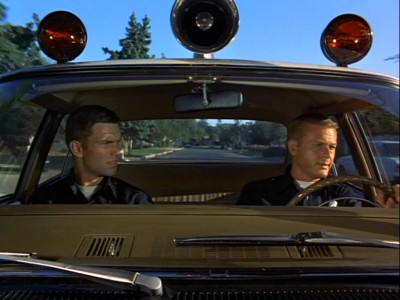
The show was simple… it focused on a pair of beat cops doing their everyday jobs… responding to calls and patrolling the city of Los Angeles
I watched this in syndication in the late seventies after school. I never thought much of it at the time. When I started to watch it as an adult, I was surprised at how good this show was. I thought it was strictly a kid’s show. I couldn’t believe how realistic it was for that time and some now. They covered subjects like child pornography, drug addiction, gangs, racial tension, and everything else criminally related. It was on for 7 seasons from 1968 through 1975.
Sometimes as an adult and you watch shows or movies you did as a kid you think wow…how did I like this? Now I’m thinking why didn’t I like Adam 12 more? The show starred Martin Milner as Officer Pete Malloy and Kent McCord as Officer Jim Reed. It was created by Jack Webb and Robert Cinader. The pair also created a spinoff from Adam-12…Emergency. Jack Webb also created Dragnet. Emergency and Adam 12 did crossover in a few episodes.
Before this show, Martin Milner was in the fantastic tv show Route 66 that would film in different locations every week. Kent McCord knew Ricky Nelson well and appeared on The Adventures of Ozzy and Harriett. They both knew Jack Webb and were cast for Adam 12.
How realistic was it? The LAPD would use some episodes as training guides for new policemen. The reason for that is that the LAPD worked with the show for realism. Kent McCord said that more than once while filming…someone would come up to them and thought they were real policemen.
They wanted to capture a typical day in the life of a police officer. There was no Dirty Harry on this force. These officers went by the book even if it would have benefitted them at times to stray off. The episodes were written around actual police cases to add some realism. They showed all that the censors would allow.
Some of the guest stars were… Tony Dow, Willie Aimes, Ed Begley Jr, Karen Black, David Cassidy, Micky Dolenz, Tim Matheson, Ozzie Nelson, and many others. It was odd seeing Robert Donner…who played Yancy Tucker on The Waltons a few years later…playing a heroin addict-informant.
Reed is happily married, and Malloy is the happy bachelor. The interplay is natural and not forced. The one big thing I like about the show is the continuity from beginning to end. You see a raw rookie in Jim Reed with Malloy slowly training him up and eventually both becoming friends as seasons pass by. The conversations that take place between the crimes happening are things we all talk about so you can relate to these two.
Los Angeles historians have a field day with the episodes. They show how the city was at that time. They recorded the bulk of this show on location. On youtube you can find “then and now” film segments. Many policemen have said that this show inspired them to join the force.
Martin Milner passed away in 2015. The LAPD hosted a ceremony in Milner’s honor at its downtown Los Angeles headquarters. I binge-watched this show last year and the quality never went down in the 7 seasons.
For years I would skim over this episode until I watched it again and really got the message. It’s a good show and true to life. Rod Serling had his crystal ball at full power with this episode and could see what was happening. The message that Serling gets across is a stronger one today. It has been reported that automation could destroy as many as 73 million jobs by 2030…paving the way for further dehumanization.
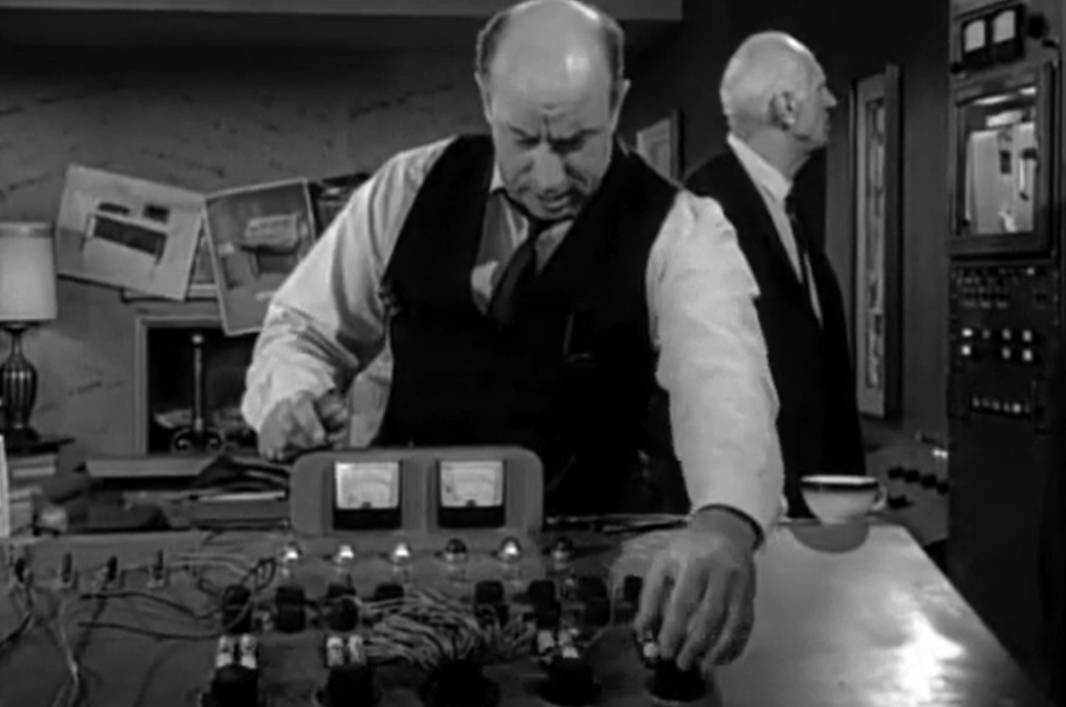
Richard Deacon as Wallace V. Whipple, most famous for “The Dick Van Dyke Show” has control of his late father’s company. Despite the fact that his father doubled his production, the son sees him as a failure. His solution is to go to an almost totally computerized and mechanized factory, eliminating nearly all the workers, even the ones who have been there for years. Paul Newlan as Walter Hanley steals the show as a longtime principled employee with common sense and morals who picks Whipple apart.
I also have to mention Ted de Corsia who plays a frustrated worker named Dickerson who has had enough and takes some revenge against the machine taking his job.
The Brain Center At Whipple’s hits a chord with jobs being taken away from us by technology. We have corporations that only care about the bottom line and less about people who have helped make them. Technology is a great resource when used as a tool and should help employees do their jobs but not take them.
The episode is a little over the top but worth the ride.
IMDB Trivia: Richard Deacon and Rod Serling both grew up in Binghamton, New York and were graduates of Binghamton Central High School. There was a very popular lumber yard on Upper Court Street in Binghamton named “Whipple’s Lumber Yard”, thus the name for Deacon’s character in this episode. Rod Serling would often use names of places in and around Binghamton for names of places and characters in the series.
Select scenes and segments of dialogue from this episode were featured within the context of the ‘Information Age: People, Information and Technology’ exhibit at the Smithsonian Museum of American History. The exhibit ran from May 9, 1990 through September 4, 2006.
The new computer that is installed is the same one used in, “The Old Man and the Cave”.
This show was written by Rod Serling
Rod Serling’s Opening Narration:
These are the players — with or without a scorecard. In one corner a machine; in the other, one Wallace V. Whipple, man. And the game? It happens to be the historical battle between flesh and steel, between the brain of man and the product of man’s brain. We don’t make book on this one and predict no winner….but we can tell you for this particular contest, there is standing room only — in the Twilight Zone.
Summary
The W.V. Whipple Manufacturing Co. introduces a new automated manufacturing machine that will eliminate 61,000 jobs and the company’s president, Wallace V. Whipple, is quite proud of his achievement. Not everyone agrees with him, especially the loyal and longstanding employees who will be out of work. Foreman Vic Dickerson has plans for the machine – plans that land him in the hospital. When the machine is fully operational, it’s Wallace V. Whipple who learns just what it is he has created.
Rod Serling’s Closing Narration:
There are many bromides applicable here: ‘too much of a good thing’, ‘tiger by the tail’, ‘as you sow so shall you reap’. The point is that, too often, Man becomes clever instead of becoming wise; he becomes inventive and not thoughtful; and sometimes, as in the case of Mr. Whipple, he can create himself right out of existence. As in tonight’s tale of oddness and obsolescence, in the Twilight Zone.
CAST
Rod Serling … Host / Narrator – Himself Richard Deacon … Wallace V. Whipple Paul Newlan … Walter Hanley Ted de Corsia … Dickerson Thalmus Rasulala (credited … Jack Crowder) … Technician Shawn Michaels … Bartender Burt Conroy … Watchman Robby the Robot … Himself
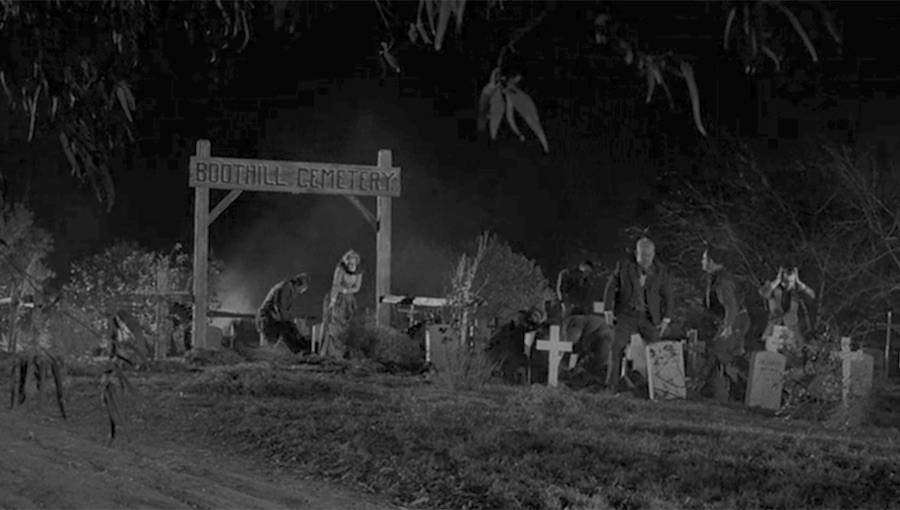
This is an excellent episode and what initially seemed like a straight drama actually had a subtle comedic twist. It says a lot about human nature. This may be a lighter episode but it works on many levels. Top to bottom, the comic casting is impeccable. Not a blight to be found in the cast. John Dehner is marvelously dry as a con man in the Old West and there is a good deal of humor as he goes about his business in the town of Happiness, Arizona. The town’s cemetery contained 128 dead, all but one were victims of violence…and as one drunk put it…that was my dear wife Zelda, rest her soul, a fine, healthy, strapping woman of 247 pounds but not unattractive, mind you.
John Dehner’s character Jared Garrity is going to raise the dead in Happiness Arizona. The townspeople in the saloon claim to miss their loved ones. But, upon rethinking the matter, one by one they realize that their late friends, wives, husbands, and drunkards maybe…just maybe weren’t the lovely people they were fondly remembering. Will Garrity be able to pull this feat off or is he taking the town for a ride?
The Twilight Zone’s 5th season lagged a little in the middle but with three more episodes to go…they finished up quite strong.
From IMDB Trivia: This is based on a supposed true story that happened in Alta, UT in 1873. It was initially told on Death Valley Days: Miracle at Boot Hill (1961).
This show was written by Rod Serling and Mike Korologos
Rod Serling’s Opening Narration:
Introducing Mr. Jared Garrity, a gentleman of commerce, who in the latter half of the nineteenth century plied his trade in the wild and wooly hinterlands of the American West. And Mr. Garrity, if one can believe him, is a resurrecter of the dead – which, on the face of it, certainly sounds like the bull is off the nickel. But to the scoffers amongst you, and you ladies and gentlemen from Missouri, don’t laugh this one off entirely, at least until you’ve seen a sample of Mr. Garrity’s wares, and an example of his services. The place is Happiness, Arizona, the time around 1890. And you and I have just entered a saloon where the bar whiskey is brewed, bottled and delivered from the Twilight Zone.
Summary
In the early 1890s Mr. Garrity arrives in Happiness, Arizona apparently knowing a great deal about some of the people who live there. He knows that Jensen the bartender’s brother died and that Gooberman the town drunk lost his wife. Garrity also reveals that he has a very peculiar gift – he can bring back the dead. When a dog is run down by a wagon in the street he resurrects it without any difficulty. When he offers to do the same for the town’s loved one’s, they realize they would rather he not bring back the dearly departed, something they are quite happy to pay him for. Garrity, a charlatan if ever there was one, is glad to accept their money – though he does seem to leave something behind
Rod Serling’s Closing Narration:
Exit Mr. Garrity, a would-be charlatan, a make-believe con man and a sad misjudger of his own talents. Respectfully submitted from an empty cemetery on a dark hillside that is one of the slopes leading to the Twilight Zone.
CAST
Rod Serling … Host / Narrator – Himself John Dehner … Jared Garrity J. Pat O’Malley: Mr. Gooberman Stanley Adams … Jensen John Mitchum … Ace Percy Helton … Lapham Norman Leavitt … Sheriff Gilchrist Edgar Dearing … First Resurrected Man Kate Murtagh … Zelda Gooberman Patrick O’Moore … Man John Cliff … Lightning Peterson Robert McCord … Townsman In Black Hat Cosmo Sardo … Resurrected Man
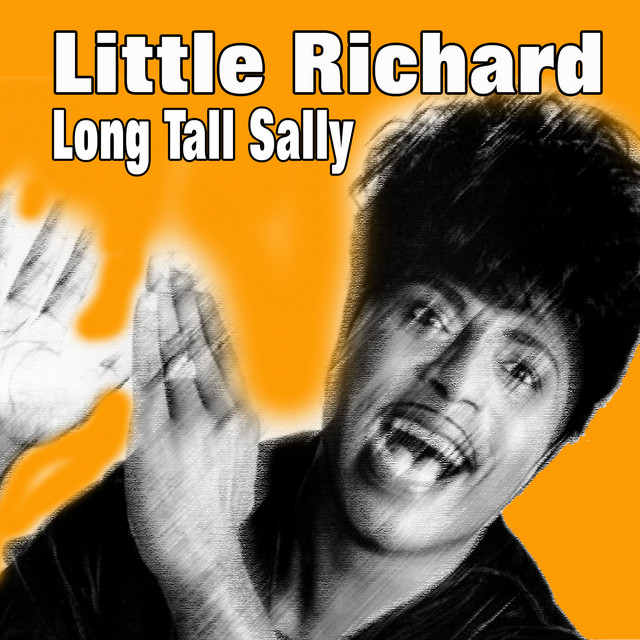
I first heard this through the Beatles, but nobody beats Little Richard (Richard Penniman) for this kind of raving song. The Beatles played on the same bill with Richard in Hamburg and Liverpool before they were nationally known. They got to know Billy Preston because he was Richard’s keyboard player.
My dad told me about Little Richard before I ever heard him. He said he had the largest voice he ever heard. He talked about a song called Long Tall Sally. I first heard it…it blew me away. Such a raw emotional power in that voice. He would take us to the edge of the cliff and then at the last-minute pull us back.
So was there a real Long Tall Sally? Yes, there was but she was not a cross-dresser as sometimes reported. Little Richard has said that Sally was a friend of the family who was always drinking whiskey…she would claim to have a cold and would drink hot toddies all day.
He described her as tall and not attractive, with just two teeth and cockeyed. She was having an affair with John, who was married to Mary, who they called “Short Fat Fanny.” John and Mary would get in fights on the weekends, and when he saw her coming, he would duck back into a little alley to avoid her. His voice was one of a kind…and I mean one of a kind. He could sing anything. Richard wrote this while working as a dishwasher at a Greyhound bus station in Macon, Georgia. He also wrote Tutti Frutti and Good Golly Miss Molly while working there. He had help with the song…Enotris Johnson and Robert Blackwell are also listed as the writers.
Long Tall Sally peaked at #6 in the Hot 100 and #1 in the R&B Charts in 1956.
Richard’s producer, Bumps Blackwell, had him record the vocal exceptionally fast in an effort to thwart Pat Boone. Boone’s version of “Tutti Frutti” sold better than Little Richard’s, so Blackwell tried to make it very difficult for Boone to copy. He had Richard work on the line “duck back down the alley” over and over until he could sing it very fast. He figured Boone could never match Richard’s vocal dexterity.
As much as I don’t like Pat Boone’s covers of Little Richards songs…they did help Richard get royalties as the writer.
Long Tall Sally
Gonna tell Aunt Mary ’bout Uncle John He claim he has the misery but he’s havin’ a lot of fun Oh baby, yeah baby, woo Havin’ me some fun tonight, yeah
Well long, tall Sally She’s built for speed, she got Everything that Uncle John need, oh baby Yeah baby, woo baby Havin’ me some fun tonight, yeah
Well, I saw Uncle John with long tall Sally He saw Aunt Mary comin’ and he ducked back in the alley oh baby Yeah baby, woo baby Havin’ me some fun tonight, yeah, ow
Well, long, tall Sally She’s built for speed, she got Everything that Uncle John need, oh baby Yeah baby, woo baby Havin’ me some fun tonight, yeah
Well, I saw Uncle John with bald-head Sally He saw Aunt Mary comin’ and he ducked back in the alley, oh, baby Yeah baby, woo, baby Havin’ me some fun tonight, yeah
We gonna have some fun tonight We gonna have some fun tonight, woo Have some fun tonight, everything’s all right Have some fun, have me some fun tonight












 PowerPop... An Eclectic Collection of Pop Culture