An awesome blues song that shows what Boz Scaggs was all about before the hits came. He had been playing with Steve Miller and in 1969 he made this self-titled album Boz Scaggs. He spent some time down south getting this together. He also made a self-titled album (Boz) in 1967 and released it in Europe for the record.
Jann Wenner, the founder of Rolling Stone magazine, was producing Boz’s first U.S. solo album, and he took him to Jerry Wexler at Atlantic Records, who suggested recording in the South. They had a choice of studios…Stax in Memphis, Phil Walden’s studio in Macon, or Muscle Shoals Sound, a new studio founded by the rhythm section from FAME Studios. Boz and Jann listened to everything that was coming out of those studios and they soon knew they wanted the Muscle Shoals Rhythm Section, and they wanted Duane Allman.
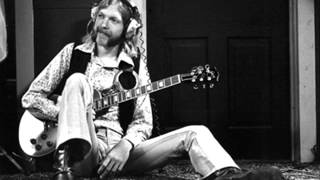
Boz didn’t know a lot about Duane, but he got a good sense of his stature by spending that week with him at Muscle Shoals Sound. Duane’s work with Wilson Pickett and Aretha Franklin had preceded him, but Boz was most struck by who Duane was to the players at the studio. They lit up when Duane walked in the room…their respect for him was clear.
Boz Scaggs: “Duane had a profound effect on that album. One of the real revelations to me was Duane’s character, seeing him in the South hanging out with those guys. In his appearance, he looked like he was from New York or L.A., with long hair. It was a brave statement in itself in redneck America. You could get in trouble just driving around in his car. It was an occasion and a homecoming. They held him in very high esteem. He was the dude. He was the natural leader, and he made everyone laugh. It was a side I didn’t see in Macon, where he was much more serious and focused.”
Duane set up his amp in the bathroom at the studio on this recording. He liked to do that so his guitar wouldn’t bleed through on the other instruments. This song has some of Allman’s best playing.
Scaggs and his girlfriend Carmella settled into Macon Georgia and were part of the Allman Brothers Band extended family for a time, enjoying the musical energy and experience in Macon. By this time Macon was host to a lot of different musicians. Boz went fishing and played poker with the Allmans late into the night, drinking beer, and telling stories.
This song is usually listed in the top 5 of Boz Scaggs’s songs. It is not as well known but a great blues track. The track was written by Fenton Robinson.
Boz Scaggs: “The first time we did it, it lasted twenty-five minutes and everyone thought it was such a gas, they trouped back in and did it again and we ended up with about forty minutes of ‘Loan Me a Dime’ and we wanted to use at least twenty minutes of it, but we had to use the shorter version, but that music is in the can somewhere in Muscle Shoals, and Duane was really rockin’ out.”
Loan Me A Dime
Somebody loan me a dime I need to call my old time used to be Somebody loan me a dime mmm I need to call my old time that used to be
Little girl’s been gone so long You know it’s worrying me Hey it’s worrying worrying me
I know she’s a good girl But at that time I just didn’t understand I know she’s a good girl But at that time I just didn’t understand Oh no I didn’t
Somebody loan me a dime You know I need.. I need a helping hand
Oh… she’s a good girl But at that time I just didn’t understand Ooooh I know she’s a good girl But at that time I just could not understand Oh no
Somebody better loan me that dime To ease my worried worried mind.. oh Now I cry.. I just cry Just like a baby all night long.. oooh You know I cry I just cry Just like a baby all night long.. oooh Somebody better loan me that dime I need my baby I need my baby here at home.. oooh YES
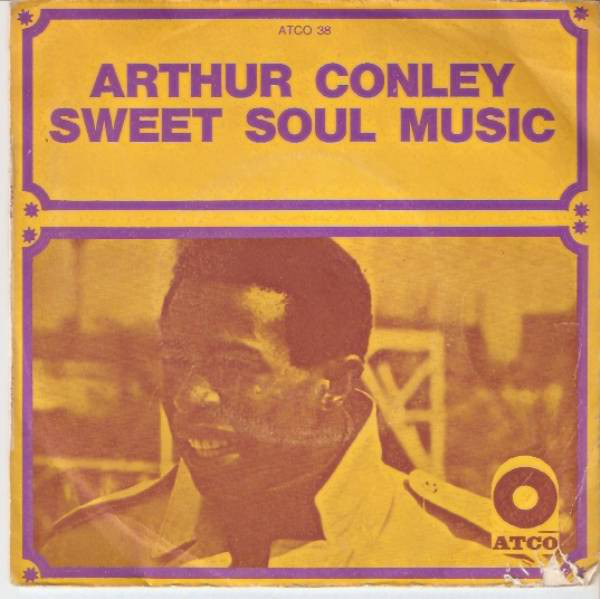
When I heard Conley shout out “Do you like good music” I knew this song was for me. Sweet Soul Music makes me mourn where digital recording has gone now. Such an in-your-face narrow tight song with a perfect sound.
Redding discovered Arthur Conley, a singer who sounded remarkably like himself. Redding became Conley’s mentor… the second release on Jotis Records was Conley’s “I’m a Lonely Stranger,” which Redding produced. It was not too successful and soon the record company folded.
Redding believed in Conley’s talent. In January 1967 Redding and his managers, Phil Walden (future ABB manager) and his brother Alan Walden (future Lynyrd Skynyrd manager) brought Conley to producer Rick Hall’s FAME Studios in Muscle Shoals, Alabama. Conley recorded two singles at FAME Studios but they were not successful and Hall did not want to work with Conley anymore.
By this time Otis was fed up and took Conley himself to FAME and used his own band. With Jimmy Johnson engineering they recorded Sweet Soul Music. It was a million-selling single. It peaked at #2 on the Billboard 100, #2 in the R&B Charts, and #7 in the UK in 1967.
It was written by Conley and Otis Redding. It was based on “Yeah Man” by Sam Cooke and was a tribute to soul singers. The songs mentioned in this song are “Going To A Go-Go,” “Love’s a Hurtin’ Thing,” “Hold On I’m Coming,” “Mustang Sally” and “Fa-Fa-Fa-Fa-Fa (Sad Song).” The artists mentioned are Otis, Wilson Pickett, Sam and Dave, James Brown, and Lou Rawls.
The opening horn intro sounds very similar to Elmer Bernstein’s score for The Magnificent Seven, popularly known as the Marlboro cigarette ad theme.
Conley could not duplicate the success he had with this record. He settled in the Netherlands and in 1980 legally changed his name to Lee Roberts — his middle name and his mother’s maiden name. Conley promoted new bands through his Art-Con Productions company and continued to record and perform, fronting Lee Roberts and the Sweaters.
Sweet Soul Music
Do you like good music That sweet soul music Just as long as it’s swingin’ Oh yeah oh yeah
Out here on the floor now We’re going to a go go Ah dancin’ to the music Oh yeah oh yeah
Spotlight on Lou Rawls y’all Ah don’t he look tall y’all Singin’ loves a hurtin’ thing now Oh yeah oh yeah
Spotlight on Sam and Dave now Ah don’t they look boss y’all Singin’ hold on I’m comin’ Oh yeah oh yeah
Spot light on Wilson Pickett That wicked picked Pickett Singing Mustang Sally Oh yeah oh yeah
Spotlight on Otis Redding now Singing fa fa fa fa fa fa fa fa Fa fa fa fa fa fa fa fa Oh yeah oh yeah
Spotlight on James Brown now He’s the king of them all yeah He’s the king of them all y’all Oh yeah oh yeah
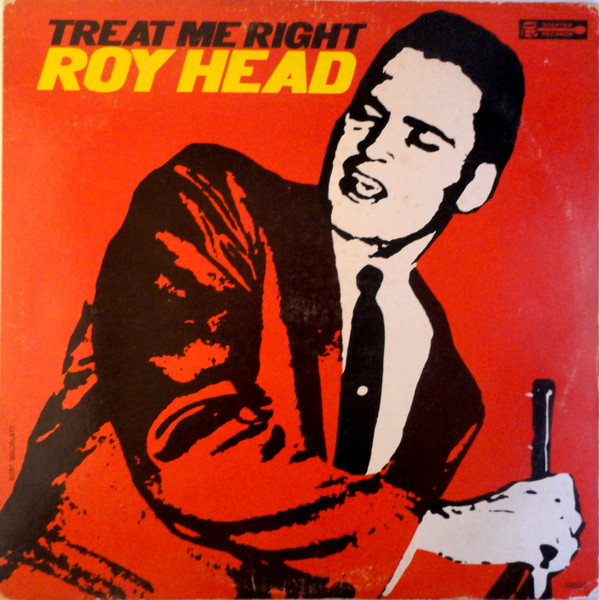
During my recent travels, my son had this song on his playlist. I had forgotten about it for the longest. Treat Her Right has had a resurgence in popularity because of the movie Once Upon A Time in Hollywood. There is a groove to this that is irresistible. Tarantino, much like Scorsese, knows how to pick the right songs for the right scenes.
This song has that sixties cool that others didn’t have. It’s that R&B groove that separated it from others. I’m not a guy that dances but if I was…this would be high on my list.
The song was released in 1965 and it peaked at #2 on the Billboard 100, #8 in Canada, and #2 on the Billboard R&B Charts. Roy would have 3 more top 40 songs but none that reached the top 20 on the Billboard 100. The song was written by Roy Head and Gene Kurtz
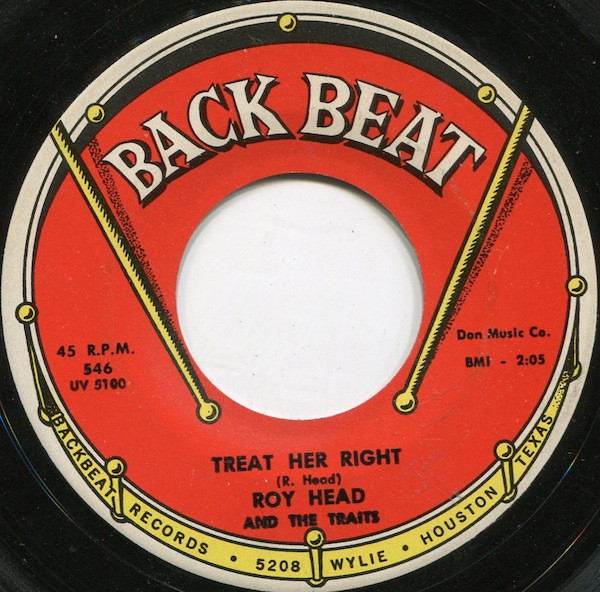
Roy Head recorded for the small Back Beat record label. This was one of the few big hits it had. Back Beat records started in 1957 and ended in 1973 when ABC bought its parent label and discontinued Back Beat. Carl Carlington was about to release the hit Everlasting Love on the label but ABC decided just to issue it on their own label.
In 1974 Roy started to record country songs and released over 24 singles that charted in the top 100 but were not any major hits in the US. He did have two top 10 Canadian Country hits.
It’s been covered by Jimmy Page, Bruce Springsteen, Jerry Lee Lewis, Bon Jovi, Chris Farlowe (under the title “Treat Her Good”), and both Mae West and Barbara Mandrell under the title of “Treat Him Right”. Even Bob Dylan, Sammy Davis Jr., and Tom Jones had covered it live.
Head died of a heart attack on September 21, 2020, at the age of 79. His son Sundance Head has had some success in Country Music with 2 top twenty hits in 2016.
Bruce Springsteen:The song has magic in it…magic in it I tell you
Treat Her Right
I wanna tell you a story
Every man oughta know
If you want a little loving
You gotta start real slow
She’s gonna love you tonight now
If you just treat her right
Oh, squeeze her real gentle
Gotta make her feel good
Gotta tell her that you love her
Like you know you should
And if you don’t treat her right
She won’t love you tonight
Now if you practice my method
Oh, hard as you can
You’re gonna get a reputation
As a lovin’ man
And you’ll be glad every night
Now that you treated her right
If you practice my method
I said as hard as you can
You’re gonna get a reputation
As a lovin’ man
And you’ll be glad every night
That you treated her right, hit me back
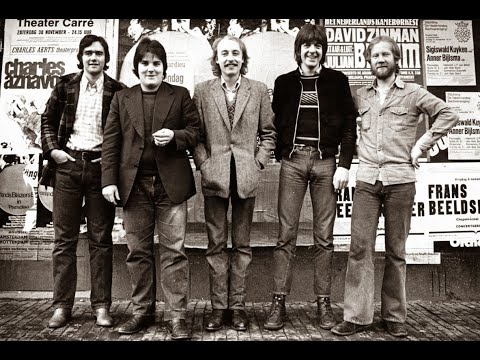
I think it’s fair to say most will know this song by Elvis Costello but the band Brinsley Schwarz did the 1974 original version which I like a lot…in fact, I favor this version. I’m a huge Nick Lowe fan so that helps. The song was written by Nick Lowe and originally recorded by his band Brinsley Schwarz in 1974. The band was named after their guitar player.
The song has a little of The Who mixed with Beach Boys-flavored harmonies. A wonderful mix of power pop. Many artists have covered this like Bruce Springsteen, Susannah Hoffs and Matthew Sweet, Chris Cornell, Midnight Oil, and many more.
Brinsley Schwarz never had a big hit but they did influence artists like Elvis Costello and The Clash. They were known as a pub rock band and were active between 1969 through 1975. The band released 6 albums in that time. Their members included Nick Lowe, Bob Andrews, Brinsley Schwarz, and Billy Rankin…they were later augmented by Ian Gomm on guitar and vocals.
One thing that did not help their cause was an incident in the US. They had an ambitious management company named Famepushers who hit on the idea of booking the band to play a high-profile gig in New York in April 1970. They were going to be the opening band for Van Morrison at the Fillmore East. The band had planned to arrive in the US a few days before the gig to rehearse for the show. Visa delays prevented this and they entered the US via Canada, arriving a few hours before their performance and having to perform with borrowed equipment they were not familiar with. The journalists were loaded onto a plane but were also delayed. They had used the downtime to take full advantage of the free bar laid on for them and, therefore, arrived drunk or hung over.
Famepushers also sent 22 limos to the Fillmore to make Brinsley Schwarz look important…they thought people would see this and ask…who is this? The limos didn’t get there until after dark so they were never seen by many.
The bad press kept rolling following the disastrous concert. The band received a flood of negative reviews for their first album, Brinsley Schwarz, which was released shortly after their return to the United Kingdom. The incident became known as the Brinsley Schwarz Hype
Dave Robinson was one of the founders of Famepushers. Robinson was the man who would go on to form Stiff Records with Jake Riviera, who would, in time, become Nick Lowe’s manager.
It’s a crying shame they weren’t heard more…they had some really good music.
Nick Lowe:“I wrote the song in 1973, and the hippie thing was going out, and everyone was starting to take harder drugs and rediscover drink. Alcohol was coming back, and everyone sort of slipped out of the hippie dream and into a more cynical and more unpleasant frame of mind. And this song was supposed to be an old hippie, laughed at by the new thinking, saying to these new smarty-pants types, ‘Look, you think you got it all going on. You can laugh at me, but all I’m saying is, ‘What’s so funny about peace, love, and understanding?’ And that was the idea of the song. But I think as I started writing it, something told me it was too good idea to make it into a joke. It was originally supposed to be a joke song, but something told me there was a little grain of wisdom in this thing, and not to mess it up.”
(What’s So Funny ‘Bout) Peace, Love, and Understanding
As I walk
This wicked world
Searchin’ for light in the darkness of insanity
Oh yeah
I ask myself:
Is all hope lost?
Is there only pain, hatred and misery?
Oh yeah
And each time I feel like this inside
There’s one thing I wanna know:
Oh, what’s so funny ’bout peace, love and understanding?
Oh, what’s so funny ’bout peace, love and understanding?
And as I walk on
Through troubled times
My spirit gets so downhearted
Sometimes, sometimes
So where are the strong?
Who are the trusted?
And where is the harmony?
Sweet harmony
‘Cause each time I feel it slippin’ away
It just makes me wanna cry
So, what’s so funny ’bout peace, love and understanding?
Oh, what’s so funny ’bout peace and love?
Yeah yeah yeah yeah
“We must have peace
More peace and love
It’s just for the children
Of a new generation”
So where are the strong?
And who are the trusted?
And where is the harmony?
Sweet harmony
‘Cause each time I feel it slippin’ away
It just makes me wanna cry
So, what’s so funny ’bout peace, love and understanding?
Oh, what’s so funny ’bout peace, love and understanding?
Oh, what’s so funny ’bout a little peace and love?
Yeah yeah yeah yeah
I love the horns in this song. It wasn’t George Harrison’s best on the album…that would be While My Guitar Gently Weeps but this one is fun.
George was good friends with Eric Clapton and was watching his friend with toothaches and getting dental work. Clapton’s weakness was candy and he would eat all of it until it was gone.
Harrison got the lyrics for this from the inside lid of a box of chocolates. Montelimar, Ginger Sling, Cream Tangerine, and Coffee Dessert were names of candies in the Mackintosh “Good News” assortment. The names “Cherry Creme” and “Coconut Fudge” were invented by George, however, to round out the verses.
Press agent Derek Taylor came up with the line ‘You know that what you eat you are‘.
Derek Taylor: “George said, ‘We need a bit here, da da, da da da da, da da,’ and I thought again of my good friend, Alan Pariser. He had done a film called ‘You Are What You Eat,’ which was a very pippy thing; ‘Don’t eat meat, man, or you’ll be filled with the adrenaline of frightened animals.’ So I said to George, ‘You know that what you eat you are.’
The MacIntosh’s Good News box where George got some of the lyrics.
Harrison wrote the line “We all know Obla-Di-Bla-Da” as an in-joke with the band. McCartney had pushed Obla-Di-Bla-Da so much that the band played endless versions of it and were not happy about it.
The White Album was released in 1968 and peaked at #1 in the Billboard Album Chart, #1 in Canada, #1 in the UK, and #1 about everywhere else…and it would be #1 as well on my list.
The White Album is as diverse as you can get… Pop, Rock, Country, Folk, Reggae, Avant-Garde, Blues, Hard Rock, and some 20’s British Music Hall thrown in the mix. It has plenty of songs that you have heard of and many that the masses have not heard. The Beatles more than many bands could bend to a style of music and play that style well.
Some critics said they should have taken the best of the two albums and slimmed it down to one. I understand that argument but as a Beatle fan…Nahhhhh. It’s the Beatles White Album!
George Harrison: “At that time he had a lot of cavities in his teeth and needed dental work. He always had a toothache but he ate a lot of chocolates – he couldn’t resist them, and once he saw a box he had to eat them all. He was over at my house, and I had a box of ‘Good News’ chocolates on the table and wrote the song from the names inside the lid: ‘Creme Tangerine, Montelimart’…”
“He’d got this real sweet tooth and he had just had his mouth worked on. His dentist said he was through with candy. So, as a tribute, I wrote ‘You’ll have to have them all pulled out, after the Savoy Truffle.’ The truffle was some kind of sweet, just like all the rest, ‘crème tangerine,’ ‘ginger sling,’ just candy, to tease Eric.”
Savoy Truffle
Creme tangerine and montelimar A ginger sling with a pineapple heart A coffee dessert, yes you know it’s good news But you’ll have to have them all pulled out After the Savoy truffle
Cool cherry cream, a nice apple tart I feel your taste all the time we’re apart Coconut fudge, really blows down those blues But you’ll have to have them all pulled out After the Savoy truffle
You might not feel it now But when the pain cuts through You’re going to know, and how The sweat is going to fill your head When it becomes too much You shout aloud
You’ll have to have them all pulled out After the Savoy truffle
You know that what you eat you are, But what is sweet now, turns so sour We all know Obla-Di-Bla-Da But can you show me, where you are?
Creme tangerine and montelimar A ginger sling with a pineapple heart A coffee dessert, yes you know it’s good news But you’ll have to have them all pulled out After the Savoy truffle Yes you’ll have to have them all pulled out After the Savoy truffle
ELVIS….otherwise known as The Big E, King Of Rock ’n‘ Roll, The Memphis Flash, The Jumpsuited One, The Vibrating Valentino, Ol ’Snake Hips, The Tennessee Troubadour, Mr. Sideburns, The Hillbilly Cat, The Cool Cat, or just EP. I think The Vibrating Valentino wins in the nickname department.
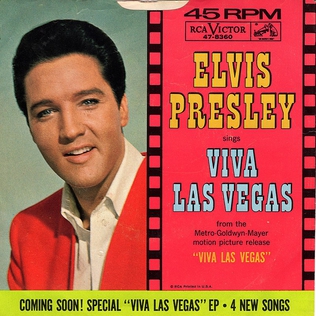
Viva Las Vegas was written by Doc Pomus and Mort Shuman as the title song for the film of the same name starring Elvis Presley…. better-known AS…no I won’t go through that again. Pomus and Shuman wrote several other songs for Presley as well. Among them: “Little Sister,” “Suspicion,” and “Surrender.”
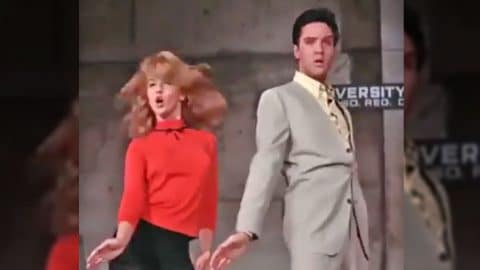
In the movie, Elvis plays a race car driver who has to wait tables at a hotel in order to pay off a debt (no doubt to Colonel Tom Parker!). He performs this song at the hotel’s talent competition accompanied by various Vegas showgirls. Viva Las Vegas was the most successful of the 31 films Elvis starred in, returning more than $5 million to MGM Studios on an investment of less than $1 million.
I do remember this movie on TV. Why do I remember this Elvis movie more than others? No other than the co-star Ann-Margret.
The song peaked at #29 in the Billboard 100, #14 in Canada, #4 in New Zealand, and #17 in the UK in 1964. It did re-chart at #15 in the UK in 2007.
Billy Strange played guitar on this track. According to Strange’s son Jerry, musician’s royalties for the song came in for years thanks to slot machines that play the song.
The song was revived by ZZ Top, who took it to #10 in the UK, #16 in the Billboard Rock Charts, #34 in Canada, and #17 in New Zealand in 1992.
Everything that is famous about Las Vegas comes up in the song…such as roulette, neon, hot dice, pretty women, blackjack, one-armed bandits, and bright lights. The song has served as an advertisement for the city although having a small consolation for losing everything…If I wind up broke up well
I’ll always remember that I had a swingin’ time… Oh OK! A swinging time is worth it!
The Dead Kennedys also did a cover of the song…in their own unique way.
Viva Las Vegas
Bright light city gonna set my soul
Gonna set my soul on fire
Got a whole lot of money that’s ready to burn,
So get those stakes up higher
There’s a thousand pretty women waitin’ out there
And they’re all livin’ the devil may care
And I’m just the devil with love to spare, so
Viva Las Vegas, Viva Las Vegas
How I wish that there were more
Than the twenty-four hours in the day
Even if there were forty more
I wouldn’t sleep a minute away
Oh, there’s black jack and poker and the roulette wheel
A fortune won and lost on ev’ry deal
All you need’s a strong heart and a nerve of steel
Viva Las Vegas, Viva Las Vegas
Viva Las Vegas with you neon flashin’
And your one arm bandits crashin’
All those hopes down the drain
Viva Las Vegas turnin’ day into nighttime
Turnin’ night into daytime
If you see it once
You’ll never be the same again
I’m gonna keep on the run
I’m gonna have me some fun
If it costs me my very last dime
If I wind up broke up well
I’ll always remember that I had a swingin’ time
I’m gonna give it ev’rything I’ve got
Lady luck please let the dice stay hot
Let me shoot a seven with ev’ry shot, ah
Viva Las Vegas, Viva Las Vegas,
Viva Las Vegas, viva, viva Las Vegas
What better way to celebrate July 4th than to play a Chuck Berry song. It’s nice to be back to music. I’m traveling today so I may not be able to comment until later on.
Chuck’s guitar playing got most of the publicity but his storytelling of his time is what I like best. Was it poetry? I’m not qualified to answer that but his words flowed like water and he puts you in the lunch room, classroom, dance hall, and riding in a coffee color Cadillac.
Music critic and opera composer Gregory Sandow calls him “a poet of the practical life.” John Lennon reports that Berry’s lyrics influenced his own and calls him “the greatest rock and roll poet.” Keith Richards invokes the tradition of troubadour to emphasize the poetic qualities of Berry’s lyrics. In the end, I don’t guess it matters but what we get are self-contained stories that live on today.
This was a double A-sided single…the B side was Memphis Tennessee. The song peaked at #37 on the Billboard 100 and #16 in the Billboard R&B Charts.
This song has the same sound as Roll Over Beethoven but I can’t blame Chuck for sounding like Chuck. If he could have sued everyone that ripped off his riffs…he would have lived in a courtroom.
When Berry wrote this… he was returning to the United States following a trip to Australia and witness the living standards of Australian Aborigines. This song inspired Paul McCartney to put a twist on it and he wrote Back In The U.S.S.R. on the White Album.
Linda Ronstadt covered this in 1978. Her version went peaked at #16 on the Billboard 100, #8 in Canada, #24 in New Zealand.
Chuck and Linda played the song in the highly entertaining Hail! Hail! Rock and Roll and Linda’s voice is just incredible.
Back In The USA
Oh well, oh well, I feel so good today We touched ground on an international runway Jet propelled back home, from over the seas to the U.S.A.
New York, Los Angeles, oh, how I yearned for you Detroit, Chicago, Chattanooga, Baton Rouge Let alone just to be at my home back in ol’ St. Lou
Did I miss the skyscrapers, did I miss the long freeway? From the coast of California to the shores of Delaware Bay You can bet your life I did, till I got back to the U.S.A.
Looking hard for a drive in, searching for a corner cafe Where hamburgers sizzle on an open grill night and day Yeah, and a jukebox jumping with records like in the U.S.A.
Well, I’m so glad I’m livin’ in the U.S.A. Yes, I’m so glad I’m livin’ in the U.S.A. Anything you want, we got right here in the U.S.A.
Welcome to the Hanspostcard TV Draft. I hope you will enjoy it! Today’s post was written by Keith at https://nostalgicitalian.com/
We have reached the final round of the Hanspostcard TV Show Draft. I want to take a moment and thank Max from the Power Pop Blog for taking up the reigns and helping us continue this round in Hans’ absence. It truly has been a fun draft!
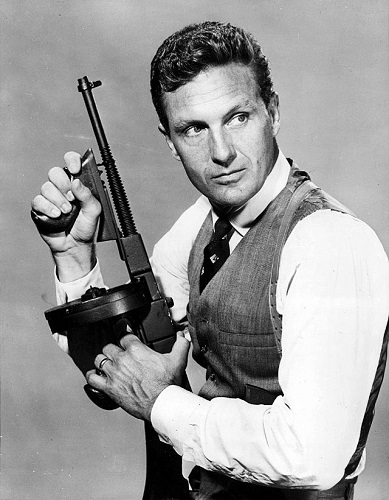
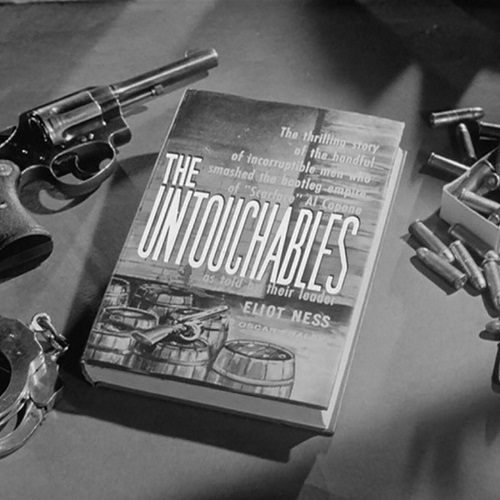
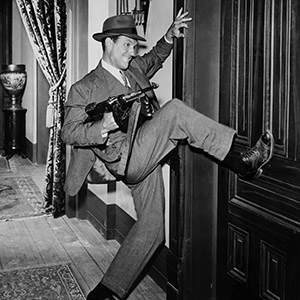
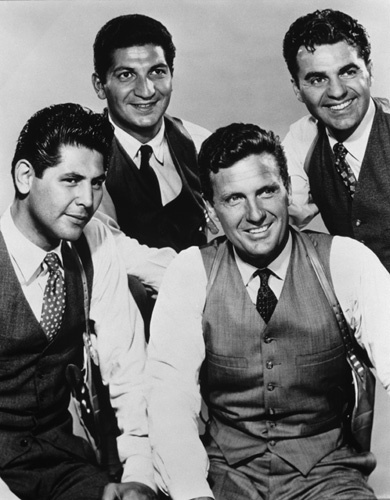
For my final pick, I have gone back to another classic – The Untouchables. The show ran from 1959 to 1963 and starred the great Robert Stack as Eliot Ness. It is hard to imagine anyone but Robert Stack in the role of Ness, but believe it or not, Desi Arnaz had originally offered the role to actor Van Johnson. Supposedly, he wanted double what they were offering to pay for the role, and it ultimately went to Stack.
When asked about the character some years later, Stack said, “Ness was a precursor of Dirty Harry. He was a hero, a vigilante in a time when breaking the law meant nothing because there was no law because Capone owned Chicago, he owned the police force.”
The show was based on the book of the same name written by Eliot Ness and Oscar Fraley. Brian De Palma would use the book as the basis for his 1987 film of the same name.
According to Wikipedia:
The series originally focused on the efforts of a real-life squad of Prohibition agents employed by the US Department of Justice and led by Eliot Ness (Stack) that helped bring down the bootleg empire of “Scarface” Al Capone, as described in Ness’s bestselling 1957 memoir. This squad was nicknamed “The Untouchables” because of its courage and honesty; squad members could not be bribed or intimidated by the mob. Eliot Ness himself had died suddenly in May 1957, shortly before his memoir and the subsequent TV adaptation were to bring him fame beyond any he experienced in his lifetime.
The pilot for the series, a two-part episode entitled “The Untouchables,” originally aired on CBS’s Westinghouse Desilu Placyhouse (and was introduced by Desi Arnaz) on April 20 and 27, 1959. Later re-titled “The Scarface Mob”, these episodes, which featured Neville Brand as Al Capone, were the only episodes in the series to be more-or-less directly based on Ness’s memoir, and ended with the conviction and imprisonment of Capone. CBS, which had broadcast most of Desilu’s television output since 1951 beginning with I Love Lucy, was offered the new series following the success of the pilot film. It was rejected it on the advice of network vice president Hubbell Robinson. ABC agreed to air the series, and The Untouchables premiered on October 15, 1959. In the pilot movie, the mobsters generally spoke with unrealistic pseudo-Italian accents, but this idiosyncratic pronunciation was dropped when the series debuted.
The weekly series first dramatized a power struggle to establish a new boss in Capone’s absence (for the purpose of the TV series, the new boss was Frank Nitti, although this was, as usual for the series, contrary to fact). As the series continued, there developed a highly fictionalized portrayal of Ness and his crew as all-purpose, multi-agency crime fighters who went up against an array of 1930s-era gangsters and villains, including Ma Barker, Dutch Schultz, Bugs Moran, Lucky Luciano,and in one episode, Nazi agents. On many occasions during the series run, Ness would blatantly violate suspects’ Fourth Amendment rights with no legal ramifications.
The terse narration by gossip columnist Walter Winchell, in his distinctive New York accent, was a stylistic hallmark of the series, along with its ominous theme music by Nelson Riddle and its shadowy black-and-white photography, which was influenced by film noir.
The series produced 118 episodes which ran 50 minutes each. Though the book chronicled the experiences of Ness and his team against Capone, and in reality the Untouchables disbanded soon after Capone’s conviction. The series continued after the pilot and book ended, depicting the fictitious further exploits of the Untouchables against many, often real life, criminals over a span of time ranging from 1929 to 1935.
The show came with some controversy. Italian-American groups protested over what they felt was an unfair presentation of their people as Mafia-types. “We are plagued with lawsuits after certain shows” one of the show’s producers Josef Shaftel explained, noting that the series was “heavily insured against libel.” With good reason – the first lawsuit against the show was instigated by Al Capone’s angry widow. She didn’t like the way her deceased husband was made into a running villain on the show and wanted a million dollars for unfair use of his image. (She lost.)
The FBI and J. Edgar Hoover were ticked off too. They were the ones who collared the famous names that Ness was supposedly busting each week on TV and they rightfully wanted credit for it. The second episode of the series, for example, depicted Ness and his crew involved in the capture of the Ma Barker gang, an incident in which the real-life Ness played no part. The producers agreed to insert a spoken disclaimer on future broadcasts of the episode stating that the FBI had primary responsibility for the Barker case. Even the Bureau of Prisons took offense, complaining that the show made their treatment of Al Capone look soft.
The show itself was considered one of the most violent television shows of its time. Of course, by today’s standards it’s not that bad, but it was violent enough at the time to spark protests from parents who were worried about their children seeing this violence.
My Thoughts
This is one of those shows that I just love! Robert Stack’s delivery of almost every line as Ness is perfect. He won an Emmy in 1960 for Best Actor in a Dramatic Series for his portrayal of Ness.
Despite the fact that many of the stories are fictionalized to work the Untouchables into them, they are great! The show really was a forerunner to shows like The FBI, Crime Story, and even Hawaii 5-0. I love the film noir feel of it. Every episode plays like a good 50 minute movie.
The Lebanon Pennsylvania Daily News said of The Untouchables: “Between the hard-nosed approach, sharp dialogue, and a commendably crisp pace (something rare in dramatic TV at the time), this series is one of the few that remains fresh and vibrant. Only the monochrome presentation betrays its age. The Untouchables is one of the few Golden Age TV shows that deserves being called a classic.” It really does hold up well.
As I have mentioned before, one of the things I love about these old shows is seeing big stars (who are not quite yet stars) show up. In regular roles throughout the series you could see Raymond Bailey (Mr. Drysdale on the Beverly Hillbillies), Barbara Stanwyck, Barbara Nichols, Ed Asner (Lou Grant), Harry Morgan (Col. Potter on MASH), and Henry Silva.
The list of guest star appearances is long and amazing. They include: Jack Elam, Paul Frees, Jim Backus, Sam Jaffe, Martin Balsam, John Dehner, William Bendix, Whitt Bissell, Charles Bronson, James Caan, James Coburn, Mike Conners, Robert Duvall, Peter Falk, Norman Fell, Alan Hale Jr., Brian Keith, Jack Klugman, Cloris Leachman, Jack Lord, Lee Marvin, Telly Savalas, Elizabeth Montgomery, Leonard Nimoy, Robert Redford, Ricardo Montalban, Rip Torn, Jack Warden, Dick York, Cliff Robertson and so many more!
You know, they play reruns of Law and Order on TV all the time. Many of the shows I have seen numerous times. I know what’s going to happen, yet I still watch (a lot like my previous picks – Perry Mason and Columbo). The Untouchables is a show that could very easily be rerun like a Law and Order. It is that good.
I love Walter Winchell’s narration
And I love the theme song!
It has been so much fun writing on some of my favorite shows. It’s been just as fun to read about the shows picked by other members of the TV Show Draft. I hope you have enjoyed my picks…
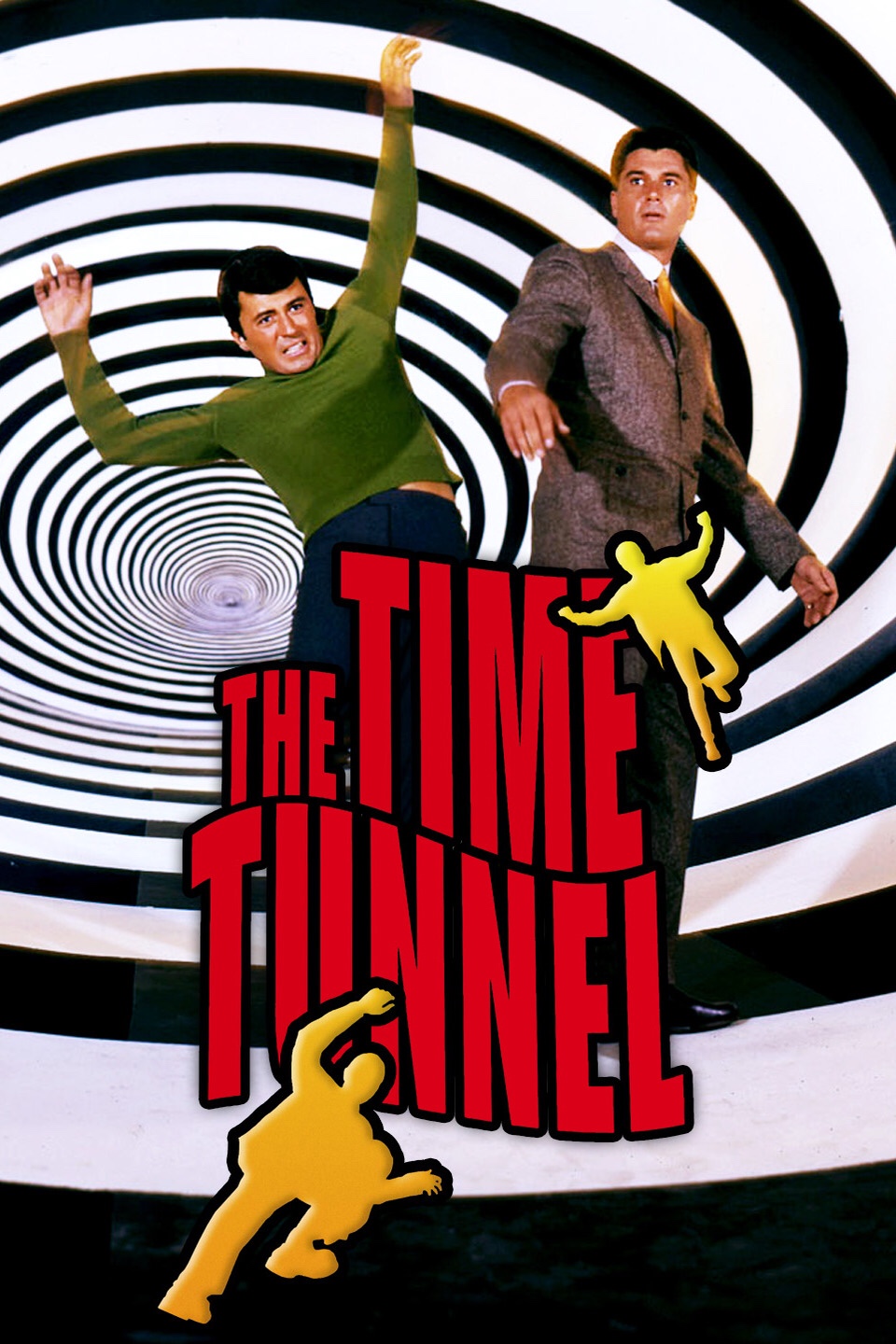
For my final pick in these ten rounds of fave TV shows, I gave in to my childhood memories and selected The Time Tunnel, a show that had me spellbound as a ten-year old during the 30 episodes of its single season 1966-67 run. After seeing the 1960 film version of H.G. Wells’ The Time Machine on television, I became fascinated with the concept of time travel which made The Time Tunnel the perfect show for me.
The Time Tunnel was the product of the legendary Irwin Allen who had previously produced and directed two other highly acclaimed TV series: Voyage to the Bottom of the Sea and Lost in Space. Allen, who would also go on to produce two film blockbusters with The Poseidon Adventure (1972) and The Towering Inferno (1974), cited The Time Tunnel as his favorite television production even though the previous two were deemed more successful.
The sci-fi storyline deals with the U.S. Government’s creation of the technology to allow a person to travel through time. The series follows two of the lead scientists, played by actors James Darren (then still a young handsome heartthrob) and Robert Colbert. After an unplanned initial time transport, the two are stuck travelling back and forth in time while the team at “Operation Tic Tok” are able to hear and view them through the scientific wonder of the Tunnel that sent them on their journey. The team struggles to bring them back, and instead, somehow manage to grab them at the end of each episode, sending them somewhere else in time, just in time, to thwart some kind of danger they got themselves into.
Many years later, I did a revisit to The Time Tunnel via DVD and was surprised how well it held up for a show produced in the late 60s. And, after a recent rewatch of the debut episode, I found the special effects rather impressive for those days, including the recurring graphic segment employed when they were spinning through time. However, I did feel that the show was full of some unnecessary exaggerated nonsense. Would it at all be logical that this project would be so massive to necessitate an underground desert complex that went 800 stories underground and employed a team of 12,000 with Fort Knox level security?
Then there was the overuse of the Hollywood device of coincidence. How could it be that their uncontrolled random time travels would always land them at famous historical event at such precise locations and moments? For example, landing on the deck of the Titanic during its maiden voyage or inside a rocket being launched into space during its final countdown? Wouldn’t they have had as much of a chance to wind up in a bathroom in the Bronx?
Nonetheless, seeing them interact with history obviously made for great suspenseful plots although there was no respect for time travel’s cardinal rule of not altering history and thereby changing the timeline for the future. Allen also made for better television by economically embellishing the historical references with existing footage from feature films. Another interesting aside was that one of the technicians was played by actress Lee Meriwether, the winner of the 1955 Miss America Pageant.
As I young child, I was fascinated with The Time Tunnel and couldn’t wait to see where they would wind up going in next week’s episode. Unfortunately, the one place these two time travelers never made it to was back home since despite the show’s success, it’s future did not include a second season.
The Avengers was a British TV series made by Associated British Corporation and ran for six seasons between 1961 and 1969. That came as a surprise to me, because I only remember the last two seasons. More on that later.
The one constant character in the series was John Steed, the bowler-hatted, Saville Row-suited, umbrella-carrying member of an unnamed British organization that simultaneously fights crime and deals in espionage and counter-espionage missions. Steed was played to perfection by Patrick Macnee.
Surprisingly, Steed was not the original lead character in The Avengers. That honor goes to David Keel, a physician whose fiancee was murdered. He was determined to find her killer when he crossed paths with Steed, who was after the same man for a different reason. By the end of the second episode, Keel and Steed had formed a partnership. Keel was played by Ian Hendry.
After the first season, Hendry left to go into movies (notably the Vincent Price classic Theater Of Blood) and the series was re-tooled with Steed as the lead character. His first partner was Venus Smith, a nightclub singer with no background in crime fighting or espionage. She was smitten with Steed, which was the only thing that kept them together. Venus was played by Julie Stevens.
His next companion was Mrs. Catherine Gale, an anthropologist who was an expert in judo and had a penchant for leather clothes. Cathy had been widowed in Kenya, and saw her work with Steed as service to her country. Some of the first Cathy episodes in Season 2 were originally written for Keel, and his lines (with modifications as needed) were simply given to Cathy. Cathy was played by the amazing Honor Blackman.
Cathy was unlike any other female character on British TV at the time. She was older (in her early-mid 30’s) and, because the scripts for her were originally written for Keel, was more mature and apt to argue with Steed. The attraction between the two of them became obvious, particularly in the third season, although it never got past the flirting and innuendo stage. At the end of the third season, Ms. Blackman was cast as Pussy Galore in the James Bond film Goldfinger, and left the cast.
At about the same time, the American Broadcasting Corporation in the US signed a deal with Associated British Corporation to co-produce the show, with ABC (US) airing all the new episodes. ABC (UK) agreed to shoot the new episodes on 35mm film rather than videotape, resulting in a clearer picture and better sound.
Honor Blackman’s replacement was Diana Rigg, as Mrs. Emma Peel.
The demeanor of the show changed with Mrs. Peel’s debut. Compare the theme music from the first three seasons, written by Johnny Dankworth:
with the theme music from seasons 4-6, written by Laurie Johnson:
The relationship between Steed and Mrs. Peel was more playful, the cases a little more absurd, the technology more advanced. Season 4 was shot in black and white, while seasons 5 and 6 were produced in color.
Diana Rigg left the series at the end of the fifth season. The story was that Mrs. Peel’s husband had been found in the Amazon jungle and he was brought back to England and reunited with his spouse, who then left Steed and rode off into the sunset with her husband. She was replaced almost immediately by Tara King, played by Linda Thorson. Here is that scene.
Unlike Cathy and Emma, Tara (nicknmed “ra-boom-de-ay” by Steed) was a trained (but inexperienced) agent of Steed’s organization. The flirtation between her and Steed was more pronounced, and the cases even more absurd.
I didn’t start watching the show until the fifth season, when ABC in the US ran it on Friday nights. I was twelve at the time, and while it’s unclear whether Diana Rigg in her leather catsuit brought on puberty in me, it certainly fanned the flames.
Our local religious broadcaster (who also shows reruns of Steamboat) has been running the episodes of Seasons 2 and 3 (plus the two or three episodes of Season 1 that still exist) pretty much nonstop for several years now. I seem to remember that Hollywood Video had a number of the videocassettes of those seasons on their shelves until they went out of business, and for some strange reason I believe that the station bought those VHS tapes and has been showing them nightly…
Now, for your listening pleasure, all the opens and closes for the series.
This is the last of my draft picks. I hope you’ve enjoyed them!
Tomorrow morning we will kick off our last TV draft round! We have 8 more TV Shows coming…we all want to thank you… the readers who have made this possible and a fun experience.
I also want to thank the bloggers who have reviewed all of these shows and we have covered every decade from the 1950s until now. Below are the picks that began in January and will end on July 3.
Thank you… Paula, Lisa, Dave, John, Keith, Mike, Liam, Vic, Hanspostcard (who started it), and Kirk for all of the reviews below.
This post is a 4-in-1 deal…Let’s Stick Together was on Bob Dylan’s album Down In The Groove…considered his worst album by some critics. I never thought that…I bought it when it came out and it’s not that bad. The worse Bob Dylan album is much better than a lot of others.
This song has been covered by a lot of artists. The confusing part is the song not only goes by Let’s Stick Together but also Let’s Work Together.
Our band covered this one and we did it with the arrangement that Dylan laid down. I like this song no matter who covers it. I like Bryan Ferry, Canned Heat, and Wilbert Harrison’s version.
Wilbert Harrison originally wrote and recorded this blues-style R&B number as “Let’s Stick Together,” a plea for fidelity in a fractured marriage. That version, released in 1962, didn’t make the charts (until Bryan Ferry covered it in 1976) but never left Harrison’s mind. Seven years later, he resurrected the song, keeping the melody but changing the lyrics. “I thought I’d put some words to it that meant a bit more.”
Changing the title to “Let’s Work Together,” Harrison’s new message of unity was aimed at a nation rife with conflict over the Civil Rights Movement and the Vietnam War.
Canned Heat didn’t want to overshadow Harrison with their version. In fact, if they’d known the singer was going to have success with it, they never would have recorded it in the first place. They first heard the tune when it was still making the rounds at underground radio stations. Their new guitarist Harvey Mandel played it for the rest of the guys and suggested they cover it, but their co-vocalist, Bob “The Bear” Hite, wanted to wait a few months to see if Harrison would chart first. According to drummer Adolfo de la Parra, Hite didn’t like taking songs away from living black musicians unless they weren’t hits.
Bryan Ferry had success with the song…peaking at #4 in the UK in 1976 and #1 in Australia. In 1988 Ferry did an updated version of the song, re-mixed by Bruce Lampcov & Rhett Davies. This re-recording reached #12 in the UK chart. Ferry had the most success with the song.
Let’s Stick Together
Well, a marriage vow, you know, it’s very sacred The man put us together, now, you wanna make it Stick together Come on, come on, stick together
You know, you made a vow, not to leave one another, never Well, ya never miss your water ’til your well runs dry Now, come on, baby, give our love a try, let’s stick together Come on, come on, stick together
We made a vow, not to leave one another, never Well, ya never miss your water ’til your well runs dry Come one, baby, give our love a try, let’s stick together Come on, come on and stick together You know, we made a vow, not to leave one another, never
It might be tough for a while, but consider the child Cannot be happy without his mom and his papi
Let’s stick together Come on, come on, stick together You know, we made a vow, not to leave one another, never
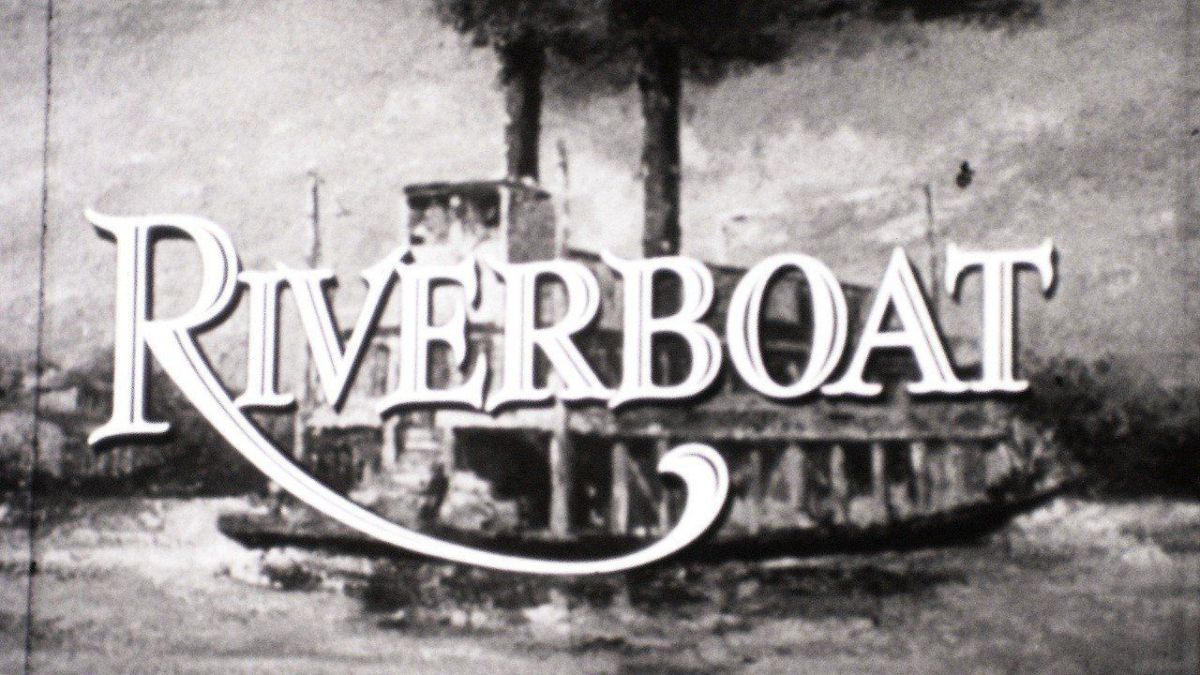
We have a religious broadcaster in Atlanta that dedicates much of its evening entertainment on its primary subchannel to ancient black-and-white television shows, from the 1950’s and early 1960’s. Some were syndicated shows, while others ran briefly on network TV. One such show was Riverboat, which originally ran on NBC for two seasons, from 1959 to 1961 (31 episodes in the 1959-1960 season and 13 in the 1960-61 season).
The best description I have found for the show is “Wagon Train on a riverboat.” Like Wagon Train, it was an anthology series, this one based around the captain and crew of the riverboat Enterprise. NBC bought into the show as a competitor to ABC’s Maverick, which had lost James Garner, who was replaced by Roger Moore.
The captain of the Enterprise was Grey Holden, played by Darren McGavin. The initial pilot of the boat was Ben Frazer, played by a young Burt Reynolds, who had been cast in an attempt to lure the female viewers of the show. Reynolds left the show after 20 episodes, unable to get along with McGavin; the second season featured Noah Beery Jr. as pilot Bill Blake. Other regulars were, according to Wikipedia:
Dick Wessel, as chief stoker Carney Kohler, was cast in 41 episodes, Jack Lambert was cast in 23 episodes as first mate Joshua MacGregor (having played a different character, Tony Walchek, earlier in the series), John Mitchum co-starred in 10 episodes as Pickalong, the ship’s cook, Michael McGreevey was cast in 17 episodes as cabin boy Chip Kessler, and William D. Gordon played first mate Joe Travis in 13 episodes before his character’s death.
It was considered a Western, even though most of the show’s action took place on the Ohio, Mississippi, and Missouri Rivers. It took place during the antebellum period of the South; of some concern was the fact that there were no African American characters or actors, this despite the fact that historically the majority of dock laborers were Black or Creole. The network and sponsors of the show didn’t want to upset the viewers, particularly those in the South. The writers and McGavin felt this was stupid, but that was life during that period.
The remainder of the weekly casts were made up of guest stars, such as Mary Tyler Moore, Elizabeth Montgomery, Jeanne Crain, Mercedes McCambridge, Ricardo Montalban, Vincent Price, Eddie Albert, and in one show Sandy Kenyon as a pre-presidential Abraham Lincoln. A full list of the guest stars can be found here.
The shows were well-written with an eye towards the history of that period. There are Indian conflicts, con men, beautiful women, stowaways, dangerous cargo, and plenty of fisticuffs. As Mary would say, it was better than the average schlock. When it went off the air, it was replaced by The Americans, a show set during the Civil War.
If you get a chance, it’s worth your time to see it.
I remember this one off of their show. I like the vocals in the chorus with this one.
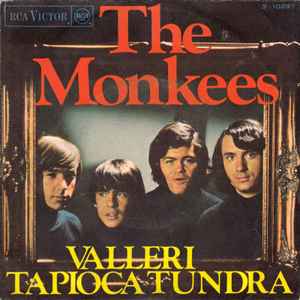
Valleri has an interesting history. This song was brought aboard at the very beginning of the Monkees…but it ended up being their last top ten hit. It was recorded with studio musicians at first and placed in a show but…not on an album because it was being saved for the second one. By the time the thought of using it came around…the Monkees had a new contract and per the contract… they had to play on and produce their album so this version of Valleri couldn’t be used.
When it was played in the show… the public wanted a record of it but now the Monkees would have to record it themselves because of the uprising they did to demand to play on their own records.
A couple of disc jockeys recorded the song off of the show and began to play it. They were playing this taped TV version on their radio shows, something that would happen many years later with the Friends theme. Listeners to the stations airing the rough mix of “Valleri” started writing the Monkees’ distributor Colgems Records, asking where they could buy a copy of the record that they had just heard.
Valleri was re-recorded and produced by the Monkees and Tommy Boyce and Bobby Hart the songwriters. It was released as a single in March 1968, 13 months after it was first performed on the TV show. Soon after the release, the Monkee’s TV show was canceled and they released their movie and LP Head. Peter Tork left the group in December 1968.
Valleri peaked at #3 in the Billboard 100, #1 in Canada, #4 in New Zealand, and #12 in the UK in 1968. The album The Birds, The Bees & The Monkees peaked at #3 on the Billboard Album Charts and #6 in Canada.
Valleri
Valleri I love my Valleri There’s a girl I know who makes me feel so good And I wouldn’t live without her, even if I could They call her Valleri I love my Valleri
Oh yeah, come on
She’s the same little girl who used to hang around my door
But she sure looks different than the way she looked before
I call her Valleri
I love my Valleri
Valleri I love my Valleri
I love my Valleri
I need ya, Valleri
The Stones were covering old blues songs at the start of their career. They needed a hit and one day they ran into two songwriters in 1963. Right in front of the Stones…John Lennon and Paul McCartney wrote a song that was in the Stone’s style. It was called “I Wanna Be Your Man” and became The Stones’ first UK top twenty record. Mick Jagger and Keith Richards were amazed at this display of songwriting prowess, which stuck with them.
The two bands stayed friends after that often coordinating releases so as not to release in the same week. Mick and Keith realized that if they were going to have staying power…they must start writing. Their manager Andrew Oldham locked them in a kitchen and told them they were not getting out until they wrote a song…obviously, it worked.
This was one of the first songs written by Mick Jagger and Keith Richards. The Stones manager gave it to a singer he also managed named Marianne Faithfull, who released it in 1964. It was going to be the B-side of her first single, but the record company decided to make it the A-side and it became her first hit. The Stones recorded it a year later. In 1966 Faithfull became Jagger’s girlfriend and that would last 3-4 years.
The original title was As Time Goes By but they changed it so it wouldn’t be confused with a song with the same title in Casablanca. The song peaked at #1 in Canada and #6 on the Billboard 100 in 1966. Marianne’s version peaked at #22 in Canada and #9 on the Billboard 100, and #9 in the UK in 1964.
This was released as a single in the US and Canada because ballads were popular there at the time. The release in England was delayed 6 months because they did not want to compete with Yesterday by The Beatles. When they finally did release it there, it was as the B-side of 19th Nervous Breakdown.
Marianne would record this three times. The original version in 1964, for 1987’s Strange Weather, and again on 2018’s Negative Capability.
Keith Richards: “suddenly, ‘Oh, we’re songwriters,’ with the most totally anti-Stones sort of song you could think of at the time, while we’re trying to make a good version of (Muddy Waters’) ‘Still A Fool.’ When you start writing, it doesn’t matter where the first one comes from. You’ve got to start somewhere, right? So Andrew locked Mick and myself into a kitchen in this horrible little apartment we had. He said, ‘You ain’t comin’ out,’ and there was no way out. We were in the kitchen with some food and a couple of guitars, but we couldn’t get to the john, so we had to come out with a song. In his own little way, that’s where Andrew made his great contribution to the Stones. That was such a flatulent idea, a fart of an idea, that suddenly you’re gonna lock two guys in a room, and they’re going to become songwriters. Forget about it. And it worked. In that little kitchen Mick and I got hung up about writing songs, and it still took us another six months before we had another hit with Gene Pitney, ‘ThatGirl Belongs To Yesterday.’ We were writing these terrible Pop songs that were becoming Top-10 hits. I thought, ‘What are we doing here playing the f–king blues, and writing these horrible Pop songs and getting very successful?’ They had nothing to do with us, except we wrote ’em. And it took us a while to come up with ‘The Last Time.’ That was the first one we came up with where Mick and I said, ‘This is one we can lay on the guys.’ At the time we were already borrowing songs from the Beatles – ‘I Wanna Be Your Man’ – because we were really hard up for singles. So they gave us a hand. In retrospect, during the ’60s the Stones and the Beatles were almost the same band, because we were the only ones in that position.”
Mick Jagger: “I wrote the lyrics, and Keith wrote the melody. It’s a very melancholy song for a 21-year-old to write: The evening of the day, watching children play – it’s very dumb and naive, but it’s got a very sad sort of thing about it, almost like an older person might write. You know, it’s like a metaphor for being old: You’re watching children playing and realizing you’re not a child. It’s a relatively mature song considering the rest of the output at the time. And we didn’t think of doing it, because the Rolling Stones were a butch Blues group. But Marianne Faithfull’s version was already a big, proven hit song… It was one of the first things I ever wrote.”
Marianne Faithfull: “a marketable portrait of me… a commercial fantasy that pushes the right buttons.”
As Tears Go By
It is the evening of the day I sit and watch the children play Smiling faces I can see But not for me I sit and watch As tears go by
My riches can’t buy everything I want to hear the children sing All I hear is the sound Of rain falling on the ground I sit and watch As tears go by
It is the evening of the day I sit and watch the children play Doing things I used to do They think are new I sit and watch As tears go by












 PowerPop... An Eclectic Collection of Pop Culture