Here are some cool lyrics to some songs. My all-time favorite is the first one…I’ve used this one over and over whenever at work and in our world. I could have filled this up with Dylan lyrics but I wanted to spread the wealth.
Meet the new boss/same as the old boss…The Who (No truer words have been spoken)
And in the end, the love you take is equal to the love you make…The Beatles
I saw her from the corner when she turned and doubled back And started walking toward a coffee-colored Cadillac… Chuck Berry
And I need you more than want you, And I want you for all time…Jimmy Webb
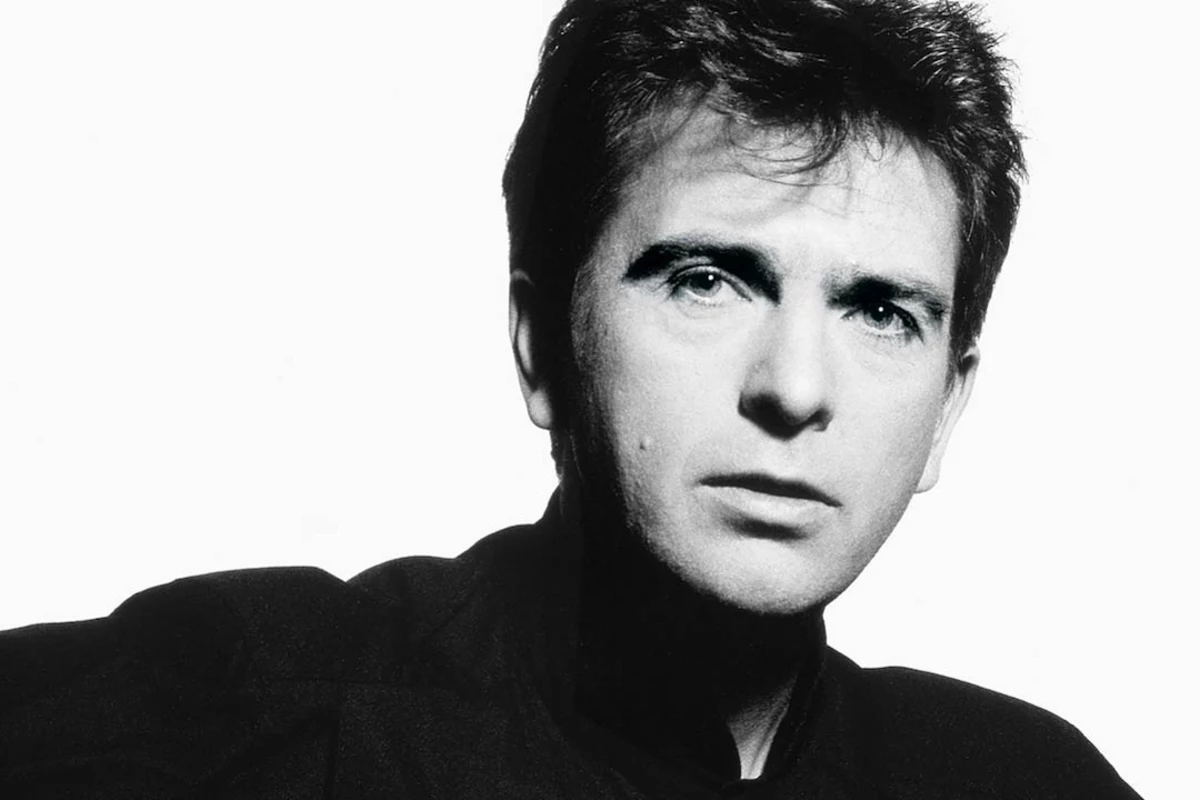
You can blow out a candle but you can’t blow out a fire…Peter Gabriel.
Shake the hand that shook the hand of P.T. Barnum and Charlie Chan… Grateful Dead
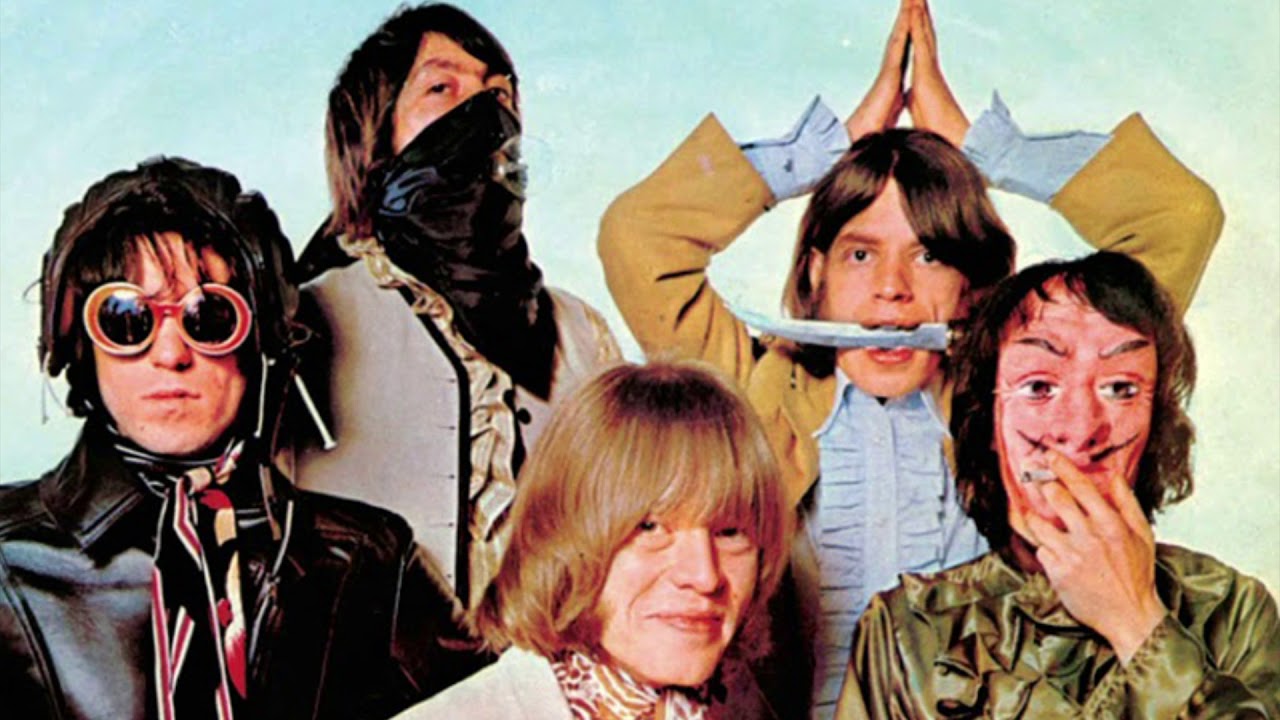
I wasn’t looking too good but I was feelingreal well… Rolling Stones
But I shot a man in Reno just to watch him die… Johnny Cash
We learned more from a three-minute record, than we ever learned in school…Bruce Springsteen
The silence of a falling star lights up a purple sky… Hank Williams Sr.
I just spent 60 days in the jailhouse/for the crime of having no dough…The Band
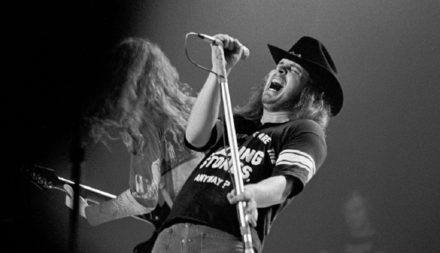
I drank enough whiskey to float a battleship around… Lynyrd Skynyrd
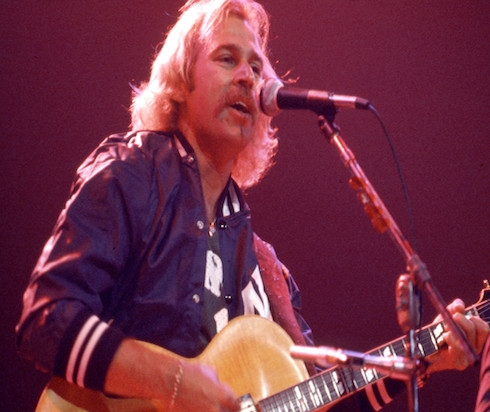
I blew out my flip-flop stepped on a pop-top/cut my heel had to cruise on back home… Jimmy Buffet
She knows there’s no success like failure and that failure’s no success at all… Bob Dylan
Wish I didn’t know now what I didn’t know then… Bob Seger
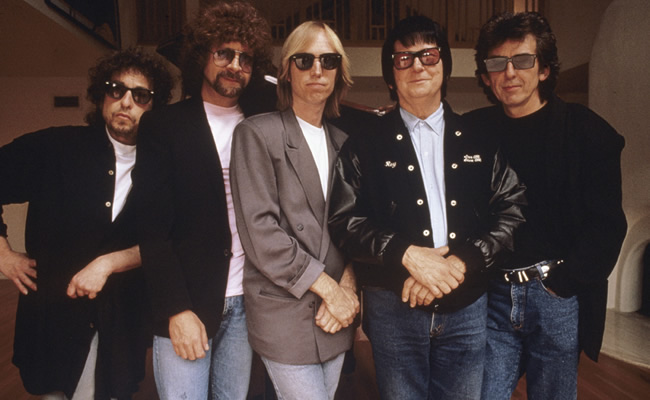
In Jersey, anything’s legal, as long as you don’t get caught… The Traveling Wilburys
You see, ya can’t please everyone, so ya got to please yourself…Ricky Nelson
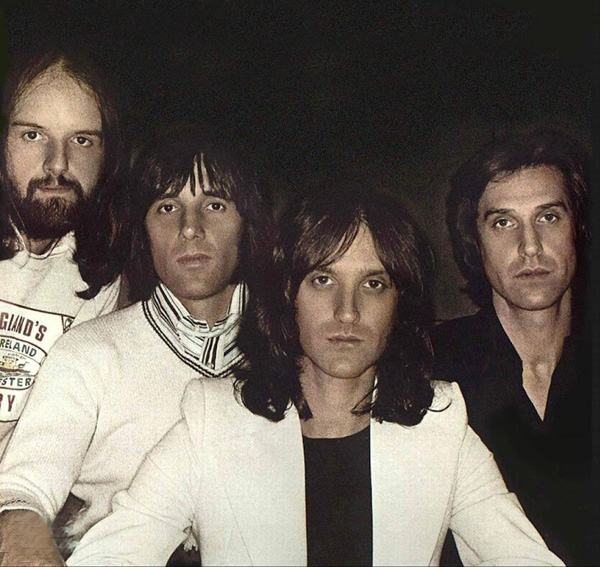
Because celluloid heroes never feel any pain and celluloid heroes never really die… Kinks
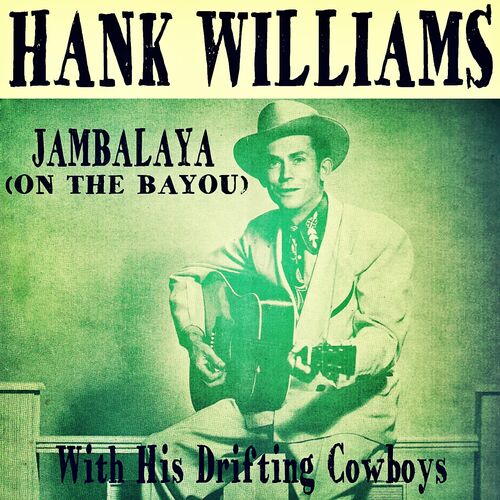
Hank Williams only lived to be 29 years old. It’s hard to believe because he wrote so many classic songs during his short recording career. “The Hillbilly Shakespeare” was one of his nicknames.
He had not been in a studio for 6 months but this song brought him back. He recorded it on June 13, 1952, in Nashville. There was speculation that Hank Williams co-wrote the song with a gentleman named Moon Mullican. Williams had the sole credit but it has been said that Williams’s publishing agent Fred Rose stepped in and wanted William’s publishing company to get the credit and the money. It has been said that Rose possibly paid Mullican so he wouldn’t have to split the publishing with Moon’s label King Records. Williams got the inspiration for the song while listening to Cajuns talk on a bus trip.
The melody is based on the Cajun song “Grand Texas.” The song peaked #1 on the Country Charts for fourteen, non-consecutive weeks. The song also peaked at #20 on the US Billboard Most Played By Jukeboxes. Hank Williams was born with spina bifida occulta, a disorder of the spinal column and he killed the pain with narcotics and alcohol. If you look at pictures of Williams he looks much older than in his twenties, especially in the last year of his 29 on earth.
Before his death, he had been known to take morphine and drink heavily. On New Year’s Day 1953, he took his seat in the back of his 1952 powder blue Cadillac. As his driver, college student Charles Carr, headed toward a New Years show in Canton, Ohio, Williams’ health took a turn for the worse. Finally, after not hearing from the singer for two solid hours, the driver pulled the car over in Oak Hill, West Virginia, at 5:30 in the morning. Williams was pronounced dead a short while later.
Hank Williams was a genius when it came to songwriting. He influenced so many genres of music from Johnny Cash, The Beatles, Bob Dylan, and many more. He left a huge mark on the world in such a short time.
Williams was among the first class of artists inducted into the Country Music Hall of Fame in 1961, and in 2010, the Pulitzer Board awarded him a special citation for songwriting.
Charles Carr, the teenager who was driving Williams to his concert:
“Hank’s song ‘Jambalaya’ was just out on the radio and he asked me what I thought of it, I told him I didn’t care for it, that it didn’t make a bit of sense to me. Hank laughed and said, ‘You son of a bitch, you just understand the French like I do.
“We were just a couple of young guys on a car trip having fun.”
My favorite version of this song was by John Fogerty.
Jambalaya (On the Bayou)
Goodbye Joe me gotta go me oh my oh
Me gotta go pole the pirogue down the bayou
My Yvonne the sweetest one me oh my oh
Son of a gun we’ll have big fun on the bayou
Jambalaya and a crawfish pie and filé gumbo
Cause tonight I’m gonna see my ma cher amio
Pick guitar fill fruit jar and be gay-o
Son of a gun we’ll have big fun on the bayou
Thibodaux Fontaineaux the place is buzzin’
Kinfolk come to see Yvonne by the dozen
Dress in style and go hog wild me oh my oh
Son of a gun we’ll have big fun on the bayou
Settle down far from town get me a pirogue
And I’ll catch all the fish in the bayou
Jambalaya and a crawfish pie and filé gumbo
Cause tonight I’m gonna see my ma cher amio
Pick guitar fill fruit jar and be gay-o
Son of a gun we’ll have big fun on the bayou
Later on, swap my mon, get me a pirogue
And I’ll catch all the fish on the bayou
Swap my mon, to buy Yvonne what she need-oh
Son of a gun we’ll have big fun on the bayou
Jambalaya and a crawfish pie and filé gumbo
Cause tonight I’m gonna see my ma cher amio
Pick guitar fill fruit jar and be gay-o
Son of a gun we’ll have big fun on the bayou
Ready, set, go man go, I got a girl that I love so.
What else do we need to have a great rock and roll song? Not exactly Shakespeare but Shakespeare couldn’t write Gonna kick off my shoes, roll up my faded jeans, Grab my rock ‘n’ roll baby, pour on the steam. The song was written by John Marascalco and Robert Blackwell with probable help from Little Richard. Most Little Richard songs are like a shot of adrenaline…this one is no different.
This was originally a B-side to Rip It Up. Little Richard claimed to have helped write this song but he said he didn’t have the business sense at that time to demand credit. He said: “They brought me the words and I made up the melody, and at the time I didn’t have sense enough to claim so much money, because I really made them hits. I didn’t get the money, but I still have the freedom.”
The song peaked at #44 on the Billboard 100 and #8 on the R&B charts.
The song is about a girl who wants sex… a ready teddy. Like most of Little Richard’s songs, this contains a lot of innuendoes but most people were too busy listening to the music to notice or didn’t get the reference. If sex had a voice…it would be Little Richard.
This song was covered by a lot of artists including Buddy Holly, The Tornados, Elvis Presley, Tony Sheridan, and others. Elvis did this song on one of his Ed Sullivan appearances.
My dad told me about Little Richard before I ever heard him. He said he had the biggest voice he ever heard. He talked about a song called Long Tall Sally. I first heard it…it blew me away. Such a raw emotional power in that voice. He would take us to the edge of the cliff and then at the last minute pull us back.
His voice was one of a kind…
Ready Teddy
Ready, set, go man go
I got a girl that I love so
I’m ready, ready, ready teddy
I’m ready, ready, ready teddy
I’m ready, ready, ready teddy
I’m ready, ready, ready to a rock ‘n’ roll
Going to the corner, pick up my sweetie pie
She’s my rock ‘n’ roll baby, she’s the apple of my eye
I’m ready, ready, ready teddy
I’m ready, ready, ready teddy
I’m ready, ready, ready teddy
I’m ready, ready, ready to a rock ‘n’ roll
All the flat-top cats and the dungaree dolls
Are headed for the gym to the sock hop ball
The joint is really jumpin’, the cats are going wild
The music really sends me, I dig that crazy style
I’m ready, ready, ready teddy
I’m ready, ready, ready teddy
I’m ready, ready, ready teddy
I’m ready, ready, ready to a rock ‘n’ roll
Going to the corner, pick up my sweetie pie
She’s my rock ‘n’ roll baby, she’s the apple of my eye
I’m ready, ready, ready teddy
I’m ready, ready, ready teddy
I’m ready, ready, ready teddy
I’m ready, ready, ready to a rock ‘n’ roll
All the flat-top cats and the dungaree dolls
Are headed for the gym to the sock hop ball
The joint is really jumpin’, the cats are going wild
The music really sends me, I dig that crazy style
I’m ready, ready, ready teddy
I’m ready, ready, ready teddy
I’m ready, ready, ready teddy
I’m ready, ready, ready to a rock ‘n’ roll
Gonna kick off my shoes, roll up my faded jeans
Grab my rock ‘n’ roll baby, pour on the steam
I shuffle to the left, I shuffle to the right
Gonna rock ‘n’ roll to the early, early night
I’m ready, ready, ready teddy
I’m ready, ready, ready teddy
I’m ready, ready, ready teddy
I’m ready, ready, ready to a rock ‘n’ roll
Grease your hair and get the leather jacket…this will be a 1950s weekend at powerpop. I wanted to start it off with a bang. Power Pop Friday will return next week. I know some will see the post and go to the Zeppelin or Aerosmith versions automatically but this version is just as nasty in many ways.
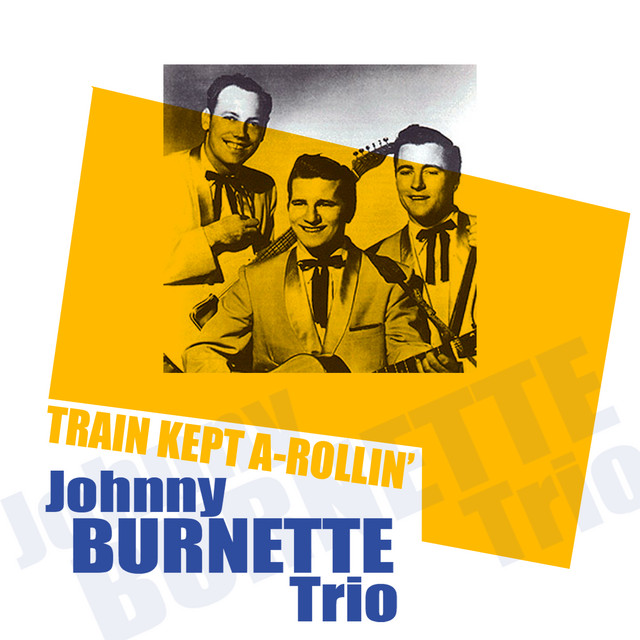
I first heard this song by The Yardbirds and then by Aerosmith. The song was rollin’ in the 50s as well with this Johnny Burnette take of it. I’ve never heard a version that sounded bad. It’s like Johnny B Goode…a rock and roll classic.
Paul Burlison, the Trio’s lead guitarist, had dropped his amp and knocked one of its vacuum tubes loose. When he played through it, he found that his guitar made a new, menacing sound, fuzzy and distorted, and though he repaired the amp, he started deliberately loosening his tube to recreate the sound. That is where the tone started with this song. The song failed to chart.
The song was written by Tiny Bradshaw, Howard Kay, and Lois Mann, it was originally performed by Tiny Bradshaw’s Big Band in 1951. Johnny Burnette recorded a rock version in 1956, and The Yardbirds popularized the song with their rendition in 1965.
Aerosmith covered it in 1974, often playing the song as their encore in their early years. In the ’60s, Steven Tyler was on the same bill as The Yardbirds for some early shows before Zeppelin.
It was the first song Zeppelin played at their first rehearsal in Soho, their performance of it at the Texas International Pop Festival in 1969 was captured on tape and they were still playing it on their final tour.
On August 14, 1964, Burnette’s unlit fishing boat was struck by an unaware cabin cruiser in Clear Lake, California. The impact threw him off the boat, and he drowned. He had a son named Rocky Burnette who had a hit in 1980 with Tired of Toein the Line.
Watch for Bettie Page in this one!
Train Kept A Rollin’
I caught a train I met a dame She was a hipster And a real gone dame She was pretty From New York City And we trucked on down that old fair lane With a heave and a ho Well, I just couldn’t let her go
Get along, creepy little woman Get along, well, be on your way Get along, creepy little woman Get along, well, be on your way With a heave and a ho Well, I just couldn’t let her go
Well, the train kept a-rollin all night long The train kept a-rollin all night long The train kept a-movin all night long The train kept a-rollin all night long With a heave and a ho Well, I just couldn’t let her go
We made a stop In Albuquerque She must’ve thought That I was a real gone jerk We got off the train at El Paso Our lovin was so good, Jack I couldn’t let her go Get along Well, I just couldn’t let her go
Get along, creepy little woman Get along, well, be on your way Get along, creepy little woman Get along, well, be on your way With a heave and a ho Well, I just couldn’t let her go
The train kept a-rollin all night long The train kept a-rollin all night long The train kept a-rollin all night long The train kept a-rollin all night long With a heave and a ho Well, I just couldn’t let her go-oh-oh
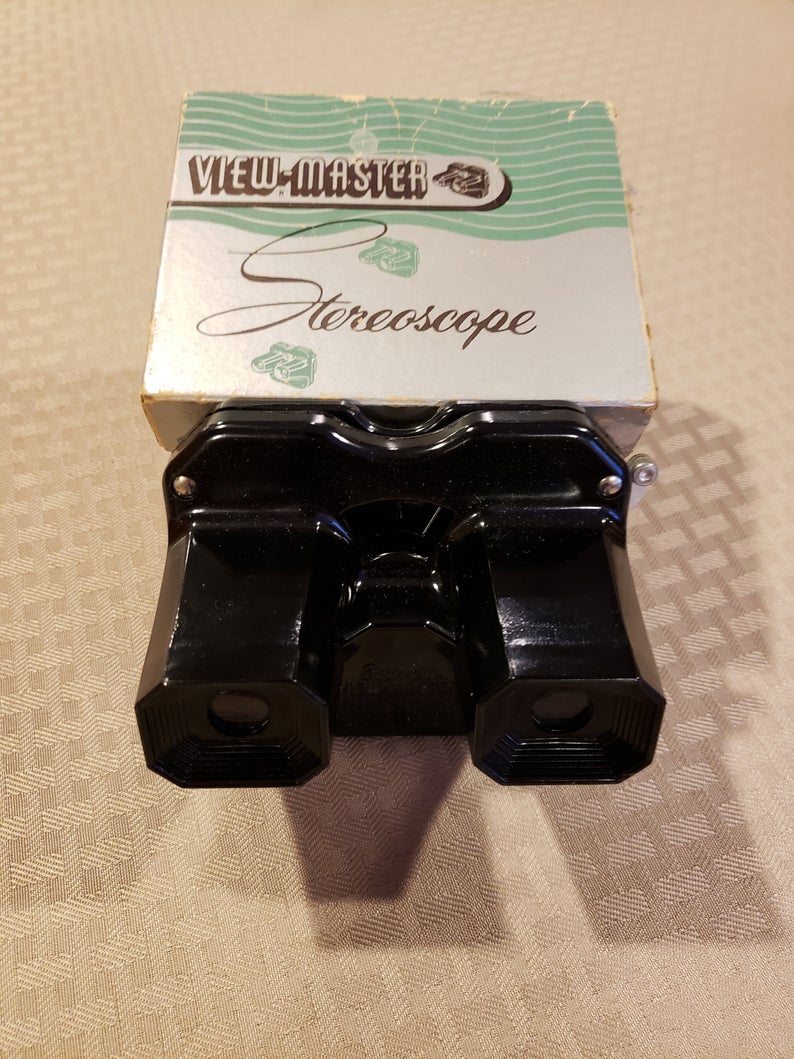
I had view masters as a kid and loved them…tonight I was able to see some view master slides in a view master projector with a screen. I always wanted one as a kid but never could get it. I had the “click” model you held in your hand.
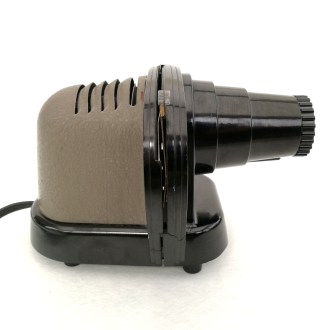
A few months ago…my cousin Mark came over. He and I collect things from the 50s-70s. Mark has been collecting View-Masters and the round slides. He shopped on Market Place and found someone with a 1950s View-Master projector. The projector is very clear.
All of us (wife, son, Mark, and myself) spent over an hour watching the view-master slides on a screen that he bought from different people.
Of course, the slides are not 3-D when projected but it still was really cool. We saw Busch Gardens, Silver Dollar City, Acapulco, Sequoia, Kings National Park (I think), and some other places. It was like stepping back in time to the 60s or 70s which I guess was the idea. All the pictures came from the 50s through the 70s.
As a kid, I would spend hours clicking the round slide over and over. For some reason, I remember an outer space slide selection I had. The 3-D made it look like you could touch it. When my son was around 5 we got him one and he loved it. I would recommend picking one up if you see one somewhere…no matter how old you are…they are still fun!
The View-Master was based on the stereoscopic viewer, which dates all the way back to the 1800s.
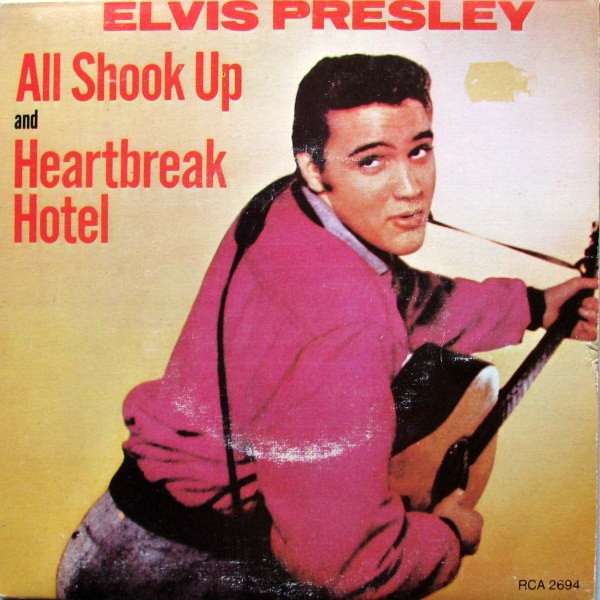
I was still on my blogging sabbatical when August 16 came around and I missed the anniversary of Elvis’s death in 1977. So I wanted to include an Elvis post.
This is one of those songs that I grew up on and I would play over at my relative’s house. I mean…how could you ever not listen to a song that starts off with:
A well’a bless my soul
What’sa wrong with me?
I’m itchin’ like a man in a fuzzy tree
My friends say I’m actin’ wild as a bug
I’m in love
I’m all shook up
Not exactly poetry but the Big E made it flow so well. This is the Elvis that I like a lot…the pre-army Elvis. He was THE rock star at the time. Don’t believe me? He had 12 number 1 songs from 1956 through 1959. After he entered the Army…he wasn’t the same…still good…but the danger was gone quicker than you could say, Colonel Tom Parker.
Otis Blackwell wrote this on a dare. One of the owners of Shalimar Music (Blackwell’s publishing company) wandered into Blackwell’s office as he struggled to create a follow-up to Don’t Be Cruel. Al Stanton approached Blackwell, Stanton was shaking a bottle of Pepsi. Stanton said to Blackwell, “I’ve got an idea. Why don’t you write a song called All Shook Up? Otis then finished the song a couple of days after that.
All Shook Up peaked at #1 on the Billboard 100, in Canada, in the UK in 1957. It was ranked #352 on Rolling Stone’s list of the 500 Greatest Songs of All Time.
Although Otis Blackwell is listed as the sole composer, Presley shared the songwriting credit. The reason is that it was demanded by Colonel Tom Parker. Parker had said…Elvis doesn’t record the song unless he gets songwriting credit. The same thing happened with Don’t Be Cruel. Personally, I think this was wrong on many levels but unless the songwriter had money and clout…if he wanted it recorded by Elvis…he had to go along with it.
Speaking of the Colonel…there is a famous story about Dolly Parton’s song that she wanted Elvis to record. It happened in 1974, just after the release of Parton’s hit single I Will Always Love You. Presley’s manager Colonel Tom Parker made an effort to reach out to Parton with an offer in exchange for Presley recording her song. Again Parked demanded that Elvis get the co-writer credit on the song. She turned Parker down and kept the song to herself. That was a smart decision that paid off when Whitney Houston recorded the song and it made millions for Parton.
Dolly Parton:“I was desperate for Elvis to sing my song and I’d told everyone he was going to sing it, but I couldn’t let that happen. It’s my song, my publishing rights. It broke my heart but I had to turn him down.”
A well’a bless my soul
What’sa wrong with me?
I’m itchin’ like a man in a fuzzy tree
My friends say I’m actin’ wild as a bug
I’m in love
I’m all shook up
Mm mm mm, mm, yay, yay, yay
Well, my hands are shaky and my knees are weak
I can’t seem to stand on my own two feet
Who do you think of when you have such luck?
I’m in love
I’m all shook up
Mm mm mm, mm, yay, yay, yay
Well, please don’t ask me what’sa on my mind
I’m a little mixed up, but I’m feelin’ fine
When I’m near that girl that I love best
My heart beats so it scares me to death!
Well she touched my hand what a chill I got
Her lips are like a volcano when it’s hot
I’m proud to say that she’s my buttercup
I’m in love
I’m all shook up
Mm mm mm, mm, yay, yay, yay
My tongue gets tied when I try to speak
My insides shake like a leaf on a tree
There’s only one cure for this body of mine
That’s to have that girl that I love so fine!
She touched my hand what a chill I got
Her lips are like a volcano that’s hot
I’m proud to say that she’s my buttercup
I’m in love
I’m all shook up
Mm mm mm, mm, yay, yay, yay
Mm mm mm, mm, yay, yay
I’m all shook up
Welcome to the Hanspostcard TV Draft. I hope you will enjoy it! Today’s post was written by Keith at https://nostalgicitalian.com/
We have reached the final round of the Hanspostcard TV Show Draft. I want to take a moment and thank Max from the Power Pop Blog for taking up the reigns and helping us continue this round in Hans’ absence. It truly has been a fun draft!
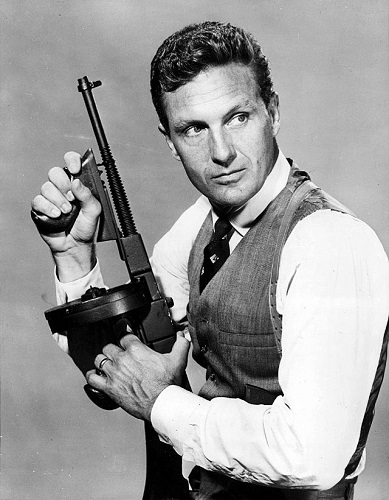
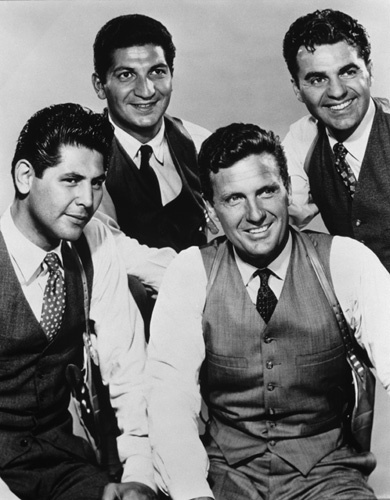
For my final pick, I have gone back to another classic – The Untouchables. The show ran from 1959 to 1963 and starred the great Robert Stack as Eliot Ness. It is hard to imagine anyone but Robert Stack in the role of Ness, but believe it or not, Desi Arnaz had originally offered the role to actor Van Johnson. Supposedly, he wanted double what they were offering to pay for the role, and it ultimately went to Stack.
When asked about the character some years later, Stack said, “Ness was a precursor of Dirty Harry. He was a hero, a vigilante in a time when breaking the law meant nothing because there was no law because Capone owned Chicago, he owned the police force.”
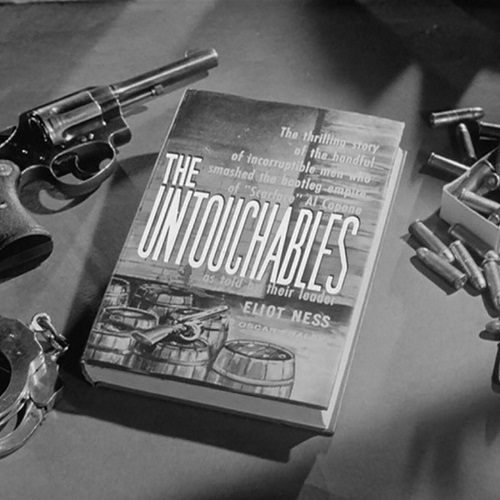
The show was based on the book of the same name written by Eliot Ness and Oscar Fraley. Brian De Palma would use the book as the basis for his 1987 film of the same name.
According to Wikipedia:
The series originally focused on the efforts of a real-life squad of Prohibition agents employed by the US Department of Justice and led by Eliot Ness (Stack) that helped bring down the bootleg empire of “Scarface” Al Capone, as described in Ness’s bestselling 1957 memoir. This squad was nicknamed “The Untouchables” because of its courage and honesty; squad members could not be bribed or intimidated by the mob. Eliot Ness himself had died suddenly in May 1957, shortly before his memoir and the subsequent TV adaptation were to bring him fame beyond any he experienced in his lifetime.
The pilot for the series, a two-part episode entitled “The Untouchables,” originally aired on CBS’s Westinghouse Desilu Placyhouse (and was introduced by Desi Arnaz) on April 20 and 27, 1959. Later re-titled “The Scarface Mob”, these episodes, which featured Neville Brand as Al Capone, were the only episodes in the series to be more-or-less directly based on Ness’s memoir, and ended with the conviction and imprisonment of Capone. CBS, which had broadcast most of Desilu’s television output since 1951 beginning with I Love Lucy, was offered the new series following the success of the pilot film. It was rejected it on the advice of network vice president Hubbell Robinson. ABC agreed to air the series, and The Untouchables premiered on October 15, 1959. In the pilot movie, the mobsters generally spoke with unrealistic pseudo-Italian accents, but this idiosyncratic pronunciation was dropped when the series debuted.
The weekly series first dramatized a power struggle to establish a new boss in Capone’s absence (for the purpose of the TV series, the new boss was Frank Nitti, although this was, as usual for the series, contrary to fact). As the series continued, there developed a highly fictionalized portrayal of Ness and his crew as all-purpose, multi-agency crime fighters who went up against an array of 1930s-era gangsters and villains, including Ma Barker, Dutch Schultz, Bugs Moran, Lucky Luciano,and in one episode, Nazi agents. On many occasions during the series run, Ness would blatantly violate suspects’ Fourth Amendment rights with no legal ramifications.
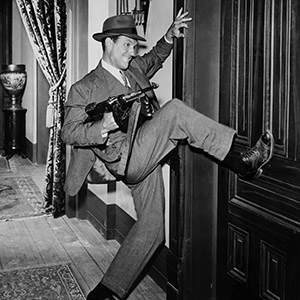
The terse narration by gossip columnist Walter Winchell, in his distinctive New York accent, was a stylistic hallmark of the series, along with its ominous theme music by Nelson Riddle and its shadowy black-and-white photography, which was influenced by film noir.
The series produced 118 episodes which ran 50 minutes each. Though the book chronicled the experiences of Ness and his team against Capone, and in reality the Untouchables disbanded soon after Capone’s conviction. The series continued after the pilot and book ended, depicting the fictitious further exploits of the Untouchables against many, often real life, criminals over a span of time ranging from 1929 to 1935.
The show came with some controversy. Italian-American groups protested over what they felt was an unfair presentation of their people as Mafia-types. “We are plagued with lawsuits after certain shows” one of the show’s producers Josef Shaftel explained, noting that the series was “heavily insured against libel.” With good reason – the first lawsuit against the show was instigated by Al Capone’s angry widow. She didn’t like the way her deceased husband was made into a running villain on the show and wanted a million dollars for unfair use of his image. (She lost.)
The FBI and J. Edgar Hoover were ticked off too. They were the ones who collared the famous names that Ness was supposedly busting each week on TV and they rightfully wanted credit for it. The second episode of the series, for example, depicted Ness and his crew involved in the capture of the Ma Barker gang, an incident in which the real-life Ness played no part. The producers agreed to insert a spoken disclaimer on future broadcasts of the episode stating that the FBI had primary responsibility for the Barker case. Even the Bureau of Prisons took offense, complaining that the show made their treatment of Al Capone look soft.
The show itself was considered one of the most violent television shows of its time. Of course, by today’s standards it’s not that bad, but it was violent enough at the time to spark protests from parents who were worried about their children seeing this violence.
My Thoughts
This is one of those shows that I just love! Robert Stack’s delivery of almost every line as Ness is perfect. He won an Emmy in 1960 for Best Actor in a Dramatic Series for his portrayal of Ness.
Despite the fact that many of the stories are fictionalized to work the Untouchables into them, they are great! The show really was a forerunner to shows like The FBI, Crime Story, and even Hawaii 5-0. I love the film noir feel of it. Every episode plays like a good 50 minute movie.
The Lebanon Pennsylvania Daily News said of The Untouchables: “Between the hard-nosed approach, sharp dialogue, and a commendably crisp pace (something rare in dramatic TV at the time), this series is one of the few that remains fresh and vibrant. Only the monochrome presentation betrays its age. The Untouchables is one of the few Golden Age TV shows that deserves being called a classic.” It really does hold up well.
As I have mentioned before, one of the things I love about these old shows is seeing big stars (who are not quite yet stars) show up. In regular roles throughout the series you could see Raymond Bailey (Mr. Drysdale on the Beverly Hillbillies), Barbara Stanwyck, Barbara Nichols, Ed Asner (Lou Grant), Harry Morgan (Col. Potter on MASH), and Henry Silva.
The list of guest star appearances is long and amazing. They include: Jack Elam, Paul Frees, Jim Backus, Sam Jaffe, Martin Balsam, John Dehner, William Bendix, Whitt Bissell, Charles Bronson, James Caan, James Coburn, Mike Conners, Robert Duvall, Peter Falk, Norman Fell, Alan Hale Jr., Brian Keith, Jack Klugman, Cloris Leachman, Jack Lord, Lee Marvin, Telly Savalas, Elizabeth Montgomery, Leonard Nimoy, Robert Redford, Ricardo Montalban, Rip Torn, Jack Warden, Dick York, Cliff Robertson and so many more!
You know, they play reruns of Law and Order on TV all the time. Many of the shows I have seen numerous times. I know what’s going to happen, yet I still watch (a lot like my previous picks – Perry Mason and Columbo). The Untouchables is a show that could very easily be rerun like a Law and Order. It is that good.
I love Walter Winchell’s narration
And I love the theme song!
It has been so much fun writing on some of my favorite shows. It’s been just as fun to read about the shows picked by other members of the TV Show Draft. I hope you have enjoyed my picks…
Tomorrow morning we will kick off our last TV draft round! We have 8 more TV Shows coming…we all want to thank you… the readers who have made this possible and a fun experience.
I also want to thank the bloggers who have reviewed all of these shows and we have covered every decade from the 1950s until now. Below are the picks that began in January and will end on July 3.
Thank you… Paula, Lisa, Dave, John, Keith, Mike, Liam, Vic, Hanspostcard (who started it), and Kirk for all of the reviews below.
His sound, voice, and echo draws me in and keeps me there. The slow intro and then music kicks in. His voice goes with that slapback echo better than any other singer. His influence can be heard through the decades including Springsteen in Glory Days.
This was released in 1956 from their debut album of the same name. Like many of the songs on the record, it only came in at around two and a half minutes long… but those two and a half recordings rocked. This gem was written by Gene Vincent and Hal Levy. The song peaked at #16 in the UK in 1956.
Vincent was injured in a car accident on April 16, 1960…with Eddie Cochran in a taxi which killed Cochran. Vincent whose leg was weak due to a wound incurred in combat in Korea…was injured. He walked with a noticeable limp for the rest of his life. In 1962 he was in Hamburg and played on the same bill as the Beatles. The Beatles got close to him.
George Harrison told a story about going with a drunk Vincent to his hotel room. Vincent thought his girlfriend was cheating on him so he shoved a gun in Harrison’s hand. George was shocked and didn’t want any part of that.
The Beatles played at least 14 of Gene Vincent’s songs in their sets before they made it. A song like Somewhere Over The Rainbow that the Beatles would never think of covering until Gene Vincent covered it and gave the song his ok.
Paul McCartney: “I remember hearing Blue Jean Bop on an album that I think John had; going to a place near Penny Lane for the afternoon, having a ciggy, and just listening to records. Blue Jean Bop was always one of my favorites. The first record I ever bought was Be Bop-A-Lula. We loved Gene.”
Bluejean Bop
Bluejean baby, with your big blue eyes Don’t want you looking at other guys Got to make you give me, one more chance I can’t keep still, so baby let’s dance
Well the bluejean bop is the bop for me It’s the bop that’s done in a dungaree You flip your hip, free your knee Squeal on your heel baby, one to three Well the bluejean bop, bluejean bop Oh baby, bluejean bop, bluejean bop Oh baby, bluejean bop, baby won’t you bop with Gene (bop Blue Caps, bop)
Well bluejean baby when I bop with you Well my heart starts hoppin’ like a kangaroo My feet do things they never done before Well bluejean baby, give me more more more Well the bluejean bop, bluejean bop Oh baby, bluejean bop, bluejean bop Oh baby, bluejean bop, baby won’t you bop with Gene (rock again Blue Caps, go)
Well the bluejean bop, bluejean bop Oh baby, bluejean bop, bluejean bop Oh baby, bluejean bop, baby won’t you bop with Gene (Blue Caps, bop with Gene now, let’s go)
Well it’s, bluejean bop, bluejean bop Bluejean, bluejean bop Oh baby, bluejean, bluejean bop Bluejean, bluejean bop Bluejean, oh baby, won’t you bop with Gene
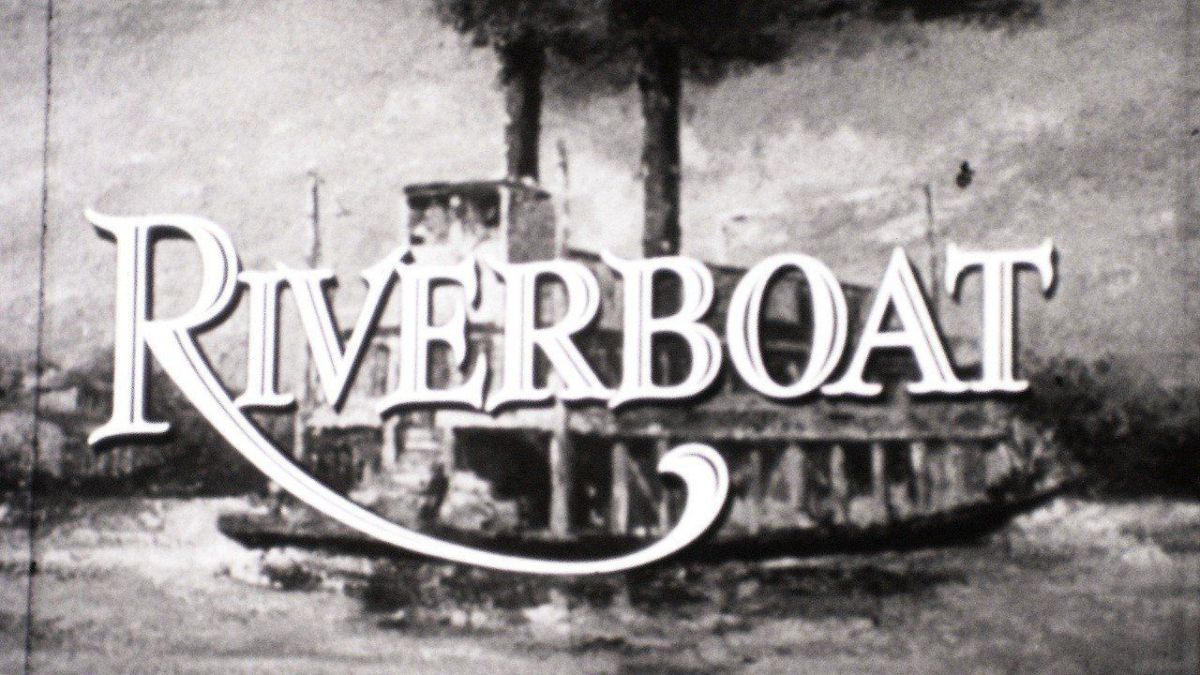
We have a religious broadcaster in Atlanta that dedicates much of its evening entertainment on its primary subchannel to ancient black-and-white television shows, from the 1950’s and early 1960’s. Some were syndicated shows, while others ran briefly on network TV. One such show was Riverboat, which originally ran on NBC for two seasons, from 1959 to 1961 (31 episodes in the 1959-1960 season and 13 in the 1960-61 season).
The best description I have found for the show is “Wagon Train on a riverboat.” Like Wagon Train, it was an anthology series, this one based around the captain and crew of the riverboat Enterprise. NBC bought into the show as a competitor to ABC’s Maverick, which had lost James Garner, who was replaced by Roger Moore.
The captain of the Enterprise was Grey Holden, played by Darren McGavin. The initial pilot of the boat was Ben Frazer, played by a young Burt Reynolds, who had been cast in an attempt to lure the female viewers of the show. Reynolds left the show after 20 episodes, unable to get along with McGavin; the second season featured Noah Beery Jr. as pilot Bill Blake. Other regulars were, according to Wikipedia:
Dick Wessel, as chief stoker Carney Kohler, was cast in 41 episodes, Jack Lambert was cast in 23 episodes as first mate Joshua MacGregor (having played a different character, Tony Walchek, earlier in the series), John Mitchum co-starred in 10 episodes as Pickalong, the ship’s cook, Michael McGreevey was cast in 17 episodes as cabin boy Chip Kessler, and William D. Gordon played first mate Joe Travis in 13 episodes before his character’s death.
It was considered a Western, even though most of the show’s action took place on the Ohio, Mississippi, and Missouri Rivers. It took place during the antebellum period of the South; of some concern was the fact that there were no African American characters or actors, this despite the fact that historically the majority of dock laborers were Black or Creole. The network and sponsors of the show didn’t want to upset the viewers, particularly those in the South. The writers and McGavin felt this was stupid, but that was life during that period.
The remainder of the weekly casts were made up of guest stars, such as Mary Tyler Moore, Elizabeth Montgomery, Jeanne Crain, Mercedes McCambridge, Ricardo Montalban, Vincent Price, Eddie Albert, and in one show Sandy Kenyon as a pre-presidential Abraham Lincoln. A full list of the guest stars can be found here.
The shows were well-written with an eye towards the history of that period. There are Indian conflicts, con men, beautiful women, stowaways, dangerous cargo, and plenty of fisticuffs. As Mary would say, it was better than the average schlock. When it went off the air, it was replaced by The Americans, a show set during the Civil War.
If you get a chance, it’s worth your time to see it.
Welcome to the Hanspostcard TV Draft. I hope you will enjoy it! Today’s post was written by Keith at https://nostalgicitalian.com/
For my next pick in the Hanspostcard TV Show Draft is one that is one of my all time favorites. I don’t remember when I first was introduced to this show, but I am guessing my dad had something to do with it. Early on in the draft, I chose Police Squad, which only aired 6 episodes. This show is known for its “Classic 39” – The Honeymooners.
This isn’t my first blog about the show. Some time ago, I took part in a “Favorite TV Episode” Blogathon and picked 2 of my favorite episodes to present. You can read that blog here:
When you think about 50’s TV shows, there was very little struggle involved. Think about it. I Love Lucy, The Adventures of Ozzie and Harriet, The Andy Griffith Show, and Leave it to Beaver all showed families who were living in nice homes or apartments, showed no signs of financial struggles, and while there may be a misunderstanding here and there, it was mostly “bliss.” In 1955-1956, however, The Honeymooners focused on two couples from New York, who were struggling to get by.
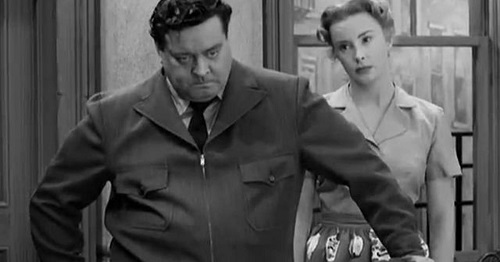
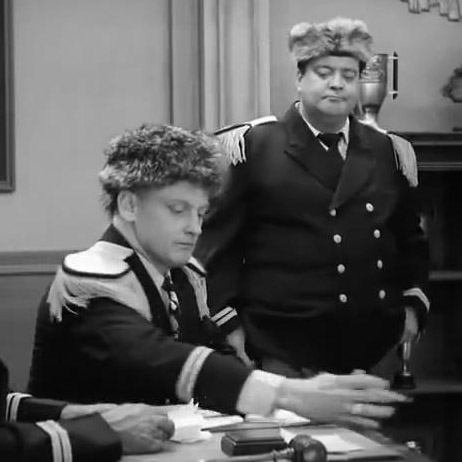
The show focused on the lives of Ralph (Jackie Gleason) and Alice Kramden (Audrey Meadows), and Ed (Art Carney) and Trixie Norton (Joyce Randolph). One article I found on the show says this about Gleason’s Kramden character: Ralph was the get-rich-quick scheming, short-tempered, soft-hearted guy who was always striving for greatness, but never made it out of that two-room Brooklyn apartment. And that’s one of the main attractions for even the most casual of viewers: the characters are so identifiable. As Jackie himself said at the time, “Everything we did could have happened. People like the show, because we are them.”
The show began as a simple sketch on the DuMont Television Network, on the Cavalcade of Stars. The original hosts were Jack Carter and Jerry Lester, but in July of 1950 comedian Jackie Gleason took over the hosting duties. In the process, Gleason took the struggling show and turned it around to be a hit. The show, which featured comedy skits and a number of different performers each week, was broadcast live in front of a theater audience. In 1951, Jackie and his writers came up with the idea for a sketch called The Honeymooners. It was about a struggling couple living in Brooklyn who frequently fought, but in the end, there was no question that they loved each other.
Leonard Stern was a writer on both The Honeymooners and The Jackie Gleason Show. In an interview with the Archive of American Television he stated, “We started doing one sketch of The Honeymooners every five or six weeks and the response of people on the street was tremendous. So we started doing them every other week. Eventually, though, everyone, including Jackie, lost interest in the other characters in the different sketches, so we started to do them every week until the fatigue level hit its high and we’d have to take a break. I think Gleason had fun doing them, because he recognized the impact Kramden and Alice and Norton and Trixie were having on the audience. I’m not a great fan of ratings, but let me say that 53% of the total television audience was watching the show. There’s nothing like that in existence today. It was astonishing and the show itself was live. Remember, the audience of 3,000 people filled that theater. You earned your laughs. It was a resounding success and very exhilarating for all of us. It was opening night every week.”
When Gleason left the Dupont Network and went to CBS, he hosted the Jackie Gleason Show, where the Honeymooners sketches continued. In the 1952 season, the sketches usually ran between seven and 13 minutes. In the following season, and those sketches ran for a minimum of 30 minutes, and sometimes longer. Then, in the 1954-55 season, they actually filled the entire hour of The Jackie Gleason Show and was doing so well in the ratings that it occasionally surpassed the viewership of I Love Lucy. That is almost unheard of!
In the 1955-56 season, The Jackie Gleason Show literally became The Honeymooners! It aired as a half-hour sitcom that was filmed in front of a studio audience. In total, 39 episodes were produced, and these episodes are the ones that are still being broadcast today. These 39 episodes are the ones that most people remember.
I read an article that said Jackie Gleason had actually been given a three-year contract from CBS for 78 episodes of The Honeymooners to be produced in the first two seasons. The contract also included an option for a third season of 39 more. For whatever it is worth, Gleason felt the quality of the scriptwriting couldn’t be maintained, and the show was mutually canceled by him and CBS.
A Closer Weekly article says: What’s particularly impressive about The Honeymooners living on the way it has is the fact that back in the day, there needed to be a minimum of 100 episodes of a show available so that local stations could run it five days a week. Any less made syndication difficult, since the cycle would be repeated that much sooner. But then there was The Honeymooners, with a mere 39 episodes to offer up, yet it worked. And continues to do so.
In a 1996 appearance on The Tonight Show with Johnny Carson, Jackie was asked why the show ended. He told Carson, “We were running out of ideas. I liked The Honeymooners and I liked doing them, and I didn’t want to denigrate them by forcing scenes that didn’t mean anything. So I wanted to quit, but they didn’t believe me. They thought I had another job someplace, but I didn’t. I’m glad I did stop them, because what we had done was good and if we had gone any further, we might have spoiled it.”
Those “Classic 39” are classic for a reason. They are still funny. The situations that The Kramdens and the Nortons muddle through every week will make you laugh, cry, think, and smile. They still hold up today. Each one of them has memorable scenes and quotable lines.
In one episode Ralph tells his boss he is a great golfer and is immediately asked to go play around with him. Now Ralph needs to learn how to play – and fast. He finds the perfect teacher in his best friend Ed Norton. In pure Art Carney fashion, Ed reads from a book that you must “address the ball,” to which he takes the club, stands in front of the ball, looks down and says, “Hello, Ball!”
An episode of the show was featured in the movie Back To The Future. When Marty McFly winds up in 1955, a family is watching the episode The Man From Space. Intending to win the $50 first prize at the Racoon Lodge’s costume ball, Ralph decides to create his own outfit. And what an outfit! After appropriating (among other things) a faucet, a pot, a radio tube, and the icebox door, he presents himself as the Man from Space.
In another episode, Alice says she wants to go dancing. Ralph has Ed come over to teach him how to dance. Ralph’s outfit is hilarious (he tells Alice it is “what all us cats where! I’m hip!”). The dance (to the song The Hucklebuck) is worth the watch.
To me, sometimes the funniest stuff can be as simple as Ralph’s face …
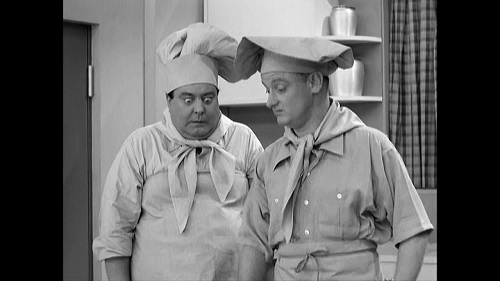
In another classic episode, Ralph and Norton appear on a TV commercial trying to sell their Handy Housewife Helper, a kitchen gadget that can, among other things, open cans, remove corns, and “core an apple.” In the inspired, ad-lib-laden episode, “Chef of the Future” Ralph demonstrates the wonders of the gizmo to “Chef of the Past” Norton. Rehearsal goes great, but in front of live cameras, Ralph freezes up.
Art Carney was the perfect second banana. The play between him and Gleason is classic. In one episode Norton’s sleepwalking becomes a waking nightmare for Ralph. Ralph can’t get any sleep because he’s been asked to keep his pal from wandering off on late-night strolls around the neighborhood.
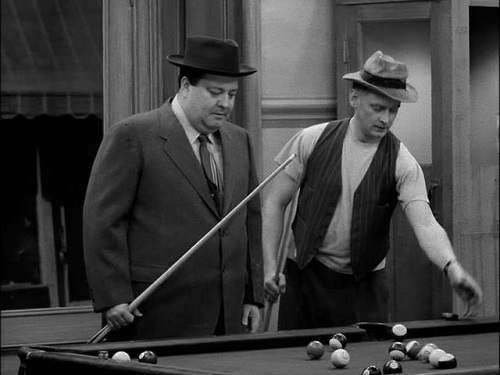
Another classic episode takes place at the pool hall where Ralph gets into an argument with the diminutive guy named George. “My friend is even bigger than me,” he tells Ralph. “I have a friend Shirley that’s bigger than you,” Ralph counters. But then he comes eye-to-chin with George’s friend, the towering Harvey, who challenges Ralph to a fight. This prompts Norton to observe: “He’s even bigger than your friend Shirley.”
Many of the plot lines from the classic episodes made it into the Joe Piscopo and Eddie Murphy novelty hit “The Honeymooners Rap.”
In the 1980’s, Jackie Gleason announced that in his vault he had found a number of Honeymooners skits from The Jackie Gleason Show that had been shot on Kinescope, which is a way of filming directly through a lens that actually focused on the screen of a video monitor. 107 of those skits were released on DVD and syndicated to television stations. These would have been shot before the “Classic 39” and two of them stand out to me.
Jackie had been a guest star on the Jack Benny Show, so Jack makes an appearance as the Kramden’s landlord. The rent is being raised and Ralph is mad. When there is a knock on the door, Ralph opens it and Jack Benny is standing there. The audience chuckles in anticipation. Ralph calls to Alice that “the Landlord’s here” and the audience erupts. Benny stands there quietly as Ralph reads him the riot act! He calls him a “penny pincher” (which plays into Benny’s “cheap” character”) and says that he pinches a penny so hard that when he is through “both heads and tails are on the same side of the coin!”
In another lost episode, Ralph must lose weight for work. All through the episode, he is starving. Finally, he is left alone in the apartment and sitting at the kitchen table. He notices a cake pan. He lifts the lid and sees the cake. His eyes bulge and he goes nuts. As he is about to tear into the cake Alice walks in. “Everybody get back,” he yells! The brief 3 minutes of him staring at the cake before getting ready to eat it is comedy genius!
As brilliant as Jackie Gleason was as Ralph Kramden, he never won an Emmy Award for it. Art Carney, however, won 5 Emmys for Best Supporting Actor on The Honeymooners and the Jackie Gleason Show.
The Honeymooners influenced a huge 1960s cartoon – The Flintstones. It is a blatant rip-off of the show and was a huge hit. It is said that Gleason considered suing Hanna-Barbera Productions because of the similarities, but decided that he did not want to be known as “the guy who yanked Fred Flintstone off the air”
Water Buffalo members and Racoon members
The Honeymooners is over 65 years years old! Joyce Randolph, who played Trixie Norton is 97 years old and still going strong. I wonder if Gleason ever thought that those 39 episodes would still find an audience today and that they would still bring much laughter.
In 1990, Audrey Meadows joined Bob Costas on Later to discuss the show. You can see that footage here:
If you have never seen an episode, I encourage you to do so. The two episodes I mentioned in a previous blog are good places to start – TV or Not TV or A Matter of Record. Most are available on Youtube.
Welcome to the Hanspostcard TV Draft. I hope you will enjoy it! Today’s post was written by Liam at https://othemts.wordpress.com/
The Rocky and Bullwinkle Show
(1959 – 1964)
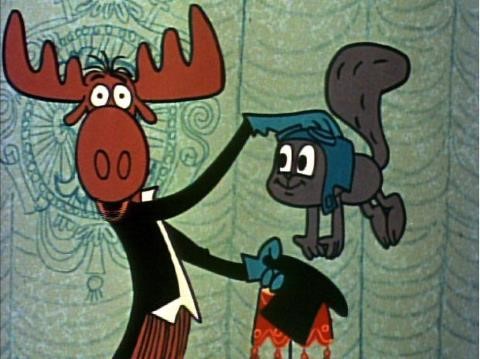
When you have an animated series featuring talking animals, the natural inclination is to file it under “Children’s Entertainment.” And yet The Rocky and Bullwinkle Show featured witty wordplay, spoofs of popular culture, self-referential humor, and political satire (particularly regarding the Cold War). You can tell that network execs were confused by the fact that they sometimes aired the show in prime time and sometimes on Saturday morning. During the show’s five season run from 1959 to 1964 it also switched networks. For the first two seasons it was on ABC and called Rocky and His Friends. Then it moved to NBC and became The Bullwinkle Show. CBS never gave it a shot but the show lived on in syndication under the names The Rocky Show, The Rocky and Bullwinkle Show, The Adventures of Rocky and Bullwinkle, and The Adventures of Bullwinkle and Rocky. Whew!
Ok, but beyond this rocky (pun intended) broadcast history, what was the show about? Jay Ward created the show to be an ongoing adventure serial about a moose and a squirrel. Animator Alex Anderson created many of the characters but declined to work on the show itself. Ward hired Bill Scott as head writer and co-producer of the show, as well as writers Chris Hayward and Allan Burns. General Mills came on board as the show’s main sponsor. The ongoing serial featured four main characters, two heroes and two villains:
Rocket J. Squirrel (a.k.a. Rocky the Flying Squirrel), voiced by June Foray, is a noble all-American kid in squirrel form who serves as the straight man to his partner Bullwinkle’s antics. His catchphrase is “Hokey smokes!”
Bullwinkle J. Moose, voiced by Bill Scott, is a good-hearted and optimistic, but very dimwitted moose. He and Rocky are roommates in the fictional town of Frostbite Falls, Minnesota. He attended Wossamotta U. on a football scholarship.
Boris Badenov, voiced by Paul Frees, is a spy from the fictional nation of Pottsylvania (a thinly disguised amalgamation of countries behind the Iron Curtain.). He is constantly up to no good and scheming on a plan given to him by his Fearless Leader or concocting his own criminal conspiracy. He proudly introduces himself as the “world’s greatest no-goodnik.”
Natasha Fatale, voiced by June Foray, is another Pottsylvania spy and Boris’ partner in crime. The design of Boris and Natasha are inspired by Charles Addams’ characters Gomez and Morticia Addams.
Over five seasons and 163 episodes, Rocky & Bullwinkle and Boris & Natasha appeared in 28 different serialized story arcs. The shortest serial had only 4 chapters while the longest had 40! And this was in the days before DVD box sets and streaming video made binge watching possible, so the creators of the show put a lot of faith in the audience remembering what happened earlier in the story.
A typical 23-minute episode would have two segments of a Rocky & Bullwinkle serial, each ending on a cliffhanger (and a bad pun). Additionally, the show would have a couple of supporting features drawn from the following:
Dudley Do-Right of the Mounties – In a parody of silent film melodramas, the brave but dumber-than-Bullwinkle mounted policeman Dudley Do-Right (Bill Scott) attempts to foil the plots of the villainous Snidley Whiplash (Hans Conried). This usually requires rescuing Nell Fenwick (June Foray), whom Dudley loves, but she in return is only fond of his horse.
Aesop and Son – Old fables are retold in a comical way by Aesop (Charles Ruggles) and his son, Junior (Daws Butler).
Fractured Fairy Tales – Edward Everett Horton narrates fairy tales updated with modern themes and a lot of puns.
Peabody’s Improbable History – Mister Peabody (Bill Scott), a genius talking dog, adopts a boy named Sherman (Walter Tetley). Since the boy needs exercise, Peabody invents a time machine called the WABAC. They travel to various historical events to see what “really” happened.
Bullwinkle’s Corner – Bullwinkle attempts to be cultured by reading poetry with comical results.
Know-it All – Bullwinkle, who we have already noted is quite dim, attempts to be the authority of various topics while Boris Badenov undermines his efforts.
The one great flaw of The Rocky and Bullwinkle Show is its animation style. Television animation of the 50s and 60s relied on the practices of limited animation such as reusing simple backgrounds and the stilted motions of the characters to save money. But even by the standards of limited animation, The Rocky and Bulwinkle Show’s animation was choppy and full of visible flaws. General Mills insisted on outsourcing the animation to the Mexican studio Gamma Productions S.A. de C.V, and Ward was never happy with the quality. But ultimately, the witty scripts and terrific voice acting made the poor quality animation irrelevant to the show becoming a classic.
The Rocky and Bullwinkle Show legacy lives on in syndicated reruns. Despite never being a morning person, I went through a phase as a teenager in the late 1980s where I would get up to watch it at 6am before school! The show has also been released in various home media formats. Attempts to revive the show in the 1970s and 80s failed but it eventually found its way to the big screen. Boris and Natasha: The Movie (1992) and Dudley Do-Right (1999) were live-action adaptations that both bombed. A live-action/animated hybrid movie The Adventures of Rocky and Bullwinkle (2000) was also poorly received. Mr. Peabody & Sherman (2014) from DreamWorks Animation got much better reviews and spun off a Netflix series (2015-2017). DreamWorks Animation Television followed up with a reboot series of The Adventures of Rocky and Bullwinkle (2018-2019) on Amazon Prime Video. I have not watched any of these having remained loyal to the original work of Jay Ward and company.
I first heard about Elmore James from a Rolling Stones book…Brian Jones was a huge fan of the blues artist. The song also helped bring Keith Richards, Mick Jagger, and Brian Jones together to form the Stones.
On November 23, 1936, Robert Johnson was in San Antonio Texas for his debut recordings. The first song he did was “Kind Hearted Woman Blues” in two versions, his second song was “I Believe I’ll Dust My Broom” and his third was “Sweet Home Chicago.” Johnson is usually credited with writing all three songs. Elements of this song can be traced back to several other blues songs. In 1934 Kokomo Arnold was in the studio in Chicago. He recorded Sagefield Woman Blues at a session, which contains maybe the first mention of the phrase “Dust My Broom” in the lyrics.
Elmore recorded and released his version in 1951. On the single, the song was credited to Elmo James. The song peaked at #9 in the R&B Charts in 1952. Elmore James’s version is probably the most popular version of the song. James’ “Dust My Broom” was inducted into the Blues Foundation Blues Hall of Fame in 1983… it was stated that it received more votes than any other record in the first year of balloting for singles.
Artists who have covered this song include Johnny Winter, Derek Trucks, ZZ Top, Ike and Tina Turner, Robert Jr. Lockwood, John Littlejohn, Hound Dog Taylor, Homesick James and Frank Zappa.
Bill Wyman (bass player for the Rolling Stones): “The very first time Brian heard it, he played Elmore James’ ‘Dust My Broom.’ And Brain said the earth shattered and seemed to go off its axis, it was such an important moment in his life. He just went away and just tried to learn to play like Elmore James. And he sat in with the band, the Alexis Korner band, and played ‘Dust My Broom.’
By pure chance, that day Mick and Keith and a couple of their mates who’d been trying to put a band together in Dartford – unsuccessfully – went to see the Alexis Korner show as well, after reading about it in the music press. And they saw Brian Jones sitting onstage, this little white cat, sitting onstage and doing Elmore James, and it blew them away! So that was the Stones. Elmore James was a very, very important part, and if that hadn’t happened – that moment – maybe the Rolling Stones wouldn’t be here.”
Derek Trucks: “You can remember almost every Elmore James solo by heart because he was playing songs. Nothing’s wasted. Nothing’s throwaway. It doesn’t feel like somebody’s practicing in front of you, or running scales; these are melodies that are pouring out, and those are the players that I listen to. They move me.
Dust My Broom
I’m gettin’ up soon in the mornin’ I believe I’ll dust my broom I’m gettin’ up soon in the mornin’ I believe I’ll dust my broom Out with the best gal I’m lovin’ Now my friends can get in my room
I’m gonna write a letter, telephone every town I know I’m gonna write a letter, telephone every town I know If I don’t find her in Mississippi She be in East Monroe I know
And I don’t want no woman Want every downtown man she meets No I don’t want no woman Want every downtown man she meets Man, she’s a no good doney They shouldn’t allow her on the street, yeah
I believe, I believe my time ain’t long I believe, I believe my time ain’t long I ain’t gonna leave my baby And break up my happy home
When I think of Elvis …I admire him on one hand and on the other I pity him for how he ended up. When the big E was coming out of the Memphis radios on Sun Records…there was not anyone around that could touch him as a live rock and roll performer. Then came Colonel Tom Parker and Elvis became a huge star but with a steep cost.
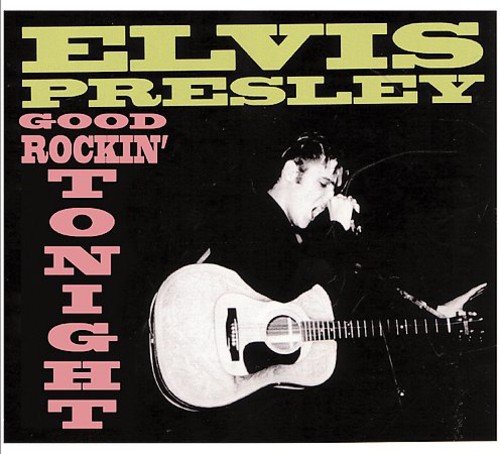
Roy Brown first wrote and released this song in 1947. Elvis covered it and released it in 1954. His release was his second Sun Record release and the B side was a song called “I Don’t Care if the Sun Don’t Shine.” I wish Elvis could have stayed on Sun a little longer. Soon he would be gone to RCA. Great records but he had a sound on Sun that he never got back. His band was Scotty Moore on lead guitar and Bill Black on the double bass. The song didn’t chart many places but it did peak at #10 in Sweden.
His first single for Sun was “That’s Alright Mama.” On June 7, 1954, WHBQ Radio in Memphis became the first station to play this song when their disc jockey Dewey Phillips aired it on his Red, Hot and Blue show the day after Elvis recorded it. It soon built up regionally after that.
On November 20, 1955, Elvis signed with RCA and after that, his records were everywhere. RCA could give him distribution all over the world but I wish they would have kept recording the Sun Studios with Sam Phillips. Mr. Phillips owned Sun Studios since 1952 and he would have a star-studded roster of Johnny Cash, Roy Orbison, Jerry Lee Lewis, Carl Perkins, and more.
He was also an early investor in the Holiday Inn chain of hotels and an advocate for racial equality, helping to break down racial barriers in the music industry.
The B Side I Don’t Care if the Sun Don’t Shine
Good Rockin Tonight
Well, I heard the news, there’s good rockin’ tonight Well, I heard the news, there’s good rockin’ tonight I’m gonna hold my baby as tight as I can Tonight she’ll know I’m a mighty, mighty man I heard the news, there’s good rockin’ tonight
I said, meet me and a-hurry behind the barn Don’t you be afraid ’cause I’ll do you no harm I want you to bring along my rockin’ shoes ‘Cause tonight I’m gonna rock away all our blues I heard the news, there’s good rockin’ tonight
Well, we’re gonna rock We’re gonna rock Let’s rock Come on and rock We’re gonna rock all our blues away
Have you heard the news, everybody’s rockin’ tonight Have you heard the news, everybody’s rockin’ tonight I’m gonna hold my baby as tight as I can Well, tonight she’ll know I’m a mighty, mighty man I heard the news, there’s good rockin’ tonight
Well, we’re gonna rock, rock, rock, rock Come on and rock, rock, rock, rock Let’s rock, rock, rock, rock Well, let’s rock, rock, rock, rock We’re gonna rock all our blues away
I should have posted this before I started the series so when I reached the end of 5th season I thought it was time to feature this one. CBS purchased a teleplay in 1958 that writer Rod Serling hoped to produce as the pilot of a weekly anthology series. “The Time Element” marked Serling’s first entry in the field of science fiction.
It’s a Time Travel episode and a good one. William Bendix as Peter Jenson goes back in time right before Pearl Harbor takes place.
This show premiered on November 24, 1958. Rod Serling wrote this episode and it appeared on the Westinghouse Desilu Playhouse. This one could have been a Twilight Zone.
Although this isn’t the pilot episode of The Twilight Zone, it was this Rod Serling production that eventually led to The Twilight Zone. It proved to be very popular with viewers, which led CBS to pursue a new series with Serling. Because TV viewers at the time were not used to the kind of surprise, twist endings for which Twilight Zone became noted (as in this episode), Desi Arnaz appeared on-screen at the end of the episode to offer his explanation of “what really happened.”
IMDB Trivia:
Martin Balsam (Dr. Arnold Gillespie) later played Admiral Husband Kimmel in Tora! Tora! Tora! (1970), which likewise concerned the attack on Pearl Harbor.
This episode takes place on October 4, 1958 and from December 6 to December 7, 1941.
Uses music that was later used in George A. Romero’s Night of the Living Dead (1968).
The man at the bar is Joe DeRita from The Three Stooges.
This show was written by Rod Serling
Summary
A man is sent back in time to December 6, 1941, to Pearl Harbor on December 5, 1941, two days before it is bombed. The episode relates his frantic efforts to warn military officials of the approaching catastrophe.
The complete episode
CAST
William Bendix…Peter Jenson Martin Balsam…Dr. Arnold Gillespie Darryl Hickman…Ensign Janoski Jesse White…Bartender Carolyn Kearney…Edna Janoski Jesslyn Fax…Maid Alan Baxter…Army Doctor Bartlett Robinson…Mr. Gibbons Don Keefer…Hannify Joe DeRita…Man at Bar (as Joe De Rita) Paul Bryar…Paul Bryar…… Bartender at Andy’s Desi Arnaz…Host Gene Coogan…Bar Patron (uncredited)







![The Band Shares Previously-Unreleased "The Weight" From Royal Albert Hall, 1971 [Listen]](https://i0.wp.com/liveforlivemusic.com/wp-content/uploads/2021/02/the-band-the-weight-live.jpg?fit=980%2C490&ssl=1)



















 PowerPop... An Eclectic Collection of Pop Culture