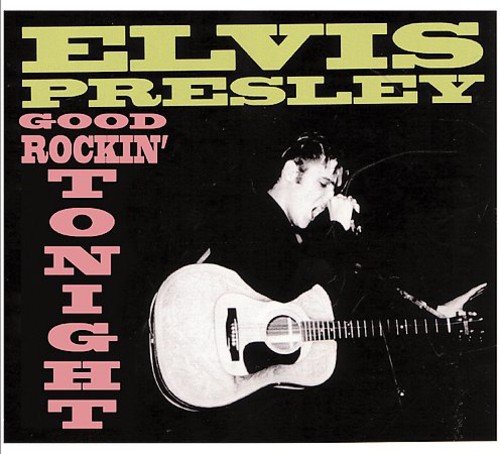
When I think of Elvis …I admire him on one hand and on the other I pity him for how he ended up. When the big E was coming out of the Memphis radios on Sun Records…there was not anyone around that could touch him as a live rock and roll performer. Then came Colonel Tom Parker and Elvis became a huge star but with a steep cost.
Roy Brown first wrote and released this song in 1947. Elvis covered it and released it in 1954. His release was his second Sun Record release and the B side was a song called “I Don’t Care if the Sun Don’t Shine.” I wish Elvis could have stayed on Sun a little longer. Soon he would be gone to RCA. Great records but he had a sound on Sun that he never got back. His band was Scotty Moore on lead guitar and Bill Black on the double bass. The song didn’t chart many places but it did peak at #10 in Sweden.
His first single for Sun was “That’s Alright Mama.” On June 7, 1954, WHBQ Radio in Memphis became the first station to play this song when their disc jockey Dewey Phillips aired it on his Red, Hot and Blue show the day after Elvis recorded it. It soon built up regionally after that.
On November 20, 1955, Elvis signed with RCA and after that, his records were everywhere. RCA could give him distribution all over the world but I wish they would have kept recording the Sun Studios with Sam Phillips. Mr. Phillips owned Sun Studios since 1952 and he would have a star-studded roster of Johnny Cash, Roy Orbison, Jerry Lee Lewis, Carl Perkins, and more.
He was also an early investor in the Holiday Inn chain of hotels and an advocate for racial equality, helping to break down racial barriers in the music industry.
The B Side I Don’t Care if the Sun Don’t Shine
Good Rockin Tonight
Well, I heard the news, there’s good rockin’ tonight Well, I heard the news, there’s good rockin’ tonight I’m gonna hold my baby as tight as I can Tonight she’ll know I’m a mighty, mighty man I heard the news, there’s good rockin’ tonight
I said, meet me and a-hurry behind the barn Don’t you be afraid ’cause I’ll do you no harm I want you to bring along my rockin’ shoes ‘Cause tonight I’m gonna rock away all our blues I heard the news, there’s good rockin’ tonight
Well, we’re gonna rock We’re gonna rock Let’s rock Come on and rock We’re gonna rock all our blues away
Have you heard the news, everybody’s rockin’ tonight Have you heard the news, everybody’s rockin’ tonight I’m gonna hold my baby as tight as I can Well, tonight she’ll know I’m a mighty, mighty man I heard the news, there’s good rockin’ tonight
Well, we’re gonna rock, rock, rock, rock Come on and rock, rock, rock, rock Let’s rock, rock, rock, rock Well, let’s rock, rock, rock, rock We’re gonna rock all our blues away
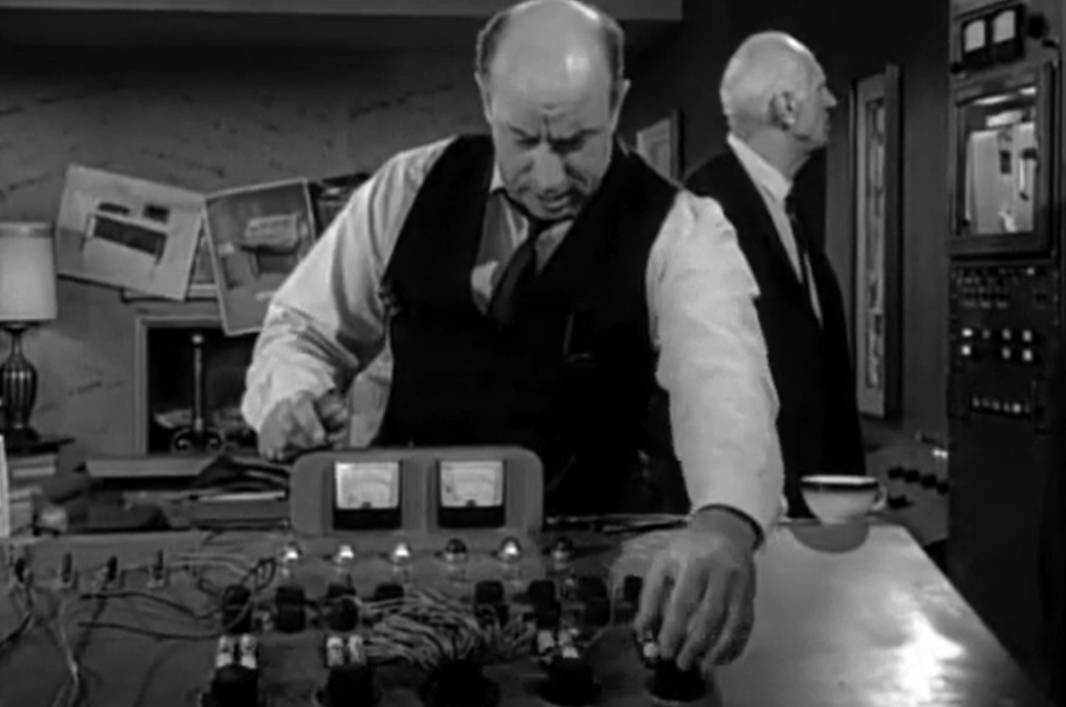
I should have posted this before I started the series so when I reached the end of 5th season I thought it was time to feature this one. CBS purchased a teleplay in 1958 that writer Rod Serling hoped to produce as the pilot of a weekly anthology series. “The Time Element” marked Serling’s first entry in the field of science fiction.
It’s a Time Travel episode and a good one. William Bendix as Peter Jenson goes back in time right before Pearl Harbor takes place.
This show premiered on November 24, 1958. Rod Serling wrote this episode and it appeared on the Westinghouse Desilu Playhouse. This one could have been a Twilight Zone.
Although this isn’t the pilot episode of The Twilight Zone, it was this Rod Serling production that eventually led to The Twilight Zone. It proved to be very popular with viewers, which led CBS to pursue a new series with Serling. Because TV viewers at the time were not used to the kind of surprise, twist endings for which Twilight Zone became noted (as in this episode), Desi Arnaz appeared on-screen at the end of the episode to offer his explanation of “what really happened.”
IMDB Trivia:
Martin Balsam (Dr. Arnold Gillespie) later played Admiral Husband Kimmel in Tora! Tora! Tora! (1970), which likewise concerned the attack on Pearl Harbor.
This episode takes place on October 4, 1958 and from December 6 to December 7, 1941.
Uses music that was later used in George A. Romero’s Night of the Living Dead (1968).
The man at the bar is Joe DeRita from The Three Stooges.
This show was written by Rod Serling
Summary
A man is sent back in time to December 6, 1941, to Pearl Harbor on December 5, 1941, two days before it is bombed. The episode relates his frantic efforts to warn military officials of the approaching catastrophe.
The complete episode
CAST
William Bendix…Peter Jenson Martin Balsam…Dr. Arnold Gillespie Darryl Hickman…Ensign Janoski Jesse White…Bartender Carolyn Kearney…Edna Janoski Jesslyn Fax…Maid Alan Baxter…Army Doctor Bartlett Robinson…Mr. Gibbons Don Keefer…Hannify Joe DeRita…Man at Bar (as Joe De Rita) Paul Bryar…Paul Bryar…… Bartender at Andy’s Desi Arnaz…Host Gene Coogan…Bar Patron (uncredited)
We have now gone over every episode of the Twilight Zone. For those who have not seen every episode and you get curious or want an episode guide…please go here https://powerpop.blog/twilight-zone-episodes
If only one person watched an episode because of this series…I did my job. THANK YOU once again to all the readers who have followed me through this journey. Even if you just checked a few out. Thank you for agreeing and disagreeing…that is what this was all about. I started this on April 11, 2021, and now over a year later, we are finishing this up.
When I started this I thought I would end up not liking the show as much but the opposite has happened…I like it even more. I found some episodes that at one time I thought were only so-so…much better than I remembered. My appreciation grew for them after watching them again. Out of 156 shows…I only rated four shows under a 3…and my rating of 3 was an average good show. That ratio is a great run for any show.
The 5th season’s episodes are at the bottom of this post…. are there any that you disagree with the rating? Lisa brought up the interaction of the blog and that is what made me want to finish it. Some people found different meanings from episodes than I did and some episodes take on a new meaning for me now.
For one reason or another, Jim Aubrey [then president of CBS] decided he was sick of the show. He claimed that it was too far over budget and that the ratings weren’t good enough. In truth, Twilight Zone was still rated well, although not in the top ten but doing well, and the show was on budget.
To sum Jim Aubrey up…he had contempt for smart shows. Two of his successes were Gilligans Island and The Beverly Hillbillies… a quote from Mr. Aubrey: “The American public is something I fly over”
Executives have said his formula was “broads, bosoms, and fun” so The Twilight Zone didn’t have a chance. This is another quote by the magnificent Aubrey: Feed the public little more than rural comedies, fast-moving detective dramas, and later, sexy dolls. No old people; the emphasis was on youth. No domestic servants, the mass audience wouldn’t identify with maids. No serious problems to cope with. Every script had to be full of action. No physical infirmities.
ABC wanted the Twilight Zone but they would have had to change the name because CBS owned it. Serling said no. Daily Variety reported that Serling considered the odds of a sixth season unlikely…and then. Rod Serling:I decided to cancel the network.
The Twilight Zone is still watched and admired by new generations. Many science fiction works are judged against it. SNL, The Simpsons, Family Guy, and songs have referenced the show. It’s now in our pop culture and will never leave.
After the Twilight Zone, Rod Serling did another TV program called The Loner. The Loner was a terrific 1965 western program that hit on social issues set in the old west. In 1969 He did The Night Gallery but he didn’t have control over that like he did with the Twilight Zone. He later said he regretted not keeping more control. He also co-wrote the screenplay for Planet of the Apes.
Right before he passed away he did the promos for Fantasy Park in 1975.
From Wiki
In May 1975, Serling was admitted to a hospital after experiencing a mild heart attack. One month later, he was re-admitted for a coronary bypass operation. Complications arose after ten hours of open-heart surgery, and he died on June 28, 1975, in Rochester, New York. In all, he had lived fifty years, six months, and three days.
***Just a note…on Saturday I will be posting the precursor to the Twilight Zone and…I picked the show for the current ongoing TV Draft that will appear in a few weeks***
This is the last Twilight Zone episode. I will have a Twilight Zone 5th Season review Wednesday and a Twilight Zone precursor…a show that led to making the Twilight Zone on Saturday…also in our TV Draft…yea I’ll be covering this one in some round.
This is the last aired Twilight Zone episode. I love this episode but it’s not one of the more popular ones. It’s in my top twenty of Twilight Zones. This one I disagree with the majority of Twilight Zone fans. Being a child of divorce I can totally relate to the two main children in this episode. It always reminded me of Narnia a little bit. Instead of a wardrobe closet, it was a pool.
The biggest complaint of this episode happened when there was noise interference on the MGM back-lot during the pool sequences, and everyone had to be called back for post-dubbing. Actress Mary Badham who played Sport Sharewood had already flown back to Alabama and it was deemed too expensive to fly her back to Los Angeles. June Foray was brought in to dub her lines. It wasn’t the best dubbing job (not Foray’s fault) but it doesn’t interfere with the story.
Kids would love a place to hide from fighting parents. The kids, Sport and Jeb found such a place at a bottom of a pool. As their parents would not stop fighting they escaped to a tranquil place with other kids who were all looked after by Aunt “T.” Sometimes parents don’t understand what lengths kids will go to get away…real or imagined.
IMDB Trivia:
Both children speak with Southern accents while their urbane parents have generic American accents. The writer Earl Hamner Jr. (who later created The Waltons (1972)) hearkened back to the children in the film To Kill a Mockingbird (1962). In the film, the children were named Scout and Jem. In this episode, the children are Sport and Jeb. Mary Badham played both Scout and Sport.
This was essentially the series finale as the show was canceled a short time later in June 1964.
The swimming pool used in this is the same pool seen in the earlier “Queen of the Nile,” and season two’s, “The Trouble with Templeton”.
Earl Hamner, who wrote the script for this episode, said that he disliked the characterization of “Aunt T.” as played by actress Georgia Simmons. He stated that there were women whom he characterized as “earth mothers,” citing actress Patricia Neal as an example of the kind of portrayal he had envisioned for the role, and said that instead he found “Aunt T.” as depicted in the episode “too cute.” Patricia Neal would go on to create the role of Olivia Walton in the pilot, “The Homecoming,” of Hamner’s long-running series, “The Waltons.”
This show was written by Rod Serling and Earl Hamner Jr.
Rod Serling’s Opening Narration:
Right before the end of the introduction, as in a typical episode, Rod Serling appears on-screen and says:
A swimming pool not unlike any other pool, a structure built of tile and cement and money, a backyard toy for the affluent, wet entertainment for the well-to-do. But to Jeb and Sport Sharewood, this pool holds mysteries not dreamed of by the building contractor, not guaranteed in any sales brochure. For this pool has a secret exit that leads to a never-neverland, a place designed for junior citizens who need a long voyage away from reality, into the bottomless regions of the Twilight Zone.
After the opening credits are finished rolling, Serling, in voice-over, says:
Introduction to a perfect setting: Colonial mansion, spacious grounds, heated swimming pool. All the luxuries money can buy. Introduction to two children: brother and sister, names Jeb and Sport. Healthy, happy, normal youngsters. Introduction to a mother: Gloria Sharewood by name, glamorous by nature. Introduction to a father: Gil Sharewood, handsome, prosperous, the picture of success. A man who has achieved every man’s ambition. Beautiful children, beautiful home, beautiful wife. Idyllic? Obviously. But don’t look too carefully, don’t peek behind the façade. The idyll may have feet of clay.
Summary
Told by their parents that they are getting a divorce, Sport and Jeb Sharewood now have to decide who they are going to live with. They decide they would rather live with Aunt T, the woman they’ve met by traveling through a portal at the bottom of their swimming pool. At the other end is an idyllic world where children play and there are few adults. Aunt T is a kindly old woman but Sport is far more reluctant than Jeb to accept her invitation to stay with them.
Rod Serling’s Closing Narration:
A brief epilogue for concerned parents. Of course, there isn’t any such place as the gingerbread house of Aunt T, and we grownups know there’s no door at the bottom of a swimming pool that leads to a secret place. But who can say how real the fantasy world of lonely children can become? For Jeb and Sport Sharewood, the need for love turned fantasy into reality; they found a secret place—in the Twilight Zone.
CAST
Rod Serling … Host / Narrator – Himself Mary Badham … Sport Sharewood June Foray … Sport Sharewood (voice, outdoor scenes) Kim Hector … Witt Dee Hartford … Gloria Sharewood Jeffrey Byron … Jeb Sharewood Georgia Simmons … Aunt T Tod Andrews … Gil Sharewood
This episode goes a bit under the radar compared to others. It’s a good solid effort. Mark Richman as Trooper Robert Franklin and Hazel Court as Charlotte Scott work very well together. Scott is introduced as a bit of a snob but as the show goes on you find out the reason for that. I like the Trooper who isn’t a stereotypical small-time trooper but is smart, does his job well, and is worldly. In between the mysterious events, the two characters always find time to philosophize and bicker with each other but build a good relationship. You end up rooting for both characters as their chemistry builds throughout the show.
The story focuses on the fear of who (or what) is causing disturbances outside of Charlotte’s remote cabin. The two encounter some strange phenomena including flashing lights and strange noises. They eventually see a giant fingerprint on Robert’s car that has been moved. Who or what you will find out in the end. This one is worth investing some time in to watch.
IMDB Trivia:
Robert Franklin served in both World War II and the Korean War.
Although never identified as such, Trooper Franklin appears to be a New York state trooper.
Trooper Franklin’s (Peter Mark Richman) badge number is #810 for an unidentified state police agency.
This show was written by Rod Serling
Rod Serling’s Opening Narration:
The major ingredient of any recipe for fear is the unknown. And here are two characters about to partake of the meal: Miss Charlotte Scott, a fashion editor, and Mr. Robert Franklin, a state trooper. And the third member of the party: the unknown, that has just landed a few hundred yards away. This person or thing is soon to be met. This is a mountain cabin, but it is also a clearing in the shadows known as the Twilight Zone.
Summary
Trooper Robert Franklin stops by Charlotte Scott’s remote cabin to see if she’s alright. She is a big-city fashion editor who is looking for peace and quiet while Franklin is a local who sees her as a snob. They are soon drawn together when a giant creature seems to appear in the woods just outside Charlotte’s cabin. Franklin’s patrol car is overturned and her telephone is suddenly out of order. Together, they will have to overcome their fears and deal with the extra-terrestrial creature that has appeared, which turns out to be something altogether unexpected.
Rod Serling’s Closing Narration:
Fear, of course, is extremely relative. It depends on who can look down and who must look up. It depends on other vagaries, like the time, the mood, the darkness. But it’s been said before, with great validity, that the worst thing there is to fear is fear itself. Tonight’s tale of terror and tiny people on the Twilight Zone.
CAST
Rod Serling … Host / Narrator – Himself Peter Mark Richman … Trooper Robert Franklin Hazel Court … Charlotte Scott
There are two episodes in the 5th season that I differ from many Twilight Zone fans…and this is one of them. I think it is the creepiest episode of them all. I’ve watched it countless times and I see something else every time I do. This show covers a plot device that the Twilight Zone has covered before but I like this take on it…a time loop…an endless cycle.
Gary Crosby (Bing Crosby’s son) plays Floyd Burney a jaded rockabilly star in search of new songs in the backwoods. Hank Patterson (Fred Ziffel in Green Acres) plays an old man who apparently is waiting for Burney at a barn-like music store but remains utterly uncommunicative. When Burney grabs a guitar and takes off…his fate is sealed.
Bonnie Breecher plays a beautiful girl named Mary Rachel who Burney hears singing a haunting ballad. Rachel falls in love with him but is powerless to change his preordained fate, as it seems Floyd is destined to live the song he wants to purchase. Floyd Burney is too self-centered to comprehend the bigger picture of the strange situation he finds himself in. Mary Rachel’s alter-ego also appears in an almost mourning demonic form throughout. The setting of this episode heightens the creepy atmosphere. You feel for Floyd Burney although you don’t really like him.
IMDB Trivia: This was the final episode of The Twilight Zone (1959) to be filmed, although two episodes filmed earlier were aired afterward.
As a teenager, Liza Minnelli auditioned for the role of Mary Rachel opposite Gary Crosby. Minnelli was so nervous that the producer William Froug commented: “She’ll never make it.” Minnelli lost out to Bonnie Beecher. This episode was Ms. Beecher’s acting debut.
The headstock of Floyd Burney’s guitar has black tape across the label covering the Gibson name brand.
Floyd Burney’s guitar is a Gibson ES-295 electric arch-top.
Producer William Froug:One of the people I interviewed was this nervous, frightened little girl whose hands shook and who was covered with sweat, and I said, Shell never make it. Her name was Liza Minnelli. And I chose Bonnie Beecher, and we all know what became of Bonnie Beecher!
I’ll never forget Liza Minnelli sitting there and her agent saying, This girl can really sing. I said, I’m sure she can, but I thought, Oh, she is so nervous! She’s scared out of her mind. To picture her as a hillbilly singer: no way. And I must tell you and this is the truth at the time, I sat there thinking, Well, I’ll probably kick myself for this but I can’t see this girl playing the part but shell probably be a big star. I still don’t regret it, but it was really classic stupidity.
This show was written by Rod Serling and Anthony Wilson
Rod Serling’s Opening Narration:
Mr. Floyd Burney, a gentleman songster in search of song, is about to answer the age-old question of whether a man can be in two places at the same time. As far as his folk song is concerned, we can assure Mr. Burney he’ll find everything he’s looking for, although the lyrics may not be all to his liking. But that’s sometimes the case – when the words and music are recorded in the Twilight Zone.
Summary
Singer Floyd Burney, the “Rock-a-Billy-Kid”, goes deep into the back woods hoping to find his next hit record. He no sooner arrives than he hears a beautiful singing voice which draws him deeper into the woods. He eventually meets Mary Rachel who tells him the song he heard belonged to someone and that she’s forbidden to tell anyone about it. When she finally reveals it to him, Floyd learns that his future is preordained.
Below is a short clip…I would recommend watching the episode if you have time.
Rod Serling’s Closing Narration:
In retrospect, it may be said of Mr. Floyd Burney that he achieved that final dream of the performer: eternal top-name billing, not on the fleeting billboards of the entertainment world, but forever recorded among the folk songs of the Twilight Zone.
CAST
Rod Serling … Host / Narrator – Himself Gary Crosby … Floyd Burney Bonnie Beecher … Mary Rachel John Bolt … Billy Rayford Hank Patterson … Old Man
For years I would skim over this episode until I watched it again and really got the message. It’s a good show and true to life. Rod Serling had his crystal ball at full power with this episode and could see what was happening. The message that Serling gets across is a stronger one today. It has been reported that automation could destroy as many as 73 million jobs by 2030…paving the way for further dehumanization.
Richard Deacon as Wallace V. Whipple, most famous for “The Dick Van Dyke Show” has control of his late father’s company. Despite the fact that his father doubled his production, the son sees him as a failure. His solution is to go to an almost totally computerized and mechanized factory, eliminating nearly all the workers, even the ones who have been there for years. Paul Newlan as Walter Hanley steals the show as a longtime principled employee with common sense and morals who picks Whipple apart.
I also have to mention Ted de Corsia who plays a frustrated worker named Dickerson who has had enough and takes some revenge against the machine taking his job.
The Brain Center At Whipple’s hits a chord with jobs being taken away from us by technology. We have corporations that only care about the bottom line and less about people who have helped make them. Technology is a great resource when used as a tool and should help employees do their jobs but not take them.
The episode is a little over the top but worth the ride.
IMDB Trivia: Richard Deacon and Rod Serling both grew up in Binghamton, New York and were graduates of Binghamton Central High School. There was a very popular lumber yard on Upper Court Street in Binghamton named “Whipple’s Lumber Yard”, thus the name for Deacon’s character in this episode. Rod Serling would often use names of places in and around Binghamton for names of places and characters in the series.
Select scenes and segments of dialogue from this episode were featured within the context of the ‘Information Age: People, Information and Technology’ exhibit at the Smithsonian Museum of American History. The exhibit ran from May 9, 1990 through September 4, 2006.
The new computer that is installed is the same one used in, “The Old Man and the Cave”.
This show was written by Rod Serling
Rod Serling’s Opening Narration:
These are the players — with or without a scorecard. In one corner a machine; in the other, one Wallace V. Whipple, man. And the game? It happens to be the historical battle between flesh and steel, between the brain of man and the product of man’s brain. We don’t make book on this one and predict no winner….but we can tell you for this particular contest, there is standing room only — in the Twilight Zone.
Summary
The W.V. Whipple Manufacturing Co. introduces a new automated manufacturing machine that will eliminate 61,000 jobs and the company’s president, Wallace V. Whipple, is quite proud of his achievement. Not everyone agrees with him, especially the loyal and longstanding employees who will be out of work. Foreman Vic Dickerson has plans for the machine – plans that land him in the hospital. When the machine is fully operational, it’s Wallace V. Whipple who learns just what it is he has created.
Rod Serling’s Closing Narration:
There are many bromides applicable here: ‘too much of a good thing’, ‘tiger by the tail’, ‘as you sow so shall you reap’. The point is that, too often, Man becomes clever instead of becoming wise; he becomes inventive and not thoughtful; and sometimes, as in the case of Mr. Whipple, he can create himself right out of existence. As in tonight’s tale of oddness and obsolescence, in the Twilight Zone.
CAST
Rod Serling … Host / Narrator – Himself Richard Deacon … Wallace V. Whipple Paul Newlan … Walter Hanley Ted de Corsia … Dickerson Thalmus Rasulala (credited … Jack Crowder) … Technician Shawn Michaels … Bartender Burt Conroy … Watchman Robby the Robot … Himself
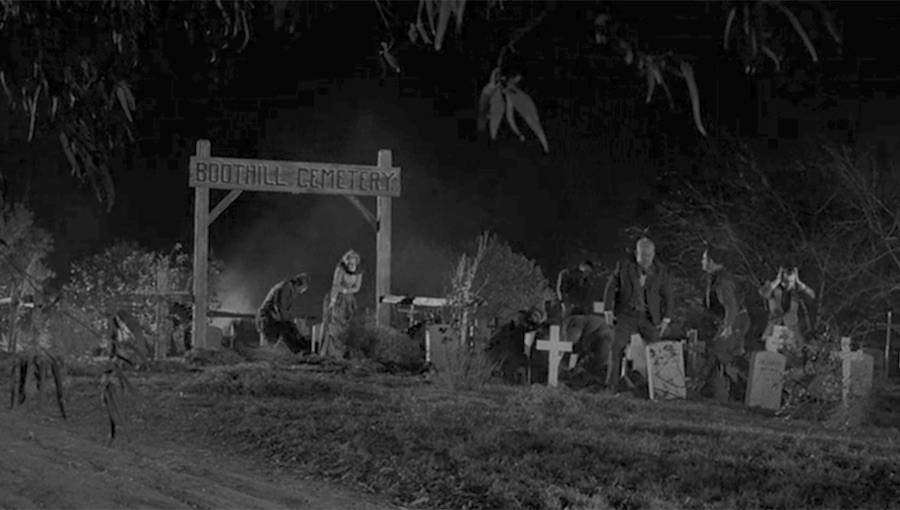
This is an excellent episode and what initially seemed like a straight drama actually had a subtle comedic twist. It says a lot about human nature. This may be a lighter episode but it works on many levels. Top to bottom, the comic casting is impeccable. Not a blight to be found in the cast. John Dehner is marvelously dry as a con man in the Old West and there is a good deal of humor as he goes about his business in the town of Happiness, Arizona. The town’s cemetery contained 128 dead, all but one were victims of violence…and as one drunk put it…that was my dear wife Zelda, rest her soul, a fine, healthy, strapping woman of 247 pounds but not unattractive, mind you.
John Dehner’s character Jared Garrity is going to raise the dead in Happiness Arizona. The townspeople in the saloon claim to miss their loved ones. But, upon rethinking the matter, one by one they realize that their late friends, wives, husbands, and drunkards maybe…just maybe weren’t the lovely people they were fondly remembering. Will Garrity be able to pull this feat off or is he taking the town for a ride?
The Twilight Zone’s 5th season lagged a little in the middle but with three more episodes to go…they finished up quite strong.
From IMDB Trivia: This is based on a supposed true story that happened in Alta, UT in 1873. It was initially told on Death Valley Days: Miracle at Boot Hill (1961).
This show was written by Rod Serling and Mike Korologos
Rod Serling’s Opening Narration:
Introducing Mr. Jared Garrity, a gentleman of commerce, who in the latter half of the nineteenth century plied his trade in the wild and wooly hinterlands of the American West. And Mr. Garrity, if one can believe him, is a resurrecter of the dead – which, on the face of it, certainly sounds like the bull is off the nickel. But to the scoffers amongst you, and you ladies and gentlemen from Missouri, don’t laugh this one off entirely, at least until you’ve seen a sample of Mr. Garrity’s wares, and an example of his services. The place is Happiness, Arizona, the time around 1890. And you and I have just entered a saloon where the bar whiskey is brewed, bottled and delivered from the Twilight Zone.
Summary
In the early 1890s Mr. Garrity arrives in Happiness, Arizona apparently knowing a great deal about some of the people who live there. He knows that Jensen the bartender’s brother died and that Gooberman the town drunk lost his wife. Garrity also reveals that he has a very peculiar gift – he can bring back the dead. When a dog is run down by a wagon in the street he resurrects it without any difficulty. When he offers to do the same for the town’s loved one’s, they realize they would rather he not bring back the dearly departed, something they are quite happy to pay him for. Garrity, a charlatan if ever there was one, is glad to accept their money – though he does seem to leave something behind
Rod Serling’s Closing Narration:
Exit Mr. Garrity, a would-be charlatan, a make-believe con man and a sad misjudger of his own talents. Respectfully submitted from an empty cemetery on a dark hillside that is one of the slopes leading to the Twilight Zone.
CAST
Rod Serling … Host / Narrator – Himself John Dehner … Jared Garrity J. Pat O’Malley: Mr. Gooberman Stanley Adams … Jensen John Mitchum … Ace Percy Helton … Lapham Norman Leavitt … Sheriff Gilchrist Edgar Dearing … First Resurrected Man Kate Murtagh … Zelda Gooberman Patrick O’Moore … Man John Cliff … Lightning Peterson Robert McCord … Townsman In Black Hat Cosmo Sardo … Resurrected Man
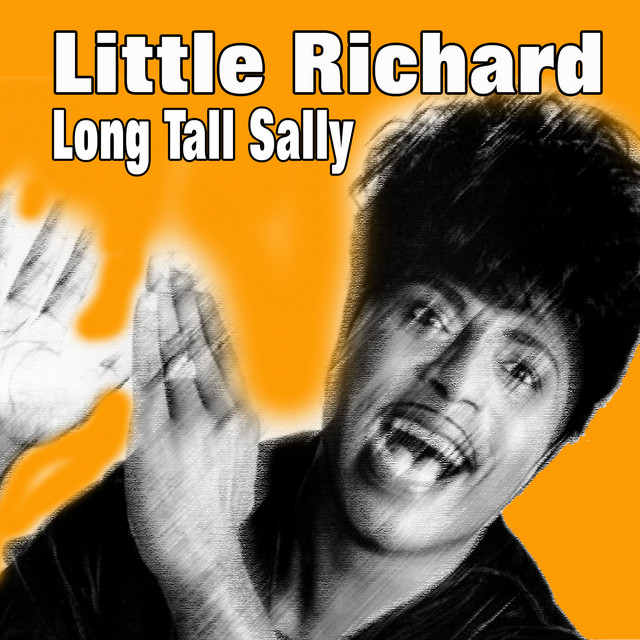
I first heard this through the Beatles, but nobody beats Little Richard (Richard Penniman) for this kind of raving song. The Beatles played on the same bill with Richard in Hamburg and Liverpool before they were nationally known. They got to know Billy Preston because he was Richard’s keyboard player.
My dad told me about Little Richard before I ever heard him. He said he had the largest voice he ever heard. He talked about a song called Long Tall Sally. I first heard it…it blew me away. Such a raw emotional power in that voice. He would take us to the edge of the cliff and then at the last-minute pull us back.
So was there a real Long Tall Sally? Yes, there was but she was not a cross-dresser as sometimes reported. Little Richard has said that Sally was a friend of the family who was always drinking whiskey…she would claim to have a cold and would drink hot toddies all day.
He described her as tall and not attractive, with just two teeth and cockeyed. She was having an affair with John, who was married to Mary, who they called “Short Fat Fanny.” John and Mary would get in fights on the weekends, and when he saw her coming, he would duck back into a little alley to avoid her. His voice was one of a kind…and I mean one of a kind. He could sing anything. Richard wrote this while working as a dishwasher at a Greyhound bus station in Macon, Georgia. He also wrote Tutti Frutti and Good Golly Miss Molly while working there. He had help with the song…Enotris Johnson and Robert Blackwell are also listed as the writers.
Long Tall Sally peaked at #6 in the Hot 100 and #1 in the R&B Charts in 1956.
Richard’s producer, Bumps Blackwell, had him record the vocal exceptionally fast in an effort to thwart Pat Boone. Boone’s version of “Tutti Frutti” sold better than Little Richard’s, so Blackwell tried to make it very difficult for Boone to copy. He had Richard work on the line “duck back down the alley” over and over until he could sing it very fast. He figured Boone could never match Richard’s vocal dexterity.
As much as I don’t like Pat Boone’s covers of Little Richards songs…they did help Richard get royalties as the writer.
Long Tall Sally
Gonna tell Aunt Mary ’bout Uncle John He claim he has the misery but he’s havin’ a lot of fun Oh baby, yeah baby, woo Havin’ me some fun tonight, yeah
Well long, tall Sally She’s built for speed, she got Everything that Uncle John need, oh baby Yeah baby, woo baby Havin’ me some fun tonight, yeah
Well, I saw Uncle John with long tall Sally He saw Aunt Mary comin’ and he ducked back in the alley oh baby Yeah baby, woo baby Havin’ me some fun tonight, yeah, ow
Well, long, tall Sally She’s built for speed, she got Everything that Uncle John need, oh baby Yeah baby, woo baby Havin’ me some fun tonight, yeah
Well, I saw Uncle John with bald-head Sally He saw Aunt Mary comin’ and he ducked back in the alley, oh, baby Yeah baby, woo, baby Havin’ me some fun tonight, yeah
We gonna have some fun tonight We gonna have some fun tonight, woo Have some fun tonight, everything’s all right Have some fun, have me some fun tonight
Welcome to the Hanspostcard TV Draft. The remaining 8 rounds will be posted here. We will have 64 different TV Shows by 8 different writers. I hope you will enjoy it! Today’s post was written by Keith from https://nostalgicitalian.com/
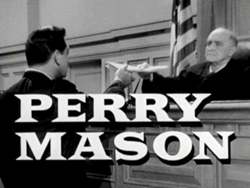
Perry Mason
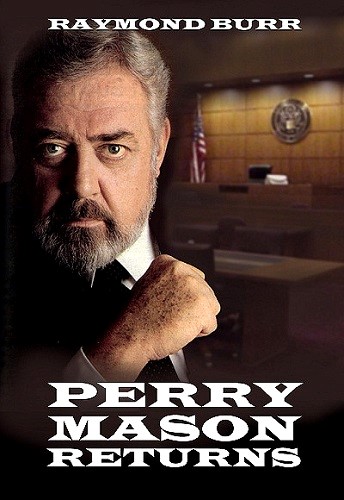
My choice for the third round draft pick is Hollywood’s first weekly one-hour series that was filmed for television – Perry Mason. The show ran for 9 seasons (September 1957 – May 1966) and starred Raymond Burr in the title role.
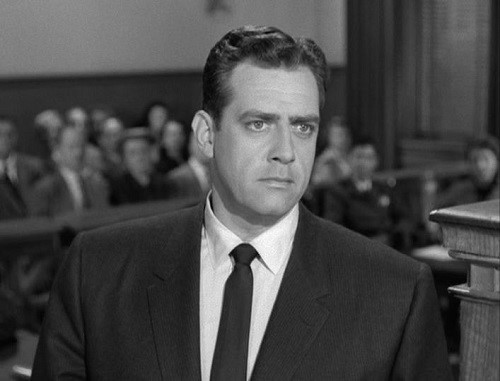
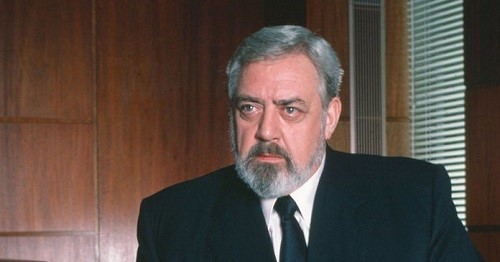
Raymond Burr
The character of Perry Mason was well known before he was ever on TV. The attorney was the star of novels and stories written by a lawyer-turned-author Erle Stanley Gardner. There were some movies made by Warner Brothers and also a radio series based starring the character, by Gardner hated them! As a matter of fact, he refused to license the character of Perry mason for any more adaptations. (Interestingly, the radio series continues and evolved into the famous soap opera The Edge of Night.)
Gardner’s agent married actress Gail Patrick and she was the one who talked him into adapting the novels into a TV series. He made it clear that he wanted a lot of control over the show and how it was presented. He also had a hand in helping pick the cast. Many of the stories he wrote were turned into episodes for the series.
The Cast
It is hard to imagine anyone other than Raymond Burr as Perry Mason. However, among the actors in the running were Mike Conners, Richard Egan, William Holden, Efrem Zimbalist Jr., William Hopper, and Fred MacMurray. Raymond Burr actually auditioned for the role of Hamilton Burger, the DA. Gail Patrick remembered his performance from the 1951 film “A Place in the Sun” and told him he was perfect for the role.
At the time, Burr was about 60 pounds overweight, so he went on a crash diet and tested for the role again with about 50 other actors. Erle Stanley Gardner saw him and reportedly said, “THAT is Perry Mason!” Burr continued to lose weight as the series continued. He stated, “I just don’t have time to eat.”
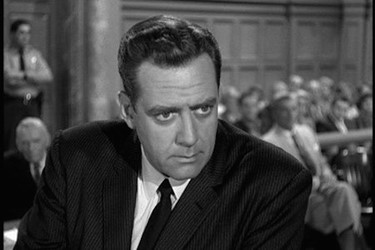
Syndicated columnist Erskine Johnson wrote, “Every six days Burr stars in what almost amounts to a full-length feature movie. He’s in 98% of all the scenes.” Burr stated, “I had no life outside of Perry Mason. And that went on 24 hours a day, sox days a week. I never went home at night. I lived on the lot. I got up at 3 o’clock every single morning to learn my lines for that day, and sometimes I hadn’t finished until 9 o’clock. I had a kitchen, bedroom, office space, sitting room – al of that – on every lot I ever worked on.”
Burr won three Primetime Emmy Awards for his portrayal of Perry Mason (1959, 1960, and 1961).
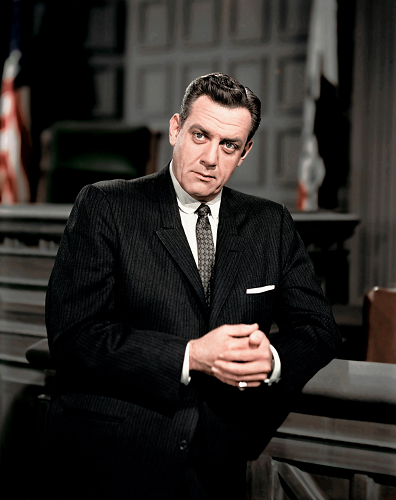
Raymond Burr IS Perry Mason
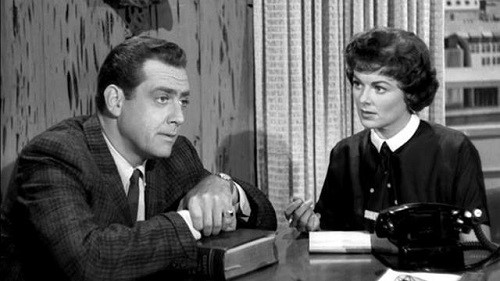
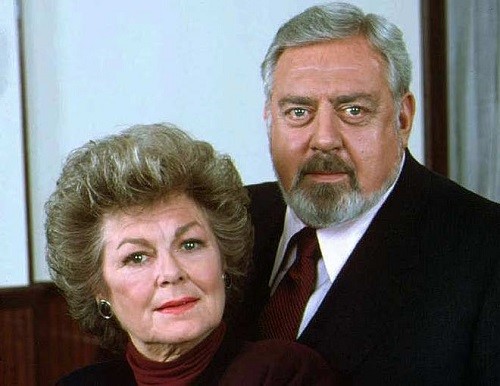
Other major players in the cast included Barbara Hale as Perry’s secretary, Della Street. Hale had done some feature films, but wanted to avoid going away for long periods of time to shoot them because she had a rather young family. According to Gail Patrick, it was Hale who called her to inquire about the role of Della.
Perry and Della (Barbara Hale)
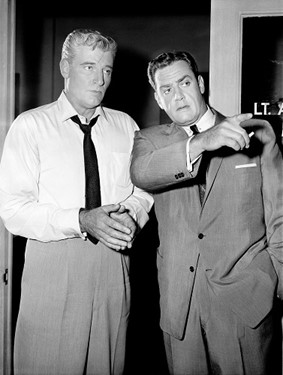
William Hopper, as I mentioned before, auditioned for the role of Perry Mason (I believe you can find some of the audition tapes on YouTube). After not getting the role of Mason and auditioning for Private Detective Paul Drake, he walked in the room and said, “You hate my mother!” His mother was Hedda Hopper, the famous gossip columnist. Patrick said he was the perfect Paul Drake, so he got the role.
William Hopper as Paul Drake with Burr’s Mason
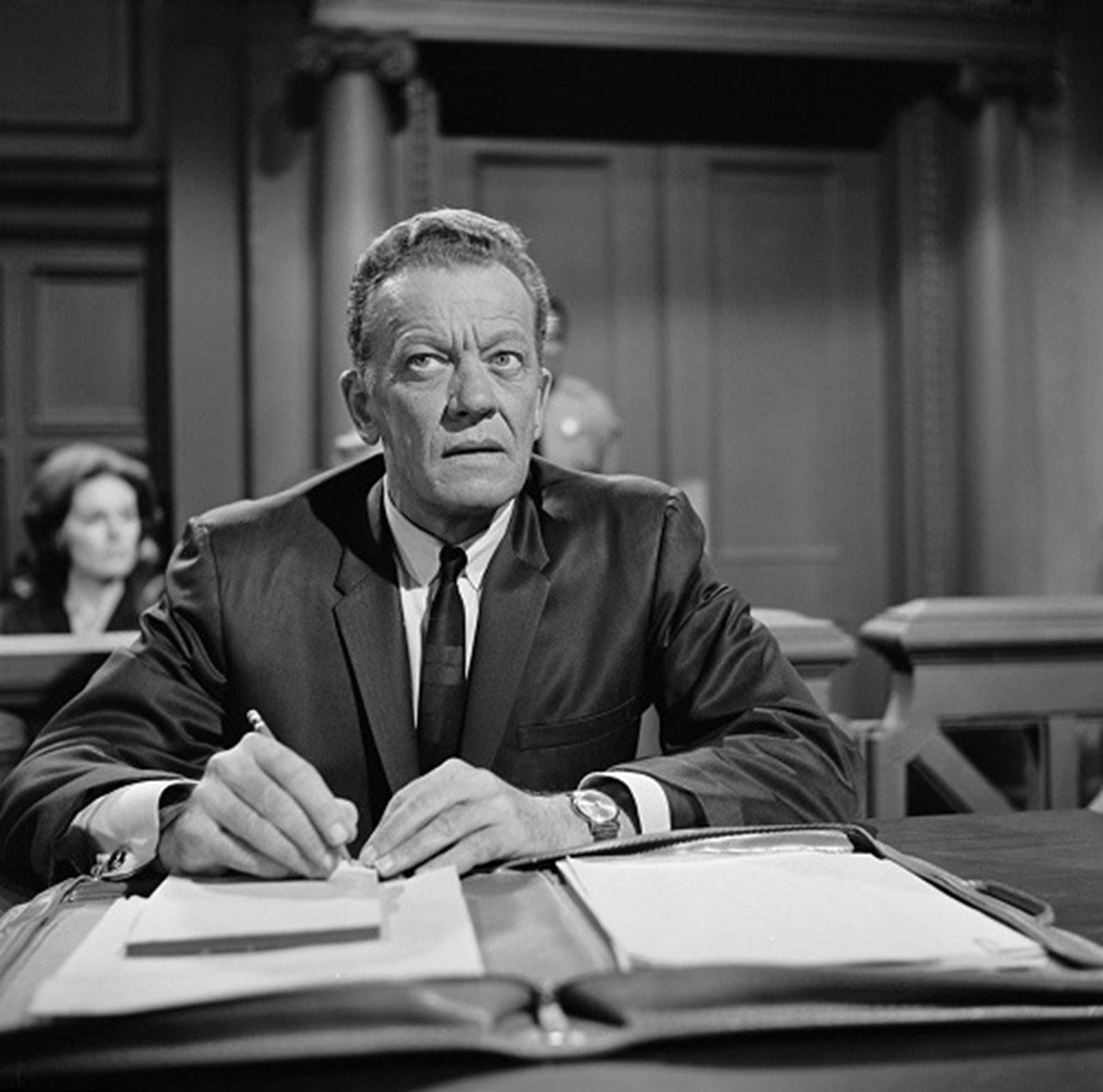
For the role of District Attorney Hamilton Burger, Patrick knew exactly who she wanted. She had seen William Tallman in The Hitch-Hiker and knew he was perfect for the role. She said, “He never disappointed.” In an interview he was asked how he felt about his character losing to Perry Mason every week. His response is perfect. He stated, “Burger doesn’t lose. How can a district attorney lose when he fails to convict an innocent person?” When Burr was asked by a fan why he won every case, he told her, “But madam, you only see the cases I try on Saturday!”
William Tallman – Hamilton Burger
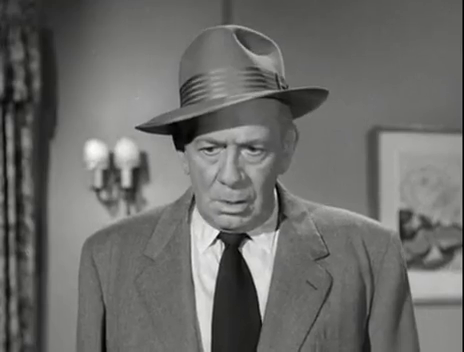
Another one of Perry’s foils was Police Lt. Arthur Tragg. Ray Collins’ voice was known to so many listeners of the Mercury Theater on radio. He had also been in movies and other TV shows. Patrick joked saying, “We overlooked the fact that on an actual police force, he would probably be long retired.” He was 68 years old when the show debuted on CBS. The playful interaction between Tragg and Mason are priceless.
The great Ray Collins as Lt. Tragg
The Plot
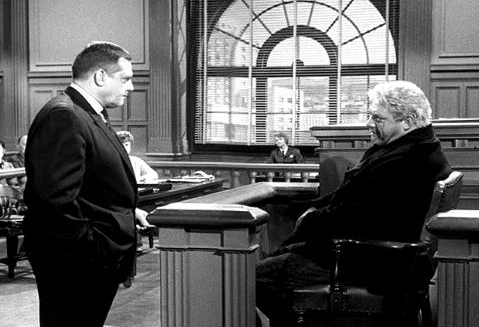
The basic formula for each episode was the same. The first part of the show introduced the viewer to a client who is hiring Perry Mason for some legal work or is introduced to him in some way. We then see the murder victim and other “suspects” introduced. The victim is murdered and Perry’s client is wrongfully accused of the crime. The remainder of the episode focuses on Burger and Tragg gathering evidence to convict the said “murderer”, Perry, Drake and Della take up their own investigation to prove their client is innocent.
The second half of the show would shift to the courtroom where Perry and Hamilton would duke it out in the preliminary hearing. In the novels, Perry likes to clear the client before they are bound over for trial, so this was worked into the show. They happen, but jury trials are rarely seen on the show.
The show would often culminate with Mason recalling a witness and questioning them until they cracked and admitted committing the murder OR causing someone else in the courtroom to admit that THEY committed the murder. The show would then wrap with a scene in Perry’s office or the courtroom where details would be presented on what led Perry to discover the real killer.
The formula worked for 9 seasons and eventually 30 TV made for TV movies.
Episodes of Interest
Throughout the run of the series, there were some very unique episodes. In the entire run of the series, Perry tackles an astounding 271 cases, and wins almost all of them! He actually lost thre cases (that we know of). In The Case of the Witless Witness, he loses a non-murder case. In The Case of the Terrified Typist, his client is found guilty of murder, but he is eventually able to clear her name. Finally, in The Case of the Deadly Verdict his client is found guilty of murder and is actually sentenced to death in the gas chamber! Perry, of course, is able to save the day before the execution is scheduled to take place.
A fun episode to watch is The Case of the Dead Ringer. Raymond Burr plays a dual role in this episode playing a man named “Grimes.” It’s fun to watch Burr question Burr as two different characters!
In season 6, Burr had some episodes where is appeared briefly, but guest actors filled in for Perry. Among those actors were Bette Davis, Michael Rennie, Hugh O’Brian, and Walter Pidgeon. Two years later, Burr was hospitalized for jaw surgery and Mike Conners and Barry Sullivan filled in for him.
How about the three that never set foot in a courtroom? Those were The Case of the Baited Hook, The Case of the Velvet Claws, and The Case of the Careless Kitten.
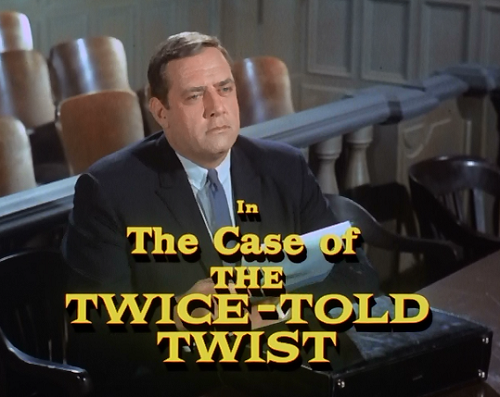
One of the most interesting shows was the one – and only – show that was shot in color. In the 9th season, CBS was hoping that the show would shoot a 10th season. Many shows were being shot in color by this time and they wanted to see what the show would look like. The Case of the Twice-Told Twist aired – in color – on February 27, 1966.
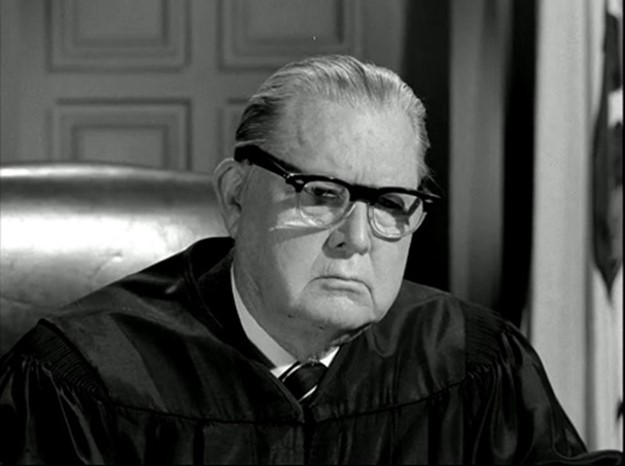
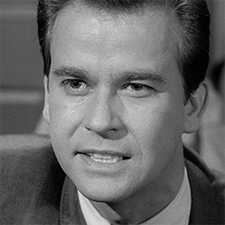
A must see episode is the series finale, The Case of the Final Fade-Out. First of all, it features cameos by all of the Perry Mason Crew in various roles. Second, it features the creator of the character, Erle Stanley Gardner, as the judge, and the murderer is … spoiler alert … a young Dick Clark!
Before They Were Famous
Many soon-to-be stars appeared on Perry Mason. I guess that is another reason why I love watching it. You never know who will pop up. Some examples: Barbara Eden, Cloris Leachman, Lee Meriwether, Pat Priest, Yvonne Craig, James Coburn, Angie Dickenson, George Kennedy, Diane Ladd, Frankie Laine, Ryan O’Neal, Robert Redford, Burt Reynolds, Claude Akins, Richard Anderson, Barbara Bain, James Best, Whit Bissell, Frank Cady, Bert Convey, Richard Deacon, Norman Fell, Alan Hale Jr., Harvey Korman, Gavin MacLeod, Allan Melvin, Leonard Nimoy, Denver Pyle, Marion Ross, Adam West, and MORE!
The Theme Song
Let’s be honest, the Perry Mason Theme Song is one of the most recognizable in all of television. The task of writing the theme went to composer Fred Steiner. He set out to write a song that would convey two of Perry’s prime characteristics – sophistication and toughness. The piece he wrote was called “Park Avenue Beat.”
Here is Fred discussing how he came up with the theme:
Here is the theme from the first season:
As much as I love the original version, I have to admit that when Perry Mason returned to TV in the two hour movies, I loved the version used for these films better. They just sound more full and better produced to me. So here it is:
I may as well touch briefly on the TV movies. In December of 1985, Perry Mason Returns aired on NBC.
Perry is now a judge and steps down to defend Della Street, who is accused of murder.
William Hopper died in 1970, so William Katt (Barbara Hale’s son) was called in to play Paul Drake Jr. The movies followed the same formula as the TV show. Burr and Hale had aged, but their on screen chemistry hadn’t changed at all. Burr was fantastic in this of course, he proves that Della is innocent! The successful reception and ratings of the reunion show led to 29 more Perry Mason Movies (Burr starred in 26 of them before passing away in 1993).
I never tire of watching Perry Mason. Despite being a bit dated, I think it still holds up today. HBO has created a “pre” Perry Mason show supposedly showing how he became the famous lawyer. I have no desire to watch it. To me, there is one and only Perry Mason!
FUN FACT: Raymond Burr started playing the character in 1957 and played him until his death in 1993. He played Perry Mason for a whopping 36 years!
So if you ever find yourself accused of murder … there is only one lawyer to call….
This episode is a serious and powerful episode. Taro (George Takei) lives with the guilt and dishonor that his father brought on the family by turning traitor during World War II, even while employed as a shipbuilder in Hawaii. Fenton (Neville Brand) endures the repressed guilt of having murdered a Japanese soldier after the man had already surrendered.
At first, the two are cordial but you can feel the tension build as the episode proceeds. It deals with themes of guilt and atonement. The dialog sounds authentic and dramatic. George Takei who plays Arthur Takamori would later go on to star in Star Trek. Both actors are superb in this story.
IMDB Trivia: This episode sparked some intense controversy for CBS after it was first aired in 1964. Due to strong critical blow-back for it’s ostensible racist overtones and revisionist history, CBS pulled this episode out of syndication and it was not rebroadcast again on any network in the U.S. until 2016; although it did air in other countries and was also not removed from streaming services or home video/DVD sets. The Encounter triggered audience and reviewer criticism of the episode as antithetical to the series’ normally positive treatment of otherwise sensitive social, religious, and racial subject matter.
During the dialogue, the Pearl Harbor attack was extensively discussed. Six years later, Neville Brand would have a small role in the epic Pearl Harbor film Tora! Tora! Tora!
This episode was finally rerun in the United States, on the Syfy channel, during a complete Twilight Zone marathon on January 3rd, 2016.
This show was written by Rod Serling and Martin Goldsmith
Rod Serling’s Opening Narration:
Two men alone in an attic, a young Japanese-American and a seasoned veteran of yesterday’s war. It’s twenty odd years since Pearl Harbor, but two ancient opponents are moving into position for a battle in an attic crammed with skeletons, souvenirs, mementos, old uniforms, and rusted medals. Ghosts from the dim reaches of the past, that will lead us into the Twilight Zone.
Summary
A man, Fenton, is cleaning out his attic when a Japanese gardener, Arthur Takamori, stops by asking if he would like his grass cut. Fenton invites him up for a beer but, having served in the Pacific during World War II, isn’t quite sure what to make of his visitor. He has his prejudices but wavers as Arthur says he was born in the USA and is no different than any other American. As they discuss their pasts, it’s revealed that both men have lied and are haunted by what happened to them
Rod Serling’s Closing Narration:
Two men in an attic, locked in mortal embrace. Their common bond, and their common enemy: guilt. A disease all too prevalent amongst men both in and out of The Twilight Zone.
CAST
Rod Serling … Host / Narrator – Himself Neville Brand … Fenton George Takei … Arthur Takamori/Taro
This is a classic episode of the Twilight Zone. The characters are both a little hungover. They can be short-tempered, quarrelsome, and blame each other for their predicament. The wife tends toward hysteria and the man is totally insensitive, but we feel for them. They wake up in a strange house and town after drinking at a party the night before. In this quiet town, the horror is real, and we can sense the panic that the characters are going through. You start caring for the characters and are invested at this point as they think they find the way out time after time.
Serling has used this idea before with the pilot Where Is Everybody? but he explores it more with this episode. Rod Serling achieves a heightened sense of claustrophobia of feeling trapped in this episode. Serling’s closing narration turns it in a warning against drunk driving. “The moral of what you’ve just seen is clear. If you drink, don’t drive. And if your wife has had a couple, she shouldn’t drive either. You might both just wake up with a whale of a headache in a deserted village in the Twilight Zone.”
Earl Hamner Jr:I got that idea walking around the backlot at MGM once, Hamner recalls. Everything was made of papier-mache and was a false front. It suddenly came to me, what if someone woke in this surrounding and there was nothing but false labels on everything, and if you dropped a lighted match on the grass it would catch fire, and if you got on a train it would come all the way around to where you started from?
IMDB Trivia: The abandoned town in which the Frazers find themselves is the same location used for The Twilight Zone: The Monsters Are Due on Maple Street (1960). As the actors move through the ‘town’, they traverse several of the old themed ‘street’ sets which were then standing on the old MGM backlot, including the New England street, the “St Louis” street, and the western town.
The bulletin board in front of the church says that the sermon will be given by Rev. Kogh Gleason. F. Keogh Gleason was a set decorator at M-G-M for many years, and worked on The Twilight Zone (1959).
This is the second episode that shows two people sharing the same bed together on television, something unusual at the time. The first was The Twilight Zone: Person or Persons Unknown (1962). Due to censorship regulations from the networks, TV shows at the time would portray married couples sleeping on separate beds. In both of these cases, the couples were still fully dressed and had gone to sleep while drunk, thus making it clear to the viewer they hadn’t “slept” together.
This show was written by Rod Serling and Earl Hamner Jr.
Rod Serling’s Opening Narration:
Bob and Millie Frazier, average young New Yorkers who attended a party in the country last night and on the way home took a detour. Most of us on waking in the morning know exactly where we are; the rooster or the alarm clock brings us out of sleep into the familiar sights, sounds, aromas of home and the comfort of a routine day ahead. Not so with our young friends. This will be a day like none they’ve ever spent – and they’ll spend it in the Twilight Zone.
Summary
After drinking too much at a party, Bob and Millie Frazier awaken in a strange bed, in a strange house in a strange town. They’re still dressed in the clothes they wore to the party but their memories are fuzzy. Bob was too drunk to drive so Millie was behind the wheel and she vaguely remembers a shadow falling over them. They soon realize that everything in the town is fake: the telephone in the house isn’t wired; the drawers and cupboards in the kitchen are only a façade; even the trees are fake. The town is deserted and Millie begins to wonder if they’re dead. They keep hearing a child laughing and begin a search. They’re not prepared for what they encounter.
Rod Serling’s Closing Narration:
The moral of what you’ve just seen is clear. If you drink, don’t drive. And if your wife has had a couple, she shouldn’t drive either. You might both just wake up with a whale of a headache in a deserted village in the Twilight Zone.
CAST
Rod Serling … Host / Narrator – Himself Barry Nelson … Bob Frazier Nancy Malone … Millie Frazier Denise Lynn … Little Alien Girl Karen Norris … Alien Mother
This is another episode in which I’m in the minority. I rated this one a 4 1/2 -star episode though not many have rated it that high. This one is great. It’s not exactly Twilight Zone-ish. You won’t see science fiction in this one. It could be a separate spy show or something out of a James Bond film. Martin Landau plays Major Ivan Kuchenko and he escaped from the Soviet Union to find freedom. He plays a cat and mouse battle between him and his KGB opponent John van Dreelen who plays Commissar Vassiloff.
You could call this one from a different era… a Cold War film but wait…the era may not be so far gone anymore. Thrilling and suspenseful and worth a watch. It’s one of the highlights of the 5 season. The battle of wills between Kuchenko and Vassiloff is very entertaining.
IMDB Trivia: One of a handful of TZ episodes that, notably, contains no science fiction or fantasy elements. Others include The Twilight Zone: Dust (1961), The Twilight Zone: The Shelter (1961), and The Twilight Zone: The Silence (1961).
Martin Landau (Major Ivan Kuchenko) later played William Cooper-Janes in The Twilight Zone: The Beacon/One Life, Furnished in Early Poverty (1985).
This show was written by Rod Serling
Rod Serling’s Opening Narration:
The cast of characters—a cat and a mouse, this is the latter. The intended victim who may or may not know that he is to die, be it by butchery or ballet. His name is Major Ivan Kuchenko. He has, if events go according to certain plans, perhaps three or four more hours of living. But an ignorance shared by both himself and his executioner, is of the fact that both of them have taken the first step into the Twilight Zone.
Summary
After spending twelve years in a Soviet prison, Major Ivan Kuchenko has fled his homeland and is now in transit in a third country hoping to soon leave and seek asylum in the USA. He is not alone however as Commissar Vassiloff, his torturer during his imprisonment, has caught up with him. Vassilof could easily kill him – he has an assassin with him, Boris – but he decides to give him a chance to walk away. He’s placed a bomb in Kuchenko’s room and he gives the Major 3 hours to find and disarm it. Kuchenko proves himself to be a worthy adversary.
Rod Serling’s Closing Narration:
Major Ivan Kuchenko, on his way West. On his way to freedom: a freedom bought and paid for by a most stunning ingenuity. And exit one Commissar Vassiloff, who forgot that there are two sides to an argument – and two parties on the line. This has been the Twilight Zone.
CAST
Rod Serling … Host / Narrator – Himself Martin Landau … Major Ivan Kuchenko John van Dreelen … Commissar Vassiloff Robert Kelljan … Boris- Vassiloff’s assistant
This is the second Twilight Zone with a ventriloquist’s dummy that is smarter than his ventriloquist. The episode though doesn’t build the same mystery about the dummy as The Dummy does. Jackie Cooper plays Jonathan West a down-on-his-luck ventriloquist who has no friend but Caesar…the dummy. You do feel some sympathy with this character, but he is far too naive. The trouble starts when Caesar manipulates Jonathan into performing several robberies instead of finding honest work while they are waiting for their big break.
The vicious character in this story is the little girl named Susan played by Suzanne Cupito. She would later play Katherine Wentworth in Dallas. She started out as an insufferable little know it all but ended up as evil as the Caesar. This is the only episode of the series written by a woman. Adele T. Strassfield was the secretary of William Froug, the producer of the second half of the final season of The Twilight Zone.
It was a good episode and an improvement over the previous episode Sounds and Silences.
IMDB Trivia: The ventriloquist’s dummy is a reuse of the one created for The Twilight Zone: The Dummy (1962). It was modeled on George Murdock, one of that episode’s guest stars.
Jackie Cooper’s name previously appeared on a poster for the film O’Shaughnessy’s Boy (1935), in which he starred, in The Twilight Zone: The Incredible World of Horace Ford (1963).
This show was written by Rod Serling and Adele T. Strassfield
Rod Serling’s Opening Narration:
Jonathan West, ventriloquist, a master of voice manipulation. A man, late of Ireland, with a talent for putting words into other peoples’ mouths. In this case, the other person is a dummy, aptly named Caesar, a small splinter with large ideas, a wooden tyrant with a mind and a voice of his own, who is about to talk Jonathan West – into the Twilight Zone.
Summary
Ventriloquist Jonathan West isn’t having much luck finding a job. He’s gone to several auditions but no one has taken him on. He’s falling behind in his rent and is now getting to the point where he’s running out of things to pawn. He has to put up with the taunts of young Susan, the landlady’s niece. He’s also talking to his dummy, Caesar, who has advice for him on how to get ahead. It’s not very good advice however.
Rod Serling’s Closing Narration:
A little girl and a wooden doll. A lethal dummy in the shape of a man. But everybody knows dummies can’t talk – unless, of course, they learn their vocabulary in the Twilight Zone.
CAST
Rod Serling … Host / Narrator – Himself Jackie Cooper … Jonathan West / voice of Caesar Suzanne Cupito (Morgan Brittany) … Susan Sarah Selby … Mrs. Cudahy Stafford Repp … Pawnbroker Don Gazzaniga … Detective Kenneth Konopka … Mr. Miller Sidney Marion … Watchman Robert McCord … Man Watching Audition Olan Soule … Mr. Smiles
EXACTLY on April 3, 1964…58 years ago today, this episode was aired for the first time. I wish it would have been a better episode that lined up with the current date. This is a light episode, not one of the great ones. The main character (Roswell G. Flemington) is not likable but played well by John McGiver. He is a very loud man because his mom made him be quiet all of his childhood.
You feel for his long-suffering wife played by Penny Singleton. All that said, the film has some funny moments at the expense of Roswell, particularly his employees talking among themselves about him when he isn’t around. He expects the world to put up with his very loud ways. The episode is harmless enough, but it doesn’t get off the ground. It can be taxing to get through.
On May 1961, a script was submitted to Serling entitled The Sound of Silence, concerning a man who could not hear the sounds around him. Serling rejected it, then forgot all about it. Two years later, he wrote Sounds and Silences. As soon as it aired, the writer of the original script filed suit. Because of the similarities in title and plot, the writer was paid $3500 and the matter was settled. Unfortunately, because the suit was in litigation when Twilight Zone was put into syndication, Sounds and Silences was not included. The episode was aired only once and then put away in the CBS vaults. .
IMDB Trivia: Shortly after the airing, a writer came up with a lawsuit claiming his script and title was used. It was settled with him receiving $3500 but litigation prevented it from being included in syndication for a time.
The first “sound effect” record played by John McGiver is actually a 78RPM disc on the Deltone label called “You Won’t Believe Your Eyes” sung by Ina Massine. Ina Massine isn’t a real singer; it was Kathryn Grayson’s character name in the 1951 film “Grounds for Marriage.” This Rodgers and Hart song (real title, “Wait Till You See Him”) was recorded for the movie but not used. This record must have been a leftover prop.
Mrs. Flemington is portrayed by Penny Singleton, who is perhaps best known for portraying Blondie Bumstead from the “Blondie!'” movies of the 1930s and 1940s, that were based on the comic strip created by Chic Young. Penny also provided the voice of Jane Jetson on “The Jetsons” (1962).
This show was written by Rod Serling
Rod Serling’s Opening Narration:
This is Roswell G. Flemington, two hundred and twenty pounds of gristle, lung tissue and sound decibels. He is, as you have perceived, a noisy man, one of a breed who substitutes volume for substance, sound for significance, and shouting to cover up the readily apparent phenomenon that he is nothing more than an overweight and aging perennial Sea Scout whose noise-making is in inverse ratio to his competence and to his character. But soon our would-be admiral of the fleet will embark on another voyage. This one is an unchartered and twisting stream that heads for a distant port called the Twilight Zone.
Summary
Rosswell G. Flemington owns a model ship company and loves everything nautical. That’s not his problem, however: he likes everything to be loud. He speaks at the top of his lungs, bellowing commands to his staff. He plays his phonograph records – his favorites include the sound of jets flying off the deck of the USS Hornet – as loud as possible, something that leads his wife to leave him. He’s not prepared for what happens to him in the Twilight Zone however
Rod Serling’s Closing Narration:
When last heard from, Mr. Roswell G. Flemington was in a sanitarium pleading with the medical staff to make some noise. They, of course, believe the case to be a rather tragic aberration – a man’s mind becoming unhinged. And for this they’ll give him pills, therapy, and rest. Little do they realize that all Mr. Flemington is suffering from is a case of poetic justice. Tonight’s tale of sounds and silences from the Twilight Zone.
CAST
Rod Serling … Host / Narrator – Himself John McGiver … Roswell G. Flemington Penny Singleton … Mrs. Lydia Flemington Billy Benedict … Conklin Francis De Sales … Doctor Michael Fox … Psychiatrist









 PowerPop... An Eclectic Collection of Pop Culture