Power Pop fan, Baseball, Beatles, Alternative music, old movies, and tv show fan. Also anything to do with pop culture in the 60s and 70s... I'm also a songwriter, bass and guitar player. Not the slightest bit interested in politics at all.
I Ain’t the One has a great opening riff and it was written by guitarist Gary Rossington and lead singer Ronnie Van Zant, and was featured as the first track on Skynyrd’s debut album (pronounced ‘Lĕh-‘nérd ‘Skin-‘nérd).
The album was one of the great rock debut albums. When you listen to this album you can hear a little of Cream, Stones, and Free. British rock was a huge influence on Lynyrd Skynyrd.
There is a great version of this song of them playing it at the Knebworth Festival in England. Although the headliner was The Rolling Stones but Skynyrd was the band that grabbed the notices of that festival.
At a gig in Atlanta in 1972 they were discovered and signed by musician, producer, and founding member of Blood, Sweat, and Tears and The Blues Project, Al Kooper.
After two songs into recording bassist Leon Wilkeson quit so he was replaced by ex-Strawberry Alarm Clock guitarist Ed King who originally wanted to play guitar with the band.
After they finished recording Ronnie Van Zant decided that King, who had added some guitar to the record, would be better on lead guitar so he asked Wilkeson to rejoin.
With Wilkeson back the now seven-man band was complete and would remain that way until Ed King and Bob Burns left the band in 1975. The guitarist Steve Gaines would join in 1976.
I Ain’t The One
Well, I’ll tell you plainly baby What I plan to do ‘Cause I may be crazy baby But I ain’t no fool Your daddy’s rich, mama You’re overdue But I ain’t the one, baby Been messing with you Got bells in your mind, mama So won’t you pardon me I think its time for me to move along I do believe
Now you’re talking jive, woman When you say to me Your daddy’s gonna take us in baby ‘N take care of me You know and I know, woman I ain’t the one I never hurt you sweet heart I never pulled my gun Got bells in your mind, baby So won’t you pardon me? I think its time for me to move along I do believe Time for me to put my boots out in the street baby Are you ready boots — walk on
All right there missy, let me tell you a thing or two Now you’re talking jive, woman When you say to me Your daddy’s gonna take us in baby ‘N take care of me When you know and I know, woman I ain’t the one That ain’t my idea — uh unh — of having fun Got rings in your eyes lady So won’t you pardon me I think its time for me to move along I do believe I must be in the middle of some kind of conspiracy
Power pop was well and alive during the 1990s. I remember this song in the early 90s but I never caught who did it. I heard it on our local alternate channel Lightning 100.
This band was from Scotland and they formed in Bellshill near Glasgow in 1989. They were influenced by Big Star, Badfinger, and the Byrds. They signed to the indie label Creation Records in Britain.
This song was off of their 3rd album Bandwagonesque and it was released in 1991. This was their breakthrough album in the US where it was distributed by Geffen Records. The album was voted album of the year by Spin magazine beating out Nevermind by Nirvana. Some critics called this album Big Star’s 4th because of the influence.
The album had several Top 20 hits on Billboard’s Modern Rock Tracks chart, including Star Sign, The Concept, and this song What You Do to Me. They played this song on Saturday Night Live on April 27, 1992.
Singer guitarist Norman Blake wrong this song.
The song peaked at #31 in the UK and #19 on the US Alternate Charts in 1991. The album peaked at #22 in the UK and #137 in the Billboard Album Charts. The album was #1 in the Billboard Heatseeker Album Charts.
From Wiki: The cover is designed by Sharon Fitzgerald. When Kiss member Gene Simmons, who had trademarked the logo of a moneybag with dollar symbol, was made aware of the record he sent a letter to Geffen Records, who in turn gave in and sent Simmons a cheque, according to Simmons’s book Sex Money Kiss.
The band is still together and has released a total of 11 studio albums.
What You Do To Me
What you do to me… I know, I can’t believe There’s something about you Got me down on my knees.
What you do to me… I know, I can’t believe There’s something about you Got me down on my knees.
What you do to me… What you do to me… What you do to me… What you do to me…
What you do to me… I know, I can’t believe There’s something about you Got me down on my knees.
What you do to me… I know, I can’t believe There’s something about you Got me down on my knees.
What you do to me… What you do to me… What you do to me… What you do to me…
What you do to me… What you do to me… What you do to me… What you do to me…
After hearing the song and seeing the video you would think 1965 NOT 1985. I would have loved to hear this in the eighties. This I could have gotten into a lot.
They debuted in March 1984 and released a series of independent records on Sydney’s Citadel Records. Each release made it to number one on the Australian alternative charts.
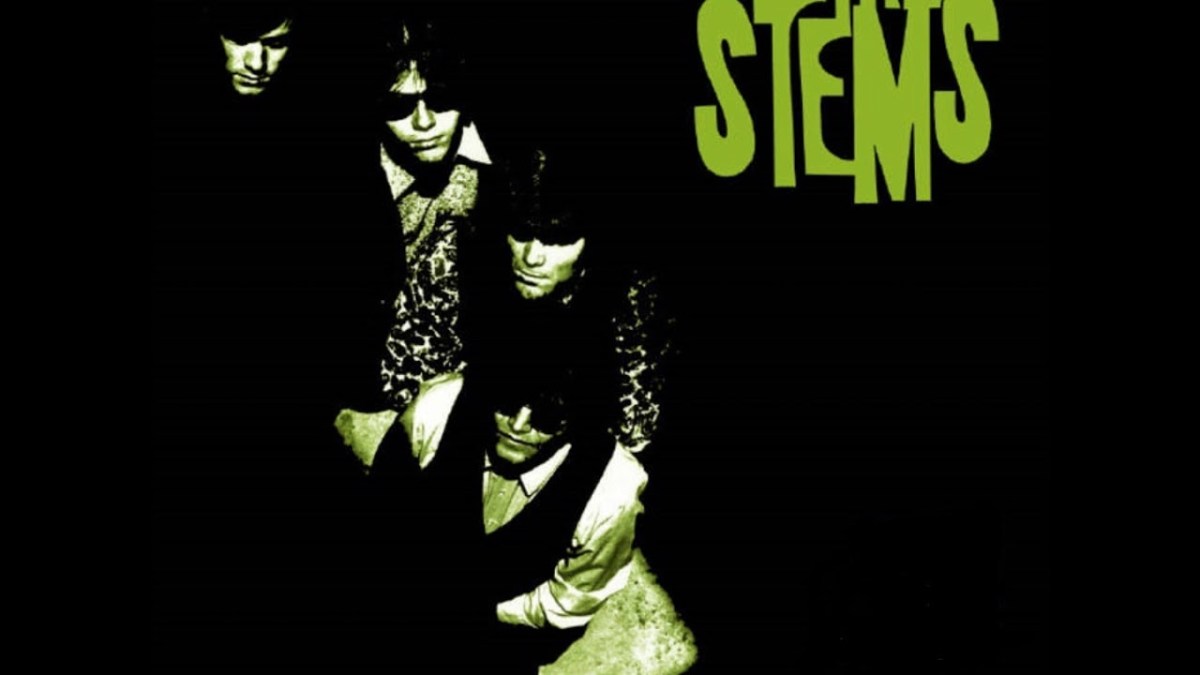
The Stems were a garage punk band formed in Perth, Western Australia in late 1983. They were hugely popular in Australia. They released this song in 1985 with a song “Cant Resist” as the B side. They would release 7 singles, 2 albums, and 2 EP’s between 1985-1987.
They broke up in 1987. Guitarist Dom Mariani explained: “I was not very happy with the way things were going towards the end of The Stems. We got quite big, and there are the usual problems that happen with that. People tend to drift apart, there are internal conflicts, egos going wild, and bad management was probably the major factor that contributed to The Stems breakup.”
The Stems regrouped in 2003 and played to packed houses across Australia and Europe. They disbanded again in 2009 and regrouped in 2013 and still play from time to time.
Tears Me In Two
All those things that you never said All those words going through my head Time after time I let her cry I laughed and I laughed And she waved goodbye
She waved goodbye She waved goodbye She waved goodbye She waved goodbye I said my prayers and shed my tears All my dreams have become my fears I wrote her letters that I could not send My memories are my only friend
She waved goodbye She waved goodbye She waved goodbye She waved goodbye Everyone thinks that I am crazy I can’t stand the things that they say Think that I’ve been oh-so-cruel Commit me with lies I did not do I didn’t do them You know I didn’t do them Don’t tell me that I did them You know I didn’t do them I didn’t do them
I couldn’t stand it for a second more I turn it down for, I want love for Why can’t my heart leave me be Tears me in two, can’t you see I can’t stand it for a second more I turn it down for, I want love for Why can’t my heart leave me be Tears me in two ways, can’t you see Tears me in two ways Come on baby Take an look down there Tears me in two ways
This is an episode about survivor’s guilt….how Captain Embry thinks he should have been with his crew . Robert Cummings plays Captain James Embry and the episode is driven by him. Cummings does a fantastic one man show for the first of the episode.
This revisits the pilot episode’s plot and it would explore again in the fourth season with The Thirty-Fathom Grave. The scenery and they way they present this episode is realistic.
The episode was based on a real event – the discovery of the B-24 Liberator four engine bomber Lady Be Good. The plane lost course during a WWII raid over Italy in 1943, and crashed deep in the Libyan desert. In 1959, a team of British geologists stumbled upon the wreckage — discovering that while the supplies were intact, the nine-man team were nowhere to be found. In the episode, the marker of a grave of a member of the crew of King Nine is dated “5 April, 1943,” the day on which the Lady Be Good was lost.
The bomber aircraft used in this episode was a North American Aviation B-25C-10NA 42-32354, which still exists in storage with Aero Trader, Borrego Springs, California. The plane was bought from the air force for $2500 (rather than the original cost — $345,000). It was disassembled, flown to set, and reassembled there.
This show was written by Rod Serling
Rod Serling’s Opening Narration:
This is Africa, 1943. War spits out its violence overhead, and the sandy graveyard swallows it up. Her name is King Nine, B-25, medium bomber, Twelfth Air Force. On a hot, still morning, she took off from Tunisia to bomb the southern tip of Italy. An errant piece of flak tore a hole in the wing tank and, like a wounded bird, this is where she landed, not to return on this day, or any other day.
Summary
The pilot of a downed B-25, Capt. James Embry, awakens in the desert, with no memory of how he got there. More worrisome, his crew’s nowhere to be found. He begins to wonder if he’s hallucinating, especially after he sees one of his men, sitting in the cockpit. When he awakens in hospital, he thinks it might’ve all been a dream, but wonders: did any of this really happen?
Rod Serling’s Closing Narration:
Enigma buried in the sand, a question mark with broken wings that lies in silent grace as a marker in a desert shrine. Odd how the real consorts with the shadows, how the present fuses with the past. How does it happen? The question is on file in the silent desert, and the answer? The answer is waiting for us – in the Twilight Zone.
CAST
Rod Serling … Narrator / Self – Host (uncredited)
Robert Cummings … Capt. James Embry (as Bob Cummings)
Gene Lyons … Psychiatrist
Paul Lambert … Doctor
Jenna McMahon … Nurse
Richard Lupino … Blake (uncredited)
I posted a song called Watusi Rodeo by Guadalcanal Diary a while back and I got a great response. I’ve been listening to these guys and it gets better and better. This band had a sophisticated and spiritual bent to the band’s lyrics.
This song is off of the EP Watusi Rodeo released in 1983. The songwriting in this band was a step above many of their peers…clever lyrics with a mixture of jangle and country. When you start listening to this band later on you can see a lot of eclecticism as they could bounce from one style to another.
They did get picked up by a major label after this release. Their LP Jamboree released in 1986 was on Elektra. They unsuccessfully attempted a commercial breakthrough, adopting the style of a country-rock band with some religious sentiment.
Jeff Walls and singer Murray Attaway were friends in high school in Marietta, Ga., just outside of Atlanta. Along with bassist Rhett Crowe and drummer John Poe, they formed Guadalcanal Diary.
In 2011, Guadalcanal Diary briefly reunited to play Athfest, and celebrated their 30th anniversary there. Jeff Walls died, May 29, 2019, of a rare pulmonary disease.
Trail Of Tears
The Sun hangs low in the Western sky I bow my head and remember now Someone’s lips pressed close to mine Her cool hand upon my brow
Hell burns hot for a killer ‘s heart A shallow grave in an unmarked plot Crack of gunfire in the dark Hand in hand we’ll walk at daybreak
One wore black One wore black One wore black
The trail of tears is winding on Many pass along the road Dusty soldiers march along As they file one by one
One wore black One wore black One wore black
Trail of tears is winding on Frightened soldier run no more Arm and arm with lovers gone No one passes on the road
Two girls wait at the railroad track For their soldiers to come back Knowing this will be their last One wore blue and one wore black
This is a perfect song to remember alternative radio with today. This is Paul Westerberg’s tribute to college radio in the 1980s. Of all the bands I’ve covered on Mondays…this band is my favorite of them all. They were more straight rock and roll with some quirks thrown in for good measure.
Left of the Dial celebrates the spirit of the eighties American indie rock scene and was a tribute to the tiny watt college stations populating the far end of the FM radio band—many let the Replacements crash after shows at campuses. Westerberg had said that is where they got most of their airtime…“We ended up going to college in an odd kind of way.”
The song is also about Westerberg’s infatuation with Lynn Blakey, singer-guitarist for North Carolina’s Let’s Active. They’d met when the bands shared a bill at San Francisco’s I-Beam in the fall of 1983. “He followed me around and bummed cigarettes off me,” recalled Blakey. The following night, after a show in Berkeley, the two spent hours walking together. They would exchange calls and letters as Blakey moved to Athens, Georgia, where she joined Michael Stipe’s sister Lynda in the band Oh-OK.
“I figured the only way I’d hear her voice was with her band on the radio . . . on a college station,” said Westerberg. “And one night we were passing through a town somewhere, and she was doing an interview on the radio. I heard her voice for the first time in six months for about a minute. Then the station faded out.” The moment provided the song’s lyric “If I don’t see ya, in a long, long while / I’ll try to find you / Left of the dial.”
The song was on the album Tim and it was released in 1985.
Left of the Dial
Read about your band in some local page Didn’t mention your name, didn’t mention your name The sweet Georgia breezes, safe, cool and warm I headed up north, you headed north
On and on and on and on What side are you on? On and on and on and on What side are you on?
Weary voice that’s laughin’, on the radio once We sounded drunk, never made it on Passin’ through and it’s late, the station started to fade Picked another one up in the very next state
On and on and on and on What side are you on? On and on and on and on and
Pretty girl keep growin’ up, playin’ make-up, wearin’ guitar Growin’ old in a bar, ya grow old in a bar Headed out to San Francisco, definitely not L.A. Didn’t mention your name, didn’t mention your name
And if I don’t see ya, in a long, long while I’ll try to find you Left of the dial Left of the dial Left of the dial Left of the dial Left of the dial Left of the dial Left of the dial Left of the dial
This is an extra post today after todays Twilight Zone…A World Of His Own
What a debut season! Out of 36 episodes we only had one episode below the Twilight Zone standards. That would be The Fever. We had nine 5 star episodes and it very easily could have been 12.
I thought I would post a tally for season 1 of this great series. There are a few I wish I would have bumped up from 4 1/2 to 5… Those would be The Lonely, Long Live Walter Jameson, and The Last Flight.
Do any of you have any different thoughts on the rankings below?
I would like to link to two different bloggers doing other tv shows. The will be going through show by show like I’m doing here. Join in if you have a favorite show that you like. I’ll continue to have the Twilight Zone every Saturday, Sunday, and Wednesday.
We have some to the last episode of the first season!
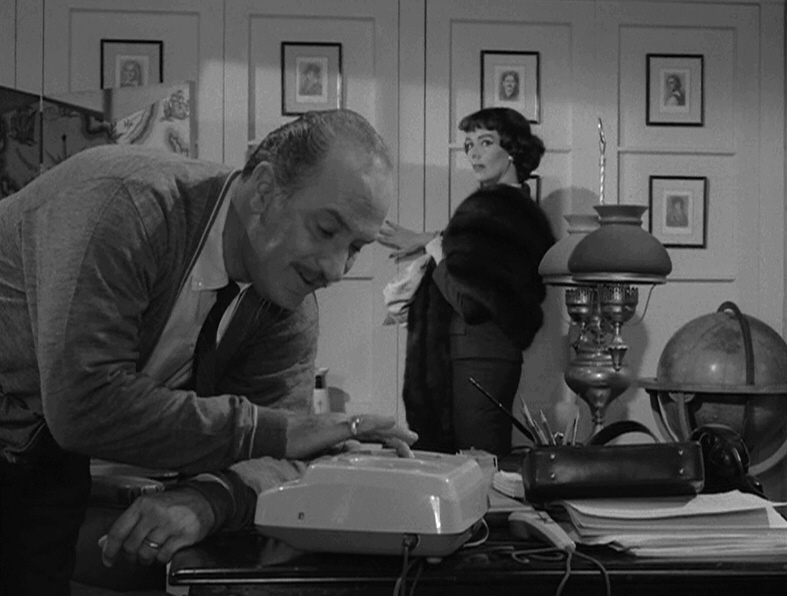
This episode features Rod Serling briefly interacting into the episode…not just giving a narration. It’s a clever story and it’s wrapped up in a light hearted episode and it’s one of the better ones. This episode has grown on me through the years. There is a small cast in this one. Keenan Wynn portrays playwright Gregory West who can do something extraordinary with his Dictaphone.
Phyllis Kirk plays his unlikable wife to perfection. This is an interesting episode because the power that Gregory West has… could have been quite dangerous in the hands of another person. The show closes season 1 on a lighter note.
Years later Stephen King would write a story similar to this one called Word Processor of the Gods that would be turned into a Tales From The Darkside.
Rod Serling’s cameo at the end of the episode marked his first onscreen appearance in the show. Although Serling appeared on-screen at the end of most first season Twilight Zone episodes to plug the following week’s show, this is the only episode in the first season in which Rod Serling appears on-screen within the episode itself and not in a separate “coming next week” segment. This is also one of only two episodes of the entire series where Serling appears on camera at the conclusion of the episode.
This show was written by Richard Matheson
Rod Serling’s Opening Narration:
The home of Mr. Gregory West, one of America’s most noted playwrights. The office of Mr. Gregory West. Mr. Gregory West—shy, quiet, and at the moment, very happy. Mary—warm, affectionate…And the final ingredient: Mrs. Gregory West.
Summary
Peeking into the window of her husband Gregory’s study, Victoria West sees him with a beautiful woman. When she finally gets into the room however, the woman is nowhere to be found. His explanation is preposterous – he claims that when he speaks into his dictation machine, the characters for his play come to life before his eyes. Victoria’s first reaction is that her husband should be committed and a demonstration still doesn’t quite convince her. Gregory has something else to show her.
Rod Serling’s Closing Narration:
Leaving Mr. Gregory West—still shy, quiet, very happy… and apparently in complete control of The Twilight Zone.
CAST
Rod Serling … Narrator / Self – Host (uncredited)
Keenan Wynn … Gregory West
Phyllis Kirk … Victoria West
Mary LaRoche … Mary (as Mary La Roche)
Modoc … Elephant (uncredited)
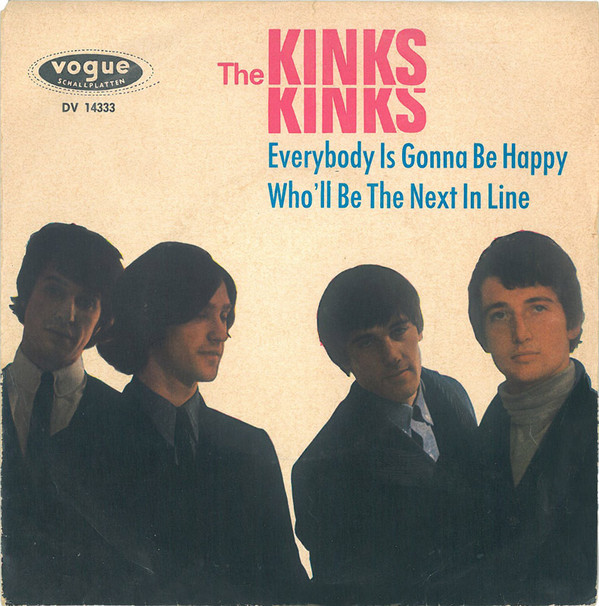
I never get tired of the Kinks. In July 1965, The Kinks released Who’ll Be The Next In Line as a single. This one is a very rocky song with a Kinks riff.
It was first released as the B-side to “Everybody’s Gonna Be Happy” in Britain. The single only made to #17 in the UK. Reprise in America thought Who’ll Be The Next In Line was the best song and released it as the A side with Evrybody’s Gonna Be Happy” as the B.
The song peaked at #34 in the Billboard 100 and #25 in Canada in 1965.
Running to just under two minutes, the song title has no question mark, although its authorship does. Released on the Reprise label, the B-side of “Everybody’s Gonna Be Happy” is credited on the record itself to R. Davies (Ray Davies) and on another pressing as R. Davies/Kassner. This latter appears to be a misprint; Edward Kassner was the man who launched the band’s career, and his name should have appeared below the songwriter credit rather than as part of it.
Here is the B side Everybody’s Gonna Be Happy
Who’ll Be The Next In Line
Who’ll be the next in line? Who’ll be the next in line for heartache? Who’ll make the same mistakes I made over you? Who’ll be the next in line? Who’ll be the next in line? For you? Who’ll be the next in line? Who’ll be the next to watch your love fade? All your affections finally fade away. There’ll be no use in sighing. Who’ll be the next in line? For you? One day you’ll find out when I’m gone, I was the best one you had, I was the one who gave you love. Who’ll be the next in line? Who’ll be the next in line for heartaches? Who’ll make the same mistakes I made over you? There’ll be no use in sighing. Who’ll be the next in line? For you? One day you’ll find out when I’m gone, I was the best one you had, I was the one who gave you love. Who’ll be the next in line? Who’ll be the next in line for heartaches? Who’ll make the same mistakes I made over you? Who’ll be the next in line? Who’ll be the next in line? For you? For you?
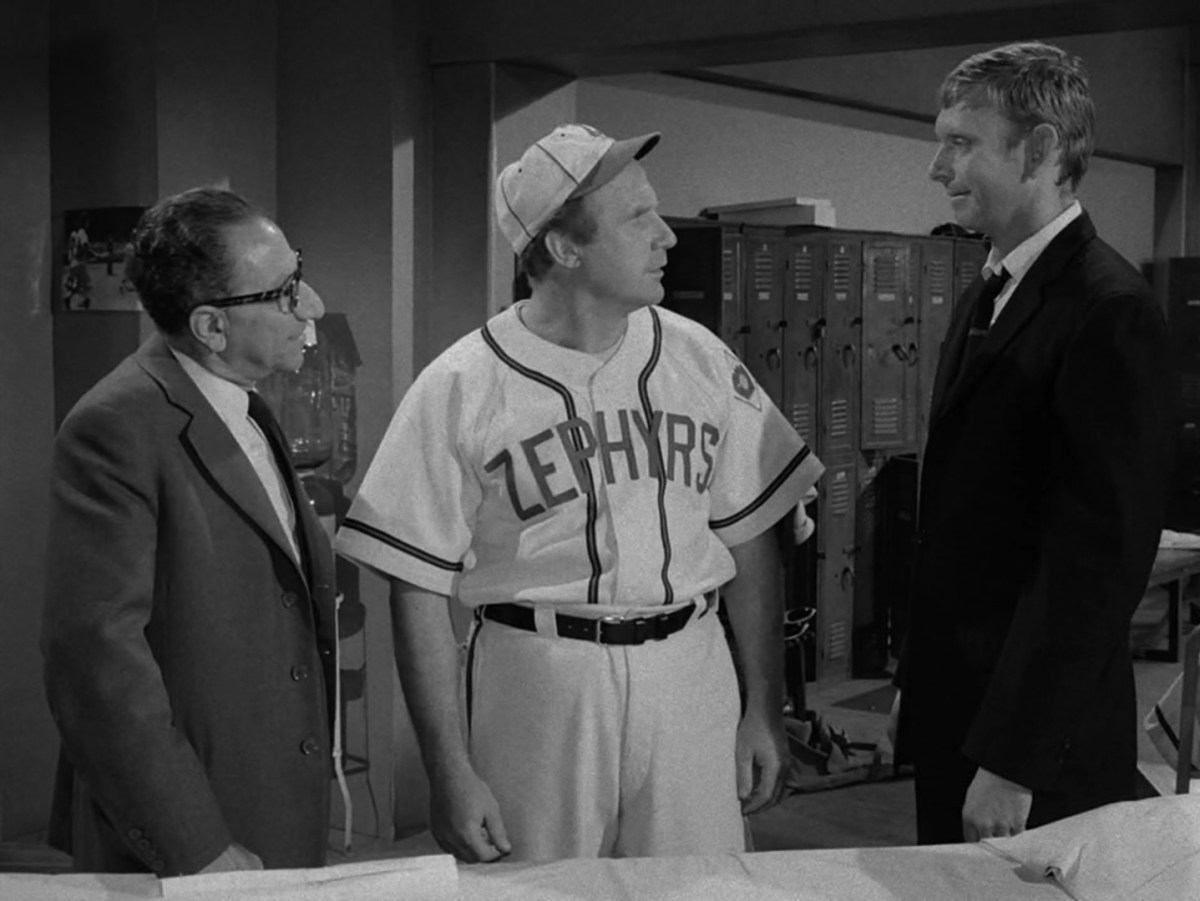
I’m a huge baseball fan and this one is a fun one. It’s a light hearted episode that features Jack Warden who is a frustrated manager. This is an episode that I watch once in a while but it’s not one on my heavy rotation. The plot is somewhat forced but it’s meant to be fun. Baseball fans would like this one.
This says a lot about Rod Serling….Paul Douglas, who had drinking habits, was originally cast to play McGarry but on set began to look red and read raspingly, and it wasn’t until his coronary-related death days after the episode was completed that it was realized he had been suffering poor health rather than reaction to drink. Because the episode was supposed to be a comedy, Rod Serling was reluctant to let it be broadcast with Douglas’ impending death essentially captured on film.
When CBS refused to pay for the episode to be re-shot, Serling personally underwrote the $27,000 it cost to have Jack Warden brought in to replace Douglas and to have some scenes re-done with Warden in place of Douglas.
The only shot that survived in the broadcast version with Paul Douglas. You cannot tell it’s him but his back is to the camera. Serling had the humanity and dignity that he often wrote about.
The closing narration was referencing the Dodgers that had moved to LA a few years before this was made by team owner Walter O’Malley, but in the following season after this aired, 1961, Sandy Koufax emerged as a future Hall of Famer, winning 129 games over the next 6 seasons with an ERA of 2.19. His teammate, Don Drysdale, won 111 games with an ERA of 2.88. The Dodgers won three pennants (1963, 1965, 1966) in those six years and two World Series (1963, 1965)…so Serling’s crystal ball was working.
This show was written by Rod Serling
Rod Serling’s Opening Narration:
What you’re looking at is a ghost, once alive but now deceased. Once upon a time, it was a baseball stadium that housed a major league ball club known as the Hoboken Zephyrs. Now it houses nothing but memories and a wind that stirs in the high grass of what was once an outfield, a wind that sometimes bears a faint, ghostly resemblance to the roar of a crowd that once sat here. We’re back in time now, when the Hoboken Zephyrs were still a part of the National League, and this mausoleum of memories was an honest-to-Pete stadium. But since this is strictly a story of make believe, it has to start this way: once upon a time, in Hoboken, New Jersey, it was tryout day. And though he’s not yet on the field, you’re about to meet a most unusual fella, a left-handed pitcher named Casey.
Summary
Mouth McGarry is the manager of the Hoboken Zephyrs professional baseball team. They are perennial losers and are already so far back in the standings that they have no chance of winning the pennant. McGarry is approached by Dr. Stillman who has a solution for him, Casey, who seems to be an ideal pitcher, the best McGarry has ever seen. The catch is that Casey is a robot. McGarry is eager to win and decides to use Casey without telling anyone. When his ruse is discovered, Dr. Stillman agrees to give Casey a heart to make him more human. The results aren’t quite what McGarry had hoped for.
If you cannot see the video below…here is a LINK to the complete episode. There were no snippets on youtube.
Rod Serling’s Closing Narration:
Once upon a time, there was a major league baseball team called the Hoboken Zephyrs, who, during the last year of their existence, wound up in last place and shortly thererafter wound up in oblivion. There’s a rumor, unsubstantiated, of course, that a manager named McGarry took them to the West Coast and wound up with several pennants and a couple of world championships. This team had a pitching staff that made history. Of course, none of them smiled very much, but it happens to be a fact that they pitched like nothing human. And if you’re interested as to where these gentlemen came from, you might check under ‘B’ for Baseball – in The Twilight Zone.
CAST
Rod Serling … Narrator (voice)
Jack Warden … Mouth McGarry
Abraham Sofaer … Dr. Stillman
Robert Sorrells … Casey
Alan Dexter … Beasley
Don Kelly … Monk (as Don O’Kelly)
Jonathan Hole … Team Doctor
Rusty Lane … Commissioner
The Creeps sound like they came from the garages in the sixties but it was the 1980s. I love the sound they got on this record.
This song is off of their debut album “Enjoy The Creeps” and it was released in 1986. Critics have said that they never did translate the excitement of their live show to records but this one is good. They released it on a small label named Tracks on Wax which was a Swedish Garage Rock-label in the 80s.
They formed in Sweden in 1985. They were influenced heavily by the Animals and Yardbirds, Robert Jelinek (vocals, guitar), Hans Ingemansson (Hammond organ), Anders Olsson (bass) and Patrick Olson (drums). Whenever I think of music from Sweden I think of Abba…this is not Abba by any stretch of the imagination.
Their third album, Blue Tomato, was released in 1990. It contained their most popular song, ‘Ooh I Like It’, and it became a major Swedish hit and was eventually voted Best Song Of The Year by MTV viewers in 1990.
Down at the Nightclub was written by guitarist Robert Jelinek.
After a few years the band dropped the dirty sound of their debut album and went more for an 80s funk dance sound.
The band broke up in 1997.
Down At The Nightclub
All right We’re going down to the nightclub baby Where the fashion lights are all so gay And the music’s so loud I tell you we’re the in-crowd We’re the grooviest gang around
I got a battering ram in my head The room is turning in a blue green red And the lights sure blows my mind and I might get this time Down at the nightclub
That girl’s dancing in her miniskirt The way she moves now she gives me the hurt Gonna move up to her, let my backbone slip I’m gonna take her on a magic trip
I got a battering ram in my head The room is turning in a blue green red And the lights sure blows my mind and I might get this time Down at the nightclub
I got a battering ram in my head The room is turning in a blue green red And the lights sure blows my mind and I might get this time Down at the nightclub
First time I heard this song I loved it. I hear a strong Hollies and Beatles influence in this. This XTC spinoff band was a great idea and should have gotten airplay here. This is by far my favorite power pop song I’ve feature on Fridays in the past 5 months.
This album was released on April Fools Day 1985 through Virgin Records. It was publicized as a long-lost collection of recordings by a late 1960s group. Under the name The Dukes of Stratosphear, XTC members Andy Partridge, Colin Moulding, Dave Gregory, and and Dave’s brother Ian Gregory paid tribute to such acts as The Beatles, The Hollies, The Yardbirds, and The Beach Boys to name a few. They produced two albums: 1985’s album 25 O’Clock and 1987’s Psonic Psunspot.
Each musician adopted a pseudonym: “Sir John Johns” (Partridge) “Lord Cornelius Plum” (Dave), “The Red Curtain” (Colin Moulding) and “E.I.E.I. Owen” (Ian). The band dressed themselves in Paisley outfits for the sessions and lit scented candles.
Despite the great songs, the Dukes never made the charts. In the UK, the records outsold XTC’s then current albums The Big Express (1984) and Skylarking (1986).
It’s possible that XTC would not have survived beyond the ’80s without this fun side-project according to former XTC guitar player David Gregory as tensions were high recording The Big Express and Skylarking.
David Gregory:That so many others found it amusing and entertaining simply adds to the joy we derived from its creation.
Andy Partridge talking to producer Steve Nye: “Ooh, I’m a bit funny about how this came out, Steve, because it sounds a bit Beatles-esque to me, and I don’t want people to think I’m copying the Beatles.” He said, “Who gives a fuck? That’s how you’ve written it—just do it!’ … I realised that I should not be ashamed about digging them up, and getting them wrong, and using them as my template. … from that moment onward, I started to recognise that those songwriters—the Ray Davieses, the Lennons and McCartneys, the Brian Wilsons—had gone into my head really deeply
Vanishing Girl
Someone’s knocking in the Distance But I’m deaf and blind She’s not expected home this evening So I leave the world behind
for the Vanishing Girl The Vanishing Girl Yes she’d give you a twirl But she vanishes from my world
So burn my letters and you’d better leave Just one pint a day The whole street’s talking about my White shirts looking so grey
People gossip on the doorstep Think they know the score She’s giving him the runaround The man from number four
Has a Vanishing Girl a Vanishing Girl Yes she’d give you a twirl But she vanishes from my world
Yes the paint is peeling and my Garden is overgrown I got no enthusiasm to even answer the phone When she’s here it makes up for the time she’s
not and it’s all forgotten But when she goes I’m putting on the pose for the Vanishing Girl
If I ever met an alien and he/she/it wanted to know what rock and roll looked and sounded like…I would give them a picture of Keith Richards in 1972 and a copy of Brown Sugar. Next to Start Me Up…this song is probably the Stones most worn out song but that doesn’t mean it’s not a great song especially for those hearing it for the first time…or even the hundredth.
Mick Jagger wrote most of the music and lyrics to this song although as always it’s credited to Jagger/Richards. Keith taught Mick the 5 string G tuning and Mick came up with the great classic riff in this song.
The song peaked at #1 in the Billboard 100, #2 in the UK, #1 in Canada, and #11 in New Zealand in 1971.
Evidently China wasn’t a fan… This was one of four songs The Stones had to agree not to play when they were allowed to perform in China. After getting approval to play in China for the first time in 2003, they canceled because of SARS, a respiratory illness that was going around the country.
Rolling Stone magazine ranked it number 495 on its list of the 500 Greatest Songs of All Time and at number five on their list of the 100 Greatest Guitar Songs of All Time.
From Songfacts
The lyric is about slaves from Africa who were sold in New Orleans and raped by their white masters. The subject matter is quite serious, but the way the song is structured, it comes off as a fun rocker about a white guy having sex with a black girl.
Mick Jagger wrote the lyric. According to Bill Wyman, it was partially inspired by a black backup singer named Claudia Lennear, who was one of Ike Turner’s Ikettes. She and Jagger met when The Stones toured with Turner in 1969. David Bowie also wrote his Aladdin Sane track “Lady Grinning Soul” about Lennear.
American-born singer Marsha Hunt is also sometimes cited as the inspiration for the song. She and Jagger met when she was a member of the cast in the London production of the musical Hair, and their relationship, a closely guarded secret until 1972, resulted in a daughter named Karis.
According to the book Up And Down With The Rolling Stones by Tony Sanchez, all the slavery and whipping is a double meaning for the perils of being “mastered” by Brown Heroin, or “Brown Sugar.” The drug cooks brown in a spoon.
The Rolling Stones recorded this in the musically rich but luxury deprived city of Sheffield, Alabama, where Jerry Wexler of the group’s label, Atlantic Records, often sent his acts. The Stones arrived in Sheffield on December 2, 1969, stayed until the 4th, then performed their fateful Altamont Speedway concert on December 6, where they performed this song live for the first time. At the show, a fan was stabbed to death by a Hells Angels security guard.
During their three days in Alabama, The Stones recorded at Muscle Shoals Sound Studios, which opened in May 1969 when four of the musicians from FAME Studios left to establish their own company. “Wild Horses” and “You Gotta Move” also came out of these sessions, making it a very productive stop. The engineer at the Muscle Shoals sessions was Jimmy Johnson, the producer/guitarist who was one of the studio’s founders. The Rolling Stones engineer Glyn Johns added overdubs in England (including horns), but he left Johnson’s mix intact. Johnson says that Johns called him from England to compliment him on the mix.
Even though this was recorded in December 1969, The Stones did not release it until April 1971 because of a legal dispute with their former manager, Allen Klein, over royalties. Recording technology had advanced by then, but they didn’t re-record it because the original version was such a powerful take.
Mick Jagger started writing this while he was filming the movie Ned Kelly in the Australian outback. He’s been in a few movies, including Performance, Freejack and The Man From Elysian Fields. Jagger recalled to Uncut in 2015: “I wrote it in the middle of a field, playing an electric guitar through headphones, which was a new thing then.”
In Keith Richards’ 2010 autobiography Life, it floats a theory as to what the lyrics “Scarred old slaver know he doin’ alright” are all about. Some poor guy at their publishing company probably came up with that transcription for the lyrics, but Jagger was most likely singing, “Skydog Slaver,” as “Skydog” was a nickname for Muscle Shoals regular Duane Allman, since he was high all the time.
A year after this was first recorded, The Stones cut another version at Olympic Studios in London with Eric Clapton on guitar and Al Kooper on keyboards. It was considered for release as the single, but was shelved until 2015 when it appeared the a Sticky Fingers reissue.
Originally, Mick Jagger wrote this as “Black Pussy.” He decided that was a little too direct and changed it to “Brown Sugar.”
This was the first song released on Rolling Stones Records, The Stones subsidiary label of Atlantic Records. They used the now-famous tongue for their logo.
The album cover was designed by Andy Warhol. It was a close-up photo of a man wearing tight jeans, and contained a real zipper. This caused considerable problems in shipping, but was the kind of added value that made the album much more desirable (you don’t get this kind of stuff with CDs or downloads).
Sticky Fingers also marked the first appearance of the famous tongue and lips logo, which was printed on the inner sleeve. The logo was designed by John Pasche, who was fresh out of art school (the Royal College of Art in London).
This was used in commercials for Kahlua and Pepsi. The Stones have made big bucks licensing their songs for ads.
The fortunate souls who got to see The Rolling Stones on their nine-date UK tour in 1971 got a preview of this song, since it was included on the setlist even though Sticky Fingers wouldn’t be released for another month.
Jimmy Johnson, who was a guitar player for the Muscle Shoals Rhythm Section (also known as “The Swampers”), engineered the sessions that produced this song as well as “Wild Horses” and “You Gotta Move.” Johnson worked with many artists, including Aretha Franklin, Bobby Womack, Lynyrd Skynyrd and Johnnie Taylor.
Artists to cover this song include Little Richard, Collin Raye and Alice Russell. Bob Dylan performed it on his 2002 US tour.
ZZ Top released a completely different song called “Brown Sugar” in 1971, and “D’Angelo” released his own song with that title in 1995. In 2002, a movie called Brown Sugar was released with a title song by Mos Def called “Brown Sugar (Extra Sweet).”
In 327BC Alexander the Great came across the cultivation of sugar cane in India. From this reed, a dark brown sugar was extracted from the cane by chewing and sucking. Some of this “sweet reed” was sent back to Athens. This was the first time a European had come across sugar. (From the book Food for Thought: Extraordinary Little Chronicles of the World by Ed Pearce)
The bootleg version which has Eric Clapton playing lead slide guitar was recorded at a birthday party for Keith Richards. It is widely considered to have been part of an informal audition by Clapton to become The Stones second guitarist. The bootleg version shows why Clapton likely did not get offered the job, or withdrew himself from consideration: While Clapton plays a million notes a minute, his lead has almost no interaction with the rest of the band. It is like a studio musician simply playing along with a CD that has already been recorded.
In many interviews, Richards has spoken admiringly of his good friend Clapton’s musicianship, but has always commented that the two-guitar sound he and Ron Wood have developed is not Eric’s cup of tea.
This features Bobby Keys on saxophone. A favorite of The Rolling Stones, having guested notably on Sticky Fingers and Exile on Main Street, he was also heard on John Lennon and Elton John’s hit “Whatever Gets You Thru the Night” and on classic albums like George Harrison’s All Things Must Pass and Marvin Gaye’s Let’s Get It On.
The year after this was released, Randy Newman released a much more earnest song dealing with slavery: “Sail Away.”
This song gets a mention in the 2002 episode of The Wire, “A Man Must Have A Code.” When a group of detectives are listening to a phone call they intercepted, one of them can figure out what’s being said while the others are baffled. Asked how he can decipher the mumble, he speaks the opening lines of “Brown Sugar” (“Gold Coast slave ship bound for cotton fields, sold in a market down in New Orleans”) and says, “I bet you’ve heard that song 500 times but you never knew, right? I used to put my head to the stereo speaker and play that record over and over.”
Brown Sugar
Gold Coast slave ship bound for cotton fields Sold in the market down in New Orleans Scarred old slaver knows he’s doin’ all right Hear him whip the women just around midnight
Brown sugar, how come you taste so good Brown sugar, just like a young girl should
Drums beatin’ cold, English blood runs hot Lady of the house wonderin’ when it’s gonna stop House boy knows that he’s doin’ all right You should have heard him just around midnight
Brown sugar, how come you taste so good Brown sugar, just like a young girl should
Brown sugar, how come you dance so good Brown sugar, just like a black girl should
I bet your mama was a Cajun Queen And all her boyfriends were sweet sixteen I’m no school boy but I know what I like You should have heard them just around midnight
Brown sugar, how come you taste so good Brown sugar, just like a black girl should
I said, yeah, yeah, yeah, woo How come you, how come you dance so good Yeah, yeah, yeah, woo Just like a, just like a black girl should Yeah, yeah, yeah, woo
This one is a classic… a 5-star episode. As surprise endings go…this one is near the top. This episode lacks explanation for things but that makes it more mysterious. There is no big moral lesson here just a great episode.
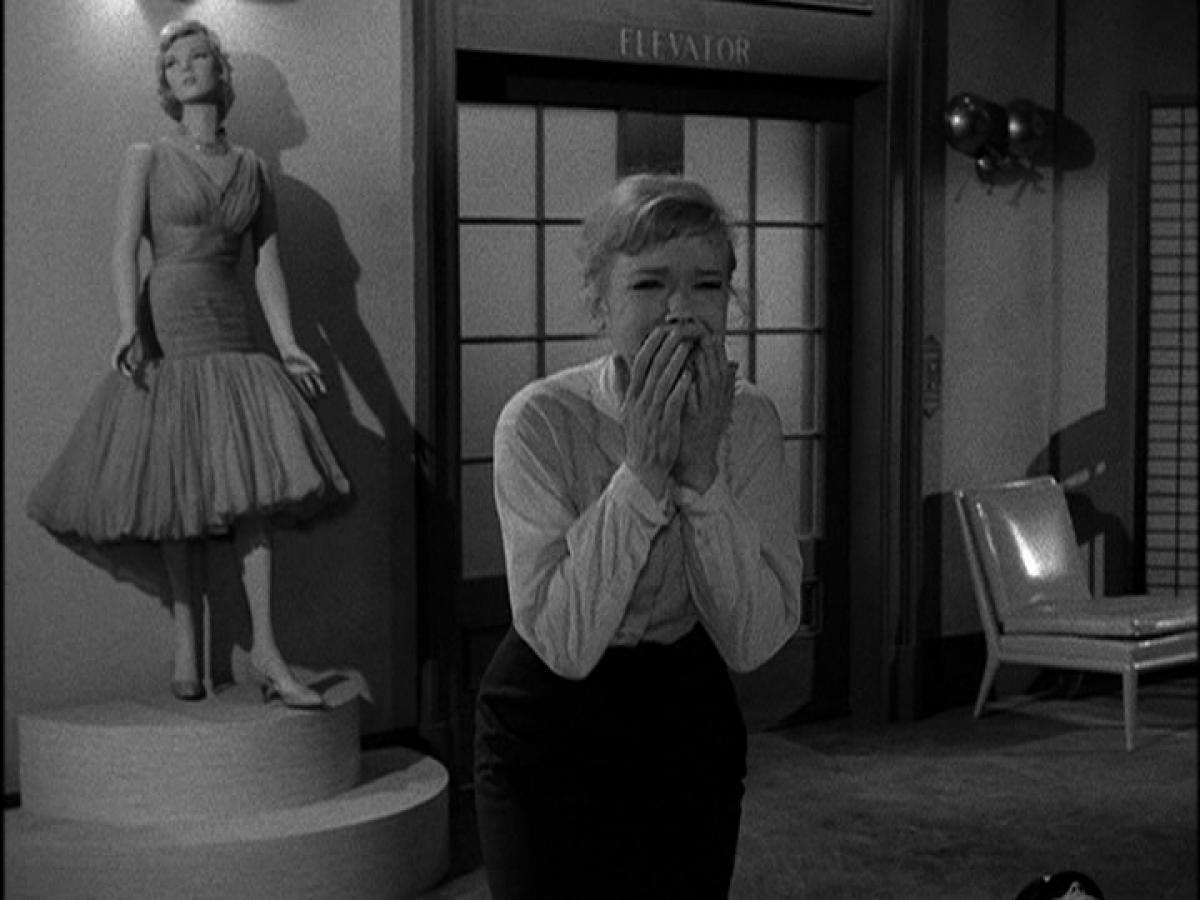
Anne Francis’s portrayal of Marsha White was great. She is demanding and a little whiny at first but when you see the nightmare situation she is in…you understand why. She wonders how many of the store workers know her name and so much about her…and we wonder the same thing. This is the first appearance of Anne Francis in the starring role of a Twilight Zone episode. She would appear again in the season four episode “Jess-Belle”.
The twist totally took me off guard the first time I watched this one. The 1985 Twilight Zone redid this one and it was a mess.
Here is something interesting. The band 9fm (short for Ninth Floor Mannequin) song “Below the Ninth Floor” was inspired by “The After Hours.”
This show was written by Rod Serling
Rod Serling’s Opening Narration:
Express elevator to the ninth floor of a department store, carrying Miss Marsha White on a most prosaic, ordinary, run-of-the-mill errand.
Miss Marsha White on the ninth floor, specialties department, looking for a gold thimble. The odds are that she’ll find it—but there are even better odds that she’ll find something else, because this isn’t just a department store. This happens to be The Twilight Zone.
Summary
Marsha White is looking for a gold thimble as a gift for her mother. She can’t find it anywhere in the store and an elevator operator suggests she try the 9th floor. She arrives there to find it abandoned but a sales clerk suddenly appears and has just what she is looking for. On the way back down to the main floor, she realizes the thimble she bought is scratched and goes to the complaints department where she is told there is no 9th floor in the building. She is shocked however to see a mannequin that looks just like the woman who served her. A return to the absent floor reveals the explanation to her dilemma.
Rod Serling’s Closing Narration:
Marsha White, in her normal and natural state, a wooden lady with a painted face who, one month out of the year, takes on the characteristics of someone as normal and as flesh and blood as you and I. But it makes you wonder, doesn’t it, just how normal are we? Just who are the people we nod our hellos to as we pass on the street? A rather good question to ask . . . particularly in the Twilight Zone.
CAST
Rod Serling … Narrator (voice)
Anne Francis … Marsha White
Elizabeth Allen … Saleswoman
James Millhollin … Mr. Armbruster
John Conwell … Elevator Man
Patrick Whyte … Mr. Sloan
Nancy Rennick … Miss Keevers
The first single released from The Slider, and the third No.1 U.K. hit for T. Rex, “Telegram Sam”
The song peaked at #1 in the UK, #67 in the Billboard 100, #66 in Canada, and #19 in New Zealand in 1971. It’s surprising to me he didn’t do better in Canada and America. My only guess was that glam music never was as big in America as the UK. They did tour in America in the early seventies as a supporting act for bands such as Three Dog Night, Poco, and The Doobie Brothers. Opening up for those bands in America…it’s easy to see how they could not find their target audience.
T-Rex leader Marc Bolan wrote this as an ode to his manager, Tony Secunda. “Telegram Sam” was Bolan’s nickname for his Secunda. Other people who show up in the song were Jungle-face Jake who was Sid Walker, Secunda’s assistant, and “Bobby” is Bob Dylan.
Telegram Sam was the first single to be issued by Marc Bolan’s own T.Rex Wax Co. label, and was released on 21 January 1972.
The B-side featured two songs in the UK, “Cadilac” (as printed on the EMI label of the original single) and “Baby Strange”, the latter also included in the album The Slider.
From Songfacts
When Bolan referred to Secunda as his “Main Man,” it brought the phrase into popular culture.
The goth-rock group Bauhaus covered this song In 1980.
In 1977, on the “Dandy in the Underworld” tour, Marc Bolan sang “Third vision and the David Bowie blues” instead of “3D vision and the California blues” – hinting at David Bowie’s depressive tendencies.
Telegram Sam
Telegram Sam Telegram Sam You’re my main man
Golden Nose Slim Golden Nose Slim I know’s where you’ve been Purple Pie Pete Purple Pie Pete Your lips are like lightning Girls melt in the heat
Telegram Sam You’re my main man Telegram Sam You’re my main man
Bobby’s alright Bobby’s alright He’s a natural born poet He’s just outta sight Jungle faced Jake Jungle faced Jake I say make no mistake About Jungle faced Jake
Automatic shoes Automatic shoes Give me three D vision And the California blues Me I funk but I don’t care I ain’t no square with my corkscrew hair










 PowerPop... An Eclectic Collection of Pop Culture