Steely Dan – Hey Nineteen

I want to make an announcement (clears throat) Saturday I will have something different…I will be interviewing a Disc Jockey…he will answer some of my and other blogger’s questions that I requested.  He has been kind of enough to do this through email.

This song will always be linked to John Lennon to me. The reason for this is right after John was murdered this was huge and on the charts. I listened to the radio religiously back then and got to know this one well.

Steely Dan were essentially the duo Donald Fagen (vocals & keyboards) and Walter Becker (guitar & bass) who formed the partnership in 1972 and used an ever-changing cycle of musicians. They took their moniker from the name of a female sex toy featured in Naked Lunch by William Burroughs.

Becker and Fagen parted ways in 1980, leaving “Hey Nineteen” un-played until their  1993 reunion.

The song peaked at #10 in the Billboard 100 and #5 in Canada in 1981. The song was on the album Gaucho which peaked at #9 in the Billboard Album Charts, #18 in Canada, and #27 in the UK in 1980.

From Songfacts

In this song, an older man is seducing a 19-year-old girl. He’s a bit conflicted, as her inexperience frustrates him when she doesn’t even remember Aretha Franklin. However, on this particular night and with the help of some Cuervo Gold tequila, everything is wonderful.

Steely Dan used a variety of musicians on their albums. On this track, Hugh McCracken played guitar, Rick Marotta was on drums, and Victor Feldman and Steve Gadd added percussion. Walter Becker also added guitar, and Donald Fagen played the Fender Rhodes electric piano and the synthesizer.

Roger Nichols, who was one of the engineers on the Gaucho sessions, fashioned a drum machine they used on this track. Dubbed “Wendel,” it was one of the first of its kind, and it allowed them to record Rick Marotta’s drum parts and play them back with perfect precision.

The LM-1, which was the first programable drum machine sold to the public that sampled real instruments, was introduced in 1980, the year Gaucho was released, so many assumed that’s what Steely Dan used. They didn’t, but there was a connection. Roger Linn, who created the LM-1, told Songfacts: “By coincidence, Roger and I had both bought our first computers in around 1975 at a place called Computer Power and Light in Studio City, an area of Los Angeles. Wendel used that same computer and a early but high-quality digital audio interface, running a program he had written to enter simple looping beats on the screen. A very creative and talented guy.”

Hey Nineteen

Way back when in sixty seven
I was the dandy of Gamma Chi
Sweet things from Boston
So young and willing
Moved down to Scarsdale
And where the hell am I

Hey nineteen
No we can’t dance together
No we can’t talk at all
Please take me along
When you slide on down

Hey nineteen
That’s ‘Retha Franklin
She don’t remember the Queen of Soul
It’s hard times befallen
The sole survivors
She thinks I’m crazy
But I’m just growing old

Hey nineteen
No we got nothing in common
No we can’t talk at all
Please take me along
When you slide on down

Nice
Sure looks good
Mmm mmm mmm
Skate a little roller now

The Cuervo Gold
The fine Colombian
Make tonight a wonderful thing
Say it again

The Cuervo Gold
The fine Colombian
Make tonight a wonderful thing

The Cuervo Gold
The fine Colombian
Make tonight a wonderful thing

No we can’t dance together
No we can’t talk at all

Who – Another Tricky Day

This was the first album the Who made without Keith Moon called Face Dances. Kenney Jones was playing drums and the album had a substantial hit with You Better You Bet. It was also the first new Who album I ever bought. The other ones had been collections of their older hits. I can’t say that I don’t the Moon version of the Who but the album did have some good songs on it.

This song is one of the best songs off of Face Dances. To my surprise it was not released as a single.

The album peaked at #4 in the Billboard Album Charts, #2 in the UK, and #1 in Canada in 1981.

Roger Daltrey: “Pete’s a very complicated bunch of people… And you never know which one of him you’re going to get. There’s one that’s so wonderful, so caring, so spiritual. But there are others that are horrendous-and I mean horrendous…. That’s the madness of genius, so I accept it. I don’t judge him. I love him. I love all of hims.”

Another Tricky Day

You can’t always get it
When you really want it
You can’t always get it at all
Just because there’s space
In your life it’s a waste
To spend your time why don’t you wait for the call

(Just gotta get used to it)
We all get it in the end
(Just gotta get used to it)
We go down and we come up again
(Just gotta get used to it)
You irritate me my friend
(This is no social crisis)
This is you having fun
(No crisis)
Getting burned by the sun
(This is true)
This is no social crisis
Just another tricky day for you

You can always get higher
Just because you aspire
You could expire even knowing.
Don’t push the hands
Just hang on to the band
You can dance while your knowledge is growing

(It could happen anytime)
You can’t expect to never cry
(Patience is priceless)
Not when you try to fly so high
(Just stay on that line)
Rock and roll will never die
(This is no social crisis)
[etc.]

Another tricky day
Another gently nagging pain
What the papers say
Just seems to bring down heavier rain
The world seems in a spiral
Life seems such a worthless title
But break out and start a fire y’all
It’s all here on the vinyl
(No crisis)
[etc.]

[Repeat verse 1.]

(Just gotta get used to it)
Gotta get used to waiting
(Just gotta get used to it)
You know how the ice is
(Just gotta get used to it)
It’s thin where you’re skating
(This is no social crisis)
[etc.]

Just another tricky day for you fellah

Famous Rock Guitars Part 6

This is the 6th edition of this series. In Part 1, Part2, Part 3,  Part 4,  and Part 5. We covered Brian May’s Red Special, Willie Nelson’s Trigger, George Harrison’s Rocky, Eddie Van Halen’s Frankenstrat, Bruce Springsteen’s guitar, Neil Young’s Old Black guitar, John Lennon’s Casino + a Bonus, Keith Richards Telecaster, Paul McCartney’s Bass, and Eric Clapton’s Blackie.

Today it’s Jimmy Page’s Gipson EDS -1275 Guitar and Jerry Garcia’s Alligator

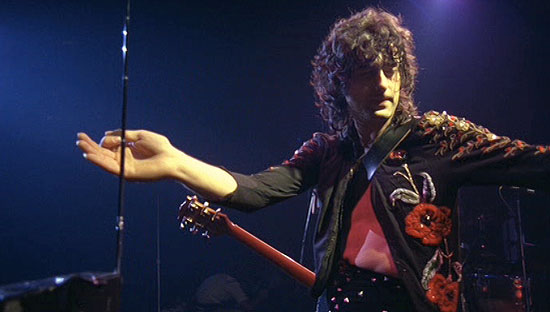
Jimmy Page’s Gibson EDS-1275 Double Neck Guitar

Jimmy Page on the 'Swagger' of Led Zeppelin's 'Physical Graffiti' - Rolling  Stone

This guitar was born out of necessity for Page. They had just recorded Stairway to Heaven and Jimmy played a  12-string in the song after the intro. To play the song live without a 12-string would not work. He was the only guitar player in the band so to replicate that part they either needed another guitar player or a way for Jimmy to switch to the 12 string while playing the song.

The solution came in the shape of a Gibson double-neck. A 6-string and a 12-string on the same guitar. Jimmy had seen pictures of American guitarists with a double neck guitar… Grady Martin with a Bigsby double-neck, Joe Maphis with a Mosrite. He also saw a strange band named Family with a guitar player  named Charlie Whitney with a double neck guitar.

Gibson first introduced the doubleneck guitar in 1958 with the EDS-1275’s forerunner the “Double 12”. The body and hardware specifications for the EDS-1275 include a solid mahogany SG-style body, a dark cherry finish with walnut filler, chrome hardware, a chrome ABR Bridge with chrome tumblewheels, Schaller strap locks, a five-play pickguard, two volume and tone control knobs, a three-way pickup-selector switch and a three-way neck selector switch.

Jimmy played Les Pauls and wanted to get another Gipson. By the time Page wanted an EDS-1275, they were no longer in production so he ordered a custom-made cherry guitar.

Page’s EDS-1275 has a slightly different body shape from that of the then current model. Page’s also has one-piece mahogany necks rather than the current three-piece maple, and has tailpieces positioned near the bottom of the body, reportedly increasing sustain, and Patent No. or T-Top humbucking pickups.

Jimmy’s EDS-1275 made its live debut in March 1971, allowing him to play 12-string and six-string parts without swapping guitars and it certainly did become iconic.

Page recently donated a later model EDS-1275 for charity, but it was not the famous one he used with Led Zeppelin. That guitar remains firmly in his possession.

Jimmy Page: “I asked to get one from Gibson, because I knew it was the only way,” “I knew I couldn’t do Stairway…, but it was essential to do it. So it became iconic, didn’t it? If a little tough on the left shoulder…Yeah, though I’ve got heavier guitars! But nevertheless, it was pretty weighty.”

Jerry Garcia’s Alligator

Jerry Garcia's “Alligator” '50s Strat Will Be Up For Auction – Rock Pasta

Graham Nash gave this 1957 Strat to Jerry Garcia as a gift in 1970. Nash  purchased the guitar in 1970 from a pawnshop in Phoenix. Graham wanted to show his appreciation for Jerry’s guitar work on his solo album “Songs for Beginners.”

Roadie Steve Parish recalled a night in Buffalo on Garcia’s first tour outside the band, where “it was so cold that when Jerry stepped out on stage and strummed his ‘Alligator’ the face plate on the guitar broke and the guts popped out. That’s how the show began.” Alligator got patched up with gaffer’s tape, and a new brass plate affixed at the tour’s end.

The Dead helped start an instrument and gear-building auxiliary company called Alembic. Alembic was found by the Dead’s sound man and chemist Owsley Stanley.  Garcia’s Strat found itself on the Alembic workbench numerous times.

In 1972, Garcia would add a number of stickers to the body, including a grinning cartoon alligator on the pickguard that gave the guitar its name. But by then nearly every other bit of the instrument had been overhauled in a series of refinements by Alembic technician Frank Fuller.

Jerry Garcia Alligator Guitar #deadhead | Guitar, Famous guitars,  Stratocaster guitar

The guitar got new Schaller tuning pegs and gears, a series of bridges (Gibson ABR-1 Tune-o-Matic and an Alembic custom), a new control plate (hammered brass), taller frets, and an in-board post-volume “blaster”. “Each pickup cover had its own individually grounded wire.”

Technicians Frank Fuller and Rick Turner of Alembic Guitars modified the guitar regularly, so much so that they referred to it as a “Frankenstein” guitar. Jerry played this guitar on the Dead’s famous first full European tour in 1972 and their two great albums Working Man’s Dead and American Beauty. Alligator played its last show on Garcia’s 30th birthday…August 1st, 1973 in Jersey City, NJ.

The show was recorded by Deadheads, Alligator was sent off properly with a long version of “Dark Star.”

Jerry would play  more custom built guitars through his career.  Wolf (73-93), Tiger (79-95), Lighting Bolt (93-95), Rosebud (90-95), and Top Hat (95). My favorite remains Alligator.

Graham originally bought the guitar for $250 dollars…the guitar was sold at an auction in 2019 for $420,000 dollars.

https://en.wikipedia.org/wiki/Gibson_EDS-1275#:~:text=The%20EDS%2D1275%20was%20mostly,verse%2C%20then%20switched%20to%20the

https://jerrygarcia.com/guitars/

Buddy Holly – Everyday

It’s always an honor to post a Buddy Holly song.  This one was written  written by Buddy Holly and Norman Petty. Buddy was a singer, songwriter, producer, and performer. During his short career, Holly was able to merge the sounds of rockabilly, country music, and R&B to help make rock and roll popular.

The song was recorded in 1957 at the Norman Petty Studios in Clovis, New Mexico.

This song was released on September 20, 1957, as the B-side of “Peggy Sue”. On the original single the Crickets are not mentioned (legal issues), but it is known that Buddy plays acoustic guitar; drummer Jerry Allison slaps his knees for percussion and typewriter; Joe B. Mauldin plays a standup acoustic bass; and producer Norman Petty’s wife Vi Petty plays the celesta.  That gives it a unique sound.

Holly’s version of this song never charted, but two others did. In 1972, John Denver took it to #81 US. Then in 1985, James Taylor made #61 with his cover.

From Songfacts

This upbeat song finds Holly in a hopeful mien, sure that he will soon land the girl of his dreams. He recorded the song in May 1957 with The Crickets at Norman Petty Studios in Clovis, New Mexico.

This is listed as being written by Charles Hardin and Norman Petty. Charles Hardin is actually Buddy Holly: his real name was Charles Hardin Holley. 

This was used in the movies Big Fish and Stand By Me as well as a Season 4 episode of the TV show Lost.

Everyday

Everyday, it’s a-gettin’ closer
Goin’ faster than a roller coaster
Love like yours will surely come my way
A-hey, a-hey hey

Everyday, it’s a-gettin’ faster
Everyone said, “Go ahead and ask her”
Love like yours will surely come my way
A-hey, a-hey hey

Everyday seems a little longer
Every way, love’s a little stronger
Come what may, do you ever long for
True love from me?

Everyday, it’s a-gettin’ closer
Goin’ faster than a roller coaster
Love like yours will surely come my way
A-hey, a-hey hey

Everyday seems a little longer
Every way, love’s a little stronger
Come what may, do you ever long for
True love from me?

Everyday, it’s a-gettin’ closer
Goin’ faster than a roller coaster
Love like yours will surely come my way
A-hey, a-hey hey
Love like yours will surely come my way

Monkees – I’m A Believer

This song was #1 on the Billboard 100, Canada, The UK, and New Zealand on January 15th 1967… That day since we are talking about it…the first Superbowl was played when the Packers beat the Chiefs.

I grew up with this song so it is ingrained in the back of my mind. That organ intro will stick with you. Say what you want to about the Monkees…they produced some of the great pop songs of the sixties…no matter how much  Jann Wenner (Rolling Stone Magazine) snubs them for the Rock and Roll Hall of Fame.

Every Monkees post I usually say something like that…what Wenner doesn’t get, among many things, is that the Monkees influenced a couple of generations of musicians (REM, XTC included). Like other bands of that time in California…studio musicians played on their first two albums and Wenner cannot forget that. They became a band after being cast together. They started to play on the 3rd album and continued with hits.

This was The Monkees second single, after “Last Train To Clarksville.” It was released during the first season of their TV show.

Neil Diamond wrote this song. He had his first big hit earlier in 1966 with “Cherry, Cherry,” which got the attention of Don Kirshner, who was looking for material for The Monkees. Kirshner was sold on “I’m A Believer,” and as part of the deal, allowed Diamond to record the song as well. Diamond’s version was released on his 1967 album Just For You. The Monkees version benefited from exposure on their television series.

Guitarist Michael Nesmith didn’t believe this would be a hit, complaining to the producer, Jeff Barry, “I’m a songwriter, and that’s no hit.” Jeff Barry banned him from the studio while Micky Dolenz recorded his lead vocal…Mr. Nesmith was wrong about this one.

Neil Diamond: “I was thrilled, because at heart I was still a songwriter and I wanted my songs on the charts. It was one of the songs that was going to be on my first album, but Donny Kirshner, who was their music maven, hears ‘Cherry, Cherry’ on the radio and said, ‘Wow, I want one like that for The Monkees!’ He called my producers, Jeff Barry and Ellie Greenwich – ‘Hey, does this kid have any more?’ And they played him the things I had cut for the next album and he picked ‘I’m A Believer,’ ‘A Little Bit Me, A Little Bit You’ and ‘Look Out (Here Comes Tomorrow),’ and they had some huge hits. But the head of my record company freaked. He went through the roof because he felt that I had given #1 records away to another group. I couldn’t have cared less because I had to pay the rent and The Monkees were selling records and I wasn’t being paid for my records.”

From Songfacts

The Monkees sang on this, but did not play any instruments. The producers used session musicians because they were not convinced The Monkees could play like a real band. This became a huge point of contention, as the group fought to play their own songs.

Monkees drummer Micky Dolenz sang lead on this. Dolenz also handled lead vocals on “Pleasant Valley Sunday,” “Mary Mary” and “(I’m Not Your) Steppin’ Stone.”

Neil Diamond had intended the song to be recorded by the Country artist Eddy Arnold, and was surprised when record executive Don Kirshner passed it instead to The Monkees.

A cover version by Smash Mouth was featured in the 2001 movie Shrek and went to #25 in the US. Diamond wrote the song “You Are My Number One” for Smash Mouth’s next album. 

The single had an advance order of 1,051,280 copies and went gold within two days of release.

British singer-songwriter and Soft Machine founding member Robert Wyatt had a #29 in the UK in 1974 with an intense cover version. His rendition featured Andy Summers (later of The Police) on guitar, and drums by Nick Mason of Pink Floyd, who also produced the recording.

Wyatt told Q Magazine that he wanted to make a point with his cover. “I was very uncomfortable with having fans who said ‘Your music is so much better than all that banal pop music,'” he said. “It sounds like a socialist thing to say but pop music is the music of the people. It’s the folk music of the industrial age. If you don’t respect popular culture. You don’t respect people, in which case your political opinion is of no great value.”

Dolenz has painful memories of performing this on tour. Literally painful. He told Entertainment Weekly in 2016. “I do remember lots of snatches of touring back then. Unbelievable. No monitors. Screaming. Screaming, screaming. [When we played ‘I’m a Believer’] I couldn’t hear myself. I just had to pound away. Even to this day, I sing with my eyes closed, because I had to close my eyes and hit myself in the leg to keep time on the drums. I had a big bruise. [Laughs]”

I’m A Believer

I thought love was only true in fairy tales
Meant for someone else but not for me
Love was out to get me
That’s the way it seemed
Disappointment haunted all of my dreams

Then I saw her face, now I’m a believer
Not a trace of doubt in my mind
I’m in love
I’m a believer, I couldn’t leave her if I tried

I thought love was more or less a giving thing
Seems the more I gave the less I got
What’s the use in tryin’
All you get is pain?
When I needed sunshine, I got rain

Then I saw her face, now I’m a believer
Not a trace of doubt in my mind
I’m in love
I’m a believer, I couldn’t leave her if I tried

Oh

Oh, love was out to get me
Now, that’s the way it seemed
Disappointment haunted all of my dreams

Then I saw her face, now I’m a believer
Not a trace of doubt in my mind
I’m in love
I’m a believer, I couldn’t leave her if I tried

Yes, I saw her face, now I’m a believer
Not a trace of doubt in my mind
Said, I’m a believer, yeah, yeah, yeah, yeah, yeah, yeah (I’m a believer)
Said, I’m a believer, yeah (I’m a believer)
I said, I’m a believer, yeah (I’m a believer)

Beatles – I Want To Hold Your Hand

This helped start the modern rock era. No British rock act had dominated in America before the Beatles. Cliff Richard had tried and failed but with this song and an appearance on the Ed Sullivan Show…The Beatles kicked down the door and started the British Invasion and the Stones, Kinks, and Who would soon follow.

Rock and Roll can be divided up into two eras… pre Beatles and post Beatles. Everything would change after this. I bought an amp from a long time country studio  musician and he told me that the day after he heard this on Ed Sullivan the world changed. Not just music but everything…music, thoughts, aspirations, and hair of course. Within weeks of this song hitting number 1 there were bands forming in every neighborhood in America.  Guitars were bought, hair lengths were being tested, and a huge urge to learn everything British.

I always hold this song up to why vinyl is the way to listen to some records at times. All the CD versions I’ve heard of this song sound rather flat…when I hear the 45 vinyl single the song jumps out at you. It changes the whole dynamic of the song. After hearing the single the way it was meant to be heard… you can see why this song changed a lot of things. It was maybe the most important single they ever released…it may have had the biggest impact at least in America.

It is said that John and Paul wrote this with an America’s sound in mind. They must have guessed right. This song preceded the Beatles trip here at number 1. Lennon liked the melody so much that he talked about doing something with it again til his death.

This was played on the Washington, DC radio station WWDC before it was released in America by a DJ named Carroll Baker, who got the record from a stewardess. It was a huge hit with his listeners and prompted Capitol Records to release the song ahead of schedule – they planned to issue it on January 13, 1964.

The Beatles were in Paris and celebrated madly when they found out they were #1 in America. They came to America for the first time on February 7, 1964, greeted at the airport by screaming fans. “I Want To Hold Your Hand” was the #1 song in the country at that time, and it stayed on top for seven weeks, until their next single, the re-released “She Loves You,” replaced it.

Bob Dylan thought the line “I can’t hide” was “I get high,” and a reference to marijuana. He was surprised to learn they had never tried pot, and became part of Beatles lore when he introduced them to it.

At times John Lennon realized the crowds The Beatles played to were so loud they really couldn’t hear them sing, so sometimes instead of singing the line, “I want to hold your hand,” he would say, “I want to hold your gland” as a reference to women’s breasts…and people wonder why Lennon is my favorite Beatle!

The song peaked at #1 in the Billboard 100, Canada, UK, New Zealand, and probably on Mars also in 1964.


From Songfacts

This was the first Beatles song to catch on in America. In 1963, the Beatles became stars in England, but couldn’t break through in the US. They couldn’t get a major label to distribute their singles in America, so their first three singles there, “Please Please Me,” “From Me to You” and “She Loves You,” were issued on small labels and flopped, even though they were hits in England.

Late in 1963, American news outlets started reporting on this British sensation, and interest in the group started to rise. Capitol Records took notice and released “I Want To Hold Your Hand” Stateside on December 26. The song rose up the chart, and on February 1, 1964, hit #1. It sold better in the first 10 days of release in the US than any other British single, and remains the best-selling Beatles single in the United States, moving over 12 million copies.

Conquering the US was, and still is, a big deal for British bands. Many groups that are huge in the UK (Oasis, Blur) never really catch on in America.
• John Lennon and Paul McCartney wrote this in Jane Asher’s basement. Asher was an actress who became Paul’s first high-profile girlfriend. After appearing in several movies, TV shows and stage productions, Asher became an authority on baking, and has her own business selling party cakes and supplying baking and decorating equipment. She and Paul broke up in 1968.

Jane had a brother named Pete Asher who teamed up with Gordon Waller to form the duo Peter & Gordon; McCartney wrote their hit single “A World Without Love.” Pete recalled in a 2010 interview with Gibson.com the two Beatles penning this song at his home: “My mother had a practice room that she used to give private oboe lessons when she wasn’t teaching at The Royal Academy, where she was a professor. There was just a piano, and an upright chair and a sofa. Paul used that room to write in, from time to time. One afternoon John came over, while I was upstairs in my room. The two of them were in the basement for an hour or so, and Paul called me down to listen to a song they had just finished. I went downstairs and sat on the sofa, and they sat side by side, on the piano bench. That’s where they played ‘I Want to Hold Your Hand’ for the first anywhere. They asked me what I thought. I said, ‘I think it’s very good.'” [laughs]

The Beatles performed this on their first two Ed Sullivan Show appearances, which took place February 9 and 16, 1964. There was already a media frenzy around The Beatles, which was amplified when millions saw them on Sullivan’s show. The Beatles were booked for the show before they had a hit in the US, so they actually got paid less than many other guests for their appearance.

• This was one of John Lennon’s favorite Beatles songs. It starts with a falling melody, which is typical of Lennon’s songwriting, and ends with a cadence with a quarter-interval: “I’ll think you’ll understand.” That quarter-interval cadence you can even hear in Lennon’s first bit of “From Me to You” and in “Tomorrow Never Knows.” McCartney most often uses second-intervals. Also typically Lennon is the sudden octave-run, “Haaaaand…” The same octave-run you can hear in the end of the middle part in Lennon’s “Please Please Me”: “To reason with youuuuuu…” Also note that the beginning of the melody in the middle part is almost the same melody as the beginning of the middle part in “Don’t Let Me Down.” 

Two parody groups made answer songs to this in 1964: “I’ll Let You Hold My Hand” by The Bootles and “Yes, You Can Hold My Hand” by The Beatlettes.

This was the first Beatles song recorded on 4-track equipment. Some of their first songs were in mono.

The Beatles also cut a German version called “Komm Gib Mir Deine Hand.” They picked up some German while playing The Star Club in Hamburg in 1962.

In the 1960s it wasn’t uncommon for British stars to record new versions of their hits in other languages. The idea was to increase airplay on continental stations and to get a hit before an indigenous artist recorded a version in the local tongue. On January 29, 1964, The Beatles went into the Pathé & Marconi Studios in Paris and recorded “I Want To Hold Your Hand” and “She Loves You” (“Sie Liebt Dich”) in German. The lyrics had been hurriedly translated by a Luxembourger named Camillo Felgen, who was then a program director at Radio Luxembourg. As well, apart from their recording of “My Bonnie” in the early ’60s, this was the only time The Beatles recorded in another language. In addition it was the sole occasion on which they recorded outside London.

When this hit #1 in the US, it was the first time a British group topped the chart there since 1962, when “Telstar” by The Tornados did it. Until The Beatles came along, most British groups that had hits in America came and went pretty quickly. The Beatles kicked off the British Invasion, leading to a lengthy occupation on the charts for acts like The Rolling Stones, The Kinks and The Who as well as The Beatles.

It was the youth who discovered The Beatles, and while young people can be easily manipulated through hype and image, in the case of The Beatles it was the music that drew them in. An American girl Sanda Stewart, 15 years old in spring 1964 (according to Hunter Davies in his book Beatles) said: “I was one day in a shop with my mother when I suddenly heard ‘I Want to Hold Your Hand’ on the car radio. Such a special sound! I could never stop thinking about it. No song has effected me on that way. Several other girls in school had reacted in the same way. We saw the Beatles on photos and thought they were ugly. But their music was fantastic.”

This song was used in the movie Across the Universe at a much slower tempo. 

A fairly straightforward and simple Beatles song, this one still has some musical complexity that foreshadowed what was to come. “The middle eight of that does something,” Tony Banks of Genesis explained. “The way the key changes at that point is something I hadn’t heard before.”

I Want To Hold Your Hand

Oh yeah, I’ll tell you somethin’
I think you’ll understand
When I say that somethin’
I want to hold your hand

Oh please, say to me
You’ll let me be your man
And please, say to me
You’ll let me hold your hand
Now, let me hold your hand
I want to hold your hand

And when I touch you
I feel happy inside
It’s such a feelin’ that my love
I can’t hide
I can’t hide
I can’t hide

Yeah, you got that somethin’
I think you’ll understand
When I say that somethin’
I want to hold your hand

And when I touch you
I feel happy inside
It’s such a feelin’ that my love
I can’t hide
I can’t hide
I can’t hide

Yeah, you got that somethin’
I think you’ll understand
When I feel that somethin’
I want to hold your hand


Talking Heads – Once In A Life Time

Same as it ever was

David Byrne at his visual performance best with this video. According to David Byrne’s own words, this song is about how we, as people, tend to operate half-awake or on autopilot. Or perhaps a better way of explaining that statement is that we do not actually know why we engage in certain actions which come define our lives.

The members of Talking Heads…David Byrne, Tina Weymouth, Chris Frantz and Jerry Harrison – all contributed to the writing of this song along with the track’s producer, Brian Eno. And “Once in a Lifetime” itself originated from jam sessions. With this album the band wanted a more democratic process instead of Byrne writing all of the songs.

The song was on the Remain in Light album released in 1980. The song peaked at #103 in the US Billboard Bubbling Under the Hot 100 chat, #28 in Canada, and #14 in the UK in 1981.

In 1985 the song peaked at #91 in the Billboard 100 with a live version of the song off of the album Stop Making Sense.

The video was huge back in the early 80s and that is where I found the song. It was choreographed  by Toni Basil.

For this album they would improvise in the studio and take bits and pieces out. Their own version of  “sampling” and “looping.” The 1973 Afrobeat record by Nigerian musician Fela Kuti, became the inspiration for the album

Brian Eno: “It had all been done,” Eno says, “and the only thing left worth doing was some sort of urban pessimism of some kind, and that record is terribly optimistic in a way. It’s very up and, like, looking out to the world and saying, ‘What a fantastic place we live in. Let’s celebrate it.’ And I think we knew that was a fresh thought at the time.”

David Byrne:Most of the words in ‘Once in a Lifetime’ come from evangelists I recorded off the radio while taking notes and picking up phrases I thought were interesting directions. Maybe I’m fascinated with the middle class because it seems so different from my life, so distant from what I do. I can’t imagine living like that.”

From Songfacts

This song deals with the futility of not being happy with the things you have. Like trying to remove the water at the bottom of the ocean, there’s no way to stop life from moving on. The forces of nature (like the ocean) keep you moving almost without your conscious effort – like a ventriloquist moving a puppet.

Some of these evangelist recordings also made their way to a 1981 album called My Life in the Bush of Ghosts, by David Byrne and Brian Eno.

This stalled at #103 in February 1981, but when MTV launched that August, they played the video a lot, giving the song much more exposure.

David Byrne’s choreography in the video was done by the Toni Basil, who had a hit as a singer with “Mickey.” It was a very odd video, and for many viewers it was the first look they got at the Talking Heads (or at least Byrne – the full band didn’t appear in a video until “Burning Down the House” two years later).

As you watch David Byrne spasm like a malfunctioning robot interspersed with gesturing in Martian sign language, ponder this excerpt from the book MTV Ruled the World – The Early Years of Music Video, in which Toni Basil fills in some details about the choreography for this video: “He [Byrne] wanted to research movement, but he wanted to research movement more as an actor, as does David Bowie, as does Mick Jagger. They come to movement in another way, not as a trained dancer. Or not really interested in dance steps. He wanted to research people in trances – different trances in church and different trances with snakes. So we went over to UCLA and USC, and we viewed a lot of footage of documentaries on that subject. And then he took the ideas, and he ‘physicalized’ the ideas from these documentary-style films.”

Basil adds: “When I was making videos – whether it was with Devo, David Byrne, or whoever – there wasn’t record companies breathing down anybody’s neck, telling them what to do, what the video should look like. There was no paranoid A&R guy, no crazy dresser that would come in and decide what people should be wearing, and put them in shoes that they can’t walk in, everybody with their own agenda. We were all on our own.”

Basil also directed and choreographed the video for the Remain In Light track “Crosseyed And Painless,” which features dancers from a crew called The Electric Boogaloos. None of the band members appear in it.

Some critics have suggested that “Once In A Lifetime” is a kind of prescient jab at the excesses of the 1980s. David Byrne says they’re wrong; that the lyric is pretty much about what it says it’s about. In an interview with NPR, Byrne said: “We’re largely unconscious. You know, we operate half awake or on autopilot and end up, whatever, with a house and family and job and everything else, and we haven’t really stopped to ask ourselves, ‘How did I get here?'” 

Brian Eno produced this song and wrote the chorus, which he also sang on. David Byrne wrote the verses, which he talk/sings in an intriguing narrative style. Remain In Light was the fourth Talking Heads album, and the third produced by Eno, whose artistic bent and flair for the unusual were a great fit for the group.

Unlike their previous album, the songs on Remain In Light were mostly written in the studio (Compass Point, the Bahamas) and all credited to the four band members plus Eno.

A surprising number of musicians cite “Once In A Lifetime” as one of the best songs ever recorded. Here are three:

Charlotte Church, who named it the first song she fell in love with. “The first time I heard it, my mind was blown,” she told NME. “There’s so magic in that song. I think David Byrne is an absolute G.”

Nick Feldman of Wang Chung, who loves the “almost randomly cacophonous keyboard burblings, the wonderful bass line and rhythm section groove and David Byrne’s slightly preacher-like vocals.” He told Songfacts: “When my personal life started to unravel many years later, the lyrics to this song still resonated for me. Byrne’s mesmeric and intense physical performance in the video to this track still compels today, and compliments and reflects the music it is interpreting.”

Glen Ballard, who produced and co-wrote hits for Alanis Morissette, Dave Matthews and Aerosmith. “That song can’t be touched,” he said in a Songfacts interview. “I listen to it like once a month because everything about it is so perfect.”

The video broke new ground when it was exhibited at the New York Museum of Modern Art as part of a 1982 exhibition called “Performance Video.” The exhibit helped explain to parents what their kids were watching on MTV. It explained how the “Once In A Lifetime” video “expands upon the song’s complex interweaving of moods and images as well as Byrne’s interest in African music and percussion.”

When Talking Heads toured to support their next album, Speaking in Tongues, in 1983, Byrne did the movements from the video when he performed the song. Not only that, he added movements to other songs they performed on that tour as well, making for some very unorthodox visual expression. Audiences were used to seeing pyro and flashing lights, but had never seen anything like the full band running in place (“Burning Down the House”) or Byrne turning himself into a human corkscrew (“Life During Wartime”). The experience was so striking it got the attention of director Jonathan Demme, who filmed a few of the shows and turned it into the acclaimed concert film Stop Making Sense.

This was used in the pilot episodes of That ’80s Show (2002) and Numb3rs (2005). It was used twice on The Simpsons (“Days of Future Future” – 2014, “Trust But Clarify” – 2016) and in these series:

The Deuce (“Morta di Fame” – 2019)
Being Erica (“Being Adam” – 2010)
Chuck (“Chuck Versus the Suburbs” – 2009)
WKRP in Cincinnati (“Real Families” – 1980)

It also shows up in these movies:

Hot Tub Time Machine (2010)
Secret Window (2004)
Rock Star (2001)
Alice and Martin (1998)

The live version from Stop Making Sense was used in the opening sequence of the 1986 movie Down And Out In Beverly Hills, which shows a homeless Nick Nolte pushing his grocery cart of possessions around Los Angeles and doing some dumpster diving. His character is in a classic, “How did I get here?” situation, but soon his fortunes take a turn. This version of the song was re-released as a single that year and charted at #91 in America.

The Exies released a haunting version of this song in 2006, releasing a video to go with it. It has also been covered by Smashing Pumpkins and sampled by Jay-Z on his song “It’s Alright.”

Phish covered the entire Remain In Light album on Halloween, 1996 at the Omni Coliseum in Atlanta. It took up the entire second set of their show and featured guest brass players. The performance is considered one of the best Phish “album-cover” attempts. 

Benin superstar Angélique Kidjo covered this song along with the rest of Remain in Light in 2018. She explained to Mojo: “I wanted to bring the resilience of the Africans, and the joy, despite everything they throw at us.”

On May 5, 2018, Kidjo sang “Once In A Lifetime” with David Byrne at Carnegie Hall. She told Mojo: “It was not rehearsed or planned. I think if I thought about it I wouldn’t have been able to sing one note.”

In his 2019 Broadway production American Utopia, David Byrne evokes this song a few times, doing the movements associated with it and at one point asking, “How did I get here?” He does the song in the play as well, and on February 29, 2020, Byrne performed it on Saturday Night Live with his cast members. Later that year, American Utopia was released on HBO as a movie.

Once In A Lifetime

And you may find yourself
Living in a shotgun shack
And you may find yourself
In another part of the world
And you may find yourself
Behind the wheel of a large automobile
And you may find yourself in a beautiful house
With a beautiful wife
And you may ask yourself, well
How did I get here?

Letting the days go by, let the water hold me down
Letting the days go by, water flowing underground
Into the blue again after the money’s gone
Once in a lifetime, water flowing underground

And you may ask yourself
How do I work this?
And you may ask yourself
Where is that large automobile?
And you may tell yourself
This is not my beautiful house!
And you may tell yourself
This is not my beautiful wife!

Letting the days go by, let the water hold me down
Letting the days go by, water flowing underground
Into the blue again after the money’s gone
Once in a lifetime, water flowing underground

Same as it ever was
Same as it ever was
Same as it ever was
Same as it ever was
Same as it ever was
Same as it ever was
Same as it ever was
Same as it ever was

Water dissolving and water removing
There is water at the bottom of the ocean
Under the water, carry the water
Remove the water at the bottom of the ocean!
Water dissolving and water removing

Letting the days go by, let the water hold me down
Letting the days go by, water flowing underground
Into the blue again into silent water
Under the rocks and stones, there is water underground

Letting the days go by, let the water hold me down
Letting the days go by, water flowing underground
Into the blue again after the money’s gone
Once in a lifetime, water flowing underground

You may ask yourself
What is that beautiful house?
You may ask yourself
Where does that highway go to?
And you may ask yourself
Am I right? Am I wrong?
And you may say yourself
“My God! What have I done?”

Letting the days go by, let the water hold me down
Letting the days go by, water flowing underground
Into the blue again into the silent water
Under the rocks and stones, there is water underground

Letting the days go by, let the water hold me down
Letting the days go by, water flowing underground
Into the blue again after the money’s gone
Once in a lifetime, water flowing underground

Same as it ever was
Same as it ever was
Same as it ever was
Look where my hand was
Time isn’t holding up
Time isn’t after us
Same as it ever was
Same as it ever was
Same as it ever was
Same as it ever was
Same as it ever was
Same as it ever was
Letting the days go by
Same as it ever was
And here the twister comes
Here comes the twister

Letting the days go by (same as it ever was)
Same as it ever was (same as it ever was)
Letting the days go by (same as it ever was)
Same as it ever was
Once in a lifetime
Let the water hold me down
Letting the days go by

Chuck Berry – School Day

Chuck was more than a  than a rock and roll guitar player in the 50s. He was a  rock and roll poet. A side note…I’ve seen this listed as School Day and School Days.

This song described teenage life in the 50s wonderfully. Teenagers were the target audience for most rock music in that era, and Berry, 30 years old when he wrote the song, knew that he could sell a lot of records by appealing to this crowd.

School days hadn’t changed much since he was there, so his story about getting through the hectic day while thinking about dancing and being with your girl was still relevant to him.

He describes school as restrictive but when it came to rock music…it was all about freedom and Drop the coin right into the slot.

It peaked at #5 in the Billboard Hot 100, #1 in the R&B Charts, and #25 in the UK in 1956.

From Songfacts

Many people mistakenly think the title is the first line in the last verse, “Hail, hail, rock ‘n’ roll.” The line was used as the title for a 1988 rock documentary featuring Berry.

The stops and starts in this song evoke the nature of high school, where you go from one class or activity to another. Berry remembered a big change going from elementary school, where he stayed in the same room all day, to the peripatetic high school routine.

This was Berry’s first hit in the UK.

Berry released a follow-up to this in 1971 called “Lonely School Days (Version 2).”

School Days

Up in the mornin’ and out to school
The teacher is teachin’ the Golden Rule
American history and practical math
You studyin’ hard and hopin’ to pass
Workin’ your fingers right down to the bone
And the guy behind you won’t leave you alone

Ring, ring goes the bell
The cook in the lunch room’s ready to sell
You’re lucky if you can find a seat
You’re fortunate if you have time to eat
Back in the classroom, open your books
Keep up the teacher don’t know how mean she looks

Soon as three o’clock rolls around
You finally lay your burden down
Close up your books, get outta your seat
Down the halls and into the street
Up to the corner and ’round the bend
Right to the juke joint, you go in

Drop the coin right into the slot
You’re gotta hear somethin’ that’s really hot
With the one you love, you’re makin’ romance
All day long you been wantin’ to dance,
Feeling the music from head to toe
Round and round and round we go

Drop the coin right into the slot
You’re gotta hear somethin’ that’s really hot
With the one you love, you’re makin’ romance
All day long you been wantin’ to dance,
Feeling the music from head to toe
Round and round and round we go

Hail, hail rock and roll
Deliver me from the days of old
Long live rock and roll
The beat of the drums, loud and bold
Rock, rock, rock and roll
The feelin’ is there, body and soul

Blind Faith – Presence of the Lord

This is a song that I put some headphones on…get in my recliner and turn it up to 11…hearing loss be damned…and I get lost in the swirling organ and drift away to the sixties. The song is thick and powerful…who needs drugs when you listen to this loud.

Eric Clapton wrote this song, which is a testimony of faith. It’s the first song for which he wrote all the lyrics.

Clapton called this a “song of gratitude.” It was one of his first songs to explore spirituality, which he did on some of his solo tracks in the ’70s. He said the message of this song was to “say ‘thank you’ to God, or whatever you choose to call Him, for whatever happens.”

Their one and only album, the self titled Blind Faith album, peaked at #1 in the Billboard Album Charts, Canada, and the UK in 1969. They toured one time for the album and then soon broke up.

From Songfacts

Steve Winwood sang lead, as he did with all of the Blind Faith songs. Even though it’s a very personal song, Clapton made sure he wouldn’t be the lead vocalist by writing it in a higher key than he could sing. He thought Winwood was a much better singer (most would agree), and wanted him on this track.

The song is about how Clapton was becoming more comfortable with his life. He had just left Cream at the peak of its popularity, and was looking forward to playing with Blind Faith. He wasn’t too comfortable though: Clapton was fighting drug addiction and falling in love with George Harrison’s wife, whom he would later marry.

Blind Faith released just one album, and didn’t issue any singles. The album was very successful, going to #1 in both the US and UK, but the band broke up after one difficult tour.

The album cover was a photo of a young girl with no clothes on holding a model spaceship. According to photographer Bob Seidemann, who shot the cover, he had the idea but did not have someone to pose. While riding the London subway, he saw a young girl who would be perfect and asked her to pose for the cover. He went to the girl’s house to ask her parents’ permission to pose topless for the cover. They agreed, but the girl backed out. However, the girl’s younger sister begged the parents to let her pose instead. They agreed and the younger sister ended up posing for the cover. Seidemann called the image “Blind Faith” and Eric Clapton made that the name of the group.

Presence Of The Lord

I have finally found a way to live just like I never could before
I know that I don’t have much to give, but I can open any door
Everybody knows the secret, everybody knows the score
Yeah, yeah, yeah, yeah
I have finally found a way to live in the colour of the Lord

I have finally found a place to live just like I never could before
And I know I don’t have much to give, but soon I’ll open any door
Everybody knows the secret, everybody knows the score

I have finally found a place to live, oh, in the presence of the Lord
In the presence of the Lord

I have finally found a way to live, just like I never could before
And I know I don’t have much to give, but I can open any door
Everybody knows the secret, I said everybody knows the score
I have finally found a way to live in the colour of the Lord
In the colour of the Lord

Replacements – Here Comes A Regular

Well a person can work up a mean mean thirst
after a hard day of nothin’ much at all

I can’t tell you how much I like this ballad by The Replacements. This song sounds so authentic that it hurts. I don’t normally try to interrupt songs. They mean different things to different people but this one hit home for me…I knew people like this and I spent my fair share of  time in bars playing to drinking customers.

The song is sad but an honest portrait. It’s a lonely life but a comfort to have people to be lonely with… but it also is a signal  that you could be spiraling slowly down. I have never been drinker but I did haunt some clubs (mostly playing music) in my earlier days nursing a drink into the night. I remember one night being at a club at 2am in the morning…thinking why the hell am I still here? That is when my days of being a regular stopped.

Tim is the fourth studio album by  The Replacements. It was released in October 1985 on Sire Records. It was their first major label release. Paul Westerberg wrote this song and played acoustic.

The Replacements - Tim cover.jpg

You’re like a picture on the fridge that’s never stocked with food
I used to live at home, now I stay at their house

Here Comes A Regular

Well a person can work up a mean mean thirst
after a hard day of nothin’ much at all
Summer’s passed, it’s too late to cut the grass
There ain’t much to rake anyway in the fall

And sometimes I just ain’t in the mood
to take my place in back with the loudmouths
You’re like a picture on the fridge that’s never stocked with food
I used to live at home, now I stay at the house

And everybody wants to be special here
They call your name out loud and clear
Here comes a regular
Call out your name
Here comes a regular
Am I the only one here today?

Well a drinkin’ buddy that’s bound to another town
Once the police made you go away
And even if you’re in the arms of someone’s baby now
I’ll take a great big whiskey to ya anyway

Everybody wants to be someone’s here
Someone’s gonna show up, never fear
’cause here comes a regular
Call out your name
Here comes a regular
Am I the only one who feels ashamed?

Kneeling alongside old Sad Eyes
He says opportunity knocks once then the door slams shut
All I know is I’m sick of everything that my money can buy
The fool who wastes his life, God rest his guts

First the lights, then the collar goes up, and the wind begins to blow
Turn your back on a pay-you-back, last call
First the glass, then the leaves that pass, then comes the snow
Ain’t much to rake anyway in the fall

Blasters – Border Radio

You can hear, feel, and get a thrill from this song that was obviously influenced by early rock and roll. It’s like a car that hits you and just keeps rolling on…and you never catch the license plate…but you still feel honored to get hit by this one.

The Blasters released this song in 1981 and it was off of their self titled album.

The Blasters (album).jpg

The song was written by Phil Alvin  wh o was the guitarist, singer, and main songwriter for the band.  The band produced a range of “rockabilly, country, blues, and New Orleans roadhouse R&B.”

I have never known the band well but I have recently started to get into them. Just some great pure music with a groove.

Border radio’s greatest asset was the sheer reach of its signal. Free from U.S. regulation, signals ranged from 50,000 to 500,000 watts. Listeners could often hear radio signals coming through barb wire fences, bed springs and dental work. The signal was so powerful that the “X” stations would often overpower stations broadcasting from American soil. Signals from border radio stations could sometimes be heard as far away as Russia… Wolfman Jack came from a Border Radio station.

Border Radio

One more midnight, her man is still gone
The nights move too slow
She tries to remember the heat of his touch
While listening to the Border Radio

She calls toll-free and requests an old song
Something they used to know
She prays to herself that wherever he is,
He’s listening to the Border Radio

This song comes from nineteen sixty-two
Dedicated to a man who’s gone
Fifty thousand watts out of Mexico
This is the Border Radio

She thinks of her son, asleep in his room
And how her man won’t see him grow
She thinks of her life and she hopes for a change
While listening to the Border Radio

This song comes from nineteen sixty-two
Dedicated to a man who’s gone
Fifty thousand watts out of Mexico
This is the Border Radio

They play her tune but she can’t concentrate
She wonders why he had to go
One more night and her man is still gone
She’s listening to the Border Radio

This song comes from nineteen sixty-two
Dedicated to a man who’s gone
Fifty thousand watts out of Mexico
This is the Border Radio

AC/DC – Dirty Deeds Done Dirt Cheap

This song is about as sleazy as you can get but I like it.

AC/DC lead guitarist Angus Young got the song title from the 1962 animated cartoon series Beany and Cecil. The Show first aired on ABC Television and only ran for one season until the 26 episodes shown were cast as repeats for the next five years until it was recreated in 1968.

The specific inspiration for the song name was the cartoon’s main villain, “Dishonest John,” who would carry around a business card that said, “Dirty Deeds Done Dirt Cheap. Holidays, Sundays, and Special Rates.”

Norman and Marilyn White, a couple from Libertyville, Illinois, sued the band for invasion of privacy after they were inundated with calls due to this song. Apparently, many AC/DC fans in the area dialed 3-6-2-4-3-6-8 (thinking the “hey!” as “eight”), which was their phone number. The couple claimed they received hundreds of “lewd, suggestive and threatening” phone calls, asking for various dirty deeds at low, low prices. The Whites asked for $250,000 in damages and demanded that the band re-record the song, but a judge ruled against them. The people with the bad luck to have 867-5309 had the same problem but they only had inquiries about Jenny.

The song was written by Bon Scott, Angus, and Malcolm Young.  The album was released in Australia and in Europe in 1976. The album was released in America in 1981 after Scott’s death and after the popular Back in Black. It peaked at #4 on the Billboard Mainstream Rock Hits and #47 in the UK.

Lesley Gore, known for ’60s hits like “It’s My Party,” recorded this for the 2002 compilation album When Pigs Fly: Songs You Never Thought You’d Hear. Her version was produced by Mauro DeSantis, who worked with Cevin Soling on the track… I couldn’t find it on Youtube but click on that link. Lesley Gore channels her inner Bon Scott on this one…I didn’t like the music part as much but her singing was spot on.

From Songfacts

This song epitomizes AC/DC’s dangerous and mean sound, with Angus Young’s heavy guitar and Bon Scott’s leering, vocals that would have scared the living daylights out of any unsuspecting teenage Pop fans when this song first hit the airwaves (they did it on a national TV show in Australia called Countdown, which was usually frequented by acts like ABBA and Bucks Fizz).

This was recorded at Alberts Studios in Sydney, Australia in 1976 soon after the sessions that produced the Australian version of their TNT album.

Regarding the lyrics, “Just ring: 3-6-2-4-3-6,” this was an actual phone number in Australia at the time, and it also could describe the measurements of a very shapely woman: 36-24-36. A year later, the Commodores used the same measurements to describe a woman in their song “Brick House.” Sir Mix-a-Lot, however, scoffed at these measurements in his 1992 hit “Baby Got Back,” where he says: “36-24-36? Only if she’s 5’3.”

The ending is one of the most famous screams in rock history. For those wondering, it’s spelled: “Yaaaaaaaaaaarrrrrrrrrggghhhhhh!” 

This was used in the Norm MacDonald movie Dirty Work. It is played while Norm’s character Mitch and his friend Sam are wrecking a building in an attempt to get it condemned. 

On a 2008 episode of The Simpsons where they team up on a stakeout, we learn that Homer Simpson and the pious Ned Flanders have some common ground in their musical tastes. Homer likes AC/DC, and Ned likes their Christian tribute band: AD/BC, and their version of this song, “Kindly Deeds Done For Free.”

The song about murder for hire enjoyed a sales spike following drummer Phil Rudd being charged with trying to procure a murder in November 2014. The charge was soon dropped.

Dirty Deeds Done Dirt Cheap

If you’re havin’ trouble with the high school head
He’s givin’ you the blues
You want to graduate but not in ‘is bed
Here’s what you gotta do
Pick up the phone
I’m always home
Call me any time
Just ring
36 24 36 hey
I lead a life of crime

Dirty deeds, done dirt cheap
Dirty deeds and they’re done dirt cheap

You got problems in your life of love
You got a broken heart
He’s double dealin’ with your best friend
That’s when the teardrops start, fella
Pick up the phone
I’m here alone
Or make a social call
Come right in
Forget about him
We’ll have ourselves a ball

Dirty deeds, done dirt cheap
Dirty deeds and they’re done dirt cheap

If you got a lady and you want her gone
But you ain’t got the guts
She keeps naggin’ at you night and day
Enough to drive ya nuts
Pick up the phone
Leave her alone
It’s time you made a stand
For a fee
I’m happy to be
Your back door man

Dirty deeds, done dirt cheap
Dirty deeds and they’re done dirt cheap yeah
Dirty deeds and they’re done dirt cheap

Concrete shoes, cyanide, TNT
Done dirt cheap
Neckties, contracts, high voltage
Done dirt cheap

Dirty deeds
Do anything you wanna do
Done dirty cheap
Dirty deeds
Dirty deeds
Dirty deeds
Done dirt cheap

Little Feat – Willin’

Little Feat guitarist/singer Lowell George wrote “Willin'” before the group was even formed. They never had mass commercial appeal but their music was so down to earth and the musicians in that band were great.

The song is about a truck driver in the American southwest who makes some extra cash smuggling cigarettes and transporting illegals across the border from Mexico. If you give him “weed, whites and wine,” he’s willin’ to do the job.

Lowell had cut his hand on a model airplane and he was heavily bandaged up while playing the solo. The keyboard player Bill Payne said George was bleeding all over his guitar when playing this. Lowell George and Ry Cooder are playing slide guitar on this song. They found Ry Cooder recording his debut album at the same studio that Little Feat were recording this song.

Little Feat’s producer Russ Titelman asked Cooder to come and play on some tracks. There was a lot of tension between Cooder and George, but that competitive streak was channeled into the song.

Little Feat were never very successful on the charts but many music fans love them. Along with music fans…many musicians from Led Zeppelin to Bonnie Raitt.

This originally appeared on Little Feat’s debut album (with Ry Cooder), but the version that has become famous was recorded for the follow-up, Sailin’ Shoes, in 1972. The original version has a faster tempo.

From Songfacts

The opening line, in which the narrator describes himself as being “warped by the rain,” originated in a conversation between George and drummer Richie Hayward. Hayward had used it to describe a rocking chair.

It’s likely that when George brought “Willin song was a reason for his departure, due to its drug references in the chorus. It is known that his leaving had something to do with his drug use, which Zappa heavily frowned upon. “I think Frank was both impressed and put off by the song because of the drug reference,” Bill Payne told Bud Scoppa. “He was somewhat conservative on certain levels. He was afraid of the very thing that bit the hippie movement in the ass, which was the craziness of what would happen to people when they got fried on drugs – like Charles Manson.”

More likely, it was George’s drug use that led to the parting.

Although the band never had a charting single, “Willin'” is arguably their best-known song. Their first two albums, which both included the track, flopped, but they found their stride with their third, Dixie Chicken, their first as a six-piece jazz-funk outfit (they were previously a country-rock quartet). They developed a reputation as a great live band, and “Willin'” was a concert favorite. As more people discovered the band, the song grew in popularity and even earned some airplay.

Little Feat split up in 1979 just months before Lowell George passed away. When they re-formed in 1987, guitarist Paul Barrere took the lead vocals on “Willin’.” He died in 2019.

Linda Ronstadt recorded this on her 1975 album Heart Like A Wheel. While Ronstadt is certainly versatile, it’s hard to imagine her at the wheel of a rig hauling freight (or contraband) across state lines.

Original version with Ry Cooder

Willin’

I been warped by the rain, driven by the snow
I’m drunk and dirty don’t ya know, and I’m still, willin’
And I was out on the road late at night
I’d seen my pretty Alice in every head light
Alice, Dallas Alice

I’ve been from Tucson to Tucumcari
Tehachapi to Tonapah
Driven every kind of rig that’s ever been made
Driven the back roads so I wouldn’t get weighed
And if you give me weed, whites and wine
And you show me a sign
I’ll be willin’, to be movin’

Well I’ve been kicked by the wind, robbed by the sleet
Had my head stoved in, but I’m still on my feet and I’m still, willin’
Now I smuggled some smokes and folks from Mexico
Baked by the sun, every time I go to Mexico, and I’m still

And I been from Tucson to Tucumcari
Tehachapi to Tonapah
Driven every kind of rig that’s ever been made
Driven the back roads so I wouldn’t get weighed
And if you give me weed, whites and wine
And you show me a sign
I’ll be willin’, to be movin’

Jimmy Buffett – Margaritaville

Yes it’s wore out but I still love it. One of my favorite lyrics comes from this song. I blew out my flip flop, Stepped on a pop top, Cut my heel had to cruise on back home. I don’t know why but I just love that line.  When Buffett wrote this he wrote his career. He had hits before but this one changed everything.

I’ve seen Jimmy Buffett twice and it’s like going to a giant beach party. If you ever get a chance it’s a fun concert to go to. I’ve only owned one album by Buffett. “Songs You Know By Heart” a greatest hits collection released in 1985. It has everything I like except one song…Door Number 3.

Buffett wrote this song in Key West, Florida, after he finished a tour with his group, the Coral Reefer Band. They had just toured Texas, and Buffett spent some time drinking margaritas in a Mexican restaurant with a friend before going back to Key West. When he got there, he sat at the Old Anchor Inn watching a traffic jam on the roads and used it as inspiration as he composed the song.

Buffett recorded this song at Criteria Studios in Miami with producer Norbert Putnam.

The song peaked at #8 in the Billboard 100 and #4 in Canada in 1977.

Producer Norbert Putnam: “One day in the studio, he comes in and starts telling me about a day he had in Key West. He was coming home from a bar and he lost one of his flip-flops and he stepped on a beer can top and he couldn’t find the salt for his Margarita. He says he’s writing lyrics to it and I say ‘That’s a terrible idea for a song.’ He comes back in a few days later with ‘Wasted Away Again In Margaritaville’ and plays it and right then everyone knows it’s a hit song. Hell, it wasn’t a song – it was a movie.”

From Songfacts

Regarding the success of this song, Buffett said: “I was lucky enough to get my thumb on the pulse beat of what people perceived the tropics to be.”

“Margaritaville” has come to symbolize a carefree Caribbean lifestyle – what some in Key West call “Keys disease.” For many, the only time they experience this way of living is on vacations or at Jimmy Buffett concerts. Buffett has a lot of fans who work very hard, make a lot of money, and use his music as an escape.

Buffett was born in Mississippi and raised in Alabama. He didn’t come to Key West, Florida, until 1971, when he was 24 years old. As a transplant, he had a perspective on the area that natives don’t, which helped him capture the ethos in this song.

Buffett has always loved sailing, and when this song became a hit, he was thrilled because he could buy his own boat. He has said that even if he was a one-hit wonder, he would have been happy with his boat sailing around the islands.

When Buffett sings about how he “Stepped on a pop-top” and cut his heel, requiring a cruise back home to enjoy a margarita, he’s referring to pull-off tops from soda and beer cans that caused a litany of minor injuries as they were often thrown on the ground and then stepped on by poor souls who blew out their flip-flops. In the late ’70s, the pop-tops were replaced with much safer non-removable round “pop-down/pop-in” tabs. 

Buffett owns Margaritaville stores in Key West, New Orleans, Jamaica, Charleston, and Orlando. They sell clothing and other items inspired by the song.

Former Van Halen vocalist Sammy Hagar covered this for his 2013 Sammy Hagar & Friends album. His version is a duet with Toby Keith. He told Rolling Stone that it took him a long time to figure out that the country star would be a good fit for his version. “He’s like my closest friend,” said Hagar, “in country, for sure, and one of the most typical Cabo Wabo heads. We’ve sat in Cabo Wabo and played ‘Margaritaville’ there 35 times, if not more. And to not realize until after I cut ‘Margaritaville’ that I should get Toby to do the duet on it?”

This cover is also included as a bonus track on the Deluxe version of Toby Keith’s Drinks After Work album.

Prior to this Top 10 hit, Buffett’s highest-charting single on the Hot 100 was “Come Monday,” which peaked at #30 in 1974. “Margaritaville” also landed at #13 on the Country tally.

In 2016, this was inducted into the Grammy Hall of Fame.

This is referenced in Blake Shelton’s 2004 hit “Some Beach,” which finds Shelton “Singing ‘Margaritaville’ and minding my own.”

In 1999, Buffett joined Alan Jackson in a recording of this for Jackson’s album Under The Influence. In Buffett’s original version, he knows wasting away in Margaritaville is his own fault, but in Jackson’s version the singers blame each other before they finally admit “it’s our own damn fault.”

In The Simpsons episode “Simpsoncalifragilisticexpiala(Annoyed Grunt)cious” (1997), this is sung by the nanny Shary Bobbins and Barney Gumble.

It was also used in these TV shows:

Zoey’s Extraordinary Playlist (“Zoey’s Extraordinary Neighbor” – 2020)
9-1-1 (“Triggers” – 2019)
Hawaii Five-0 (“Make Me Kai” – 2017)

And in these movies:

The Angry Birds Movie 2 (2019)
The Beach Bum (2019)
Anger Management (2003)

Margaritaville

Nibblin’ on sponge cake
Watchin’ the sun bake
All of those tourists covered with oil
Strummin’ my six string on my front porch swing
Smell those shrimp they’re beginnin’ to boil

Wastin’ away again in Margaritaville
Searchin’ for my long lost shaker of salt
Some people claim that there’s a woman to blame
But I know it’s nobody’s fault

Don’t know the reason
Stayed here all season
Nothing to show but this brand new tattoo
But it’s a real beauty
A Mexican cutie
How it got here I haven’t a clue

Wastin’ away again in Margaritaville
Searchin’ for my lost shaker of salt
Some people claim that there’s a woman to blame
Now I think hell it could be my fault

I blew out my flip flop
Stepped on a pop top
Cut my heel had to cruise on back home
But there’s booze in the blender
And soon it will render
That frozen concoction that helps me hang on

Wastin’ away again in Margaritaville
Searchin’ for my lost shaker of salt
Some people claim that there’s a woman to blame
But I know it’s my own damn fault
Yes and some people claim that there’s a woman to blame
And I know it’s my own damn fault

Beatles – She Loves You

This song help kick off the sixties. The melody, music, the great harmonies and just the excitement of the song. She Loves You help define them and broke huge. Ozzy Osbourne made a statement about the song… “Imagine you go to bed today and the world is black and white and then you wake up, and everything’s in color.” 

These great melodies that John, Paul, and later George would come up with lasted through their career. Even when their music got a little more sophisticated the melodies remained…they were  underneath the early, middle, and late era Beatle music.

It’s best known for the yeah, yeah, yeah… Yeah, the Everly Brothers did it first, using a hook of “yeah, yeah, yeah, yeah” on their 1961 cover of the song “Temptation,” which was a #1 hit in the UK.

Paul McCartney’s dad wanted the Beatles to sing yes, yes, yes instead because he thought it sounded more dignified.…doesn’t have the same ring does it?

She Loves You peaked at #1 in the Billboard 100, Canada, the UK, and New Zealand in 1964.

In the UK, this is the biggest selling Beatles single. It held the record for top-selling UK single of all time until 1977, when Wings topped it with Mull Of Kintyre.

George Martin didn’t like the ending chord. He thought it sounded too much like the The Andrew Sisters but the Beatles liked it and over rode the producer on this one…and it works great.

in April 1964 The Beatles had the Top 5 Songs on the Billboard Top 100 Singles of the week. The closest any other artist ever got was 3 songs in the Top 10. But there they were- Can’t Buy Me Love, Twist and Shout,  She Loves You, I Want To Hold Your Hand, Please Please Me, sitting at the top, along with 7 other Beatles songs in the Top 100 the same week.

Cynthia Lennon: “He was also romantic, a side of him I saw more often as our relationship deepened. He wrote love poems on scraps of paper and passed them to me at college. For our first Christmas he drew a card with a picture of me in my new shaggy coat, standing opposite him, our heads together, his hand on my arm. It was covered with kisses and hearts and he wrote, ‘Our first Christmas, I love you, yes, yes, yes.’ A few years later he used the same idea in one of the Beatles’ first hits, ‘She loves you, yeah, yeah, yeah.'”

John Lennon: “I remember it was Paul’s idea,” Lennon recalled, “Instead of singing ‘I love you’ again, we’d have a third party.”

Paul McCartney: “We were in a van up in Newcastle somewhere,” “and we’d just gone over to our hotel. I originally got an idea of doing one of those answering songs, where a couple of us sing about ‘she loves you’ and the other one sort of says the ‘yes, yes’ bit. You know, ‘yeah, yeah’ answering whoever who is saying it. But we decided that was a crummy idea anyway. But we had the idea of writing a song called ‘She Loves You’ then. And we just sat up in the hotel bedroom for a few hours and wrote it.”

From Songfacts

The Beatles tell quite a tale in this tidy pop song. Some poor guy thinks he has lost his girl for good, but he’s redeemed when he finds out from a friend that she still loves him. There’s even a moral at the end of the story: “Pride can hurt you too.” Good advice when arguing with a loved one.

This was an instant hit in the UK, but not in America, where it was released on Swan records, the only US label that would take it. Swan put it out in September 1963, but while The Beatles were huge in their homeland, they were still no big deal in America until February 1964. That’s when Beatlemania took hold and “She Loves You” became a US hit.

This was one of four Beatles songs that was never released in stereo. The others are “Love Me Do,” “I’ll Get You” and “You Know My Name (Look Up The Number).” 

The Beatles released a German version translated as “Sie Liebt Dich” in the US in 1964. They learned some German when they became the house band at the Star-Club in Hamburg in 1962, but needed a German speaker to help them with the lyrics. They recorded the German version in Paris – it was the only time they recorded outside of England.

Apart from “My Bonnie,” which was recorded with Tony Sheridan in their early days in Hamburg, the only other song the Beatles recorded in another language, again German, was “I Want To Hold Your Hand.” “Komm Gib Mir Deine Hand” was recorded the same time as “Sie Liebt Dich.”

“Sie Liebt Dich” peaked at #97, the lowest position of the Beatles’ 71 Hot 100 charted songs.

Jack Paar played a video clip of The Beatles performing the song on his show January 3, 1964. The Beatles had appeared on news clips as part of stories about their success in England, but this was the first time they appeared on a US TV talk show. They also played it on both of their live Ed Sullivan Show appearances. When The Beatles agreed to do the show, they were not a big deal in America and took less money than most acts received for their fee. When The Beatles played The Ed Sullivan Show for the first time, it got the largest audience ever for a TV show. Sullivan began having regular musical guests from the world of popular music, and it became a showcase for groups like The Rolling Stones, The Supremes, Santana and Creedence Clearwater Revival.

Paul McCartney and John Lennon were inspired to write this after a concert at the Majestic Ballroom in Newcastle when they were part of a tour with Roy Orbison and Gerry & the Pacemakers. Says McCartney, “There was a Bobby Rydell song out at the time ‘Forget Him’ and, as often happens, you think of one song when you write another. We were in a van up in Newcastle-Upon-Tyne. I’d planned an answering song where a couple of us would sing ‘She loves you’ and the other ones would answer ‘Yeah Yeah.’ We decided that was a crummy idea but at least we then had the idea of a song called She Loves You. So we sat in the hotel bedroom for a few hours and wrote it; John and I, sitting on twin beds with guitars.” 

In the UK, this hit #1 twice in 1963, first on September 4 and again on November 20.

Regarding the falsetto exaltation that occurs at the song’s manic peak, McCartney once explained: “The ‘wooooo’ was taken from the Isley Brothers’ ‘Twist and Shout.’ We stuck it in everything.”

These wordless vocalizations of joy were a Beatles hallmark; they most obvious example is the extended fadeout in “Hey Jude.”

The Beatles played part of this at the end of “All You Need Is Love,” which they recorded four years later.

This song was played at the conclusion of the concert sequence at the end of the film A Hard Day’s Night, although it wasn’t included on the soundtrack album. 

Norman Smith, who was The Beatles engineer, told the story in his autobiography John Called me Normal about feeling his heart sink when he spotted the lyrics on the music stand. As he later relayed to Mark Lewinsohn: “She loves you, yeah yeah yeah, She loves you, yeah yeah yeah, she loves you yeah yeah yeah yeah… I thought, My God, what a lyric! This is going to be the one I do not like.”

Smith had a hit in 1972 with “Oh Babe What Would You Say” as Hurricane Smith. He also produced the first three Pink Floyd albums.

There is a very clear edit in this song between the lines “I think it’s only fair/Pride can hurt you too.” It appears that two version had been edited together. 

In August 2009 the Official Chart Company compiled a list of the Beatles biggest selling hits in the UK, including re-issues. They revealed that this song was the Fab Four’s best seller in their native country, followed by “I Want To Hold Your Hand” and “Can’t Buy Me Love.”

The Melissa Manchester hit You Should Hear How She Talks About You was written as a contemporary take on this song, with the singer telling a friend that a guy is really into her.

She Loves You

She loves you, yeah, yeah, yeah
She loves you, yeah, yeah, yeah, yeah

You think you’ve lost your love
Well, I saw her yesterday-ay
It’s you she’s thinking of
And she told me what to say-ay

She says she loves you
And you know that can’t be bad
Yes, she loves you
And you know you should be glad

She said you hurt her so
She almost lost her mind
But now she says she knows
You’re not the hurtin’ kind

She says she loves you
And you know that can’t be bad
Yes, she loves you
And you know you should be glad, ooh

She loves you, yeah, yeah, yeah
With a love like that
You know you should be glad

You know it’s up to you
I think it’s only fair
Pride can hurt you, too
Apologize to her

Because she loves you
And you know that can’t be bad
Yes, she loves you
And you know you should be glad, ooh

She loves you, yeah, yeah, yeah
With a love like that
You know you should be glad
With a love like that
You know you should be glad
With a love like that
You know you should be glad
Yeah, yeah, yeah
Yeah, yeah, yeah, yeah