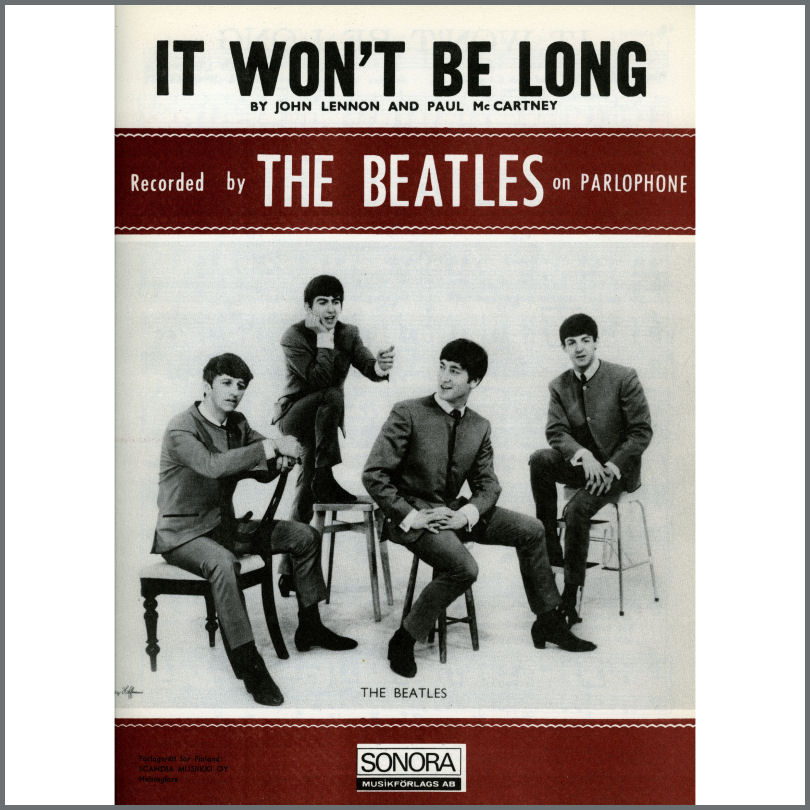
My first favorite Beatle song. The first Beatle album I was exposed to was the American album “Meet the Beatles” and I loved it. This song jumped out at me. Loved Johns voice, melody and the guitar riff. I also like the call and answer of the “yeah”. John had the chorus written and sat down with Paul in 1963 to finish it off. With the intention of writing a follow up single to the yet unreleased “She Loves You,” they put together verses and bridges in an unusual configuration with the already written chorus.
The song is a rocker and catchy but never released as a single.
It Won’t Be Long
It won’t be long yeh, yeh, yeh It won’t be long yeh, yeh, yeh It won’t be long yeh, till I belong to youEvery night when everybody has fun Here am I sitting all on my ownIt won’t be long yeh, yeh, yeh It won’t be long yeh, yeh, yeh It won’t be long yeh, till I belong to youSince you left me, I’m so alone Now you’re coming, you’re coming on home I’ll be good like I know I should You’re coming home, you’re coming home
Every night the tears come down from my eyes Every day I’ve done nothing but cry
It won’t be long yeh, yeh, yeh It won’t be long yeh, yeh, yeh It won’t be long yeh, till I belong to you
Since you left me, I’m so alone Now you’re coming, you’re coming on home I’ll be good like I know I should You’re coming home, you’re coming home
So every day we’ll be happy I know Now I know that you won’t leave me no more
It won’t be long yeh, yeh, yeh It won’t be long yeh, yeh It won’t be long yeh, till I belong to you, woo
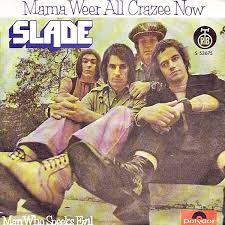
Slade was one of the UK’s biggest glam bands in the early to mid-seventies. They were huge in the UK but never hit in America until the 80s. This song was released in 1972 and peaked at #1 in the UK and #76 in the Billboard 100 in 1973.
Quiet Riot took two of their songs, Cum On Feel The Noize and this one and hit with them in the 80s. I’ll take Slade’s versions myself. It’s a fun rock and roll song.
Some trivia about Noddy Holder the lead singer… AC/DC asked him to sing for them after the death of Bon Scott but he turned them down because of loyalty to Slade.
This was originally the work of bassist Jim Lea; it was the first tune he wrote completely on his own. However, his writing partner Noddy Holder was responsible for the lyrics, standing on the stage after a typically boisterous London show and surveying the smashed seating left in the auditorium. “I thought everyone must have been crazy tonight,” he later said.
The song was originally titled “My My We’re All Crazy Now.” The title was changed by their manager Chas Chandler, and the intentional misspelling became a Slade trademark years before Prince adopted a similar convention. Some of their other hits were “Look wot You Dun,” “Cum On Feel The Noize” and “Skweeze Me Pleeze Me.”
In the UK Slade enjoyed 16 Top 10 hits including six #1s. They didn’t enjoy the same success in the US, where their biggest hit was “Run Runaway,” which peaked at #20 in 1984. They had just one other American Top 40: “My Oh My” (#37) also in 1984.
The American metal band Quiet Riot broke big with a cover of Slade’s “Cum On Feel The Noize” in 1983. For their next album, they did “Mama Weer All Crazee Now,” issuing it as the first single. It reached #51, marking their last Hot 100 appearance. “We were already getting the stigma of, ‘You had a hit with somebody else’s song,'” their drummer, Frankie Banali, said in a Songfacts interview. “I could see the writing on the wall coming on that one.”
Slade
I don’t want to drink my whisky like you do I don’t need to spend my money but still do Chorus Don’t stop now a c’mon another drop now c’mon I want to lot now so c’mon That’s right, that’s right I said Mama but we’re all crazy now I said Mama but we’re all crazy now I said Mama but we’re all crazy now A you told me fool fire water won’t hurt me A you tease me and all my ladies desert me Chorus don’t want to drink my whisky but still do I had enough to fill up “H” Hill’s left shoe Chorus Mama mama mama mama oh yeah…
I was 12 when this came out in 1979 and loved it…especially the video that went with it. The live version is the one that hit really big and the single had the live and studio version. The song (Live Version) peaked at #1 in the Billboard 100, #2 in the UK and #1 in Canada in 1980.
McCartney played all the instruments and shared vocal harmonies with wife Linda McCartney on the studio version.
Paul McCartney on recording Coming Up
I originally cut it on my farm in Scotland. I went into the studio each day and just started with a drum track. Then I built it up bit by bit without any idea of how the song was going to turn out. After laying down the drum track, I added guitars and bass, building up the backing track. I did a little version with just me as the nutty professor, doing everything and getting into my own world like a laboratory. The absent-minded professor is what I go like when I’m doing those; you get so into yourself it’s weird, crazy. But I liked it.
Then I thought, ‘Well, OK, what am I going to do for the voice?’ I was working with a vari-speed machine with which you can speed up your voice, or take it down a little bit. That’s how the voice sound came about. It’s been speeded up slightly and put through an echo machine I was playing around with. I got into all sorts of tricks, and I can’t remember how I did half of them, because I was just throwing them all in and anything that sounded good, I kept. And anything I didn’t like I just wiped.
On John Lennon
I heard a story from a guy who recorded with John in New York, and he said that John would sometimes get lazy. But then he’d hear a song of mine where he thought, ‘Oh, shit, Paul’s putting it in, Paul’s working!’ Apparently ‘Coming Up’ was the one song that got John recording again. I think John just thought, ‘Uh oh, I had better get working, too.’ I thought that was a nice story.
Coming Up
You want a love to last forever One that will never fade away I want to help you with your problem Stick around, I say
Coming up, coming up, yeah Coming up like a flower Coming up, I say
You want a friend you- can rely on One who will never fade away And if you’re searching for an answer Stick around. I say
It’s coming up, it’s coming up It’s coming up like a flower It’s coming up. yeah
You want some peace and understanding So everybody can be free I know that we can get together We can make it, stick with me
It’s coming up, it’s coming up It’s coming up like a flower It’s coming up for you and me
Coming up, coming up It’s coming up, it’s coming up, I say It’s coming up like a flower It’s coming up I feel it in my bones
You want a better kind of future One that everyone can share You’re not alone, we all could use it Stick around we’re nearly there
It’s coming up, it’s coming up everywhere It’s coming up like a flower It’s coming up for all to share It’s coming up, yeah It’s coming up, anyway It’s coming up like a flower Coming up
Something light and simple today…a number one in 1969. This song was written as a throwaway B side but ended up peaking at #1 in the Billboard 100 in 1969. The song was written by Gary DeCarlo, Dale Frashuer and Paul Leka, who had been in a band together called the Chateaus in the early ’60s. One of the unfinished songs they wrote as the Chateaus was a tune called “Kiss Him Goodbye,” which they worked on in 1961.
Not a great piece of work but a memorable song that will stay with you.
In 1968, Leka co-wrote and co-produced the song “Green Tambourine,” which was a huge hit for The Lemon Pipers. The following year, he started working with DeCarlo, who was using the stage name Garrett Scott. Working for Mercury Records, they set to work writing singles for “Garrett Scott,” recording four songs, which Leka produced. The first one released was “Working On A Groovy Thing,” which was written by Roger Atkins and Neil Sedaka. The 5th Dimension also recorded the song and released it first, which tanked the Garrett Scott version (The 5th Dimension recording made #20 US; Patti Drew recorded the song a year earlier, taking it to #62).
The next single planned for DeCarlo was “Sweet Laura Lee,” a ballad written by Larry Weiss, composer of “Rhinestone Cowboy.” Needing a B-side, Leka and DeCarlo went back to the studio, where they were joined by their old bandmate Dale Frashuer, who suggested they use their 1961 song “Kiss Him Goodbye.” That song didn’t have a chorus, so Leka wrote one, lazily using “na na”s instead of actual words. They started the session around 7 p.m. and finished at 5 a.m., but when they emerged, they had the completed song.
When Bob Reno, the A&R man at Mercury, heard the song, he loved it and didn’t want to waste it as a B-side. He needed singles for the Mercury subsidiary Fontana Records, so the song was released on that label and credited to the group Steam (named because after the session to record it, the guys were crossing 7th Ave and a subway train went beneath the roadway, shooting steam up from a manhole).
From there, the story gets convoluted, but when the single was released it became a surprise hit. Another song called “Now That I Love You” was used instead on the Garrett Scott “Sweet Laura Lee” single, which went nowhere when it was released. DeCarlo had a huge hit on his hands, but not as a solo artist but as part of an anonymous group.
The most-repeated story is that the three writers were embarrassed about “Na Na Hey Hey Kiss Him Goodbye,” so they created the name Steam to hide their identities. DeCarlo told Songfacts, however, that he was never embarrassed by the song, and that he was promised more of the action. “I was supposed to be the singer and road act for ‘Na Na’ as it was my B-side,” he said. “When Paul and the company got together they decided to split the record, meaning there would be two out. Paul said I would be able to do both as Garrett Scott, which I was later told I had no group. Paul said he would get me a group from a booking agency in New York, which never happened. ‘Na Na’ was never done with a group in mind, it was the B-side of my single. The name Steam wasn’t invented until the album was being done.”
Steam – Na Na Hey Hey Kiss Him Goodbye
He’ll never love you, the way that I love you
‘Cause if he did, no no, he wouldn’t make you cry
He might be thrillin’ baby but a-my love
(My love, my love)
So dog-gone willin’, so kiss him
(I wanna see you kiss him, wanna see you kiss him)
Go on and kiss him goodbye, now
Na na na na, hey hey, goodbye
Na na na na, na na na na, hey hey, goodbye
Listen to me now
He’s never near you to comfort and cheer you
When all those sad tears are fallin’ baby from your eyes
He might be thrillin’ baby but a-my love
(My love, my love)
So dog-gone willin’, so kiss him
(I wanna see you kiss him, I wanna see you kiss him)
Go on and kiss him goodbye, na na na na, na na na
Na na na na, hey hey, goodbye
Hey hey, goodbye
Na na na na, na na na na, hey hey, goodbye
Na na na na, na na na na, hey hey, goodbye
Na na na na, na na na na, hey hey, goodbye
Hey hey, goodbye
Na na na na, na na na na, hey hey, goodbye
Na na na na, na na na na, hey hey, goodbye
Na na na na, na na na na, hey hey, goodbye
Hey hey, goodbye
Na na na na, na na na na, hey hey, goodbye
Na na na na, na na na na, hey hey, goodbye
Na na na na, na na na na, hey hey, goodbye
When I heard this on Lightning 100 in Nashville (alternative station) I thought it was an old song. I liked it off the bat. Alex Ebert had left his band Ima Robot and formed this odd hippie type band with Jade Castrinos. They were a band that had members that would come and go and were like a commune type group. The song was released in 2010 and it charted at #25 in the Billboard Alternative Songs in 2010 and #50 in the UK Charts in 2013.
The song is extremely catchy. Unfortunately Jade is not in the band now…
This feel-good song was written by Edward Sharpe & the Magnetic Zeros vocalists Alex Ebert and Jade Castrinos, who were a couple at the time. As Jade tells it, they were enjoying a romp through Elysian Park in Los Angeles when she lost her shoes and he carried her on his back. The scene was like a montage from a romantic comedy, and giddy with love, they returned to his apartment and wrote the song. Using Ebert’s Pro Tools setup, they put the song together on the fly, with each trading lines and then singing together on the chorus.
The lyrics are effusively lovey, but genuine:
I’ll follow you into the park Through the jungle, through the dark Girl, I never loved one like you
And while there are many songs called “Home,” this one has a key hook line in the lyric that connected with listeners:
Home is wherever I’m with you
Ebert does the whistling intro, which is reminiscent of the Ennio Morricone scores found in many westerns, often starring Clint Eastwood.
Edward Sharpe & the Magnetic Zeros rose to power early in the American folk music revival that included acts like Mumford & Sons and The Lumineers. “Home” was part of their debut album Up From Below, and established their love-centric, communal sound that made them a festival favorite.
The band is named after a character from a novel Ebert was writing – Edward Sharpe is an otherworldly figure who comes to Earth to offer enlightenment to the masses, but finds himself getting distracted by the beautiful women. Ebert, raised in an upper middle class household, spent a lot of time looking for the meaning of life, and created his own hardship by getting hooked on heroin. He got clean, but sobriety didn’t suit him, so he ditched treatment and switched to (mostly) mushrooms. He went minimalist, with no car or cell phone, and began working on the Up From Below in a tiny apartment. After meeting the like-minded Jade Castrinos, they put a 10-piece band together and went all-in on the joyful, enlightened sound. Even churlish listeners who weren’t buying this hippie vibe agreed that it was convincing, and even after they found an audience with this song, Ebert stayed steady to his creed, often blurring the lines between Edward Sharpe and his true self.
When Ebert and Castrinos banter about her falling out of a window on this track, they’re recounting a true story:
Jade Alexander, do you remember that day you fell out of my window? I sure do, you came jumping out after me
Castrinos was defenestrated from his second-story apartment, and couldn’t walk for a week. Ebert came to her rescue and took her to the hospital.
In 2014, the band parted ways with Jade Castrinos, changing the dynamic of this song considerably (she and Ebert had broken up). At their first show without her – May 11, 2014 at the Shaky Knees Music Festival in Atlanta – Ebert turned much of the song over to the crowd, doing it “campfire style.” It worked, and the band continued performing it that way, with the crowd filling in much of Castrinos’ vocals.
Like many songs in its genre, this song didn’t make the US Hot 100, even though it seemed to be everywhere. Much of its ubiquity comes from its use in commercials – the message and the melody make it suitable for a number of companies looking to project community.
In 2010, the NFL used it in a spot titled “There’s No Place Like Home”; that same year it was in commercials for the Kin phone, Blue Cross Blue Shield of Texas, Levi’s, and the trailer for the movie Cyrus. They did turn down some offers: AT&T wanted to use the song where “Home” was the AT&T store, and the band declined.
Home
Alabama, Arkansas I do love my ma and pa Not that way that I do love you
Holy moley, me oh my You’re the apple of my eye Girl, I’ve never loved one like you
Man, oh man, you’re my best friend I scream it to the nothingness There ain’t nothing that I need
Well, hot and heavy, pumpkin pie Chocolate candy, Jesus Christ Ain’t nothing please me more than you
Ah, home, let me go home Home is wherever I’m with you Ah, home, let me go home Home is wherever I’m with you
La, la, la, la, take me home Mommy, I’m coming home
I’ll follow you into the park Through the jungle, through the dark Girl, I never loved one like you
Moats and boats and waterfalls Alleyways and pay phone calls I’ve been everywhere with you
That’s true, laugh until we think we’ll die Barefoot on a summer night Never could be sweeter than with you
And in the streets you run a-free Like it’s only you and me Geez, you’re something to see
Ah, home, let me go home Home is wherever I’m with you Ah, home, let me go home Home is wherever I’m with you
La, la, la, la, take me home Daddy, I’m coming home
Jade Alexander, do you remember that day you fell out of my window? I sure do, you came jumping out after me Well, you fell on the concrete, nearly broke your ass, You were bleeding all over the place and I rushed you out to the hospital, you remember that? Yes, I do, well, there’s something I never told you about that night What didn’t you tell me? While you were sitting in the backseat smoking a cigarette you thought was going to be your last, I was falling deep, deeply in love with you, and I never told you until just now
Ah, home, let me go home Home is wherever I’m with you Ah, home, let me go home Home is where I’m alone with you
Home, let me come home Home is wherever I’m with you
Ah, home, yes I am home Home is when I’m alone with you
Alabama, Arkansas I do love my ma and pa Moats and boats and waterfalls Alleyways and pay phone calls
Ah, home, let me go home Home is wherever I’m with you Ah, home, let me go home Home is where I’m alone with you
This is the last Christmas song that I will feature…because right now people have had about enough Christmas songs in every restaurant, mall, and grocery store…this one I don’t hear as much.
I also want to thank everyone for dropping by here this year.
The Beatles recorded this in 1967 and wasn’t released until 1994 paired with “Free As A Bird”. It is a fun Christmas song that will stick in your head. The Beatles did not release a Christmas song commercially… only to their fan club when they were active.
Recorded December 6, 1966, and November 28, 1967, in London, England, this song was never officially released until it appeared as the B-side to “Free As A Bird” in 1994. The original version was distributed to The Beatles fan club in 1967. It’s the only song ever written specifically for the Beatles Fan Club members.
Many upbeat Pop groups of this era like The Beach Boys and The Four Seasons released Christmas songs, but The Beatles never had an official Christmas release.
Christmas time is here again
Christmas time is here again Christmas time is here again Christmas time is here again Christmas time is here again
Ain’t been round since you know when Christmas time is here again O-U-T spells “out”
Christmas time is here again Christmas time is here again Christmas time is here again Christmas time is here again
Ain’t been round since you know when Christmas time is here again O-U-T spells “out”
Christmas time is here again Christmas time is here again Christmas time is here again Christmas time is here again
Ain’t been round since you know when Christmas time…[music continues and fades to background]
[spoken]
This is Paul McCartney here, I’d just like to wish you everything you wish yourself for Christmas.
This is John Lennon saying on behalf of the Beatles, have a very Happy Christmas and a good New Year.
George Harrison speaking. I’d like to take this opportunity to wish you a very Merry Christmas, listeners everywhere.
This is Ringo Starr and I’d just like to say Merry Christmas and a really Happy New Year to all listeners
[a John Lennon pastiche at this point, very hard to understand]
I’ve never been a big Eddie Money fan but this is one of his songs I like. This one has an old west theme and I like the guitar. The song is off of his album Life for the Taking released in 1978.
Johnny Cash covered this song live at times… Eddie Money “I had a song called ‘Give Me Some Water,’ and when I was told that Johnny Cash put it in his set — I was on Cloud Nine,” Money said. “I mean this is the guy who ‘Walked the Line!’”
Gimme Some Water
Mama never understood what it’s like for a losing man When her number one son goes bad playing cards with the Devil’s Hand Daddy got real sick so quick – four walls never understand I was the one who got good with the gun – took the money from the rich man’s land
Give me some water ’cause I shot a man on the Mexican border Cool, cool water Give me some water I need a little water
Jimmy grew up so fast and he met me at the pass one day Said, “You’re a wanted man. Take your brother’s hand – I’ll be running with you, anyway.” So we rode late in the night like fires on the desert sand ’til one day the posse caught us ’cause the sheriff always gets his man
Give me some water ’cause I killed a man on the Mexican border Cool, cool water I need a little water
Oh, geeze, if I just get loose my hands I’d run just as fast as my legs can But, Lord, I’ve got no room to run Shouldn’t have done what I did without that gun
Give me some water ’cause I killed a man on the Mexican border Cool, cool water
Can’t you see that long, white rope hanging from the hangman’s tree Take the restless horse; tie may hands, of course; tell my mother that I’m finally free Let me die like a man – no one understands; let me pray that a poor man pray Smack that horse in the ass; with my last dying gasp my brother could hear me say
Give me some water ’cause I shot a man on the Mexican border Cool, cool water Give me some water
Give me some water ’cause I shot a man on the Mexican border Cool, cool water Give me some water
Give me some water ’cause I shot a man on the Mexican border Cool, cool water Give me some water
Give me some water ’cause I killed a man on the Mexican border Cool, sweet water Give me some water
Love the tone of the guitar in this one. The song peaked at #61 in the Billboard 100 and #42 in the UK in 1968. The song is off of the album In Search of the Lost Chord.
John Lodge quote on writing Ride My See-Saw
“The song is really about growing up. It’s about what you learn at school and everything else…it’s pretty cool. But when you grow up and go into the real world, you can’t take that with you. You need to see what’s happening in the real world, and whatever you learned in life up until that time, it will give you a nice grounding so you can find your way in life. It’s really important that you’re aware of the world and what’s actually happening in it, and to try to relate to that. “Ride My See-Saw” is the fact that you’re going up and down—you learn a bit and you lose a bit. That’s what this song is about.”
“Ride My See-Saw” was written by John Lodge, bass player for The Moody Blues. It was one of two singles from their In Search of the Lost Chord album. The B-side of the single was “A Simple Game” in the UK “Voices In The Sky” in the US.
“Ride My See-Saw” has become one of the band’s most popular live tunes. It is the song regularly reserved for the finale performance in stage shows, with a lengthy keyboard and drum duet before the rest of the band comes out onstage for the encore.
This song was one of the first single releases to be recorded on 8-track multi-track tape.
In Search of the Lost Chord is a concept album around a broad theme of quest and discovery. This song found the Moodies exploring knowledge in a changing world.
Ride My See-Saw
Ride, ride my see-saw, Take this place On this trip Just for me.
Ride, take a free ride, Take my place Have my seat It’s for free.
I worked like a slave for years, Sweat so hard just to end my fears. Not to end my life a poor man, But by now, I know I should have run.
Run, run my last race, Take my place Have this number Of mine.
Run, run like a fire, Don’t you run in In the lanes Run for time.
Left school with a first class pass, Started work but as second class. School taught one and one is two. But right now, that answer just ain’t true.
This would make it in my own top 10 songs of all time. The tone of the guitars, harmonies and the perfect constructed chorus keeps me coming back listen after listen. The song is on Big Star’s album Number1 Record.
Most of the songs on the album could have been a single.
In a 1992 interview with Oor magazine, the songs’ co-writer Alex Chilton (who is credited along with Chris Bell) revealed that, whilst he felt that Big Star’s “music is still a triumph – some of the time,” he said “I didn’t understand how to make the right sound with my voice, so things like ‘Ballad Of El Goodo’ and ‘Thirteen’ could have been better.”
Though the song can be interpreted as a broad, abstract paean to anti-conformity and independence, the lyrics could more specifically allude to the Vietnam War. The first verse plays with the idiom “stick to your guns,” which could easily be literalized with the second verse:
“There’s people around who tell you that they know
The places where they send you, and it’s easy to go
They’ll zip you up and dress you down, stand you in a row
But you know you don’t have to
You can just say no”
The Vietnam War was seemingly important to Chilton. In an 2010 obituary for Nashvillescene.com following Chilton’s death, John “Bucky” Wilkin, lead singer and songwriter for ’60s surf rock group Ronny & the Daytonas, said: “Vietnam was the war we both related to, more on the level of the Buddhist priests who set themselves on fire in protest than as the American combat soldiers – both of us somehow being able to avoid the draft.”
In our 2013 interview, Big Star drummer Jody Stephens expressed how he felt the song revealed Chilton and Bell to be a cut above the average rock n’ roller: “All of a sudden I’m playing with these guys that can write songs that are as engaging to me as the people I’d grown up listening to, so I felt incredibly lucky.” He also singled out the song as one of his favorites to play.
Counting Crows covered the song for their 2012 album of covers Underwater Sunshine (or What we did on our Summer Vacation). In a 2012 interview with Paste magazine, frontman Adam Duritz said “One of the last changes we made was putting ‘The Ballad of El Goodo’ at the end of the record. I find it hard to follow that song on a record. I really love that song… it’s speaking about survival.”
The Ballad of El Goodo
Years ago, my heart was set to live, oh But I’ve been trying hard against unbelievable odds It gets so hard in times like now to hold on My guns they’re waiting to be stuck by At my side is God
And there ain’t no one goin’ turn me ’round Ain’t no one goin’ turn me ’round
There’s people around who tell you that they know The places where they send you, and it’s easy to go They’ll zip you up and dress you down Stand you in a row But you know you don’t have to You could just say no
And there ain’t no one goin’ turn me ’round Ain’t no one goin’ turn me ’round Ain’t no one goin’ turn me ’round Ain’t no one goin’ turn me ’round
I’ve been built up and trusted Broke down and busted But they’ll get theirs and we’ll get ours Just if we can Just, ah, hold on Hold on Hold on Hold on
Years ago my heart was set to live, oh But I’ve been trying hard against strong odds It gets so hard at times like now to hold on Well, I’ll fall if I don’t fight And at my side is God
Ain’t there no one goin’ turn me ’round Ain’t no one goin’ turn me ’round Ain’t no one goin’ turn me ’round Ain’t no one goin’ turn me ’round Hold on Hold on Hold on Hold on
I’m not a huge Motorhead fan and it’s a bit harder music than I usually listen to… but I do like this song. I also like any interview of Lemmy I’ve ever listened to. After playing this for years, Lemmy admitted he was sick of the song, but said he kept it in the setlist because, “If I went to a Little Richard concert, I’d expect to hear Long Tall Sally.”
From Wiki.
The song spent 13 weeks in the UK Singles Chart and originally peaked at number 15 upon its initial release. At the midweek point in January 2016 it reached No. 9 and in the official Friday chart, they reached number 13, following the death of frontman Ian “Lemmy” Kilmister in December 2015 and subsequent dissolution of the band. It has sold 208,830 digital copies as of January 2016.[6] It reached the top of the UK Rock & Metal Singles and Albums Charts on 9 January 2016.
In 2014, NME ranked it number 155 in a list of The 500 Greatest Songs of All Time.
This is Motörhead’s most famous song; it is about gambling and risks. Lemmy recalled writing the song in an interview with Mojo magazine February 2011: “‘Ace of Spades’ is unbeatable, apparently, but I never knew it was such a good song. Writing it was just a word-exercise on gambling, all the clichés. I’m glad we got famous for that rather than for some turkey, but I sang ‘the eight of spades’ for two years and nobody noticed.”
The “Ace Of Spades” is the dead man’s hand, which was Wild Bill Hancock’s hand as he was shot dead (he was an American sheriff who was killed during a game of poker). The hand consists of aces and eights, including the ace of spades.
This song was featured in the episode of The Young Ones called “Bambi,” where Motörhead performed as the stars of the show got to the train station.
This is used in the video game Tony Hawk’s Pro Skater 3, and also appears in the movie Superbad.
Ace of Spades
If you like to gamble, I tell you I’m your man, You win some, lose some, all the same to me, The pleasure is to play, makes no difference what you say, I don’t share your greed, the only card I need is The Ace of Spades
Playing for the high one, dancing with the devil, Going with the flow, it’s all a game to me, Seven or eleven, snake eyes watching you, Double up or quit, double stake or split, The Ace of Spades
You know I’m born to lose, and gambling’s for fools, But that’s the way I like it baby, I don’t wanna live for ever, And don’t forget the joker!
Pushing up the ante, I know you gotta see me, Read ’em and weep, the dead man’s hand again, I see it in your eyes, take one look and die, The only thing you see, you know it’s gonna be, The Ace of Spades
Listening to this song is like reading a novel. You have early Springsteen’s themes…cars, roads, and a plan to flee. This song is from the now classic 1975 Born to Run album.
After the album was released Bruce’s popularity jumped immensely when Bruce was on the cover of Newsweek and Time in the same week.
This was the first track on Born To Run, a crucial album for Springsteen. His first two albums sold poorly, and he was in danger of losing his record deal if he did not produce a hit. With songs like this one about escaping to the open road, he connected with an audience that proved extremely loyal.
He considered this song the “invitation” to the album, with the opening notes being the welcome. “Something is opening up,” Springsteen said during his 2005 Storytellers appearance. “What I hoped it would be was the sense of a larger life, greater experience, sense of fun, the sense that your personal exploration and possibilities were all lying somewhere inside of you.”
Springsteen took the title from a 1958 Robert Mitchum movie. He did not see the film, but got the idea from a poster for it in a theater lobby.
The vocal sound was inspired by Roy Orbison. Springsteen pays homage to him with the line: “The radio plays Roy Orbison singing for the lonely,” a reference to Orbison’s 1960 hit, “Only The Lonely.”
The name of the girl mentioned at the beginning was changed several times. It had been Angelina and Chrissie before Springsteen settled on “Mary’s dress waves.”
The original title was “Wings For Wheels.” It began as an outtake called “Glory Road.”
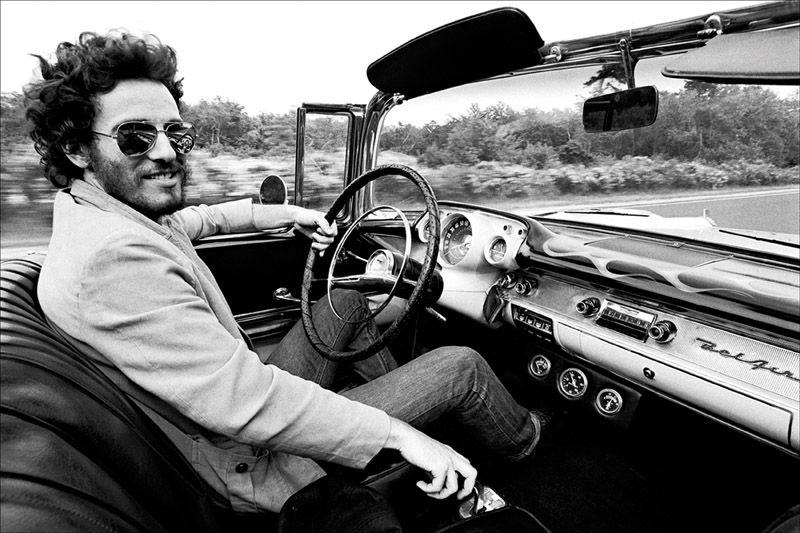
Cars were very important growing up in New Jersey and show up in many of Springsteen songs. Bruce’s first car was a ’57 Chevy with orange flames painted on the hood.
This is a concert favorite that Springsteen has performed at many of his shows over the years.
At one point, Born To Run was going to be a concept album spanning the course of a day, with an acoustic version of this starting the album and the full band version closing it.
Springsteen’s friend and future manager, Jon Landau, convinced him to record this at The Record Plant in New York instead of the low-budget studio he was using. Springsteen’s current manager, Mike Appel, resented Landau’s influence and would file a lawsuit that kept Springsteen from recording for 3 years.
Since the band didn’t know the song very well, Springsteen used a version with just him at the piano to open a series of shows at The Bottom Line in New York City in 1975. Sponsored by a New York radio station, the disc jockey, Dave Herman, apologized on the air for not playing enough Springsteen the morning after the first show.
On November 3, 1980, Springsteen kicked off his tour to support the album in Ann Arbor, Michigan. For the encore, Bob Seger, who is to Michigan what Springsteen is to New Jersey, joined him onstage to perform this.
Has been performed live many different ways: with the full band, solo with guitar, solo with piano, slowed down, etc. The version on Live 1975-1985 features Springsteen singing over Roy Bittan’s piano.
Bruce taped a performance of this that was played at the funeral of James Berger, a worker in the World Trade Center who helped people get out before he was killed when it collapsed. He was a big Springsteen fan and this was his favorite song. Bruce dedicated it to his sons.
This was also the first track on Springsteen’s live album Hammersmith Odeon London 1975, which was recorded on November 18, 1975 during Springsteen’s first concert in Europe. It was released on DVD in 2005, and on CD the following year
Thunder Road
The screen door slams, Mary’s dress waves Like a vision she dances across the porch as the radio plays Roy Orbison singing for the lonely Hey, that’s me and I want you only Don’t turn me home again, I just can’t face myself alone again Don’t run back inside, darling, you know just what I’m here for So you’re scared and you’re thinking that maybe we ain’t that young anymore Show a little faith, there’s magic in the night You ain’t a beauty but, hey, you’re alright Oh, and that’s alright with me
You can hide ‘neath your covers and study your pain Make crosses from your lovers, throw roses in the rain Waste your summer praying in vain For a savior to rise from these streets Well now, I ain’t no hero, that’s understood All the redemption I can offer, girl, is beneath this dirty hood With a chance to make it good somehow Hey, what else can we do now? Except roll down the window and let the wind blow back your hair Well, the night’s busting open, these two lanes will take us anywhere We got one last chance to make it real To trade in these wings on some wheels Climb in back, heaven’s waiting on down the tracks
Oh oh, come take my hand We’re riding out tonight to case the promised land Oh oh oh oh, Thunder Road Oh, Thunder Road, oh, Thunder Road Lying out there like a killer in the sun Hey, I know it’s late, we can make it if we run Oh oh oh oh, Thunder Road Sit tight, take hold, Thunder Road
Well, I got this guitar and I learned how to make it talk And my car’s out back if you’re ready to take that long walk From your front porch to my front seat The door’s open but the ride ain’t free And I know you’re lonely for words that I ain’t spoken But tonight we’ll be free, all the promises’ll be broken
There were ghosts in the eyes of all the boys you sent away They haunt this dusty beach road in the skeleton frames of burned-out Chevrolets They scream your name at night in the street Your graduation gown lies in rags at their feet And in the lonely cool before dawn You hear their engines rolling on But when you get to the porch, they’re gone on the wind So Mary, climb in It’s a town full of losers, I’m pulling out of here to win
My favorite Christmas song hands down. Yea I’m biased because I am a Beatles fan but this one is great. John’s voice goes so well with this song. The song peaked at #2 in the UK charts in 1971.
I think of High School when I hear this song. Our school had a Christmas poster contest and a buddy and I made a poster as a joke and wrote “So this is Christmas and what have you done another year over, and a new one just begun” and won first prize…with an assist from John.
John Lennon and Yoko Ono wrote this in their New York City hotel room and recorded it during the evening of October 28 and into the morning of the 29th, 1971 at the Record Plant in New York. It was released in the US for Christmas but didn’t chart. The next year, it was released in the UK, where it did much better, charting at #4. Eventually, the song became a Christmas classic in America, but it took a while.
John and Yoko spent a lot of time in the late ’60s and early ’70s working to promote peace. In 1969, they put up billboards in major cities around the world that said, “War is over! (If you want it).” Two years later this slogan became the basis for this song when Lennon decided to make a Christmas record with an anti-war message. John also claimed another inspiration for writing the song: he said he was “sick of ‘White Christmas.'”
The children’s voices are the Harlem Community Choir, who were brought in to sing on this track. They are credited on the single along with Yoko and The Plastic Ono Band.
Lennon and Ono produced this with the help of Phil Spector. Spector had worked on some of the later Beatles songs and also produced Lennon’s “Instant Karma.” It was not Spector’s first foray into Christmas music: he and his famous session stars (including a 17-year-old Cher) spent six weeks in the summer of 1963 putting together A Christmas Gift for You from Phil Spector, featuring artists like The Ronettes and Darlene Love. Unfortunately, the album was released on November 22, 1963, which was the same day US president John F. Kennedy was assassinated. The album sold poorly as America was focused on news of the killing.
This was originally released on clear green vinyl with Yoko Ono’s “Listen, The Snow Is Falling” as the B-side.
At the beginning of the song, two whispers can be heard. Yoko whispers: “Happy Christmas, Kyoko” (Kyoko Chan Cox is Yoko’s daughter with Anthony Cox) and John whispers: “Happy Christmas, Julian” (John’s son with Cynthia). >>
This being a Phil Spector production, four guitarists were brought in to play acoustic guitars: Hugh McCracken (who had recently played on the Paul McCartney album Ram), Chris Osbourne, Stu Scharf and Teddy Irwin. According to Richard Williams, who was reporting on the session for Uncut, when Lennon taught them the song, he asked them to “pretend it’s Christmas.” When one of the guitarists said he was Jewish, John told him, “Well, pretend it’s your birthday then.”
As for the other personnel, Jim Keltner played drums and sleigh bells, Nicky Hopkins played chimes and glockenspiel. Keltner and Hopkins were part of Lennon’s Plastic Ono Band, and a third member, Klaus Voorman, was supposed to play bass on this track, but got stuck on a flight from Germany. One of the guitarists brought in for the session covered the bass – which one nobody seems to remember.
John Lennon was shot and killed less than three weeks before Christmas in 1980. The song was re-released in the UK on December 20 of that year, reaching #2 (held off the top spot by “There’s No One Quite Like Grandma” by St. Winifred’s School Choir). It made the UK Top 40 again in 1981 (#28), 2003 (#32) and 2007 (#40). Also in 2003, a version sung by the finalists of the singing competition Pop Idol reached #5.
The Fray were the first to chart with this song in America, reaching #50 in 2006; Sarah McLachlan’s version went to #107 that same year. Other artists to cover it include The Alarm, The Cranes, The December People, and Melissa Etheridge (in a medley with “Give Peace a Chance”).
The Australian artist Delta Goodrem also covered it in 2003, taking it to #1 in her native country as a double-A-side single with “Predictable.” >>
Though now a Christmas standard, Lennon originally penned this as a protest song about the Vietnam War, and the idea “that we’re just as responsible as the man who pushes the button. As long as people imagine that somebody’s doing it to them and that they have no control, then they have no control.”
This didn’t appear on an album until 1975, when it was included on Lennon’s Shaved Fish singles compilation. Most Christmas songs are compiled with other songs of the season, but Shaved Fish listeners got to hear it year round.
Happy Xmas (War is Over)
(Happy Christmas Kyoko) (Happy Christmas Julian)
So this is Christmas And what have you done Another year over And a new one just begun And so this is Christmas I hope you have fun The near and the dear one The old and the young
A very Merry Christmas And a happy new year Let’s hope it’s a good one Without any fear
And so this is Christmas For weak and for strong For rich and the poor ones The world is so wrong And so happy Christmas For black and for white For yellow and red ones Let’s stop all the fight
A very Merry Christmas And a happy new year Let’s hope it’s a good one Without any fear
And so this is Christmas And what have we done Another year over A new one just begun And so happy Christmas We hope you have fun The near and the dear one The old and the young
A very Merry Christmas And a happy new year Let’s hope it’s a good one Without any fear War is over, if you want it War is over now
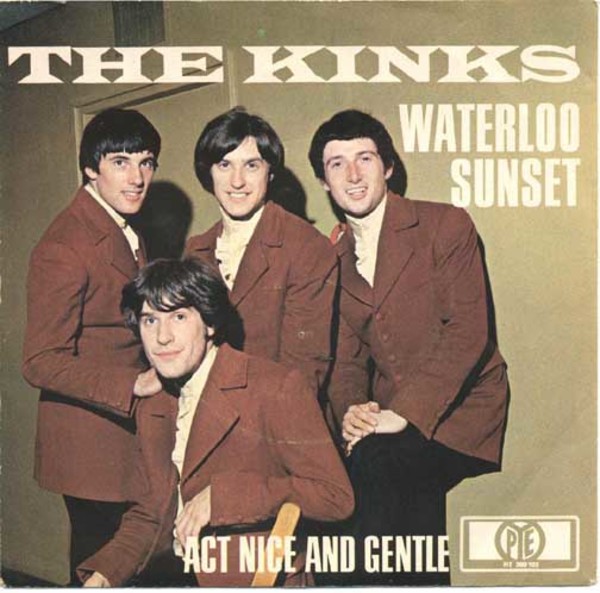
One of the great Kinks songs. The song peaked at #2 in the UK Charts but failed to chart in America.
Ray Davies brought this to the band while they were in the middle of recording the album. He was reluctant to share the lyrics because they were so personal. In a Rolling Stone magazine interview, his brother (and Kinks guitarist) Dave Davies said Ray felt “it was like an extract from a diary nobody was allowed to read.”
Written by Kinks lead singer Ray Davies, he called this “a romantic, lyrical song about my older sister’s generation.”
Waterloo Bridge is in London, and the lyrics are about a guy looking out of a window at two lovers meeting at Waterloo Station. Davies used to cross Waterloo Bridge every day when he was a student at Croydon Art School.
It is often claimed that the line, “Terry meets Julie, Waterloo Station every Friday night” is about the relationship between actor Terence Stamp and actress Julie Christie. However, Ray Davies denied this in his autobiography. He subsequently revealed that it was “a fantasy about my sister going off with her boyfriend to a new world and they were going to emigrate and go to another country.”
According to Kinks biographer Nick Hasted, Terry was Ray’s nephew Terry Davies, whom he was close to in early teenage years.
Further confusing the matter, Davies told Rolling Stone in 2015 that Julie and Terry were “big, famous actors at the time.” The actors had been dating since the early ’60s and starred together in the film Far From the Madding Crowd, which is often cited as the direct inspiration for the song, but the film didn’t come out until six months after the single’s release.
Waterloo Sunset
Dirty old river, must you keep rolling Flowing into the night? People so busy, make me feel dizzy Taxi light shines so bright
But I don’t need no friends As long as I gaze on Waterloo sunset I am in paradise
Every day I look at the world from my window But chilly, chilly is the evening time Waterloo sunset’s fine (Waterloo sunset’s fine)
Terry meets Julie Waterloo station Every Friday night But I am so lazy, don’t want to wander I stay at home at night
But I don’t feel afraid As long as I gaze on Waterloo sunset I am in paradise
Every day I look at the world from my window But chilly, chilly is the evening time Waterloo sunset’s fine (Waterloo sunset’s fine)
Millions of people swarming like flies ’round Waterloo underground But Terry and Julie cross over the river Where they feel safe and sound And they don’t need no friends As long as they gaze on Waterloo Sunset They are in paradise
Waterloo sunset’s fine (Waterloo sunset’s fine) Waterloo sunset’s fine
Let It Rain peaked at #48 in the Billboard 100 and #42 in Canada in 1972. It was on Eric’s self-titled album released in 1970 but this song was released on a single in 1972.
Clapton wrote this with the help of Bonnie and Delaney Bramlett. They put most of it together while they were touring together in 1969; Clapton with Blind Faith, and The Bramletts supporting them with their group Delaney & Bonnie. Blind Faith broke up after their first tour, and Clapton formed Derek and the Dominos with Delaney & Bonnie’s backup group, who Clapton became friends with on the tour.
This was the last track on Clapton’s first solo album. Delaney Bramlett produced it.
Organist Bobby Whitlock, bass player Carl Radle and drummer Jim Gordon were part of Clapton’s backing band on his first album and played on this track. After recording the album, these four formed their own group, Derek and the Dominos, and released the classic album Layla and Other Assorted Love Songs.
Jim Gordon wrote the piano part for “Layla” and later suffered terrible mental illness and bludgeoned his mother to death.
Jerry Allison and Sonny Curtis sang backup on this track. They were former members of The Crickets, Buddy Holly’s backup band. The female backup singers were Bonnie Bramlett and Rita Coolidge.
This wasn’t released as a single until 1972, two years after the album came out. This was done to capitalize on the success of “Layla,” which became a hit that year when it was re-released as a long version and after people figured out that Derek and the Dominos was Clapton’s group.
This was one of the few Eric Clapton solo tracks Derek and the Dominos played when they toured. At one point, they used it to teach drummer Jim Gordon a lesson. “Jim Gordon was going on about how he never got a drum solo, so we fixed his little wagon,” Bobby Whitlock said in his Songfacts interview. “We gave him a drum solo in ‘Let It Rain’ and it lasted for nine-and-a-half minutes. And he kept going – you could hear it in the solo. He would stop and he was looking at Eric. We were on the side of the stage behind the curtain smoking a cigarette and having a drink, and we wouldn’t come back out, so he had to keep going and keep going. Okay, Mr. Drummerman, you want a solo? Take your solo.”
Stephen Stills played the guitar solo in the middle of the song.
Let It Rain
The rain is falling through the mist of sorrow that surrounded me The sun could never thaw away the bliss that lays around me
Let it rain, let it rain, Let your love rain down on me Let it rain, let it rain, Let it rain, rain, rain
Her life was like a desert flower burning in the sun Until I found the way to love, it’s harder said than done
Let it rain, let it rain, Let your love rain down on me Let it rain, let it rain, Let it rain, rain, rain
Now I know the secret; there is nothing that I lack If I give my love to you, you’ll surely give it back
Let it rain, let it rain, Let your love rain down on me Let it rain, let it rain, Let it rain, rain, rain
Let it rain, let it rain, Let your love rain down on me Let it rain, let it rain, Let it rain, rain, rain
This is about the song, not the album…Love the story and the way the words just flow in this song by Traffic. There have been many versions of this song. Jethro Tull has covered it but this is the version I’ve always known.
While researching this song there is not a lack of information. Everyone has an opinion on this one. The song was off Traffic’s album of the same name. The album peaked at #5 in the Billboard 200 in 1970 but the song did not chart.
When you first listen to the song you may think that you landed in the midst of a Middle Ages inquisition session. The lyrics describe all kinds of brutal methods inflicted by three men upon a poor fellow named John Barleycorn. However, a closer look reveals that the distressing lyrics are actually a metaphor to the process applied to barley in order to produce beer and whiskey. While it has its roots in old folklore tales about the Corn God and religious symbolism, it is really a satire on legally prohibiting the production of alcoholic beverages while still needing the drink to get on with everyday life, as revealed in the last verse:
The huntsman, he can’t hunt the fox, Nor so loudly to blow his horn, And the tinker he can’t mend kettle nor pot,
Without a little Barleycorn
but there are many interpretations.”
This is an old British folk song that railed against the ludicrousness of prohibition. The joke was that all those “brave” teetotalers who claimed to be doing the work of the Lord were actually hypocrites and were ruining that work, because, as the lyric sums up, in the end, no one can do the rudimentary work necessary to build and grow the land “without a little barleycorn.”
John Barleycorn : A personification of alcoholicliquor.
John Barleycorn Must Die
There were three men came out of the west, their fortunes for to try And these three men made a solemn vow John Barleycorn must die They’ve plowed, they’ve sown, they’ve harrowed him in Threw clods upon his head And these three men made a solemn vow John Barleycorn was dead
They’ve let him lie for a very long time, ’til the rains from heaven did fall And little Sir John sprung up his head and so amazed them all They’ve let him stand ’til midsummer’s day ’til he looked both pale and wan And little Sir John’s grown a long long beard and so become a man They’ve hired men with their scythes so sharp to cut him off at the knee They’ve rolled him and tied him by the way, serving him most barbarously They’ve hired men with their sharp pitchforks who’ve pricked him to the heart And the loader he has served him worse than that For he’s bound him to the cart
They’ve wheeled him around and around a field ’til they came onto a pond And there they made a solemn oath on poor John Barleycorn They’ve hired men with their crabtree sticks to cut him skin from bone And the miller he has served him worse than that For he’s ground him between two stones
And little Sir John and the nut brown bowl and his brandy in the glass And little Sir John and the nut brown bowl proved the strongest man at last The huntsman he can’t hunt the fox nor so loudly to blow his horn And the tinker he can’t mend kettle or pots without a little barleycorn