Just saw this a few minutes ago. Lately I’ve been living in a bubble because of work but this is the new Get Back trailer. This is not the sneak peak Peter Jackson released before. On November 25,26, and 27th… 6 hours of the Let It Be/Get Back music, comedy, and drama will all unfold on the Disney plus.
As a very young Beatle fan I read about these sessions and only saw still photographs. Later on I saw them do Get Back on MTV while on the rooftop and it was like photos coming to life…I read where they had 56 hours of video footage sitting in a vault from this album. Now we will see 6 hours out of that anyway…you what what? I would happily sit through 56 hours… Peter Jackson has done such a great job on the look of the film…it looks like it could have been filmed yesterday. Peter, need an assistant for free?
With the previews I’ve seen…it looks like it was a lot of fun and the bad drama was not prevalent through the filming. Ringo has said that people have focused on the negative but it was much more positive than that. What is great about Get Back is the good time they had and it wasn’t all doom and gloom. I can’t imagine the pressure they were under to deliver and be as good as their last album. In this case, when they filmed this, it was just a few months after they released The White Album…The Let It Be album didn’t get released until after their last studio album Abbey Road.
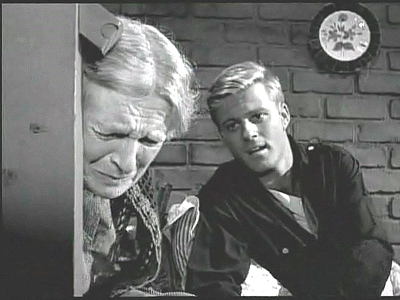
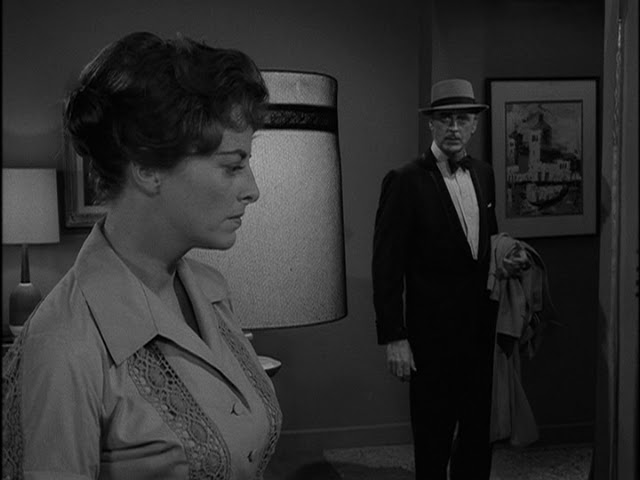
A song, a person, flower, or a drawing is beautiful…I don’t think a TV episode would fit into that category but this one does. Future mega star Robert Redford is in this great episode about an elderly lady who would not let anyone inside her soon to be torn down home. She fears “Mr Death” who will come take her. Gladys Cooper plays Wanda Dunn the elderly woman. She was appearing in silent movies in the early part of the century. She would appear in three Twilight Zone episodes…a wonderful actress.
R. G. Armstrong, a great character actor, is also in this classic episode. Everything about this episode works. The acting down to the set is perfect.
This show was written by George Clayton Johnson and Rod Serling
Rod Serling’s Opening Narration:
An old woman living in a nightmare, an old woman who has fought a thousand battles with death and always won. Now she’s faced with a grim decision—whether or not to open a door. And in some strange and frightening way she knows that this seemingly ordinary door leads to the Twilight Zone.
Summary
The old Ms. Wanda Dunn is afraid of Mr. Death, and does not open the door of her room for anyone who knocks the door. When the police officer Harold Beldon is shot at her front door, the reluctant woman opens it and lets him in.
Rod Serling’s Closing Narration:
There was an old woman who lived in a room. And, like all of us, was frightened of the dark. But who discovered in a minute last fragment of her life that there was nothing in the dark that wasn’t there when the lights were on. Object lesson for the more frightened amongst us in, or out of, the Twilight Zone.
CAST
Rod Serling… Narrator / Self – Host (uncredited)
Gladys Cooper…Wanda Dunn
Robert Redford…Harold Beldon
R. G. Armstrong…Contractor
We all know Revolution by the Beatles but this is the acoustic version of the song. They fell into a nice groove doing this. It took a while for this to grow on me but now I like it just as well as the single fast hard rocking version.
The fast version was released as the B-side of “Hey Jude” in August 1968, three months before the slow version appeared on The White Album. John Lennon wanted it to be the first A-side released on Apple Records, the label The Beatles started, but Paul McCartney’s Hey Jude got the honor.
Brian Epstein, the Beatles manager was always careful with them by asking them to not talk about controversial subjects like the war, politics, and anything that could cause controversy…I don’t think John Lennon got that memo many times. After Brian died they started to be more open and they talked a little more freely.
John Lennon said : “I wanted to put out what I felt about revolution,” “I thought it was about time we spoke about it, the same as I thought it was about time we stopped not answering about the Vietnamese war when we were on tour with Brian Epstein and had to tell him, ‘We’re going to talk about the war this time and we’re not going to just waffle’…That’s why I did it: I wanted to talk, I wanted to say my piece about revolutions. I wanted to tell you, or whoever listens, to communicate, to say, ‘What do you say?’ ‘This is what I say.’”
“I think our society is run by insane people for insame objectives. If anybody can put on paper what our government, and the American government, and the Russian, Chinese…what they are actually trying to do, and what they think they’re doing, I’d be very pleased to know.” John wanted to see a plan as the song goes. John said he believed that revolution comes from inner change rather than social violence.
On the two versions. On one John said “count me in” and the other he said “count me out” as he explains below.
John Lennon:“There were two versions of that song, but the underground left only picked up on the one that said ‘count me out.’ The original version, which ends up on the LP, said ‘count me in’ too; I put in both because I wasn’t sure. I didn’t want to get killed. I didn’t really know much about the Maoists, but I just knew that they seemed to be so few and yet they painted themselves green and stood in front of the police waiting to get picked off. I just thought it was unsubtle. I thought the original Communist revolutionaries coordinated themselves a bit better and didn’t go around shouting about it.”
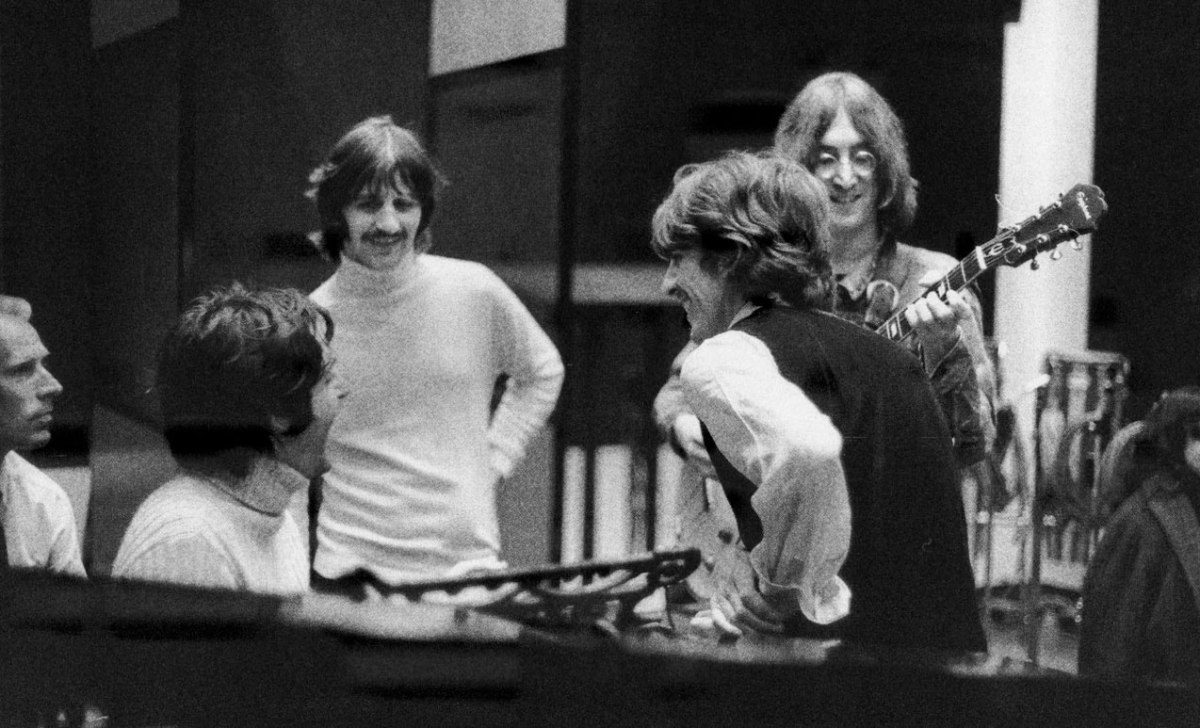
Engineer Alan Brown:“I was in the control room of studio three and there on the other side of the glass was a figure in semi-darkness going over and over some lines of a song. I knew the voice and sure enough I knew the face. John Lennon was about 30 feet away! He was working on ‘Revolution,’ the slow one, and I remember him going through the song again and again in rehearsal, changing a word or two every time. Each time it would alter very slightly, it would develop and evolve. ‘When you talk about destruction…you can count me out.’ ‘When you talk about destruction…you can count me in.’” John either hadn’t decided which way he felt or which way would be more palatable to his audience.
John eventually decided to opt for both, singing “count me out…in” on this vocal performance, which was sung in a “light voice” in imitation of Martha Reeves and Diana Ross, as his handwritten lyric sheet reminded him.
White Album Version
Revolution 1
Ah, take 2 OK!
You say you want a revolution Well you know We all want to change the world You tell me that it’s evolution Well you know We all want to change the world
But when you talk about destruction Don’t you know that you can count me out in
Don’t you know it’s gonna be alright Don’t you know it’s gonna be alright Don’t you know it’s gonna be alright
You say you got a real solution Well you know We’d all love to see the plan You ask me for a contribution Well you know We’re doing what we can
But if you want money for people with minds that hate All I can tell you is brother you have to wait
Don’t you know it’s gonna be alright Don’t you know it’s gonna be alright Don’t you know it’s gonna be alright
You say you’ll change the constitution Well you know We’d all love to change your head You tell me it’s the institution Well you know You better free your mind instead
But if you go carrying pictures of Chairman Mao You ain’t going to make it with anyone anyhow
Don’t you know it’s gonna be alright Don’t you know it’s gonna be alright Don’t you know it’s gonna be alright
The Milwaukee, Wisconsin band Violent Femmes are best known for their song Blister in the Sun released in 1983. A girl that I knew drove me crazy playing that song but after a while I started to like it…more than the girl. The song started to be played on alternative and college radio.
James Honeyman Scott (Pretenders guitar player) was booked to play a gig and he was so impressed by the Violent Femmes that he let them open for him. They were were then offered a record deal by Slash Records and soon after that they released their 1982 debut album, “Violent Femmes.” The album slowly hit and later went platinum.
This song was on their Why Do Birds Sing? album in 1991 and it was their fifth studio album. The album peaked at #141 in the Billboard Album Chart but the song peaked at #2 on Billboard‘s Modern Rock chart.
Through breakups and reunions the band minus the original drummer Victor DeLorenzo are still together. Gordon Gano is the singer- songwriter and Brian Ritchie is the bass player with new drummer John Sparrow.
They released an album in 2019 called Hotel Last Resort and it peaked at #29 in the Billboard Indie Charts.
American Music
Can I, can I put in something like… “This is “American Music”… take one.” 1-2-3-4! Do you like American music? I like American music. Don’t you like American music, baby?
I want you to hold me, I want your arms around me. I want you to hold me, baby… Did you do too many drugs? I did too many drugs. Did you do too many drugs, too, baby?
You were born too late, I was born too soon, But every time I look at that ugly moon, it reminds me of you. It reminds me of you… ooh-ooh-ooh.
I need a date to the prom, would you like to come along? But nobody would go to the prom with me, baby… They didn’t like American music, they never heard American music. They didn’t know the music was in my soul, baby…
You were born too soon, I was born too late, But every time I look at that ugly lake, it reminds me of me. It reminds me of me…
Do you like American music? We like American music. I like American music… Baby. Do you like American music? We like all kinds of music. But I like American music best… baby.
You were born too late, and I was born too late, But every time I look at that ugly lake, It reminds me of me… It reminds me of me It reminds me of me Do you like american music It reminds me of me Do you like american music It reminds me of me Do you like american music It reminds me of me I like american music It reminds me of me She like american music It reminds me of me I like american music It reminds me of me She like american music It reminds me of me I like american music It reminds me of me She like american music It reminds me of me I like american music It reminds me of me She like american music It reminds me of me I like american music It reminds me of me She like american music It reminds me of me
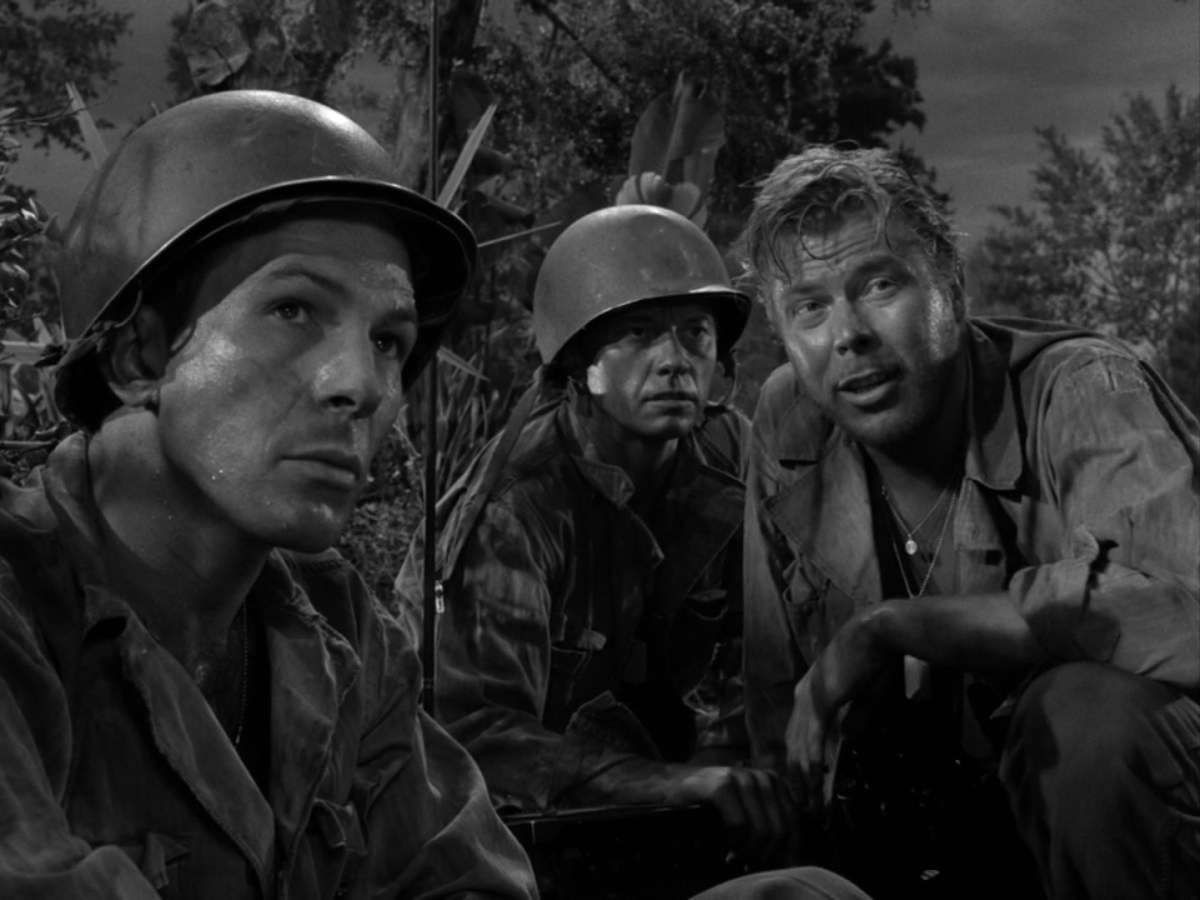
A very powerful episode that places the shoe on the other foot. A young Dean Stockwell plays Lt. Katell who is young and blood thirsty for war. He quickly is warned and then learns about humanity on the battlefield. This episode is full of good actors. Leonard Nimoy plays radio operator Hansen but the real treat for me was Albert Salmi who plays the tough but worn out Sgt. Causarano. Salmi usually plays bad guys but in this one his common sense and honesty is refreshing.
A Quality of Mercy was filmed on an already-standing jungle set on a soundstage at the Hal Roach Studios. The episode covers some of the territory already covered by The Purple Testament…which coincidentally, Dean Stockwell was originally cast as the lead but was unable to appear.
We are brought face to face with the grimness of war, the fatigue and the futility. Serling, after serving in WWII, was close to this issue. It seems that Serling expressed his opinions through Sgt. Causarano played by Albert Salmi.
From IMDB: The title refers to a quote from William Shakespeare’s play ‘The Merchant of Venice’: “The quality of mercy is not strain’d, It droppeth as the gentle rain from heaven.”
Albert Salmi (Sgt. Causarano) previously appeared in The Twilight Zone: Execution (1960) and would later appear in The Twilight Zone: Of Late I Think of Cliffordville (1963), all of which involve time travel. “A Quality of Mercy” is the only one in which his character is not portrayed as despicable.
This show was written by Rod Serling and Sam Rolfe
Rod Serling’s Opening Narration:
It’s August, 1945, the last grimy pages of a dirty, torn book of war. The place is the Philippine Islands. The men are what’s left of a platoon of American Infantry, whose dulled and tired eyes set deep in dulled and tired faces can now look toward a miracle, that moment when the nightmare appears to be coming to an end. But they’ve got one more battle to fight, and in a moment we’ll observe that battle. August, 1945, Philippine Islands. But in reality, it’s high noon in the Twilight Zone.
Summary
On August 6, 1945 – the last day of World War II – a forward platoon acting as artillery spotters get an eager and aggressive Lieutenant Katell. The artillery has been unable to dislodge a Japanese unit from a cave and Katell decides that the unit is going to attack. He suddenly finds himself in 1942 leading a Japanese unit that is about to attack Americans who are holed up in a cave.
‘The quality of mercy is not strained, it droppeth as the gentle rain from heaven upon the place beneath. It blesseth him that gives and him that takes.’ Shakespeare, The Merchant of Venice, but applicable to any moment in time, to any group of soldiery, to any nation on the face of the Earth—or, as in this case, to the Twilight Zone.
CAST
Rod Serling… Narrator / Self – Host (uncredited)
Dean Stockwell… Lt. Katell / Lt. Yamuri
Albert Salmi… Sgt. Causarano
Rayford Barnes… Andrew Watkins
Ralph Votrian… Hanachek
Leonard Nimoy… Hansen
Dale Ishimoto… Sgt. Yamazaki
Jerry Fujikawa… Japanese Captain (as J.H. Fujikawa)
Michael Pataki… Jeep Driver (uncredited)
When Tattoo You came out I bought the single Start Me Up and couldn’t get enough of it…yea I have had about enough of it now. I bought the album played it non stop. 10 years later a friend and I took a trip to Pensacola after playing a gig and this album was on all of the way. This song stood out at the time because I skipped the hits. Mick sings it in a falsetto voice that works well.
The Stones dug down deep in their vaults for this album because they wanted to tour in 1980. They had released Some Girls in 78, Emotional Rescue in 80, and Tattoo You in 1981 and needed some songs. This song’s origins go back to 1976’s Black and Blue.
This song features a guitar solo by Wayne Perkins, who had once auditioned as a potential replacement for Mick Taylor, and Billy Preston on keyboards.
Tattoo You peaked at #1 in the Billboard Album Charts, #1 in Canada, and #2 in the UK in 1981.
Worried About You
Sometime I wonder why you do these things to me Sometime I worry girl that you ain’t in love with me
Sometime I stay out late, yeah I’m having fun Yes, I guess you know by now that you ain’t the only one
Yeah-hey, oh baby Ooh, sweet things that you promised me babe, yeah Seemed to go up in smoke Yeah, vanish like a dream Baby I wonder why you do these things to me
Cause I’m worried I just can’t seem to find my way, baby
Ooh, the nights I spent just waiting on the sun, yeah Just like your burned out cigarette You threw away my love Why did you do that baby
I wonder why, why you do these things to me well, oh
I’m worried Lord, I’ll find out anyway Sure gonna find myself a girl someday ‘Til then I’m worried Yeah, I just can’t seem to find my way Ooh
Yeah, I’m a hard working man When did I ever do you wrong? Yeah, I get all my money baby, yeah I bring it, I bring it all home Yeah, I’m telling the truth, yeah
Well, sweet things, sweet things that you promised me
Well I’m worried and I just can’t seem to find my way, baby
I’m worried about you, yeah I’m worried about you, yeah Tell you something now I’m worried ’bout you (oh, yeah) I’m worried ’bout you, child (oh, yeah) I’m worried ’bout you, woman (oh, yeah) That’s come on, tell you something now I’m worried ’bout you (oh, yeah) I’m worried about you (aw yeah), yeah
Yeah, I’m worried Lord, I’ll find out anyway Sure as Hell I’m gonna find that girl someday Lord, I’m worried Lord, I just can’t seem to find my way
A fantastic episode of the Twilight Zone. The twist at the end is one of the best twists the Twilight Zone ever had. For most of the show, the five actors are all that can be seen, with the exception of the blank, curving wall of the cylinder. Rarely can the plot of an episode be summed up so completely in its title.
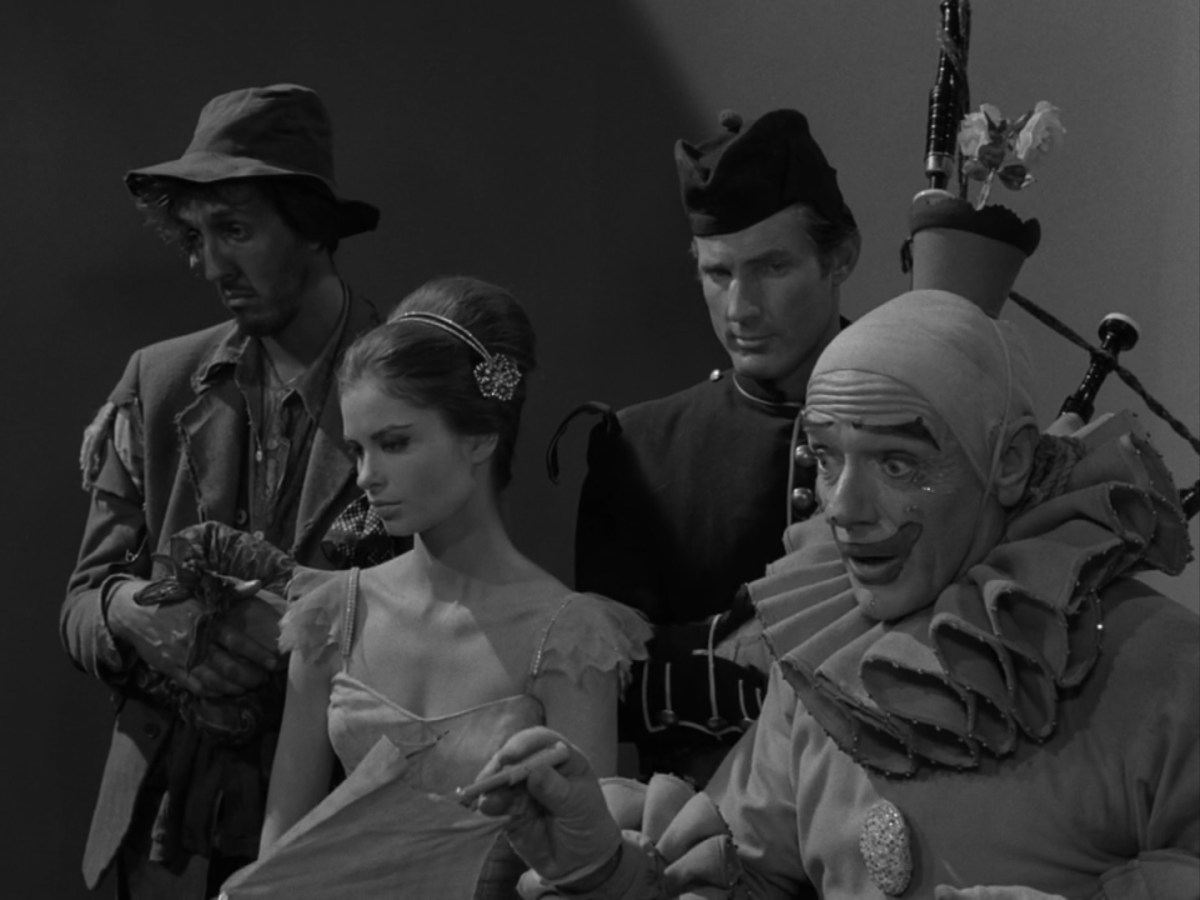
I feel like a broken record but again the acting is superb. The characters displaying their hopelessness in this episode is comes through well. The Major played by William Windom frequently throws emotional tantrums and is the latest to be added to this crew of a clown, Ballerina, tramp, and bagpiper looking for a way of this cylinder which they are trapped. The Major has a hard time with the defeatist attitude of the others
This show was written by Rod Serling and Marvin Petal
Rod Serling’s Opening Narration:
Clown, hobo, ballet dancer, bagpiper, and an army major—a collection of question marks. Five improbable entities stuck together into a pit of darkness. No logic, no reason, no explanation; just a prolonged nightmare in which fear, loneliness, and the unexplainable walk hand in hand through the shadows. In a moment, we’ll start collecting clues as to the whys, the whats, and the wheres. We will not end the nightmare, we’ll only explain it—because this is the Twilight Zone.
Summary
It all starts when an Army major wakes up in a small cylindrical room with no way out. The walls are too high to climb and they’re too hard to puncture. Trapped inside with him is a clown, a bagpiper, a ballerina, and a hobo. They have all woken up inside there and have no idea where they are, what they’re doing there, how long they’ve been there or even who they are or how long they’ll be there. They apparently are unable to feel anything, and every now and then a loud clanging sound makes them all fall down. All of them have tried various ways of finding an exit, unsuccessfully. The Army major especially is determined to escape. He tries all sorts of ways to find an exit, but he cannot find one. Even when he hits the walls with his sword, it shatters. The major suggests that they are in Hell, so there IS no way out. Eventually the five characters decide that the only way out is to make a human tower.
Rod Serling’s Closing Narration:
Just a barrel, a dark depository where are kept the counterfeit, make-believe pieces of plaster and cloth, wrought in a distorted image of human life. But this added hopeful note: perhaps they are unloved only for the moment. In the arms of children, there can be nothing but love. A clown, a tramp, a bagpipe player, a ballet dancer, and a Major. Tonight’s cast of players on the odd stage—known as—The Twilight Zone.
CAST
Rod Serling… Narrator / Self – Host (uncredited)
Susan Harrison… The Ballerina
William Windom… The Major (as Bill Windom)
Murray Matheson… The Clown
Kelton Garwood Kelton Garwood … The Tramp
Clark Allen… The Bagpiper
Carol Hill… Woman
Mona Houghton… Little Girl
Sixteen Blue was inspired by bassist Tommy Stinson. Tommy played his first gig with the Replacements in June of 1980 when he was just 13. The other members were 5-6 years older than Tommy.
Westerberg had witnessed how Stinson had been forced to grow up way faster than most kids, yet still faced the typical teenage issues and doubts. Westerberg also said it was about his lonely teenage years.
The song is on their Let It Be album released in 1984. Let It Be was the first of a three album stretch (Let It Be, Tim, Please To Meet Me) that they are probably best remembered for today.
Peter Jesperson (manager):“Hearing it the first time they did it, at a sound check in Boston, I thought, Jesus, he’s written a song about Tommy.”“Tommy was kind of the mascot of the band, and Paul had written about him in songs before. But this wasn’t just some goofy thing. This was serious and tender.”
Paul Westerberg on why they named the album Let It Be
“We were riding around . . . kicking around silly [album] names and we thought, ‘The next song that comes on the radio, we’ll name it after that.”
“We peed our pants [laughing], and Peter (manager and Beatles fan) is at the wheel, silent as hell, thinking, ‘They’re not going to do this, ““We did it pretty much to piss him off and pretty much to show the world, in a Ramones kind of way, how dumb-smart we were. . . . Just to figure how many feathers we can ruffle.”
Sixteen Blue
Drive yourself right up the wall No one hears and no one calls It’s a boring state It’s a useless wait, I know
Brag about things you don’t understand A girl and a woman, a boy and a man Everything is sexually vague Now you’re wondering to yourself If you might be gay
Your age is the hardest age Everything drags and drags One day, baby, maybe help you through Sixteen blue Sixteen blue
Drive your ma to the bank Tell your pa you got a date You’re lying, now you’re lying on your back
Try to figure out, they wonder what next you’ll pull You don’t understand anything sexual I don’t understand Tell my friends I’m doing fine
Your age is the hardest age Everything drags and drags You’re looking funny You ain’t laughing, are you? Sixteen blue Sixteen blue…
The Flamin’ Groovies are a treasure find of a band. They have songs that are power pop, grungy blues rock, and some great rock and roll. On this song we are concentrating on the rock/blues phase of the Groovies.
I first heard this band with Shake Some Action. Their music style at first was hard to pin down. They admitted they were all over the map. They are most known for the power pop song Shake Some Action but I read where a commenter said…Slow Death was the best Stones song the Stones never did.
Released the same year as the Rolling Stones’ album Sticky Fingers, Mick Jagger reportedly noticed the similarities between the Groovies Teenage Head album … and thought the Flamin’ Groovies did the better take on the theme of classic blues and rock ‘n roll revisited in a modern context.
The band started in 1965 by Roy Loney and Cyril Jordan. By the end of the sixties they clashed over where to go. Loney was more Stones and Jordon leaned toward the Beatles. Loney left in 1971 and they got an 18 year old lead singer named Chris Wilson.
The moved to London and started to work with Dave Edmunds. With Chris they did more power pop and that is when Shake Some Action came about with Wilson and Jordon writing it.
They would go on to be a great power pop band and also be know as an early proto punk band…they pretty much covered the gamut. This anti-drug song was written by Jordon and Loney before he left…Chris Wilson is singing it.
Wilson left in the early eighties but the band continued until around 1994. They regrouped in 2012 including Chris Wilson. The Flamin Groovies have released 9 studio albums and one as late as 2017.
Bass Player George Alexander:
We were the fastest band on the planet, like Ramones-fast. Once Chris got in, we decided to move on to what we considered the next level. We needed a lead singer that could carry that off, a young, good-looking guy who could Jagger-out.
With Chris we were moving into ‘Shake Some Action.’ Our last record from the punk phrase was ‘Teenage Head’ and [the first single with Wilson] ‘Slow Death,’ which was more Stones-y. We kept ‘Slow Death’ in the set but it was now time for ‘Shake Some Action’ and the power pop.
On this video…looks like they are at the Marquee Club where the Who started.
Slow Death
I called the doctor In the morning I had a fever It was a warning She said “There’s nothing I can prescribe To keep your raunchy bag of bones alive” I got some money left for one more shot She said “God bless you” I said “Thanks a lot”
It’s a slow, slow death
I called the preacher Holy, holy I begged forgiveness That’s when he told me He said “There’s nothing I can prescribe To keep your raunchy bag of bones alive” I got some money left for one more shot He said “God bless you” I said “Thanks a lot”
Slow Death
I’m set to mainline A hit of morphine It’s set to mainline It’s like a bad dream Slow death–eat my mind away Slow death–turn my guts to clay It’s a slow, slow, slow death
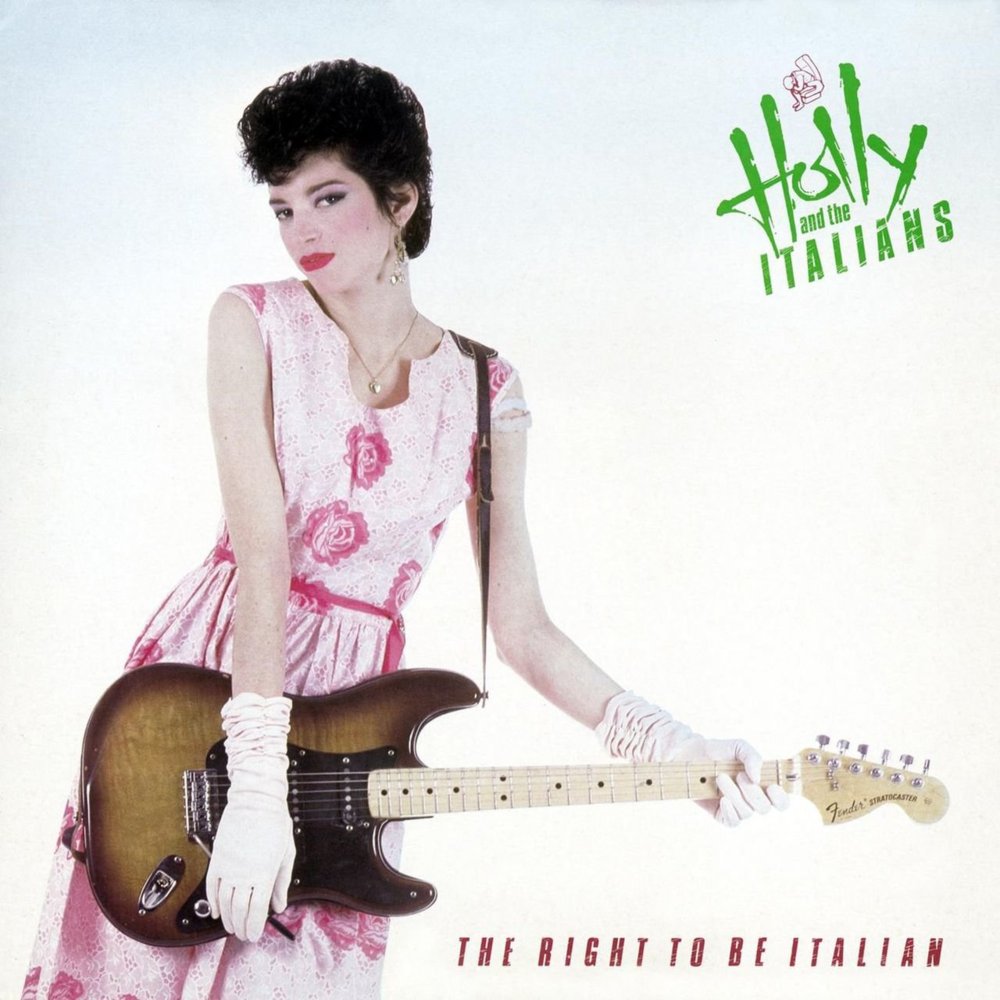
Holly Beth Vincent was born in Chicago but grew up in Los Angeles. It was there she formed Holly and The Italians with drummer Steve Young in 1978. After movie to London they were discovered. While in London Holly began a romantic relationship with Mark Knopfler of Dire Straits. The relationship didn’t end well except that Knopfler wrote Romeo and Juliet are about their failed romance.
They added guitarist Colin White, and in November released this song as their debut single which landed them a deal with Virgin Records in 1980. The song didn’t chart but a few years later Transvision Vamp’s 1988 version of this song did get in the UK’s charts. Their album The Right to Be Italian recorded at Electric Ladyland was released in 1981. It didn’t chart but did get some MTV play. The album was panned at the time…but recently the album as been acclaimed as a pop punk masterpiece by critics.
The album was reissued in 2002 in the US by Wounded Bird Records with bonus tracks. The album peaked at #177 on the Billboard Album Charts.
By the end of 1981 the band broke up but Holly recorded a solo album called Holly and the Italians was released and it didn’t chart.
Holly started to write music for movies in the 80s and in 2003 returned to releasing solo albums.
Tell That Girl To Shut Up
Well you got that girl and she lives with you And she does just want you want her to And when I call you on the phone, she says you’re not there But I know you’re home
You better tell that girl to shut up Tell that girl I’m gonna beat her up You better tell that girl, tell that girl, tell that girl
Well we used to be the best of friends Now all that’s gonna have to end But there’s just one thing that I can’t see That’s she’s got got you hanging up on me yeah
You better tell that girl to shut up Tell that girl I’m gonna beat her up You better tell that girl, tell that girl, tell that girl
Well I’m better tonight and I’m awfully kind It takes a lot for me to loose my mind Don’t you know that I don’t care? Maybe if I hit her, maybe if I pulled her hair Oh oh yeah yeah yeah
Well, she likes to seem intellectual And to be a musician she goes to school And the way she acts is so uncool I just can’t stand her
You better tell that girl to shut up Tell that girl I’m gonna beat her up You better tell that girl tell that girl, tell that girl
Ooh you better tell (you better tell that girl to shut up) (Yeah you better) tell that girl I’m gonna beat her up You better tell that girl tell that girl, tell that girl
Girl, girl, girl, girl, girl, girl You better tell that girl You better tell that girl to shut up Tell that girl I’m gonna beat her up You better tell that girl tell that girl, tell that girl
This episode stars my favorite silent movie film maker and comedian Buster Keaton. It doesn’t rank as one of the best episodes but it has its moments. It’s a comedy time travel episode and when they are in 1892 it is a silent movie with subtitles…when they travel to 1962 it goes back to normal dialog. This episode will not be for everyone but a 66 year old Buster Keaton is worth it to me. The man was in great shape to do the things he did in this one.
Buster Keaton’s popularity had been rising again since James Agee did an article in Life magazine in 1948 about the silent movie comedians Charles Chaplin, Buster Keaton, Harold Lloyd and Harry Langdon.
For me this one is a 5 star episode because of Buster Keaton alone. Him and Chaplin made the best silent comedy films of the twenties.
It’s really interesting how Serling portrays the past and future. When someone from the past comes into the future…the noise is always noted…how noisy we are today comparted to the past. He did this in an earlier episode called Execution.
According to Rod Serling’s promo in the previous episode, Richard Matheson wrote this script especially for Buster Keaton.
The old-fashioned clothes wringer that Buster Keaton is using to wash his pants in the beginning is the same kind of wringer that crushed his right forefinger when he was 3 years old. A curious little boy, he got his finger caught in the rollers and a doctor had to amputate it at the first knuckle. In this short, he gets the same finger caught in the wringer for laughs.
This marks the 78th episode overall…that means with this post/episode we are half the way through to 156…again I appreciate everyone who has been along for the ride.
This show was written by Rod Serling and Richard Matheson
Rod Serling’s Opening Narration:
Mr. Mulligan, a rather dour critic of his times, is shortly to discover the import of that old phrase, ‘Out of the frying pan, into the fire’—said fire burning brightly at all times—in The Twilight Zone.
Summary
In 1890, janitor Woodrow Mulligan uses his employers’ invention to transport himself to the future. He imagines an Eden but finds a polluted, busy world that he doesn’t find at all attractive. He meets Rollo who is also disgusted with the world he lives imagining life in the 1890s as idyllic. When Woodrow goes back to his own time Rollo goes with him but he is soon bored without any of the conveniences of modern life.
Rod Serling’s Closing Narration:
‘To each his own’—so goes another old phrase to which Mr. Woodrow Mulligan would heartily subscribe, for he has learned—definitely the hard way—that there’s much wisdom in a third old phrase, which goes as follows: ‘Stay in your own backyard.’ To which it might be added, ‘and, if possible, assist others to stay in theirs’—via, of course, The Twilight Zone.
CAST
Rod Serling… Narrator / Self – Host (uncredited) Buster Keaton… Woodrow Mulligan Stanley Adams… Rollo James Flavin… 1962 Policeman Gil Lamb… Officer Flannagan Jesse White… Repair Man Harry Fleer… 1962 Policeman #2 (uncredited) Norman Papson… Trumpeter (uncredited) Warren Parker… Clothes Store Manager (uncredited) Milton Parsons… Prof. Gilbert (uncredited) George E. Stone… Fenwick (uncredited) Arthur Tovey… Sidewalk Onlooker (uncredited)
When I first heard this song in the 1980s…the instrument that stood out was the sitar. I’ve been in love with that instrument since I heard Norwegian Wood. I want one and if I find a cheap one I will get it. One strum and you are back in the sixties and it fit this song well…or this song fits the sitar.
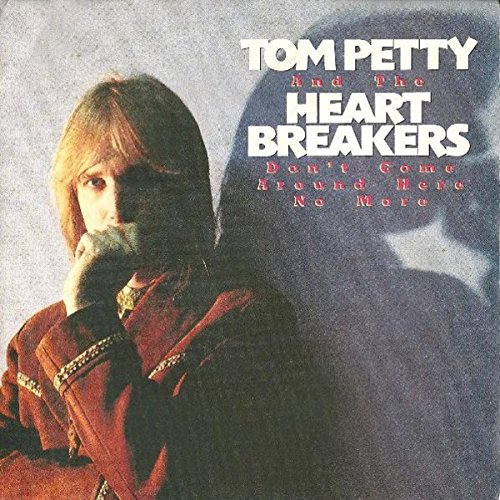
After Tom Petty and the Heartbreakers toured in 1983, they took some time off, and Petty started working with Dave Stewart from the Eurythmics. This was the first song they wrote together, and the psychedelic sound was a big departure from Petty’s work with The Heartbreakers.
Petty released Southern Accents and it was going to be a double album produced by Stewart…but ended up being a Tom Petty and the Heartbreakers single album, with Jimmy Iovine producing some songs and Stewart producing others. Personally I never thought this song fit with most of the other songs but I liked the album all the same.
Even in the 80s I wasn’t in love with videos after a few years but…this one I loved. It remains one of my favorite music videos.
The song peaked at #13 in the Billboard 100, #20 in Canada, #50 in the UK, and #42 in New Zealand in 1985.
From Songfacts
Stewart tells the full glorious story in The Dave Stewart Songbook, but here are the highlights: Eurythmics had a huge hit with “Sweet Dreams (Are Made Of This)” and became a phenomenon in the United States. They played the Wiltern Theatre in Los Angeles, and Stewart met Stevie Nicks backstage after the show. She had broken up with Joe Walsh the day before, so she took Stewart home with her and they had a romantic encounter. The next morning, Stevie kicked him out, and Stewart flew to San Francisco for his next gig. After the show, he used a Portastudio to create a track using a drum machine, a synthesizer and a sitar. Reflecting on the last 24 hours, Stewart says: “I really liked Stevie and she seemed vulnerable and fragile when I was leaving that morning. I was thinking about that and the situation she was in and I started singing, ‘Don’t come around her no more.'”
A few days later Stewart was staying with producer Jimmy Iovine, who was working on Stevie’s Bella Donna album. Stewart played him his demo, and they started writing the song for Stevie. Stewart didn’t know that Nicks and Iovine were once a couple, and when she came over to record the song, tensions boiled over and she left in a huff. Iovine decided to give Tom Petty the song, and had him come by, where they finished it up. Petty and Nicks had worked with Iovine on the duet “Stop Draggin’ My Heart Around,” which went on Stevie’s album, so it was only fair that Petty got this one.
The video used an Alice In Wonderland theme, which was Stewart’s idea – it reflected how he felt coming to Los Angeles. It was directed by Jeff Stein, who used a black-and-white tiled background and oversized, elaborate costumes starring Tom Petty as the Mad Hatter. Stewart appears in the beginning of the video playing the sitar on a giant mushroom. At the end, the girl becomes a cake and is eaten by the band, something that caused enough of a stir that they created a version where she doesn’t get eaten. The video was a huge hit on MTV, helping introduce Petty to a younger audience and building anticipation for his next videos. (Read our interview with Dave Stewart.)
MTV ordered a shot of a grinning Petty while Alice gets served edited out of the video before they would air it. “They said it was just too lascivious,” he told Billboard. “They were like, ‘Well, you can do it, but you can’t enjoy it that much.'”
Louise “Wish” Foley plays Alice in the video. At the casting call, she was dressed demure, like Alice would, while the other girls auditioning (mostly models) were to the nines. Foley went on to land roles in the TV series Santa Barbara and Family.
Don’t Come Around Here No More
Don’t come around here no more Don’t come around here no more Whatever you’re looking for Hey! don’t come around here no more
I’ve given up, I’ve given up I’ve given up on waiting any longer I’ve given up, on this love getting stronger
I don’t feel you any more you darken my door Whatever you’re looking for Hey! don’t come around here no more
I’ve given up, I’ve given up I’ve given up, you tangle my emotions I’ve given up, honey please admit it is over
[Chorus]
Stop walking down my street Who do you expect to meet? Whatever you’re looking for Hey! don’t come around here no more
I absolutely love this band’s sound…and you have to admit they were thinking outside of the box with the band name.
They were originally known as Squirrelbait Youth, with David Grubbs on guitar and vocals, Clark Johnson, Ben Daughtrey and Brian McMahan joined on second guitar.
They were known as a pop punk band that came out in 1983 from Louisville, Kentucky. Squirrel Bait (I love typing that) opened for such bands as Hüsker Dü and Chicago-based bands Naked Raygun and Big Black, who recommended Squirrel Bait to their label, Homestead Records.
Through Homestead, Squirrel Bait released an eponymous EP in 1985, a single in 1986 and an LP in 1987, all of which were later compiled onto a single CD. The Squirrel Bait record released in 1985 didn’t make any waves at first.. What helped them was Bob Mould from Husker Du and Evan Dando of the Lemonheads talking it up among others in the music press, people began to notice this band.
The band broke up in 1987 and most of the members joined other bands and David Grubbs did the same and started to release solo albums as late as 2017.
Sun God
I feel the power of the sun on my back So good That heat’s good That light has a mind to take it away
Take it away…
Let something go If it comes back it’s a good thing A good life A good feeling But it has a mind to take it away
Take it away… Take it away and it’s gone
I feel the power of the sun on my back So good…that heat’s good That light has a mind to take it away
This episode is very eerie and suspenseful. It combines environmentalism and a voodoo curse that reaches around the world from Africa to New York City. The character actor John Dehner plays Alan Richards who has come back from Africa, where he’s helped organize the construction of a dam. The dam will destroy homes and the land of the local tribes.
The local witch doctors put a curse on everyone connected with the dam project. Richard’s wife knew about the curse and collected items from Africa to protect them but Richards throws them away…calling her superstitious. This is not among the best episodes by any stretch of the imagination but is entertaining.
John Dehner was in about everything in the 60’s-90’s…he had 288 acting credits to his name.
From IMDB: Rod Serling personally shared Alan Richards’ disbelief in superstition and the supernatural. According to Reverend Ernest Pipes of the Unitarian Universalist Community Church, “Theologically speaking, Rod was what we call a naturalistic humanist, and that was the underlying philosophy of my pulpit.”
The original story by Charles Beaumont was first published in the December 1954 issue of the pulp magazine If: Worlds of Science Fiction.
This show was written by Charles Beaumont and Rod Serling
Rod Serling’s Opening Narration:
The carcass of a goat, a dead finger, a few bits of broken glass and stone, and Mr. Alan Richards, a modern man of a modern age, hating with all his heart something in which he cannot believe and preparing – although he doesn’t know it – to take the longest walk of his life, right down to the center – of The Twilight Zone.
Summary
Alan Richards and his wife are back in New York after living in Africa where he was in charge of a major construction project. His wife was deeply affected after a local witch doctor placed a curse on them and has taken to keeping charms to ward off evil spirits. While Richards doesn’t discount the power of the witch doctor entirely, he dismisses her fears as unfounded. Having a drink in a bar one evening he finds that his wife left a protective amulet in his coat pocket. He leaves it on the bar when he leaves – and as a result has a dangerous and frightening walk home, only to find something there waiting for him.
Some superstitions, kept alive by the long night of ignorance, have their own special power. You’ll hear of it through a jungle grapevine in a remote corner of the Twilight Zone.
CAST
Rod Serling…Narrator / Self – Host (uncredited)
John Dehner…Alan Richards
Walter Brooke…Chad Cooper
Jay Adler…Tramp
Emily McLaughlin…Doris Richards
Hugh Sanders…Templeton
Howard Wright…Hardy
Donald Foster…Sinclair
Jay Overholts…Taxi Driver
Zamba…Lion (uncredited)
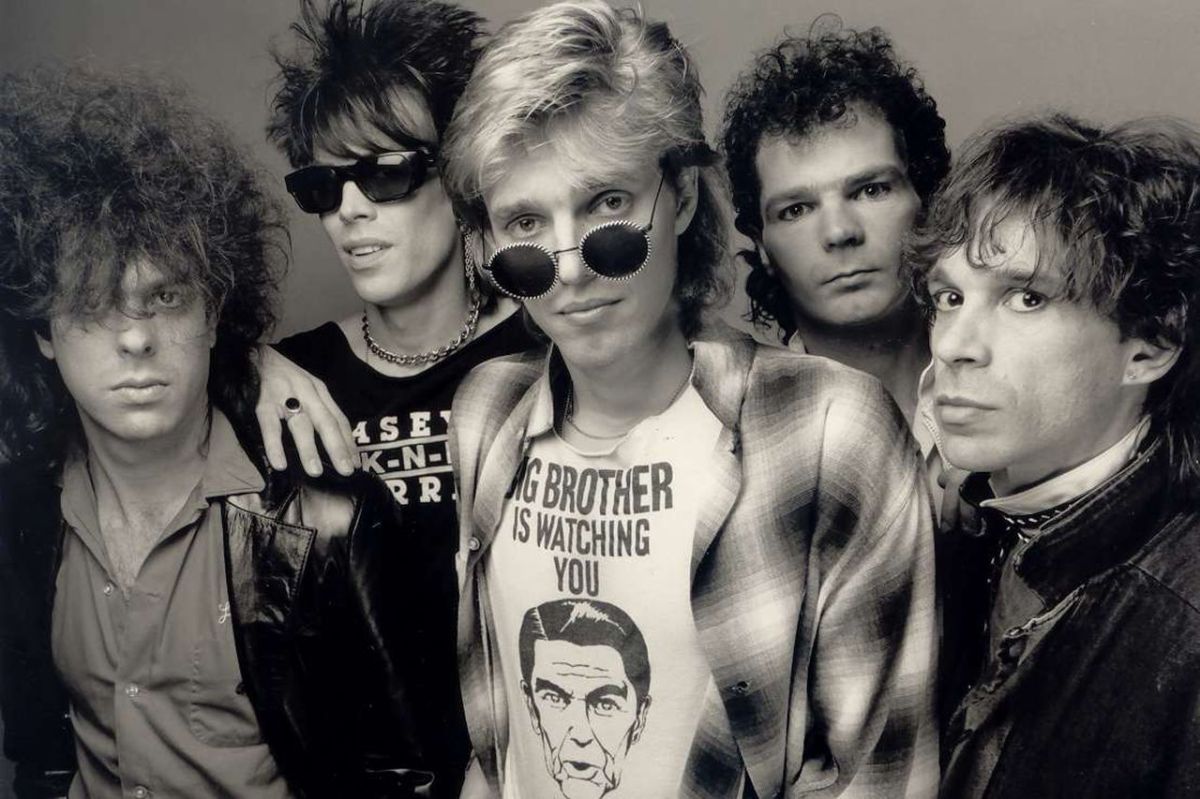
This band had one of the most inspiring rises and the most devastating fall a band could have. They had the help of the biggest rock star in the 80s but that couldn’t stop what was coming. A truly sad story and a what might have been.
When Billy Rancher was a kid…he didn’t dream of rock stardom…it was baseball that he dreamed of. Billy’s father Joe was in the Dodgers minor league system. Billy was born in 1957 and he was an all-city shortstop at Madison High School and played ball for Mount Hood Community College on an athletic scholarship. His mom wanted Billy to finish his education, but his dad died in 1978, and Billy dropped out and concentrated on music.
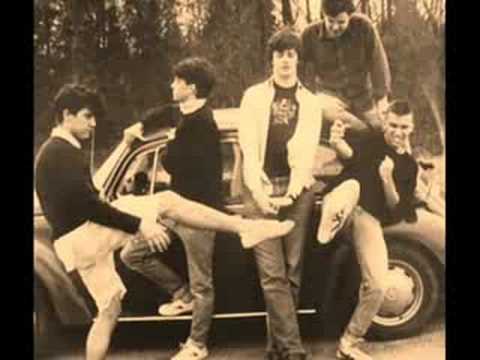
He taught himself how to play guitar and started a band in Portland, the Malchicks, with his younger brother Lenny. That band soon broke up and Billy formed the Unreal Gods with Jon DuFresne, Bill Flaxel, Alf Rider, and Dave Stricker. The band was a hit in the Portland club scene…they even opened up for Peter Tosh at one point. At this time around 1981, Billy found out that he had cancer. He went to the hospital and he was cleared of cancer afterward.
The band raised some money and went to New York to record for Joe Delia, a session musician and independent producer.
They rehearsed at an auto-body shop, a favorite rehearsal spot for local bands. They noticed someone walking through…and that someone was Bruce Springsteen. Bruce helped to get the Unreal Gods into the Power Station…a famous studio…which was the place to record in the Big Apple. The Rolling Stones were putting down tracks there at the time.
Clive Davis, head of the Arista label, heard about this Portland band that had impressed Bruce Springsteen and hopped a flight to see them. Davis, caught an Unreal Gods show at the club Starry Night. He signed them the next day.
The label hired Men at Work producer Peter McIan to produce them. Right away the band were at odds with Mclan…he wanted to take their rawness away. Billy argued with him and the band agreed they would have found common ground but it was not meant to be. At this time Billy found out his cancer had come back. The label was sending the band to England to tour but that was put on hold…permanently
Billy fought the cancer and he was thought to be cleared but it then spread through his body. Billy Rancher died on December 2, 1986. He played live up until before he died.
In 2019 an album named Upstroke Down was released and featured some of the songs they were working on for Arista and others that sat in the vaults…including Uptown.
Jon DuFresne:Stuff started showing up on YouTube, I’d think, Wow, that was me. There we all are. There’s Billy. Did that really happen?



 John eventually decided to opt for both, singing “count me out…in” on this vocal performance, which was sung in a “light voice” in imitation of Martha Reeves and Diana Ross, as his handwritten lyric sheet reminded him.





 PowerPop... An Eclectic Collection of Pop Culture