This song is off of the album Tim released in 1985. This was their first album on Sire Records with Warner Brothers. They had left the indie Twin/Tone records after the album Let It Be. Another song title that I had to listen to and I’m glad I did.
Bob Stinson’s imprint was heavy on Kiss Me on the Bus, which he turned into a showcase for his breakneck riffing. When Bob was right…he could give you the quickest most perfect riffs…but when he was off…he was off. It could be from song to song some nights.
This would be Bob’s last album with the band. He would leave a little while after this. Slim Dunlap would take his place in 1988.
Being on a big label meant they got a slot on SNL. They sounded ragged but great on the show. They played two songs… Bastards of Young and Kiss Me On The Bus. Paul Westerberg muttered the F word during Bastards of Young and Lorne Michaels berated the band before they played this song as their last song.
It would be the last time because they were barred from future SNL performances.
After their performance, they went to a party and then back to the hotel. Bob Stinson who had some emotional along with chemical problems caused a lot of damage in his room at the hotel.
Later when Michaels got the $1,100 bill for the hotel damages, he hit the roof again. He was threatening to ban not just the Replacements but any Warner Bros. act from appearing on SNL. In one night, the Replacements had managed to destroy a decade of cozy relations between the show and the label.
Paul Westerberg:“Rock-and-roll doesn’t always make for great television, but we were trying to do whatever possible to make sure that was a memorable evening.”
I could not find the SNL video, but the below clip is a European television appearance. Bob’s guitar playing is the highlight of this video.
Kiss Me On The Bus
On the bus, that’s where we’re riding On the bus, okay, don’t say “hi” then Your tongue, your transfer Your hand, your answer
On the bus, everyone’s looking forward On the bus, I am looking forward And it really ain’t okay I might die before Monday They’re all watching us
Kiss me on the bus Kiss me on the bus Oooo, if you knew how I felt now You wouldn’t act so adult now Hurry hurry, here comes my stop
On the bus, watch our reflection On the bus, I can’t stand no rejection C’mon let’s make a scene Oh baby don’t be so mean They’re all watching us
Kiss me on the bus Kiss me on the bus Oooo, if you knew how I felt now You wouldn’t act so adult now Hurry hurry, here comes my stop
Oooo, if you knew how I felt now You wouldn’t act so adult now They’re all watching us Kiss me on the bus Kiss me on the bus Kiss me on the bus Kiss me on the bus
In the 90s our band would play this live. It was close to this version but when that second verse kicked in… we really kicked in full blast. A drunken patron at a bar once told me during a break…that it sounded great… like Hank Williams with 5 lines of blow. That made me smile anyway.
Hank Williams wrote this song and originally recorded it in 1952. Williams’ original peaked at #1 in the Country charts and also went to #20 on the US pop charts. Other artists to record this include Jo Stafford, Fats Domino, Brenda Lee and The Carpenters.
John Fogerty released the Blue Ridge Rangers album in 1973. This was his debut solo album after Creedence Clearwater Revival broke up. Some songs were written by country legends like Jimmie Rodgers and Hank Williams; some are traditional numbers, adapted by Fogerty in the style of those artists.
This was a one man album. Fogerty played every instrument himself. It was a risky move releasing a country cover album in the early seventies. He wanted to distance himself from CCR. While it wasn’t a large hit, it wasn’t a disaster considering what it was. The album peaked at #47 in the Billboard Album Charts and #59 in Canada in 1973.
Jambalaya (On The Bayou)
Goodbye, Joe, me gotta go, me oh my oh. Me gotta go, pole the pirogue down the bayou. My Yvonne, sweetest one, me oh my oh. Son of a gun, gonna have big fun on the bayou.
[CHORUS:] Jambalaya and a crawfish pie and fillet gumbo ‘Cause tonight I’m gonna see my ma cher amio. Pick guitar, fill fruit jar and be gayo, Son of a gun, gonna have big fun on the bayou.
Thibodeaux, Fontaineaux, the place is buzzin’, Kinfolk come to see Yvonne by the dozen. Dress in style, go hog wild, and be gayo. Son of a gun, gonna have big fun on the bayou.
[CHORUS:] Oh, guitar!
[CHORUS]
Oh, Lord! Hang tight, ooh Lord! Ah, take it out. He’s comin’, ah!
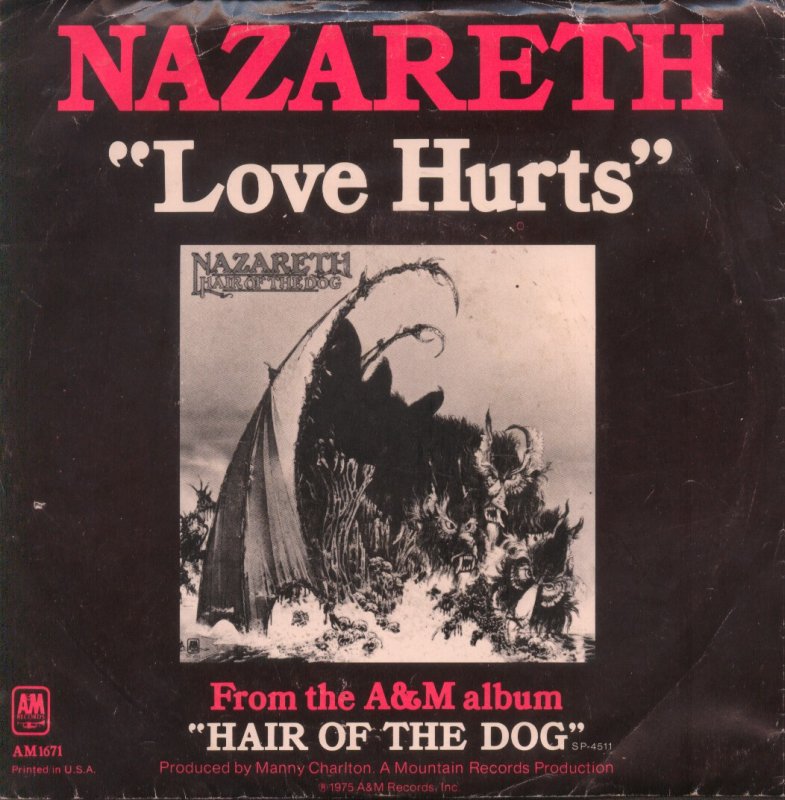
I owned Nazareth’s Hair of the Dog on 8-track tape (a book about 8-tracks from Deke) that was given to me as a kid. I still remember that CLICK during the title song. I expect to hear it when I listen to it today. The only version I knew of Love Hurts was Nazareth for the longest time. Later I found out it has been covered by many people including The Everly Brothers.
I saw Nazareth in the early 80s. Dan McCafferty’s voice was rough, loud, and great. Instead of talking to the audience he screamed through a very hot mic…but they were awesome. The opened up for Billy Squire but I would have loved to seem them headline.
The album this song was on was Hair of the Dog. It would be Nazareth’s biggest album. The album peaked at #17 in the Billboard Album Charts and #20 in Canada in 1975.
Nazareth released Love Hurts as a single late in 1974. Surprisingly, it tanked, but in April 1975 it became a hit in South Africa, prompting their label, A&M, to release it in America. It took a while, but radio stations in Texas started playing the song, and others around the country gradually followed suit.
The song peaked at #1 in Canada and #8 in the Billboard 100 and #41 in the UK. Nazareth got their name from the first line of the Band’s “The Weight” – “I pulled into Nazareth…”
The Everly Brothers may have been the first to cover it, but they never released the song as a single. They planned to release this as a single, but industry politics got in the way. The group was managed by Wesley Rose, who was part owner of the publishing company Acuff-Rose. After a string of hits for Cadence Records, they left for Warner Bros. in 1960, and continued to make hits but Rose wanted them to release singles for which Acuff-Rose owned the publishing, and when the duo recorded covers of “Lucille” and “Temptation” (a song from 1933), he protested, leading to a split and a legal dispute. Rose had another one of his clients, Roy Orbison, record “Love Hurts” and released it as the B-side to his #1 hit “Running Scared” in 1961.
Don Everly:“Wesley covered us with Roy Orbison, which was outlandishly selfish,” Don Everly said in Walk Right Back: The Everly Brothers On Warner Bros. “The arrangement was ours, and it was written for us. We couldn’t release it as a single because we didn’t know if Acuff-Rose would license it or not because we were in a lawsuit with them. It got that bitter.”
Pete Aginew Nazareth bassist: “We all loved the song. We often covered songs that we liked that we used to listen to on tape. Every now and then, we’d just go back and try to do something with one of these things. If you could change it and make it yours, we’d do it in the studio and see if we could do something about it. When we did Love Hurts, I believe there were 42 different versions recorded of it. The one we used to listen to was Gram Parsons and Emmylou Harris, off the “Grievous Angel” [1974] album. We used to have that in our van and we loved the song. […] We recorded “Love Hurts” as a b-side and that’s how we saw it. Of course, when I hear it now, it’s probably one of the best rock ballads of all time and definitely the vocal is in the top three.”
From Songfacts
Nazareth made this song a hit, but it was originally released by the Everly Brothers on their 1960 album A Date With The Everly Brothers. Like their heartbreak hit from 1957, “Bye Bye Love,” it was written by Boudleaux Bryant.
Young love is hot with passion, but it burns you when it’s hot. The guy in this song has just made this discovery, which is a revelation of sorts – all those singing the praises of love are fools who will soon be burned, as love is just a lie made to make you blue.
The original Everly Brothers version runs 2:23 and is delivered in their distinctive, pleasing harmonies. The Nazareth version is 3:03, with sandpaper vocals by lead singer Dan McCafferty screamed out as if he’s falling into the pit of despair.
The group is from Scotland and had three UK hits under their belts when Nazareth’s Stateside success was short lived: “Holiday” reached #87 in 1980, and “Love Leads To Madness” went to #105 in 1982, but none of their other songs charted there.
The album version runs 3:52, with a guitar solo by Manny Charlton that is not on the 3:03 single.
By the time Nazareth brought this song to life, the Everly Brothers had been split for three years. When they re-formed in 1983, they added the song to their setlists for the first time, starting with their reunion concert at Royal Albert Hall, which was released as a live album. In later years, it sometimes seemed like they were singing it to each other on stage, as their relationship had clearly soured.
The Everly Brothers recorded a new version on their 1965 album Rock’n Soul. Other artists to release it include Ray Peterson, Jimmy Webb, and Gram Parsons with Emmylou Harris. Jim Capaldi is the only other artist to chart with the song; he took it to #97 US in December 1975.
I love this song. Not many songs deal with a failed suicide, domestic abuse, and a brush with sadomasochism. I’m a huge Warren Zevon fan. His songs tend to be on the dark side…and anyone who has listened to Excitable Boy will testify to that.
When I heard Zevon’s version of this song for the first time I was sold. I first heard the Linda Ronstadt version and I loved it. I’m a Linda Ronstadt fan but something about Zevon’s version draws me in. It’s raw and crude and I love the way he sings it.
Zevon wrote and recorded the song and it appeared on his self-titled album in 1976. It became a hit when Linda Ronstadt covered it the next year. She cleaned up the song a little. Ronstadt’s cover was a cleaned-up version with the gender reversed. Still, her character fails at suicide, but the S&M (sadomasochism) references are gone.
Like other Zevon songs this is a pretty crude and risqué song. His character is such a disaster that he can’t even kill himself: he puts his head on the railroad tracks, but the train doesn’t run anymore.
I met a girl at the rainbow bar She asked me if I’d beat her She took me back to the hired house I don’t wanna talk about it, hut
It’s thought that the song was a friendly swipe at Jackson Browne, whose songs such as “Here Come Those Tears Again” and “Sleep’s Dark and Silent Gate” from The Pretender could be quite dark. The album was produced by Jackson Browne and had backing vocals by Lindsey Buckingham.
Another hit cover version of the song was recorded by Canadian country singer Terri Clark in 1996. It peaked at #1 in the Canadian Country Charts and #5 in the Billboard Country Charts.
Poor Poor Pitiful Me
I lay my head on the railroad tracks I’m waiting on the double E The railroad don’t run no more Poor poor pitiful me
Poor poor pitiful me and poor poor pitiful me These young girls won’t let me be Lord have mercy on me, woe is me
Well I met a girl in West Hollywood Well I ain’t naming names But she really worked me over good She was just like Jesse James
She really worked me over good She was a credit to her gender She put me through some changes Lord Sort of like a waring blender
Poor poor pitiful me, poor poor pitiful me These young girls won’t let me be Lord have mercy on me, woe is me
Poor poor pitiful me and poor poor pitiful me Oh these girls won’t let me be Lord have mercy on me, woe is me
I met a girl at the rainbow bar She asked me if I’d beat her She took me back to the hired house I don’t wanna talk about it, hut
Poor poor pitiful me Poor poor pitiful me Hut, never mind Poor poor pitiful me Yeah poor poor pitiful me
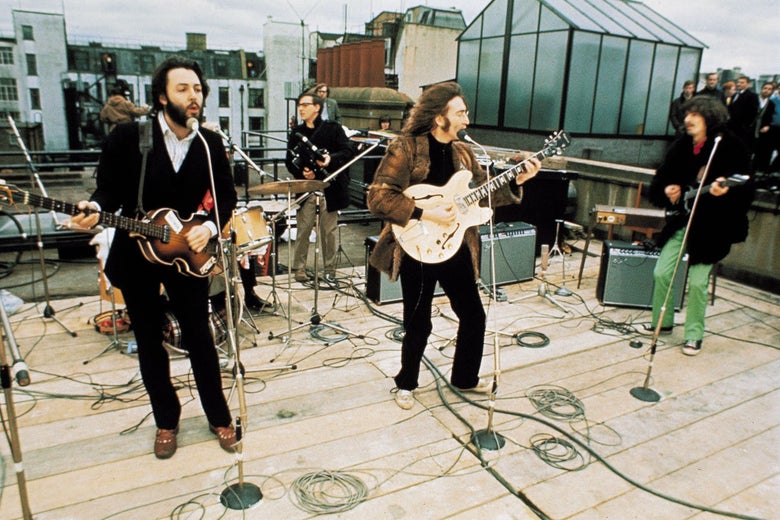
A pure rock and roll song by The Beatles. It’s always a joy to listen to because it goes back to their roots They played this song live in the early days before Beatlemania. When they recorded the final version on the roof you could see they were having a good time. George’s guitar playing on this is perfect.
A song that was recorded in January of 1969 but was written by John and Paul in the 1950s. Being a very early attempt at songwriting, John Lennon reluctantly brought it forward for The Beatles to record when they were looking for new material in early 1963. They recorded it but didn’t have a take that they liked.
In 1969 John pulled out “One After 909” from his memory and presented it again. On this occasion, it was reworked with enthusiasm and with a different feel and arrangement, the result becoming a cool presentation of early Beatlemania at their final live performance on the rooftop in 1969.
John, Paul, and George were talking about the song and John said he always wanted to change the words. Paul said no…it’s great like it is so they played the song on the rooftop. It would be included on the Let It Be album released in 1970
The song was about a lady who tells her boyfriend she is leaving on the train that leaves after train number 909. He begs her not to go, but she does anyway. He packs his bags and rushes after her and discovers that she is not on “the one after 909,” so he goes home depressed and goes into the wrong house.
John Lennon:“I wrote it when I was about seventeen, either right before or after ‘Hello Little Girl,’ and it was resurrected for (the ‘Let It Be’) album, probably for lack of material. Nine has always been around. I’m not sure why. I was born on the ninth of October, I lived at nine Newcastle Road, ‘Revolution 9.’ Numerologically, I’m apparently a number three or six, so I’m not sure where the nine comes from…but it’s all part of nine.”
Paul McCartney: “It was a number we didn’t used to do much but it was one that we always liked doing, and we rediscovered it. There were a couple of tunes that we wondered why we never put out; either George Martin didn’t like them enough to or he favored others. It’s not a great song but it’s a great favorite of mine because it has great memories for me of John and I trying to write a bluesy freight-train song. There were a lot of those songs at the time, like ‘Midnight Special,’ ‘Freight Train,’ ‘Rock Island Line,’ so this was the ‘One After 909.’ She didn’t get the 909, she got the one after it! It was a tribute to British Rail, actually. No, at the time we weren’t think British, it was much more the Super Chief from Omaha.”
One After 909
My baby said she’s trav’ling on the one after 909 I said move over honey I’m traveling on that line I said move over once, move over twice Come on baby don’t be cold as ice. Said she’s trav’ling on the one after 909.
I begged her not to go and I begged her on my bended knees, You’re only fooling around, you’re fooling around with me. I said move over once, move over twice Come on baby don’t be cold as ice. Said she’s trav’ling on the one after 909.
I got my bag, run to the station Railman says you’ve got the the wrong location I got my bag, run right home Then I find I’ve got the number wrong
Well she said she’s trav’ling on the one after 909 I said move over honey I’m traveling on that line I said move over once, move over twice Come on baby don’t be cold as ice. Said she’s trav’ling on the one after 909.
I got my bag, run to the station Railman says you’ve got the the wrong location I got my bag, run right home Then I find I’ve got the number wrong
Well she said she’s trav’ling on the one after 909 I said move over honey I’m traveling on that line I said move over once, move over twice Come on baby don’t be cold as ice. Said she’s trav’ling on the one after 9-0, Said she’s trav’ling on the one after 9-0, Said she’s trav’ling on the one after 909.
Bon Scott was reading a story in the paper about Mark Brandon Reid…otherwise known as Chopper Reid. Chopper was sent to jail for 16 years for murdering a gang leader. After a while, he got fed up with jail life, so a criminal friend of his named Jimmy Loughnan planned an escape. It didn’t go well because of Chopper’s fear of tight places…and he and Jimmy were caught.
Bon Scott and Angus and Malcolm Young wrote Jailbreak. The song peaked at #10 in Australia in 1976. The song appeared on the Australian version of Dirty Deeds Done Dirt Cheap. The song would not be released to the rest of the world until the 1984 international release of the ‘74 Jailbreak EP.
Mark Evans plays bass on this track and album. Evans would play on one more album, Let There Be Rock, and then he would be replaced by Cliff Williams on the Powerage album. Williams remains with ACDC to this day.
They made two videos for this song, one of them playing on a bunch of rocks as various explosions go on around them and the other which features the band simply playing on a stage.
In the bottom video Bon Scott and Phil Rudd (shirts with arrows) were dressed in blue prisoner uniforms while Malcolm Young and Mark Evans wore guard uniforms.
Jailbreak
There was a friend of mine on murder And the judge’s gavel fell Jury found him guilty Gave him sixteen years in hell He said “I ain’t spending my life here I ain’t livin’ alone Ain’t breakin’ no rocks on the chain gang I’m breakin’ out and heading home” Gonna make a (jailbreak) And I’m looking towards the sky I’m gonna make a (jailbreak) Oh, how I wish that I could fly
All in the name of liberty All in the name of liberty Got to be free
(Jailbreak) Let me outta here (Jailbreak) Sixteen years (Jailbreak) Had more than I can take (Jailbreak)
Yeah
He said he’d seen his lady being fooled with By another man She was down and he was up Had a gun in his hand Bullets started flying everywhere People start to scream Big man lyin’ on the ground With a hole in his body where his life had been
But it was all in the name of liberty All in the name of liberty I got to be free
(Jailbreak) (Jailbreak) I got to break out Out of here
Heartbeats They were racing Freedom He was chasin’ Spotlights Sirens Rifles firing But he made it out
If I had to pick my favorite Stones song they covered…this one would be high up there. I like the intro and Keith’s sloppy guitar solo that was perfect for it.
The Stones covered this song in 1974 on the It’s Only Rock ‘n’ Roll album. Later in 1978 they would cover another Temptations song called Just My Imagination.
The Stones originally planned for Dobie Gray’s “Drift Away” as the only cover song on It’s Only Rock ‘n’ Roll, but they bumped it for this. Billy Preston plays the funky piano on this song, and it really makes it.
It’s Only Rock and Roll would be the last album that Mick Taylor worked on. Ron Wood would eventually replace him on guitar. Wood probably fit in with the Stones more than Taylor…but Taylor had a sound that was never replicated again. The albums he played on are considered to be the Stones best.
This was written by Motown writers Norman Whitfield and Eddie Holland. Holland, who was part of the Holland/Dozier/Holland writing team, wrote the lyrics. The Temptations version peaked at #13.
Other covers of this song include Phil Collins, TLC, and the one and only Rick Astley… whom the Internet’s never going to give up..
The song peaked at #17 in the Billboard 100 and #14 in Canada in 1974.
Paul McCartney:“There were two songs I turned Mick onto that the Stones have done. One was She Said Yeah and the other was Ain’t Too Proud To Beg. Mick would deny it – ‘Wot? Never saw him, never met him’ – but I distinctly remember having him up into a little music room and playing it to him. He loved it and he went and did it. We’ve messed around with the track a little bit, but it is sort of like my memory of the original.”
Ain’t Too Proud To Beg
I know you wanna leave me, But I refuse to let you go, If I have to beg, plead for your sympathy, I don’t mind ’cause you mean that much to me.
Ain’t too proud to beg and you know it, Please don’t leave me girl, Don’t you go, Ain’t too proud to plead, baby, baby, Please don’t leave me, girl, Don’t you go.
Now I’ve heard a cryin’ man Is half a man with no sense of pride, But if I have to cry to keep you, I don’t mind weepin’ if it’ll keep you by my side.
Ain’t too proud to beg and you know it, Please don’t leave me girl, Don’t you go, Ain’t too proud to plead, baby, baby, Please don’t leave me, girl, Don’t you go.
If I have to sleep on your doorstep all night and day Just to keep you from walking away, Let your friends laugh, even this I can stand, ’cause I wanna keep you any way I can.
Ain’t too proud to beg and you know it, Please don’t leave me girl, Don’t you go, Ain’t too proud to plead, baby, baby, Please don’t leave me, girl, Don’t you go.
Now I’ve got a love so deep in the pit of my heart, And each day it grows more and more, I’m not ashamed to call and plead to you, baby, If pleading keeps you from walking out that door.
Ain’t too proud to beg and you know it, Please don’t leave me girl, Don’t you go, Ain’t too proud to plead, baby, baby, Please don’t leave me, girl, Don’t you go.
Raining In My Heart is a beautiful title of a song. This is not a rocking Buddy tune…but a gorgeous ballad. John Fogerty once said that a title of a song is the most important part. If you find a great title for a song you are inspired to work with it.
It was originally recorded by Buddy Holly with the orchestral backing by Dick Jacobs. On the single, it was credited to Buddy Holly and the Crickets, but an Orchestra took the Crickets place. The music and lyrics were written by Felice Bryant and Boudleaux Bryant. It was recorded at the Pythian Temple on West 70th Street in New York City
Raining In My Heart was released as a single on Coral Records in 1959. It peaked at #88 on the Billboard charts as the B-side of “It Doesn’t Matter Anymore”. This song has been covered by artists such as P.J. Proby, Ray Price, Anne Murray, Hank Marvin, Tommy Roe, Skeeter David, and many more.
Buddy Holly was among the first group of inductees to the Rock and Roll Hall of Fame in 1986. In 2004, Rolling Stone ranked Holly #13 among “The 100 Greatest Artists of All Time”.
Gregory Porter sang a duet with Buddy in 2018…with the backing track of course. He teamed up with the Royal Philharmonic Orchestra. I really like this one a lot.
Raining In My Heart
The sun is out, the sky is blue There’s not a cloud to spoil the view But it’s raining, raining in my heart
The weather man says clear today He doesn’t know you’ve gone away And it’s raining, raining in my heart
Oh, misery, misery What’s gonna become of me?
I tell my blues they mustn’t show But soon these tears are bound to flow ‘Cause it’s raining, raining in my heart
But it’s raining, raining in my heart
And it’s raining, raining in my heart
Oh, misery, misery What’s gonna become of me?
I tell my blues they mustn’t show But soon these tears are bound to flow ‘Cause it’s raining, raining in my heart
This is one of the places where rock and roll began.
I knew this sounded familiar…ZZ Top reworked this into their 1973 hit “La Grange.” In 1992, Bernard Besman, who was Hooker’s producer and controlled the copyright to “Boogie Chillen,” sued ZZ Top, but a court eventually ruled that Hooker’s song was in the public domain.
I love any version of this song out there but the two I like the best are the original and when Hooker played with Canned Heat on the album…Hooker and Heat.
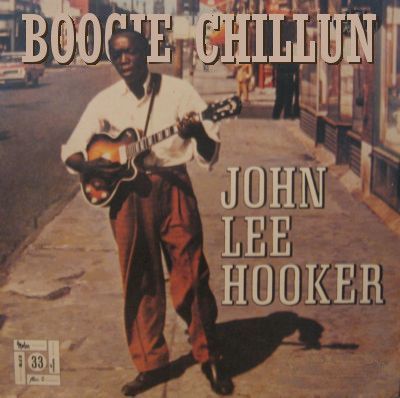
In 1948, Hooker showed up at the office of a Detroit record store/label owner named Bernard Besman and presented him with a demo. Besman provided the studio and produced this song for Hooker. They worked together for the next four years, recording many of Hooker’s songs, but Boogie Chillen was the big hit.
The song peaked at #1 in the R&B Charts and sold over a million copies after Besman leased the rights to distribute the song to Modern Records. When the song took off, Hooker still had his day job working as a janitor in a Chrysler factory.
Hooker is the only person performing on the song. The only sounds are his voice, guitar, and stomping feet. The tapping sounds came from bottle caps attached to the soles of his shoes.
“Chillen” is Southern slang for “Children.” This was the first song Buddy Guy learned how to play on guitar. Growing up in Lettsworth, Louisiana in a small house with no electricity or running water, Guy heard this song when a family friend, Henry “Coot” Smith, would come over and play it on his guitar.
Boogie Chillen
Well, my mama ‘low me just to stay out all night long Oh, Lord Well, my mama ‘low me just to stay out all night long I didn’t care she ‘low, I would boogie anyhow
When I first came to town, people, I was walkin’ down Hastings Street Everybody was talkin’ about the Henry Swing Club I decided I drop in there that night When I got there, I say, “Yes, people” They was really havin’ a ball Yes, I know
Boogie Chillen’
One night I was layin’ down I heard mama and papa talkin’ I heard papa tell mama let that boy boogie-woogie It’s in him and it got to come out And I felt so good Went on boogin’ just the same
Whenever I’m asked if I like country music…at first, I wonder what country they mean. If they mean commercial top 40…then not. If they mean Hank Williams, then a big fat yes. In this country, I hear a little rockabilly and country mix…which is a great thing.
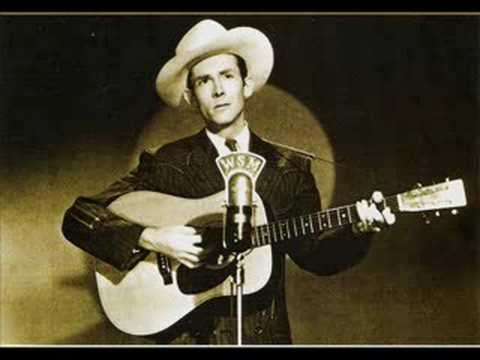
Hank Williams as a songwriter is up there with the greats. Bob Dylan and more idolized him and his writing. This song was his first big hit. The song was written by the man himself. He released this song in 1947. Two years later, he received his invitation to join the Grand Ole Opry after his successful recording of the minstrel era song, “Lovesick Blues.”
Move It On Over peaked at #4 in the Country Charts in 1947.
Despite never learning to read music, Williams was a prolific songwriter including country music classics such as “Hey, Good Lookin’,” “I’m So Lonesome I Could Cry,” and “Your Cheatin’ Heart.” He recorded a total of 66 songs in his six-year recording career, 37 of which became hit records. It was not unheard of for Williams to record three hit songs in one afternoon. Now think about this… out of 66 songs recorded…37 were hits… That is like batting over .500.
Williams was plagued by back pain throughout his life, likely due to spina bifida. Life on the road as a Country singer only made it worse. An operation in 1951 gave him no relief and actually increased his pain. The combination of unending physical pain and the pressure of being a successful recording artist led to Williams seeking solace in drugs in alcohol.
Many of you will remember this song by George Thorogood released in 1978 and picked up a lot of airplay.
Move It On Over
I come in last night about half past ten That baby of mine wouldn’t let me in So move it on over, rock it on over Move over little dog, the mean old dog is movin’ in
She told me not to mess around But I done let the deal go down Move it on over, rock it on over Move over nice dog, a big fat dog is movin’ in
She changed the lock on my back door Now my key won’t fit no more Move it on over, rock it on over Move over nice dog, the mean old dog is movin’ in
She threw me out just as pretty as she pleased Pretty soon I’ll be scratchin’ fleas Move it on over, slide it on over Move over nice dog, a mean old dog is movin’ in
Yeah, listen to me dog before you start to whine That side yours and this side mine So move it on over, rock it on over Move over little dog, the big old dog is movin’ in
Yeah, she changed the lock on my back door Now my key won’t fit no more Move it on over, rock it on over Move over little dog, the big old dog is movin’ in
Move it on over, move it on over Move it on over, won’t’cha rock it on over Move over cool dog, the hot dog’s movin’ in
According to John Lennon, when the Beatles were in Hamburg, prostitutes had to have a piece of paper proving they have a clean bill of health…as in a Ticket To Ride. McCartney said it was “a British Railways ticket to the town of Ryde on the Isle of Wight.” Lennon’s description caught a 9-year-old boy’s imagination much more.
George Harrison came up with the way the riff was played. Ringo came up with a distinctive staccato drum pattern for this song based on the way George played it. He said a big part of his drumming style is being a left-handed drummer trying to play right-handed.
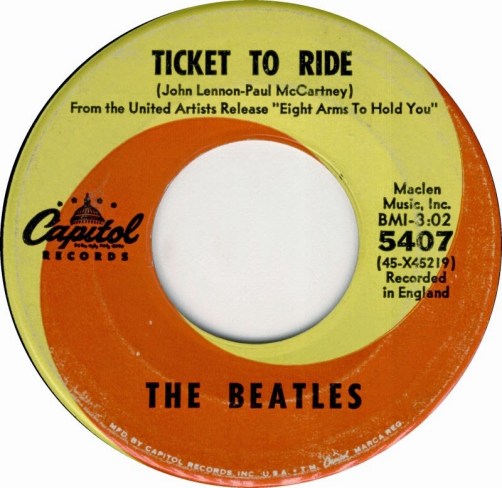
I remember this the most by it being used in the Beatles movie Help! in the scene where The Beatles ski… poorly. Copies of the original single released on Capitol Records say: “From the United Artists Release ‘Eight Arms To Hold You’,” which was the original working title of Help!
The Beatles were one of the first groups to make music videos, which were done so they could promote their songs without showing up at TV stations. They made one for “Ticket To Ride” in a shoot where they did four other songs as well. All the footage was shot in the studio; this one saw the band performing in front of oversized tickets for trains and busses.
The song peaked at #1 in the Billboard 100, Canada and the UK in 1965.
Carl Palmer: “One of the most exciting, rhythmical patterns and parts and songs that I ever heard, which I thought was really big-time and had it all going is a track by The Beatles called ‘Ticket To Ride, the drum part on that I always thought was exceptional.”
From Songfacts
The Beatles taped a performance of this song that was broadcast on an episode of Ed Sullivan Show that aired September 12, 1965 (the last Ed Sullivan show broadcast in black and white). The Beatles recorded it prior to their Shea Stadium concert that took place August 15.
The Carpenters covered this in 1969 with the gender reversed to suit lead vocalist Karen Carpenter (“he’s got a ticket to ride…” Their mellow version was released as the duo’s first single and included on their first album, which was also called Ticket To Ride. Their rendition didn’t chart, but made its way onto plenty of light rock playlists.
In Stephen King’s 1977 novel The Shining, a supernatural Big Band ensemble plays a swing version of this at The Overlook Hotel.
Ticket To Ride
I think I’m gonna be sad I think it’s today, yeah The girl that’s driving me mad Is going away
She’s got a ticket to ride She’s got a ticket to ride She’s got a ticket to ride But she don’t care
She said that living with me Is bringing her down yeah For she would never be free When I was around
She’s got a ticket to ride She’s got a ticket to ride She’s got a ticket to ride But she don’t care
I don’t know why she’s ridin’ so high She ought to think twice She ought to do right by me Before she gets to saying goodbye She ought to think twice, She ought to do right by me I think I’m gonna be sad I think it’s today yeah The girl that’s driving me mad Is going away, yeah
She’s got a ticket to ride She’s got a ticket to ride She’s got a ticket to ride But she don’t care
I don’t know why she’s ridin’ so high She ought to think twice She ought to do right by me Before she gets to saying goodbye She ought to think twice She ought to do right by me She said that living with me Is bringing her down, yeah For she would never be free When I was around
Ah, she’s got a ticket to ride She’s got a ticket to ride She’s got a ticket to ride But she don’t care
My baby don’t care, my baby don’t care My baby don’t care, my baby don’t care My baby don’t care, my baby don’t care
It’s been too long since I posted about the big E. How could someone, not like a song with a title like that?
Elvis didn’t want to record this song because he thought it was too Country, so drummer Johnny Bernero from Memphis was added to the mix. Up until this time, there was only Scotty Moore on guitar, Bill Bass on bass, and Elvis on rhythm guitar. This added an up-tempo beat…Elvis liked it and recorded the song, which became a Country hit. I know Elvis is Elvis, but his backing band was just as special to me. Scotty Moore was one of a kind.
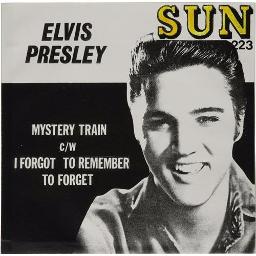
This song was released twice. The Sun Records release first charted the following week (September 17, 1955) at #14 on Billboard’s Country Charts. On November 21, 1955, it was released yet again. On that day RCA Victor purchased Elvis’s contract from Sam Phillips. As part of the deal, RCA obtained the rights to all of Presley’s Sun recordings. Soon after, RCA pressed and distributed a single of “I Forgot to Remember to Forget” and “Mystery Train” on its own label.
This was Elvis’ first #1 on any chart. It peaked at #1 in the Country Charts and #2 in Canada in 1955.
The Beatles never recorded this song in the studio, but they did it for the BBC with George singing lead.
The song was written by Charlie Feathers and Stan Kesler. Kesler had already written Presley’s “I’m Left, You’re Right, She’s Gone” when he had the idea for this song.
Stan Kesler:“At that time, I was on the kick of catchy titles,” Kesler recalled. “When I began to think about that phrase, it just expanded into ‘I forgot to remember to forget her.’ From there, I started working on it, and it all fell together.”
The Beatles version… live in the BBC studios.
I Forgot To Remember To Forget
I forgot to remember to forget her I can’t seem to get her off my mind I thought I’d never miss her But I found out somehow I think about her almost all the time The day she went away I made myself a promise That I’d soon forget we ever met But something sure is wrong ‘Cause I’m so blue and lonely I forgot to remember to forget
The day she went away I made myself a promise That I’d soon forget we ever met Well, but something sure is wrong ‘Cause I’m so blue and lonely I forgot to remember to forget
I have a soft spot for the Hollies. They started in the early sixties and continued through the seventies without Graham Nash who quit the Hollies for what he thought was a hipper band…Crosby, Stills, and Nash. Soon to include the elusive Neil Young.
Hollies members Allan Clarke, Tony Hicks, and Graham Nash wrote this song and shared the lead vocals, with each taking a verse (Clarke, then Hicks, then Nash). The Hollies had great harmonies and also a secret weapon in Tony Hicks as a guitar player. He was and still is outstanding but was never as known as his later neighbor George Harrison and his other peers.
Tony’s son Paul Hicks was in Dhani Harrison’s band and has worked with Giles Martin on Beatle remastering projects.
This song is about the British singer and actress Marianne Faithfull, who is well known for her relationship with Mick Jagger. She also had a brief fling with lead singer Alan Clarke. For a short time. “Marianne” was changed to “Carrie-Anne” so it wouldn’t be so obvious.
The song peaked at #9 in the Billboard 100, #9 in Canada, #3 in the UK, and #2 in New Zealand in 1967. This song was a straight-ahead pop hit, but changes were coming. Sgt Peppers was released so The Hollies, with the urging of Nash, tried going the more psychedelic route. The next single was King Midas In Reverse which only peaked at #18 in the UK and was considered a failure. Personally…it’s my favorite early Hollies song.
A side note…The Canadian actress Carrie-Anne Moss, best known for playing Trinity in The Matrix, was named after this Hollies hit. The song was on the charts at the time of her birth in August 1967.
From Songfacts
The group didn’t let on that the song was about Faithfull until 1995, when Graham Nash spilled the beans in a documentary.
In the song, the singer recalls the schoolyard days when he and Carrie Anne were friends, but she went for the older boys. Now their older and he tells her that although she’s lost her charm, he’s willing to “be her teacher” and take her on. By the end of the lesson, he’s sure she’ll be his girl.
According to the book Forty Years of Steel by Jeffrey Thomas, this song marks the first use of steel drums in a commercial pop record. Steel drums evoke an island vibe, but there’s nothing tropical about this song and none of The Hollies played the instrument (it’s not clear who played it on the record, but their producer, Ron Richards, apparently arranged it). Still, inserting a steel drum solo where a guitar solo would be certainly made the song stand out. Stephen Stills, Nash’s bandmate in Crosby, Stills & Nash, incorporated steel drums into his 1970 hit “Love The One You’re With.”
The Hollies had a very impressive run of hits starting in 1963, but Graham Nash wanted to put hit-making aside so they could create songs with more weight behind them. He ended up leaving the group in 1968 and forming Crosby, Stills & Nash. In an interview with Bruce Pollock, Nash said listeners “want to hear songs that mean more to them than ‘Hey Carrie Ann, what’s your game.'”
Carrie Anne
Hey, Carrie Anne Hey, Carrie Anne When we were at school, our games were simple I played a janitor, you played a monitor Then you played with older boys and prefects What’s the attraction in what they’re doing
Hey, Carrie Anne, what’s your game now Can anybody play Hey, Carrie Anne, what’s your game now Can anybody play
You were always something special to me quite independent, never caring You lost your charm as you were aging Where is your magic disappearing
Hey, Carrie Anne, what’s your game now Can anybody play Hey, Carrie Anne, what’s your game now Can anybody play
You’re so, so like a woman to me (So like a woman to me) So, so like a woman to me (Like a woman to me)
Hey, Carrie Anne, what’s your game now Can anybody play Hey, Carrie Anne, what’s your game now Can anybody play
People live and learn but you’re still learning You use my mind and I’ll be your teacher When the lesson’s over, you’ll be with me Then I’ll hear the other people saying
Hey, Carrie Anne, what’s your game now Can anybody play Hey, Carrie Anne, what’s your game now Can anybody play
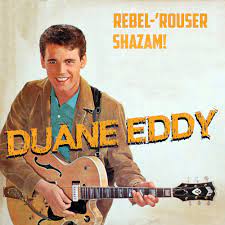
There is something about the 1950s and 60s with great instrumentals. This one has that great echo swimming all around the guitar lines by the great guitarist Duane Eddy.
Speaking of swimming…this was recorded in a Phoenix studio that had an echo chamber that was originally a large water tank. A single speaker was placed at one end of the tank, the microphone at the other, and the guitar was piped in there.
Who said that the 70s and 80s were the two decades of albums with multiple singles? The 1958 album this song came off of was named…Have Twangy Guitar Will Travel.
Now that title demands respect. The title is not the only reason it demanded respect…FIVE charting singles came off of it. Ramrod #27, Cannonball #15, The Lonely One #23, Moovin’ N’ Groovin’ #72, and last but not least…our song for today…Rebel Rouser peaked at #6 in 1958.
The album was released in 1958 and it peaked at #5 in the Billboard Album Charts and #6 in the UK.
Lee Hazlewood produced this track and helped Eddy get his distinctive guitar sound. Hazlewood went on record duets with Nancy Sinatra and also her hit “These Boots Are Made For Walking.”
The hand claps and shouts were provided by The Sharps, who later changed their name to the Rivingtons and had hits with Papa-Oom-Mow-Mow and The Bird’s the Word. As any Family Guy fan will tell you…The Trashmen later covered The Bird’s The Word in 1963.
Duane Eddy:“We were recording in Phoenix, starting my first album, and one of the guys said, ‘Man, that guitar sounds twangy.’ And (Hazlewood’s business partner) Lester Sill fell down laughing. He’d never heard that word and it became a running joke. ‘Is that twangy enough?’ So we finished the album and called it Have Twangy Guitar Will Travel. To be honest I never really liked the word. I thought it was kind of corny and rather undignified, but at the same time so many people liked it I just shut up and went with it.”
I bought this song on a single along with San Franciscan Nights when I was getting into the Animals as a pre-teen. This was not the same Animals of House of the Rising Sun and others…everyone but Eric Burdon and drummer Barry Jenkins had been replaced.
A Sky Pilot is a military chaplain, in the lyric he blesses the boys as they stand in line. The song finds the chaplain telling the soldiers that they are fighting for a greater cause, as they are soldiers of God. Eric Burdon tape-recorded The Royal Scot’s Dragoon Guards at a school and used the music during the middle of the song along with the war sound effects.
The song peaked at #14 in the Billboard 100, #7 in Canada, and #40 in the UK in 1968. The single was split into two parts to fit on the 45 so to hear the rest of the song… you had to flip the record over.
Eric Burdon received an angry letter from the British government for his use of pipe music. The song he used was “All The Bluebonnet’s Are Over The Border,” which is a classic Scottish war piece written as an anti-war epic during the Vietnam War.
Sky Pilot
He blesses the boys as they stand in line The smell of gun grease and the bayonets they shine He’s there to help them all that he can To make them feel wanted he’s a good holy man
Sky pilot…..sky pilot How high can you fly You’ll never, never, never reach the sky He smiles at the young soldiers
Tells them its all right He knows of their fear in the forthcoming fight Soon there’ll be blood and many will die Mothers and fathers back home they will cry
Sky pilot…..sky pilot How high can you fly You’ll never, never, never reach the sky He mumbles a prayer and it ends with a smile
The order is given They move down the line But he’s still behind and he’ll meditate But it won’t stop the bleeding or ease the hate
As the young men move out into the battle zone He feels good, with God you’re never alone He feels tired and he lays on his bed Hopes the men will find courage in the words that he said
Sky pilot… sky Pilot How high can you fly You’ll never, never, never reach the sky You’re soldiers of God you must understand
The fate of your country is in your young hands May God give you strength Do your job real well If it all was worth it
Only time it will tell In the morning they return With tears in their eyes The stench of death drifts up to the skies
A soldier so ill looks at the sky pilot Remembers the words “Thou shalt not kill” Sky pilot…..sky pilot
How high can you fly You never, never, never reach the sky










 PowerPop... An Eclectic Collection of Pop Culture