This would be one of my favorite John Lennon album cuts. It’s on the album Mind Games and it gets overlooked. It reminds me of the intro to the Beatles song “I’ve Got A Feeling.”
Some people say it was written as a coded message to Paul (there is more below a bout that) and it does have some references in there. John said later it was about Yoko…it could be both or neither…At the time when this came out him and Yoko were separated and Joh. Personally I’m not sure but I just enjoy the result. John later called it a piece of nothing but John could be dismissive about his best songs at times.
It’s a wonderful pop song nonetheless. Whenever I pull Mind Games out I go to this song first.
The song was not released as a single but the album did well. It peaked at #9 in the Billboard 100, #28 in Canada, and #13 in the UK in 1973.
Although in his extensive 1980 interview for Playboy he dismissed the song as “just a piece of nothing”, the lyrics of I Know (I Know) are open to interpretation as a commentary on Lennon’s relationship with Yoko Ono, which by 1973 was faltering. Lennon realised matters had turned sour, and the song can be seen as a confessional in which he claimed to finally be able to see clearly, just as he had before on the Imagine song ‘How?’ and ‘Jealous Guy’.
The curious repetition of the title in parentheses could have been simply one of Lennon’s whims, but it is possible that he was presenting a coded message – not for the first time – to his former bandmate Paul McCartney. Wings’ 1971 album Wild Life had featured the song Some People Never Know, in which McCartney lamented that some people fail to understand what it means to love. In this light, Lennon’s response saw the pair in agreement, in a marked contrast to their earlier song-based conflicts.
Lennon recorded a home demo of I Know (I Know) in the early summer of 1973, prior to entering the studio. During this time he worked on a number of songs destined for Mind Games.
Demo
I Know (I Know)
The years have passed so quickly One thing I’ve understood I am only learning To tell the trees from wood
I know what’s coming down And I know where it’s coming from And I know and I’m sorry (yes I am) But I never could speak my mind
And I know just how you feel And I know now what I have done And I know and I’m guilty But I never could speak my mind
I know what I was missing But now my eyes can see I put myself in your place As you did for me
Today I love you more than yesterday Right now I love you more right now
Now I know what’s coming down I can feel where it’s coming from And I know it’s getting better all the time As we share in each other’s minds
Today, I love you more than yesterday Right now, I love you more right now
Ooo, no more crying Ooo, no more crying Ooo, no more crying Ooo, no more crying
This was first released by Gram Parsons’ Flying Burrito Brothers in 1970. The Stones’ version was written in 1969, but had to wait for Sticky Fingers in 1971.
Wild Horses was said to be started as a song for Keith Richards’ newborn son Marlon. It was 1969 and Keith regretted that he had to leave his son to go on tour.
Mick Jagger’s girlfriend at the time, the singer Marianne Faithfull, claims “Wild horses couldn’t drag me away” was the first thing she said to Mick after she pulled out of a drug-induced coma in 1969. Jagger rewrote Keith’s lyrics, keeping only the line “Wild horses couldn’t drag me away.” His rewrite was based on his relationship with Marianne Faithfull, which was disintegrating.
The Stones recorded this during a three-day session at Muscle Shoals Sound Studios in Alabama from December 2-4, 1969. It was the last of three songs done at these sessions, after “Brown Sugar” and “You Gotta Move.” Jim Dickinson played piano on this song. The Stones regular pianist Ian Stewart didn’t want to play it because he hated playing minor chords.
Jim Dickinson went on to be a producer with Aretha Franklin, Big Star and the Replacements, and did a lot of movie soundtrack music with Ry Cooder.
The song was on what is arguably their best album in Sticky Fingers. One year prior to its release on Sticky Fingers, Gram Parsons convinced Jagger and Richards to allow him to record “Wild Horses” with his band The Flying Burrito Brothers. He had become good friends with Richards and helped with the arrangement of “Country Honk” as it appeared on the album Let It Bleed. The song was included on the album Burrito Deluxe released in 1970.
Wild Horses by the Stones peaked at #28 in the Billboard 100 and #11 in Canada in 1971.
Keith Richards:“‘Wild Horses’ almost wrote itself. It was really a lot to do with, once again, f—ing around with the tunings. I found these chords, especially doing it on a twelve-string to start with, which gave the song this character and sound. There’s a certain forlornness that can come out of a twelve-string. I started off, I think, on a regular six-string open E, and it sounded very nice, but sometimes you just get these ideas. What if I open tuned a twelve-string? All it meant was translate what Mississippi Fred McDowell was doing – twelve-string slide – into five-string mode, which meant a ten-string guitar.”
From Songfacs
Parsons was good friends with Keith Richards, and the musicians often cited each other as an influence. Said Parsons: “I picked up some rock and roll from Keith Richards, and Mick Jagger knows an awful lot about country music. I learned a lot about singing from Mick.”
Regarding “Wild Horses,” he said it was “a logical combination between their music and our music. It’s something that Mick Jagger can accept, and it’s something I can accept. And my way of doing it is not necessarily where it’s at, but it’s certainly the way I feel it.” (Quotes from Bud Scoppa’s liner notes in the Sacred Hearts and Fallen Angels collection.)
There are other theories as to Mick’s muse for this song, however. Jagger’s longtime girlfriend Jerry Hall in The Observer Magazine April 29, 2007, said: “‘Wild Horses’ is my favorite Stones song. It’s so beautiful. I don’t mind that it was written for Bianca.” (Not likely, since Jagger didn’t meet his future wife Bianca until 1970, which was after the song was recorded.)
Muscle Shoals Sound Studios (actually located in Sheffield, Alabama) opened in May 1969 when Jerry Wexler at Atlantic Records (The Stones’ label) loaned money to four of the musicians at nearby FAME studios so they could start their own company and install 8-track recording equipment (FAME was on 4-track). Wexler sent many of Atlantic’s acts to Muscle Shoals, since the musicians were fantastic and it was a dry county with nothing to do, which meant the artists were more likely to stay focused. The studio also had a distinctive sound that can be heard on this track, especially on Jagger’s vocals – you can hear a slight distortion that was caused by the console.
When The Stones left the Shoals, they headed for Altamont, California, where they gave a free concert on December 6, 1969 – a disastrous show where a fan was stabbed to death by a Hells Angels security guard. In the documentary Gimme Shelter, which chronicles the concert, there is a scene where the band is listening to playback on “Wild Horses” at Muscle Shoals Sound.
The Sticky Fingers album had very elaborate packaging. Designed by Andy Warhol, the cover photo was a close up of a man’s jeans with a real zipper on it. It was also the first time the tongue logo was used.
Stones guitarist Mick Taylor played acoustic guitar on this song in what’s known as “Nashville tuning,” in which you use all first and second strings and you tune them in octaves.
The Chinese rock star Cui Jian sang this with Mick Jagger when The Rolling Stones played a concert in Shanghai on April 8, 2006. Jian was supposed to open for The Stones in 2003, but their Chinese tour was canceled because of S.A.R.S.
The Sundays covered this song. Their version appears on the soundtrack to Buffy The Vampire Slayer.
To coincide with the release of Britain’s Got Talent star Susan Boyle’s cover of this song, Universal/Polydor re-released The Rolling Stones’ original as part of a special digital bundle featuring three versions of the track. The other two being a recording backstage during the band’s Voodoo Lounge tour in 1995, which was included on the Stripped live album and a video of a live performance of the song recorded at Knebworth in 1976.
Wild Horses
Childhood living is easy to do The things you wanted I bought them for you Graceless lady you know who I am You know I can’t let you slide through my hands
Wild horses couldn’t drag me away Wild, wild horses couldn’t drag me away
I watched you suffer a dull aching pain Now you’ve decided to show me the same No sweeping exit or offstage lines Could make me feel bitter or treat you unkind Wild horses couldn’t drag me away Wild, wild horses couldn’t drag me away I know I’ve dreamed you a sin and a lie I have my freedom but I don’t have much time Faith has been broken tears must be cried Let’s do some living after we die
Wild horses couldn’t drag me away Wild, wild horses we’ll ride them some day Wild horses couldn’t drag me away Wild, wild horses we’ll ride them some day
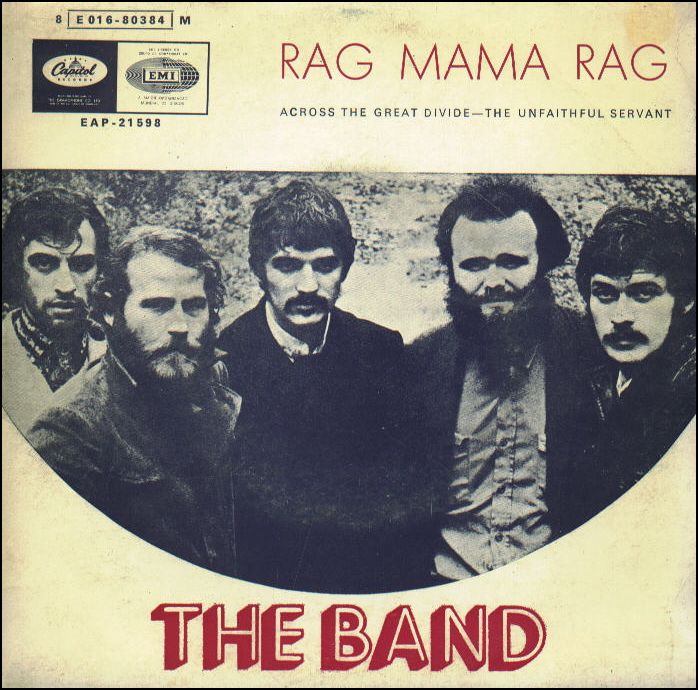
It doesn’t get much better than this. This wasn’t a huge hit but it doesn’t mean that much when it’s The Band.
The Band did this song by playing musical chairs with the instruments. Most of them grabbed something different than what they normally played. Levon (drummer) sang and played Mandolin, Richard Manuel (piano) played drums, Rick Danko (bass) played fiddle, Garth Hudson (keyboards) played uprigtht piano and producer John Simon played Tuba.
Robbie Robertson wrote the song and was the only one playing their normal instrument…guitar.
The song peaked at #57 in the Billboard 100, #46 in Canada, and #16 in the UK in 1970. The song was on their second album The Band.
Songfacts
One of the Band’s first big European hit singles, “Rag Mama Rag” has some unusual instrumentation. Lead pianist Richard Manuel played drums, drummer Levon Helm played mandolin and sang lead, and bassist Rick Danko played a fiddle. This left the bass spot open on this track, and it was filled by the album’s producer, John Simon. He improvised a bassline on tuba, although he had no idea how to play the instrument. >>
Robbie Robertson is the only songwriter credited on this track, although other members of the group claim they made contributions. The song finds Levon Helm trying to convince his girl to come back home so she can “rag all over” his house. What he has in mind in unclear: “rag” could mean playing ragtime music (a possibility, considering the line “rosin up the bow”), but he might have more prurient intentions.
Rag Mama Rag
Rag Mama rag, can’t believe its true. Rag Mama Rag, what did you do? Crawled up to the railroad track Let the four nine-teen scratch my back
Sag mama sag now What’s come over you Rag Mama Rag, I’m a pulling out your gag. Gonna turn you lose like an old caboose, Got a tail I need a drag.
I ask about your turtle, And you ask about the weather, Well, I can’t jump the hurdle And we can’t get together.
We could be relaxing in my sleeping bag, But all you want to do for me mama Is rag Mama rag there’s no-where to go, Rag Mama rag. Come on resin up the bow.
Rag Mama rag, where do ya roam? Rag Mama rag, bring your skinny little body back home. Its dog eat dog and cat eat mouse, you can You can rag Mama rag all over my house.
Hail stones beating on the roof, The bourbon is a hundred proof, Its you and me and the telephone Our destiny is quite well known.
We don’t need to sit and brag. All we gotta do is Rag Mama rag Mama rag. Rag Mama rag Where do you roam? Rag Mama rag, bring your skinny little body back home
No matter how many times I’ve heard this song it sounds great.
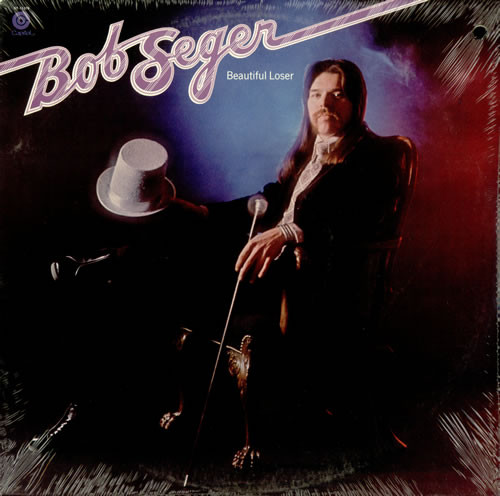
Seger worked hard for his success. He spent years touring and in 1968 with Capitol Records he scored a hit with Ramblin’ Gamblin’ Man. After that he didn’t have much success until his second stint with Capitol records.
He first left the label to record for Palladium, a Warner Bros. subsidiary run by his manager, Edward Andrews. Seger released three albums on Palladium, but when he delivered Beautiful Loser, Warner Bros. rejected it and Seger went back to Capitol. The album sold about as well as Seger’s previous releases, maybe 50,000 copies, mostly in Michigan. But his next release was the live album Live Bullet, recorded at two Detroit shows in 1975 and released in April 1976. With “Beautiful Loser” one of the standout tracks, the album proved a winner and had sold well over 100,000 by the time Seger released his next one, the breakthrough Night Moves. His sudden success stoked interest in his back catalog; Beautiful Loser ended up selling over 2 million.
Radio stations usually play the live version of “Beautiful Loser” together with “Traveling Man” off the 1976 Live Bullet album. The two songs are separate cuts but flow together perfectly.
Bob Seger:“I’ve never written the lyrics and tried to build the music around that. It’s usually a feel or a verse or a chorus, and the lyrics will come after I’ve decided that a certain pattern or groove or rhythm is cool. Then I’ll start singing gibberish over that and just find a lyrical idea that fits the ideas that I started out with.
Other times I’ll just sit down and say, ‘I wanna write a song called this.’ That’s how ‘Beautiful Loser’ happened. I just loved the title, which I got from a book of poetry from Leonard Cohen called Beautiful Losers, with an ‘s,’ and I thought it was a really cool title.
From Songfacts
This song is about people who set their goals so low, they never achieve anything. It is not about Seger personally. He told Creem magazine in a 1986 interview: “A lot of people think I wrote ‘Beautiful Loser’ about myself. I got the idea for that song from a book of Leonard Cohen poetry by the same name. The song was about underachievers in general. I very rarely write about myself that much. I draw on my own experiences like anyone else, but I’m not what you’d call auteuristic. I’m not like my songs at all. I’m a lot more up person than what I write.”
Cohen’s book that Seger refers to is called Beautiful Losers.
Seger took almost a year to write this. He played around with many different arrangements of the song until he got it right. In a 1994 interview with Music Connection, he explained:
Actually, I wrote three or four songs called ‘Beautiful Loser’ until I came up with the one that worked. But that’s a pretty rare thing.”
Glenn Frey, a member of the Eagles and a friend of Seger’s, was one of the first people Seger played this for. Frey loved it and helped Seger tweak it before it was released.
Seger spent a lot of time on the road, and he didn’t like to work on songs when he was touring. When it came time to make an album, he would work with his Silver Bullet Band, but also repair to Muscle Shoals Sound Studio in Alabama, where he a cadre of very talented musicians served as his backing band.
“Beautiful Loser” was one of the tracks he recorded at Muscle Shoals, which had two standout keyboard players in their ranks: Barry Beckett and Spooner Oldham.
Beautiful Loser
He wants to dream like a young man With the wisdom of an old man He wants his home and security He wants to live like a sailor at sea
Beautiful loser Where you gonna fall? When you realize You just can’t have it all
He’s your oldest and your best friend If you need him, he’ll be there again He’s always willing to be second-best A perfect lodger, a perfect guest
Beautiful loser Read it on the wall And realize You just can’t have it all You just can’t have it all
You just can’t have it all Ohh, ohh, can’t have it all You can try, you can try, but you can’t have it all Oh yeah
He’ll never make any enemies, enemies, no He won’t complain if he’s caught in a freeze He’ll always ask, he’ll always say please
Beautiful loser Never take it all ‘Cause it’s easier And faster when you fall
You just don’t need it all You just don’t need it all You just don’t need it all Just don’t need it all
I remember this song when I was a young fellow. The Five Man Electrical Band was a rock band from Ottawa, Ontario. They started out as The Staccatos in 1963 and had success in the Canadian Charts between 1965-1975. In 1969 is when they changed their name to The Five Man Electrical Band. They had 8 top twenty hits and 4 top ten hits in Canada.
In America though they were known mostly for Signs but they did have a top 40 song called Absolutely Right. Signs was the B-Side to Absolutely Right.
This was written by the lead singer Les Emmerson. Emmerson wrote the song after taking a road trip on Route 66 in California, where he noticed many billboards that obscured the beautiful scenery. This posed a question: Who is allowed to put up signs that interfere with nature? This led to another query: Who gets to make the rules that appear on so many signs?
“Signs” was included on their second album in 1970, but not considered single-worthy by their record label, as it didn’t fit a standard pop format.
In 1970, it was issued as the B-side to the single “Hello Melinda Goodbye,” which peaked at #55 on the Canadian chart. Disk jockeys preferred the flip side, however, and started playing “Signs,” which was then released as an A-side in 1971.
It peaked at #3 in the Billboard 100 and #4 in Canada in 1971.
The follow-up, “Absolutely Right,” also did well in America, peaking at #26 in the Billboard 100 and #3 in Canada.
From Songfacts
The song gave voice to those without power or property rights, which in many cases were young people.
This song starts with a line that became one of the most memorable in rock: “And the sign said, ‘Long-haired freaky people need not apply.'”
By starting with the word “And,” we feel that we are picking up a story, and it’s clear that the singer has put a lot of thought into this. The first verse is a classic tale of how looks can be deceiving, as the difference between an “upstanding man” and a hippie can be something as superficial as hair.
The next verse finds the singer looking at a “no trespassing” sign and questioning its authority. This resonates with anyone who has seen beautiful beaches, vistas, and other points of nature marked as private property, often with nobody there to enjoy it.
We then enter a private club with a strict dress code, and we hear the line most willful wanderers have been confronted with: “You ain’t supposed to be here.”
Finally, we end up in church, which brings God into our story. If ever there is something that is open to all, it it God, but even in church, a donation is called for. At this point, our hero turns the tables and makes his own sign, thanking God for the wonder of life.
Tesla revived this song in 1990 when they recorded a live, acoustic version for their album Five Man Acoustical Jam, which was recorded at the Trocadero Theatre in Philadelphia on July 2, 1990.
The band was on tour with Mötley Crüe, opening for the rockers on the Dr. Feelgood tour. July 2 was an off-day, so Tesla booked the acoustic show and had each band member pick a cover song to perform. Lead singer Jeff Keith picked “Signs,” a song he grew up listening to in Oklahoma. His bandmates, however, didn’t know the song, so Jeff had to round up a copy so they could learn it.
The song was the highlight of the performance, and the set was so well-received that it was released as an album, which they titled Five Man Acoustical Jam as an allusion to the original artist. Released as a single ahead of the album, the song made #2 on the Mainstream Rock chart, but didn’t crack the Hot 100. When the album started selling and MTV began airing the video, the song was re-released, making #8 on the Hot 100 in April 1991.
Tesla’s version was one of the first acoustic hit songs of the ’90s and helped launch the “Unplugged” trend. MTV ramped up their series of Unplugged concerts shortly after Tesla’s cover became a hit.
The line, “If God was here he’d tell you to your face, Man, you’re some kinda sinner” has a double-meaning, as “Man” could be just a throwaway expression, but could also be about man as a species.
In Tesla’s unedited version they replace the phrase “Blockin’ out the scenery, breakin’ my mind” with “F–kin’ up the scenery, breakin’ my mind.”
Signs
And the sign said “Long-haired freaky people need not apply” So I tucked my hair up under my hat and I went in to ask him why He said “You look like a fine upstanding young man, I think you’ll do” So I took off my hat, I said “Imagine that. Huh! Me workin’ for you!” Whoa-oh-oh
Sign, sign, everywhere a sign Blockin’ out the scenery, breakin’ my mind Do this, don’t do that, can’t you read the sign?
And the sign said anybody caught trespassin’ would be shot on sight So I jumped on the fence and-a yelled at the house, “Hey! What gives you the right?” “To put up a fence to keep me out or to keep mother nature in” “If God was here he’d tell you to your face, Man, you’re some kinda sinner”
Sign, sign, everywhere a sign Blockin’ out the scenery, breakin’ my mind Do this, don’t do that, can’t you read the sign?
Now, hey you, mister, can’t you read? You’ve got to have a shirt and tie to get a seat You can’t even watch, no you can’t eat You ain’t supposed to be here The sign said you got to have a membership card to get inside Ugh!
And the sign said, “Everybody welcome. Come in, kneel down and pray” But when they passed around the plate at the end of it all, I didn’t have a penny to pay So I got me a pen and a paper and I made up my own little sign I said, “Thank you, Lord, for thinkin’ ’bout me. I’m alive and doin’ fine.” Wooo!
Sign, sign, everywhere a sign Blockin’ out the scenery, breakin’ my mind Do this, don’t do that, can’t you read the sign?
I really like the sound they had at that time…it was dirty and raw.
For this song they got the idea from war stories they heard when they did a show at an American Air Force base during a tour of Europe. The four members wrote the song when they were in a grim deserted place in Zurich where they were playing for a small sum of money to an even smaller audience.
The band wanted to use this as the title of the album, but the record company thought it was too controversial and made them use “Paranoid,” another song on the album, instead. The album art, however, is a literal interpretation of a “War Pig,” showing a war “pig” with a sword and shield.
It was originally titled ‘Walpurgis’, an anniversary associated with witches and Satanists, but was changed on the recommendation of Black Sabbath’s record company. Ozzy released the original version on his 1997 album The Ozzman Cometh… the song though as the finish product was…just talk about the nightmare of War.
Geezer Butler : “Britain was on the verge of being brought into it, there was protests in the street, all kinds of anti -Vietnam things going on. War is the real Satanism. Politicians are the real Satanists. That’s what I was trying to say.”
Songfacts
This is one of many Black Sabbath songs that is often misinterpreted as evil. The song speaks out against the horrors of war.
On the US albums, this is listed as “War Pigs/Luke’s Wall.” “Luke’s Wall” is another name for the end of the song.
On the 1994 Black Sabbath tribute album Nativity In Black, Faith No More contributed a live cover version. Faith No More also covered this on their 1989 album The Real Thing.
War Pigs has been used as the name of various Black Sabbath tribute bands. We found one in Australia and another in Long Island, NY.
Ozzy’s former guitarist Zakk Wylde did a cover of this song after he went solo. Other artists who did covers: Slaves on Dope, Pig, Ether, Faith No More, Weezer, Boss Tweed, Red House Painters, Members Only, Badlands, Soulfly, Vital Remains, Ween, Sheavy, Gov’t Mule, Phish, Sacred Reich, Alice Donut, Flores Secas, Banda Arie, and Flores Secas.
This song is used for an encore in the video game Guitar Hero II for Playstation 2 and Xbox 360.
When the Sacramento band Tesla recorded this in 2007, lead guitarist Frank Hannon added a peace of Jimi Hendrix flavored “The Star Spangled Banner” to start the song.” It is the final track on Tesla’s Real To Reel 2-disk cover album, which is a tribute to Tesla’s mentors.
The song starts with the lyric, “Generals gathered in their masses. Just like witches at black masses.” Bassist and lyricist Geezer Butler was asked during a 2013 interview with Spin magazine why he used “masses” twice rather than coming up with a different word. “I just couldn’t think of anything else to rhyme with it,” he admitted. “And a lot of the old Victorian poets used to do stuff like that – rhyming the same word together. It didn’t really bother me. It wasn’t a lesson in poetry or anything.”
The song soundtracked a TV spot previewing the 2014 movie, 300: Rise Of An Empire.
War Pigs
Generals gathered in their masses Just like witches at black masses Evil minds that plot destruction Sorcerers of death’s construction In the fields the bodies burning As the war machine keeps turning Death and hatred to mankind Poisoning their brainwashed minds Oh lord yeah!
Politicians hide themselves away They only started the war Why should they go out to fight? They leave that role to the poor
Yeah
Time will tell on their power minds Making war just for fun Treating people just like pawns in chess Wait ’till their judgment day comes Yeah!
Now in darkness world stops turning Ashes where the bodies burning No more war pigs have the power Hand of God has struck the hour Day of judgment, God is calling On their knees the war pig’s crawling Begging mercy for their sins Satan laughing spreads his wings Oh lord yeah!
This song and Jessica are their two most well known instrumentals.
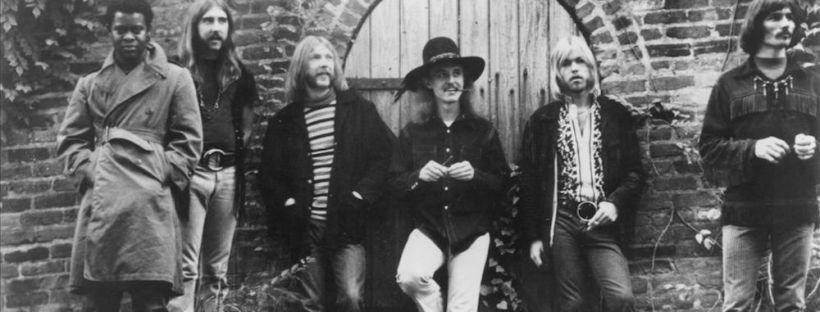
The Allman Brothers…much like the Grateful Dead could deliver live. They constantly toured early in their careers and played free concerts in parks all over to grow their audience. They released one of the best live albums of all time with At Fillmore East.
This song was originally on their second album Idlewild South in 1970 and later on their live album At Fillmore East.
Allmans guitarist Dickey Betts wrote this song for a girl, but not the one in the title. Elizabeth Reed Napier (b. November 9, 1845) is buried at the Rose Hill Cemetery in Macon, Georgia, where Betts would often write.
He used the name from her headstone as the title because he did not want to reveal who the song was really about: a girl he had an affair with who was Boz Scaggs’ girlfriend.
Duane Allman and Berry Oakley are buried in the same cemetery as Elizabeth Reed Napier.
From Songfacts
This was the first original instrumental song by The Allman Brothers.
Betts wrote this is based on Miles Davis’ “All Blues.” While Davis had been incorporating elements of rock into his jazz, Betts used pieces of jazz for this rock instrumental. Jazz rhythms make excellent use of the two-drummer format the Allmans use.
This is one of their live favorites. It usually evolves into a lengthy jam.
At concerts, this was a showcase for Allman’s drummers Jaimoe and Butch Trucks, who performed a drum solo at the end.
The live version on At Fillmore East takes up almost a whole side. Because of the extended jams, it became a double album, but the band insisted it be priced close to a single album.
The earliest known recordings of this song are from the band’s Fillmore East performances on February 11, 13 and 14, 1970. The Allman Brothers were on a bill with the Grateful Dead and Love; the Dead’s soundman Owsley “Bear” Stanley kept tape rolling and got the recordings, which were compiled into his “Sonic Journal” project and released in 2018 as Allman Brothers Band Fillmore East February 1970.
This book covers the last three years of Bon Scott, the lead singer of AC/DC.
Bon: The Last Highway is a fun read. It gives you more than just a look at Bon Scott. It gives you a peek in the world of Rock and Roll in the 1970s. It was a much more of a loose time then compared to now to say the least…both good and bad. The music business was a completely different ballgame than now.
Although this just covers the last three years of his life…you get to know Bon pretty well. I knew nothing about the guy until I read the book. He seemed to be well read, likeable, and a basically good guy to his friends and fans. O f course he did have substance abuse problems that haunted him.
There are a lot of stories about fans coming up to him and starting friendships. Fink interviewed other bands and most if not all had great things to say about Scott. He did find people who never have been interviewed and got stories that never have been published.
The working relationship between Bon and the Young brothers surprised me the most. Bon wrote the lyrics and they would censor what he wrote. Nothing political or controversial. They didn’t want the formula to be messed with. Offstage they didn’t tend to hang out as much with each other.
I never knew how popular Scott was in Australia even now. His grave site has become a cultural landmark; more than 28 years after Scott’s death, the National Trust of Australia declared his grave important enough to be included on the list of classified heritage places. It is reportedly the most visited grave in Australia.
The two things that author Jesse Fink concentrates on is how Bon died and if Bon did write some or most of the lyrics to the Back In Black album that was released after his death.
As far as the way the man died…Fink has some theories and they center around heroin. He interviewed some that has never been interviewed and got their story around Bon and the ones around him that night. The coroner’s report lists “acute alcohol poisoning” as the cause of death, classified under “death by misadventure.” Fink talked with people with him when he died on February 19, 1980.
The Young Brothers have denied they ever used any of his lyrics on Back in Black…but AC/DC did cut a deal with the Scott family for a share of royalties on the album. In interviews they have denied it but did contradict themselves in others.
Below is an excerpt from the book where more was said about the subject than any other time.
Then in 1998 Elissa Blake of Australian Rolling Stone caught him napping.
BLAKE: Have you ever thought about quitting?
ANGUS: The only time was when Bon died. We were in doubt about what to do but we had songs that he had written and wanted to finish the songs. We thought it would be our tribute to Bon and that album became Back In Black. We didn’t even know if people would even accept it. But it was probably one of our biggest albums and the success of that kept it going. We were on the road with that album for about two years so it was like therapy for the band after Bon’s death.
Bizarrely, before and since, Angus went with an altogether different story.
1981: “Some things we can’t do, you know, that was strictly Bon’s songs, and things.”
1996: “No, we were gonna start working on the lyrics with him the next week [after he died].”
1998: “The week he died, we had just worked out the music and he was going to come in and start writing lyrics.”
2000: “Bon was just about to come and start working with us writing lyrics just before he died.”
2005: “There was nothing [on Back In Black] from Bon’s notebook.”
It’s a line the band now doggedly sticks to despite mounting evidence that Bon’s lyrics were used. As Ian Jeffery admitted to me, cagily: “Not totally certain about Back In Black but I seem to remember a couple of words, lines [of Bon’s being on there]. Maybe not.”
Fink talked to Scott’s ex girlfriends and friends in his life and many claim that he did write many of the lyrics to You Shook Me All Night Long as well as other songs. Others say he had said some of the lines in letters. He basically gives you what he found and lets you make up your mind.
I would recommend this book to rock fans…and to AC/DC fans who mostly only know Brian Johnson as the lead singer.
This is the 6th edition of this series. In Part 1, Part2, Part 3, Part 4, and Part 5. We covered Brian May’s Red Special, Willie Nelson’s Trigger, George Harrison’s Rocky, Eddie Van Halen’s Frankenstrat, Bruce Springsteen’s guitar, Neil Young’s Old Black guitar, John Lennon’s Casino + a Bonus, Keith Richards Telecaster, Paul McCartney’s Bass, and Eric Clapton’s Blackie.
Today it’s Jimmy Page’s Gipson EDS -1275 Guitar and Jerry Garcia’s Alligator
Jimmy Page’s Gibson EDS-1275 Double Neck Guitar
This guitar was born out of necessity for Page. They had just recorded Stairway to Heaven and Jimmy played a 12-string in the song after the intro. To play the song live without a 12-string would not work. He was the only guitar player in the band so to replicate that part they either needed another guitar player or a way for Jimmy to switch to the 12 string while playing the song.
The solution came in the shape of a Gibson double-neck. A 6-string and a 12-string on the same guitar. Jimmy had seen pictures of American guitarists with a double neck guitar… Grady Martin with a Bigsby double-neck, Joe Maphis with a Mosrite. He also saw a strange band named Family with a guitar player named Charlie Whitney with a double neck guitar.
Gibson first introduced the doubleneck guitar in 1958 with the EDS-1275’s forerunner the “Double 12”. The body and hardware specifications for the EDS-1275 include a solid mahogany SG-style body, a dark cherry finish with walnut filler, chrome hardware, a chrome ABR Bridge with chrome tumblewheels, Schaller strap locks, a five-play pickguard, two volume and tone control knobs, a three-way pickup-selector switch and a three-way neck selector switch.
Jimmy played Les Pauls and wanted to get another Gipson. By the time Page wanted an EDS-1275, they were no longer in production so he ordered a custom-made cherry guitar.
Page’s EDS-1275 has a slightly different body shape from that of the then current model. Page’s also has one-piece mahogany necks rather than the current three-piece maple, and has tailpieces positioned near the bottom of the body, reportedly increasing sustain, and Patent No. or T-Top humbucking pickups.
Jimmy’s EDS-1275 made its live debut in March 1971, allowing him to play 12-string and six-string parts without swapping guitars and it certainly did become iconic.
Page recently donated a later model EDS-1275 for charity, but it was not the famous one he used with Led Zeppelin. That guitar remains firmly in his possession.
Jimmy Page: “I asked to get one from Gibson, because I knew it was the only way,” “I knew I couldn’t do Stairway…, but it was essential to do it. So it became iconic, didn’t it? If a little tough on the left shoulder…Yeah, though I’ve got heavier guitars! But nevertheless, it was pretty weighty.”
Jerry Garcia’s Alligator
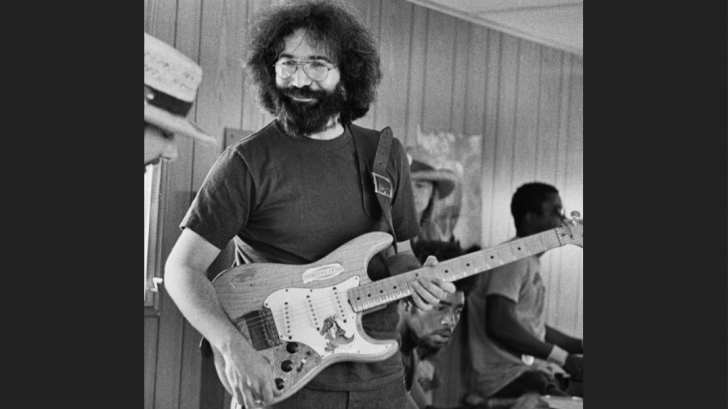
Graham Nash gave this 1957 Strat to Jerry Garcia as a gift in 1970. Nash purchased the guitar in 1970 from a pawnshop in Phoenix. Graham wanted to show his appreciation for Jerry’s guitar work on his solo album “Songs for Beginners.”
Roadie Steve Parish recalled a night in Buffalo on Garcia’s first tour outside the band, where “it was so cold that when Jerry stepped out on stage and strummed his ‘Alligator’ … the face plate on the guitar broke and the guts popped out. That’s how the show began.” Alligator got patched up with gaffer’s tape, and a new brass plate affixed at the tour’s end.
The Dead helped start an instrument and gear-building auxiliary company called Alembic. Alembic was found by the Dead’s sound man and chemist Owsley Stanley. Garcia’s Strat found itself on the Alembic workbench numerous times.
In 1972, Garcia would add a number of stickers to the body, including a grinning cartoon alligator on the pickguard that gave the guitar its name. But by then nearly every other bit of the instrument had been overhauled in a series of refinements by Alembic technician Frank Fuller.
The guitar got new Schaller tuning pegs and gears, a series of bridges (Gibson ABR-1 Tune-o-Matic and an Alembic custom), a new control plate (hammered brass), taller frets, and an in-board post-volume “blaster”. “Each pickup cover had its own individually grounded wire.”
Technicians Frank Fuller and Rick Turner of Alembic Guitars modified the guitar regularly, so much so that they referred to it as a “Frankenstein” guitar. Jerry played this guitar on the Dead’s famous first full European tour in 1972 and their two great albums Working Man’s Dead and American Beauty. Alligator played its last show on Garcia’s 30th birthday…August 1st, 1973 in Jersey City, NJ.
The show was recorded by Deadheads, Alligator was sent off properly with a long version of “Dark Star.”
Jerry would play more custom built guitars through his career. Wolf (73-93), Tiger (79-95), Lighting Bolt (93-95), Rosebud (90-95), and Top Hat (95). My favorite remains Alligator.
Graham originally bought the guitar for $250 dollars…the guitar was sold at an auction in 2019 for $420,000 dollars.
Back as promised…I know this isn’t everyone’s cup of tea so to speak but I hope you enjoy it. This is obviously the 5th edition of this series. In Part 1, Part2, Part 3, and Part 4. We covered Brian May’s Red Special, Willie Nelson’s Trigger, George Harrison’s Rocky, Eddie Van Halen’s Frankenstrat, Bruce Springsteen’s guitar, Neil Young’s Old Black guitar, John Lennon’s Casino + a Bonus, and Keith Richards Telecaster.
Today will we look at:
Paul McCartney’s Hofner Bass and Eric Clapton’s Blackie.
Paul McCartney’s Hofner Bass and the MISSING Hofner Bass
Paul’s bass is maybe the most iconic guitar/bass of all time in rock music. You see this bass and you think Beatles. I see the attraction to this bass. I have a Hofner copy and I’ve played a Hofner a few times. They are ultra light and have a nice feel to them. The Hofner is really easy to play.
Lets start with the Hofner he bought in Hamburg in 1961…we will call it The Cavern Bass or Hofner#1. It was played on some iconic Beatles recordings including their very first studio outing in June 1961 in Hamburg, their first single Love Me Do in 1962 and their first two albums, Please Please Me and With The Beatles in 1963. It’s the one you hear on “She Loves You, “Twist and Shout”, it was played in Hamburg, at The Cavern Club, and at Abbey Road.
In 1965 he sent it in to get it worked on…it was sprayed with a darker sunburst and the pickup guard removed.
It was last seen in the 1969 footage from Twickenham Studios, where the Beatles were filming “Let It Be.” Soon afterward, it was stolen, most likely from a closet at EMI’s Abbey Road studio, along with Harrison’s Gretsch Tennessean and second Ric 360-12. People are still looking for that bass guitar.
These two pictures show the same Bass…the Cavern Bass…notice the different colors and the removed pick guard…but same bass.
In 1963 Paul bought another Hofner bass that he used as his primary bass and played it from then on and still does. We will call it Hofner #2. He didn’t retire the Cavern Bass but just used it as a back up to Hofner #2.
Here are the two basses labeled…the #1 is the lost/stolen Cavern bass and the #2 is the 1963 bass he used throughout the Beatles. Paul is still looking for the Cavern Bass and the Hofner company has a webpage describing the bass and trying to get it back for Paul.
I have to wonder who has this bass. Odds are they don’t know what they have… if it survives. I hope Paul gets it back… he loves instruments and still has many of the instruments he used with The Beatles… Hey…lets go out and find this bass…that would be one way to meet him!
***From the mid-sixties on he would use a Rickenbacker bass which produced brighter and clearer bass sound. He famously used one on Sgt Pepper. He used both basses through the years.
Eric Clapton’s Blackie
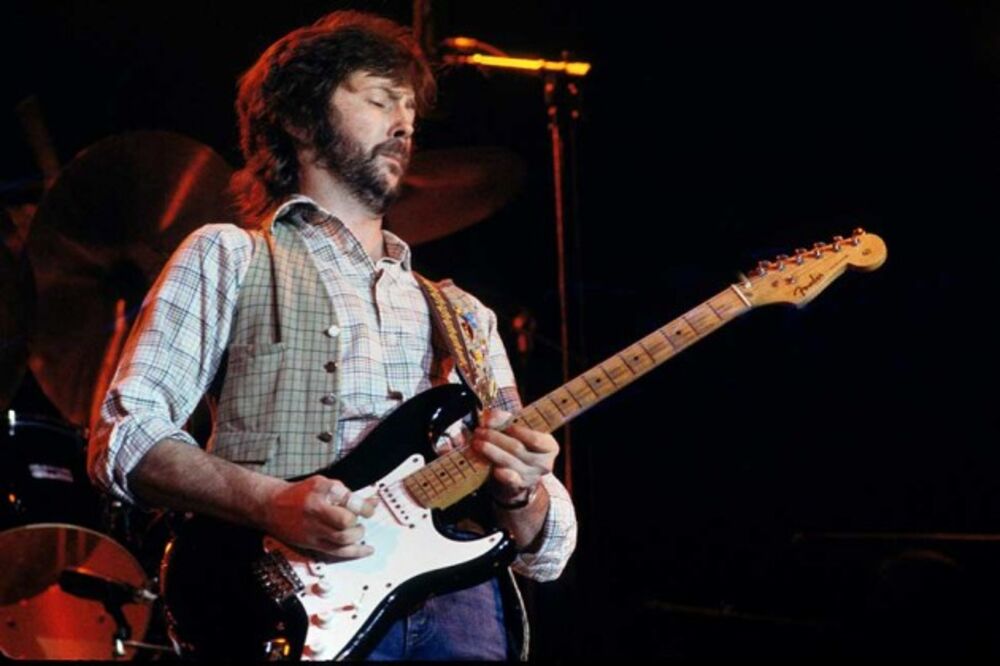
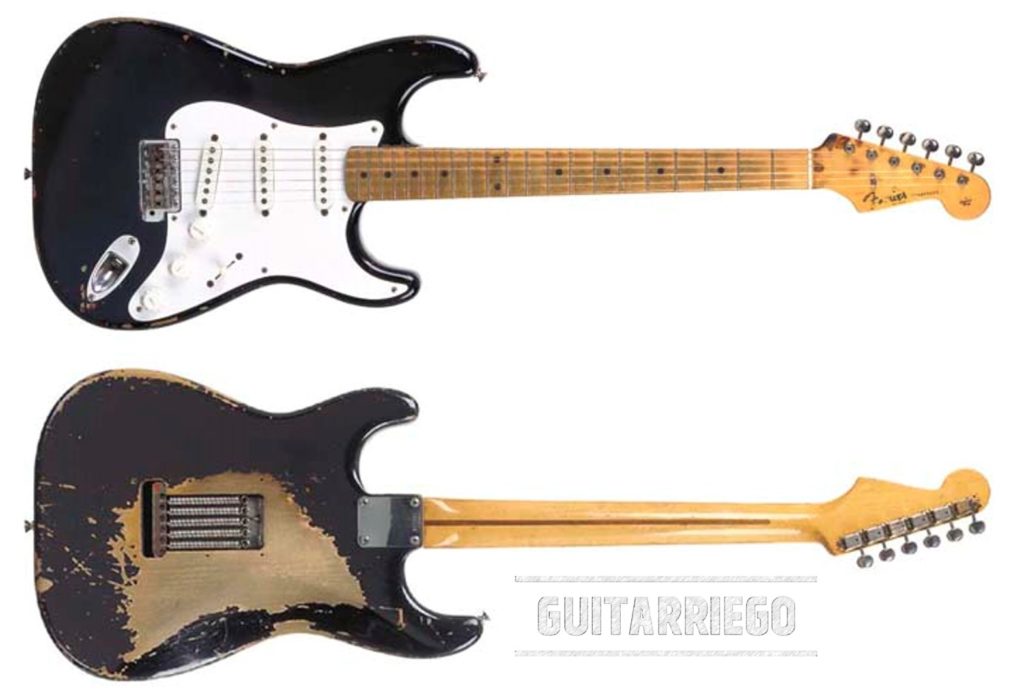
Eric built this guitar in around 1970 from different Fender Strats…here is Eric telling the story.
Eric Clapton: “I was in Nashville and I went into this shop called Sho-Bud where they had stacks of Fender Strats going for virtually nothing because they were so unfashionable and unwanted,”
“I bought a big pile of them all for a song – they were really cheap, like $300 or $400 each – and I took them home and gave them out. I gave Steve Winwood one, I gave Pete Townshend one, I gave George Harrison one and I kept a few, and I made Blackie out of a group of them. I took the pickups out of one, the scratchplate off another, the neck off another and I made my own guitar, like a hybrid guitar that had all the best bits from all these Strats.”
Blackie would be the main guitar used on every one of Eric’s albums for 15 years. During that time, Eric and Blackie would rack up an impressive number of hits, including “Cocaine,” “I Shot the Sheriff,” “Wonderful Tonight,” and “Lay Down Sally.”
in 2004, Eric worked with Christie’s to auction the legendary guitar off. The winner paid $959,000 for Blackie, with most of the proceeds again supporting Eric’s Crossroads Center.
This song is about as sleazy as you can get but I like it.
AC/DC lead guitarist Angus Young got the song title from the 1962 animated cartoon series Beany and Cecil. The Show first aired on ABC Television and only ran for one season until the 26 episodes shown were cast as repeats for the next five years until it was recreated in 1968.
The specific inspiration for the song name was the cartoon’s main villain, “Dishonest John,” who would carry around a business card that said, “Dirty Deeds Done Dirt Cheap. Holidays, Sundays, and Special Rates.”
Norman and Marilyn White, a couple from Libertyville, Illinois, sued the band for invasion of privacy after they were inundated with calls due to this song. Apparently, many AC/DC fans in the area dialed 3-6-2-4-3-6-8 (thinking the “hey!” as “eight”), which was their phone number. The couple claimed they received hundreds of “lewd, suggestive and threatening” phone calls, asking for various dirty deeds at low, low prices. The Whites asked for $250,000 in damages and demanded that the band re-record the song, but a judge ruled against them. The people with the bad luck to have 867-5309 had the same problem but they only had inquiries about Jenny.
The song was written by Bon Scott, Angus, and Malcolm Young. The album was released in Australia and in Europe in 1976. The album was released in America in 1981 after Scott’s death and after the popular Back in Black. It peaked at #4 on the Billboard Mainstream Rock Hits and #47 in the UK.
Lesley Gore, known for ’60s hits like “It’s My Party,” recorded this for the 2002 compilation album When Pigs Fly: Songs You Never Thought You’d Hear. Her version was produced by Mauro DeSantis, who worked with Cevin Soling on the track… I couldn’t find it on Youtube but click on that link. Lesley Gore channels her inner Bon Scott on this one…I didn’t like the music part as much but her singing was spot on.
From Songfacts
This song epitomizes AC/DC’s dangerous and mean sound, with Angus Young’s heavy guitar and Bon Scott’s leering, vocals that would have scared the living daylights out of any unsuspecting teenage Pop fans when this song first hit the airwaves (they did it on a national TV show in Australia called Countdown, which was usually frequented by acts like ABBA and Bucks Fizz).
This was recorded at Alberts Studios in Sydney, Australia in 1976 soon after the sessions that produced the Australian version of their TNT album.
Regarding the lyrics, “Just ring: 3-6-2-4-3-6,” this was an actual phone number in Australia at the time, and it also could describe the measurements of a very shapely woman: 36-24-36. A year later, the Commodores used the same measurements to describe a woman in their song “Brick House.” Sir Mix-a-Lot, however, scoffed at these measurements in his 1992 hit “Baby Got Back,” where he says: “36-24-36? Only if she’s 5’3.”
The ending is one of the most famous screams in rock history. For those wondering, it’s spelled: “Yaaaaaaaaaaarrrrrrrrrggghhhhhh!”
This was used in the Norm MacDonald movie Dirty Work. It is played while Norm’s character Mitch and his friend Sam are wrecking a building in an attempt to get it condemned.
On a 2008 episode of The Simpsons where they team up on a stakeout, we learn that Homer Simpson and the pious Ned Flanders have some common ground in their musical tastes. Homer likes AC/DC, and Ned likes their Christian tribute band: AD/BC, and their version of this song, “Kindly Deeds Done For Free.”
The song about murder for hire enjoyed a sales spike following drummer Phil Rudd being charged with trying to procure a murder in November 2014. The charge was soon dropped.
Dirty Deeds Done Dirt Cheap
If you’re havin’ trouble with the high school head He’s givin’ you the blues You want to graduate but not in ‘is bed Here’s what you gotta do Pick up the phone I’m always home Call me any time Just ring 36 24 36 hey I lead a life of crime
You got problems in your life of love You got a broken heart He’s double dealin’ with your best friend That’s when the teardrops start, fella Pick up the phone I’m here alone Or make a social call Come right in Forget about him We’ll have ourselves a ball
If you got a lady and you want her gone But you ain’t got the guts She keeps naggin’ at you night and day Enough to drive ya nuts Pick up the phone Leave her alone It’s time you made a stand For a fee I’m happy to be Your back door man
Little Feat guitarist/singer Lowell George wrote “Willin'” before the group was even formed. They never had mass commercial appeal but their music was so down to earth and the musicians in that band were great.
The song is about a truck driver in the American southwest who makes some extra cash smuggling cigarettes and transporting illegals across the border from Mexico. If you give him “weed, whites and wine,” he’s willin’ to do the job.
Lowell had cut his hand on a model airplane and he was heavily bandaged up while playing the solo. The keyboard player Bill Payne said George was bleeding all over his guitar when playing this. Lowell George and Ry Cooder are playing slide guitar on this song. They found Ry Cooder recording his debut album at the same studio that Little Feat were recording this song.
Little Feat’s producer Russ Titelman asked Cooder to come and play on some tracks. There was a lot of tension between Cooder and George, but that competitive streak was channeled into the song.
Little Feat were never very successful on the charts but many music fans love them. Along with music fans…many musicians from Led Zeppelin to Bonnie Raitt.
This originally appeared on Little Feat’s debut album (with Ry Cooder), but the version that has become famous was recorded for the follow-up, Sailin’ Shoes, in 1972. The original version has a faster tempo.
From Songfacts
The opening line, in which the narrator describes himself as being “warped by the rain,” originated in a conversation between George and drummer Richie Hayward. Hayward had used it to describe a rocking chair.
It’s likely that when George brought “Willin song was a reason for his departure, due to its drug references in the chorus. It is known that his leaving had something to do with his drug use, which Zappa heavily frowned upon. “I think Frank was both impressed and put off by the song because of the drug reference,” Bill Payne told Bud Scoppa. “He was somewhat conservative on certain levels. He was afraid of the very thing that bit the hippie movement in the ass, which was the craziness of what would happen to people when they got fried on drugs – like Charles Manson.”
More likely, it was George’s drug use that led to the parting.
Although the band never had a charting single, “Willin'” is arguably their best-known song. Their first two albums, which both included the track, flopped, but they found their stride with their third, Dixie Chicken, their first as a six-piece jazz-funk outfit (they were previously a country-rock quartet). They developed a reputation as a great live band, and “Willin'” was a concert favorite. As more people discovered the band, the song grew in popularity and even earned some airplay.
Little Feat split up in 1979 just months before Lowell George passed away. When they re-formed in 1987, guitarist Paul Barrere took the lead vocals on “Willin’.” He died in 2019.
Linda Ronstadt recorded this on her 1975 album Heart Like A Wheel. While Ronstadt is certainly versatile, it’s hard to imagine her at the wheel of a rig hauling freight (or contraband) across state lines.
Original version with Ry Cooder
Willin’
I been warped by the rain, driven by the snow I’m drunk and dirty don’t ya know, and I’m still, willin’ And I was out on the road late at night I’d seen my pretty Alice in every head light Alice, Dallas Alice
I’ve been from Tucson to Tucumcari Tehachapi to Tonapah Driven every kind of rig that’s ever been made Driven the back roads so I wouldn’t get weighed And if you give me weed, whites and wine And you show me a sign I’ll be willin’, to be movin’
Well I’ve been kicked by the wind, robbed by the sleet Had my head stoved in, but I’m still on my feet and I’m still, willin’ Now I smuggled some smokes and folks from Mexico Baked by the sun, every time I go to Mexico, and I’m still
And I been from Tucson to Tucumcari Tehachapi to Tonapah Driven every kind of rig that’s ever been made Driven the back roads so I wouldn’t get weighed And if you give me weed, whites and wine And you show me a sign I’ll be willin’, to be movin’
Yes it’s wore out but I still love it. One of my favorite lyrics comes from this song. I blew out my flip flop, Stepped on a pop top, Cut my heel had to cruise on back home. I don’t know why but I just love that line. When Buffett wrote this he wrote his career. He had hits before but this one changed everything.
I’ve seen Jimmy Buffett twice and it’s like going to a giant beach party. If you ever get a chance it’s a fun concert to go to. I’ve only owned one album by Buffett. “Songs You Know By Heart” a greatest hits collection released in 1985. It has everything I like except one song…Door Number 3.
Buffett wrote this song in Key West, Florida, after he finished a tour with his group, the Coral Reefer Band. They had just toured Texas, and Buffett spent some time drinking margaritas in a Mexican restaurant with a friend before going back to Key West. When he got there, he sat at the Old Anchor Inn watching a traffic jam on the roads and used it as inspiration as he composed the song.
Buffett recorded this song at Criteria Studios in Miami with producer Norbert Putnam.
The song peaked at #8 in the Billboard 100 and #4 in Canada in 1977.
Producer Norbert Putnam: “One day in the studio, he comes in and starts telling me about a day he had in Key West. He was coming home from a bar and he lost one of his flip-flops and he stepped on a beer can top and he couldn’t find the salt for his Margarita. He says he’s writing lyrics to it and I say ‘That’s a terrible idea for a song.’ He comes back in a few days later with ‘Wasted Away Again In Margaritaville’ and plays it and right then everyone knows it’s a hit song. Hell, it wasn’t a song – it was a movie.”
From Songfacts
Regarding the success of this song, Buffett said: “I was lucky enough to get my thumb on the pulse beat of what people perceived the tropics to be.”
“Margaritaville” has come to symbolize a carefree Caribbean lifestyle – what some in Key West call “Keys disease.” For many, the only time they experience this way of living is on vacations or at Jimmy Buffett concerts. Buffett has a lot of fans who work very hard, make a lot of money, and use his music as an escape.
Buffett was born in Mississippi and raised in Alabama. He didn’t come to Key West, Florida, until 1971, when he was 24 years old. As a transplant, he had a perspective on the area that natives don’t, which helped him capture the ethos in this song.
Buffett has always loved sailing, and when this song became a hit, he was thrilled because he could buy his own boat. He has said that even if he was a one-hit wonder, he would have been happy with his boat sailing around the islands.
When Buffett sings about how he “Stepped on a pop-top” and cut his heel, requiring a cruise back home to enjoy a margarita, he’s referring to pull-off tops from soda and beer cans that caused a litany of minor injuries as they were often thrown on the ground and then stepped on by poor souls who blew out their flip-flops. In the late ’70s, the pop-tops were replaced with much safer non-removable round “pop-down/pop-in” tabs.
Buffett owns Margaritaville stores in Key West, New Orleans, Jamaica, Charleston, and Orlando. They sell clothing and other items inspired by the song.
Former Van Halen vocalist Sammy Hagar covered this for his 2013 Sammy Hagar & Friends album. His version is a duet with Toby Keith. He told Rolling Stone that it took him a long time to figure out that the country star would be a good fit for his version. “He’s like my closest friend,” said Hagar, “in country, for sure, and one of the most typical Cabo Wabo heads. We’ve sat in Cabo Wabo and played ‘Margaritaville’ there 35 times, if not more. And to not realize until after I cut ‘Margaritaville’ that I should get Toby to do the duet on it?”
This cover is also included as a bonus track on the Deluxe version of Toby Keith’s Drinks After Work album.
Prior to this Top 10 hit, Buffett’s highest-charting single on the Hot 100 was “Come Monday,” which peaked at #30 in 1974. “Margaritaville” also landed at #13 on the Country tally.
In 2016, this was inducted into the Grammy Hall of Fame.
This is referenced in Blake Shelton’s 2004 hit “Some Beach,” which finds Shelton “Singing ‘Margaritaville’ and minding my own.”
In 1999, Buffett joined Alan Jackson in a recording of this for Jackson’s album Under The Influence. In Buffett’s original version, he knows wasting away in Margaritaville is his own fault, but in Jackson’s version the singers blame each other before they finally admit “it’s our own damn fault.”
In The Simpsons episode “Simpsoncalifragilisticexpiala(Annoyed Grunt)cious” (1997), this is sung by the nanny Shary Bobbins and Barney Gumble.
It was also used in these TV shows:
Zoey’s Extraordinary Playlist (“Zoey’s Extraordinary Neighbor” – 2020) 9-1-1 (“Triggers” – 2019) Hawaii Five-0 (“Make Me Kai” – 2017)
And in these movies:
The Angry Birds Movie 2 (2019) The Beach Bum (2019) Anger Management (2003)
Margaritaville
Nibblin’ on sponge cake Watchin’ the sun bake All of those tourists covered with oil Strummin’ my six string on my front porch swing Smell those shrimp they’re beginnin’ to boil
Wastin’ away again in Margaritaville Searchin’ for my long lost shaker of salt Some people claim that there’s a woman to blame But I know it’s nobody’s fault
Don’t know the reason Stayed here all season Nothing to show but this brand new tattoo But it’s a real beauty A Mexican cutie How it got here I haven’t a clue
Wastin’ away again in Margaritaville Searchin’ for my lost shaker of salt Some people claim that there’s a woman to blame Now I think hell it could be my fault
I blew out my flip flop Stepped on a pop top Cut my heel had to cruise on back home But there’s booze in the blender And soon it will render That frozen concoction that helps me hang on
Wastin’ away again in Margaritaville Searchin’ for my lost shaker of salt Some people claim that there’s a woman to blame But I know it’s my own damn fault Yes and some people claim that there’s a woman to blame And I know it’s my own damn fault
This is my 2000th post. I am amazed I made it to 25…much less 2000. So let the bells ring and the chorus sing! So…lets see if I can make it to 2001!
The song was on Their Satanic Majesties Request a psychedelic album released in the Summer of Love in 1967. It’s an album…one of many that was inspired by the Beatles Sgt Peppers album. The album was not critically praised when it was released. It still gets mixed reviews now. I do think it is much better than it got credit for back in 1967. They did the right thing though by continuing on with blues/rock. They would never experiment this much again in the studio.
The cover art was something new. After The Beatles raised the bar with the cover of Sgt Pepper…the Stones used Michael Cooper (who worked on the Sgt Pepper cover)to make a 3d cover. If you look closely you can see The Beatles faces on the album. The Stones were returning the favor…the Beatles had a doll wearing a shirt that said “Welcome the Rolling Stones Good Guys” on the Sgt Peppers album.
The doll on the Sgt Pepper Cover
The song has some different melodies melded together. The album had two 2000 songs…2000 Man and 2000 Light Years From Home. It fit in with the futuristic psychedelic vision.
2000 Man’ was covered by Kiss on their 1979 record Dynasty. Kiss did a good job on the cover. Personally I like both versions. Kiss did a straight ahead rock version but I also like the nuances that the Stones included on the original.
Mick Jagger:There’s a lot of rubbish on Satanic Majesties. Just too much time on our hands, too many drugs, no producer to tell us, “Enough already, thank you very much, now can we just get on with this song?” Anyone let loose in the studio will produce stuff like that. There was simply too much hanging around. It’s like believing everything you do is great and not having any editing.
It’s really like sort of got-together chaos. Because we all panicked a little, even as soon as a month before the release date that we had planned, we really hadn’t got anything put together. We had all these great things that we’d done, but we couldn’t possibly put it out as an album. And so we just got them together, and did a little bit of editing here and there.
2000 Man
Well, my name is a number A piece of plastic film And I’m growin’ funny flowers In my little window sill Dont you know I’m a 2,000 man And my kids, they just don’t understand me at all Well my wife still respects me I really misused her I am having an affair With the Random computer Don’t you know I’m a 2,000 man And my kids, they just don’t understand me at all Oh daddy, proud of your planet Oh mummy, proud of your sun Oh daddy, proud of your planet Oh mummy. proud of your sun Oh daddy, your brain’s still flashin Like it did when you were young Or do you come down crashin’ Seeing all the things you’d done All was a big put on Oh daddy, proud of your planet Oh mummy. proud of your sun Oh daddy, proud of your planet Oh mummy. proud of your sun Oh daddy, proud of your planet Oh mummy. proud of your sun Oh daddy, proud of your planet Oh mummy. proud of your sun And you know who’s the 2000 man And your kids they just won’t understand you at all
Merry Christmas everyone…this is a repost from last year but I have updated it another year older…and a new one just begun.
My favorite Christmas song hands down. Yea I’m biased because I am a Beatles fan but this one is great.
I think of High School when I hear this song. Our school had a Christmas poster contest and a buddy and I made a poster as a joke and wrote “So this is Christmas and what have you done another year over, and a new one just begun” and won first prize…with an assist from John.
John’s voice goes so well with this song. The song peaked at #2 in the UK charts in 1971….the song did peak at #42 in the Billboard 100 in 2019.
John Lennon and Yoko Ono wrote this in their New York City hotel room and recorded it during the evening of October 28 and into the morning of the 29th, 1971 at the Record Plant in New York. It was released in the US for Christmas but didn’t chart. The next year, it was released in the UK, where it did much better, charting at #2. Eventually, the song became a Christmas classic in America, but it took a while.
Lennon originally wrote this as a protest song about the Vietnam War, and the idea “that we’re just as responsible as the man who pushes the button. As long as people imagine that somebody’s doing it to them and that they have no control, then they have no control.”
The children’s voices are the Harlem Community Choir, who were brought in to sing on this track. They are credited on the single along with Yoko and The Plastic Ono Band.
From Songfacts.
John and Yoko spent a lot of time in the late ’60s and early ’70s working to promote peace. In 1969, they put up billboards in major cities around the world that said, “War is over! (If you want it).” Two years later this slogan became the basis for this song when Lennon decided to make a Christmas record with an anti-war message. John also claimed another inspiration for writing the song: he said he was “sick of ‘White Christmas.'”
Lennon and Ono produced this with the help of Phil Spector. Spector had worked on some of the later Beatles songs and also produced Lennon’s “Instant Karma.” It was not Spector’s first foray into Christmas music: he and his famous session stars (including a 17-year-old Cher) spent six weeks in the summer of 1963 putting together A Christmas Gift for You from Phil Spector, featuring artists like The Ronettes and Darlene Love. Unfortunately, the album was released on November 22, 1963, which was the same day US president John F. Kennedy was assassinated. The album sold poorly as America was focused on news of the killing.
This was originally released on clear green vinyl with Yoko Ono’s “Listen, The Snow Is Falling” as the B-side.
At the beginning of the song, two whispers can be heard. Yoko whispers: “Happy Christmas, Kyoko” (Kyoko Chan Cox is Yoko’s daughter with Anthony Cox) and John whispers: “Happy Christmas, Julian” (John’s son with Cynthia). >>
This being a Phil Spector production, four guitarists were brought in to play acoustic guitars: Hugh McCracken (who had recently played on the Paul McCartney album Ram), Chris Osbourne, Stu Scharf and Teddy Irwin. According to Richard Williams, who was reporting on the session for Uncut, when Lennon taught them the song, he asked them to “pretend it’s Christmas.” When one of the guitarists said he was Jewish, John told him, “Well, pretend it’s your birthday then.”
As for the other personnel, Jim Keltner played drums and sleigh bells, Nicky Hopkins played chimes and glockenspiel. Keltner and Hopkins were part of Lennon’s Plastic Ono Band, and a third member, Klaus Voorman, was supposed to play bass on this track, but got stuck on a flight from Germany. One of the guitarists brought in for the session covered the bass – which one nobody seems to remember.
John Lennon was shot and killed less than three weeks before Christmas in 1980. The song was re-released in the UK on December 20 of that year, reaching #2 (held off the top spot by “There’s No One Quite Like Grandma” by St. Winifred’s School Choir). It made the UK Top 40 again in 1981 (#28), 2003 (#32) and 2007 (#40). Also in 2003, a version sung by the finalists of the singing competition Pop Idol reached #5.
The Fray were the first to chart with this song in America, reaching #50 in 2006; Sarah McLachlan’s version went to #107 that same year. Other artists to cover it include The Alarm, The Cranes, The December People, and Melissa Etheridge (in a medley with “Give Peace a Chance”).
The Australian artist Delta Goodrem also covered it in 2003, taking it to #1 in her native country as a double-A-side single with “Predictable.”
This didn’t appear on an album until 1975, when it was included on Lennon’s Shaved Fish singles compilation. Most Christmas songs are compiled with other songs of the season, but Shaved Fish listeners got to hear it year round.
Happy Xmas (War is Over)
(Happy Christmas Kyoko) (Happy Christmas Julian)
So this is Christmas And what have you done Another year over And a new one just begun And so this is Christmas I hope you have fun The near and the dear one The old and the young
A very Merry Christmas And a happy new year Let’s hope it’s a good one Without any fear
And so this is Christmas For weak and for strong For rich and the poor ones The world is so wrong And so happy Christmas For black and for white For yellow and red ones Let’s stop all the fight
A very Merry Christmas And a happy new year Let’s hope it’s a good one Without any fear
And so this is Christmas And what have we done Another year over A new one just begun And so happy Christmas We hope you have fun The near and the dear one The old and the young
A very Merry Christmas And a happy new year Let’s hope it’s a good one Without any fear War is over, if you want it War is over now














 PowerPop... An Eclectic Collection of Pop Culture