This is one Stones song that you hear John Lennon and Paul McCartney singing backup on. Mick Jagger would sing backup on the Beatles “Baby I’m A Rich Man.”
Mick Jagger and Keith Richards wrote this after they were arrested along with Brian Jones on drug charges stemming from a raid on Keith’s house, Redlands, on February 12, 1967. This song was a thank you message to the fans who supported Jagger and Richards through their arrest – note the jail door shutting at the first.
I somehow had the original single to this when I was a kid…I haven’t a clue how I got it.
This is just a personal opinion but I do believe Mick and Keith edited this video and Brian came out looking terrible in it. I have to wonder if they did it on purpose. I’m probably way off base but things were not going well for Brian Jones at this time…and yes he made a lot of his own trouble. He was being hounded by the police…with some of it not justified. Mick and Keith could have left those bad shots of Brian high out of the video…it couldn’t have help him out.
The song peaked at #8 in the UK and #50 in the Billboard 100 in 1967.
From Songfacts
This was also a “Thank You” to The Beatles, The Who and the editorial page of the London Times, who supported and spoke out in favor of the Stones after Jagger, Richards and Jones were arrested on drug charges. The Who recorded and released a double A-side of the Stones’ “The Last Time” and “Under My Thumb” to keep the Stones’ music alive while they were going through their court and prison difficulties.
The Rolling Stones lead guitarist at the time, Brian Jones, played a Mellotron, which was an early synthesizer, on this track. Jones was a founding member of the band, but the more popular they got, the more his drug habit affected him. By 1969 he was out of the band’s good graces and was fired, then found dead in his swimming pool less than a month later. “We Love You” is a testament to his influence on the band. “Despite being off his head on Mandrax by this time, Brian manages to arrange the track with that syncopated layer of psychedelic madness,” says Nick Reynolds, co-producer of the documentary Rolling Stone: Life and Death of Brian Jones. “Pure genius.”
The Stones made a promotional film for this song that was banned by the BBC but shown elsewhere. It was directed by Peter Whitehead and based on The Trials Of Oscar Wilde with Mick Jagger as Oscar, Keith Richards as the Marquis and Marianne Faithfull as Bosie.
We Love You
We don’t care if you only love we We don’t care if you only love we We love you, we love you, and we hope That you will love we too We love they, we love they, and We want you to love they too Ah
We don’t care if you hound we and Love is all around we Love can’t get our minds off We love you, we love you
You will never win we Your uniforms don’t fit we We forget the place we’re in ‘Cause we love you We love you, of course, we do
I love you, I love you And I hope that you won’t prove wrong too We love you, we do, we love you, we do
We have here a Stones- Beatles collaboration…a slight one with Mick Jagger is said to be singing backups to this song.The John and Paul returned the favor on the Stones song We Love You.
I first heard this on the Magical Mystery Tour album. I love the bass sound that Paul got on this song.
The cool sounding instrument on this song is the the Clavioline which John plays. It was a forerunner to the synthesizer.
John Lennon and Paul McCartney wrote parts of this separately and combined it to make one song… something they would repeat on “A Day In The Life.” At one point, the song was called “One Of The Beautiful People.”
On August 7th, 1967, just three weeks after the single was released in the US, George Harrison and entourage decided to make a brief visit to the Haight-Ashbury district of San Francisco, California, to visit the highly publicized “beautiful people” of the area and played the song on an acoustic after one was produced from a growing crowd. George didn’t stay too long.
Near the end of the song legend has it that John sings “Baby, you’re a rich f*g jew” as a reference to Brian Epstein toward the end of the song. Whether it is…it’s hard to tell. Whatever is in your head when you listen…it can become that. I’ve never read where John admitted it…and if he would have done that…I don’t see him shying away from admitting it.
Eddie Kramer…future producer for the Jimi Hendrix played the vibraphone.
From Songfacts
This song is about how everybody can have the things that matter, and it has nothing to do with material possessions. The Beatles were rich, but they claimed that money was not that important to them.
It was rumored that The Beatles sang “Baby you’re a rich fag Jew” as a slur to their manager, Brian Epstein. He was rich, gay and Jewish, but The Beatles never said this was about him. Epstein died later in that year when he overdosed on sleeping pills.
The Beatles started working on this song with the intention of using it on the Yellow Submarine soundtrack. It was used in the 1968 movie, but didn’t appear on the soundtrack.
Mick Jagger sang backup. McCartney and Lennon returned the favor by singing on The Stones’ “We Love You.”
Brian Jones, the guitarist from The Rolling Stones, played an oboe on this. A few years earlier, Lennon and McCartney gave The Stones a song called “I Wanna Be Your Man,” which was one of their first hits, and helped convince Mick Jagger and Keith Richards that they should write their own songs.
This was released as the B-side of “All You Need Is Love.”
Lennon played clavioline and piano on the song and George Harrison played tambourine. There is actually no guitar on this song at all. Paul played bass and piano as well.
This was released in mono, but in 1971 it was remixed in stereo along with several other tracks for a German version of Magical Mystery Tour. The stereo version is the one that is now the most common.
The comedy rap trio The Fat Boys performed this song in their 1987 movie Disorderlies.
In 2010, this song was used at the end of the movie The Social Network to punctuate the raging financial success of the guys who invented Facebook. It was one of the few Beatles songs licensed to a movie in its original form, meaning the Beatles version was used. Apple Corp. is very particular about where Beatles songs are used.
At one point in this song, The Beatles ask, “How does it feel to be one of the beautiful people?” The phrase “beautiful people” was used a lot in 1967 as a derisive way to describe the social elite. A popular book by Marilyn Bender was published that year called The Beautiful People: a Candid Examination of a Cultural Phenomenon – the Marriage of Fashion and Society in the ’60s.
Baby You’re A Rich Man
How does it feel to be One of the beautiful people Now that you know who you are What do you want to be And have you traveled very far? Far as the eye can see
How does it feel to be One of the beautiful people How often have you been there Often enough to know What did you see when you were there Nothing that doesn’t show
Baby you’re a rich man Baby you’re a rich man Baby you’re a rich man, too You keep all your money in a big brown bag Inside a zoo, what a thing to do Baby you’re a rich man Baby you’re a rich man Baby you’re a rich man, too
How does it feel to be One of the beautiful people Tuned to a natural E Happy to be that way Now that you’ve found another key What are you going to play
Baby you’re a rich man Baby you’re a rich man Baby you’re a rich man, too You keep all your money in a big brown bag Inside a zoo, what a thing to do Baby, baby, you’re a rich man Baby you’re a rich man Baby you’re a rich man, too, oh Baby you’re a rich man Baby you’re a rich man (baby) Baby you’re a rich man, too Baby you’re a rich man Baby you’re a rich man Baby you’re a rich man, too
If I ventured in the slipstream Between the viaducts of your dream Where immobile steel rims crack And the ditch in the back roads stop Could you find me? Would you kiss-a my eyes?
It’s really a crime to focus on one song off of this album. I really shouldn’t separate it from the album but this is the opening track to the great album Astral Weeks. Some have this album as the number 1 album of all time.
In 1966, Morrison visited the Belfast, Ireland, home of his friend, painter Cecil McCartney… He’d been working on some paintings themed around astral projection, and they caught Van’s attention and he tried to translate the visuals into a song.
John Payne the flautist who had been working with Morrison, said it was the first time he had ever heard it, and that although the song may sound rehearsed it was actually captured from the only take
This song acted as the hook for me for the rest of the album.
Van Morrison described the title:“like transforming energy, or going from one source to another with it being born again like a rebirth. I remember reading about you having to die to be born. It’s one of those songs where you can see the light at the end of the tunnel and that’s basically what the song says.”
Astral Weeks
If I ventured in the slipstream Between the viaducts of your dream Where immobile steel rims crack And the ditch in the back roads stop Could you find me? Would you kiss-a my eyes? To lay me down In silence easy To be born again To be born again From the far side of the ocean If I put the wheels in motion And I stand with my arms behind me And I’m pushin’ on the door Could you find me? Would you kiss-a my eyes? To lay me down In silence easy To be born again To be born again There you go Standin’ with the look of avarice Talkin’ to Huddie Ledbetter Showin’ pictures on the wall Whisperin’ in the hall And pointin’ a finger at me There you go, there you go Standin’ in the sun darlin’ With your arms behind you And your eyes before There you go Takin’ good care of your boy Seein’ that he’s got clean clothes Puttin’ on his little red shoes I see you know he’s got clean clothes A-puttin’ on his little red shoes A-pointin’ a finger at me And here I am Standing in your sad arrest Trying to do my very best Lookin’ straight at you Comin’ through, darlin’ Yeah, yeah, yeah If I ventured in the slipstream Between the viaducts of your dreams Where immobile steel rims crack And the ditch in the back roads stop Could you find me Would you kiss-a my eyes Lay me down In silence easy To be born again To be born again To be born again In another world In another world In another time Got a home on high Ain’t nothing but a stranger in this world I’m nothing but a stranger in this world I got a home on high In another land So far away So far away Way up in the heaven Way up in the heaven Way up in the heaven Way up in the heaven In another time In another place In another time In another place Way up in the heaven Way up in the heaven We are goin’ up to heaven We are goin’ to heaven In another time In another place In another time In another place In another face
This song was #1 on the Billboard 100, Canada, The UK, and New Zealand on January 15th 1967… That day since we are talking about it…the first Superbowl was played when the Packers beat the Chiefs.
I grew up with this song so it is ingrained in the back of my mind. That organ intro will stick with you. Say what you want to about the Monkees…they produced some of the great pop songs of the sixties…no matter how much Jann Wenner (Rolling Stone Magazine) snubs them for the Rock and Roll Hall of Fame.
Every Monkees post I usually say something like that…what Wenner doesn’t get, among many things, is that the Monkees influenced a couple of generations of musicians (REM, XTC included). Like other bands of that time in California…studio musicians played on their first two albums and Wenner cannot forget that. They became a band after being cast together. They started to play on the 3rd album and continued with hits.
This was The Monkees second single, after “Last Train To Clarksville.” It was released during the first season of their TV show.
Neil Diamond wrote this song. He had his first big hit earlier in 1966 with “Cherry, Cherry,” which got the attention of Don Kirshner, who was looking for material for The Monkees. Kirshner was sold on “I’m A Believer,” and as part of the deal, allowed Diamond to record the song as well. Diamond’s version was released on his 1967 album Just For You. The Monkees version benefited from exposure on their television series.
Guitarist Michael Nesmith didn’t believe this would be a hit, complaining to the producer, Jeff Barry, “I’m a songwriter, and that’s no hit.” Jeff Barry banned him from the studio while Micky Dolenz recorded his lead vocal…Mr. Nesmith was wrong about this one.
Neil Diamond: “I was thrilled, because at heart I was still a songwriter and I wanted my songs on the charts. It was one of the songs that was going to be on my first album, but Donny Kirshner, who was their music maven, hears ‘Cherry, Cherry’ on the radio and said, ‘Wow, I want one like that for The Monkees!’ He called my producers, Jeff Barry and Ellie Greenwich – ‘Hey, does this kid have any more?’ And they played him the things I had cut for the next album and he picked ‘I’m A Believer,’ ‘A Little Bit Me, A Little Bit You’ and ‘Look Out (Here Comes Tomorrow),’ and they had some huge hits. But the head of my record company freaked. He went through the roof because he felt that I had given #1 records away to another group. I couldn’t have cared less because I had to pay the rent and The Monkees were selling records and I wasn’t being paid for my records.”
From Songfacts
The Monkees sang on this, but did not play any instruments. The producers used session musicians because they were not convinced The Monkees could play like a real band. This became a huge point of contention, as the group fought to play their own songs.
Monkees drummer Micky Dolenz sang lead on this. Dolenz also handled lead vocals on “Pleasant Valley Sunday,” “Mary Mary” and “(I’m Not Your) Steppin’ Stone.”
Neil Diamond had intended the song to be recorded by the Country artist Eddy Arnold, and was surprised when record executive Don Kirshner passed it instead to The Monkees.
A cover version by Smash Mouth was featured in the 2001 movie Shrek and went to #25 in the US. Diamond wrote the song “You Are My Number One” for Smash Mouth’s next album.
The single had an advance order of 1,051,280 copies and went gold within two days of release.
British singer-songwriter and Soft Machine founding member Robert Wyatt had a #29 in the UK in 1974 with an intense cover version. His rendition featured Andy Summers (later of The Police) on guitar, and drums by Nick Mason of Pink Floyd, who also produced the recording.
Wyatt told Q Magazine that he wanted to make a point with his cover. “I was very uncomfortable with having fans who said ‘Your music is so much better than all that banal pop music,'” he said. “It sounds like a socialist thing to say but pop music is the music of the people. It’s the folk music of the industrial age. If you don’t respect popular culture. You don’t respect people, in which case your political opinion is of no great value.”
Dolenz has painful memories of performing this on tour. Literally painful. He told Entertainment Weekly in 2016. “I do remember lots of snatches of touring back then. Unbelievable. No monitors. Screaming. Screaming, screaming. [When we played ‘I’m a Believer’] I couldn’t hear myself. I just had to pound away. Even to this day, I sing with my eyes closed, because I had to close my eyes and hit myself in the leg to keep time on the drums. I had a big bruise. [Laughs]”
I’m A Believer
I thought love was only true in fairy tales Meant for someone else but not for me Love was out to get me That’s the way it seemed Disappointment haunted all of my dreams
Then I saw her face, now I’m a believer Not a trace of doubt in my mind I’m in love I’m a believer, I couldn’t leave her if I tried
I thought love was more or less a giving thing Seems the more I gave the less I got What’s the use in tryin’ All you get is pain? When I needed sunshine, I got rain
Then I saw her face, now I’m a believer Not a trace of doubt in my mind I’m in love I’m a believer, I couldn’t leave her if I tried
Oh
Oh, love was out to get me Now, that’s the way it seemed Disappointment haunted all of my dreams
Then I saw her face, now I’m a believer Not a trace of doubt in my mind I’m in love I’m a believer, I couldn’t leave her if I tried
Yes, I saw her face, now I’m a believer Not a trace of doubt in my mind Said, I’m a believer, yeah, yeah, yeah, yeah, yeah, yeah (I’m a believer) Said, I’m a believer, yeah (I’m a believer) I said, I’m a believer, yeah (I’m a believer)
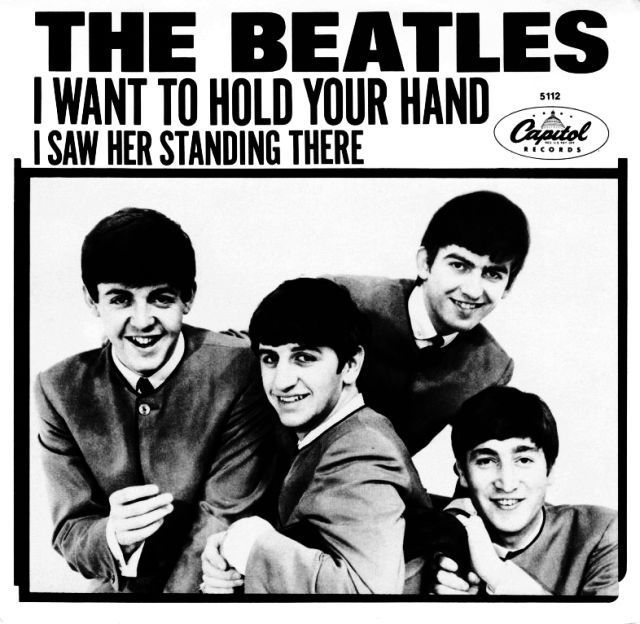
This helped start the modern rock era. No British rock act had dominated in America before the Beatles. Cliff Richard had tried and failed but with this song and an appearance on the Ed Sullivan Show…The Beatles kicked down the door and started the British Invasion and the Stones, Kinks, and Who would soon follow.
Rock and Roll can be divided up into two eras… pre Beatles and post Beatles. Everything would change after this. I bought an amp from a long time country studio musician and he told me that the day after he heard this on Ed Sullivan the world changed. Not just music but everything…music, thoughts, aspirations, and hair of course. Within weeks of this song hitting number 1 there were bands forming in every neighborhood in America. Guitars were bought, hair lengths were being tested, and a huge urge to learn everything British.
I always hold this song up to why vinyl is the way to listen to some records at times. All the CD versions I’ve heard of this song sound rather flat…when I hear the 45 vinyl single the song jumps out at you. It changes the whole dynamic of the song. After hearing the single the way it was meant to be heard… you can see why this song changed a lot of things. It was maybe the most important single they ever released…it may have had the biggest impact at least in America.
It is said that John and Paul wrote this with an America’s sound in mind. They must have guessed right. This song preceded the Beatles trip here at number 1. Lennon liked the melody so much that he talked about doing something with it again til his death.
This was played on the Washington, DC radio station WWDC before it was released in America by a DJ named Carroll Baker, who got the record from a stewardess. It was a huge hit with his listeners and prompted Capitol Records to release the song ahead of schedule – they planned to issue it on January 13, 1964.
The Beatles were in Paris and celebrated madly when they found out they were #1 in America. They came to America for the first time on February 7, 1964, greeted at the airport by screaming fans. “I Want To Hold Your Hand” was the #1 song in the country at that time, and it stayed on top for seven weeks, until their next single, the re-released “She Loves You,” replaced it.
Bob Dylan thought the line “I can’t hide” was “I get high,” and a reference to marijuana. He was surprised to learn they had never tried pot, and became part of Beatles lore when he introduced them to it.
At times John Lennon realized the crowds The Beatles played to were so loud they really couldn’t hear them sing, so sometimes instead of singing the line, “I want to hold your hand,” he would say, “I want to hold your gland” as a reference to women’s breasts…and people wonder why Lennon is my favorite Beatle!
The song peaked at #1 in the Billboard 100, Canada, UK, New Zealand, and probably on Mars also in 1964.
From Songfacts
This was the first Beatles song to catch on in America. In 1963, the Beatles became stars in England, but couldn’t break through in the US. They couldn’t get a major label to distribute their singles in America, so their first three singles there, “Please Please Me,” “From Me to You” and “She Loves You,” were issued on small labels and flopped, even though they were hits in England.
Late in 1963, American news outlets started reporting on this British sensation, and interest in the group started to rise. Capitol Records took notice and released “I Want To Hold Your Hand” Stateside on December 26. The song rose up the chart, and on February 1, 1964, hit #1. It sold better in the first 10 days of release in the US than any other British single, and remains the best-selling Beatles single in the United States, moving over 12 million copies.
Conquering the US was, and still is, a big deal for British bands. Many groups that are huge in the UK (Oasis, Blur) never really catch on in America. • John Lennon and Paul McCartney wrote this in Jane Asher’s basement. Asher was an actress who became Paul’s first high-profile girlfriend. After appearing in several movies, TV shows and stage productions, Asher became an authority on baking, and has her own business selling party cakes and supplying baking and decorating equipment. She and Paul broke up in 1968.
Jane had a brother named Pete Asher who teamed up with Gordon Waller to form the duo Peter & Gordon; McCartney wrote their hit single “A World Without Love.” Pete recalled in a 2010 interview with Gibson.com the two Beatles penning this song at his home: “My mother had a practice room that she used to give private oboe lessons when she wasn’t teaching at The Royal Academy, where she was a professor. There was just a piano, and an upright chair and a sofa. Paul used that room to write in, from time to time. One afternoon John came over, while I was upstairs in my room. The two of them were in the basement for an hour or so, and Paul called me down to listen to a song they had just finished. I went downstairs and sat on the sofa, and they sat side by side, on the piano bench. That’s where they played ‘I Want to Hold Your Hand’ for the first anywhere. They asked me what I thought. I said, ‘I think it’s very good.'” [laughs] •
The Beatles performed this on their first two Ed Sullivan Show appearances, which took place February 9 and 16, 1964. There was already a media frenzy around The Beatles, which was amplified when millions saw them on Sullivan’s show. The Beatles were booked for the show before they had a hit in the US, so they actually got paid less than many other guests for their appearance. •
• This was one of John Lennon’s favorite Beatles songs. It starts with a falling melody, which is typical of Lennon’s songwriting, and ends with a cadence with a quarter-interval: “I’ll think you’ll understand.” That quarter-interval cadence you can even hear in Lennon’s first bit of “From Me to You” and in “Tomorrow Never Knows.” McCartney most often uses second-intervals. Also typically Lennon is the sudden octave-run, “Haaaaand…” The same octave-run you can hear in the end of the middle part in Lennon’s “Please Please Me”: “To reason with youuuuuu…” Also note that the beginning of the melody in the middle part is almost the same melody as the beginning of the middle part in “Don’t Let Me Down.”
Two parody groups made answer songs to this in 1964: “I’ll Let You Hold My Hand” by The Bootles and “Yes, You Can Hold My Hand” by The Beatlettes.
This was the first Beatles song recorded on 4-track equipment. Some of their first songs were in mono.
The Beatles also cut a German version called “Komm Gib Mir Deine Hand.” They picked up some German while playing The Star Club in Hamburg in 1962.
In the 1960s it wasn’t uncommon for British stars to record new versions of their hits in other languages. The idea was to increase airplay on continental stations and to get a hit before an indigenous artist recorded a version in the local tongue. On January 29, 1964, The Beatles went into the Pathé & Marconi Studios in Paris and recorded “I Want To Hold Your Hand” and “She Loves You” (“Sie Liebt Dich”) in German. The lyrics had been hurriedly translated by a Luxembourger named Camillo Felgen, who was then a program director at Radio Luxembourg. As well, apart from their recording of “My Bonnie” in the early ’60s, this was the only time The Beatles recorded in another language. In addition it was the sole occasion on which they recorded outside London.
When this hit #1 in the US, it was the first time a British group topped the chart there since 1962, when “Telstar” by The Tornados did it. Until The Beatles came along, most British groups that had hits in America came and went pretty quickly. The Beatles kicked off the British Invasion, leading to a lengthy occupation on the charts for acts like The Rolling Stones, The Kinks and The Who as well as The Beatles.
It was the youth who discovered The Beatles, and while young people can be easily manipulated through hype and image, in the case of The Beatles it was the music that drew them in. An American girl Sanda Stewart, 15 years old in spring 1964 (according to Hunter Davies in his book Beatles) said: “I was one day in a shop with my mother when I suddenly heard ‘I Want to Hold Your Hand’ on the car radio. Such a special sound! I could never stop thinking about it. No song has effected me on that way. Several other girls in school had reacted in the same way. We saw the Beatles on photos and thought they were ugly. But their music was fantastic.”
This song was used in the movie Across the Universe at a much slower tempo.
A fairly straightforward and simple Beatles song, this one still has some musical complexity that foreshadowed what was to come. “The middle eight of that does something,” Tony Banks of Genesis explained. “The way the key changes at that point is something I hadn’t heard before.”
I Want To Hold Your Hand
Oh yeah, I’ll tell you somethin’ I think you’ll understand When I say that somethin’ I want to hold your hand I want to hold your hand I want to hold your hand
Oh please, say to me You’ll let me be your man And please, say to me You’ll let me hold your hand Now, let me hold your hand I want to hold your hand
And when I touch you I feel happy inside It’s such a feelin’ that my love I can’t hide I can’t hide I can’t hide
Yeah, you got that somethin’ I think you’ll understand When I say that somethin’ I want to hold your hand I want to hold your hand I want to hold your hand
And when I touch you I feel happy inside It’s such a feelin’ that my love I can’t hide I can’t hide I can’t hide
Yeah, you got that somethin’ I think you’ll understand When I feel that somethin’ I want to hold your hand I want to hold your hand I want to hold your hand I want to hold your hand
This is a song that I put some headphones on…get in my recliner and turn it up to 11…hearing loss be damned…and I get lost in the swirling organ and drift away to the sixties. The song is thick and powerful…who needs drugs when you listen to this loud.
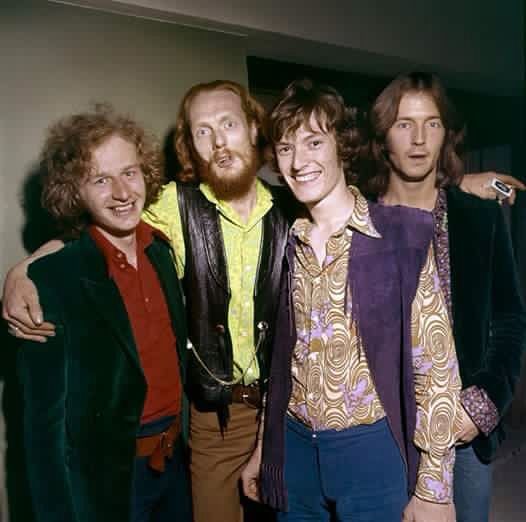
Eric Clapton wrote this song, which is a testimony of faith. It’s the first song for which he wrote all the lyrics.
Clapton called this a “song of gratitude.” It was one of his first songs to explore spirituality, which he did on some of his solo tracks in the ’70s. He said the message of this song was to “say ‘thank you’ to God, or whatever you choose to call Him, for whatever happens.”
Their one and only album, the self titled Blind Faith album, peaked at #1 in the Billboard Album Charts, Canada, and the UK in 1969. They toured one time for the album and then soon broke up.
From Songfacts
Steve Winwood sang lead, as he did with all of the Blind Faith songs. Even though it’s a very personal song, Clapton made sure he wouldn’t be the lead vocalist by writing it in a higher key than he could sing. He thought Winwood was a much better singer (most would agree), and wanted him on this track.
The song is about how Clapton was becoming more comfortable with his life. He had just left Cream at the peak of its popularity, and was looking forward to playing with Blind Faith. He wasn’t too comfortable though: Clapton was fighting drug addiction and falling in love with George Harrison’s wife, whom he would later marry.
Blind Faith released just one album, and didn’t issue any singles. The album was very successful, going to #1 in both the US and UK, but the band broke up after one difficult tour.
The album cover was a photo of a young girl with no clothes on holding a model spaceship. According to photographer Bob Seidemann, who shot the cover, he had the idea but did not have someone to pose. While riding the London subway, he saw a young girl who would be perfect and asked her to pose for the cover. He went to the girl’s house to ask her parents’ permission to pose topless for the cover. They agreed, but the girl backed out. However, the girl’s younger sister begged the parents to let her pose instead. They agreed and the younger sister ended up posing for the cover. Seidemann called the image “Blind Faith” and Eric Clapton made that the name of the group.
Presence Of The Lord
I have finally found a way to live just like I never could before I know that I don’t have much to give, but I can open any door Everybody knows the secret, everybody knows the score Yeah, yeah, yeah, yeah I have finally found a way to live in the colour of the Lord
I have finally found a place to live just like I never could before And I know I don’t have much to give, but soon I’ll open any door Everybody knows the secret, everybody knows the score
I have finally found a place to live, oh, in the presence of the Lord In the presence of the Lord
I have finally found a way to live, just like I never could before And I know I don’t have much to give, but I can open any door Everybody knows the secret, I said everybody knows the score I have finally found a way to live in the colour of the Lord In the colour of the Lord
What made me want to watch a Western television show that only aired one season from 1965 to 1966? Rod Serling is the reason and a good enough reason for me.
This is the show that he started a year after The Twilight Zone. The show didn’t make it past one season. That is not because of the content. It was an adult western…Serling hated some of the Westerns at the time and wanted to make this one more realistic. While he didn’t bring in the Twilight Zone scifi take he did bring his own way of conveying morality tales.
That didn’t fly with some viewers who only wanted the shoot ’em-up cowboy tales.
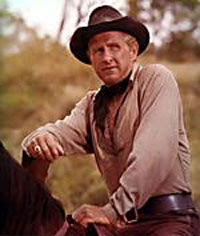
Lloyd Bridges starred in this show about a man named Bill Colton who roamed the West a month after the Civil War ended. Along the way, we would meet new characters every week. I watch this show and think…why didn’t it catch on? Was it too smart for some viewers? You did have action but the shows were character and story based. Another reason it didn’t last is the Western theme at that time had been mined and mined bare but Serling’s western wasn’t like many of the others.
This series I have to recommend to anyone. There are only 26 episodes all 25 minutes each so it’s not a huge investment of time. Serling wrote 75 percent of the scripts so you know the dialog and stories are good. Lloyd Bridges is excellent in the staring role.
If you need an intelligent Western with good stories, dialog, and action when needed…get The Loner.
You can watch many if not all on YouTube. They were released in 2016 on DVD.
Back as promised…I know this isn’t everyone’s cup of tea so to speak but I hope you enjoy it. This is obviously the 5th edition of this series. In Part 1, Part2, Part 3, and Part 4. We covered Brian May’s Red Special, Willie Nelson’s Trigger, George Harrison’s Rocky, Eddie Van Halen’s Frankenstrat, Bruce Springsteen’s guitar, Neil Young’s Old Black guitar, John Lennon’s Casino + a Bonus, and Keith Richards Telecaster.
Today will we look at:
Paul McCartney’s Hofner Bass and Eric Clapton’s Blackie.
Paul McCartney’s Hofner Bass and the MISSING Hofner Bass
Paul’s bass is maybe the most iconic guitar/bass of all time in rock music. You see this bass and you think Beatles. I see the attraction to this bass. I have a Hofner copy and I’ve played a Hofner a few times. They are ultra light and have a nice feel to them. The Hofner is really easy to play.
Lets start with the Hofner he bought in Hamburg in 1961…we will call it The Cavern Bass or Hofner#1. It was played on some iconic Beatles recordings including their very first studio outing in June 1961 in Hamburg, their first single Love Me Do in 1962 and their first two albums, Please Please Me and With The Beatles in 1963. It’s the one you hear on “She Loves You, “Twist and Shout”, it was played in Hamburg, at The Cavern Club, and at Abbey Road.
In 1965 he sent it in to get it worked on…it was sprayed with a darker sunburst and the pickup guard removed.
It was last seen in the 1969 footage from Twickenham Studios, where the Beatles were filming “Let It Be.” Soon afterward, it was stolen, most likely from a closet at EMI’s Abbey Road studio, along with Harrison’s Gretsch Tennessean and second Ric 360-12. People are still looking for that bass guitar.
These two pictures show the same Bass…the Cavern Bass…notice the different colors and the removed pick guard…but same bass.
In 1963 Paul bought another Hofner bass that he used as his primary bass and played it from then on and still does. We will call it Hofner #2. He didn’t retire the Cavern Bass but just used it as a back up to Hofner #2.
Here are the two basses labeled…the #1 is the lost/stolen Cavern bass and the #2 is the 1963 bass he used throughout the Beatles. Paul is still looking for the Cavern Bass and the Hofner company has a webpage describing the bass and trying to get it back for Paul.
I have to wonder who has this bass. Odds are they don’t know what they have… if it survives. I hope Paul gets it back… he loves instruments and still has many of the instruments he used with The Beatles… Hey…lets go out and find this bass…that would be one way to meet him!
***From the mid-sixties on he would use a Rickenbacker bass which produced brighter and clearer bass sound. He famously used one on Sgt Pepper. He used both basses through the years.
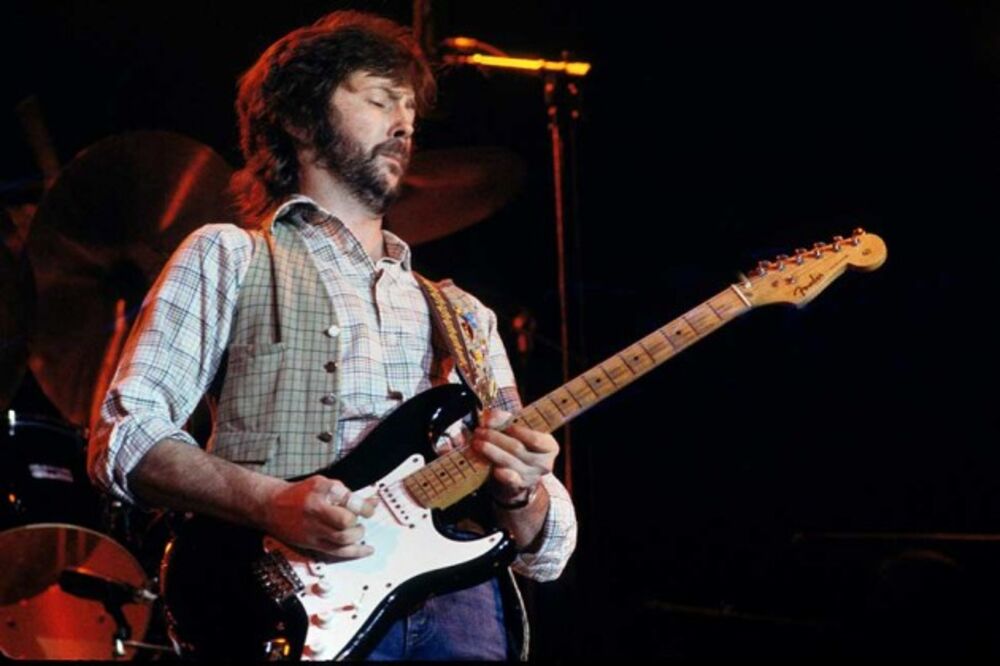
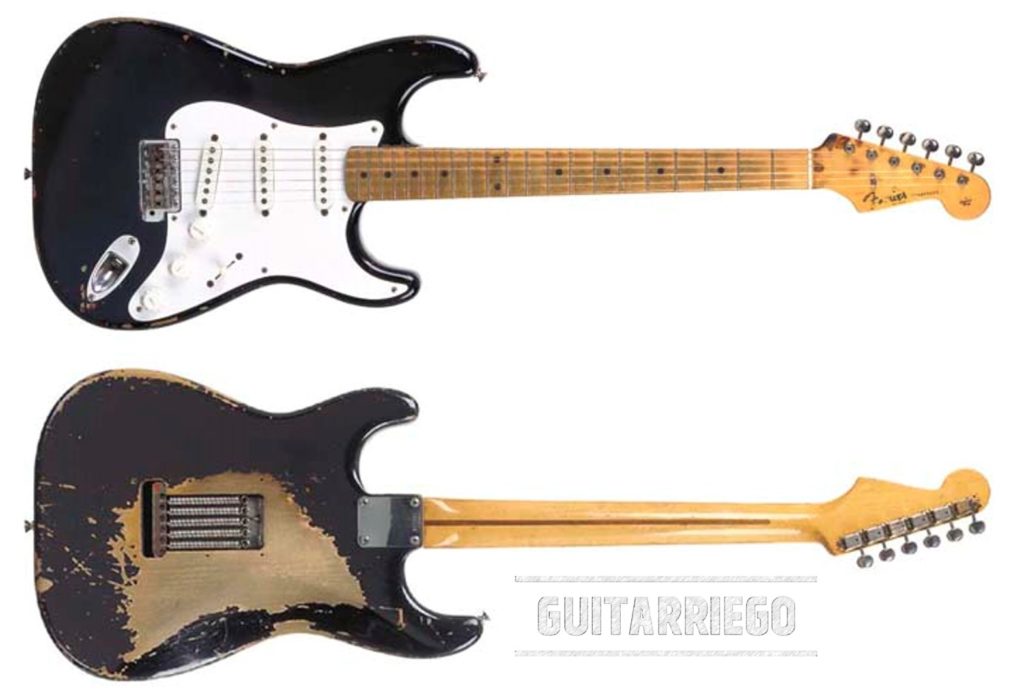
Eric Clapton’s Blackie
Eric built this guitar in around 1970 from different Fender Strats…here is Eric telling the story.
Eric Clapton: “I was in Nashville and I went into this shop called Sho-Bud where they had stacks of Fender Strats going for virtually nothing because they were so unfashionable and unwanted,”
“I bought a big pile of them all for a song – they were really cheap, like $300 or $400 each – and I took them home and gave them out. I gave Steve Winwood one, I gave Pete Townshend one, I gave George Harrison one and I kept a few, and I made Blackie out of a group of them. I took the pickups out of one, the scratchplate off another, the neck off another and I made my own guitar, like a hybrid guitar that had all the best bits from all these Strats.”
Blackie would be the main guitar used on every one of Eric’s albums for 15 years. During that time, Eric and Blackie would rack up an impressive number of hits, including “Cocaine,” “I Shot the Sheriff,” “Wonderful Tonight,” and “Lay Down Sally.”
in 2004, Eric worked with Christie’s to auction the legendary guitar off. The winner paid $959,000 for Blackie, with most of the proceeds again supporting Eric’s Crossroads Center.
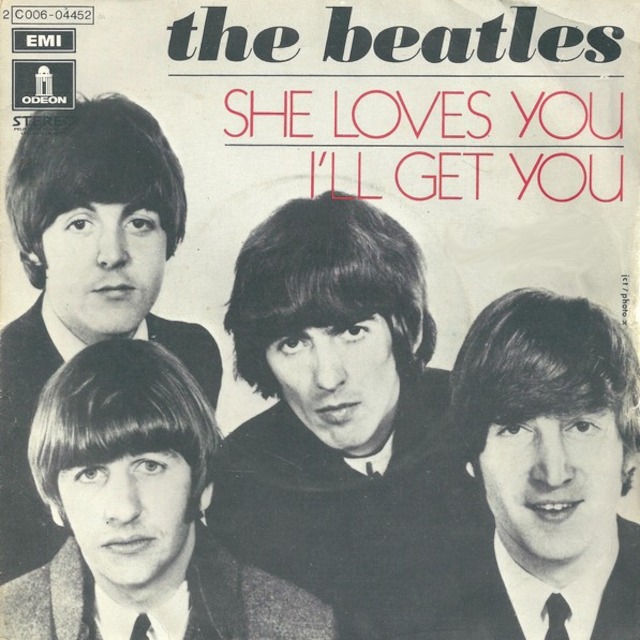
This song help kick off the sixties. The melody, music, the great harmonies and just the excitement of the song. She Loves You help define them and broke huge. Ozzy Osbourne made a statement about the song… “Imagine you go to bed today and the world is black and white and then you wake up, and everything’s in color.”
These great melodies that John, Paul, and later George would come up with lasted through their career. Even when their music got a little more sophisticated the melodies remained…they were underneath the early, middle, and late era Beatle music.
It’s best known for the yeah, yeah, yeah… Yeah, the Everly Brothers did it first, using a hook of “yeah, yeah, yeah, yeah” on their 1961 cover of the song “Temptation,” which was a #1 hit in the UK.
Paul McCartney’s dad wanted the Beatles to sing yes, yes, yes instead because he thought it sounded more dignified.…doesn’t have the same ring does it?
She Loves You peaked at #1 in the Billboard 100, Canada, the UK, and New Zealand in 1964.
In the UK, this is the biggest selling Beatles single. It held the record for top-selling UK single of all time until 1977, when Wings topped it with Mull Of Kintyre.
George Martin didn’t like the ending chord. He thought it sounded too much like the The Andrew Sisters but the Beatles liked it and over rode the producer on this one…and it works great.
in April 1964 The Beatles had the Top 5 Songs on the Billboard Top 100 Singles of the week. The closest any other artist ever got was 3 songs in the Top 10. But there they were- Can’t Buy Me Love, Twist and Shout, She Loves You, I Want To Hold Your Hand, Please Please Me, sitting at the top, along with 7 other Beatles songs in the Top 100 the same week.
Cynthia Lennon: “He was also romantic, a side of him I saw more often as our relationship deepened. He wrote love poems on scraps of paper and passed them to me at college. For our first Christmas he drew a card with a picture of me in my new shaggy coat, standing opposite him, our heads together, his hand on my arm. It was covered with kisses and hearts and he wrote, ‘Our first Christmas, I love you, yes, yes, yes.’ A few years later he used the same idea in one of the Beatles’ first hits, ‘She loves you, yeah, yeah, yeah.'”
John Lennon:“I remember it was Paul’s idea,” Lennon recalled, “Instead of singing ‘I love you’ again, we’d have a third party.”
Paul McCartney:“We were in a van up in Newcastle somewhere,” “and we’d just gone over to our hotel. I originally got an idea of doing one of those answering songs, where a couple of us sing about ‘she loves you’ and the other one sort of says the ‘yes, yes’ bit. You know, ‘yeah, yeah’ answering whoever who is saying it. But we decided that was a crummy idea anyway. But we had the idea of writing a song called ‘She Loves You’ then. And we just sat up in the hotel bedroom for a few hours and wrote it.”
From Songfacts
The Beatles tell quite a tale in this tidy pop song. Some poor guy thinks he has lost his girl for good, but he’s redeemed when he finds out from a friend that she still loves him. There’s even a moral at the end of the story: “Pride can hurt you too.” Good advice when arguing with a loved one.
This was an instant hit in the UK, but not in America, where it was released on Swan records, the only US label that would take it. Swan put it out in September 1963, but while The Beatles were huge in their homeland, they were still no big deal in America until February 1964. That’s when Beatlemania took hold and “She Loves You” became a US hit.
This was one of four Beatles songs that was never released in stereo. The others are “Love Me Do,” “I’ll Get You” and “You Know My Name (Look Up The Number).”
The Beatles released a German version translated as “Sie Liebt Dich” in the US in 1964. They learned some German when they became the house band at the Star-Club in Hamburg in 1962, but needed a German speaker to help them with the lyrics. They recorded the German version in Paris – it was the only time they recorded outside of England.
Apart from “My Bonnie,” which was recorded with Tony Sheridan in their early days in Hamburg, the only other song the Beatles recorded in another language, again German, was “I Want To Hold Your Hand.” “Komm Gib Mir Deine Hand” was recorded the same time as “Sie Liebt Dich.”
“Sie Liebt Dich” peaked at #97, the lowest position of the Beatles’ 71 Hot 100 charted songs.
Jack Paar played a video clip of The Beatles performing the song on his show January 3, 1964. The Beatles had appeared on news clips as part of stories about their success in England, but this was the first time they appeared on a US TV talk show. They also played it on both of their live Ed Sullivan Show appearances. When The Beatles agreed to do the show, they were not a big deal in America and took less money than most acts received for their fee. When The Beatles played The Ed Sullivan Show for the first time, it got the largest audience ever for a TV show. Sullivan began having regular musical guests from the world of popular music, and it became a showcase for groups like The Rolling Stones, The Supremes, Santana and Creedence Clearwater Revival.
Paul McCartney and John Lennon were inspired to write this after a concert at the Majestic Ballroom in Newcastle when they were part of a tour with Roy Orbison and Gerry & the Pacemakers. Says McCartney, “There was a Bobby Rydell song out at the time ‘Forget Him’ and, as often happens, you think of one song when you write another. We were in a van up in Newcastle-Upon-Tyne. I’d planned an answering song where a couple of us would sing ‘She loves you’ and the other ones would answer ‘Yeah Yeah.’ We decided that was a crummy idea but at least we then had the idea of a song called She Loves You. So we sat in the hotel bedroom for a few hours and wrote it; John and I, sitting on twin beds with guitars.”
In the UK, this hit #1 twice in 1963, first on September 4 and again on November 20.
Regarding the falsetto exaltation that occurs at the song’s manic peak, McCartney once explained: “The ‘wooooo’ was taken from the Isley Brothers’ ‘Twist and Shout.’ We stuck it in everything.”
These wordless vocalizations of joy were a Beatles hallmark; they most obvious example is the extended fadeout in “Hey Jude.”
The Beatles played part of this at the end of “All You Need Is Love,” which they recorded four years later.
This song was played at the conclusion of the concert sequence at the end of the film A Hard Day’s Night, although it wasn’t included on the soundtrack album.
Norman Smith, who was The Beatles engineer, told the story in his autobiography John Called me Normal about feeling his heart sink when he spotted the lyrics on the music stand. As he later relayed to Mark Lewinsohn: “She loves you, yeah yeah yeah, She loves you, yeah yeah yeah, she loves you yeah yeah yeah yeah… I thought, My God, what a lyric! This is going to be the one I do not like.”
Smith had a hit in 1972 with “Oh Babe What Would You Say” as Hurricane Smith. He also produced the first three Pink Floyd albums.
There is a very clear edit in this song between the lines “I think it’s only fair/Pride can hurt you too.” It appears that two version had been edited together.
In August 2009 the Official Chart Company compiled a list of the Beatles biggest selling hits in the UK, including re-issues. They revealed that this song was the Fab Four’s best seller in their native country, followed by “I Want To Hold Your Hand” and “Can’t Buy Me Love.”
The Melissa Manchester hit You Should Hear How She Talks About You was written as a contemporary take on this song, with the singer telling a friend that a guy is really into her.
She Loves You
She loves you, yeah, yeah, yeah She loves you, yeah, yeah, yeah She loves you, yeah, yeah, yeah, yeah
You think you’ve lost your love Well, I saw her yesterday-ay It’s you she’s thinking of And she told me what to say-ay
She says she loves you And you know that can’t be bad Yes, she loves you And you know you should be glad
She said you hurt her so She almost lost her mind But now she says she knows You’re not the hurtin’ kind
She says she loves you And you know that can’t be bad Yes, she loves you And you know you should be glad, ooh
She loves you, yeah, yeah, yeah She loves you, yeah, yeah, yeah With a love like that You know you should be glad
You know it’s up to you I think it’s only fair Pride can hurt you, too Apologize to her
Because she loves you And you know that can’t be bad Yes, she loves you And you know you should be glad, ooh
She loves you, yeah, yeah, yeah She loves you, yeah, yeah, yeah With a love like that You know you should be glad With a love like that You know you should be glad With a love like that You know you should be glad Yeah, yeah, yeah Yeah, yeah, yeah, yeah
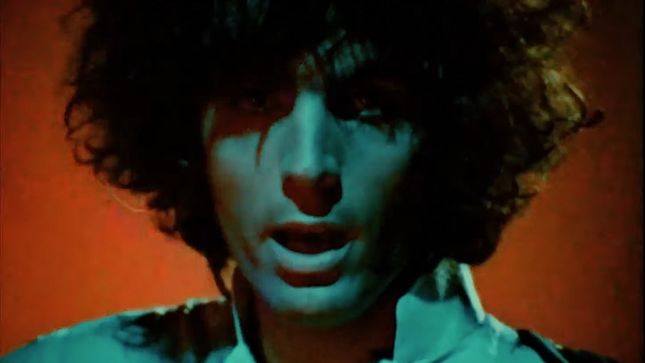
My journey continues into early Pink Floyd. This is a Syd Barrett contribution to the group, and the only song on the album that he wrote and sang on the album. The album was A Saucerful of Secrets that peaked at #9 in the UK and #158 in the Billboard Album Charts.
The middle part of the song was a contribution from a Salvation Army band that Barrett asked to guest on the song…he told them to play what they wanted.
The song itself has said to be Barrett’s self-diagnosis of schizophrenia, explained by the lines “I’m most obliged to you for making it clear that I’m not here” and “I wonder who could be writing this song?” This would Barrett’s last contribution to Pink Floyd. Shortly before it was released, he was kicked out of the band.
From Songfacts
Pink Floyd made a promo film for this song, which shows a seemingly depressed Barrett wandering around aimlessly, singing the song.
40 seconds to the end of the track is another “secret” song that Barrett plays guitar on, while asking “What exactly is a dream?” and “What exactly is a joke?”
The instrumental passage towards the end features a brass section which would be later explored more in Atom Heart Mother.
Jugband Blues
It’s awfully considerate of you to think of me here And I’m much obliged to you for making it clear That I’m not here And I never knew we could be so thick And I never knew the moon could be so blue And I’m grateful that you threw away my old shoes And brought me here instead dressed in red And I’m wondering who could be writing this song
I don’t care if the sun don’t shine And I don’t care if nothing is mine And I don’t care if I’m nervous with you I’ll do my loving in the winter
And the sea isn’t green And I love the queen And what exactly is a dream And what exactly is a joke
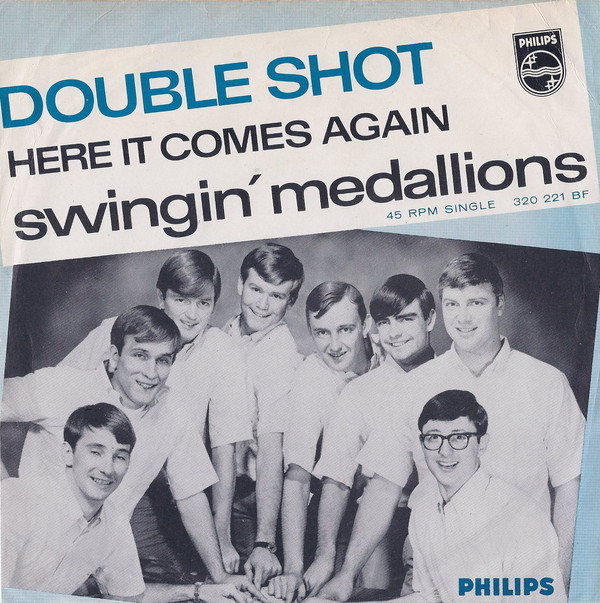
This song sounds like it’s being performed by a drunk fraternity. I love this song. It’s hard to be in a bad mood when you listen to this. The song was banned on many radio stations because of references to drinking and sex… This song peaked at #17 in 1966 on the Billboard 100.
I did post this 3 years ago but I didn’t have many readers…so I thought today would be a good day to drunkenly sing anything to welcome 2021 and kiss or kick 2020 goodbye.
As you can probably guess…it was their only charting song…but they sure sounded like they had a good time doing it though. The song was written by Don Smith and Cyril Vetter.
If you want to know more about the Medallions go to their home page…from what I see they are still playing.
I found where Bruce Springsteen invited The Swingin’ Medallions up on stage to sing “Double Shot” in 2009 here is the video.
Double Shot of My Baby’s Love
Woke up this morning, my head was so bad The worst hangover that I ever had What happened to me last night That girl of mine, she loved me so right (yeah) (oh, oh) She loved me so long and she loved me so hard I finally passed out in her front yard (whoo) It wasn’t wine that I had too much of It was a double shot of my baby’s love
Double shot of my baby’s love, yeah yeah, yeah Double shot of my baby’s love, yeah yeah, yeah A potion that I had too much of It was a double shot of my baby’s love
It was such a thrill it was hurtin’ me (ooh) I was sufferin’ in ecstasy She had me turnin’ flips and-a shoutin’ out loud (yah-hah) A sip of her love and I was walkin’ one a cloud One night a week is-a plenty enough It’s a good thing for me they don’t bottle that stuff (pop) Well, my heart begins to fly like a dove When I take a double shot of my baby’s love
Double shot of my baby’s love, yeah yeah, yeah Double shot of my baby’s love, yeah yeah, yeah A potion that I had too much of It was a double shot of my baby’s love
Double shot of my baby’s love, yeah yeah, yeah Double shot of my baby’s love, yeah yeah, yeah Double shot of my baby’s love, yeah yeah, yeah Double shot of my baby’s love, yeah yeah, yeah
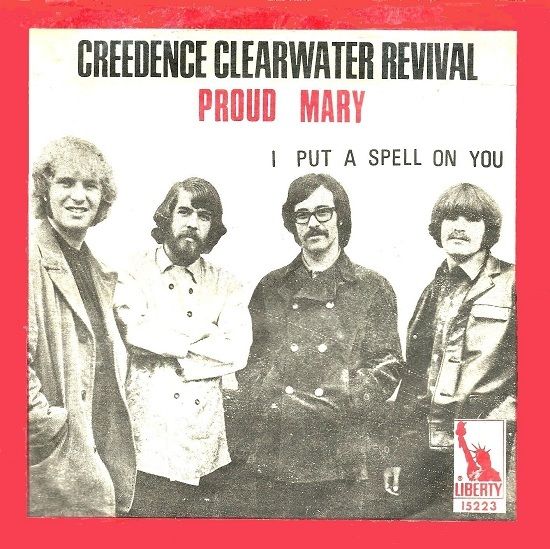
I love this song by Creedence but it’s probably the song I seek out the least…only because I’ve probably heard it the most. If I hear it on the radio I like it though all over again. This song was the game changer for CCR.
Fogerty refused to play his Creedence songs that he wrote for years because of bitter memories and bad contracts he signed with Creedence. He didn’t think about relenting until a stage appearance on February 19. 1987 with Dylan and George Harrison at a Taj Mahal concert at the Palomino, a Los Angeles club.
Dylan told him ‘Hey, John, if you don’t do these tunes, the world’s going to remember “Proud Mary” as Tina Turner’s song.” That got John thinking that ignoring his back catalog probably harmed his career and started to play those songs again.
When CCR recorded this song, John Fogerty wasn’t happy with the harmony vocals so when the band was at dinner…he recorded them himself and overdubbed them onto the track. This caused further tension in his already tension filled relationship with his bandmates.
The song was on Bayou Country released in 1969 and it peaked at #7 in the Billboard Album Charts, #14 in Canada, and #62 in the UK.
The song peaked at #2 in the Billboard 100, #2 in Canada, #8 in the UK, and #3 in New Zealand.
The song came together on the day that John Fogerty got his discharge papers from the US Army. Fogerty had been drafted in 1966 and was part of a Reserve unit, serving at Fort Bragg, Fort Knox, and Fort Lee. His discharge papers came in 1967.
John Fogerty:“The Army and Creedence overlapped, so I was ‘that hippie with a record on the radio.’ I’d been trying to get out of the Army, and on the steps of my apartment house sat a diploma-sized letter from the government. It sat there for a couple of days, right next to my door. One day, I saw the envelope and bent down to look at it, noticing it said ‘John Fogerty.’ I went into the house, opened the thing up, and saw that it was my honorable discharge from the Army. I was finally out! This was 1968 and people were still dying. I was so happy, I ran out into my little patch of lawn and turned cartwheels. Then I went into my house, picked up my guitar and started strumming. ‘Left a good job in the city’ and then several good lines came out of me immediately. I had the chord changes, the minor chord where it says, ‘Big wheel keep on turnin’/Proud Mary keep on burnin” (or ‘boinin’,’ using my funky pronunciation I got from Howling’ Wolf). By the time I hit ‘Rolling, rolling, rolling on the river,’ I knew I had written my best song. It vibrated inside me. When we rehearsed it, I felt like Cole Porter.”
John Fogerty liked Ike and Tina’s version:“When it ended, if they had a camera and came back to me it’d be like, when Shrek and the donkey go to Far, Far Away and they push the button for that little arcade machine and it tells the whole story of their town! And the Donkey’s like [Eddie Murphy impression] ‘Let’s do that again!’ That’s how I felt when that ended. I loved it, and I was so honored. I was like, ‘Wow, Ike and Tina!’ I had actually been following their career for quite some time. Way back in the day, when Janis and Grace Slick started to get known by the kids who were my age, I’d be like, ‘Man, Tina Turner, c’mon!’ She finally got her due, but for a while there, she wasn’t noticed. It was a really good version, and it was different. I mean, that’s the key. Instead of the same thing, it was really exciting.”
From Songfacts
In the beginning, “Proud Mary” had nothing to do with a riverboat. Instead, John Fogerty envisioned it as the story of a woman who works as a maid for rich people. “She gets off the bus every morning and goes to work and holds their lives together,” he explained. “Then she has to go home.”
It was Stu Cook who first introduced the riverboat aspect of the song. The idea came to him as the group watched the television show Maverick and Stu made the statement, “Hey riverboat, blow your bell.” John agreed that the boat seemed to have something to do with the song that had been brewing in his mind for quite some time, waiting to take conscious shape. When he wrote the music, he made the first few chords evoke a riverboat paddlewheel going around. Thus, “Proud Mary” went from being a cleanup lady to a boat.
Fogerty wrote the lyrics based on three song title ideas: “Proud Mary,” “Riverboat,” and “Rolling On A River.” He carried around a notebook with titles that he thought would make good songs, and “Proud Mary” was at the top of the list. So it was that an all-American classic was born from the pressure-cooker atmosphere of the late 1960s. Fogerty suspected right away that his “Tin Pan Alley” song was a radio-friendly hit, and he was right. The song hit #2 in the US, reached #8 in the UK, and #1 in Austria.
This was the first of five singles by Creedence that went to #2 on the US chart; they have the most #2 songs without ever having a #1.
Despite popular belief, John Fogerty was not writing from experience when he wrote this. Thanks to his military commitment, he hadn’t ventured further east than Montana. After the song was recorded, he took a trip to Memphis so he could finally see the Mississippi River.
The original CCR version peaked at #2 in March 1969. In June, Solomon Burke’s rendition hit #45. His was the first to include a spoken into:
I know a lot of you folks would like to know what the old Proud Mary is all about
Well, I’d like to tell you about her
She’s nothing but a big old boat
You see, my forefathers used to ride the bottoms of her as stokers, cooks, and waiters
And I made a vow that when I grew up, I’d take a ride on the old Proud Mary
And if you’d let me, I’d like to sing about it
Burke then sings, “looking for a job in the city,” as opposed to “left a good job in the city.”
This was a #4 hit in the US for Ike & Tina Turner in 1971, and a highlight of their live shows. Tina Turner recalled in an interview with Rolling Stone magazine in 1971 how they came to record this on their Workin’ Together album: “When we cut the album, we were lacking a few tunes, so we said ‘Well, let’s just put in a few things that we’re doing on stage. And that’s how ‘Proud Mary’ came about. I had loved it when it first came out. We auditioned a girl and she had sung ‘Proud Mary.’ This is like eight months later, and Ike said, ‘You know, I forgot all about that tune.’ And I said let’s do it, but let’s change it. So in the car Ike plays the guitar, we just sort of jam. And we just sort of broke into the black version of it. It was never planned to say, ‘Well, let’s go to the record shop, and I’d like to record this tune by Aretha Franklin’… it’s just that we get it for stage, because we give the people a little bit of us and a little bit of what they hear on the radio every day.”
“Proud Mary” attracted 35 covers in the year 1969 alone. Over 100 have been made since.
These are the US charting versions:
Creedence Clearwater Revival (#2, 1969) Solomon Burke (#45, 1969) Checkmates, Ltd. feat. Sonny Charles (#69, 1969) Ike & Tina Turner (#4, 1971) Glee Cast (#115, 2009)
The line, “Pumped a lot of pain down in New Orleans” is actually “Pumped a lot of ‘Pane,” as in propane. He was pumping gas.
The Checkmates, Ltd. did a horn-powered, gospel inflected version of this song that was produced by Phil Spector and featured Sonny Charles on lead vocals. Running 4:30, it’s substantially longer than the 3:07 original, and went to #69 in November 1969.
This arrangement was clearly an influence on the Ike & Tina Turner version, which they started performing soon after. There was speculation that Spector, who produced Ike & Tina on their 1966 single “River Deep – Mountain High,” brought this version to Ike Turner’s attention.
Fogerty came up with the famous chord riff on guitar when he was playing around with Beethoven’s “5th Symphony.” That one goes “dun dun dun duuunnnnn…,” but Fogerty thought it would sound better with the emphasis on the first note, which is how he arrived at “do do do do.”
This part reminded him of the paddle wheel that impels a riverboat. “‘Proud Mary’ is not a side-wheeler, it’s a stern-wheeler,” he explained.
Even though Creedence Clearwater Revival was from El Cerrito, California, many people thought they were from New Orleans or some other part of the South because of their swamp rock sound. They helped feed the rumor by naming their second album Bayou Country.
Tina Turner recorded a solo version for her 1993 album What’s Love Got To Do With It, which was the soundtrack to her biopic of the same name. In the film, it was lip-synced by Angela Bassett and Laurence Fishburne (who played Ike and Tina), but on the recording, Tina’s sax player Tim Cappello did Ike’s bass vocals. By recording her own version with no trace of Ike, it made sure he could not profit from its use in the film or soundtrack – an important distinction considering Tina’s accusations of spousal abuse.
When Tina performed the song live, she would usually do a variation on the spoken part, but without the male vocal.
Ike & Tina Turner’s version charted for the first time in the UK on the chart dated October 2, 2010 after it was performed on X-Factor by auditioneees Diva Fever. This version was credited to Tina Turner only.
Ike and Tina performed their version on the Season 2 premiere of Soul Train in 1972, becoming the first big act to appear on the program. The show became very popular its first season because of the dancers, but they were able to book many famous guests in subsequent seasons.
The occasion didn’t inspire Fogerty to start regularly performing CCR songs again, but it did break it for that one evening as four legends of rock jammed together.
According to the book Bad Moon Rising, Bob Dylan called “Proud Mary” his favorite song of 1969.
A film about a hitwoman titled Proud Mary was released in January 2018. Not only does the action movie take its name from the song, but altered lyrics from the tune appear on the poster promoting it, with the tagline, “Killing for the Man every Night and Day.”
John Fogerty took to Twitter to complain:
“I wrote the song ‘Proud Mary’ 50 years ago, and I was very excited to have written such a good song. In fact, it was my very first good song.
My songs are special to me. Precious. So it irks me when people seek to capitalize on the popularity of my music and the good will it has earned with the public for their own financial gain. Over the years, I have often found myself directly opposed to these uses.
This movie has nothing to do with me, or my song. They simply picked the title and wrote a completely fictitious story around it.”
He added: “No one ever asked me about using my song this way, or even about the meaning of Proud Mary.”
The film, as well as the trailer, features the Tina Turner version of the song. Fogerty lost the rights to his CCR songs in 1973, so there was nothing he could do about having a cover version of the song used in the film.
Leonard Nimoy, who played “Mr. Spock” on Star Trek, recorded an infamous cover of this song. Near the end, he sings the chorus Elmer Fudd style – “Big wheel keep on toynin’, Pwoud Mawy keep on boinin’…” It is included on a CD called Golden Throats.
This song was used to disastrous effect to open the 1989 Academy Awards ceremony in a bit where host Rob Lowe sang it with an actress playing Snow White, with the lyrics changed to be about Hollywood:
Klieg lights keep on burnin’
Cameras keep on turnin’
Rollin’ Rollin’
Keep the cameras rollin’
Proud Mary
Left a good job in the city Workin’ for the man ev’ry night and day And I never lost one minute of sleepin’ Worryin’ ’bout the way things might have been
Big wheel keep on turnin’ Proud Mary keep on burnin’ Rollin’, rollin’, rollin’ on the river
Cleaned a lot of plates in Memphis Pumped a lot of pane down in New Orleans But I never saw the good side of the city ‘Til I hitched a ride on a river boat queen
Big wheel keep on turnin’ Proud Mary keep on burnin’ Rollin’, rollin’, rollin’ on the river Rollin’, rollin’, rollin’ on the river
If you come down to the river Bet you gonna find some people who live You don’t have to worry ’cause you have [if you got] no money People on the river are happy to give
Big wheel keep on turnin’ Proud Mary keep on burnin’ Rollin’, rollin’, rollin’ on the river Rollin’, rollin’, rollin’ on the river
Rollin’, rollin’, rollin’ on the river Rollin’, rollin’, rollin’ on the river Rollin’, rollin’, rollin’ on the river
Not a famous rock guitar today. I will have the famous Rock guitars part 5 next weekend. This post is a little self-indulgent…no a lot.
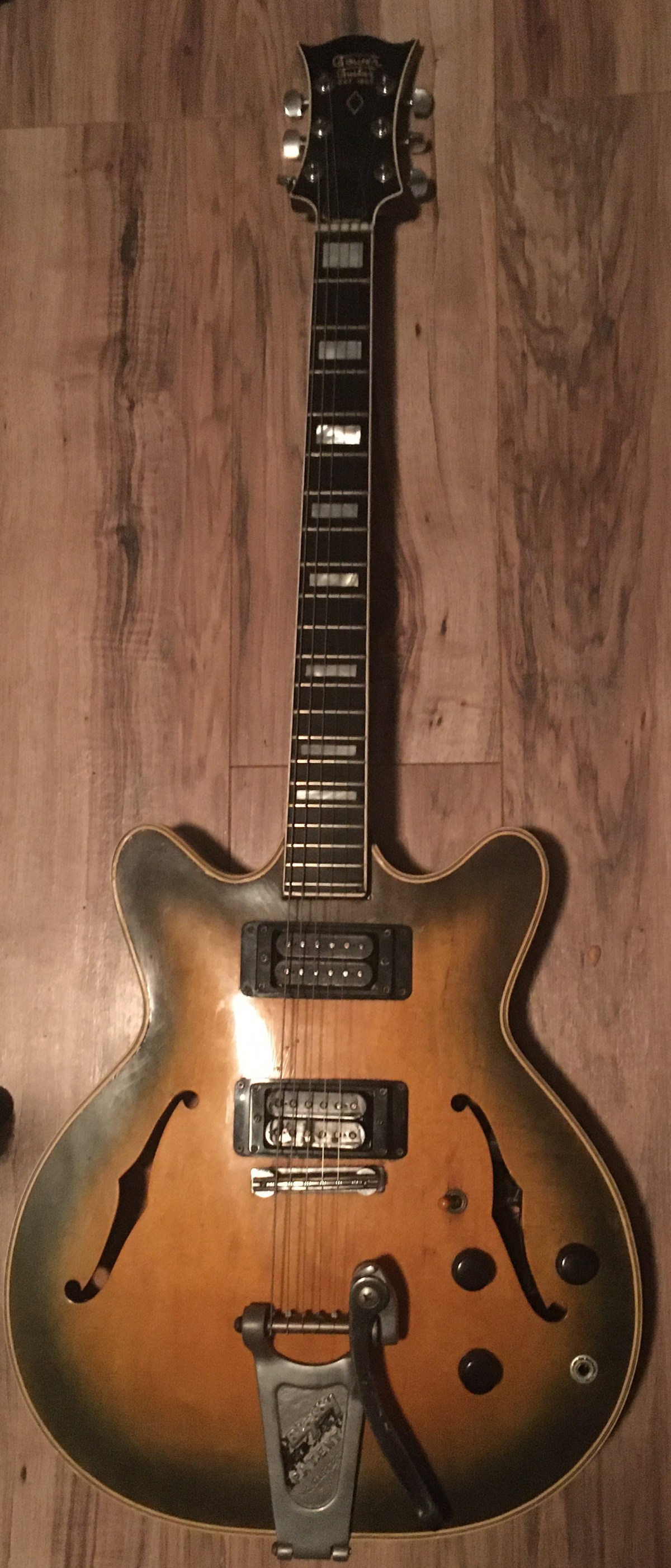
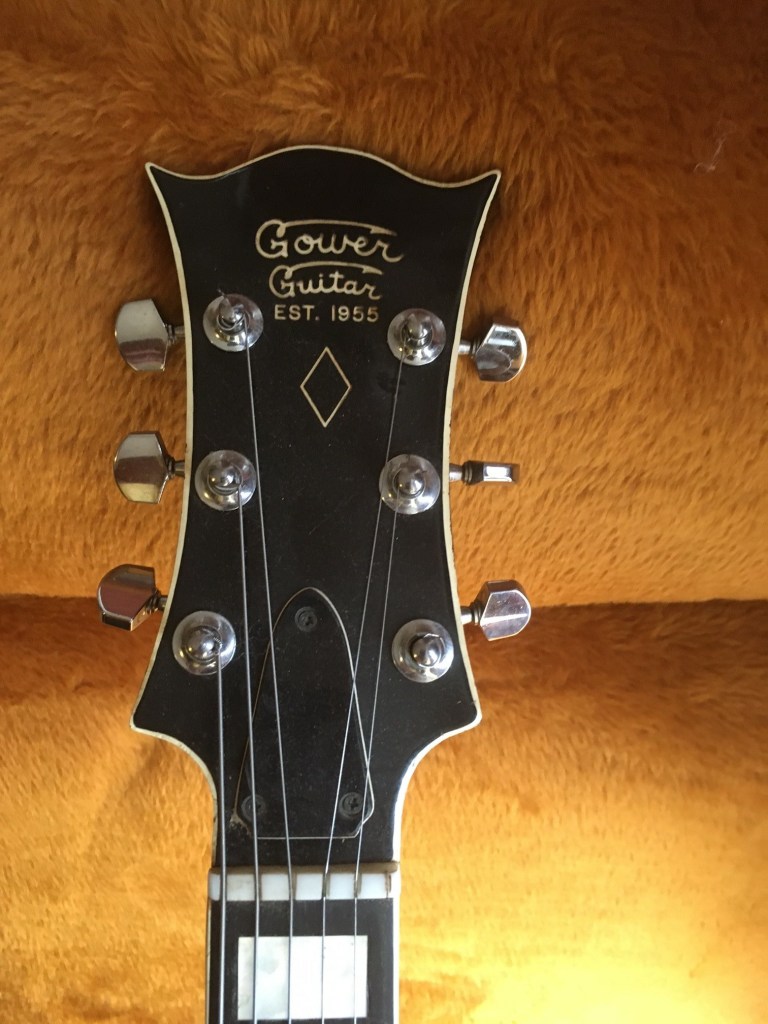
I thought this guitar had an interesting story. My family made guitars for country stars in the 50s through the 70s. George Jones and Leon Rhodes are two artists that had them. They made quality acoustic guitars that compared to Martins… they also made mandolins but very few electrics. They were all high end instruments. Many were custom made for artists. They go for big prices now. My dad didn’t like making electrics because he said the craftsmanship wasn’t in them like acoustics. He told me son they are like a two-by-four with strings…ok Dad…but I got what he was saying.
What makes this guitar interesting is it was made in the mid-sixties. It then sat on a shelf for over 25 years. In 1991 I got this guitar and I was the first person to ever play the thing.
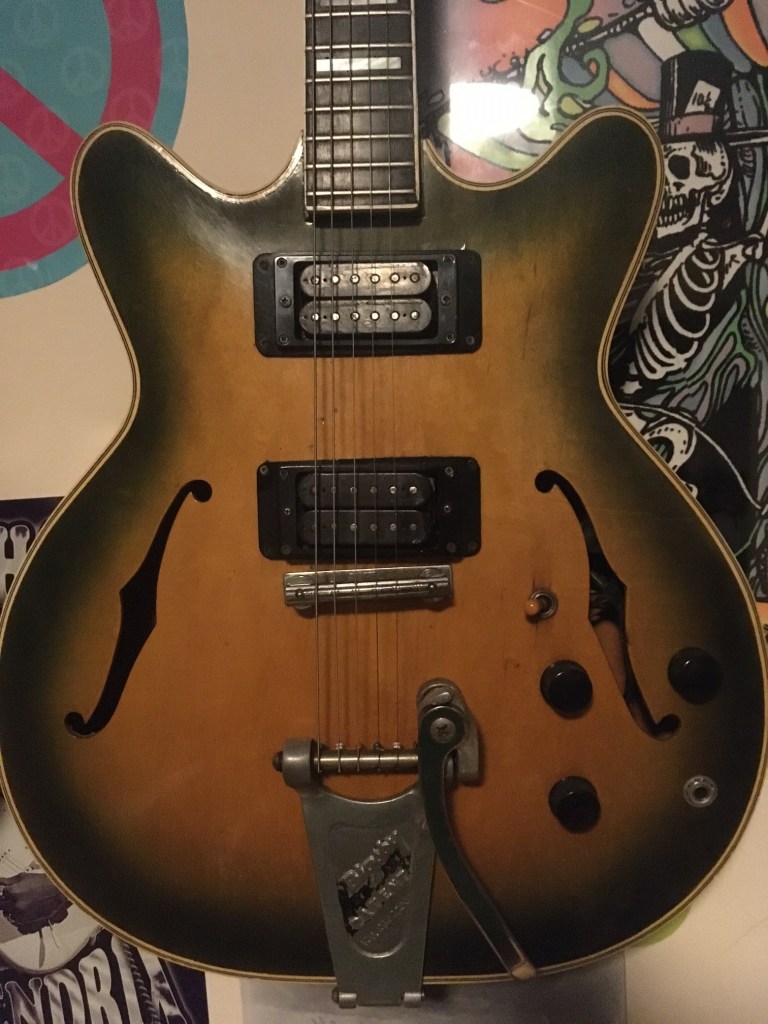
A relative gave me this hollow body electric guitar that was made by his dad. Two of the same style guitars were made at the time…the other one was sold. I have it’s sister that languished on the shelf for years.
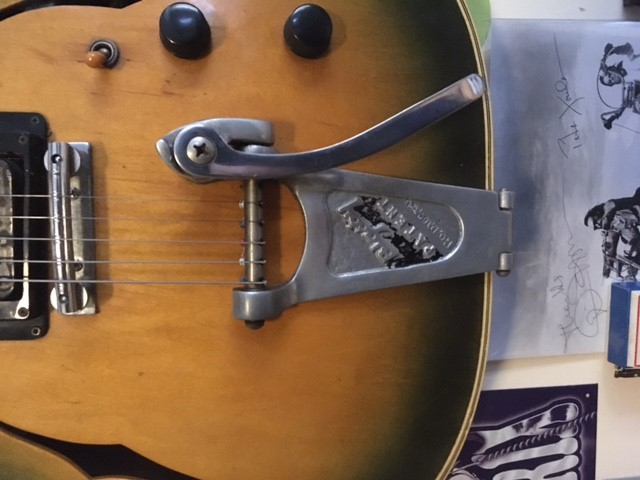
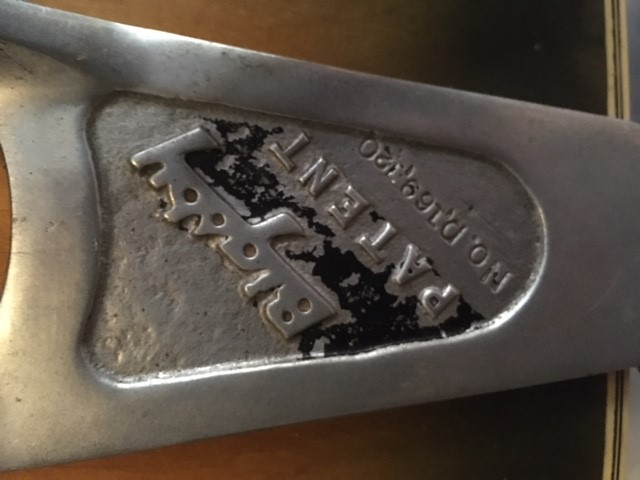
When I got the guitar it had everything except the pickups and tuning keys…so it had never been played. I have a friend who had two Dimarzio humbucker pickups and he installed them plus Grover tuning keys…it also came with a vintage Bigsby Vibrato Tailpiece.
Now…getting a little technical… these pickups were very “hot”…I don’t mean stolen but with a very high output…very loud but clear. One guitar tech told me they were the hottest humbucker pickups he ever heard.
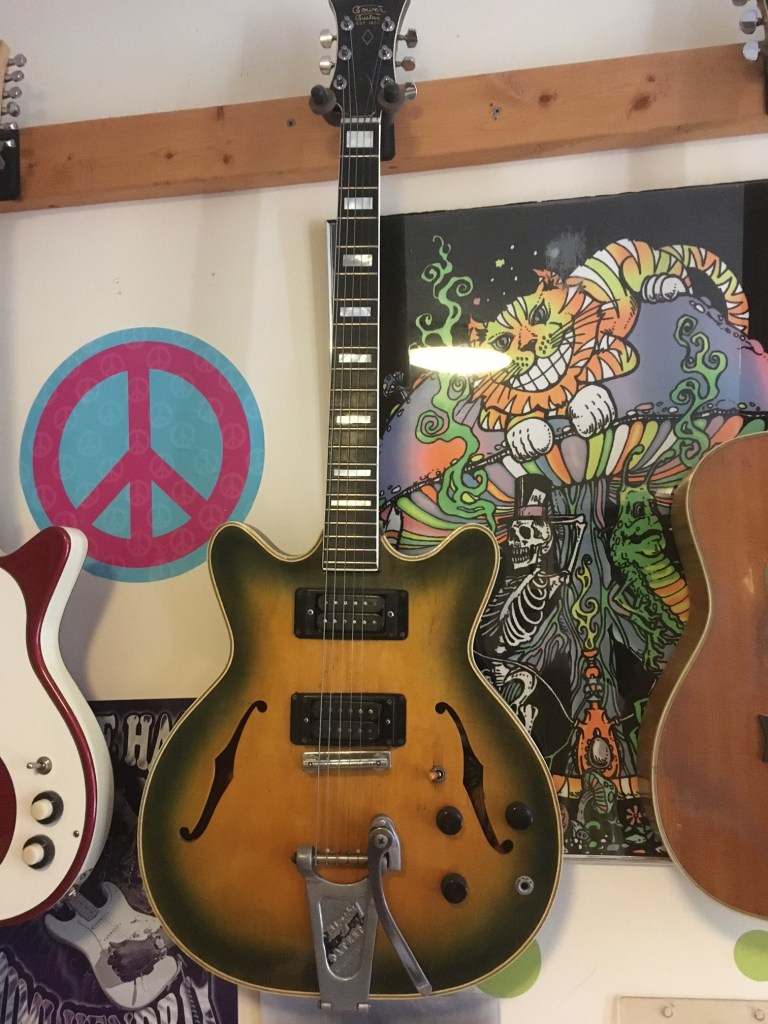
When you have a hollow body guitar and very hot pickups… they can make a guitar feedback at high volumes. It took me a good 2 years to really learn how to play this guitar properly without it getting away from me. It was like placing a jet engine in a car. I have some guitar friends who love it and it’s sometimes called “The Beast.”
The trim and the pickup toggle on the body had tarnished yellow by the time I got it. My favorite color is green…and good thing because this one is a very unusual sunburst green.
I’m going to alter it bit coming up soon. I’m going to replace one of the humbucker pickups with a P-90 and give it a little variety. We will see how that sounds.
The guitar compares to a Gibson ES-335 or a few Gretsch guitars. The beast has a growl like no other. Out of all of my guitars this is the one I pick for dirtier sounds…
This is my 2000th post. I am amazed I made it to 25…much less 2000. So let the bells ring and the chorus sing! So…lets see if I can make it to 2001!
The song was on Their Satanic Majesties Request a psychedelic album released in the Summer of Love in 1967. It’s an album…one of many that was inspired by the Beatles Sgt Peppers album. The album was not critically praised when it was released. It still gets mixed reviews now. I do think it is much better than it got credit for back in 1967. They did the right thing though by continuing on with blues/rock. They would never experiment this much again in the studio.
The cover art was something new. After The Beatles raised the bar with the cover of Sgt Pepper…the Stones used Michael Cooper (who worked on the Sgt Pepper cover)to make a 3d cover. If you look closely you can see The Beatles faces on the album. The Stones were returning the favor…the Beatles had a doll wearing a shirt that said “Welcome the Rolling Stones Good Guys” on the Sgt Peppers album.
The doll on the Sgt Pepper Cover
The song has some different melodies melded together. The album had two 2000 songs…2000 Man and 2000 Light Years From Home. It fit in with the futuristic psychedelic vision.
2000 Man’ was covered by Kiss on their 1979 record Dynasty. Kiss did a good job on the cover. Personally I like both versions. Kiss did a straight ahead rock version but I also like the nuances that the Stones included on the original.
Mick Jagger:There’s a lot of rubbish on Satanic Majesties. Just too much time on our hands, too many drugs, no producer to tell us, “Enough already, thank you very much, now can we just get on with this song?” Anyone let loose in the studio will produce stuff like that. There was simply too much hanging around. It’s like believing everything you do is great and not having any editing.
It’s really like sort of got-together chaos. Because we all panicked a little, even as soon as a month before the release date that we had planned, we really hadn’t got anything put together. We had all these great things that we’d done, but we couldn’t possibly put it out as an album. And so we just got them together, and did a little bit of editing here and there.
2000 Man
Well, my name is a number A piece of plastic film And I’m growin’ funny flowers In my little window sill Dont you know I’m a 2,000 man And my kids, they just don’t understand me at all Well my wife still respects me I really misused her I am having an affair With the Random computer Don’t you know I’m a 2,000 man And my kids, they just don’t understand me at all Oh daddy, proud of your planet Oh mummy, proud of your sun Oh daddy, proud of your planet Oh mummy. proud of your sun Oh daddy, your brain’s still flashin Like it did when you were young Or do you come down crashin’ Seeing all the things you’d done All was a big put on Oh daddy, proud of your planet Oh mummy. proud of your sun Oh daddy, proud of your planet Oh mummy. proud of your sun Oh daddy, proud of your planet Oh mummy. proud of your sun Oh daddy, proud of your planet Oh mummy. proud of your sun And you know who’s the 2000 man And your kids they just won’t understand you at all
You’re a mean one…Mr. Grinch. I first posted this in 2018…I thought along with the songs that I would include some Christmas posts…old and new.
The cartoon was released in 1966 and has been shown every year since. This one along with Rudolph, Charlie Brown, and a few more were a part of Christmas. These specials would prime you for the big day.
One cool thing about the cartoon was that Boris Karloff was the narrator. Thurl Ravenscroft (voice of Tony the Tiger) sang the great song “You’re a Mean One Mr. Grinch. ”
The citizens of Whoville looked and acted like the others of Dr. Suess’s universe. They were all getting ready for Christmas while a certain someone…or thing looked down from Mt. Crumpit. The Grinch has hated Christmas for years and sees the Whovillians getting ready for Christmas and is determined once and for all to put an end to it.
He dresses up as Santa Clause and makes his poor dog Max act as a reindeer to swoop down and steal Christmas. The Grinch sleds down the hill almost killing Max and they soon reach Whoville. He is busted by one kid…Cindy Lou Who, who asks him questions as the Grinch took her family tree. He lies to her and sends her to bed.
In the morning after he has everything including “The Roast Beast,” he listens for the sorrow to begin.
You need to watch the rest or rewatch…
A live-action remake came out in 2000 but I still like this one the best. You cannot replicate Boris Karloff.
The Budget – Coming in at over $300,000, or $2.2 million in today’s dollars, the special’s budget was unheard of at the time for a 26-minute cartoon adaptation. For comparison’s sake, A Charlie Brown Christmas’s budget was reported as $96,000, or roughly $722,000 today (and this was after production had gone $20,000 over the original budget).
You’re a mean one Mr. Grinch The famous voice actor and singer, best known for providing the voice of Kellogg’s Tony the Tiger, wasn’t recognized for his work in How the Grinch Stole Christmas. Because of this, most viewers wrongly assumed that the narrator of the special, Boris Karloff, also sang the piece in question. Upset by this oversight, Geisel personally apologized to Ravenscroft and vowed to make amends. Geisel went on to pen a letter, urging all the major columnists that he knew to help him rectify the mistake by issuing a notice of correction in their publications.
Mr Grinch
You’re a mean one, Mr. Grinch You really are a heel You’re as cuddly as a cactus You’re as charming as an eel Mr. Grinch You’re a bad banana with a greasy black peel You’re a monster, Mr. Grinch Your heart’s an empty hole Your brain is full of spiders You’ve got garlic in your soul, Mr Grinch I wouldn’t touch you with a Thirty-nine and a half foot pole
You’re a vile one, Mr. Grinch You have termites in your smile You have all the tender sweetness of a seasick crocodile Mr Grinch Given the choice between the two of you I’d take the seasick crocodile
You’re a foul one, Mr. Grinch You’re a nasty wasty skunk Your heart is full of unwashed socks Your soul is full of gunk Mr Grinch
The three best words that best describe you Are as follows, and I quote” Stink Stank Stunk
You’re a rotter Mr Grinch You’re the king of sinful sots Your heart’s a dead tomato splotched with moldy purple spots Mr Grinch
Your soul is an appalling dump heap Overflowing with the most disgraceful Assortment of deplorable rubbish imaginable Mangled up in tangled up knots
You nauseate me, Mr Grinch With a nauseous super nos You’re a crooked jerky jockey and You drive a crooked horse Mr Grinch
You’re a three-decker sauerkraut And toadstool sandwich With arsenic sauce






 PowerPop... An Eclectic Collection of Pop Culture