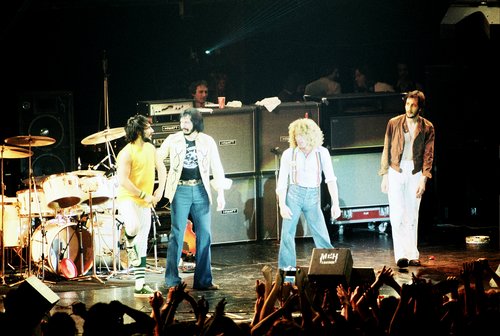
The Who started off as the Detours and had a drummer named Doug Sandom. After an argument with Pete, Doug quit the band. Keith Moon then joined and the sound and the band took off. They found the member to complete one of the best bands to emerge from the sixties. They were the band of the Mods and wore British Flags, target shirts, and other Pop Art attire.
Controlled chaos is the best way I know how to describe the Who’s early singles. My favorite rhythm section in Rock and Roll… John Entwistle and Keith Moon were all over the place but they were all over the place together. What John and Keith gave musically cannot be underestimated. They were the engine that made The Who go…Pete Townshend coined the phrase “power pop” and they were the ultimate power pop band. Roger Daltrey was transformed from a good blues singer to a rock god. They released several classic albums… Who’s Next, Quadrophenia, Tommy, and Live at Leeds., The Who Sell Out…
The Who along with the Kinks were the forerunners of Punk. The Who’s early singles were raw and driving Can’t Explain, My Generation, Substitute, The Kids Are Alright, Pictures of Lily, I’m a Boy, and I Can See For Miles…
They moved from those early raw songs and released albums with songs such as Won’t Get Fooled Again, Baba O’Riley, Behind Blue Eyes, Love Reign O’er Me, Who Are You, Bargain. The Real Me, We’re Not Going to Take It, and 5:15
Pete took the rock concept album to an art form.
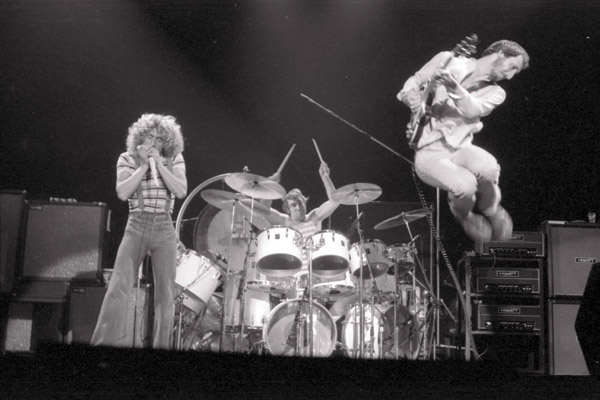
When they were at their performing peak they were untouchable. Check out the album or DVD of Live at the Isle of Wight Festival.
Their peer at that time had a great rhythm section, a great guitarist and a dynamic lead singer…Led Zeppelin. The Who were not as popular and they didn’t sell as many records as Led Zeppelin but The Who were fun… they more inviting.
They were the complete package. They had a good songwriter (Entwistle) in the band…and a great one (Pete). If you look at lists and influences… 10 ten rock drummers, top ten rock bassists etc..all of the Who come up in their respective category.
Led Zeppelin made the right choice in not replacing John Bonham. The Who decided to go on without Moon and were never the same again without Moon. Some of their songs were good afterward but they did not have the drive and spirit that Moon gave them and they were not complete without him.
I’ve never found a band other than the Beatles that moved me as much. Pete’s songs are high energy with a dash of spirituality.
I will revisit the Who again and coming up soon I’m going to attempt to rank the Who albums.
This song was written by Del Shannon…Peter and Gordon (Peter Asher and Gordon Waller) took it to #9 in the Billboard 100 and #21 in Canada. This was a nice British Invasion song by the duo. Peter Asher is the brother of Jane Asher and became a very successful producer. See the bottom of the post for his producer credits.
You can also see a little “Austin Powers” in Peter Asher.
I Go To Pieces
When I see her comin’ down the street I get so shaky and I feel so weak I tell my eyes look the other way But they don’t seem to hear a word I say And I, go to pieces and I want to hide Go to pieces and I almost die Every time my baby passes by I tell my arms they’ll hold someone new Another love that will be true But they don’t listen, they don’t seem to care They reach for her but she’s not there And I, go to pieces and I want to hide Go to pieces and I almost die Every time my baby passes by I remember what she said when she said “Goodbye baby. We’ll meet again soon maybe.” “But until we do, all my best to you.” I’m so lonely, I think about her only I go to places we used to go But I know she’ll never show She hurt me so much inside Now I hope she’s satisfied And I, go to pieces and I want to hide Go to pieces and I almost die Every time my baby passes by Go to pieces and I cry Every time my baby passes by Go to pieces and I cry
A band discovered by Pete Townshend of The Who that featured John “Speedy” Keen, Jimmy McCulloch, and Andy “Thunderclap” Newman. The song peaked at #37 in the Billboard 100 and #1 in the UK Charts in 1969.
It was written and sung by John “Speedy” Keen. The song has been featured in many movies and commercials. 16-year-old Jimmy McCullock would later play in Wings and the reunited Small Faces.
Something In The Air
Call out the instigators Because there’s something in the air We’ve got to get together sooner or later Because the revolution’s here, and you know it’s right And you know that it’s right
We have got to get it together We have got to get it together now
Lock up the streets and houses Because there’s something in the air We’ve got to get together sooner or later Because the revolution’s here, and you know it’s right And you know that it’s right
We have got to get it together We have got to get it together now
Hand out the arms and ammo We’re going to blast our way through here We’ve got to get together sooner or later Because the revolution’s here, and you know it’s right And you know that it’s right
We have got to get it together We have got to get it together now
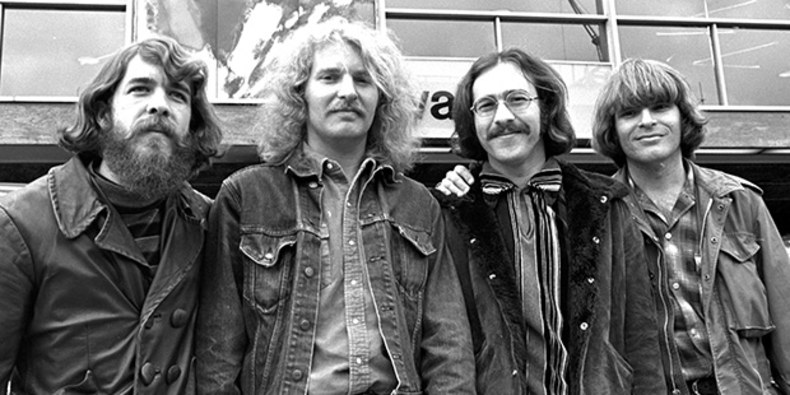
This band was rock, country, blues, pop and a little of everything. Their music is played on practically every jukebox and by every self-respecting bar band. The songs are not intricate masterpieces like Bohemian Rhapsody or A Day In The Life but masterpieces all the same.
Bands go their whole career without writing one song that is NOT a love song…this band wrote about everything else but love. Many of their songs have become standards today. They had songs about rivers, swamps, backdoors, jungles, and riverboats.
The band…or should I say John Fogerty wrote one song after another and kept hitting the charts. At the time it must have felt like the well would never run dry. Their songs were simple but so effective. John has a distinctive sound with not only his guitar but his voice. His voice was an instrument itself that drove his songs.
They were together in the public eye from 1968 to 1972. Creedence was one of the biggest bands in the world during those years. Songs kept coming like Proud Mary, Bad Moon Rising, Who’ll Stop the Rain, Green River, Looking Out My Back Door, Have You Ever Seen the Rain, Lodi, Traveling Band and etc… They were a singles band and they were an album band. Albums such as Cosmo’s Factory, Green River, Willy and The Poor Boys are classic albums.
Many people thought they were from the south…maybe Louisiana but they were from El Cerrito, California. Hard to believe they were from the same area as the Grateful Dead and the San Francisco music scene of the late sixties. Creedence was not a jam band like many of their peers, they played songs to the letter. They were called rock, country rock and swamp rock.
The band had 9 top ten hits and 16 songs that charted.
They were originally signed to Fantasy Records by Saul Zaentz to a bad record deal that kept John enslaved to the company long after the band broke up. Saul held the rights to John’s songs. Saul had promised the band, to begin with, that he would renegotiate the contract when the band got more successful…he never did.
The band included guitar player, lead singer and writer John Fogerty, drummer Doug Clifford, bassist Stu Cook and Tom Fogerty (John’s brother) on rhythm guitar. Eventually, Tom, Stu, and Doug started to feel like John’s backup band and wanted more control. Tom quit and Creedence became a trio and took off on a tour and made an album.
The band broke up in 1972. It was a sad thing because who knows how many more songs Creedence could have created. Instead of music, the band bickered back and forth and still will file lawsuits from time to time against each other.
I’ve tried to read a few books about them but it’s hard to get through the name calling and the lawsuits that flew back and forth. They all were friends earlier but Stu, Tom, and Doug would usually take Saul Zaentz’s side against John. The brothers rarely talked to each other before Tom died in 1990.
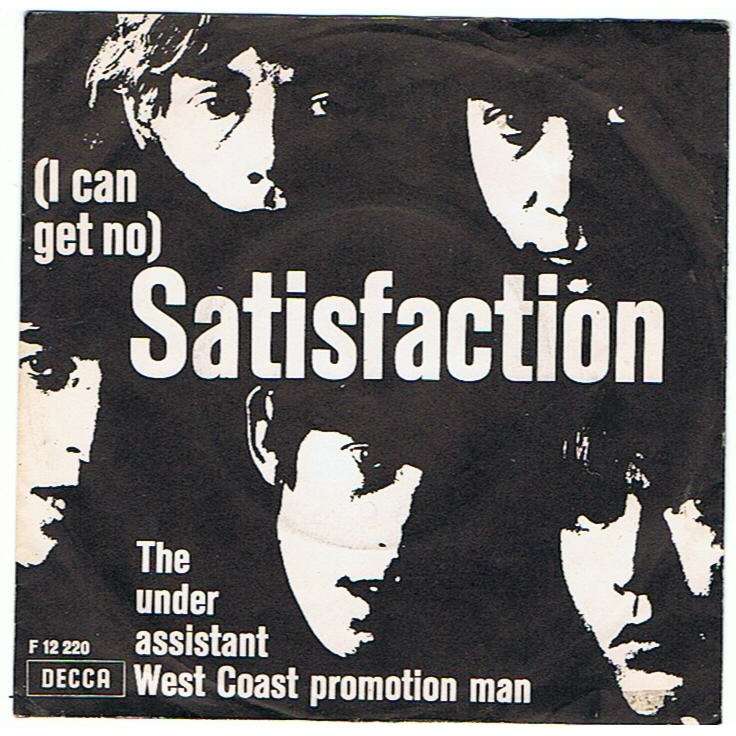
Not the most well-known song by the Stones but a lot of American’s owned it. I bought the single Satisfaction in 1979 and flipped it over and found this oddly named likable song. This was the American B side to Satisfaction. Not exactly Day Tripper/We Can Work It Out but a likable single all the same. The song was released in 1965.
The Stones recorded this in Chess studios in Chicago.
The song is about George Sherlock who was the London Records promotions man who accompanied the Stones to California. This was their response to having basically a chaperone.
Well, I’m waiting at the bus stop in downtown L.A.
Well, I’m waiting at the bus stop in downtown L.A.
But I’d much rather be on a boardwalk on Broadway
Well, I’m sitting here thinkin’ just how sharp I am
Well, I’m sitting here thinkin’ just how sharp I am
I’m an under assistant west coast promo man
Well, I promo groups when they come into town
Well, I promo groups when they come into town
Well they laugh at my toupee, they’re sure to put me down
Well, I’m sitting here thinking just how sharp I am
Yeah, I’m sitting here thinking just how sharp I am
I’m a necessary talent behind every rock and roll band
Yeah, I’m sharp
I’m really, really sharp
I sure do earn my pay
Sitting on the beach every day, yeah
I’m real real sharp, yes I am
I got a Corvette and a seersucker suit
Yes, I have
Here comes the bus, uh oh
I thought I had a dime
Where’s my dime
I know I have a dime somewhere
I’m pretty sure
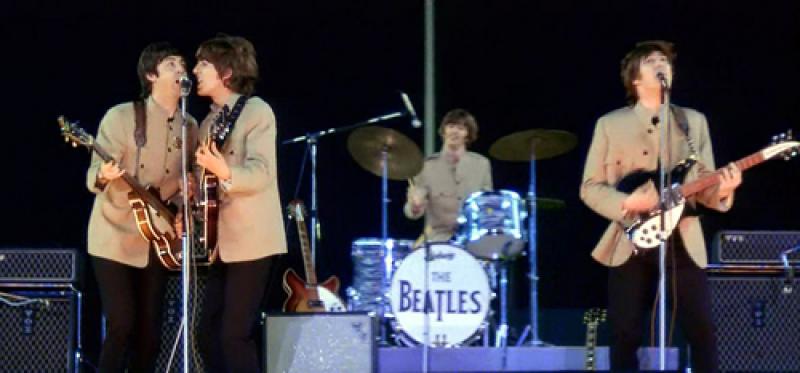
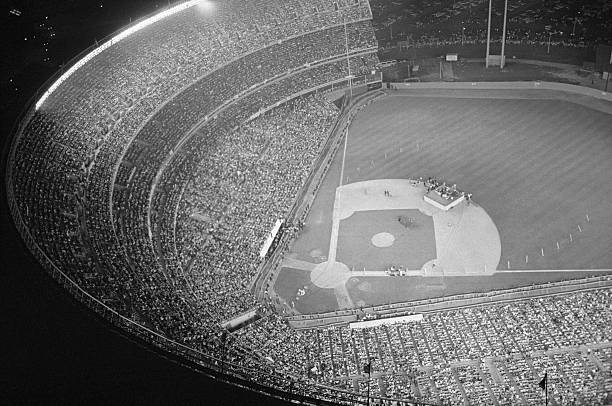
On August 15, 1965 The Beatles played to the largest audience to that point of any rock band. 55,600 fans were in Shea Stadium ready to be entertained by the Beatles.
Looking at the equipment they had…it had to be hard to hear anything. They used 100 Watt Vox amps. They are great amps but they used the house PA in a baseball stadium. I’ve played much smaller outside events with more powerful equipment and most importantly a better PA…but it didn’t matter at the time though as Ringo said:
“We always used to use the house PA,” added Starr. “That was good enough for us, even at Shea Stadium. I never felt people came to hear our show — I felt they came to see us. From the count-in on the first number, the volume of screams drowned everything else out.”
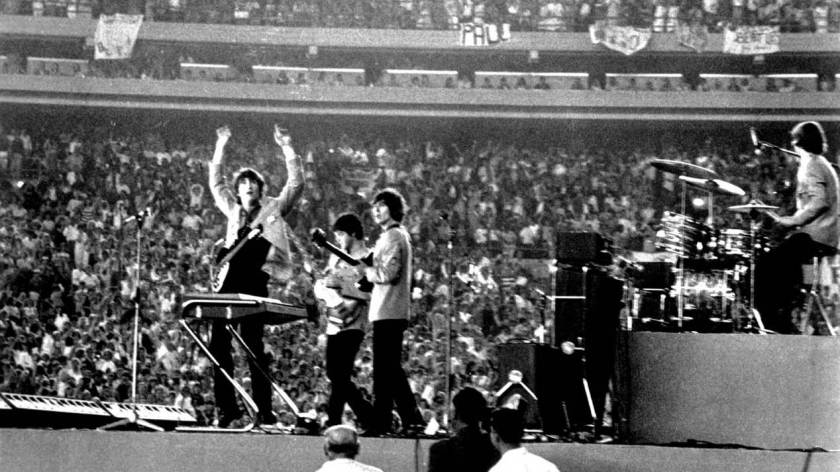
The fans turned Beatle concerts…and especially this one into an event more than a concert. The Beatles were very aware of the magnitude of this concert. ABC filmed the concert and it became a documentary. The looks on the Beatles faces were “Can you believe this?” and they seem to really enjoy this concert. The screams come through when you watch the documentary. They drown out everything. Luckily they plugged the recording equipment into the soundboard so at least you can hear them.
During the closing song, “I’m Down” John was playing the organ and you can tell he was having a great time. He was playing this his arms and cracking up George as well. John once told Sid Berstein who promoted the concert “You know, Sid, that concert in 1965 at Shea Stadium … I saw the top of the mountain on that unforgettable night.'”
The Shea Stadium total was an attendance record that lasted until Led Zeppelin played to 56,800 in Tampa in 1973. That record was soon broken by The Who. The difference being by then the rock crowd had grown up and so had the equipment.
The 12 song Beatles setlist that lasted a whole 30 minutes.
Twist and Shout
She’s a Woman
I Feel Fine
Dizzy Miss Lizzy
Ticket to Ride
Everybody’s Tryin’ to Be My Baby
Can’t Buy Me Love
Baby’s in Black
Act Naturally
A Hard Day’s Night
Help!
I’m Down
Like so many of The Beatles achievements…They were pioneers.
I saw this movie in the 80s and never forgot it. I watched it when I was roughly the same as Benjamin in the movie and I still didn’t know what I wanted to do with my life.
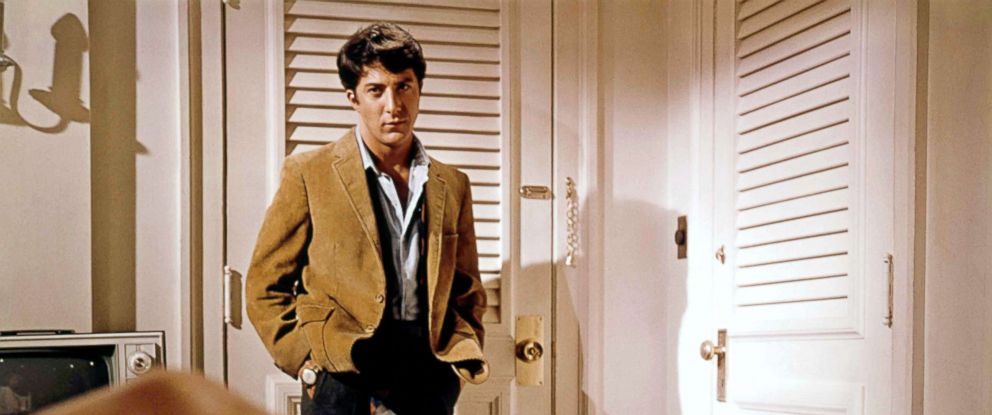
Dustin Hoffman portrays Benjamin Braddock a college graduate coming home and not having a clue what he was going to do with his life. He keeps getting asked and grilled about it and he keeps retreating into himself. He is eventually seduced by an old friend of his parents Mrs. Robinson. At first, he tries to avoid her but he is such an easy target for the older woman. He finds himself eventually succumbing to her advances.
Benjamin is full of confusion and anxiety but keeps meeting her. He realizes he wants more than sex out of a relationship and then the affair turns into a nightmare. He finds himself falling for the one woman in the world Mrs. Robinson tells him to stay away from…her daughter Elaine.
Elaine starts to like Benjamin and Elaine is told about what happened. Elaine goes away to school but he Benjamin will not give up trying to explain and win her back. Elaine is to be married and Benjamin eventually tracks the wedding down and crashes it.
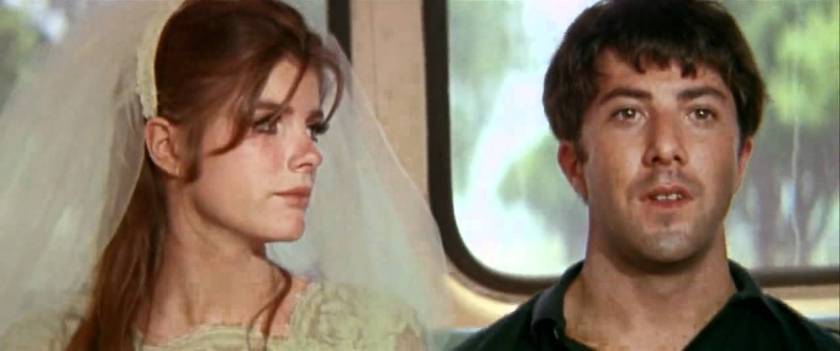
He arrives but Elaine was just married. Mrs. Robinson says its too late and Elaine said “not for me….” Elaine and Benjamin ran off with joy and triumph and get on a bus.
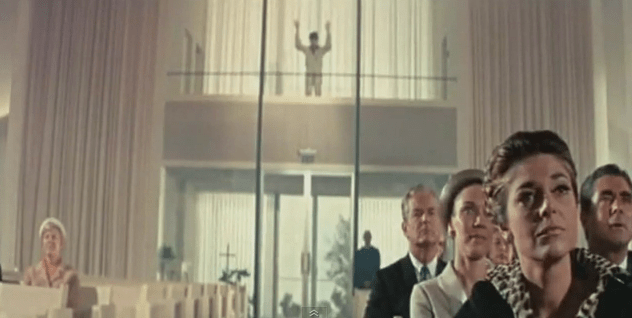
The last couple of minutes are the magical part of this movie. The church scene and the close-ups setup the last scene. It’s the last scene that makes this movie different from others. The two get on a bus and are smiling but then the smiles fade…the look on Hoffman’s face tells a story…they got what they wanted and now what does he do? Where do they go from here? Is it all downhill from there? It’s open to interpretation.
The Simon and Garfunkel’s songs set the mood of this movie and it would not be the same without them. They are as big a part of this movie as the actors. This movie made me more of a fan of Simon and Garfunkel. I tracked the soundtrack down in the 80s just for the song “April Come She Will.”
The cast included
Dustin Hoffman, Anne Bancroft, Katherine Ross. William Daniels and Murray Hamilton… and it was directed by Mike Nichols
This is my first attempt at a list. I have picked what I think were the top 20 double A-Sided singles in pop/ rock. I feel good until number 5…after that it gets hard. When I made the list I wasn’t counting how many copies they sold or just chart history. I tried to put their importance in history into account. and my preference…which of course means nothing but it’s fun…
Beatles – Strawberry Fields/Penny Lane The number 1 position is the only position that didn’t give me any trouble…
Beatles – Hey Jude/Revolution – What a single this is… Two of the Beatles best- known songs together for their first Apple release. A great way to start the Apple label.
Rolling Stones – Honky Tonk Women/You Can’t Always Get What You Want The Stones released this in 1969 and Honky Tonk Women when to number 1
Elvis – Don’t Be Cruel/Hound DogThis is cool fifties Elvis and untouchable. This record influenced young rockers all over the world.
Beatles – Something/Come Together George finally gets an A side and he runs with it and you have Come Together as the B side.
Rolling Stones – Ruby Tuesday / Let’s Spend the Night TogetherNo Chicago blues here but beautifully crafted pop.
Creedence Clearwater Revival – Proud Mary/Born On The Bayou This was the major breakthrough single for CCR and they kept coming.
The Band – Up On Cripple Creek/The Night They Drove Old Dixie Down The quality of this single is outstanding. Neither was a top 20 hit but they are still played to this day.
Beatles – Paperback Writer/Rain The bass jumps out at you on these recordings. Paul plays a Rickenbacker and boosted the level in the studio
Creedence Clearwater Revival – Down on the Corner / Fortunate Son Fortunate Son was John Fogerty’s angriest song and it made his feelings known.
Beatles – I Want to Hold Your Hand/I Saw Her Standing There The single that broke the Beatles in America. I like some of the other Beatle singles more but this one was huge and maybe the most important of their career.
Chuck Berry – Johnny B. Goode/Around and Around Johnny B. Goode is the song ever bar band is required to know. The guitar riff is eternal.
Rolling Stones – Bitch/Brown Sugar If I had to explain to an alien what Rock and Roll was all about without talking…I would hand them a picture of Keith Richards and a copy of Brown Sugar.
Creedence Clearwater Revival – Travelin’ Band / Who’ll Stop the Rain After playing Woodstock John went home and wrote Who’ll Stop the Rain
Sam Cooke – Shake/A Change Is Gonna Come A Change Is Gonna Come speaks for itself. What a beautiful song.
Queen – We Are The Champions/We Will Rock You Two of Rocks biggest anthems was released in 1977 and you could not go anywhere without hearing both
Beach Boys – Wouldn’t It Be Nice / God Only Knows God Only Knows is one of the most beautiful sounding songs ever.
Buddy Holly – Peggy Sue / Everyday Peggy Sue is probably the song Buddy is most remembered for…Everyday is a great song in itself… Buddy was a huge influence on The Beatles.
Beach Boys – I Get Around/Don’t Worry Baby I Get Around went to number 1 but Don’t Worry Baby is the reason this song is on the list.
Elvis Presley – Mystery Train / I Forgot to Remember to Forget Two classics by Elvis. Mystery Train’s guitar sound is just haunting.
Honorable Mentions
Creedence Clearwater Revival – Up Around the Bend / Run Through the Jungle
Ricky Nelson – Travelin’ Man / Hello Mary Lou
Creedence Clearwater Revival – Bad Moon Rising / Lodi
Chuck Berry – Sweet Little Sixteen / Reelin’ and Rocking
Jimi Hendrix – Purple Haze / The Wind Cries Mary
Sam Cooke – Bring It on Home to Me / Having a Party
Ritchie Valens – Donna / La Bamba
John Fogerty – Rock and Roll Girls / Centerfield
Sly & the Family Stone – Stand! / I Want to Take You Higher
I thought about what would be the most recognizable riffs in rock music. This doesn’t mean I like these the best… I’m sure I missed many more. They are in no particular order.
Smoke On The Water – Probably the most well-known riff of Rock and Roll. I’ve heard so many beginning guitar players butcher this one… and I was one of them at one time.
Satisfaction – This helped start Keith Richards on his way to becoming The Human Riff. The intro is immediately recognizable.
Daytripper – John Lennon was no slouch creating memorable riffs. I Feel Fine, Yer Blues and Daytripper…My personal favourite is And Your Bird Can See
Black Dog – To my surprise, this riff was not Jimmy Page…it was written by the very underrated John Paul Jones
You Really Got Me – As soon as that early raw distorted guitar starts you know the very English Ray Davies is about to sing.
Another One Bites the Dust – It’s a Bass intro that won’t leave your head. When it came out I could not go anywhere without hearing someone hum, whistle, or sing it…it is infectious
Purple Haze – Jimi’s intro that shot him in the stratosphere.
Wild Thing and Louie Louie – Same three-chord pattern but you know what they are right away.
Baba O’ Riley – As soon as you hear the first 2 seconds…you know what it is.
Back in Black – AC/DC using the same chords over and over to great effect.
Honourable Mention… Hard Days Night, Can’t Explain, Sunshine of Your Love, Sweet Home Alabama.
I could listen to this song on a tape loop forever and ever. This song came out in 1967 on the Traffic album “Mr. Fantasy.” It was written by Jim Capaldi, Steve Winwood and Chris Wood.
Jim Capaldi on writing the lyrics for Dear Mr Fantasy
“It was the summer of 1967, and we were all living in this cottage in Berkshire. We were one of the first English bands to live together like that. We thought we’d try it and see if anything came of it. I remember the day very clearly: A bunch of friends came over early in the day and we had quite a party. It was sunny and the corn was coming up nicely around the cottage, and we were quite enjoying ourselves if you know what I mean. As things finally wound down in the evening, I was sitting around just doodling, as I would often do, drawing this character. It was this little fellow with a spiked sun hat. He was holding some puppeteer’s strings, and the puppet hands on the end of the strings were playing a guitar. Under that, I just scribbled some words: ‘Dear Mr. Fantasy,’ play us a tune, something to make us all happy’ and on a bit. It was nice, but I didn’t think much of it; certainly, it wasn’t intended to be a song.
“I crashed out eventually, but I remember hearing Steve and Chris playing around after. The next day, I woke up and found that they’d written a song around the words and drawing I’d done. I was completely knocked out by it. Chris wrote that great bass line. We added some more words later and worked out a bigger arrangement, too. Those were very happy days for Traffic.”
“Dear Mr. Fantasy”
Dear Mister Fantasy play us a tune
Something to make us all happy
Do anything take us out of this gloom
Sing a song, play guitar, make it snappy
You are the one who can make us all laugh
But doing that you break out in tears
Please don’t be sad if it was a straight mind you had
We wouldn’t have known you all these yearsDear Mister Fantasy play us a tune
Something to make us all happy
Do anything take us out of this gloom
Sing a song, play guitar, make it snappy
You are the one who can make us all laugh
But doing that you break out in tears
Please don’t be sad if it was a straight mind you had
We wouldn’t have known you all these years
Dear Mister Fantasy play us a tune
Something to make us all happy
Do anything take us out of this gloom
Sing a song, play guitar, make it snappy
You are the one who can make us all laugh
But doing that you break out in tears
Please don’t be sad if it was a straight mind you had
We wouldn’t have known you all these years
I remember watching Dead Man’s Curve when I was a kid about Jan and Dean and the terrible car wreck Jan Berry was involved in.
This song was written by Brian Wilson and he didn’t think he would ever finish it. Jan met him at a party and helped Brian finish the song. Dean also contributed some lines but never asked for any writing credits. “Two girls for every boy”…what teenage boy didn’t want to go there for a visit. It was the first surf record to hit number 1 nationally.
Brian Wilson’s controlling dad Murry was furious at Brian for giving away a number 1 hit to someone else. Brian was happy that another group took his song and made a hit with it.
When I was a senior in High School for some unknown reason I really got into surf music at the beginning of the year. I listened to Jan and Dean, the Beach Boys, and The Ventures. I was the first person at school to wear a Hawaiian shirt and got snickered at…but by the end of the year there were other people wearing them…the one and only time in my life I was a trendsetter…a fact I’m not really proud of…
I must have been looking forward to my after graduation summer trip with my buddies to Cocoa Beach Florida. A fifteen-hour drive one way in a Celica Sports Coupe with 4 guys packed in there. We picked the name (Cocoa Beach) because it sounded great…Yep pretty stupid because we could have driven 7 hours to Pensacola instead.
I continued to listen to the Beach Boys “Pet Sounds” and “Endless Summer” albums but was never really into the Beach music again. Surf music is nothing but fun… The Beach Boys took it further than anyone with Pet Sounds. By that time though Surf purists didn’t like it. They wanted the old formula songs… I wasn’t a purist…
Surf City (Wilson and Berry)
Two girls for every boy
I got a ’34 wagon and I call it a Woody (Surf City here we come) You know it’s not very cherry, it’s an oldie but a goodie (Surf City here we come) Well it ain’t got a back seat or a rear window But it still gets me where I want to go
Well, we’re going to Surf City ‘coz it’s two to one Yeah, we’re going to Surf City, wanna have some fun Well, we’re going to Surf City ‘coz it’s two to one Yeah, we’re going to Surf City, wanna have some fun
Two girls for every boy
Well, [Incomprehensible] tension ‘coz there’s always something goin’ (Surf City, here we come) You know they’re either out surfin’ or they got a party growin’ (Surf City, here we come) Well, there’s two swingin’ honeys for every guy And all you gotta do is just wink your eye
Well, we’re going to Surf City ‘coz it’s two to one Yeah, we’re going to Surf City, wanna have some fun Well, we’re going to Surf City ‘coz it’s two to one Yeah, we’re going to Surf City, wanna have some fun
Two girls for every boy
And if my Woody breaks down on me somewhere on the surf route (Surf City, here we come) I’ll strap my board to my back and hitch a ride in my wet suit (Surf City, here we come) And when I get to Surf City I’ll be shootin’ the curl And checkin’ out the parties for a surfer girl
Well, we’re going to Surf City ‘coz it’s two to one Yeah, we’re going to Surf City, wanna have some fun Well, we’re going to Surf City ‘coz it’s two to one Yeah, we’re going to Surf City, wanna have some fun
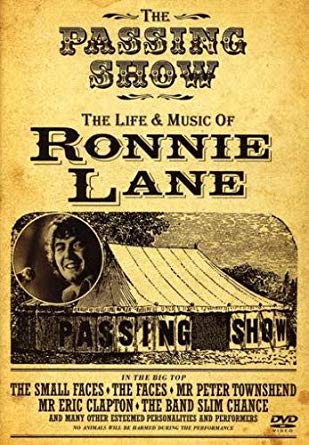
I didn’t know much about Ronnie Lane when I watched this documentary. It covers his childhood through his tragic death and the period after he left the Faces. He was loved by his peers and a talented musician and songwriter.
Ronnie’s mom had Multiple Sclerosis and Ronnie was in denial about himself until he was diagnosed with it. I didn’t know about the documentary until I ran across it on youtube.
I would recommend this to any music fan.
Ronnie Lane was a Britsh songwriter and bass player. He started with the Small Faces as the bass player and he and Steve Marriott wrote most of bands songs. The Small Faces never toured America so they never really broke out big. They did have 11 top twenty hits in the UK but only one in America with Itchycoo Park charting at #16.
Steve Mariott left the Small Faces in 1968 and Rod Stewart and Ronnie Wood joined Ronnie Lane, Kenney Jones, and Ian McLagan to start The Faces. The Faces released four albums between 1970-1973… First Step, Long Player, A Nod is as Good as a Wink…to a Blind Horse and Ooh La La. They were one of the top grossing touring bands.
After Rod Stewart’s solo career took off his interest in the band began to wane and in 1973 Ronnie Lane quit. After Ronnie left the Faces, they made no more studio albums.
Ronnie started his own folk-country band named “Slim Chance” and released a surprise hit single “Come On” in 1973 and it went to #11 in the UK. Ronnie had a unique idea of touring. His tour was called “The Passing Show” which toured the countryside with a circus tent and included a ringmaster and clowns.
In 1976 he owed a record company an album and he was in financial trouble. He asked Pete Townshend to help him record an album. The album was called “Rough Mix” and it was a very strong album with great reviews but the record company didn’t promote it and the sales were not great.
During the recording of “Rough Mix” Lane diagnosed with was Multiple Sclerosis. He still toured with Eric Clapton and others afterward and released an album in 1979 called “See Me.”
In 1983 Ronnie called some of his musician friends to do some charity concerts for the Research for Multiple Sclerosis. They were known as the ARMS (Action into Research for Multiple Sclerosis) Charity Concerts. Musicians such as Eric Clapton, Jeff Beck, Jimmy Page, Steve Winwood, Bill Wyman, Charlie Watts, and more came out to support Ronnie.
Ronnie Lane died of Pneumonia while in the final stages of Multiple Sclerosis in 1997
An abbreviated look at some of the top managers in music.
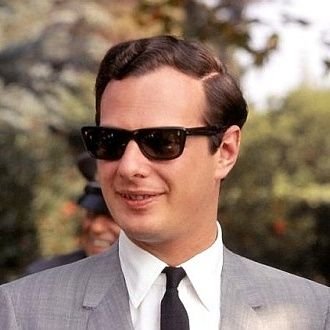
Brian Epstein – Beatles
With no experience, he took the rough young Beatles and made them bigger than Elvis. That was considered impossible before he did it. No one from England ever made it in America…he would change all of that. Some people complained that he cleaned the Beatles up too much but that is the only way they would have been accepted in America.
They opened the doors for all the other British acts to follow. Brian cared about the Beatles and it wasn’t all about the money. He made a few bad deals but he was in uncharted territory. I would take Brian over anyone in this list.
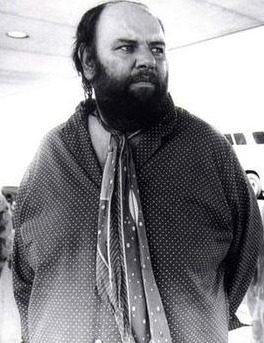
Peter Grant – Led Zeppelin
Peter was big, impressive, and intimidating. He was a former wrestler who would resort to violence if necessary. He changed the business of touring to favor the artist. He demanded 90% of the gate money which that was unheard of at the time.
He fiercely protected their music. Going to record stores and demanding if any bootleg albums or merchandise was there to hand it over. At concerts, he would douse water over recording equipment of bootleggers. Peter was loyal to Led Zeppelin and that cannot be denied.
Albert Grossman – Bob Dylan – The Band – Janis Joplin
He was not liked in the folk community. He was all about commercial success for his artists and the folk fans called him Breadhead…Only in it for the money. Albert protected Bob and helped him to succeed. After Bob, he went on to manage the Band and Janis Joplin.
He built a mini-empire in Bearsville, NY. A recording studio, restaurants, and houses.
This is what Bob Dylan said about his first meeting with Grossman.
“He looked like Sydney Greenstreet from the film The Maltese Falcon, had an enormous presence, always dressed in a conventional suit and tie, and he sat at his corner table. Usually when he talked, his voice was loud like the booming of war drums. He didn’t talk so much as growl.”
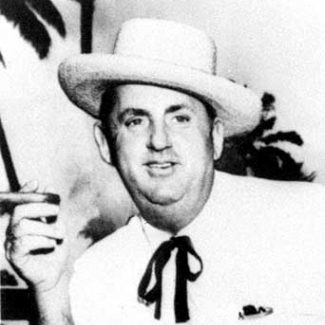
Colonel Tom Parker – Elvis
The Colonel previously worked at carnivals and described Elvis as his “attraction.” He took an incredible 50% of Elvis’s earnings during his career and after his death. Elvis never toured internationally and some say it was because Parker was an illegal immigrant in the U.S. from the Netherlands, lacked a passport and never became a naturalized U.S. citizen.
No one can say that the Colonel didn’t make Elvis money but he controlled everything in Elvis’s life. He planned the Army induction, movies, and then the comeback in Las Vegas. In the end, he kept an unhealthy Elvis working while he accumulated huge gambling debts.
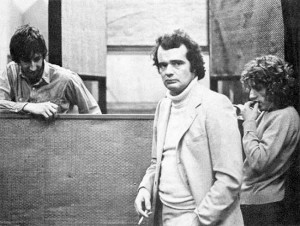
Kit Lambert – The Who
A flamboyant man with partner Chris Stamp managed the Who until the early seventies. Kit help shape their sound and image. Pete Townshend relied on him as an idea person. He helped Pete form the Tommy album as a rock opera and produced it as well.
Townshend has always maintained how important Kit was in his early songwriting. Lambert and Stamp were not great managers but they worked outside the box which is what the Who needed at the time.
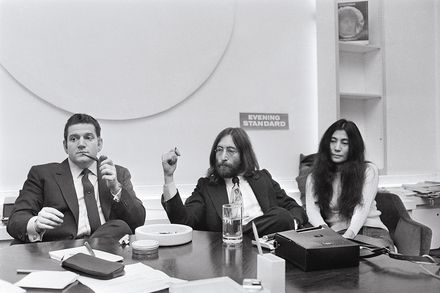
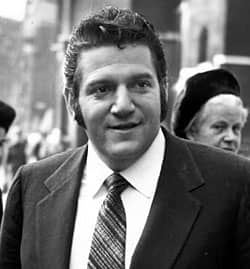
Allen Klein – The Stones and Beatles
Allen was a master at negotiating contracts. He had the two biggest bands in the world and wanted the Who in the 70s…but Pete Townshend knew his reputation and dodged his control. He negotiated the Stones and Beatles huge record deals but also ended up owning the rights to the Stones early catalog.
Later with the Beatles John, George and Ringo wanted Klein as their manager but Paul wanted his father in law Lee Eastman. The rest thought he would be biased on toward Paul. The other Beatles signed with Klein but Paul wisely did not sign.
John, George, and Ringo eventually soured on Allen Klein after many questionable actions by Klein. It took years to untangle the mess he made.
Quote from George on Allen Klein.
“Because we were all from Liverpool, we favored people who were street people,” he said. “Lee Eastman was more like a class-conscious type of person. As John was going with Klein, it was much easier if we went with him too.” But he also noted that “years later, we formed a different opinion.”
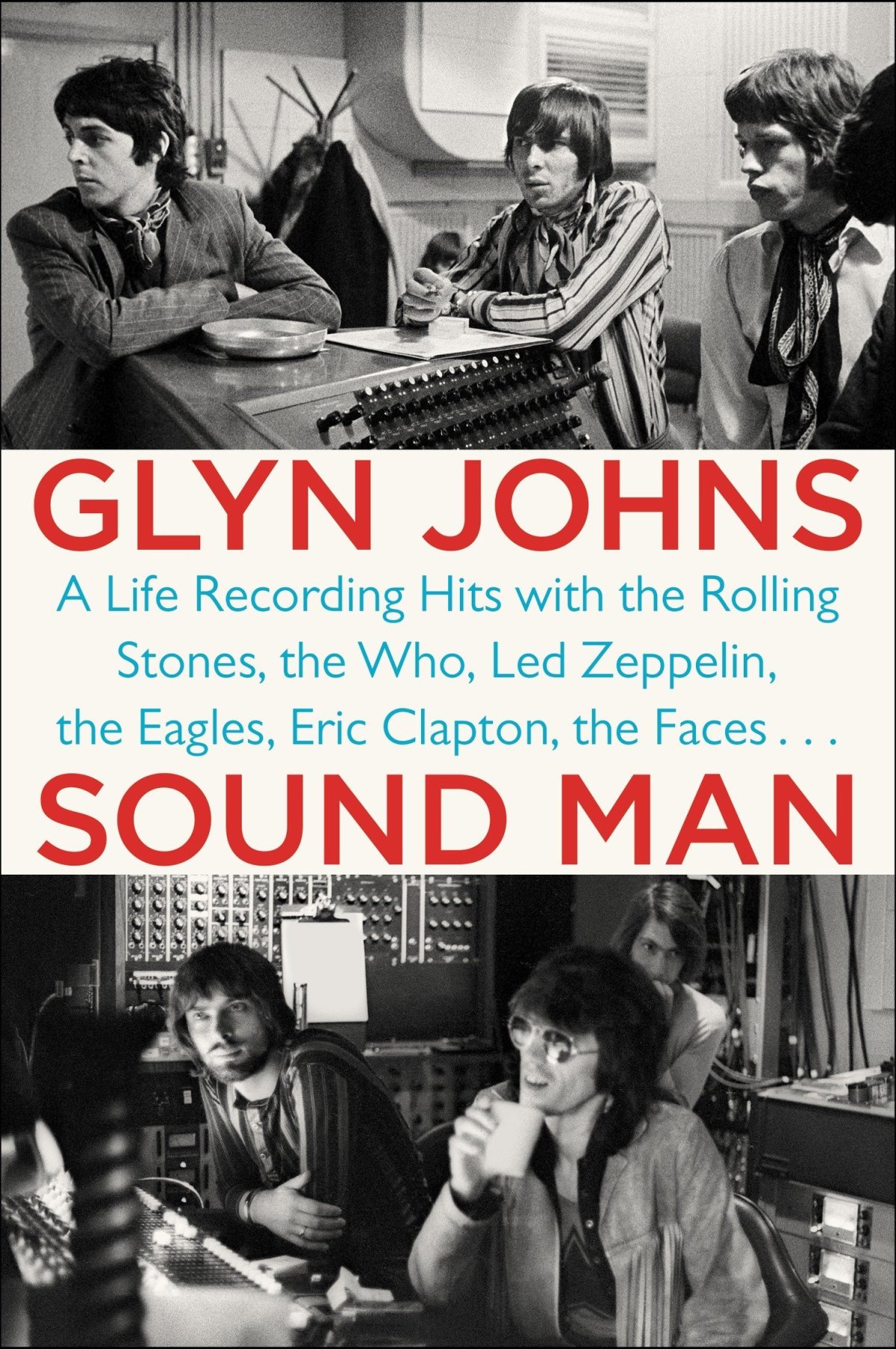
I read this book not knowing what to expect but I did know of Glyn Johns… so many of my albums had his name on it…A name that is known throughout the music industry as a great recording engineer, producer, and mixer. Glyn has worked with huge rock groups such as The Rolling Stones, Beatles, Who, Small Faces, Led Zeppelin, The Band and more.
Glyn is a no-nonsense guy and unlike most of the autobiographies of musicians in that era, he never did drugs and always did his job well. Glyn wanted to be a singer and did make a few records, he covered Rolling Stones Lady Jane, but he stuck with engineering and gradually became a producer.
Back when Glyn started in the early sixties engineers did not graduate to producing. It was very much a British class system in the music industry. He became the first freelance engineer in the industry because of the clients he attracted. He was one of the first to record the Stones and he began a relationship with them that lasted for years. He knew the Stones because he was really good friends with Ian Stewart and even shared a flat with him.
The Beatles called him to engineer Let It Be and he also helped engineer some of Abbey Road. He worked on Led Zeppelin’s first album. He produced Steve Miller’s first albums and also the first couple of Eagles albums.
This book will be very interesting to classic rock fans. Many anecdotes about the Stones, Beatles, Who and others. Glyn minces no words and has a reputation for saying what is on his mind. He isn’t too technical about recording in the book, he keeps it at a fast enjoyable pace.
He worked on some of the most classic albums ever. The Stones 60’s albums and the classic stretch of albums the Stones released until Black and Blue. He worked on Who’s Next, Quadrophenia, Led Zeppelin, A Nod Is As Good As a Wink… to a Blind Horse, Who Are You, Slowhand, just to name a few.
One interesting thing that happened in 1969. Glyn met Bob Dylan and Dylan told Johns that he would like to make an album with the Beatles and Stones. Glyn went back to England very excited and told Keith Richards and George Harrison and they were all for it. Ringo, Charlie, and Bill said they would do it. John didn’t say no but Mick and Paul said absolutely not…leaves you to wonder what it would have sounded like…
At the bottom of the page, I copied his discography from Wikipedia…it is incredible.
Excerpt from Sound Man about the Stones.
While Keith, Charlie, and Bill drove the band rhythmically, Mick’s energy and intellect drove everything else. I was constantly amazed by his skill as a songwriter and by the extraordinary energy he managed to summon for his vocal performances in the studio. Both Mick and Keith would take an active part in the mixing process and drove me nuts making me mix a track for hours when I felt I had got it in the first couple of passes. We certainly did not always agree. I guess it would have been even more boring if we had. There were a couple of occasions when finally putting the album together I would play back earlier mixes that I had done on my own, to compare with the one they had chosen after hours of farting around, and in the cold light of day they would agree that mine were better. Equally, there were many occasions when they insisted on me changing a mix quite drastically from the way I heard it, with great effect. Working with the Stones for all those years certainly had some amazing moments and I am proud to have been associated with them during a period of time when their music was so influential. However, Charlie summed it up perfectly when asked in a recent interview his experience of being in the band for fifty years. He replied, “Ten years of working and forty years of hanging around.”
Excerpt about The Beatles Let It Be
I had been retained originally as an engineer and was quite happy with that, even when I realized that George Martin was not producing. He did come to Twickenham a couple of times to check us out. He had arranged for the gear to be loaned for the recording at Savile Row and turned up on the day we did the filming on the roof, but had nothing to do with the production of the music. At the outset I was quite embarrassed when I realized he was not going to be involved. A couple of days into the project I asked Paul where George Martin was, only to be told that they had decided not to use him. By the time we moved to Savile Row, George, realizing I was in an awkward position, was kind enough to take me to lunch in order to put my mind at rest, saying I was doing a great job, everything was fine, and I was not stepping on his toes in any way. What a gentleman he is. Having delivered the mixed master of my version of Let It Be, I approached each member of the band separately, asking if I could have a production credit on the album when it was released. I made it quite clear that I was only asking for that and not a royalty. Paul, George, and Ringo had no objection to my request but John was suspicious and could not understand why I was not asking for a royalty. I explained that I felt, because of their stature, the sales of the album would not be affected by my involvement one way or another, so a credit would be a fair settlement for what I had done, as by association it could only be positive for my career in the future. I never got an answer from John. As it turned out, none of this mattered, as in the end, after the group broke up, John gave the tapes to Phil Spector, who puked all over them, turning the album into the most syrupy load of bullshit I have ever heard. My master tape, perhaps quite rightly, ended up on a shelf in the tape store at EMI. At least my version of the single of “Get Back”/“Don’t Let Me Down” had been released in April 1969.
Below is Glyn’s discography…what a body of work.
Artist
Year
Album
Producer
Engineer
Mixing
Georgie Fame
1964
Rhythm and Blues at the Flamingo
The Rolling Stones
1965
December’s Children
co-eng.
co-mix.
The Pretty Things
1965
Get the Picture?
co-prod.
The Rolling Stones
1965
Out of Our Heads
co-eng.
co-mix.
The Rolling Stones
1966
Aftermath
co-eng.
co-mix.
The Rolling Stones
1966
Got Live if You Want It!
Chris Farlowe
1966
The Art of Chris Farlowe
The Small Faces
1966
Small Faces (Decca)
Chris Farlowe
1966
14 Things to Think About
Twice as Much
1966
Own Up
The Small Faces
1967
From the Beginning
Rolling Stones
1967
Between the Buttons
The Small Faces
1967
Small Faces (Immediate)
The Rolling Stones
1967
Flowers
co-eng.
co-mix.
The Rolling Stones
1967
Their Satanic Majesties Request
Johnny Hallyday
1967
San Francisco (EP)
The Rolling Stones
1968
Beggars Banquet
The Steve Miller Band
1968
Children of the Future
Twice as Much
1968
That’s All
The Pentangle
1968
The Pentangle
The Move
1968
Something Else from the Move
Spooky Tooth
1968
It’s All About
The Small Faces
1968
Ogdens’ Nut Gone Flake
The Steve Miller Band
1968
Sailor
Gerry Temple
1968
Burn Up!
Procol Harum
1968
Shine on Brightly
The Move
1968
The Move
Easybeats
1968
Vigil
Traffic
1968
Traffic
Billy Nichols
1968
Would You Believe
The Steve Miller Band
1969
Brave New World
Family
1969
Family Entertainment
The End
1969
Introspection
The Beatles
1969
Abbey Road
Joe Cocker
1969
Joe Cocker!
Johnny Hallyday
1969
Johnny Hallyday
Led Zeppelin
1969
Led Zeppelin
The Rolling Stones
1969
Let it Bleed
The Steve Miller Band
1969
Your Saving Grace
Lambert and Nuttycombe
1970
At Home
Bob Dylan
1970
Self Portrait
co-eng.
The Rolling Stones
1970
Get Yer Ya-Ya’s Out!
Humble Pie
1970
Humble Pie
Philamore Lincoln
1970
The North Wind Blew South
Billy Preston
1970
That’s the Way God Planned It
Leon Russell
1970
Leon Russell
The Beatles
1970
Let it Be
Joe Cocker
1970
Mad Dogs & Englishmen
Delaney & Bonnie & Friends
1970
On Tour with Eric Clapton
The Move
1970
Shazam
The Band
1970
Stage Fright
co-eng.
Spooky Tooth
1970
The Last Puff
McGuinness Flint
1970
McGuinness Flint
The Faces
1971
A Nod Is As Good As a Wink… to a Blind Horse
Boz Scaggs
1971
Boz Scaggs & Band
Ben Sidran
1971
Feel Your Groove
McGuinness Flint
1971
Happy Birthday, Ruthie Baby
Jesse Ed Davis
1971
¡Jesse Davis!
Leon Russell
1971
Leon Russell and the Shelter People
Boz Scaggs
1971
Moments
Rita Coolidge
1971
Nice Feelin’
Howlin’ Wolf
1971
The London Howlin’ Wolf Sessions
Humble Pie
1971
Rock On
Graham Nash
1971
Songs for Beginners
The Rolling Stones
1971
Sticky Fingers
co-eng.
co-mix.
Spooky Tooth
1971
Tobacco Road
The Who
1971
Who’s Next
co-prod.
Eagles
1972
Eagles
The Rolling Stones
1972
Exile on Main St.
co-eng.
co-mix.
Rita Coolidge
1972
The Lady’s Not for Sale
Neil Young
1972
Harvest
co-eng.
Nicky Hopkins, Ry Cooder, Mick Jagger, Bill Wyman, and Charlie Watts
1972
Jamming with Edward
Chris Jagger
1973
Chris Jagger
Eagles
1973
Desperado
Eric Clapton
1973
Eric Clapton’s Rainbow Concert
The Faces
1973
Ooh La La
The Who
1973
Quadrophenia
co-prod.
co-eng.
Ric Grech
1973
The Last Five Years
Paul McCartney and Wings
1973
Red Rose Speedway
co-eng.
Gallagher & Lyle
1973
Seeds
The Ozark Mountain Daredevils
1973
The Ozark Mountain Daredevils
co-prod.
Gallagher & Lyle
1973
Willie and the Lapdog
The Ozark Mountain Daredevils
1974
It’ll Shine When It Shines
co-prod.
The Rolling Stones
1974
It’s Only Rock ‘n’ Roll
Eagles
1974
On the Border
co-prod.
co-eng.
Gallagher & Lyle
1974
The Last Cowboy
Georgie Fame
1974
Georgie Fame
Fairport Convention
1975
Rising for the Moon
The Who
1975
The Who by Numbers
Andy Fairweather Low
1976
Be Bop ‘n’ Holla
Fools Gold
1976
Fools Gold
Joan Armatrading
1976
Joan Armatrading
Ron Wood & Ronnie Lane
1976
Mahoney’s Last Stand
The Rolling Stones
1976
Black and Blue
co-eng.
Buckacre
1976
Moring Comes
The Bernie Leadon—Michael Georgiades Band
1977
Natural Progressions
Pete Townshend & Ronnie Lane
1977
Rough Mix
Joan Armatrading
1977
Show Some Emotion
Eric Clapton
1977
Slowhand
Eric Clapton
1977
Backless
Craig Nuttycombe
1977
It’s Just a Lifetime
Joan Armatrading
1978
To the Limit
Paul Kennerly and various Artists
1978
White Mansions
The Who
1978
Who Are You
co-prod
co-eng.
Mark Benno
1979
Lost in Austin
Joan Armatrading
1979
Steppin’ Out
Live Wire (band)
1979
Pick it UP
Lazy Racer
1980
Formula II
Tim Renwick
1980
Tim Renwick
Paul Kennerly
1980
Legend of Jessie James
Danny Joe Brown
1981
Danny Joe Brown and the Danny Joe Brown Band
Jools Holland
1981
Jools Holland and His Millionaires
Midnight Oil
1981
Place Without a Postcard
Nine Below Zero
1981
Don’t Point Your Finger
Chris de Burgh
1981
Best Moves
The Clash
1982
Combat Rock
The Who
1982
It’s Hard
Local Boys
1983
Moments of Madness
Various artists
1984
ARMS Concert
Jimmy Page, John Paul Jones, Albert Lee,
1984
No Introduction Necessary
Téléphone
1984
Un Autre Monde
Bob Dylan
1984
Real Live
Immaculate Fools
1985
Hearts of Fortune
Téléphone
1986
Le Live
Roaring Boys
1986
Roaring Boys
The Big Dish
1986
Swimmer
New Model Army
1986
The Ghost of Cain
Joolz
1987
Hex
Spooky Tooth
1987
Spooky Tooth
Helen Watson
1987
Blue Slipper
Labi Siffre
1987
(Something Inside) So Strong
John Hiatt
1988
Slow Turning
Nancy Griffith
1989
Storms
Green on Red
1989
This Time Around (Green on Red album)
John Hiatt
1990
Stolen Moments
Summerhill
1990
West of Here
Del Shannon
1991
The Liberty Years
Energy Orchard
1992
Stop the Machine
Ethan Johns
1992
Independent Years
David Crosby
1993
Thousand Roads
Crosby, Stills, & Nash
1994
After the Storm
The Subdudes
1994
Annunciation
Jackopierce
1995
Bringing on the Weather
Bruce Cockburn
1994
Dart to the Heart
Joe Satriani
1995
Joe Satriani
The Beatles
1996
Anthology 3
co-eng.
Eric Clapton
1996
Crossroads 2: Live in the Seventies
The Rolling Stones and various artists
1996
The Rolling Stones Rock and Roll Circus
Warm Jets
1997
Future Signs
Bill Wyman’s Rhythm Kings
1998
Struttin’ Our Stuff
Linda Ronstadt
1998
We Ran
Bill Wyman’s Rhythm Kings
1999
Anyway the Wind Blows
Emmylou Harris & Linda Ronstadt
1999
Western Wall: The Tucson Sessions
Various artists
1999
Return of the Grievous Angel: A Tribute to Gram Parsons
John Hiatt and various artists
20o2
Disney’s The Country Bears
musical dir.
Bruce Cockburn
2005
Speechless
Andy Fairweather Low
2006
Sweet Soulful Music
The Clash
2008
Live at Shea Stadium
Ian McLagan & the Bump Band
2008
Never Say Never
+ mastering
Ryan Adams
2011
Ashes & Fire
Ben Waters
2011
Boogie 4 Stu: A Tribute to Ian Stewart
The Rolling Stones
2012
Charlie is My Darling: Ireland 1965
The Staves
2012
Dead & Born & Grown Up & Live
co-prod.
The Rolling Stones
2012
GRRR!
Band of Horses
2012
Mirage Rock
Ethan Johns
2012
If Not Now Then When?
Aaron Neville
2013
My True Story
Patty Griffin
2013
Silver Bell
Stephen Stills
2013
Carry On
co-prod.
co-eng.
co-mix
Bob Dylan
2013
Another Self Portrait (1969-1971: The Bootleg Series, Vol. 10)
co-eng.
Benmont Tench
2014
You Should Be So Lucky
Ian McLagan & the Bump Band
2014
United States
Joe Satriani
2014
The Complete Studio Recordings
Bruce Cockburn
2014
Rumours of Glory (True North)
David Bowie
2014
Nothing Has Changed
co-eng.
The Small Faces
2014
Here Come the Nice: The Immediate Years 1967-1969
The Small Faces
20..
Greatest Hits: The Immediate Years 1967-1969
The Faces
2015
You Can Make Me Dance, Sing or Anything: 1970-1975
Various artists
2015
Truckers, Kickers, Cowboys Angels: The Blissed-Out Birth of Country-Rock , Vol. 7: 1974
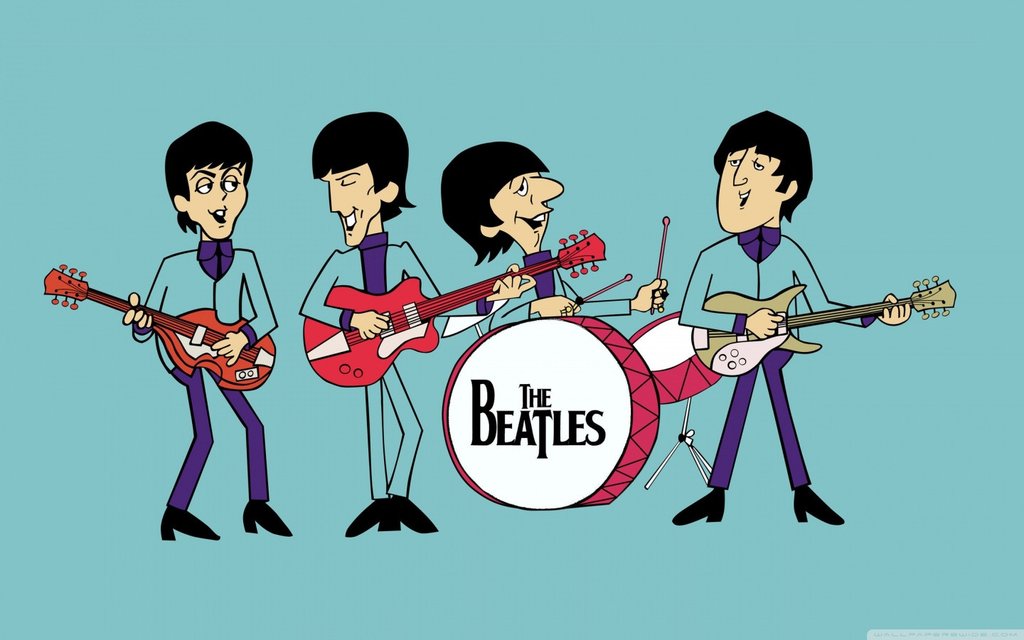
I have all 39 episodes taken from VHS tape but you can view most on youtube. The cartoon reminds me of the style of Rocky and Bullwinkle. John and George were voiced by Paul Frees who did the voice for Boris Badenov on Rocky and Bullwinkle. They ran on ABC from 1965-1969 though only 65-67 were first run episodes.
The show was made on the cheap and the cartoon Beatles were put in usual cartoon situations like a jungle, haunted house, or on a boat. The main thing was to play a Beatle song in the background while our heroes got out or into a jam.
They were a rating success. I watch them now and think…why not get actors with real British accents to voice them? They are silly and fun but George especially had no accent at all. The Beatles had nothing to do with them and didn’t really like them at first when they were first on air. They started to appreciate them more as time went on.
With season 3 you start seeing more pop art being incorporating in the episodes. They have segments where flower power framed the newer songs. Some of the segments looked really good but then they would go back to their younger selves. Some of the episodes could be considered so bad they are good…but I like them.
I never got to see these until the 1980s.
Below is some samples of it.
Below are the episodes descriptions from Wikipedia
Season 1 (1965–66)
1. A Hard Day’s Night / I Want to Hold Your Hand: The Beatles are in Transylvania rehearsing in a haunted house with “monstrous” visitors, including a vampire, a ghost, a werewolf, and a witch, with a parody of Boris Karloff; To hide from their fans, the Beatles run inside a diving bell which drops them into the ocean with a lovesick octopus. Sing Alongs: Not A Second Time / Devil In Her Heart
2. Do You Want To Know A Secret / If I Fell: The Beatles go to Dublin, Ireland for the weekend where they meet a leprechaun named Wilhelmina Morris; John is kidnapped by Dr. Dora Florahyde and Igor, both of whom want John’s brain for their monster. In the I Want To Hold Your Hand Sing Along, Ringo is shown inside a submarine. Sing Alongs: A Hard Day’s Night / I Want To Hold Your Hand
3. Please Mr. Postman / Devil In Her Heart: Ringo loses 15 rings he bought with all of the Beatles’ spendings and they are expecting a telegram from manager Brian Epstein for more money; Ringo wanders into the woods in Transylvania where he meets a witch who wants Ringo for a husband. Sing Alongs: If I Fell / Do You Want To Know A Secret
4. Not A Second Time / Slow Down: The Beatles abandon their flight and land in Africa while trying to get away from their fans, but three girls keep tracking them down. They later encounter a few crocodiles; The Beatles are on the way to the town Ringo Ravine (named after Ringo) until they encounter a donkey that smells gold named “Gold Nose”. Sing Alongs: Baby’s In Black / Misery
5. Baby’s In Black / Misery: Paul gets kidnapped by Professor Psycho who wants Paul to marry his creation Vampiress, half girl and half bat; The Beatles go to a wax museum where a vampire follows them. Sing Alongs: I’ll Get You / Chains
6. You’ve Really Got A Hold On Me / Chains: In Africa, Ringo asks a medicine maker named Jack to help fix the Beatles’ flat tire. He then turns a worm into a snake and it lusts for Ringo; After getting knocked out, Ringo dreams about himself as Captain William Bligh from the movie Mutiny on the Bounty (1962). Sing Alongs: Slow Down / Honey Don’t
7. I’ll Get You / Honey Don’t: The Beatles run into hunter Alan Watermain (a parody of Alan Quartermain) in Africa after escaping from their fans and go out hunting for a lion; Ringo is mistaken as a bull rider, and the cowboys send him to ride on a super-tough bull named Honey. Sing Alongs: You’ve Really Got A Hold On Me / Any Time At All
8. Any Time At All / Twist and Shout: The Beatles imagine themselves as the Three Musketeers (Plus One) while they are on a tour at a museum in France; The Beatles attend an art show where a girl tries to be like other artists. They inspire her with music. Sing Alongs: I’ll Be Back / Little Child
9. Little Child / I’ll Be Back: A Native American girl on a Texas Indian reservation wants to prove that girls are as good at trapping as boys are by trapping the Beatles; The mayor of a Texas town gives Ringo a golden guitar as a gift, only to be stolen by three men, prompting the Fab Four to hunt for the thieves and get the guitar back. (The song “Ticket to Ride” is heard at the beginning of this episode.) Sing Alongs: Long Tall Sally / Twist And Shout
10. Long Tall Sally / I’ll Cry Instead: The Beatles stay at a castle for the night during a fog. John and Ringo try on a couple of cursed armor suits and start to fight each other; After signing too many autographs in Japan, George’s hand gets swollen and suffers “autographitis”. His bandmates take him to a hand doctor but end up in a karate class by mistake. Sing Alongs: I’ll Follow The Sun / When I Get Home
11. I’ll Follow the Sun / When I Get Home: The Beatles’ car breaks down and they are captured by a highwayman who happens to be a car repair man; The Beatles explore the Notre Dame in France where they later meet its famous hunchback Quasimodo. Sing Alongs: I’ll Cry Instead / Everybody’s Trying To Be My Baby
12. Everybody’s Trying To Be My Baby / I Should Have Known Better: The Beatles, spending the night at a temple in Japan during a rainstorm, are mistaken for Japanese ancestors of four girls; The Beatles are in Rome trying to find a theater to rehearse. Their last resort is the Coliseum. Sing Alongs: I’m A Loser / I Wanna Be Your Man
13. I’m A Loser / I Wanna Be Your Man: In Hollywood, Ringo gets hired as a stuntman by Incredible Pictures Inc. and ends up in the hospital after getting pulverized in many scenes; In Rome, the Beatles buy a statue of the Goddess of Musica made from stolen gold coins melted down and sculptured. Sing Alongs: No Reply / I’m Happy Just To Dance With You
14. Don’t Bother Me / No Reply: In Rome, The Beatles are being followed by two spies who are after their songbook, “New Beatle Songs”, marked “Top Secret”. The Beatles movie Help! and Oddjob from the James Bond movie Goldfinger are spoofed; In Japan, The Beatles are warned by a Charlie Chanlookalike about a jewel thief named Anyface. Things become complicated when Anyface shows up disguised as Paul. Sing Alongs: It Won’t Be Long / I Should Have Known Better
15. I’m Happy Just To Dance With You / Mr. Moonlight: The Beatles are in a Roman Street Festival where Paul wins a dancing bear named Bonnie; The Beatles meet Professor Ludwig Von Brilliant who is on a mission to view an eclipse. After being adrift at sea, they escape from an island on a submarine. Sing Alongs: Don’t Bother Me / Can’t Buy Me Love
16. Can’t Buy Me Love / It Won’t Be Long: John is given a friendship ring from a Polynesian tribal chief, which means he must marry the chief’s New York-accented daughter who dislikes pineapples; While picnicking in Japan, John goes for a swim in a pond with shrinking potion in it and gets shrunk. The other Beatles think John is a Beatle doll and chase after him. Sing Alongs: Anna (Go to Him) / Mr. Moonlight
17. Anna / I Don’t Want To Spoil The Party: In Japan, Paul gets lured into a ghost ship called “Ah-Nah”. The other Beatles dash off to the rescue before they might lose Paul for good; Paul, George and Ringo sneak away from John and go to Greenwich Village for some fun time at a Beatnik party rather than going to a museum. Sing Alongs: Matchbox / Thank You Girl
18. Matchbox / Thank You Girl: In Hawaii, John buys a trailer for the group to stay in rather than staying at a hotel so many times. They later encounter a group of Hawaiians who are evacuating from a volcano; The Beatles sneak away from their manager to get something to eat at a French restaurant by enrolling in a cooking course. Sing Alongs: I Don’t Want To Spoil The Party / Help!
19. From Me To You / Boys*: In Hawaii, a surfer named Surf Wolf challenges George to a surfing duel; The Beatles participate in a Mr. Hollywood Contest in California. Sing Alongs: Please Mr. Postman / I Saw Her Standing There Note: The opening title erroneously shows “With Love From Me To You”
20. Dizzy Miss Lizzy / I Saw Her Standing There: John and Paul secretly sign George up to an ice boat race, and he partners up with a girl named Lizzy; In Madrid, John and Paul visit a restaurant where John develops a hot foot with ashes in his boot. Rosita falls for John, and her boyfriend Jose challenges John to a duel. Sing Alongs: Ticket To Ride / From Me To You
21. What You’re Doing / Money*: The Beatles are on a fishing trip, and Ringo runs into gypsies. One of them falls for Ringo and wants to marry him. George comes in as a woman claiming he’s engaged to Ringo to get him back; John puts Ringo in charge to keep their money safe in his jacket pocket. Later Ringo is being followed by a mystery man at a carnival who is after the money. (The song “Help!” is heard at the beginning of this episode.) Sing Alongs: Dizzy Miss Lizzy / All My Loving
22. Komm Gib Mir Deine Hand* / She Loves You: The Beatles visit the Bavarian alps mission is to climb up a mountain with the dog Gunthar to put up their own flag on top; The Beatles are about to rescue a girl who they think is held as a prisoner on a ship. As a result, her boyfriend, a knife thrower, comes to her defense…with knives. Sing Alongs: Bad Boy / Tell Me Why
23. Bad Boy / Tell Me Why: The Beatles visit the Bavarian Alps. They encounter a runaway named Hans who wants to be a Beatle, prompting The Fab Four to run after him with their music (in which Paul plays the bass right-handed) and take him back home. (The song “Slow Down” is heard in the background); In Spain, Ringo is the jockey of a donkey that can run like a horse whenever she hears loud music. Sing Alongs: Please Please Me / Hold Me Tight
24. I Feel Fine / Hold Me Tight: Paul thinks Hollywood’s a phony. Actor Dick Dashing wants to prove Paul he is wrong by putting him in some different movie scenes; In New York, George and Ringo visit the Statue Of Liberty until they have spotted a man with a package which they think is a bomb. Sing Alongs: What You’re Doing / There’s A Place
25. Please Please Me / There’s A Place: In Madrid, a bull named El Taco gets knocked out, and the Beatles decide to help out with the bullfight with Ringo as the matador, and John and Paul as the bull; John’s sympathy helps a trained ape named Mr. Marvelous escape from the television studio and go out to explore the outside world. Sing Alongs: Roll Over Beethoven / Rock And Roll Music
26. Roll Over Beethoven / Rock and Roll Music: The Beatles are on their way home after visiting New York City until Paul gets grabbed by an elephant named Beethoven; The Beatles are invited to play at the Duke’s Palace, but they are mistaken for a string quartet. Sing Alongs: I Feel Fine / She Loves You
Season 2 (1966)
27. Eight Days A Week / I’m Looking Through You: A great movie lover named Lips Lovelace loses his ability to kiss. Paul decides to take his place in the studio with a leading lady who falls for him; The Beatles are in Egypt. They are wandering around in a pyramid until Ringo encounters a ghost who wants a body, and he chooses Ringo’s. Sing Alongs: Run For Your Life / Girl**
28. Help! / We Can Work It Out: Paul and Ringo go to a fashion show in Paris, but the designs are stolen by a thief named Jacques Le Zipper. Paul chases Jacques to the Eiffel Tower, and has trouble with heights; George becomes superstitious. The Beatles encounter the Lucky Wizard who is really a thief trying to give them bad luck and rob their money. Sing Alongs: The Night Before** / Day Tripper
29. I’m Down* / Run For Your Life: The Beatles are on a tour at a wine factory in France where Ringo accidentally knocks down a vat of wine. If it does not get fixed in two hours, the factory will go out of business; The Beatles are on a tour at the Palace of Versailles. Ringo gets knocked out by a statue, and dreams about the days of Marie Antoinette. Sing Alongs: Eight Days A Week / Paperback Writer
30. Drive My Car* / Tell Me What You See*: The Beatles help a young man and his girlfriend get their old jalopy running in a car race, the Popsville Hot Rod Race; While visiting “the man of a thousand faces”, The Beatles fool around with his makeup machine and change into different characters. (John briefly imitates Jimmy Durante and Swee’Pea from “Popeye” makes a cameo.) Sing Alongs: Yesterday** / We Can Work It Out
31. I Call Your Name* / The Word*: Ringo is convinced to release his pet frog Bartholomew in the swamp. Later a movie producer offers a filming deal to Ringo and the frog, and the Fabs have dashed off to find Bartholomew; The Beatles are being punished after gazing at the girls’ unveiled faces. The only way to get out of the situation is to say the password: “love”. Sing Alongs: She’s a Woman** (original broadcast, replaced with a repeat of I Feel Fine) / Wait
32. All My Loving / Day Tripper: The Beatles are in India where they learn how to charm an animal at an “Indian Charm Skool”. When the animal is revealed to be a tiger, they use music to tame it when it is about to claw John and Ringo (The song “Love You To” is heard in the beginning of this episode.); After watching the movie The Way Out Creatures From Planet Glom, the Beatles take a trip out into space with a beautiful woman who is actually an alien taking them on a one-way trip 23 billion miles from Earth. Sing Alongs: I’m Looking Through You / Nowhere Man
33. Nowhere Man / Paperback Writer: The Beatles walk into a cave for some exploring which is a home of a hermit who wants to be alone. He tries to get rid of them, but no luck; Each of the Beatles write fictional stories of how they met with Ringo as a theatre actor, Paul as a scientist, George as a secret agent, and John as a war pilot. Sing Alongs: And I Love Her** / Michelle**
Season 3 (1967)
34. Penny Lane / Strawberry Fields: In a spoof of James Bond, the Beatles are jealous of a detective named James Blonde who gets more attention from many women, so the Fab Four head to their hometown of Liverpool to stop a robbery on Penny Lane so they can be heroes; Traveling with their driver James, the Beatles use music to add color and happiness to the lives of the children at an orphanage, a reference to Strawberry Field in Woolton, a suburb of Liverpool. John sums up the experience with “It’s all in the mind, you know.” Sing Alongs: Good Day Sunshine / Rain**
35. And Your Bird Can Sing / Got To Get You Into My Life: The Beatles and a couple of hunters hunt for a rare bird called a green double-breasted tropical woosted that can sing anything, including “Hound Dog” and “She Loves You”; The Beatles are in India, learning how to escape from their bodies from Swami Rivers. It works, but the problem is that the souls’ bodies are moving by themselves, and they must get them before it’s too late. (“Love You To” is heard in the background) Sing Alongs: Penny Lane / Eleanor Rigby
36. Good Day Sunshine / Ticket To Ride: Ringo thinks he’s a jinx. When the Beatles arrive at Carney Island, it starts to rain. Their music turns the rainy day back into a sunny day which makes Ringo happy. (The song “Little Child” is heard at the end of this episode.); The Beatles each have their own hobby. Paul paints, George builds a three-eyed robot, John writes and Ringo collects “birds” which is an English slang term for girls. Paul releases the only one Ringo caught and he runs after her. Sing Alongs: Strawberry Fields Forever / And Your Bird Can Sing
37. Taxman* / Eleanor Rigby: The Beatles get knocked out while carrying tons of money to the bank, and dream about the days of Robin Hood. Paul exclaims: “It never happened”; A group of children claim that an elderly woman named Eleanor Rigby is a witch. The Fabs tell them the true story about Eleanor Rigby in a song. (The song “I Feel Fine” is heard at the end of this episode.) Sing Alongs: Got To Get You Into My Life / Here, There and Everywhere**
38. Tomorrow Never Knows*/I’ve Just Seen a Face*: The Beatles fall into a well and end up in the inner world with foreign natives. The chief wants the Fabs to marry his daughters, and they began to run away. (The song “Love You To” is heard during this episode.); Ringo loses his singing voice. For treatment, his three mates send Ringo to a haunted house to scare his voice back. Sing Alongs: She Said She Said** / Long Tall Sally (repeat)
39. Wait / I’m Only Sleeping*: The Prince of Krapotkin’s girlfriend is in grave danger. The Beatles help him to save her from the Prime Minister who wants to marry her; John falls asleep while telling a story to a couple of children. In his dream he volunteers to help King Arthur and Merlin slay a vicious dragon. However, John and his mates opt instead to play music to put the dragon to sleep. Sing Alongs: Penny Lane (repeat) / Eleanor Rigby (repeat)










 PowerPop... An Eclectic Collection of Pop Culture