This band was never huge but should have been. They were many things…a blues rock band and then blossomed into a great power-pop band. This song is during their blues/rock period.
It is off of their album Teenage Head. Years later a band in Canada were influenced by the Flaming Groovies…a band named after this album… Teenage Head. This album and Sticky Fingers by the Stones were released within weeks of each other. Mick Jagger reportedly noticed the similarities between the Groovies Teenage Head album … and thought the Flamin’ Groovies did the better take on the theme of classic blues and rock ‘n roll revisited in a modern context.
It’s a mid-tempo song but when the vocal hits we have a hint of Sun Records slap back and I love it. Lead singer Roy Loney left the band just three weeks after Teenage Head was released. Some critics hold it up to Sticky Fingers.
By the end of the sixties they clashed over where to go. Loney was more Stones and Cyril Jordon leaned toward the Beatles. Loney left in 1971 and they got an 18 year old lead singer named Chris Wilson and the power pop era began.
Whiskey Woman
I’ve been hungry all day long For that girl whose wastin’ time She was here but now she’s gone I’ve got a taste for wine
Whiskey woman, why can’t you See the hell you put me through? We are tears dressed in blue
As I sit and write this song You’re the one thing on my mind We’ve been lovers far too long The good times were passin by
Whiskey woman, I feel good Locked me in her womanhood Like I always knew she would
Yeah
Whiskey woman, I want you Whiskey woman, I want you Whiskey woman, I want you
Come on, come on I want you I want you I want you
Where is the woman Where are you Where, where are you? I want you I want you, yeah
The great Garth Hudson gives us a wonderful intro to this song. In live shows, the song became a Hudson showcase, with him improvising wildly on organ (and later, on synthesizer) before cutting into the song. This improvisation came to be known as “The Genetic Method.” .Eventually the improvisation quoted Bach’s “Fugue in D Minor” and followed into the song’s main riff. Only part of the improvisation was included on the actual album cut.
Garth Hudson was the Band’s secret weapon according to Robertson. Back when they were backing Ronnie Hawkins….they asked the classically trained Hudson to join them. His parents didn’t like the idea but… Hudson agreed to join the band on two conditions: that Hawkins buy him a Lowrey organ, and that he be paid an extra $10 a week to give music lessons to the other Hawks. After that he was in The Band.
This gem came from Music From Big Pink in 1968. The song is credited to Robbie Robertson. Levon Helm said that he and Richard Manual wrote the lyrics to the song.
I was talking to another blogger the other day about the Band. They lived up to their name more than about any other band. Not only did they all contribute to songs…not writing…but all of them did contribute some but they all could play each others instruments.
Music From Big Pink was a huge influence on other artists back then and to this day. George Harrison and Eric Clapton were two that were influenced by it. Eric even had ideas of joining the Band. You can hear it in music at that time. Psychedelic was out and more Americana or roots music was in. The album’s influence far outweighed it’s chart position.
The album peaked at #18 in Canada and #30 in the Billboard Album Chart. It has to be on the list of best debut albums of all time.
Robbie Robertson:When Garth played the intro to “Chest Fever,” which he called “The Genetic Method,” I was reminded there was no other keyboard player in rock ’n’ roll who had his improvisational abilities and imagination.
Robbie Robertson:“It’s kind of a hard love song,” “But it’s a reversal on that old rock & roll thing where they’re always telling the girl, ‘He’s a rebel, he’ll never be any good.’ This time, it’s the other way around.”
From Songfacts
The Band’s guitarist, Robbie Robertson, felt he needed a counterbalance for the album’s centerpiece, “The Weight.” He wrote the music for the song solely for that purpose.
Robertson, drummer Levon Helm, and pianist Richard Manuel improvised lyrics (Robertson often calls them meaningless) over the course of the song. Those lyrics remain unchanged on the track, although they loosely tell a story of a man thrown aside by a hard-drinking, fast-talking woman who subsequently literally becomes sick with love for her.
This was the opening song for the Band’s set at the Woodstock Festival in 1969.
Chest Fever
I know she’s a tracker Any style that would back her They say she’s a chooser But I just can’t refuse her She was just there, but then she can’t be here no more
And as my mind unwheels I feel the freeze down in my knees But just before she leaves, she receives
She’s been down in the dunes And she’s dealt with the goons Now she drinks from a bitter cup I’m trying to get her to give it up She was just here, I fear she can’t be there no more
And as my mind unwheels I feel the freeze down in my knees But just before she leaves, she receives
It’s long, long when she’s gone I get weary holding on Now I’m coldly fading fast I don’t think I’m gonna last very much longer
She’s stoned said the Swede, And the moon calf agreed But I’m like a viper in shock With my eyes in the clock She was just there somewhere and here I am again
And as my mind unweaves I feel the freeze down in my knees But just before she leaves, she receives
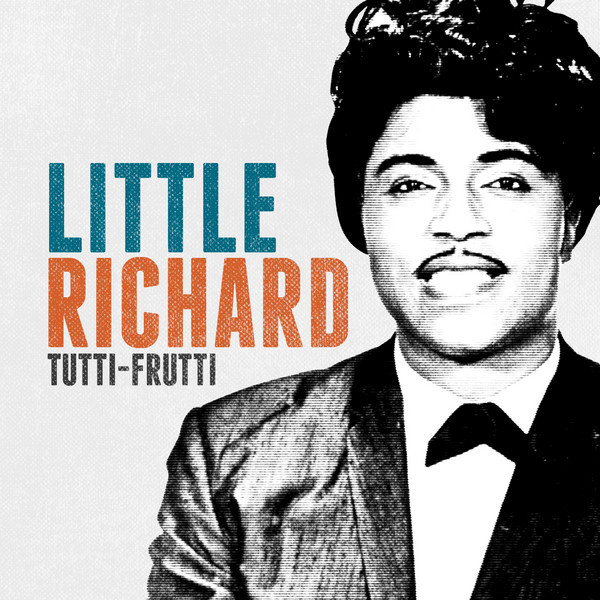
Greetings on this Sunday Morning…Pure poetry! What a voice! This song is like a shot of adrenaline. If Little Richard came out today…what kind of music would he sing?
Little Richard wrote this song in 1955 when he was working as a dishwasher at a Greyhound bus station in his hometown of Macon, Georgia.
Little Richard’s real name was Richard Wayne Penniman and was born in Macon, Georgia. He was one of twelve children… “Little Richard” was his childhood nickname, and even though he was not a little adult (almost 6 feet tall), he kept the name. His family listened to singers like Bing Crosby and Ella Fitzgerald. Richard couldn’t find any music he liked, so he created it.
This was Little Richard’s first hit, but his success was far from instant. His first recordings were in 1952 for RCA Records, and were failures. He moved to Peacock Records the next year and released some singles with the Johnny Otis Trio backing him up.
Richard’s break came when the singer Lloyd Price played a show in Macon, Georgia, and Richard, who was selling drinks at the gig, went to the dressing room and played Price “Tutti Frutti” on the piano.
The song peaked at #18 in the US, #2 in the R&B Charts, and #29 in the UK in 1955.
This song was a huge influence on many future rock stars, but it had special significance for David Bowie, as it was the first rock song he heard. Bowie’s father, who ran a London music hall, brought the record home when David was 9 years old.
Bowie said: “My heart nearly burst with excitement,” “I had heard God.”
Little Richard:“I couldn’t talk back to my boss man. He would bring all these pots back for me to wash, and one day I said, ‘I’ve got to do something to stop this man bringing back all these pots to me to wash,’ and I said, ‘Awap bop a lup bop a wop bam boom, take ’em out!’ and that’s what I meant at the time. And so I wrote ‘Tutti Frutti’ in the kitchen, I wrote ‘Good Golly Miss Molly’ in the kitchen, I wrote ‘Long Tall Sally’ in that kitchen.”
Little Richard:“My greatest achievement would have to be ‘Tutti Frutti.’ It took me out of the kitchen – I was a dishwasher at the Greyhound bus station, making $10 a week working 12 hours a day, and ‘Tutti Frutti’ was a blessin’ and a lesson. I thank God for ‘Tutti Frutti’.”
From Songfacts
Richard says that “Awap bop a lup bop a wop bam boom” was kind of his catch phrase, something he would reply to folks who asked him how he was doing.
Long before Richard recorded this, he performed it at his shows as “Tutti Frutti, Good Booty.” It was a very raucous and sexual song and was considered too suggestive for white audiences, so it was cleaned up considerably when he recorded it for Specialty Records. The chorus was changed to “Tutti Frutti, aw Rudi,” and these original lyrics were replaced:
If it’s tight, it’s alright
If it’s greasy, it makes it easy
Some sources have claimed that Richard also sang “A good God damn” instead of “a wop bam boom,” but according to the notes in the 2012 reissue of the album, Richard (who later became a minister) never took the Lord’s name in vain and never sang that lyric. Price encouraged Richard to send a tape to Specialty Records, so he sent them a demo of two songs he recorded in February 1955 with his group The Upsetters: “Baby” and “All Night Long.” Specialty owner Art Rupe was unimpressed, but Richard kept calling and sending letters.
His persistence paid off and Rupe finally sent his producer Bumps Blackwell to New Orleans, where on September 13 and 14, they recorded the nine songs that would comprise the Here’s Little Richard album. “Tutti Frutti” was released as a single and became a breakout hit, which Richard found out when the record company called him in Georgia to explain. They flew him to Hollywood and had him record follow-up singles “Long Tall Sally” and “Slippin’ and Slidin’.”
This was the last song recorded for the album, and it barely made it. The first eight tracks Richard put down were blues numbers which weren’t wowing his producer Bumps Blackwell, who took a break and brought Richard to a local bar called the Dew Drop Inn. Richard, feeling more relaxed with an audience to play for, sat down at a piano in the bar and started playing his live favorite “Tutti Frutti.” This got Blackwell’s attention, and he insisted that Richard record the song.
Of course, the original racy lyrics about “good booty” had to be replaced, and Little Richard had no particular talent for writing words that would match his melody yet mollify a white audience. This task fell to Dorothy LaBostrie, who Blackwell described as “a girl who kept hanging around the studio to sell songs.” She was on hand because Richard recorded her song “I’m Just A Lonely Guy” earlier that day. With time running out in the session, an embarrassed Richard sang her the raunchy lyrics, looking at the wall while he did so. LaBostrie left and came back with the sanitized lyrics with just 15 minutes of studio time remaining. They quickly recorded the song, getting it right on the third take with two minutes to spare. Dorothy LaBostrie earned what became a very lucrative writing credit for her efforts.
This song introduced Little Richard’s famous “Whooooo,” and also a big “Aaaaaaahhh” scream which he sings just before the tenor sax solo performed by Lee Allen. Richard’s scream had a practical purpose: to let Allen know when to start playing. They were recording on just three tracks, so overdubbing the horns wasn’t a practical option.
You can also hear Richard’s classic line in this song, “A wop bop a lu bop, a wop bam boom!” He felt you could express your emotions without singing actual words. He would also put a little something extra into the words he sang, which he called “that thing.” It was something he learned playing piano and singing in church, and it was a style that would influence the next generation of rock music.
This is one of the most famous songs of all time, making #43 on Rolling Stone magazine’s list of the 500 Greatest Songs, but it was not a huge hit, going to #2 on the R&B charts and reaching just #17 on the Hot 100.
Pat Boone fared better with his 1956 cover, taking it to #12. Boone had a long career doing sanitized covers of songs by black artists, and he also covered Richard’s “Long Tall Sally.” Many listeners at the time only knew the song through Boone, so Little Richard’s promotional materials often labeled him “Original ‘Tutti Frutti’ Man.”
Boone changed some of the lyrics, so “Boy you don’t know what she’s doing to me” became “Pretty little Susie is the girl for me.”
“The kids didn’t care – they didn’t know,” he said in a Songfacts interview. Boone went on to explain that Little Richard was grateful for the exposure, as he introduced the song to a white audience.
Like “Long Tall Sally,” this song was covered by Elvis. Little Richard once said, “Elvis may be the King of Rock and Roll, but I am the Queen.”
Little Richard did not invent the name “Tutti Frutti”; it was a popular flavor of ice cream. The phrase is Italian for “All Fruits,” and the ice cream had little bits of candied fruit mixed in. In 1938, the Jazz duo Slim Gaillard and Slam Stewart, who recorded as Slim And Slam, released a popular song called “Tutti Frutti,” which was about the ice cream. Little Richard’s was a completely different song.
Little Richard recorded this at J&M Studios in New Orleans, which was the only place to record in the city for many years. Opened in the late ’40s, Ray Charles, Sam Cooke and Jerry Lee Lewis recorded there as well. It has since become a laundromat. >>
Huey “Piano” Smith played the piano on the first eight songs during the session that produced this album, but he didn’t have time to learn “Tutti Frutti” so Richard played it himself. The drummer on the session was Earl Palmer, who later moved to Los Angeles and became one of the most prolific drummers of all time, playing on songs by the Righteous Brothers, Elvis Costello, B.B. King and hundreds of others. On this song, Palmer had no rehearsal and Richard was pounding out a rock rhythm on the piano.
Palmer later explained, “The only reason I started playing what they come to call a Rock and Roll beat was came from trying to match Richard’s right hand – with Richard pounding the piano wih all ten fingers, you couldn’t so very well go against that. I did at first – on ‘Tutti Frutti you can hear me playing a shuffle. Listening to it now, it’s easy to hear I should have been playing that rock beat.” (From Backbeat: Earl Palmer’s Story.)
Buchanan & Goodman sampled this in their 1956 novelty hit, “The Flying Saucer.”
Charles Connor, Little Richard’s drummer in the 1950s and 60s told Uncut magazine the rock ‘n’ roll star took his “Awap bop a lup bop a wop bam boom” catch phrase from his drums. “Richard called me about a month and a half before he passed, and we talked for a long time,” Connor added. “He said, ‘Charles, thanks for helping me create my style of singing.’ He called us the architects of rock and roll, but I said I was the bricklayer, laying the foundation of the rhythm for him.”
On Queen’s last tour with Freddie Mercury (in 1986), they included this song in their setlist along with another ’50s favorite, “Hello Mary Lou” by Ricky Nelson.
Tutti Frutti
Wop bop a loo bop a lop bom bom!
Tutti frutti oh rootie Tutti frutti oh rootie Tutti frutti oh rootie Tutti frutti oh rootie Tutti frutti oh rootie Wop bop a loo bop a lop ba ba!
I got a gal, named Sue, she knows just what to do I got a gal, named Sue, she knows just what to do She rock to the East, she rock to the West But she is the gal that I love best
Tutti frutti oh rootie Tutti frutti oh rootie, ooh Tutti frutti oh rootie Tutti frutti oh rootie Tutti frutti oh rootie Wop bop a loo bop a lop bom bom!
I got a gal, named Daisy, she almost drives me crazy Got a gal, named Daisy, she almost drives me crazy She knows how to love me, yes indeed Boy you don’t know what she do to me
Tutti frutti oh rootie Tutti frutti oh rootie, ooh Tutti frutti oh rootie Tutti frutti oh rootie Tutti frutti oh rootie Wop bop a loo bop!
Oh tutti frutti oh rootie Tutti frutti oh rootie ooo Tutti frutti oh rootie Tutti frutti oh rootie Tutti frutti oh rootie Wop bop a loo bop a lop bom bom!
I got a gal, named Daisy, she almost drive me crazy Got a gal, named Daisy, she almost drive me crazy She knows how to love me, yes indeed Boy you don’t know what she do to me
Tutti frutti oh rootie Tutti frutti oh rootie Tutti frutti oh rootie Tutti frutti oh rootie Tutti frutti oh rootie Wop bop a loo bop a lop bam boom!
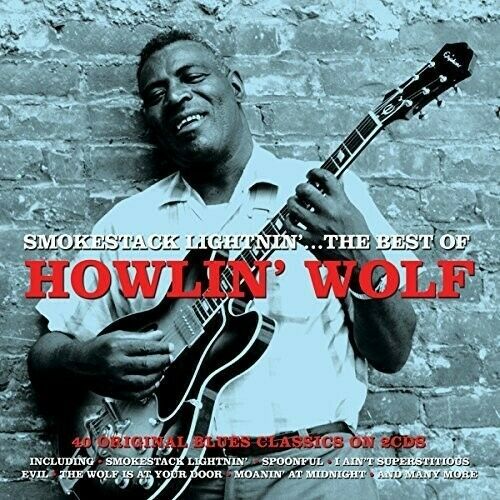
I first learned about Howlin’ Wolf after reading a Rolling Stones biography. It contained an interview that Brian Jones did in the early sixties. He founded the Stones and pushed the Stones toward the blues.
Howlin’ Wolf’s real name was Chester Burnett and he was born in 1910. He was a blues singer, guitarist, and harp player. He had a professional rivalry with fellow bluesman Muddy Waters. Waters ended up getting Wolf his first job in Chicago.
This classic song was recorded way back in 1956 at the legendary Chess studios in Chicago. Wolf is listed as the songwriter and the producers were Leonard Chess, Phil Chess, and Willie Dixon. He lives up to the Howlin’ part of his name…his voice is powerful. He has been credited as one of the first to move acoustic blues to electric guitar.
The Yardbirds (The Clapton version) covered this song and Howlin’ Wolf himself considered their version the definitive version of his song. That had to be quite an honor coming from the man himself.
After reading many of Christian’s posts…I realized I need to add some more blues into my blog…
Smokestack Lightning
Whoa, smokestack lightnin’ Shinin’ just like gold Why don’t you hear me cryin’? A-whoo-hoo, a-whoo-hoo, whoo
Whoa-oh, tell me, baby What’s the matter here? Why don’t you hear me cryin’? Whoo-hoo, whoo-hoo, whoo
Whoa-oh, tell me, baby Where did you stay last night? Why don’t you hear me cryin’? Whoo-hoo, whoo-hoo, whoo
Whoa-oh, stop your train Let a poor boy ride Why don’t you hear me cryin’? Whoo-hoo, whoo-hoo, whoo
Whoa-oh, fare-you-well Never see a you no more Why don’t you hear me cryin’? Whoo-hoo, whoo-hoo, whoo
Whoa-oh, who been here baby since I, I been gone a little bitty boy? Girl, be on A-whoo-hoo, whoo-hoo, whoo
I want to thank you all who have stuck with me through this long haul. We are now finished with the 3rd season! The next season will be quick with only 18 hour long episodes. If you want… please comment on what you think I got wrong, right, or just your favorite episodes.
Season three was not as consistent as seasons 1 and 2 but it still contained some classics such as To Serve Man, A Game Of Pool, The Midnight Sun, Deaths-Head Revisited, Nothing In The Dark, The Dummy, and more.
By the close of the third season, The Twilight Zone had made cultural inroads beyond its status as a mere television series. The show started to fit into popular culture, the twilight zone was a phrase perfectly suited to describe any number of strange situations.
Dean Rusk, the Secretary of State, in a speech to the Senate, referred to the Twilight Zone in diplomacy, Serling noted. When that happened, I thought, My gosh, we’ve arrived! During the 1962 California gubernatorial primaries, Governor Pat Brown said he was looking forward to the post-election TV logs reading, Richard Nixon Returns to Twilight Zone.
In the spring of 1962, The Twilight Zone was late in finding a sponsor for its fourth season. As a result, CBS programmed a new show, Fair Exchange, into its time slot for the fall. Suddenly and without prior warning, The Twilight Zone was off the air.
After CBS dropped The Twilight Zone, Serling accepted a teaching post at Antioch College, effective September, 1962, through January, 1963. CBS did of course pick the series back up after a while. The series renewal made no change in this decision. Serling was tired of The Twilight Zone and burned out. Over the next two seasons, his involvement in the show would be greatly decreased. He would still host the show and contribute his share of scripts, but his input on the details of production would be minimal. Those decisions would be made by others.
CBS ordered only 18 episodes for the 4th season but…they would now be an hour long in format. With Serling’s less involvement combined with the hour format…the shows quality declined in this season. It would somewhat bounce back in the 5th season.
The Raspberries formed in the early 1970s when Eric Carmen and Jim Bonfanti envisioned a band that would emulate bands such as The Beatles, The Who, and The Beach Boys.
This song came off of the Side 3 album released in 1973. This song…well the way I would describe it is country tinged power pop. It was an odd and cool album cover. It was a die-cut of a basket of Raspberries, with the group’s name placed on top of the LP sleeve.
Three members wrote and sang songs. It wasn’t just Eric Carmen…This song was written and sung by Dave Smalley the bass player. This was their third album and they would end up releasing four studio albums.
The band consisted of Eric Carmen (vocalist/guitarist/bassist/pianist), Wally Bryson (guitarist), Jim Bonfanti (drummer), and Dave Smalley (guitarist/bassist).
Their last appearance as the original lineup was on The Mike Douglas Show in 1974. Shortly after… Bonfanti and Smalley both quit the band to pursue individual music careers. Michael McBride and Scott McCarl replaced them and shortly after Raspberries went on to produce their fourth and final album Starting Over…which yielded what could be their masterpiece… Overnight Sensation.
In 2004, the original four members of the group performed at Cleveland’s House of Blues. This resulted in a 2005 mini-tour. The Raspberries performed at other venues around the United States, with their final concert performance in Cleveland, Ohio at KeyBank State Theatre on December 14th, 2007.
Should I Wait
Don’t you know you’re gonna lose If you love somebody that don’t love you? You’ll believe him when he’s untrue But I can’t bear seein’ him break your heart in two I’ve let it happen much too long
Should I wait, hopin’ you’ll find out on your own? It’s me who’s loved you for so long
If he hurts you with his lies Don’t let it take too long to open your eyes You’re gonna see through his disguise But I can’t bear seein’ him break your heart in two I’m tired of tryin’ to play it cool
Should I wait, hopin’ you’ll find out on your own? The one you love is just a fool
If I had the chance I’d make you see When you fall in love how it should be A love that makes you sad can only turn out bad So I’ll be hangin’ ’round until you’re free
Don’t you know you’re gonna lose If you love somebody that don’t love you? You’ll believe him when he’s untrue But I can’t bear seein’ him break your heart in two I’ve let it happen much too long
Should I wait, hopin’ you’ll find out on your own? It’s me who’s loved you for so long
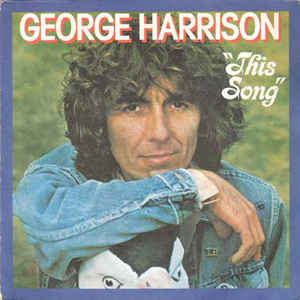
After being sued for My Sweet Lord, George Harrison wrote this song. This was Harrison’s funny send-up of the He’s So Fine and My Sweet Lord plagiarism court case.
The line, “This tune has nothing Bright about it,” is a reference to Bright Tunes Music, the company that owned the publishing rights to “He’s So Fine” and sued Harrison.
It was the first single for Harrison’s Thirty Three & 1/3 album, and features Billy Preston on piano and organ, and Monty Python’s Eric Idle calling out a falsetto “Could be ‘Sugar Pie, Honey Bunch,” “No, sounds more like ‘Rescue Me’!” interjection right before the instrumental break.
The song peaked at #25 in the Billboard 100 and #30 in Canada in 1976. I bought this album when I was 10 and still enjoy it. I couldn’t stop playing Crackerbox Palace.
U.S. District Court Judge Richard Owens found that while he did not feel that George had ‘deliberately’ plagiarized the song ‘He’s So Fine’, there was substantial evidence that he did infringe on the song’s copyright. George was found guilty and ordered to pay damages in the amount of $587,000.”
From Songfacts
Harrison made a video for this song where he is seen pleading his case in courtroom that devolves into a full-on circus by the end, a metaphor for the actual proceedings. The video was shown on Saturday Night Live when Harrison was the musical guest on November 20, 1976. On the same show, Harrison’s video for “Crackerbox Palace” also aired.
This Song
This song has nothing tricky about it This song ain’t black or white and as far as I know Don’t infringe on anyone’s copyright, so
This song, we’ll let be This song is in E This song is for you and
This tune has nothing bright about it This tune ain’t bad or good and come ever what may My expert tells me it’s okay
As this song came to me Unknowingly This song could be you could be, ooh
This riff ain’t trying to win gold medals This riff ain’t hip or square, well-done or rare May end up one more weight to bear
But this song could well be A reason to see That without you there’s no point to this song Ooh, ooh
But this song could well be A reason to see That without you there’s no point to this song
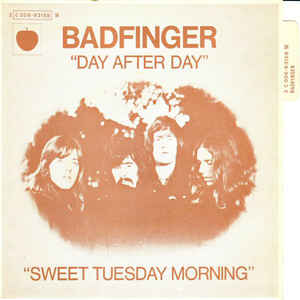
This song came off the album Straight Up that was released in 1971. Sweet Tuesday Morning was guitarist Joey Molland’s ballad about his then new wife Kathie.
All the band members wrote songs and sang. Pete Ham was the most successful out of the four but that doesn’t mean the rest were mediocre. Joey and Tom were both good songwriters and all collaborated with each other at times.
Joey Molland joined the band when bass player Ron Griffiths quit right after they recorded Come and Get It because of friction caused by his marriage. Molland who was previously with Gary Walker & The Rain, The Masterminds, and The Fruit-Eating Bears joined as a guitar player. Tom Evans switched to bass and this was the most successful lineup.
Sweet Tuesday Morning is mostly an acoustic song with simple backing that fit the early 1970s. In the UK this was the B side of Day After Day, Badfinger’s biggest hit. Joey Molland had quite a strong showing on Straight Up…with the songs “Sweet Tuesday Morning,” “Suitcase,” “I’d Die Babe” and the albums most rocking song “Sometimes.”
Most consider Straight Up the best album they made. If you ever decide to buy a Badfinger album and want something other than just a greatest hits…this is the one to buy.
Sweet Tuesday Morning
Sweet Tuesday morning You came and you smiled And all of my fears, They have left me
Sweet Tuesday morning You came and you smiled And love is the answer you gave me
I’ve been to places all around, astound me I’ve seen the breaking of the souvenirs I’m in a brightness I can feel surround me And it’s the first time I’ve felt it for years
Sweet Tuesday morning, You came and you smiled And love is the answer you gave me….mm-mhm
I’ve been to places all around, astound me I’ve seen the breaking of the souvenirs I’m in a brightness I can feel surround me And it’s the first time I’ve felt it for years
It’s been a while since I’ve posted a Buddy song…and any time is too long. He is one of the most important influences from the 50s or any era. Since I’m a Beatle fan I have to say…without Buddy the Beatles would have been different. He wrote his own songs that were part country, rock, rockabilly, and a touch of power pop with his crisp Stratacaster leading the way.
Of all the stars in the 50s I believe Buddy was the one who would have been heard from more in the sixties. His music fit what was going on and had a timeless quality about it.
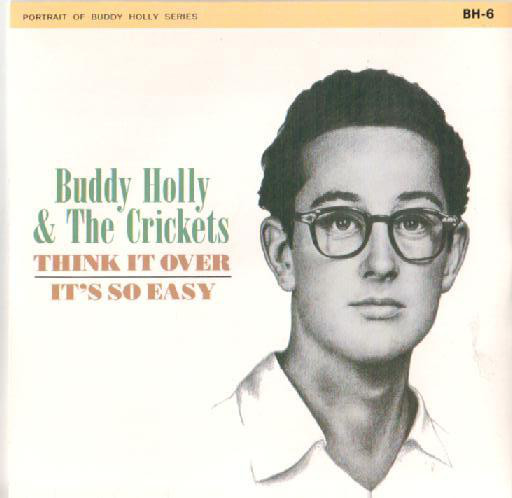
This song peaked at #27 in the Billboard Hot 100, #9 in the R&B Charts, and #11 in the UK in 1958. Think It Over was written by Buddy Holly, Jerry Allison, and Norman Petty in 1958. Per Wiki… Norman Petty’s wife, played piano on this recording.
John Lennon: “He was a great and innovative musician. He was a ‘master’. His influence continues, I often wonder what his music would be like now, had he lived…”
“Buddy Holly was the first one that we were really aware of in England who could play and sing at the same time—not just strum, but actually play the licks.”
Keith Richards:“Holly passed it on via the Beatles and via The Rolling Stones … He’s in everybody”
Think It Over
Think it over, what you’ve just said Think it over in your pretty, little head Are you sure that I’m not the one? Is your love real or only fun?
You think it over Yes, think it over A lonely heart grows cold and old
Think it over and let me know Think it over, but don’t be slow Just remember all birds and bees Go by twos through life’s mysteries
You think it over Yes, think it over A lonely heart grows cold and old
Think it over and think of me Think it over and you will see A happy day when you and I Think as one and kiss the blues goodbye
You think it over Yes, think it over A lonely heart grows cold and old
No, this is not the strongest song in the Beatles catalog or even the strongest on the Let It Be album but…I love that guitar riff! That riff is one of the most unorthodox riffs I’ve heard. Only the mind of John Lennon could have come up with that part. The same man that brought us the riffs of Daytripper and And Your Bird Can Sing.
The part that hooked me as a kid was the guitar riff as I’ve said and the I, I, I, I Iyeeeeeeeee that starts it out. The other strong part of the song is the chorus “All I Want Is You!” “Everything has got to be just like you want it to!” and right after that the riff comes in again. I also like John’s raw vocals in this one. Also…it’s hard not to like “I roll a stoney. “The orginal title was All I Want Is You.
John Lennon would often string words together to create nonsensical phrases for his lyrics. When asked about this song he said it refers to no specific person and the lyrics are “nonsense,” a lyrical technique he also attributes to Bob Dylan songs. John said he made it up as he went along.
The lyrics were brought up in the movie “Imagine” released in 1988.
This part below was in the Imagine movie.
In a clip after the Beatles broke up, a young man…obviousy on hard times ended up in John’s garden. The fellow’s name was Curt Claudio. He looked a bit lost and scarred. He latched onto John Lennon and his music, believing that he had some sort of connection to John and he traveled to England to find out if he really did. He was found sleeping on the grounds of Tittenhurst Park, John and Yoko’s home in Ascot. Claudio thought John was speaking to him through his songs. He mentions lyrics to Dig a Pony.
John took the time to go out and talk to Curt and very kindly told him that he was just a guy too, and that while Curt thought that John’s songs were written with Curt in mind, they were really just written from personal, everyday experiences. He then invited him in the house for something to eat.
Video below
Dig A Pony
I dig a pony Well, you can celebrate anything you want Yes, you can celebrate anything you want Oh
I do a road hog Well, you can penetrate any place you go Yes, you can penetrate any place you go I told you so
All I want is you Everything has got to be just like you want it to Because
I pick a moon dog Well, you can radiate everything you are Yes, you can radiate everything you are Oh now
I roll a stoney Well, you can imitate everyone you know Yes, you can imitate everyone you know I told you so
All I want is you Everything has got to be just like you want it to Because (woo)
Oh now I feel the wind blow Well, you can indicate everything you see Yes, you can indicate everything you see Oh now
I load a lorry Well, you can syndicate any boat you row Yeah, you can syndicate any boat you row I told you so
All I want is you Everything has got to be just like you want it to Because
I’ve been watching Get Back on Disney Plus and this is one of the songs they have went over. I always thought Two Of Us should have been a single… It’s not slick or full of production…just John and Paul singing together like they did in the early years. It feels like they had come full circle.
Paul McCartney wrote this about enjoying his travels with his wife Linda. The song was on the album Let It Be recorded in January of 1969 but wasn’t released until 1970. It was the last studio album released of the Beatles career but not the last recorded.
After this album The Beatles embarked on recording the classic album Abbey Road in the summer of 1969. As the film Get Back shows…yes they would argue but it was not as bad as we have been led to believe or they would not have recorded Abbey Road. There was also talk of another possible album after Abbey Road but they decided to call it a day.
I always thought The Beatles ended at the right time. They never made a bad album like some other bands. I do think they had a couple of albums left in them but to end a career recording Abbey Road…its hard to top that.
It’s interesting to speculate if they would have got back together if John Lennon would not have been murdered. I don’t think they would have recorded again but I do think Lennon and McCartney would have written together again.
Linda McCartney:As a kid I loved getting lost. I would say to my father – let’s get lost. But you could never seem to be able to get really lost. All signs would eventually lead back to New York or wherever we were staying! Then, when I moved to England to be with Paul, we would put Martha in the back of the car and drive out of London. As soon as we were on the open road I’d say, ‘Let’s get lost’ and we’d keep driving without looking at any signs. Hence the line in the song, ‘Two of us going nowhere’.
Paul wrote ‘Two Of Us’ on one of those days out. It’s about us. We just pulled off in a wood somewhere and parked the car. I went off walking while Paul sat in the car and started writing. He also mentions the postcards because we used to send a lot of postcards to each other.
From Songfacts
Lennon and McCartney sang together on this song, which is something they did a lot in the early years of The Beatles, but not so much later on, when they started writing separately and restricting the lead vocal to whoever wrote the song.
This song is mostly acoustic, with Lennon and McCartney each playing acoustic guitar. George Harrison’s electric guitar is there, but low in the mix. There is no bass on the track.
This appears twice in the Beatles documentary movie Let It Be, first as a duet by John and Paul and then with the whole band.
John Lennon did the whistling on the fade-out.
Two Of Us
Two of us riding nowhere Spending someone’s hard-earned pay You and me Sunday driving Not arriving On our way back home We’re on our way home We’re on our way home We’re going home
Two of us sending postcards Writing letters on my wall You and me burning matches Lifting latches On our way back home We’re on our way home We’re on our way home We’re going home
You and I have memories That stretches out ahead
Two of us wearing raincoats Standing solo You and me chasing paper Getting nowhere On our way back home We’re on our way home We’re on our way home We’re going home
You and I have memories That stretches out ahead
Two of us wearing raincoats You and me chasing paper Getting nowhere On our way back home We’re on our way home We’re on our way home We’re going home
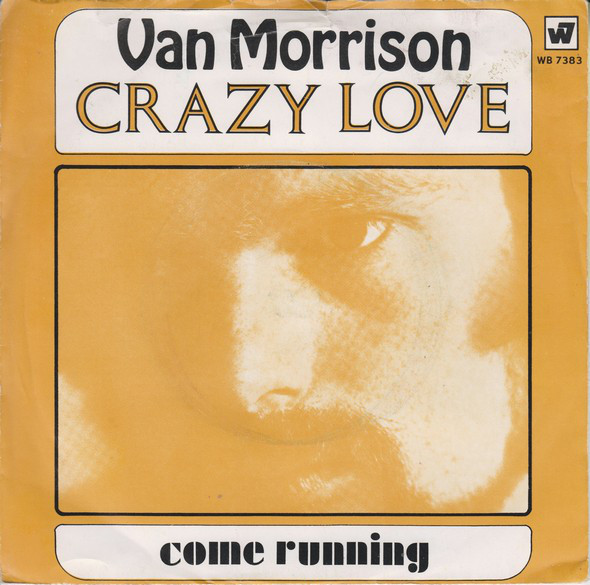
During Han’s song draft, fellow blogger Paul picked Caravan off of the album Moondance. I got the album out and enjoyed it yet again. I first got the album in the mid-80s and I count it as one of my favorite albums ever…and it’s not even my favorite Van Morrison album.
The song is one of the most romantic songs ever. Van had recently married his girlfriend Janet Planet (gotta love that name) when he wrote this song. It’s a very popular wedding song, it didn’t work too well though for Van though… Morrison and Janet divorced in 1973.
Her name before she married Morrison was Janet Rigsbee.
The song has been covered many times. Artists to cover this song include Brian McKnight, Ray Charles, Aaron Neville, Helen Reddy, Rod Stewart, Paul Carrack and John Anderson. Canadian vocalist Michael Bublé covered this for the title track of his 2009 album.
Van Morrison’s ex-wife, Janet Planet, now goes by Janet Morrison Minto after marrying her third husband, Chris Minto. She currently operates a beading business in Los Angeles via Etsy. Her shop, Lovebeads, sells uniquely designed necklaces and bracelets. So go and buy some necklaces or bracelets from Janet Planet!
Crazy Love
I can hear her heart beat for a thousand miles And the heaven’s open every time she smiles And when I come to her that’s where I belong Yet I’m running to her like a river’s song
She give me love, love, love, love, crazy love She give me love, love, love, love, crazy love
She’s got a fine sense of humor when I’m feeling low down Yeah when I come to her when the sun goes down Take away my trouble, take away my grief Take away my heartache, in the night like a thief
She give me love, love, love, love, crazy love She give me love, love, love, love, crazy love
Yes I need her in the daytime (I need her) Yes I need her in the night (I need her) Yes I want to throw my arms around her (I need her) Kiss and hug her, kiss and hug her tight
Yeah when I’m returning from so far away She gives me some sweet lovin’ brighten up my day Yes it makes me righteous, yes it makes me whole Yes it makes me mellow down in to my soul
She give me love, love, love, love, crazy love She give me love, love, love, love, crazy love She give me love, love, love, love, crazy love She give me love, love, love, love, crazy love
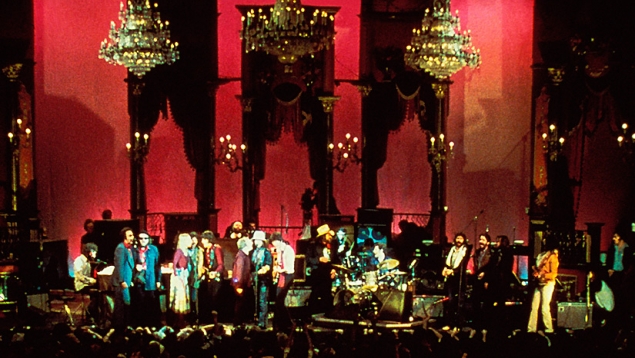
The Band on Thanksgiving in 1976 at the Fillmore West. The film starts off with THIS FILM MUST BE PLAYED LOUD! A cut to Rick Danko playing pool and then it then to the Band playing “Don’t Do It”…the last song they performed that night after hours of playing. Through the music and some interviews, their musical journey and influences are retraced.
This film is considered by many the best concert film ever made. It was directed by Martin Scorsese. I love the setting with the chandeliers that were from the movie Gone With The Wind. The quality of the picture is great because it was shot with 35-millimeter which wasn’t normally done with concerts.
Before the Band and guests hit the stage, Bill Graham, the promoter, served a Thanksgiving dinner to 5000 people that made up the audience with long tables with white tablecloths.
The Band’s musical guests included
Ronnie Hawkins, Bob Dylan, Neil Young, Dr. John, Paul Butterfield, Van Morrison (my favorite performance of a guest), Joni Mitchell, Eric Clapton and Muddy Waters
The Staple Singers and Emmylou Harris also appear but their segments were taped later on a sound stage and not at the concert.
Robbie wanted off the road earlier and that is what the Last Waltz was all about…the last concert by The Band with a lot of musical friends. He was tired of touring and also the habits the band was picking up…the drugs and drinking. Richard Manuel, in particular, was in bad shape and needed time.
The rest of the Band supposedly agreed but a few years later all of them but Robbie started to tour as The Band again. Richard Manuel ended up hanging himself in 1986. Rick Danko passed away in 1999 at the end of a tour of a heart attack attributed to years of drug and alcohol abuse. Levon Helm died of cancer in 2012.
The Band sounded great that night and it might be the best version you will ever hear of The Night They Drove Old Dixie Down.
The Last Waltz is a grand farewell to a great band and a film that I revisit at least twice a year… once always around Thanksgiving.
The complete concert is at the bottom…without cuts.
Happy Thanksgiving! This is a Thanksgiving tradition…tonight I start another! The Beatles Get Back on Disney Plus.
The movie that Arlo movie made called Alice’s Restaurant is a fun watch. My next tradition is coming up with my next post.
Every Thanksgiving I listen to Alice’s Restaurant and this is the fourth year in a row that I’ve posted it on the 4th Thursday of November. Sorry if you are tired of it but it’s not Thanksgiving until Alice’s Restaurant is played…and the Last Waltz is watched also but that is a different story.
It’s not Thanksgiving without listening to this 1967 song. This song did not chart but he did have another version that did chart…it was called Alice’s Rock and Roll Restaurant that peaked at #97 in the Billboard 100.
Many radio stations play this on Thanksgiving. This is usually the only time they play it, since the song is over 18-minutes long.
There have been mixed reviews about the movie that was made…I’ve always found it enjoyable. It’s not going to be confused with Gone With The Wind but it’s a fun period movie.
In 1991, Arlo bought the church where this took place and set up “The Guthrie Center,” where he runs programs for kids who have been abused.
From Songfacts
Running 18 minutes and 34 seconds, this song is based on a true story that happened on Thanksgiving Day, 1965. Arlo was 18, and along with his friend Rick Robbins, drove to Stockbridge, Massachusetts to have Thanksgiving dinner with Alice and Ray Brock. Alice and Ray lived in a church – the former Trinity Church on Division Street in Stockbridge – and were used to inviting people into their home. Arlo and Rick had been traveling together, Arlo working his way up in folk singing and Rick tagging along. A number of people, Arlo and Rick included, were considered members of the family, so they were not guests in the usual sense.
When Ray woke up the next morning, he said to them, “Let’s clean up the church and get all this crap out of here, for God’s sake. This place is a mess,” and Rick said, “Sure.” Arlo and Rick swept up and loaded all the crap into a VW microbus and went out to the dump, which was closed. They started driving around until Arlo remembered a side road in Stockbridge up on Prospect Hill by the Indian Hill Music Camp which he attended one summer, so they drove up there and dumped the garbage.A little later, the phone rang, and it was Stockbridge police chief William J. Obanhein. “I found an envelope with the name Brock on it,” Chief Obanhein said. The truth came out, and soon the boys found themselves in Obanhein’s police car. They went up to Prospect Hill, and Obie took some pictures. On the back, he marked them, “PROSPECT HILL RUBBISH DUMPING FILE UNDER GUTHRIE AND ROBBINS 11/26/65.” He took the kids to jail.The kids went in, pleaded, “Guilty, Your Honor,” was fined $25 each and ordered to retrieve the rubbish. Then they all went back to the church and started to write “Alice’s Restaurant” together. “We were sitting around after dinner and wrote half the song,” Alice recalls, “and the other half, the draft part, Arlo wrote.”
Guthrie, the son of legendary folk singer Woody Guthrie, greatly exaggerated the part about getting arrested for comic effect. In the song, he is taken away in handcuffs and put in a cell with hardened criminals.
In the song, Guthrie avoids the draft and did not have to serve in Vietnam because of his littering arrest. In reality, he was eligible but wasn’t drafted because his number didn’t come up.
Guthrie performed this song for the first time on July 16, 1967, at the Newport Folk Festival.
This reflected the attitude of many young people in America at the time. It was considered an antiwar song, but unlike most protest songs, it used humor to speak out against authority.
After a while, Guthrie stopped playing this at concerts, claiming he forgot the words. As the song approached its 30th anniversary, he started playing it again.
Guthrie made a movie of the same name in 1969 which was based on the song.
Over the years, Guthrie added different words to the song. He recorded a new, longer version in 1995 at The Guthrie Center
Alice’s Restuarant
This song is called Alice’s Restaurant, and it’s about Alice, and the Restaurant, but Alice’s Restaurant is not the name of the restaurant, That’s just the name of the song, and that’s why I called the song Alice’s Restaurant.
You can get anything you want at Alice’s Restaurant You can get anything you want at Alice’s Restaurant Walk right in it’s around the back Just a half a mile from the railroad track You can get anything you want at Alice’s Restaurant
Now it all started two Thanksgivings ago, was on – two years ago on Thanksgiving, when my friend and I went up to visit Alice at the Restaurant, but Alice doesn’t live in the restaurant, she lives in the Church nearby the restaurant, in the bell-tower, with her husband Ray and Fasha the dog. And livin’ in the bell tower like that, they got a lot of Room downstairs where the pews used to be in. Havin’ all that room, Seein’ as how they took out all the pews, they decided that they didn’t Have to take out their garbage for a long time.
We got up there, we found all the garbage in there, and we decided it’d be A friendly gesture for us to take the garbage down to the city dump. So We took the half a ton of garbage, put it in the back of a red vw Microbus, took shovels and rakes and implements of destruction and headed On toward the city dump.
Well we got there and there was a big sign and a chain across across the Dump saying, “Closed on Thanksgiving.” And we had never heard of a dump Closed on Thanksgiving before, and with tears in our eyes we drove off Into the sunset looking for another place to put the garbage.
We didn’t find one. Until we came to a side road, and off the side of the Side road there was another fifteen foot cliff and at the bottom of the Cliff there was another pile of garbage. And we decided that one big pile Is better than two little piles, and rather than bring that one up we Decided to throw our’s down.
That’s what we did, and drove back to the church, had a thanksgiving Dinner that couldn’t be beat, went to sleep and didn’t get up until the Next morning, when we got a phone call from officer Obie. He said, “Kid, We found your name on an envelope at the bottom of a half a ton of Garbage, and just wanted to know if you had any information about it. ” And I said, “Yes, sir, Officer Obie, I cannot tell a lie, I put that envelope Under that garbage. ”
After speaking to Obie for about forty-five minutes on the telephone we Finally arrived at the truth of the matter and said that we had to go down And pick up the garbage, and also had to go down and speak to him at the Police officer’s station. So we got in the red vw microbus with the Shovels and rakes and implements of destruction and headed on toward the Police officer’s station.
Now friends, there was only one or two things that Obie coulda done at The police station, and the first was he could have given us a medal for Being so brave and honest on the telephone, which wasn’t very likely, and We didn’t expect it, and the other thing was he could have bawled us out And told us never to be seen driving garbage around the vicinity again, Which is what we expected, but when we got to the police officer’s station There was a third possibility that we hadn’t even counted upon, and we was Both immediately arrested. Handcuffed. And I said “Obie, I don’t think I Can pick up the garbage with these handcuffs on. ” He said, “Shut up, kid. Get in the back of the patrol car. ”
And that’s what we did, sat in the back of the patrol car and drove to the Quote Scene of the Crime unquote. I want tell you about the town of Stockbridge, Massachusets, where this happened here, they got three stop Signs, two police officers, and one police car, but when we got to the Scene of the Crime there was five police officers and three police cars, Being the biggest crime of the last fifty years, and everybody wanted to Get in the newspaper story about it. And they was using up all kinds of Cop equipment that they had hanging around the police officer’s station. They was taking plaster tire tracks, foot prints, dog smelling prints, and They took twenty seven eight-by-ten colour glossy photographs with circles And arrows and a paragraph on the back of each one explaining what each One was to be used as evidence against us. Took pictures of the approach, The getaway, the northwest corner the southwest corner and that’s not to Mention the aerial photography.
After the ordeal, we went back to the jail. Obie said he was going to put Us in the cell. Said, “Kid, I’m going to put you in the cell, I want your Wallet and your belt. ” And I said, “Obie, I can understand you wanting my Wallet so I don’t have any money to spend in the cell, but what do you Want my belt for? ” And he said, “Kid, we don’t want any hangings. ” I Said, “Obie, did you think I was going to hang myself for littering?” Obie said he was making sure, and friends Obie was, cause he took out the Toilet seat so I couldn’t hit myself over the head and drown, and he took Out the toilet paper so I couldn’t bend the bars roll out the – roll the Toilet paper out the window, slide down the roll and have an escape. Obie Was making sure, and it was about four or five hours later that Alice (remember Alice? It’s a song about Alice), Alice came by and with a few Nasty words to Obie on the side, bailed us out of jail, and we went back To the church, had a another thanksgiving dinner that couldn’t be beat, And didn’t get up until the next morning, when we all had to go to court.
We walked in, sat down, Obie came in with the twenty seven eight-by-ten Colour glossy pictures with circles and arrows and a paragraph on the back Of each one, sat down. Man came in said, “All rise.” We all stood up, And Obie stood up with the twenty seven eight-by-ten colour glossy Pictures, and the judge walked in sat down with a seeing eye dog, and he Sat down, we sat down. Obie looked at the seeing eye dog, and then at the Twenty seven eight-by-ten colour glossy pictures with circles and arrows And a paragraph on the back of each one, and looked at the seeing eye dog. And then at twenty seven eight-by-ten colour glossy pictures with circles And arrows and a paragraph on the back of each one and began to cry, ’cause Obie came to the realization that it was a typical case of American Blind justice, and there wasn’t nothing he could do about it, and the Judge wasn’t going to look at the twenty seven eight-by-ten colour glossy Pictures with the circles and arrows and a paragraph on the back of each One explaining what each one was to be used as evidence against us. And We was fined $50 and had to pick up the garbage in the snow, but that’s not What I came to tell you about.
Came to talk about the draft.
They got a building down New York City, it’s called Whitehall Street, Where you walk in, you get injected, inspected, detected, infected, Neglected and selected. I went down to get my physical examination one Day, and I walked in, I sat down, got good and drunk the night before, so I looked and felt my best when I went in that morning. ‘Cause I wanted to Look like the all-American kid from New York City, man I wanted, I wanted To feel like the all-, I wanted to be the all American kid from New York, And I walked in, sat down, I was hung down, brung down, hung up, and all Kinds o’ mean nasty ugly things. And I waked in and sat down and they gave Me a piece of paper, said, “Kid, see the phsychiatrist, room 604.”
And I went up there, I said, “Shrink, I want to kill. I mean, I wanna, I Wanna kill. Kill. I wanna, I wanna see, I wanna see blood and gore and Guts and veins in my teeth. Eat dead burnt bodies. I mean kill, Kill, Kill, kill. ” And I started jumping up and down yelling, “kill, kill, ” and He started jumping up and down with me and we was both jumping up and down Yelling, “KILL, KILL.” And the Sargent came over, pinned a medal on me, Sent me down the hall, said, “You’re our boy.”
Didn’t feel too good about it.
Proceeded on down the hall gettin more injections, inspections, Detections, neglections and all kinds of stuff that they was doin’ to me At the thing there, and I was there for two hours, three hours, four Hours, I was there for a long time going through all kinds of mean nasty Ugly things and I was just having a tough time there, and they was Inspecting, injecting every single part of me, and they was leaving no Part untouched. Proceeded through, and when I finally came to the see the Last man, I walked in, walked in sat down after a whole big thing there, And I walked up and said, “What do you want?” He said, “Kid, we only got One question. Have you ever been arrested? ”
And I proceeded to tell him the story of the Alice’s Restaurant Massacre, With full orchestration and five part harmony and stuff like that and all The phenome… – and he stopped me right there and said, “Kid, did you ever Go to court? ”
And I proceeded to tell him the story of the twenty seven eight-by-ten Colour glossy pictures with the circles and arrows and the paragraph on The back of each one, and he stopped me right there and said, “Kid, I want You to go and sit down on that bench that says Group W…. Now kid!! ”
And I, I walked over to the, to the bench there, and there is, Group W’s Where they put you if you may not be moral enough to join the army after Committing your special crime, and there was all kinds of mean nasty ugly Looking people on the bench there. Mother rapers. Father stabbers. Father Rapers! Father rapers sitting right there on the bench next to me! And They was mean and nasty and ugly and horrible crime-type guys sitting on the Bench next to me. And the meanest, ugliest, nastiest one, the meanest Father raper of them all, was coming over to me and he was mean ‘n’ ugly ‘n’ nasty ‘n’ horrible and all kind of things and he sat down next to me And said, “Kid, whad’ya get?” I said, “I didn’t get nothing, I had to pay $50 and pick up the garbage. ” He said, “What were you arrested for, kid? ” And I said, “Littering.” And they all moved away from me on the bench There, and the hairy eyeball and all kinds of mean nasty things, till I Said, “And creating a nuisance.” And they all came back, shook my hand, And we had a great time on the bench, talkin about crime, mother stabbing, Father raping, all kinds of groovy things that we was talking about on the Bench. And everything was fine, we was smoking cigarettes and all kinds of Things, until the Sargeant came over, had some paper in his hand, held it Up and said.
“Kids, this-piece-of-paper’s-got-47-words-37-sentences-58-words-we-wanna- Know-details-of-the-crime-time-of-the-crime-and-any-other-kind-of-thing- You-gotta-say-pertaining-to-and-about-the-crime-I-want-to-know-arresting- Officer’s-name-and-any-other-kind-of-thing-you-gotta-say”, and talked for Forty-five minutes and nobody understood a word that he said, but we had Fun filling out the forms and playing with the pencils on the bench there, And I filled out the massacre with the four part harmony and wrote it Down there, just like it was, and everything was fine and I put down the Pencil and I turned over the piece of paper, and there, there on the Other side, in the middle of the other side, away from everything else on The other side, in parentheses, capital letters, quotated, read the Following words:
(“KID, HAVE YOU REHABILITATED YOURSELF?”)
I went over to the Sargent, said, “Sargeant, you got a lot a damn gall to Ask me if I’ve rehabilitated myself, I mean, I mean, I mean that just, I’m Sittin’ here on the bench, I mean I’m sitting here on the Group W bench ’cause you want to know if I’m moral enough join the army, burn women, Kids, houses and villages after bein’ a litterbug. ” He looked at me and Said, “Kid, we don’t like your kind, and we’re gonna send you fingerprints Off to Washington. ”
And friends, somewhere in Washington enshrined in some little folder, is a study in black and white of my fingerprints. And the only reason I’m singing you this song now is cause you may know somebody in a similar situation, or you may be in a similar situation, and if your in a situation like that there’s only one thing you can do and that’s walk into The shrink wherever you are, just walk in say “Shrink, You can get Anything you want, at Alice’s restaurant. “. And walk out. You know, if One person, just one person does it they may think he’s really sick and They won’t take him. And if two people, two people do it, in harmony, They may think they’re both faggots and they won’t take either of them. And three people do it, three, can you imagine, three people walking in Singin a bar of Alice’s Restaurant and walking out. They may think it’s an Organization. And can you, can you imagine fifty people a day, I said Fifty people a day walking in singing a bar of Alice’s Restaurant and Walking out. And friends they may think it’s a movement.
And that’s what it is, the Alice’s Restaurant Anti-Massacre Movement, and All you got to do to join is sing it the next time it comes around on the Guitar.
With feeling. So we’ll wait for it to come around on the guitar, here and Sing it when it does. Here it comes.
You can get anything you want, at Alice’s Restaurant You can get anything you want, at Alice’s Restaurant Walk right in it’s around the back Just a half a mile from the railroad track You can get anything you want, at Alice’s Restaurant
That was horrible. If you want to end war and stuff you got to sing loud. I’ve been singing this song now for twenty-five minutes. I could sing it For another twenty-five minutes. I’m not proud… Or tired.
So we’ll wait till it comes around again, and this time with four part Harmony and feeling.
We’re just waitin’ for it to come around is what we’re doing.
All right now.
You can get anything you want, at Alice’s Restaurant Excepting Alice You can get anything you want, at Alice’s Restaurant Walk right in it’s around the back Just a half a mile from the railroad track You can get anything you want, at Alice’s Restaurant
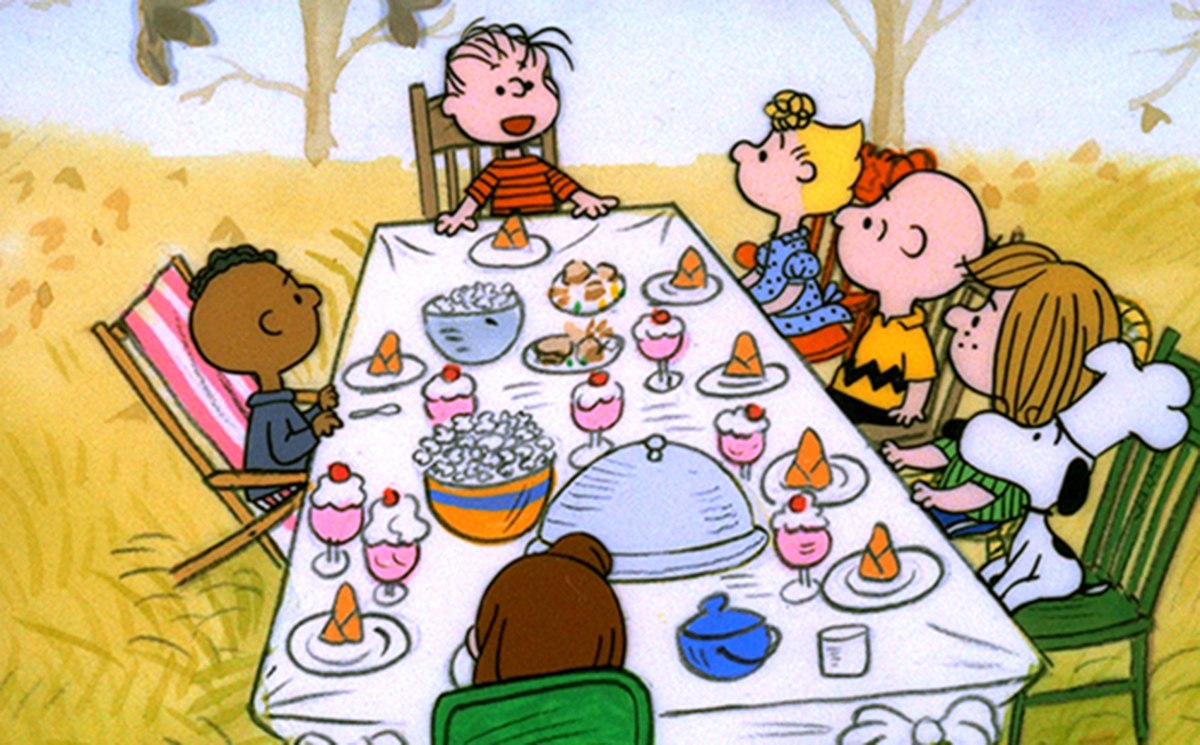
Happy Thanksgiving to everyone. This first premiered on November 20, 1973, on CBS and won an Emmy Award. Great Thanksgiving special as always with the earlier Peanuts.
The Halloween, Thanksgiving, and Christmas Peanuts specials I always looked forward to. The way their world was only for kids where grownups were heard but only as noise in the background.
It starts off with Lucy tempting Charlie Brown with that football. Just one time I wanted to see Charlie kick the football…or Lucy.
It’s Thanksgiving and Peppermint Patty invites herself and Marcie over to Charlie Brown’s house but Charlie and Sally are ready to go to their grandmothers. Charlie talks to Linus and he suggests having two Thanksgiving dinners.
The only thing Charlie can come up with is feeding his friends toast and cold cereal which does not make Peppermint Patty happy whatsoever. She lets Charlie have it really bad until Marcie reminds her that she invited herself over.
Not going to give it away for those who have not seen this wonderful holiday cartoon. The music by Vince Guaraldi is excellent and makes every Peanuts cartoon special.