The Peanuts were my favorite cartoon growing up and I would never miss their Thanksgiving, Halloween, and Christmas specials. Everyone can relate to Charlie Brown because we lose more than we win in life. He doesn’t get to kick that football, his dog has more things than he does and he is forever trying to get the elusive little redhead girl to notice him.
The Peanuts inhabit a kids world where grownups are felt but not heard. At least not in English.
This 1965 special has everything good about them in one show.
The gang is skating and Charlie Brown is telling Linus that despite Christmas being a happy time he is depressed. Linus tells Charlie that is normal and Lucy pipes in with “Of all the Charlie Browns in the world, you’re the Charlie Browniest.” That sums it all up.
Charlie gets to direct the Christmas play and his main job was to get a spectacular Christmas tree under Lucy’s orders. …He picks the only real tree there…more like a branch but he is sure it will do the job. Most of the gang do not agree when he comes back with the tree but Charlie persists. Linus gets up and reads from the Bible and the inflection he lends to the reading is great.
After that, you will need to watch because it will be worth it.
Aluminum Christmas trees were marketed beginning in 1958 and enjoyed fairly strong sales by eliminating pesky needles and tree sap. But the annual airings of A Charlie Brown Christmas swayed public thinking: In the special, Charlie Brown refuses to get a fake tree. Viewers began to do the same, and the product was virtually phased out by 1969. The leftovers are now collector’s items.
Actors and Actresses The early Peanuts specials made use of both untrained kids and professional actors: Peter Robbins (Charlie Brown) and Christopher Shea (Linus) were working child performers, while the rest of the cast consisted of “regular” kids coached by Melendez in the studio. When Schulz told Melendez that Snoopy couldn’t have any lines in the show—he’s a dog, and Schulz’s dogs didn’t talk—the animator decided to bark and chuff into a microphone himself, then speed up the recording to give it a more emotive quality.
Watching Rudolph the Red-Nosed Reindeer every year is the same as setting up the tree. Every year I would look forward to seeing this along with the others but what a fantastic durable show this has been. When I hear Burl Ives in anything…I think of him as the narrator Sam the Snowman of this program.
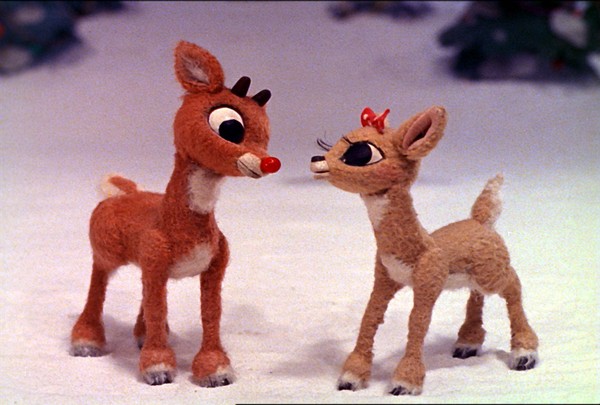
The characters are wonderful. Well except those other young reindeer who really come down on Rudolph when his nose lights up.
Hermey the elf who wants to be a dentist Clarice – The reindeer who likes Rudolph just as he is red nose and all. Yukon Cornelius the prospector who loves silver and gold and has a tongue that can find his silver and gold. Abominable Snowman – The bad guy of the show who only needs a dentist to make him a good guy. Head Elf – He leans on Hermey to get his elf self-act together and discourages him from being a dentist…I never liked him too much.
Throughout the special, Yukon Cornelius is seen throwing his pickaxe into the ground, taking it out and licking it. It turns out that he is checking for neither gold nor silver; Yukon was actually searching for an elusive peppermint mine. In a scene right at the end of the special’s original broadcast, deleted the next year to make room for the Misfit Toys’ new scene, Cornelius pulled his pick from the ground, licked it and said, “Peppermint! What I’ve been searching for all my life! I’ve struck it rich! I’ve got me a peppermint mine! Wahoo!” The scene was restored in 1998 and has been reinstated in all the subsequent home video release except for the 2004 DVD release. However, this scene is still cut from recent televised airings.
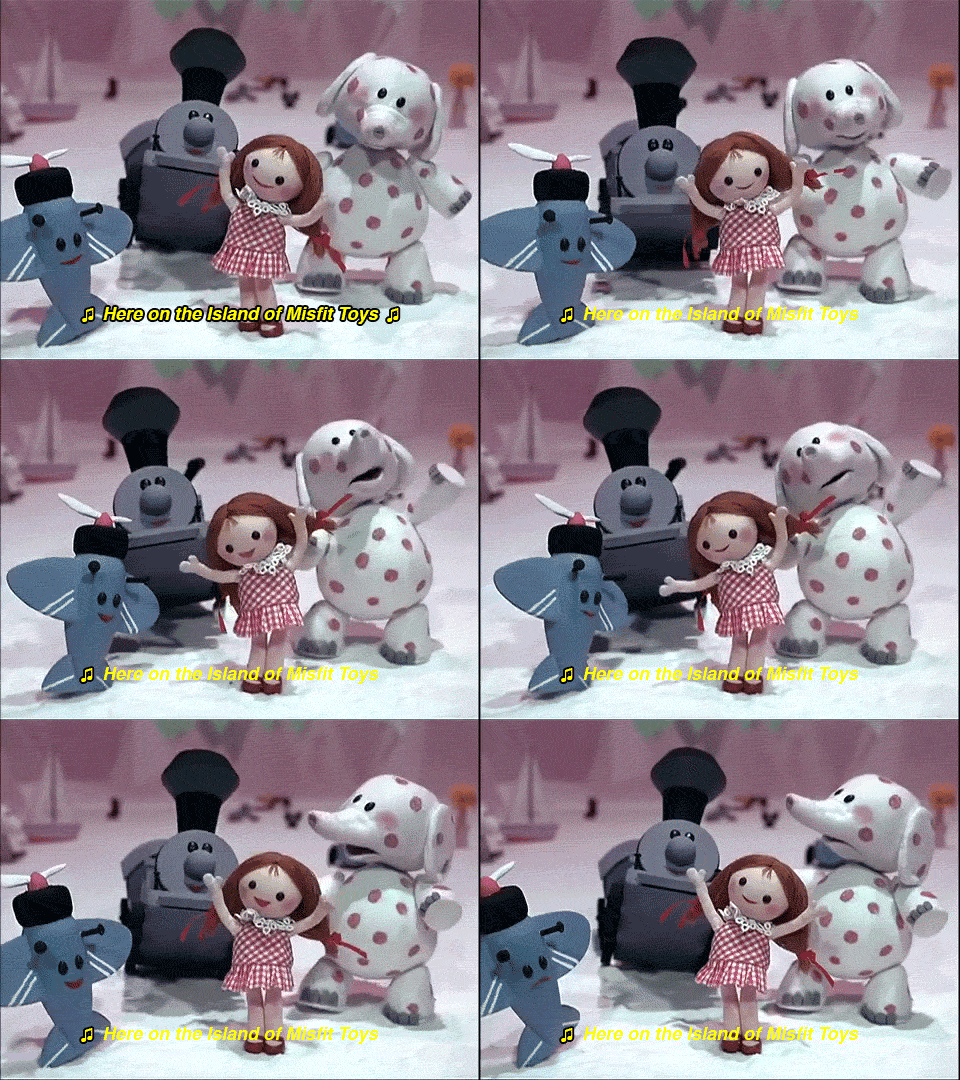
The Island of Misplaced Toys got to me when I was a kid. I really felt sorry for these lonely toys. King Moonracer was over the island and tried to convinced Rudolph to tell Santa about them so he could pick them up and find kids who would play with them.
The original 1964 airing did not include the closing scene where Santa picks up the misfit toys. That scene was added in 1965, in response to complaints that Santa was not shown fulfilling his promise to include them in his annual delivery.
The stop animation in this works really well.
The songs are really good. Silver and Gold, Holly Jolly Christmas, Jingle Jingle Jingle, We Are Santa’s Elves, There’s Always Tomorrow, We’re a Couple of Misfits and The Most Wonderful Day of the Year.
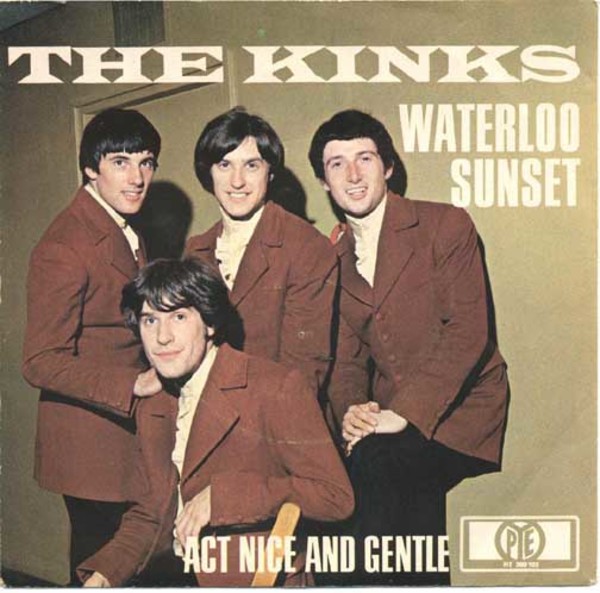
One of the great Kinks songs. The song peaked at #2 in the UK Charts but failed to chart in America.
Ray Davies brought this to the band while they were in the middle of recording the album. He was reluctant to share the lyrics because they were so personal. In a Rolling Stone magazine interview, his brother (and Kinks guitarist) Dave Davies said Ray felt “it was like an extract from a diary nobody was allowed to read.”
Written by Kinks lead singer Ray Davies, he called this “a romantic, lyrical song about my older sister’s generation.”
Waterloo Bridge is in London, and the lyrics are about a guy looking out of a window at two lovers meeting at Waterloo Station. Davies used to cross Waterloo Bridge every day when he was a student at Croydon Art School.
It is often claimed that the line, “Terry meets Julie, Waterloo Station every Friday night” is about the relationship between actor Terence Stamp and actress Julie Christie. However, Ray Davies denied this in his autobiography. He subsequently revealed that it was “a fantasy about my sister going off with her boyfriend to a new world and they were going to emigrate and go to another country.”
According to Kinks biographer Nick Hasted, Terry was Ray’s nephew Terry Davies, whom he was close to in early teenage years.
Further confusing the matter, Davies told Rolling Stone in 2015 that Julie and Terry were “big, famous actors at the time.” The actors had been dating since the early ’60s and starred together in the film Far From the Madding Crowd, which is often cited as the direct inspiration for the song, but the film didn’t come out until six months after the single’s release.
Waterloo Sunset
Dirty old river, must you keep rolling Flowing into the night? People so busy, make me feel dizzy Taxi light shines so bright
But I don’t need no friends As long as I gaze on Waterloo sunset I am in paradise
Every day I look at the world from my window But chilly, chilly is the evening time Waterloo sunset’s fine (Waterloo sunset’s fine)
Terry meets Julie Waterloo station Every Friday night But I am so lazy, don’t want to wander I stay at home at night
But I don’t feel afraid As long as I gaze on Waterloo sunset I am in paradise
Every day I look at the world from my window But chilly, chilly is the evening time Waterloo sunset’s fine (Waterloo sunset’s fine)
Millions of people swarming like flies ’round Waterloo underground But Terry and Julie cross over the river Where they feel safe and sound And they don’t need no friends As long as they gaze on Waterloo Sunset They are in paradise
Waterloo sunset’s fine (Waterloo sunset’s fine) Waterloo sunset’s fine
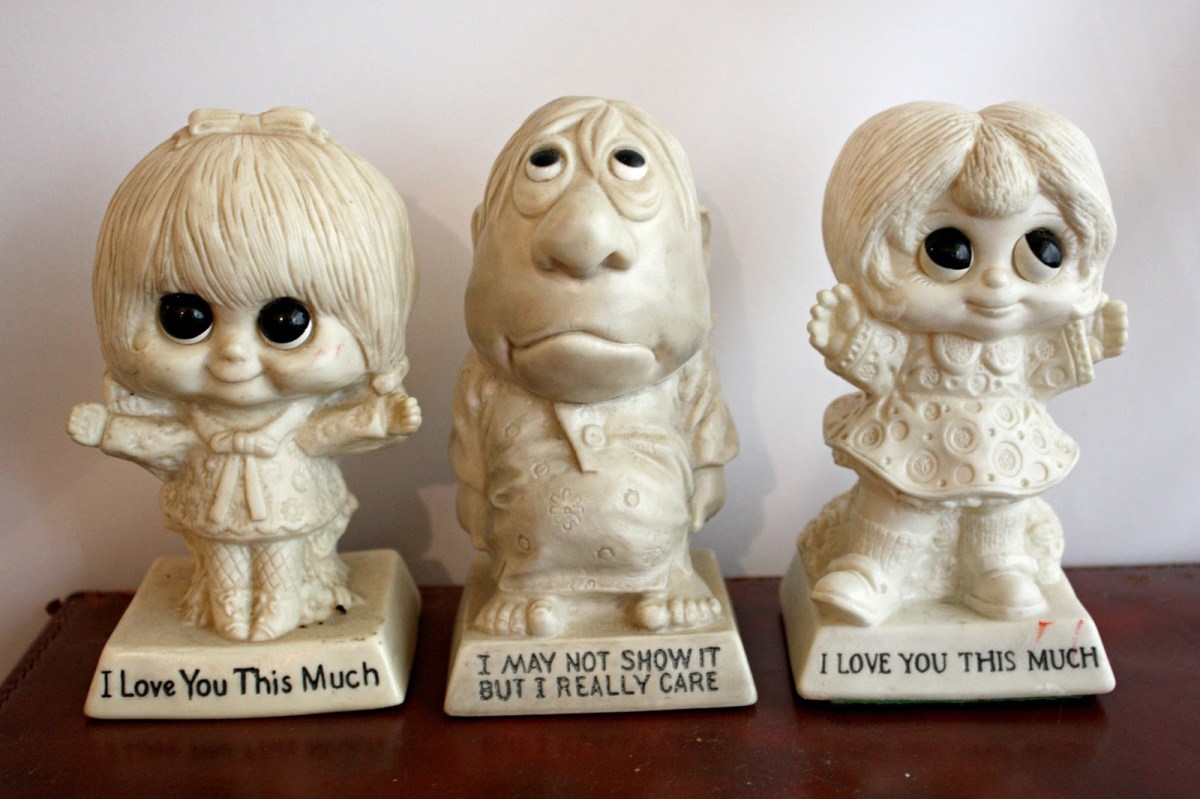
Whenever I go to a yard sale or flea market and I see one…I have to get it. Worlds Greatest Dad, Worlds Greatest Mom, Worlds Greatest Grandpa, “Being Sick is bad for your health” and many more. They have a look that I like and are usually cheap…for two bucks you can have part of the seventies.
He did more than the statues…he had stuffed animals and bears which in the 80s and 90s really took off…along with trolls.
Russell Berrie started his business with only $500 and ran it out of a rented garage in Palisades Park, NJ. His first product to reach the shelf was his Fuzzy Wuzzie in 1964.
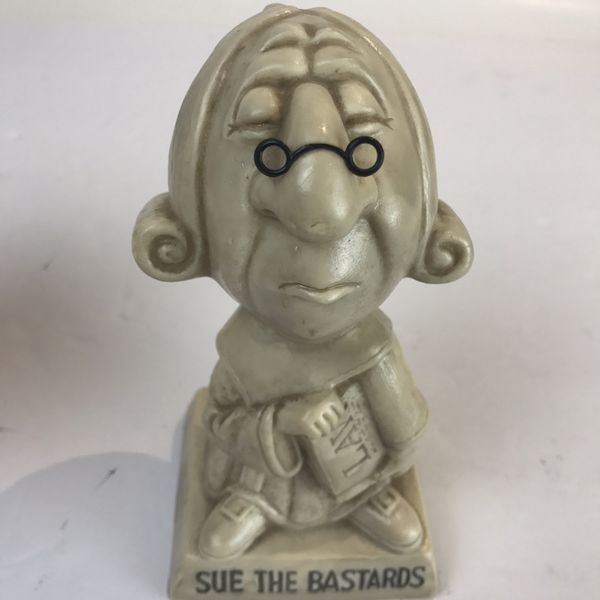
By 1968 Americans were ready for something a little bolder. Russ Berrie and Co. introduced Sillisculpts, plastic message figurines with a little more attitude. Two of the most memorable are the “I love you this much!” statuette and another of an old lawyer crying “Sue the bastards!” (I must find this one).
These come in every form and shape.
In 1971, as sales passed the $7 million mark, Russ Berrie and Company moved to a new corporate headquarters facility in Oakland, New Jersey. This location would become the center of the company’s worldwide marketing and distribution businesses. In the following year, Russ Berrie and Company opened a second new facility, when a distribution center, in Santa Rosa, California, came online.
By 1985, Russ Berrie and Company sales had reached $204.6 million, and revenues more than doubled in just two years.
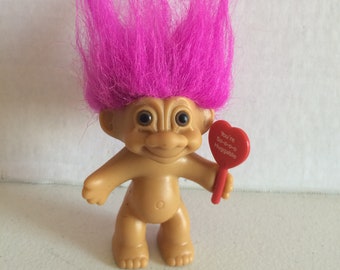
In 1992, Russ Berrie and Company’s fortunes got a lift, when the popularity of one of its oldest products, Trolls, first introduced in the 1960s, escalated dramatically. Although they had not been a big seller for many years, suddenly the company’s trolls—squishy dolls with rubbery faces and hair that stood on end—were experiencing wild demand. To meet this clamor, Russ Berrie and Company’s designers began to churn out hundreds of different troll products, and the company’s Far Eastern suppliers raced to keep output high. By the end of the year, pushed by the troll fad, the company’s earnings had soared to $300 million.
In 2001, Russ Berrie had sales of $294.3 million and net income of $40.2 million, selling items like a stuffed dog named Muffin and a stuffed bear known as Honeyfritz.
In December 2002, Russ Berrie died unexpectedly after having a heart attack in his home. Often named by Fortune magazine as one of America’s most generous philanthropists, Berrie was just 69 years old when he died.
The caravan was initially bought by Lennon as a gift for his son Julian’s fourth birthday. He hired the pop art designing trio from Amsterdam who called themselves ‘The Fool’ to paint his son’s extravagant present with the famous Sgt Pepper motif and the art designs that were so popular amongst travelers at that time.
Lennon also had “The Fool” paint his Rolls Royce in a Sgt Pepper era motif.
In 1967 John bought a small 21-acre island called Dorinish. He at first planned to build a house on it but never did. He did stay at the island some and had the caravan floated out to it for a while. Through the years he would take the caravan out some.
After John was murdered, Ringo Starr took ownership as part of the late Beatles estate. In 1982, he called in Cookham-based vintage caravan restorer John Pockett to restore it. In September 1983 it was restored to its former glory from Mr. Pockett’s Cookham workshop and was placed beside Ringo’s swimming pool.
In 2013 it was found at Ringo Starr’s former Surrey home under a tarp. A charitable trust, the Ascot Lawyers Foundation, has taken ownership of the piece of Sgt Pepper memorabilia. They working on restoring it.
When you see this you probably think of the seventies. More than one person has claimed they created it. I have a friend’s dad who was a graphic artist in the sixties and seventies who claimed he came up with it. This is one of the most iconic images in the world.
50 years ago in Worcester, Massachusetts Harvey Ross Ball, an American graphic artist, and ad man created it to raise the moral of an insurance company… he was paid 45 dollars for less than 10 minutes of work. The State Mutual Life Assurance Company made posters, buttons, and signs to lift the morale of their workers.
Neither Ball nor State Mutual tried to trademark or copyright the design. That was a mistake.
In Europe, In 1972 French journalist Franklin Loufrani became the first person to register the mark for commercial use when he started using it to highlight the rare instances of good news in the newspaper France Soir. He trademarked the smile, dubbed simply “Smiley,” in over 100 countries and launched the Smiley Company by selling smiley T-shirt transfers.
In the early 1970s, brothers Bernard and Murray Spain, owners of two Hallmark card shops in Philadelphia, came across the image in a button shop, noticed that it was incredibly popular, and simply used it.
The brothers knew that Harvey Ball came up with the design in the 1960s but after adding the slogan “Have a Happy Day” to the smile, the Brothers Spain were able to copyright the revised mark in 1971, and immediately began producing their own novelty items. By the end of the year, they had sold more than 50 million buttons and countless other products, turning a profit. Despite their acknowledgment of Harvey’s design, the brothers publicly took credit for icon in 1971 when they appeared on the television show “What’s My Line.”
In 1996, Loufrani’s son Nicolas took over the family business and transformed it into an empire. He formalized the mark with a style guide and further distributed it through global licensing agreements including, perhaps most notably, some of the earliest graphic emoticons. Today, the Smiley Company makes more than $130 million a year and is one of the top 100 licensing companies in the world. The company has taken a simple graphic gesture and transformed it into an enormous business as well as a corporate ideology that places a premium on “positivity.”
Loufrani isn’t convinced that Ball came up with the design…well of course.
In 2001, Charlie Ball tried to reclaim the legacy of his father’s creation from unbridled commercialization by starting the World Smile Foundation, which donates money to grass-roots charitable efforts that otherwise receive little attention or funding.
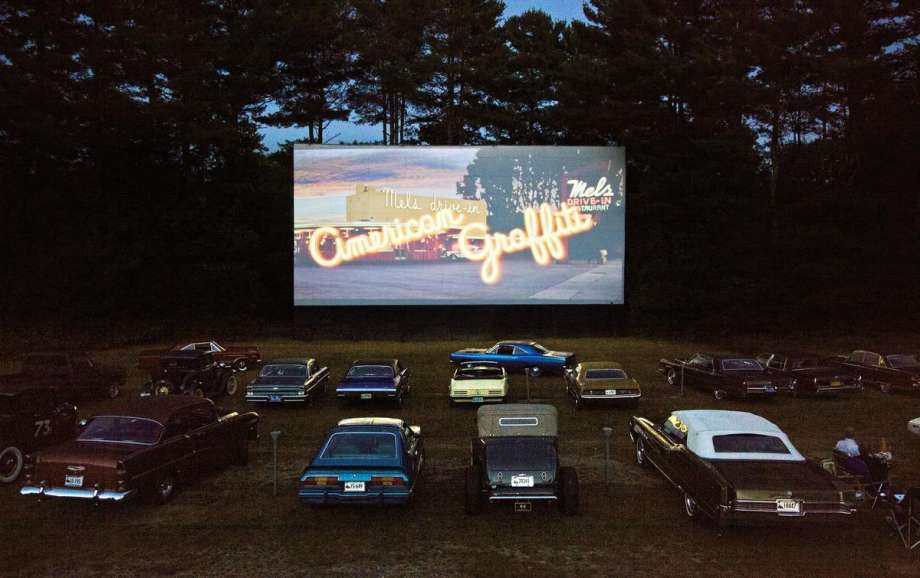
I remember Drive-In Theaters from way back. My sister is 8 years older than I am. When she was 16 I was 8 and mom made her take me with her on dates and that included the Drive-In. Most Drive-Ins charged by the person so guess where I was located? A mile up from the Drive-In I would know the routine…I would climb in the trunk. I remember smelling the old dirty tire and whatever else…I would hear us roll over the gravel and then the car would stop…my sister would let me out.
I would climb in the back seat and start watching. Although I make fun of her for this I actually enjoyed it. It was fun to do as a kid. I was a laid-back kid anyway. I remember the only movie showing one time was an R rated movie. It was called “Revenge of the Cheerleaders” from 1976…I got quite an education on the female anatomy. She would tell me don’t look now… then she and her date would go out and talk to friends parked around. I was of course looking and I never told mom…I knew I would not get to come back if I told her.
There are a few around here and once in a while, we will go see them. No Cheerleaders though.
In 1933, eager motorists park their automobiles on the grounds of Park-In Theaters, the first-ever drive-in movie theater, located on Crescent Boulevard in Camden, New Jersey. Richard Hollingshead opened it up. He thought of it because his mother was to large for theater seats. He charged just 25 cents per car.
The Drive-In didn’t really take off until the in-car speakers were invented by the late 40s. By 1958, the number of drive-ins peaked at 4,063.
Indoor theaters were more practical because they could show a movie 5-6 times a day and not have to worry about the weather or being light so the Drive-In’s started to get B movies (Revenge of the Cheerleaders!) and the fad started to slow down. Also, land value pushed the Drive-In’s out.
Now there are roughly 400 Drive-Ins left in America.
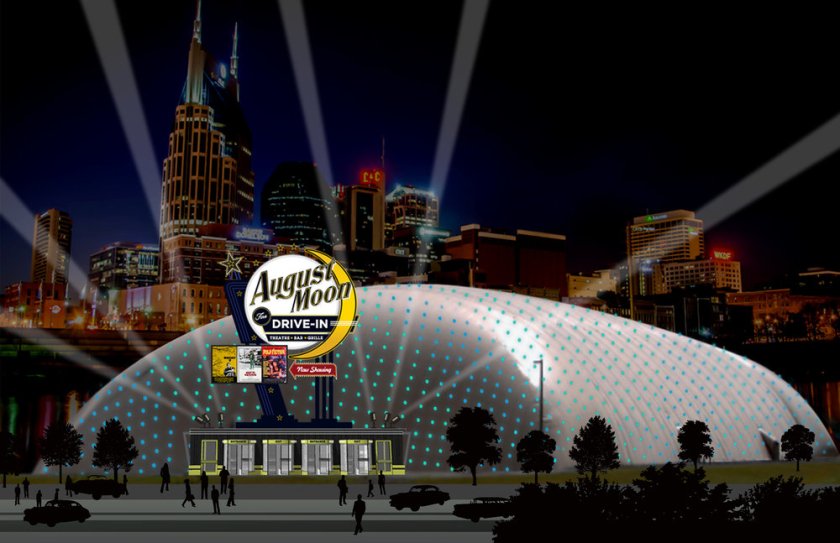
In Nashville, they are building an indoor Drive-In Theater. When it is finished I will check it out. You will not drive in with your car…you will walk in and sit in one of the classic cars they will have ready for you…I’m ready…but no trunks
Some of these restaurant chains, people will remember some won’t because it depends on where you live and if any were in your market. A few may have a handful open with Franchisees but for the most part, they are closed.
Steak and Ale -1966 – 2008 I liked the Mock Tudor building and the atmosphere inside…the food was good. They are trying to make a comeback…I hope they make it. Last time I ate at one was in the 90s in Huntsville Alabama.
Burger Chef – 1954 – 1996 They had over 1200 locations at one time. Many were bought out and turned into Hardees.
Rax Roast Beef 1967 – (handful open now)I liked the Roast Beef but the best thing was the chocolate chip milkshake. There are a few lone Franchisees left. I remember going to them in the 80s.
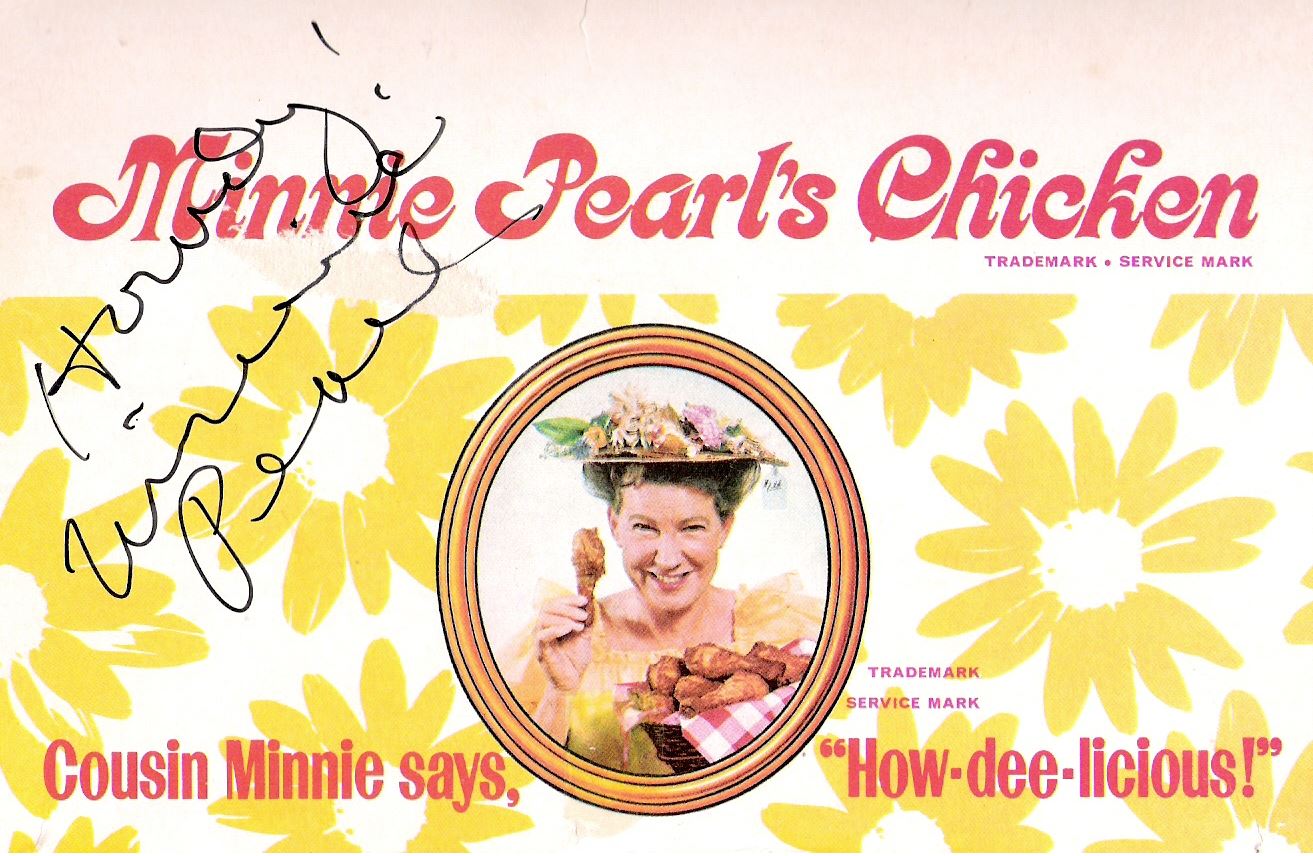
Minnie Pearl’s Fried Chicken 1968 to mid-1970s – How-dee-licious…indeed. It was actually really good. When I was in 2nd grade we would go to one in a nearby town once in a while…really good chicken… it went down because of faulty accounting… Great article here.
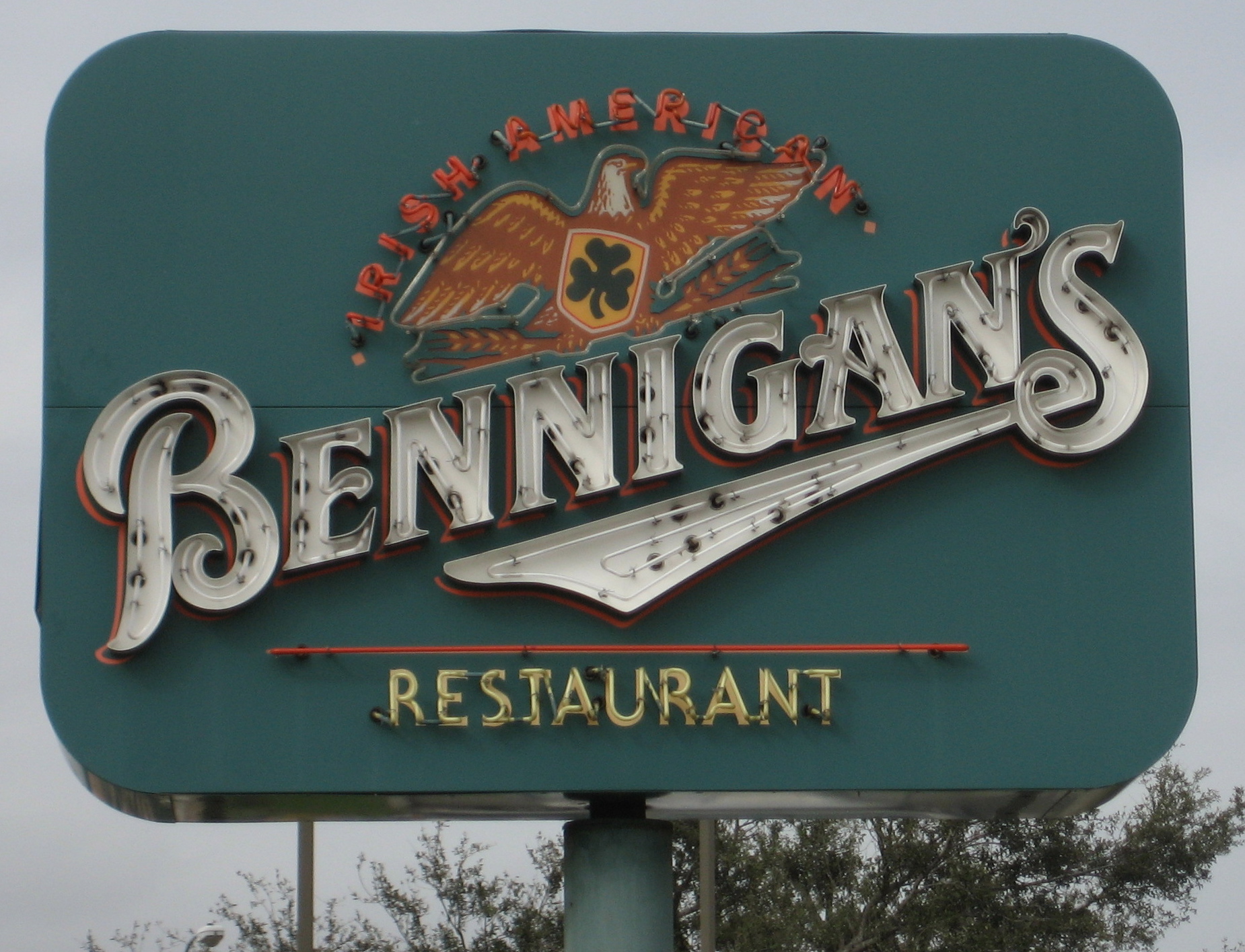
Bennigan’s 1976 – (Bennigan’s and Steak and Ale making a comeback together)An Irish Pub theme restaurant. I went there a few times. There are a few locations left…
Red Barn – 1961-1988 They were known for the “Big Barney” and Barnbuster burger. I see an old Red Barn where I work and now it’s a Mexican restaurant.
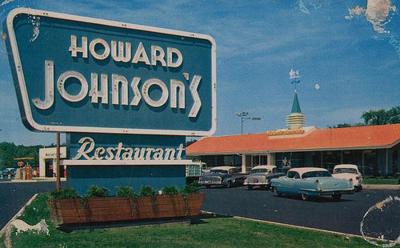
Howard Johnson’s Restaurant – 1953-2017 I do remember eating at a few of these traveling. In 2017 there was one left in New York but the owner was arrested and now it’s closed.
LUMS – 1956-1982 I did go to one but I was really young and traveling at the time.
Bonanza Steak House – 1963 – 2008 (bankruptcy) There are a few of these left… these and Ponderosa… Dan Blocker (Hoss Cartwright) was an original investor. In the late seventies before we would go to a movie we would stop at a Bonanza. I did go to a Ponderosa a few years back.
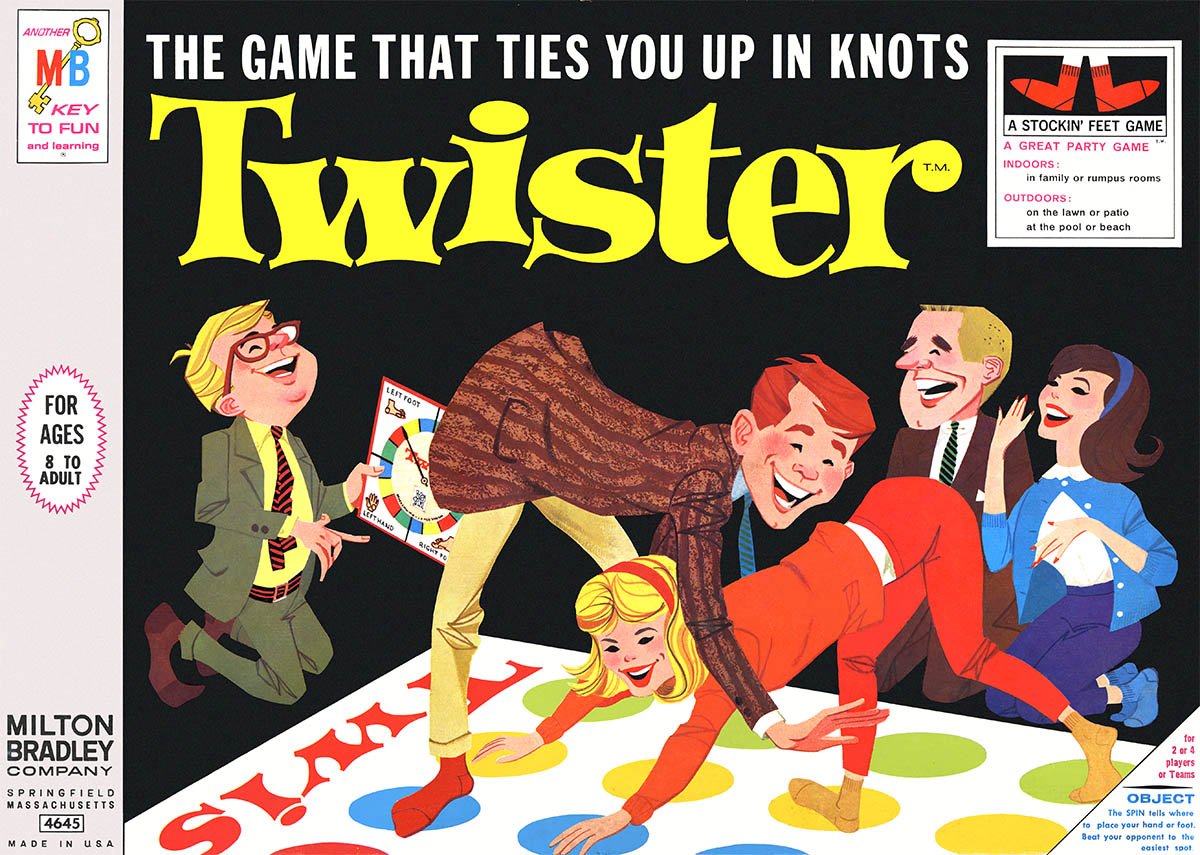
If not for Johnny Carson and Eva Gabor…Twister may not have been part of our culture.
In 1965 Reyn Guyer, of the Reynolds Guyer Agency of Design had been hired to do a promo display for a shoe polish company, and he was tinkering with colored polka dot paper for ideas. He was suddenly hit with inspiration for something much different…a board game where the pieces were people not plastic.
Reyn tested it with office workers who were divided into two teams and the game was called “Pretzel”. He showed it to 3M and they turned the game down.
Reyn took the game to the Milton Bradley Company in Springfield, MA where Mel Taft, the senior vice-president of R & D, chose “Pretzel” as the best of the eight-game ideas. Mel found there was a trademark problem, so he changed the game’s name to Twister, and Milton Bradley began to market Twister in 1966.
Milton Bradley’s competitors started to call the game “SEX IN A BOX” to destroy the game before it was marketed properly.
Milton Bradley discovered that stores were refusing to stock the game so they were going to pull it from the shelves. What they didn’t know was the public relations man they hired had made an arrangement to have the game played on The Tonight Show.
On May 3, 1966, Johnny Carson, the host of the show, was enticed by the “Twister” mat and demonstrated the game along with the beautiful Eva Gabor. That helped the game to say the least. Three million were sold the next year.
Twister was named “The Game of the Year” in 1967.
In 1985 Hasbro acquired the Milton Bradley Company, becoming Twister’s parent company. The Reyn Guyer Creative Group continues to work closely with Hasbro to develop and market new additions to the line of Twister products.
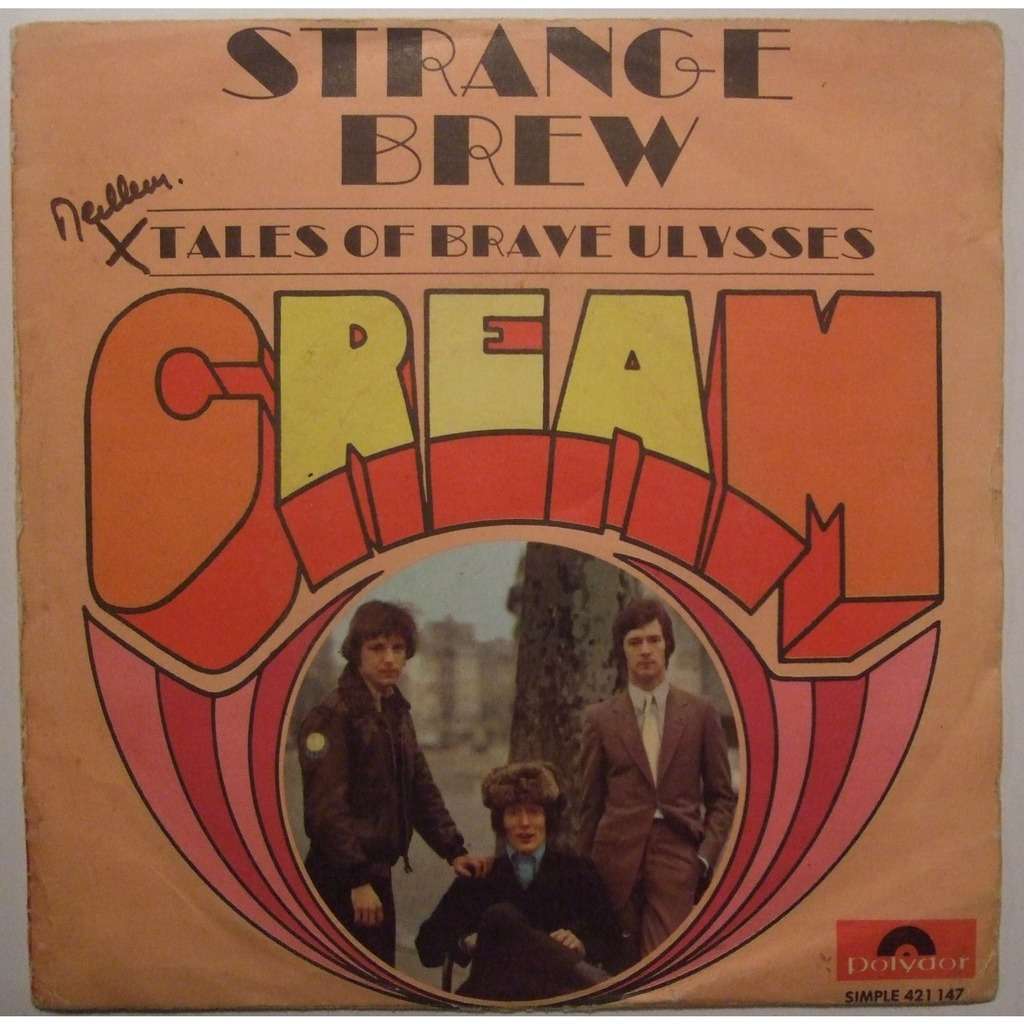
Great guitar lick and song. The song was based on an old blues song by Buddy Moss called Hey Lawdy Mama that Cream recorded. Eric Clapton took the lead vocal in this one. They reworked the song and the writing credits went to Felix Pappalardi, Gail Collins and Eric Clapton.
The song didn’t chart in the Billboard 100 but made it to #17 in the UK charts. A great classic Cream song.
When Cream performed the early version of this song as “Lawdy Mama,” Clapton and bass player Jack Bruce would share lead vocals. The band recorded both “Lawdy Mama” and “Strange Brew” at Atlantic Studios in New York on April 3, 1967. The band had spent the previous week in the city, performing daily at the “Music In The Fifth Dimension” show at the RKO Theater. These shows were organized by the influential disc jockey Murray the K, and provided great exposure for Cream in America. Other acts on the bill for some of these shows: The Who, Wilson Pickett and the Lovin’ Spoonful. Cream would complete the Disraeli Gears album when they returned to the United States the next month.
The lyrics refer to a female, which could mean drugs or be a more literal reference to a woman. Either way, she is “killing what’s inside of you.”
Cream had a very psychedelic sound, and this song was released in the Summer of Love, where it fit in quite well.
To craft “Strange Brew,” producer Felix Pappalardi added Eric Clapton’s vocal to a take of the band’s recording of “Lawdy Mama,” which appears as a bonus track on the 2004 re-release of Disraeli Gears, but didn’t make the original album. Jack Bruce wasn’t happy about this, especially since he wasn’t able to re-record his bassline. To keep the tenuous peace in the band during Cream’s reunion concerts in 2005, “Strange Brew” was omitted from their 19-song playlist, despite being one of their best known and loved songs.
Clapton got the idea for the album title after a roadie named Mick Turner told him about the derailleur gears on his bicycle. Derailleur, pronounced “Di-rail-yer,” are the kind of gears commonly found on 10-speed bikes. The roadie pronounced it “Disraeli,” which led to the title.
On Eric Clapton’s Crossroads boxed set, this is placed next to “Lawdy Mama,” the Blues song it is based on.
Strange Brew
Strange brew, kill what’s inside of you.
She’s a witch of trouble in electric blue, In her own mad mind she’s in love with you. With you. Now what you gonna do? Strange brew, kill what’s inside of you.
She’s some kind of demon messing in the glue. If you don’t watch out it’ll stick to you. To you. What kind of fool are you? Strange brew, kill what’s inside of you.
On a boat in the middle of a raging sea, She would make a scene for it all to be Ignored. And wouldn’t you be bored? Strange brew, kill what’s inside of you.
Strange brew, strange brew, strange brew, strange brew. Strange brew, kill what’s inside of you
Robert Plant, Paul Rodgers, Freddie Mercury, and Mick Jagger gets brought up when talking about great lead singers. I’ve had this conversation with friends and musicians. Who was the best rock bass player, guitar player, drummer, and lead singer?
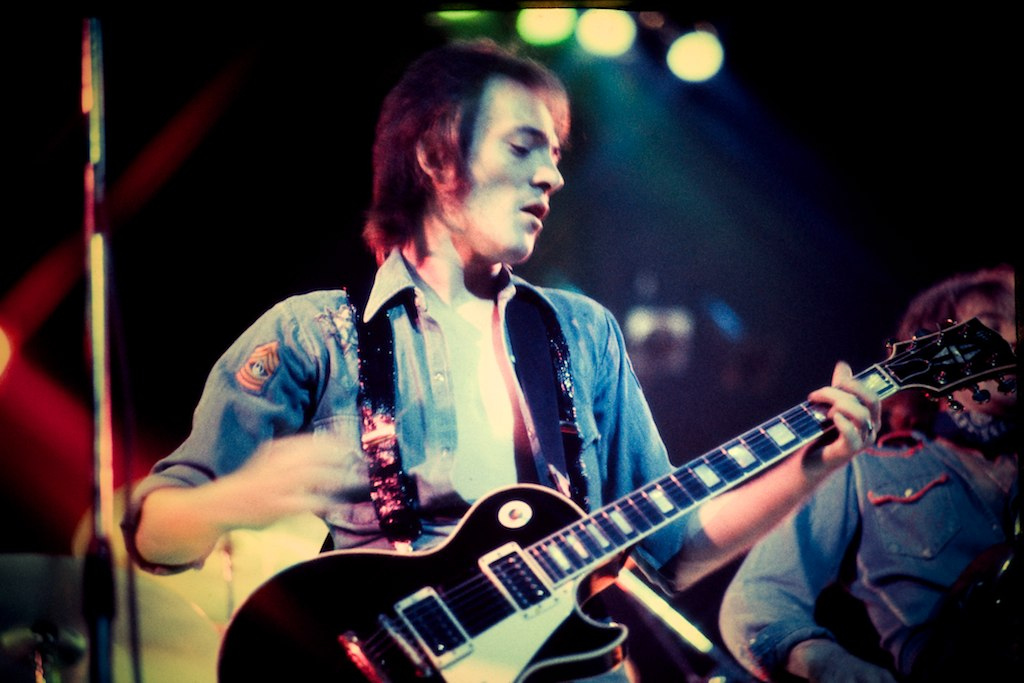
Steve Marriott rarely gets brought up by anyone because he is sadly not remembered as well as he should be. I’ve listened to Marriott for years and the guy still amazes me. He could sing blues, R & B, Rock, and Pop. He could do anything because not only was he a great singer a good songwriter and he was a very good guitar player.
He influenced many singers from the 60s and beyond. Below is the Small Faces doing “You Need Lovin'” and I think Robert Plant was listening. This was before Zeppelin.
The Small Faces played Rock, R & B, and Blues music but what they are famous for are the two pop singles Itchycoo Park and Lazy Sunday. Marriott was upset about Lazy Sunday being released as a single because he’d recorded the song as a joke and it was released despite his objections. They are also known for one of the best albums of the sixties Ogdens’ Nut Gone Flake. Q magazine placed Ogdens’ Nut Gone Flake at number 59 in its list of the 100 Greatest British Albums Ever. Steve Marriott and Ronnie Lane wrote most of the album.
Because of bad management, a pop image, and a lack of a follow up to Ogedens’ Nut Gone Flake the Small Faces broke up. Marriott wanted to play harder music so he and Peter Frampton started a band called Humble Pie.
Humble Pie had some great songs but nothing really caught on with the masses. That’s not always a bad thing but they never had a big song identifiable to them as some other bands do. They did have four top twenty albums but were more known as a live band…check out Performance Rockin’ the Fillmore
Their manager was Dee Anthony who had connections with the Mob. Everything was ok until Steve wanted to know where the money was at. Marriott began openly questioning Anthony’s business practices, the singer was summoned to a meeting at a social club in New York’s Little Italy. According to Marriott’s ex-wife, among those in attendance were John Gotti and several other members of the Gambino crime family. Marriott was quietly persuaded to forget about any money he thought he had coming to him.
The Small Faces reunited, without Lane, between 1976-1978 but punk was taking over and they were not successful. In 1980 Humble Pie reunited but didn’t have much luck either.
In 1981 Steve and Ronnie Lane made an album together that wasn’t released until 2000 after both were passed away. It was called The Legendary Majik Mijits and I really like the recording. You can tell they recorded it in 1981 but it contains some hidden gems.
Steve played many club gigs in the 80s, some you can still see on youtube. In 1991 while working on an album with Peter Frampton he flew back home and went to sleep with a lit cigarette and died of smoke inhalation…he was 44 years old.
A sad ending to a performer who could have been huge. Perhaps if he would have lived longer he would have revived his career and been more remembered today.
Steve had a huge voice that came out of his 5 foot 5 frame. When Jimmy Page was looking for a singer for his new band Page had thought about Marriott but he was managed by the notorious Don Arden, who had reportedly responded by asking how well Page thought he would play guitar with 10 broken fingers.
What other artists say about Steve Marriott
Keith Richards has said that Mariott is in his top 5 favorite artists and considered having Steve in the Stones to replace Mick Taylor when he left…an idea that Mick Jagger rejected.
“Probably, really, my favorite other bands ever, Steve Marriott’s, very much from the English point of view, the Small Faces, then he had Humble Pie.
Chris Robinson of The Black Crowes To me it’s so obvious I’m a Steve Marriott rip-off that I never think about Rod. I admit it. Steve Marriott is the guy, him and Paul Rodgers and Gregg Allman.
Robert Plant (about the Song Remains the Same)I wanted to be like, “Come on!” I wanted to be Steve Marriott, for fuck’s sake.
Paul RodgersI was rooting around in my cupboard the other day, actually, just yesterday, and I found a bunch of Steve Marriott live stuff and I put it on and MY GOD, that guy was unbelievable!
Documentary about Steve Marriott
Humble Pie with Marriott and Frampton.
Steve and Ronnie Lane in 1981. Some very good songs
The audio version is 12 hours and it went by fast… I will get the hard copy of this book.
Kenney Jones was the drummer of three of England’s most influential bands – The Small Faces, The Faces and for a few years The Who. I was pleasantly surprised by this book. Kenney keeps the book interesting from his childhood, teen years, swinging London, the Swinging Seventies, up til now.
I never knew much about the Small Faces and Faces and this book answered some questions I had about both bands. He gave much more information than Roger Daltrey did in his book about Jone’s tenure as the drummer of the Who and their difficulties. Personally, I don’t think Kenney was the right drummer for the Who but then again…I don’t think anyone could have taken Moon’s place. He does give an interesting perspective on it though.
I didn’t’ realize that Keith Moon and Kenney were as close as they were. Kenney had played with the Who before in sound checks when the Small Faces and Who were touring with each other and Moon couldn’t be found. After Moon died a few strange things happened to Kenney right before Bill Curbishley (The Who’s Manager) called to see if he would join. The strange events helped him make the decision.
He goes over his career thoroughly and he doesn’t leave any gaps. He also talks about being in the band “The Law” with Paul Rodgers and now he is with The Jones Gang that had a #21 hit with Angel in 2005. He also owns a Polo club, is working on an animation of Ogden’s Nut Gone Flake, and fighting for the control of the Small Faces music which was lost a long time ago. He doesn’t need the money he just wants it put right.
Near the end, he sums up the three big bands he was involved in… The Small Faces were the most creative, The Faces were the most fun, and The Who were the most exciting and professional. You can tell though that his love is with the Small Faces and he does wonder how far they could have gone if they would have had decent management. He said they never realized how good of a band they were.
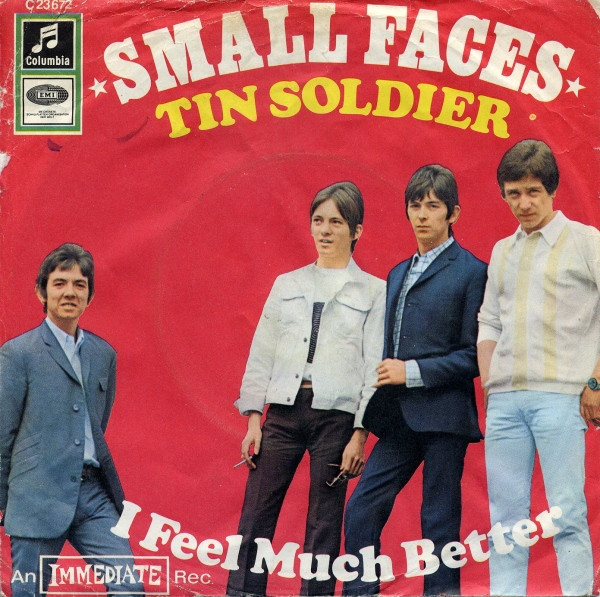
This a great R&B single from The Small Faces in 1967. It’s a song that Steve Marriott wrote about Jenny Rylance who he met in 1966 and ended up marrying her in 1968. This song was released right after Itchycoo Park. The band wanted to get back to the R&B music they wanted to be known for. P.P. Arnold was the female singer on this song.
The song peaked at #9 in the UK and #73 in the Billboard 100. This is a good representation of the band.
Tin Soldier
I am a little tin soldier that wants to jump into your fire You are a look in your eye A dream passing by in the sky I don’t understand And all I need is treat me like a man ‘Cause I ain’t no child Take me like I am I got to know that I belong to you Do anything that you want to do Sing any so song that you want me to sing to you I don’t need no aggravation I just got to make you I just got to make you my occupation, oh yeah (I got to know that I belong to you) (Do anything that you want to do) (Sing any so song that you want me to sing to you)
All I need is your whispered hello Smiles melting the snow, nothing heard Your eyes, they’re deeper than time Say a love that won’t rhyme without words So now I’ve lost my way I need help to show me things to say Give me your love before mine fades away, yeah, baby (I got to know that I belong to you) (Do anything that you want to do) (Sing any so song that you want me to sing to you)
Oh, no, no Oh, no I just want some reaction Someone to give me satisfaction All I want to do is stick with you,’cause I love you
I have had a bean bag in my place of residence ever since I was a teenager. They are very handy to throw somewhere and sit. When you play guitar or want to watch a movie it’s a comfortable place to sit. They are also affordable and can be a good alternative sometimes to chairs.
The only part of owning one I don’t like is the inevitable end when the white small styrofoams like “beans” (expanded polystyrene) start coming out and going everywhere.
I would like to get an original leather bean bag one day.
According to some historians, bean bags were first invented by the ancient Egyptians sometime around 2000 B.C., and for thousands of years, they were used to play games and for other recreational diversions. The first bean bags were small, round and made of leather. They were most likely filled with dried beans or pebbles.
The first bean bag chairs as we know them were developed in the sixties. They were first called a Sacco chair, and released in 1969. They were designed by Cesare Paolini, Piero Gatti, and Franco Teodoro who were commissioned to create the piece by Zanotta Design in Italy.
Bean bags were huge in the 1970s and they were at first usually made of leather and filled with PVC (short for PolyVinyl Chloride) pellets. Soon nylon and polyester were used with expanded polystyrene (EPS) for filler. That combination proved to be more durable.
During the 1980s and 1990s, the popularity of bean bags declined greatly in popularity, but they were still being manufactured by several companies.
Now they are now experiencing a strong resurgence in popularity. You can get a regular bean bag or one pre-formed into a chair or couch. They are being sold for use as pet beds.
I had almost as much fun playing wiffle ball as a kid as I did little league. I was completely into playing baseball with friends or for years in leagues until I was 16. In my front yard, we would play wiffle ball until dark. If only one friend was over that was enough… we could still play. Hit it over the house, a home run…hitting a window, a double, in the creek a triple… etc.
You didn’t have to worry about breaking a window or knocking your buddy out while pitching as fast as you could. You would learn how to grip it and you could make it curve, rise, or sink a ridiculous amount. We would play for hours until night or until the ball was stuck on the roof or in a tree.
In the late 70s and 80s it was a fun alternative to playing baseball when not enough friends were around or you had to play in a neighborhood full of houses with nice big windows.
In 1953, David N. Mullany was watching his 12-year-old son and some friends playing a baseball-like game with a perforated plastic golf ball and a broomstick in their backyard. The boys tried throwing curveballs and sliders but with no success. They couldn’t use a baseball because of the trail of broken windows and upset neighbors.
Mullany, who had been a semipro pitcher himself, knew all too well what thousands of Little Leaguers have had to painfully learn. Nothing shreds a young arm quite as effectively as throwing breaking balls. Mullany set about trying to save the boys’ shoulders and elbows by creating a ball that would curve and bend on its own.
He tried a hard plastic ball that served as packaging for Coty perfume. After having the boys experiment with various designs, Mullany hit on the Wiffle Ball we now know and love.
Mullany’s son and his friends referred to strikeouts as “whiffs.” Since the new invention made knee-buckling curveballs a breeze to throw, pitchers started racking up the strikeouts. Mullany named the product the Wiffle Ball to honor its strikeout-friendly breaks.
When they started to advertise them they would use old photographs of MLB players. The Mullanys later explained in interviews that doing actual photo shoots with the players would have been too pricey, so they just negotiated with players’ agents and then used any old photograph.
The slots on one side make the ball curve and rise. Just like a real baseball…the more scuffs a ball has the more it can curve. They have Wiffle Ball leagues now where players play competitively.