This episode is a weak one but it does contain some science fiction for sci-fi fans. It is not the worse episode of the series but certainly not the best. Most of the time I do not question TZ logic but on this occasion, I had to. Aliens are on the planet and are trying to blend in with the rest of society. Do you think it’s wise to be three leather jacket motorcycle-riding beatniks moving in a residential neighborhood in the early 60s? Would the term “sore thumb” be used in this case?
I knew the leading lady looked familiar. It was Shelley Fabares who played Ellen Tillman who would 3 decades later star in the TV series Coach. She and Lee Kinsolving who plays Scott bumped this up from a 2. Denver Pyle is also in this episode but really doesn’t have much to do. Earl Hamner Jr admitted in an interview later that this episode was bad. He was not as proud of it as most of the other episodes of The Twilight Zone that he wrote.
From IMDB trivia:
In “The Twilight Zone Companion” (1983), Marc Scott Zicree described this episode as “It Came from Outer Space (1953) meets The Wild One (1953).”
When the real estate agent’s sign is shown in close-up, its phone number is “485-412,” not the standard 7 digit number it should have been. This was presumably done to avoid accidentally using a real number without resorting to the usual 555 prefix.
The close-up of the Invasion Commander’s eye resembles the logo of CBS which produced this show. It is the “All-Seeing Eye” of the Illuminati, also known as the “Eye of Providence” of the Free Masons. It is unclear if CBS is an adept of either practice.
The street is the same as the one in the season one episode “The Monsters are Due on Maple Street”.
All exteriors were shot in Universal’s back lot. As the bikers enter town at the beginning of the episode, they drive right past the town square made famous in Back to the Future (1985).
This show was written by Rod Serling and Earl Hamner Jr.
Rod Serling’s Opening Narration:
Three strangers arrive in a small town; three men in black leather jackets in an empty, rented house. We’ll call them Steve, and Scott, and Fred, but their names are not important; their mission is, as three men on motorcycles lead us into the Twilight Zone.
Summary
Three leather-clad motorcycle-riding young men arrive in a small town where they rent a house on a quiet residential street. The neighbors aren’t too sure about them but they are certainly exotic, certainly in the eyes of young Ellen Tillman. The three men leave the house unfurnished and move in with several large crates. As Ellen and her father interact it becomes clear they are something very special indeed. Ellen and Scott begin spending time together while the two others continue with their plans.
Rod Serling’s Closing Narration:
Portrait of an American family on the eve of invasion from outer space. Of course, we know it’s merely fiction—and yet, think twice when you drink your next glass of water. Find out if it’s from your local reservoir, or possibly it came direct to you….from the Twilight Zone.
CAST
Rod Serling … Narrator / Self – Host (uncredited) Lee Kinsolving … Scott Michael Forest … Steve Tom Gilleran … Fred Michael Conrad … Police Officer/Alien Shelley Fabares … Ellen Tillman Denver Pyle … Stuart Tillman Irene Hervey … Martha Tillman
“Whoso would be a man, must be a nonconformist.”― Ralph Waldo Emerson
Personally, I think this is one of the most important Twilight Zone episodes ever made. It could have been made now.
This one is deeply disturbing and not in a monster or twist sense…it tackles an issue that still is going strong. Did Rod Serling have a crystal ball or did he see where everything was going? This episode takes place in the 21st century and yes, it is very relatable now. In a time now where our cars, houses, and clothes look the same you could see this coming and with plastic sugery it is essentially here. On our phones, computers, tv’s, and magazines we are hit with a barrage of advertising aimed at beautifying ourselves. We are obssessed with celebrities looking perfect and mimicking them. We can lose our identity if we are not careful as a whole.
There is a line in the episode where the lead character says “Is that good being like everybody? Isn’t that the same as being nobody?” and that line speaks volumes. The episode is about when a person turns 19, he or she must choose which body and face they want to go through life with. All the choices are basically models and they are forced to go through with this operation. However, it’s not only the body and face that is changed, it’s their outlook and personality. They are always shallow and happy because no deep thoughts are allowed. The lead character Marilyn Cuberle is billiantly played by Collin Wilcox and you feel like she is alone in the world.
The episode is not about beauty. It’s not about if you are beautiful you are automatically shallow. I think people have misread it through the years. It’s about conforming to the social norm. There is the social price that we pay for not conforming, but I would rather pay it with intrest than go along with the crowd. In a world where everything is beautiful, nothing is.
*** I apologize for interupting here but this is a personal reflection on what this episode means to me. The quote at the top “Whoso would be a man, must be a nonconformist.” by Ralph Waldo Emerson is the most important quote I’ve ever read. I found it in high school and later on I was wrote up at work (I don’t work at that place now) because I had it on my computer desktop. I was not “part of the team” with thoughts like that. ***
IMDB Trivia: All the characters are named after conventionally beautiful film stars of the day: Lana for Lana Turner, Marilyn for Marilyn Monroe, Grace for Grace Kelly, Rex for Rex Harrison, Eva for Eva Marie Saint, Valerie for Valerie Allen.
Three separate characters – Uncle Rick, Dr. Rex, and Dr. Sigmund Friend – were identical in appearance, but were distinctly different as portrayed by Richard Long. Uncle Rick was kindly and down-to-earth; Dr. Rex was eerily good-natured, with some peculiar mannerisms; and “Sigmund Friend” was a Freud-like, ominous and shadowy character with a thick German accent.
This episode is reported to be the inspiration for “Uglies”, a 21st Century series of young adult science fiction novels by Scott Westerfeld.
When Marilyn shows her mother Lana a picture of herself (Lana) before her own “Transformation,” the picture is of Collin Wilcox with a different hairstyle. Wilcox was herself twenty-eight years old when she made this episode (and just two years younger than Suzy Parker), but the premise made it possible for her to be credible as a nineteen-year-old.
This episode is based on Charles Beaumont’s short story, “The Beautiful People”, which first appeared in the September 1952 issue of the science fiction magazine “If”.
This show was written by Charles Beaumont, John Tomerlin, and Rod Serling
Rod Serling’s Opening Narration:
Given the chance, what young girl wouldn’t happily exchange a plain face for a lovely one? What girl could refuse the opportunity to be beautiful? For want of a better estimate, let’s call it the year 2000. At any rate, imagine a time in the future where science has developed the means of giving everyone the face and body he dreams of. It may not happen tomorrow, but it happens now, in The Twilight Zone.
Summary
As Marilyn Cuberle approaches her 19th birthday she faces a momentous decision. Like everyone else in this futuristic society, she must choose which look she will adopt in the transformation process. Here, all men and women look like one of a series of approved faces, all are beautiful or handsome. Marilyn doesn’t want to change her appearance and is happy to look different from anyone else. Everyone assures her that she is under no obligation to undergo the transformation – but they go out of their way to make it difficult for her to say no.
Rod Serling’s Closing Narration:
Portrait of a young lady in love – with herself. Improbable? Perhaps. But in an age of plastic surgery, body building and an infinity of cosmetics, let us hesitate to say impossible. These, and other strange blessings, may be waiting in the future, which, after all, is The Twilight Zone.
CAST
Rod Serling … Narrator / Self – Host (uncredited) Collin Wilcox…Marilyn Cuberle Suzy Parker…Lana Cuberle / Eva / Doe / Grace / Jane / Patient / Number 12 Richard Long…Uncle Rick / Dr. Rex / Sigmund Friend / Dr. Tom / Tad / Jack / Attendant Pam Austin…Valerie / Marilyn (after transformation) / Number…
The Jackson Five had some great pop songs in the seventies. Most of the early songs were full of energy and infectious. They called their music bubblegum soul. This was the first Jackson 5 single released by Motown Records (they released a single on a local label in Gary, Indiana, in 1968). It launched their career and went to #1 in the US, as did the next three releases: “ABC,” “The Love You Save” and “I’ll Be There.”
The song peaked at #1 in the Billboard 100, #2 in Canada, #2 in the UK, and #12 in New Zealand 1969-1970.
Motown had set up offices in Los Angeles, which is where the Jackson 5 relocated and where this song was written and recorded. The top songwriting/production team at Motown, Holland-Dozier-Holland, had left the label to get better terms, so there was a huge void that many Motown writers were trying to fill.
Their first three songs were written and produced by a Motown collective known as “The Corporation”: Freddie Perren, Deke Richards, Fonce Mizell, and Berry Gordy Jr. Gordy was head of the label and assigned them that name, which kept the focus on the team instead of the individuals within it – if one member deigned to leave, he could replace him.
The Jackson 5 found a winning formula early. Michael Jackson sang the lead and his brothers added vocals in the song. It also opened the door for family groups with young lead singers, notably the Osmonds and the DeFranco Family.
It has gained popularity because of being included on the 2014 soundtrack Guardians Of The Galaxy, which was a #1 hit in America for two weeks.
From Songfacts
The Jackson 5 were a family group from Gary, Indiana, that were auditioned to exhaustion by their father, Joe, before signing with Motown Records in 1968. Joe made sure the youngest brother, Michael, was out front – his voice, dance moves and stage presence were the star of the show. When “I Want You Back” was released in October 1969, Michael was just 11 years old, but by that point he had so much training he could handle the promotional appearances and rigorous schedule. The entire group was media trained by Motown, and for a while they were ordered to tell a story about how Diana Ross discovered the group. For the most part, they came off as a regular family, with Michael citing basketball and catching lizards as hobbies. They described their sound as “bubblegum soul,” a term that explains their appeal to both black and white audiences.
This song tells a tried-and-true story about a guy who took his girl for granted and now desperately wants her back now that she’s left him. Making it work from the perspective of an 11-year-old boy took some doing, but the upbeat track takes the weight off, so it sounds more like a schoolyard crush. There are also lots of answer lines in the lyric (“Let you go, baby…”) that give the other members of the group a chance to chime in.
“I Want You Back” started as a song Freddie Perren, Fonce Mizell, and Deke Richards wrote for Gladys Knight & The Pips called “I Want To Be Free.” Perren and Mizell were childhood friends from New Jersey who moved to Los Angeles and teamed up with Deke Richards, a producer at Motown. When Berry Gordy heard the song, he decided it could be a good fit for the Jackson 5 if it got a rewrite. Michael Jackson reminded Gordy of Frankie Lymon, another teenage star, Gordy suggested they write it as if it were for Lymon. They reworked the song, changing the storyline so it’s about a young kid trying to get his girl back, and they fashioned a lively track to underline it.
When the song took off, Perren, Mizell, Richards and Gordy became the songwriting/production team that powered the Jackson 5. Stung by the loss of his marquee team of Holland-Dozier-Holland, Gordy branded this new team “The Corporation,” which is how the songwriting credit was listed. This kept the writers’ names off the record, ensuring they would remain anonymous. They became the first West Coast songwriting team to make a big impact at Motown.
The musicians who played on most of the ’60s Motown hits were members of their Detroit house band, the Funk Brothers. The Jackson 5 recorded in Los Angeles with a new group of session players. On “I Want You Back,” they included Louis Shelton and David Walker on guitars, Wilton Felder on bass, and Gene Pello on drums.
This song opens with an ear-catching piano glissando that was played by two of the song’s writers, Freddie Perren and Fonce Mizell.
Berry Gordy went out of his way to make this a hit, using all his resources at Motown to do so. With the ’60s coming to a close and Motown moving west, Gordy wanted to mint new stars at the label, and he knew he had a winner in the Jackson 5. One of his ploys was to claim the group was discovered by Diana Ross, and have her showcase the group for industry bigwigs. Ross was also in transition, having recently left The Supremes and launched her solo career. This bit about Ross finding the group proved a solid talking point and was propagated for decades. Nobody seemed to care that it was a ruse – there was a lot more to talk about concerning the Jackson 5 and their precocious lead singer.
Two popular songs sampled this in 2001: Jay Z used it on “Izzo (H.O.V.A.)” and it was also used on Lil’ Romeo’s “My Baby.” In 1992, it was sampled on the Kris Kross hit “Jump.”
The sci-fi soul singer-songwriter Janelle Monáe covered this as a bonus track on the deluxe edition of her The Electric Lady album. She explained to A.V.Club that she chose this particular tune as it resonated with her. “There are so many amazing Michael Jackson songs from different stages of his career,” she said, “and that happened to be one of my favorite stages. It makes people happy, and I love the tone, and musically, it has a lot of places to go for our orchestra. It has a lot of odd instrumentation.”
“The version I did does not sound like the Jackson 5 original recording,” Monáe continued. “I wanted to interpret it my way and record it differently, while continuing to pay homage to him, but I saw it in a different light. I’m really excited to let you guys hear it because you’ll get a chance to hear that song from my perspective. I had a dream about it and how I wanted it to be recorded.”
This song appears in the films Now and Then (1995), Drumline (2002), Daddy Day Care (2003) and Friends with Benefits (2011).
I Want You Back
When I had you to myself, I didn’t want you around Those pretty faces always make you stand out in a crowd But someone picked you from the bunch, one glance is all it took Now it’s much too late for me to take a second look
Oh baby, give me one more chance (To show you that I love you) Won’t you please let me back in your heart Oh darlin’, I was blind to let you go (Let you go, baby) But now since I’ve seen you it is on (I want you back) Oh I do now (I want you back) Ooh ooh baby (I want you back) Yeah yeah yeah yeah (I want you back) Na na na na
Trying to live without your love is one long sleepless night Let me show you, girl, that I know wrong from right Every street you walk on, I leave tear stains on the ground Following the girl I didn’t even want around
Let me tell ya now Oh baby, all I need is one more chance (To show you that I love you) Won’t you please let me back in your heart Oh darlin’, I was blind to let you go (Let you go, baby) But now since I’ve seen you it is on
All I want All I need All I want! All I need!
Oh, just one more chance To show you that I love you Baby baby baby baby baby baby! (I want you back) Forget what happened then (I want you back) And let me live again!
Oh baby, I was blind to let you go But now since I’ve seen you it is on (I want you back) Spare me of this cost (I want you back) Give me back what I lost!
Oh baby, I need one more chance, hah I’d show you that I love you Baby, oh! Baby, oh! Baby, oh! I want you back! I want you back!
Don Gordon who plays Salvadore Ross a troubled young man who has fits of rages. He soon finds out that human characteristics can be bought, sold, and exchanged like stock. There is one thing though…it’s a price steeper than money. Salvadore starts out as another Serling low life. A small-time man looking for shortcuts who only want things without giving back. His newfound power has no explanation, but I didn’t mind.
This is an episode about getting what you want and how essential it is to be true to yourself in attaining it. Sometimes it’s not about having it but how you get it. The acting is top-notch. Don Gordon went on to have 134 acting credits in 6 different decades. He also appeared in the Twilight Zone appearance since The Four of Us Are Dying. The character here is similar…cocky, slightly cruel, and short-tempered.
From IMDB Trivia: Based upon a short story of the same name, written by Henry Slesar and first published in the May 1961 issue of The Magazine of Fantasy & Science Fiction by Mercury Press, Inc.
Kathleen O’Malley plays the nurse and J. Pat O’Malley played the older patient in the hospital. They were not related, however, when he began his career, he was known as Pat O’Malley, but when he arrived in Hollywood, he became known professionally as J. Pat O’Malley to avoid confusion with the actor Pat O’Malley who was, in real life, the father of Kathleen O’Malley.
The character of Salvadore Ross is 26, but the actor playing him, Don Gordon, was 38.
The $100,000.00 offer in 1964 would be the equivalent of about $896,000.00 in the year 2022.
This show was written by Jerry McNeely, Henry Slesar, and Rod Serling
Rod Serling’s Opening Narration:
Confidential personnel file on Salvadore Ross. Personality: a volatile mixture of fury and frustration. Distinguishing physical characteristic: a badly broken hand, which will require emergency treatment at the nearest hospital. Ambition: shows great determination towards self-improvement. Estimate of potential success: a sure bet for a listing in Who’s Who in the Twilight Zone.
Summary
Salvadore Ross is a volatile mix of violence and frustration. He’s not very bright and hasn’t made much of himself so far. He is very much in love with Leah Maitland though she has told him she doesn’t want to see him anymore. He thinks she won’t see him because her father doesn’t approve and that they both think she can do better. When he realizes he can actually exchange parts of himself, like his age, with others he sets out on a path to make himself more acceptable to both of them.
Rod Serling’s Closing Narration:
The Salvadore Ross program for self-improvement. The all-in-one, sure-fire success course that lets you lick the bully, learn the language, dance the tango and anything else you want to do. Or think you want to do. Money-back guarantee. Offer limited to…the Twilight Zone.
CAST
Rod Serling … Narrator / Self – Host (uncredited) Don Gordon…Salvadore Ross Gail Kobe…Leah Maitland Vaughn Taylor…Mr. Maitland J. Pat O’Malley…Old Man Douglass Dumbrille…Mr. Halpert Douglas Lambert…Albert Rowe Seymour Cassel…Jerry (uncredited) Ted Jacques…Bartender (uncredited) Kathleen O’Malley…Nurse (uncredited)
My friend and I discovered his father’s Buffalo Springfield’s greatest hits album in the early eighties. I grew to be a fan then and there, before I knew about Stills, Young, and the rest. Broken Arrow was my favorite song but Mr. Soul, For What It’s Worth, and this one we could not get enough of.
This song was Buffalo Springfield’s first single and the breakout for both Stephen Stills and Neil Young – although it wasn’t supposed to be. Originally the song Go and Say Goodbye by Stephen Stills on the A-side and Young’s Nowadays Clancy Can’t Even Sing on the B-side, before their producers caved to pressure from distributors and flipped the sides.
Richie Furay sings the lead on this song after hearing Young play it earlier. Furay had songs he wanted to include on the album. His songs got lost in the shuffle with the Stills and Young and the developing rivalry between the two.
It wasn’t a smash by any means, but it charted at #110 in the Billboard 100 and #75 in Canada in 1966… so it got some airplay and was a regional success in California. Their album Buffalo Springfield peaked at #80 in the Billboard Album charts in 1967.
In Los Angeles, California’s WKHJ was the first radio station to play the song. Buffalo Springfield’s management arranged this feat by giving the station advanced tapes of “A Day In The Life” by the Beatles, which gave them the chance to break the song ahead of anyone else.
Neil Young wrote this song, which is partially based on one of his real-life schoolmates. Ross “Clancy” Smith attended Kelvin High School in Winnipeg, Canada, with Young.
Neil Young:“He was a kind of persecuted member of the community. He used to be able to do something, sing or something, and then he wasn’t able to do it anymore. The fact was that all the other problems or things that were seemingly important didn’t mean anything anymore because he couldn’t do what he wanted to do.”
The Carpenters did a version on their album Ticket To Ride in 1969.
From Songfacts
Further stress on the band’s debut was brought about by frustration with their producers. Though the legendary Ahmet Ertegun was their mentor, they’d been hooked up through the management team of Charlie Greene and Brian Stone, who were clearly out of their depth. Greene and Stone named themselves Buffalo Springfield’s producers and had them signed not to Atlantic proper or even their subsidiary Atco, but to their own York/Pala Records label, giving them a bigger slice of the profit pie than they otherwise would have been entitled to. As drummer Bruce Palmer is quoted in Neil Young: Long May You Run: The Illustrated History, “They were the sleaziest, most underhanded, backstabbing motherf–kers in the business! They were the best!”
Also from that book: “What hurt the album more than anything, though, was Greene and Stone’s production. Despite the Springfield’s strength as a live act, the managers forced each musician to record separately, piecing the parts together. Worse, after the band participated in the mono mix, Greene and Stone quickly converted the album to stereo, resulting in a tinny mix that outrages the group to this day. Young commented that Greene and Stone made them sound like the All-Insect Orchestra.”
In the same book, classmate Diana Halter says Clancy had multiple sclerosis, and was “so intelligent and so bright that he masked the sweet soul beneath it all.”
All accounts taken together, it’s hard to put an exact picture together of what made Clancy such a standout figure, but all agree he was exactly that.
Though Clancy was an inspiring figure in the song, “Nowadays Clancy Can’t Even Sing” is about Young as much as it about Clancy. He wrote it in 1965 after having a terrible time in Toronto, where his attempts to get things going as a professional musician totally flopped. The rejection he experienced there was so complete (“humbling,” as he called it) that it sent him into a fit of introspective, frustrated songwriting. Out of this pain began to emerge the songwriting style on which Young would build his legend. The pinnacle of those songs, many of which were only recorded on demos or not recorded at all, was “Nowadays Clancy Can’t Even Sing.”
Released on Buffalo Springfield’s eponymous debut album, the song peaked at #110, which wasn’t very good at that time. Unlike the modern era when there are so many bands and expectations are a bit more muted, back then a major-label act, even a new one, was expected to at least break into the top 100 to be considered commercially viable. The song was popular in the Los Angeles area, however, which was the nexus of hippie counterculture.
Young first recorded this song on a January 1966 demo for Elektra Records (Elektra rejected the demos). It can be heard on the 2009 release of The Archives Vol. 1 1963–1972.
There’s a live solo recording of the song on Sugar Mountain – Live at Canterbury House 1968.
The psychedelic band Fever Tree recorded the song in 1968 on their self-titled debut album.
Furay got an early preview of this song from Young himself when the Canadian visited Furay’s New York City apartment. He was auditioning to be house performer at a nightclub called the The Bitter End and played it there. Some of the auditions were recorded but haven’t been released anywhere.
The Clancy Brothers inspired the musical form in this song, with its Irish-styled 2/4 rhythm verses and 3/4 rhythm choruses.
Many journalists and historians have noted this song as Young’s artistic breakthrough, the one that helped him find the niche that would give him the kind of appeal that endured over 50 years later.
Who’s coming home on old 95?
Einarson in Don’t Be Denied posits that this line might refer to a trip that Young took home to Winnipeg in the fall of ’65, suggesting that the train was numbered 95.
Nowadays Clancy Can’t Even Sing
Hey who’s that stomping all over my face? Where’s that silhouette I’m trying to trace? Who’s putting sponge in the bells I once rung? And taking my gypsy before she’s begun? To singing the meaning of what’s in my mind Before I can take home what’s rightfully mine Joinin’ and listenin’ and talkin’ in rhymes Stoppin’ the feeling to wait for the times Who’s saying baby that don’t mean a thing ‘Cause nowadays Clancy can’t even sing
And who’s all hung-up on that happiness thing? Who’s trying to tune all the bells that he rings? And who’s in the corner and down on the floor? With pencil and paper just counting the score? And who’s trying to act like he just in between? The night isn’t black, it can only be screened Don’t bother looking you’re too blind to see Who’s coming on like he wanted to be Who’s saying baby, that don’t mean a thing ‘Cause nowadays Clancy can’t even sing
And who’s coming home on the old ninety five? Who’s got the feeling to keep him alive Though havin’ it, sharin’ it ain’t quite the same It ain’t no gold nugget you can’t lay a claim Who’s seeing eyes through the crack in the floor There it is baby don’t you worry no more Who should be sleepin’ but is writing this song Wishin’ and a-hopin’ he weren’t so damned wrong Who’s saying baby, that don’t mean a thing ‘Cause nowadays Clancy can’t even sing Who’s saying baby that don’t mean a thing ‘Cause nowadays Clancy can’t even sing
The Long Morrow is a simple but complicated love story in the Twilight Zone. Robert Lansing and Mariette Hartley play Commander Douglas Stansfield and Sandra Horn respectively. They make the characers real and inject an emotional depth to their story. The Twilight Zone had some of the best casting of any show on television.
I would say it’s The Twilight Zone’s most romantic episode. This one is unbelievably poignant with the ironic ending. It makes you think about human spirit and the lenghs to which Man (and Woman) will go to realize an ultimate ambition. We are clever when we want to be but sometimes it doesn’t turn out the way we think it will.
To talk anymore about it would give the ending away. This is one you will have to watch.
Robert Lansing:I was a little reluctant to do the semi-nude thing in the ice block, but it was such a good idea, so visual, that I bypassed my own feelings and did it. I was wearing a pair of mini-trunks which today id wear on a beach.
From IMDB Trivia:
Both Robert Lansing (Commander Stansfield) and Mariette Hartley (Sandra Horn) later both guest star on Star Trek (1966), but not together. Robert Lansing played Gary Seven in S2E26 (“Assignment: Earth”), for a spin-off series that was not picked up. Mariette Hartley played Zarabeth in S3E23 (“All Our Yesterdays”) as a love interest for Mr. Spock.
This episode takes place in June 1987, in November 1987, from December 31, 1987 to January 1, 1988, on April 19, 1988, on May 1, 1988 and in 2027.
This show was written by Rod Serling
Rod Serling’s Opening Narration:
It may be said with a degree of assurance that not everything that meets the eye is as it appears. Case in point, the scene you’re watching. This is not a hospital, not a morgue, not a mausoleum, not an undertaker’s parlor of the future. What it is is the belly of a spaceship. It is en route to another planetary system, an incredible distance from the Earth. This is the crux of our story – a flight into space. It is also the story of the things that might happen to human beings who take a step beyond, unable to anticipate everything that might await them out there.
The narration continues after Stansfield is informed that his journey into space will take forty years:
Commander Douglas Stansfield, astronaut, a man about to embark on one of history’s longest journeys: forty years out into endless space and hopefully back again. This is the beginning, the first step towards man’s longest leap into the unknown. Science has solved the mechanical details and now it’s up to one human being to breathe life into blueprints and computers, to prove once and for all that man can live half a lifetime in the total void of outer space, forty years alone in the unknown. This is Earth. Ahead lies a planetary system. The vast region in between is the Twilight Zone.
Summary
Commander Douglas Stansfield is selected to be the first astronaut to go on a deep-space mission. He will be away for 40 years but for much of that, he will be in stasis, and on his return he will hardly have aged. Stansfield is a seemingly ideal candidate as he is single and has no close family. Prior to his departure however, he meets the beautiful Sandra Horn and they fall very much in love. Forty years later, Stansfield returns but it seems he and Sandra had their own way of dealing with the 40 years since they last saw each other.
Rod Serling’s Closing Narration:
Commander Douglas Stansfield, one of the forgotten pioneers of the space age. He’s been pushed aside by the flow of progress and the passage of years, and the ferocious travesty of fate. Tonight’s tale of the ionosphere and irony, delivered from the Twilight Zone.
CAST
Rod Serling … Narrator / Self – Host (uncredited) Robert Lansing…Commander Douglas Stansfield Mariette Hartley…Sandra Horn George Macready…Dr. Bixler Ed Binns…General Walters William Swan…Technician
Being a fan of bands like this is like being in a secret club. When you do find a person who knows Big Star, The Velvet Underground, or any other band like that…you usually have found a friend.
In the 80s a buddy of mine had some Velvet Underground albums (same one with Big Star albums) and I loved what I heard. After I started to know some of their songs, I wanted to talk to other people about them…most people I talked to never knew who I was talking about. Lou Reed they knew but not this band. That is when I learned what a cult band was…after being introduced to Big Star and Velvet Underground by the same person…I’ll never be able to thank him enough.
This song was on their debut album The Velvet Underground & Nico it was released in 1967. Lou Reed wrote There She Goes Again. The lyrics to this song must have sounded outrageous to the listeners in 1967. The album only charted at #129 in the Billboard 100 and that would be the best charting LP of all of their 5 original albums.
Their compilation album VU did peak at #85 in 1985.
The band got its name from the 1963 paperback book of the same title. Cover quote on the book: “Here is an incredible book. It will shock and amaze you. But as a documentary on the sexual corruption of our age, it is a must for every thinking adult.”
It came with an introduction by Louis Berg, M.D. Cover price: sixty cents. Lou Reed called it “the funniest dirty book he’d ever read.
From Songfacts
“There She Goes Again” is the 8th track from the Velvet Underground’s debut album, reaching up the Billboard Hot 100 charts at… oh, wait, the Velvet Underground never charted. However as Velvet Underground songs go, this one is perhaps the most mainstream-sounding.
The lyrics more than make up for the ear-friendly notes, however, when you realize that this song is about a woman falling into prostitution. And in fact it does so with gritty references to being on her knees and walking the streets – maybe not so shocking today, but monocle-popping in 1967.
On December 11, 1965, the Velvets appeared at the Summit High School Auditorium for one of their first paid gigs, alongside two other bands since long forgotten. Their set began with this song, then went to “Venus In Furs,” and finished with “Heroin.” At a high school. Sterling Morrison later recounted in a 1983 interview that a “murmur of surprise” changed to “a roar of disbelief” and then to “a mighty howl of outrage and bewilderment” over the course of their three-song set.
Musically, this song does borrow from Marvin Gaye’s “Hitch Hike” – give it a listen. It’s even more obvious of an influence if you listen to the Rolling Stones cover on the Out of Our Heads album – there’s the guitar riff and the pronounced stops.
That album cover for The Velvet Underground & Nico – have you ever thought about how, if you peel off the sticker, the revealed banana is pink? Isn’t that an… interesting color choice for a… peeled banana? It’s almost like Andy Warhol was trying to convey some subtle Freudian signal to us. Pink banana.
There She Goes Again
There she goes again (There she goes again) She’s out on the streets again (There she goes again) She’s down on her knees, my friend (There she goes again) But you know she’ll never ask you please again (There she goes again)
Now take a look, there’s no tears in her eyes She won’t take it from just any guy, what can you do (There she goes again) You see her walkin’ on down the street (There she goes again) Look at all your friends she’s gonna meet (There she goes again) You better hit her
There she goes again (There she goes) She’s knocked out on her feet again (There she goes) She’s down on her knees, my friend (There she goes) But you know she’ll never ask you please again (There she goes)
Now take a look, there’s no tears in her eyes Like a bird, you know she would fly, what can you do (There she goes) You see her walkin’ on down the street (There she goes) Look at all your friends that she’s gonna meet (There she goes) You better hit her
Now take a look, there’s no tears in her eyes Like a bird, you know she will fly, fly, fly away (Fly, fly, fly) See her walking on down the street Look at all your friends that she’s gonna meet
She’s gonna bawl and shout, she’s gonna work it She’s gonna work it out, bye bye Bye by by by by by bye baby She’s all right
The first episode that was shown in 1964. America was going through a big change. JFK had been assassinated two months before and The Beatles were on their way the following month. This episode predates the movie Christine and The Car by decades. Edward Andrews plays Oliver Pope who is driving distractedly on a rainy day and runs down a boy on a bike.
The boy is badly injured, and Andrews runs when he sees no one around. He goes home, filled with guilt and paranoia. He is worried about a man who he thinks is after his job. At this point, his car begins to act out. At first, it flashes headlights. Then it’s the horn. Then the radio. No matter what Andrews does, the car continues to act out.
They could have played this one like a horror movie but instead, they built up suspense based on a guilty conscience.
Another good episode that was written by Earl Hamner Jr….the creator of The Waltons.
Earl Hamner Jr:All mechanical things frustrate me. Im like my friend, John McGreevey, the writer, who once cut himself with a sponge. I am afraid of and inept with all mechanical devices. Its kind of a love-hate relationship. I drive a Corvette which I love because it is so at odds with the image of John-Boy Walton as an old man. And of course it is a stunning machine. But at the same time, I do not trust it. It seems to have a life of its own, and sometimes when it will not start I suspect it is because it has some personal grudge against me.
This show was written by Rod Serling and Earl Hamner Jr.
Rod Serling’s Opening Narration:
Portrait of a nervous man: Oliver Pope by name, office manager by profession. A man beset by life’s problems: his job, his salary, the competition to get ahead. Obviously, Mr. Pope’s mind is not on his driving.
Oliver Pope, businessman-turned-killer, on a rain-soaked street in the early evening of just another day during just another drive home from the office. The victim, a kid on a bicycle, lying injured, near death. But Mr. Pope hasn’t time for the victim, his only concern is for himself. Oliver Pope, hit-and-run driver, just arrived at a crossroad in his life, and he’s chosen the wrong turn. The hit occurred in the world he knows, but the run will lead him straight into—the Twilight Zone.
Summary
On a rainy day, office manager Oliver Pope is driving home when he hits a newspaper boy with his car and promptly flees the scene. He puts the car in his garage but when his wife sees the lights flashing, she thinks they have an intruder. In fact, its just the car acting up. In the middle of the night, his car horn honks and when his wife takes it out the next day, it stops at the exact corner where the accident occurred. When his competitor at the office, Pete Radcliff, is arrested he thinks he’s home free. It’s apparent however that the car is going to continue acting up until Pope makes things right.
WARNING VIDEO CONTAINS SPOILERS
Rod Serling’s Closing Narration:
All persons attempting to conceal criminal acts involving their cars are hereby warned: check first to see that underneath that chrome there does not lie a conscience, especially if you’re driving along a rain-soaked highway in the Twilight Zone.
CAST
Rod Serling … Narrator / Self – Host (uncredited) Edward Andrews…Oliver Pope Helen Westcott…Lillian Pope Kevin Hagen…Pete Radcliff Totty Ames…Muriel Hastings Michael Gorfain…Timmy Danbers, newspaper boy John Hanek…Policeman Robert McCord…Passerby
I’ve seen the Stones twice…once in 1997 and another time in 2006. If they would not have played Satisfaction it would not have bothered me in the least. Don’t get me wrong….it’s a great song…an iconic song but they could have subbed Happy or All Down The Line and I would have been happy. That is the way I felt at the time…but looking at it now…yea they are identified with this song. You probably could call it their signature song. This song made them international stars.
On May 6, 1965, The Rolling Stones played to about 3,000 people at Jack Russell Stadium in Clearwater, Florida while on their first US tour. That night, Keith Richards woke up in his hotel room with the guitar riff and lyric “Can’t get no satisfaction” in his head. He recorded it on a portable tape deck, went back to sleep, and brought it to the studio that week. The tape contained his guitar riff followed by the sounds of him snoring…no he doesn’t still have the tape.
The guitar riff is similar to Martha & the Vandellas “Dancing in the Street.” Richards thought that is where he got the idea, and was worried that it was too similar.
Mick Jagger wrote all the lyrics except the line “Can’t get no satisfaction.” The lyrics deal with what Jagger saw as the two sides of America, the real and phony. He sang about a man looking for authenticity but not being able to find it. Jagger experienced the vast commercialism of America in a big way on their tours, and later learned to exploit it, as The Rolling Stones made truckloads of money through sponsorships and merchandising in the US.
The song peaked at #1 in the Billboard 100, The Uk…but…Canada was the rebel of the bunch…it peaked at #3 there.
Keith Richards about the Fuzzbox:“It was the first one Gibson made. I was screaming for more distortion: This riff’s really gotta hang hard and long, and we burnt the amps up and turned the s–t up, and it still wasn’t right. And then Ian Stewart went around the corner to Eli Wallach’s Music City or something and came around with a distortion box. Try this. It was as off-hand as that. It was just from nowhere. I never got into the thing after that, either. It had a very limited use, but it was just the right time for that song.”
Mick Jagger: “It sounded like a folk song when we first started working on it and Keith didn’t like it much, he didn’t want it to be a single, he didn’t think it would do very well. I think Keith thought it was a bit basic. I don’t think he really listened to it properly. He was too close to it and just felt it was a silly kind of riff.”
Mick Jagger:“People get very blasé about their big hit. It was the song that really made The Rolling Stones, changed us from just another band into a huge, monster band. You always need one song. We weren’t American, and America was a big thing and we always wanted to make it here. It was very impressive the way that song and the popularity of the band became a worldwide thing. It’s a signature tune, really, rather than a great, classic painting, ’cause it’s only like one thing – a kind of signature that everyone knows. It has a very catchy title. It has a very catchy guitar riff. It has a great guitar sound, which was original at that time. And it captures a spirit of the times, which is very important in those kinds of songs… Which was alienation. Or it’s a bit more than that, maybe, but a kind of sexual alienation. Alienation’s not quite the right word, but it’s one word that would do.”
From Songfacts
Richards was staying at the Fort Harrison Hotel (known at the time as the Jack Tar Harrison Hotel) when he rolled out of bed with the idea for this song. The hotel still exists. In 1975, it was bought by the Church of Scientology and frequently hosts religious retreats.
This was released in the United States on June 6, 1965, just a month after Keith Richards woke up with the guitar riff in his head. In the UK, it wasn’t issued until August 20, since The Stones did not want to release it in England until they were there to support it. While they were touring in America, they became very popular in England, so they kept recording singles in the States to keep their momentum until they could return for a tour.
Richards ran his guitar through a Gibson Fuzz Box to create the distortion effect. He had no intention of using the sound on the record, but Gibson had just sent him the device, and he thought the Fuzz Box would create sustained notes to help sketch out the horn section. The band thought it sounded great and wanted to use the sound because it would be very unusual for a rock record. Richards thought it sounded gimmicky and did not like the result, but the rest of the band convinced him to ditch the horn section and use the distorted guitar sound.
There is some debate as to whether this is the first use of fuzz guitar in a rock song. Shiloh Noone sheds some light on the subject in his book Seekers Guide To The Rhythm Of Yesteryear: “Anne Margaret does have one claim to fame that embarrassingly whitewashes the rock generation, namely her studio recording of ‘I Just Don’t Understand’ which boasts the first fuzz guitar applied to wax, courtesy of Billy Strange, a one time member of Phil Spector’s session crew who later hit the charts with an instrumental version of Monty Norman’s ‘James Bond theme.’ ‘I Just Don’t Understand’ was later launched as a single by Freddie & The Dreamers and also played live by the Beatles at the Cavern. Billy Strange repeated his fuzz on ‘Zip-A-Dee-Doo-Dah’ (Bob B Soxx & The Blue Jeans). So what’s the buzz about fuzz? Well it did launch the early stages of psychedelia and boost its prime exponents The Ventures, specifically their 1962 single ‘2.000lb Bee.’ Sure-fisted Keith Richards claims he revolutionized the fuzz on the ripping ‘Satisfaction’ while utilizing his new fuzz box, yet Big Jim Sullivan used it previously on P.J. Proby’s ‘Hold Me.’ Billy Strange exalted the riff that Link Wray had already laid claim to three year previous, so what’s the fuzz?”
The Stones performed this on their third Ed Sullivan Show appearance, which took place February 13, 1966. The line, “Trying to make some girl,” was bleeped out by Sullivan’s censors, as it was a family show. Sullivan was perhaps the only host that could get away with this, as he helped launch the band in America. On their fifth appearance, Jagger agreed to sing “Let’s Spend The Night Together” as “Let’s Spend Some Time Together.”
This was included on the US version of the Out Of Our Heads album, but not the British. Putting singles on albums was considered ripping people off in England.
The stereo mix has electric instruments on one channel and acoustics on the other.
Jack Nitzsche worked with The Stones on this, playing piano and helping produce it. He also played the tambourine part because he thought Jagger’s attempt lacked soul. Nitzsche was a successful producer who worked on many early hits for the Stones, including “Get Off My Cloud” and “Paint It, Black.” He died in 2000 at age 63.
Otis Redding recorded this in 1966 at the behest of Steve Cropper and Booker T. Jones, who were part of his backing band at Stax Records. Otis hadn’t heard the song, and he didn’t like it, so he did a radically different version of the song, using horns and changing many of the words. Using horns was what Keith Richards originally had in mind for the song, and he lauded Redding’s take. His version was one of the first British songs covered by a black artist; usually it was the other way around.
The final take was recorded just five days after Richards first came up with the idea. Three weeks later, it was released as a single in the US. An instant hit, it made The Stones stars in America; it helped that they were already touring the US to support it.
There is a song by Chuck Berry called “Thirty Days” with the line “I can’t get no satisfaction from the judge.” Richards is a huge Chuck Berry fan and it is possible that this is where he got the idea for the title.
This was featured in the 1984 film Starman, starring Jeff Bridges. The movie is set on a deep space probe in the ’70s. >>
Sesame Street did a version called “(I Can’t Get No) Cooperation,” which is about a kid at school having trouble to finding someone to play jump rope or ride the seesaw.
Some of the artists who have covered this include Britney Spears and Devo. Another unusual cover was by The Residents, whose version is much more intense, with distorted, raging vocals, and a heavy guitar solo courteously of Phil “Snakefinger” Lithman.
The Stones don’t own the publishing rights to this song. In 1965, they signed a deal with an American lawyer named Allen Klein and let him make some creative accounting maneuvers to avoid steep British taxes. He ended up controlling most of their money, and in order to get out of their contract, The Stones signed over the publishing rights to all the songs they wrote up to 1969. Klein, who died in 2009, still had to pay royalties to the songwriters, but controlled how the songs were used.
Richards says he never plays this on stage the same way twice.
In 2006, The Rolling Stones played this at halftime of Superbowl XL.
The phrase, “I Can’t Get No Satisfaction,” is grammatically incorrect. It’s a double negative and really means, “I Can Get Satisfaction.”
Keith Richards used his fuzzbox, but he also played clean guitar during the song, with Brian Jones strumming an acoustic throughout. This meant Keith had to switch between his two tones during the song, as multiple tracks were sparse back then and overdubs rare. If you listen to the song at :36 you will hear Keith switching on his fuzz with an audible click, just between Jagger’s “get” and “no.” At about 1:35, Keith is stomping his fuzz too late, slightly missing his cue, ending up playing the riff a little behind. At his next cue (2:33) he probably wants to be sure that his fuzz is on, so you can hear a short but audible fuzz note (accidentally?) played before the actual riff and slightly before Jagger’s “I can’t get.”
Despite the dig at TV advertising in this song (“When I’m watchin’ my TV, and that man comes on to tell me how white my shirts can be…”), Snickers wanted it badly for their “Snickers Satisfies” campaign, and got it for a price of $4 million, according to Allen Klein of the song’s publishing company, ABKCO. Klein said $2.8 million of that went to Jagger and Richards as writers of the song.
Further, Snickers didn’t even get the original song for their money. The commercial, which aired in 1991 used a version performed by studio musicians.
The song spent four weeks at #1 in America before getting knocked off by Herman’s Hermits “I’m Henry The VIII, I Am.” In the UK, it spent two weeks at #1, knocked off by The Walker Brothers “Make It Easy on Yourself.”
The Stones debuted “Satisfaction” on the ABC variety show Shindig! May 20, 1965, a few weeks before it was released in America. Months earlier, they had a UK #1 with “Little Red Rooster,” a song originally recorded by Howlin’ Wolf, an American bluesman who wasn’t well known in his home country. The Stones insisted that Wolf appear on the show, and they helped introduce his performance of How Many More Years.
(I Can’t Get No) Satisfaction
I can’t get no satisfaction, I can’t get no satisfaction ‘Cause I try and I try and I try and I try I can’t get no, I can’t get no
When I’m drivin’ in my car, and the man come on the radio He’s tellin’ me more and more about some useless information Supposed to fire my imagination
I can’t get no, oh, no, no, no, hey, hey, hey That’s what I say I can’t get no satisfaction, I can’t get no satisfaction ‘Cause I try and I try and I try and I try I can’t get no, I can’t get no
When I’m watchin’ my TV and a man comes on and tells me How white my shirts can be But, he can’t be a man ’cause he doesn’t smoke The same cigarettes as me
I can’t get no, oh, no, no, no, hey, hey, hey That’s what I say I can’t get no satisfaction, I can’t get no girl reaction ‘Cause I try and I try and I try and I try I can’t get no, I can’t get no
When I’m ridin’ ’round the world And I’m doin’ this and I’m signin’ that And I’m tryin’ to make some girl, who tells me Baby, better come back maybe next week Can’t you see I’m on a losing streak? I can’t get no, oh, no, no, no, hey, hey, hey That’s what I say, I can’t get no, I can’t get no I can’t get no satisfaction, no satisfaction No satisfaction, no satisfaction I can’t get no
Today I’m guest hosting on “Once Upon a Time in the 70s.” If you can please give them a visit and leave a comment…I would appreciate it! They have a great site and they will be guest hosting my site one day this week! Now back to our song…
This one has always been a favorite of mine. Many people I know thought it was a religious song because of Mother Mary but Mother Mary was Paul’s mother. It does have a gospel feel though.
It’s always had a calming effect on me. The song is part of my DNA and although it’s been played quite a bit on radio…I can still enjoy it.
Paul McCartney has said he wrote “Let It Be” and “The Long and Winding Road” on the same day. How is that for a day’s work?
One thing that makes the song unique is what solo are you going to hear from George? The single version of the song has a good solo, but the album version has the best. On January 4, 1970, Paul, George, and Ringo went into the studio to clean up tracks for the album release. George put down one of my favorite solos of all time. It’s the solo that has some growl to it and is highly melodic. Later on, in 2003 when Let It Be Naked was released…yet another version of the solo was on there but not as good as the distorted version.
On October 31st, 1956, Paul’s mother Mary Patricia McCartney had passed away from breast cancer. Paul had said she was the unsung leader of their family. John and Paul bonded later on when John’s mother was killed by getting hit by a car.
The song was on the Let It Be Album. The album had the largest initial sales in US record history up to that time: 3.7 million advance orders. That is going out on top. Let It Be peaked at #1 in the Billboard 100, Canada, New Zealand and #2 in the UK. The album peaked at #1 in the Billboard Album Charts, Canada, and the UK in 1970.
At the time some critics didn’t like the album as much. I’ve always liked the raw feel of it. The album contained Let It Be, The Long and Winding Road, Get Back, and I’ve Got A Feeling…plus a song that could have been a single…The Two Of Us. It shows what high standards they were held to.
I bought the Let It Be at a yard sale when I was a kid. The single had a B side that I had never heard of at the time. The song is called You Know My Name (Look Up The Number). It’s so off the wall it has to be heard…not described. It is basically John and Paul making a comedy record…with Brian Jones of the Rolling Stones on sax.
Paul started to write this during the White Album sessions but instead of Mother Mary…it was Mother Malcome after their roadie Mal Evans. He also sings a ling about Brother Malcome in a video I have below. Mal Evans has said that during the White Album sessions Paul had a vision of him saying Let It Be. I have Mal’s quote below.
Mal Evans:“Paul was meditating one day, they were writing all the time, and I came to him in a vision. I was just standing there, saying, “Let it be, let it be,’ and that’s where the song came from. It was funny; I had driven him back from a session one night (at Twickenham Film Studios in London, January 1969) a few months later. It was three o-clock in the morning, it was raining, it was dark in London and we were sitting in the car, just before he went in, just laughing and talking. He said, ‘Mal, I’ve got a new song and it’s called “Let It Be,” and I sing about “Mother Malcolm,” but he was a bit shy. So, he turned to me and said, ‘Would you mind if I said, “Mother Mary,” because people might not understand?’ So, I said, ‘Sure.’ But, he was lovely.”
Paul McCartney:“One night during this tense time, I had a dream. I saw my mum, who’d been dead ten years or so. And it was so great to see her because that’s a wonderful thing about dreams: you actually are reunited with that person for a second; there they are and you appear to both be physically together again. It was so wonderful for me and she was very reassuring. In the dream she said, ‘It’ll be all right.’ I’m not sure if she used the words ‘Let it be’ but that was the gist of her advice. It was, ‘Don’t worry too much, it will turn out okay.’ It was such a sweet dream. I woke up thinking, ‘Oh, it was really great to visit with her again. I felt very blessed to have that dream. So that got me writing the song ‘Let It Be.’ I literally started off ‘Mother Mary,’ which was her name. ‘When I find myself in times of trouble,’ which I certainly found myself in. The song was based on that dream.”
“She was reassuring me, saying, ‘It’s going to be OK, just let it be.’ I felt so great. She gave me the positive words. I woke up and thought, ‘What was that? She said ‘Let It Be.’ That’s good.’ So I wrote the song ‘Let It Be’ out of positivity.”
From Songfacts
Since Let It Be was The Beatles’ last album, it made an appropriate statement about leaving problems behind and moving on in life. The album was supposed to convey an entirely different message. It was going to be called “Get Back,” and they were going to record it in front of an audience on live TV, with another TV special showing them practicing the songs in the studio. It was going to be The Beatles getting back to their roots and playing unadorned live music instead of struggling in the studio like they did for The White Album. When they started putting the album together, it became clear the project wouldn’t work, and George Harrison left the sessions. When he returned, they abandoned the live idea and decided to use the TV footage as their last movie. While the film was being edited, The Beatles recorded and released Abbey Road, then broke up. Eventually, Phil Spector was given the tapes and asked to produce the album, which was released months after The Beatles broke up. By then, it was clear “Let It Be” would be a better name than “Get Back.”
According to McCartney, this is a very positive song, owing to its inspiration. One night when he was paranoid and anxious, he had a dream where he saw his mother, who had been dead for ten years or so – she came to him in his time of trouble, speaking words of wisdom that brought him much peace when he needed it. It was this sweet dream that got him to begin writing the song.
Many have been moved by the song on a deeply personal level, including Corden, who broke down when they sang it together. “I remember my granddad, who was a musician, sitting me down and telling me, ‘I’m going to play you the best song you’ve ever heard,’ and he played me that,” he said. “If my granddad was here right now he’d get an absolute kick out of this.” McCartney replied, “He is.”
It was John Lennon who wanted Phil Spector to produce the album. Spector worked on Lennon’s “Instant Karma” and was known for his bombastic “Wall Of Sound” style. McCartney hated Spector’s production, and in 2003 he pushed to have the album remixed and released without Spector’s influence. The result was Let It Be… Naked, which eliminated most of Spector’s work and is much closer to what The Beatles intended for the album. “Maggie Mae” and “Dig It” were removed, and an entirely different guitar solo was used for this song.
The Beatles weren’t the first to release this song – Aretha Franklin was. The Queen of Soul recorded it in December 1969, and it was released on her album This Girl’s In Love With You in January 1970, two months before The Beatles released their version (she also covered The Beatles “Eleanor Rigby” on that album).
Aretha recorded it with the Muscle Shoals Rhythm Section, who were a group of musicians that owned their own studio in Alabama, but would travel to New York to record with Aretha. David Hood, who was their bass player, told us that Paul McCartney sent demos of the song to Atlantic Records (Franklin’s label) and to the Muscle Shoals musicians. Said Hood, “I kick myself for not grabbing that demo. Because I think they probably dropped it in the garbage. Our version was different. We changed it a little bit from his demo, where their version is different from that demo and from Aretha’s version, as well. Just slightly, but little things.”
In April 1987, this was released as a charity single in aid of The Sun newspaper’s Zeebrugge ferry disaster fund. Featuring Paul McCartney, Mark Knopfler, Kate Bush, Boy George and many others, it was called “Ferry Aid” and spent three weeks at #1 in the UK.
Billy Preston added organ and electric piano to this track. Preston was such a significant contributor to the Let It Be album that John Lennon floated the idea of making him a full band member. Preston’s contributions were more than musical: He came in after George Harrison got frustrated with the sessions and quit the band. After his bandmates agreed to his terms (including abandoning a live performance they had planned), Harrison returned to the sessions after 12 days and arranged for Preston to join them. Having Preston there kept tensions at bay and greased the creative gears, allowing them to complete the album that was looking precarious when he arrived.
This was the first Beatles song released in The Soviet Union. The single made it there in 1972.
In 2001, McCartney helped organize the “Concert For New York,” to benefit victims of The World Trade Center disaster. He closed the show with this, inviting the other acts and some New York cops and firefighters on stage to sing with him.
This song was played at Linda McCartney’s funeral.
On July 18, 2008, Paul McCartney joined Billy Joel onstage at Shea Stadium in New York and played this as the final song of the final concert at Shea. As a member of The Beatles, McCartney played the first stadium rock concert when they performed at Shea on August 15, 1965.
Until 1994 and the recordings for “Free As A Bird,” the session for this song on January 4, 1970 was the last Beatles recording session. Lennon wasn’t present that day, as he was on holiday.
A cover by American R&B artist Jennifer Hudson featuring the Roots, who are the house band on NBC’s Late Night with Jimmy Fallon, debuted at #98 on the Hot 100 in February 2010. She recorded it for the Hope For Haiti Now charity telecast after the earthquake that devastated the country. It was the third time the song had entered the US singles chart as Joan Baez’s version peaked at #49 in 1971.
A month after Jennifer Hudson’s version reached the Hot 100, Kris Allen took the song to the chart for a fourth time when his cover debuted at #63. Allen’s cut charted after he performed the song on American Idol, with proceeds from its digital sales benefiting Haiti earthquake relief efforts through the Idol Gives Back Foundation.
John Legend and Alicia keys performed this song on the tribute special The Beatles: The Night That Changed America, which aired in 2014 exactly 50 years after the group made their famous appearance on Ed Sullivan Show. Legend introduced it as “a song that has comforted generations with its beauty and its message.”
Sesame Street used this with the title changed to “Letter B.” The lyrics were changed to list words that begin with B.
Paul sings “Brother Malcolm” in this rough version near the end
Let It Be
When I find myself in times of trouble, Mother Mary comes to me Speaking words of wisdom, let it be And in my hour of darkness she is standing right in front of me Speaking words of wisdom, let it be
Let it be, let it be, let it be, let it be Whisper words of wisdom, let it be
And when the broken hearted people living in the world agree There will be an answer, let it be For though they may be parted, there is still a chance that they will see There will be an answer, let it be
Let it be, let it be, let it be, let it be There will be an answer, let it be
Let it be, let it be, let it be, let it be Whisper words of wisdom, let it be
Let it be, let it be, let it be, let it be Whisper words of wisdom, let it be, be
And when the night is cloudy there is still a light that shines on me Shinin’ until tomorrow, let it be I wake up to the sound of music, Mother Mary comes to me Speaking words of wisdom, let it be
And let it be, let it be, let it be, let it be Whisper words of wisdom, let it be
And let it be, let it be, let it be, let it be Whisper words of wisdom, let it be
The Ring-A-Ding Girl is in the top ten of my favorite episodes. Maggie McNamara plays Bunny Blake and the character just sparkles. Bunny Blake is a little self-centered but likable. She is what you would think some stars of the 50s and 60s would have been like. It was written by Earl Hamner Jr…. the Waltons creator. He went on to write eight Twilight Zones. Some of his episodes are classics.
Bunny visits her sister in Howardville. The Founders Day picnic is the same day but Bunny has other ideas. You can see something is bothering her so she goes down to the TV station. She announces that she wants to do a one-woman play at the High School Gym. Everyone is upset because they think she is so full of herself that she is wanting people to come to see her and not go to the Founders Day picnic. Is she just full of herself because she is a big star? She has her reasons, and we find out at the end.
I cannot reccomend this one enough. It has a very original story.
IMDB Trivia
Bunny says to her sister Hildy, “Remember when we used to lie in bed on rainy nights and call to each other when we were kids?” This detail was inspired by the writer Earl Hamner Jr. and his seven younger siblings calling out to each other every night when they were children. It later served as the inspiration for the Walton children bidding each other goodnight at the end of every episode of The Waltons (1972), which was created by Hamner.
The headline of Bud’s newspaper, the Daily Bulletin Sports, reads “Jockey Banned from All U.S. Tracks.” This newspaper was a prop created for the earlier episode The Twilight Zone: The Last Night of a Jockey (1963).
The house set was previously used in The Twilight Zone: Living Doll (1963).
This show was written by Rod Serling and Earl Hamner Jr.
Rod Serling’s Opening Narration:
Introduction to Bunny Blake. Occupation: film actress. Residence: Hollywood, California, or anywhere in the world that cameras happen to be grinding. Bunny Blake is a public figure; what she wears, eats, thinks, says is news. But underneath the glamour, the makeup, the publicity, the buildup, the costuming, is a flesh-and-blood person, a beautiful girl about to take a long and bizarre journey into The Twilight Zone.
Summary
Actress Bunny Blake receives an invitation from her sister, to return home. She arrives on the same day as the town’s annual picnic, and feels a sense of dread. She doesn’t get much cooperation and takes matters into her own hands.
Rod Serling’s Closing Narration:
We are all travelers. The trip starts in a place called birth, and ends in that lonely town called death. And that’s the end of the journey, unless you happen to exist for a few hours, like Bunny Blake, in the misty regions of the Twilight Zone.
CAST
Rod Serling … Narrator / Self – Host (uncredited) Maggie McNamara … Barbara “Bunny” Blake Mary Munday … Hildy Powell David Macklin … Bud Powell Betty Lou Gerson … Cici Vic Perrin … State Trooper (Jim) George Mitchell … Dr. Floyd Bing Russell … Ben Braden Hank Patterson … Mr. Gentry Bill Hickman … Pilot
Ed Wynn plays Sam Forstmann, a sweet older gentleman who is attached to a grandfather clock. Although he is sent to a psychiatrist, Sam remains unshakable in his conviction that when the grandfather clock he has owned all his life comes to a stop, he will die. In the fifth season I’ve stated on more than one review that some episodes remind you of earlier ones. Ninety Years Without Slumbering reminds me of Nothing In The Dark with Robert Redford about the older lady who is afraid to die. The Twilight Zone is started to repeat itself a little during this season. I will say though with different results and the best episodes are still up there with the best of the series.
I like this episode. Ed Wynn carries this show. Carolyn Kearney and James T. Callahan play Marnie and Doug Kirk fine but they are a back drop to the legend Ed Wynn. Wynn also appears in an earlier episode called One For The Angels.
When George Clayton Johnson handed the story in called Tick of Time…William Froug had assumed the producer’s role. He was not pleased by Tick of Time. He paid Johnson, then hired another writer, Richard deRoy, to entirely revamp the script. The original story had a darker ending, and some say it would have fit the story more. Johnson never worked with Froug again and never submitted another Twilight Zone.
Clocks are made by men, God creates time. No man can prolong his allotted hours, he can only live them to the fullest—in this world or in the Twilight Zone. That is one of my favorite narrations Rod Serling presented.
This show was written by Rod Serling, Richard De Roy, and George Clayton Johnson
Rod Serling’s Opening Narration:
Each man measures his time; some with hope, some with joy, some with fear. But Sam Forstmann measures his allotted time with a grandfather’s clock, a unique mechanism whose pendulum swings between life and death, a very special clock that keeps a special kind of time—in the Twilight Zone.
Summary
Sam Forstman is an old man who lives with his granddaughter Marnie Kirk and her husband Doug. Sam lives a simple life and doesn’t sleep much anymore. He’s usually up at all hours tinkering on his grandfather clock, something that worries Marnie as his attention to the timepiece verges on the obsessive. The reason for that however is quite simple: he is convinced that should the clock ever stop, he will die.
Someone again had fun with this preview…beeping out words to make it sound like Ed Wynn was swearing.
Rod Serling’s Closing Narration:
Clocks are made by men, God creates time. No man can prolong his allotted hours, he can only live them to the fullest—in this world or in the Twilight Zone.
CAST
Rod Serling … Narrator / Self – Host (uncredited) Ed Wynn … Sam Forstmann Carolyn Kearney … Marnie Kirk James T. Callahan … Doug Kirk William Sargent … Dr. Mel Avery Carol Byron … Carol Chase Dick Wilson … Mover #1 Chuck Hicks … Mover #2 John Pickard … Police Officer
This one dishes out some Twilight Zone poetic justice to one of the characters. Patrick O’Neal plays Harmon Gordon who marries a much younger woman and then fails to keep up with her. He seeks an experimental serum from his brother Raymond that Raymond is heistant to give him. The serum is designed to make people younger but it has not been tested enough.
Ruta Lee plays Flora Gordon and it’s clear that why she married Harmon. Harmon acts blind to the way Flora treats him but Raymond sees through the situation. I don’t feel a lot of sympathy for Harmon because he had to know what he was geting himself into. The ending is a twist that I didn’t see coming the first time I watched it.
It’s not in the upper class of the Twilight Zone but not a bad one to watch.
From IMDB:
Until episodes became available on VHS and DVD, this was one of four “lost” episodes of The Twilight Zone (1959) that were not included with syndication packages during the 1960s through the 1980s. The other three were The Twilight Zone: Miniature (1963), The Twilight Zone: Sounds and Silences (1964), and The Twilight Zone: The Encounter (1964). This episode, “Miniature,” and “Sounds and Silences” were excluded from the package because of lawsuits that had been filed claiming those episodes were plagiarized. “The Encounter” had drawn complaints of anti-Japanese prejudice and epithets expressed by one of the characters. The episodes were finally re-released for broadcast television in a 1983 special hosted by Patrick O’Neal, the lead actor of “Fountain”.
This show was written by Rod Serling and Lou Holtz
Rod Serling’s Opening Narration:
Picture of an aging man who leads his life, as Thoreau said, ‘in quiet desperation.’ Because Harmon Gordon is enslaved by a love affair with a wife forty years his junior. Because of this, he runs when he should walk. He surrenders when simple pride dictates a stand. He pines away for the lost morning of his life when he should be enjoying the evening. In short, Mr. Harmon Gordon seeks a fountain of youth, and who’s to say he won’t find it? This happens to be the Twilight Zone.
Summary
Harmon Gordon is now quite elderly but is married to Flora, an attractive woman some 40 years younger than him. She’s something of a gold digger and is now quite bored with her marriage. Harmon turns to his younger brother Raymond, a medical doctor who has been experimenting with cellular regeneration. Raymond’s experiments to date have been on lab animals and he’s reluctant to help Harmon as he has no idea what effect his youth serum might have on him. In the end, he administers his serum and by the next day Harmon is a new man, so to speak.
It happens to be a fact: as one gets older, one does get wiser. If you don’t believe it, ask Flora. Ask her any day of the ensuing weeks of her life, as she takes notes during the coming years and realizes that the worm has turned: youth has taken over. It’s simply the way the calendar crumbles…in the Twilight Zone.
CAST
Rod Serling … Narrator / Self – Host (uncredited) Patrick O’Neal…Harmon Gordon Ruta Lee…Flora Gordon Walter Brooke … Dr. Raymond Gordon
I like this one a lot. You learn some history and enjoy some Time Travel. Warren Oates, Randy Boone, and Ron Foster play three National Guardsmen on war game maneuvers on June 25th, 1964, near the Little Big Horn battlefield where, in 1876, General Custer held his famous last stand with the 7th cavalry against an army of Sioux, which led to their massacre. They find a canteen that appears brand new…but it was from 100 years ago.
As for the characters…There’s the true believer, the sergeant, who seems to have an unbelievably detailed knowledge of the historical event and the greenhorn kid. They all play their parts well. You will not see a lot of locations in this episode but you see the characters, even the skeptic, turn true into believers.
If I would have graded this on a personal scale…it would be a 5. I’m not sure it would be that for everyone. The funny thing is…the 5th season had some known classics and a few not graded so high. Two of those (near the ned) are two of my favorites but I try to grade this more on a masses scale when possible. The 5th season was a roller coaster.
From IMDB Trivia
The tank used is an M3A3 Stuart light tank.
Captain William Benteen, who is mentioned several times, previously served as the namesake of James Whitmore’s character in The Twilight Zone: On Thursday We Leave for Home (1963).
This episode takes place on June 25, 1876 and June 25, 1964.
The Battle of Little Bighorn occurred June 25-26, 1876 near Crow Agency, in Bighorn County, Montana. This is in the south central part of the state of Montana.
This show was written by Rod Serling
Rod Serling’s Opening Narration:
June twenty-fifth 1964—or, if you prefer, June twenty-fifth 1876. The cast of characters in order of their appearance: a patrol of General Custer’s cavalry and a patrol of National Guardsmen on a maneuver. Past and present are about to collide head-on, as they are wont to do in a very special bivouac area known as….the Twilight Zone.
Summary
A National Guard tank crew on war games suddenly find themselves back in time to June 25, 1876, the day General Custer fought and lost to the Sioux at the battle of the Little Big Horn. They report what they’ve seen and heard but the officer-in-charge is more than a little dubious about what they claim. They return to the area, and when the attack begins, they join the fight. When the commander goes to locate them, he finds something else entirely.
***Before you watch this…they had a bit of fun beeping words to make it sound bad. It is funny I will admit. This is the only one I could find that is not a drawn out review…like the one you are reading!***
Rod Serling’s Closing Narration:
Sergeant William Connors, Trooper Michael McCluskey, and Trooper Richard Langsford, who, on a hot afternoon in June, made a charge over a hill—and never returned. Look for this one under ‘P’ for phantom, in a historical ledger located in a reading room known as the Twilight Zone.
CAST
Rod Serling … Narrator / Self – Host (uncredited) Ron Foster…Sgt. William Connors Randy Boone…Pvt. Michael McCluskey Warren Oates…Cpl. Richard Langsford Greg Morris…Lieutenant Woodard Jeffrey Morris…Finnigan Wayne Mallory…Scout Robert Bray…Captain Dennet Lew Brown…Sergeant Jacques Shelton…Corporal
Probe 7, Over and Out sets up a situation filled with a number of dramatic possibilities. This is an episode that could have been an hour long to explore more avenues. It reminds me of the episode Two but goes a different route. The acting in this one is very good as always. Richard Basehart plays Colonel Adam Cook who just crash landed on a planet. His ship is beyond repair, and he doesn’t have hope his home planet will help him. He does have communication with his General back home but the General has bad news of a Nuclear war coming.
There will be no help for Colonel Adam, but he has a new world to explore. He meets up with Antoinette Bower who plays Norda. Norda is also stranded on this planet. There is a language and personality barrier that they will have to cross. It’s a good Twilight Zone that could have been better with a little more exploration.
From IMDB Trivia
Norda refers to the apples as “seppla,” which is an anagram of “apples.”
This was the first episode of the series to air since The Twilight Zone: Uncle Simon (1963) two weeks earlier. The Twilight Zone: Night Call (1964) was to have been shown on November 22, 1963, but the broadcast was canceled due to the assassination of US President John F. Kennedy in Dallas, Texas that day. It was eventually shown on February 7, 1964.
Much, if not all, of Norda’s language is simply backwards-English. For example, “em” for “me” and “ouy” for “you”
This show was written by Rod Serling
Rod Serling’s Opening Narration:
One Colonel Cook, a traveler in space. He’s landed on a remote planet several million miles from his point of departure. He can make an inventory of his plight by just one 360-degree movement of head and eyes. Colonel Cook has been set adrift in an ocean of space in a metal lifeboat that has been scorched and destroyed and will never fly again. He survived the crash but his ordeal is yet to begin. Now he must give battle to loneliness. Now Colonel Cook must meet the unknown. It’s a small planet set deep in space. But for Colonel Cook, it’s the Twilight Zone.
Summary
Astronaut Adam Cook crash lands on an Earth-like planet several light-years away. His ship is badly damaged and beyond repair. He manages to contact his home base but they have little encouragement for him. They don’t have a replacement spacecraft to rescue him and the security situation is such that they may soon be at war. Cook readies himself to make a home on his new world when he discovers another inhabitant, a human-like female from another world. As they learn to communicate, he learns her name is Eve Norda and together set off to begin a new life
***WARNING…VIDEO SPOILERS***
Rod Serling’s Closing Narration:
Do you know these people? Names familiar, are they? They lived a long time ago. Perhaps they’re part fable, perhaps they’re part fantasy. And perhaps the place they’re walking to now is not really called ‘Eden.’ We offer it only as a presumption. This has been the Twilight Zone.
CAST
Rod Serling … Narrator / Self – Host (uncredited) Richard Basehart…Colonel Adam Cook Antoinette Bower…Eve Norda Harold Gould: General Larrabee Barton Heyman: Lieutenant Blane




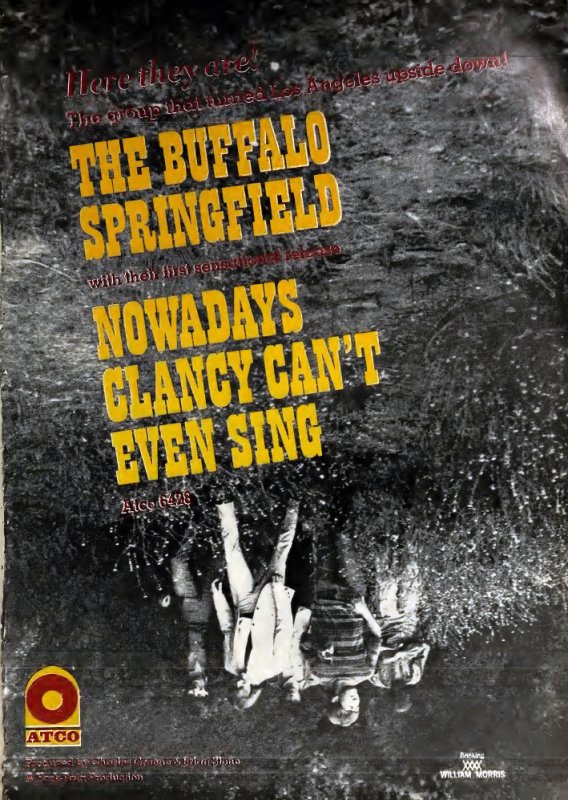
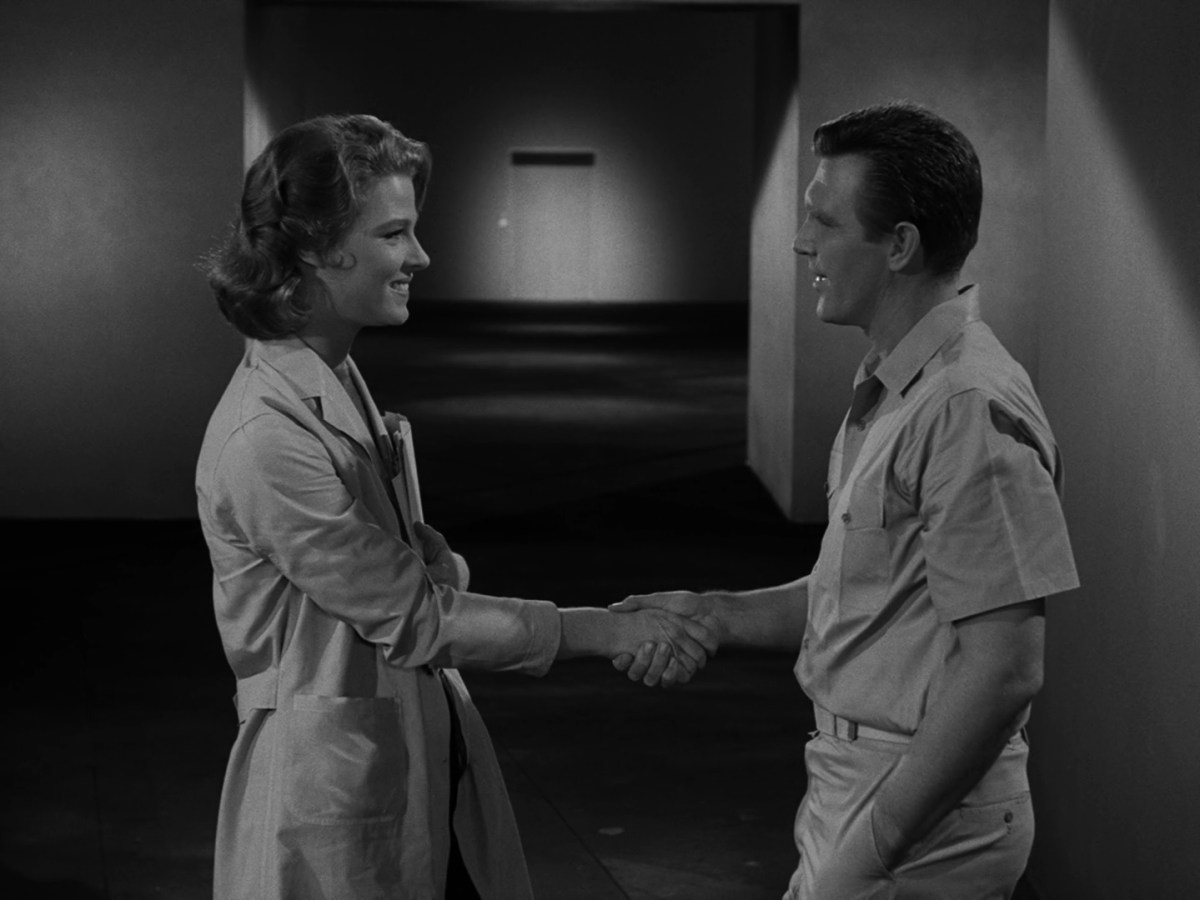
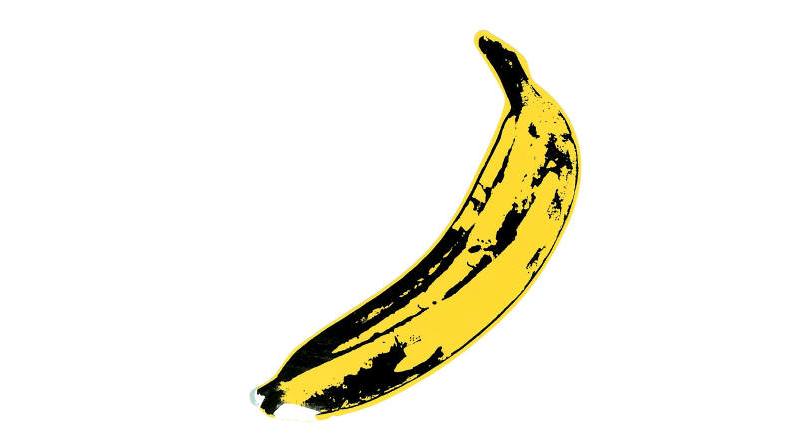




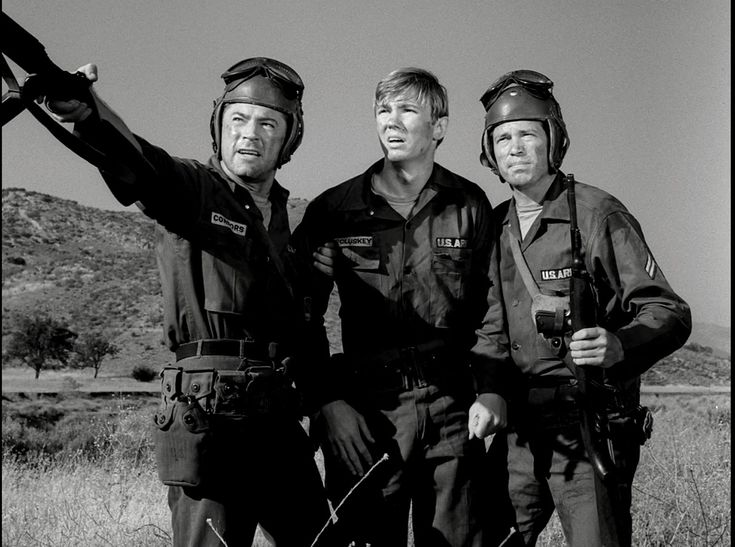

 PowerPop... An Eclectic Collection of Pop Culture