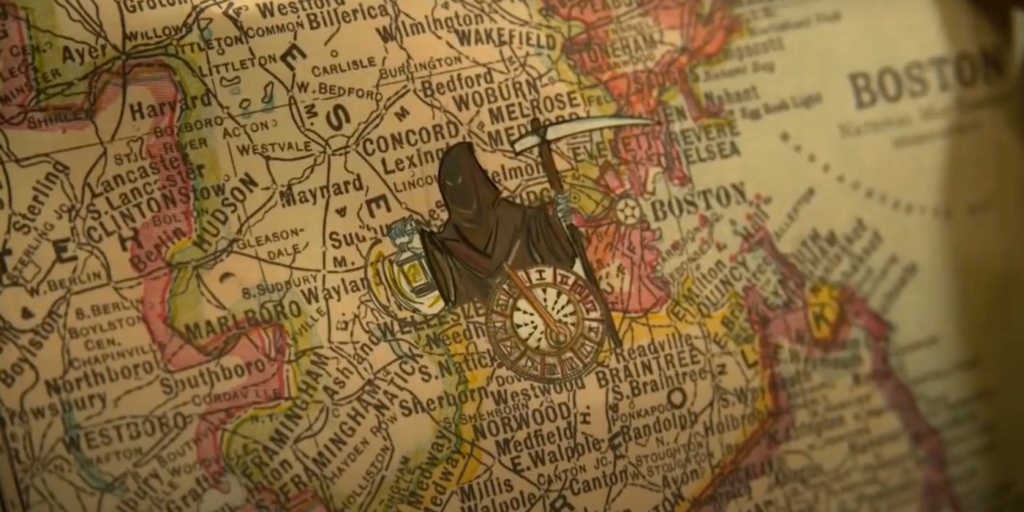
This is one B side that I have listened to more than the A-side.
I was playing in a band at a Summer Festival in the 90s. This song was on the setlist combined with Bruce’s Cadillac Ranch went over well. The subject matter is dark but truthful.
The song is credited to Chuck Berry and Bruce because Bruce rewrote the Berry song Bye Bye Johnny to fit his story. Chuck’s song follows the same character heard in Berry’s “Johnny B. Goode.” Johnny is now a grown man who boards a bus to start his life.
Bruce’s version is about Elvis Presley who died a little earlier. Bruce was a big fan of Elvis but saw what fame and isolation did to him. After the glory had left…the lifestyle caught up with Elvis with tragic results. The song was released as a B side to “I’m On Fire” in 1985. I’m On Fire was the 4th single released from Born In The USA. Johnny Bye Bye It was recorded in April 1982 during the “Electric Nebraska” sessions. That was when the band tried to recreate the Nebraska acoustic demos but they could not capture what Bruce wanted.
Springsteen performed this several times live during the River and Born in the USA tours. It is a haunting song to listen to. The keywords are the last lines of the song…”You didn’t have to die, You didn’t have to die.”
Bruce Springsteen: “The type of fame Elvis had . . . the pressure of it, the isolation that it seems to require, has gotta be really painful”
Chuck Berry’s original
“Johnny Bye-Bye”
Well she drew out all her money from the Southern Trust And put her little boy on the Greyhound Bus Leaving Memphis with a guitar in his hand With a one-way ticket to the promised land Hey little girl with the red dress on There’s a party tonight down in Memphis town I’ll be going down there if you need a ride The man on the radio says Elvis Presley’s died We drove to Memphis, the sky was hard and black Up over the ridge came a white Cadillac They’d drawn out all his money and they laid him in the back A woman cried from the roadside “Ah he’s gone, he’s gone” They found him slumped up against the drain With a whole lot of trouble running through his veins Bye-bye Johnny Johnny bye-bye You didn’t have to die You didn’t have to die
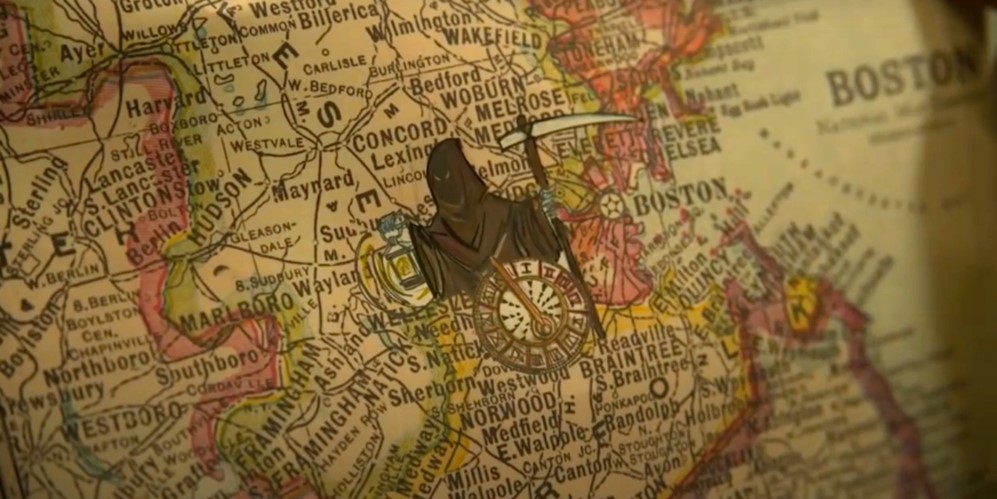
There are two episodes in the 5th season that I differ from many Twilight Zone fans…and this is one of them. I think it is the creepiest episode of them all. I’ve watched it countless times and I see something else every time I do. This show covers a plot device that the Twilight Zone has covered before but I like this take on it…a time loop…an endless cycle.
Gary Crosby (Bing Crosby’s son) plays Floyd Burney a jaded rockabilly star in search of new songs in the backwoods. Hank Patterson (Fred Ziffel in Green Acres) plays an old man who apparently is waiting for Burney at a barn-like music store but remains utterly uncommunicative. When Burney grabs a guitar and takes off…his fate is sealed.
Bonnie Breecher plays a beautiful girl named Mary Rachel who Burney hears singing a haunting ballad. Rachel falls in love with him but is powerless to change his preordained fate, as it seems Floyd is destined to live the song he wants to purchase. Floyd Burney is too self-centered to comprehend the bigger picture of the strange situation he finds himself in. Mary Rachel’s alter-ego also appears in an almost mourning demonic form throughout. The setting of this episode heightens the creepy atmosphere. You feel for Floyd Burney although you don’t really like him.
IMDB Trivia: This was the final episode of The Twilight Zone (1959) to be filmed, although two episodes filmed earlier were aired afterward.
As a teenager, Liza Minnelli auditioned for the role of Mary Rachel opposite Gary Crosby. Minnelli was so nervous that the producer William Froug commented: “She’ll never make it.” Minnelli lost out to Bonnie Beecher. This episode was Ms. Beecher’s acting debut.
The headstock of Floyd Burney’s guitar has black tape across the label covering the Gibson name brand.
Floyd Burney’s guitar is a Gibson ES-295 electric arch-top.
Producer William Froug:One of the people I interviewed was this nervous, frightened little girl whose hands shook and who was covered with sweat, and I said, Shell never make it. Her name was Liza Minnelli. And I chose Bonnie Beecher, and we all know what became of Bonnie Beecher!
I’ll never forget Liza Minnelli sitting there and her agent saying, This girl can really sing. I said, I’m sure she can, but I thought, Oh, she is so nervous! She’s scared out of her mind. To picture her as a hillbilly singer: no way. And I must tell you and this is the truth at the time, I sat there thinking, Well, I’ll probably kick myself for this but I can’t see this girl playing the part but shell probably be a big star. I still don’t regret it, but it was really classic stupidity.
This show was written by Rod Serling and Anthony Wilson
Rod Serling’s Opening Narration:
Mr. Floyd Burney, a gentleman songster in search of song, is about to answer the age-old question of whether a man can be in two places at the same time. As far as his folk song is concerned, we can assure Mr. Burney he’ll find everything he’s looking for, although the lyrics may not be all to his liking. But that’s sometimes the case – when the words and music are recorded in the Twilight Zone.
Summary
Singer Floyd Burney, the “Rock-a-Billy-Kid”, goes deep into the back woods hoping to find his next hit record. He no sooner arrives than he hears a beautiful singing voice which draws him deeper into the woods. He eventually meets Mary Rachel who tells him the song he heard belonged to someone and that she’s forbidden to tell anyone about it. When she finally reveals it to him, Floyd learns that his future is preordained.
Below is a short clip…I would recommend watching the episode if you have time.
Rod Serling’s Closing Narration:
In retrospect, it may be said of Mr. Floyd Burney that he achieved that final dream of the performer: eternal top-name billing, not on the fleeting billboards of the entertainment world, but forever recorded among the folk songs of the Twilight Zone.
CAST
Rod Serling … Host / Narrator – Himself Gary Crosby … Floyd Burney Bonnie Beecher … Mary Rachel John Bolt … Billy Rayford Hank Patterson … Old Man
This is a recap of rounds 1-3 that was held earlier. Hope you will join us on Friday, April 22, 2022, as we kick off Round 4. If you want a full recap as we go… go here https://powerpop.blog/tv-draft/ or go to “TV Draft” in the menu on the site.
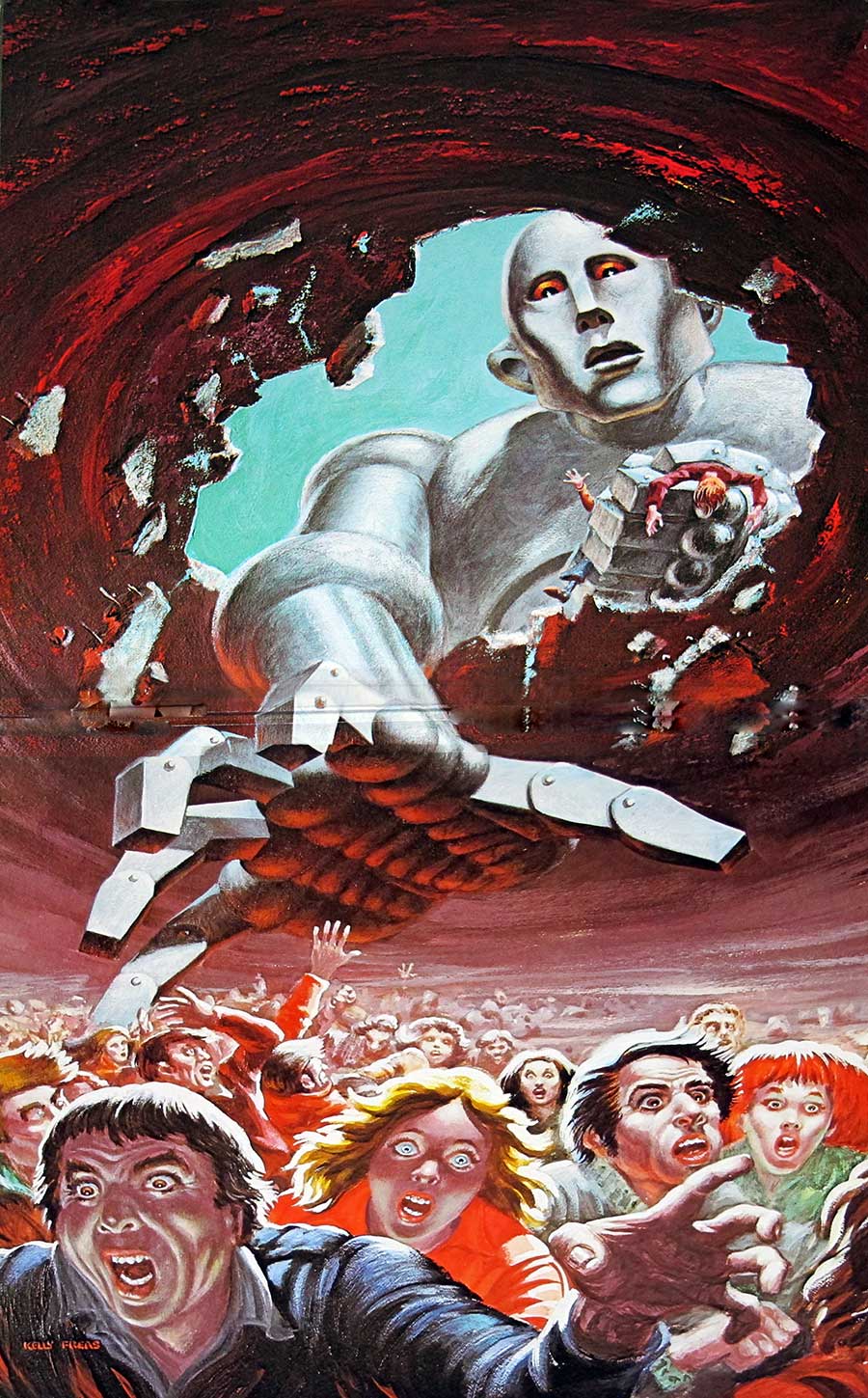
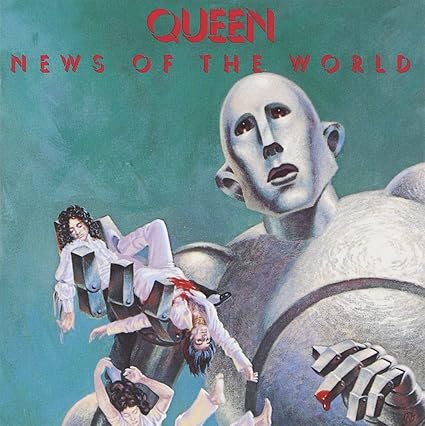
I just saw a post about the album cover for News Of The World at The Press Music Reviews. It made me think of the first time I saw the cover of this album and when I heard this song.
In 3rd or maybe 4th-grade recess we were all going outside playing kickball. A friend of mine named Paul brought this album to school. We all looked at it and couldn’t stop talking about that cool robot cover. That was before I listened to it.
When I first heard We Will Rock You… the guitar solo is what stood out to me. It’s so simple yet catchy like many of Brian May’s solos…it was more like a hook. It turned into an anthem with We Are The Champions. I made a vow that if I learned how to play guitar one day I would learn that solo. I forgot about that vow until a few years ago and I finally kept that promise to myself.
We Will Rock You was released as a double A-side single with We Are The Champions. Since the songs were released, the band has almost always used “Rock You” and “Champions” as a back-to-back encore number. The album peaked at #3 in the Billboard Album charts, #2 in Canada, #15 in New Zealand, and #4 in the UK in 1977.
On Queen’s next album, they had another set of songs disc jockeys played together. “Bicycle Race” and “Fat Bottomed Girls” were segued together on their album Jazz. Those songs were also released as a double A-side single.
While in the studio they had a visit from no other than Sid Vicious. He berated Freddie Mercury and asked him if he had brought ballet to the masses yet…referring to an earlier Mercury interview. Freddie said “I called him, I dunno, Simon Ferocious or something, and just pushed him out. I think… yeah, I think we passed that test.” Roger Taylor later called Vicious a moron and idiot.
Brian May: There were two occasions that inspired it. One I’ve spoken about a lot, which was at Bingley Hall [near Birmingham, England] where the audience sang every song and then we went off stage and they carried on singing and then they sang [the de facto Liverpool F.C. football anthem] “You’ll Never Walk Alone.” It was a transitional time in rock. You went to see Led Zeppelin and The Who, you’d bang your head but you didn’t sing along, that wasn’t cool. This was an invitation to sing along.
A light went off and I thought, “We shouldn’t fight this, we should embrace it!” People didn’t do that at the time at rock concerts. I thought, “How interesting — if I wrote something, the audience could participate it to the point that they could lead the band?” I went to sleep and woke up with “We Will Rock You” in my head. When you’re at a show you can hardly move, but you can stomp your feet and chant and clap and lead us.
Roger Taylor:“It only has one instrument apart from the voice: There’s no bass, no real drums — just feet and handclaps and only that guitar at the very end. It’s quite an odd song. It was designed as a sort of song for the audience, a joining-in song. But we never really envisioned that it would be taken up by sports. It’s one of delights of… I’ve spent my life being in a band, so it sidelined all sports. I reckoned I could meet more girls being in a band than playing soccer.”
The single was accompanied by a promo video that saw Queen perform the song in Roger Taylor’s back garden and We Will Rock You quickly became the opening number on the band’s winter tour.
We Will Rock You
Buddy, you’re a boy, make a big noise Playing in the street, gonna be a big man someday You got mud on your face, you big disgrace Kicking your can all over the place, singin’
We will, we will rock you We will, we will rock you
Buddy, you’re a young man, hard man Shouting in the street, gonna take on the world someday You got blood on your face, you big disgrace Waving your banner all over the place
We will, we will rock you, sing it We will, we will rock you
Buddy, you’re an old man, poor man Pleading with your eyes, gonna make you some peace someday You got mud on your face, big disgrace Somebody better put you back into your place
We will, we will rock you, sing it We will, we will rock you, everybody We will, we will rock you We will, we will rock you Alright
Welcome to the Hanspostcard TV Draft. The remaining 8 rounds will be posted here. We will have 64 different TV Shows by 8 different writers. I hope you will enjoy it! Today’s post was written by Max from https://powerpop.blog
Adam 12
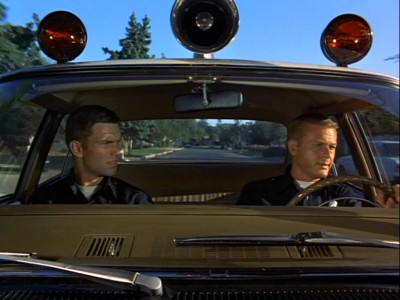
The show was simple… it focused on a pair of beat cops doing their everyday jobs… responding to calls and patrolling the city of Los Angeles
I watched this in syndication in the late seventies after school. I never thought much of it at the time. When I started to watch it as an adult, I was surprised at how good this show was. I thought it was strictly a kid’s show. I couldn’t believe how realistic it was for that time and some now. They covered subjects like child pornography, drug addiction, gangs, racial tension, and everything else criminally related. It was on for 7 seasons from 1968 through 1975.
Sometimes as an adult and you watch shows or movies you did as a kid you think wow…how did I like this? Now I’m thinking why didn’t I like Adam 12 more? The show starred Martin Milner as Officer Pete Malloy and Kent McCord as Officer Jim Reed. It was created by Jack Webb and Robert Cinader. The pair also created a spinoff from Adam-12…Emergency. Jack Webb also created Dragnet. Emergency and Adam 12 did crossover in a few episodes.
Before this show, Martin Milner was in the fantastic tv show Route 66 that would film in different locations every week. Kent McCord knew Ricky Nelson well and appeared on The Adventures of Ozzy and Harriett. They both knew Jack Webb and were cast for Adam 12.
How realistic was it? The LAPD would use some episodes as training guides for new policemen. The reason for that is that the LAPD worked with the show for realism. Kent McCord said that more than once while filming…someone would come up to them and thought they were real policemen.
They wanted to capture a typical day in the life of a police officer. There was no Dirty Harry on this force. These officers went by the book even if it would have benefitted them at times to stray off. The episodes were written around actual police cases to add some realism. They showed all that the censors would allow.
Some of the guest stars were… Tony Dow, Willie Aimes, Ed Begley Jr, Karen Black, David Cassidy, Micky Dolenz, Tim Matheson, Ozzie Nelson, and many others. It was odd seeing Robert Donner…who played Yancy Tucker on The Waltons a few years later…playing a heroin addict-informant.
Reed is happily married, and Malloy is the happy bachelor. The interplay is natural and not forced. The one big thing I like about the show is the continuity from beginning to end. You see a raw rookie in Jim Reed with Malloy slowly training him up and eventually both becoming friends as seasons pass by. The conversations that take place between the crimes happening are things we all talk about so you can relate to these two.
Los Angeles historians have a field day with the episodes. They show how the city was at that time. They recorded the bulk of this show on location. On youtube you can find “then and now” film segments. Many policemen have said that this show inspired them to join the force.
Martin Milner passed away in 2015. The LAPD hosted a ceremony in Milner’s honor at its downtown Los Angeles headquarters. I binge-watched this show last year and the quality never went down in the 7 seasons.
I first got Tea for the Tillerman back in the early eighties and got hooked on Cat Stevens although I do remember his songs growing up. He has one of those voices that when you first hear it…you know who it is without any doubt. This song I didn’t know about until I heard it in a movie.
This is the ultimate optimistic song about following your own path. Like the best of Cat Stevens songs, it will stay with you after a listen. It’s optimistic without going overboard.
I first heard this song in the dark comedy 1971 “Harold and Maude” where it was featured. Stevens wrote and performed all of the songs for the movie after being recommended by Elton John.
This song did not chart which really surprised me when I first heard it. The reason it didn’t chart was that was it never released as a single or on an album. The song was finally released in 1984 on a Cat Stevens Greatest Hits album called “Footsteps in the Dark: Greatest Hits, Vol. 2.”That was 14 years after the movie. The soundtrack for Harold and Maude wasn’t released until 2007.
I would recommend this movie to anyone who likes dark or offbeat comedies. The movie was directed by Hal Ashby. The music was a perfect fit for this movie. Both Bud Cort and Ruth Gordon were nominated for Best Actor/Actress in a Motion Picture -Comedy at the Golden Globes.
“If You Want To Sing Out, Sing Out”
Well, if you want to sing out, sing out And if you want to be free, be free ‘Cause there’s a million things to be You know that there are
And if you want to live high, live high And if you want to live low, live low ‘Cause there’s a million ways to go You know that there are
[Chorus:] You can do what you want The opportunity’s on And if you can find a new way You can do it today You can make it all true And you can make it undo you see ah ah ah its easy ah ah ah You only need to know
Well if you want to say yes, say yes And if you want to say no, say no ‘Cause there’s a million ways to go You know that there are
And if you want to be me, be me And if you want to be you, be you ‘Cause there’s a million things to do You know that there are
[Chorus]
Well, if you want to sing out, sing out And if you want to be free, be free ‘Cause there’s a million things to be You know that there are You know that there are You know that there are You know that there are You know that there are
Welcome to the Hanspostcard TV Draft. The remaining 8 rounds will be posted here. We will have 64 different TV Shows by 8 different writers. I hope you will enjoy it! Today’s post was written by Dave from https://soundday.wordpress.com/
First I’d like to thank Max for keeping this project running, and for inviting me to take part. There are so many good TV shows to choose from, it’s hard to know where to begin, but I’ll opt for one that seems to hit close to home for me (LOL – literally)… King of the Hill.
King of the Hill was a long-running animated prime-time cartoon that somehow had characters a lot more “real” than most of its contemporaries made with real actors. It ran on Fox Network for 259 episodes from 1997- 2010, and has been seen in re-runs in syndication and on some of the streaming services. I’m not a gigantic fan of Fox overall, but one thing they do well is cartoons!
It typically ran on Sunday nights after The Simpsons, – itself a hilarious and ground-breaking show – at 8:30 Eastern time. Fox seemed to clue in on how much of a good thing they had going with Sunday night cartoons aimed at adults and forever were searching for ones to lineup with their corporate flagship show and its yellow-skinned Springfielders. Some of them caught on (e.g. Family Guy or, though I can’t fathom why, Bob’s Burgers), others were come and gone faster than you could say “Eat my shorts” …anyone remember Border Town? Although a few of the post-Bart and Homer series might have now topped King of the Hill in episodes, I don’t think any have topped it for humor and creating characters we felt we could relate to. No wonder Time magazine once called it “the most acutely-observed and realistic sitcom about American life, bar none.” Perhaps all the more surprising since its main creator was Mike Judge, whose previous claim to fame was Beavis and Butthead.
King of the Hill revolved around Hank Hill and his family – wife Peggy, tween son Bobby and their dog, a lazy hound called Ladybird. And the niece who lived with them, to Hank’s mild disapproval, Luanne. They were a typical, middle-class Texan family living somewhere in the suburbs, in the city of “Arlen.” Hank sold propane, and propane products and was proud of it. Peggy was a substitute teacher, specializing in Spanish classes (although her knowledge of the language was barely functional) who loved Boggle and making green bean casseroles; a woman described as “confidant, sometimes to the point of lacking self-awareness.” Like most Texans, they loved things like rodeos, pickup trucks and Dallas Cowboys football – in one memorable episode Hank tries to get together a movement to move the Cowboys training camp to Arlen, but they pick Wichita Falls. To which Hank replies that city which claims to be “north Texas! More like south Oklahoma if you ask me!” a pretty stinging insult in the Lone Star State! Bobby, to his dad’s chagrin, is chubby, has little interest in sports and wants to be a stand-up comedian or worse yet, a clown.
Joining Hank is a supporting cast of neighbors we all seem to know in real life. There’s Bill, balding, overweight veteran who’s lonely and cuts hair on the nearby military base for income and amusement. Boomhauer, the suave, thin ladies man with the weird hillbilly accent who always seems to have female companionship and little to do outside of that but drink beer with the other guys and watch the world go by. (In the final episode’s surprise twist, we see his wallet lying open and find he’s a Texas Ranger – the elite branch of the state police.) And there’s Dale, a man ahead of his time. Chain-smoker, exterminator by day, full-time conspiracy theorist and paranoid political commentator at night. Somehow he’s married to the lovely Nancy, the local TV weather girl and they have a son, Joseph… who looks nothing at all like him nor the blonde Nancy…but suspiciously like John Redcorn, the Native “healer” who has been giving her lengthy massages for her migraines for years. Dale has trouble figuring out why Joseph looks like that…but thinks maybe his wife was abducted and impregnated by aliens. And we can’t forget Cotton, Hank’s cranky old father, lacking the bottom of his legs due to a war injury, nor the Khans. The Khans are from Laos, and while their daughter, Kahn Jr. (Connie to her friends) has assimilated well and is Bobby’s erstwhile girlfriend, and mother Mihn tries, Kahn Sr. fancies himself a successful businessman and can’t believe his bad luck landing up on a street full of hillbillies and rednecks. Somehow, the men all seem to get along and bond over things like appreciation of a good garbage can or love of (in Khan’s case, grudging acceptance of) Alamo Beer.
For the most part, the stories were fully relatable. They never starred in freaky Halloween episodes nor a big Broadway show (although ZZ Top did guest star once and put Hank unwillingly into a reality show following him around) or get abducted by aliens, perhaps to Dale’s surprise. Instead there were events like Hank trying to get the city to rescind it’s bylaw necessitating water-conserving toilets, or camping out in the local Megalomart with Dale (which bears a lot of resemblance to another American big box department store) trying to catch a rat. In one episode, Bobby gets picked on by bullies leading Hank to try to get the boy into a boxing class. Instead of that, Bobby ends up in a women’s self-defence course and learns to kick anyone he’s mad at in the testicles…Hank included. And one of the final episodes really amused me … I was born and raised near Toronto, if you didn’t know that already. In it, Boomhauer decides to take a vacation in Canada and temporarily trades houses with a Canadian family. Hank and the Canadian dad take an instant disliking to each other, with them competing over who brews the best beer and whose brand of lawn mower rules. End result? Both get arrested for DWI while mowing their lawns; Hank and his buddies eventually sell a “keginator” beer-pump to bail the Canuck out of jail, because that’s what neighbors do. “We’re Americans,” Hank declares “we’re the world’s welcome mat. It doesn’t matter if they’re from Canada, Laos, or God forbid, even California!”
The show had Greg Daniels co-writing early on, a good pedigree since he’d worked on Saturday Night Live, the Simpsons and co-wrote the Seinfeld episode “The Parking Space”… Music City Mike probably remembers that one. When it first came on, I liked it and often watched it, but it took years for it to really grow on me and come to appreciate how fully nuanced the characters were and how much attention to detail of human nature it showed…all the while being hilarious. There was a great sense of humanity in it all. People like Hank were trying their best, having a hard time keeping up with the changing times (he was the holdout on the office’s love of Facebook, for example) but doing his best to understand and be better. Nancy had her ongoing affair, but called it off eventually when she realized it was wrong to do to her husband, wacky as he was. And Luanne, sweet as pie and about as dumb as one too, with her little Christian puppets trying to teach kids right from wrong, boyfriend Lucky in tow. Lucky got his nickname when he slipped on pee at a Walmart and sued them for hundreds of thousands! (That makes watching it a tiny bit sad as both of the voice actors are gone – Brittany Murphy who did Luanne, and the one and only Tom Petty who was ‘Lucky’). They were all good people and the shows funny. But once I came to Texas…boy howdy, it took to another level for me.
Judge spent time in the Dallas Metroplex when young and said he based it on the suburbs like Arlington and Garland, Texas. Once I saw Waco, it seemed like Waco was Arlen…or vice versa. There are so many details that ring true like the Bush’s beans at dinner or love of Whataburger. When Peggy wants to have a serious talk with Bobby, she’ll treat him to one of those burgers…leading him to suspiciously note last time she took him there, she told him about Doggie Heaven!
I started this thinking I wouldn’t have enough to say about King of the Hill. Turns out I have too much to say for one column really. So one more thing – I just reminded myself how funny the show was. I think I’m going to go watch a few now!
For years I would skim over this episode until I watched it again and really got the message. It’s a good show and true to life. Rod Serling had his crystal ball at full power with this episode and could see what was happening. The message that Serling gets across is a stronger one today. It has been reported that automation could destroy as many as 73 million jobs by 2030…paving the way for further dehumanization.
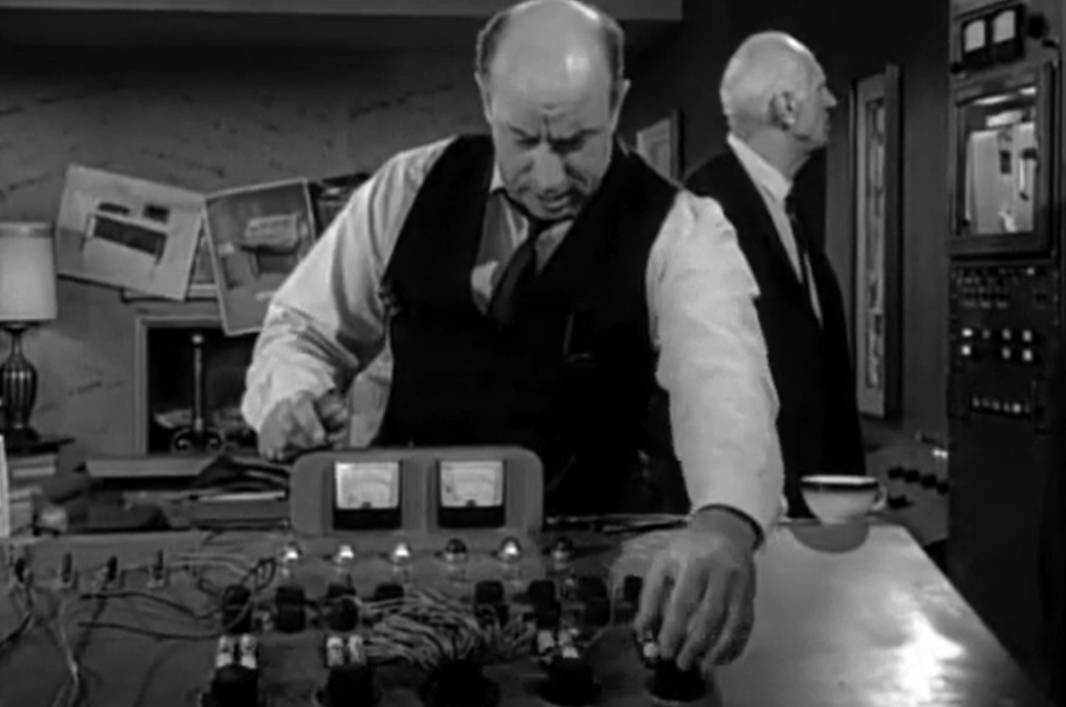
Richard Deacon as Wallace V. Whipple, most famous for “The Dick Van Dyke Show” has control of his late father’s company. Despite the fact that his father doubled his production, the son sees him as a failure. His solution is to go to an almost totally computerized and mechanized factory, eliminating nearly all the workers, even the ones who have been there for years. Paul Newlan as Walter Hanley steals the show as a longtime principled employee with common sense and morals who picks Whipple apart.
I also have to mention Ted de Corsia who plays a frustrated worker named Dickerson who has had enough and takes some revenge against the machine taking his job.
The Brain Center At Whipple’s hits a chord with jobs being taken away from us by technology. We have corporations that only care about the bottom line and less about people who have helped make them. Technology is a great resource when used as a tool and should help employees do their jobs but not take them.
The episode is a little over the top but worth the ride.
IMDB Trivia: Richard Deacon and Rod Serling both grew up in Binghamton, New York and were graduates of Binghamton Central High School. There was a very popular lumber yard on Upper Court Street in Binghamton named “Whipple’s Lumber Yard”, thus the name for Deacon’s character in this episode. Rod Serling would often use names of places in and around Binghamton for names of places and characters in the series.
Select scenes and segments of dialogue from this episode were featured within the context of the ‘Information Age: People, Information and Technology’ exhibit at the Smithsonian Museum of American History. The exhibit ran from May 9, 1990 through September 4, 2006.
The new computer that is installed is the same one used in, “The Old Man and the Cave”.
This show was written by Rod Serling
Rod Serling’s Opening Narration:
These are the players — with or without a scorecard. In one corner a machine; in the other, one Wallace V. Whipple, man. And the game? It happens to be the historical battle between flesh and steel, between the brain of man and the product of man’s brain. We don’t make book on this one and predict no winner….but we can tell you for this particular contest, there is standing room only — in the Twilight Zone.
Summary
The W.V. Whipple Manufacturing Co. introduces a new automated manufacturing machine that will eliminate 61,000 jobs and the company’s president, Wallace V. Whipple, is quite proud of his achievement. Not everyone agrees with him, especially the loyal and longstanding employees who will be out of work. Foreman Vic Dickerson has plans for the machine – plans that land him in the hospital. When the machine is fully operational, it’s Wallace V. Whipple who learns just what it is he has created.
Rod Serling’s Closing Narration:
There are many bromides applicable here: ‘too much of a good thing’, ‘tiger by the tail’, ‘as you sow so shall you reap’. The point is that, too often, Man becomes clever instead of becoming wise; he becomes inventive and not thoughtful; and sometimes, as in the case of Mr. Whipple, he can create himself right out of existence. As in tonight’s tale of oddness and obsolescence, in the Twilight Zone.
CAST
Rod Serling … Host / Narrator – Himself Richard Deacon … Wallace V. Whipple Paul Newlan … Walter Hanley Ted de Corsia … Dickerson Thalmus Rasulala (credited … Jack Crowder) … Technician Shawn Michaels … Bartender Burt Conroy … Watchman Robby the Robot … Himself
Welcome to the Hanspostcard TV Draft. The remaining 8 rounds will be posted here. We will have 64 different TV Shows by 8 different writers. I hope you will enjoy it! Today’s post was written byLisa from https://tao-talk.com/
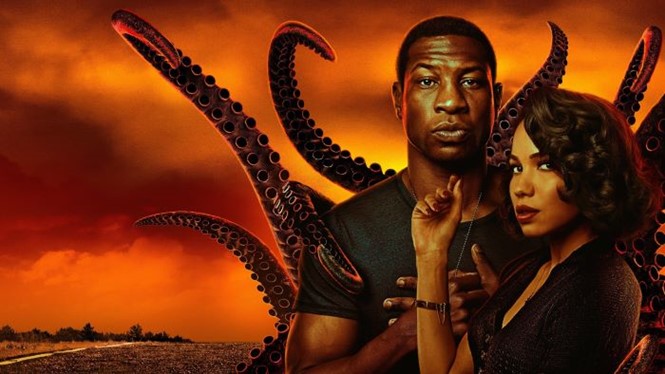
Saturday 041622 Lisa – TV Draft Round 3 Pick 6 – Lovecraft Country (2020) 1 season 10 episodes, originally on HBO Starring: Jonathan Majors as Atticus “Tic” Freeman Jurnee Smollett as Letitia “Leti” Lewis Aunjanue Ellis as Hippolyta Freeman Wunmi Mosaku as Ruby Baptiste Abbey Lee as Christina Braithwhite Jamie Chung as Ji-Ah Jada Harris as Diana Freeman Michael Kenneth Williams as Montrose Freeman Jordan Patrick Smith as William Courtney B. Vance at George Freeman
Director: Daniel Sackheim (2 episodes and the rest, 1 each,) Yann Demange, Cheryl Dunye, Misha Green, Victoria Mahoney, Nelson McCormick, Jeffrey Nachmanoff, Helen Shaver, Charlotte Sieling Genres: drama, fantasy, horror Synopsis: Set in the 1950’s Jim Crow Era, as the story opens Tic is on a bus, a soldier coming home from the Korean War to his small southern town. He reconnects with his Uncle George, Aunt Hippolyta, and young cousin, Jada. Uncle George publishes a regional issue of “The Green Book,” which is a travel guide for people of color that lists safe places to dine, lodge, shop, etc., which he learns by going into the field on road trips. Aunt Hippolyta is a mother, wife, and amateur astronomer. Jada is a budding artist. Tic learns that Montrose, his father, and brother to Uncle George, has disappeared. He also learns that his dad is on a quest to investigate long-suggested mysteries around his family’s heritage. He leaves behind enough clues to compel Tic and Uncle George to go looking for Montrose. Enter Leti, who just got back to town and is only temporarily staying with her sister, Ruby. Leti is penniless and needs a ride to her brother’s house, which happens to be on the way to where Tic and Uncle George are headed. And so begins a rousing cross-country adventure that provides excitement, danger, terror, and more pieces to the puzzle every step along the way. The plot throughout mixes Jim Crow South with Lovecraft Horror skillfully as it puts our heroes through challenges nobody would ever wish to be put through in order to get to the truth. Impressions: It’s been a long time since I’ve encountered a series this dense with creativity, action/adventure, plot intricacy, depiction of institutionalized racism (and educating, in the process,) and resonance as Lovecraft Country. It may be that I’ve never come across a TV series just that good before. I literally had no clue what was going to happen next, and being that on the edge of my seat throughout 10 episodes was like going to an amusement park where every ride has no dead space.
This series is not for the faint of heart. There are hauntings, mythical and otherworldly beasts, curses, time travel, old secret societies that practice magic and other rituals, and shapeshifting with the Lovecraft aspect. With the Jim Crow aspect, there are “sunset towns, police racists/fascists threatening and variously harassing people of color, separate dining and lodging mandates, neighborhood and employment exclusions, and other things that create a hostile environment for anyone whose skin is not white. There are pervasive ongoing activities that are designed to keep our heroes from feeling welcome or safe. The closer they get to solving the mystery the more threatening and dangerous the forces become. Grade: 10 Etc.: It’s based on a novel by Matt Ruff, but it is a refashioning of a pulp fiction novel by H.P. Lovecraft, who is reported to have been a rabid racist. It is my understanding that Lovecraft Country was designed to be one season, based on the novel. Various sources give suggestions that there could have been another season, but it hasn’t happened, at least not yet. Awards: 24 wins and 104 nominations Website: There is a wealth of information on the series at the HBO website.
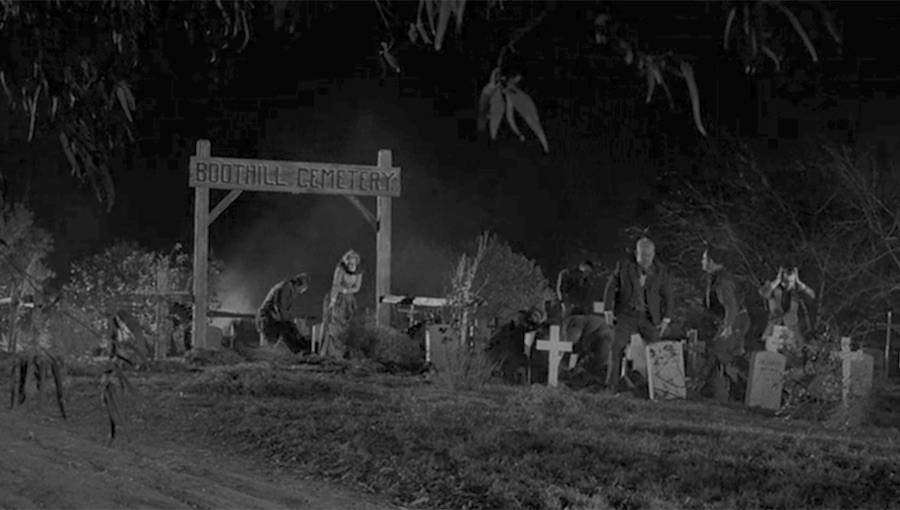
This is an excellent episode and what initially seemed like a straight drama actually had a subtle comedic twist. It says a lot about human nature. This may be a lighter episode but it works on many levels. Top to bottom, the comic casting is impeccable. Not a blight to be found in the cast. John Dehner is marvelously dry as a con man in the Old West and there is a good deal of humor as he goes about his business in the town of Happiness, Arizona. The town’s cemetery contained 128 dead, all but one were victims of violence…and as one drunk put it…that was my dear wife Zelda, rest her soul, a fine, healthy, strapping woman of 247 pounds but not unattractive, mind you.
John Dehner’s character Jared Garrity is going to raise the dead in Happiness Arizona. The townspeople in the saloon claim to miss their loved ones. But, upon rethinking the matter, one by one they realize that their late friends, wives, husbands, and drunkards maybe…just maybe weren’t the lovely people they were fondly remembering. Will Garrity be able to pull this feat off or is he taking the town for a ride?
The Twilight Zone’s 5th season lagged a little in the middle but with three more episodes to go…they finished up quite strong.
From IMDB Trivia: This is based on a supposed true story that happened in Alta, UT in 1873. It was initially told on Death Valley Days: Miracle at Boot Hill (1961).
This show was written by Rod Serling and Mike Korologos
Rod Serling’s Opening Narration:
Introducing Mr. Jared Garrity, a gentleman of commerce, who in the latter half of the nineteenth century plied his trade in the wild and wooly hinterlands of the American West. And Mr. Garrity, if one can believe him, is a resurrecter of the dead – which, on the face of it, certainly sounds like the bull is off the nickel. But to the scoffers amongst you, and you ladies and gentlemen from Missouri, don’t laugh this one off entirely, at least until you’ve seen a sample of Mr. Garrity’s wares, and an example of his services. The place is Happiness, Arizona, the time around 1890. And you and I have just entered a saloon where the bar whiskey is brewed, bottled and delivered from the Twilight Zone.
Summary
In the early 1890s Mr. Garrity arrives in Happiness, Arizona apparently knowing a great deal about some of the people who live there. He knows that Jensen the bartender’s brother died and that Gooberman the town drunk lost his wife. Garrity also reveals that he has a very peculiar gift – he can bring back the dead. When a dog is run down by a wagon in the street he resurrects it without any difficulty. When he offers to do the same for the town’s loved one’s, they realize they would rather he not bring back the dearly departed, something they are quite happy to pay him for. Garrity, a charlatan if ever there was one, is glad to accept their money – though he does seem to leave something behind
Rod Serling’s Closing Narration:
Exit Mr. Garrity, a would-be charlatan, a make-believe con man and a sad misjudger of his own talents. Respectfully submitted from an empty cemetery on a dark hillside that is one of the slopes leading to the Twilight Zone.
CAST
Rod Serling … Host / Narrator – Himself John Dehner … Jared Garrity J. Pat O’Malley: Mr. Gooberman Stanley Adams … Jensen John Mitchum … Ace Percy Helton … Lapham Norman Leavitt … Sheriff Gilchrist Edgar Dearing … First Resurrected Man Kate Murtagh … Zelda Gooberman Patrick O’Moore … Man John Cliff … Lightning Peterson Robert McCord … Townsman In Black Hat Cosmo Sardo … Resurrected Man
Welcome to the Hanspostcard TV Draft. The remaining 8 rounds will be posted here. We will have 64 different TV Shows by 8 different writers. I hope you will enjoy it! Today’s post was written by Paula from http://paulalight.com
Upload
Upload is a series on Prime that (so far) offers two seasons. I’ve seen both and I recommend this offbeat show. Unfortunately, I thought the premiere episode wasn’t that great and I almost didn’t continue, but I’m glad I did. I encourage you to persevere, if you feel similarly about E1, because the show gets better as the first season rolls on. I enjoyed S2 even more! The show was created by Greg Daniels, and the basic premise is that sometime in the near future, humans will be able to upload their consciousness to another realm where they will continue to exist post-death. It stars Robbie Arnell as Nathan, Andy Allo as Nora, Allegra Edwards as Ingrid, Zainab Johnson as Aleesha, Kevin Bigley as Luke, and Owen Daniels as AI Guy.
I have to tell you something about Robbie: he could be Tom Cruise’s double. It isn’t merely his good looks either, but also his voice and mannerisms are similar. It’s really freaky! And not only that, but there is awareness of it written into the show and at least one joke about it. Anyway, Robbie’s character Nathan dies in a car crash in E1 and his wealthy girlfriend Ingrid pays for him to be uploaded to Lakeview so his consciousness will continue on. Nora is Nathan’s human handler who helps him transition and cope with the new world. Nora has her own drama back in the “real world,” as she desperately tries to find a way for her dying father to upload to the Good Plan that Nathan has, but she can’t afford it. We see the disparity in the afterlife tiers for the wealthy vs the poor, which isn’t a surprise.
We get hints that Nathan wasn’t fully uploaded and part of his memory has been corrupted. Nora tries to fix these files and his memory returns in bits and pieces, but not completely. At his own funeral, which Nathan gets to view remotely, he hears that the software deal he was working on when he died wasn’t worth anything. Other factors make his death begin to look suspicious. We also discover that technology is emerging that may make it possible to regrow your original human body and “download” back into it, with some risks, such as your head exploding. But they’re working on that! E4 is hilarious due to a product known as a “sex suit,” which I will leave to your imagination (or you can watch the show).
After this, the show gets even more interesting with the introduction of new characters, such as Fran, an investigator into Nathan’s death, Byron, a guy Nora hooks up with from a dating app, Nora’s father, who still believes in the old-fashioned “heaven,” et al. S2 begins with Nora needing to go “off-grid,” since she now knows too much about Nathan’s death. We are treated to a wacky couple eps with the LUDDs, a group of anti-tech anarchists. Nora develops feelings for one of the men, maybe, and struggles with that vs her attachment to Nathan. The show now dives into even deeper philosophical themes regarding identity, memory, death, etc. S2 ends with a cliffhanger: Nathan has chosen to download in order to solve some of the mysteries surrounding his death, and at the last moment we see he has a nosebleed.
~*~
Paula Light is a poet, novelist, flash fiction fan, cupcake connoisseur, mom, grandma, cat mommy, etc. Her blog can be found at http://paulalight.com.
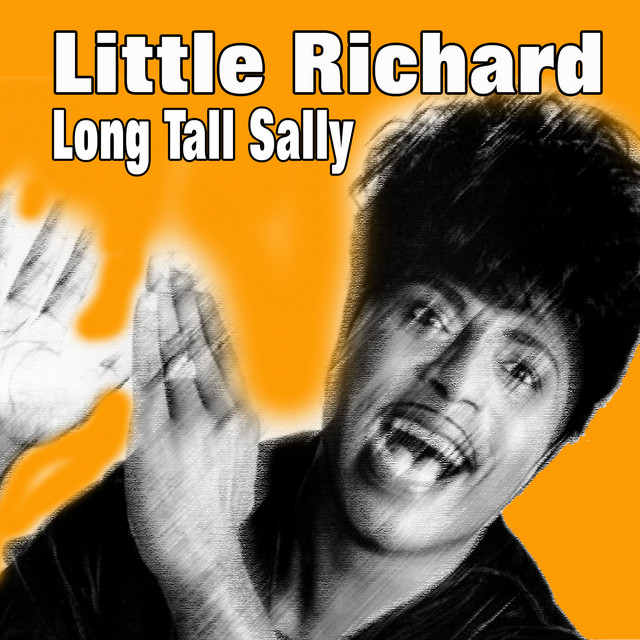
I first heard this through the Beatles, but nobody beats Little Richard (Richard Penniman) for this kind of raving song. The Beatles played on the same bill with Richard in Hamburg and Liverpool before they were nationally known. They got to know Billy Preston because he was Richard’s keyboard player.
My dad told me about Little Richard before I ever heard him. He said he had the largest voice he ever heard. He talked about a song called Long Tall Sally. I first heard it…it blew me away. Such a raw emotional power in that voice. He would take us to the edge of the cliff and then at the last-minute pull us back.
So was there a real Long Tall Sally? Yes, there was but she was not a cross-dresser as sometimes reported. Little Richard has said that Sally was a friend of the family who was always drinking whiskey…she would claim to have a cold and would drink hot toddies all day.
He described her as tall and not attractive, with just two teeth and cockeyed. She was having an affair with John, who was married to Mary, who they called “Short Fat Fanny.” John and Mary would get in fights on the weekends, and when he saw her coming, he would duck back into a little alley to avoid her. His voice was one of a kind…and I mean one of a kind. He could sing anything. Richard wrote this while working as a dishwasher at a Greyhound bus station in Macon, Georgia. He also wrote Tutti Frutti and Good Golly Miss Molly while working there. He had help with the song…Enotris Johnson and Robert Blackwell are also listed as the writers.
Long Tall Sally peaked at #6 in the Hot 100 and #1 in the R&B Charts in 1956.
Richard’s producer, Bumps Blackwell, had him record the vocal exceptionally fast in an effort to thwart Pat Boone. Boone’s version of “Tutti Frutti” sold better than Little Richard’s, so Blackwell tried to make it very difficult for Boone to copy. He had Richard work on the line “duck back down the alley” over and over until he could sing it very fast. He figured Boone could never match Richard’s vocal dexterity.
As much as I don’t like Pat Boone’s covers of Little Richards songs…they did help Richard get royalties as the writer.
Long Tall Sally
Gonna tell Aunt Mary ’bout Uncle John He claim he has the misery but he’s havin’ a lot of fun Oh baby, yeah baby, woo Havin’ me some fun tonight, yeah
Well long, tall Sally She’s built for speed, she got Everything that Uncle John need, oh baby Yeah baby, woo baby Havin’ me some fun tonight, yeah
Well, I saw Uncle John with long tall Sally He saw Aunt Mary comin’ and he ducked back in the alley oh baby Yeah baby, woo baby Havin’ me some fun tonight, yeah, ow
Well, long, tall Sally She’s built for speed, she got Everything that Uncle John need, oh baby Yeah baby, woo baby Havin’ me some fun tonight, yeah
Well, I saw Uncle John with bald-head Sally He saw Aunt Mary comin’ and he ducked back in the alley, oh, baby Yeah baby, woo, baby Havin’ me some fun tonight, yeah
We gonna have some fun tonight We gonna have some fun tonight, woo Have some fun tonight, everything’s all right Have some fun, have me some fun tonight
Welcome to the Hanspostcard TV Draft. The remaining 8 rounds will be posted here. We will have 64 different TV Shows by 8 different writers. I hope you will enjoy it! Today’s post was written by Keith from https://nostalgicitalian.com/
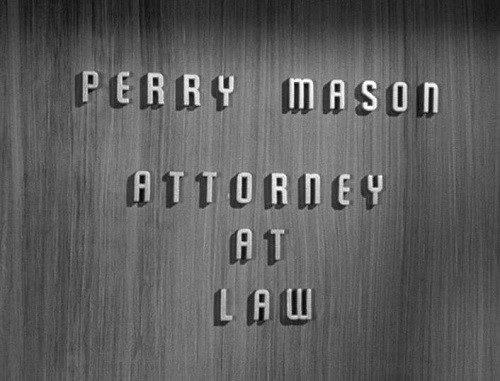
Perry Mason
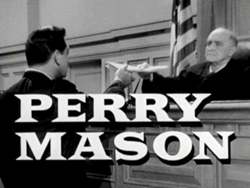
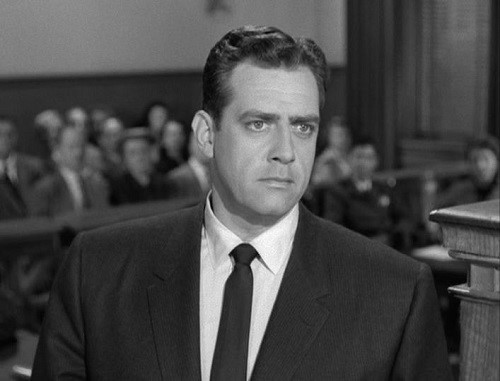
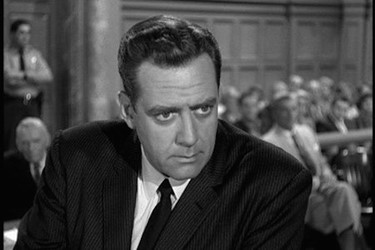
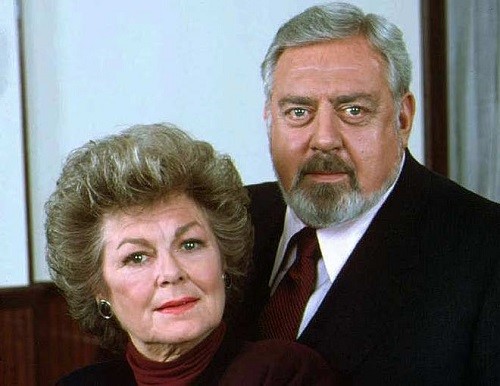
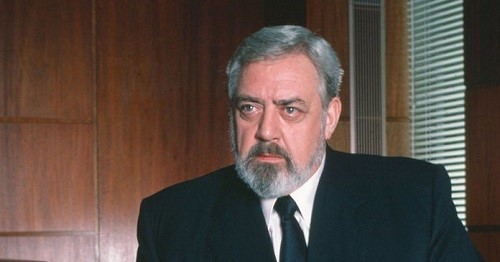
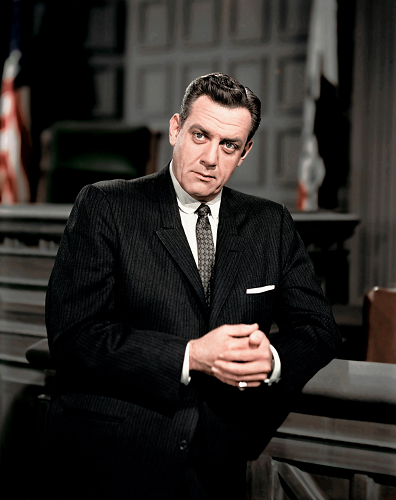
My choice for the third round draft pick is Hollywood’s first weekly one-hour series that was filmed for television – Perry Mason. The show ran for 9 seasons (September 1957 – May 1966) and starred Raymond Burr in the title role.
Raymond Burr
The character of Perry Mason was well known before he was ever on TV. The attorney was the star of novels and stories written by a lawyer-turned-author Erle Stanley Gardner. There were some movies made by Warner Brothers and also a radio series based starring the character, by Gardner hated them! As a matter of fact, he refused to license the character of Perry mason for any more adaptations. (Interestingly, the radio series continues and evolved into the famous soap opera The Edge of Night.)
Gardner’s agent married actress Gail Patrick and she was the one who talked him into adapting the novels into a TV series. He made it clear that he wanted a lot of control over the show and how it was presented. He also had a hand in helping pick the cast. Many of the stories he wrote were turned into episodes for the series.
The Cast
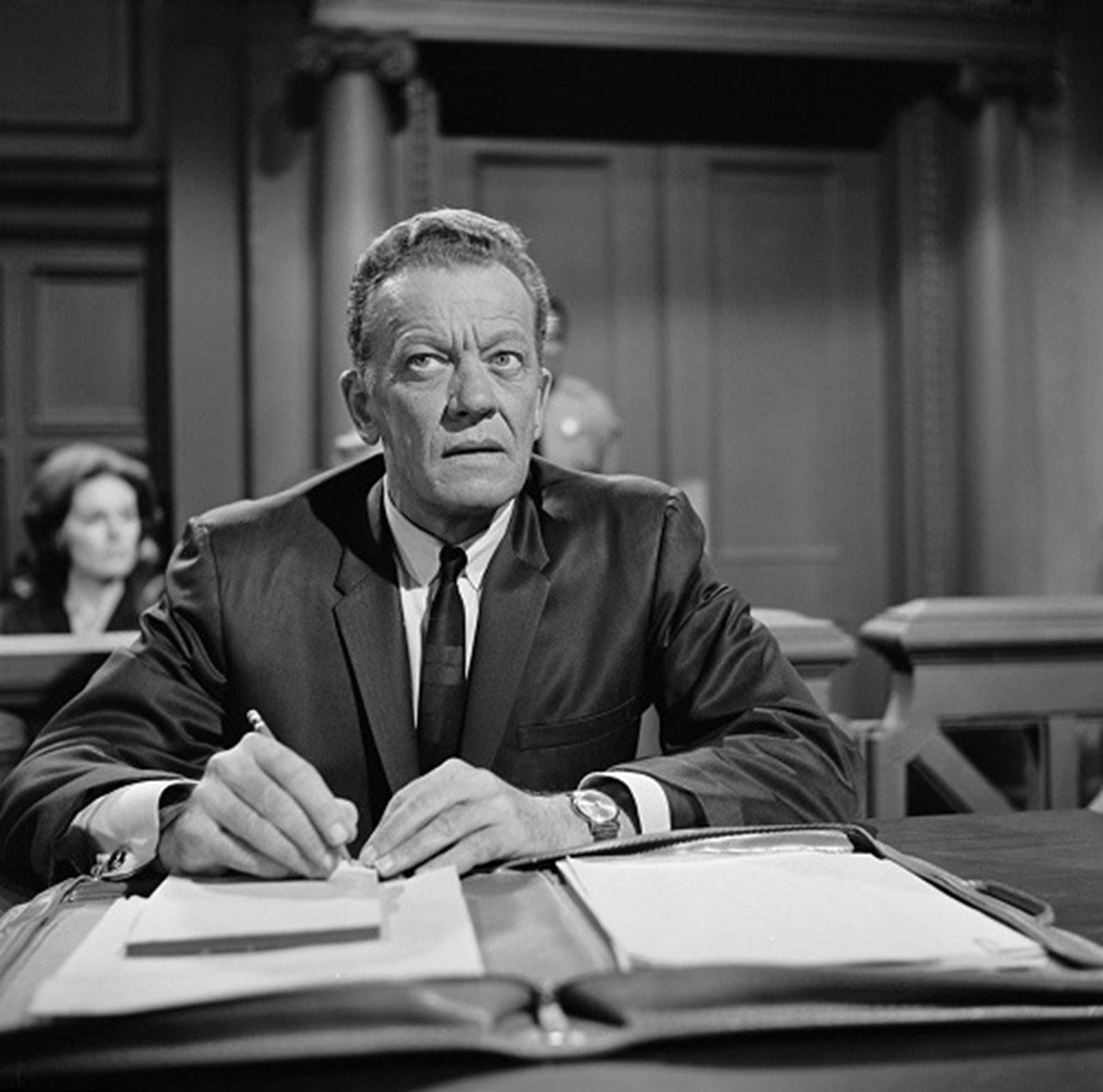
It is hard to imagine anyone other than Raymond Burr as Perry Mason. However, among the actors in the running were Mike Conners, Richard Egan, William Holden, Efrem Zimbalist Jr., William Hopper, and Fred MacMurray. Raymond Burr actually auditioned for the role of Hamilton Burger, the DA. Gail Patrick remembered his performance from the 1951 film “A Place in the Sun” and told him he was perfect for the role.
At the time, Burr was about 60 pounds overweight, so he went on a crash diet and tested for the role again with about 50 other actors. Erle Stanley Gardner saw him and reportedly said, “THAT is Perry Mason!” Burr continued to lose weight as the series continued. He stated, “I just don’t have time to eat.”
Syndicated columnist Erskine Johnson wrote, “Every six days Burr stars in what almost amounts to a full-length feature movie. He’s in 98% of all the scenes.” Burr stated, “I had no life outside of Perry Mason. And that went on 24 hours a day, sox days a week. I never went home at night. I lived on the lot. I got up at 3 o’clock every single morning to learn my lines for that day, and sometimes I hadn’t finished until 9 o’clock. I had a kitchen, bedroom, office space, sitting room – al of that – on every lot I ever worked on.”
Burr won three Primetime Emmy Awards for his portrayal of Perry Mason (1959, 1960, and 1961).
Raymond Burr IS Perry Mason
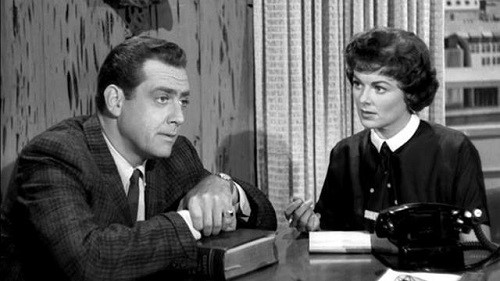
Other major players in the cast included Barbara Hale as Perry’s secretary, Della Street. Hale had done some feature films, but wanted to avoid going away for long periods of time to shoot them because she had a rather young family. According to Gail Patrick, it was Hale who called her to inquire about the role of Della.
Perry and Della (Barbara Hale)
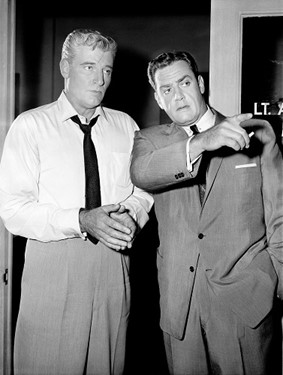
William Hopper, as I mentioned before, auditioned for the role of Perry Mason (I believe you can find some of the audition tapes on YouTube). After not getting the role of Mason and auditioning for Private Detective Paul Drake, he walked in the room and said, “You hate my mother!” His mother was Hedda Hopper, the famous gossip columnist. Patrick said he was the perfect Paul Drake, so he got the role.
William Hopper as Paul Drake with Burr’s Mason
For the role of District Attorney Hamilton Burger, Patrick knew exactly who she wanted. She had seen William Tallman in The Hitch-Hiker and knew he was perfect for the role. She said, “He never disappointed.” In an interview he was asked how he felt about his character losing to Perry Mason every week. His response is perfect. He stated, “Burger doesn’t lose. How can a district attorney lose when he fails to convict an innocent person?” When Burr was asked by a fan why he won every case, he told her, “But madam, you only see the cases I try on Saturday!”
William Tallman – Hamilton Burger
Another one of Perry’s foils was Police Lt. Arthur Tragg. Ray Collins’ voice was known to so many listeners of the Mercury Theater on radio. He had also been in movies and other TV shows. Patrick joked saying, “We overlooked the fact that on an actual police force, he would probably be long retired.” He was 68 years old when the show debuted on CBS. The playful interaction between Tragg and Mason are priceless.
The great Ray Collins as Lt. Tragg
The Plot
The basic formula for each episode was the same. The first part of the show introduced the viewer to a client who is hiring Perry Mason for some legal work or is introduced to him in some way. We then see the murder victim and other “suspects” introduced. The victim is murdered and Perry’s client is wrongfully accused of the crime. The remainder of the episode focuses on Burger and Tragg gathering evidence to convict the said “murderer”, Perry, Drake and Della take up their own investigation to prove their client is innocent.
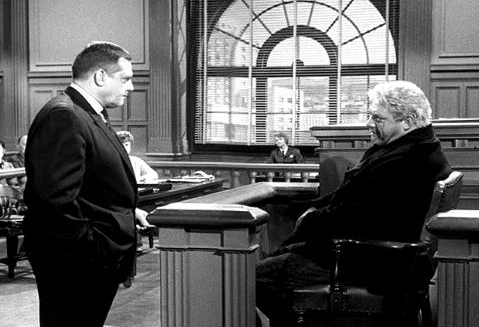
The second half of the show would shift to the courtroom where Perry and Hamilton would duke it out in the preliminary hearing. In the novels, Perry likes to clear the client before they are bound over for trial, so this was worked into the show. They happen, but jury trials are rarely seen on the show.
The show would often culminate with Mason recalling a witness and questioning them until they cracked and admitted committing the murder OR causing someone else in the courtroom to admit that THEY committed the murder. The show would then wrap with a scene in Perry’s office or the courtroom where details would be presented on what led Perry to discover the real killer.
The formula worked for 9 seasons and eventually 30 TV made for TV movies.
Episodes of Interest
Throughout the run of the series, there were some very unique episodes. In the entire run of the series, Perry tackles an astounding 271 cases, and wins almost all of them! He actually lost thre cases (that we know of). In The Case of the Witless Witness, he loses a non-murder case. In The Case of the Terrified Typist, his client is found guilty of murder, but he is eventually able to clear her name. Finally, in The Case of the Deadly Verdict his client is found guilty of murder and is actually sentenced to death in the gas chamber! Perry, of course, is able to save the day before the execution is scheduled to take place.
A fun episode to watch is The Case of the Dead Ringer. Raymond Burr plays a dual role in this episode playing a man named “Grimes.” It’s fun to watch Burr question Burr as two different characters!
In season 6, Burr had some episodes where is appeared briefly, but guest actors filled in for Perry. Among those actors were Bette Davis, Michael Rennie, Hugh O’Brian, and Walter Pidgeon. Two years later, Burr was hospitalized for jaw surgery and Mike Conners and Barry Sullivan filled in for him.
How about the three that never set foot in a courtroom? Those were The Case of the Baited Hook, The Case of the Velvet Claws, and The Case of the Careless Kitten.
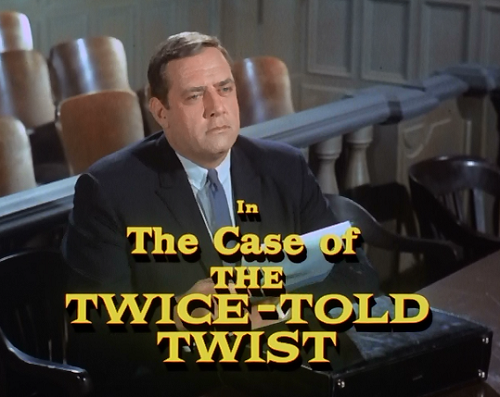
One of the most interesting shows was the one – and only – show that was shot in color. In the 9th season, CBS was hoping that the show would shoot a 10th season. Many shows were being shot in color by this time and they wanted to see what the show would look like. The Case of the Twice-Told Twist aired – in color – on February 27, 1966.
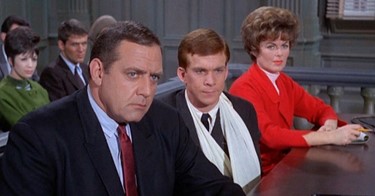
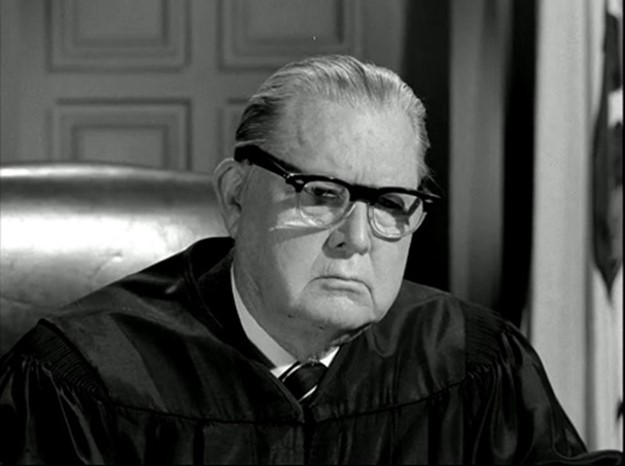
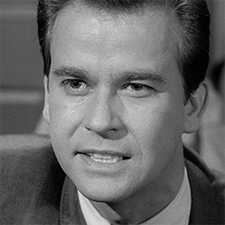
A must see episode is the series finale, The Case of the Final Fade-Out. First of all, it features cameos by all of the Perry Mason Crew in various roles. Second, it features the creator of the character, Erle Stanley Gardner, as the judge, and the murderer is … spoiler alert … a young Dick Clark!
Before They Were Famous
Many soon-to-be stars appeared on Perry Mason. I guess that is another reason why I love watching it. You never know who will pop up. Some examples: Barbara Eden, Cloris Leachman, Lee Meriwether, Pat Priest, Yvonne Craig, James Coburn, Angie Dickenson, George Kennedy, Diane Ladd, Frankie Laine, Ryan O’Neal, Robert Redford, Burt Reynolds, Claude Akins, Richard Anderson, Barbara Bain, James Best, Whit Bissell, Frank Cady, Bert Convey, Richard Deacon, Norman Fell, Alan Hale Jr., Harvey Korman, Gavin MacLeod, Allan Melvin, Leonard Nimoy, Denver Pyle, Marion Ross, Adam West, and MORE!
The Theme Song
Let’s be honest, the Perry Mason Theme Song is one of the most recognizable in all of television. The task of writing the theme went to composer Fred Steiner. He set out to write a song that would convey two of Perry’s prime characteristics – sophistication and toughness. The piece he wrote was called “Park Avenue Beat.”
Here is Fred discussing how he came up with the theme:
Here is the theme from the first season:
As much as I love the original version, I have to admit that when Perry Mason returned to TV in the two hour movies, I loved the version used for these films better. They just sound more full and better produced to me. So here it is:
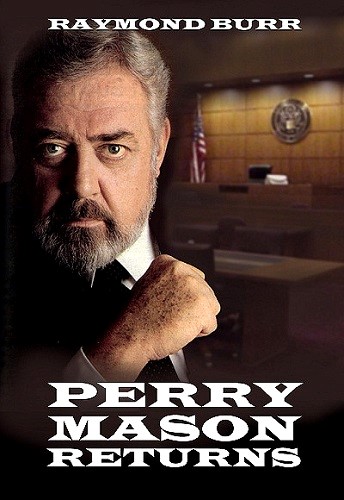
I may as well touch briefly on the TV movies. In December of 1985, Perry Mason Returns aired on NBC.
Perry is now a judge and steps down to defend Della Street, who is accused of murder.
William Hopper died in 1970, so William Katt (Barbara Hale’s son) was called in to play Paul Drake Jr. The movies followed the same formula as the TV show. Burr and Hale had aged, but their on screen chemistry hadn’t changed at all. Burr was fantastic in this of course, he proves that Della is innocent! The successful reception and ratings of the reunion show led to 29 more Perry Mason Movies (Burr starred in 26 of them before passing away in 1993).
I never tire of watching Perry Mason. Despite being a bit dated, I think it still holds up today. HBO has created a “pre” Perry Mason show supposedly showing how he became the famous lawyer. I have no desire to watch it. To me, there is one and only Perry Mason!
FUN FACT: Raymond Burr started playing the character in 1957 and played him until his death in 1993. He played Perry Mason for a whopping 36 years!
So if you ever find yourself accused of murder … there is only one lawyer to call….
How Do You Sleep? is very powerful…but you do feel for Paul McCartney. Paul did have lyrics on the Ram album about John and Yoko but you had to look for them. In this song…there is no looking…even the average fan would know exactly who he was singing about. To me, the most vicious line is The sound you make is muzak to my ears.
The song is on the album Imagine. This John Lennon song is direct and to the point. His feud with Paul was in the papers and after what John took as lyrics aimed at him and Yoko from Paul’s album Ram…it culminated with this song.
John has said that “How Do You Sleep” was like one of Dylan’s nasty songs and mentioned, “Like a Rolling Stone.” The big difference though was that Bob veiled the identity of his target. This song was vicious but not as vicious as it could have been if Ringo and other musicians hadn’t intervened.
Yoko and Allen Klein were feeding some lines about Paul to John during the recording. Ringo was upset with the content and simply said: “That’s enough, John”. Alan White ended up playing the drums on the track.
This song can be hard to listen to as a Beatle fan but it is a catchy dark gritty pointed song. I have always liked it. George Harrison’s slide guitar cuts through and doesn’t have the sweet sound he uses for his songs. It also shows you where George was at the time with Paul. This is not John’s best song by any measure but the music has an intensity about it and is very powerful. It’s ironic, but even without Paul being there he helped pull it out of John.
Paul did later admit that a few lyrics on “Ram” were pointed at John and Yoko but John, never one to hint…went for the throat. He would later soften and say the song was more about himself than Paul.
John and Paul would later repair the relationship…never to the point of working together again but on a friendly basis. They would keep in touch over the years by talking on the phone, in letters, and face to face at times.
John Lennon:“It’s not about Paul, it’s about me. I’m really attacking myself. But I regret the association, well, what’s to regret? He lived through it. The only thing that matters is how he and I feel about these things and not what the writer or commentator thinks about it. Him and me are okay.”
John Lennon:“You know, I wasn’t really feeling that vicious at the time,” “But I was using my resentment toward Paul to create a song, let’s put it that way. He saw that it pointedly refers to him, and people kept hounding him about it. But, you know, there were a few digs on his album before mine. He’s so obscure other people didn’t notice them, but I heard them. I thought, well, I’m not obscure, I just get right down to the nitty-gritty. So he’d done it his way and I did it mine.
Paul McCartney:“You hear the stories from various angles and apparently people who were in the room when John was writing that, he was getting suggestions for the lyrics off Allan Klein,” he said. “So, you see the atmosphere of ‘Let’s get Paul. Let’s nail him in a song…’ And those things were pretty hurtful.”
How Do You Sleep
So Sgt. Pepper took you by surprise You better see right through that mother’s eyes Those freaks was right when they said you was dead The one mistake you made was in your head
Ah, how do you sleep Ah, how do you sleep at night
You live with straights who tell you, you was king Jump when your momma tell you anything The only thing you done was yesterday And since you’re gone you’re just another day
Ah, how do you sleep Ah, how do you sleep at night
Ah, how do you sleep Ah, how do you sleep at night
A pretty face may last a year or two But pretty soon they’ll see what you can do The sound you make is muzak to my ears You must have learned something in all those years
Ah, how do you sleep Ah, how do you sleep at night
Welcome to the Hanspostcard TV Draft. The remaining 8 rounds will be posted here. We will have 64 different TV Shows by 8 different writers. I hope you will enjoy it! Today’s post was written by Vic from https://cosmic-observation.com/blog-posts/
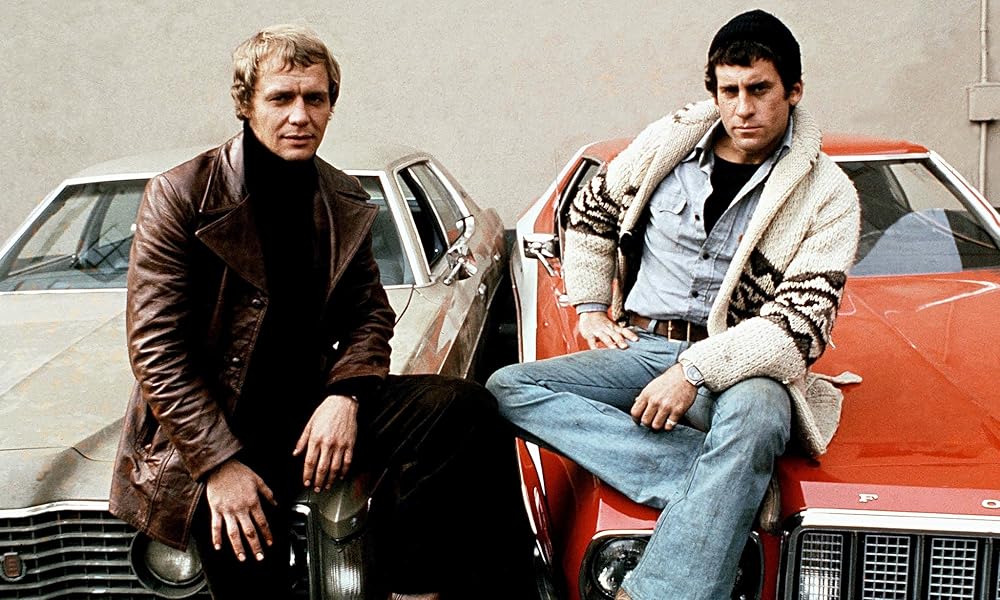
I was raised in law enforcement. My dad was a Probation/Parole Officer, his younger brother, a city cop in our hometown and my first cousin became a deputy. Some years later, when my dad re-married, my stepmom was Parking Enforcement for the same city police department. I grew up watching every manner of cop TV show you could find, from re-runs of Dragnet to Hawaii Five-O to Kojak to The Rookies to Baretta to Adam-12 to The Rockford Files to Police Story…and everything in-between. My personal favorite was Starsky & Hutch. I had a “thing” for Paul Michael Glaser. His picture was one of four photos I kept as a kid and young teen. The others were Lindsay Wagner, Olivia Newton-John and John Schneider. I later regretted my attachment to him. I didn’t remember most of the episodes but, I was reintroduced to the show in the 90s with re-runs. ~Vic
Created and written by William Blinn (Brian’s Song, The Rookies, Eight Is Enough & Pensacola: Wings of Gold), it starred David Soul (Det. Sgt. Kenneth Richard “Hutch” Hutchinson), Paul Michael Glaser (Det. Sgt. David Michael Starsky), Antonio Fargas (Informant Huggy Bear) and Bernie Hamilton (Captain Harold C. Dobey). In the Pilot TV Movie, Captain Dobey was played by Richard Ward. Sgt. Hutchinson was from Duluth, MN, was divorced and was a reserved, intellectual type. Sgt. Starsky was from Brooklyn, NY, was an Army veteran, had street-smarts and, could be intense & moody. Informant Huggy Bear was a flashy, ethically ambiguous bar owner that provided the two Sergeants with whatever street action knowledge he could gather. Captain Dobey was their barking & gruff but, fair boss. He had his hands full with those two. One of the main characters of the show was Starsky’s red, 1975 Ford Gran Torino (four of them, actually), nicknamed the “Striped Tomato.” In the show, Hutch calls the car that name in the episode Snowstorm (10-01-1975) but, that crack actually came from Paul Michael Glaser when Aaron Spelling showed him the car (First Season DVD Collection). Hutch’s vehicle was a beat-up, tan, 1973 Ford Galaxie 500, whose horn would blow when the door was opened.
Hutch & His Colt Python Photo Credit: IMDb & Amazon












 PowerPop... An Eclectic Collection of Pop Culture