I first noticed this song on the concert film The Festival Express a few years ago. I’ve heard the two studio versions but that live version is the one I like best. It’s something about it I really connect to. Garcia and Weir sound great singing together along with Pigpen playing the harmonica. It’s just a simple blues-type song but it works well for me anyway.
As soon as I heard it I took one of my acoustic guitars off the wall and kept running back the video file back and playing with them…I didn’t think they would mind.
This song was first released by the Dead in 1966 as their first single with Stealin on the flip side. That version is good and it reminds me of the band Them…not the voice but the music. They also released it again on their Go To Heaven album in 1980 but that version to me is a little too slick. The version on Festival Express shows all the ragged edges in the best way. It is pure Americana. They would do it live many times later on but I still go back to the Festival version.
They also covered it before they were the Grateful Dead. They started off as a jug band called Mother McCrees Uptown Jug Champions and most likely covered it when they were called the Warlocks.
They might have heard the version of the song by Henry Thomas…an old blues artist that lived from 1874 to around 1930. If you want to learn more in detail about Thomas and this song go here to Jim’s site. It also sounds close to a song by Jelly Roll Morton called Don’t You Leave Me Here. On the Go To Heaven album, it’s credited to “traditional arranged by The Grateful Dead.” The single that was released in 1966 was credited to Garcia but I’ve read where he didn’t authorize that and didn’t ask for a credit.
Speaking of the Festival Express…it was The Transcontinental Pop Festival… better known as the Festival Express. Great idea on paper… rounding up musicians in 1970 and placing them on a train going across Canada and stopping along the way to play festivals. What could go wrong? Actually, I would have loved to have been on that train. The lineup: The Band, The Grateful Dead, Janis Joplin, Buddy Guy Blues Band, The Fly Burrito Brothers, Sha Na Na, and Delaney & Bonnie & Friends.
There were artists that were not in the film like Traffic, Ten Years After, Tom Rush, Ian & Sylvia, Mountain, and more.
A DVD was released of this in 2004. All these musicians were on a train full of liquor and an assortment of drugs… liquor was the popular choice among the musicians on this ride. The tour was to have events in Montreal, Toronto, Winnipeg, Calgary, and Vancouver. The Montreal event was canceled as was Vancouver. In Toronto, protesters were saying the festival promoters were price gouging so The Grateful Dead played a free concert in a park nearby to ease tensions with the protesters.
When watching the film you can see the performers are having a ball jamming with each other because they didn’t get a lot of chances to do that on the road.
Here is the link to the full movie free on youtube…if you have time…it’s worth it!
Bill Kreutzmann (drummer for the Dead): We celebrated Janis Joplin’s birthday at the last stop the traditional way: with birthday cake. In keeping with our own kind of tradition, somebody—within our ranks, I would imagine—had secretly infused the cake with a decent amount of LSD. So it quickly became an electric birthday celebration. Allegedly, some generous pieces of that birthday cake made it to the hands and mouths of the local police who were working the show. “Let them eat cake!” (To be fair, I didn’t have anything to do with that … I was just another cake-eating birthday reveler, that night.) And that was it for the Festival Express. It was a wonderful time and I think what really made it great was the level of interaction and camaraderie among the musicians, day and night, as we were all trapped on this train careening across the great north. It probably helped that we were all trashed the entire time. Whiskey was in the conductor’s seat on that ride.
I would recommend getting the DVD of this event. It’s a great time capsule of that time in music and culture.
Don’t Ease Me In
Don’t ease, don’t ease, don’t ease me in I’ve been all night long coming home, don’t ease me in
I was standing on the corner, talking to Miss Brown When I turned around, sweet mama, she was way across town So I’m walking down the street, with a dollar in my hand I’ve been looking for a woman, sweet mama, ain’t got no manDon’t ease, don’t ease, don’t ease me in I’ve been all night long coming home, don’t ease me inThe girl I love, she’s sweet and true You know the dress she wears, sweet mama, it’s pink and blue She brings me coffee, you know she brings me tea She brings about every damn thing, but the jailhouse keyDon’t ease, don’t ease, don’t ease me in I’ve been all night long coming home, don’t ease me inDon’t ease, don’t ease, don’t ease me in I’ve been all night long coming home, don’t ease me inDon’t ease, don’t ease, don’t ease me in I’ve been all night long coming home, don’t ease me in
Talking to Miss Brown Well I turned around, sweet moma She was way cross town
So I’m walking down the street With a dollar in my hand I’ve been looking for a woman, sweet moma Ain’t got no man
The girl I love She’s sweet and true You know the dress she wears, sweet moma It’s pink and blue
She brings me coffee You know she brings me tea She brings ’bout every damn thing But the jailhouse key
Welcome to the Hanspostcard TV Draft. I hope you will enjoy it! Today’s post was written by Lisa at https://tao-talk.com/
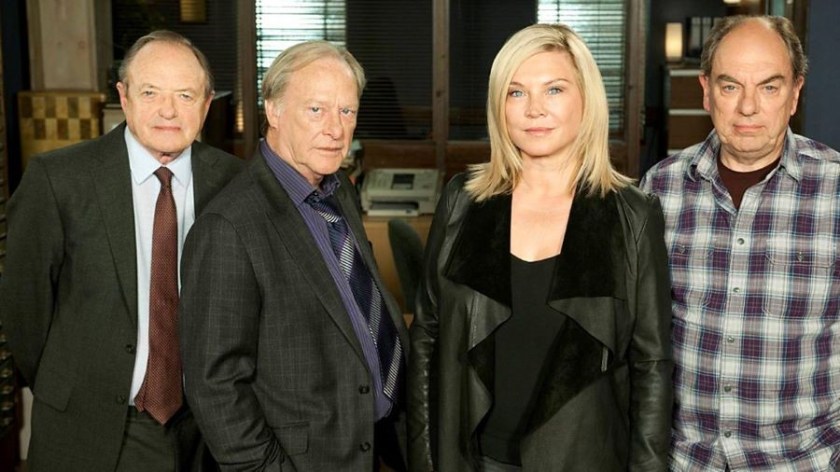
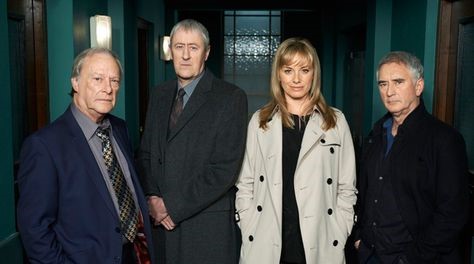
l. – r. Jack, Gerry, Sandra, and Brian
Although I had another series slated for this spot, I changed my mind again. I noticed I had no series chosen with a female lead, and that just isn’t cool in my book. Instead of whatever it was, now it is the UK’s BBC Series, “New Tricks,” which ran for 12 seasons (107 episodes,) from 2003 – 2015. Originally airing on BBC, it is now available, depending on season, on BBC Video, Acorn Media, or BBC First.
I remember browsing titles at the library’s online database and happening across it. I immediately loved the premise for the series, which describes a very talented and rising star in the law enforcement ranks being asked to lead a newly formed task force to work cold cases. The team is a group of older, already retired detectives that are being asked to come out of retirement to try to crack old cases that have remained unsolved for sometimes twenty years or more. The genres of New Tricks are comedy and crime.
Cute video about how team was formed:
Amanda Redman as Deputy Superintendant Sandra Pullman
The Cast:
Amanda Redman as Deputy Superintendant Sandra Pullman is the tough-edged, wise-cracking career law enforcement rising star. Sandra has never married and has no children. She has a nice home that she doesn’t seem to get very much time to relax in and enjoy as the tacit understanding with her team is that she is available to them 24/7; and they do take her up on it. Sandra’s mother lives in assisted living; but the two feel mutually uncomfortably incompatible with each other. Sandra preferred her late father, who was also a police officer, and there is a sense that Sandra’s mother resents her for choosing her dad over her. At the same time Sandra’s mom has never told Sandra the whole truth about her dad, whose story does get slowly revealed over time.
Dennis Waterman as Gerry Standing
Dennis Waterman plays Gerry Standing, a man who has been divorced a few times and has at least a few babymama’s. He is always complaining that his ex-wives are draining him dry with child support. Gerry has got a roving eye for the ladies and is frequently trying to make time with a “tasty piece of skirt.” It doesn’t take much to imagine he might be multiply divorced because of that tendency. That said, he’s very friendly with all of his ex-wives and his daughters, and his ex-wives and daughters are all friendly with each other. Poor Gerry doesn’t stand a chance with all of that estrogen power. As the series rolls on there is a suggestion that Gerry might have had some crooked or at least semi-crooked history while he was a detective before. He also may have/had a problem with gambling, which can always lead a person down a crooked path. Gerry lives alone in a nice home. Once in awhile he does get lucky and finds a date.
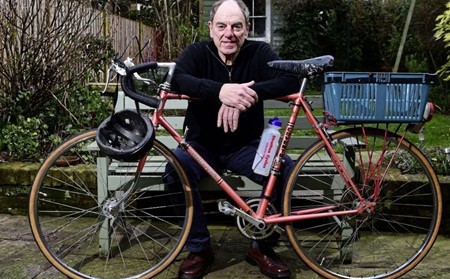
Alun Armstrong as Brian Lane
Alun Armstrong plays Brian Lane. Brian is married to Esther, who is played by Susan Jameson. Brian is what some might call an odd duck. His history is that of a raging alcoholic that has gone to rehab and remains sober; mental health issues manifest themselves in myriad Aspergersian perceptions, beliefs, and actions. Brian is highly intelligent and has a tendency to obsess over cases and lots of other things. He’s a master of internet and other records searches and has the analytic capacity to synthesize clues into often viable theories. He’s frequently trying new hobbies or practicing old ones. He rides his bike everywhere (not sure if he lost his driver’s license from drunk driving or not.)
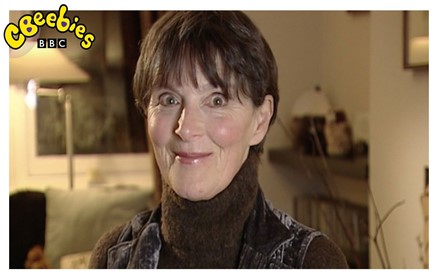
Susan Jameson as Esther
Esther is an endearing character, but she doesn’t take much of Brian’s guff. At the same time, she is there for him, steadfast, calm, and catering to him in a way that keeps him emotionally regulated (with the help of his prescription medications.) Esther has made a lovely home atmosphere and keeps her own mind and body active with socializing with friends and with hobbies. She is also very welcoming of the other team members, as they, along with the work, also help to keep Brian stable.
James Bolam as Jack Halford
James Bolam plays Jack Halford. Jack is a widower whose wife, Mary, was killed, where the details of her death are revealed over time. Jack has a shrine of his wife set up in his back yard. He has regular conversations with her spirit that remains very much alive to Jack. Jack is the most by-the-book of the team, both with regulations and with ethics. Don’t ask Jack to bend the rules; he’s likely to box your ears. Jack is another excellent clue analyzer. He probably has the worst temper of the bunch and gets stressed out a lot.
Anthony Calf as D.A.C. Strickland
Anthony Calf plays D.A.C. Strickland. Strickland is the administrator who hired Sandra and lays out his expectations for the Cold Case Team (UCOS is its official acronym that sometimes gets made fun of.) If I remember correctly all four of them are resistant to all of the others at first for one reason or another. Strickland is a very sharp-minded strategist who knows what he’s doing and is often several moves ahead of everyone else. His presentation is deadpan, but his humor is sharp. Even though he seems intimidating, Sandra can usually wheedle what she needs out of him. When the team is successful, he, of course, makes sure everyone knows he is the one who made it happen.
The other main cast characters are other team members who replace the main four, but only after many seasons have passed. I watched the series through season 10, but stopped after more of the original people were gone than remained. I can’t say a lot about these other folks other than who they are and who they played.
l. – r.: Gerry, Danny, Sasha, and Steve
Denis Lawson as Steve McAndrew
Nicholas Lyndhurst as Danny Griffin
Tamzin Outhwaite as DCI Sasha Miller
Most every episode there is a new villain or villains; very few carry over beyond one. The locations vary from urban to rural. One of my favorite episodes (a 2-part) is set at The Rock of Gibraltar.
Writing and Directing Credits
Writing credits on every episode go to Nigel McCrery and Roy Mitchell, with almost 40 others getting credits over the 12 seasons. There were 25 different directors, with Julian Simpson directing the most, at 17.
Synopsis: As already described above, the team has been pulled together to solve cold cases. Although Sandra was on an upward trajectory, she’s been convinced to give this project a chance. I think it is sold as having potential to put a nice feather in her professional cap. Gerry is convinced because he needs the money to pay child support. Brian needs to be consumed with work to keep himself sane so he jumps at the chance. Jack is lost without his beloved Mary and agrees because he has nothing better to do in his solitude. As the team members orient themselves to each other and solve a few cases, things begin to fall together with them. All three guys don’t take Sandra very seriously until they begin to see she’s a tough bird who isn’t going to tolerate any guff from any of them. What follows is a grudging admiration for her management and crime-solving skills, that over time becomes a trusting and bonding for all of them. That said, it doesn’t mean she doesn’t have to bust their chops from time to time.
Impressions: My years as a team member in a juvenile probation department has me very much appreciating, “New Tricks.” When you’re dealing with dangerous crimes and criminals you had better know your co-workers have your back. I love how they all work together. They team up all sorts of ways, from two-somes, three-somes, or all-somes. They also frequently socialize together after work. They are available to each other 24/7, as you never know when a piece of the puzzle falls together and you want to share it with your buds. I love the humor in the show also. Brian is the most obvious nutcase that gets into some way-out situations, but all of them play into the humor together. Sandra has the cosmos in her eyes and her expressions are priceless. Gerry has some hilarious expressions and situations also. Jack is the most serious one of the bunch but even he lightens up from time to time.
In conclusion, the combined investigative experience of the team is impressive, and they all have long memories from their earlier work days. It really comes in handy when they are investigating long-cold cases. I also don’t think I’ve ever seen a TV series that focuses only on cold cases. I love the title, and I love the unspoken message that older people still have a lot to give to better their communities.
Etc.: filmed in London; The theme song for the series is performed by Dennis Waterman (Gerry Standing). The song “End of the Line” is originally by the Traveling Wilburys. I’m very sorry to say I just learned that Dennis Waterman, who played Gerry, passed away on 5/8. After watching a YouTube (https://youtu.be/q8Hmp5lvF4A) I also learned that he was once considered the “hottest man on TV.”
The last time I posted a Steppenwolf song (Sookie Sookie)…a fellow blogger obbverse reminded me of this one and it had been a long time since I heard it.
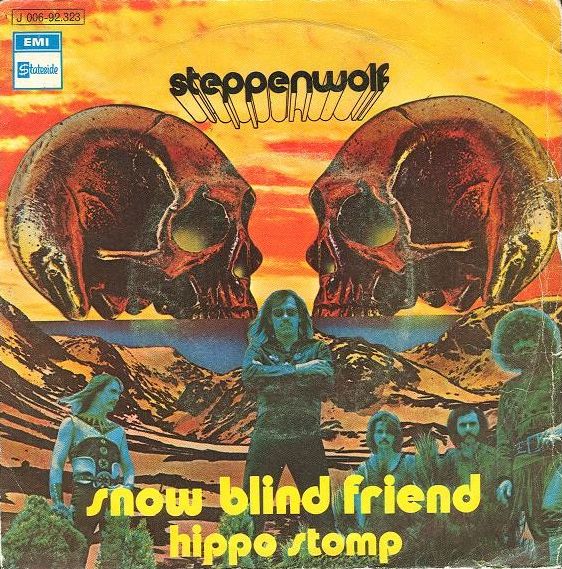
Snowblind Friend was written by Hoyt Axton, who first released it on his 1969 album My Griffin Is Gone. The song was written about one of his musician friends who died of a drug overdose. Hoyt did not glamorize drug use in this song. He had his own problems with drug addiction and did what he could to warn of the dangers
Stoned on some new potion he found upon the wall Of some unholy bathroom in some ungodly hall
Hoyt Axton wrote so many songs…one of them was Joy To The World, he wrote it around the same time as Snowblind Friend. Steppenwolf was offered Joy To The World but they passed. It ended up going to Three Dog Night… who took it to number 1. What I wouldn’t give to hear a Steppenwolf version of Joy to the World!
This song introduced the word “snowblind” to the rock music lexicon to describe addiction, specifically to cocaine. The insidiousness of the drug and its grip on the user has never been conveyed so accurately and poignantly.
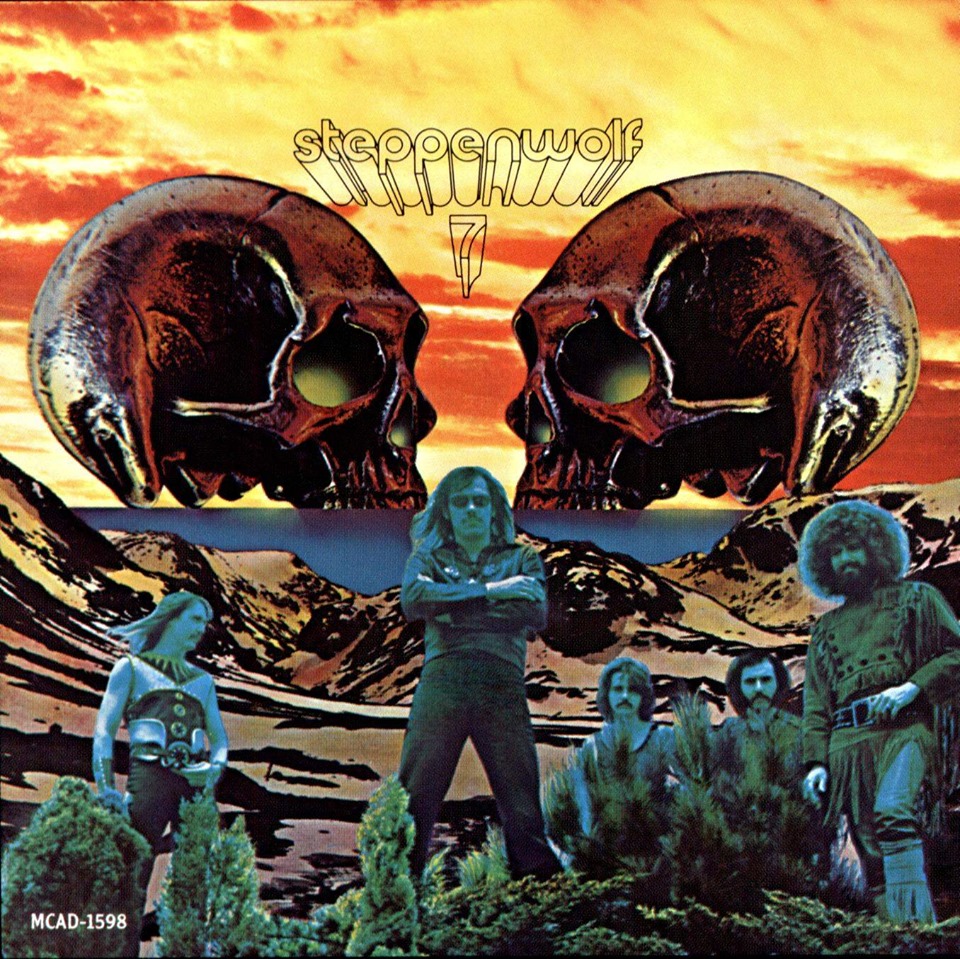
Steppenwolf 7
Snowblind Friend peaked at #60 in the Billboard 100 and #37 in Canada in 1970. It was on the album Steppenwolf 7 and it peaked at #19 in the Billboard Album Charts and #14 in Canada. This would be Steppenwolf’s last top 20 album in their career. They did have a Greatest Hits album that peaked at #24 the following year.
They are not in the Hall of Fame yet but were nominated in 2017 but didn’t make it. In 2018 the Hall did pick “Born to Be Wild” as one of the first five singles that shaped rock and roll to be inducted into the hall in its history.
Altogether they had 13 studio albums, 5 live albums, and 21 singles. 8 of the albums were in the top 40 and 7 of their singles were in the top 40. In Canada they were very popular…they had two #1’s in Born To Be Wild and Magic Carpet Ride and 11 singles in the top 40.
John Kay:“That song spoke to me because I knew the person that the song was written about. That’s why I decided, as a tribute to this young man, that we would do a version of it on the Steppenwolf 7 album.”
This is a TV special on the Steppenwolf 7 album
Snowblind Friend
You say it was this morning when you last saw your good friend Lyin’ on the pavement with a misery on his brain Stoned on some new potion he found upon the wall Of some unholy bathroom in some ungodly hall He only had a dollar to live on ’til next Monday But he spent it on some comfort for his mind Did you say you think he’s blind?
Someone should call his parents, a sister or a brother And they’ll come to take him back home on a bus But he’ll always be a problem to his poor and puzzled mother Yeah he’ll always be another one of us He said he wanted Heaven but prayin’ was too slow So he bought a one way ticket on an airline made of snow Did you say you saw your good friend flyin’ low? Flyin’ low Dyin’ slow
Home Before Daylight…My Life On The Road With The Grateful Dead by Steve Parish
I bought this book thinking it was going to be another Grateful Dead history book by a roadie and manager. I was wrong on that account. Parish had no desire to retell what’s been told in so many books. It was more of his story and the brotherhood shared with the roadies and band. Yes…it is a book about sex, drugs, and rock and roll…make no mistake about that…but around the Dead things were different.
Parish’s story is worth hearing. How he worked himself up from a roadie working for free…to a paid roadie with this traveling circus of a band. After years of adventure, Garcia appointed him manager of the Jerry Garcia Band while also working as a roadie for them and The Grateful Dead. He was one of Jerry’s most trusted friends to the end.
He goes into all the members of the Dead…past and present and the members of that wild road crew. He got along with the band really well except for one…for a while anyway. Like I said at the beginning yes there was drink, drugs, and sex but these guys did work hard. The roadies would have at times, 16-20 hour days, especially in the 70s. At the time it was easy to see how drugs slipped into their world. What was amazing is how all of them cared about each other and wanted the best show possible for the band. That crew wielded an exceptional amount of power and influence. It’s safe to say more than any other road crew at that time and probably ever.
After driving all day and all night, Parish was in an accident while riding in the equipment truck in Texas. It’s a miracle no one wasn’t killed. Phil Lesh, the bass player for the Dead, pulled him aside later that night and told him he was relieved no one died and this would not happen again. Phil told him it was not worth this so they started to have regular drivers for the trucks so the roadies didn’t have to drive plus setup everything.
Parish also tells us of the tragedies through the years and the friends they lost. He also had an extremely large personal loss in the 80s but the band rallied around him and helped him through it. He also goes into detail about how the Hells Angels played a part in their world. I never knew how close they were to the roadies and a few members of the band.
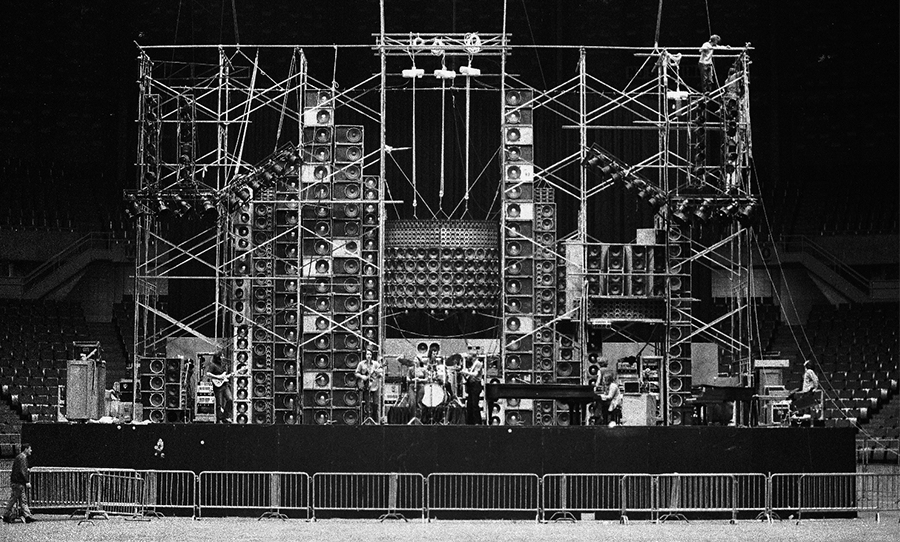
He also talked about the Wall Of Sound. A giant PA system that Owsley Stanley designed. The wall was impressive to look at as well to listen to. It was created to prevent feedback and distortion. It took four semi-trailers and 21 crew members were required to haul and set up the 75-ton Wall. The sound had a reach of a quarter of a mile. It stood 3 stories high…just think of the work it took for the crew to set it up and take it down nightly. Some specs from wiki:
89 300-watt solid-state and three 350-watt vacuum tube amplifiers generating a total of 26,400 watts of audio power. 604 speakers total.
586 JBL speakers and 54 Electro-Voice tweeters powered by 48 McIntosh MC-2300 Amps (48 × 600 = 28,800 watts of continuous (RMS) power).
Here is some grainy footage of the wall.
All in all…if you like rock and roll books…this one is really interesting.
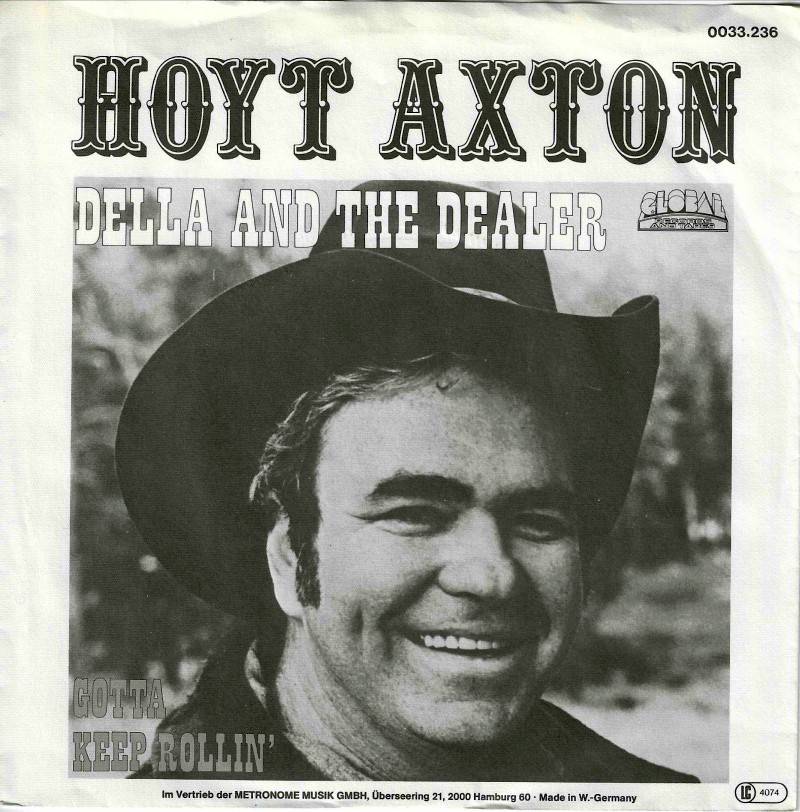
I cannot remember the first time I heard this song but I heard it alot growing up. The imagery of the lyrics is a lot of fun. It’s country but it’s also a little rock and a little blues. It’s hard to classify many of his songs although he was mainly known for being a country singer and songwriter. He also ventured out into garage rock, folk, and hard rock with his songs.
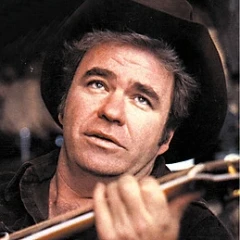
Hoyt Axton:“I’m one of those fringe dudes: half folkie, half hippie, half Okie. My input has been very eclectic. I was always surrounded by all kinds of music, as my family moved around the country: jazz, classical, gospel, whatever… the influences enter from a lot of directions.”
Hoyt Axton was a talented artist. He was a singer, songwriter, and actor. We all know his songs. Joy To The World, Never Been To Spain, Snowblind Friend, The Pusher, The No, No Song, and When the Morning Comes. He was also in a number of movies, commercials, and tv shows. The movie I remember him most for was Gremlins. Axton always came off as incredibly likable.
Hoyt Axton’s mom could write songs herself…Mae Boren Axton, a songwriter, co-wrote the classic rock “Heartbreak Hotel”, which became a major hit for Elvis and an iconic rock song. Now that is a cool mom.
Axton had his big hits with other people singing his songs. His composition “Joy to the World”, as performed by Three Dog Night, was #1 on the charts for six straight weeks in 1971, making it the top hit of the year. He named his record label Jeremiah after the bullfrog mentioned in the song.
Axton had an addiction problem early in his career. He wrote songs about it like Snowblind Friend, The Pusher, and The No No Song which Ringo covered.
There are a lot of theories about this song. The dog and cat are real people. He is being purposely vague as they were all involved in some shady dealings…hanging out with what is obviously a drug dealer and murderer, but the narrator is no snitch….he’s a “cool cat.” There are a lot of theories about the song…it’s a fun story song regardless.
This song was released in 1979 and peaked at #17 on the Billboard Country Charts. It was on his album A Rusty Old Halo that peaked at #27 in the Billboard Country Charts and #14 in the Canada Album Charts.
Hoyt Axton passed away on October 26, 1999, at the age of 61.
On November 1, 2007, Axton and his mother were both inducted posthumously into the Oklahoma Music Hall of Fame in Muskogee, Oklahoma.
Tomorrow I have another Axton song but not with Hoyt singing.
Della and the Dealer
It was Della and the Dealer and a dog named Jake And a cat named Kalamazoo. Left the city in a pick up truck, Gonna make some dreams come true.
Yea, they rolled out west where the wild sunsets And the coyote bays at the moon. Della and the Dealer and a dog named Jake and a cat named Kalamazoo
If that cat could talk what tales he’d tell About Della and the Dealer and the dog as well But the cat was cool, and he never said a mumblin word.
Down Tucson way there’s a small cafe Where they play a little cowboy tune. And the guitar picker was a friend of mine By the name of Randy Boone.
Yea, Randy played her a sweet love song And Della got a fire in her eye The Dealer had a knife and the dog had a gun and the cat had a shot of Rye.
If that cat could talk what tales he’d tell About Della and the Dealer and the dog as well But the cat was cool, and he never said a mumblin word.
Yea, the dealer was a killer, He was evil and mean And he was jealous of the fire in her eyes.
He snorted his coke through a century note And swore that Boone would die.
The stage was set when the lights went out. There was death in Tucson town. Two shadows ran for the bar back door And one stayed on the ground
If that cat could talk what tales he’d tell About Della and the Dealer and the dog as well But the cat was cool, and he never said a mumblin word.
Two shadows ran from the bar that night And dog and cat ran too. And the tires got hot on the pick up truck As down the road they flew.
It was Della and her lover and a dog named Jake And a cat named Kalamazoo. Left Tucson in a pick-up truck Gonna make some dreams come true.
If that cat could talk what tales he’d tell About Della and the Dealer and the dog as well But the cat was cool, and he never said a mumblin word.
Ken Stringfellow and Jon Auer started to write songs together while in High School in Bellingham, Washington in 1986. They were influenced by The Hollies, Hüsker Dü, XTC, Elvis Costello, Squeeze, and Big Star.
When they started out, a cassette of songs Stringfellow and Jon Auer traded back and forth went viral, which in the late ’80s meant copies got passed around and radio stations started playing them. The had one big problem though. They didn’t have an actual band together. Drummer Mike Musberger and bassist Rick Roberts were added as the first Posies rhythm section.
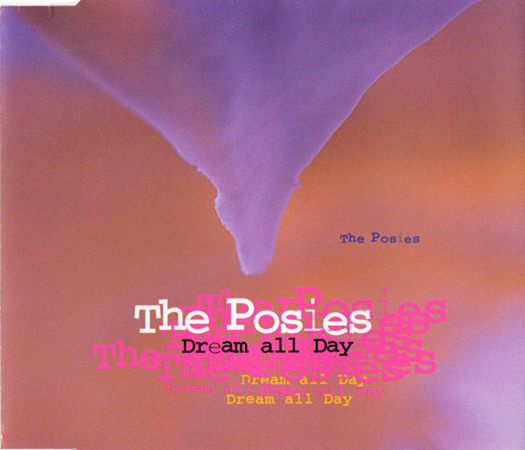
This song was on their third album released in 1993 called Frosting On The Beater. Dave Fox had replaced Rick Roberts by this time on bass. Dream All Day was released as the first single on the album.
The song peaked at #4 on the Billboard Alternative Airplay Charts and #17 in the Billboard Mainstream Charts in 1993.
The Posies soon got signed to DGC and “Golden Blunders,” the first single from their Dear 23 debut on the label, became enough of a college radio hit that Ringo Starr recorded as part of his 1992 album Time Takes Time.
The made 8 albums altogether with the last one being in 2016.
In 1993 Ken Stringfellow and Jon Auer joined Big Star’s Jody Stephens and Alex Chilton to reform Big Star. They toured and released a Big Star album in 2005 called In Space. It came to an end in 2010 with the death of Alex Chilton.
Dream All Day
I’ve got a lot of thoughts Got a lot of plans I lost a lot of sleep Trying to understand
I could dream all day
In a blackened room Staring into space Underneath a thousand blankets Just to find a place Where everything is reachable Imagining is safe I tried to make it so I didn’t even know
I could dream all day
I dreamt I was awake My mouth was colored grey As the world revolved around me I could only say
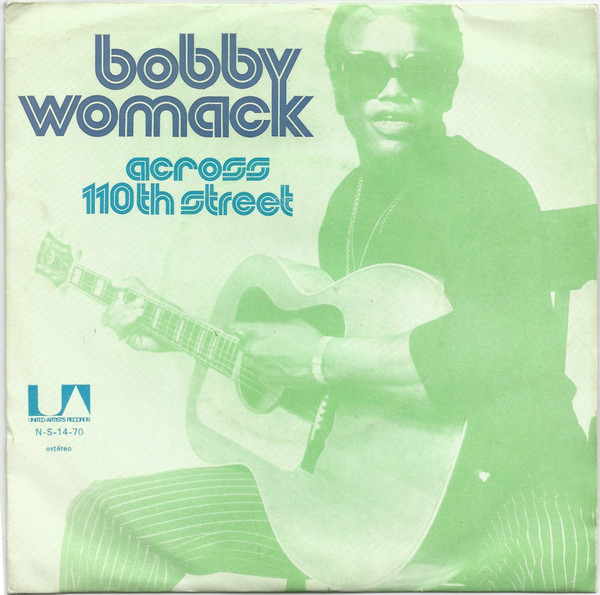
I first heard this song in the 80s and later on, I heard it in a Tarantino movie called Jackie Brown. You feel like you are walking down that Street in 1973 with this song. You can see the sights and feel the grime as the song finishes. It’s R&B, Soul, and a touch…just a small touch of Motown in the background.
Across 110th Street Pimps trying to catch a woman that’s weak Across 110th Street Pushers won’t let the junkie go free Across 110th Street Woman trying to catch a trick on the street, ooh, baby Across 110th Street You can find it all in the street
Bobby Womack’s 1973 hit single Across 110th Street was the title song from Barry Shear-directed movie starring Anthony Quinn for which Womack provided the soundtrack music. The song peaked at #56 on the Billboard 100 and #19 in the R&B Charts. The song was written by Bobby Womack and J.J. Johnson.
It was used in the movie by Quentin Tarantino “Jackie Brown” in 1997 and featured in the 2007 movie “American Gangster.” I’m glad that it has had a revival of sorts and didn’t get lost in history.
Bobby Womack was asked if he noticed his audience changed after this song.
Bobby Womack: I did simply because, at that particular time, that was a change for me, to record with orchestration like that. Across 110th Street had meaning, because although I lived on Central Avenue in Cleveland Ohio [growing up], it was like Across 110th Street. That’s what made me in the frame of mind to write the lyric as I did, because it sort of typified me and my brothers growing up.
I was the third brother of five Doing whatever I had to do to survive I’m not saying what I did was all right Trying to break out of the ghetto was a day-to-day fight
Been down so long, getting up didn’t cross my mind But I knew there was a better way of life that I was just trying to find You don’t know what you’ll do until you’re put under pressure Across 110th Street is a hell of a tester
Across 110th Street Pimps trying to catch a woman that’s weak Across 110th Street Pushers won’t let the junkie go free Across 110th Street Woman trying to catch a trick on the street, ooh, baby Across 110th Street You can find it all in the street
Ooh, ooh-ooh-ooh, ooh-ooh-ooh, oh-oh-oh
I got one more thing I’d like to talk to y’all about right now
Hey, brother, there’s a better way out Snorting that coke, shooting that dope, man, you’re copping out Take my advice, it’s either live or die You got to be strong if you want to survive
The family on the upper side of town Would catch hell without a ghetto around In every city you’ll find the same thing going down Harlem is the capital of every ghetto town Help me sing it
Across 110th Street Pimps trying to catch a woman that’s weak Across 110th Street Pushers won’t let the junkie go free Oh, across 110th Street A woman trying to catch a trick on the street, ooh, baby Across 110th Street You can find it all In the street Yes, you can
Oh, look around you, look around you Look around you, look around you Yeah Yeah
Welcome to the Hanspostcard TV Draft. I hope you will enjoy it! Today’s post was written by Keith at https://nostalgicitalian.com/
For my next pick in the Hanspostcard TV Show Draft is one that is one of my all time favorites. I don’t remember when I first was introduced to this show, but I am guessing my dad had something to do with it. Early on in the draft, I chose Police Squad, which only aired 6 episodes. This show is known for its “Classic 39” – The Honeymooners.
This isn’t my first blog about the show. Some time ago, I took part in a “Favorite TV Episode” Blogathon and picked 2 of my favorite episodes to present. You can read that blog here:
When you think about 50’s TV shows, there was very little struggle involved. Think about it. I Love Lucy, The Adventures of Ozzie and Harriet, The Andy Griffith Show, and Leave it to Beaver all showed families who were living in nice homes or apartments, showed no signs of financial struggles, and while there may be a misunderstanding here and there, it was mostly “bliss.” In 1955-1956, however, The Honeymooners focused on two couples from New York, who were struggling to get by.
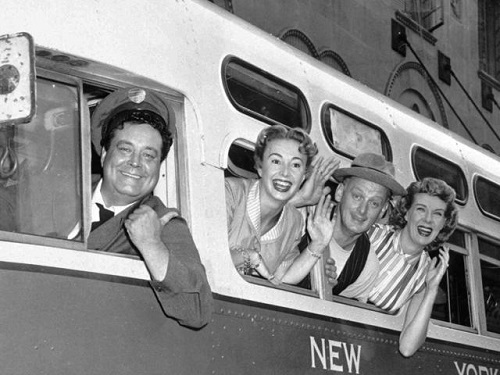
The show focused on the lives of Ralph (Jackie Gleason) and Alice Kramden (Audrey Meadows), and Ed (Art Carney) and Trixie Norton (Joyce Randolph). One article I found on the show says this about Gleason’s Kramden character: Ralph was the get-rich-quick scheming, short-tempered, soft-hearted guy who was always striving for greatness, but never made it out of that two-room Brooklyn apartment. And that’s one of the main attractions for even the most casual of viewers: the characters are so identifiable. As Jackie himself said at the time, “Everything we did could have happened. People like the show, because we are them.”
The show began as a simple sketch on the DuMont Television Network, on the Cavalcade of Stars. The original hosts were Jack Carter and Jerry Lester, but in July of 1950 comedian Jackie Gleason took over the hosting duties. In the process, Gleason took the struggling show and turned it around to be a hit. The show, which featured comedy skits and a number of different performers each week, was broadcast live in front of a theater audience. In 1951, Jackie and his writers came up with the idea for a sketch called The Honeymooners. It was about a struggling couple living in Brooklyn who frequently fought, but in the end, there was no question that they loved each other.
Leonard Stern was a writer on both The Honeymooners and The Jackie Gleason Show. In an interview with the Archive of American Television he stated, “We started doing one sketch of The Honeymooners every five or six weeks and the response of people on the street was tremendous. So we started doing them every other week. Eventually, though, everyone, including Jackie, lost interest in the other characters in the different sketches, so we started to do them every week until the fatigue level hit its high and we’d have to take a break. I think Gleason had fun doing them, because he recognized the impact Kramden and Alice and Norton and Trixie were having on the audience. I’m not a great fan of ratings, but let me say that 53% of the total television audience was watching the show. There’s nothing like that in existence today. It was astonishing and the show itself was live. Remember, the audience of 3,000 people filled that theater. You earned your laughs. It was a resounding success and very exhilarating for all of us. It was opening night every week.”
When Gleason left the Dupont Network and went to CBS, he hosted the Jackie Gleason Show, where the Honeymooners sketches continued. In the 1952 season, the sketches usually ran between seven and 13 minutes. In the following season, and those sketches ran for a minimum of 30 minutes, and sometimes longer. Then, in the 1954-55 season, they actually filled the entire hour of The Jackie Gleason Show and was doing so well in the ratings that it occasionally surpassed the viewership of I Love Lucy. That is almost unheard of!
In the 1955-56 season, The Jackie Gleason Show literally became The Honeymooners! It aired as a half-hour sitcom that was filmed in front of a studio audience. In total, 39 episodes were produced, and these episodes are the ones that are still being broadcast today. These 39 episodes are the ones that most people remember.
I read an article that said Jackie Gleason had actually been given a three-year contract from CBS for 78 episodes of The Honeymooners to be produced in the first two seasons. The contract also included an option for a third season of 39 more. For whatever it is worth, Gleason felt the quality of the scriptwriting couldn’t be maintained, and the show was mutually canceled by him and CBS.
A Closer Weekly article says: What’s particularly impressive about The Honeymooners living on the way it has is the fact that back in the day, there needed to be a minimum of 100 episodes of a show available so that local stations could run it five days a week. Any less made syndication difficult, since the cycle would be repeated that much sooner. But then there was The Honeymooners, with a mere 39 episodes to offer up, yet it worked. And continues to do so.
In a 1996 appearance on The Tonight Show with Johnny Carson, Jackie was asked why the show ended. He told Carson, “We were running out of ideas. I liked The Honeymooners and I liked doing them, and I didn’t want to denigrate them by forcing scenes that didn’t mean anything. So I wanted to quit, but they didn’t believe me. They thought I had another job someplace, but I didn’t. I’m glad I did stop them, because what we had done was good and if we had gone any further, we might have spoiled it.”
Those “Classic 39” are classic for a reason. They are still funny. The situations that The Kramdens and the Nortons muddle through every week will make you laugh, cry, think, and smile. They still hold up today. Each one of them has memorable scenes and quotable lines.
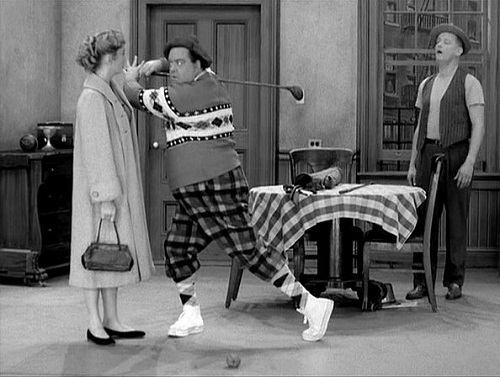
In one episode Ralph tells his boss he is a great golfer and is immediately asked to go play around with him. Now Ralph needs to learn how to play – and fast. He finds the perfect teacher in his best friend Ed Norton. In pure Art Carney fashion, Ed reads from a book that you must “address the ball,” to which he takes the club, stands in front of the ball, looks down and says, “Hello, Ball!”
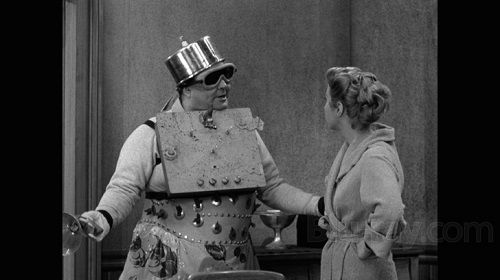
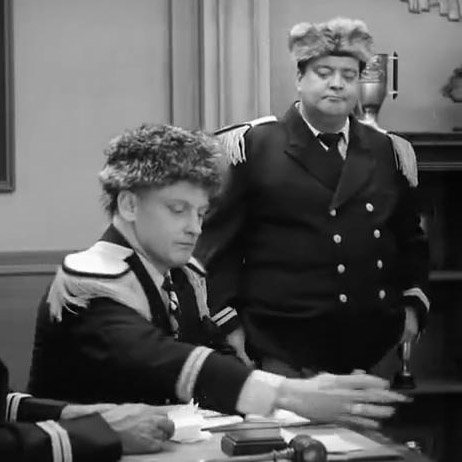
An episode of the show was featured in the movie Back To The Future. When Marty McFly winds up in 1955, a family is watching the episode The Man From Space. Intending to win the $50 first prize at the Racoon Lodge’s costume ball, Ralph decides to create his own outfit. And what an outfit! After appropriating (among other things) a faucet, a pot, a radio tube, and the icebox door, he presents himself as the Man from Space.
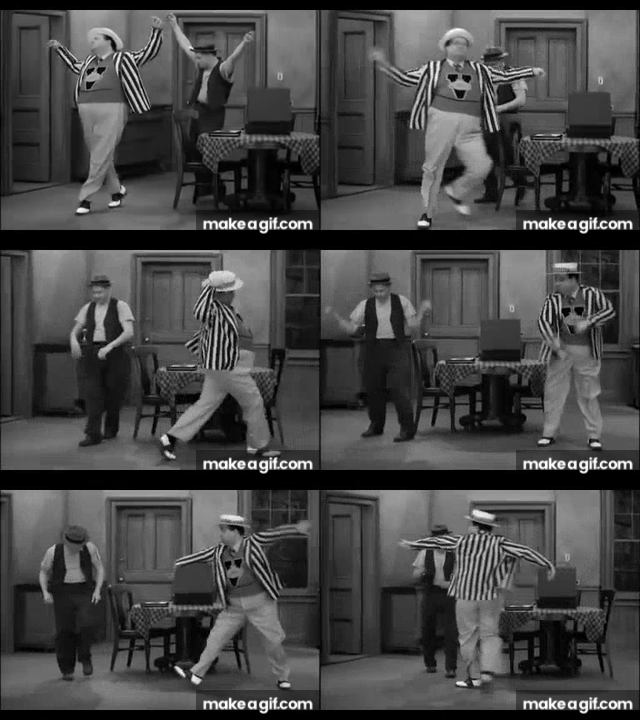
In another episode, Alice says she wants to go dancing. Ralph has Ed come over to teach him how to dance. Ralph’s outfit is hilarious (he tells Alice it is “what all us cats where! I’m hip!”). The dance (to the song The Hucklebuck) is worth the watch.
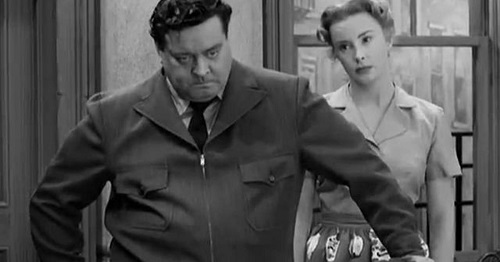
To me, sometimes the funniest stuff can be as simple as Ralph’s face …
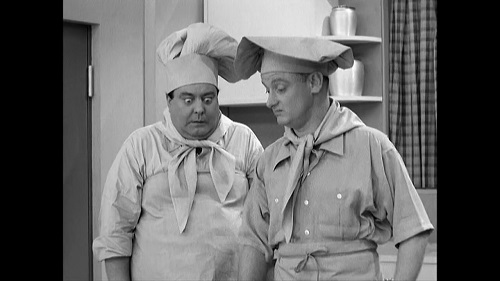
In another classic episode, Ralph and Norton appear on a TV commercial trying to sell their Handy Housewife Helper, a kitchen gadget that can, among other things, open cans, remove corns, and “core an apple.” In the inspired, ad-lib-laden episode, “Chef of the Future” Ralph demonstrates the wonders of the gizmo to “Chef of the Past” Norton. Rehearsal goes great, but in front of live cameras, Ralph freezes up.
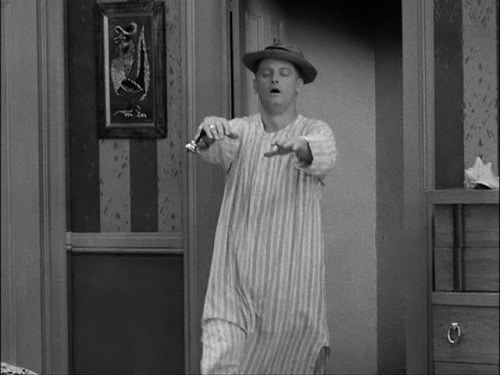
Art Carney was the perfect second banana. The play between him and Gleason is classic. In one episode Norton’s sleepwalking becomes a waking nightmare for Ralph. Ralph can’t get any sleep because he’s been asked to keep his pal from wandering off on late-night strolls around the neighborhood.
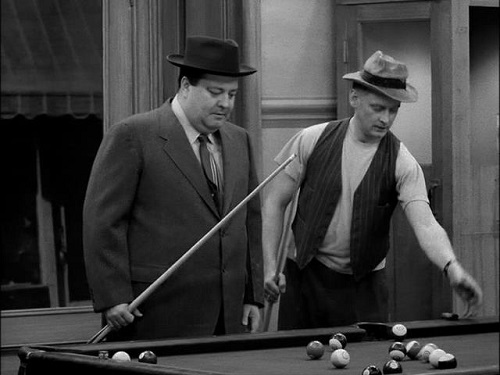
Another classic episode takes place at the pool hall where Ralph gets into an argument with the diminutive guy named George. “My friend is even bigger than me,” he tells Ralph. “I have a friend Shirley that’s bigger than you,” Ralph counters. But then he comes eye-to-chin with George’s friend, the towering Harvey, who challenges Ralph to a fight. This prompts Norton to observe: “He’s even bigger than your friend Shirley.”
Many of the plot lines from the classic episodes made it into the Joe Piscopo and Eddie Murphy novelty hit “The Honeymooners Rap.”
In the 1980’s, Jackie Gleason announced that in his vault he had found a number of Honeymooners skits from The Jackie Gleason Show that had been shot on Kinescope, which is a way of filming directly through a lens that actually focused on the screen of a video monitor. 107 of those skits were released on DVD and syndicated to television stations. These would have been shot before the “Classic 39” and two of them stand out to me.
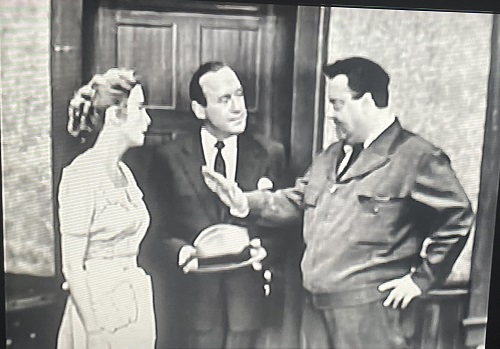
Jackie had been a guest star on the Jack Benny Show, so Jack makes an appearance as the Kramden’s landlord. The rent is being raised and Ralph is mad. When there is a knock on the door, Ralph opens it and Jack Benny is standing there. The audience chuckles in anticipation. Ralph calls to Alice that “the Landlord’s here” and the audience erupts. Benny stands there quietly as Ralph reads him the riot act! He calls him a “penny pincher” (which plays into Benny’s “cheap” character”) and says that he pinches a penny so hard that when he is through “both heads and tails are on the same side of the coin!”
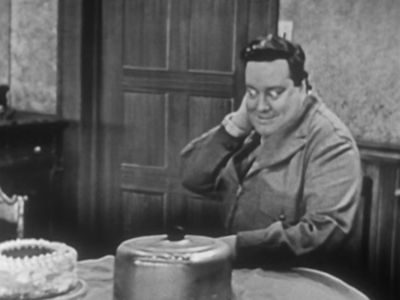
In another lost episode, Ralph must lose weight for work. All through the episode, he is starving. Finally, he is left alone in the apartment and sitting at the kitchen table. He notices a cake pan. He lifts the lid and sees the cake. His eyes bulge and he goes nuts. As he is about to tear into the cake Alice walks in. “Everybody get back,” he yells! The brief 3 minutes of him staring at the cake before getting ready to eat it is comedy genius!
As brilliant as Jackie Gleason was as Ralph Kramden, he never won an Emmy Award for it. Art Carney, however, won 5 Emmys for Best Supporting Actor on The Honeymooners and the Jackie Gleason Show.
The Honeymooners influenced a huge 1960s cartoon – The Flintstones. It is a blatant rip-off of the show and was a huge hit. It is said that Gleason considered suing Hanna-Barbera Productions because of the similarities, but decided that he did not want to be known as “the guy who yanked Fred Flintstone off the air”
Water Buffalo members and Racoon members
The Honeymooners is over 65 years years old! Joyce Randolph, who played Trixie Norton is 97 years old and still going strong. I wonder if Gleason ever thought that those 39 episodes would still find an audience today and that they would still bring much laughter.
In 1990, Audrey Meadows joined Bob Costas on Later to discuss the show. You can see that footage here:
If you have never seen an episode, I encourage you to do so. The two episodes I mentioned in a previous blog are good places to start – TV or Not TV or A Matter of Record. Most are available on Youtube.
This and I Want To Be Sedated are my two favorite songs by the Ramones. I’ve been apprehensive about posting this one because of obvious reasons. UK #1s blog (Stuart) and I were talking a couple of weeks ago about how much we liked this song. It has a couple of really interesting stories that go with it as you might imagine.
There are two stories about how this song came to be. The most popular (but probably not true) is this one. Johnny Ramone, the politically conservative member of the group, stole away liberal Joey Ramone’s girlfriend Linda Daniele, and Joey wrote this song about it. So Joey made the comparison of the KKK to Johnny in the song…not because Johnny was a racist but because of his conservative views and being a tad upset about the Linda thing. Johnny eventually married Linda, causing a huge strain on his relationship with Joey.
More likely it’s this one. Joey’s brother, Mickey Leigh, has said that the song was written before he knew about Johnny and Linda. Leigh said their parents disapproved of interracial relationships. Joey was dating a black woman at the time and one day Leigh noticed they weren’t together anymore. He asked Joey what happened to the girl and Joey responded by saying “the KKK took my baby away.” The KKK was Joey’s parents who broke them up.
I seriously doubt if Johnny would have played on a song with him being referred to as the KKK. That being said…the marriage did cause a huge strain on Joey and Johnny’s personal relationship. Even before this, they were extreme in their political beliefs so they didn’t have an easy relationship anyway.
Monte Melnick the band’s tour manager on Joey and Johnny after the marriage: “They came to an agreement where they kind of tolerated each other, It’s like a business. You’re working with someone you don’t particularly like, but you’re still working there because you like your job.”
Linda Daniele: “So when it came time for Joey and me to break up, we understood. It was time to move on. Johnny was in love with me, I had been falling in love with Johnny. Joey knew that. For the first couple of years, I didn’t speak to Joey and then of all a sudden, this guy was doing a Ramones book. And out of the blue Joey called me. From that moment on, me and Joey always stayed in touch. I know people go, ‘Oh, you broke his heart.’ But Joey got another girlfriend right away after I left!”
The song was on their 1981 album Pleasant Dreams. The album peaked at #58 in the Billboard Album Charts.
Here are the Drive-By Truckers with a cover
The KKK Took My Baby Away
She went away for the holidays Said she’s going to L.A. But she never got there She never got there She never got there, they say
The KKK took my baby away They took her away Away from me The KKK took my baby away They took her away Away from me
Now I don’t know Where my baby can be They took her from me They took her from me I don’t know Where my baby can be They took her from me They took her from me
Ring me, ring me ring me Up the President And find out Where my baby went Ring me, ring me, ring me Up the FBI And find out if My baby’s alive Yeah, yeah, yeah
Welcome to the Hanspostcard TV Draft. I hope you will enjoy it! Today’s post was written by Liam at https://othemts.wordpress.com/
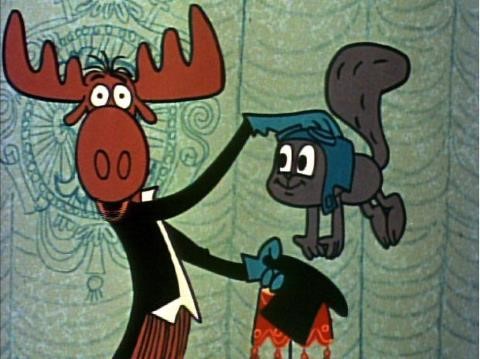
The Rocky and Bullwinkle Show
(1959 – 1964)
When you have an animated series featuring talking animals, the natural inclination is to file it under “Children’s Entertainment.” And yet The Rocky and Bullwinkle Show featured witty wordplay, spoofs of popular culture, self-referential humor, and political satire (particularly regarding the Cold War). You can tell that network execs were confused by the fact that they sometimes aired the show in prime time and sometimes on Saturday morning. During the show’s five season run from 1959 to 1964 it also switched networks. For the first two seasons it was on ABC and called Rocky and His Friends. Then it moved to NBC and became The Bullwinkle Show. CBS never gave it a shot but the show lived on in syndication under the names The Rocky Show, The Rocky and Bullwinkle Show, The Adventures of Rocky and Bullwinkle, and The Adventures of Bullwinkle and Rocky. Whew!
Ok, but beyond this rocky (pun intended) broadcast history, what was the show about? Jay Ward created the show to be an ongoing adventure serial about a moose and a squirrel. Animator Alex Anderson created many of the characters but declined to work on the show itself. Ward hired Bill Scott as head writer and co-producer of the show, as well as writers Chris Hayward and Allan Burns. General Mills came on board as the show’s main sponsor. The ongoing serial featured four main characters, two heroes and two villains:
Rocket J. Squirrel (a.k.a. Rocky the Flying Squirrel), voiced by June Foray, is a noble all-American kid in squirrel form who serves as the straight man to his partner Bullwinkle’s antics. His catchphrase is “Hokey smokes!”
Bullwinkle J. Moose, voiced by Bill Scott, is a good-hearted and optimistic, but very dimwitted moose. He and Rocky are roommates in the fictional town of Frostbite Falls, Minnesota. He attended Wossamotta U. on a football scholarship.
Boris Badenov, voiced by Paul Frees, is a spy from the fictional nation of Pottsylvania (a thinly disguised amalgamation of countries behind the Iron Curtain.). He is constantly up to no good and scheming on a plan given to him by his Fearless Leader or concocting his own criminal conspiracy. He proudly introduces himself as the “world’s greatest no-goodnik.”
Natasha Fatale, voiced by June Foray, is another Pottsylvania spy and Boris’ partner in crime. The design of Boris and Natasha are inspired by Charles Addams’ characters Gomez and Morticia Addams.
Over five seasons and 163 episodes, Rocky & Bullwinkle and Boris & Natasha appeared in 28 different serialized story arcs. The shortest serial had only 4 chapters while the longest had 40! And this was in the days before DVD box sets and streaming video made binge watching possible, so the creators of the show put a lot of faith in the audience remembering what happened earlier in the story.
A typical 23-minute episode would have two segments of a Rocky & Bullwinkle serial, each ending on a cliffhanger (and a bad pun). Additionally, the show would have a couple of supporting features drawn from the following:
Dudley Do-Right of the Mounties – In a parody of silent film melodramas, the brave but dumber-than-Bullwinkle mounted policeman Dudley Do-Right (Bill Scott) attempts to foil the plots of the villainous Snidley Whiplash (Hans Conried). This usually requires rescuing Nell Fenwick (June Foray), whom Dudley loves, but she in return is only fond of his horse.
Aesop and Son – Old fables are retold in a comical way by Aesop (Charles Ruggles) and his son, Junior (Daws Butler).
Fractured Fairy Tales – Edward Everett Horton narrates fairy tales updated with modern themes and a lot of puns.
Peabody’s Improbable History – Mister Peabody (Bill Scott), a genius talking dog, adopts a boy named Sherman (Walter Tetley). Since the boy needs exercise, Peabody invents a time machine called the WABAC. They travel to various historical events to see what “really” happened.
Bullwinkle’s Corner – Bullwinkle attempts to be cultured by reading poetry with comical results.
Know-it All – Bullwinkle, who we have already noted is quite dim, attempts to be the authority of various topics while Boris Badenov undermines his efforts.
The one great flaw of The Rocky and Bullwinkle Show is its animation style. Television animation of the 50s and 60s relied on the practices of limited animation such as reusing simple backgrounds and the stilted motions of the characters to save money. But even by the standards of limited animation, The Rocky and Bulwinkle Show’s animation was choppy and full of visible flaws. General Mills insisted on outsourcing the animation to the Mexican studio Gamma Productions S.A. de C.V, and Ward was never happy with the quality. But ultimately, the witty scripts and terrific voice acting made the poor quality animation irrelevant to the show becoming a classic.
The Rocky and Bullwinkle Show legacy lives on in syndicated reruns. Despite never being a morning person, I went through a phase as a teenager in the late 1980s where I would get up to watch it at 6am before school! The show has also been released in various home media formats. Attempts to revive the show in the 1970s and 80s failed but it eventually found its way to the big screen. Boris and Natasha: The Movie (1992) and Dudley Do-Right (1999) were live-action adaptations that both bombed. A live-action/animated hybrid movie The Adventures of Rocky and Bullwinkle (2000) was also poorly received. Mr. Peabody & Sherman (2014) from DreamWorks Animation got much better reviews and spun off a Netflix series (2015-2017). DreamWorks Animation Television followed up with a reboot series of The Adventures of Rocky and Bullwinkle (2018-2019) on Amazon Prime Video. I have not watched any of these having remained loyal to the original work of Jay Ward and company.
If I had to pick a favorite song of Creedence Clearwater Revival it would be hard… but this song would be a contender and probably my overall favorite. It’s the way Fogerty wearily sings the lyrics, he sounds so much older than he was at the time. The song is off of the “Green River” album.
Sometimes lines grab my attention and these did. Met myself a comin’ county welfare line. I was feelin’ strung out, Hung out on the line.
The album did very well…the Green River album peaked at #1 in the Billboard Album Charts, #2 in Canada, and #20 in the UK in 1969. If you want proof that life isn’t fair… Green River the title track was kept from #1 because of the novelty bubblegum song “Sugar, Sugar” by The Archies.
With Creedence…you won’t hear any “alternative takes” with the band. Fogerty destroyed all copies of the first version of songs because he never wanted any of his outtakes to make it into the public’s hands. This has been a regular practice of him throughout his career.
The album ended up charting 4 different songs. Green River, Lodi, Bad Moon Rising, and Commotion. John Fogerty released a new version of the song on his ninth solo studio album, also titled Wrote a Song for Everyone. This version features Miranda Lambert and Tom Morello.
Jeff Tweedy of Wilco has cited this as a song that had a profound influence on him. A huge Fogerty fan, Wilco credits him with forming the foundation of the Americana genre.
John Fogerty:“Inspired by my young wife at the time. It was early ’69, and I was 23 years old. We had our first child, who, at the time, was two and a half. I was sitting in my room, writing the songs, pushing my career. Without the songs, the career ends. You might be a great band, but without the songs, you’re not going anywhere. At one point, my wife and I had a mild misunderstanding, I wouldn’t even call it a fight, She was miffed, taking our young son out, wishing I would be more involved. But there I was, the musician manic and possessed the only guy holding things up. Without me, it all collapses, so I’m feeling quite put upon. As she walks out the door, I say to my self, “I wrote a song for everyone, and I couldn’t even talk to you.” I looked at my piece of paper and changed gears. How many great leaders can’t even manage their own families? So I went with that. “Pharaohs spin the message/Round and round and true/Richmonds about to blow up” referring to nearby Richmond, California. It was actually a true emotion that took on a larger meaning. It’s still a special song in the sense that it keeps my feet on the ground. You sit and write these songs, yet you try to talk to your own son and daughter and maybe you’re totally inadequate, trying to explain life to a child. We used to record our album very quickly and I remember finishing five different songs in one afternoon. The fifth one didn’t work, and that was “Wrote A Song For Everyone.” I had to start over on that one.”
“Wrote A Song For Everyone”
Met myself a comin’ county welfare line. I was feelin’ strung out, Hung out on the line. Saw myself a goin’, down to war in June. All I want, All I want is to write myself a tune.
[Chorus:] Wrote a song for ev’ryone, Wrote a song for truth. Wrote a song for ev’ryone And I couldn’t even talk to you.
Got myself arrested, Wound me up in jail. Richmond ’bout to blow up, communication failed. If you see the answer, now’s the time to say. All I want, All I want is to get you down to pray.
[Chorus]
[Chorus]
Saw the people standin’ thousand years in chains. Somebody said it’s diff’rent now, look, it’s just the same. Pharoahs spin the message, round and round the truth. They could have saved a million people, How can I tell you?
Welcome to the Hanspostcard TV Draft. I hope you will enjoy it! Today’s post was written by Mike at https://musiccitymike.net
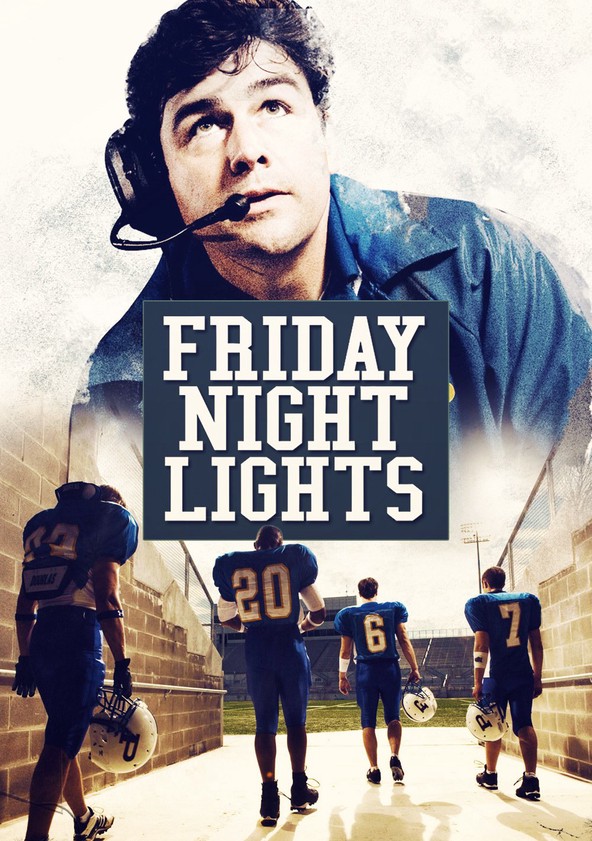
Friday Night Lights
Back in the 1960s when I attended high school in New Jersey, high school football was important, but as I would later realize when I moved to Texas in the 1970s, maybe just not that important. While we went to all the games and rooted for our friends on the field, outside of a pretty lame pep rally at school on Friday afternoon, there wasn’t that much more to it. And if you looked hard the next day, you probably could find the box score in the Sports pages of the local morning paper.
Although I was warned, I still could not believe it until I saw it myself, that in Texas, the local TV stations showed filmed highlights of high school football on game nights. It also seemed that locals talked more about their favorite high school team than they did about the Cowboys or the Oilers. Then there were these large football fields all over town where on Friday nights in the fall and winter you would get stuck in traffic and yes, see those stadium lights!
This Texas phenomenon was dubbed Friday Night Lights and first memorialized in a 1990 non-fiction book that chronicled a small-town team in Odessa, Texas. In 2004, it was adapted for the big screen and was later made into the fictionalized television series that ran five seasons from 2006-2011. After the television version captured my heart on several levels, I went back and watched the movie only to quit after about 15 minutes. It was no match for the television series, and I just could not let it spoil my love for what I had seen on the small screen.
It goes without saying that having a love for football will make Friday Night Lights a more enjoyable experience, but the show does more than just portray Texas high school football. It features one of the best television families of all time with Kyle Chandler and Connie Britton playing parents to both their own child as well as the high schoolers they coach and counsel, respectively.
The show includes just about everything those high school years were about in addition to football. You see all the ups and downs of being a teenager in the 1980s brought on by social pressures and challenging relationships and of course the inevitable interference from sex, drugs, and alcohol. In addition to the coach’s family, there are several other family dynamics in play with storylines to follow.
Then there’s the football! As far as fictionized sports go, the drama of each season as well as of individual games is expertly depicted creating both the excitement of victory and the heartbreak of defeat. The show also works in all the behind-the-scenes stuff very well including the interfering influence of the local community and the pressure felt by the players, some of whom dreamed of playing in college and beyond.
Like any good show, Friday Night Lights is packed with emotion and runs us through cycles of bringing us down with setbacks later lifting our spirits through redemption. It’s a roller coaster ride for sure and features many great young actors who shine throughout the series. The show also deserves acclaim for its filming technique where most scenes were shot in a single take giving it a more natural feel.
Although it never scored a touchdown in the ratings, Friday Night Lights was a critical success, and it eventually received some Emmy nods in its final two seasons. The show is a must if you like football but don’t mind remembering how tough it was to go through school. I’m glad I gave it a try because it was well worth it despite bringing back some old memories I’d rather forget.
PS – There is one quick personal story that is too memorable for me not to share. While in the middle of obsessively streaming this show on-line, I took a respite from the annual East Nashville Tomatofest event on a hot summer’s afternoon to watch an episode in a coffee shop. Can you imagine my surprise when I walked out the door and immediately came upon actress Connie Britton, then star of the Nashville TV series, walking by pushing a baby stroller!
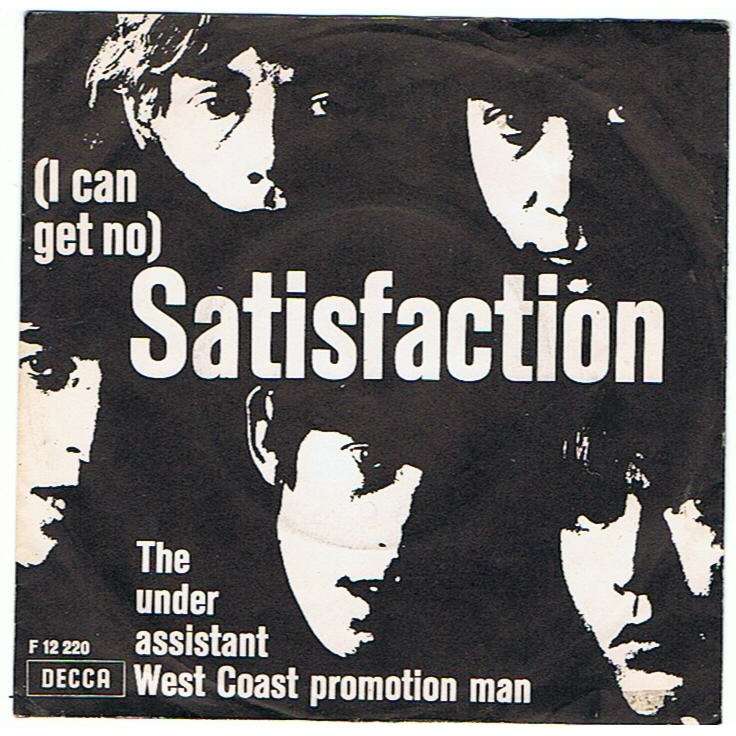
What if I told you this was one of The Rolling Stone’s largest selling singles in America? It was… but it was a package deal…the song on the other side of the single was Satisfaction.
Not the most well-known song by the Stones but a lot of Americans owned it. I bought the single Satisfaction in 1979 and flipped it over and found this oddly named likable song. This was the American B side to Satisfaction. Not exactly Day Tripper/We Can Work It Out but a likable single all the same. The song was released in 1965.
The song is about George Sherlock who was the London Records promotions man who accompanied the Stones to California. This was their response to having a chaperone who was a music executive in the early 60s. The Stones did not hide their disdain for him, giving him the nickname Surfer Baby, and they crystallized their feelings in the song.
The Stones recorded this in Chess studios in Chicago. This song was written by Mick Jagger and Keith Richards who were becoming a great songwriting team. They likely borrowed the lick from Buster Brown’s song Fannie Mae.
Fannie Mae peaked at #1 in the R&B Charts and #38 in the Billboard 100 in 1960. He received more attention in 1973 when his song “Fannie Mae” was included in the film American Graffiti Soundtrack.
Buster Brown – Fannie Mae
Well, I’m waiting at the bus stop in downtown L.A. Well, I’m waiting at the bus stop in downtown L.A. But I’d much rather be on a boardwalk on Broadway
Well, I’m sitting here thinkin’ just how sharp I am Well, I’m sitting here thinkin’ just how sharp I am I’m an under assistant west coast promo man
Well, I promo groupswhen they come into town Well, I promo groups when they come into town Well they laugh at my toupee, they’re sure to put me down
Well, I’m sitting here thinking just how sharp I am Yeah, I’m sitting here thinking just how sharp I am I’m a necessary talent behind every rock and roll band
Yeah, I’m sharp I’m really, really sharp I sure do earn my pay Sitting on the beach every day, yeah I’m real real sharp, yes I am I got a Corvette and a seersucker suit Yes, I have
Here comes the bus, uh oh I thought I had a dime Where’s my dime I know I have a dime somewhere I’m pretty sure
Burn Notice aired on the USA Network from 2007 to 2013, 111 episodes in all. It was created by Matt Nix, based in Miami, and was a single-camera show.
l-r: Sharon Gless, Bruce Campbell, Jeffrey Donovan, Gabrielle Anwar.
Michael Westen (Jeffrey Donovan) is a spy. Or he was, until, in the middle of an operation, he gets a call informing him that he’s been burned, identified as an unreliable or risky operative. This comes as he’s closing a deal with a group of Nigerians, who take him out, beat him and leave him for dead. He wakes up sometime later in a hotel, being tended to by his former girlfriend Fiona Glenanne (Gabrielle Anwar), a former member of the IRA, who tells him that he’s in Miami, his hometown.
At this point, he has nothing: no work history, no money, no contacts in the intelligence community; in essence, he doesn’t exist. He’s being surveilled constantly, and knows that, if he leaves Miami, he’ll be arrested. He needs to do something for money, and, more importantly, find out who burned him and why. He enlists the help of Sam Axe (Bruce Campbell), a retired operative and Michael’s best friend, in his pursuits. Sam has no money (he hits on older women to sustain himself) and is known as “the guy who knows a guy.” Both Michael (Army Rangers, Green Berets) and Sam (Navy SEAL) have a Special Forces background, which makes their work as private investigators a natural fit. Fiona invites herself to help them, and her contributions (mostly with firearms) are not insignificant.
Michael’s mother, Madeline (Sharon Gless), usually sits at home, smoking cigarettes and fretting about Michael and his brother Nate (Seth Peterson), but she occasionally gets involved in Michael’s business. One interesting example: when Michael needed a list of names from the DMV, he sent his mother in to get it, where she worked with (and became friends with) a clerk played by Tyne Daly (a reunion of the lead characters in the ’80’s series Cagney & Lacey).
In the fourth season, Michael inadvertently burns another agent, Jesse Porter (Coby Bell). The two eventually reconciled and Jesse joined the group for the remainder of the series.
The shows themselves relied on action and, more importantly, narration by Westen as to what he was doing and why he was dong it, as though he was narrating a training film for operatives. It was a show that had a lot of supporting characters (many of whom were only in one episode) and several interesting subplots. Michael does manage to work his way back into the CIA, only to be hunted, arrested, shot at, and bullied. His friends stood with him, his brother died helping him dispose of a particularly psychopathic agent, and Madeline makes the ultimate sacrifice for him at the end of the series.
There was a prequel movie made, Burn Notice: The Fall of Sam Axe, that aired toward the end of the series, that focused on Sam during his days as a SEAL. Tod Goldberg wrote five tie-in novels that were particularly good that you can probably get at your local used bookstore (that’s where I got mine).
I really enjoyed the series because the characters, as wild and off-the-wall as they seemed, were very relatable. You can feel the heat between Michael and Fiona as their relationship goes from “former lovers” to “lovers,” you can appreciate the friendship between Michael, Sam, and Jesse, and witness Maddie’s love for her sons and Michael’s friends. The series doesn’t seem to be running on TV, but relatively inexpensive used copies of the DVD’s are available on eBay.
I remember this song on the radio in the seventies. Of all places, it was played a lot at our local skating rink. It’s high on the list of my favorite songs. It wasn’t the best song written by Garcia and Hunter but I can listen to it at any time. Probably the first Dead…or close to a Dead song I ever heard. The song has stuck with me my entire life.
Jerry Garcia played most of the instruments on this album except drums and Dead drummer Bill Kreutzmann handled those. Sugaree was on the Garcia album released in 1972. He had teamed up with other players in the past but this was his first solo album. The song peaked at #94 on the Billboard 100 in 1972. I always liked the vague lyrics to this song. I first thought it was about death… you can take it a lot of ways.
The Grateful Dead did this live many times…Jerry Garcia and Robert Hunter wrote this song. The Dead made their reputation live. They got very little radio play and didn’t sell many albums, but they are one of the top-grossing concert acts of all time.
Like the Allman Brothers, they formed a family atmosphere with their crew and it extended to their audience. From the early Kool-Aid acid tests to later on allowing the audience to tape their shows drew their audience closer. They would later give them their own section to record in…while other bands like Led Zeppelin would send people to bust their tape recorder or head. Garcia commented:Well, my feelings are, the music is for the people…I mean after it leaves our instruments it’s of no value to us, ya know what I mean? it’s like, ya know…what good is it? So it might as well be taped, my feeling is that..and if people enjoy taping it and enjoy having the tapes to listen to, that’s real great. “
They never played the same show twice. They would take songs in different directions and Garcia has said that he couldn’t play something twice the same. He just wasn’t built like that. That made every show unique…not that every show was great. The Dead has admitted they had their share of bad ones.
On Deadheads following them around the country: “Well, it’s obviously very important to them. And more than that, it’s giving them an adventure. They have stories to tell. Like, “Remember that time we had to go all the way to Colorado and we had to hitchhike the last 400 miles because the VW broke down in Kansas.” Or something like that. Y’know what I mean? That’s giving them a whole common group of experiences which they can talk about. For a lot of people, going to Grateful Dead concerts is like bumping into a bunch of old friends.”
Bill Kreutzmann…if you get a chance read his book Deal: My Three Decades of Drumming, Dreams, and Drugs with the Grateful Dead. I covered it here a while back. It’s an education in the rock world…or the Dead world of the 60s through the 90s. If you are offended by drugs, sex, and great music…pass it by.
Robert Hunter: “Sugaree was written soon after I moved from the Garcia household to China Camp. People assume the idea was cadged from Elizabeth Cotten’s ‘Sugaree,’ but, in fact, the song was originally titled ‘Stingaree,’ which is a poisonous South Sea manta. The phrase ‘just don’t tell them that you know me’ was prompted by something said by an associate in my pre-Dead days when my destitute circumstances found me fraternizing with a gang of minor criminals. What he said, when departing, was: ‘Hold your mud and don’t mention my name.’
“Why change the title to ‘Sugaree’? Just thought it sounded better that way, made the addressee seem more hard-bitten to bear a sugar-coated name. The song, as I imagined it, is addressed to a pimp. And yes, I knew Libba’s song, and did indeed borrow the new name from her, suggested by the ‘Shake it’ refrain.”
Bill Kreutzmann Drummer for the Dead:The album, Garcia, was cut at Wally Heider Studios in July 1971 and released by Warner Brothers the following January. There are a lot of songs on there that became Grateful Dead mainstays, in addition to “Deal”—we’re talking about straight-up classics like “Sugaree,” “Loser,” and “The Wheel.” Also, “Bird Song” is on there, which, to this day, is one of my all-time favorite Dead songs and one of my absolute favorite songs to play live (along with “Dark Star” and “The Other One”).
When I want musicians I’m playing with to learn any of those songs, I give them the Garcia versions. They’re just so good. I had a really great time making that album. Dealing exclusively with Jerry was the most effortless thing in the world. I didn’t have to do anything other than be myself. And play.
Cocaine was our special guest throughout those recording sessions, but you’d never be able to tell because everything was very laid back. I have no idea how we were able to do that, because cocaine isn’t exactly known for its relaxing properties. Maybe it was just the dynamic between us that made it all so … easy.
Sugaree
When they come to take you down When they bring that wagon round When they come to call on you and drag your poor body down
Just one thing I ask of you Just one thing for me Please forget you knew my name My darlin Sugaree
Shake it, shake it Sugaree Just don’t tell them that you know me
You thought you was the cool fool Never could do no wrong Had everything sewed up tight How come you lay awake all night long?
Just one thing I ask of you Just one thing for me Please forget you knew my name My darlin Sugaree
Shake it, shake it Sugaree Just don’t tell them that you know me
You know in spite of all you gained you still have to stand out in the pouring rain One last voice is calling you and I guess it’s time you go
Just one thing I ask of you Just one thing for me Please forget you knew my name My darlin Sugaree
Shake it, shake it Sugaree Just don’t tell them that you know me
Shake it up now, Sugaree I’ll meet you at the Jubilee If that Jubilee don’t come Maybe I’ll meet you on the run
One thing I ask of you Just one thing for me Please forget you knew my name my darling Sugaree
Shake it, shake it Sugaree but don’t tell them that you know me Shake it, shake it Sugaree Just don’t tell ’em that you know me


 l. – r. Jack, Gerry, Sandra, and Brian
 Amanda Redman as Deputy Superintendant Sandra Pullman
 Susan Jameson as Esther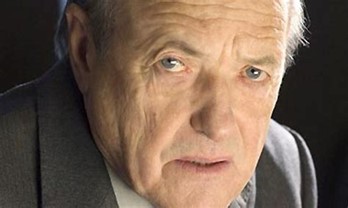








 PowerPop... An Eclectic Collection of Pop Culture