This is more of a question than a post…just curious what you think.
I was commenting on A Sound Day and I asked Dave a question on a post about Michael Hutchinson of INXS. Who was the last Rock Star? Since Kurt Cobain died has there really been a rock star like we knew in the 60s and 70s to come along? Not counting older ones still around.
When I say rock star…I mean one comparable to the legends that we know… Between 1955 and 1994 there were plenty to pick from…Elvis, John Lennon, Bob Dylan, Mick Jagger, Keith Richards, Roger Daltrey, Keith Moon, Robert Plant, Jimmy Page, Elton John, Sly Stone, Roger Waters, Prince, and the list could go on…These artists spoke to generations.
So no… Nickleback’s lead singer would not count.
The only two names I could think of was Dave Grohl and Jack White of the White Stripes. Someone who is known outside the world of Rock and Roll. I’m not sure Grohl and White would count either.
This Emmy-nominated episode has acquired a reputation as the best of all Martin’s hosting gigs. Its not my favorite episode…I do like it though… but it’s probably one of the most important in the show’s history. It was a turning point for SNL. It went from a cult hit to a major player in the ratings during this period. Many people have picked it as the best episode.
Saturday Night Live has always been hit or miss in any era. The difference in the 70s is they would take more chances and Lorne made sure everyone had a chance in the cast.
The show introduced a lot of comedians and some unknown musical artists like Redbone and others that would not have gotten coverage on a network show.
Saturday Night Live: Steve Martin/Blues Brothers
The Cast: Steve Martin, Dan Aykroyd, John Belushi, Jane Curtin, Garrett Morris, Bill Murray, Laraine Newman, Gilda Radner, The Blues Brothers, and Don Pardo
The host for the episode is Steve Martin (his fifth appearance), and the musical guest is The Blues Brothers (their second appearance). The skits for this episode are as follows: Concert promoter Don Kirschner presents footage of an old club performance by The Blues Brothers. For his opening monologue, Steve Martin talks about the inspiration for his comedy ideas, then does a magic act that ends with him tackling and beating a member of the audience.
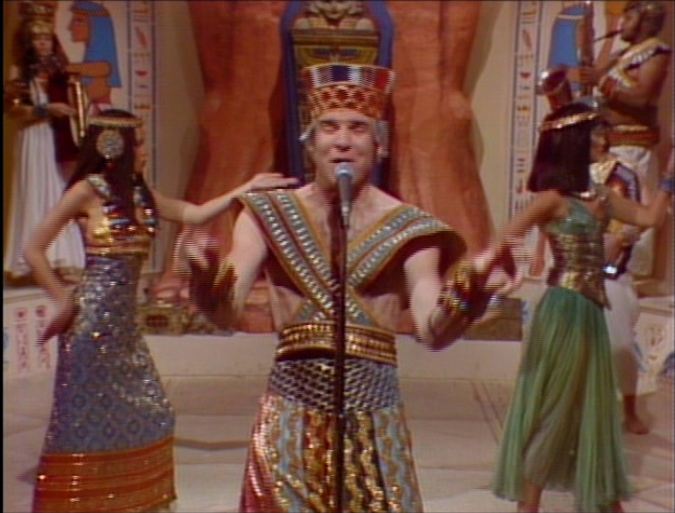
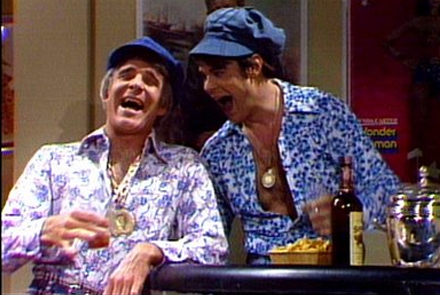
The Festrunk brothers prepare their apartment for the two girls they believe are on the way, but their neighbor Cliff tells them they’ve been stood up. Medieval doctor Theodoric of York treats a series of patients by draining their blood. A man and woman catch each other’s notice in a crowded club, and dance together romantically as the rest of the club freezes in place around them. During the Weekend Update, Jane Curtain and Dan Aykroyd debate abortion, Jane reports on Carter’s energy policy and a new nasal contraceptive, and Dan berates Garrett Morris for short-changing him on the weed he bought. Steve performs a song about King Tut. The Nerds Todd and Lisa prepare their science fair projects. The Blues Brothers perform “I Don’t Know”.
This particular episode was about women going through menopause which today would not receive a second notice…but then, comedy shows just didn’t feature subjects like this. All In The Family had so many great episodes that it is hard picking out one. In this one, the tables are turned and Edith rounds on Archie with a vengeance because of her mood swings caused by menopause.
All in the Family changed the game in sitcoms and television. In the early seventies, many country type sitcoms were canceled when this show debuted in 1971. As Pat Butram of Green Acres said: “CBS canceled everything with a tree including Lassie.”
The show tackled controversial subjects such as racism, rape, gun control, feminism, and homophobia. It was under fire from the first episode for its controversial subject matter. Critics and viewers were divided on what they were seeing…some saw it as comic genius and some as tasteless bigotry. The backlash did not come only from the public and the reviewers. Several actors including Harrison Ford turned down roles in the show because they were offended by the script’s humor.
Lucille Ball lambasted CBS for running such an “Un-American” show on the same network her own series was airing on. I seriously doubt if the show could be made today on network television. The show was a huge success in the seventies.
Mike Stivic: [Edith is going through menopause] What did the doctor say? Archie Bunker: He just said that menopause is a pretty tough time to be going through; especially for nervous types. Mike Stivic: So? Archie Bunker: So he prescribed these here pills. [takes bottle of pills out of paper bag] Mike Stivic: Oh, good. Archie Bunker: I gotta take three of ’em a day.
Edith Bunker: STIFLE STIFLE STIFLE
“If you’re gonna change, Edith, change! Right now! CHANGE!”
All In The Family: Edith’s Problem
Characters: Edith Bunker, Archie Bunker, Mike Stivic, Gloria Stivic, and The Waitress
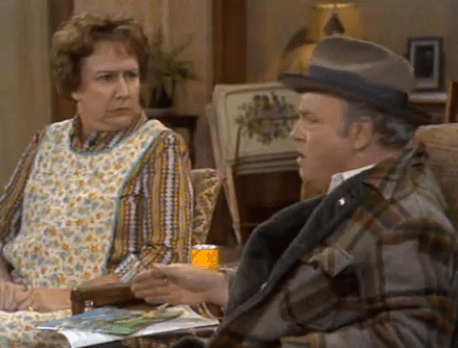
The Bunker family is thrown into an uproar when the normally docile Edith undergoes several sudden and unexpected mood swings, yelling at her family and displaying a foul temper that makes Archie look like a pussycat! Though the men in the family don’t quite know what is happening, Gloria does: Edith is going through menopause. Perhaps the best and funniest line of the episode is when an upset Archie, who’s frustrated at his wife’s sudden and constantly unpredictable mood changes, yells at Edith: “If you’re gonna change, Edith, change! Right now! CHANGE!”
The short scene starts at 15 seconds.
The complete episode
“Boy, the way Glen Miller played…”
Those Were The Days
Boy, the way Glen Miller played. Songs that made the Hit Parade. Guys like us, we had it made. Those were the days Didn’t need no welfare state. Everybody pulled his weight Gee, our old LaSalle ran great. Those were the days And you knew where you were then Girls were girls and men were men. Mister, we could use a man like Herbert Hoover again. People seemed to be content. Fifty dollars paid the rent. Freaks were in a circus tent. Those were the days Take a little Sunday spin, Go to watch the Dodgers win. Have yourself a dandy day That cost you under a fin. Hair was short and skirts were long. Kate Smith really sold a song. I don’t know just what went wrong Those Were the Days
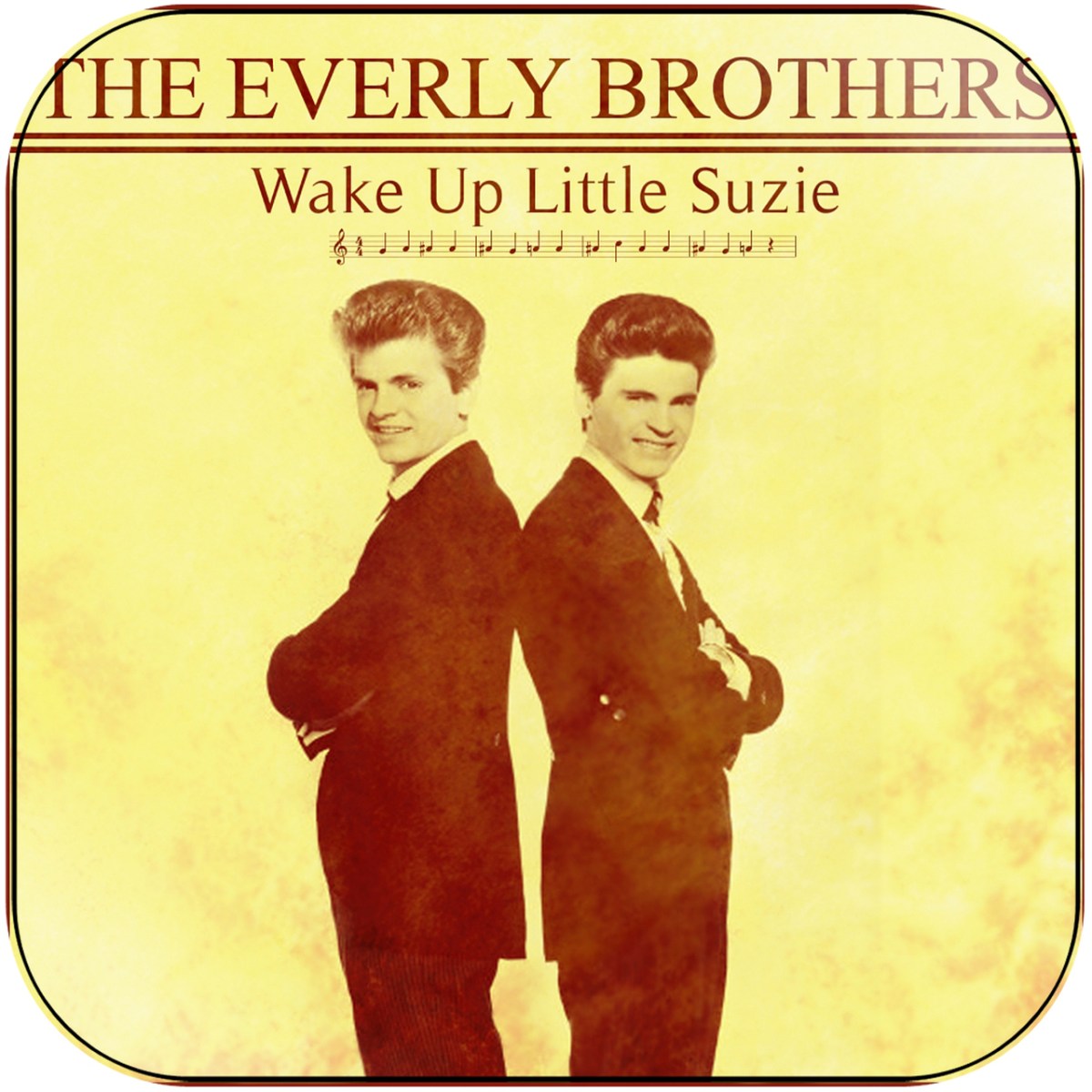
The lines “We both fell sound asleep / Wake up, little Suzie, and weep / The movie’s over, it’s four o’clock / And we’re in trouble deep” were suggestive enough to cause the song to be banned by several radio stations. Although it’s pretty clear the Suzie and her date were at the movies but that didn’t matter.
As with the case of other songs being banned…it only made it more appealing to teenagers at the time. The song peaked at #1 in Billboard and #2 in the UK in 1957.
This was written by the husband and wife team of Felice and Boudleaux Bryant, who wrote most of The Everly Brothers songs in the ’50s. Their songs were also recorded by Bob Dylan, Elvis, and Buddy Holly.
From Songfacts
This is about a young couple who fall asleep at the drive-in, realize they are out past curfew, and make up a story to tell Susie’s parents.
Some Boston radio stations banned this because of the lyrics, which imply that the young couple spent the night together. At the time, staying out late with a girl was a little controversial.
For The Everly Brothers, this was the first of four US #1 hits. It also went to #1 on the Country & Western charts.
At an appearance on The Oprah Winfrey Show while campaigning for President in year 2000, George W. Bush was asked by Oprah what his favorite song was. He said: “Wake Up Little Susie – by Buddy Holly.”
Simon & Garfunkel played this at their 1981 concert in Central Park. The live recording was released as a single the next year and hit #27 in the US.
Chet Atkins played guitar on this. Atkins, who died of cancer in 2001, was a Nashville musician who created a distinctive sound using a three-fingered picking technique.
This was a labor of love for the songwriting duo. “We persevered with ‘Wake Up Little Susie’ for many hours,” Boudleaux recalled to Country Music People. “I started writing one night, kept trying to get my ideas down, but it just wouldn’t happen. Finally I woke Felice, who took one listen to what I had so far achieved and came up with the final touches that I couldn’t get. The Everlys liked the song, but like me had problems with getting it right in the studio. They worked a whole three-hour session on that one song and had to give up, they just couldn’t get it right. We all trooped back to the studio the next day and got it down first take. That’s the way it happens sometimes.”
Wake Up Little Susie
Wake up, little Susie, wake up Wake up, little Susie, wake up we’ve both been sound asleep, wake up, little Susie, and weep The movie’s over, it’s four o’clock, and we’re in trouble deep Wake up little Susie Wake up little Susie, well
Whatta we gonna tell your mama Whatta we gonna tell your pa Whatta we gonna tell our friends when they say ?ooh-la-la? Wake up little Susie Wake up little Susie, well
I told your mama that you’d be in by ten Well Susie baby looks like we goofed again Wake up little Susie Wake up little Susie, we gotta go home
Wake up, little Susie, wake up Wake up, little Susie, wake up The movie wasn’t so hot, it didn’t have much of a plot We fell asleep, our goose is cooked, our reputation is shot Wake up little Susie Wake up little Susie, well
Whatta we gonna tell your mama Whatta we gonna tell your pa Whatta we gonna tell our friends when they say “ooh-la-la” Wake up little Susie Wake up little Susie Wake up little Susie
This week I’ll feature songs that have been banned from the radio for one reason or another for a time. I will just feature pre-9-11 songs because after 2001 practically every song was banned for a little while.
My Generation featured the chorus “Hope I Die Before I Get Old” but that was ok…It was the vocals that resembled stuttering; afraid to offend people with actual stuttering problems, the BBC prohibited the song from receiving airplay. Later, when the song proved to be a huge hit, they allowed it.
The best part of this song for me was John Entwistle’s bass solo. You just didn’t hear many bass solos at that time. John Entwistle “I bought this Danelectro bass and it had these tiny, thin wire-wound strings on. They were so thin, they sounded just like a piano, an unbelievably clear sound. The only thing was that you couldn’t buy these strings. When we recorded ‘My Generation,’ I ended up with three of these Danelectros just for the strings. The last one I had, the string busted before we actually got into the studio to re-record it, so I did it on a Fender Jazz in the end with tape-wound La Bella strings.”
Pete wrote this song for British mods at the time who didn’t think older people understood what was going on. The song peaked at #74 in the Billboard 100, #2 in the UK, and #3 in Canada in 1966.
Pete Townshend was asked if the line still resonated with him. “I think it does,” “The line actually came from a time when I was living in a really wealthy district of London, just by accident. I didn’t really understand quite where I was living at the time. And I was treated very strangely on the street, in an imperious way by a lot of people, and it was that that I didn’t like. I didn’t like being confronted with money and the class system and power. I didn’t like being in a corner shop in Belgravia and some woman in a fur coat pushing me out of the way because she was richer. And I didn’t know how to deal with that. I could’ve, I suppose, insisted on my rights and not written the song. But I was a tucked-up little kid and so I wrote the song.”
From Songfacts
Roger Daltrey sang the lead vocals with a stutter, which was very unusual. After recording two takes of the song normally, The Who’s manager, Kit Lambert, suggested to Daltrey that he stutter to sound like a British kid on speed. Daltrey recalled to Uncut magazine October 2001: “I have got a stutter. I control it much better now but not in those days. When we were in the studio doing ‘My Generation’, Kit Lambert came up to me and said ‘STUTTER!’ I said ‘What?’ He said ‘Stutter the words – it makes it sound like you’re pilled’ And I said, ‘Oh… like I am!’ And that’s how it happened. It was always in there, it was always suggested with the ‘f-f-fade’ but the rest of it was improvised.”
Pete Townshend wrote this on a train ride from London to Southampton on May 19, 1965 – his 20th birthday. In a 1987 Rolling Stone magazine interview, Townshend explained: “‘My Generation’ was very much about trying to find a place in society. I was very, very lost. The band was young then. It was believed that its career would be incredibly brief.”
Back in 1967, Pete Townshend called this song, “The only really successful social comment I’ve ever made.” Talking about the meaning, he explained it as “some pilled-up mod dancing around, trying to explain to you why he’s such a groovy guy, but he can’t because he’s so stoned he can hardly talk.”
This contains the famous line, “I hope I die before I get old.” The Who drummer Keith Moon did, dying of a drug overdose in 1978 at age 32. The rest of the band found themselves still playing the song 50 years later, giving that line more than a hint of irony.
A Singapore magazine called BigO is named for the famous line in this song – it’s an acronym for “Before I Get Old.”
This song went through various stages as they tried to perfect it. It began as a slow song with a blues feel, and at one point had hand claps and multiple key changes. The final product was at a much faster tempo than the song was conceived; it was Kit Lambert’s idea to speed it up.
This is the highest charting Who song in the UK, but it never cracked the Top 40 in America, where they were less known. In the UK, the album was also called My Generation, but in America it was titled The Who Sing My Generation.
Entwistle was the least visible member of the band, and his bass solos on this song threw off directors when The Who would perform the song on TV shows. When it got to his part, the cameras would often go to Pete Townshend, and his fingers wouldn’t be moving. Entwistle played the solos using a pick, since their manager Kit Lambert didn’t think fingers recorded well. Most of Entwistle’s next recordings were done with fingers.
The BBC refused to play this at first because they did not want to offend people with stutters. When it became a huge hit, they played it.
In 1965, Roger Daltrey stood by this song’s lyric and claimed he would kill himself before reaching 30 because he didn’t want to get old. When he did get older, he answered the inevitable questions about the “hope I die before I get old” line by explaining that it is about an attitude, not a physical age.
On September 17, 1967, The Who performed this song on The Smothers Brothers Comedy Hour. Keith Moon set his drums to explode after the performance, but the technical crew had already done so. The resulting explosion burned Pete Townshend’s hair and permanently damaged his hearing.
Also of note during this performance was Moon’s total disregard for the illusion of live performance. The band was playing along to a recorded track (common practice on the show), and while his bandmates synched their movements to the music, Moon made no effort to keep time, even knocking his cymbal over at one point.
Shel Talmy, who produced this track, was fired the next year. Talmy filed a lawsuit and won extensive royalties from future albums.
The ending of this song is electric mayhem, with Keith Moon pounding anything he can find on his drum kit and Townshend flipping his pickups on an off, something he also did on the album opener “Out in the Street.” Townshend and Daltrey go back and forth on the vocals, intentionally stomping on each other to add to the chaos.
This was covered by Iron Maiden, who was usually the Who’s polar opposite both musically and lyrically. One connection they share is the BBC-TV series Top of the Pops. Performances on the show were customarily lip-synched, but The Who performed live on the show in 1972. In 1980, Iron Maiden also performed live, and was the first band to do so since The Who. Maiden put their version of “My Generation” on the B-side to the single for “Lord of the Flies.”
The Who played this during their set at Woodstock, which didn’t begin until 5:00 a.m. on the second day. The group turned in a solid performance, but they weren’t pleased with the scheduling and weren’t feeling the peace and love – at one point an activist named Abbie Hoffman came on stage uninvited and was forcibly ejected by Pete Townshend.
Green Day recorded this for their 1992 album Kerplunk!.
When the teen pop singer Hilary Duff covered this as a B-side for her 2005 single “Someone’s Watching Over Me,” she made the curious decision to rewrite some of the lyrics. “I hope I don’t die before I get old,” doesn’t really have the same rock ‘n’ roll attitude as Townshend’s original words, and her rendition caused some consternation among Who fans.
This song fits nicely into the “primal rock” genre, which covers tunes that are raucous, rebellious, unusual, and also celebratory. Roger Reale, who was in one of these primal rock bands with Mick Ronson, explains the impact of the song:
“‘My Generation’ had no lead guitar, but a lead part played on the bass. It also had a bass breakdown, and unless you listened to a lot of jazz, there were no bass breakdowns in pop music. I remember playing the end of that track over and over and over again, because you could hear the feedback of the guitar, which was so exciting to listen to. In those days, you weren’t supposed to have an outro that was pure noise.”
My Generation
People try to put us d-down (talkin’ ’bout my generation) Just because we get around (talkin’ ’bout my generation) Things they do look awful c-c-cold (talkin’ ’bout my generation) I hope I die before I get old (talkin’ ’bout my generation)
This is my generation This is my generation, baby
Why don’t you all f-fade away (talkin’ ’bout my generation) Don’t try to dig what we all s-s-s-say (talkin’ ’bout my generation) I’m not trying to ’cause a big s-s-sensation (talkin’ ’bout my generation) I’m just talkin’ ’bout my g-g-g-generation (talkin’ ’bout my generation)
My generation This is my generation, baby
Why don’t you all f-fade away (talkin’ ’bout my generation) And don’t try to d-dig what we all s-s-say (talkin’ ’bout my generation) I’m not trying to ’cause a b-big s-s-sensation (talkin’ ’bout my generation) I’m just talkin’ ’bout my g-g-generation (talkin’ ’bout my generation)
This is my generation This is my generation, baby My my my generation
People try to put us d-down (talkin’ ’bout my generation) Just because we g-g-get around (talkin’ ’bout my generation) Things they do look awful c-c-cold (talkin’ ’bout my generation) Yeah, I hope I die before I get old (talkin’ ’bout my generation)
This is my generation This is my generation, baby My my my generation
(Talkin’ ’bout my generation) (Talkin’ ’bout my generation) (Talkin’ ’bout my generation) (Talkin’ ’bout my generation) (Talkin’ ’bout my generation) this is my generation (Talkin’ ’bout my generation) this is my generation (Talkin’ ’bout my generation) this is my generation (Talkin’ ’bout my generation) this is my generation (Talkin’ ’bout my generation) this is my generation (Talkin’ ’bout my generation) this is my generation (Talkin’ ’bout my generation) this is my generation
I am amazed at how many covers there are to this song. I remember Kermit the Frog singing it long ago. I didn’t know whether to use Bob Dylan’s or others for today. Jimmie Rodgers did a great version of Froggie Went A-Courtin’.
It is on the Dylan album Good as I Been to You that was released in 1992.
Who covered it? Here is a partial list: Jimmie Rodgers, Paul McCartney, Bruce Springsteen, Woody Guthrie, Elvis Presley, Tex Ritter, and Blind Willie McTell.
There is a reference in the Stationer’s Register of 1580 to “A Moste Strange Weddinge of the Frogge and the Mouse.” The oldest known musical version is in Thomas Ravenscroft’s Melismata in 1611.
This great old story song has quite a history. Some people claim that it goes back 400 years to England and that the frog is actually a French Duke while the mouse is Queen Elizabeth I. It has been popular in America since colonial times, and it seems to change a little with each person who performs it.
Alternative names for the song per Wiki
“A Frog He Would a-Wooing Go”
“Crambone”
“Die Padda wou gaan opsit” (Afrikaans version in South Africa)
“Frog in the Well”
“Froggie Went a-Courtin'”
“Froggy Would a-Wooing Go”
“The Frog’s Wooing”
“A Frog Went a-Walkin'”
“King Kong Kitchie Kitchie Ki-Me-O”
“There Lived a Puddie in the Well”
“There Was a Puggie in a Well”
“Y Broga Bach” (Welsh)
“Yo para ser feliz quiero un camión”
Thanks to Observationblogger for helping me to think of this song again.
Froggie Went A-Courtin’
1. Frog went a-courtin’, and he did ride, Uh-huh, Frog went a-courtin’, and he did ride, Uh-huh, Frog went a-courtin’, and he did ride. With a sword and a pistol by his side, Uh-huh.
2. Well he rode up to Miss Mousey’s door, Uh-huh, Well he rode up to Miss Mousey’s door, Uh-huh, Well he rode up to Miss Mousey’s door. Gave three loud raps and a very big roar, Uh-huh.
3. Said, “Miss Mouse, are you within?” Uh-huh, Said he, “Miss Mouse, are you within?” Uh-huh, Said, “Miss Mouse, are you within?” “Yes, kind sir, I sit and spin,” Uh-huh.
4. He took Miss Mousey on his knee, Uh-huh, Took Miss Mousey on his knee, Uh-huh, Took Miss Mousey on his knee. Said, “Miss Mousey, will you marry me?” Uh-huh.
5. “Without my uncle Rat’s consent, Uh-huh “Without my uncle Rat’s consent, Uh-huh “Without my uncle Rat’s consent. I wouldn’t marry the president, Uh-huh
6. Uncle Rat laughed and he shook his fat sides, Uh-huh, Uncle Rat laughed and he shook his fat sides, Uh-huh, Uncle Rat laughed and he shook his fat sides,. To think his niece would be a bride, Uh-huh.
7. Uncle Rat went runnin’ downtown, Uh-huh, Uncle Rat went runnin’ downtown, Uh-huh, Uncle Rat went runnin’ downtown. To buy his niece a wedding gown, Uh-huh
8. Where shall the wedding supper be? Uh-huh, Where shall the wedding supper be? Uh-huh, Where shall the wedding supper be? Way down yonder in a hollow tree, Uh-huh
9. What should the wedding supper be? Uh-huh, What should the wedding supper be? Uh-huh, What should the wedding supper be? Fried mosquito in a black-eye pea, Uh-huh.
10. Well, first to come in was a flyin’ moth, Uh-huh, First to come in was a flyin’ moth, Uh-huh, First to come in was a flyin’ moth. She laid out the table cloth, Uh-huh.
11. Next to come in was a juney bug, Uh-huh, Next to come in was a juney bug, Uh-huh, Next to come in was a juney bug. She brought the water jug, Uh-huh.
12. Next to come in was a bumbley bee, Uh-huh Next to come in was a bumbley bee, Uh-huh Next to come in was a bumbley bee. Sat mosquito on his knee, Uh-huh.
13. Next to come in was a broken black flea, Uh-huh, Next to come in was a broken black flea, Uh-huh, Next to come in was a broken black flea. Danced a jig with the bumbley bee, Uh-huh.
14. Next to come in was Mrs. Cow, Uh-huh, Next to come in was Mrs. Cow, Uh-huh, Next to come in was Mrs. Cow. She tried to dance but she didn’t know how, Uh-huh.
15. Next to come in was a little black tick, Uh-huh, Next to come in was a little black tick, Uh-huh, Next to come in was a little black tick. She ate so much she made us sick, Uh-huh.
16. Next to come in was a big black snake, Uh-huh, Next to come in was a big black snake, Uh-huh, Next to come in was a big black snake. Ate up all of the wedding cake, Uh-huh.
17. Next to come was the old gray cat, Uh-huh, Next to come was the old gray cat, Uh-huh, Next to come was the old gray cat. Swallowed the mouse and ate up the rat, Uh-huh.
18. Mr. Frog went a-hoppin’ up over the brook, Uh-huh, Mr. Frog went a-hoppin’ up over the brook, Uh-huh, Mr. Frog went a-hoppin’ up over the brook. A lily-white duck come and swallowed him up, Uh-huh.
19. A little piece of cornbread layin’ on a shelf, Uh-huh, A little piece of cornbread layin’ on a shelf, Uh-huh, A little piece of cornbread layin’ on a shelf. If you want anymore, you can sing it yourself, Uh-huh.
My favorite final episode of any TV series. I liked the 1980’s Newhart show but I preferred the seventies series “The Bob Newhart Show” where Bob played psychologist Bob Hartley. This was the most creative ending I have ever seen in a sitcom. I remember watching it and was caught completely off guard. Seeing Emily (Suzanne Pleshette) again in that role was great.
The story didn’t matter as much as the end. No one had a clue this was going to happen in the finale. Bob Newhart had planted a story in the press where the ending was going to be Bob talking to God…played by George Burns or George C. Scott…just to throw people off.
Some shows have let me down with their final episode…this one pays off. In 2013 it was ranked number 1 in Entertainment Weekly’s 20 Best TV Series Finales Ever
“You won’t believe the dream I just had.”
You should really wear more sweaters.
What do you mean, beautiful blonde?
Your- your brothers can speak? Why didn’t they say anything up ’till now? I guess they’ve never been this P.O.’ed before.
Newhart: The Last Newhart
The characters: Dick Loudon / Robert Hartley, Joanna Loudon, Michael Harris, Stephanie Vanderkellen, George Utley, Larry, Darryl #1, Darryl #2, Emily Hartley
A Japanese firm buys up all the land in the town where Newhart is set to build a golf course. Everyone sells out and moves away wealthy… except Dick. Dick will not sell and they build the course around his Inn. Years pass and the old town residents return for a reunion at the Inn. They all regret moving and decide they are all moving back and will live at the Inn. Things are getting very bizarre and Dick, furiously yelling at everyone at how nuts they are steps out onto the Inn’s porch where he is knocked out by a stray golf ball.
We cut to a darkened bedroom. Bob Newhart wakes up and turns on a light. Its Bob Hartley’s bedroom from The Bob Newhart Show. Bob reaches over and shakes the person sleeping next to him awake. It’s Emily, Bob’s wife from The Bob Newhart Show. Newhart, now clearly Dr. Bob Hartley, starts to tell Emily about the strange dream he has just had – where he was an Inn Keeper in Vermont. The entire run of Newhart was nothing but Bob Hartley’s dream
I had a business trip this past week driving a car for at least 10 hours to and from Atlanta and finished up this audiobook about the legendary manager Peter Grant. I have read one book about Grant by Chris Welch but I like this one better. Both of Grant’s kids were interviewed by author Mark Blake and they gave a perspective and info that has never been shared.
Grant had been a van driver, bouncer, stagehand, wrestler, and Don Arden’s assistant. He was 6’3″ and at one time over 300lbs… He road managed the tough and a little crazy Gene Vincent, Little Richard, Bo Diddley, and The Animals before he took over the Yardbirds which then turned into Led Zeppelin.
Grant changed the music business across the board. The promoters would enjoy a 60/40 split and better until Grant. He changed it all to 90/10 split with the artists actually getting the windfall instead of the promoters. His saying was 10 percent of Zeppelin was better than nothing. Now it is an industry-standard. The one other manager that I have read about is Brian Epstein who managed the Beatles. Grant and Epstein were complete opposites except for one thing. There was nothing they would not do for their respective bands. They were both loyal and trustworthy with the band’s finances unlike other band’s managers at the time. That is where the comparison ends.
Grant indeed was loyal to a fault…but he did business by suggestion and intimidation. Pouring water in bootleggers tape recorders, smashing film cameras by fans at concerts, and threating anyone that got in Zeppelin’s way or anyone who might be getting something they shouldn’t. He added to their already dark reputation. He started a Zeppelin label in the mid-seventies called Swan Song and signed Bad Company. He became their co-manager and traveled with them when Zeppelin wasn’t touring. He was even asked by Queen in 1975 if he could manage them…he turned them down because he didn’t have the time.
After Bonham died it became close to impossible to get him on the phone. His drug intake, already heavy, escalated during the early eighties. He did eventually get clean, lose weight, and turn into a living legend and he tried to be an English gentleman.
The book moves at a good pace and it goes over the hype and myths that Grant and Page built for Zeppelin.
If you are a Zeppelin fan or a fan of rock in the seventies it’s a good read. Although Grant could be tough, intimidating, and frankly scary at times…he did have a soft side for his family and of course…Led Zeppelin. I would give it 4.5 stars.
I did learn a new name for a certain drug… “Peruvian Marching Powder”
Some shows are easy to pick a classic episode…this one not so much. There are so many to pick from but personally, I really like this one. It was reported that The Pickle Story was Don Knott’s favorite of the series. Aunt Bee was a fantastic cook but don’t ask her to make pickles or marmalade. Andy, Barney, and Opie pays when she does…
“You mean you actually WANT her to make another batch of them kerosene cucumbers?” ” I gotta tell ya, my heart ain’t in this… Well, it’s not so much your heart we need, it’s your stomach” “I don’t know how I can face the future when I know there’s eight quarts of these pickles in it.“
The ANDY GRIFFITH SHOW – The Pickle Story
This show’s writing was top notch. There are a lot of shows that are memorable with The Andy Griffith Show. The Characters are Aunt Bee, Barney Fife, Opie Taylor, Andy Taylor, Clara Johnson, Motorist from Oregon, County Fair Judge
Clara drops by the Taylor house so Bee can sample some of the pickles she’s been working on for the county fair, which are delicious – they’ve won the blue ribbon 11 years in a row. Bee lets her sample some of the pickles that she’s been putting up for the family, which are terrible – the bane of her family’s meals for years. Aghast at the horrible concoction, Clara launches into a long list of polite suggestions that might help to make them better, but Bee waves them off. No less flabbergasted by her “kerosene cucumbers” are Andy and Barney who, unlike Clara, don’t know how to tell her that they’re awful. As a survival tactic, Andy and Barney plot to make her pickles edible by placing store-bought pickles in Aunt Bee’s jars while placing her pickles in store jars with Barney handing them out as gifts to passing motorists heading far away.
The plot works, but then Bee announces her decision to enter her pickles at the fair. Andy and Barney consider letting the matter slide, but when Clara drops by the courthouse to let Andy sample her pickles and pours her heart out about how much winning the contest at the fair means to her, Andy feels bad and suggests to Barney that they reverse their plan by eating all the store pickles so that Aunt Bee will have to make more. They do, she does, and once again they’re terrible – only this time it’ll be according to the judges at the fair. The winner is Clara for the 12th year in a row. Unfazed, Aunt Bee announces to Andy and Barney that, due to their recent appetite for her pickles, she’s made 16 jars for them to enjoy. Along with that terrible news, they also discover she’s started making heinous marmalade.
It’s been 42 years since Lynyrd Skynyrd’s plane crashed in a swamp in Gillsburg, Mississippi. The band had just released the album “Street Survivors” and it was probably their best well-rounded album. With new guitarist Steve Gaines, they were primed for commercial success but on October 20, 1977, they lost singer-songwriter Ronnie Van Zant, guitarist Steve Gaines, backup singer Cassie Gaines, and road manager Dean Kilpatrick. The plane crash also claimed the lives of pilot Walter McCreary and co-pilot William Gray Jr.
A year earlier Steve Gaines joined the band and he was pushing them in directions they never had gone. Listening to “Street Survivors” you can hear his influence with songs I Never Dreamed and I Know A Little. Steve was a super talented guitarist, songwriter, and singer and I have to wonder where his career would have gone.
On this tour, they were headlining and moving up in status after years of touring as mostly an opening band.
Below is a good Rolling Stone article on the crash. The song below that is “I Never Dreamed,” a song heavily influenced by Gaines.
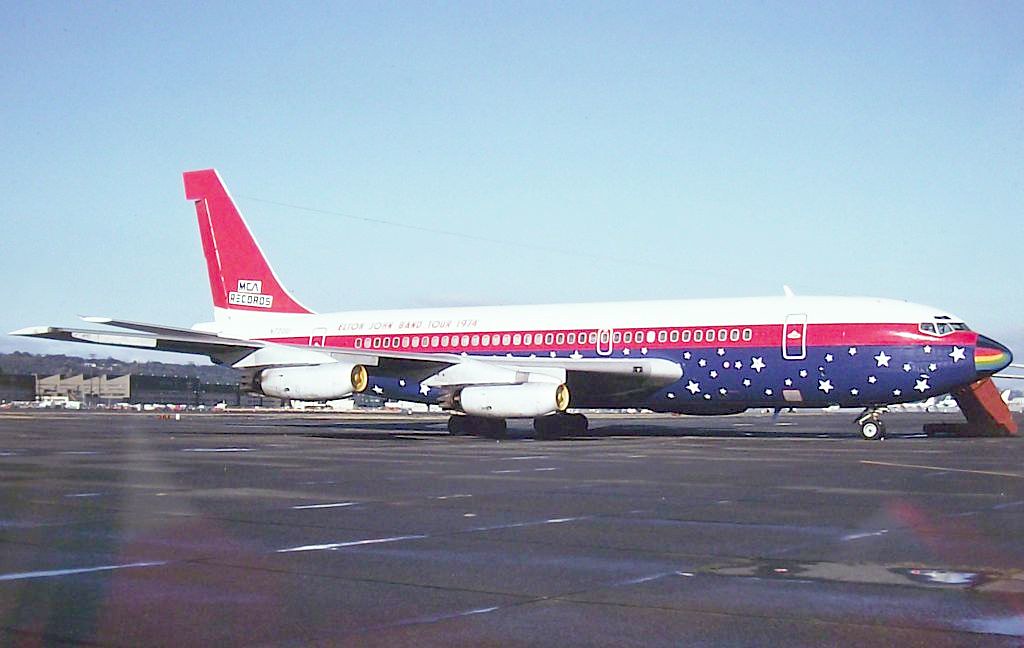
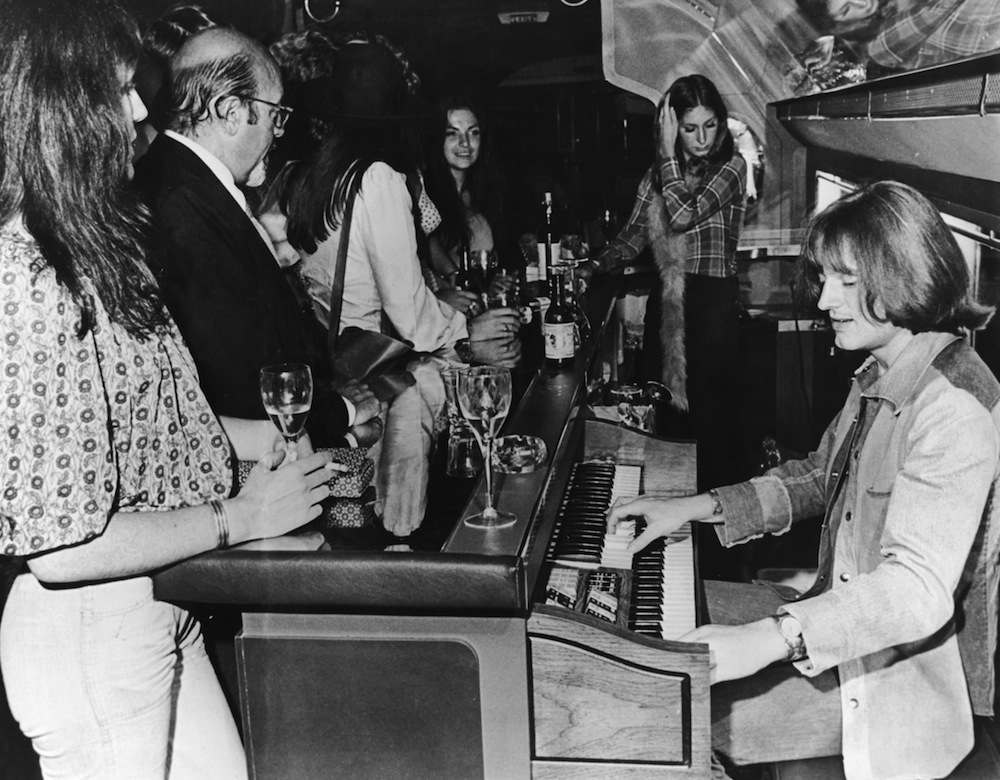
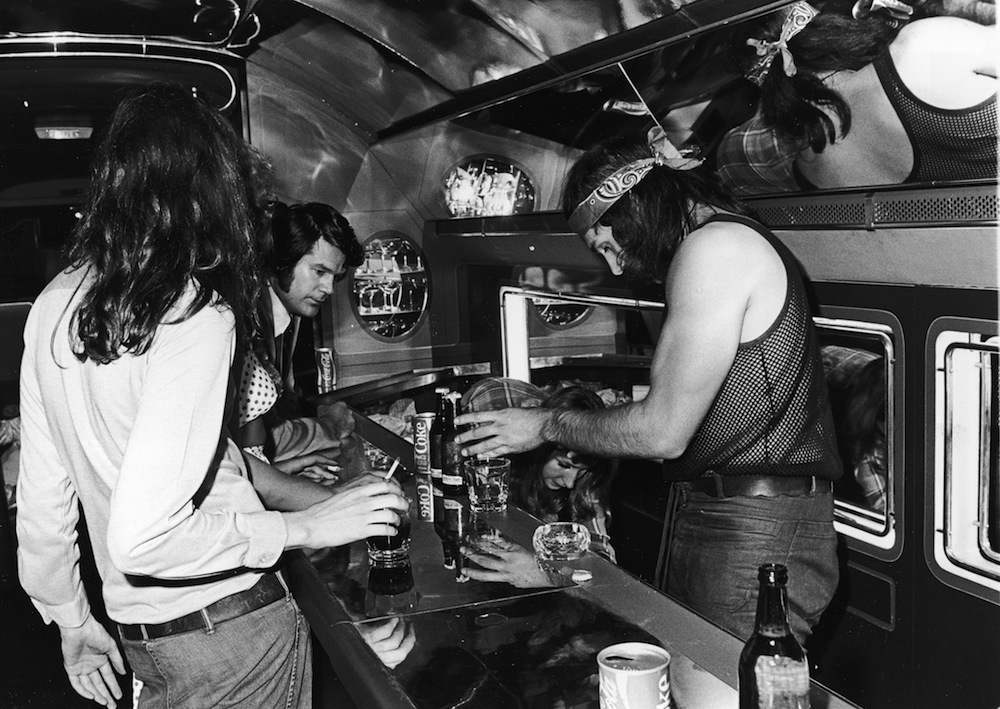
It’s 1973 and your band needs a plane all to themselves and you have the money ($2,500-per-flight hour ). You want an open bar…check…an organ…check…a fireplace…check…plenty of excesses…check check. The first time The Allman Brothers boarded they were greeted with “Welcome Allman Brothers” rendered in lines of cocaine on the club room bar.
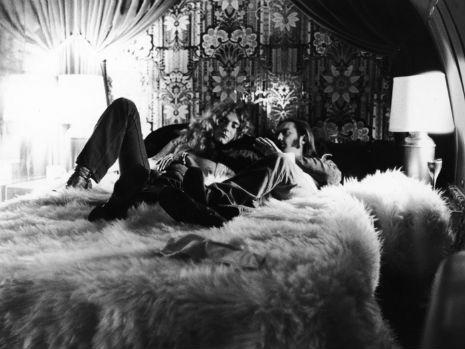
If you wanted the plane painted a different color…no problem…and your name could be stenciled on it. Bedrooms and enough space where Elton John could roller skate. It was redecorated to fit your taste.
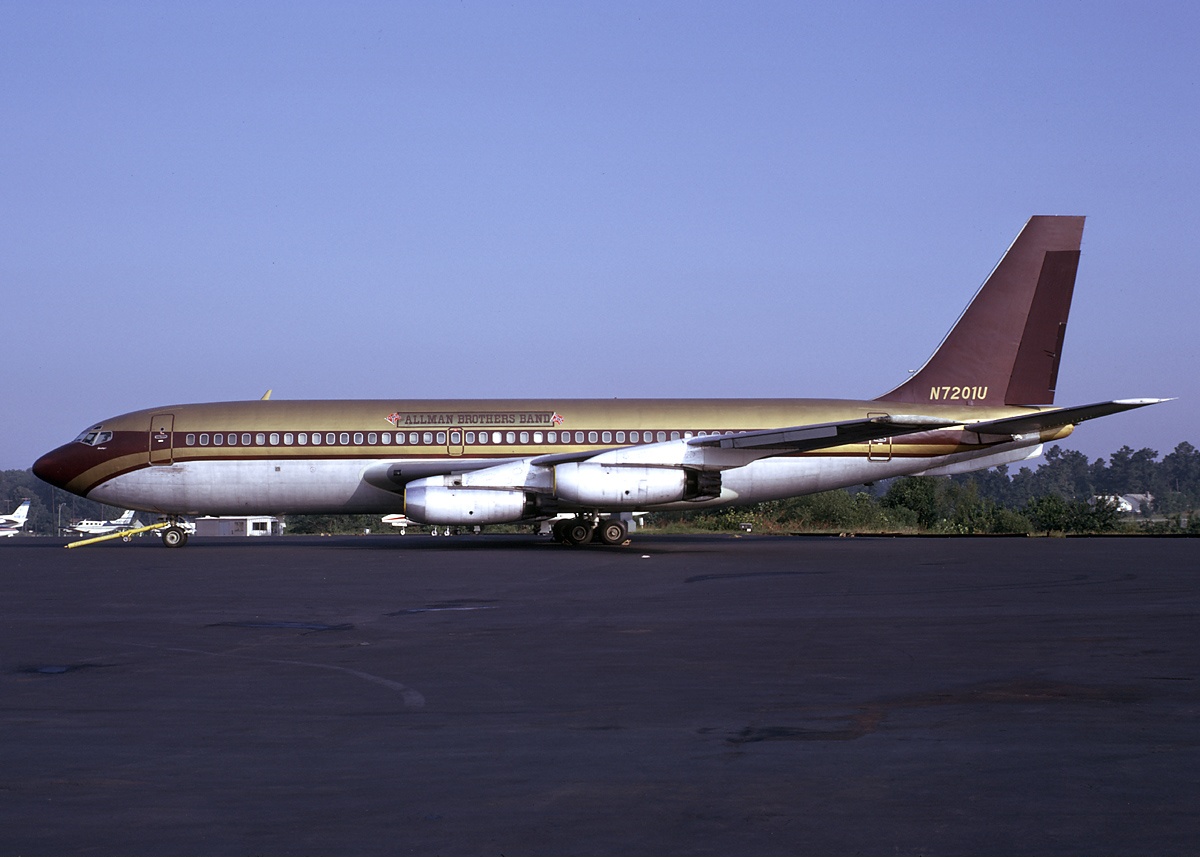
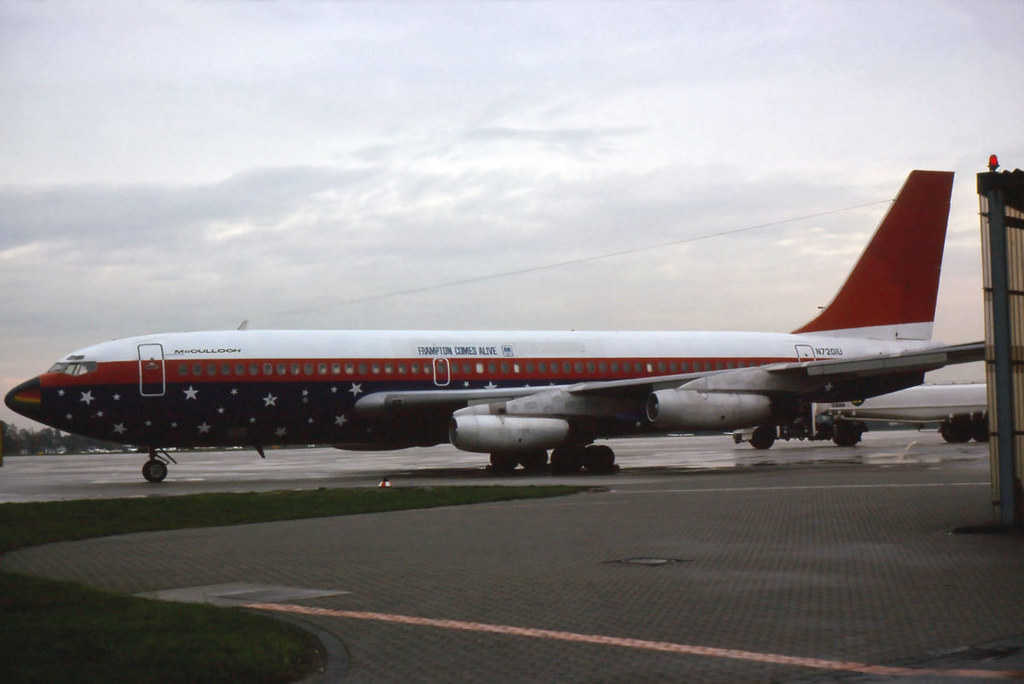
The registration number was N7201U, The Serial Number was 17907, it was the first B720 built and it was delivered to United Airlines on October 1960 and then purchased in 1973 by Contemporary Entertainment. Sherman and Sylvester invested $200,000 to reduce its seating capacity to forty and to install into the main cabin a bar, seats and tables, revolving armchairs, a 30-foot-long couch, a television set and a video cassette player, complete with a well-stocked video library.
The airplane was used by Led Zeppelin, Elton John, Alice Cooper, Bob Dylan and The Band, Deep Purple, Allman Brothers, The Rolling Stones, and Peter Frampton. John Lennon, Frank Sinatra, and Cher were passengers at one time or another.
Led Zeppelin is probably the most famous band that used it.
The plane was all about decadence and luxury. Many stories have originated on this plane from a lot of the bands that used it…I won’t repeat them here. Peter Frampton was the last to use it in 1976. After that, it developed engine problems. The Starship went through several ownership changes from 1977 through 1979 until it went into storage at Luton Airport. It was dismantled for parts starting in July 1982
With the times changing and fuel costs going up…this wasn’t as common after the 70s.
This is one rock and roll relic I would have loved to have flown on at least one time… it should have been saved and turned into a museum…or at least sold to me… Long live the Starship!
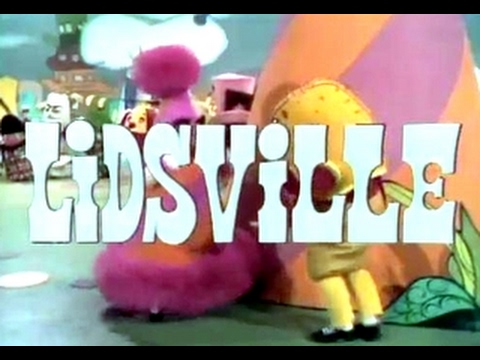
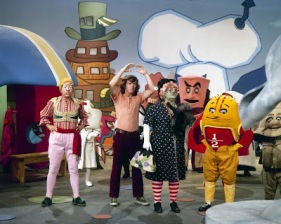
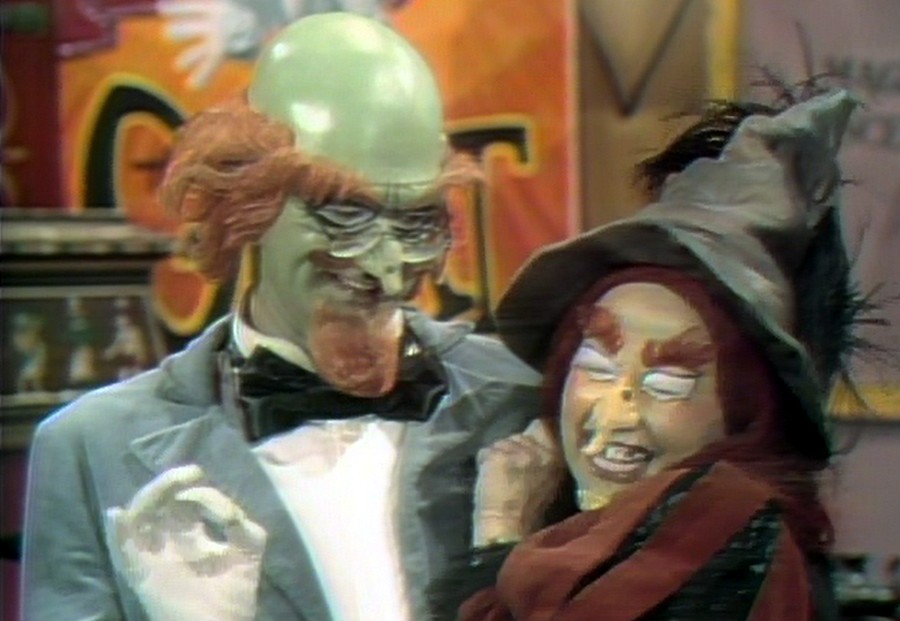
The show is just plain bizarre…for me, it is the strangest show Sid and Marty Krofft produced….and besides Land of the Lost, it’s my favorite Sid and Marty Krofft show. The show premiered on September 11, 1971.
It has been rumored that the Sid and Marty Krofft were inspired by hallucination drugs such as LSD. The brothers have always denied this claim. The title “Lid” is an old slang term for a hat, but by the 1970s the word “Lid” had taken on an entirely new meaning, namely as slang for an eighth of an ounce of pot. Whether they were or not…the shows they produced were NOT boring…they were very colorful and entertaining.
The show was conceived by Sid Krofft, who had a huge hat collection. He thought one day…what if all of the hats had different personalities? Sid was also influenced by Lewis Carroll and it is obvious.
The plot is: A boy (Mark), the original Eddie Munster, Butch Patrick falls down a large top hat at an amusement park and ends up in a land of Hats…there was also a genie named Weenie (Billy Hayes)…who played Witchiepoo in HR Pufnstuf. The bad guy was Charles Nelson Reilly the magician and he would go around zapping people. The seventeen episodes they made revolved around Mark’s attempts to return to the real world as Hoo Doo made life miserable for him and the good hat people.
It has a similar plotline as the more famous HR Pufnstuf…I remember the reruns through the seventies and I always hoped Mark would get out of Lidsville and back home…of course not knowing they made only 17 episodes…kinda like wanting Gilligan to get off that island.
I always liked Yogi Bear and would watch it when I got a chance…if only for the way he said pic-a-nic baskets.
Yogi first started out as a sidekick in a Hanna-Barbera show called The Huckleberry Hound Show in 1958. He was the first Hanna-Barbera character to break out.
In 1961 he was given his own show called The Yogi Bear Show. His show included other segments like Yakky Doodle and Snagglepuss. The show also featured episodes with Yogi Bear breaking away from the unadventurous life of other bears in Yellowstone Park.
The plot was basically Yogi raiding picnic baskets, dodging hibernation, being chased by Ranger Smith, and making money together with his more honest sidekick Boo-Boo Bear. The show also featured episodes of Ranger Smith trying to tame Yogi and Boo-Boo Bear.
Around this time the great baseball player Yogi Berra sued Hanna-Barbera for defamation. But Hanna-Barbera claimed that the similarity of the names was just purely coincidental. Eventually, Yogi Berra withdrew his suit. When Yogi Berra died the AP’s wire service mistakenly announced the death of Yogi Bear instead…that is sad.
Yogi starred in a feature film, Hey There, It’s Yogi Bear, in 1964.
Yogi’s personality was based on Art Carney’s character from The Honeymooners.
The Yogi Bear Show lasted only 2 season but other shows featuring Yogi continued on. Yogi Bear and Friends, Yogi’s Gang, Yogi’s Space Race, Galaxy Goof-Ups, Yogi’s Treasure Hunt, The New Yogi Bear Show, and Yo Yogi! Yogi was on the air from 1958 to the 1990s.
Daws Butler originated the voice of Yogi and did it from 1958 to 1988 when he passed away. He was replaced by Greg Burson who was personally taught by Butler on how to do Yogi’s voice and other characters.
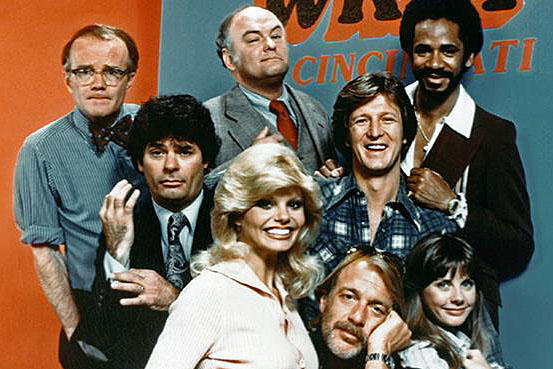
This show was not like the Mary Tyler Moore Show, Bob Newhart, or All In The Family. Those are great shows…some of the best ever sitcoms…but they were aimed more at adults while this one I always felt was largely aimed at teenagers. The show aired from 1978 to 1982. Rock and Roll on a sitcom was not common.
WKRP in Cincinnati” was produced by MTM – the studio Mary Tyler Moore and Grant Tinker built that produces shows such as The Bob Newhart Show, Mary Tyler Moore Show, Phyllis, The White Shadow, Rhoda, and many others.
The episode I remember the most having an effect on me was about the horrible event in 1979 when eleven people were killed at a Who concert in Cincinnati’s Riverfront Park. The show handled the tragic situation very well.
The plot…to make it short was about a Program Director (Andy Travis) who had a perfect record in turning bad radio stations around joins the staff at WKRP. The station is in the bottom of the ratings and he wants to change the format to Rock which is met with trepidation from the oddball staff.
The show would feature new rock music as well as old. Blondie gave the show one of their gold records in appreciation because the show played “Heart of Glass” and helped to make it number 1.
The extended theme song by Steve Carlisle Wkrp In Cincinnati peaked at #65 on the Billboard 100 in 1979…video at the bottom
The Cast
Bailey Quarters – Jan Smithers – A shy soft-spoken lady in charge of billing and station traffic soon worked herself up to an on-air personality and other duties. She and Jennifer on the show were a bit like Mary Ann and Ginger on Gilligans Island.
Andy Travis – Gary Sandy –Andy comes to the station as the new Program Director to turn the station around and finds the station’s employees…are like from the Island of Misfit Toys. He finds their strengths and tries to make it work. His character was based on real-life Program Director Mikel Herrington.
Dr. Johnny Fever – Howard Hesseman – Fun Fact…David Cassidy was offered this role but turned it down!
Johnny had been around for a while and was fired off a Los Angeles radio station for saying booger on air. He was probably my favorite character…next to Bailey…on the show when I first watched. Dr. Johnny Fever was based on real DJ “Skinny” Bobby Harper.
Venus Flytrap – Tim Reid – Venus was the night DJ and was one of the smoothest DJ’s ever…Venus wears 70’s type flashy clothes and in the series eventually becomes Assistant Program Director.
Herb Tarlek – Frank Bonner – Herb was a salesman and dressed very tacky and loud. He hits on Jennifer at every opportunity, despite being married… but gets turned down constantly.
Jennifer Marlowe – Loni Anderson – She was Ginger to Bailey’s Mary Ann. Mr. Carlson’s receptionist…she was the highest-paid employee at the station even though refusing to do most things that receptionists are required to do.
Arthur Carlson – Gordon Jump – The lovable but ineffective station manager who is the son of the station’s owner. He never wanted to know what was going on…, but when he tries to be hands-on…it leads to disastrous results (see Turkey’s Away episode)
Les Nessman – Richard Sanders – The incompetent News Director…Les was obsessed with the region’s hog farming industry…constantly mispronounced names… ignored obvious news stories for Hog Reports…but he would win the Silver Sow Award and The Buckeye Newshawk Award.
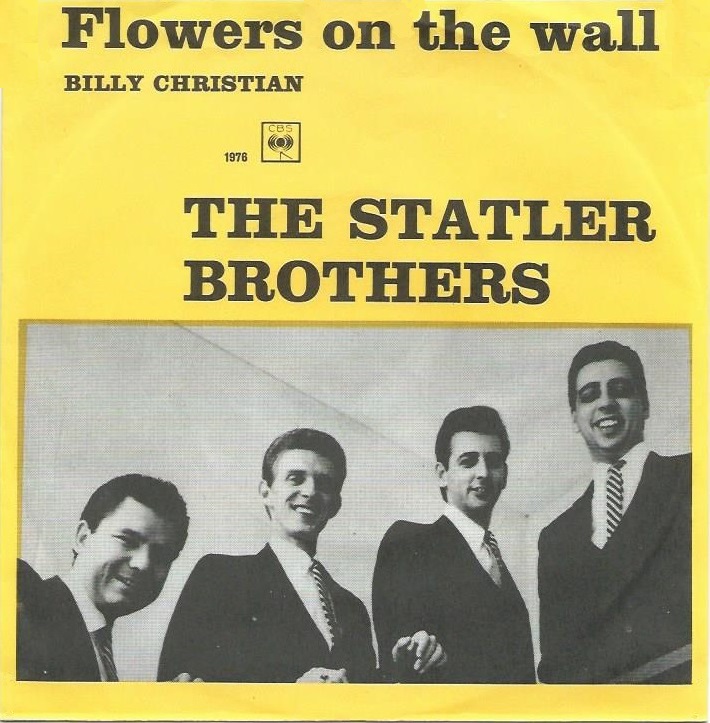
I have heard this called a psychedelic Country song… CMT named it one of the 100 greatest Country songs of all-time. You know when the Muppets cover you…you have a hit. I remember it early on as a kid and in more modern times when Bruce Willis was mouthing the words it in Pulp Fiction.
Lew DeWitt, the original tenor for The Statler Brothers, wrote “Flowers on the Wall. He described it: “We took gospel harmonies and put them over in country music.” However, it did crossover to the pop charts.
Buoyed by interest from the country fans, folk listeners began to demand that rock stations play Flowers On The Wall. In December, the song appeared on Billboard’s Hot 100. Nine weeks later, it had peaked at #4 in the Billboard 100 and #2 in the Billboard Country Charts in 1966.
All together the Statler Brothers had 66 songs in the top 100, 33 in the Top Ten and 4 number 1’s in the Billboard Country Charts. Flowers On The Wall was their only top 10 Billboard 100 hit.
In 1966 it won the Grammy Award for Best Contemporary Performance-Group (Vocal or Instrumental.)
From Songfacts
Written by Statler Brothers singer Lew DeWitt, this song is about a guy who has been left lonely and nearly catatonic by the one he loves. He’s in a pretty bad spot, counting flowers on the wall and playing solitaire with a deck that’s missing a card.
This appears on the soundtrack to the movie Pulp Fiction. Bruce Willis is singing along to the song, which is playing on his car radio, just before he runs over Marsellus Wallace at an intersection. There’s another Bruce Willis connection to the song as well: Willis mentions spending his suspension “Smoking cigarettes and watching Captain Kangaroo” in Die Hard With A Vengeance.
Flowers On The Wall
I keep hearin’ you’re concerned about my happiness But all that thought you’re givin’ me is conscience I guess If I was walkin’ in your shoes, I wouldn’t worry none While you ‘n’ your friends are worried about me I’m havin’ lots of fun
Countin’ flowers on the wall That don’t bother me at all Playin’ solitaire till dawn with a deck of fifty-one Smokin’ cigarettes and watchin’ Captain Kangaroo Now don’t tell me I’ve nothin’ to do
Last night I dressed in tails, pretended I was on the town As long as I can dream it’s hard to slow this swinger down So please don’t give a thought to me, I’m really doin’ fine You can always find me here, I’m havin’ quite a time
Countin’ flowers on the wall That don’t bother me at all Playin’ solitaire till dawn with a deck of fifty-one Smokin’ cigarettes and watchin’ Captain Kangaroo Now don’t tell me I’ve nothin’ to do
It’s good to see you, I must go, I know I look a fright Anyway my eyes are not accustomed to this light And my shoes are not accustomed to this hard concrete So I must go back to my room and make my day complete
Countin’ flowers on the wall That don’t bother me at all Playin’ solitaire till dawn with a deck of fifty-one Smokin’ cigarettes and watchin’ Captain Kangaroo Now don’t tell me I’ve nothin’ to do









 PowerPop... An Eclectic Collection of Pop Culture