Jayhawks – Waiting For The Sun…. 80’s Underground Mondays

Ever since I heard this band on our alternative radio station in Nashville…Lightning 100 I’ve liked them. The Jayhawk’s writing and voices won me over with songs like Blue and I’m Gonna Make You Love Me.

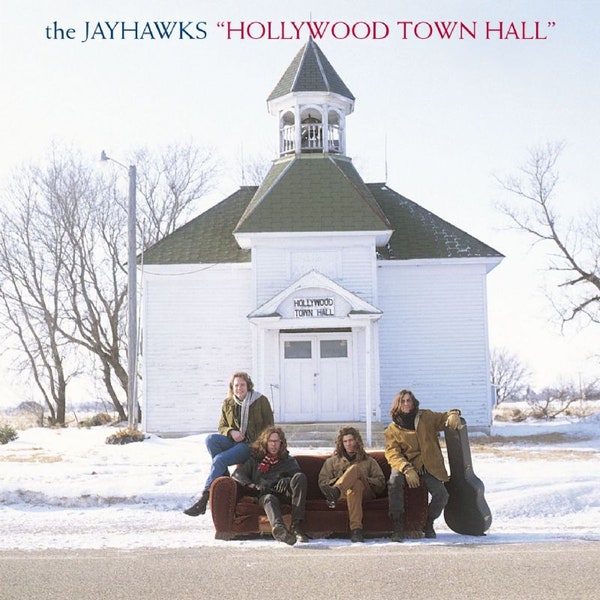
This song opens up their Hollywood Town Hall album. The album peaked at #192 in the Billboard Album Charts and #11 in the Top Heatseekers Charts.

Benmont Tench, Charley Drayton, and Nicky Hopkins plays on the album with the Jayhawks.

The Jayhawks are an American alternative country and country rock band that emerged from the Minneapolis–Saint Paul music scene in the mid 80s. Minneapolis had a strong scene for bands in the 80s. The Replacements, Husker Du, Soul Asylum, and of course the big one…Prince.

The song, like most of The Jawhawks early cuts, is credited to the band’s guitarist Gary Louris and frontman Mark Olson.

Gary Louris: I didn’t know there was a song called “Waiting for the Sun,” I was not a Doors fan. I like them now, but I didn’t know there was a song called that. Maybe in my subconscious I did. 

From Songfacts

 According to Mark Derning of Allmusic.com, the song details, “a man who has lost his love under unpleasant circumstances and has hit the road, looking for something better from life and hoping a fair deal from the fates.”

Waiting For The Sun

I was waiting for the sun
Then I walked on home alone
What I didn’t know
Was he was waiting for you to fall

So I never made amends
For the sake of no one else
For the simple reason
That he was waiting for you to fall

It was not lost on me
Walkin’ on down the road
Looking for a friend to handout
Somethin’ might ease my soul

So I kept my spirits high
Entertaining passers-by
Wrapped in my confusion
While he was waiting for you to fall

It was not lost on me
Walkin’ on down the road
Looking for a friend to handout
Somethin’ might ease my soul

It was not lost on me
Walkin’ on down the road

Otis Gibbs

I came across Otis’s youtube channel and I think some of you would be interested. He is a singer songwriter but on his channel he has conversations musicians who have played or worked with Bob Dylan, Neil Young, Tom Petty, Waylon Jennings, just to name a few, and  his own stories about different musicians. For you music fans it’s worth your time. The guy doesn’t interview people…he lets people talk and tell their stories.  He is also a good story teller. I’m hooked on his channel.

He has stories about Jerry Reed, The Replacements, Dan Baird, Merle Haggard, Ry Cooder, Towns Van Zant, Bill Monroe, George Jones, Johnny Paycheck, John Prine, Mike Campbell and more.

He lives in Indiana but interviews many Nashville connected musicians. Check this guy out…His music is VERY good as well. I’m just checking that out more as I go… his music is classified as alt-country.

I just picked a few random youtube videos from his page below.

This is his youtube page:

https://www.youtube.com/user/otisgibbs

Chuck Mead – 90s Alternative Country band BR5-49…talking about when he toured with Bob Dylan

Kenny Vaughn – Lucinda Williams  guitar player at the time talks about touring with Tom Petty

Chuck Mead again with Keith Richards

Dan Baird on the Replacements

Otis Gibbs Wiki

https://en.wikipedia.org/wiki/Otis_Gibbs

Mojo Nixon – Don Henley Must Die!

I had to post this song. Even Eagle fans will admit Henley can be a bit pretentious…that’s not a put down…it just is.

You and your kind
Are killing rock and roll
It’s not because you are O L D
It’s cause you ain’t got no soul!

Don Henley Must Die released in 1990 and it’s off of his album Otis.  The song peaked at #20 in the Modern Rock Charts.

According to Nixon, Henley joined Nixon onstage one night in a small club before the Eagles reunion and helped Nixon sing it. This is a quote from Nixon: “There I was, the king of bullshit, completely flabbergasted,” “I took my guitar off, put it back on, did that like three times, then got on the mic and said, ‘Don, do you want to debate? Do you want to fist fight?’ He was shit-faced and he goes, ‘I want to sing that song, especially the part about not getting together with Glenn Frey!'” 

When the chorus hit, Nixon let Henley take the lead: “Don Henley must die, don’t let him get back together with Glenn Frey!”

“He was beltin’ that shit out, screaming like he was Johnny fuckin’ Rotten,” 

..Don Henley Must Die…

Don Henley Must Die

This is the sound of my brain.

Then I said, this is the sound of my brain on Don Henley!

Then I said, 1 2 3 4…

He’s a tortured artist
Used to be in the Eagles
Now he whines
Like a wounded beagle
Poet of despair!
Pumped up with hot air!
He’s serious, pretentious
And I just don’t care
Don Henley must die!
Don’t let him get back together
With Glenn Frey!
Don Henley must die!

Turn on the TV
And what did I see?
This bloated hairy thing
Winning a Grammy
Best Rock Vocalist?
Compared to what?
But your pseudo-serious
Crafty Satanic blot
Don Henley must die!
Put a sharp stick in his eye!
Don Henley must die!
Yea yea yea

Quit playin’ that crap
You’re out of the band

I’m only kidding
Can’t you tell?
I love his sensitive music
Idiot poetry, swell
You and your kind
Are killing rock and roll
It’s not because you are O L D
It’s cause you ain’t got no soul!
Don’t be afraid of fun
Loosen up your ponytail!
Be wild, young, free and dumb
Get your head out of your tail
Don Henley must die!
Don’t let him get back together
With Glenn Frey!

Don Henley must die!
Put him in the electric chair
Watch him fry!
Don Henley must die
Don Henley must die
No Eagles reunion
The same goes for you, Sting!

Teenage Fanclub – What You Do To Me ….Power Pop Friday

Power pop was well and alive during the 1990s. I remember this song in the early 90s but I never caught who did it. I heard it on our local alternate channel Lightning 100.

This band was from Scotland and they formed in Bellshill near Glasgow in 1989. They were influenced by Big Star, Badfinger, and the Byrds. They signed to the indie label Creation Records in Britain.

This song was off of their 3rd album Bandwagonesque and it was released in 1991. This was their breakthrough album in the US where it was distributed by Geffen Records. The album was voted album of the year by Spin magazine beating out Nevermind by Nirvana. Some critics called this album Big Star’s 4th because of the influence.

The album had several Top 20 hits on Billboard’s Modern Rock Tracks chart, including Star Sign, The Concept, and this song What You Do to Me. They played this song on Saturday Night Live on April 27, 1992.

Singer guitarist Norman Blake wrong this song.

The song peaked at #31 in the UK and #19 on the US Alternate Charts in 1991. The album peaked at #22 in the UK and #137 in the Billboard Album Charts. The album was #1 in the Billboard Heatseeker Album Charts.

BandwagonesqueCoverArt.png

From Wiki: The cover is designed by Sharon Fitzgerald. When Kiss member Gene Simmons, who had trademarked the logo of a moneybag with dollar symbol, was made aware of the record he sent a letter to Geffen Records, who in turn gave in and sent Simmons a cheque, according to Simmons’s book Sex Money Kiss.

The band is still together and has released a total of 11 studio albums.

What You Do To Me

What you do to me…
I know, I can’t believe
There’s something about you
Got me down on my knees.

What you do to me…
I know, I can’t believe
There’s something about you
Got me down on my knees.

What you do to me…
What you do to me…
What you do to me…
What you do to me…

What you do to me…
I know, I can’t believe
There’s something about you
Got me down on my knees.

What you do to me…
I know, I can’t believe
There’s something about you
Got me down on my knees.

What you do to me…
What you do to me…
What you do to me…
What you do to me…

What you do to me…
What you do to me…
What you do to me…
What you do to me…

Railroad Jerk – Natalie

I love the opening riff to this song! It sounds like a riff from the old 70’s ZZ Top with a little Stones thrown in…. but a little rawer. I have to thank my blogger friend CB who mentioned this band. 

In 1989 singer and guitarist Marcellus Hall  formed the band in 1989 on the Lower East Side of Manhattan with bassist Tony Lee and drummer Jez Aspinall. Within a few months, guitarist Chris Mueller also joined.

I hear a mixture of The Cramps and  The Stones. This was on their 4th album The Third Rail  released in 1996. The band recorded demos for a fifth Railroad Jerk LP which was to be entitled ‘Masterpiecemeal’. This final LP was never released. Dave Varenka and Marcellus Hall went on to form the band White Hassle.

It’s not a lot about this band, not even the song’s lyrics so I’m including an excerpt from AllMusic. 

Railroad Jerk skewer blues, country, rock, and noise into a messy, bohemian post-punk celebration of roots rock. Formed in 1989 by guitarist/vocalist Marcellus Hall and bassist/vocalist Tony Lee in Trenton, NJ, the duo added drummer Jez Aspinall and guitarist Chris Muller by early 1990; the group recorded their self-titled debut for Matador Records in 1990. After its release, Aspinall left the band and was replaced by Steve Cercio; Muller was kicked out of the band and replaced by Alec Stephen. The quartet released their acclaimed second album, Raise the Plow, in 1993; after its release, Cercio left the band and was replaced by Dave Varenka. Railroad Jerk released its third album — its most highly-praised yet — in spring of 1995. Third Rail, the group’s fourth album, also received positive reviews upon its fall 1996 release.

Dwight Yoakam – Fast As You

I was playing in some club in 1994 and the other guitar player wanted to try a new song that he and the drummer knew. He said it was easy so we followed him and this was the song. It went over really well and I had never heard it before. We didn’t do that often…to attempt a song that most of us never heard but we kept playing it for the next couple of years.

The song crosses the country line into rock so I was surprised it didn’t rise higher in the Billboard 100.

The song peaked at #2 in the Billboard Country Charts, #5 in the Canadian Charts in 1993…it also peaked at #70 in the Billboard 100.

It was on his great album This Time released in the spring of 1993…it was a big hit, spawning three number two country singles — “Ain’t That Lonely Yet,” “A Thousand Miles from Nowhere,” and “Fast As You.”

Fast As You

Maybe someday I’ll be strong
Maybe it won’t be long
I’ll be the one who’s tough, yeah
You’ll be the one who’s got it rough

It won’t be long
And maybe I’ll be real strong

Maybe I’ll do things right
Maybe I’ll start tonight
You’ll learn to cry like me, girl
Baby, let’s just wait and see

Maybe I’ll start tonight
And do things right

You’ll control me, oh, so boldly
Rule me ’til I’m free
The pain that shakes me finally makes me
Get up off of my knees
Yeah, yeah, yeah, yeah

Maybe I’ll be fast as you
Maybe I’ll break hearts too
But I think that you’ll slow down
When your turn to hurt comes around

Maybe I’ll break hearts
And be as fast as you, uh

You’ll control me, oh, so boldly
Rule me ’til I’m free
The pain that shakes me finally makes me
Get up off of my knees

Maybe I’ll be fast as you
Maybe I’ll break hearts too
I think that you’ll slow down
When your turn to hurt comes around

Maybe I’ll break hearts
And be as fast as you
Maybe I’ll break hearts
And be as fast as you

Oh, sookie

Maybe someday I’ll be strong
Maybe it won’t be long
I’ll be the one who’s strong
You’ll be the one who’s got it rough

You’ll be the one who’s got it rough

Sliders

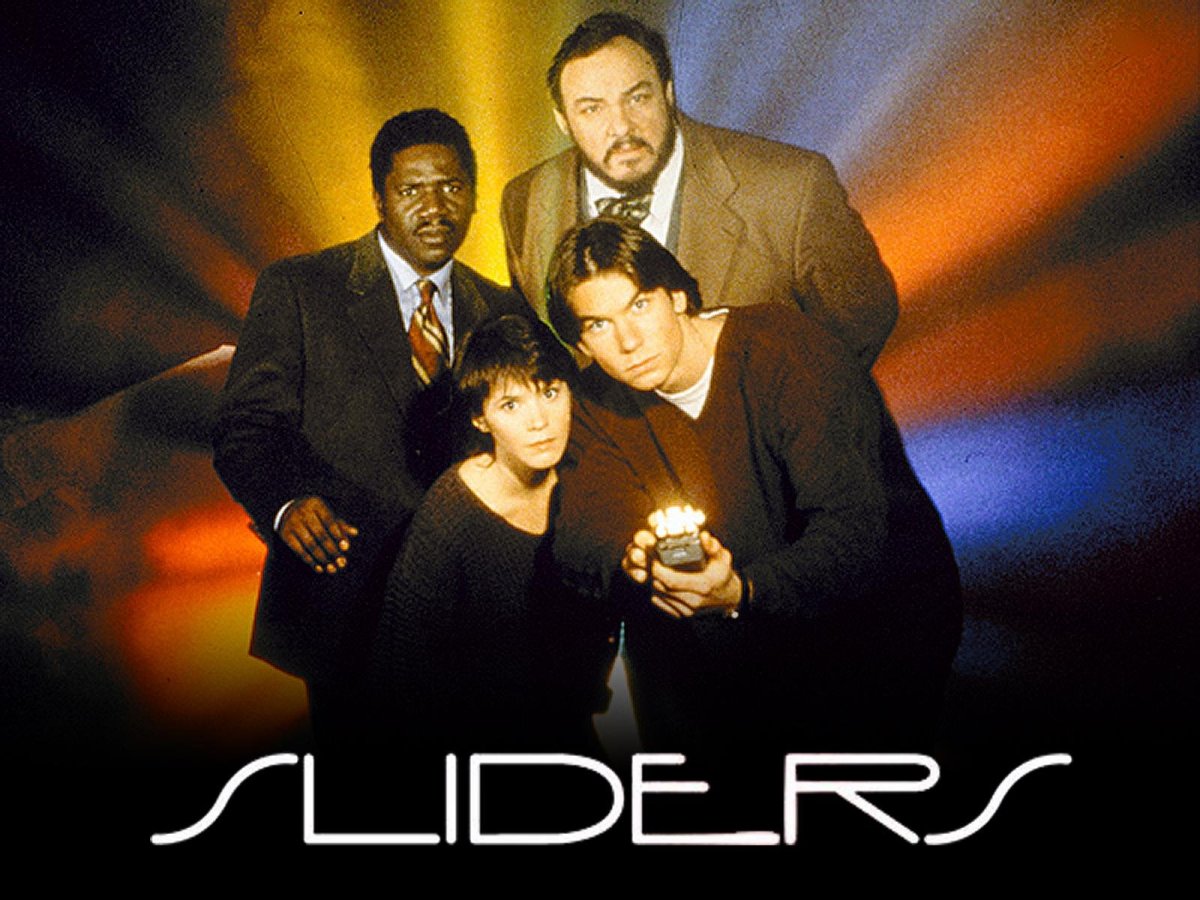
Does anyone remember this Fox and then SyFy Channel show from the 1990’s? The show ran from 1995 to 2000.

I remember this show in the nineties but I never once saw an episode back then. I  like science fiction a lot but for some reason I never tuned in. Lately I have been able to watch this show and after a couple of seasons it started to grow on me. Then during the last part of the 3rd season it started to go downhill rapidly and by the 4 – 5th season the whole thing changed.

The plot was that a young genius Quinn Mallory creates a device that opens portals to alternative realities. After an accident leaves them lost, Mallory and his companions: his physics professor, Professor Maximillian Arturo, his work colleague and potential love, Wade Wells, and a once famous soul singer, Rembrandt Brown, “slide” from reality to reality in search of home. They go to parallel worlds where things did not develop like our world. One world Kennedy may not have been killed, the other one penicillin not invented, and etc… They don’t travel in time though…just a different earth in the same decade and time.

I’ve read up on it and as usual…the network was the culprit. Trying to appeal to the “MTV Generation” they changed the show dramatically. By the end of the 5th season only one original slider was left. They ended up doing away with all of the original characters and even the one that survived (Cleavant Derricks) til the 5th season probably would not have made it to the 6th if there had been a 6th.

The show had decent ratings but Fox couldn’t help themselves and messed around with the show and show runner at that time…Tracy Torme.  Starting in the 3rd season newer writers started to rip off movie ideas and put them in the show. Shakespearean actor John Rhys-Davies knew what kind of potential the show had and complained loudly about the awful scripts…he was the first to go…after Sabrina Lloyd left, the lead actor Jerry O’Connell soon quit

On top of everything else the network would air the action episodes first and therefore air them all out of order…so when they went into a new world they would be dressed differently than the episode that was shown before…because that could have been coming from a world in a future episode or one two or three back.

I’m very surprised that no one has rebooted this series. The possibilities are endless with that plot. Like the recent movie “Yesterday” it showed a world where  The Beatles never existed and how the world had changed.

It was cool to see what worlds they would land in…each history was like ours except for a few things…like one episode where the British had won the war.

Has anyone seen it and what do you  think of it?

….

Posies – Golden Blunders…. Powerpop Friday

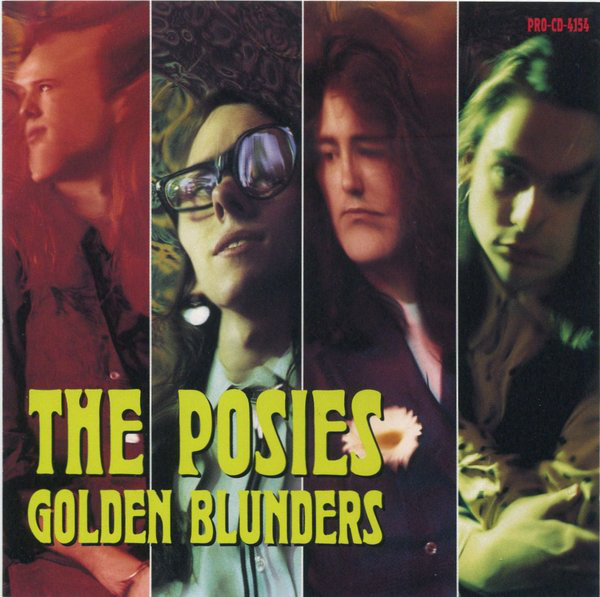
Ken Stringfellow and Jon Auer started to write songs together while in High School in Bellingham, Washington in 1986. They were influenced by The Hollies, Hüsker Dü, XTC, Elvis Costello, Squeeze, and Big Star.

They released an album Failure on cassette and vinyl near the end of 1988 on local indie label PopLlama. Several major labels noticed the band early on and in late 1989 they signed to new Geffen Records imprint DGC Records. The released an album Dear 23 in 1990 and this was their first single. The song peaked at #17 in the US Modern Rock Tracks in 1990.

Ringo Starr would cover Golden Blunders on his 1992 solo album Time Takes Time.

There is no surprise after listening to the Posies that guitarists  Ken Stringfellow and Jon Auer  would join Big Star’s Alex Chilton and drummer Jody Stephens to record and tour as Big Star in the 90s and up until Alex’s death in 2010.

Ken and Jon’s harmonies, writing, and playing are top notch. The 80’s and 90’s popular  radio left a lot to be desired, at least to me, they could have really used these guys…I may have liked that era much better hearing more of this.

Jon Auer on Golden Blunders: “It’s about two kids in high school who mess up the rest of their lives,” “There’s the implication of a teenage pregnancy but there’s not any amazing message here.”

Golden Blunders

Golden blunders come in pairs, they’re very unaware
What they know is what they’ve seen
Education wasn’t fun, but now that school is done
Higher learning’s just begun
(Chorus)
You’re gonna watch what you say for a long time
You’re gonna suffer the guilt forever
You’re gonna get in the way at the wrong time
You’re gonna mess up things you thought you would never
Disappointment breeds contempt, it make you feel inept
Never thought you’d feel alone (at home)
His and hers forever more, throw your freedom out of the door
Before you find out what it’s for
(Chorus)
Four weeks seemed like a long time then – but nine months is longer now
But even if you never speak again – you’ve already made the wedding vow
(Chorus)
Honeymoons will never start, bonds will blow apart
Just as fast as they were made
Men and women please beware : don’t pretend you care
Nothing lasts when nothing’s there
(Repeat Chorus)

Robyn Hitchcock – So You Think You’re In Love —- Power Pop Friday

Jangly Byrd like guitars attracted me to this and the sixties vibe. Peter Buck helps Robyn out on this song.

Robyn started his career in a 1972 London Art School with a band called The Beetles. In 1976 he started The Soft Boys and they went on to release  A Can of Bees (1979) and Underwater Moonlight (1980). Robyn influence bands such as R.E.M. and The Replacements.

In 1981 released his first solo album Black Snake Diamond Röle. Robyn never had much chart success but continues to influence other artists.

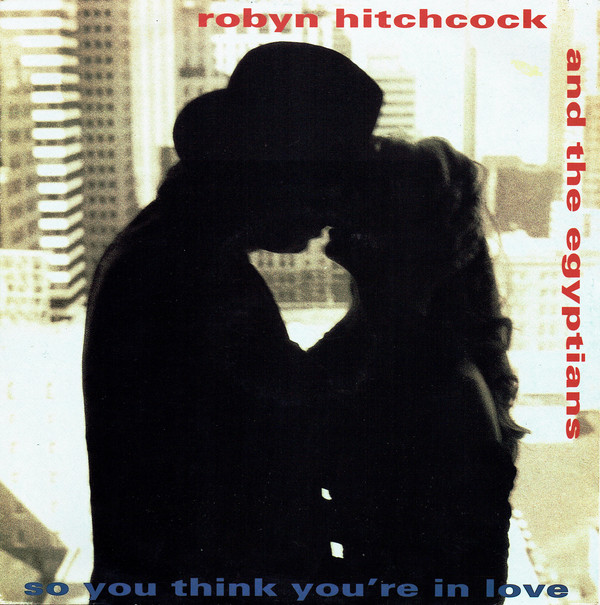
So You Think You’re In Love was on the Perspex Island album that was released in 1991. Robyn describes his songs as ‘paintings you can listen to’. That is a great description.

Robyn released his 21st album in 2017.

So You Think You’re In Love

So you think you’re in love
Yes, you probably are
But you wanna be straight about it
Oh, you wanna be straight about it now

So you think you’re in love
Yes, you probably are
But you wanna be straight about it
Oh, you wanna be straight about it now

Can you imagine what the people say?Can you?
But the silent majority is the crime of the century
You know it

Are you sure that it’s wise?
No, you probably ain’t
You don’t wanna be faint about it
Oh, you shouldn’t be faint about it now

By the look in your eyes
No, you probably ain’t
But you shouldn’t be faint about it
Oh, you gotta be faint about it now

What is love made of?
Nobody knows
What are you afraid of?
Everyone knows
It’s love
It’s love

So you think you’re in love
Yes, you probably are
But you wanna be straight about it
Oh, you gotta be straight about it now

So you think you’re in love
Yes, you probably are
But you wanna be straight about it
Oh, you gotta be straight about it now

So you think you’re in love
Yeah

Replacements – Merry Go Around

This one is off of their last studio album All Shook Down. I was going to conclude with this one having one off of their studio albums but there is one more coming next week.

This is not my favorite off the album but it did have a commercial sound for that time and it’s something that I thought would have charted in the Billboard 100. Merry Go Round did peak at #1 on the alternative charts. The album peaked at #69 in the Billboard Album Chart in 1990.

“Merry Go Round” was written about the  lives of Westerberg and his sister Mary (“They ignored me with a smile, you as a child”).

The band went to Los Angeles to make a video for Merry Go Round. With Westerberg’s okay, Warner Bros. hired Bob Dylan’s twenty-three-year-old son Jesse Dylan, who was just starting to direct.

It was shot in black and white and later edited to include some colorful inserts. From the opening moments, with a stone-faced Westerberg staring blankly into the camera, the video lacked the fun that had marked some of  their other clips. Paul and Tommy managed a few smiles, and Slim played along gamely. The drummer Chris Mars, miming to Charley Drayton’s drum track, was understandably less than enthused.

Merry Go Round

Hush was the first word you were taught
And they watched you wear
The clothes they claimed that they bought
They brought you down
To watch the merry-go around

In fall, you knew how much it cost
A trouble doll
Around your neck when you lost
You wouldn’t make a sound
But I could hear your little heart pound
And I watched your feet slip off the ground

Merry go round in dreams
Writes ’em down, it seems
When she sleeps, she’s free
Merry go round in dreams

You wake to another day and find
The wind’s blowing out of key with your sky
Only you can see
And the rain dancing in the night
Everybody stands around in delight

Merry go round in dreams
Writes ’em down, it seems
When she sleeps, she’s free
Merry go round in dreams

And everybody thinks she’s sick
She’s got two worlds she can pick
And she’s sad

Hush is the only word you know
And I stopped listening long ago
They ignored me with a smile
You as a child
But the trouble doll hears your heart pound
And your feet they say goodbye to the ground

Merry go round in dreams
Writes ’em down, it seems
When she sleeps, she’s free
Merry go round in dreams

Merry go round in dreams
Merry go round in me
Merry go round
Round and round in me
Merry go round
Round and round in me

Ben Vaughn – Too Sensitive For This World

I’m a bona fide sucker for a guitar tremolo effect…throw in a voice that melts into the song and yea…I’m hooked. During the last part of the first verse backup singers come in and give it a short gospel quality.  That makes me warm inside. 

John Hiatt did the solo whistling and backing vocals. 

The song was written by singer-songwriter Ben Vaughn, off his 1990 album Dressed In Black. Vaughn grew up in the Philadelphia area. He has said that At age 6, his uncle gave him a Duane Eddy record and forever changed his life.

In 1983, he formed the Ben Vaughn Combo.  The band was together five years, releasing two albums and touring the U.S. several times.  They received rave reviews in Rolling Stone and People magazine and video airplay on MTV.  

Vaughn started a solo career in 1988 and has released over 17 albums. He is very versatile… he plays Rock, blues, jazz, folk, soul, R & B, country, Bossa Nova, movie soundtracks, easy listening and more, all with Vaughn’s musical slant.

Too Sensitive For This World

Ev’ry day starts with a broken heart
I must be too sensitive for this world
Well I know it ain’t right to cry ev’ry night
I must be too sensitive for this world

And the world is such a careless place
It’s a wonder, hummm it’s a wonder
It’s a wonder
Anyone survives

The clouds in the sky just make me cry
I must be too sensitive for this world
I don’t think I can last until these bad times pass
I must be too sensitive for this world

Solo

And the world is such a careless place
The world is such a selfish place
And life is such an awful fate
It’s a wonder, hummm it’s a wonder
It’s a wonder
Anyone survives
I must be

https://en.wikipedia.org/wiki/Ben_Vaughn


Chaplin (1992)

Hanspostcard is hosting a movie draft from 12 different genres…this is my biographical entry.

This fulfills my biographical genre. I started to get into silent movies in the late eighties. It started with a book on Clara Bow and it mushroomed from there. By 1992 I was ordering silent movies on VHS from New York and bootlegs where ever I could get them. The actors and actresses that got my attention were Clara Bow, Buster Keaton, Douglas Fairbanks Sr, Mary Pickford, and Charles Chaplin.

In 1992 I had just settled into my small Laverne and Shirley basement studio apartment when this movie was released. It was perfect timing because this was the peak of my silent movie interest. I would get USA Today everyday to check my Dodgers box scores and I read about this movie coming out. There was an advertisement where you could make a 99 cent phone call (per minute) to listen to some of the movie on the telephone. Yes I was that desperate (sucker) to do just that… to hear some of the movie…it was a different time.

I had read where Johnny Depp was up for the role and I thought he would have been the perfect person to play Chaplin. I was totally wrong…the perfect actor to play Chaplin was the one who got the role…Robert Downey Jr. He became Chaplin on the screen. He went as far as learning to play tennis left handed.

Robert Downey Jr. had a terrific cast surrounding him. Chaplin’s own daughter (Geraldine Chaplin) played Chaplin’s mom in the movie. Dan Aykroyd portrayed Mack Sennett, and Kevin Kline plays Douglas Fairbanks Sr. It was also directed by the great Richard Attenborough.

The movie starts with an 8 year old Chaplin taking the stage to sing after his mentally disturbed mom was booed off. Chaplin’s childhood was straight out of a Dickens novel. With help from his older brother Syd he got a job with a vaudeville unit ran by Fred Karno. He also met his first love Hetty Kelly who would shape his love interest for the rest of his life. His brother Syd worked as his manager when Chaplin got famous. In the beginning Syd was much more well known than Charlie…until the little tramp appeared.

The movie moves fast…sometimes a little too fast. All through the movie he is talking to an editor (Anthony Hopkins) about his then new (1964) autobiography and that is how they move the movie along. I wanted to see more about certain movies I’d enjoyed but they did have a lot to cover. They manage to touch on some of his political problems like with J. Edgar Hoover and when he made The Great Dictator.

The movie follows Chaplin through his movies, personal life,  and his politically rough waters. As with any movie about a historical figure…things will be missed, wrong, and forgotten but the movie hits the high spots of his life.

If you  really want to know about Chaplin read Chaplin: His Life and Art by David Robinson or watch one of the many documentaries on him. Chaplin was a complicated man…too complicated to be summed up in a two hour motion picture…but it was a great try. After reading so many books, what I wanted would have taken a 6 hour movie…so this is a good introduction to Chaplin.

The movie was very enjoyable and you do get the highs and lows of Charles Spencer Chaplin. You also get a hell of a good acting job from Robert Downey Jr. The movie also combines shots of the real Chaplin in his movies. Sitting in the theater it was magical…near the end of the movie they show real Chaplin clips as seen on an award show in 1972. The laughter in the theater was the loudest I’ve ever heard before or since… the Tramp still drew laughs in 1992 and he still does in 2021.

After watching this movie you will probably want to watch some Chaplin movies…that would be the best outcome…if you haven’t watched any…you are missing a true artist who not only starred but wrote, directed, and produced.

Cast

  • Robert Downey Jr. as Charlie Chaplin
    • Hugh Downer as Charlie age 5
    • Thomas Bradford as Charlie age 14
  • Marisa Tomei as Mabel Normand
  • Geraldine Chaplin as Hannah Chaplin
  • Paul Rhys as Sydney Chaplin
    • Nicholas Gatt as Sydney age 9
  • John Thaw as Fred Karno
  • Moira Kelly as Hetty Kelly, Charlie’s first love / Oona O’Neill
  • Anthony Hopkins as George Hayden
  • Dan Aykroyd as Mack Sennett
  • Penelope Ann Miller as Edna Purviance
  • Kevin Kline as Douglas Fairbanks
  • Matthew Cottle as Stan Laurel
  • Maria Pitillo as Mary Pickford
  • Milla Jovovich as Mildred Harris
  • Kevin Dunn as J. Edgar Hoover
  • Deborah Moore as Lita Grey
  • Diane Lane as Paulette Goddard
  • Nancy Travis as Joan Barry
  • James Woods as Joseph Scott
  • Francesca Buller as Minnie Chaplin
  • David Duchovny as Roland Totheroh

REM – Drive

Whenever I hear this song… I think of David Essex’s song Rock On. It makes sense…Michael Stipe wrote this as a tribute to Rock On.

They recorded a demo version of this song at John Keane Studios, a favorite place for the band to work in their hometown of Athens, Ga. Before the bulk of the Automatic for the People sessions were to take place in March and April, the group spent a little more than a week in New Orleans, playing and recording in Daniel Lanois’ Kingsway Studio.

The ended up recording a complete demo of the song in New Orleans they would use as the basis of the song.

Automatic For the People was released in 1992.  The album title comes from a sign at “Weaver D’s Delicious Fine Foods” diner in Athens, Georgia. It read, “Delicious Fine Foods – Automatic For The People.” The diner was near the university in Athens, and was a regular hangout for Stipe and his friends in the band’s early days.

The song peaked at #28 in the Billboard 100, #7 in Canada, #11, and #5 in New Zealand in 1992.

Michael Stipe: There were, before Punk, a few songs that resonated with me. One was David Essex’s ‘Rock On.’ ‘Drive’ is a homage to that. It was the first song I wrote on computer. Before, I had a typewriter. The reason is my handwriting changes dramatically day to day. I don’t trust it. I will write one of the best lyrics ever and discard it because the handwriting looks like s–t. Or the handwriting looks good but it’s a crap lyric, lo and behold, it’s in the song. Too late.”

Mike Mills about the video: “I’m not much of a symbolist. There’s something messianic about being passed over the heads of the people like that, and yet we’re anything but messiahs. That was always a strange thing to me. I mean, yes, they get to touch you, but at the same time they’re holding you up like a saint.”

Michael Stipe: “The other interesting thing about that video was what happened backstage,” he added. “We shot it in Los Angeles with a thousand people as extras. River Phoenix came, hang out in the trailer. We had a great time, until Oliver Stone showed up. I think they had both been drinking, and they got in a fist fight in my trail (gaffaws heartily). I think River won, to tell you the truth. I know he did, in fact.”

From Songfacts

The central lyric, “Hey kids, rock n’ roll,” was borrowed from “Rock On” by David Essex. The words may be the same, but the mood is completely different. This is a much more somber song.

Lead singer Michael Stipe explained in the November 12, 2009 issue of Rolling Stone: “

Guitarist Peter Buck used a nickel as a guitar pick for the mid-song guitar solo to get a sharper sound. He overdubbed the track six times.

There is a line in the song that goes, “Smack, crack, bushwhacked.” This can be seen as an indictment of then-U.S. President George Bush (the first one). Lead singer Michael Stipe had taken out ads in college newspapers in 1988 saying, “Don’t Get Bushwhacked. Get out and vote. Vote Dukakis.” They weren’t very effective.

This was released two months before the national election between George H. W. Bush and Bill Clinton. Clinton won that one, but eight years later Bush’s son became president. When the younger Bush ran for re-election in 2004, R.E.M. performed concerts to benefit his opponent, John Kerry.

This song has no chorus. That doesn’t happen very often in hit songs.

This was the first single released off the album. It was issued a few days before the album came out.

At live shows, R.E.M. played a funk-rock version of this song because its ambient atmosphere was difficult to duplicate. This version appears on a 1993 benefit album for Greenpeace called Alternative NRG.

Director Peter Care shot the black-and-white music video at Sepulveda Dam in the Sherman Oaks area of Los Angeles. The clip mostly has Stipe crowdsurfing as he performs the song.

The implication was unclear; is the audience protecting him, or ready to tear him apart? Stipe told Mojo it was both. “It’s everything. I’m about to be devoured.”

Drive

Smack, crack, bushwhacked
Tie another one to the racks, baby
Hey kids, rock and roll
Nobody tells you where to go, baby

What if I ride, what if you walk?
What if you rock around the clock?
Tick-tock, tick-tock
What if you did, what if you walk?
What if you tried to get off, baby?

Hey, kids, where are you?
Nobody tells you what to do, baby
Hey kids, shake a leg
Maybe you’re crazy in the head, baby

Maybe you did, maybe you walked
Maybe you rocked around the clock
Tick-tock, tick-tock
Maybe I ride, maybe you walk
Maybe I drive to get off, baby

Hey kids, shake a leg
Maybe you’re crazy in the head, baby
Ollie, Ollie, Ollie, Ollie, Ollie
Ollie, Ollie in come free, baby
Hey, kids, where are you?
Nobody tells you what to do, baby

Smack, crack, shack-a-lack
Tie another one to your backs, baby
Hey kids, rock and roll
Nobody tells you where to go, baby

Maybe you did, maybe you walk
Maybe you rock around the clock
Tick-tock, tick-tock
Maybe I ride, maybe you walk
Maybe I drive to get off, baby

Hey kids, where are you?
Nobody tells you what to do, baby
Hey kids, rock and roll
Nobody tells you where to go, baby
Baby
Baby

Israel Kamakawiwo’ole – What A Wonderful World

Israel Kamakawiwoʻole, was also known as “Bruddah Iz” or “IZ.” I first heard him on the show Life On Mars with just his voice and ukulele.  His name is pronounced “Ka-MA-ka-VEE-vo-oh-lay” and it means “the fearless eye, the bold face” in the Hawaiian

Kamakawiwoʻole was born in Honolulu on the island of Oahu, Hawaii. Before launching his solo career in 1990, he performed with his brother Skippy as part of the successful group The Makaha Sons of Niʻihau. .

After years of popularizing Hawaiian music, Kamakawiwo’ole recorded his solo album Ka ‘Ano’i in 1990.  on the album is”Over the Rainbow/What a Wonderful World,” a medley combining the songs “Somewhere Over the Rainbow” and “What a Wonderful World,” made famous by Louis Armstrong in 1967.

Although Kamakawiwo’ole’s 1990 solo album included “Over the Rainbow/What a Wonderful World,” it’s not the version that most people remember. The acoustic version, with Kamakawiwo’ole on vocals and ukelele, was recorded a few years prior and kept in a recording studio’s archives until the release of his 1993 follow-up, Facing Future.

In 1988, recording studio manager Milan Bertosa was wrapping a long day at 3 a.m. when the phone rang. A regular client had called on behalf of Kamakawiwo’ole, who had an idea he desperately wanted to see through. Bertosa was then put on the phone with Kamakawiwo’ole, whom Bertosa remembers as “this really sweet man, well-mannered, just kind.”

“Please, can I come in?” Kamakawiwo’ole kindly asked. Bertosa relented.

About 15 minutes later, there’s a knock on Bertosa’s door. “And in walks the largest human being I had seen in my life,” Bertosa told NPR. Throughout his life, Kamakawiwo’ole suffered obesity, weighing as much as 757 pounds.

“The first thing at hand is to find something for him to sit on,” Bertosa remembered. Someone from building security gave Israel a big steel chair. “Then I put up some microphones, do a quick soundcheck, roll tape, and the first thing he does is ‘Somewhere Over the Rainbow.’ He played and sang, one take, and it was over.” The next day Bertosa gave a copy for Israel and kept the master for himself. Over time, he found himself playing Kamakawiwo’ole’s recording for family and friends. “It was that special,” he said. “Whatever was going on that night, he was inspired. It was like we just caught the moment.”

In 1993 Bertosa was working on Kamakawawiwo’ole’s next album, Facing Future. On the last few days of recording, he felt something was missing. So Bertosa dug up that 3 a.m. recording, played it for producer Jon de Mello (who was won over), and it was added to Facing Future.

The album peaked at #1 on the Billboard World Music charts. By 2002, the record had sold 500,000 copies—the first Hawaiian-produced album to go gold—and was certified platinum, selling over 1 million copies by 2005.

Israel Kamakawiwo’ole died on June 26, 1997, at the age of 38, before he gained his vast popularity. He had suffered from morbid obesity his entire life. He died of respiratory failure. He was laid in honor in Hawaii’s Capitol building, and his ashes were later scattered into the ocean. He left behind his wife and teenage daughter.

This was written by Bob Thiele and George Weiss. Thiele was a producer for ABC records, and Weiss was a songwriter who helped create the hit version of “The Lion Sleeps Tonight.”

What A Wonderful World

I see trees of green, red roses too
I see them bloom for me and you
And I think to myself what a wonderful world

I see skies of blue and clouds of white
The bright blessed day, the dark sacred night
And I think to myself what a wonderful world

The colors of the rainbow so pretty in the sky
Are also on the faces of people going by
I see friends shaking hands saying how do you do
They’re really saying I love you

I hear babies crying, I watch them grow
They’ll learn much more than I’ll never know
And I think to myself what a wonderful world
Yes I think to myself what a wonderful world

https://www.inverse.com/culture/israel-kamakawiwoole-google-doodle

Interview with a Radio Disc Jockey…Keith Allen

We are going to mix it up today. First I want to thank Keith Allen (nostalgicitalian) for being kind enough to answer 15 questions. Keith said he would be happy to answer any questions you have if we didn’t cover it. I have a link to a post of his at the bottom of the page that he elaborates on the last question. 

To make this more well rounded I reached out to a few bloggers for some  questions. Hanspostcard, Vic, LisaRun-Sew-Read, and Dave,…so thank you all. I wanted to reach out more but I didn’t want Keith to have to type a novel worth of answers. 

Remember to go over to Keith’s blog and ask anything that was not covered. First a little about Keith.

Keith Allen’s Bio: 

Keith Allen was born and raised in Michigan.  While he was a senior in high school (1988), he became an intern at WKSG, Kiss-FM in Detroit, which would lead to his first on air job.  He would next work at WMXD-FM also in Detroit.  For someone with no radio experience whatsoever, starting his career in the 6th biggest market in the country (at the time) was pretty special.   

In 1991, he moved to the west side of the state to work at WKZC-FM.  The job was short lived, a mere 6 months.  Upon moving back to Detroit, he was lucky enough to land a job at the first oldies station in the country, the historic Honey Radio (WHND-AM).  It was here that he really honed his on air personality.  When Honey went off the air in 1994, he started at his next country station, WWWW-FM (W4 Country) in Detroit.  Yes, the same station Howard Stern is at in Private Parts. 

In 1998, Keith got a call from Flint, Michigan to come work at a fairly new country station, WFBE-FM (B-95).  In 2002, the station changed management and he travelled across town to WKCQ-FM.  He continued his career in country music at WCEN-FM (The Moose), which was a powerhouse station that covered 27 counties in the state.  He returned to WFBE-FM to do mornings after a 5 year stay at the Moose.  After another management change, and another firing, Keith decided to go back to school to learn another trade.   

He began working as a part-time personality on WCRZ-FM (Cars 108) in Flint.  An opportunity to actually program a station came in 2009.  He became program director of 103.9 The Fox (WRSR-FM) until the station was sold.  He returned to WCRZ-FM part time, as well as doing part time work again for The Moose.  He remained at both places until the Covid-19 pandemic.  While technically still employed at both stations, he has been off the air since March. 

He currently works full time as a Polysomnographic Technologist at a Sleep Evaluations Center.  He helps to diagnose Sleep Apnea in adults and children.

  1. Why did you want to be a DJ?

    When I was in high school, I was a band nerd.  I loved playing in band and actually aspired to be a band director.  During my senior year, I worked part time at a boat marina in the Parts Department.  In the fall and winter, once the boats were winterized, business was slow.  So I would sit in there with the radio on and do inventory.  I would listen to Jim McKenzie on Kiss-FM every day.  He was a great example of what a DJ should be – the listener’s friend.  Every day I listened, and I felt like he was talking to just me.  He kept me company while I worked.  The more I listened to him and other DJ’s, the more I began to think, “Hey, I could do that!  I’d enjoy doing that!”  I called the station and asked to speak to someone about getting into the business.  The guy I spoke with told me that I could 1) go to broadcast school or 2) intern at the station for a while and see if I could break in that way.  I chose Option #2. 

    I started interning for the news guy.  I took news stories off the wire and rewrote stories and helped compile a newscast.  I then began hanging out with the morning show (Paul Christy and the Christy Critters).  I enjoyed this so much more.  This was where the real action was.  I got to see them plan bits, edit phone calls, and more.  Eventually, I started running Paul’s Saturday show, which was all on tape.  He would throw it to me from the tape and ask about the sport scores, lottery numbers, and weather.  I did this for about 6 months and they let the overnight guy go.  I was asked to fill in on the show temporarily.  The temporary job ended up being full time.  Paul believed I had some talent (although not much of it showed during my time there) and gave me my first break in radio.

  2. Who was your personal favorite DJ and what did you like about that DJ.?

    It’s hard to pick just one, because there really are so many.  If I had to narrow it down, I’d say on a national scale – Wolfman Jack.  He was just so fun to listen to and he always said some of the coolest stuff.  I used to close my show with one of his quotes:  “Keep smiling.  A smile is just a light in the window letting people know your heart’s at home.”  I thought that was just awesome!

    Local DJ, would have to be Richard D from Honey Radio. I really found him to be a great mentor and teacher.  He and I loved the same bad jokes and used to make fun of each other all the time on the radio.  His show had daily benchmarks, which were so reminiscent of the “good old days” of radio when DJ’s were truly personalities.  He branded everything.  When somebody won a contest, he would “Richard D-clare” them the winner.  He always played an obscure record every day called the “Tricky Dicky Off The Wall Record” (he had a whole intro to this).  He’d read celebrity birthdays and history bits from his “Poor Richard D’s Almanac,” and so much more.  He ALWAYS sounded like he was having fun and I really tried to do the same thing.  He really was one of the best!

  3. How did the business change from the time you began until the time you ended your career?

    When I first got into radio, I feel like I was spoiled.  We had a lot of freedom.  We were creative and got to do a lot of bits on the air.  Again, radio was still a place that people went to hear music, but also enjoyed listening to what the DJ’s had to say.  Johnny Molson, who I followed on the air at WKSG, did some fantastic “theater of the mind” bits and had fun with them!

    Somewhere in the early 90’s, research started to say that DJ’s talked too much.  “More Music” became a thing, and DJ’s were told to shut up and read the cards.  To ensure that DJ’s kept it short, there were liner cards placed in the studios for us to read.  Talk breaks were eliminated and when we did talk it was to 1) outro the song, 2) read the liner card, 3) promote what was coming up next, and 4) play the commercials. 

    In truth, as another great mentor told me, it wasn’t that DJ’s talked too much – it was that they didn’t have anything to say.  Jay Trachman helped me to take a bit, write it out to where it all fit together and you didn’t waste the listener’s time.  Bits had a “catch” or a “hook” to peak your interest, then the “meat” of the bit, followed by the “out” or the “punchline”.  Short – to the point – and still entertaining. 

  4. How much control did you have on the playlist?

    Today – none.  You can bet that 99% of all stations have their music scheduled in advance.

    When I first started, our station was “all request.”  We had a computer in the studio and as long as the song met criteria, we could pretty much play whatever listeners asked for.  It was a pretty cool thing.  We had to check and make sure that the song hadn’t been played before we got on the air or that it wasn’t scheduled later in the show.  Even request shows today only have a few spots for request.  Music is scheduled ahead of time.

    When I was playing current music, in country, I had the chance to voice an opinion about which new song I thought we should add to the play list.  It was something that the Music Director, Program Director, and consultant made decisions on.

  5. Is there one song you had to play that sticks out as one you really disliked?

    I could probably name one song from every station I worked at!  While at country radio it was almost every song Rascal Flatts put out after their first album…LOL.  They all began to sound the same to me.  It always bothered me that stations would add new songs from “super stars” even though they knew the song was a piece of garbage.

    Anyway, I digress.  The one song that sticks out to me is The Boll Weevil Song by Brook Benton.  It seemed like this always played on Honey.  I’m not sure why it aggravated me so much, but I actually said how much I disliked it on the air.  Johnny Molson once talked about The Elusive Butterfly by Bob Lind saying, “It sounds like someone ate a Hallmark card and threw up” regarding the lyrics.

    I think all DJ’s have their favorite songs and ones they hate.  That’s why there is volume control in the on air studio … I turned the speakers down a lot!

  6. Of the musicians you met or interviewed- which one impressed you the most?

    In almost 30 years, I have met so many.  Let me say that country artists are usually the most generous and gracious.  I found that to be true with 95% of them.  George Strait, Wynonna Judd, Emily West, Jeff Bates, Reba McEntire, and SO many were just like talking to friends.  They were just amazing. 

    Martina McBride impressed me the most.  I was escorting a backstage winner to her show.  She had bid like $700 on a silent auction package to see Martina, get a limo ride to the show, backstage passes, and dinner.  The auction was for St. Jude Children’s Research Hospital.  I introduced the winner to Martina and told her about our winner.  When she heard that she had bid that much money to be there, she called someone over to her and whispered something to them.  Martina was so nice to this winner.  She autographed everything that the winner had with her, including the T-shirts she bought at the merchandise booth.  Her guy came back with a bunch of items and gave them to our winner.  There was a huge autographed window poster (like you would see in record stores), key chains, more T-shirts, bumper stickers, and all things Martina – almost all autographed.  THEN she gave the listener her money back for the shirts she had bought before the show.  She thanked the listener for being such a supporter of St. Jude and our station.  Most meet and greets are very quick, but Martina gave this winner almost 15 minutes.  It was truly amazing and speaks volumes for who Martina is.

  7. Who was the best/worst interview?

    Again, I have done so many great in person and telephone interviews, it is hard to pick the “best.”  In the running would be Rainn Wilson (Dwight from the Office), as he was very funny and was familiar with our area.  Also up near the top – Elmo from Sesame Street.  That was such a hoot.  I’m not even sure why we had him on the show, but Kevin Clash, who is the voice of Elmo, called and he had a very deep voice.  We chatted for a sec before the interview and BAM – there was Elmo!  My oldest son was about 2 when I did this interview and Kevin recorded a special message for him as Elmo and sent a stuffed Elmo to him at our home!  Pretty cool.  I also played poker with Chely Wright on the air as part of our interview because she took my money at a charity event and I told her I wanted a chance to win it back… LOL

    Toss up for the top spot – Aaron Tippin and Jewel.  Aaron was just amazing.  He was in for a show and was a blast to talk to.  He bleeds red, white, and blue!  He shared some great stories from on the road and he shared his mutual love for the music of Sinatra and Dean Martin. 

    Jewel, was a sweetheart.  She was live with me in the studio promoting her country album and show.  Her life is just so fascinating that it was easy to talk with her.  I asked if there was anything off limits, because I didn’t know if she really wanted to talk about the fact that she was living out of her van for a while.  She told me to ask whatever I wanted.  We talked about her poetry, her life in Alaska, her family, her hobbies, her pop albums, and a small role she had in a Wizard of Oz show.  I felt like I knew her all my life.  She was such a joy to hang out with. After she left, about an hour later, her record rep who was with her called me and told me that she said our interview was one of the best she had ever done.  She had told him I made her feel so at home. 

    I still have a voice mail on my cell phone from her telling me she would see me at her show that night. The show she was doing that night was about an hour and a half away from me and I had tickets.  However, there was a snow storm and I was unable to get out of the driveway to make it up to the show. 

  8. How would you respond if an interviewee accidentally swore during a live broadcast?

    Most stations are equipped with an “oops” button just for this reason.  The live feed of a station is usually broadcast on a five second delay.  So if someone swears, you hit the button and it jumps ahead to the live feed and eventually goes back to 5 seconds.  Yes, I have had to use this on occasion.  Most folks don’t hear when it happens, but a radio guy can tell when the button was pressed.

    That’s why most interviews are recorded.  When an interview is recorded, you can edit out stuff you don’t necessarily want in the interview.  You can also save it in pieces and play each piece over an hour or so and it sounds like the artist is hanging with you for an hour, when in reality, they were on the phone with you for 10-15 minutes.  We recorded the majority of our interviews whether they were in studio or on the phone.  Some, however, were broadcast live.

  9. Was there any difference between being a DJ at a Country Station and a Rock Station besides the music?

    First of all, your audience is different.  Your target demo for a Country station is usually women aged 25-54.  Your target for a Classic Rock station is men around that same age group or older.  So when you prep for a show, you cater how you prep to those demos. 

    Country stations really focus on artist stuff.  We had a few prep services that had all kinds of stories and sound bites from country singers about writing songs, awards, their favorite recipe, etc…  Country artists, especially current artists, always have something going on – a tour, a book, a new album, etc…  With Classic Rock (just like oldies) the music doesn’t change.  You are a “gold” based format.  You are playing only hits that have been around for decades.  Many artists have passed away.  So you talk about the songs themselves, the stories behind the songs (much like Max does in his blog), maybe a new biography, or a movie where a song is featured. 

    Depending on WHO you are talking to, you prepare a show for that.  You could talk about deer hunting on a rock station, where as you would probably talk about a deer widow’s weekend on a country station.  You have to know who your audience is and you go from there.

    Another thing that was different for me was my vocal delivery.  I found myself to be very conversational, but energetic on the country station.  On the rock station, it was different.  We didn’t talk up a lot of intros, so I was often talking with no music going behind me.  This allowed me to slow my delivery down a bit (not quite Johnny Fever or Venus Flytrap) and it was a bit more “me,” if that makes any sense….LOL

  10. Keith, what is your most memorable moment on radio?

    I have three that I will never forget.  The first was our St. Jude Radiothons.  I had been to St. Jude Children’s Research Hospital in Memphis.  Touring the hospital, hearing the stories, seeing all that they do, and then coming back presenting it all to our listeners was quite an emotional experience.  I was lucky to meet two children whose family benefited from St. Jude and interview them on the air – Kyle and Allyson made an impact on me and our listeners.

    The other was the last day that Honey Radio was on the air.  That day in November of 1994, we did our morning show, and then turned it over to Boogie Brian, who was the last live jock from our studio.  I recently went back and listened to the last break I did.  It is hard to listen to.  I felt like I could ad lib it, I wish I had written something down.  I was holding back tears through the whole break.  Then, when Boogie played his prerecorded 15 minute sign off, we all sat in a production room listening.  We all cried.  One of the most emotional days of my life, second only to ….

    9/11.  The planes hit the Twin Towers before I went on the air at 10am.  That day, I was the eyes and ears of what developments were happening for my listeners.  I remember the disbelief.  I remember the fear.  I remember the vivid visuals we saw on the news.  Life changed that day for all of us and radio changed too.  We began playing the National Anthem every day at noon.  We had numerous appearances where we raised money for victim’s families.  We sponsored blood drives and so much more.  The events of that day and literally throwing the format out the window to broadcast the latest information will stick with me forever.

  11. What is your most embarrassing moment on the radio?

    I always say that I broadcast the worst five minutes of radio in Detroit Radio History:  Short set up:  My morning show partner, Rob, did a ton of voices.  These characters were all part of the show and I was usually the guy who tried to keep the show (and them) in check.  So, the week Honey went off the air, Rob insisted I do a voice live on the air.  I had done it a couple times, but had recorded it.  The character was “Mitch Wallace”, who was loosely based on a real listener who called us all the time.  I had called Rob at home and used that voice and he said it was so good, he thought the guy had his number!  This particular day we had a stupid bit planned.  I was to enter the studio as “Mitch”.  I was to be upset about the station going off the air.  (Keep in mind this is long before school shootings and active shooters) I was to have a gun and Chuckie the bouncer (based on Charles Bronson) was going to beat me (Mitch) up and throw me out the window and we would then go into commercials.  For the theater of the mind, this bit required some sound effects.  Now, if only it had gone as smoothly as I described.…….

    We had 6 cart (tape) machines. Each machine played a different thing.   In #1 was the song we were talking out of.  In #2 was the gunshot sound.  #3 had the “fight scene” sounds (which were from an old western and had corny music playing underneath the fight).  #4 had the glass breaking.  #5 had the door slam for Chuckie’s exit and #6 had the first commercial.    I had NEVER done the character live before.  So when I did, I saw Rob start to chuckle, and that is all it took for me to start to lose it.  From there on, it spirals out of control.  We both began to laugh hard.  I was laughing so much, I had tears in my eyes and couldn’t see the board in front of me to push the buttons to start the commercial (because by this time, it was obvious we couldn’t do the bit).  We laughed all the way through the commercial set.  Rob insists that we can do it so out of the commercial break, we decide to try again.  As soon as I start to do the Mitch character, I started laughing again.  I said to Rob (and the entire listening audience) “Aw, hell, forget it!”  We were going to do the weather out of the bit this time, featuring our Scottish weatherman Lucky McCloud (another Rob voice). The first thing I did after laughing was cue up the bagpipe music we played when he did the weather….miraculously, Rob was able to jump into the Lucky character and eventually the bit happened on the air…..it was a long way to go for something that was probably only funny to us, but it remains one of my favorite moments on air with him.  It was also probably the most embarrassing.


  12. WKRP, what about it is realistic and what is not?

    LOL – DJ’s and other radio people get asked this a lot! I guess it depends on who you ask. Here are my thoughts –

    Are there sales people like Herb?  Yes.  Are they as annoying?  Yes!

    Are all news people like Les?  No, but there are plenty other folks in the biz like him. 

    Do all stations have a sexy secretary/receptionist?  Some of the stations I worked at did. 

    Are all General Managers like Mr. Carlson?  No, some are actually quite bright and know their stuff.

    Do DJ’s usually give their program directors (like Andy) a headache?  Yes.  Very much so!

    Do Programmers and General Managers often not see eye to eye on what’s going on with the station?  Many times this is true. 

    Can you get fired for saying “booger” on the air?  I don’t think so.  We spent an entire morning talking about how those green raisins look like boogers and we weren’t fired.

    Do many DJ’s have big egos like Venus and weird idiosyncrasies like Johnny?  Yes, and you know it almost immediately when you meet them.

    In many ways, WKRP is very realistic and while radio people probably find the show funnier than the average viewer, we also find one thing particularly annoying – the DJ’s don’t wear headphones in the studio.  When a DJ turns on the microphone, the speakers in the studio shut off so there is no feedback.  The DJ can hear the music and his/her voice in the headphones, so they know when to stop talking.  These guys never seem to have headphones on and it has always bothered me. 

    They also seem to have the uncanny ability to throw a record on the turntable and have the song cued up immediately.  I never had to spin vinyl until I moved to the west side of the state.  I can tell you, you have to put the needle on the start of the groove, play it through a small cue speaker and wait for the song to start.  You then stop it and turn the record back a ¼ turn, so that when you hit start, it plays at the right speed and doesn’t wind up to it.  Carts are a whole lot easier, but almost all the music on WKRP is on vinyl.

  13. When did radio start to change in your eyes?

    I think radio has always been changing.  What I look back on as the “good old days” of radio are not for those who were in it long before I was.  If I had to pick the moment it changed for the worse in my career, it would be the late 1990’s.  Bill Clinton signed the Telecommunications Act of 1996 which lifted the “cap” on radio station ownership.  This led to many of the locally owned stations to be bought up by the big radio corporations like Cumulus, Clear Channel, and Citadel. 

    With less owners and more corporate control, music programming was dictated by those corporate programmers.  So music playlists became smaller – which meant you were hearing the same songs more often.  It also meant that some markets were not hearing local bands.  Can you imagine Detroit NOT playing any Motown artists, Bob Seger, or Kid Rock!? 

    With automation technology, the ability to record ahead of time became a thing.  I remember a few times where I was “on air” and listening to myself as I drove to a wedding I was DJing.  With big corporations trying to save money, they began eliminating DJ’s.  They were replaced by syndication or DJ’s from other markets who were recording shows from their home market.  Today, it is rare to find a station with more than one live LOCAL DJ.  When you do, it is usually a locally owned station. 

    When I was in radio, the fear was that Sirius XM radio was going to be the death of terrestrial radio.  In truth, terrestrial radio killed itself from the inside with automation and consolidation.  I guess the more I think about it, going back to question #13 … If I could bring back something from the past, it would be the way radio used to be, because terrestrial radio today is just sad to listen to.

  14. If you could reach back in time and revive things that DJs used to do, say or play on the air, what would you bring back?

    DJ’s used to have a big say in music.  Many of them were playing singles on 45 on the air.  So many hits from the 50’s and 60’s became hits because a DJ decided to spin “the other side” of the record because they liked it.  Elvis and the Beatles had “two-sided hits” because DJ’s played both sides.  I wish that DJ’s today had a little bigger part in selecting music for airplay.  They really don’t – I will explain that in the answer to your next question.

  15. Why do stations play only a few select songs from a band to death while ignoring their other songs?

There are a lot of factors involved in this, but the simple answer is because of music testing and consultants. 

Back in the 80’s and 90’s that had a format called “Album Oriented Rock” or AOR.  These stations tended to play deeper cuts or songs that weren’t necessarily “singles”.  This format really doesn’t exist anymore, at least the way it was back then. 

So what is a single?  It is the song from an album that record companies (and sometimes artists) believe would be a hit.  It is a song that will get lots of airplay and sell the album.  It is a song that they feel is “the hit.”  Most albums have 3-4 singles and then there is a new album.  The songs that were not released as singles don’t get any airplay. 

Music testing happens in all formats.  It happens with old and new songs.  They usually do it in an auditorium.  They get an audience of various ages and genders and play them 500-1000 “hooks” of songs.  These hooks are the 15 seconds of a song that are most recognizable.  They audience then rates the song.  Is it played too much?  Is it played too little?  Do you love it?  Do you hate it?  Is it offensive? Etc…The data collected from these music tests can help a consultant decide what songs his stations need to be playing and which ones need to go away.

With new music, it works the same way.  If listeners like the song and the test scores are high, that song will get more plays.  If the songs tests bad, it will get less plays on the play list or just go away all together. 

If you have any questions for Keith you can go to the link below and ask away! He also elaborates on this last question on the link below. 

Here is a link to Keith’s post about this topic.