If you want to see where we are…HERE is a list of the episodes.
I’m loving going through these episodes. Like the X-Files, this show has a monster and humor. Sometimes serious and sometimes camp. There is something for everyone. With Star Trek and Twilight Zone, I tried to hide what the monster or whatever was, but with the titles to this series, not much cause for that.
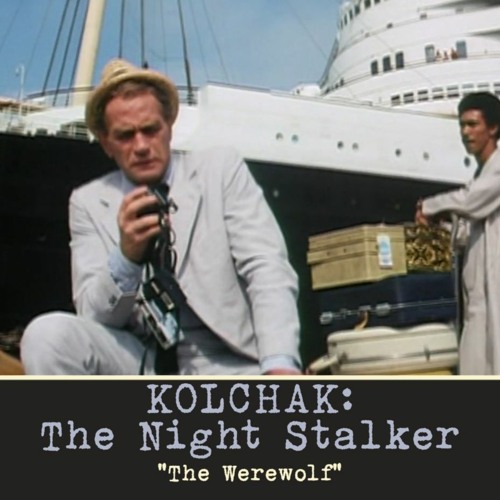
This is one of the great atmospheric episodes in the series. This time, our ever-skeptical reporter Carl Kolchak (played with perfect disheveled energy by Darren McGavin) finds himself aboard a cruise ship bound for New York, covering what should have been a puff piece about fun on the high seas. Naturally, things go sideways when passengers start turning up brutally mauled, and the only clues are shredded clothing and what look like animal bites. Kolchak’s sense for the bizarre kicks in, and soon he suspects that a werewolf might be loose on the ship, a premise that turns an already claustrophobic voyage into pure nightmare.
The episode cleverly uses its limited setting to heighten suspense. The cruise ship’s narrow hallways and locked cabins create a sense of entrapment — there’s nowhere to run when the full moon rises. The story also dips into old-school monster-movie tradition: silver bullets, cursed bites, and the doomed man who becomes the beast. The makeup effects, while modest by today’s standards, deliver a creepy punch, a classic, snarling wolf-man straight out of a Universal horror movie. Kolchak, armed only with his typewriter wit and some makeshift silver, must find a way to stop the creature before the ship reaches port.
This episode is a good example of the show’s formula: horror meets journalism, with humor and cynicism woven through. The episode’s director, Allen Baron, keeps the pacing tight, and the contrast between McGavin’s wisecracking performance and the grim killings maintains that strange Kolchak balance between camp and dread. It also helped solidify the series’s reputation for finding horror in everyday or unexpected places, in this case, a pleasure cruise turned into a deathtrap.
This episode feels like a monster-of-the-week done with a touch of humor and melancholy. This one has the feel of a late-night drive-in flick, half spooky and half funny, and it remains a fan favorite…per IMDB. Two standout guest stars were Nita Talbot as Kolchak’s cohort, Paula Griffin. She was no one’s fool and quite a match for Kolchak. Also, Eric Braeden as Bernhardt Stieglitz who plays the title role of the show.
The FULL EPISODE! The reason I don’t embed the video is that Dailymotion just keeps playing every time you pull up my site. It gets on your nerves and mine as well.
The thing that I’ve found about Cale is that his music isn’t in your face. It really sneaks up on you while you listen. I remember this getting played on AM radio when I was a kid, and this song introduced me to J.J. Cale. Yes I may have heard some of his songs that were covered by others, but I knew this by Cale and no one else.
Oklahoma blues guitarist and songwriter J.J. Cale is best known for a number of songs that became radio favorites when covered by other artists. These include both After Midnight and Cocaine, which were written and recorded by Cale before Eric Clapton cut his versions. Also, Cale’s track Call Me The Breeze has been covered by numerous acts, most notably by Lynyrd Skynyrd.
The record feels loose, almost casual, like you just stumbled across him jamming in a Tulsa roadhouse. Yet the track is locked in tight, every note exactly where it needs to be. Musicians took notice; countless guitarists, from Mark Knopfler to Neil Young, would later cite Cale’s minimalism as an influence.
He made this hit song without raising his voice or speeding up this song. Remember this was the era of bombast, arena rock, prog, and wall-to-wall sound. Cale proved that restraint could be just as powerful. It’s no surprise that Clapton and others gravitated to his songs; Cale had a way of making music that felt timeless and genuine. This song may have been his only chart hit, but it wasn’t his only masterpiece.
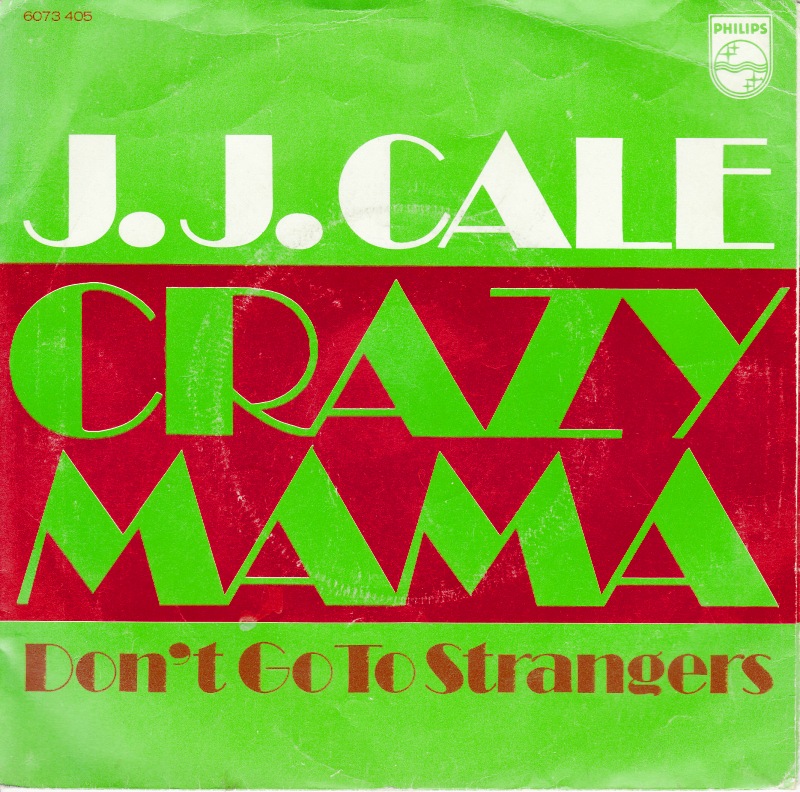
Crazy Mama is a song from Cale’s debut album, Naturally, and was his only Top 40 hit in the US. Naturally peaked at #51
This song peaked at #22 on the Billboard 100 in 1971.
Crazy Mama
Crazy mama, where you been so long? Crazy mama, where you been so long? You’ve been hiding out, I know that’s true Crazy mama, I sure need you Crazy mama, where you been so long?
Standing on the corner, looking for you, babe Standing on the corner, looking for you, babe Lord have mercy, can I see, that crazy mama coming back to me? Crazy mama, where you been so long?
This was written for Dave’s Tuntable Series. The topic is Going out on a High Note. We all have seen artists who stick around long after they should have exited gracefully. For this round, pick a musical artist who you think ended their career on a high note, a great final album, or a triumphant concert tour before they grew stale.
I could have picked The Beatles, probably one of the best examples of going out on top with Abbey Road, but as usual, I wanted to go down the path less travelled. I wanted to feature Big Star’s last album, recorded in 1974. Parts of the band did release an album in 2005 under the Big Star name, but I’m not counting that one. This album was on Rolling Stone Magazine’s 500 Greatest Albums list at #285.
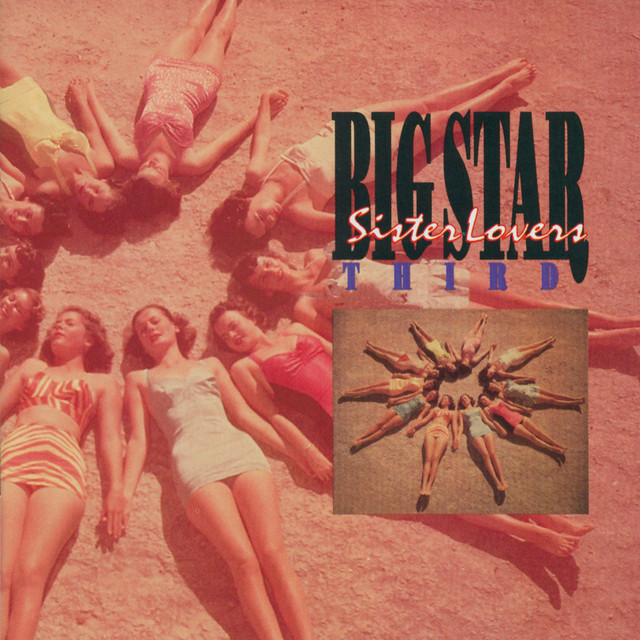
If there’s an album that feels like the final curtain was lowered, it’s Big Star’s Third/Sister Lovers album. Recorded in late 1974, it dribbled out years later in different forms; the record doesn’t just mark the end of Big Star, it feels like the end of Alex Chilton’s patience with power pop itself. This album had test pressings in 1975, but didn’t get officially released until 1978
Unlike #1 Record and Radio City, which had power-pop perfection, Third/Sister Lovers is messy and sometimes unsettling. It sounds less like a polished album and more like a band trying everything while the tape keeps rolling. Jim Dickinson’s production at Ardent Studios only added to the loose, haunted feel, he let Chilton and whoever else showed up throw down takes that feel unfinished and unfiltered.
Songs like Kizza Me, Jesus Christ, and Thank You Friends have some of Big Star’s old jangle, but the edges are jagged. Then you get Holocaust and Kanga Roo, two of the most desolate tracks they ever did. Holocaust is not something you hum; it’s something that stays with you afterward.
Part of the mythology of this album is that no one really knows the “real” tracklist. Different labels sequenced it differently when it trickled out in the late 70s and early 80s. By the time Rykodisc issued it on CD in the 90s and Omnivore Recordings gave us the expanded Complete Third box, it was clear… this wasn’t one neatly tidy album, it was choppy, uneven, and brilliant.
For all its chaos, this album became a blueprint for generations of indie and alternative bands. You hear its fingerprints in REM., Replacements, and Wilco, artists who weren’t afraid to experiment with pop and let it stand on its own. For a band that never could catch a break, Big Star ended with an album that was seldom properly released, yet somehow became arguably their most influential. That’s Big Star in a nutshell: tragedy, beauty, and magic all together.
Thank You Friends
Thank you, friends Wouldn’t be here if it wasn’t for you I’m so grateful for all the things you helped me do.
All the ladies and gentlemen Who made this all so probable
Thank you, friends I rejoice to the skies Dear ones like you do the best I do As far as can see my eyes
All the ladies and gentlemen Who made this all so probable
Without my friends I got chaos I’m often a bead of light. Without my friends I’d be swept up high by the wind
do, do…
All the ladies and gentlemen (I said all) All the ladies and gentlemen (I said all) All the ladies and gentlemen Who made this all so probable
Thank you friends (thank you again) Thank you friends (thank you again) Dear, dear friends (thank you again) Thank you friends (thank you again) And again, and again… Never too late to start
If you want to see where we are…HERE is a list of the episodes.
This show acted as a direct sequel to the original TV movie The Night Stalker. It’s a really good episode! This story has Kolchak chasing down Janos Skorzeny’s (the original vampire in the movie) “offspring,” a female vampire who rises in Los Angeles after a series of mysterious murders. Where the original movie thrived on Darren McGavin’s tense battles with a powerful vampire in Las Vegas, this time Kolchak is once again the only man connecting the dots as bodies begin piling up with familiar fang marks and drained blood.
We can always rely on Carl Kolchak to stubbornly pursue the strange stories even when under orders to pursue something decidedly more mundane. Carl is sent to Los Angeles to interview a young guru and instead becomes intrigued by a series of killings involving the draining of blood, first told to him by an old acquaintance named “Swede” (guest star Larry Storch). Kolchak is once again quick to jump to the most extravagant conclusion, and of course, he’s right: the culprit is a sexy female vampire unearthed from her slumber by a highway crew outside Las Vegas.
The climax is classic Kolchak. Armed with a cross, hammer, and stake, he hunts the vampire into her lair beneath the city. The episode builds tension with along the way with lighting, camera work, and McGavin’s energy as he fends off a supernatural predator. Unlike many horror shows of the era that shied away from violence, Kolchak goes into the dread of facing a creature of legend. The confrontation with the vampire feels unsettling, reminding viewers that Kolchak isn’t a superhero; he’s just a reporter willing to risk his life for the truth.
Watching McGavin shuffle around Los Angeles in his seersucker suit, trying to convince hardened cops that a vampire is on the loose, is both hilarious and chilling. For me, this one stands out because it proves Kolchak never gets an easy win, and he doesn’t even get peace of mind. But what he does get is the truth, and he’ll drive a stake through anything, or anyone, that tries to bury it.
The change of setting also works well for the episode, allowing Kolchak to comment on the nature of L.A. and demonstrating some ingenuity in the end when it comes to dispatching his unearthly foe; there’s some good imagery there.
A groove you can drive a truck through wider than a Texas mile
I’ve been waiting until I could start listening to the former lead singer of the Sir Douglas Quintet. The time has arrived, and I knew it would be some quality music, and I’ve enjoyed dipping my toe in the Doug Sahm waters. I’d heard his music from the ’60s and ’90s, but didn’t know much about the 1970s; it didn’t disappoint.
Texan Doug Sahm was an exceptional talent. By the time most kids were still figuring out how to play Little League, Sahm was already on stage. At age 11, he played steel guitar at the Skyline Club in Austin, sharing the bill with Hank Williams on what was one of Hank’s final performances on December 19, 1952.
Why choose one genre when you can play ‘em all? He could play country, blues, Tex-Mex, rock ‘n’ roll, R&B, and anything else that came his way. He was one of those musicians who seemed to be a walking jukebox.
This song is very country-rock and has a San Francisco hippie feel to it. He was basically Americana before Americana was a popular word. He didn’t chase trends at all; he did what made him happy, and that is why his music sounds so genuine. He hung out in San Francisco for a while in the early seventies. Among his friends were Bob Dylan, Dr. John, Willie Nelson, and the Grateful Dead. But he always went back to Texas.
This song is the title track from his 1974 album. It was produced by none other than Doug Clifford and Stu Cook of Creedence Clearwater Revival; the album has a loose, laid-back feel, and Clifford played drums. This song is a tribute to Austin, celebrating the unique blend of hippies, cowboys, and soul that defined the city in the mid-1970s.
For me, he was like a bridge between genres and generations. He could play an accordion song, a honky-tonk ballad, then rip into a garage rock, all in the same set.
Here is one of his sons, Shandon Sahm, playing this song.
An entire concert, but I have it starting on Groover’s Paradise.
Groover’s Paradise
Go out on the highway I thumbed myself a ride Too long in New York City My mind is taking a ride
I want to go back to Texas Cosmic cowgirls playin’ I want to have some fun in a good ole Texas way Down in Groover’s Paradise Groover’s Paradise, Groover’s Paradise
Told you one or two times Ain’t gonna tell you no more Too long in Detroit city I can’t hardly breathe no more
I need a whole lot of cold Pearl beer and a little Texas smile A groove you can drive a truck through wider than a Texas mile Down in Groover’s Paradise Groover’s Paradise, Groover’s Paradise
Groover’s Paradise!
Well the guacamole queen is there Man she’ll really curl your hair Enchiladas and Bar B Que Come on baby what you gonna do?
Come on over here beside me Tell me how you’ve been When I get done layin’ it on you Then you’ll know I am back again Back in Groover’s Paradise Groover’s Paradise, Groover’s Paradise
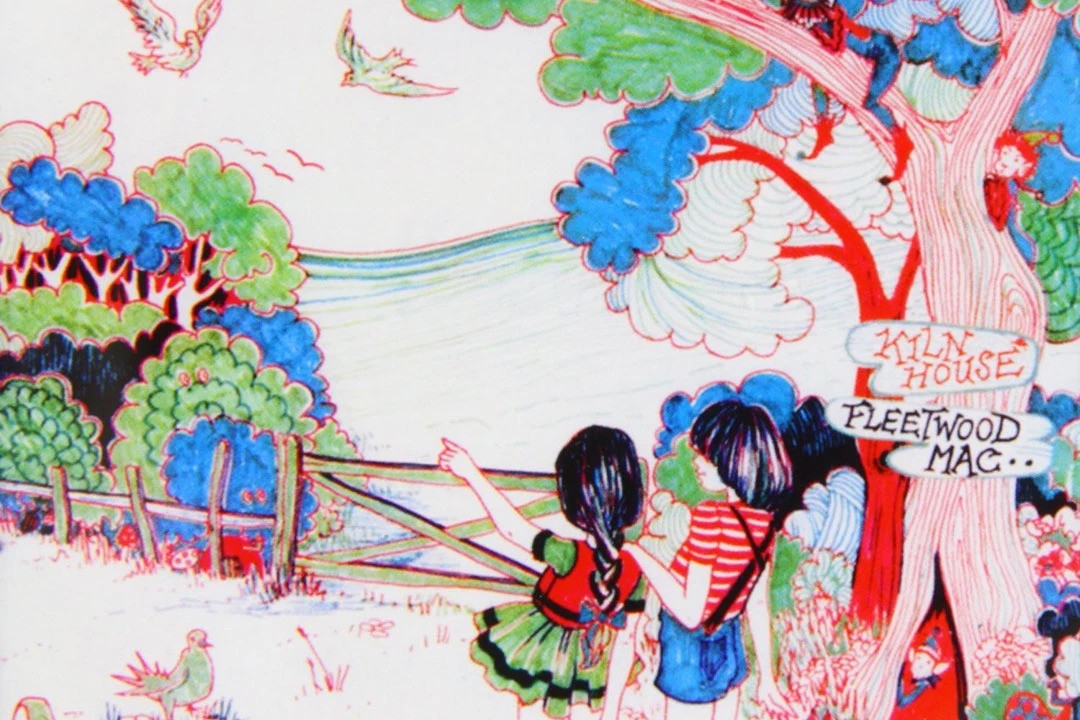
When most folks hear the words Fleetwood Mac, they immediately think of the Rumours-era band. But rewind just a few years earlier and you’ll find a very different band, one still rooted in the blues, still searching for direction after the departure of founding guitarist Peter Green. Starting that transitional phase is the album Kiln House.
Fleetwood Mac was changing throughout the decade, but 1970s Kiln House was one of their strangest detours. After Peter Green’s sudden exit, the band found itself leaderless. Instead of breaking up, Jeremy Spencer and Danny Kirwan took the lead and led the band through a melodic 1950s-inspired sound with that glorious echo. The entire album isn’t that, but it’s a heavy influence.
This is one of the most interesting bands ever. You can find a song in one of their many eras to satisfy anyone. This album was a departure from the Peter Green era. It didn’t have the intensity that Green brought, but it made up for it in some great songs. It was highly melodic with some complicated melodies, like Station Man (written by Danny Kirwan, Spencer, and John McVie); the later incarnation picked up on that song as well. The first song of this period I took notice of a few years ago was Jewel Eyed Judy from this album.
Jeremy Spencer adored that 1950s rock style, and This Is the Rock is one of his tributes to that era. Another obvious one is the song Buddy’s Song. They also had some nice straight-out rock on the album with Kirwan’s Tell Me All the Things You Do.
This album ties the eras together for me. You had straight out rock, a touch of blues, rockabilly, country, and some pop that foreshadowed what was to come. It is probably the most varied Fleetwood Mac album I’ve listened to. You can hear Fleetwood Mac going toward something new.
The album peaked at #69 on the Billboard Album Charts, #67 in Canada, and #39 in the UK. Christine McVie not only drew the cover, she also contributed to the album with backup vocals, keyboards, and even cover art. After this album, she became a full member.
This Is The Rock
This is the rock We’ve been talking about (this is the rock) Yeah, this is the rock Makes you jump and shout (this is the rock) This is the rock That knocks you right out
It makes you lose All your troubles and cares You’ll lose your blues They ain’t going nowhere This is the rock That hits you right there
Well you can get back on the roof And shout it all around Get up off your seats is what I’m putting down Get ’em all a hoppin’ to that crazy beat Get ’em all a boppin’ and a tappin’ their feet
‘Cause it’s the rock Moves you all day long (it’s the rock) Yeah, it’s the rock Gettin’ everyone (it’s the rock) This is the rock It really turns you on, woo
Well you can get back on the roof And shout it all around Get up off your seats is what I’m putting down Get ’em all a hoppin’ to that crazy beat Get ’em all a boppin’ and a tappin’ their feet
‘Cause it’s the rock (it’s the rock) Moves you all day long (it’s the rock) Yeah, yeah it’s the rock Gettin’ everyone (it’s the rock) This is the rock It really turns you on
Yeah, this is the rock It really turns you on This is the rock It really turns you on
If you want to see where we are…HERE is a list of the episodes.
I’m really liking this series. It’s a shame it only lasted 1 season, but I can see why. It was so different for the time.
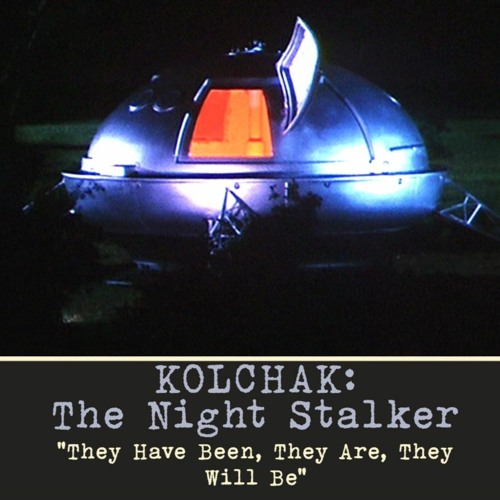
This episode isn’t as cut and dry as the others so far. Unlike the zombie, vampire, or werewolf stories that had clear monster traditions, here the writers took a sharp turn into sci-fi, giving us a story about mysterious cattle mutilations, vanishing zoo animals, and an unseen extraterrestrial presence wandering through Chicago. I have said before how this show influenced the X-Files, none more than this episode.
The episode begins with odd reports: animals in the zoo are vanishing, bones are found curiously stripped clean, and a trail of strange electromagnetic interference follows the incidents. Naturally, Carl Kolchak, with his nose for weird stories, senses a huge story. His digging leads him to discover that the culprit may not be human at all.
As always, Kolchak’s determined spirit and undeterred methods make for the typical conflict with authorities, but in this one, that conflict is much more subdued and believable as the police bosses are as much in the dark as he, and prone to benefit from what Kolchak learns on his own.
Written by Dennis Clark and directed by Allen Baron, the episode was praised for its eerie, almost minimalist approach. The producers intentionally avoided showing the alien much, knowing that the limited 1970s TV budget would probably betray the effect. In other words, they didn’t make the same mistake that Star Trek would make at times. The choice worked in their favor; what we don’t see is far scarier.
A funny subplot, as the hometown Cubs are battling the Boston Red Sox in the World Series (both would have to wait decades to end their respective droughts). Darren McGavin later cited this as one of his favorite episodes because it strayed from the usual monster formula and went for something more mysterious and unsettling.
This is the album’s opening track, and it doesn’t so much kick down the door as quietly invite you in. If you only know the Layla album for the title track, you might miss how the whole journey begins with this two-and-a-half-minute sigh of regret.
Unlike Clapton’s past work in Cream or Blind Faith, this wasn’t about ripping incredible riffs. The melody flows with a natural grace, closer to something from The Band than the psychedelic guitar Clapton had been known for.
Derek and the Dominos was a band formed in the spring of 1970 by guitarist and singer Eric Clapton, along with keyboardist Bobby Whitlock, bassist Carl Radle, and drummer Jim Gordon. All four musicians also worked with George Harrison on his All Things Must Pass album. Clapton didn’t want his name in the title and had hoped to keep his involvement as low-key as possible.
The album peaked at #16 in 1970 on the Billboard 100. Although Derek and the Dominos were poised to record a follow-up album in 1971, because of tensions and drug abuse among the band members, along with the tragic death of Duane Allman later that year, this remained their sole album.
This song and Bell Bottom Blues are my two favorites off the album. Everyone knows Layla, but these other songs are great as well. Eric Clapton and Bobby Whitlock wrote this song. As with most of the songs on this album, Patti Harrison was the main inspiration.
I Looked Away
She took my hand And tried to make me understand That she would always be there, But I looked away And she ran away from me today; I’m such a lonely man. It came as no surprise to me That she’d leave me in misery. It seemed like only yesterday She made a vow that she’d never walk away. First Verse And if it seemed a sin To love another man’s woman, baby, I guess I’ll keep on sinning Loving her, Lord, till my very last day. But I looked away And she ran away from me today; I’m such a lonely man.
I played this single so much when I was around 7 years old. I wore it out and know every nuance of this song. Just a great vocal by Withers on this. The simple piano riff makes this song so powerful to me. Still one of my favorite songs. Sometimes less is better.
It’s been covered by many other artists, but this is my go-to version. Bill Withers wrote this song after he left his childhood town of Slab Fork, West Virginia, to live in Los Angeles in a poor section of town. Members of the Watts 103rd Street Rhythm Band were used on the recording.
Producer Ray Jackson (who doubled as the keyboard player) and engineer Bob Potter kept the recording dry and uncluttered. No strings, no brass, no unnecessary sweetening. Just voice, piano, bass, drums, and a touch of guitar. It’s like Bill is in your living room singing to you.
What’s remarkable is how this song has transcended its era. It’s been sung at weddings, funerals, movies, and classrooms. It’s part of the American pop culture now, standing shoulder-to-shoulder with songs such as Amazing Grace and This Land Is Your Land.
The musicians on this recording were Ray Jackson, Benorce Blackmon, Melvin Dunlap, and James Gadson. Some of these musicians were in The Watts 103rd Street Rhythm Band. The song peaked at #1 on the Billboard 100, #18 in the UK, and #20 in Canada in 1972.
Bill Withers: “This was my second album, so I could afford to buy myself a little Wurlitzer electric piano. So I bought a little piano and I was sitting there just running my fingers up and down the piano. In the course of doing the music, that phrase crossed my mind, so then you go back and say, ‘OK, I like the way that phrase, Lean On Me, sounds with this song.’ So you go back and say, ‘How do I arrive at this as a conclusion to a statement? What would I say that would cause me to say Lean On Me?’ At that point, it’s between you and your actual feelings, you and your morals and what you’re really like. You probably do more thinking about it after it’s done.”
Lean On Me
Sometimes in our lives we all have pain We all have sorrow But if we are wise We know that there’s always tomorrow
Lean on me, when you’re not strong And I’ll be your friend I’ll help you carry on For it won’t be long ‘Til I’m gonna need Somebody to lean on
Please swallow your pride If I have faith you need to borrow For no one can fill those of your needs That you won’t let show
You just call on me brother, when you need a hand We all need somebody to lean on I just might have a problem that you’ll understand We all need somebody to lean on
Lean on me, when you’re not strong And I’ll be your friend I’ll help you carry on For it won’t be long ‘Til I’m gonna need Somebody to lean on
You just call on me brother, when you need a hand We all need somebody to lean on I just might have a problem that you’ll understand We all need somebody to lean on
If there is a load you have to bear That you can’t carry I’m right up the road I’ll share your load
If you just call me (call me) If you need a friend (call me) call me uh huh(call me) if you need a friend (call me) If you ever need a friend (call me) Call me (call me) call me (call me) call me (Call me) call me (call me) if you need a friend (Call me) call me (call me) call me (call me) call me (call me) call me (call me)
If you want to see where we are…HERE is a list of the episodes.
This episode was written by David Chase, yes, the same David Chase who would go on to create The Sopranos; the script is one of the tightest of the entire run. You can already see Chase’s fascination with mobsters, moral issues, and revenge from beyond the grave.
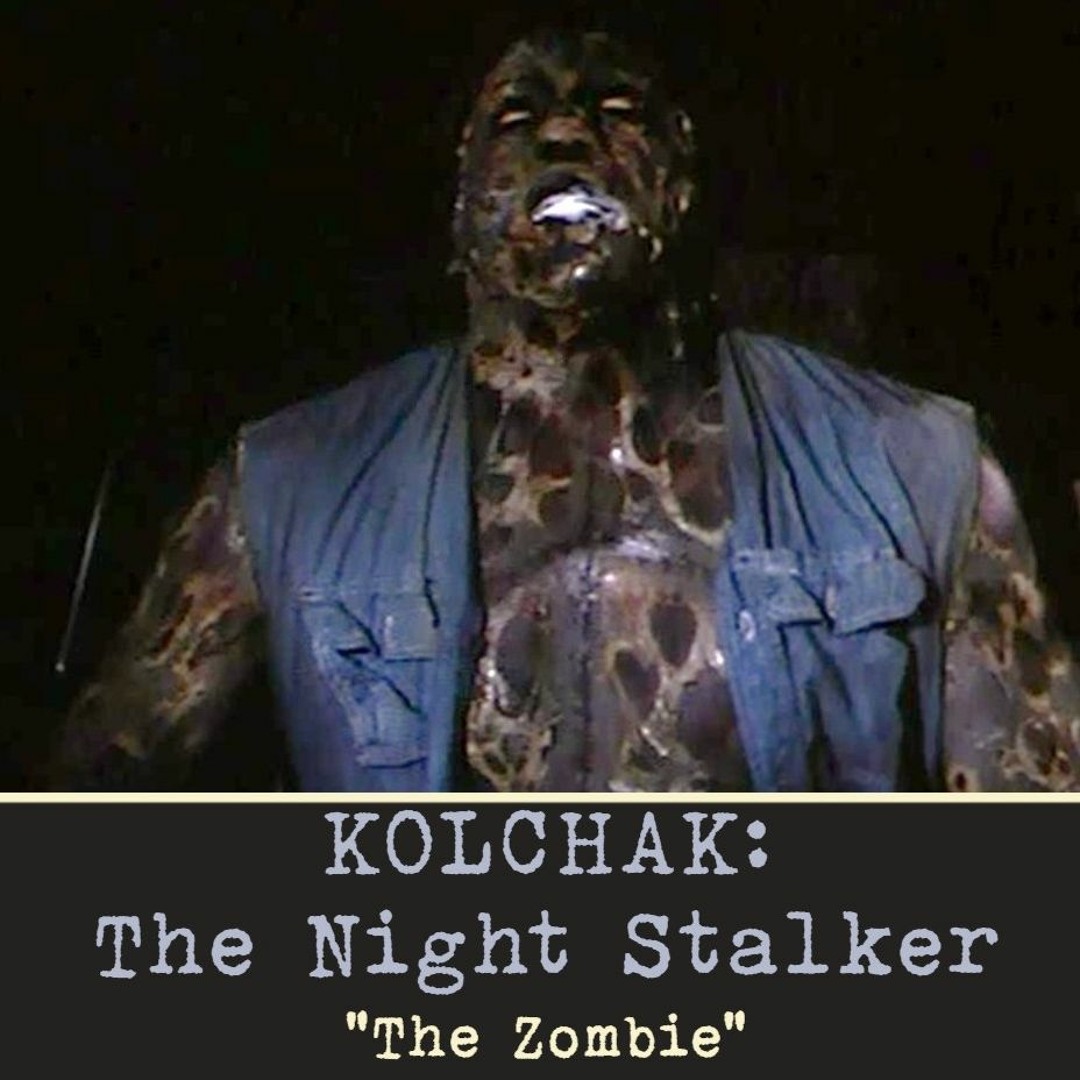
In the first two movies and the first episode, we have been visiting different cities in each one. This time, it opens with a string of mob-related murders and he is still in Chicago. At first, the killings look like standard gangland executions, but Kolchak quickly uncovers that something darker is at play: the mob has wronged a Haitian family, and in retaliation, a dead man has been raised from the grave to exact revenge.
This episode leans more on pure horror than the others. Where the pilot movies (The Night Stalker and The Night Strangler) established Kolchak’s mix of noir and horror, The Zombie proved the series could have frights. The scenes of the zombie slowly rising in the mortuary are classic TV horror, low budget, yes, but brilliantly lit and paced.
When this was aired, blaxploitation movies were all the rage, and this does borrow some from them. One actor in this one was Antonio Fargas, who would later become widely known to television audiences as restaurant owner and informant Huggy Bear on Starsky & Hutch.
In a comedy subplot, Vincenzo wants Kolchak to show an executive’s niece from New York the ropes of journalism. Little does she know that it will involve seeing the mangled corpses of mob enforcers lying in the street. This was creepy, moody, and more disturbing than network TV usually allowed in the mid-1970s. A must-watch for fans of horror television.
Well, I had found a full episode of this one, but they took it down. Most of them I will be able to supply, but I struck out on this one. If any of you find it, please tell me.
Here is a video of someone talking about the show, but it plays a lot of the show. I would put my version here, but I know I would violate some copyright.
To view our current progress, click here for a list of episodes.
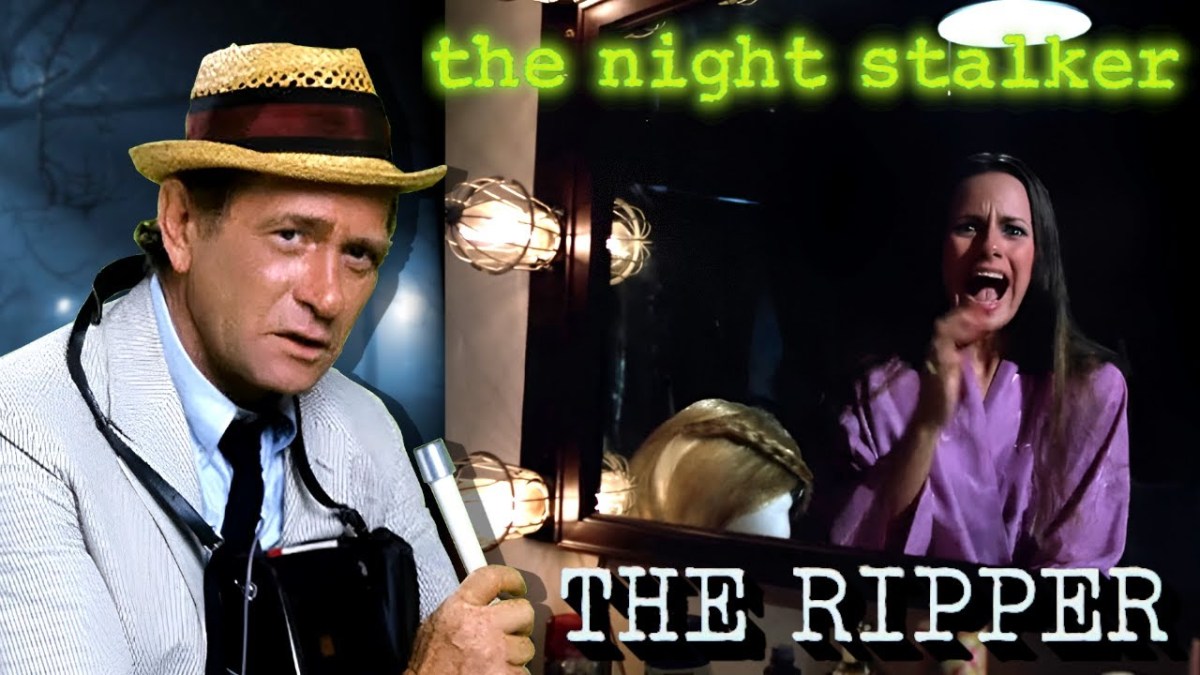
What better way to kick this series off than by dragging one of history’s most infamous villains out of the fog and dropping him right in 1970s Chicago? The pilot episode, The Ripper, set the tone for the whole series: a mix of supernatural, dark humor, and the persistence of Mr. Carl Kolchak.
Carl Kolchak, now in Chicago working for INS (International News Service) with his old boss Tony Vincenzo (Simon Oakland), is still involved in supernatural cases. This first episode deals with a rash of murders that have all the trademarks of the London murderer, Jack the Ripper. It has to be a copycat killer, right? Don’t ever count anything out in this series.
The direction and atmosphere are strong here, with nighttime chases through shadowy alleys, and grim murders are more suggestion rather than gore. It’s shot in a way that feels both television-tight and surprisingly cinematic; it shows how much the show did with a limited budget. The Ripper character himself is handled with restraint, making him scarier: he’s often seen in fleeting glimpses, an unstoppable figure who seems both human and otherworldly.
This is one of the best examples of why this show became such a cult classic. It combines a timeless horror with Kolchak’s pursuit of the truth, all wrapped in that 1970s mix of camp and creepiness. That’s the thing about this show: it can be very creepy. While some of the effects may feel dated today, it still works; the suspense and Darren McGavin’s performance more than carry it. For fans of horror television, this episode remains a must-watch, a great marriage of folklore and late-night chills.
*Sorry, I’m late on this post, but work was chaotic this week and looks to be for a while. So, I’ll probably do this post on Fridays instead. I’m sorry about changing it mid-stream, but Fridays will be the best day.
The entire episode is in the link below. It’s on Daily Motion, and if I embed it, it plays automatically and will drive people crazy when they open their browser.
Turn on the lava lamps and sit back and relax to some music that has sitar sounds in it, and I’m always up for sitar. When you think of Genesis in the mid-1970s, you don’t immediately picture them as a singles band like the later incarnation. This was the Peter Gabriel era, long concept pieces that made up an album. However, as we will see, not everything was that simple.
This was on their 1973 album Selling England by the Pound, a quirky song that became their first charting single in the UK. The song is only about four minutes long (short by Genesis standards at the time), and it grooves along nicely. The band was almost embarrassed by a hit. Gabriel joked in later interviews that it was Genesis goes Top of the Pops, but the song showed that their long studio work could deliver something catchy and not be super long.
The lineup was Peter Gabriel (vocals, flute), Steve Hackett (guitars), Tony Banks (keyboards), Mike Rutherford (bass/guitars), and Phil Collins (drums/vocals). They were coming off the success of their last album Foxtrot, and there was pressure from their record company to deliver something more commercially accessible without ditching their progressive roots. That is a lot harder than it sounds. The sessions were long and argumentative. Genesis were perfectionists, which paid off with this album.
The song peaked at #21 on the UK Charts in 1974. The album Selling England by the Pound peaked at #3 on the UK Charts and #70 on the Billboard Album Charts. For me, it’s one of those tracks that feels like a bridge, still theatrical but also radio-friendly.
I Know What I Like (In Your Wardrobe)
It’s one o’clock and time for lunch, When the sun beats down and I lie on the bench I can always hear them talk
There’s always been Ethel: “Jacob, wake up! You’ve got to tidy your room now.” And then Mister Lewis: “Isn’t it time that he was out on his own?” Over the garden wall, two little lovebirds – cuckoo to you! Keep them mowing blades sharp…
I know what I like, and I like what I know; getting better in your wardrobe, stepping one beyond your show
Sunday night, Mr Farmer called, said: “Listen son, you’re wasting your time; there’s a future for you in the fire escape trade. Come up to town!” But I remebered a voice from the past; “Gambling only pays when you’re winning” – I had to thank old Miss Mort for schooling a failure Keep them mowing blades sharp…
I know what I like, and I like what I know; getting better in your wardrobe, stepping one beyond your show
When the sun beats down and I lie on the bench, I can always hear them talk. Me, I’m just a lawnmower – you can tell me by the way I walk
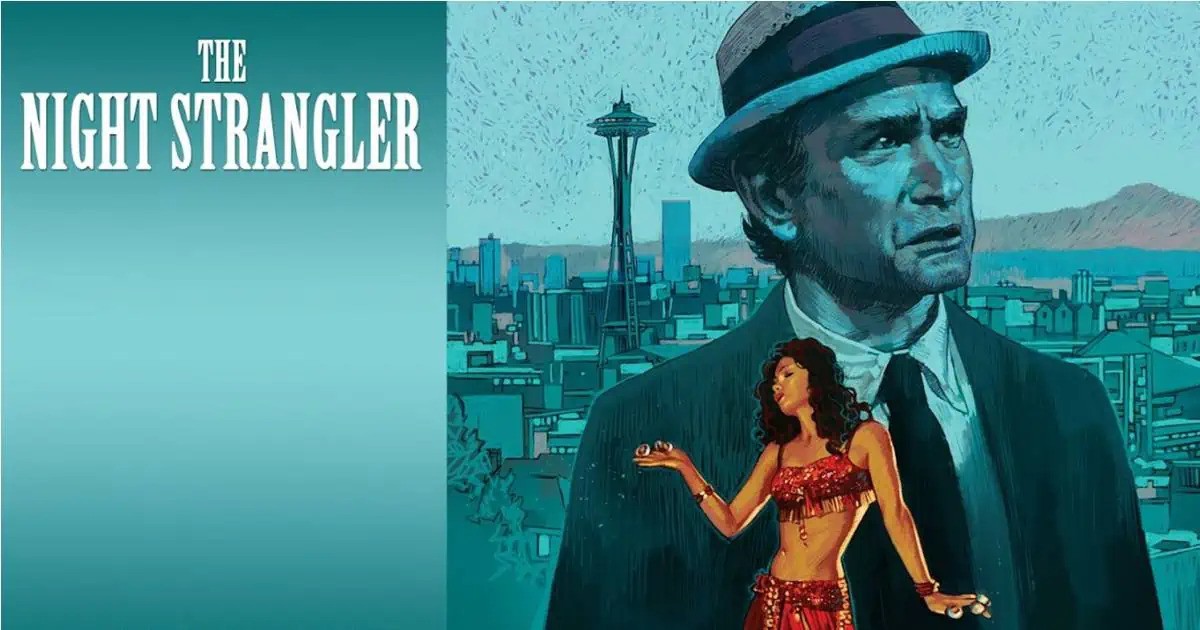
This is the second TV movie about Kolchak. This time, Kolchak is run out of Vegas, still unemployed and in that beat-up suit and straw hat, and somehow still covering the weirdest stories on earth. He lands in Seattle, and right on cue, women start turning up strangled in the city’s underground ruins. Their corpses? Bone dry. No blood. No explanation. Déjà vu, but not quite. I’m not going to give away what it was, but it wasn’t what you expected.
It’s a clever move, leaving Vegas and swapping it for Seattle’s underbelly. Parts of 19th-century buildings were left after the great Seattle fire of 1889. The movie makes excellent use of these underground tunnels, where Victorian storefronts and old streets sit buried beneath the modern city. The atmosphere here is claustrophobic and perfect for a monster that hides in plain sight.
The Night Strangler was the follow-up that proved Kolchak wasn’t a one-hit wonder. Dan Curtis, who had already scared TV audiences with Dark Shadows, stepped in to direct again, and Carl Kolchak had room to breathe and dig into another supernatural mystery. Also, the humor intertwined in this movie keeps it moving at a good pace.
Darren McGavin is, once again, the glue that holds the whole thing together. His Kolchak is pushy, sloppy, and never takes “no comment” for an answer. Every scene is like a tennis match between his energy and Simon Oakland’s rage as editor Tony Vincenzo. Honestly, those two could’ve been dropped into a sitcom about running a failing Chicago newspaper, and it still would’ve been gold.
While The Night Strangler didn’t quite capture the lightning-in-a-bottle impact of the original Night Stalker, it proved there was more than enough life in this story to warrant more. The movie’s success led directly to the short-lived but cult-favorite TV series Kolchak: The Night Stalker in 1974. Looking back, The Night Strangler remains a strong second chapter anchored by McGavin’s great performance.
I haven’t done one of these posts in a long time. I have the others linked at the bottom, like the Mustang from Bullitt, the Partridge Family Bus, the Time Machine from The Time Machine 1960 movie, etc. I love finding out what happened to different props.
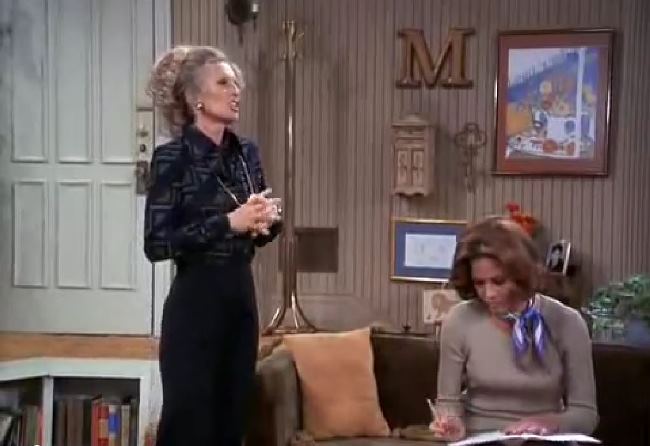
I love movie and TV show props, especially the shows I grew up with. If I had the money, I would have a warehouse full of props. This is one of the first props I remember seeing. I grew up on Mary Tyler Moore. She was part of the CBS Saturday night lineup that was considered one of the best nights for television in history.
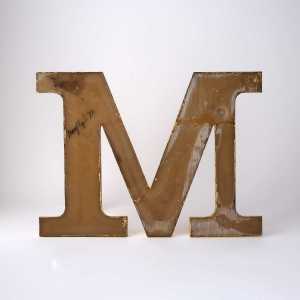
I loved Mary’s first apartment, where she lived downstairs from Rhoda Morgenstern. I always noticed a letter M hanging on the wall. Later in the show, when Mary moved to another apartment, she was shown hanging it up in her new place. It was one of the most recognizable props on television.
Mary Tyler Moore took the prop home and had it for years. She said she accidentally broke it years ago, but she repaired it and still had it when she passed in 2017. It was just sold this year, as were a lot of her personal items. It was sold to a private owner for $35,200.
I didn’t start really finding out about Gabriel until reading my fellow bloggers. I was burnt out on many of his ’80s hits because MTV loved the man and played them non-stop. Now that I’m finding his seventies catalog, I’m really liking what I’ve been hearing. It’s also strange for me to be listening to Genesis without Phil Collins singing a 3 minute hit.
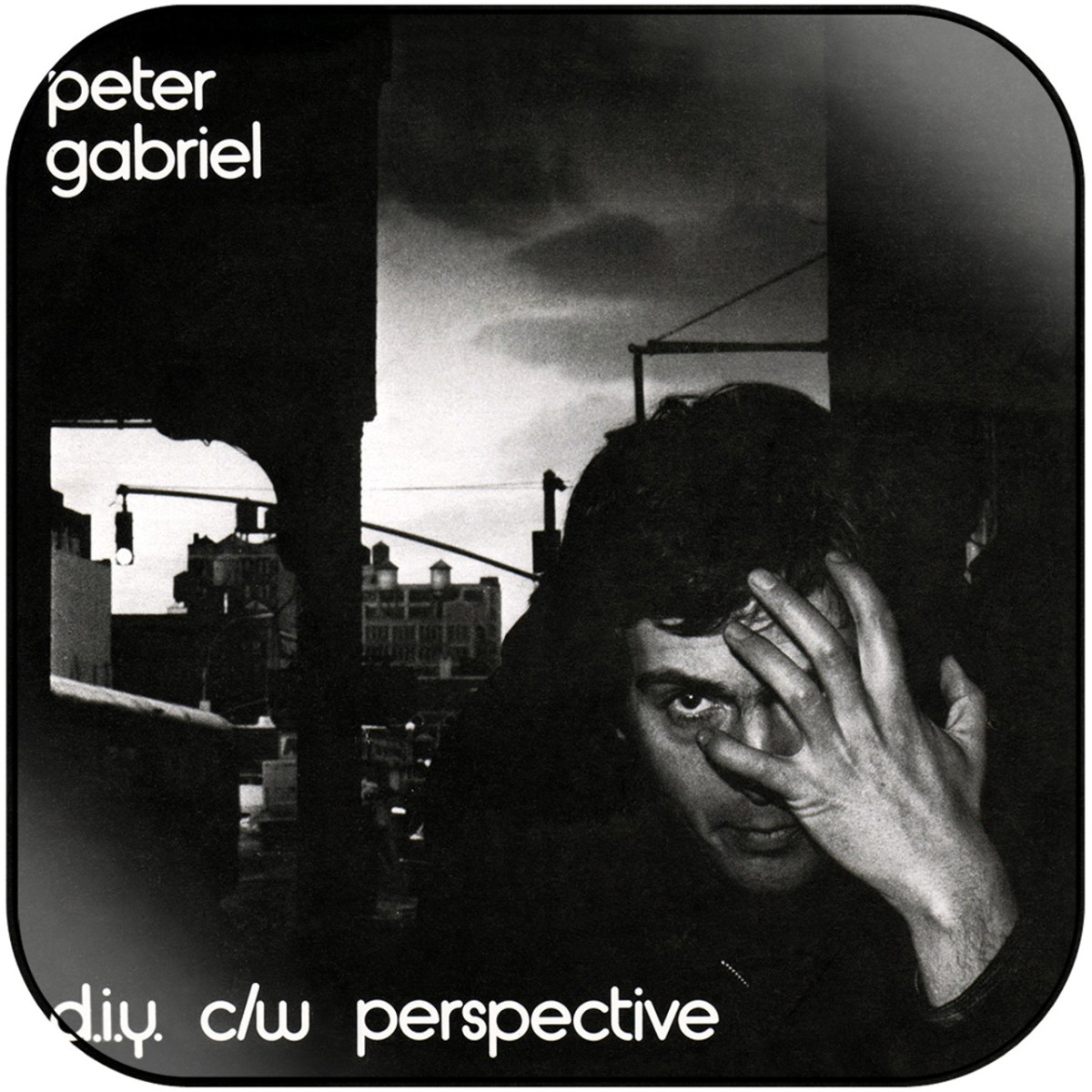
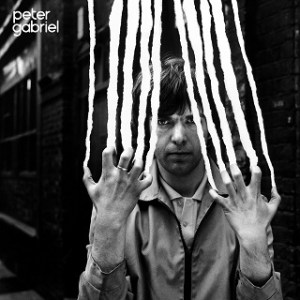
Peter Gabriel never made it easy for himself or his listeners. While most artists who left huge bands tried to either replicate the formula or tear it down brick by brick, Gabriel decided he was going to build a whole new musical landscape for himself. His listeners would have to catch up with him. Other artists have done some of this, but I’m not sure to the extent Gabriel did. He named his first four albums Peter Gabriel. This was off his second album, Peter Gabriel, known as Gabriel 2: Scratch.
What I like about this song is that it’s not polished to death. It sounds natural and not all studio-created. That small upward musical run he does in this song keeps the energy up and is a great hook. He is known for his theatrical prog rockers, but during this period, he was trying something a little different, and it worked. A big part of the feel of this album came from producer Robert Fripp, the man behind King Crimson. Fripp wasn’t a conventional producer like George Martin. He encouraged Gabriel to take off the polish and to go toward the texture and atmosphere.
Fripp kept the sessions lean and also tense, recording in the Netherlands at Relight Studios. The musicians, Tony Levin on bass, Jerry Marotta on drums, and Larry Fast on synths, were said to be more collaborators than sidemen. They weren’t there to sweeten the songs; they were there to challenge them, to throw odd rhythms into the mix. Gabriel wanted friction, and he got it. The album didn’t chart as high as his later work, but it set the blueprint for the “trying new things” approach that defined his career.
The album peaked at #10 in the UK, #46 in Canada, #45 on the Billboard Album Charts, and #24 in New Zealand in 1978.
D.I.Y
D.I.Y D.I.Y D.I.Y D.I.Y
Don’t tell me what I will do, ’cause I won’t Don’t tell me to believe in you, ’cause I don’t Be on your guard, better hostile and hard, don’t risk affection Like flesh to the bone in the no-go zone You’re still looking for the resurrection Come up to me with your “What did you say?” And I’ll tell you, straight in the eye, hey!
D.I.Y D.I.Y D.I.Y D.I.Y D.I.Y. (Do it yourself!) D.I.Y D.I.Y D.I.Y
Everyone wants to be what he not, what he not Nobody happy with what he got, what he got You function like a dummy with a new ventriloquist Can you say nothing yourself? Hanging like a thriller on the final twist Is it true you’re getting stuck on the shelf? Come up to me with your “What did you say?” And I’ll tell you, straight in the eye, hey
D.I.Y Do it yourself D.I.Y Do it yourself D.I.Y Do it yourself D.I.Y Do it yourself
When things get so big, I don’t trust them at all You want some control, you’ve got to keep it small, hey







 PowerPop... An Eclectic Collection of Pop Culture