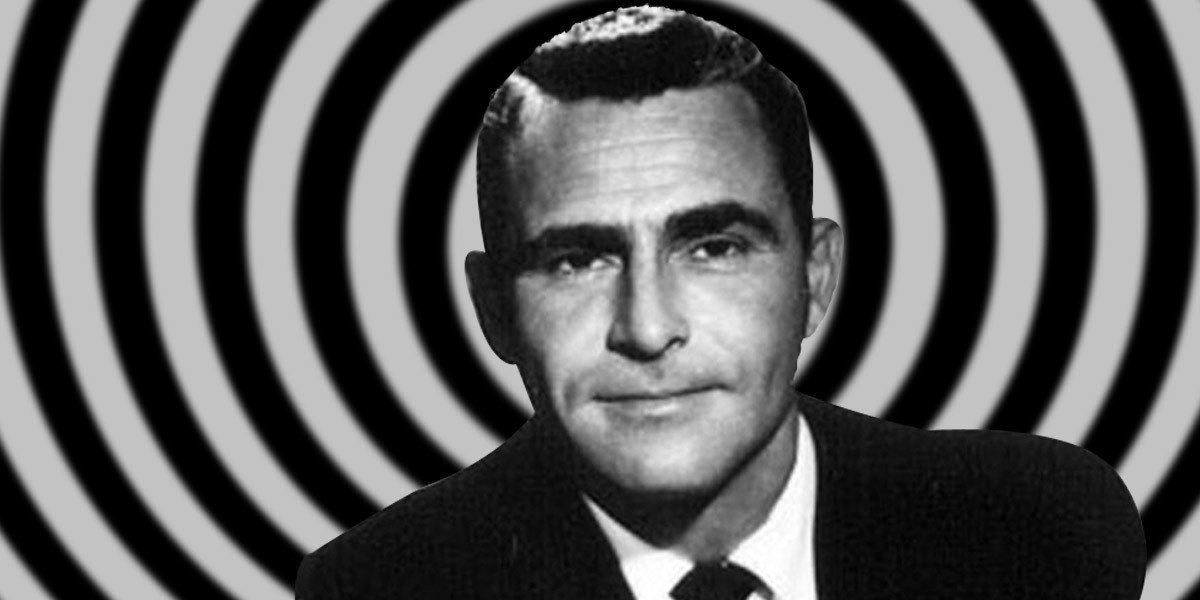
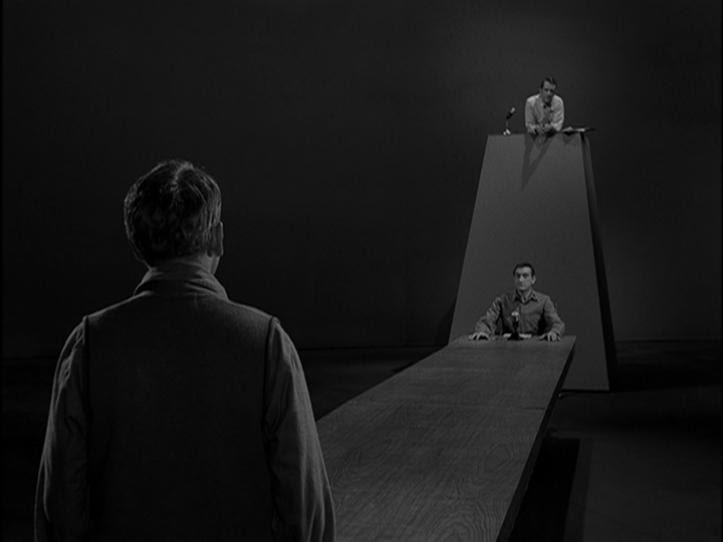
Twilight Zone – The Shelter

★★★★★ September 29, 1961 Season 3 Episode 3

If you want to see where we are…HERE is a list of the episodes.

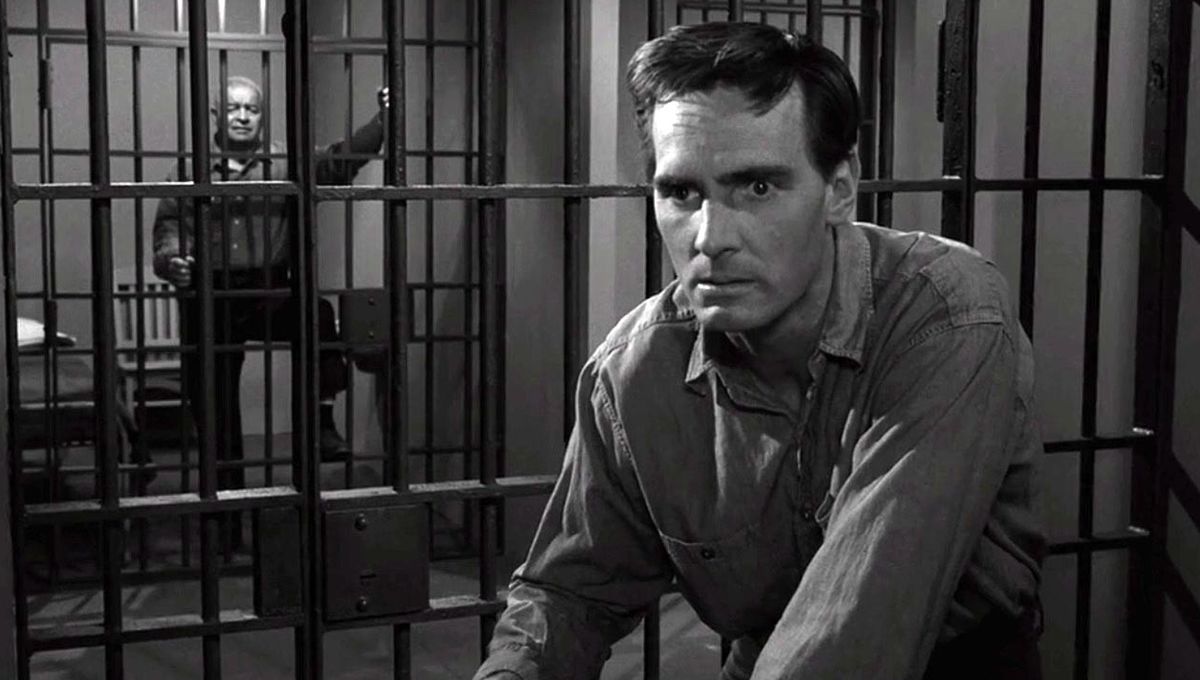
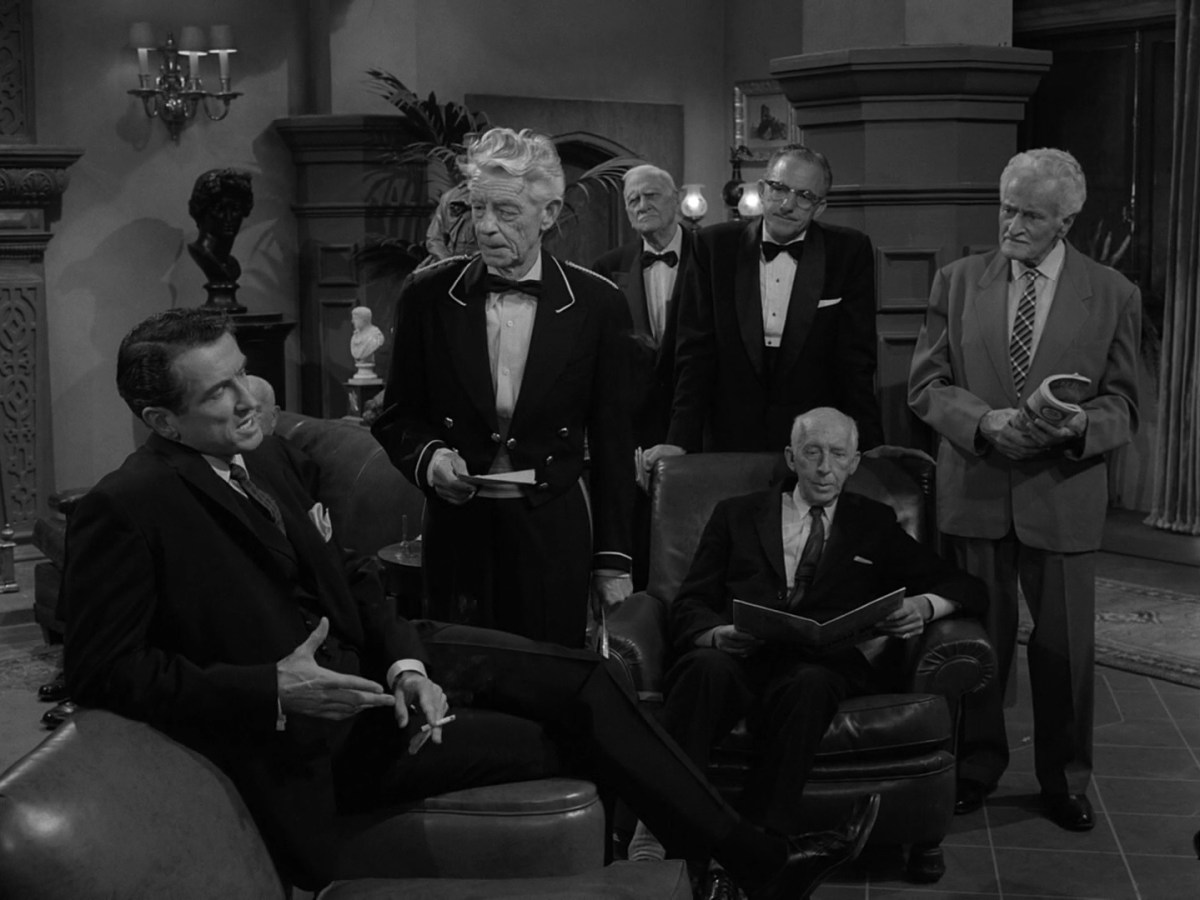
This is human nature driven story with no supernatural things happening. This is a great episode. It is similar to “The Monsters Are Due on Maple Street” and looks like it could have been on the same street. Unlike that more well known episode though… this one has no alien pulling the strings…man pulls his own strings in this harsh look at human nature.

Larry Gates portrays Dr. Bill Stockton, a man who built a bomb shelter for him and his family. In 1961 a bomb shelter was not an uncommon addition to a house. A manufacturing industry grew up around the fact that the world could be destroyed by a push of a couple of buttons.

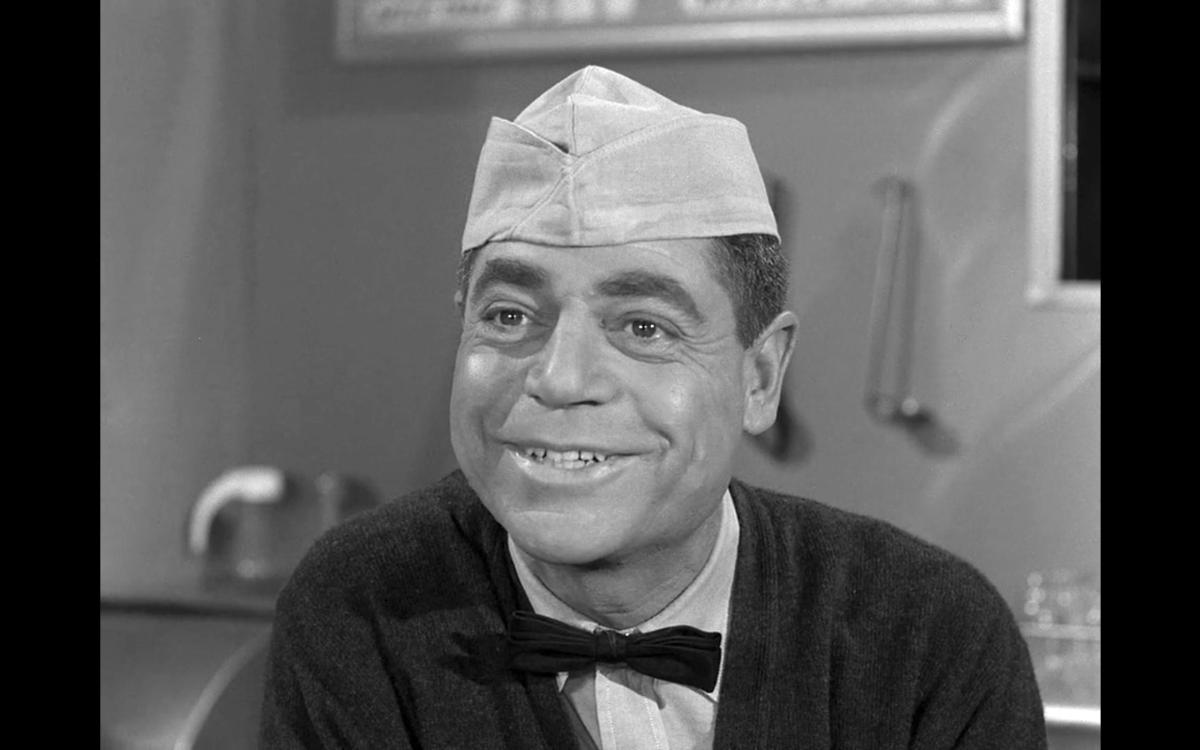
The actor that is the most noticeable among all of these great character actors  is Jack Albertson of Willy Wonka and the Chocolate Factory, Chico and the Man and many other shows. He plays Jerry Harlowe who becomes very interested in the Doctor’s bomb shelter along with the neighborhood.  It is a powerful story.

Rod Serling described the inspiration for the episode as stemming from his own family’s interest in building a fallout shelter. Serling stated that the episode received 1,300 letters and cards over a two day period after the initial broadcast.

Sandy Kenyon’s character mentions going over to Bennett Avenue to get a pipe for a battering ram. Bennett Avenue is where creator Rod Serling grew up as a child in New York.

This show was written by Rod Serling

Rod Serling’s Opening Narration: 

What you are about to watch is a nightmare. It is not meant to be prophetic, it need not happen, it’s the fervent and urgent prayer of all men of good will that it never shall happen. But in this place, in this moment, it does happen. This is the Twilight Zone.

Summary

Dr. Bill Stockton has prepared well for any eventuality. He’s built a bomb shelter for himself, his wife and his child. His neighbors on the other hand have done nothing to prepare. During a dinner party, there is an emergency announcement on the radio that unidentified objects have been sighted en route to the US and they may be under attack. As the Stockton’s prepare to use their shelter their neighbors panic asking to be let into the shelter with them. Stockton refuses leading to an angry confrontation.

If you have the time this is the FULL episode

Rod Serling’s Closing Narration:

No moral, no message, no prophetic tract, just a simple statement of fact: for civilization to survive, the human race has to remain civilized. Tonight’s very small exercise in logic from the Twilight Zone.

CAST

Rod Serling…Narrator / Self – Host (uncredited)
Larry Gates…Dr. Bill Stockton
Jack Albertson…Jerry Harlowe
Sandy Kenyon…Frank Henderson
Peggy Stewart…Grace Stockton
Michael Burns…Paul Stockton
Joseph Bernard…Marty Weiss
Jo Helton…Martha Harlowe
Moria Turner…Mrs. Weiss
Mary Gregory…Mrs. Henderson
John McLiam…Man

Twilight Zone – The Arrival

★★★★  September 22, 1961 Season 3 Episode 2

If you want to see where we are…HERE is a list of the episodes.

This is a good episode. It’s not a 5 star episode but it’s a good mystery. The plot is a perfect setup for a Twilight Zone. A plane arrives and there is only one thing missing from it…the passengers! Harold J. Stone  portrays Grant Sheckly who is determine to unravel this mystery.

Flight 107 out of Buffalo lands and taxis to a perfect stop, with no luggage, no passengers, no crew and no pilot. Sheckly, an FAA investigator with a record of no unsolved incidents in twenty-two years is on the case. One case comes back to haunt him in this episode…as the names of the would be passengers seem familiar to him.

A similar incident actually happened several years earlier in Missouri in 1957. A US Air Force DC-3 – the same type as used in the show – ran out of fuel while carrying people, who all bailed out to safety. The plane glided itself, landing on an empty cornfield, intact.

The exterior shots and hangar scenes were filmed at Santa Monica Airport in California. All other scenes were filmed on an MGM sound stage.

This show was written by Rod Serling

Rod Serling’s Opening Narration: 

This object, should any of you have lived underground for the better parts of your lives and never had occasion to look toward the sky, is an airplane, its official designation a DC-3. We offer this rather obvious comment because this particular airplane, the one you’re looking at, is a freak. Now, most airplanes take off and land as per scheduled. On rare occasions they crash. But all airplanes can be counted on doing one or the other. Now, yesterday morning this particular airplane ceased to be just a commercial carrier. As of its arrival it became an enigma, a seven-ton puzzle made out of aluminum, steel, wire and a few thousand other component parts, none of which add up to the right thing. In just a moment, we’re going to show you the tail end of its history. We’re going to give you ninety percent of the jigsaw pieces and you and Mr. Sheckly here of the Federal Aviation Agency will assume the problem of putting them together along with finding the missing pieces. This we offer as an evening’s hobby, a little extracurricular diversion which is really the national pastime in the Twilight Zone.

Summary

A commercial airliner makes a normal landing at an airport and taxis to its normal stop. The only problem is that when the doors are opened, there are no passengers and no pilots. An experienced FAA investigator, Grant Sheckly. is assigned to the case. Sheckly has a good reputation and good track record at solving crashes but this case is a difficult one explain. It all begins to get clearer when he realizes that not everyone is seeing exactly the same thing. For some the seats are blue, others see brown and others see red. They all see different registration numbers on the aircraft. Sheckly can only come to one conclusion: what they are seeing is an illusion

Here is the FULL episode for those who want to see it.

Rod Serling’s Closing Narration:

Picture of a man with an Achilles’ heel, a mystery that landed in his life and then turned into a heavy weight, dragged across the years to ultimately take the form of an illusion. Now, that’s the clinical answer that they put on the tag as they take him away. But if you choose to think that the explanation has to do with an airborne Flying Dutchman, a ghost ship on a fog-enshrouded night on a flight that never ends, then you’re doing your business in an old stand in the Twilight Zone.

CAST

Rod Serling…Narrator / Self – Host (uncredited)
Harold J. Stone …Grant Sheckly
Fredd Wayne…Paul Malloy
Noah Keen…Airline Executive Bengston (as Noah Keene)
Robert Karnes…Robbins
Bing Russell…George Cousins
Jim Boles…Dispatcher
Robert Brubaker…Tower Operator (uncredited)

Blind Faith – Sea Of Joy

Blind Faith…a supergroup with Eric Clapton, Steve Winwood, Ric Grech, and Ginger Baker.

I was listening to Blind Faith’s self titled debut album last week while deep in work and this song was one caught my attention. I’ve heard this song before but this time it really hit me. I repeated it a few times for good measure. What a talented band they were and we are lucky to get that album.

Their one and only album, the self titled Blind Faith album, peaked at #1 in the Billboard Album Charts, Canada, and the UK in 1969. They toured one time for the album and then soon broke up.

After Cream broke up in late 1968…Blind Faith evolved out of informal jamming at Eric Clapton’s home with Steve Winwood. Winwood suggested adding Ginger Baker to the lineup. Rick Grech joined on bass. The band spent February to June 1969 in the studio jamming and recording.

Clapton didn’t want Baker in the band…he wanted to leave Cream behind but Winwood didn’t know the history until later on.

Steve Winwood: “I had begun to realize what a problem Ginger was, and I saw why Eric had been against having him in the group.” “Ginger did a drum solo and they thought it was Cream, so we chucked in an old Cream song,” Winwood said. “Then I put in a Traffic song, and the identity of the band was killed stone dead. If you have 20,000 people out there, and you know you only have to play one song for them to be on their feet, you do it. We were only human.”

Eric Clapton: Steve and I were at the cottage smoking joints and jamming when we were surprised by a knock at the door,” “It was Ginger. Somehow he had gotten wind of what we were doing and had tracked us down. Ginger’s appearance frightened me because I felt that all of a sudden we were a band, and with that would come the whole [manager Robert] Stigwood machine and the hype that had surrounded Cream.”

Steve Winwood wrote this song and took the lead.

Sea Of Joy

Following the shadows of the skies
Or are they only figments of my eyes?
And I’m feeling close to when the race is run
Waiting in our boats to set sail
Sea of joy

Once the door swings open into space
And I’m already waiting in disguise
Is it just a thorn between my eyes?
Waiting in our boats to set sail
Sea of joy

Having trouble coming through
Through this concrete blocks my view
And it’s all because of you

Oh, is it just a thorn between my eyes?
Waiting in our boats to set sail
Sea of joy

Sea of joy
Sea of joy
Sailing free
Sea of joy

Twilight Zone – Two

★★★★  Sept 15, 1961 Season 3 Episode 1

If you want to see where we are…HERE is a list of the episodes.

On this one I do give spoilers away…this one is hard not to…

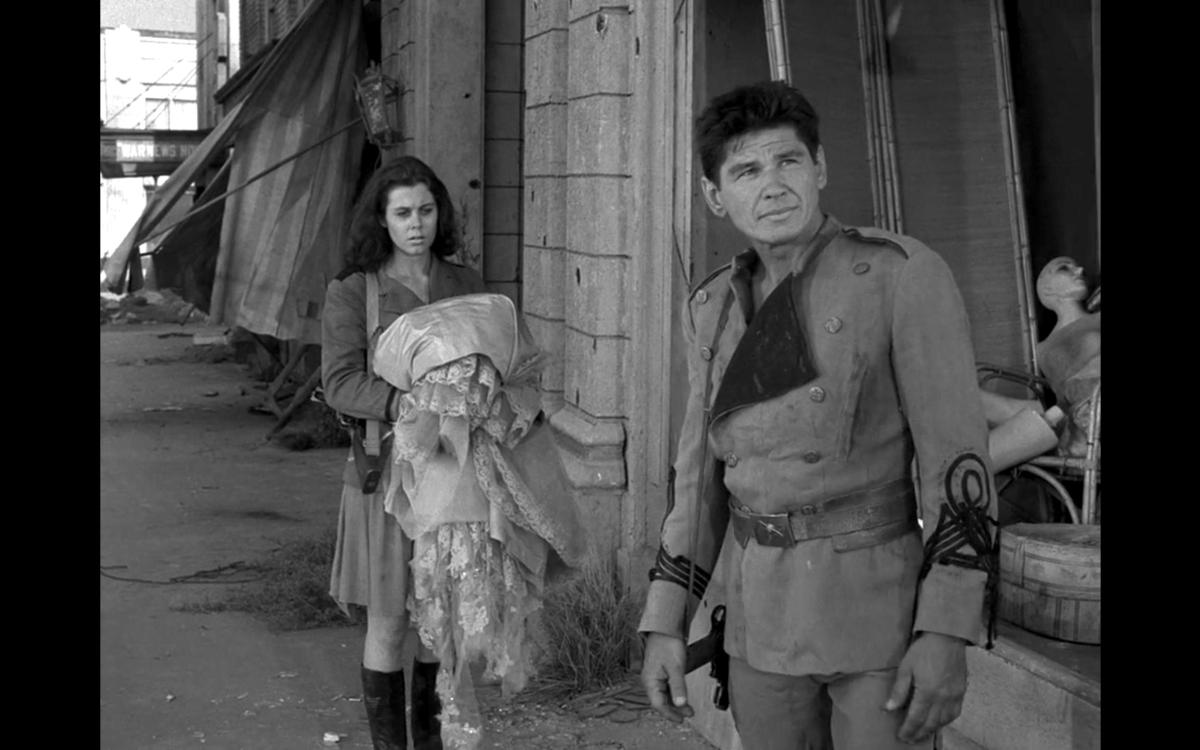
Like the closing narration says…it is a love story of two on different sides of a war…in the Twilight Zone. The cast was small but brilliant. Elizabeth Montgomery and Charles Bronson. They were known, but not stars…Bewitched and Death Wish was still in the future for both at this time.

This episode is an optimistic story set in an extremely bleak world. The time is presumably after World War III, the setting a devastated town inhabited only by the dead, with the exception of two enemy soldiers. Bronson seems to represent an American soldier and Montgomery a Russian.

Her single line (Prekrasny) is Russian for pretty. This is a gritty and realistic story, told without much dialogue with the emphasis always on characters. In this Bronson is more of a pacifist and Montgomery is suspicious and quick to violence.

Before season 3 was starting…Rod Serling had this to say. I’ve never felt quite so drained of ideas as I do at this moment. Stories used to bubble out of me so fast I couldn’t set them down on paper quick enough but in the last two years I’ve written forty-seven of the sixty-eight Twilight Zone scripts, and I’ve done thirteen of the first twenty-six for next season. I’ve written so much I’m woozy.

This show was written by Montgomery Pittman and Rod Serling

Rod Serling’s Opening Narration: 

This is a jungle, a monument built by nature honoring disuse, commemorating a few years of nature being left to its own devices. But it’s another kind of jungle, the kind that comes in the aftermath of man’s battles against himself. Hardly an important battle, not a Gettysburg, or a Marne, or an Iwo Jima; more like one insignificant corner patch in the crazy quilt of combat. But it was enough to end the existence of this little city. It’s been five years since a human being walked these streets. This is the first day of the sixth year, as man used to measure time. The time: perhaps 100 years from now, or sooner—or perhaps it already happened 2 million years ago. The place: the signposts are in English so that we may read them more easily, but the place is the Twilight Zone.

Summary

In a futuristic world a man and a woman, from opposing sides in a devastating war, meet in a deserted city. They don’t share a common language and she is quite wary of her opponent, though he doesn’t appear aggressive in any way. When she attempts to kill him, he goes off on his own. It’s obvious that society and civilization has been destroyed and she begins to reconsider.

The Entire Episode… Click Here on Daily Motion

Rod Serling’s Closing Narration:

This has been … a love story, about two lonely people who found each other … in the Twilight Zone.

CAST

Rod Serling…Narrator
Elizabeth Montgomery…The Woman
Charles Bronson…The Man

Twilight Zone Season 2 Review

I can’t believe we are ready to start Season 3 already! Today I’ll just have this review and we will start on season 3 on Wednesday. Thank you all again for following me on this long journey. The second season was very strong with many great episodes. In the third season Serling started to burn out. He had writing credits on almost every show and was the Twilight Zones showrunner.

Of 156 episodes of The Twilight Zone, Serling wrote roughly 70 percent of them. He would write a script in less than 40 hours and then on to the next one. Serling also spent a great deal of time defending scripts against narrowminded network executives alarmed that some of the content would upset sponsors. And, with the hundreds of functions as a television producer, the workload caught up to him. By the time the series was canceled in 1964, Serling was physically and mentally exhausted.

While running the show he also fought battles with the CBS executives who complained about the darkness of the scripts among many other things. Serling wanted integrity and would even fight against some of the commercials. However moving and however probing and incisive the drama, it cannot retain any thread of legitimacy when after 12 or 13 minutes, out comes 12 dancing rabbits singing about toilet paper.

James Aubrey, who became CBS president after the show launched,  hated the show, believing programs with regular stars were more likely to grab audiences.

Aubrey canceled Twilight Zone twice, once after its third season, but it was revived when a replacement program tanked in the ratings. Later, he reduced the show’s budget to compromise its quality and axed the series in 1964. Ironically, Aubrey was fired a year later…not soon enough…and that was a good thing.

Do any of you have any different thoughts on the rankings below? What was your favorite and least favorite episode of season two?

I would like to link to two other bloggers doing tv shows. They are going through a TV series show by show like I’m doing here. I’ll continue to have the Twilight Zone every Saturday, Sunday, and Wednesday.

Hanspostcard is going through the episodes of The Andy Griffith Show

Best 'The Andy Griffith Show' episodes, ranked - GoldDerby

John Holton is going through each episode of Hogan’s Heroes 

Hogan's Heroes Intro - YouTube

Season 2      
Episode Date Episode Stars
1 Sept 30, 1960 King Nine Will Not Return  3.5
2 Oct 7, 1960 The Man in the Bottle    4
3 Oct 14, 1960 Nervous Man in a Four Dollar Room  4
4 Oct 28, 1960 A Thing About Machines  3
5 Nov 4, 1960 The Howling Man 5
6 Nov 11, 1960 The Eye of the Beholder 5
7 Nov 18, 1960 Nick of Time 5
8 Dec 2, 1960 The Lateness of the Hour 4
9 Dec 9, 1960 The Trouble with Templeton 5
10 Dec 16, 1960  A Most Unusual Camera 3.5
11 Dec 23, 1960 The Night of the Meek 5
12 Jan 6, 1961  Dust 4
13 Jan 13, 1961 Back There  4
14 Jan 20, 1961 The Whole Truth 3
15 Jan 27, 1961 The Invaders 5
16 Feb 3, 1961 A Penny for Your Thoughts 4.5
17 Feb 10, 1961 Twenty-Two 4
18 Feb 24, 1961 The Odyssey of Flight 33 5
19 Mar 3, 1961 Mr. Dingle, the Strong 3.5
20 Mar 10, 1961 Static 3.5
21 Mar 24, 1961 The Prime Mover 4
22 Mar 31, 1961 Long Distance Call 5
23 April 7, 1961 A Hundred Yards Over the Rim 5
24 April 21, 1961 The Rip Van Winkle Caper 4
25 April 28, 1961 The Silence 5
26 May 5, 1961 Shadow Play 5
27 May 12, 1961 The Mind and the Matter 2.5
28 May 26, 1961 Will the Real Martian Please Stand Up 5
29 June 2, 1961 The Obsolete Man 5

10 Key Twilight Zone Episodes To Watch If You're New To The Series -  CINEMABLEND

Rascals – I’ve Been Lonely Too Long

What a great band! I could almost leave it at that and post the song. They were technically the Young Rascals when this song came out of AM radios in the sixties. They were never really an album band but more of a super singles band. The dropped the “young” in 1968 and continued having hits.

The Rascals rose to prominence playing rhythm and blues and soul music. Their 1966 cover of the Rudy Clark and Artie Resnick song…Good Lovin went to the top of the Billboard Pop Singles chart. They had the majority of their hits between 1966-1968.

They had nine top 20 hits and thirteen top 40 hits…they also had three number 1 hits and a total of 18 songs in the Billboard 100 before they disbanded in 1972. This song was written by Felix Cavaliere and Eddie Brigati.

This song was known as I’ve Been Lonely Too Long and Lonely Too Long…it peaked at #16 in the Billboard 100 and #7 in Canada. It was released on January 16, 1967.

They went on to have more hits with “Groovin,” “People Got to Be Free,” “How Can I Be Sure?” and “A Beautiful Morning” before disbanding in 1972.

I’ve Been Lonely Too Long

I’ve been lonely too long, I’ve been lonely too long
In the past it’s come and gone, I feel like I can’t go on without love
I’ve been lonely too long (he’s been lonely too long)
I’ve been lonely too long (he’s been lonely)

As I look back
I can see me lost and searching
Now I find that I can choose, I’m free, oh yeah
So funny I just have to laugh
All my troubles been torn in half
I been lonely too long (he’s been lonely too long)
Lonely too long (he’s been lonely)

In the past it’s come and gone
I feel like I can’t go on without love
(Lonely) lonely too long
I’ve been lonely too long (he’s been lonely)

Just see me now
Makes it worth the time I’ve waited
She was all I need to make me see, oh yeah
I keep hopin’ with all my mind
Everything gonna turn out right
I’ve been lonely too long (he’s been lonely too long)
I’ve been lonely too long (he’s been lonely)

Now look at me
Gliding through this world of beauty
Everything I do brings ecstasy, oh yeah
No wonder I could die
I feel like I’m ’bout ten miles high
I’ve been lonely too long (he’s been lonely too long)
Lonely too long (he’s been lonely)

Found myself somebody (he’s been lonely)
Don’t have to be alone no more (he’s been lonely, he’s been lonely)
Don’t have to alone no more, no more (he’s been lonely, he’s been lonely)

Twilight Zone – The Obsolete Man

★★★★★  June 2, 1961 Season 2 Episode 29

If you want to see where we are…HERE is a list of the episodes.

This episode is a cautionary tale of a totalitarian state of the near future. This one ranks as one of the best of the series. The government in The Obsolete Man determines if you are necessary or as the title states…obsolete.  The plot was running theme with Serling who wrote about the fascist governments of World War II that he encountered while in the war…and the suppression of the inherent rights of a human being.

.It has two main characters. Romney Wordsworth, a Christian librarian played by Burgess Meredith. The second is the Chancellor, played by Fritz Weaver. Both of them play off each other with sharp, powerful dialogue. Wordsworth is the victim in this but slowly turns the tables on the Chancellor until him, not the state, is in charge of the situation although it comes at a great cost. Casting again hit a homerun with this episode.

A five star classic and a grand finale to the 2nd season. This episode is not only a classic…but an important one to watch and learn…and should not to be forgotten

After the classic Meredith episode Time Enough at Last…books were again Meredith’s character main focal point.

This show was written by Rod Serling

Rod Serling’s Opening Narration: 

You walk into this room at your own risk, because it leads to the future, not a future that will be but one that might be. This is not a new world, it is simply an extension of what began in the old one. It has patterned itself after every dictator who has ever planted the ripping imprint of a boot on the pages of history since the beginning of time. It has refinements, technological advances, and a more sophisticated approach to the destruction of human freedom. But like every one of the super-states that preceded it, it has one iron rule: logic is an enemy and truth is a menace. This is Mr. Romney Wordsworth, in his last forty-eight hours on Earth. He’s a citizen of the State but will soon have to be eliminated, because he’s built out of flesh and because he has a mind. Mr. Romney Wordsworth, who will draw his last breaths in The Twilight Zone.

Summary

In a futuristic totalitarian world, meek and mild-mannered librarian Romney Wordsworth finds himself on trial for being obsolete. This future society has decided on everything people need to know. There is no God and there are no books. Society doesn’t need librarians. Romney makes an impassioned plea about his rights and free will but the judge in the case, the Chancellor, will have nothing of it. The jury finds Romney obsolete and orders him to be executed. As he can choose the method of his death, Romney’s plans include a little surprise for the Chancellor.

Rod Serling’s Closing Narration:

The chancellor, the late chancellor, was only partly correct. He was obsolete. But so is the State, the entity he worshiped. Any state, any entity, any ideology which fails to recognize the worth, the dignity, the rights of Man…that state is obsolete. A case to be filed under “M” for “Mankind” – in The Twilight Zone.

CAST

Rod Serling…Narrator
Burgess Meredith…Romney Wordsworth
Fritz Weaver…Chancellor
Josip Elic…the Subaltern
Harry Fleer…Guard
Harold Innocent…Man in Crowd

My Life in the Shadow of The Twilight Zone: TZ Promo: “The Obsolete Man”  (6/02/1961)

Beatles – This Boy

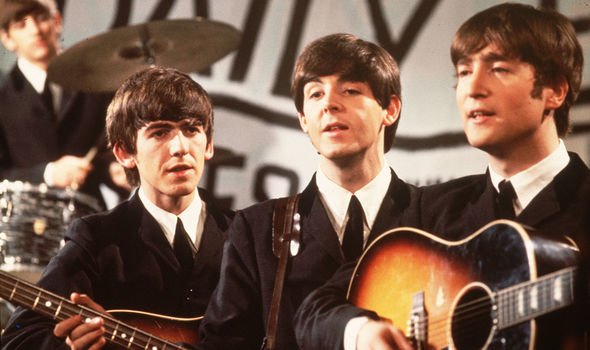
When I hear this song, it reminds me of just how great the Beatles were at songwriting and harmonizing. My all time favorite rock singers includes John Lennon…this song demonstrates why. His voice could cut through anything and is always sharp…and has been widely imitated but it wasn’t liked by John himself who notoriously wanted it covered up on recordings.

The song was on Meet The Beatles…the first Beatle album I ever listened to. The vocals were a three part harmony sung by Harrison, Lennon and McCartney. The song was written by Lennon and McCartney.

This was the first Beatles composition that was commented on by a music critic. William Mann wrote in The London Times December 27, 1963, that the song had “pandiatonic  clusters.” Musicians and parents who knew something about music knew there was something more than just hair with this band. The songs they were hearing were more sophisticated than the regular pop songs at the time.

Capitol of Canada released a couple of unique singles of their own creation in early 1964 to capitalize on the success of Beatlemania in that country. The second of which was “All My Loving” paired with “This Boy” as its flip side.

The song peaked at #1 in Canada and #53 in the Billboard 100.

John Lennon: “Just my attempt at writing one of those three-part harmony Smokey Robinson songs,”

From Songfacts

John Lennon wrote this song. One of his early compositions, it is seemingly simple, but very clever. The song contains only a few notes, but the space between the notes is filled by the arrangements. It’s the same technique you hear in Liszt’s “Liebestraum,” the piano piece in Schumann’s Davidsbündlertänze and in Beethoven’s “Moonlight Sonata.”

George Harrison: “It was John (Lennon) trying to do Smokey (Robinson).”

The Beatles performed this on their second Ed Sullivan Show appearance – Feb 16, 1964. They played six songs on the show that night, and this provided a slow change of pace from the uptempo songs like “She Loves You” and “I Want To Hold Your Hand.” The Beatles were just beginning their breakthrough in America and got a huge audience from the show.

This was used in Ringo’s big scene in The Beatles movie A Hard Day’s Night. The version used in the film is an instrumental renamed “Ringo’s Theme (This Boy),” and without any harmony singing.

This was one of the first songs on which The Beatles used a 4-track recorder. 

Artists to cover this song include Tom Baxter, David Bowie, Sean Lennon, George Martin, Delbert McClinton and The Nylons

George taking a stroll down memory lane:

This Boy

That boy
Took my love away
Though he’ll regret it someday
But this boy wants you back again

That boy
Isn’t good for you
Though he may want you, too
This boy wants you back again

Oh, and this boy would be happy
Just to love you, but oh my
That boy won’t be happy
‘Til he’s seen you cry

This boy
Wouldn’t mind the pain
Would always feel the same
If this boy gets you back again

This boy, this boy, this boy

Twilight Zone – Will the Real Martian Please Stand Up

★★★★★  May 26, 1961 Season 2 Episode 28

If you want to see where we are…HERE is a list of the episodes.

This one makes my top ten of the Twilight Zones. It has a little of everything. You get to know the characters well in this episode. The one that lightened the episode up was the great character actor Jack Elam who played Avery…listed as the “crazy man.” This episode has some great dialog and it is a “who is it?” until the very end.

A bus of 6 or is it 7 exits the bus because of an icy bridge in some far away place. There is a suspected Martian in the bunch…but who is it? Will paranoia turn everyone against each other? This episode is just as much about human nature as it is Martians.

This episode is a great one.

SPOILERS BELOW

Barney Phillips on the third eye: They had run a wire over my head concealed in my hair and one of the property men was concealed behind me, manipulating the trigger on the wire to effectuate the rolling of the eyeball in the socket. They had done a very big makeup job. They made a cast of the eye socket. I guess they must have spent well over a day working with me fitting that device prior to the actual shooting of the show.

Every time that that particular segment is televised, without exception, the next day I’m greeted by somebody, some total stranger along the way, who says, My God, where’s the third eye?

This show was written by Rod Serling

Rod Serling’s Opening Narration: 

Wintry February night, the present. Order of events: a phone call from a frightened woman notating the arrival of an unidentified flying object, then the checkout you’ve just witnessed, with two state troopers verifying the event – but with nothing more enlightening to add beyond evidence of some tracks leading across the highway to a diner. You’ve heard of trying to find a needle in a haystack? Well, stay with us now, and you’ll be part of an investigating team whose mission is not to find that proverbial needle, no, their task is even harder. They’ve got to find a Martian in a diner, and in just a moment you’ll search with them, because you’ve just landed – in The Twilight Zone.

Summary

After an anonymous phone call about a spacecraft that crashed in a frozen wood, two police officers find evidence that the event really happened. Apparently one alien had walked away from the spot. They drive to the nearby highway Café and they find a bus with seven passengers waiting for the reopening of a snowed in bridge. However the driver says that he had only six passengers when he parked the bus. While interrogating the travelers, weird things happen in the diner, with the lights switching on and off and the turntable turning on and off.

Rod Serling’s Closing Narration:

Incident on a small island, to be believed or disbelieved. However, if a sour-faced dandy named Ross or a big, good-natured counterman who handles a spatula as if he’d been born with one in his mouth, – if either of these two entities walk onto your premises, you’d better hold their hands – all three of them – or check the color of their eyes – all three of them. The gentlemen in question might try to pull you in – to The Twilight Zone.

CAST

Rod Serling…Narrator
John Hoyt…Ross, the businessman
Jean Willes…Ethel McConnell, the dancer
Jack Elam…Avery, the crazy man
Barney Phillips…Haley, the cook
John Archer…Trooper Bill Padgett
William Kendis…Olmstead, the bus driver
Morgan Jones…Trooper Dan Perry
Gertrude Flynn…Rose Kramer, the older wife
Bill Erwin…Peter Kramer, the older husband
Jill Ellis…Connie Prince, the younger wife
Ron Kipling…George Prince, the younger husband

John’s Children – Desdemona

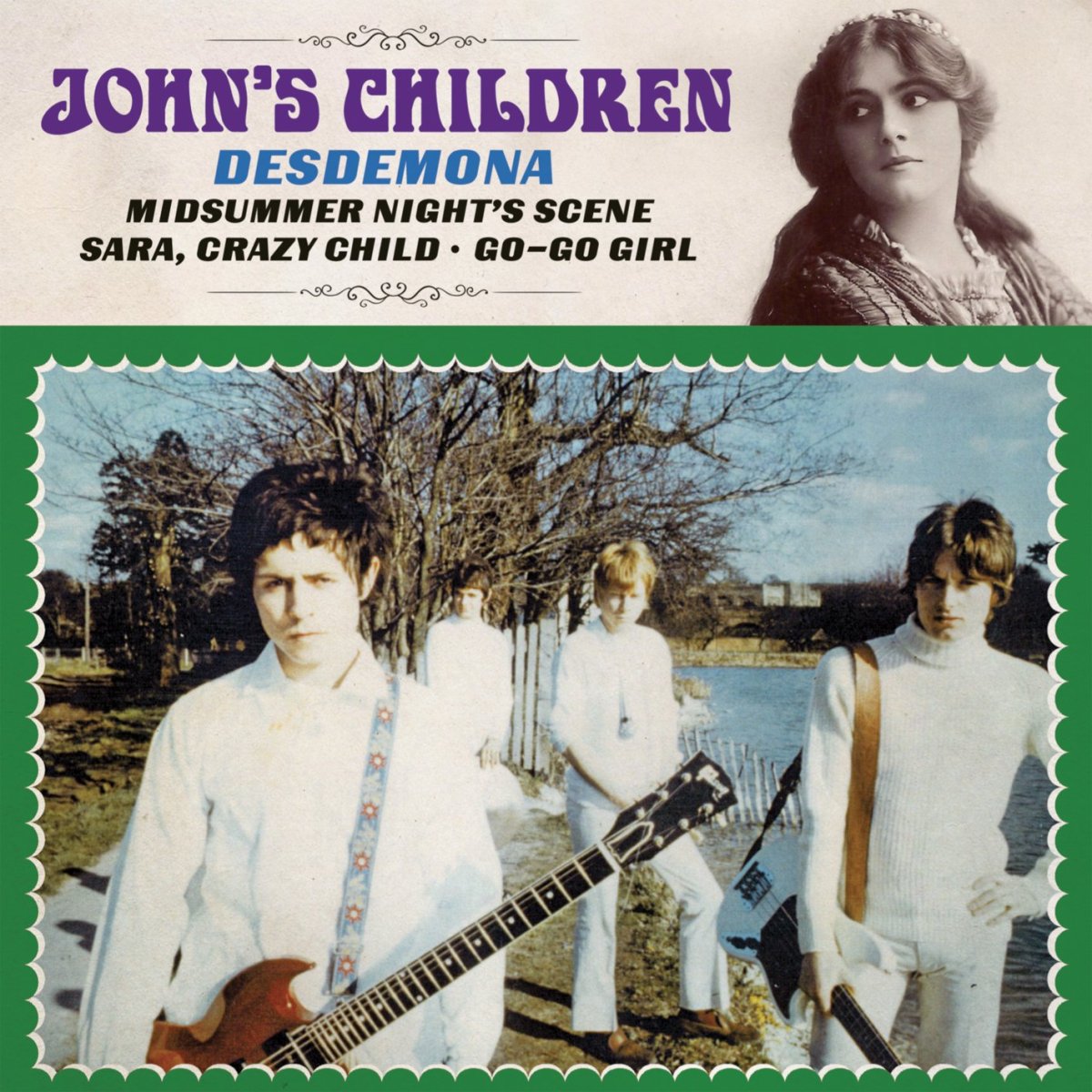
Marc Bolan didn’t appear on John’s Children’s first album Orgasm album released in 1967…he did join after the album was completed…although he did write, play guitar and sing the backing vocals on this song.

The song failed to chart in Britain, possibly due to the fact it was banned by the BBC for the lyric “lift up your skirt and fly.” However, the song was a minor hit in Europe. The band consisted of Andy Ellison on vocals, John Hewlett on guitar and bass, Geoff McLelland on guitar and Chris Townson on drums. The band started as The Few in Surrey in 1964. 

 Marc Bolan joined the group for a time as their principal singer and songwriter as well as several unreleased cuts that have surfaced on reissues. Bolan departed in an argument with Napier-Bell (producer), and the group released a couple more flop singles before disbanding in 1968.

They had promise…not a bad sounding mid-sixties mod band. 

Some ex-members of John’s Children were involved with the obscure British groups Jook, Jet, and Radio Stars in the ’70s.

Desdemona

Desdemona just because
You’re the daughter of a man
He may be rich he’s in a ditch
He does not understand
Just how to move or rock and roll
To the conventions of the young

Desdemona, Desdemona
Desdemona Desdemona
Desdemona, Desdemona

Lift up your skirt and fly
Just because my friend and I
Got a jute joint by the Seine
Does not mean I’m past fourteen
And cannot play the game
I’m glad I split and got a pad
On Boulevard Rue Fourteen

Desdemona, Desdemona
Desdemona Desdemona
Desdemona, Desdemona

Lift Up your skirt and fly
Just because Toulouse Lautrec
Painted some chick in the rude
Doesn’t give you the right
To steal my night
And leave me naked in the nude
Well just because the touch of your hand
Can turn me on just like a stick

Desdemona, Desdemona
Desdemona Desdemona
Desdemona, Desdemona
Lift up your skirt and speak

Twilight Zone – The Mind and the Matter

★★1/2 May 12, 1961 Season 2 Episode 27

If you want to see where we are…HERE is a list of the episodes.

Spoilers… this episode is hard to write about without giving some away. I like the concept of the episode but I found the plot lacking.

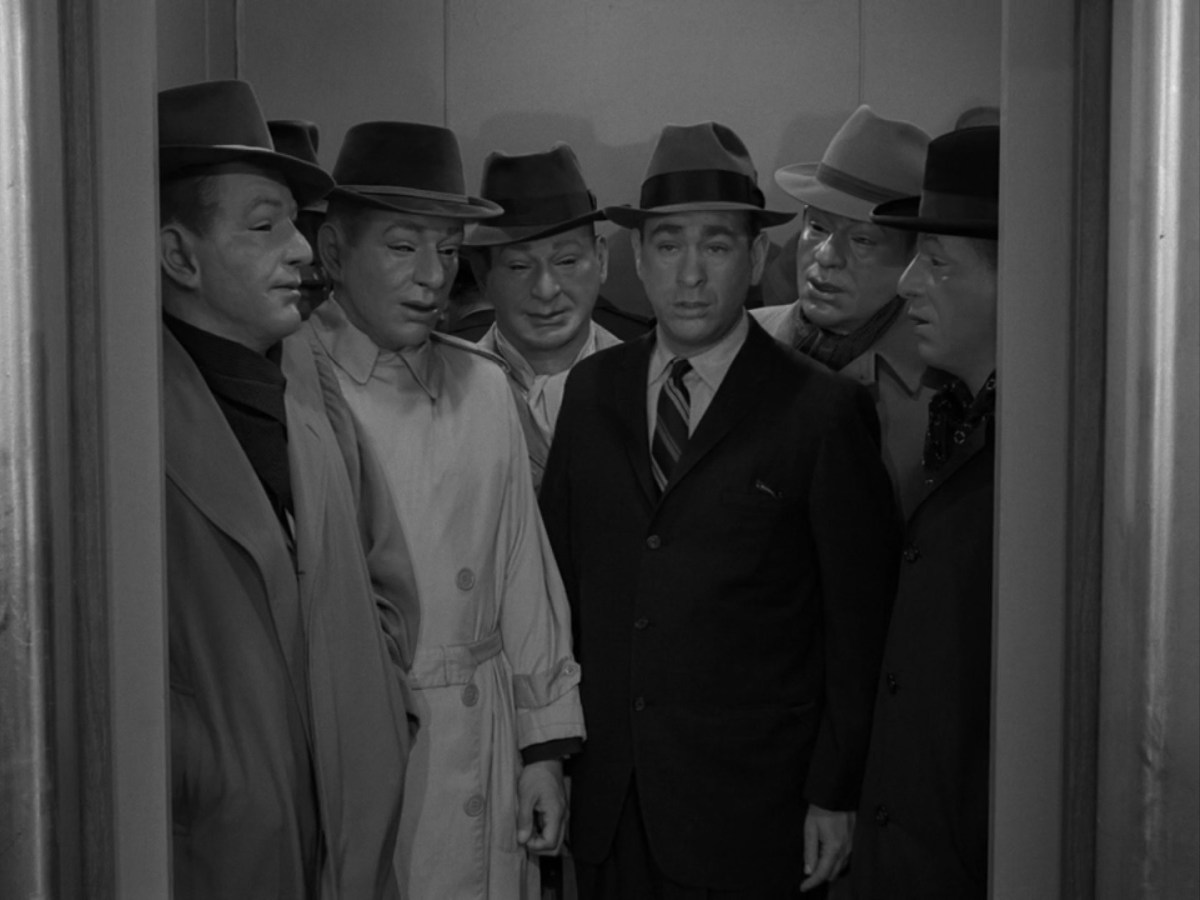
This is a relatively forgettable Twilight Zone episode. Shelley Berman plays Archibald Beechcroft who is fed up with humanity. He is given a book which tells him that with the proper mental state he can eliminate the stresses of the day…namely every one else on earth but him. He is not a likeable person so we feel very little sympathy for him.

Beechcroft detests people, but he feels he has no alternative but to suffer the crowds and the noise until an office boy, trying to make up for spilling coffee on his suit, gives him a book on mind power. After reading this, Beechcroft is convinced that concentration can do anything, and he proves it by making his landlady disappear, followed by everybody else in the world.

The good thing about this episode is the special effects.

This show was written by Rod Serling

Rod Serling’s Opening Narration: 

A brief if frenetic introduction to Mr. Archibald Beechcroft. A child of the 20th century, a product of the population explosion, and one of the inheritors of the legacy of progress. Mr. Beechcroft again, this time Act Two of his daily battle for survival, and in just a moment our hero will begin his personal one-man rebellion against the mechanics of his age, and to do so he will enlist certain aides available only in the Twilight Zone.

Summary

The intolerant Archibald Beechcroft is a clerk of the Central Park Insurance Co. that hates everybody. When a colleague gives him a book about the power of the mind, Archibald reads the magic book and decides to wipe out the human race. However, he feels lonely and uses his ability to make the entire population of his city his perfect clone, discovering how hateful the world would be.

Rod Serling’s Closing Narration:

Mr. Archibald Beechcroft, a child of the twentieth century, who has found out through trial and error – and mostly error – that with all its faults, it may well be that this is the best of all possible worlds. People notwithstanding, it has much to offer. Tonight’s case in point – in the Twilight Zone.

CAST

Rod Serling…Narrator
Shelley Berman…Archibald Beechcroft
Jack Grinnage…Henry
Chet Stratton…Mr. Rogers
Robert McCord…Elevator Operator
Jeane Wood…Landlady

Twilight Zone – Shadow Play

★★★★★  May 5, 1961  Season 2 Episode 26

If you want to see where we are…HERE is a list of the episodes.

This one is a Twilight Zone classic. Dennis Weaver stars in this episode as Adam Grant. Weaver has always been a favorite of mine. He starred in the movie Duel, as McCloud, and in the first 9 seasons of Gunsmoke as Chester. Again and again The Twilight Zone cast these episodes perfectly.

This one is about a nightmare that Adam Grant finds himself trapped in. Grant has created this world with many of the same faces but different characters. It starts with him in a court room being convicted of first degree murder. We don’t see the crime…just Adam being thrown in jail and on death row…but something is off and he knows it. This episode is one of the must see Twilight Zones.

The writer Charles Beaumont once again explores a nightmare in Shadow Play as he did in Perchance for a Dream.

From IMDB: The title refers to the ancient art of shadow play or shadow puppetry using opaque figures that cast shadows on clear curtains. Such entertainment is known in countries throughout the world and is presented in theaters and by traveling troupes.

This show was written by Charles Beaumont and Rod Serling

Rod Serling’s Opening Narration: 

Adam Grant, a nondescript kind of man, found guilty of murder and sentenced to the electric chair. Like every other criminal caught in the wheels of justice, he’s scared, right down to the marrow of his bones. But it isn’t prison that scares him, the long, silent nights of waiting, the slow walk to the little room, or even death itself. It’s something else that holds Adam Grant in the hot, sweaty grip of fear, something worse than any punishment this world has to offer, something found only in – The Twilight Zone.

Summary

When Adam Grant is found guilty of first degree murder and sentenced he lashes out telling everyone that he will not be murdered again. Grant claims to be having a recurring nightmare where he is found guilty and executed. The characters around him change and so he argues that all of them will vanish if he dies. It leads newspaperman Paul Carson to question what is real and what might just be a figment of someone else’s imagination. DA Henry Ritchie visits Grant in jail and decides to try and do something about his claims, no matter how far-fetched his claims might be.

Rod Serling’s Closing Narration:

We know that a dream can be real, but who ever thought that reality could be a dream? We exist, of course, but how, in what way? As we believe, as flesh-and-blood human beings, or are we simply parts of someone’s feverish, complicated nightmare? Think about it, and then ask yourself, do you live here, in this country, in this world, or do you live, instead, – in The Twilight Zone?

CAST

Rod Serling…Narrator
Dennis Weaver…Adam Grant
Harry Townes…District Attorney Henry Ritchie
Wright King…Paul Carson
Bernie Hamilton…Coley
William Edmonson…Jiggs
Anne Barton…Carol Ritchie
Tommy Nello…Phillips
Mack Williams…Father Beaman
Gene Roth…Judge

Traffic – Paper Sun

Lets go back to the psychedelic sixties with this song that was released in the Summer of Love. The song fit perfectly with the times even featuring an Indian sitar played by Dave Mason. That year had singles such as  “Strawberry Fields Forever”, “Ruby Tuesday”, “Sunshine Of Your Love”, “Nights In White Satin”, “Whiter Shade of Pale”, “See Emily Play”…the list goes on and on. This is a great example of British psychedelia.

Steve Winwood and Jim Capaldi wrote this song in  1967 when Winwood and Capaldi were members of two different bands.  They were on tour together, and after a show put the song together in a hotel room.

When Winwood and Capaldi formed Traffic a short time later with Dave Mason and Chris Wood, they recorded Paper Sun and released it as their first single.

The song peaked at #5 in the UK, #4 in Canada, and #94 in the Billboard 100 in 1967.

Jim Capaldi: “I got the title from a newspaper in a boarding house in Newcastle,”  “I was half-asleep, lying there writing this lyric in my head at about 3:30 in the morning. I woke up Steve with this idea and then we went into the living room where there was a little upright piano and finished the song.”

Paper Sun

So you think you’re having good times
With the boy that you just met
Kicking sand from beach to beach
Your clothes are soaking wet
But if you look around and see
A shadow on the run (on the run)
Don’t be too upset because it’s just a paper sun

Ah paper sun, ah paper sun

In the room where you’ve been sleeping
All our clothes are thrown about
Cigarettes burn window sills
Your meter’s all run out
But there again it’s nothing
You just split when day is done (day is gone)
Hitching lifts to nowhere, hung up on the paper sun

Ah paper sun, ah paper sun

Standing in the cool of my room
Fresh cut flowers give me sweet perfume (too much sun will burn)
Too much sun will burn (too much sun will burn)
Too much sun will burn

When you’re feeling tired and lonely
You see people going home
You can’t make the train fare
Or the sixpence for the phone
And icicles you’re crying
Down your cheek have just begun
Don’t be sad, good times are had
Beneath the paper sun

Ah paper sun, ah paper sun

Daylight breaks while you sleep on the sand
A seagull is stealing the ring from your hand
The boy who had given you so much fun
Has left you so cold in the paper sun
In the paper sun, in the paper sun, in the paper sun, in the paper sun

Twilight Zone – The Silence

★★★★★  April 28, 1961 Season 2 Episode 25

If you want to see where we are…HERE is a list of the episodes.

This one is a very good episode with some fine acting by Franchot Tone and Liam Sullivan. There is not just one twist at the end of the episode but two of them. This episode has no supernatural events and it is not a typical episode of the Twilight Zone. It’s pure story and what a story. It was set in a prestigious Gentlemen’s Club with a talkative younger man named Jamie Tennyson (Liam Sullivan) and the grumpy older fellow named Colonel Archie Taylor (Franchot Tone).

Tennyson annoyed Taylor to no end with his non stop chatter. We didn’t get to see a lot of this but Taylor does hate the man. After handing him a note and then announcing to every one…he bet Tennyson $500,000 that he could not be completely quiet for a year. The story goes from there.

Below is a very interesting real life story on the set about the wonderful character actor Franchot Tone.

Franchot Tone                                    Liam Sullivan

April 28 in Twilight Zone History: Celebrating the 1961 premiere of 'The  Silence' April 28 in Twilight Zone History: Celebrating the 1961 premiere  of 'The Silence'Liam Sullivan — The Movie Database (TMDb)

The episode present a lot of challenges. The first headache went to George Clemens (Cinematographer). The set where the character Sullivan was to be imprisoned was made up entirely of panes of glass. When I saw the set, I pretty near lost my lunch, Clemens recalls. How in the world am I going to get a light in there, and show light, without getting reflections? But Buck Houghton had hired the right man, and Clemens persevered. Once I started on the thing, he says, I think I only had to take two panes of glass out in the whole picture.

The first days shooting went just fine. The opening and closing scenes of the episode, both of which take place in the main room of the mens club, were completed. The company broke for the weekend. But the biggest problem was yet to come.

On the second day of shooting, Franchot Tone didn’t show up, Serling recalled years later. And we waited and we waited. The call is six in the morning. When it got to be ten a.m. and everybody had been sitting there in their own smoke waiting and no Franchot Tone, we get his agent who tracks him down. He is in a clinic.

Stories differ. According to Liam Sullivan, Tone told him that he’d been at a party and, in attempting to pick a flower for his date off a bush on the terrace, had fallen down a hillside and landed on the driveway of the house next door. According to Serling, Tone had approached a girl in the parking lot of a restaurant and her boyfriend had taken offense and beaten him up. Whatever the truth, the result was still the same: half of Tones face was scraped raw.

With one days shooting in the can, recasting was out of the question. Serling: I said, So be it. Come on in, Franch, and well shoot the other side of your face, which we did.

The result was indeed odd. During the opening scene of the episode, we see Tone full face. When the scene changes to the glass cage in which Sullivan is imprisoned, we only see Tones face in profile or with half of it obscured. Then in the final scene, we see Tone full-face again.

Surprisingly, the effect works to the episodes advantage. The scenes in the middle are those in which Tone tries to convince Sullivan to break his silence, using every dirty trick he can think of, including relaying ugly rumors about Sullivans wife. Speaking out of the corner of his mouth, only half-turned toward Sullivan, Tone seems predatory and sly, what he says takes on an added suggestiveness. The impact was not lost. In fact, director Boris Sagal once recalled that at the time a number of critics complimented him on the effect!

This show was written by Rod Serling

Rod Serling’s Opening Narration: 

The note that this man is carrying across a club room is in the form of a proposed wager, but it’s the kind of wager that comes without precedent. It stands alone in the annals of bet-making as the strangest game of chance ever offered by one man to another. In just a moment, we’ll see the terms of the wager and what young Mr. Tennyson does about it. And in the process, we’ll witness all parties spin a wheel of chance in a very bizarre casino called the Twilight Zone.

Summary

Jamie Tennyson is an overly talkative member of a private men’s club. He is challenged by fellow member Col. Archie Taylor to keep his mouth shut for one year. Should he do so, he would win $500,000. Taylor dislikes Tennyson and if nothing else, finds this a way to get a bit of peace and quiet at the club. Tennyson will live in a room in the club, under observation and will communicate in writing only. As the months go by, Taylor begins to worry that Tennyson may just succeed. He can’t believe Tennyson’s will but neither party proves to be completely honorable.

SPOILER VIDEO…DON’T WATCH 

Rod Serling’s Closing Narration:

Mr. Jamie Tennyson, who almost won a bet, but who discovered somewhat belatedly that gambling can be a most unproductive pursuit, even with loaded dice, marked cards, or, as in his case, some severed vocal cords. For somewhere beyond him, a wheel was turned, and his number came up black thirteen. If you don’t believe it, ask the croupier, the very special one who handles roulette – in The Twilight Zone.

CAST

Rod Serling…Narrator
Franchot Tone…Archie Taylor
Liam Sullivan…Jamie Tennyson
Jonathan Harris…George Alfred
Cyril Delevanti…Franklin
Everett Glass…Club Member
Felix Locher…Club Member

Twilight Zone – The Rip Van Winkle Caper

★★★★  April 21, 1961 Season 2 Episode 24

If you want to see where we are…HERE is a list of the episodes.

This episode shows what greed and selfishness can do to the best laid plans. Oscar Beregi Jr who plays Farwell, was in three Twilight Zones including the classic  Deaths-Head Revisited and is very good. This is a time travel episode…sort of. Four expert criminals and one is a professor (Farwell) rob a gold shipment. There is no way they can cash in with everyone looking for the gold and them.

The professor Farwell devised a way ( suspended animation) for them to sleep a 100 years so they would be able to sell the gold in the future . The show is carried by the two veteran character actors, Oscar Beregi, Jr. and Simon Oakland. Like most Twilight Zones…I  enjoyed the twist at the end. It’s a good solid episode.

If Farwell would have used his head,  he could have patented the suspended animation process and would have been rich without turning to a life of crime.

The Rip Van Winkle Caper was filmed at the same location as the previous episode “A Hundred Yards Over The Rim.”

The futuristic vehicle which is shown at the end of the episode is a modified version of Robby the Robot’s car, first constructed by MGM for the science fiction classic Forbidden Planet

$1,000,000 in gold in 1961 ($35.50/oz.) would weigh over 28,000 ounces or 1760 lbs.

This show was written by Rod Serling

Rod Serling’s Opening Narration: 

Introducing, four experts in the questionable art of crime: Mr. Farwell, expert on noxious gases, former professor, with a doctorate in both chemistry and physics; Mr. Erbie, expert in mechanical engineering; Mr. Brooks, expert in the use of firearms and other weaponry; and Mr. De Cruz, expert in demolition and various forms of destruction. The time is now, and the place is a mountain cave in Death Valley, U.S.A. In just a moment, these four men will utilize the services of a truck placed in cosmoline, loaded with a hot heist cooled off by a century of sleep, and then take a drive into The Twilight Zone.

Summary

Four thieves steal $1 million in gold bullion in a train robbery and hide the money in a mountainside cave. The four plan to go into suspended animation for approximately 100 years when they hope to awaken as extremely rich men with their heist long forgotten. When they awaken, they’re not quite sure what year it is. One of them, De Cruz, has his eye on getting as much of the gold for himself as he possibly can. The world they have awakened in isn’t exactly what they had hoped for.

Rod Serling’s Closing Narration:

The last of four Rip Van Winkles, who all died precisely the way they lived, chasing an idol across the sand to wind up bleached dry in the hot sun as so much desert flotsam, worthless as the gold bullion they built a shrine to. Tonight’s lesson – in The Twilight Zone.

CAST

Rod Serling…Narrator
Simon Oakland…DeCruz
Oscar Beregi Jr….Farwell
Lew Gallo…Brooks
John Mitchum…Erbie
Wallace Rooney…George
Shirley O’Hara…George’s wife