Twilight Zone – The Obsolete Man

★★★★★  June 2, 1961 Season 2 Episode 29

If you want to see where we are…HERE is a list of the episodes.

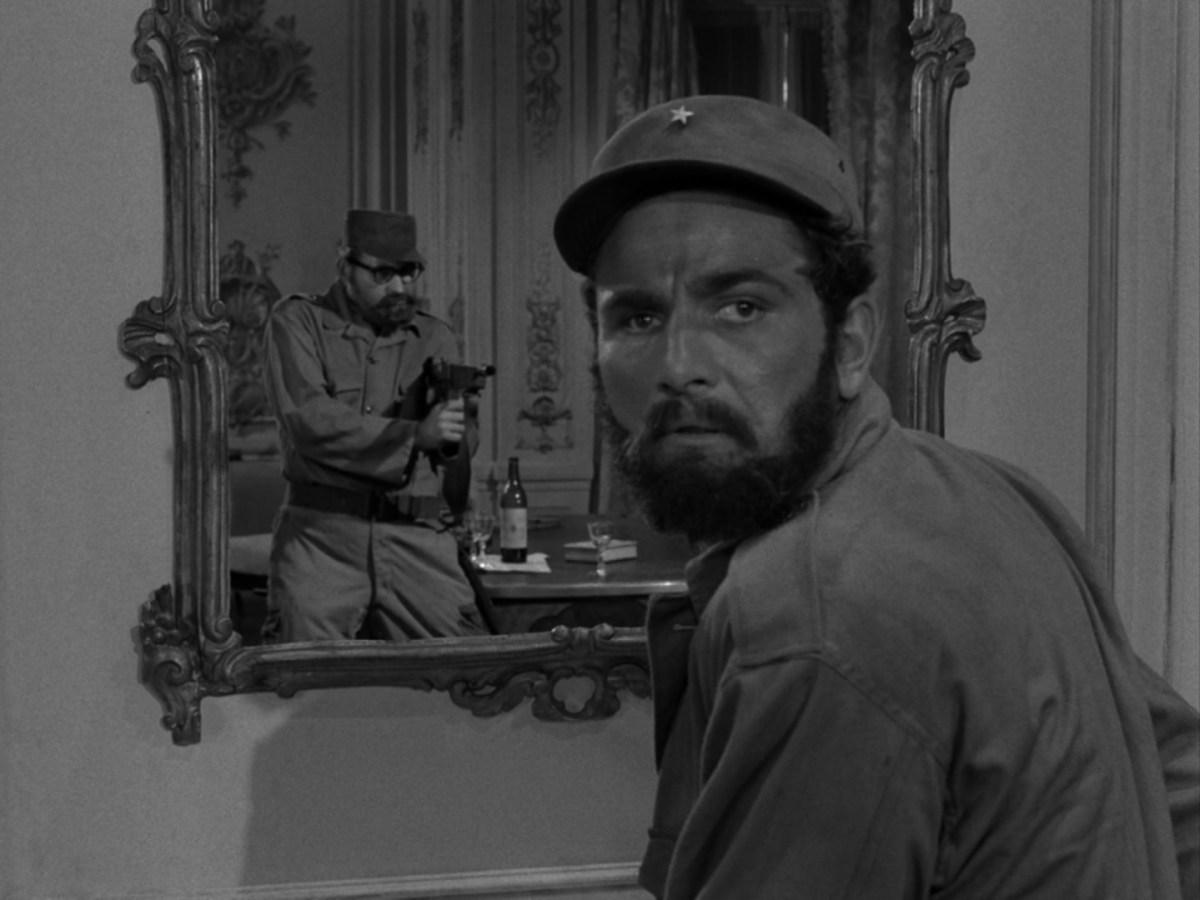
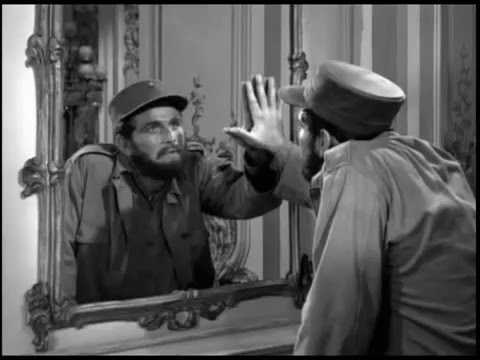
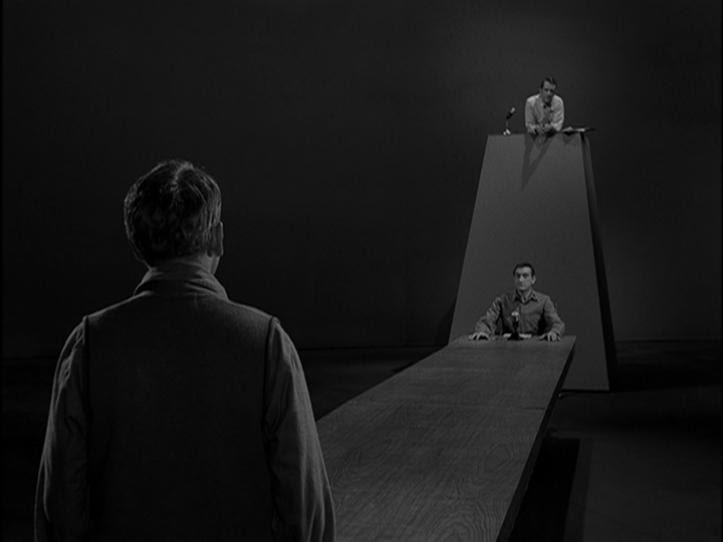
This episode is a cautionary tale of a totalitarian state of the near future. This one ranks as one of the best of the series. The government in The Obsolete Man determines if you are necessary or as the title states…obsolete.  The plot was running theme with Serling who wrote about the fascist governments of World War II that he encountered while in the war…and the suppression of the inherent rights of a human being.

.It has two main characters. Romney Wordsworth, a Christian librarian played by Burgess Meredith. The second is the Chancellor, played by Fritz Weaver. Both of them play off each other with sharp, powerful dialogue. Wordsworth is the victim in this but slowly turns the tables on the Chancellor until him, not the state, is in charge of the situation although it comes at a great cost. Casting again hit a homerun with this episode.

A five star classic and a grand finale to the 2nd season. This episode is not only a classic…but an important one to watch and learn…and should not to be forgotten

After the classic Meredith episode Time Enough at Last…books were again Meredith’s character main focal point.

This show was written by Rod Serling

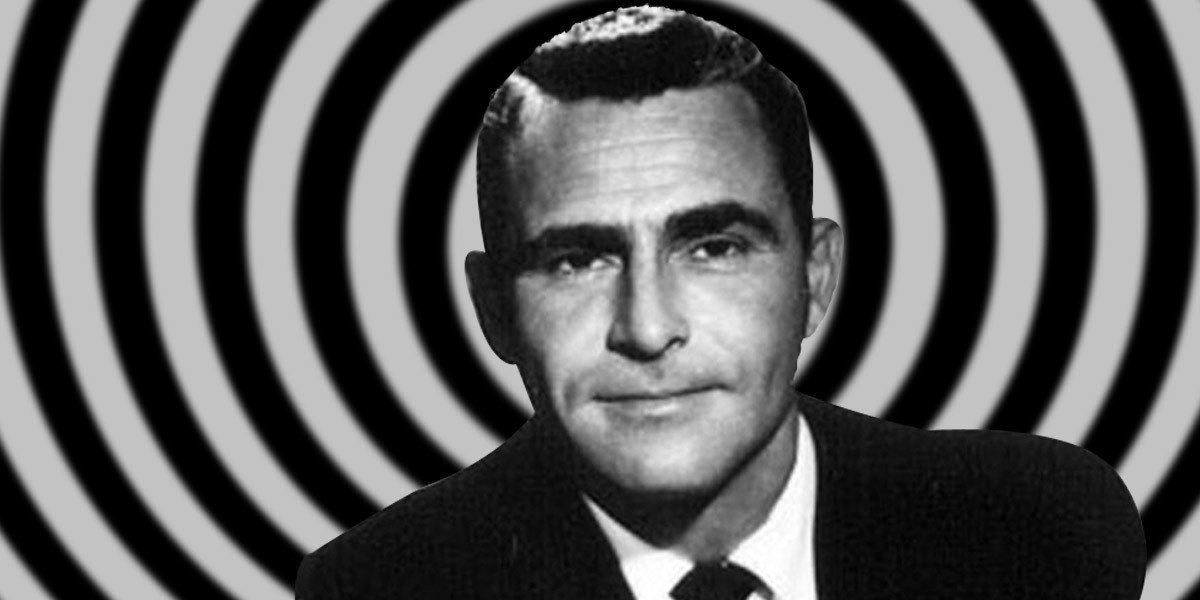
Rod Serling’s Opening Narration: 

You walk into this room at your own risk, because it leads to the future, not a future that will be but one that might be. This is not a new world, it is simply an extension of what began in the old one. It has patterned itself after every dictator who has ever planted the ripping imprint of a boot on the pages of history since the beginning of time. It has refinements, technological advances, and a more sophisticated approach to the destruction of human freedom. But like every one of the super-states that preceded it, it has one iron rule: logic is an enemy and truth is a menace. This is Mr. Romney Wordsworth, in his last forty-eight hours on Earth. He’s a citizen of the State but will soon have to be eliminated, because he’s built out of flesh and because he has a mind. Mr. Romney Wordsworth, who will draw his last breaths in The Twilight Zone.

Summary

In a futuristic totalitarian world, meek and mild-mannered librarian Romney Wordsworth finds himself on trial for being obsolete. This future society has decided on everything people need to know. There is no God and there are no books. Society doesn’t need librarians. Romney makes an impassioned plea about his rights and free will but the judge in the case, the Chancellor, will have nothing of it. The jury finds Romney obsolete and orders him to be executed. As he can choose the method of his death, Romney’s plans include a little surprise for the Chancellor.

Rod Serling’s Closing Narration:

The chancellor, the late chancellor, was only partly correct. He was obsolete. But so is the State, the entity he worshiped. Any state, any entity, any ideology which fails to recognize the worth, the dignity, the rights of Man…that state is obsolete. A case to be filed under “M” for “Mankind” – in The Twilight Zone.

CAST

Rod Serling…Narrator
Burgess Meredith…Romney Wordsworth
Fritz Weaver…Chancellor
Josip Elic…the Subaltern
Harry Fleer…Guard
Harold Innocent…Man in Crowd

My Life in the Shadow of The Twilight Zone: TZ Promo: “The Obsolete Man”  (6/02/1961)

Beatles – This Boy

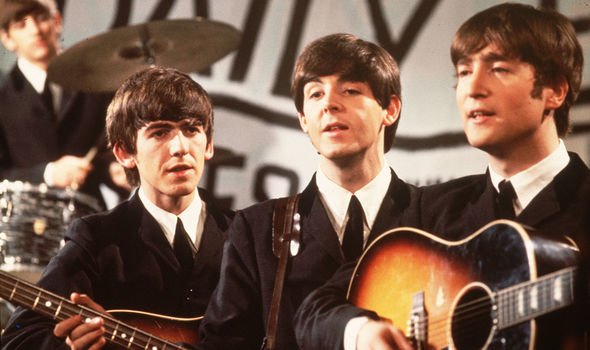
When I hear this song, it reminds me of just how great the Beatles were at songwriting and harmonizing. My all time favorite rock singers includes John Lennon…this song demonstrates why. His voice could cut through anything and is always sharp…and has been widely imitated but it wasn’t liked by John himself who notoriously wanted it covered up on recordings.

The song was on Meet The Beatles…the first Beatle album I ever listened to. The vocals were a three part harmony sung by Harrison, Lennon and McCartney. The song was written by Lennon and McCartney.

This was the first Beatles composition that was commented on by a music critic. William Mann wrote in The London Times December 27, 1963, that the song had “pandiatonic  clusters.” Musicians and parents who knew something about music knew there was something more than just hair with this band. The songs they were hearing were more sophisticated than the regular pop songs at the time.

Capitol of Canada released a couple of unique singles of their own creation in early 1964 to capitalize on the success of Beatlemania in that country. The second of which was “All My Loving” paired with “This Boy” as its flip side.

The song peaked at #1 in Canada and #53 in the Billboard 100.

John Lennon: “Just my attempt at writing one of those three-part harmony Smokey Robinson songs,”

From Songfacts

John Lennon wrote this song. One of his early compositions, it is seemingly simple, but very clever. The song contains only a few notes, but the space between the notes is filled by the arrangements. It’s the same technique you hear in Liszt’s “Liebestraum,” the piano piece in Schumann’s Davidsbündlertänze and in Beethoven’s “Moonlight Sonata.”

George Harrison: “It was John (Lennon) trying to do Smokey (Robinson).”

The Beatles performed this on their second Ed Sullivan Show appearance – Feb 16, 1964. They played six songs on the show that night, and this provided a slow change of pace from the uptempo songs like “She Loves You” and “I Want To Hold Your Hand.” The Beatles were just beginning their breakthrough in America and got a huge audience from the show.

This was used in Ringo’s big scene in The Beatles movie A Hard Day’s Night. The version used in the film is an instrumental renamed “Ringo’s Theme (This Boy),” and without any harmony singing.

This was one of the first songs on which The Beatles used a 4-track recorder. 

Artists to cover this song include Tom Baxter, David Bowie, Sean Lennon, George Martin, Delbert McClinton and The Nylons

George taking a stroll down memory lane:

This Boy

That boy
Took my love away
Though he’ll regret it someday
But this boy wants you back again

That boy
Isn’t good for you
Though he may want you, too
This boy wants you back again

Oh, and this boy would be happy
Just to love you, but oh my
That boy won’t be happy
‘Til he’s seen you cry

This boy
Wouldn’t mind the pain
Would always feel the same
If this boy gets you back again

This boy, this boy, this boy

Twilight Zone – Will the Real Martian Please Stand Up

★★★★★  May 26, 1961 Season 2 Episode 28

If you want to see where we are…HERE is a list of the episodes.

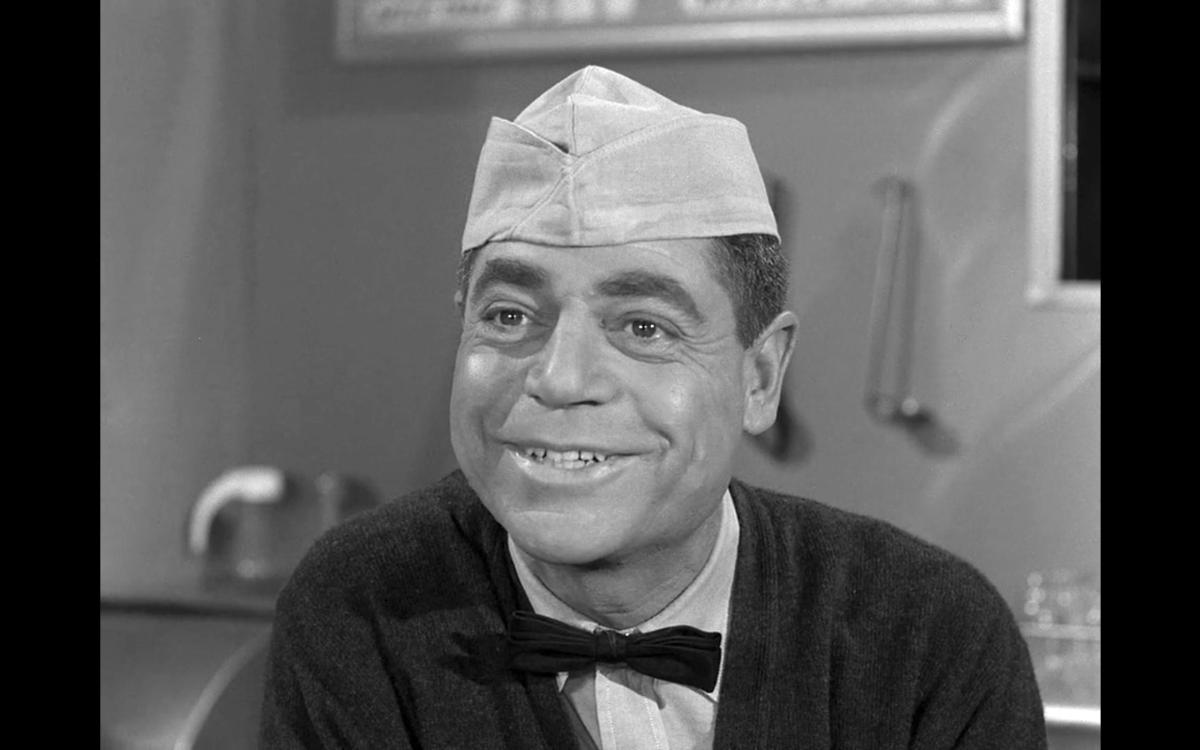
This one makes my top ten of the Twilight Zones. It has a little of everything. You get to know the characters well in this episode. The one that lightened the episode up was the great character actor Jack Elam who played Avery…listed as the “crazy man.” This episode has some great dialog and it is a “who is it?” until the very end.

A bus of 6 or is it 7 exits the bus because of an icy bridge in some far away place. There is a suspected Martian in the bunch…but who is it? Will paranoia turn everyone against each other? This episode is just as much about human nature as it is Martians.

This episode is a great one.

SPOILERS BELOW

Barney Phillips on the third eye: They had run a wire over my head concealed in my hair and one of the property men was concealed behind me, manipulating the trigger on the wire to effectuate the rolling of the eyeball in the socket. They had done a very big makeup job. They made a cast of the eye socket. I guess they must have spent well over a day working with me fitting that device prior to the actual shooting of the show.

Every time that that particular segment is televised, without exception, the next day I’m greeted by somebody, some total stranger along the way, who says, My God, where’s the third eye?

This show was written by Rod Serling

Rod Serling’s Opening Narration: 

Wintry February night, the present. Order of events: a phone call from a frightened woman notating the arrival of an unidentified flying object, then the checkout you’ve just witnessed, with two state troopers verifying the event – but with nothing more enlightening to add beyond evidence of some tracks leading across the highway to a diner. You’ve heard of trying to find a needle in a haystack? Well, stay with us now, and you’ll be part of an investigating team whose mission is not to find that proverbial needle, no, their task is even harder. They’ve got to find a Martian in a diner, and in just a moment you’ll search with them, because you’ve just landed – in The Twilight Zone.

Summary

After an anonymous phone call about a spacecraft that crashed in a frozen wood, two police officers find evidence that the event really happened. Apparently one alien had walked away from the spot. They drive to the nearby highway Café and they find a bus with seven passengers waiting for the reopening of a snowed in bridge. However the driver says that he had only six passengers when he parked the bus. While interrogating the travelers, weird things happen in the diner, with the lights switching on and off and the turntable turning on and off.

Rod Serling’s Closing Narration:

Incident on a small island, to be believed or disbelieved. However, if a sour-faced dandy named Ross or a big, good-natured counterman who handles a spatula as if he’d been born with one in his mouth, – if either of these two entities walk onto your premises, you’d better hold their hands – all three of them – or check the color of their eyes – all three of them. The gentlemen in question might try to pull you in – to The Twilight Zone.

CAST

Rod Serling…Narrator
John Hoyt…Ross, the businessman
Jean Willes…Ethel McConnell, the dancer
Jack Elam…Avery, the crazy man
Barney Phillips…Haley, the cook
John Archer…Trooper Bill Padgett
William Kendis…Olmstead, the bus driver
Morgan Jones…Trooper Dan Perry
Gertrude Flynn…Rose Kramer, the older wife
Bill Erwin…Peter Kramer, the older husband
Jill Ellis…Connie Prince, the younger wife
Ron Kipling…George Prince, the younger husband

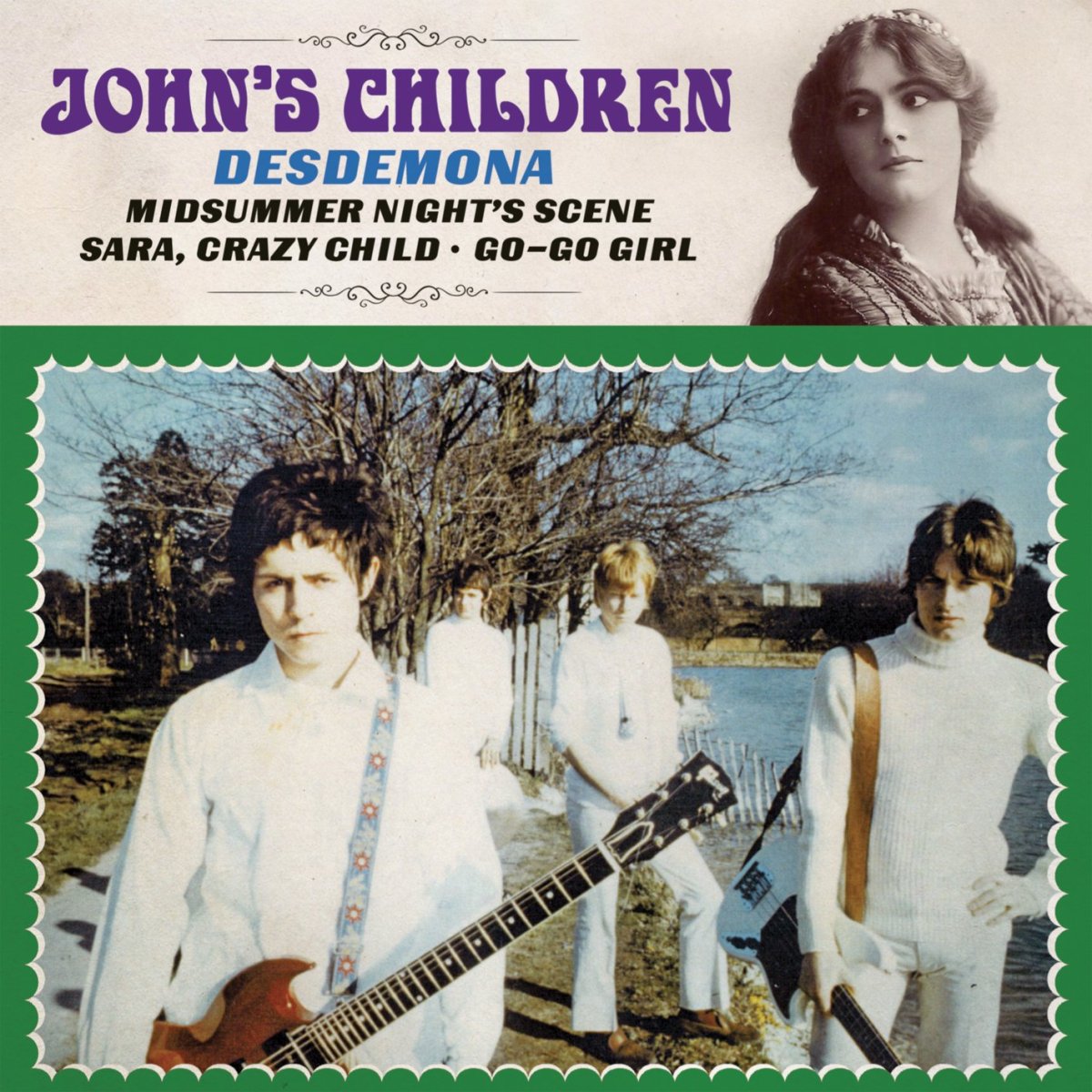
John’s Children – Desdemona

Marc Bolan didn’t appear on John’s Children’s first album Orgasm album released in 1967…he did join after the album was completed…although he did write, play guitar and sing the backing vocals on this song.

The song failed to chart in Britain, possibly due to the fact it was banned by the BBC for the lyric “lift up your skirt and fly.” However, the song was a minor hit in Europe. The band consisted of Andy Ellison on vocals, John Hewlett on guitar and bass, Geoff McLelland on guitar and Chris Townson on drums. The band started as The Few in Surrey in 1964. 

 Marc Bolan joined the group for a time as their principal singer and songwriter as well as several unreleased cuts that have surfaced on reissues. Bolan departed in an argument with Napier-Bell (producer), and the group released a couple more flop singles before disbanding in 1968.

They had promise…not a bad sounding mid-sixties mod band. 

Some ex-members of John’s Children were involved with the obscure British groups Jook, Jet, and Radio Stars in the ’70s.

Desdemona

Desdemona just because
You’re the daughter of a man
He may be rich he’s in a ditch
He does not understand
Just how to move or rock and roll
To the conventions of the young

Desdemona, Desdemona
Desdemona Desdemona
Desdemona, Desdemona

Lift up your skirt and fly
Just because my friend and I
Got a jute joint by the Seine
Does not mean I’m past fourteen
And cannot play the game
I’m glad I split and got a pad
On Boulevard Rue Fourteen

Desdemona, Desdemona
Desdemona Desdemona
Desdemona, Desdemona

Lift Up your skirt and fly
Just because Toulouse Lautrec
Painted some chick in the rude
Doesn’t give you the right
To steal my night
And leave me naked in the nude
Well just because the touch of your hand
Can turn me on just like a stick

Desdemona, Desdemona
Desdemona Desdemona
Desdemona, Desdemona
Lift up your skirt and speak

Twilight Zone – The Mind and the Matter

★★1/2 May 12, 1961 Season 2 Episode 27

If you want to see where we are…HERE is a list of the episodes.

Spoilers… this episode is hard to write about without giving some away. I like the concept of the episode but I found the plot lacking.

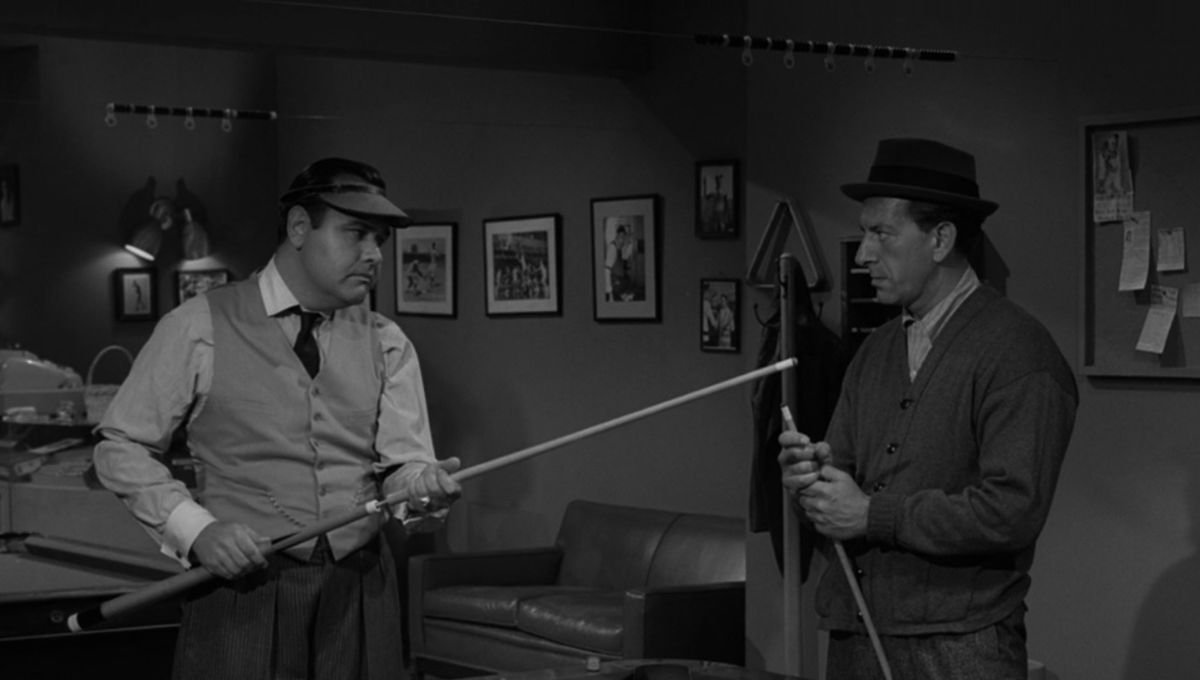
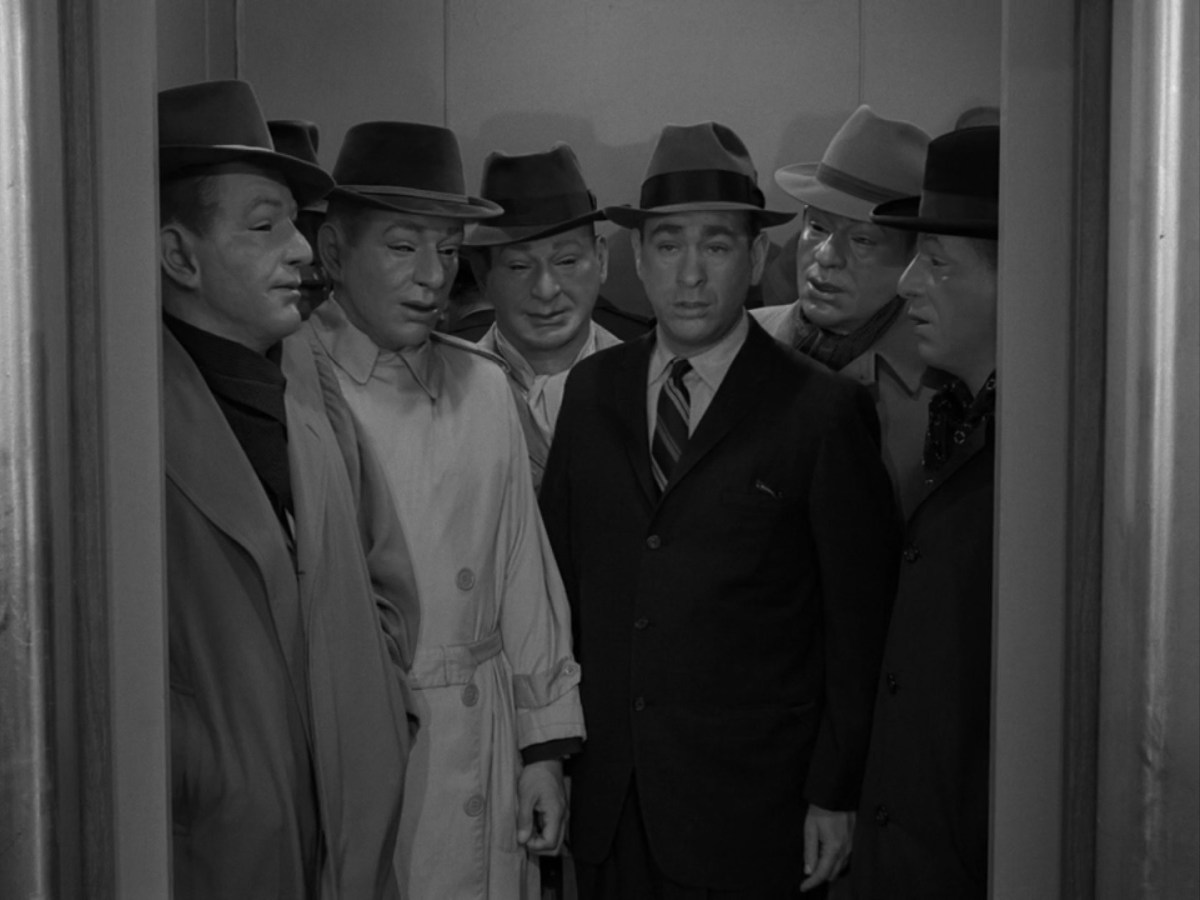
This is a relatively forgettable Twilight Zone episode. Shelley Berman plays Archibald Beechcroft who is fed up with humanity. He is given a book which tells him that with the proper mental state he can eliminate the stresses of the day…namely every one else on earth but him. He is not a likeable person so we feel very little sympathy for him.

Beechcroft detests people, but he feels he has no alternative but to suffer the crowds and the noise until an office boy, trying to make up for spilling coffee on his suit, gives him a book on mind power. After reading this, Beechcroft is convinced that concentration can do anything, and he proves it by making his landlady disappear, followed by everybody else in the world.

The good thing about this episode is the special effects.

This show was written by Rod Serling

Rod Serling’s Opening Narration: 

A brief if frenetic introduction to Mr. Archibald Beechcroft. A child of the 20th century, a product of the population explosion, and one of the inheritors of the legacy of progress. Mr. Beechcroft again, this time Act Two of his daily battle for survival, and in just a moment our hero will begin his personal one-man rebellion against the mechanics of his age, and to do so he will enlist certain aides available only in the Twilight Zone.

Summary

The intolerant Archibald Beechcroft is a clerk of the Central Park Insurance Co. that hates everybody. When a colleague gives him a book about the power of the mind, Archibald reads the magic book and decides to wipe out the human race. However, he feels lonely and uses his ability to make the entire population of his city his perfect clone, discovering how hateful the world would be.

Rod Serling’s Closing Narration:

Mr. Archibald Beechcroft, a child of the twentieth century, who has found out through trial and error – and mostly error – that with all its faults, it may well be that this is the best of all possible worlds. People notwithstanding, it has much to offer. Tonight’s case in point – in the Twilight Zone.

CAST

Rod Serling…Narrator
Shelley Berman…Archibald Beechcroft
Jack Grinnage…Henry
Chet Stratton…Mr. Rogers
Robert McCord…Elevator Operator
Jeane Wood…Landlady

Twilight Zone – Shadow Play

★★★★★  May 5, 1961  Season 2 Episode 26

If you want to see where we are…HERE is a list of the episodes.

This one is a Twilight Zone classic. Dennis Weaver stars in this episode as Adam Grant. Weaver has always been a favorite of mine. He starred in the movie Duel, as McCloud, and in the first 9 seasons of Gunsmoke as Chester. Again and again The Twilight Zone cast these episodes perfectly.

This one is about a nightmare that Adam Grant finds himself trapped in. Grant has created this world with many of the same faces but different characters. It starts with him in a court room being convicted of first degree murder. We don’t see the crime…just Adam being thrown in jail and on death row…but something is off and he knows it. This episode is one of the must see Twilight Zones.

The writer Charles Beaumont once again explores a nightmare in Shadow Play as he did in Perchance for a Dream.

From IMDB: The title refers to the ancient art of shadow play or shadow puppetry using opaque figures that cast shadows on clear curtains. Such entertainment is known in countries throughout the world and is presented in theaters and by traveling troupes.

This show was written by Charles Beaumont and Rod Serling

Rod Serling’s Opening Narration: 

Adam Grant, a nondescript kind of man, found guilty of murder and sentenced to the electric chair. Like every other criminal caught in the wheels of justice, he’s scared, right down to the marrow of his bones. But it isn’t prison that scares him, the long, silent nights of waiting, the slow walk to the little room, or even death itself. It’s something else that holds Adam Grant in the hot, sweaty grip of fear, something worse than any punishment this world has to offer, something found only in – The Twilight Zone.

Summary

When Adam Grant is found guilty of first degree murder and sentenced he lashes out telling everyone that he will not be murdered again. Grant claims to be having a recurring nightmare where he is found guilty and executed. The characters around him change and so he argues that all of them will vanish if he dies. It leads newspaperman Paul Carson to question what is real and what might just be a figment of someone else’s imagination. DA Henry Ritchie visits Grant in jail and decides to try and do something about his claims, no matter how far-fetched his claims might be.

Rod Serling’s Closing Narration:

We know that a dream can be real, but who ever thought that reality could be a dream? We exist, of course, but how, in what way? As we believe, as flesh-and-blood human beings, or are we simply parts of someone’s feverish, complicated nightmare? Think about it, and then ask yourself, do you live here, in this country, in this world, or do you live, instead, – in The Twilight Zone?

CAST

Rod Serling…Narrator
Dennis Weaver…Adam Grant
Harry Townes…District Attorney Henry Ritchie
Wright King…Paul Carson
Bernie Hamilton…Coley
William Edmonson…Jiggs
Anne Barton…Carol Ritchie
Tommy Nello…Phillips
Mack Williams…Father Beaman
Gene Roth…Judge

Traffic – Paper Sun

Lets go back to the psychedelic sixties with this song that was released in the Summer of Love. The song fit perfectly with the times even featuring an Indian sitar played by Dave Mason. That year had singles such as  “Strawberry Fields Forever”, “Ruby Tuesday”, “Sunshine Of Your Love”, “Nights In White Satin”, “Whiter Shade of Pale”, “See Emily Play”…the list goes on and on. This is a great example of British psychedelia.

Steve Winwood and Jim Capaldi wrote this song in  1967 when Winwood and Capaldi were members of two different bands.  They were on tour together, and after a show put the song together in a hotel room.

When Winwood and Capaldi formed Traffic a short time later with Dave Mason and Chris Wood, they recorded Paper Sun and released it as their first single.

The song peaked at #5 in the UK, #4 in Canada, and #94 in the Billboard 100 in 1967.

Jim Capaldi: “I got the title from a newspaper in a boarding house in Newcastle,”  “I was half-asleep, lying there writing this lyric in my head at about 3:30 in the morning. I woke up Steve with this idea and then we went into the living room where there was a little upright piano and finished the song.”

Paper Sun

So you think you’re having good times
With the boy that you just met
Kicking sand from beach to beach
Your clothes are soaking wet
But if you look around and see
A shadow on the run (on the run)
Don’t be too upset because it’s just a paper sun

Ah paper sun, ah paper sun

In the room where you’ve been sleeping
All our clothes are thrown about
Cigarettes burn window sills
Your meter’s all run out
But there again it’s nothing
You just split when day is done (day is gone)
Hitching lifts to nowhere, hung up on the paper sun

Ah paper sun, ah paper sun

Standing in the cool of my room
Fresh cut flowers give me sweet perfume (too much sun will burn)
Too much sun will burn (too much sun will burn)
Too much sun will burn

When you’re feeling tired and lonely
You see people going home
You can’t make the train fare
Or the sixpence for the phone
And icicles you’re crying
Down your cheek have just begun
Don’t be sad, good times are had
Beneath the paper sun

Ah paper sun, ah paper sun

Daylight breaks while you sleep on the sand
A seagull is stealing the ring from your hand
The boy who had given you so much fun
Has left you so cold in the paper sun
In the paper sun, in the paper sun, in the paper sun, in the paper sun

Twilight Zone – The Silence

★★★★★  April 28, 1961 Season 2 Episode 25

If you want to see where we are…HERE is a list of the episodes.

This one is a very good episode with some fine acting by Franchot Tone and Liam Sullivan. There is not just one twist at the end of the episode but two of them. This episode has no supernatural events and it is not a typical episode of the Twilight Zone. It’s pure story and what a story. It was set in a prestigious Gentlemen’s Club with a talkative younger man named Jamie Tennyson (Liam Sullivan) and the grumpy older fellow named Colonel Archie Taylor (Franchot Tone).

Tennyson annoyed Taylor to no end with his non stop chatter. We didn’t get to see a lot of this but Taylor does hate the man. After handing him a note and then announcing to every one…he bet Tennyson $500,000 that he could not be completely quiet for a year. The story goes from there.

Below is a very interesting real life story on the set about the wonderful character actor Franchot Tone.

Franchot Tone                                    Liam Sullivan

April 28 in Twilight Zone History: Celebrating the 1961 premiere of 'The  Silence' April 28 in Twilight Zone History: Celebrating the 1961 premiere  of 'The Silence'Liam Sullivan — The Movie Database (TMDb)

The episode present a lot of challenges. The first headache went to George Clemens (Cinematographer). The set where the character Sullivan was to be imprisoned was made up entirely of panes of glass. When I saw the set, I pretty near lost my lunch, Clemens recalls. How in the world am I going to get a light in there, and show light, without getting reflections? But Buck Houghton had hired the right man, and Clemens persevered. Once I started on the thing, he says, I think I only had to take two panes of glass out in the whole picture.

The first days shooting went just fine. The opening and closing scenes of the episode, both of which take place in the main room of the mens club, were completed. The company broke for the weekend. But the biggest problem was yet to come.

On the second day of shooting, Franchot Tone didn’t show up, Serling recalled years later. And we waited and we waited. The call is six in the morning. When it got to be ten a.m. and everybody had been sitting there in their own smoke waiting and no Franchot Tone, we get his agent who tracks him down. He is in a clinic.

Stories differ. According to Liam Sullivan, Tone told him that he’d been at a party and, in attempting to pick a flower for his date off a bush on the terrace, had fallen down a hillside and landed on the driveway of the house next door. According to Serling, Tone had approached a girl in the parking lot of a restaurant and her boyfriend had taken offense and beaten him up. Whatever the truth, the result was still the same: half of Tones face was scraped raw.

With one days shooting in the can, recasting was out of the question. Serling: I said, So be it. Come on in, Franch, and well shoot the other side of your face, which we did.

The result was indeed odd. During the opening scene of the episode, we see Tone full face. When the scene changes to the glass cage in which Sullivan is imprisoned, we only see Tones face in profile or with half of it obscured. Then in the final scene, we see Tone full-face again.

Surprisingly, the effect works to the episodes advantage. The scenes in the middle are those in which Tone tries to convince Sullivan to break his silence, using every dirty trick he can think of, including relaying ugly rumors about Sullivans wife. Speaking out of the corner of his mouth, only half-turned toward Sullivan, Tone seems predatory and sly, what he says takes on an added suggestiveness. The impact was not lost. In fact, director Boris Sagal once recalled that at the time a number of critics complimented him on the effect!

This show was written by Rod Serling

Rod Serling’s Opening Narration: 

The note that this man is carrying across a club room is in the form of a proposed wager, but it’s the kind of wager that comes without precedent. It stands alone in the annals of bet-making as the strangest game of chance ever offered by one man to another. In just a moment, we’ll see the terms of the wager and what young Mr. Tennyson does about it. And in the process, we’ll witness all parties spin a wheel of chance in a very bizarre casino called the Twilight Zone.

Summary

Jamie Tennyson is an overly talkative member of a private men’s club. He is challenged by fellow member Col. Archie Taylor to keep his mouth shut for one year. Should he do so, he would win $500,000. Taylor dislikes Tennyson and if nothing else, finds this a way to get a bit of peace and quiet at the club. Tennyson will live in a room in the club, under observation and will communicate in writing only. As the months go by, Taylor begins to worry that Tennyson may just succeed. He can’t believe Tennyson’s will but neither party proves to be completely honorable.

SPOILER VIDEO…DON’T WATCH 

Rod Serling’s Closing Narration:

Mr. Jamie Tennyson, who almost won a bet, but who discovered somewhat belatedly that gambling can be a most unproductive pursuit, even with loaded dice, marked cards, or, as in his case, some severed vocal cords. For somewhere beyond him, a wheel was turned, and his number came up black thirteen. If you don’t believe it, ask the croupier, the very special one who handles roulette – in The Twilight Zone.

CAST

Rod Serling…Narrator
Franchot Tone…Archie Taylor
Liam Sullivan…Jamie Tennyson
Jonathan Harris…George Alfred
Cyril Delevanti…Franklin
Everett Glass…Club Member
Felix Locher…Club Member

Twilight Zone – The Rip Van Winkle Caper

★★★★  April 21, 1961 Season 2 Episode 24

If you want to see where we are…HERE is a list of the episodes.

This episode shows what greed and selfishness can do to the best laid plans. Oscar Beregi Jr who plays Farwell, was in three Twilight Zones including the classic  Deaths-Head Revisited and is very good. This is a time travel episode…sort of. Four expert criminals and one is a professor (Farwell) rob a gold shipment. There is no way they can cash in with everyone looking for the gold and them.

The professor Farwell devised a way ( suspended animation) for them to sleep a 100 years so they would be able to sell the gold in the future . The show is carried by the two veteran character actors, Oscar Beregi, Jr. and Simon Oakland. Like most Twilight Zones…I  enjoyed the twist at the end. It’s a good solid episode.

If Farwell would have used his head,  he could have patented the suspended animation process and would have been rich without turning to a life of crime.

The Rip Van Winkle Caper was filmed at the same location as the previous episode “A Hundred Yards Over The Rim.”

The futuristic vehicle which is shown at the end of the episode is a modified version of Robby the Robot’s car, first constructed by MGM for the science fiction classic Forbidden Planet

$1,000,000 in gold in 1961 ($35.50/oz.) would weigh over 28,000 ounces or 1760 lbs.

This show was written by Rod Serling

Rod Serling’s Opening Narration: 

Introducing, four experts in the questionable art of crime: Mr. Farwell, expert on noxious gases, former professor, with a doctorate in both chemistry and physics; Mr. Erbie, expert in mechanical engineering; Mr. Brooks, expert in the use of firearms and other weaponry; and Mr. De Cruz, expert in demolition and various forms of destruction. The time is now, and the place is a mountain cave in Death Valley, U.S.A. In just a moment, these four men will utilize the services of a truck placed in cosmoline, loaded with a hot heist cooled off by a century of sleep, and then take a drive into The Twilight Zone.

Summary

Four thieves steal $1 million in gold bullion in a train robbery and hide the money in a mountainside cave. The four plan to go into suspended animation for approximately 100 years when they hope to awaken as extremely rich men with their heist long forgotten. When they awaken, they’re not quite sure what year it is. One of them, De Cruz, has his eye on getting as much of the gold for himself as he possibly can. The world they have awakened in isn’t exactly what they had hoped for.

Rod Serling’s Closing Narration:

The last of four Rip Van Winkles, who all died precisely the way they lived, chasing an idol across the sand to wind up bleached dry in the hot sun as so much desert flotsam, worthless as the gold bullion they built a shrine to. Tonight’s lesson – in The Twilight Zone.

CAST

Rod Serling…Narrator
Simon Oakland…DeCruz
Oscar Beregi Jr….Farwell
Lew Gallo…Brooks
John Mitchum…Erbie
Wallace Rooney…George
Shirley O’Hara…George’s wife

Jan and Dean – Surf City

You know we’re going to Surf City ’cause it’s two to one, now…Two girls for every boy”

It’s time to mix it up a little before Fall arrives and think about summer and fun. This will wrap up the surfing weekend at powerpop…it’s been fun to feature these surfing songs and they will occasionally pop up here and there. I know people who look down upon songs like this…What do I tell them? Lighten up Moondog and catch a wave while you are at it.

As I said in a previous post…When I was a senior in High School…1985… for some unknown reason I really got into surf music at the beginning of the year. I listened to Jan and Dean, the Beach Boys, Dick Dale, Link Wray,  and The Ventures. I loved those songs then and now.

I remember watching Dead Man’s Curve when I was a kid about Jan and Dean and the terrible car wreck Jan Berry was involved in.

This song was written by Brian Wilson and he didn’t think he would ever finish it. Jan met him at a party and helped Brian finish the song. Dean also contributed some lines but never asked for any writing credits. “Two girls for every boy”…what teenage boy didn’t want to go there for a visit. It was the first surf record to hit  #1 nationally.

Brian Wilson’s controlling dad Murry was furious at Brian for giving away a number 1 hit to someone else. Brian was happy that another group took his song and made a hit with it.

Surf music is bout fun… The Beach Boys expanded surf music and then left it with Pet Sounds. By that time Surf purists didn’t like it. They wanted the old formula songs… I wasn’t a purist…I like them all.

Surf City

Two girls for every boy

I bought a ’34 wagon and we call it a woodie
(Surf City, here we come)
You know it’s not very cherry, it’s an oldie but a goodie
(Surf City, here we come)
Well, it ain’t got a back seat or a rear window
But it still gets me where I wanna go

Yeah, we’re going to Surf City ’cause it’s two to one
You know we’re going to Surf City, gonna have some fun
You know we’re going to Surf City ’cause it’s two to one
You know we’re going to Surf City, gonna have some fun, now

Two girls for every boy

They say they never roll the streets up ’cause there’s always somethin’ goin’
(Surf City, here we come)
You know they’re either out surfin’ or they’ve got a party growin’
(Surf City, here we come)
Yeah, there’s two swingin’ honeys for every guy
And all you gotta do is just wink your eye

And I’m going to Surf City, gonna have some fun, now
Going to Surf City ’cause it’s two to one
You know we’re going to Surf City, gonna have some fun
You know we’re going to Surf City ’cause it’s two to one, now

Two girls for every boy

And if my woodie breaks down on me somewhere on the surf route
(Surf City, here we come)
I’ll strap my board to my back and hitch a ride in my wetsuit
(Surf City, here we come)
And when I get to Surf City, I’ll be shootin’ the curl
And checkin’ out the parties for a surfer girl

And I’m going to Surf City ’cause it’s two to one
You know, we’re going to Surf City, gonna have some fun
You know, we’re going to Surf City ’cause it’s two to one
You know, we’re going to Surf City, gonna have some fun, now

Two girls for every
Two girls for every boy

Twilight Zone – A Hundred Yards Over the Rim

★★★★★  April 07, 1961 Season 2 Episode 23

If you want to see where we are…HERE is a list of the episodes.

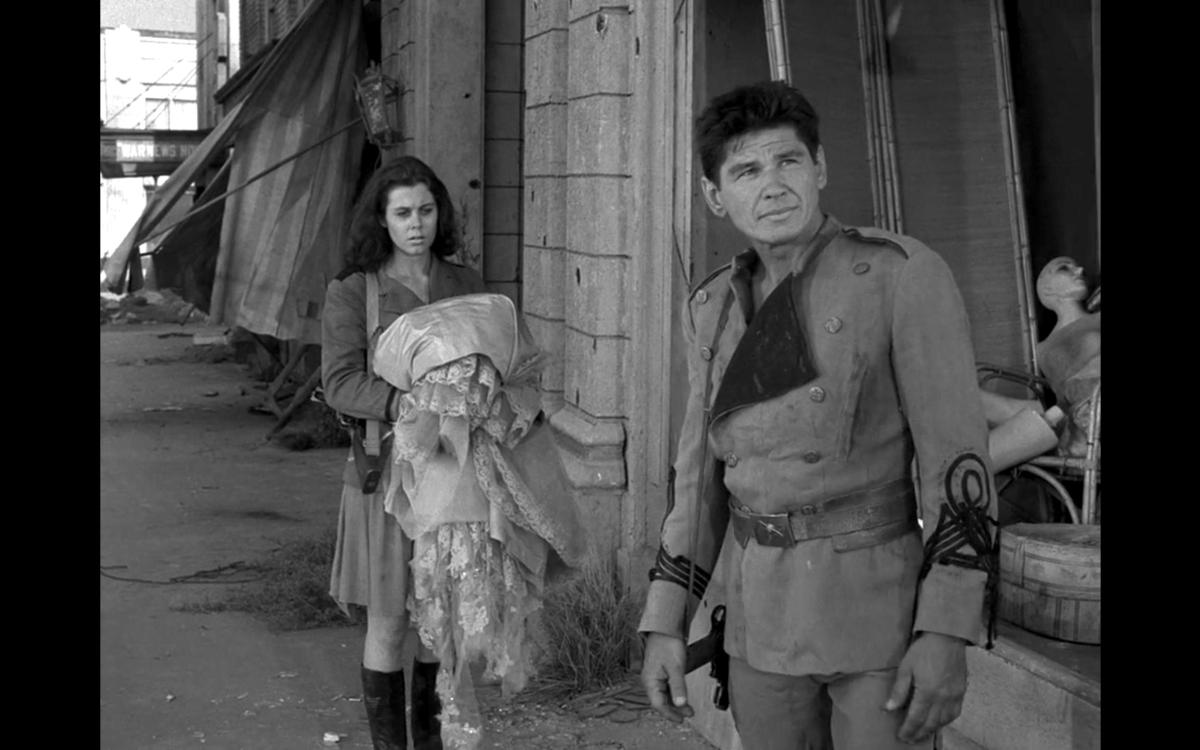
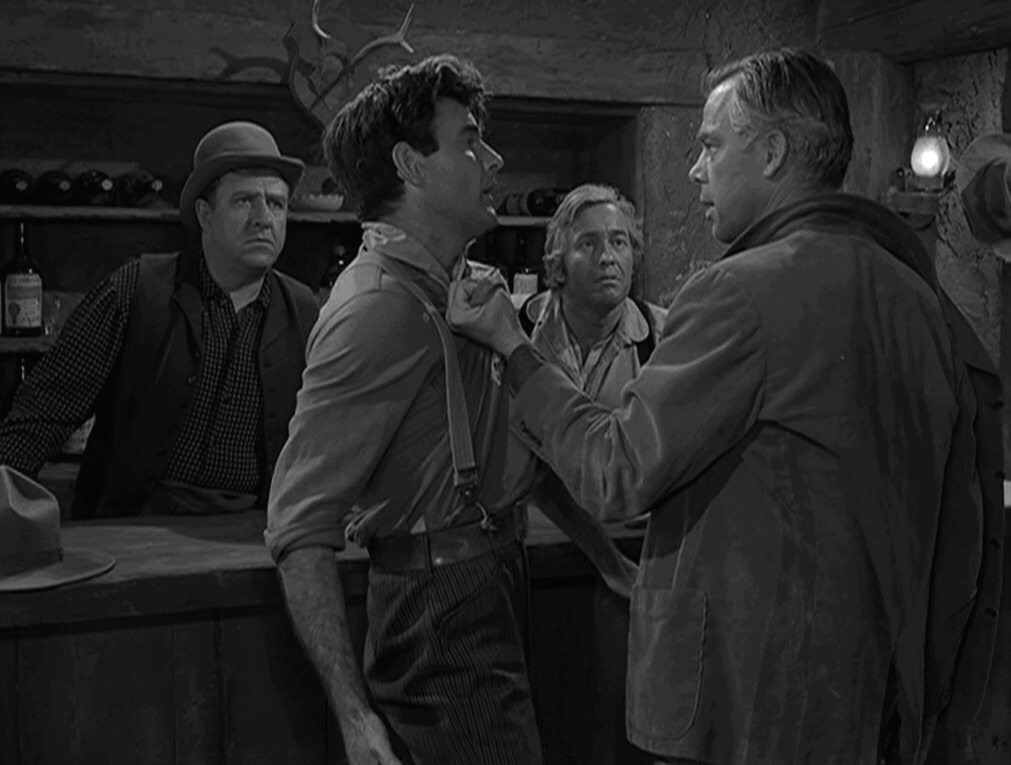
This one is an excellent quality episode. A time travel episode that uses a place over the rim instead of a time machine.  Future Walton’s sheriff John Crawford plays the café owner Joe. This episode resolves it self and has a satisfying end…and really plays on some of the time elements.

The episode has many good performances, but  Cliff Robertson holds the show together. As Chris Horn, he plays his role with intelligence and conviction, seeming in movement, expression, and even his accent is on the mark. He really got into this role as you will read below and it shows. His performance is worth the price of admission by itself.

In order to save money, whenever possible Buck Houghton liked to schedule two shows utilizing similar locations back to back, so that the crew would only have to make one trip outside the studio. Both A Hundred Yards Over the Rim and The Rip Van Winkle Caper were shot in the desert near Lone Pine, California. First to be filmed was A Hundred Yards Over the Rim.

Some trivia from IMDB:  Cliff Robertson did extensive research on the 1840s time period in which the episode is set. Robertson concluded that an easterner like Horn would have worn a stovepipe hat, whereas the director, fearing that such a hat would make Horn look comical, wanted him to wear an ahistorical Stetson. The dispute was finally taken to producer Rod Serling who, after hearing both sides, decided to let Robertson wear the stovepipe hat, as seen in the filmed version.

John Astin appears in this and I will watch anything Astin is in. This was before he became known as Gomez Addams.

This show was written by Rod Serling

Rod Serling’s Opening Narration: 

The year is 1847, the place is the territory of New Mexico, the people are a tiny handful of men and women with a dream. Eleven months ago, they started out from Ohio and headed west. Someone told them about a place called California, about a warm sun and a blue sky, about rich land and fresh air, and at this moment, almost a year later, they’ve seen nothing but cold, heat, exhaustion, hunger, and sickness. This man’s name is Christian Horn. He has a dying eight-year-old son and a heartsick wife, and he’s the only one remaining who has even a fragment of the dream left. Mr. Chris Horn, who’s going over the top of a rim to look for water and sustenance and in a moment will move into the Twilight Zone.

Summary

Christian Horn is member of an 1847 wagon train headed west. They are 1500 miles from St. Louis and are now in the New Mexico desert. Many in the wagon train are ready to turn back but Chris wants everyone to persevere. His son has had a fever for 11 days now and Chris goes off looking for water, only 100 yards or so from the others and suddenly finds himself in the present day. He can’t quite bring himself to believe what he sees or where he is but those he meets believe he’s a man from the past. The trip in time does have one positive outcome.

Rod Serling’s Closing Narration:

Mr. Christian Horn, one of the hearty breed of men who headed west during a time when there were no concrete highways or the solace of civilization. Mr. Christian Horn, and family and party, heading west, after a brief detour to The Twilight Zone.

CAST

Rod Serling…Narrator
Cliff Robertson…Chris Horn
John Crawford…Joe
Miranda Jones…Martha Horn
Evans Evans…Mary Lou
John Astin…Charlie
Edward Platt…Doctor
Ken Drake…Man
Robert L. McCord III…Sheriff

Chantays – Pipeline

The Chantays, Stevie Ray Vaughan, Dick Dale, Anthrax, and Lawrence Welk. We will tie all of these artists together by the end of the post. 

I thought I might as well continue the surf music theme that was started Thursday and ride the wave into the weekend. 

This is one cool classic instrumental. Pipeline was originally the B side and the A side was a song called Move It. As with a few other singles through history…the B side took off and the A side became a trivial question.

Dick Dale also recorded this song with no other than Stevie Ray Vaughan in 1987. They really rocked up Pipeline for the movie Back to the Beach. You want variety? This song was covered by Lawrence Welk and Anthrax (video below). I would be willing to bet not many songs would be in that rare club.

I always wondered what “pipeline” meant…being a Tennessee guy I would not know that first hand. The title “Pipeline” refers to a term in surfing slang, in which a wave closes over your head while you ride it horizontally, so it looks like you’re in a rolling pipe made of water. This maneuver is also sometimes called “shooting the tube.”

Some odd trivia about the Chantays…they were the only rock and roll band to perform on The Lawrence Welk Show (something tells me Anthrax would not have been invited if they would have been around then). The Chantays were also honored on April 12, 1996, by Hollywood’s Rock Walk ,that was founded to honor individuals and bands that have made lasting and important contributions to music.

The song peaked at #4 in Billboard 100, #11 on the R&B Charts, and #16 in the UK in 1963.

From Songfacts

This was surf-rock group The Chantay’s only charting Billboard Top-40 hit. However, it is considered today one of the staples of the surf-rock genre. It was actually the B-side of a single; the A-side, “Move It,” never charted.

The unique sound of this track is partly due to its composition, which is inverted from standard practice. The bass and rhythm guitars are at the fore, while the lead guitar, keyboard, and drums are in the background. Also it was recorded in stereo even though it was going to be released in mono as the typical 45-RPM single record of the day.

Perhaps you’ve noticed that surf-rock tends to have a lot of instrumental work? That’s because it started out as strictly an instrumental form, where speed and precision playing was highly valued. In a way, it fathered the speed metal genre. We have The Beach Boys to thank for bringing vocal harmonies to surf music.

Dick Dale, who earned the title “King of the Surf Guitar,” recorded a new version of “Pipeline” with Stevie Ray Vaughan for the 1987 movie Back To The Beach. The movie reunited Frankie Avalon and Annette Funicello 24 years after they starred in one of the first beach movies, Beach Party, which featured Dick Dale’s music.

Dick Dale with SRV

Dick Dale – Miserlou

I thought I would continue with the surfing theme of the Beach Boys song yesterday.

Love the beginning to this song…the twangy guitar that Dale plays like a rubber band.  When I heard this song in the beginning of Pulp Fiction I knew I was going to enjoy the movie. Miserlou being used in the movie helped revive his career all over the world.

The song is a traditional Mediterranean song dating to the 1920s and originating in Greece.  Dick Dale then reworked and beat the song over the head to his surf rock tone and sound…and it works perfectly.

In March 2005, Q magazine placed Dale’s version at number 89 in its list of the 100 Greatest Guitar Tracks.

This song was released in 1962.

Dick Dale: “The sound is a Stratocaster guitar. It’s the solidity of the wood – the thicker the wood, the bigger and purer the sound. It was a Strat. Not the Jaguar, not the Jazzmaster, all these things we created later, for different reasons. Even the reverb – reverb had nothing to do with the surfing sound, and here they got ’em on the cover going ‘That’s the wet, splashy sound of reverb.’ No! We created the reverb because Dick Dale did not have a natural vibrato on his voice. I wanted to sustain my notes while singing. So we copied the Hammond organ, which had a tank in it. We took the tank out, rewired it, and had an outboard reverb! It was for the vocal. Our first album, Surfer’s Choice, sold over 88,000 albums – locally! That’s like more than 4 million today. Dick Dale was already established as King of the Surf Guitar, and that album did not have reverb on it. It wasn’t even invented!”

From Songfacts

Variations of the song have appeared in numerous movies, but when Dick Dale’s version was used to open the 1994 movie Pulp Fiction, it revived both Dale’s career and the Surf Music genre. Dale earned his first appearance on The Late Show with David Letterman a few weeks after the movie came out, and became a popular live act once again. His success in the ’60s was limited to America, but this time he was welcomed in the UK, as well as Australia and Japan, where his sound caught on and he made tour appearances for the first time. Dale’s “Miserlou” was also used in the movies Space Jam and Charlie’s Angels: Full Throttle.

Dale included a traditional version of the song on his 1993 album Tribal Thunder as a hidden track (you can thank Nirvana for the hidden track craze of the early ’90s). Dale was showing his producer how the song was done originally, and they decided to include it with the set.

Dick Dale got his start in the late ’50s playing with his band The Del-Tones for surfers at the Rendezvous Ballroom in Balboa, California. With authorities concerned about the mix of young people and guitars, one of the requirements at the Ballroom was that every male patron wear a tie, so the audience was often made up of barefooted guys in surfer garb wearing ties that were handed out at the door.

This was used on Friends when Ross, Chandler, and Joey squared off against Monica, Rachel, and Phoebe in a game of touch football in the 1996 Thanksgiving episode “The One With The Football.”

Beach Boys – Don’t Worry Baby

This is my fourth song pick for Hanspostcard’s song draft. The Beach Boys Don’t Worry Baby.

Those who follow my blog and know me…know I like older music than my generation. I was once told by a co-worker that it’s “unnatural” to like music before you were born…which I think is hilarious and totally idiotic. I go through phases with music. When Hans and I talk about The Beatles I tend to listen to them and nothing else for a while…and the same with other bloggers.

I have done this my entire life…I get into something and I’m obsessed. I never really discard anything after my obsession dies down…it keeps coming back and in the case of the Beatles and others… never goes away.

In my senior year of high school I went through a surf music phase. I wore Hawaiian shirts and coco butter everywhere. I was  looking forward to the Florida trip my friends and I were planning in spring. I would roll in the high school parking lot with Jan and Dean, Dick Dale, or The Beach Boys blaring out of my Mustang. I had a hell of a stereo system in my car. When Jan and Dean’s “Surf City” can drown out The Scorpions coming from another car…the system is loud.

During this time surf music hit the musical spot in me. The musicians on those surf records were incredible. This song dug deeper…much deeper. I still listen to the song. Don’t Worry Baby is about a girl and a car…when you are an 18 year old boy…a girl and a car are the two most important topics…at least they were to me. It has always stuck with me and I’ll never forget that year. My first serious girlfriend, a 66 Mustang, and Don’t Worry Baby… 1985 was a good year.

We did go on that spring trip to Cocoa Beach Florida. A fifteen-hour drive one way in a Celica Sports Coupe with 4 guys packed in there. We picked the name (Cocoa Beach) because it sounded great…Yep pretty stupid because we could have driven 7 hours to Pensacola instead.

It was written by Brian Wilson and DJ Roger Christian. This was conceived as a follow-up to the Ronettes #2 hit “Be My Baby.” When Brian Wilson heard the Be My Baby on the radio, he wondered aloud if he could match it. Wilson’s wife Marilyn reassured him, saying, “Don’t Worry, Baby.”

This is pop perfection by the Beach Boys.

Don’t Worry Baby

Well it’s been building up inside of me
For oh I don’t know how long
I don’t know why
But I keep thinking
Something’s bound to go wrong

But she looks in my eyes
And makes me realize
And she says “don’t worry, baby”
Don’t worry, baby
Don’t worry, baby
Everything will turn out alright

Don’t worry, baby
Don’t worry, baby
Don’t worry, baby

I guess I should’ve kept my mouth shut
When I started to brag about my car
But I can’t back down now because
I pushed the other guys too far

She makes me come alive
And makes me wanna drive
When she says “don’t worry, baby”
Don’t worry, baby
Don’t worry, baby
Everything will turn out alright

Don’t worry, baby
Don’t worry, baby
Don’t worry, baby

She told me “Baby, when you race today
Just take along my love with you
And if you knew how much I loved you
Baby, nothing could go wrong with you”

Oh what she does to me
When she makes love to me
And she says “don’t worry, baby”
Don’t worry, baby
Don’t worry, baby
Everything will turn out alright

Don’t worry, baby
Don’t worry, baby
Don’t worry, baby

Twilight Zone – Long Distance Call

★★★★★  March 31, 1961 Season 2 Episode 22

If you want to see where we are…HERE is a list of the episodes.

This one is one of my favorites. It’s dark and it still works today.  It’s a great episode and features Bill Mumy as little Billy Bayles who just lost his grandmother or did he? The grandmother played by Lili Darvas tried to live through Billy vicariously in many ways and ignored what the mother of the child said or thought.  You can feel the tension between the grandmother and her daughter in law.

This can happen in a family and cause trouble so it made the episode much more relatable. The darkness of the episode is shocking considering the time it was made.

**SPOILERS** below

This show was really heavy.  It addressed the loss of a grandparent and two attempted suicides of a five year old boy. Not your average show in the 60s or now for that matter. Who knew a toy telephone could be so damn frightening? That was one determined grandmother…she wasn’t letting go of Billy even in the afterlife.

This episode is videotaped and it benefits from it…adding to eerie feeling.

Bill Mumy would appear in three Twilight Zones. He would later become known in the TV show Lost In Space.

This show was written by Charles Beaumont, Bill Idelson, and Rod Serling

Rod Serling’s Opening Narration: 

As must be obvious, this is a house hovered over by Mr. Death, an omnipresent player to the third and final act of every life. And it’s been said, and probably rightfully so, that what follows this life is one of the unfathomable mysteries, an area of darkness which we, the living, reserve for the dead—or so it is said. For in a moment, a child will try to cross that bridge which separates light and shadow, and, of course, he must take the only known route, that indistinct highway through the region we call The Twilight Zone.

Summary

Billy Bayles loves his Grandma Bayles and likes the present she’s given him, a toy telephone which she says will allow them to communicate forever. Grandma Bayles is ill however and soon dies but Billy claims he can speak to her on their special telephone. When he tells his parents that she wants him to join her, wherever she’s gone to, they pay no mind. When he throws himself in front of their neighbor’s car however, it all gets deadly serious.

Rod Serling’s Closing Narration:

A toy telephone, an act of faith, a set of improbable circumstances, all combine to probe a mystery, to fathom a depth, to send a facet of light into a dark after-region, to be believed or disbelieved, depending on your frame of reference. A fact or a fantasy, a substance or a shadow—but all of it very much a part of The Twilight Zone.

CAST

Rod Serling…Narrator
Philip Abbott…Chris Bayles
Lili Darvas…Grandma Bayles
Patricia Smith…Sylvia Bayles
Bill Mumy…Billy Bayles
Jenny Maxwell…Shirley
Reid Hammond…Mr. Peterson
Henry Hunter…Dr. Unger
Lew Brown…Fireman
Arch Johnson…Fireman