Twilight Zone – Showdown With Rance McGrew

★★★ February 2, 1962 Season 3 Episode 20

If you want to see where we are…HERE is a list of the episodes.

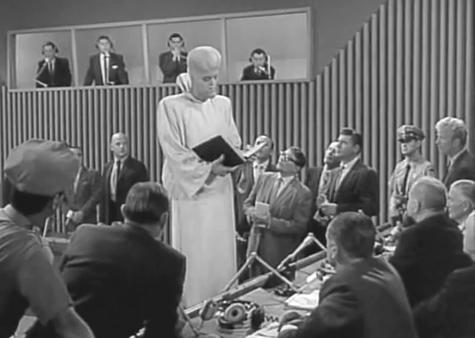
Showdown With Rance McGrew is a lighthearted episode about a temperamental actor playing a cowboy hero. He is doing impossible stunts that would insult real legendary outlaws if they could see it. That part might just come into play in this one.  This episode was made during the golden age of westerns on television. You couldn’t turn a channel on without seeing a western. Bonanza, Gunsmoke, Wanted Dead or Alive, Wagon Train, The Rifleman, and that is just naming a few.

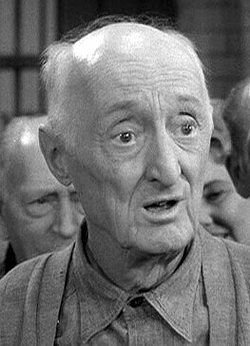
Larry Blyden as Rance McGrew is a whiny, pampered, and coward actor who tries the patience of all the actors and crew. The wonderful character actor Bob Kline plays Jesse James who might have something to say to Rance with him always winning against James and all of his outlaw friends in TV Shows…dead outlaws have their pride also. The episode is fun but far from a classic.

Rod Sering: Fred Fox had an interesting notion, which was quite serious, about a modern-day cowpoke, not a television star, who found himself living in the past. It had no sense of humor in it. It was a straightforward piece. But it struck me that it would be a terribly interesting concept to have a guy who plays the role of a Hollywood cowboy suddenly thrust into the maelstrom of reality in which he has to do all these acts of prowess against real people… . And it just occurred to me, My God, what would happen if the Ranee McGrews of our time had to face this? I used to think this about John Wayne all the time, who had fought most of our major wars. In truth, of course, they were fought on the backlot of Warner Brothers, in which the most deadly jeopardy would be to get hit by a flying starlet. And I always wondered what Waynes reaction would be if he ever had to lift up an M-l and go through a bloody foxhole on attack sometime. But this is the element of humor that I was striving to get.

This show was written by Rod Serling, Frederick Louis Fox, and Richard P. McDonagh

Rod Serling’s Opening Narration: 

Some one-hundred-odd years ago, a motley collection of tough mustaches galloped across the West and left behind a raft of legends and legerdemains, and it seems a reasonable conjecture that if there are any television sets up in cowboy heaven and any of these rough-and-wooly nail-eaters could see with what careless abandon their names and exploits are being bandied about, they’re very likely turning over in their graves—or worse, getting out of them. Which gives you a clue as to the proceedings that will begin in just a moment, when one Mr. Rance McGrew, a 3,000-buck-a-week phoney-baloney discovers that this week’s current edition of make-believe is being shot on location—and that location is the Twilight Zone.

Summary

Rance McGrew is the star of a weekly TV western where he plays the town Marshal. He is, to say the least, difficult to deal with. He is frequently late on the set, arrives unprepared and often requests script changes just as they are about to shoot a scene. To top it off, he’s quite inept at handling his gun which he inadvertently tosses into the saloon mirror on more than one occasion. He’s given a dose of reality however when he inexplicably finds himself back in time, coming face to face with the real Jesse James

Rod Serling’s Closing Narration:

The evolution of the so-called ‘adult’ western, and the metamorphosis of one Rance McGrew, formerly phony-baloney, now upright citizen with a preoccupation with all things involving tradition, truth and cowpoke predecessors. It’s the way the cookie crumbles and the six-gun shoots in the Twilight Zone.

CAST

Rod Serling… Narrator / Self – Host (uncredited)
Larry Blyden as Rance McGrew
Arch Johnson as Jesse James
Robert Cornthwaite as Director
Robert J. Stevenson as Bartender
William McLean as Property Man
Troy Melton as Cowboy #1
Jay Overholts as Cowboy #2

Twilight Zone – The Hunt

★★★★1/2  January 26, 1962 Season 3 Episode 19

If you want to see where we are…HERE is a list of the episodes.

Some may question my rating and that is fine but this one to me is great. This is a lighter episode and a very pleasant one. Earl Hamner Jr. who wrote and created The Waltons wrote this episode. It’s among my favorites. It resolves it self and if you are a dog fan…you should like this one.

Hyder Simpson, played wonderfully by Arthur Hunnicutt, takes off with his dog Rip…hunting at night. After treeing a racoon they fall into the water and find themselves on the bank the next morning. They soon run into neighbors burying what Hyder thought was their dog didn’t notice him or Rip. There is a good reason for this…Hyder and Rip had passed on the night before and didn’t know it. That is when the story really begins.

This show was written by Earl Hamner Jr. and Rod Serling

Rod Serling’s Opening Narration: 

An old man and a hound-dog named Rip, off for an evening’s pleasure in quest of raccoon. Usually, these evenings end with one tired old man, one battle-scarred hound dog, and one or more extremely dead raccoons, but as you may suspect, that will not be the case tonight. These hunters won’t be coming home from the hill. They’re headed for the backwoods—of The Twilight Zone.

Summary

Hyder Simpson and his wife Rachel have been married for 50 years. They are simple country folk who live in a small cabin in the mountains. One evening after dinner, Hyder and his dog go off raccoon hunting. When the dog jumps into a fast moving stream Hyder jumps him to rescue him. He wakes up the next morning having apparently spent the night in the woods. When he gets home however, he and his dog are invisible to everyone around them, Rachel is dressed in black and it’s apparent that he’s died. Thus begins Hyder’s journey, one that presents him with choices.

Cannot find a video clip that doesn’t give the ending away. 

Rod Serling’s Closing Narration:

Travelers to unknown regions would be well advised to take along the family dog. He could just save you from entering the wrong gate. At least, it happened that way once—in a mountainous area of the Twilight Zone.

CAST

Rod Serling… Narrator / Self – Host (uncredited)
Arthur Hunnicutt…Hyder Simpson
Jeanette Nolan…Rachel Simpson
Titus Moede…Wesley Miller
Orville Sherman…Tillman Miller
Charles Seel…Reverend Wood
Robert Foulk…Gatekeeper
Dexter Dupont…Angel

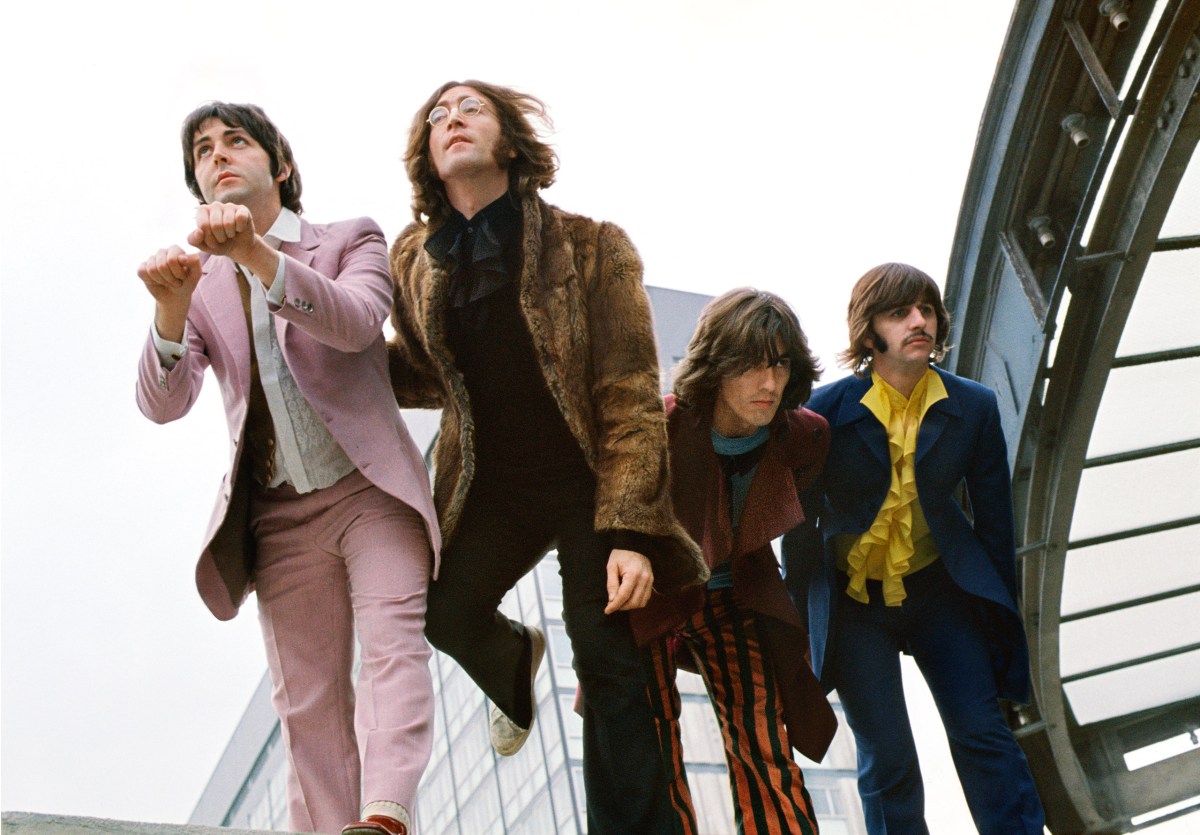
Beatles – Why Don’t We Do It In The Road?

This song is absurd and hilarious. Paul wrote this song and got right to the point. Do what in the road Paul? We might never know. Well actually at the bottom of the post he does explain it…but a warning…you cannot un-see what you read. 

I’ve always liked it because it is fun. Some people try to take it seriously but it’s not meant to be…a song with two lines to the complete song…that is being a minimalist or little lazy. The first rumor I read about this song was that Paul was desperate for the Beatles to tour again and this was his message to the band…Why don’t we do it in the road? It turned out to be not true…it was inspired by two monkeys…not Monkees…see the Paul quote on down. 

It’s a fun song that sounds more like a John song than a Paul. It will never win a best Beatle song award but it’s fun and fits like a glove on the eclectic White Album. That is what I love about the White Album. Listening to the album you never know what is coming next. It still has a sound that threads all the songs together though. 

Paul and Ringo were the only two playing on this song. John Lennon liked the track but later he said he felt hurt when Paul would leave him out on a track and just do something himself. Paul’s voice is outstanding on this one…very aggressive. This is not the “Yesterday” Paul.

This is interesting…The Beatles were not touring when this was released and  Paul McCartney didn’t play it live until October 8, 2016 when he performed it at the Desert Trip festival with Neil Young.

Paul McCartney: “The idea behind ‘Why Don’t We Do It In The Road’ came from something I’d seen in Rishikesh, I was up on the flat roof meditating and I’d seen a troupe of monkeys walking along in the jungle and a male just hopped on to the back of this female and gave her one, as they say in the vernacular. Within two or three seconds he hopped off again, and looked around as if to say, ‘It wasn’t me,’ and she looked around as if there had been some mild disturbance but thought, ‘Huh, I must have imagined it,’ and she wandered off.”

“And I thought, ‘Bloody hell, that puts it all into a cocked hat.’ That’s how simple the act of procreation is, this bloody monkey just hopping on and hopping off. There is an urge, they do it, and it’s done with. And it’s that simple. We have horrendous problems with it, and yet animals don’t. So that was basically it. ‘Why Don’t We Do It In The Road’ could have applied to either f*cking or sh*tting, to put it roughly. Why don’t we do either of them in the road? Well, the answer is we’re civilized and we don’t. But the song was just to pose that question. ‘Why Don’t We Do It In The Road’ was a primitive statement to do with sex or to do with freedom really. I like it, it’s just so outrageous that I like it.

Paul McCartney and Neil Young…doing it in the road. A very rare live performance. 

Why Don’t We Do It In The Road

Why don’t we do it in the road?

No one will be watching us
Why don’t we do it in the road?

Why don’t we do it in the road?

No one will be watching us
Why don’t we do it in the road?

Why don’t we do it in the road?
Why don’t we do it, do it in the road?
Why don’t we do it in the road?

No one will be watching us
Why don’t we do it in the road?


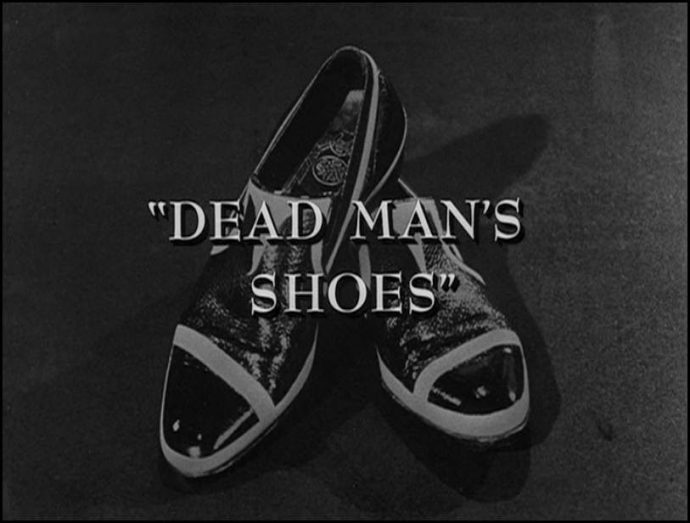
Twilight Zone – Dead Man’s Shoes

★★★★ January 19, 1962 Season 3 Episode 18

If you want to see where we are…HERE is a list of the episodes.

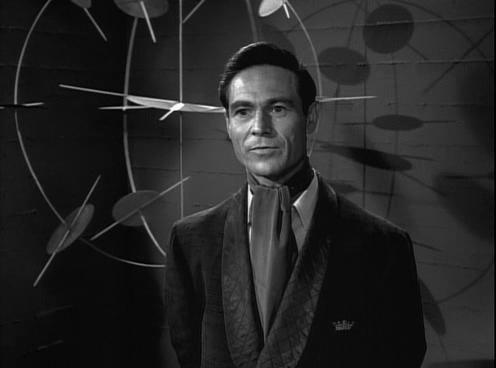
This reminds me of a supernatural 1940’s noir gangster movie and I like it because of that. Warren Stevens plays a bum…a real bum named Nate Bledsoe and he takes the shoes off of a murdered gangster named Dane. When he puts them on he magically becomes Dane. Warren Stevens does a nice job in this part. He is meek and mild when he is Nate Bledsoe but becomes assertive after he slips the shoes on and into the Dane character. He goes and sees Wilma, Dane’s girlfriend, and it tells you all you need to know about Dane.

Dane was killed by his partner Dagget so Bledsoe as Dane… goes and visits him to even the score. I like the hint that Bledsoe gave in the bar to tip Dagget off to who he was now.

Dagget looked like he saw a ghost and in a way…he did.  This episode is not one of the classic episodes. Still, it is very enjoyable.

This one was remade in the 1985 and the 2002 version of the Twilight Zone.

***SPOILER***

The one thing that was sad about this episode was the character Nate Bledsoe His only crime was taking the shoes but he dies because of Dane.

This show was written by Charles Beaumont, Rod Serling, and Oceo Ritch

Rod Serling’s Opening Narration: 

Nathan Edward Bledsoe, of the Bowery Bledsoes, a man once, a specter now. One of those myriad modern-day ghosts that haunt the reeking nights of the city in search of a flop, a handout, a glass of forgetfulness. Nate doesn’t know it but his search is about to end, because those shiny new shoes are going to carry him right into the capital of the Twilight Zone.

Summary

When a hobo finds a dead man lying in a city alley, he decides to take his shoes, a pair of rather spiffy-looking loafers. In putting them on however, he becomes the dead man. He returns to his apartment, to his girlfriend’s shock and more importantly, he knows who killed him. The dead man is also out for revenge and it seems nothing will be able to stop him

Sorry…again there was no preview I could find to show you.

Rod Serling’s Closing Narration:

There’s an old saying that goes, ‘If the shoe fits, wear it.’ But be careful. If you happen to find a pair of size nine black and gray loafers, made to order in the old country, be very careful. You might walk right into the Twilight Zone.

CAST

Rod Serling… Narrator / Self – Host (uncredited)
Warren Stevens…Nate Bledsoe
Richard Devon…Dagget
Joan Marshall…Wilma
Ben Wright…Chips
Harry Swoger…Sam
Ron Hagerthy…Ben
Florence Marly…Dagget’s girlfriend

Twilight Zone – One More Pallbearer

★★★★  January 12, 1962 Season 3 Episode 17

If you want to see where we are…HERE is a list of the episodes.

A school teacher, Reverend, and a Colonel get invited to a bomb shelter. No it’s not a joke…but it was an attempt at one by a man named Paul Radin played by Joseph Wiseman. Paul Radin was a very bitter narcissistic millionaire and he wanted to extract an apology for past deeds that he thought he was punished for unfairly by three different people.

Mr. Radin was not a good man and he was just as bad when he was young. He cheated on a test and then planted the crib notes on another student, he was court-martialed during World War II for failure to follow orders to attack the enemy, and because of his callous attitude he caused a young lady to commit suicide. Radin will stop at nothing  trying to extract that elusive apology from these people from his past…including ending the world.

I knew Joseph Wiseman was familiar…He played Dr. No in the first James Bond film.

This show was written by Rod Serling

Rod Serling’s Opening Narration: 

What you have just looked at takes place three hundred feet underground, beneath the basement of a New York City skyscraper. It’s owned and lived in by one Paul Radin. Mr. Radin is rich, eccentric and single-minded. How rich we can already perceive; how eccentric and single-minded we shall see in a moment, because all of you have just entered the Twilight Zone.

Summary

Successful businessman Paul Radin invites three people from his past to join him in the underground bunker he’s built under his commercial office building. All three have had major influence on him though not the kind that made him what he is today. His former military commander had him court-martialed; his former teacher ridiculed and humiliated him in class after she caught him cheating; and his church Minister who ruined his reputation after he drove a girl to suicide. All he wants from them is one thing: a brief apology. The impact of what they’ve done is far greater than it appears.

There were NO videos that didn’t give the end away to be found. 

Rod Serling’s Closing Narration:

Mr. Paul Radin, a dealer in fantasy, who sits in the rubble of his own making and imagines that he’s the last man on Earth, doomed to a perdition of unutterable loneliness because a practical joke has turned into a nightmare. Mr. Paul Radin, pallbearer at a funeral that he manufactured himself in the Twilight Zone.

CAST

Rod Serling… Narrator / Self – Host (uncredited)
Joseph Wiseman…Paul Radin
Katherine Squire…Mrs. Langsford
Trevor Bardette…Col. Hawthorne
Gage Clarke…Rev. Hughes

Kinks – Dandy

If you heard this song on the radio in the sixties it probably wasn’t the Kinks version unless you lived in Germany where it peaked at #1, The Netherlands where it peaked at #3 and #2 in Belgium.

The mighty Herman Hermits covered the song and it peaked at #5 in the Billboard 100, #1 in Canada, #3 in New Zealand…sometimes life just isn’t fair.

It is said to have been written about Dave Davies, mostly about his rock star lifestyle… Dave confirmed in the documentary about Dave Davies.

The song was on the Face to Face album.. one of the first rock and roll concept albums.  In the album’s original inception, Davies attempted to bridge the songs together with sound effects, but was forced to revert to the more standard album because of the record company.

Ray Davies: “I think it was about someone, probably me, who needed to make up his mind about relationships. Also about my brother, who was flitting from one girl to another. It’s a more serious song than it seems. It’s about a man who’s trapped by his own indecision with relationships and lack of commitment. That’s the way I’d write it now, but when I was twenty-two or twenty-three I wrote it about a jovial person who’s a womanizer.”

From Songfacts

Running to just 2 minutes 22 seconds, “Dandy” was written by Ray Davies, and is the third track on the band’s 1966 Face To Face album. 

The song ends with the line “…Dandy, you’re all right”.

Sadly, this sentiment was not reciprocated; in the aforementioned documentary, Dave Davies said that he loved his brother, even though he was an arsehole! 

“Dandy” was released as a single in Europe on the Pye label backed by “Party Line.” The single was produced by Shel Talmy, who worked on most of the early Kinks material. 

I’m so sorry but I feel I’m obliged to post the Colossal Hermit’s version also. 

Dandy

Dandy, Dandy
Where you gonna go now?
Who you gonna run to?
All you life
You’re chasing all the girls,
They can’t resist your smile.
Oh, they long for Dandy, Dandy.

Checkin’ out the ladies,
Tickling their fancy,
Pouring out your charm
To meet all your own demands,
And turn it off at will.
Oh, they long for Dandy, Dandy.

Knockin’ on the back door,
Climbing through the window,
Hubby’s gone away,
And while the cat’s away,
The mice are gonna play.
Oh, you low down Dandy, Dandy.
Dandy

Dandy you know you’re moving much too fast,
And Dandy, you know you can’t escape the past.
Look around you and see the people settle down,
And when you’re old and grey you will remember what they said,
That two girls are too many, three’s a crowd and four you’re dead.

Oh Dandy, Dandy,
When you gonna give up?
Are you feeling old now?
You always will be free,
You need no sympathy,
A bachelor you will stay,
And Dandy, you’re all right.
You’re all right.
You’re all right.
You’re all right.
You’re all right.
You’re all right.

Beatles Get Back Trailer

Just saw this a few minutes ago. Lately I’ve been living in a bubble because of work but this is the new Get Back trailer. This is not the sneak peak Peter Jackson released before. On November 25,26, and 27th… 6 hours of the Let It Be/Get Back music, comedy, and drama will all unfold on the Disney plus.

As a very young Beatle fan I read about these sessions and only saw still photographs. Later on I saw them do Get Back on MTV while on the rooftop and it was like photos coming to life…I read where they had 56 hours of video footage sitting in a vault from this album. Now we will see 6 hours out of that anyway…you what what? I would happily sit through 56 hours… Peter Jackson has done such a great job on the look of the film…it looks like it could have been filmed yesterday. Peter, need an assistant for free?

With the previews I’ve seen…it looks like it was a lot of fun and the bad drama was not prevalent through the filming. Ringo has said that people have focused on the negative but it was much more positive than that. What is great about Get Back is the good time they had and it wasn’t all doom and gloom. I can’t imagine the pressure they were under to deliver and be as good as their last album. In this case, when they filmed this, it was just a few months after they released The White Album…The Let It Be album didn’t get released until after their last studio album Abbey Road.

Enough of me talking…here is the preview.

Twilight Zone -Nothing In The Dark

★★★★★  January 5, 1962 Season 3 Episode 16

If you want to see where we are…HERE is a list of the episodes.

A song, a person, flower, or a drawing is beautiful…I don’t think a TV episode would fit into that category but this one does. Future mega star Robert Redford is in this great episode about an elderly lady who would not let anyone inside her soon to be torn down home. She fears “Mr Death” who will come take her. Gladys Cooper plays Wanda Dunn the elderly woman. She was appearing in silent movies in the early part of the century. She would appear in three Twilight Zone episodes…a wonderful actress.

R. G. Armstrong, a great character actor, is also in this classic episode. Everything about this episode works. The acting down to the set is perfect.

This show was written by George Clayton Johnson and Rod Serling

Rod Serling’s Opening Narration: 

An old woman living in a nightmare, an old woman who has fought a thousand battles with death and always won. Now she’s faced with a grim decision—whether or not to open a door. And in some strange and frightening way she knows that this seemingly ordinary door leads to the Twilight Zone.

Summary

The old Ms. Wanda Dunn is afraid of Mr. Death, and does not open the door of her room for anyone who knocks the door. When the police officer Harold Beldon is shot at her front door, the reluctant woman opens it and lets him in.

Rod Serling’s Closing Narration:

There was an old woman who lived in a room. And, like all of us, was frightened of the dark. But who discovered in a minute last fragment of her life that there was nothing in the dark that wasn’t there when the lights were on. Object lesson for the more frightened amongst us in, or out of, the Twilight Zone.

CAST

Rod Serling… Narrator / Self – Host (uncredited)
Gladys Cooper…Wanda Dunn
Robert Redford…Harold Beldon
R. G. Armstrong…Contractor

Twilight Zone – A Quality Of Mercy

★★★★  December 29, 1961 Season 3 Episode 15

If you want to see where we are…HERE is a list of the episodes.

A very powerful episode that places the shoe on the other foot. A young Dean Stockwell plays Lt. Katell who is young and blood thirsty for war. He quickly is warned and then learns about humanity on the battlefield. This episode is full of good actors. Leonard Nimoy plays radio operator Hansen but the real treat for me was Albert Salmi who plays the tough but worn out Sgt. Causarano. Salmi usually plays bad guys but in this one his common sense and honesty is refreshing.

A Quality of Mercy was filmed on an already-standing jungle set on a soundstage at the Hal Roach Studios. The episode covers some of the territory already covered by The Purple Testament…which coincidentally, Dean Stockwell was originally cast as the lead but was unable to appear.

We are brought face to face with the grimness of war, the fatigue and the futility. Serling, after serving in WWII, was close to this issue. It seems that Serling expressed his opinions through Sgt. Causarano played by Albert Salmi.

From IMDB: The title refers to a quote from William Shakespeare’s play ‘The Merchant of Venice’: “The quality of mercy is not strain’d, It droppeth as the gentle rain from heaven.”

Albert Salmi (Sgt. Causarano) previously appeared in The Twilight Zone: Execution (1960) and would later appear in The Twilight Zone: Of Late I Think of Cliffordville (1963), all of which involve time travel. “A Quality of Mercy” is the only one in which his character is not portrayed as despicable.

This show was written by Rod Serling and Sam Rolfe

Rod Serling’s Opening Narration: 

It’s August, 1945, the last grimy pages of a dirty, torn book of war. The place is the Philippine Islands. The men are what’s left of a platoon of American Infantry, whose dulled and tired eyes set deep in dulled and tired faces can now look toward a miracle, that moment when the nightmare appears to be coming to an end. But they’ve got one more battle to fight, and in a moment we’ll observe that battle. August, 1945, Philippine Islands. But in reality, it’s high noon in the Twilight Zone.

Summary

On August 6, 1945 – the last day of World War II – a forward platoon acting as artillery spotters get an eager and aggressive Lieutenant Katell. The artillery has been unable to dislodge a Japanese unit from a cave and Katell decides that the unit is going to attack. He suddenly finds himself in 1942 leading a Japanese unit that is about to attack Americans who are holed up in a cave.

The Complete Episode on Dailymotion

Rod Serling’s Closing Narration:

‘The quality of mercy is not strained, it droppeth as the gentle rain from heaven upon the place beneath. It blesseth him that gives and him that takes.’ Shakespeare, The Merchant of Venice, but applicable to any moment in time, to any group of soldiery, to any nation on the face of the Earth—or, as in this case, to the Twilight Zone.

CAST

Rod Serling… Narrator / Self – Host (uncredited)
Dean Stockwell… Lt. Katell / Lt. Yamuri
Albert Salmi… Sgt. Causarano
Rayford Barnes… Andrew Watkins
Ralph Votrian… Hanachek
Leonard Nimoy… Hansen
Dale Ishimoto… Sgt. Yamazaki
Jerry Fujikawa… Japanese Captain (as J.H. Fujikawa)
Michael Pataki… Jeep Driver (uncredited)

Twilight Zone – Five Characters In Search Of An Exit

★★★★★  December 22, 1961 Season 3 Episode 14

If you want to see where we are…HERE is a list of the episodes.

A fantastic episode of the Twilight Zone. The twist at the end is one of the best twists the Twilight Zone ever had. For most of the show, the five actors are all that can be seen, with the exception of the blank, curving wall of the cylinder. Rarely can the plot of an episode be summed up so completely in its title.

I feel like a broken record but again the acting is superb. The characters displaying their hopelessness in this episode is comes through well. The Major played by William Windom frequently throws emotional tantrums and is the latest to be added to this crew of a clown, Ballerina, tramp, and bagpiper looking for a way of this cylinder which they are trapped. The Major has a hard time with the defeatist attitude of the others

This show was written by Rod Serling and Marvin Petal

Rod Serling’s Opening Narration: 

Clown, hobo, ballet dancer, bagpiper, and an army major—a collection of question marks. Five improbable entities stuck together into a pit of darkness. No logic, no reason, no explanation; just a prolonged nightmare in which fear, loneliness, and the unexplainable walk hand in hand through the shadows. In a moment, we’ll start collecting clues as to the whys, the whats, and the wheres. We will not end the nightmare, we’ll only explain it—because this is the Twilight Zone.

Summary

It all starts when an Army major wakes up in a small cylindrical room with no way out. The walls are too high to climb and they’re too hard to puncture. Trapped inside with him is a clown, a bagpiper, a ballerina, and a hobo. They have all woken up inside there and have no idea where they are, what they’re doing there, how long they’ve been there or even who they are or how long they’ll be there. They apparently are unable to feel anything, and every now and then a loud clanging sound makes them all fall down. All of them have tried various ways of finding an exit, unsuccessfully. The Army major especially is determined to escape. He tries all sorts of ways to find an exit, but he cannot find one. Even when he hits the walls with his sword, it shatters. The major suggests that they are in Hell, so there IS no way out. Eventually the five characters decide that the only way out is to make a human tower.

Rod Serling’s Closing Narration:

Just a barrel, a dark depository where are kept the counterfeit, make-believe pieces of plaster and cloth, wrought in a distorted image of human life. But this added hopeful note: perhaps they are unloved only for the moment. In the arms of children, there can be nothing but love. A clown, a tramp, a bagpipe player, a ballet dancer, and a Major. Tonight’s cast of players on the odd stage—known as—The Twilight Zone.

CAST

Rod Serling… Narrator / Self – Host (uncredited)
Susan Harrison… The Ballerina
William Windom… The Major (as Bill Windom)
Murray Matheson… The Clown
Kelton Garwood Kelton Garwood … The Tramp
Clark Allen… The Bagpiper
Carol Hill… Woman
Mona Houghton… Little Girl

Twilight Zone – Once Upon A Time

★★★1/2  December 15, 1961 Season 3 Episode 13

If you want to see where we are…HERE is a list of the episodes.

This episode stars my favorite silent movie film maker and comedian Buster Keaton. It doesn’t rank as one of the best episodes but it has its moments. It’s a comedy time travel episode and when they are in 1892 it is a silent movie with subtitles…when they travel to 1962 it goes back to normal dialog. This episode will not be for everyone but a 66 year old Buster Keaton is worth it to me. The man was in great shape to do the things he did in this one. 

Buster Keaton’s popularity had been rising again since James Agee did an article in Life magazine in 1948 about the silent movie comedians Charles Chaplin, Buster Keaton, Harold Lloyd and Harry Langdon.

For me this one is a 5 star episode because of Buster Keaton alone. Him and Chaplin made the best silent comedy films of the twenties. 

It’s really interesting how Serling portrays the past and future. When someone from the past comes into the future…the noise is always noted…how noisy we are today comparted to the past. He did this in an earlier episode called Execution. 

According to Rod Serling’s promo in the previous episode, Richard Matheson wrote this script especially for Buster Keaton.

The old-fashioned clothes wringer that Buster Keaton is using to wash his pants in the beginning is the same kind of wringer that crushed his right forefinger when he was 3 years old. A curious little boy, he got his finger caught in the rollers and a doctor had to amputate it at the first knuckle. In this short, he gets the same finger caught in the wringer for laughs.

This marks the 78th episode overall…that means with this post/episode we are half the way through to 156…again I appreciate everyone who has been along for the ride. 

This show was written by Rod Serling and Richard Matheson

Rod Serling’s Opening Narration: 

Mr. Mulligan, a rather dour critic of his times, is shortly to discover the import of that old phrase, ‘Out of the frying pan, into the fire’—said fire burning brightly at all times—in The Twilight Zone.

Summary

In 1890, janitor Woodrow Mulligan uses his employers’ invention to transport himself to the future. He imagines an Eden but finds a polluted, busy world that he doesn’t find at all attractive. He meets Rollo who is also disgusted with the world he lives imagining life in the 1890s as idyllic. When Woodrow goes back to his own time Rollo goes with him but he is soon bored without any of the conveniences of modern life.

Rod Serling’s Closing Narration:

‘To each his own’—so goes another old phrase to which Mr. Woodrow Mulligan would heartily subscribe, for he has learned—definitely the hard way—that there’s much wisdom in a third old phrase, which goes as follows: ‘Stay in your own backyard.’ To which it might be added, ‘and, if possible, assist others to stay in theirs’—via, of course, The Twilight Zone.

CAST

Rod Serling… Narrator / Self – Host (uncredited)
Buster Keaton… Woodrow Mulligan
Stanley Adams… Rollo
James Flavin… 1962 Policeman
Gil Lamb… Officer Flannagan
Jesse White… Repair Man
Harry Fleer… 1962 Policeman #2 (uncredited)
Norman Papson… Trumpeter (uncredited)
Warren Parker… Clothes Store Manager (uncredited)
Milton Parsons… Prof. Gilbert (uncredited)
George E. Stone… Fenwick (uncredited)
Arthur Tovey… Sidewalk Onlooker (uncredited)

Twilight Zone – The Jungle

★★★★  December 01, 1961 Season 3 Episode 12

If you want to see where we are…HERE is a list of the episodes.

This episode is very eerie and suspenseful. It combines  environmentalism and a voodoo curse that reaches around the world from Africa to New York City. The character actor John Dehner plays Alan Richards who has come back from Africa, where he’s helped organize the construction of a dam. The dam will destroy homes and the land of the local tribes.

The local witch doctors put a curse on everyone connected with the dam project. Richard’s wife knew about the curse and collected items from Africa to protect them but Richards throws them away…calling her superstitious. This is not among the best episodes by any stretch of the imagination but is entertaining.

John Dehner was in about everything in the 60’s-90’s…he had 288 acting credits to his name.

From IMDB: Rod Serling personally shared Alan Richards’ disbelief in superstition and the supernatural. According to Reverend Ernest Pipes of the Unitarian Universalist Community Church, “Theologically speaking, Rod was what we call a naturalistic humanist, and that was the underlying philosophy of my pulpit.”

The original story by Charles Beaumont was first published in the December 1954 issue of the pulp magazine If: Worlds of Science Fiction.

This show was written by Charles Beaumont and Rod Serling

Rod Serling’s Opening Narration: 

The carcass of a goat, a dead finger, a few bits of broken glass and stone, and Mr. Alan Richards, a modern man of a modern age, hating with all his heart something in which he cannot believe and preparing – although he doesn’t know it – to take the longest walk of his life, right down to the center – of The Twilight Zone.

Summary

Alan Richards and his wife are back in New York after living in Africa where he was in charge of a major construction project. His wife was deeply affected after a local witch doctor placed a curse on them and has taken to keeping charms to ward off evil spirits. While Richards doesn’t discount the power of the witch doctor entirely, he dismisses her fears as unfounded. Having a drink in a bar one evening he finds that his wife left a protective amulet in his coat pocket. He leaves it on the bar when he leaves – and as a result has a dangerous and frightening walk home, only to find something there waiting for him.

The Full Version of the episode on Dailymotion

Rod Serling’s Closing Narration:

Some superstitions, kept alive by the long night of ignorance, have their own special power. You’ll hear of it through a jungle grapevine in a remote corner of the Twilight Zone.

CAST

Rod Serling…Narrator / Self – Host (uncredited)
John Dehner…Alan Richards
Walter Brooke…Chad Cooper
Jay Adler…Tramp
Emily McLaughlin…Doris Richards
Hugh Sanders…Templeton
Howard Wright…Hardy
Donald Foster…Sinclair
Jay Overholts…Taxi Driver
Zamba…Lion (uncredited)

Twilight Zone – Still Valley

★★★1/2  November 24, 1961 Season 3 Episode 11

If you want to see where we are…HERE is a list of the episodes.

I’ve always liked The Devil and Daniel Webster… a deal with the devil that The Twilight Zone explored more successfully on other occasions. This one starts with lot of potential but the plot gets weak. It’s very well acted as always but an actor is as good as the writing. Gary Merrill plays Sgt. Joseph Paradine and his acting conveys the soldier’s weariness. Vaughn Taylor plays the crazy old demonic man Teague and he acts the part well.

I really liked this episode on first viewing but on repeated viewings it loses something. The best part of the episode is the moral conflict that Paradine has to decide on. Does defeating the Union in the Civil War worth what is asked of him? It’s far from the worst episode of the series and is worth a viewing.

Based on “The Valley Was Still” by Manly Wade Wellman, first published in the August 1939 issue of Weird Tales.

This show was written by Rod SerlingManly Wade Wellman

Rod Serling’s Opening Narration: 

The time is 1863, the place the state of Virginia. The event is a mass blood-letting known as the Civil War, a tragic moment in time when a nation was split into two fragments, each fragment deeming itself a nation.

After some dialogue between two characters, the narration continues:

This is Joseph Paradine, Confederate cavalry, as he heads down toward a small town in the middle of a valley. But very shortly, Joseph Paradine will make contact with the enemy. He will also make contact with an outpost not found on a military map—an outpost called the Twilight Zone.

Summary

Confederate Sergeant Joseph Paradine goes into the nearby town and finds that the Union forces there seem to be frozen in time. He learns from an old man that being a male witch he cast a spell on them using his book of magic. The old man sees the Yankees as invaders and is keen that the South win the war. Anticipating that he is going to die by sunset, he gladly gives his book of witchcraft to Paradine to support the cause. When he returns to camp, Paradine’s commanding officer is far more concerned about the battle they will enter into the next morning than about the book his Sergeant has in his possession.

FULL EPISODE AT DAILYMOTION

Rod Serling’s Closing Narration:

On the following morning, Sergeant Paradine and the rest of these men were moved up north to a little town in Pennsylvania, an obscure little place where a battle was brewing, a town called Gettysburg, and this one was fought without the help of the Devil. Small historical note not to be found in any known books, but part of the records in the Twilight Zone.

CAST

Rod Serling…Narrator / Self – Host (uncredited)
Gary Merrill…Sgt. Joseph Paradine
Vaughn Taylor…Teague
Mark Tapscott…Lieutenant
Jack Mann… Mallory
Ben Cooper… Dauger
Addison Myers…Sentry (uncredited)

Twilight Zone – The Midnight Sun

★★★★★  November 03, 1961 Season 3 Episode 10

If you want to see where we are…HERE is a list of the episodes.

This is a great episode with a wonderful twist. The third season was uneven but it did have some remembered episodes. During the first season, Serling had explored the end of the world in Time Enough at Last. In The Midnight Sun he returned to that theme, but with mother nature as the culprit. Lois Nettleton plays Norma who is a painter living in an apartment and looking after her neighbor Mrs. Bronson as the earth is hurdling toward the sun.

The Twilight Zone can make you feel the discomfort of the characters more than most shows. In this one… extreme heat. The episode plays on our fears of the stability of our natural environment. Something we cannot control takes over and we are left for it… to decide our fate.

Tony Leader Director: In those days, they had no air conditioning on the set and we shot in summer, so it was hot enough to give you the initial feeling. I remember that there were a couple of scenes in which I asked the electrical grip to add heat, not so much heat that it would show on the film, but heat that we would feel on the set. It made us distinctly uncomfortable, but I think it helped us develop the feeling that we had of heat. I didn’t do that throughout, because its effect would have been lost eventually. We would have just been plain simply miserable and angry with each other for being involved in this thing.

To create the melting painting effect, the painting was reproduced in wax and mounted to a hotplate.

This show was written by Rod Serling

Rod Serling’s Opening Narration: 

The word that Mrs. Bronson is unable to put into the hot, still, sodden air is ‘doomed,’ because the people you’ve just seen have been handed a death sentence. One month ago, the Earth suddenly changed its elliptical orbit and in doing so began to follow a path which gradually, moment by moment, day by day, took it closer to the sun. And all of man’s little devices to stir up the air are now no longer luxuries—they happen to be pitiful and panicky keys to survival. The time is five minutes to twelve, midnight. There is no more darkness. The place is New York City and this is the eve of the end, because even at midnight it’s high noon, the hottest day in history, and you’re about to spend it in the Twilight Zone.

Summary

In a world that is getting ever nearer to the sun, people are trying to find ways to deal with the extreme heat. Most people have gone north with Norma and Mrs. Bronson the only two people left in their apartment building. There is little or no infrastructure remaining and water is one commodity that is very much in demand. They panic when an intruder breaks into Norma’s apartment and holds them, at least for a few moments, at gunpoint. All is not as it seems however.

Rod Serling’s Closing Narration:

The poles of fear, the extremes of how the Earth might conceivably be doomed. Minor exercise in the care and feeding of a nightmare, respectfully submitted by all the thermometer-watchers in the Twilight Zone.

CAST

Rod Serling…Narrator / Self – Host (uncredited)
Lois Nettleton…Norma
Betty Garde…Mrs. Bronson
Tom Reese…Intruder
Jason Wingreen…Mr. Shuster
Juney Ellis…Mrs. Shuster (as June Ellis)
William Keene…Doctor
Ned Glass…Fridge Repairman (uncredited)
John McLiam…Cop (uncredited)
Robert Stevenson…Radio Announcer (uncredited)

Otis Redding – Cigarettes And Coffee

Otis could sing soul, rock, R&B, and anything he wanted. The sound of his voice alternating between smooth and rough is breath taking.

The music isn’t bad either. Otis was backed by the great Stax house band Booker T and the MG’s.   Eddie Thomas, Jay Walker and Jerry Butler, a popular singer who had hits with “Make It Easy on Yourself” and “Are You Happy,” wrote this song but didn’t record it.

The song was on The Soul Album released in 1966. The song wasn’t released as a single but it’s one of my favorites by Otis. The album peaked at #54 in the Billboard Album Charts, #3 in the R&B Charts, and #22 in the UK.

Steve Cropper…guitarist for Booker T and The MG’s: The first time I heard him sing, he did “These Arms of Mine,” and the thing about Otis is, we had 17 hits in a row – R&B hits. Some of them went to #1, some of them didn’t, but they still generated income – that was good enough for us to do another record.

So, the hidden gem in his catalog, I’d have to really think about that. There’s so many, but there are two songs he did that I really loved. One was “A Change Is Gonna Come” and the other one is “Cigarettes and Coffee.” His version of “Shake” that we did – the Sam Cooke song – wow.

Otis sessions were a lot of fun. He was the only artist I remember recording at Stax that the band could not wait for him to come back. And they never did that with anybody – it was work, it was a job, and that’s what they did. We all had fun making music – we had a good time – but they could not wait for Otis to come back to record because we had so much fun.

Cigarettes And Coffee

It’s early in the morning
About a quarter till three
I’m sittin’ here talkin’ with my baby
Over cigarettes and coffee, now
And to tell you that
Darling I’ve been so satisfied
Honey since I met you
Baby since I met you, ooh

All the places that I’ve been around
And all the good looking girls I’ve met
They just don’t seem to fit in
Knowing this particularly sad, yeah

But it seemed so natural, darling
That you and I are here
Just talking over cigarettes and drinking coffee, ooh now

And whole my heart cries out
Love at last I’ve found you, ooh now
And honey won’t you let me
Just be my whole life around you
And while I complete, I complete my whole life would be, yeah
If you would take things under consideration
And walk down this hour with me
And I would love it, yeah

People I say it’s so early in the morning
Oh, it’s a quarter till three
We’re sittin’ here talkin’
Over cigarettes and drinking coffee, now, lord
And I’ll like to show you, well
I’ve known nothing but good old joy
Since I met you, darling
Honey since I’ve met you, baby yeah

I would love to have another drink of coffee, now
And please, darling, help me smoke this one more cigarette, now
I don’t want no cream and sugar
Cause I’ve got you, now darling
But just let me enjoy
Help me to enjoy
This good time that we’ll have, baby
It’s so early, so early in the morning
So early, so early in the morning
And I’ve got you
And you’ve got me
And we’ll have each other
And we don’t, we don’t want nothing but joy, y’all
Nothing but joy