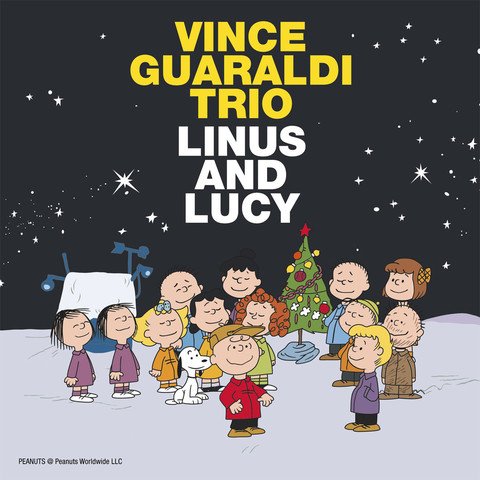
Ironically, just about everyone would call this “the Charlie Brown song” even though it’s actually titled after Linus and Lucy Van Pelt, brother and sister in Charles Schulz’s Peanuts comic strip universe.
The song is most famous for its use in the yearly favorite A Charlie Brown Christmas, which first aired in 1965, but it was written two years earlier for a documentary about Schulz and the Peanuts gang called A Boy Named Charlie Brown, which never aired.
Producer Lee Mendelson was in charge of the documentary and asked Vince Guaraldi to compose music for it
Guaraldi was huge in the jazz world and won the 1962 Grammy for Best Original Jazz Composition for “Cast Your Fate To The Wind” for his group, the Vince Guaraldi Trio. Mendelson was searching for what kind of music to play for the documentary when he took a taxi cab and “Cast Your Fate To The Wind” was playing as he crossed the Golden Gate bridge. He loved it and his decision was made.
Guaraldi wrote a series of songs for the project, including “Linus and Lucy,” that he recorded with his group, the Vince Guaraldi Trio. Even though A Boy Named Charlie Brown was shelved, the soundtrack was released in 1964, which is where “Linus and Lucy” first appeared.
In 1965, Mendelson put together the first Peanuts TV special, A Charlie Brown Christmas, using many of the same people who worked on the documentary. “Linus and Lucy” formed the score, and a song he wrote with Guaraldi called “Christmas Time Is Here” was included in a key scene.
When A Charlie Brown Christmas debuted in 1965, it quickly turned the Peanuts franchise into a television institution. That first special also shot Guaraldi to greater fame, and he became connected to all subsequent Peanuts shows.
Guaraldi would continue to work on Peanuts films until his death in 1976.
I like this episode….it has a backwoods eerie feel to it. The show reminded me of the 1940s and 1950s horror movies like the Wolfman but set in a rural enviroment. There is some padding but that doesn’t stop this from being a good episode. Each character portrays superstitious beliefs and they play off of that for the story. A story of how love can sometimes blind people to the consequences of their actions. This was written by Waltons creator Earl Hamner Jr.
If you noticed the date…This haunting love story originally aired on Valentine’s Day in 1963.
The stand out in this episode was Jeanette Nolan as the creepy Granny Hart. A woman not to be messed with. She has an authentic backwoods dialect that she used in a previous episode…The Hunt. She was a marvelous character actress. James Best plays Billy Ben Turner in this one. Before he was in The Dukes of Hazzard he guest starred in the Andy Griffith Show among many shows. The two leading ladies Anne Francis and Laura Devon were on the mark. Anne Francis was in another Twilight Zone….the classic “After Hours” where she played a mannequin.
From IMDB: Jeanette Nolan played Granny Hart, from whom Jess-Belle Stone obtains a love potion to win over Billy-Ben Turner. In The Twilight Zone: The Chaser (1960), Nolan’s husband John McIntire played Professor A. Daemon, from whom Roger Shackleforth obtains a love potion to win over Leila.
This show was written by Rod Serling and Earl Hamner, Jr.
Rod Serling’s Opening Narration:
The Twilight Zone has existed in many lands in many times. It has its roots in history, in something that happened long, long ago and got told about and handed down from one generation of folk to the other. In the telling the story gets added to and embroidered on, so that what might have happened in the time of the Druids is told as if it took place yesterday in the Blue Ridge Mountains. Such stories are best told by an elderly grandfather on a cold winter’s night by the fireside in the southern hills of the Twilight Zone.
Summary
After the love of her life, Billy Ben Turner, gets engaged to Ellwyn, the daughter of a rich farmer, a jealous Jess-Belle turns to a local witch to help her get him back. Granny Hart is known in the area as the person to go to for any potion you might want. Jess-Belle has no money, however, and all Granny Hart can give her is a potion that carries a high price. Jess-Belle is prepared to pay any price, and the potion she takes seems to work: as soon as Billy Ben sets eyes on her, he falls madly in love with her. When the clock strikes midnight, however, Jess-Belle is transformed and later realizes that she, too, is now a witch.
Rod Serling’s Closing Narration:
The episode did not feature a closing narration from Rod Serling. Instead, it ends with the folk song heard at the beginning:
Fair was Elly Glover, Dark was Jess-Belle. Both they loved the same man And both they loved him well.
CAST
Rod Serling … Narrator / Self – Host (uncredited) Anne Francis … Jess-Belle Stone James Best … Billy Ben Turner Laura Devon … Ellwyn Glover Jeanette Nolan … Granny Hart Virginia Gregg … Ossie Stone George Mitchell … Luther Glover Helen Kleeb … Mattie Glover Jim Boles … Obed Miller Jon Lormer … Minister
It’s that time of year…and this is one holiday song that is on my list and not worn out. I first heard this in 1994 when I bought the Beatles Anthology album. I never knew of this song before. this song was never officially released until it appeared as the B-side to “Free As A Bird” in 1994. I’ve posted it every year since I’ve blogged and will continue to do so…it’s repetitive butI like it…it drives home the point.
My friend Dave posted this song a few days ago and he has more info than I do so check it out.
The song, credited to Lennon-McCartney-Harrison-Starkey. The original version was distributed to The Beatles fan club in 1967. It’s the only song ever written specifically for the Beatles Fan Club members. Along with the Beatles…actor Victor Spinetti and roadie Mal Evans were on the recording.
Between December 1963 to December 1969, sent out 7 flexi discs that had spoken and musical messages to their official fan clubs in the UK and the US at Christmas time.
The Beatles recorded this in 1967 and wasn’t released until 1994 paired with “Free As A Bird”. It is a fun Christmas song that will stick in your head. The Beatles did not release a Christmas song commercially… only to their fan club when they were active.
Many performers of this era like The Beach Boys and The Four Seasons released Christmas songs, but The Beatles never had an official Christmas release.
Christmas time is here again
Christmas time is here again Christmas time is here again Christmas time is here again Christmas time is here again
Ain’t been round since you know when Christmas time is here again O-U-T spells “out”
Christmas time is here again Christmas time is here again Christmas time is here again Christmas time is here again
Ain’t been round since you know when Christmas time is here again O-U-T spells “out”
Christmas time is here again Christmas time is here again Christmas time is here again Christmas time is here again
Ain’t been round since you know when Christmas time…[music continues and fades to background]
[spoken]
This is Paul McCartney here, I’d just like to wish you everything you wish yourself for Christmas.
This is John Lennon saying on behalf of the Beatles, have a very Happy Christmas and a good New Year.
George Harrison speaking. I’d like to take this opportunity to wish you a very Merry Christmas, listeners everywhere.
This is Ringo Starr and I’d just like to say Merry Christmas and a really Happy New Year to all listeners
[a John Lennon pastiche at this point, very hard to understand]
This is one of my favorite episodes of the 4th season. All three main actors bring something to the table. This one shows denial from the three main characters and the will to go on. They see a spaceship (their spaceship) has crashed and they see themselves dead. How is this possible? Are they really dead or is it just an hallucination? They spend the episode investigating different reasons as Captain Ross pushes the other two to the brink.
Jack Klugman plays Captain Ross and he is great as always and he would appear in 4 Twilight Zones. Ross Martin appears as Lt. Ted Mason and Martin would have 130 tv credits in the 60s and 70s. He was turned down in starring roles because of a heart condition and studios were afraid to take a chance on him in starring roles. He had mostly had guest appearances and was a great character actor. Fred Beir as Lt. Mike Carter had over 100 screen credits to his name.
This episode is quite creepy and the twist at the end is good…even if you guess it before hand. The hour long format works well in this episode. You get background information on each character.
The special effects were really good for this one. Included in Death Ship are a number of futuristic props, including the spaceship itself (a leftover from the movie Forbidden Planet) and an on-bridge device that scans the planets surface. Realistic paintings show the wrecked spaceship and the exterior of a house back on Earth. Also worth noting are the day and night shots of the spaceship landing and taking off.
Russ Martin who was separted from his wife and daughter: I had found that certain personal things with regard to my own daughter motivate me or drive me or move me. Years ago, I was in a class taught by Marty Ritt, who is now a brilliant director, and one of the exercises we had was to move a distance of something like eighteen feet in three steps and sit in a chair. I mean, just move, three steps and youre sitting in the chair. And I said, Tt just cant be done. He said, You give yourself something thatll make you do that.
So I pictured my daughter under certain circumstances. Now, its horrible to me even now, as I mention it but the truth is that I pictured her at a window, inside a burning building, calling to me in near panic, Daddy! Daddy! And I took those steps! It was effortless to stride the length of a mans body. It was almost as though I had been shot out of a cannon, but that was because that was meaningful to me. And I used similar circumstances involving my own daughter, in my mind, in preparation for that scene, so that when I turned and saw her my heart just broke. The joy, the joy at seeing her!
Special effects supervisor Herbert Hirschman : I supervised the construction and told them what I wanted. We built a miniature to show the ship landing and taking off. It was on a table with sand and little plants. The ship was suspended from invisible wires. And as the ship was slowing in the descent, I wanted to see the sand billowing up. It was very expensive, but I felt that it was essential to the credibility of the show. The attention to detail was well worth the effort; its a beautiful effect. It was an awful lot of fun, says Hirschman, I kept asking for more and they kept doing it.
IMDB: The story proposes that 1997 is the year that spaceships are being sent from an overpopulated Earth to find planets suitable for colonization. A similar notion was later used as one of the main premises of Lost in Space (1965), a series which starred many Twilight Zone alumni.
Of the three main actors, Jack Klugman (Captain Ross) was the only one who lived to see the actual 1997.
The spaceship E-89, is the same miniature prop that was originally created as the saucer-shaped United Planets Cruiser C-57D for the 1956 MGM science fiction classic Forbidden Planet (1956). The external set of the ship and its staircase, and the crew uniforms, are also from the same film. “The Twilight Zone” was able to make extensive use of props and costumes created for “Forbidden Planet” (including Robby The Robot) thanks to the fact that it was regularly filmed at MGM Studios, which kept all these items in storage in its prop department for many years.
This show was written by Rod Serling and Richard Matheson
Rod Serling’s Opening Narration:
Picture of the spaceship E-89, cruising above the 13th planet of star system 51, the year 1997. In a little while, supposedly, the ship will be landed and specimens taken: vegetable, mineral, and if any, animal. These will be brought back to overpopulated Earth, where technicians will evaluate them, and if everything is satisfactory, stamp their findings with the word ‘inhabitable’ and open up yet another planet for colonization. These are the things that are supposed to happen.
Picture of the crew of the spaceship E-89: Captain Ross, Lieutenant Mason, Lieutenant Carter. Three men who have just reached a place which is as far from home as they will ever be. Three men who in a matter of minutes will be plunged into the darkest nightmare reaches of the Twilight Zone.
Summary
In 1997, the spaceship E-89 arrives at the 13th planet in star system 51. Their mission is to collect plant samples to take back to an overpopulated Earth so it can be determined if the planet could be colonized. What they find however is a crashed spaceship of Earth design. Inside the ship they discover three dead crew members – but the dead are their duplicates and the crashed vessel is the E-89. The captain refuses to accept that they might be dead and explores several possibilities to explain what has happened including the theory that they may have time-traveled. The two crewmen hallucinate and come to believe they are already dead but the captain refuses to accept that and intends to prove that they are very much alive.
Rod Serling’s Closing Narration:
Picture of a man who will not see anything he does not choose to see, including his own death. A man of such indomitable will that even the two men beneath his command are not allowed to see the truth; which truth is, that they are no longer among the living, that the movements they make and the words they speak have all been made and spoken countless times before, and will be made and spoken countless times again, perhaps even unto eternity. Picture of a latter-day Flying Dutchman, sailing into the Twilight Zone.
CAST
Rod Serling … Narrator / Self – Host (uncredited) Jack Klugman…Capt. Paul Ross Ross Martin…Lt. Ted Mason Fred Beir (as Fredrick Beir)…Lt. Mike Carter Mary Webster…Ruth Mason Ross Elliott…Kramer Sara Taft…Mrs. Nolan Tammy Marihugh…Jeannie Mason
I really like this one. It’s not among the best but again a really good sci-fi episode. The show has some very good character actors like Frank Overton and Barbara Baxley. A girl who loses her parents in a fire manages to escape their burning house. A couple named Harry and Cora take her in but cannot uderstand why Ilse doesn’t talk. It turns out that Ilse used telepathy with her parents…her parents were molding her to use that skill. When Harry and Cora took her to school for the first time Ilse was horrified and could not commuicate like other kids.
This episode has depth and there are a lot of moving parts. What I saw in this episode is parents who treat their children as objects to be molded rather than people with needs and rights. Its a good episode and moves quite well. It does give a back story on why Ilse’s parents were teaching her telepathic abilities.
The biggest surprise to me was who played Ilse…it was an 80s sitcom actress…Ann Jillian.
From IMDB: The main street that Ilsa runs across is the same one used in The Twilight Zone: I Sing the Body Electric (1962). Located on the MGM backlot in Culver City, it was known as the “New England Street”, and is same set that was featured in the Andy Hardy movies, starring Mickey Rooney., Elvis Presley’s “Jailhouse Rock”, Frank Sinatra’s “Some Came Running” and the 1970s musical fantasy “Sgt. Pepper’s Lonely Heart’s Club Band”, starring The Bee Gees, which was the last major film shot there. Much of the MGM backlot had been demolished in 1974, and the remainder, including the New England Street, was pulled down in 1978, soon after filming wrapped on “Sgt Pepper’s”.
This show was written by Rod Serling and Richard Matheson
Rod Serling’s Opening Narration:
What you’re witnessing is the curtain-raiser to a most extraordinary play; to wit, the signing of a pact, the commencement of a project. The play itself will be performed almost entirely offstage. The final scenes are to be enacted a decade hence and with a different cast. The main character of these final scenes is Ilse, the daughter of Professor and Mrs. Nielsen, age two. At the moment she lies sleeping in her crib, unaware of the singular drama in which she is to be involved. Ten years from this moment, Ilse Nielsen is to know the desolating terror of living simultaneously in the world and in the Twilight Zone.
Summary
Sometime after World War II, a small group of people make a pact to develop their telepathic abilities as a means of communicating, foregoing any type of oral communication. One couple, the Nielsens, announce that they are migrating to a small town in the USA, German Corners, Pa. After a tragic fire at their house 10 years later, Sheriff Harry Wheeler and his wife Cora take in the only survivor, the now orphaned Ilsa Nielsen. The young girl has never learned to speak, always using telepathy to communicate with her parents. They don’t quite understand why Ilsa won’t speak to them and Cora sees her as a replacement for the daughter she lost in an accident some years ago. When they enroll Ilsa in school, her teacher is determined to make her act like all the other children.
It has been noted in a book of proven wisdom that perfect love casteth out fear. While it’s unlikely that this observation was meant to include that specific fear that follows the loss of extrasensory perception, the principle remains, as always, beautifully intact. Case in point, that of Ilse Nielsen, former resident of the Twilight Zone.
CAST
Rod Serling … Narrator / Self – Host (uncredited)
Barbara Baxley … Cora Wheeler
Frank Overton … Harry Wheeler
Irene Dailey … Miss Frank
Ann Jillian … Ilse (as Ann Jilliann)
Éva Szörényi … Frau Werner (as Eva Soreny)
Robert Boon … Holger Nielsen
Claudia Bryar … Frau Nielsen
Percy Helton … Tom Poulter
Oscar Beregi Jr. … Karl Werner (as Oscar Beregi)
Fred Aldrich … Pedestrian (uncredited)
William Challee … Rude man on porch (uncredited)
Bill Erwin Bill Erwin … Man in Flashback (uncredited)
Charles Morton … Bartender (uncredited)
Norbert Schiller … Committee member in prologue (uncredited)
Glen Walters … Pedestrian (uncredited
I just posted a song by Howlin’ Wolf a week or so ago but I’ve been listening to him lately so here is another. This song comes with an interesting story between Jimi Hendrix and Eric Clapton.
When Jimi Hendrix came to England he made a huge impression right away. At a Cream gig he requested a chance to jam with the band. No one in those days asked to do this because Clapton was “God” on guitar to many people…plus Cream as a unit were super talented. Jack Bruce later said that Jimi was a brave person to do that because Cream were all top notch musicans.
Jimi plugged into Jack Bruce’s amp and broke into Killing Floor. Clapton was blown away by it because he never mastered the song. Jimi was ripping right through it at breakneck speed. According to Chas Chandler…Clapton just dropped his hands and was shocked.
Wolf released his version in 1964 and it was written by him.
Hubert Sumlin played guitar on the original version. He said that Wolf played the field, with several ladies in his stable. One of them, a woman named Helen, was so fed up with his philandering that she got a shotgun filled with buckshot and fired at him from a second-floor window.
So, the killing floor is a metaphor for depression, in Wolf’s case triggered by a woman who was so mad she was literally trying to kill him.
Led Zeppelin later used this song as the basis for The Lemon Song.
Eric Clapton:
“I remember thinking that here was a force to be reckoned with. It scared me, because he was clearly going to be a huge star, and just as we are finding our own speed, here was the real thing.”
“It was amazing,”“and it was musically great, too, not just pyrotechnics.”
From Songfacts
In this song, Howlin’ Wolf sings about how he should have left his woman a long time ago, imagining how much better he would have it if he went to Mexico when he had the chance. Now, he’s down here on the killing floor.
Wolf wasn’t the first to use the phrase “killing floor” in a song; the Mississippi blues musician Skip James recorded “Hard Time Killing Floor Blues” in 1931. James’ version was re-released in 1964, a year before Wolf recorded his “Killing Floor.”
Artists to cover this song include Albert King, Jimi Hendrix and Otis Rush.
Killing Floor
I should have quit you, a long time ago I should have quit you, babe, long time ago I should have quit you, and went on to Mexico If I had-a followed my first mind If I had-a followed my first mind I’d been gone, since my second time
I shoulda went on, when my friend come from Mexico at me I shoulda went on, when my friend come from Mexico at me But no, I was foolin’ with ya, baby, I let ya put me on the killin’ floor Lord knows, I shoulda been gone Lord knows, I shoulda been gone And I wouldn’t have been here, down on the killin’ floor Yeah
This episode is not subtle…there is no reading between the lines in this one. Serling lays it out on the table for everyone to see. Dennis Hopper plays Peter Vollmer who is a disenfranchised young man and a xenophobic would be Nazi trying to gain a following. The episode was not the best of the Twilight Zone but it packs a punch and as Serling said…it probably was the most important episode of the Twilight Zone.
Peter Vollmer is struggling to gain followers for his hate causes. He then starts getting advice from a shadowy figure who we cannot see…until later on. The advice he gets is all too familiar unfortnately…it reeks of hatred, bigotry, and ignornace. How to manipulate the situations around him to gain followers for his movement.The mystery man leads Peter along and when he is uncovered it is shocking. In 1963 WWII was still fresh in people’s minds
From IMDB….Rod Serling considered this episode, which he wrote and which examines the subject of Nazism (National Socialism), to be the most important of the series.
The episode’s director Stuart Rosenberg would later direct Dennis Hopper in the classic film Cool Hand Luke
This show was written by Rod Serling
Rod Serling’s Opening Narration:
Portrait of a bush-league Führer named Peter Vollmer, a sparse little man who feeds off his self-delusions and finds himself perpetually hungry for want of greatness in his diet. And like some goose-stepping predecessors he searches for something to explain his hunger, and to rationalize why a world passes him by without saluting. That something he looks for and finds is in a sewer. In his own twisted and distorted lexicon he calls it faith, strength, truth. But in just a moment Peter Vollmer will ply his trade on another kind of corner, a strange intersection in a shadowland called the Twilight Zone.
Summary
Peter Vollmer is the leader of a small neo-Nazi movement in a large American city. He’s having trouble getting his message across and seems to alienate people every time he opens his mouth. After a particularly bad rally, he hears a voice and sees a man standing in the shadows. He begins to advise Peter on what to say and how he can structure his message to make it more appealing to his particular audience. Peter has success but his mentor begins pushing him to extremes. There is a limit however and there is a voice of reason in the mob that seemed so willing to follow him
Rod Serling’s Closing Narration:
Where will he go next, this phantom from another time, this resurrected ghost of a previous nightmare – Chicago? Los Angeles? Miami, Florida? Vincennes, Indiana? Syracuse, New York? Anyplace, everyplace, where there’s hate, where there’s prejudice, where there’s bigotry. He’s alive. He’s alive so long as these evils exist. Remember that when he comes to your town. Remember it when you hear his voice speaking out through others. Remember it when you hear a name called, a minority attacked, any blind, unreasoning assault on a people or any human being. He’s alive because through these things we keep him alive.
CAST
Rod Serling … Narrator / Self – Host (uncredited) Dennis Hopper … Peter Vollmer Ludwig Donath … Ernst Ganz Paul Mazursky … Frank Howard Caine … Nick Barnaby Hale … Stanley Jay Adler … Gibbons Wolfe Barzell … Proprietor Bernard Fein … Heckler Curt Conway … Adolf Hitler Edward Astran … Audience Member (uncredited) Sam Bagley … Audience Member (uncredited) Chet Brandenburg … Audience Member (uncredited) Paul Bryar … Cop (uncredited) Bud Cokes … Audience Member (uncredited) Joe Evans … Audience Member (uncredited) Bobby Gilbert … Man With Cat (uncredited) Buck Harrington … Audience Member (uncredited) Ed Haskett … Audience Member (uncredited) Robert McCord … Cop (uncredited) William Meader … Brawling Townsman (uncredited) Jim Michael … Guard (uncredited) Sol Murgi … Audience Member (uncredited) William H. O’Brien … Audience Member (uncredited) Jose Portugal … Ice Cream Man (uncredited) Paul Ravel … Audience Member (uncredited) Bill Zuckert … Detective (uncredited)
I had something else planned to post but I found out that Mike Nesmith passed away. Nesmith was a big inspiration to me. There is no question…Nesmith would have made it without the Monkees…he was a talented writer, actor, producer, novelist and a very good Texas guitar player. He wrote some great country rock songs, Elephant Parts, and even a hit for Linda Ronstadt’s band The Stone Poneys…Different Drum.
While watching the reruns of the Monkees I bugged my mom to buy me a green wool hat with buttons but you can’t buy them off the shelf. She got me a green stocking cap…it wasn’t the same but I was happy. When the Monkees are mentioned some people cringe but they still have a place in my 5-year-old heart…plus how many bands can say that Jimi Hendrix opened up for them? Although that might be the worst pairing ever.
I’m not saying they deserve to be remembered with the best bands ever. Not at all but they do need to be recognized for their influence on a couple of generations. They influenced a lot of kids to form bands…mostly because of their weekly prime-time television show and ensuing hit singles. In the 80s they had a big comeback with a tour and massive airplay on MTV… I got to see them then…without Nesmith though.
They were a lot of fun. I thought WOW… I must be in a band one day. Little did I know that being in a band was not living in a cool place at the beach and having adventures at every turn…not to mention everyone getting along…it just doesn’t happen that way…but it is a special feeling being in a band with an us against them attitude and a great growing experience.
After I went through the Monkees faze I discovered the Beatles, The Who, Stones, Kinks…anything British but I still have a soft spot for some of the old Monkees songs.
The Monkees basically took A Hard Days Night movie humor and made a television show around a life of a mid-sixties rock band. Kids wanted to form bands after seeing them romp around the screen with girls…who wouldn’t want that gig? Michael Stipe from REM has said he was influenced by them.
They were not allowed to play on their first couple of albums…only sing…The Monkees were put together by Bob Rafelson and Bert Schneider for Screen Gems with two real musicians in the band…Michael Nesmith and Peter Tork… Micky Dolenz (he did sing in cover bands before The Monkees) and Davy Jones could sing and act…. and Mickey quickly learned drums.
When news came out that they didn’t play on their albums they were roundly criticized in the 1960s. They fought Don Kershner who controlled what they sang…. and won… The funny thing is many sixties pop bands didn’t play on their records and the Monkees actually started to play their own instruments on their third album (Headquarters) and writing some songs for every album afterward.
In the second season of their tv show they started to gain more control. Some of those last episodes are very pot influenced…especially the episode called “The Frodis Caper”… It is surreal and broke the fourth wall…the second season is worth a watch…all of them are fun but the 1st season is more formulaic.
I still like many songs by them…anything written by Michael Nesmith (famous also for Elephant Parts), Pleasant Valley Sunday, Randy Scouse Git, Steppin Stone and Saturday’s Child.
All in all, they ended up singing and playing on some of the best-known sixties pop-rock hits.
I’ll just add one more thing…he Monkees belong in the Rock and Roll Hall of Fame.
One of the thought-provoking episodes of the 4th season. I like the story and the pace for the hour long format is brisk. They cover a lot of ground in this episode. Ed Nelson as Philip Redfield plays this role with passion. He is traveling through back roads and runs through a small nothing little town called Peaceful Valley.
He notices something different and the townspeople can do things that are impossible…make a dog disappear, bring that same dog back from the dead, and invisible force fields. He finds out the history of the town from the leaders and wants them to share this with the world.
If you had the technology to end poverty, sickness, and even death in cases…do you use it? If you do, you risk someone getting the technology and using it for evil things. Are humans outside of this peaceful town ready for that much power? Dorn doesn’t think so…and I don’t either.
. Al the actors do a great job. David Opatoshu as the “town” leader Dorn plays it with compassion and common sense. You will know James Doohan in a minor role…still a few years away from Scotty in Star Trek.
Watch this one…it could have been a great sci-fi movie.
The title comes from the King James Version of the 23rd Psalm in the Hebrew Bible. “Yea, though I walk through the valley of the shadow of death, I will fear no evil: for thou art with me; thy rod and thy staff they comfort me.”
This show was written by Rod Serling and Charles Beaumont
Rod Serling’s Opening Narration:
You’ve seen them. Little towns, tucked away far from the main roads. You’ve seen them, but have you thought about them? What do the people in these places do? Why do they stay? Philip Redfield never thought about them. If his dog hadn’t gone after that cat, he would have driven through Peaceful Valley and put it out of his mind forever. But he can’t do that now, because whether he knows it or not his friend’s shortcut has led him right into the capital of the Twilight Zone.
Summary
On the back roads, trying to find his way back home, reporter Philip Redfield and his dog, Rollie, stop in the small town of Peaceful Valley, for gas and food, and directions. When Rollie runs off in pursuit of a cat, a young girl points a device at the dog, and he disappears. Though her father brings Rollie back, Philip finds it all very strange. When Phillip tries to leave town, his car crashes into an invisible barrier, preventing his departure. Shaken up, the town’s mayor, Dorn, reveals their secret, and gives Philip the choice; join them or die
Rod Serling’s Closing Narration:
You’ve seen them. Little towns, tucked away far from the main roads. You’ve seen them, but have you thought about them? Have you wondered what the people do in such places, why they stay? Philip Redfield thinks about them now and he wonders, but only very late at night, when he’s between wakefulness and sleep in the Twilight Zone.
CAST
Rod Serling … Narrator / Self – Host (uncredited)
David Opatoshu … Dorn
Ed Nelson … Philip Redfield
Natalie Trundy … Ellen Marshall
Jacques Aubuchon … Connolly
Dabbs Greer … Evans
James Doohan … Father
Morgan Brittany … Girl (as Suzanne Cupito)
Henry Beckman … Townsman
Bart Burns Bart Burns … Townsman
King Calder … Townsman
Pat O’Hara Pat O’Hara … Townsman
Sandy Kenyon … The Attendant
I must admit I never heard of Bonds until Bruce Springsteen wrote a song for him called This Little Girl on Bond’s 1981 Dedication album.
Bruce covered this song in the seventies live. One performance in paticular was outstanding… the 1979 No Nukes concert encore (at the bottom).
I like Gary’s version a lot because of the party atmosphere which contrasts to the smoother records at the time.
After listening to the lyrics…I wondered who Daddy G was…Daddy G is Gene Barge, tenor saxman in an instrumental group called The Church Street Five, which released a song called “A Night With Daddy G” that reached #111 in February 1961.
Bonds’ real name is Gary Anderson. His label boss, Frank Guida, changed it to “U.S. Bonds” for his first single, New Orleans, as a play on the posters asking Americans to “buy U.S. savings bonds.” Pretty clever, but too many people, including many DJs, got it wrong and thought it was the name of a group. His next single, “Quarter To Three,” was initially issued as U.S. Bonds but soon changed to Gary U.S. Bonds, along with his subsequent releases.
The writing credits on this song go to Bonds and the three men who wrote the instrumental on which it is based…A Night With Daddy G. They would be Gene Barge (Daddy G), Frank Guida, and Guida’s engineer and songwriting partner Joe Royster.
Daddy G was a popular guy…he got another mention a few months later when he showed up in the lyric to The Dovells song “Bristol Stomp,” where they sing about how they “rocked with Daddy G.” That song went to #2 in 1961.
The song went to #1 in the Billboard 100, #3 on the R&B Charts, and #7 in the UK in 1961.
From Songfacts
In this song, Gary U.S. Bonds sings about staying up till quarter to three in the morning, dancing to the swinging sax of Daddy G.
Like Bonds, The Church Street Five were signed to Legrand Records, owned by former record store owner Frank Guida. Bonds wrote a lyric for the song and recorded it (with Daddy G on saxophone) as “Quarter To Three.” In June 1961, it went to #1, where it stayed for two weeks.
Bruce Springsteen, a big fan of Bonds, played this at many of his concerts in the ’70s before and after his rise to stardom. When Springsteen played The Palladium in New York City on October 29, 1976, he brought Bonds on stage to perform the song. By this time, Bonds had long fallen out of favor (his last Hot 100 hit was in 1962 with “Copy Cat”) and stuck on the cabaret circuit. Springsteen worked at a breakneck pace for the next few years, but found time after the release on his 1980 album The River to work with Bonds, resulting in a successful 1981 comeback album for Bonds called Dedication.
Springsteen wrote a lot more songs than he could record, and three of them went to Bonds: “This Little Girl,” “Your Love” and the title track. Springsteen and members of his E Street band also played on the album and worked on the production. “This Little Girl” was a hit, going to #11 in the US and reviving Bonds’ career. When Springsteen brought Bonds on stage a few times in 1981, the crowds were far more familiar with him. In 1982, Springsteen and his band worked on another album for Bonds: On the Line.
Bonds sued Chubby Checker in 1962, claiming he stole “Quarter To Three” for his song “Dancin’ Party.” The case was settled out of court.
Quarter To Three
Don’t you know that I danced I danced till a quarter to three With the help, last night, of Daddy G He was swingin on the sax like a nobody could And I was dancin’ all over the room Oh, don’t you know the people were dancin’ Like they were mad It was the swingin’est band they had ever had It was the swingin’est song that could ever be It was a night with Daddy G Let me tell you now I never had it so good Yeah and I know you never could Until you get hip with that jive And take a band like the Church Street Five Oh don’t you know that I danced I danced till a quarter to three With the help last night of Daddy G Everybody was as happy as they could be And they were swingin with Daddy G Blow Daddy
Let me tell you now I never had it so good Yeah and I know you never could Until you get hip with that jive And take a band like the Church Street Five Oh don’t you know that I danced I danced till a quarter to three With the help last night of Daddy G He was swingin on the sax like nobody could And I was dancin all over the room Oh don’t you know the Dance, do bee wa dah Dance, do bee wah dah You can dance, do bee wah dah You can dance, dance, dance
This is the second episode in the new hour long format. This story has some added padding…a direct consequence of the hour-long format of this episode. That doesn’t mean it isn’t good. The story is creepy but they visited this theme before in the second season opener King Nine Will Not Return.
The cast is excellent. Mike Kellin plays Chief Bell who is having survivors guilt that brings to mind PTSD. You find out later that it’s more than that. Simon Oakland is Captain Beecham and gives a very realistic performance as Oakland does in whatever he is in. The most famous actor in this one…at least to my generation is Bill Bixby. He only plays a supporting role and it’s interesting to see him as a younger actor.
Basically it’s a great story but too much padding but…very watchable.
This is from IMDB…it’s a piece of trivia that is very eerie: Mike Kellin portraying the main character, Chief Bell, died 26 August 1983, the ship used for exterior shots in the episode was decommissioned 11 August 1983. Simon Oakland, who portrayed the captain, died three days later on 29 August 1983.
Also this explains why this episode drags a bit: Season four of Twilight Zone is the only one of the five seasons that ran its episodes in hour long time slots rather then the conventional half-hour format. The Thirty-Fathom Grave was written by Rod Serling before the network and producers decided to try out the series in the new lengthier format. Since the episode had already been optioned for season four it was necessary for Rod Serling to re-write and expand the episode to fit the new hour slot. Therefore several new scenes had to be added or padded to fill up time. As a result, this episode received mostly negative feedback based on its slow pace and unnecessary dialogue.
This episode would have been so much better at the original 30 minutes.
This show was written by Rod Serling
Rod Serling’s Opening Narration:
Incident one hundred miles off the coast of Guadalcanal. Time: the present. The United States naval destroyer on what has been a most uneventful cruise. In a moment, they’re going to send a man down thirty fathoms and check on a noise maker – someone or something tapping on metal. You may or may not read the results in a naval report, because Captain Beecham and his crew have just set a course that will lead this ship and everyone on it into the Twilight Zone.
Summary
As a U.S. Navy destroyer cruises near Guadalcanal in the South Pacific, its sonar detects muted but constant hammering on metal undersea. The eerie sounds emanate from a submarine on the ocean floor, apparently there since World War II. The ship’s chief boatswain’s mate becomes very nervous, having served aboard that sub – and he was its sole survivor.
Rod Serling’s Closing Narration:
Small naval engagement, the month of April, 1963. Not to be found in any historical annals. Look for this one filed under ‘H’ for haunting in the Twilight Zone.
CAST
Rod Serling … Narrator / Self – Host (uncredited)
Mike Kellin…Chief Bell
Simon Oakland…Captain Beecham
David Sheiner…Doc
John Considine…McClure
Bill Bixby…OOD
Conlan Carter…Ensign
Forrest Compton…ASW Officer
Henry Scott…Jr. OOD
Anthony D. Call…Lee Helmsman
Charles Kuenstle…Sonar Operator
Derrik Lewis…Helmsman
Vincent Baggetta…Crewman
Louie Elias…Crewman
The great Garth Hudson gives us a wonderful intro to this song. In live shows, the song became a Hudson showcase, with him improvising wildly on organ (and later, on synthesizer) before cutting into the song. This improvisation came to be known as “The Genetic Method.” .Eventually the improvisation quoted Bach’s “Fugue in D Minor” and followed into the song’s main riff. Only part of the improvisation was included on the actual album cut.
Garth Hudson was the Band’s secret weapon according to Robertson. Back when they were backing Ronnie Hawkins….they asked the classically trained Hudson to join them. His parents didn’t like the idea but… Hudson agreed to join the band on two conditions: that Hawkins buy him a Lowrey organ, and that he be paid an extra $10 a week to give music lessons to the other Hawks. After that he was in The Band.
This gem came from Music From Big Pink in 1968. The song is credited to Robbie Robertson. Levon Helm said that he and Richard Manual wrote the lyrics to the song.
I was talking to another blogger the other day about the Band. They lived up to their name more than about any other band. Not only did they all contribute to songs…not writing…but all of them did contribute some but they all could play each others instruments.
Music From Big Pink was a huge influence on other artists back then and to this day. George Harrison and Eric Clapton were two that were influenced by it. Eric even had ideas of joining the Band. You can hear it in music at that time. Psychedelic was out and more Americana or roots music was in. The album’s influence far outweighed it’s chart position.
The album peaked at #18 in Canada and #30 in the Billboard Album Chart. It has to be on the list of best debut albums of all time.
Robbie Robertson:When Garth played the intro to “Chest Fever,” which he called “The Genetic Method,” I was reminded there was no other keyboard player in rock ’n’ roll who had his improvisational abilities and imagination.
Robbie Robertson:“It’s kind of a hard love song,” “But it’s a reversal on that old rock & roll thing where they’re always telling the girl, ‘He’s a rebel, he’ll never be any good.’ This time, it’s the other way around.”
From Songfacts
The Band’s guitarist, Robbie Robertson, felt he needed a counterbalance for the album’s centerpiece, “The Weight.” He wrote the music for the song solely for that purpose.
Robertson, drummer Levon Helm, and pianist Richard Manuel improvised lyrics (Robertson often calls them meaningless) over the course of the song. Those lyrics remain unchanged on the track, although they loosely tell a story of a man thrown aside by a hard-drinking, fast-talking woman who subsequently literally becomes sick with love for her.
This was the opening song for the Band’s set at the Woodstock Festival in 1969.
Chest Fever
I know she’s a tracker Any style that would back her They say she’s a chooser But I just can’t refuse her She was just there, but then she can’t be here no more
And as my mind unwheels I feel the freeze down in my knees But just before she leaves, she receives
She’s been down in the dunes And she’s dealt with the goons Now she drinks from a bitter cup I’m trying to get her to give it up She was just here, I fear she can’t be there no more
And as my mind unwheels I feel the freeze down in my knees But just before she leaves, she receives
It’s long, long when she’s gone I get weary holding on Now I’m coldly fading fast I don’t think I’m gonna last very much longer
She’s stoned said the Swede, And the moon calf agreed But I’m like a viper in shock With my eyes in the clock She was just there somewhere and here I am again
And as my mind unweaves I feel the freeze down in my knees But just before she leaves, she receives
In His Image is a great sci-fi episode that has more twists and turns than a cheap garden hose. George Grizzard plays both title characters and does a great job of going through a book of emotions. You get a shock to start out the episode and the changes keep coming at you. It explores a familiar theme in the Twilight Zone of “no one knows who I am.” The difference is this time, with the hour format, it is fully explored.
This episode is one of the best of the 4th season. It takes a little time to get accustomed to the hour long format. You need to watch the fourth season with a different frame of mind. This episode would have been almost impossible for the 30 minute format. In His Image keeps you guessing on what is going on. I would like to expand on this but I would give it away.
In His Image is exciting, suspenseful and thought-provoking. If this was to be a representative example of the hour-long shows, the series had nothing to worry about. Unfortunately, such was not the case.
First of 4th series episodes, airing from January to May 1963. These episodes were one hour in length. CBS executives decided to switch the show’s time, and for this single season, the longer timeslot allowed for hour-long episodes
This show was written by Charles Beaumont and Rod Serling
Rod Serling’s Opening Narration:
What you have just witnessed could be the end of a particularly terrifying nightmare. It isn’t – it’s the beginning. Although Alan Talbot doesn’t know it, he’s about to enter a strange new world, too incredible to be real, too real to be a dream. It’s called The Twilight Zone.
Summary
A young man grapples with an urge to kill and confusion about his origins. After a shocking scene on a subway platform he goes to his fiancé’s apartment and takes her and visit his old home town. When they get there nothing is the same and he is not known.
Rod Serling’s Closing Narration:
In a way, it can be said that Walter Ryder succeeded in his life’s ambition, even though the man he created was, after all, himself. There may be easier ways to self-improvement, but sometimes it happens that the shortest distance between two points is a crooked line – through the Twilight Zone.
CAST
Rod Serling … Narrator / Self – Host (uncredited)
George Grizzard … Alan Talbot / Walter Ryder, Jr.
Gail Kobe Gail Kobe … Jessica Connelly
Katherine Squire … The Old Woman (as Katharine Squire)
Wallace Rooney … Man
George Petrie … Driver
James Seay … Sheriff
Jamie Forster … Hotel Clerk
Sherry Granato … Girl
I want to thank you all who have stuck with me through this long haul. We are now finished with the 3rd season! The next season will be quick with only 18 hour long episodes. If you want… please comment on what you think I got wrong, right, or just your favorite episodes.
Season three was not as consistent as seasons 1 and 2 but it still contained some classics such as To Serve Man, A Game Of Pool, The Midnight Sun, Deaths-Head Revisited, Nothing In The Dark, The Dummy, and more.
By the close of the third season, The Twilight Zone had made cultural inroads beyond its status as a mere television series. The show started to fit into popular culture, the twilight zone was a phrase perfectly suited to describe any number of strange situations.
Dean Rusk, the Secretary of State, in a speech to the Senate, referred to the Twilight Zone in diplomacy, Serling noted. When that happened, I thought, My gosh, we’ve arrived! During the 1962 California gubernatorial primaries, Governor Pat Brown said he was looking forward to the post-election TV logs reading, Richard Nixon Returns to Twilight Zone.
In the spring of 1962, The Twilight Zone was late in finding a sponsor for its fourth season. As a result, CBS programmed a new show, Fair Exchange, into its time slot for the fall. Suddenly and without prior warning, The Twilight Zone was off the air.
After CBS dropped The Twilight Zone, Serling accepted a teaching post at Antioch College, effective September, 1962, through January, 1963. CBS did of course pick the series back up after a while. The series renewal made no change in this decision. Serling was tired of The Twilight Zone and burned out. Over the next two seasons, his involvement in the show would be greatly decreased. He would still host the show and contribute his share of scripts, but his input on the details of production would be minimal. Those decisions would be made by others.
CBS ordered only 18 episodes for the 4th season but…they would now be an hour long in format. With Serling’s less involvement combined with the hour format…the shows quality declined in this season. It would somewhat bounce back in the 5th season.
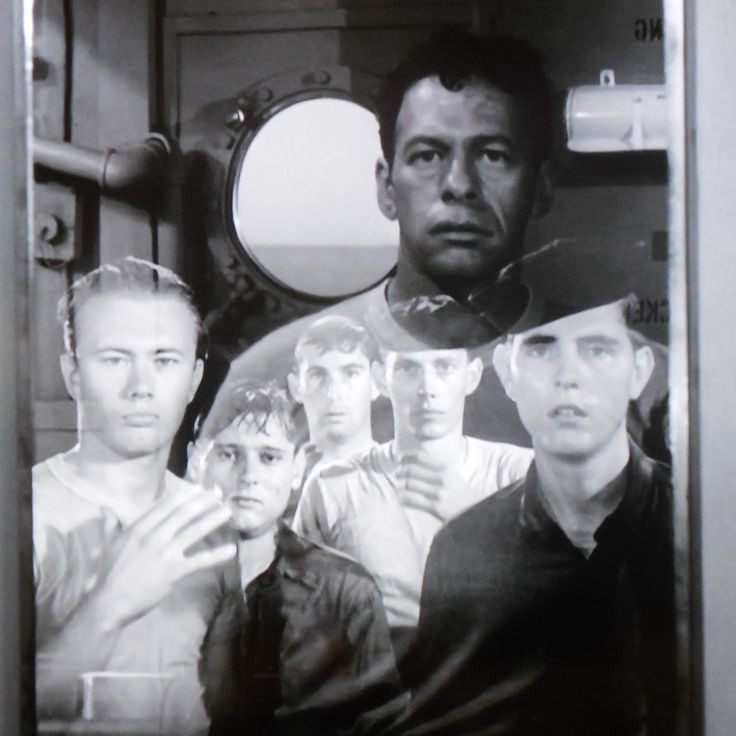
An excellent episode and a great way to close out the 3rd season. Donald Pleasence plays Professor Ellis Fowler and does an excellent job as he always does. He was only 43 years old when he played this part. Pleasance’s old age make-up is subtle and completely convincing.
Preparing to leave for Christmas vacation, Professor Fowler is informed by the Headmaster that, after fifty-one years of teaching, he is to be forcibly retired. Fowler is devastated by this news and begins to brood. He now believes his life was utterly without worth and thinks about suicide. The episode is poignant and makes you wonder how many lives we have touched without realizing it. This one made it into my earlier top 10 episodes of the Twilight Zone.
This is an episode that I think teachers will like.
Buck Houghton Producer:Pleasance was an idea of the casting directors, Id never heard of him, Boy, damn the expense; we brought him from England. He was just wonderful in it. Hes a very nice man. I have a feeling it was his first time in this country professionally, and while he was a thorough going professional with a huge experience in stage and everything else, he was a little apprehensive of this whole experience because he arrived on a given day and five days later it was all going to be over. So he had a lot to absorb. But Bob Miller is very together and gave him confidence and we were off and running.
This show was written by Rod Serling
Rod Serling’s Opening Narration:
Professor Ellis Fowler, a gentle, bookish guide to the young, who is about to discover that life still has certain surprises, and that the campus of the Rock Spring School for Boys lies on a direct path to another institution, commonly referred to as the Twilight Zone.
Summary
Professor Ellis Fowler has been teaching at the Rock Spring School for Boys for a great many years. In fact, he taught the grandfather of one of his current students. Just before Christmas however, he’s told by the headmaster that his contract will not be renewed for the new year. Despondent, he returns home convinced that his life has been wasted and decides to end it all. Before he can do so however, his is visited by some very special students from the past who give him cause to reconsider.
Rod Serling’s Closing Narration:
Professor Ellis Fowler, teacher, who discovered rather belatedly something of his own value. A very small scholastic lesson, from the campus of the Twilight Zone.
CAST
Rod Serling … Narrator / Self – Host (uncredited)
Donald Pleasence … Professor Ellis Fowler
Liam Sullivan … Headmaster
Philippa Bevans … Mrs. Landers
Tom Lowell … Artie Beechcroft
Russell Horton … Bartlett
Buddy Hart … Boy
Darryl Richard … Thompson









 PowerPop... An Eclectic Collection of Pop Culture