Lovin’ Spoonful – Summer In The City

This is one of those transport songs. It takes me to a time when I wasn’t around…the mid sixties…at least my interpretation of it.

They were a great singles band but had a short window. From 1965 to 1967 they had 7 top 10 hits. This single peaked at #1 in the Billboard 100, #1 in Canada, #11 in the UK, and #3 in New Zealand in 1966.

The song was a collaboration between John Sebastian, Steve Boone (bass player), and John Sebastian’s brother Mark. Mark was 15 years old when he wrote a poem that John used as the basis for the song – John especially liked the line that went, But at night there’s a different world.

Steve Boone came up with the middle eight, which John thought sounded like the Gershwin composition “An American in Paris,” where the orchestra implies the sound of traffic and city noises. This gave him the idea of incorporating car horns and other city ambiance into the track

Things started to fall apart due to repercussions from guitarist Zal Yanovsky and bassist Steve Boone’s 1966 pot bust in San Francisco. They were pressured into a deal where they agreed to introduce an undercover cop to partygoers in the city, one of whom got busted. A backlash ensued that damaged their reputation in the counterculture.

In 1967 Zal Yanovsky left the band citing musical differences with John Sebastian. Yanovsky would later become a  Chef in Kingston, Ontario, Canada in his restaruarnt Chez Piggy. His daughter Zoe Yanovsky took over the restaurant after Zal’s death in 2002 and still runs it.

In 1968 Sebastian left for a solo career and the band carried on until 1969 without a significant hit.

The original group (John Sebastian,  Zal Yanovsky, Joe Butler and Steve Boone) reunited briefly in the fall of 1979 for a show at the Concord Hotel in the Catskills for an appearance in the Paul Simon film One Trick Pony.

John Sebastian: “That song that came from an idea my brother Mark had, he had this great chorus, and the release was so big. I had to create some kind of tension at the front end to make it even bigger. That’s where that jagged piano part comes from.”

From Songfacts

This song contrasts what it’s like to live in a large city during the day and during the night. According to the song, it’s difficult to walk around a crowded and hot city during the day, but it’s great at night because you have plenty of opportunities to chase women. This particular city is New York, where the band formed. 

.The band was rather particular about the traffic sounds. Instead of just using what was available on the sound effects records in the studio, they found an old-school radio engineer – a guy who used to create the soundscapes for shows, so if a guy was riding a horse, you’d hear the hooves hitting the ground and the wind whistling by. This guy, whom John Sebastian referred to as a “hilarious old Jewish sound man,” came in with a huge library of street sounds, which the band went through for hours. They wanted the scene to build, so it starts softly (the horn at the beginning comes from a Volkswagen Beetle), and grows to a gridlock nightmare. To close the scene, they used a pneumatic hammer pounding away at the pavement.

This was recorded over two days: At the first session, they put down the instruments: guitar, bass, autoharp, drums, organ, electric piano and percussion. The second session was for vocals and sound effects.

The sound of car horns and traffic was the first time these sounds appeared on a hit song. A year later, Kenny Gamble and Leon Huff used the idea when they produced the Soul Survivors track “Expressway (To Your Heart).”

Appropriately, this song was released in the summer of 1966 – July 4, to be exact. It quickly climbed the chart, reaching #1 on the chart dated August 13, where it stayed for three weeks.

This is used during the looting sequence on The Simpsons episode “Poppa’s Got a Brand New Badge.”

The song served as the theme song for German art-director Wim Wenders’ first film, 1970’s Summer in the City. It plays during an incongruous scene in which the protagonist Hans is seen walking on a brutally cold day, surrounded by snow.

This was used at the beginning of the movie Die Hard: With A Vengeance. The song plays throughout the opening credits, showing different scenes of New York City until a building blows up. 

From 2006-2007, the piano portion was used in various Gatorade ads depicting the history of the sports drink, which was created in 1965.

Summer In The City

Hot town, summer in the city
Back of my neck getting dirty and gritty
Been down, isn’t it a pity?
Doesn’t seem to be a shadow in the city
All around, people looking half dead
Walking on the sidewalk, hotter than a match head

But at night it’s a different world
Go out and find a girl
Come on, come on and dance all night
Despite the heat it’ll be alright

And babe, don’t you know it’s a pity
That the days can’t be like the nights
In the summer, in the city

Cool town, evening in the city
Dressing so fine and looking so pretty
Cool cat, looking for a kitty
Gonna look in every corner of the city
Till I’m wheezing like a bus stop
Running up the stairs, gonna meet you on the rooftop

But at night, it’s a different world
Go out and find a girl
Come on, come on and dance all night
Despite the heat, it’ll be alright

And babe, don’t you know it’s a pity
That the days can’t be like the nights
In the summer, in the city
Hot town, summer in the city
Back of my neck getting dirty and gritty
Been down, isn’t it a pity?
Doesn’t seem to be a shadow in the city
All around, people looking half dead
Walking on the sidewalk, hotter than a match head

But at night, it’s a different world
Go out and find a girl
Come on, come on and dance all night
Despite the heat, it’ll be alright

And babe, don’t you know it’s a pity
That the days can’t be like the nights
In the summer, in the city
Monkees – The Porpoise Song

This was not one of their well-known TV songs.

This was on the soundtrack to their 1968 trippy movie Head. Where else would you find Annette Funicello, The Monkees, and Frank Zappa in the same movie?

They may have been seeking some countercultural acceptance after their show ended. The movie blew the image of the Monkees up…some say deconstruction of the Monkees completely. It was a stream of consciousness black comedy that mocks war, America, Hollywood, television, the music business, and the Monkees themselves.

If kids went into the theater expecting the Monkees TV show…they were in for a big surprise. On the other hand, kids couldn’t watch the movie because of its R rating.

Carole King and Gerry Goffin wrote this song and Goffin produced it…even recording a porpoise for good measure.

I’ve watched the movie and it’s interesting but you have to remember what kind of movie it is. Jack Nicolson help write it with the band along with Bob Rafelson. Nicholson hung out with The Monkees for several weeks, even going with them on tour. Once this movie was made, Rafelson abandoned The Monkees and went off to bigger projects, starting with Easy Rider.

Mickey Dolenz – “It wasn’t so much about the deconstruction of the Monkees, but it was using the deconstruction of the Monkees as a metaphor for the deconstruction of the Hollywood film industry”

The Porpoise Song

My, my, the clock in the sky
Is pounding away
And there’s so much to say

A face, a voice
An overdub has no choice
An image cannot rejoice

Wanting to be
To hear and to see
Crying to the sky

But the porpoise is laughing
Goodbye, goodbye
Goodbye, goodbye, goodbye

Clicks, clacks, riding the backs of giraffes for laughs
S’alright for a while

sings of castles
And kings and things that go
With a life of style

Wanting to feel
To know what is real
Living is a, is a lie

The porpoise is waiting
Goodbye, goodbye
Goodbye, goodbye, goodbye

Twilight Zone – The Parallel

★★★★1/2 March  14, 1963, Season 4 Episode 11

If you want to see where we are…HERE is a list of the episodes.

I kept saying that the 4th season was not a great season of the Twilight Zone. As someone (Paul) pointed out…there are some really good to great episodes. He was right…there are some great episodes in the season. This is one of them. After watching this season over…it’s much better than I gave it credit for. Is it as good as 1, 2, 3, or 5? No, it’s just different with the hour format. Not apples to oranges, just different.

This could be a 5 star…I went back and forth with the rating. The small details in this episode keep it interesting. 

This one is about a Parallel world. Steve Forrest who plays Major Robert Gaines is an astronaut that returns home from a troubled mission. He notices things wrong when he gets back…a different president, a gate around his yard that wasn’t there before, and small things that are wrong. His family also starts noticing little things…little things that only a loved one can see. 

From IMDB: Steve Forrest played the protagonist, Major Robert Gaines, in this episode while his elder brother Dana Andrews played the protagonist, Paul Driscoll, in the preceding episode The Twilight Zone: No Time Like the Past 

There is a moment after Maj. Gaines has spent the night with Mrs. Gaines where they attempt to embrace and she gives him a hard, questioning stare. According to producer Bert Granet, the intent of this interchange was to imply that sexual relations on the parallel world were slightly different from those of Maj. Gaines’ world, and that this had told Mrs. Gaines that he was no longer her husband. Unfortunately, in 1963 no direct mention of sexual behavior, even between spouses, was permissible, so that the scene is really too subtle to communicate this implication.

In the parallel universe, no one has ever heard of John F. Kennedy. The identity of the President of the United States in that universe is not revealed.

This show was written by Rod Serling and Richard Matheson

Rod Serling’s Opening Narration: 

In the vernacular of space, this is T minus one hour. Sixty minutes before a human being named Major Robert Gaines is lifted off from the Mother Earth and rocketed into the sky, farther and longer than any man ahead of him. Call this one of the first faltering steps of man to sever the umbilical cord of gravity and stretch out a fingertip toward an unknown. Shortly, we’ll join this astronaut named Gaines and embark on an adventure, because the environs overhead—the stars, the sky, the infinite space—are all part of a vast question mark known as the Twilight Zone.

Summary

Astronaut Major Robert Gaines is the latest to orbit the Earth but something happens while there. Ground control loses all contact with him and although he returns safely, he apparently blacked out and has no recollection of what may have happened. Nor can he explain how the craft landed on land – completely undamaged – when it was meant to splash down in the ocean. When Gaines returns home he finds that little things are different: he’s now a full colonel and has been for some time; his house now has a picket fence; he no longer seems to take sugar in his coffee; and even his wife senses he is different after she kisses him. It is soon apparent that Gaines has returned to an Earth in an alternate universe

Rod Serling’s Closing Narration:

Major Robert Gaines, a latter-day voyager just returned from an adventure. Submitted to you without any recommendations as to belief or disbelief. You can accept or reject; you pay your money and you take your choice. But credulous or incredulous, don’t bother to ask anyone for proof that it could happen. The obligation is a reverse challenge: prove that it couldn’t. This happens to be the Twilight Zone.


CAST

Rod Serling … Narrator / Self – Host (uncredited)
Steve Forrest … Major Robert Gaines
Jacqueline Scott … Helen Gaines
Frank Aletter … Colonel William Connacher
Paul Comi … Psychiatrist
Shari Lee Bernat … Maggie Gaines
Morgan Jones … Captain
William Sargent … The Project Manager
Philip Abbott … General Stanley Eaton
Fred Crane … News Anchorman (uncredited)

Twilight Zone – No Time Like The Past

★★★1/2 March 7, 1963 Season 4 Episode 10

If you want to see where we are…HERE is a list of the episodes.

I love time travel episodes. I wanted so much to love this one. No Time Like The Past has it’s charms but the hour long format works against it. It’s 4 time travel stories in this one. It could have been split up into two 30 minute episodes with the first three time jumps and the second episode the final jump. I think it would have been better for the hour long format to flesh out the first three time jumps. 

It was an interesting concept…to go back to the atom bomb dropping in Japan, the Lusitania sinking, and to try to kill Hitler. One of the flaws in this episode is he only gives himself a small amount of time to accomplish his tasks. In this case too much wasn’t a good thing. To sum it up…I wish they would have focused either on Hitler, Japan, and The Lusitania or the 1881 small town of Homeville, Indiana. The most interesting part of the episode is the 1881 Indiana story. 

Dana Andrews who played Paul Driscoll was a star in the 1940s in movies with Henry Fonda, Tyrone Powers, and more. 

From IMDB: Dana Andrews played the protagonist, Paul Driscoll, in this episode while his younger brother Steve Forrest played the protagonist, Major Robert Gaines, in the succeeding episode The Twilight Zone: The Parallel .

This episode takes place in 1963, in Hiroshima, Japan on August 6, 1945, in Berlin, Germany in August 1939, aboard the RMS Lusitania off the Old Head of Kinsale, Ireland on May 7, 1915 and in Homeville, Indiana from July 1 to July 3, 1881.

This show was written by Rod Serling

Rod Serling’s Opening Narration: 

Exit one Paul Driscoll, a creature of the twentieth century. He puts to a test a complicated theorem of space-time continuum, but he goes a step further, or tries to. Shortly, he will seek out three moments of the past in a desperate attempt to alter the present, one of the odd and fanciful functions in a shadowland known as the Twilight Zone.

Summary

Paul Driscoll does not much like the way the 20th century has developed thus far and decides to go back in time to change mankind’s future. He first travels to Hiroshima and tries to warn an English-speaking policeman of what is to come, but to no avail. He then travels to Nazi Germany and attempts to assassinate Adolf Hitler but is thwarted when his rifle misfires. He then finds himself aboard the Lusitania but again is unable to convince the ship’s captain to alter course before it is torpedoed. When he returns to the present, he agrees with his colleague Harvey that the past cannot be changed. He still does not like the present, so decides to go back to July 1881 to live his life in the small town of Homeville, Indiana. Unfortunately he learns yet again that past events cannot be changed

Rod Serling’s Closing Narration:

Incident on a July afternoon, 1881. A man named Driscoll who came and went and, in the process, learned a simple lesson, perhaps best said by a poet named Lathbury, who wrote, ‘Children of yesterday, heirs of tomorrow, what are you weaving? Labor and sorrow? Look to your looms again, faster and faster fly the great shuttles prepared by the master. Life’s in the loom, room for it. Room.’[1] Tonight’s tale of clocks and calendars in the Twilight Zone.


CAST

Rod Serling … Narrator / Self – Host (uncredited)
Dana Andrews … Paul Driscoll
Patricia Breslin … Abigail Sloan
Malcolm Atterbury … Prof. Eliot
Robert Cornthwaite … Hanford
John Zaremba … Horn Player
C. Lindsay Workman … Bartender (as Lindsay Workman)
Marjorie Bennett … Mrs. Chamberlain
Tudor Owen … Captain of Lusitania
James Yagi … Japanese Police Captain
Robert F. Simon … Harvey
Adolf Hitler … Self (archive footage)
Gene Coogan … Fire Spectator Restraining Driscoll (uncredited)
Peter Humphreys … Steward on Lusitania (uncredited)
Robert McCord … Man Hearing About Garfield (uncredited)
Bobs Watson … Man at Dining Room Table (uncredited)

Beatles – Penny Lane

I love the visuals in this song. I’ve never had the pleasure of being there but it feels like I’m standing in the middle of Penny Lane in 1967.

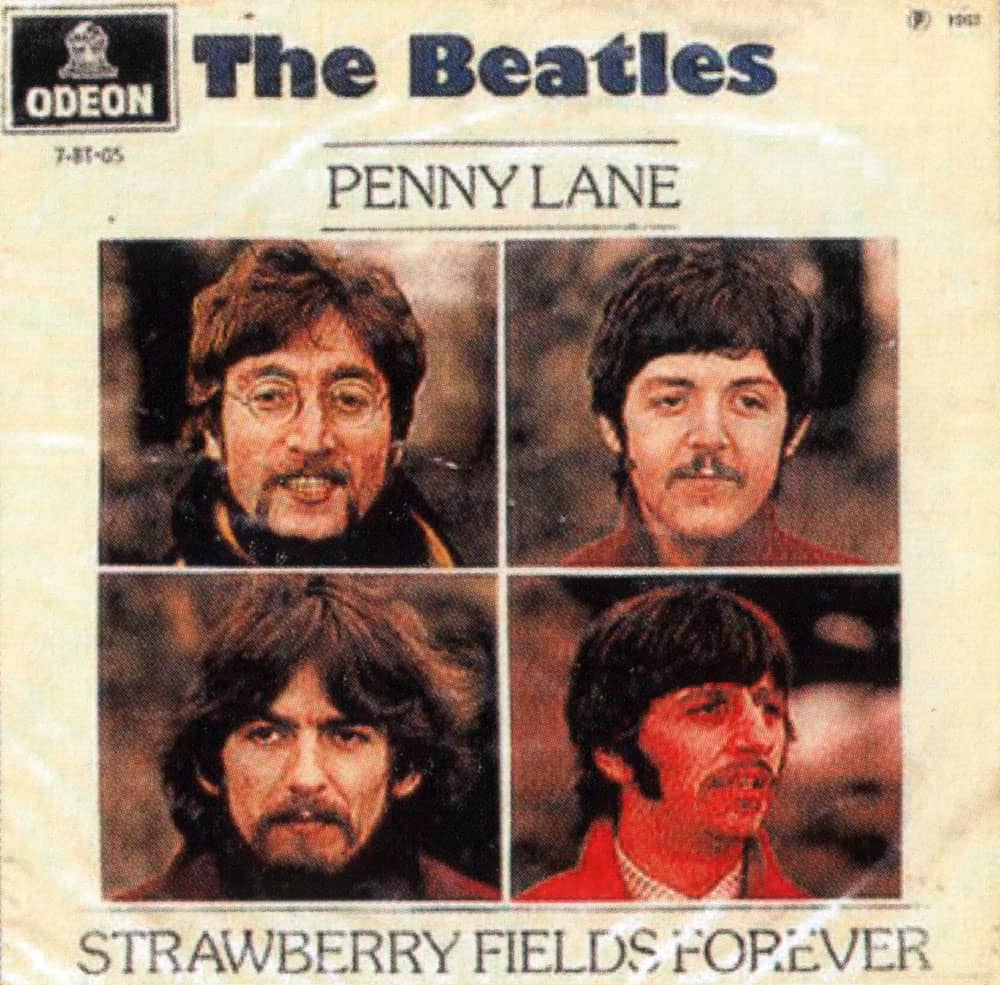
This song was part of what I think was the best single ever released. Penny Lane/Strawberry Fields. Both of the songs are connected with Liverpool. Both John and Paul wrote about places where they grew up.  Paul explained that Penny Lane was a suburban district where, until age four, he lived with his mother and father.

The Beatles did not include these two songs on Sgt Pepper. They recorded singles and albums separately for the most part. They ended up on the Magical Mystery Tour album in America.

Lennon and McCartney were competitive and for the most part it was a good competitiveness that resulted in timeless songs that will be still remembered 100 years from now.

They made promotional films for both songs. This must have been a shock to some people. They had not seen the Beatles since the year before…they had ditched the mop tops and gone weird…that must have been in some people’s minds. The music had a sophistication that earlier songs didn’t have.

The single only made #2 in the UK…it was locked out of the #1 position by no other than Elbert Humperdinck with Release Me. It did peak at #1 in the Billboard 100, #1 in Canada, and #1 in New Zealand in 1967.

In 1967, Capitol released Beatles music on a new but short-lived format called “Playtapes.” These tape cartridges did not have the capabilities to include entire albums, so a truncated four-song version of “Magical Mytery Tour” was released in early 1968 in this portable format, some rare copies having a picture from the “Help!” soundtrack album on the front of the tape. “Penny Lane” was one of the four songs on this release. These Playtapes are highly collectable today.

Paul McCartney: “When I came to write it, John came over and helped me with the third verse, as often was the case. We were writing childhood memories: recently faded memories from eight or ten years before, so it was a recent nostalgia, pleasant memories for both of us. All the places were still there, and because we remembered it so clearly we could have gone on.” John himself relates: “We really got into the groove of imagining Penny Lane, you know – the bank was there, and that was where the tram sheds were and people waiting and the inspector stood there, the fire engines were down there. It was just reliving childhood.” In John’s Playboy interview of 1980, he concurs about his input in writing the song: “I wrote some of the lyrics. I can’t remember which. It was all Paul’s melody.”

“There was a barber shop called Bioletti’s with head shots of the haircuts you can have in the window and I just took it all and arted it up a little bit to make it sound like he was having a picture exhibition in his window. It was all based on real things; there was a bank on the corner so I imagined the banker, it was not a real person, and his slightly dubious habits and the little children laughing at him, and the pouring rain. The fire station was a bit of poetic license; there’s a fire station about half a mile down the road, not actually in Penny Lane, but we needed a third verse so we took that and I was very pleased with the line ‘It’s a clean machine.’ I still like that as a phrase, you occasionally hit a lucky little phrase and it becomes more than a phrase. So the banker and the barber shop and the fire station were all real locations.”

Here are the two videos…Strawberry Fields and Penny Lane… See those glasses that John Lennon slips on in the Penny Lane Video? The square ones…I have some identical from that time period…they are really cool.

Penny Lane

In Penny Lane, there is a barber showing photographs
Of every head he’s had the pleasure to know
And all the people that come and go
Stop and say, “Hello”

On the corner is a banker with a motorcar
And little children laugh at him behind his back
And the banker never wears a mac
In the pouring rain, very strange

Penny Lane is in my ears and in my eyes
There beneath the blue suburban skies
I sit, and meanwhile back
In Penny Lane there is a fireman with an hourglass
And in his pocket is a portrait of the Queen
He likes to keep his fire engine clean
It’s a clean machine

Penny Lane is in my ears and in my eyes
A four of fish and finger pies
In summer, meanwhile back
Behind the shelter in the middle of the roundabout
The pretty nurse is selling poppies from a tray
And though she feels as if she’s in a play
She is anyway

In Penny Lane, the barber shaves another customer
We see the banker sitting waiting for a trim
And then the fireman rushes in
From the pouring rain, very strange

Penny Lane is in my ears and in my eyes
There beneath the blue suburban skies
I sit, and meanwhile back
Penny Lane is in my ears and in my eyes
There beneath the blue suburban skies
Penny Lane!

Twilight Zone – Printer’s Devil

★★★★★ Febraury 28, 1963 Season 4 Episode 9

If you want to see where we are…HERE is a list of the episodes.

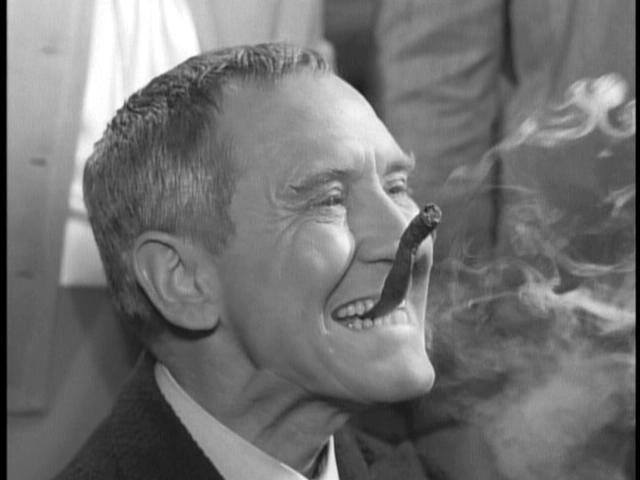
I’ve always liked sell your soul to the devil stories. This one has Burgess Meredith and that means chances are it’s a great one. Three out of four Twilight Zones he is in are classics. Time Enough At Last, The Obsolete Man, and this one are remembered episodes of the Twilight Zone. His eyebrows were pointing slightly upward, a twisted cigar in his mouth, he certainly looks the part. He is a grinning, leering Devil, full of subtleties. His interpretation goes well beyond the lines. Meredith is also listed as one of the writers. 

Robert Sterling plays Douglas Winter, a down on his luck newspaper owner who is about to get pushed out by a larger paper. Pat Crowley plays Jackie Benson who is Douglas’s much more acute girlfriend. The hour format doesn’t hurt this one at all…in fact it helps a bit. The fourth season is not full of classic episodes but I have always considered this one…one of the best. 

Ralph Senensky directed this episode. I want to use this opportunity to tell everyone who is interested that he has a blog and talks about all the shows he directed. The Waltons, Night Gallery, Twilight Zone, and much more. His memories are insightful about those old shows. He still posts and he is around 98 years old. 

Ralph Senensky: Actors like Burgess Meredith fascinated me with the preparation they brought to their roles. They didn’t just memorize their lines. As Beulah Bondi once said to me, “After the lines are learned, that’s when the work begins.”  I’m sure Burgess took his cue for how to work at the linotype machine from one of Jackie’s lines: “If he doesn’t play Chopin’s Polonaise, I’m going to be disappointed.”

This show was written by Robert Sterling, Pat Crowley, and Burgess Meredith

Rod Serling’s Opening Narration: 

Take away a man’s dream, fill him with whiskey and despair, send him to a lonely bridge, let him stand there all by himself looking down at the black water, and try to imagine the thoughts that are in his mind. You can’t, I can’t. But there’s someone who can—and that someone is seated next to Douglas Winter right now. The car is headed back toward town, but its real destination is the Twilight Zone.

Summary

Douglas Winter, the editor of The Courier, a failing newspaper, feels there is nothing to live for after a number of employees quit, including the Linotype operator. On a bridge while drunk, he looks down into the inviting water below. When he is going to commit suicide, he is approached by one “Mr. Smith”, who comments that it’s a short fall and probably wouldn’t do a very good job. He then asks Doug for a light, and, if he wasn’t quite ready, a ride into town. Amused and forgetting about suicide, Winter gives him a lift to a café, where Mr. Smith agrees to provide the editor with money to pay off debts and continue the operation of the newspaper. Mr. Smith also signs up to replace the linotype operator and be the sole reporter. With nothing to lose, Doug agrees to the proposition.

Rod Serling’s Closing Narration:

Exit the infernal machine, and with it his satanic majesty, Lucifer, prince of darkness—otherwise known as Mr. Smith. He’s gone, but not for good; that wouldn’t be like him—he’s gone for bad. And he might be back, with another ticket….to The Twilight Zone.

CAST

Rod Serling…Narrator / Self – Host (uncredited)
Burgess Meredith…Mr. Smith
Robert Sterling…Douglas Winter
Pat Crowley…Jackie Benson
Ray Teal…Mr. Franklin
Charles P. Thompson…Andy Praskins
Doris Kemper…Landlady
Camille Franklin…Molly

Heaven and Hell – by Don Felder and Wendy Holden…Book

Let me start this out by being completely truthful. I am not an Eagles fan whatsoever but I like biographies and I do respect the band as musicians and songwriters. This is a good book for Eagles fans and rock fans in general. It covers a lot of history of the Eagles and rock in the 60s and 70s.

Felder by far was the most versatile of the band. He was offereded a teaching job at Berklee College of Music in Boston before he even joined the Eagles.

What made me want to read this book was…the documentary on the Eagles released in 2013 (I also love rock documentaries). One of the reasons they made the documentary was because of this book! Don Henley and Glenn Frey were livid about Heaven and Hell and wanted to tell their side. The funny thing is… they ended up proving Don Felder right on most of what he wrote.

It’s a good book…I liked it because it helped document an important time in rock music…the sixties and seventies. The book is interesting for more reasons than the Eagles. Florida in the 1960s was a hotspot for future rock and roll stars. Don Felder, Tom Petty, Allman Brothers, Stephen Stills, and Lynyrd Skynyrd just to name a few were all playing clubs on both coasts of Florida.

Don Felder grew up in Gainesville Florida and worked at a music store. He gave young Tommy his first guitar lessons…that Tommy would be Tom Petty. He played in a band with Stephen Stills in high school. He then met future Eagle Bernie Leadon and they started to play in bands together. Felder was taught slide guitar by no other than Duane Allman! They played many of the clubs that the Allman Joys did.

It’s worth reading just for his pre-Eagle days.

When the Eagles first formed, their goal was to divide the writing and singing equally. That way, they reasoned, nobody would become a star or feel like a sideman. That had happened in their previous bands, and they didn’t create the Eagles to go through all that again. After a while that plan went out the window and the problems started.

You learn about the dynamics of the Eagles and how everything changed after Hotel California. Henley and Frey took over the band and called the shots. The problem was Felder was a full member (owner) in the band unlike Timothy B Schmit and Joe Walsh who were just paid employees then and now. When Felder would sugggest something or would want to know where the money was going…he was ignored or pushed off to Irving Azoff the manager by Henley and Frey.

He also covers the problems that Bernie Leadon and Randy Meisner had with Frey and Henley….and the close friendship that he had with Joe Walsh.

This is not a gossip book. Felder doesn’t use the book just to slam Frey and Henley. Felder has faults and we see them in this book. He does seem to try to be even handed. As I’ve mentioned before…one look at the Eagles documentary and most of what he says will be verified. He covers their career…up until he was let go.

It’s an enjoyable book and I would recommend it. As I said, I’m not an Eagles fan but I enjoyed it.

Zombies – This Will Be Our Year

Next to Auld Lang Syne this is my favorite New Years Song. A favorite of mine from a favorite band of mine. Everyone… I wish you a Happy New Year in 2022.

You didn’t have to read my blog but you did and I really appreciate it…I want to thank all of you for reading and commenting in 2021.

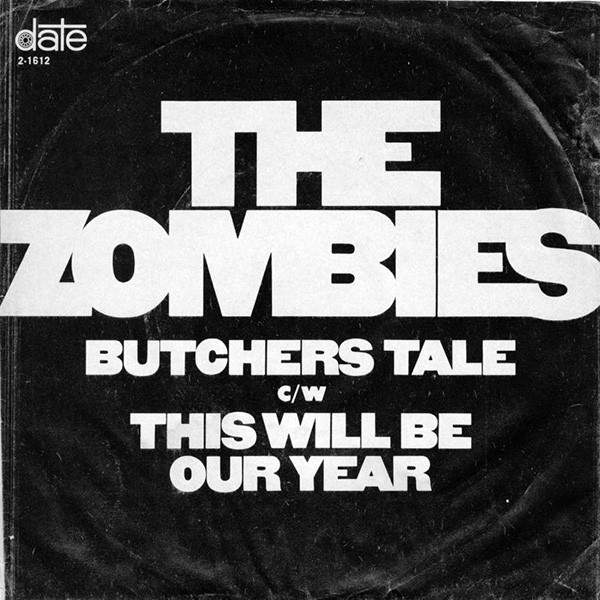
This song sounds like it should have been a hit but it was never pushed as a single at the time. It was the B side to Butcher’s Tale  (Western Front 1914) which is an experimental song and was a big surprise to the band that it was picked as the first single. Both are from the great album Odessey and Oracle in 1968. There are several songs on this album that could have been in the charts but Time of the Season was the only one that made it and it was a year after the album was released.

Bruce Eder of AllMusic gave the album five stars out of five, calling it “one of the flukiest (and best) albums of the 1960s, and one of the most enduring long-players to come out of the entire British psychedelic boom”.

On recording Odessey and Oracle….Rod Argent

“We had the chance of going in and putting things down in the way we wanted people to hear them and we had a new studio, we walked in just after The Beatles had walked out [after recording Sgt. Pepper]. We were the next band in. They’d left some of their instruments behind … I used John Lennon’s Mellotron, that’s why it’s all over Odessey and Oracle. We used some of their technological advances … we were using seven tracks, and that meant we could overdub for the first time. And it meant that when I played the piano part I could then overdub a Mellotron part, and it meant we could have a fuller sound on some of the songs and it means that at the moment the tour we’re doing with Odessey and Oracle it means we’re actually reproducing every note on the original record by having extra player with us as well.”

This Will Be A Year

The warmth of your love
Is like the warmth of the sun
And this will be our year
Took a long time to come

Don’t let go of my hand 
Now darkness has gone
And this will be our year 
Took a long time to come

And I won’t forget 
The way you held me up when I was down
And I won’t forget the way you said, 
“Darling I love you”
You gave me faith to go on

Now we’re there and we’ve only just begun
This will be our year
Took a long time to come

The warmth of your smile
Smile for me, little one
And this will be our year
Took a long time to come

You don’t have to worry
All your worried days are gone
This will be our year
Took a long time to come

And I won’t forget 
The way you held me up when I was down
And I won’t forget the way you said, 
“Darling I love you”
You gave me faith to go on

Now we’re there and we’ve only just begun
And this will be our year
Took a long time to come

Yeah we only just begun
Yeah this will be our year
Took a long time to come

Otis Redding & Carla Thomas – New Year’s Resolution

This song is a great way to start a year! Anytime you can hear Otis…you are on the right path! Have a Happy New Year!

Stax’s house band, Booker T & the MGs, provides the backing.  Note Booker T’s subtle but effective organ lending the song a spiritual element, while Donald “Duck” Dunn’s bass and Steve Cropper’s tasteful guitar licks ground the track’s rhythm

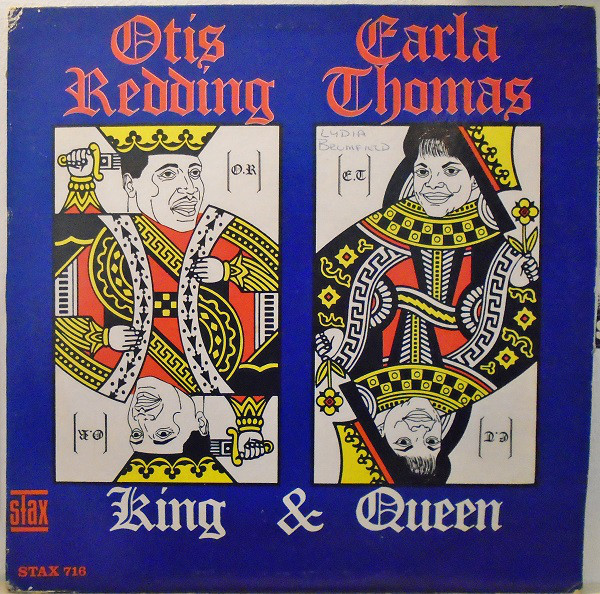
Stax was hoping to replicate the success of Marvin Gaye and Tammi Terrell. Stax paired two of their greatest stars for the 1967 album King & Queen, which produced the hit “Tramp.” The album featured their takes on classics such as “Knock on Wood,” “When Something Is Wrong with My Baby,” “Bring It on Home to Me,” and “It Takes Two”

This song was on the King and Queen album released in 1967. This is the only album they got to make because Otis died in a plane crash on December 10, 1967.

New Year’s Resolution

I hope it’s not too late
Just to say that I’m sorry, honey
All I want to do
Is just finish what we started, baby

Let’s turn over a new leave
And baby let’s make promises
That we can keep
And call it a New Year’s resolution, hmmm

Oh, I’m a woman
And woman makes mistakes too
But will you, will you forget the changes
That I put you through

let’s try it again
Just you and me
And, baby, let’s see how happy honey, yeah
That we can be
And call it a New Year’s resolution, yeah, yeah, yeah

Many times we had our ups and downs
And times you needed me I couldn’t be found
I’m sorry
And I’m sorry too
I’ll never, never do it again, no, no, no
So baby before we fall out
Let’s fall on in, yeah, yeah
Oh, and we’re gonna try harder
Not to hurt each other again, oh
Love me baby, huh
Week after week
And baby let’s make promises
That we can keep
And call it a New Year’s resolution, yeah, oh
I know we can do it Carla
I’m gonna keep my promises
I’m gonna hold on that we can do it, baby
Oh, it’s not too late
You’re gonna love me
Nobody else
Oh Otis let’s finish what we started
Talk no mean

Everly Brothers- Cathy’s Clown

When Phil and Don would sing….their two voices would become one.

The song peaked at #1 in the Billboard 100, #1 in the UK, and #2 in Canada in 1960. The B side was Always It’s You and it peaked at #56 in the Billboard 100. This was the first single to simultaneously top the UK and US charts. This was the first single ever released on the Warner Bros. label in the UK, where it got the catalog number WB-1.

This song was inspired by one of Don Everly’s ex-girlfriends, this song is about a guy Cathy dumps. The writer credits on this song went to both Don and Phil Everly until 1980, when a deal was made to make Don the solo composer.

This was the first Everly Brothers single for Warner Brothers. Records. They signed with the label in 1960 after a string of hits for Cadence Records, which couldn’t afford to re-sign them. They paid the Everlys a reported $1 million and expected a hit. The Everlys delivered a hit with “Cathy’s Clown… holding the top spot for five weeks.

It had a hint of the future in this song. There was only one drummer on this track, but he was augmented by a tape loop that engineer Bill Porter used to add additional beats. This being 1960, it was done on the fly, with Porter switching to the loop when he wanted it to come in.

Cathy’s Clown

Don’t want your love anymore,
Don’t want your kisses that’s for sure,
I die each time I hear this sound,
Here he comes that’s Cathy’s clown

I gotta stand tall
You know a man can’t crawl,
When he knows your tellin’ lies and
He hears ’em passing by, he’s
Not a man at all

Don’t want your love anymore,
Don’t want your kisses that’s for sure,
I die each time I hear this sound,
Here he comes that’s Cathy’s clown

When you see me shed a tear,
And you know that it’s sincere
Don’t you think it’s kinda sad that
You’re treating me so bad or don’t
You even care?

Don’t want your love anymore,
Don’t want your kisses that’s for sure,
I die each time I hear this sound,
Here he comes that’s Cathy’s clown

That’s Cathy’s clown

Rudolph the Red-Nosed Reindeer

Merry Christmas Eve everyone! We always have our Christmas on Christmas Eve night. Some of the family comes over and we all celebrate. My nephew has three children and one is only 3 years old so we will have a good time. This year my son is in Germany visiting his girlfriend so it’s our first Christmas without him…that part is hard but we will enjoy this Christmas Eve.

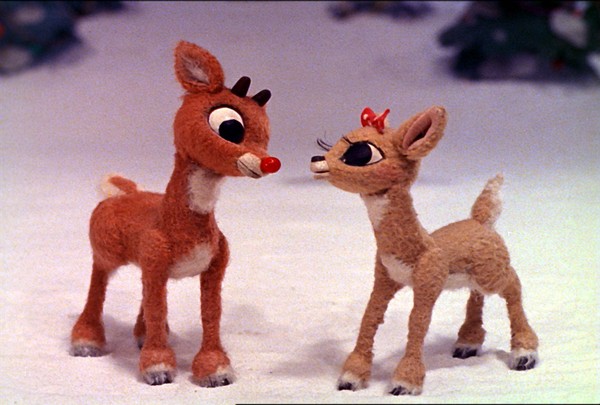
Watching Rudolph the Red-Nosed Reindeer every year is the same as setting up the tree. Every year I would look forward to seeing this along with the others but what a fantastic durable show this has been. When I hear Burl Ives in anything…I think of him as the narrator Sam the Snowman of this program.

I’ve marked out some time to watch this tonight during our Christmas Eve party.

The characters are wonderful. Well except those other young reindeer who really come down on Rudolph when his nose lights up.

Hermey the elf who wants to be a dentist
Clarice – The reindeer who likes Rudolph just as he is red nose and all.
Yukon Cornelius the prospector who loves silver and gold and has a tongue that can find his silver and gold.
Abominable Snowman – The bad guy of the show who only needs a dentist to make him a good guy.
Head Elf – He leans on Hermey to get his elf self-act together and discourages him from being a dentist…I never liked him too much.

Throughout the special, Yukon Cornelius is seen throwing his pickaxe into the ground, taking it out and licking it. It turns out that he is checking for neither gold nor silver; Yukon was actually searching for an elusive peppermint mine. In a scene right at the end of the special’s original broadcast, deleted the next year to make room for the Misfit Toys’ new scene, Cornelius pulled his pick from the ground, licked it and said, “Peppermint! What I’ve been searching for all my life! I’ve struck it rich! I’ve got me a peppermint mine! Wahoo!” The scene was restored in 1998 and has been reinstated in all the subsequent home video release except for the 2004 DVD release. However, this scene is still cut from recent televised airings.

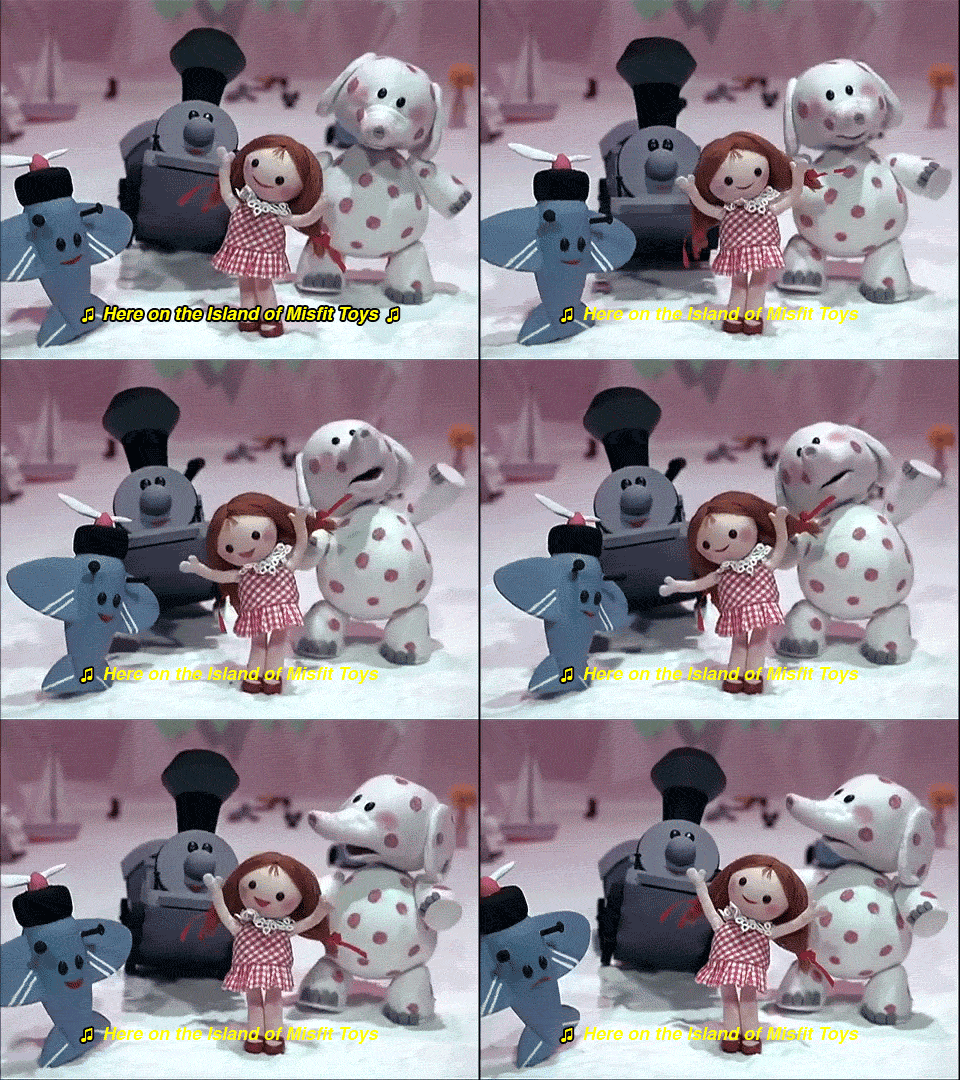
The Island of Misplaced Toys got to me when I was a kid. I really felt sorry for these lonely toys. King Moonracer was over the island and tried to convinced Rudolph to tell Santa about them so he could pick them up and find kids who would play with them.

Related image

The original 1964 airing did not include the closing scene where Santa picks up the misfit toys. That scene was added in 1965, in response to complaints that Santa was not shown fulfilling his promise to include them in his annual delivery.

The stop animation in this works really well.

The songs are really good. Silver and Gold, Holly Jolly Christmas, Jingle Jingle Jingle, We Are Santa’s Elves, There’s Always Tomorrow, We’re a Couple of Misfits and The Most Wonderful Day of the Year.

https://christmas-specials.fandom.com/wiki/Rudolph_the_Red-Nosed_Reindeer_(Rankin/Bass)

How The Grinch Stole Christmas

You’re a mean one…Mr. Grinch. I first posted this in 2018…It’s not Christmas without the Grinch…

The cartoon was released in 1966 and has been shown every year since. This one along with Rudolph, Charlie Brown, and a few more were a part of Christmas. These specials would prime you for the big day.

One cool thing about the cartoon was that Boris Karloff was the narrator. Thurl Ravenscroft (voice of Tony the Tiger) sang the great song “You’re a Mean One Mr. Grinch. ”

The citizens of Whoville looked and acted like the others of Dr. Suess’s universe. They were all getting ready for Christmas while a certain someone…or thing looked down from Mt. Crumpit. The Grinch has hated Christmas for years and sees the Whovillians getting ready for Christmas and is determined once and for all to put an end to it.

He dresses up as Santa Clause and makes his poor dog Max act as a reindeer to swoop down and steal Christmas. The Grinch sleds down the hill almost killing Max and they soon reach Whoville. He is busted by one kid…Cindy Lou Who, who asks him questions as the Grinch took her family tree. He lies to her and sends her to bed.

In the morning after he has everything including “The Roast Beast,” he listens for the sorrow to begin.

You need to watch the rest or rewatch…

A live-action remake came out in 2000 but I still like this one the best. You cannot replicate Boris Karloff.

The Budget – Coming in at over $300,000, or $2.2 million in today’s dollars, the special’s budget was unheard of at the time for a 26-minute cartoon adaptation. For comparison’s sake, A Charlie Brown Christmas’s budget was reported as $96,000, or roughly $722,000 today (and this was after production had gone $20,000 over the original budget).

You’re a mean one Mr. Grinch The famous voice actor and singer, best known for providing the voice of Kellogg’s Tony the Tiger, wasn’t recognized for his work in How the Grinch Stole Christmas. Because of this, most viewers wrongly assumed that the narrator of the special, Boris Karloff, also sang the piece in question. Upset by this oversight, Geisel personally apologized to Ravenscroft and vowed to make amends. Geisel went on to pen a letter, urging all the major columnists that he knew to help him rectify the mistake by issuing a notice of correction in their publications.

Mr Grinch

You’re a mean one, Mr. Grinch
You really are a heel
You’re as cuddly as a cactus
You’re as charming as an eel
Mr. Grinch
You’re a bad banana with a greasy black peel
You’re a monster, Mr. Grinch
Your heart’s an empty hole
Your brain is full of spiders
You’ve got garlic in your soul, Mr Grinch
I wouldn’t touch you with a
Thirty-nine and a half foot pole

You’re a vile one, Mr. Grinch
You have termites in your smile
You have all the tender sweetness of a seasick crocodile
Mr Grinch
Given the choice between the two of you
I’d take the seasick crocodile

You’re a foul one, Mr. Grinch
You’re a nasty wasty skunk
Your heart is full of unwashed socks
Your soul is full of gunk
Mr Grinch

The three best words that best describe you
Are as follows, and I quote”
Stink
Stank
Stunk

You’re a rotter Mr Grinch
You’re the king of sinful sots
Your heart’s a dead tomato splotched with moldy purple spots
Mr Grinch

Your soul is an appalling dump heap
Overflowing with the most disgraceful
Assortment of deplorable rubbish imaginable
Mangled up in tangled up knots

You nauseate me, Mr Grinch
With a nauseous super nos
You’re a crooked jerky jockey and
You drive a crooked horse
Mr Grinch

You’re a three-decker sauerkraut
And toadstool sandwich
With arsenic sauce

http://mentalfloss.com/article/72593/13-spirited-facts-about-how-grinch-stole-christmas

Twilight Zone – Miniature

★★★★1/2 Febraury 21, 1963 Season 4 Episode 8

If you want to see where we are…HERE is a list of the episodes.

***Since we have two Holiday Weekends coming up,This will be the last Twilight Zone until  January 5, 2022…thank you***

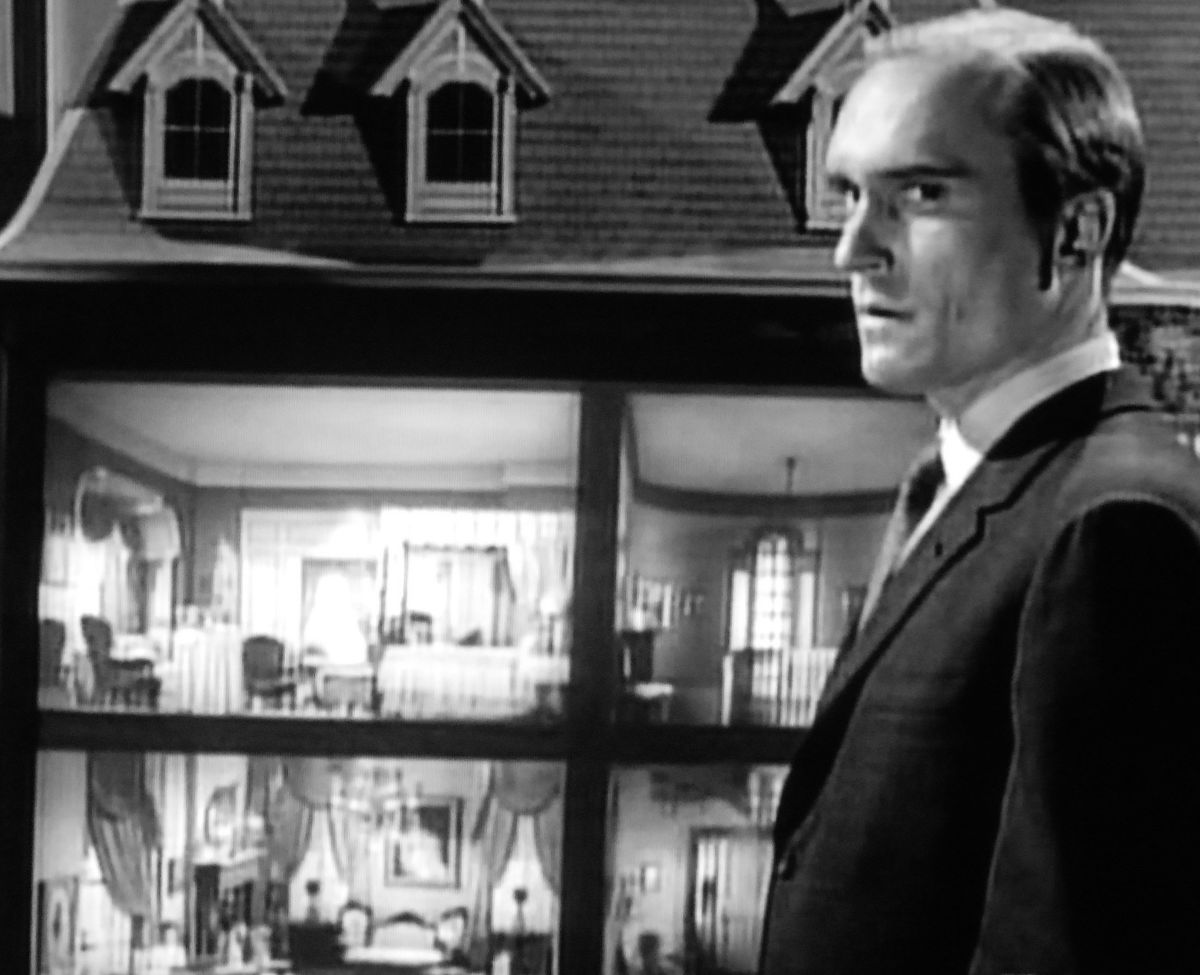
The first thing you notice is a young Robert Duvall that stars in this episode. He gives a sensitive portrayal of Charley Parkes who suffers from some sort of social anxiety. Parkes has a hard time interacting with humans but finds a doll house with a doll that he feels comfortable with. He seems to be  retreating into a world of fantasy… but is he?  Duvall plays it brilliantly with sensitivity. 

Barbara Barrie plays Myra Russell and she would later play Barney Miller’s wife in the 1970s. Charles Beaumont’s script is thoughtful and sensitive and flows well for the most part…Duvall is a big reason.

Of all the hour-long Twilight Zone episodes, Miniature is the only one never put into syndication. The reason is that when the series was originally syndicated, Miniature was involved in a lawsuit. A script entitled The Thirteenth Mannequin had been submitted to Cayuga Productions prior to Miniature. The script concerned an old man who preferred the company of store mannequinsmannequins who ultimately come to life. The suit claimed that since both works dealt with main characters becoming involved inanimate human figures who come to life, Miniature had stolen the idea.

Ultimately, the case was dismissed, both by the initial judge and on appeal. The Thirteenth Mannequin was no ancestor of Miniature. The curious thing about this whole affair is that if any Twilight Zone episode was similar to The Thirteenth Mannequin, it was Serlings The After Hoursand that was written long before anyone at Cayuga ever heard of The Thirteenth Mannequin. Even when it was submitted, The Thirteenth Mannequin was not unique; The Twilight Zone had already explored its central idea.

Still, the damage was done. Because of the suit, Miniature was aired only once until… It was re-aired in 1984 as part of The Twilight Zone Silver Anniversary Special. For this showing, the dollhouse scenes were colorized in an early public demonstration of the then-innovative colorization process.

This show was written by Rod Serling and Charles Beaumont

Rod Serling’s Opening Narration: 

To the average person, a museum is a place of knowledge, a place of beauty and truth and wonder. Some people come to study, others to contemplate, others to look for the sheer joy of looking. Charley Parkes has his own reasons. He comes to the museum to get away from the world. It isn’t really the sixty-cent cafeteria meal that has drawn him here every day, it’s the fact that here in these strange, cool halls he can be alone for a little while, really and truly alone. Anyway, that’s how it was before he got lost and wandered into the Twilight Zone.

Summary

Mousey misfit Charley Parkes finds the world unfolding before him in a museum doll house to be more real than his boring job and overbearing mother.

Rod Serling’s Closing Narration:

They never found Charley Parkes because the guard didn’t tell them what he saw in the glass case. He knew what they’d say and he knew they’d be right too because seeing is not always believing, especially if what you see happens to be an odd corner of the Twilight Zone.

CAST

Rod Serling … Narrator / Self – Host (uncredited)
Robert Duvall … Charley Parkes
Pert Kelton … Mrs. Parkes
Barbara Barrie … Myra Russell
William Windom … Dr. Wallman
Lennie Weinrib … Buddy Russell
John McLiam … Guard
Barney Phillips … Diemel
Joan Chambers … Harriet
Chet Stratton … Guide
Richard Angarola Richard Angarola … The Suitor
Nina Roman … The Maid
Claire Griswold … The Doll
Norman Burton … Office Worker (uncredited)
Sally Kellerman … Office Worker (uncredited)
Joseph V. Perry … Office Worker (uncredited)

A Charlie Brown Christmas

I watched this last night…gearing up for Christmas…it’s not Christmas without The Peanuts and watching them all dance to “Linus and Lucy.”

The Peanuts were my favorite cartoon growing up and I would never miss their Thanksgiving, Halloween, and Christmas specials. Everyone can relate to Charlie Brown because we all lose more than we win in life. He doesn’t get to kick that football, his dog has more things than he does, and he is forever trying to get the elusive little redhead girl to notice him.

The Peanuts inhabit a kids world where grownups are felt but not heard. At least not in English. I’ve said this before but… Charlie Brown, one day when you grow up… I hope you end up with the little red head girl that you like so much and win just for once…for all of us.

Little Red-Haired Girl | Charlie brown characters, Charlie brown and  snoopy, Charlie brown cartoon

This 1965 special has everything good about them in one show.

The gang is skating and Charlie Brown is telling Linus that despite Christmas being a happy time he is depressed. Linus tells Charlie that is normal and Lucy pipes in with “Of all the Charlie Browns in the world, you’re the Charlie Browniest.” That sums it all up.

Charlie gets to direct the Christmas play and his main job was to get a spectacular Christmas tree under Lucy’s orders. …He picks the only real tree there…more like a branch but he is sure it will do the job. Most of the gang do not agree when he comes back with the tree but Charlie persists. Linus gets up and reads from the Bible and the inflection he lends to the reading is great.

After that, you will need to watch because it will be worth it.

Aluminum Christmas trees were marketed beginning in 1958 and enjoyed fairly strong sales by eliminating pesky needles and tree sap. But the annual airings of A Charlie Brown Christmas swayed public thinking: In the special, Charlie Brown refuses to get a fake tree. Viewers began to do the same, and the product was virtually phased out by 1969. The leftovers are now collector’s items.

Actors and Actresses The early Peanuts specials made use of both untrained kids and professional actors: Peter Robbins (Charlie Brown) and Christopher Shea (Linus) were working child performers, while the rest of the cast consisted of “regular” kids coached by Melendez in the studio. When Schulz told Melendez that Snoopy couldn’t have any lines in the show—he’s a dog, and Schulz’s dogs didn’t talk—the animator decided to bark and chuff into a microphone himself, then speed up the recording to give it a more emotive quality.

Love the Christmas Dance.

Frosty The Snowman

Most of us had favorite Christmas specials we would watch as kids. Mine was Rudolph, A Charlie Brown Christmas, The Grinch, and this one…Frosty The Snowman. These four would get me primed and ready for Christmas…like I needed anything else.

“Frosty the Snowman,” debuted in 1969. It was by Rankin/Bass Productions, the same company that produced many holiday specials.

Narrated by the legend Jimmy Durante, the special involves a magic hat that transforms a snowman, Frosty, into a living being. The magician who owned the hat wants it back now that he knows it contained actual magic, so the kids had to get together and find a way to bring Frosty to the North Pole to keep him from melting. However, once there, Frosty sacrifices himself to warm up the little girl, Karen, who took him to the North Pole. He melts, but Santa Claus explains that Frosty is made out of special Christmas snow and thus can never truly melt. Frosty then comes back to life and everyone has a Merry Christmas.

The song was written in 1950 by Walter “Jack” Rollins and Steve Nelson. They wrote it for Gene Autry, especially, after Autry had such a huge hit with “Rudolph the Red-Nosed Reindeer” the previous year. It was later recorded by Jimmy Durante as we hear in this wonderful cartoon.

This wasn’t the only animation of Frosty…

In 1954, United Productions of America (UPA) brought Frosty to life in a short cartoon that is little more than an animated music video for a jazzy version of the song. It introduced the characters mentioned in the lyrics visually, from Frosty himself to the traffic cop. The three-minute, black-and-white piece quickly became a holiday tradition in various markets, particularly in Chicago, where it’s been broadcast annually on WGN since 1955.