Power Pop fan, Baseball, Beatles, Alternative music, old movies, and tv show fan. Also anything to do with pop culture in the 60s and 70s... I'm also a songwriter, bass and guitar player. Not the slightest bit interested in politics at all.
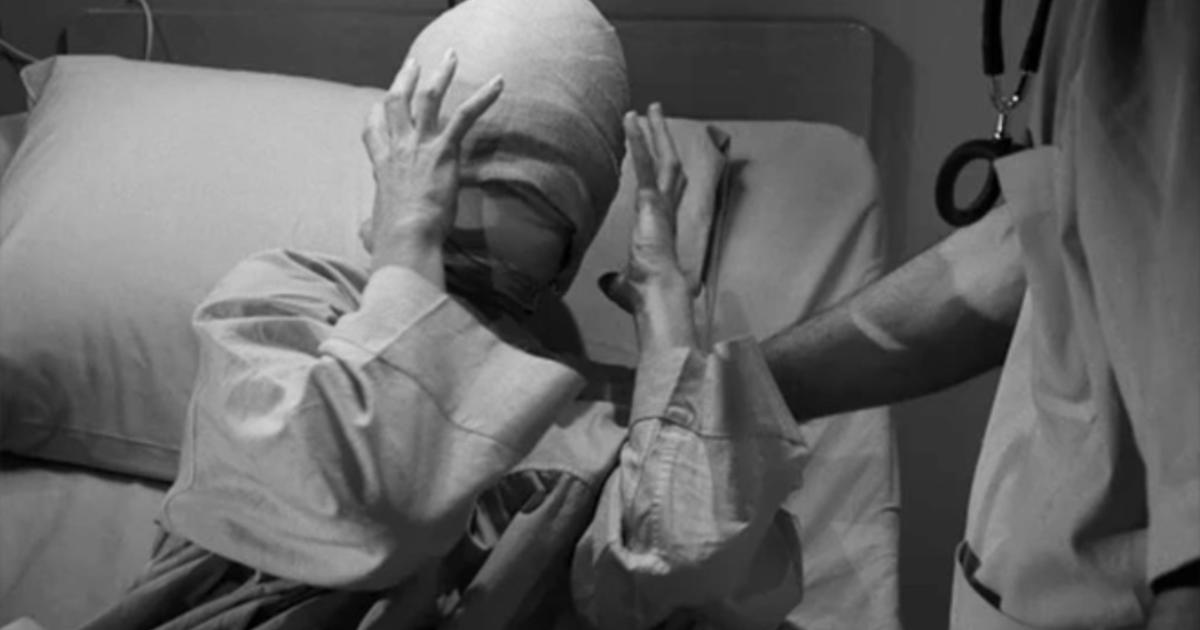
One of the true classic Twilight Zones. The episode is set in a dystopian society. Rod Serling was great at creating them. To be different… means being ostracized with the rest of your kind. It could be set on earth, a far away planet, or in a different time…it doesn’t matter. Undesirables get exiled for the crime of being different.
The ending has an incredible twist. It still holds up through on repeat viewings. What is normal? What is beauty? Who decides that?
Two actresses play the same character in this episode. Maxine Stuart and Donna Douglas. The first was Maxine Stuart, as Janet Tyler in bandages. The director cast her because of her voice, her voice did not suggest a beautiful girl it suggested a strong, harsh, realistic woman, and therefore the unveiling would be a surprise. She was going to dub her voice over the top of Donna Douglas’s part but Donna’s voice was so similar to they just kept her voice.
A young Donna Douglas plays Janet Tyler. Although not well known at the time, she soon would be, as Jed Clampett’s daughter Ellie on The Beverly Hillbillies. She was not yet known to anybody, but she was absolutely stunning.
I’ve seen this epidsode listed by two names…now I know why. Originally a “The” preceded the title, until television producer Stuart Reynolds threatened to sue Rod Serling for the use of the name because at the time he was selling an educational film of the same name to public schools. Reruns following the initial broadcast featured the title screen “The Private World of Darkness.”
This show was written by Rod Serling
Rod Serling’s Opening Narration:
Suspended in time and space for a moment, your introduction to Miss Janet Tyler, who lives in a very private world of darkness. A universe whose dimensions are the size, thickness, length of the swath of bandages that cover her face. In a moment we will go back into this room, and also in a moment we will look under those bandages. Keeping in mind of course that we are not to be surprised by what we see, because this isn’t just a hospital, and this patient 307 is not just a woman. This happens to be the Twilight Zone, and Miss Janet Tyler, with you, is about to enter it.
Summary
Janet Tyler is in hospital having undergone treatment to make her look normal. It’s her 11th trip to the hospital for treatment and she is desperate to look like everyone else. Some of her earliest childhood memories are of people looking away, horrified by her appearance. Her bandages will soon come off and she can only hope that this, her last treatment, will have done the trick. If not, her doctor has told she will be segregated with a colony of similar looking people. All that to say that truth is truly in the eye of the beholder.
VIDEO SPOILERS
Rod Serling’s Closing Narration:
Now the questions that come to mind: “Where is this place and when is it?” “What kind of world where ugliness is the norm and beauty the deviation from that norm?” You want an answer? The answer is it doesn’t make any difference, because the old saying happens to be true. Beauty is in the eye of the beholder, in this year or a hundred years hence. On this planet or wherever there is human life – perhaps out amongst the stars – beauty is in the eye of the beholder. Lesson to be learned in the Twilight Zone.
CAST
Rod Serling – Narrator
Maxine Stuart – Janet Tyler (under bandages)
Donna Douglas – Janet Tyler (unmasked)
William D. Gordon – Doctor Bernardi
Jennifer Howard – Nurse
Edson Stroll – Walter Smith
I came across Otis’s youtube channel and I think some of you would be interested. He is a singer songwriter but on his channel he has conversations musicians who have played or worked with Bob Dylan, Neil Young, Tom Petty, Waylon Jennings, just to name a few, and his own stories about different musicians. For you music fans it’s worth your time. The guy doesn’t interview people…he lets people talk and tell their stories. He is also a good story teller. I’m hooked on his channel.
He has stories about Jerry Reed, The Replacements, Dan Baird, Merle Haggard, Ry Cooder, Towns Van Zant, Bill Monroe, George Jones, Johnny Paycheck, John Prine, Mike Campbell and more.
He lives in Indiana but interviews many Nashville connected musicians. Check this guy out…His music is VERY good as well. I’m just checking that out more as I go… his music is classified as alt-country.
I just picked a few random youtube videos from his page below.
This one was included in my top 10…but it’s been months now so I thought I would post this with some changes. This weekend will be the best for Twilight Zones so far…two classic episodes. Warning…it’s almost impossible writing this review without spoilers for this particular episode.
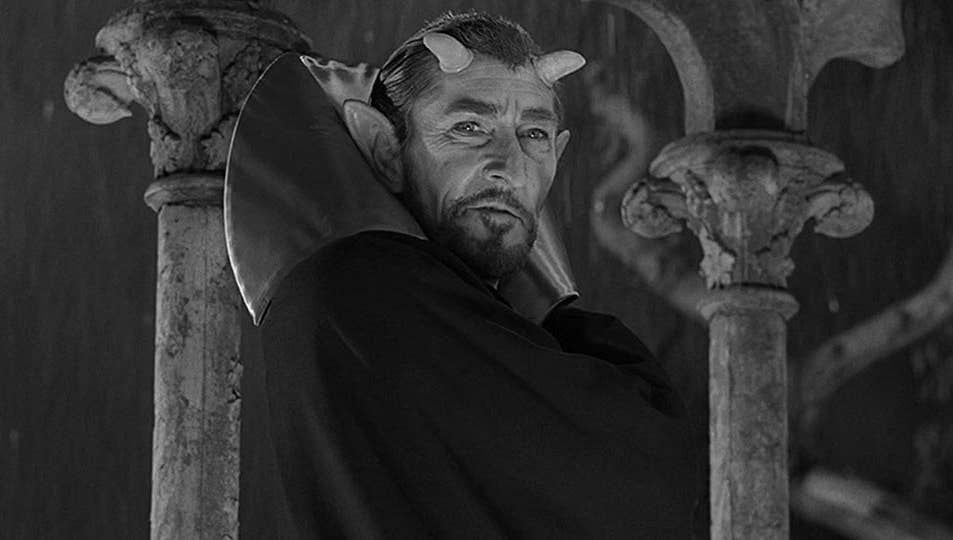
This one is not one of the comedic episodes…it is deadly serious, haunting and chilling. The Howling Man doesn’t have a lot of action but you feel sorry for David Ellington…he realized too late that he has set the devil loose in the world. The special effects of the ragged looking man turning into the devil was spot on. It would look good now in todays time. One well known actor was in this one, John Carradine played Brother Jerome.
This is very much a classic Twilight Zone episode. The set reminds me of those Universal Monster movie sets of the 40s and 50s. The episode tells us that evil can come in many forms and appeal to human weaknesses. As far as David Ellington… the road to hell is paved with good intentions.
Charles Beaumont had originally envisioned the monks would keep the Howling Man imprisoned by putting a cross in front of his cell door. Fearful of a backlash in the religious community, the producers substituted the “staff of truth,” over Beaumont’s objections.
This show was written by Charles Beaumont and Rod Serling
Rod Serling’s Opening Narration:
The prostrate form of Mr. David Ellington, scholar, seeker of truth and, regrettably, finder of truth. A man who will shortly arise from his exhaustion to confront a problem that has tormented mankind since the beginning of time. A man who knocked on a door seeking sanctuary and found, instead, the outer edges of The Twilight Zone.
Summary
David Ellington recounts a story, one that began just after the end of World War I. He was hiking in Europe when he sought refuge during a violent rain storm. The residence is isolated and its head, Brother Jerome, tells him he cannot stay. Ellington is ill however and during his short stay meets someone who is being kept prisoner and howls constantly through the night. Ellington believes the Howling Man is being kept there for no good reason but Brother Jerome tells him of the man’s true nature. The decision Ellington makes will haunt him for the rest of his life.
Rod Serling’s Closing Narration:
Ancient folk saying: “You can catch the Devil, but you can’t hold him long.” Ask Brother Jerome. Ask David Ellington. They know, and they’ll go on knowing to the end of their days and beyond — in the Twilight Zone.
CAST
Rod Serling … Narrator / Self – Host (uncredited)
H.M. Wynant … David Ellington
John Carradine … Brother Jerome
Robin Hughes … The Howling Man
Frederic Ledebur … Brother Christophorus
Ezelle Poule … Housekeeper
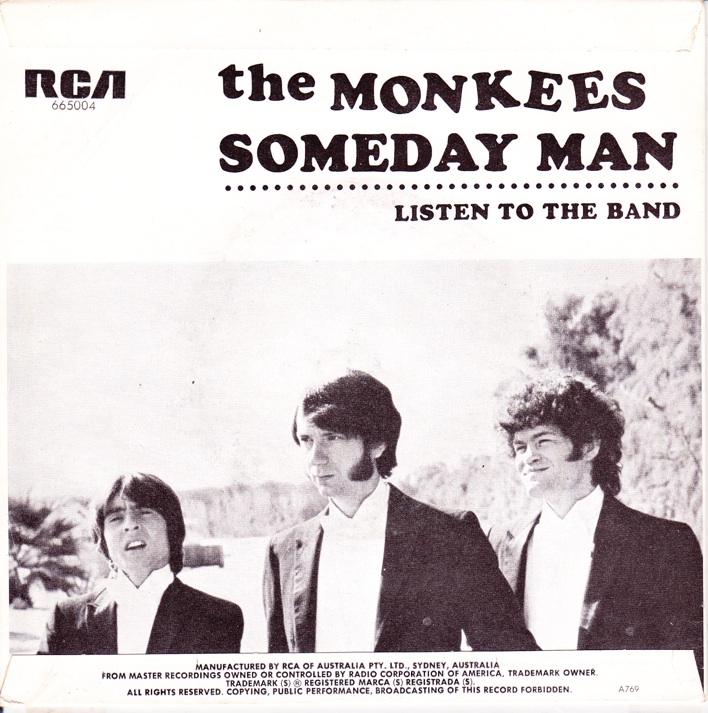
Buddy Miles and the Monkees! Below in one of the clips of this song.
This was the last song they released that I liked…it was at the time Peter Tork quit. The band I was in…this was the lone Monkee song we would do and it always got a good response.
This song was released as a single in 1969. It was the first time Michael Nesmith would sing on a Monkee’s A side…and he was long overdue. He also wrote it and produced it. He started to write it while in Nashville at RCA studios. The song features a brass section that plays during the instrumental section as if the brass were the band.
The Monkees went into MGM studios in November of 1968 to tape their NBC television special 33 1/3 Revolutions Per Monkee, they were just two years away from their commercial peak… selling records by the millions, a hit TV show and battling with the other bands for chart supremacy. But their show went off the air that March, and their psychedelic movie Head flopped in theaters just a couple weeks earlier. They were on the way down.
Their most recent LP, The Birds, The Bees & The Monkees, peaked at #3 on the Billboard Album charts and generated the single “Daydream Believer.” It was enough to get NBC to green light a TV special, though wheels were in motion before critics got a look at Head. The Monkees could have created a television in the same zany, carefree style of their old show in an attempt to win back some old fans, but they decided to double down on psychedelic.
The show was a psychedelic mess that did not restart their career. At this time Peter Tork had grown tired of it all and it was his last appearance with the band. The one clip that was worth it was the clip of this song. Buddy Miles comes in on drums in the middle and really rocks it out.
Listen To The Band
Hey, hey, mercy woman plays a song and no one listens, I need help I’m falling again.
Play the drum a little louder, Tell me I can live without her If I only listen to the band.
Listen to the band!
Weren’t they good, they made me happy. I think I can make it alone.
Oh, mercy woman plays a song and no one listens, I need help I’m falling again.
Play the drum a little bit louder, Tell them they can live without her If they only listen to the band.
Listen to the band!
Now weren’t they good, they made me happy. I think I can make it alone.
Oh, woman plays a song and no one listens, I need help I’m falling again.
C’mon, play the drums just a little bit louder, Tell us we can live without her Now that we have listened to the band.
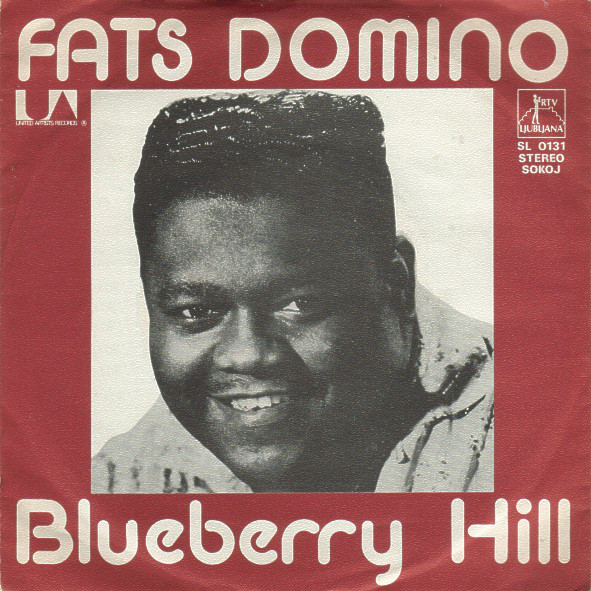
Domino’s real name was Antoine Domino. He placed 37 songs in the US Top 40. Blueberry Hill” was his biggest hit and best seller, spending 11 weeks at #1 on the R&B chart.
When I hear this song I automatically think of Happy Days when Ritchie finds a date. Fats wasn’t as flashy as some of his peers but he was a terrific piano player, performer, and singer.
This now rock classic was written by Vincent Rose, Al Lewis and Larry Stock for the 1940 Western The Singing Hill before they decided it was good enough to be released commercially. The song was used in the movie, where it was heard for the first time performed by Gene Autry.
Larry Stock (wrote the lyrics): “One important publisher turned down ‘Blueberry Hill,’ because, he claimed, blueberries don’t grow on hills. I assured him I had picked them on hills as a boy, but nothing doing. So Chappell And Company bought the song and another hit was born.”
Ray Manzarek of The Doors has said that the baseline to “Light My Fire” was based on this song.
The band couldn’t get a full take of this song they were happy with, so the engineer, Bunny Robyn pieced together the final version from many fragmentary takes.
From Songfacts
Things are going well at the beginning of this song, as the singer has found his true love, enjoying a special moment on Blueberry Hill. It takes a sad turn though, when she leaves him:
Though we’re apart You’re part of me still For you were my thrill On Blueberry Hill
Many artists recorded this before Domino, mostly orchestras. In 1940, it was a #2 US hit for Glenn Miller. That same year, Russ Morgan, Gene Krupa and Kay Kyser all recorded it with their orchestras. Louis Armstrong did the song with Gordon Jenkins and his orchestra in 1949; this version was re-released in 1956, going to #29 in America. Other artists to cover the song include Elvis Presley (on his 1957 album Loving You), The Beach Boys, Andy Williams, Kiki, Cliff Richard, Bruce Cockburn.
Fats Domino, who knew the song through Louis Armstrong’s 1949 version, recorded this at Master Recorders in Los Angeles at a session in which he ran out of material to tape. Domino insisted on recording the song over the vehement objections of producer-arranger Dave Bartholomew, who felt the song been done too many times already. Domino came up with the definitive version though, featuring his famous piano triplets and sly Cajun accent.
Personnel on this track:
Dave Bartholomew – trumpet Walter “Papoose” Nelson – guitar Herb Hardesty – tenor sax Lawrence Guyton – bass Cornelius Coleman – drums
Domino Russian Prime Minister Vladimir Putin performed this song on December 10, 2010 at a charity event in front of an audience of international film and television celebrities. Videos of his performance quickly went viral worldwide. Putin’s spokesman said the former KGB chief learned the lyrics to the song as part of his English language studies.
Blueberry Hill
I found my thrill On Blueberry Hill On Blueberry Hill When I found you
The moon stood still On Blueberry Hill And lingered until My dream came true
The wind in the willow played Love’s sweet melody But all of those vows you made Were never to be
Though we’re apart You’re part of me still For you were my thrill On Blueberry Hill
The wind in the willow played Love’s sweet melody But all of those vows you made Were never to be
Though we’re apart You’re part of me still For you were my thrill On Blueberry Hill
This song kicked off Brucemania in 1984. Born in the USA along with Thriller and Purple Rain ruled in the 80s.
This one is not my favorite off the album but I did like it. Considering the times it was the best sounding song to lead off with. All together Born In The USA had 7 top ten singles….I didn’t know what to think at first…I liked this and Cover me but it was when the title track was released…that is when I was sold when I heard Springsteen sing Born in the U.S.A..
This song peaked at #2 in the Billboard 100, #3 in Canada, #28 in the UK, and #2 in New Zealand.
This was the last song written and recorded for the Born In The U.S.A.. His manager Jon Landau didn’t hear a lead off single from the album at the time and asked him to write something that could be that song. Bruce was not in the mood for hearing this…he said “Look, I’ve written 70 songs (he had written 70 songs for the album). You want another one, you write it.” After giving it a while he sat in his hotel room and wrote about himself at that time…about the isolation that fame had given him since The River.
The next day Landau had the song he was looking for…so for the first time Bruce set out to make a video. It was directed by Brian DePalma, the video was filmed during Springsteen’s concert at the St. Paul Civic Center in Minnesota on June 29, 1984. Courtney Cox, who was planted in the audience, got the role of the adoring fan in the front row who gets to dance on stage with Bruce. Many Springsteen fans were upset that he didn’t get a true fan from the audience.
Springsteen did “Dancing In The Dark” midway through the show, so by that time he was warmed up and the crowd was worked into a frenzy. To get the shots, Springsteen did the song twice, with DePalma repositioning his cameras after the first take.
This song won Springsteen his first Grammy. In 1985, it got the award for Best Male Vocal… also in Rolling Stone reader’s poll, this was voted Single of the Year in 1985.
From Songfacts
Springsteen wrote this about his difficulty writing a hit single and his frustration trying to write songs that will please people. His struggles pour out in the lyric, where he feels like a hired gun dying for some action. He even addresses an industry trope, which he surely heard many times before:
They say you gotta stay hungry hey baby I’m just about starving tonight
Ironically, the song was a hit single – the biggest of his career in terms of US chart position. (Although Manfred Mann’s cover of Springsteen’s “Blinded by the Light” made #1.)
Springsteen was doing just fine, with six successful albums in his discography and an unparalleled concert reputation. He had over 70 songs written for Born In The U.S.A., but Landau wanted a guaranteed hit to ensure superstar status for Springsteen. “Dancing In The Dark” provided just that spark; released as the first single (the only one issued ahead of the album), it started the fire that was Born In The U.S.A. Springsteen’s songs were soon all over the radio, and he found a whole new audience. Unlike many rock artists who are accused of selling out when they hit it huge, Springsteen’s star turn was welcomed (for the most part) by his faithful, who had spent many years spreading his gospel.
The video was Springsteen’s first to get heavy airplay on MTV, and it introduced him to a new, mostly younger audience. As for Cox, a few years later she landed a role on the sitcom Family Ties, and went on to star in the wildly popular TV series Friends.
The lyric is rather bleak, as Springsteen sings lines like, “Man I ain’t getting nowhere, I’m just living in a dump like this.” It doesn’t have a happy ending, but by the end of the song, he seems intent on taking some action, looking for just a tiny bit of inspiration to set him on his path – after all, you can’t start a fire without a spark.
By the last verse, there’s a touch of existentialism, as he puts things in perspective: “You can’t start a fire worrying about your little world falling apart.”
The deep, philosophical message was lost on most listeners who were entranced by the catchy beat (the video didn’t exactly push a deeper meaning either). Springsteen got a similar reaction to his song “Born In The U.S.A.,” where the message was lost in the music. That one bothered him, as the song is about the plight of a Vietnam veteran returning home to hostilities and disregard.
This song sent the Born In the U.S.A. album on a Thriller-like run of chart success, with the next six singles all reaching the US Top 10. The tally, in order of release:
“Cover Me” (#7) “Born In The U.S.A.” (#9) “I’m On Fire” (#6) “Glory Days” (#5) “I’m Goin’ Down” (#9) “My Hometown” (#6)
The original concept for the music video was to have Springsteen literally dancing in the dark – shot against against a black background. Jeff Stein was the director, and Daniel Pearl, famous for his cinematography on “Every Breath You Take,” was the director of photography. Pearl and Springsteen got in a kerfuffle over how he should be shot, with Springsteen wanting a filter and Pearl insisting on hard lighting. Bruce walked out after a few takes, and ended up shooting the video with Brian DePalma. A few years later, despite his efforts to avoid Springsteen, Pearl found himself working on the “Human Touch” video. Pearl says that Springsteen apologized for the “Dancing In The Dark” debacle and asked to work with him again, as he realized Pearl was right about the lighting.
The single was released on May 3, 1984 and reached its US chart peak of #2 on June 30, which was before the video hit MTV. That week, “The Reflex” by Duran Duran held it out of the top spot; with MTV support, “Dancing In The Dark” looked like a sure bet for #1, but then Prince and his crying doves showed up, ruling MTV and the airwaves, and keeping Springsteen’s song at #2 for the next three weeks.
In 1985, Tina Turner performed this on her Private Dancer tour. Her version appears on the album Tina Turner – Live in Tokyo.
A rather intriguing cover of this song was by the group Big Daddy, who hit #21 UK with their version. The concept behind Big Daddy is that a band crash landed on an island while out on tour in the late ’50s or early ’60s, and when they were rescued in the early ’80s, tried to revive their career. Music had changed drastically by then, so they started covering ’80s music in the only style they knew how to play. The result is a kind of modern Pat Boone sound.
According to Rolling Stone, this is is the only Springsteen song that Bob Dylan ever covered, and he only did it once: at the club Toad’s Place in New Haven, Connecticut, on the night of January 12th, 1990. Dylan flubbed most of the words and the performance was so rough that most people in the audience didn’t seem to realize what song it was until the band hit the chorus.
Dancing In The Dark
I get up in the evening and I ain’t got nothing to say I come home in the morning I go to bed feeling the same way I ain’t nothing but tired Man I’m just tired and bored with myself Hey there baby, I could use just a little help
You can’t start a fire You can’t start a fire without a spark This gun’s for hire even if we’re just dancing in the dark
Message keeps getting clearer radio’s on and I’m moving ’round the place I check my look in the mirror I want to change my clothes, my hair, my face Man I ain’t getting nowhere I’m just living in a dump like this There’s something happening somewhere baby I just know that there is
You can’t start a fire you can’t start a fire without a spark This gun’s for hire even if we’re just dancing in the dark
You sit around getting older there’s a joke here somewhere and it’s on me I’ll shake this world off my shoulders come on baby this laugh’s on me
Stay on the streets of this town and they’ll be carving you up alright They say you gotta stay hungry hey baby I’m just about starving tonight I’m dying for some action I’m sick of sitting ’round here trying to write this book I need a love reaction come on now baby gimme just one look
You can’t start a fire sitting ’round crying over a broken heart This gun’s for hire Even if we’re just dancing in the dark You can’t start a fire worrying about your little world falling apart This gun’s for hire Even if we’re just dancing in the dark Even if we’re just dancing in the dark Even if we’re just dancing in the dark Even if we’re just dancing in the dark Hey baby
I had to post this song. Even Eagle fans will admit Henley can be a bit pretentious…that’s not a put down…it just is.
You and your kind Are killing rock and roll It’s not because you are O L D It’s cause you ain’t got no soul!
Don Henley Must Die released in 1990 and it’s off of his album Otis. The song peaked at #20 in the Modern Rock Charts.
According to Nixon, Henley joined Nixon onstage one night in a small club before the Eagles reunion and helped Nixon sing it. This is a quote from Nixon: “There I was, the king of bullshit, completely flabbergasted,” “I took my guitar off, put it back on, did that like three times, then got on the mic and said, ‘Don, do you want to debate? Do you want to fist fight?’ He was shit-faced and he goes, ‘I want to sing that song, especially the part about not getting together with Glenn Frey!'”
When the chorus hit, Nixon let Henley take the lead: “Don Henley must die, don’t let him get back together with Glenn Frey!”
“He was beltin’ that shit out, screaming like he was Johnny fuckin’ Rotten,”
..Don Henley Must Die…
Don Henley Must Die
This is the sound of my brain.
Then I said, this is the sound of my brain on Don Henley!
Then I said, 1 2 3 4…
He’s a tortured artist Used to be in the Eagles Now he whines Like a wounded beagle Poet of despair! Pumped up with hot air! He’s serious, pretentious And I just don’t care Don Henley must die! Don’t let him get back together With Glenn Frey! Don Henley must die!
Turn on the TV And what did I see? This bloated hairy thing Winning a Grammy Best Rock Vocalist? Compared to what? But your pseudo-serious Crafty Satanic blot Don Henley must die! Put a sharp stick in his eye! Don Henley must die! Yea yea yea
Quit playin’ that crap You’re out of the band
I’m only kidding Can’t you tell? I love his sensitive music Idiot poetry, swell You and your kind Are killing rock and roll It’s not because you are O L D It’s cause you ain’t got no soul! Don’t be afraid of fun Loosen up your ponytail! Be wild, young, free and dumb Get your head out of your tail Don Henley must die! Don’t let him get back together With Glenn Frey!
Don Henley must die! Put him in the electric chair Watch him fry! Don Henley must die Don Henley must die No Eagles reunion The same goes for you, Sting!
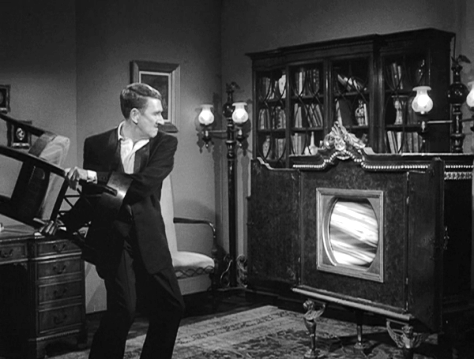
There is one question about this episode. Are the machines really against him or is he having delusions? Richard Haydn plays Bartlett Finchley a writer who is an insulting snob and one of the most unlikable characters you could meet. There are not many redeemable qualities in Finchley…change “not many” to none. He has trouble with machines and it seems that machines have trouble with him…but is it in his mind?
Richard Haydn is great in this part of playing this character. You meet his secretary and TV repairman and it seems the abuse from Finchley has been going on for a while…so this is nothing new. Machines can be bothersome…your computer freezing, car stalling, or your phone dying when you really need it. On that note you can relate but it’s still hard to dig up sympathy for Mr. Finchley.
You have to wonder if this episode influenced future works like Christine and The Car.
This weekend we will have two excellent episodes…two of the best.
This show was written by Rod Serling
Rod Serling’s Opening Narration:
This is Mr. Bartlett Finchley, age forty-eight, a practicing sophisticate who writes very special and very precious things for gourmet magazines and the like. He’s a bachelor and a recluse with few friends, only devotees and adherents to the cause of tart sophistry. He has no interests save whatever current annoyances he can put his mind to. He has no purpose to his life except the formulation of day-to-day opportunities to vent his wrath on mechanical contrivances of an age he abhors. In short, Mr. Bartlett Finchley is a malcontent, born either too late or too early in the century, and who, in just a moment, will enter a realm where muscles and the will to fight back are not limited to human beings. Next stop for Mr. Bartlett Finchley – The Twilight Zone.
Summary
Bartlett Finchley is an odd man, a writer who contributes to food magazines and the like. He lives alone and is always it seems in need of a repairman for one piece of household equipment or another. As time has gone by, he seems to be in a constant battle with machines – his typewriter, his television – which all have the same message for him: get out of the house. He has no intention of doing so however and the battle begins
Rod Serling’s Closing Narration:
Yes, it could just be. It could just be that Mr. Bartlett Finchley succumbed from a heart attack and a set of delusions. It could just be that he was tormented by an imagination as sharp as his wit and as pointed as his dislikes. But as perceived by those attending, this is one explanation that has left the premises with the deceased. Look for it filed under ‘M’ for Machines – in The Twilight Zone.
CAST
Rod Serling … Narrator / Self – Host (uncredited)
Richard Haydn … Bartlett Finchley
Barbara Stuart … Ms. Rogers
Barney Phillips … TV Repairman
Henry Beckman … Cop
Jay Overholts … Intern
Margarita Cordova … Girl on TV
Lew Brown … Telephone Repairman (uncredited)
Welcome to Pub Rock! The Motors were a UK band in the 1970s. This song was their most successful song…peaking at #4 in the UK. All together they had 7 songs in the top 100 in the UK.
lEx-Duck Deluxe members Nick Garvey and Andy McMaster formed the Motors in 1977 with Rob Henry…soon to be replaced by Bram Tchaikovsky and drummer Ricky Slaughter.
This band could get in a groove. I posted something on Bram Tchaikovsky a couple of years ago and knew he was in this band but never checked him out until fellow blogger CB mentioned them. While their peers were in disco, The Motors were finding their groove in rock and roll. Bram would have an international hit with Girl Of My Dreams. His real name is Peter Bramall and he took the stage name of Bram Tchaikovsky…it was also the name of the group he fronted in the late 70s & early 80s after The Motors.
After they released their 1980 album Tenement Steps they broke up. The band released 3 albums in all. This song is off of their Approved By Motors album released in 1978.
When their second greatest hits (Airport: The Motors’ Greatest Hits) was released in 1995 and renewed interest in the band.
Airport
So many destination faces going to so many places Where the weather is much better And the food is so much cheaper. Well I help her with her baggage for her baggage is so heavy I hear the plane is ready by the gateway to take my love away. And I can’t believe that she really wants to leave me and it’s getting me so, It’s getting me so.
Airport – Airport, you’ve got a smiling face, you took the one I love so far away Fly her away – fly her away – airport. Airport, you’ve got a smiling face You took my lady to another place Fly her away – fly her away.
The plane is on the move, And the traces of the love we had in places Are turning in my mind – how I wish I’d been much stronger For the wheels are turning faster as I hear the winds are blowing and I know that she is leaving On the jet plane way down the runaway. And I can’t believe that she really wants to leave me – and it’s getting me so, It’s getting me so.
I remember this one…how could I forget? It is an 80’s time capsule…not a polite one but a time capsule all the same.
By the way…anyone who is easily offended…should NOT listen to the song.
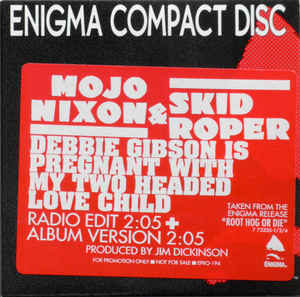
This dandy song was released in 1989 on Mojo’s album Root Hog or Die. Not only does he have fun with Gibson but he also mentions Rick Astley, Tiffany, Spuds MacKenzie, and Joan Collins as well.
I remember the video really well… Winona Ryder played Debbie Gibson and it’s as goofy as you would think…but fun. They lookalikes for Tiffany, Astley and Collins…and of course Spuds.
Debbie Gibson Is Pregnant With My Two Headed Love Child
Debbie Gibson is pregnant with my two headed love child
It’s a bigfoot baby, all covered in fur now
Stark-raving naked in the fornication nation
We were secretly married out in Las Vegas
At a little-bitty chapel, Joan Collins married us
Rootin’ tootin’, ain’t high falutin’
Rick Astley is a pantywaist, mash my butt in his face
His teeny-tiny, two inches of terror, they’re all gonna scare you
Hairbrained cockamamie knuckleheaded idjit galoot
No truth to the rumor about Spuds and Debbie G
Only went to the motel just to watch a little TV
Hate that dog, he must die
Tiffany is wrestling in jello
Body-slamming Debbie G, they’re covered head to toe
Hard on, my hard on
Debbie Gibson is pregnant with my two headed love child
It’s a bigfoot baby, all covered in fur now
Stark-raving naked in the fornication nation
I’m stark-raving naked in the fornication nation
Stark-raving naked in the fornication nation
A nice guitar riff to start this song off by Throwing Muses.
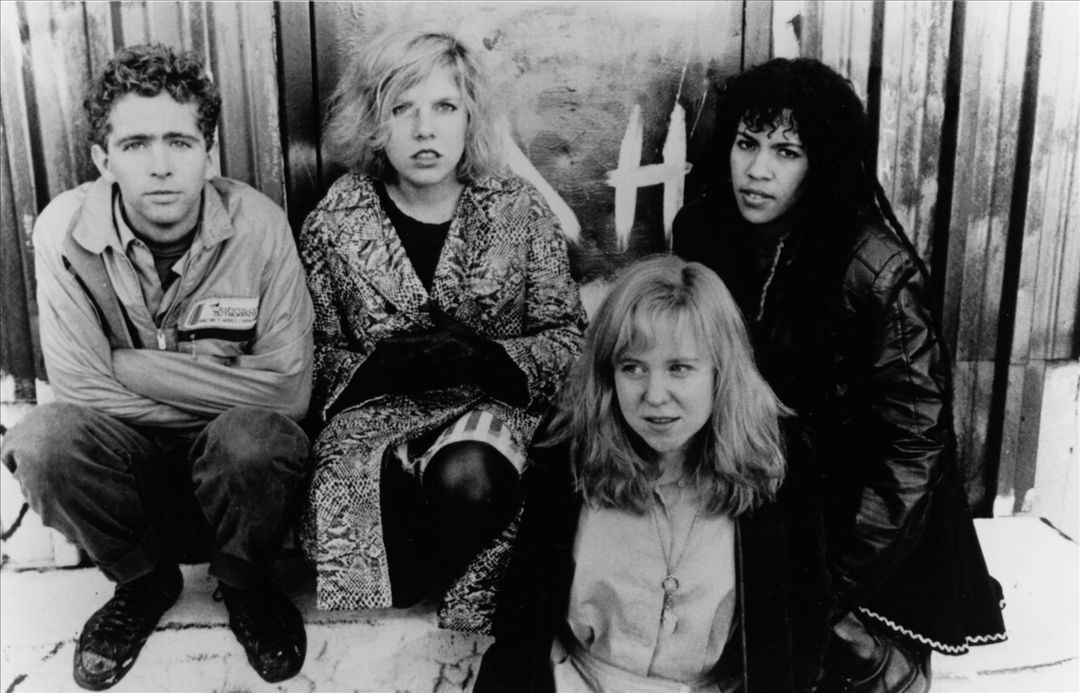
The band was formed in 1981 by step-sisters Kristin Hersh (vocals/guitar) and Tanya Donelly (guitar/vocals), who were both at high school at the time. Initially called Kristin Hersh And The Muses, the line-up was completed by bassist Leslie Langstons and drummer David Narcizo.
They lived close to Providence, Boston and New York and so they could play a club quite often in both places. They had a lot of colleges and some local newspapers, magazines, and radio stations to promote them.
They were the first American band signed to the British 4AD label. An eclectic blend of jerky guitar pop and songwriter Kristin Hersh’s eccentric vocals, the early work by Throwing Muses was quite different than their peers. A year later 4AD would sign Pixies based in part on the band’s connection to Throwing Muses, and by the mid-1990s much of the label’s roster was made up of American bands.
This song was on their self-titled album Throwing Muses in 1986. The song was written by guitar player and singer Kristin Hersh. She wrote every song on the album except one.
Their latest album Sun Racket was released on Fire Records on September 4, 2020.
Kristin Hersh: “We didn’t mean to ever be strange. I guess we were because everybody says we were,” “It’s almost like speaking your own language. I find we kept people out of our world by doing that.”
Hate My Way
I could be a smack freak And hate society I could hate God And blame Dad I might be in a Holocaust Hate Hitler Might not have a child And hate school I could be a sad lover And hate death I could be a neuro And hate sweat No I hate my way
I make you in to a song I can’t rise above the church I’m caught in a jungle Vines tangle my hands I’m always so hot and it’s hot in here I say it’s all right
My pillow screams too But so does my kitchen And water And my shoes And the road
I have a gun in my head I’m invisible I can’t find the ice
A slug I’m TV I hate
A boy, he was tangled in his bike forever A girl was missing two fingers Gerry Ann was confused Mr. Huberty Had a gun in his head
So I sit up late in the morning And ask myself again How do they kill children? And why do I wanna die? They can no longer move I can no longer be still
We are gonna lighten up today with a song from Mojo Nixon. Hope all of you are doing well on this holiday weekend… look around…Elvis is everywhere.
I was commenting with Paul and he brought up Mojo Nixon and it’s probably been since the 1980s that I heard him. A popular Nashville rock station WKDF in the 80s would play this song and a few more by Mojo.
Mojo Nixon (Neill Kirby McMillan, Jr) started in the early eighties and he teamed up with Skid Roper (Richard Banke). Mojo and Skip Roper wrote this song.
This song was released in 1987 and it was on his album Bo-Day-Shus!!!. Mojo has some fun music. I forgot about his songs until Paul pointed me toward him again and they came back to me. I’ll post one tomorrow also.
Nixon announced that he retired from the music business in 2004, playing his last live show in Austin, Texas. In 2009 he announced his “unretirement” and for a short time let anyone download his albums for free with this statement:
Can’t wait for Washington to fix the economy. We must take bold action now. If I make the new album free and my entire catalog free it will stimulate the economy. It might even over-stimulate the economy. History has shown than when people listen to my music, money tends to flow to bartenders, race tracks, late night greasy spoons, bail bondsman, go kart tracks, tractor pulls, football games, peep shows and several black market vices. My music causes itches that it usually takes some money to scratch
Elvis Is Everywhere
When I look out into your eyes out there When I look out into your faces You know what I see? I see a little bit of Elvis In each and every one of you out there
Lemme tell ya… Weeeeeeeeeellllllll… Elvis is everywhere Elvis is everything Elvis is everybody Elvis is still the king
Man o man What I want you to see Is that the big E’s Inside of you and me
Elvis is everywhere, man! He’s in everything He’s in everybody…
Elvis is in your jeans He’s in your cheesburgers Elvis is in Nutty Buddies! Elvis is in your mom!
He’s in everybody He’s in the young, the old The fat, the skinny The white, the black The brown and the blue People got Elvis in ’em too
Elvis is in everybody out there Everybody’s got Elvis in them! Everybody except one person that is… Yeah, one person! The evil opposite of Elvis The Anti-Elvis
Anti-Elvis got no Elvis in ’em Lemme tell ya
Michael J. Fox has no Elvis in him
And Elvis is in Joan Rivers But he’s trying to get out, man! He’s trying to get out! Listen up Joanie Baby!
Elvis is everywhere Elvis is everything Elvis is everybody Elvis is still the king
Man o man What I want you to see Is that the big E’s Inside of you and me
Man, there’s a lot of unexplained phenomenon Out there in the world Lot of things people say What the heck’s going on?
Let me tell ya!
Who built the pyramids? ELVIS! Who built Stonehenge? ELVIS!
Yeah, man you see guys Walking down the street Pushing shopping carts And you think they’re talking to allah They’re talking to themself Man, no they’re talking to ELVIS! ELVIS! ELVIS!
You know whats going on in that Bermuda Triangle? Down in the Bermuda Traingle Elvis needs boats Elvis needs boats Elvis Elvis Elvis Elvis Elvis Elvis
If you want to see The Twilight Zone now that Netflix lost the rights to it…you can see it on Hulu.
Rod Serling could write about a certain kind of character better than most. The small time criminal who is a loser. They are not or ever will be a successful crook or human being just the B level kind…forever bench warmers.
In this episode Rod took a different approach to the crook (Jackie Rhoades) played by Joe Mantell and you have some sympathy for him…which usually is not the case in the Twilight Zone. In Jackie you can find a trace of conscious although it’s buried in his cowardice.
Jackie battles himself in this episode and Mantell pulls this off wonderfully. Like King Nine Will Not Return, Mantell turns this into a one man show for most of the episode. His boss (George) played by William D. Gordon takes advantage of the coward Jackie and wants him to do the ultimate crime. The battle begins between Jackie and himself in his hot cheap motel room.
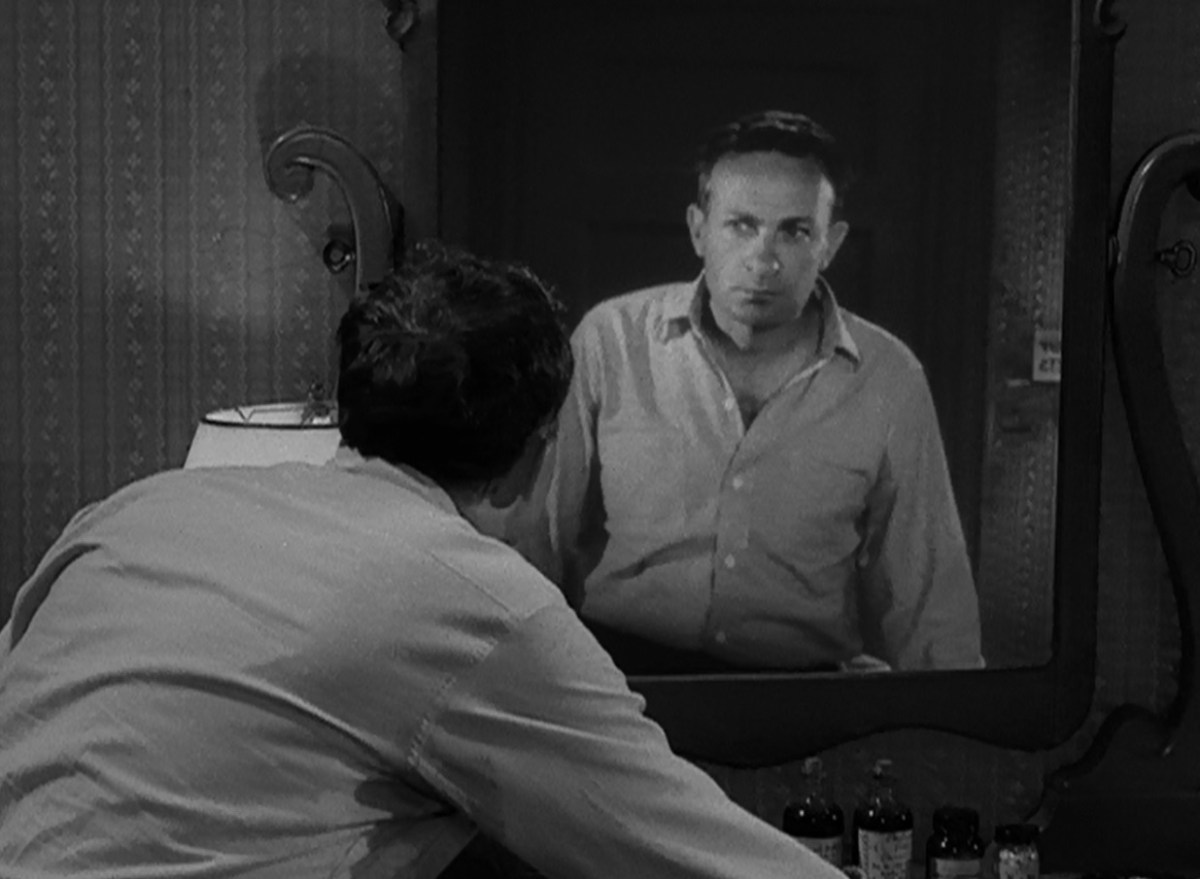
The special effects with the mirror in this one are really good.
This one is about redemption or the chance of redemption if you can find it in yourself.
Something I noticed in this episode is Joe Mantell talking into the mirror at himself said “You talking to me?” and I had to wonder if Martin Scorsese was taking notice before he made Taxi Driver.
This show was written by Rod Serling
Rod Serling’s Opening Narration:
This is Mr. Jackie Rhoades, age thirty-four, and where some men leave a mark of their lives as a record of their fragmentary existence on Earth, this man leaves a blot, a dirty, discolored blemish to document a cheap and undistinguished sojourn amongst his betters. What you’re about to watch in this room is a strange mortal combat between a man and himself, for in just a moment, Mr. Jackie Rhoades, whose life has been given over to fighting adversaries, will find his most formidable opponent in a cheap hotel room that is in reality the outskirts of The Twilight Zone.
Summary
The loser is locked in his self imposed cell. He has failed his entire life. He is a two bit crook who does jobs when he is told. He is a bootlicker, full of fear and anxiety and self loathing. He is a throwaway and knows that some day he will be caught and put away forever. Enter his alter ego who talks to him from behind a mirror. This is his good self, his productive self. Most of the episode is a nicely done dialogue between man and image. It gets at the roots of the problem. A psychologist may pick this apart and put it back together. It is about unrealized potential and reformation. It is also a very satisfying story of a man who has a chance to reclaim his soul.
Rod Serling’s Closing Narration:
Exit Mr. John Rhoades, formerly a reflection in a mirror, a fragment of someone else’s conscience, a wishful thinker made out of glass, but now made out of flesh, and on his way to join the company of men. Mr. John Rhoades, with one foot through the door and one foot out of the Twilight Zone.
CAST
Joe Mantell … Jackie Rhoades
William D. Gordon … George
Rod Serling … Narrator / Self – Host (uncredited)
First of all…Happy 4th of July to those that celebrate it! I also want to thank CB for bringing this song up last year on July 4th. I have posted the X version as well as Dave Alvin’s (who wrote the song) solo version of this song…I also threw in a live version from the Blasters.
This song was released in 1987 on X’s See How We Are album. The album peaked at #107 in the Billboard Album Charts.
This was written by the guitarist Dave Alvin, who had recently replaced Billy Zoom in X. Alvin still had ties with his former band, the Blasters, when he wrote the song, and in early 1986 he recorded the song with the group, with Nick Lowe producing. The sessions when downhill when Lowe decided that Dave should sing the song, not the group’s lead singer, his older brother Phil Alvin. The Blasters album was never released, and it ended up being an X song, with their vocalist John Doe singing it.
Nick Lowe told Dave Alvin something in these sessions that was interesting and career changing. Dave Alvin wrote the song but didn’t think he could sing it but Nick wanted him to. Lowe told him “I can’t sing either, but I’ve somehow made a living doing it.”
Lately I’ve been listening to a lot of Blaster’s music. Dave Alvin seems to cover everything from blues, rock, rockabilly, country, Americana and more. Here is a quote from him
I’ve always considered myself as basically a blues guy
but I don’t want to limit myself to what some people define as
blues. The “blues form” and the “blues scale” is a constant
in just about all American folk and roots music as well as jazz
and pop. Because of that, I can hear the blues in country music
as well as in the loud garage band down the block.
As a songwriter, if I feel like writing a polka one day,
I’ll write a polka. If I feel like writing a country song
or a rockabilly song, then I’ll do it. It’s hard enough
writing songs to have to bother yourself with somebody’s
categories.
Dave Alvin: “I wrote a long poem is how it really started,” Alvin said in the Zoo Bar’s upstairs dressing room before his latest show there last month. “It’s based on a true story in my life, back when I was a fry cook in Downey (California). Everything in the song is true,” “There was this little cul-de-sac and there were all these beat-up duplexes. We lived in the upstairs duplex. She didn’t want smoking in the place, so I’d sit on the top of the stairs and just stare at the cul-de-sac.”
“I was just trying to capture that moment. This is long before I even thought of being a songwriter. I was 21, 22 and I looked at the Mexican kids shooting fireworks and I looked at everything and I thought, ‘This is a song.’ Eight years later, I finally wrote it.”
From Songfacts
Alvin wrote a third verse, but decided the song had more impact without it, as it leaves the ending up to the listener. He told us: “When X wanted to record the song and we recorded a couple of demos for Elektra, one of the producers, who is a notable musician who shall remain nameless, said, ‘I’m not getting enough. It needs more.’ So, I thought, well, maybe I should pull that third verse back into it? But then I thought, no, it’s getting the point across. They’re either breaking up or they’re staying together.'”
This song is beloved by the band’s fans and has grown in popularity, but it was never a hit. A victim of timing, the late ’80s found X out-of-favor at radio stations, as anything perceived as “Punk” had a hard time getting airplay (Billy Idol excepted). A few years later, Nirvana knocked down that wall, but it was too late for “4th Of July.”
Live Blasters
Dave Alvin’s version
X 4th of July
4th of July
She’s waitin’ for me When I get home from work Oh, but things ain’t just the same She turns out the light And cries in the dark Won’t answer when I call her name
On the stairs I smoke a Cigarette alone Mexican kids are shootin’ Fireworks below Hey baby, it’s the Fourth of July Hey baby, it’s the Fourth of July
She gives me her cheek When I want her lips But I don’t have the strength to go On the lost side of town In a dark apartment We gave up trying so long ago
On the stairs I smoke a Cigarette alone Mexican kids are shootin’ Fireworks below Hey baby, it’s the Fourth of July Hey baby, it’s the Fourth of July
What ever happened I Apologize So dry your tears and baby Walk outside, it’s the Fourth of July
On the stairs I smoke a Cigarette alone Mexican kids are shootin’ Fireworks below Hey baby, it’s the Fourth of July Hey baby, Baby take a walk outside
This is a dark take on the Genie in the Bottle/Monkey’s Paw…but what else would you expect in the Twilight Zone? It’s another be careful for what you wish for episode and it’s a good one.
Luther Adler and Vivi Janiss play Arthur and Edna Castle, a poor couple running a pawn shop. They are near bankruptcy but with kind hearts…helping those around them. There is always a price to be paid for anything you get…something Arthur and Edna learn really quick.
Again casting got this one perfect. Joseph Ruskin plays the Genie and creepy is a nice word for him. This is not your Genie in a turban or Barbara Eden in a skimpy outfit. This Genie doesn’t play…he is honest to a fault and you are not going to slip something by him. As the wishes count up…. Arthur loses his cool and himself.
The third wish I won’t talk about here…but it’s got plenty of consequences for Arthur. Appreciate what you have is the message that I get.
This show was written by Rod Serling
Rod Serling’s Opening Narration:
“Mr. and Mrs. Arthur Castle, gentle and infinitely patient people whose lives have been a hope chest with a rusty lock and a lost set of keys. But in just a moment that hope chest will be opened and an improbable phantom will try to bedeck the drabness of these two people’s failure laden lives with the gold and precious stones of fulfillment. Mr. and Mrs. Arthur Castle, standing on the outskirts and about to enter the Twilight Zone.”
Summary
Arthur and Edna Castle run a small antique shop but business is not good and they’re having trouble paying their bills. Despite that, the good-hearted Arthur buys an old wine bottle from the desperate Mrs. Gumley for a dollar. When he knocks the bottle open, a genie appears offering them four wishes. They soon find that their wishes don’t lead them to the outcomes they had hoped for and certainly don’t lead to happiness.
Rod Serling’s Closing Narration:
A word to the wise, now, to the garbage collectors of the world, to the curio seekers, to the antique buffs, to everyone who would try to coax out a miracle from unlikely places. Check that bottle you’re taking back for a two-cent deposit. The genie you save might be your own. Case in point, Mr. and Mrs. Arthur Castle, fresh from the briefest of trips into The Twilight Zone.
CAST
Rod Serling … Narrator / Self – Host (uncredited)
Luther Adler … Arthur Castle
Vivi Janiss … Edna Castle
Joseph Ruskin … Genie
Olan Soule … IRS Man (as Olan Soulé)
Lisa Golm … Mrs. Gumley
Peter Coe … German (uncredited)
Albert Szabo … German Officer #2 (uncredited)









 PowerPop... An Eclectic Collection of Pop Culture