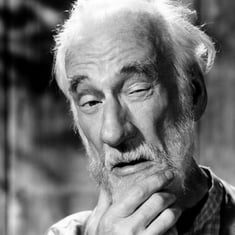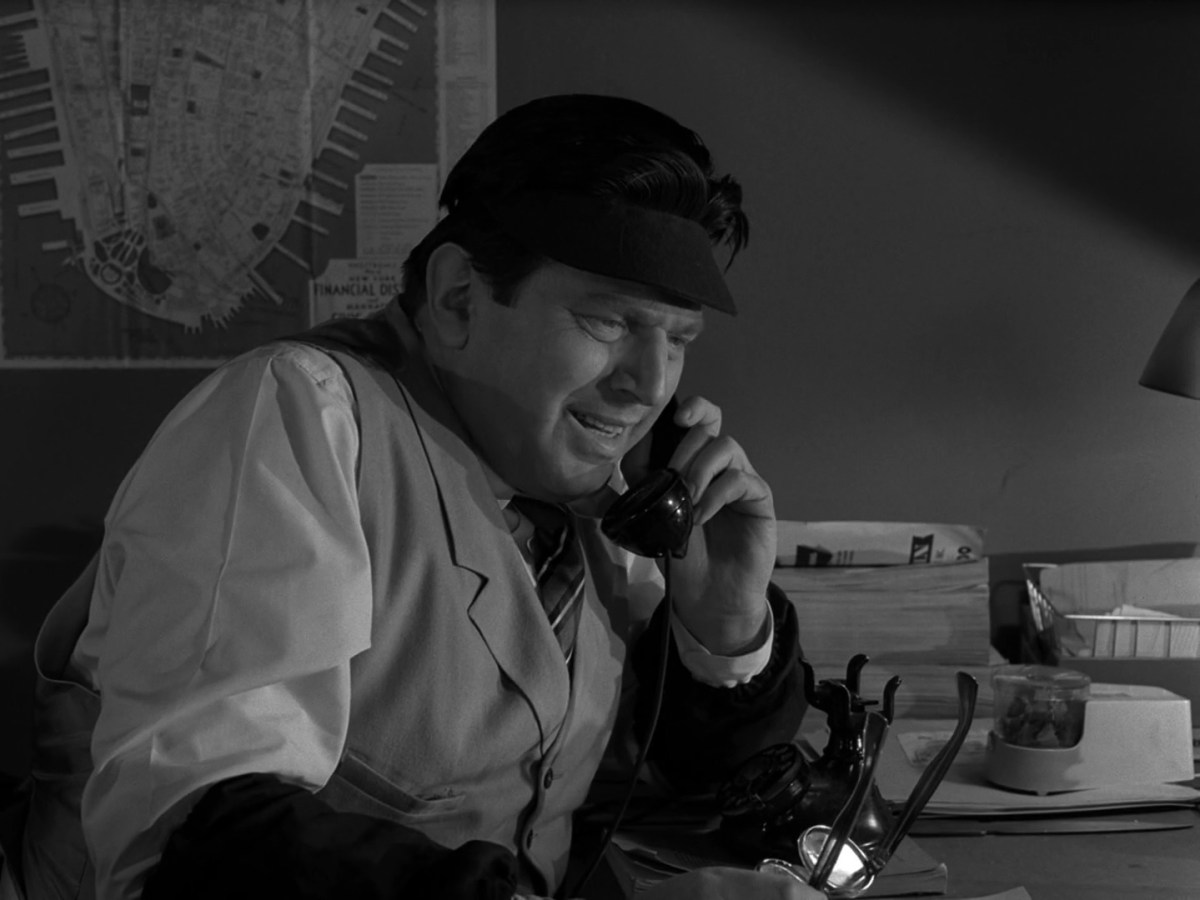
Twilight Zone – The Dummy

★★★★★  May 4, 1962 Season 3 Episode 33

If you want to see where we are…HERE is a list of the episodes.

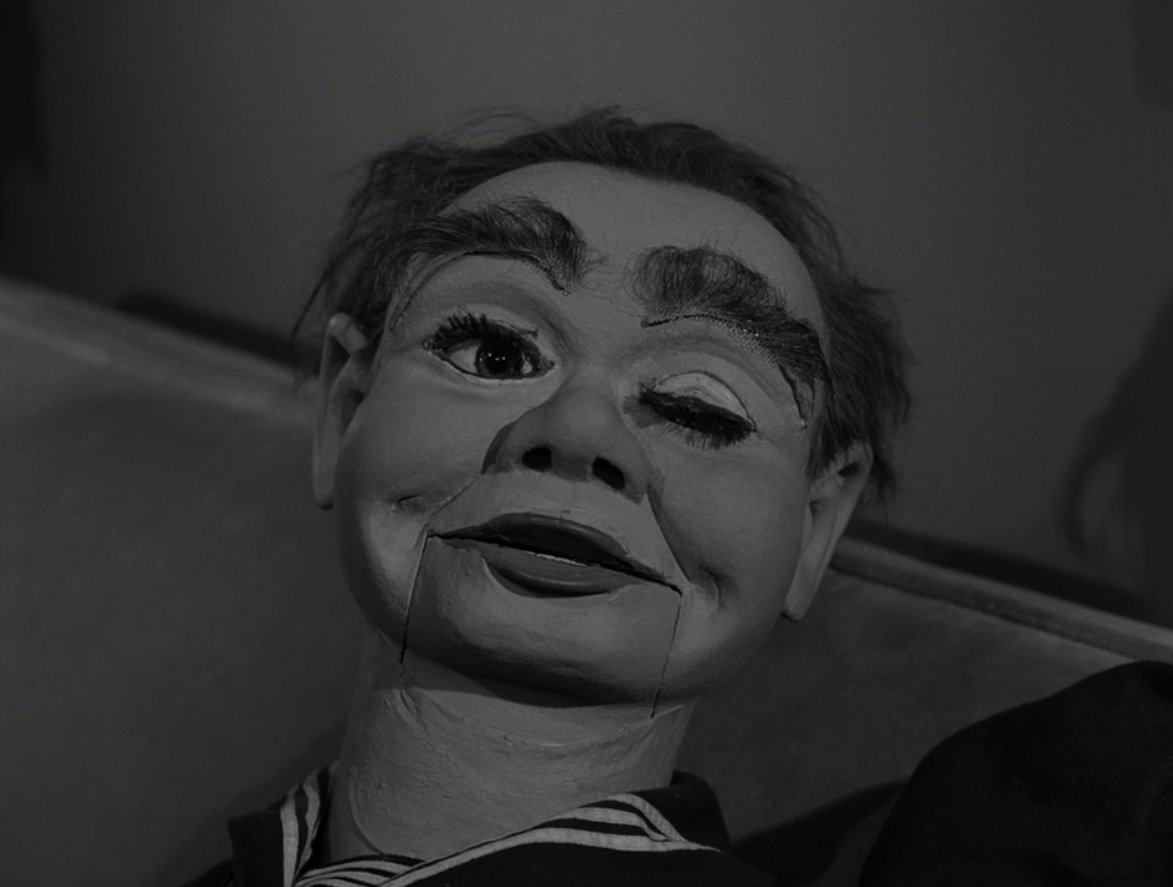
The story of a ventriloquist and his dummy has been done but the ending keeps this fresh.  This episode still works today. The Twilight Zone covers a lot of ground and some episodes do scare people. This one would be one of those. It’s creepy and may have influenced the 1978 movie Magic.

Cliff Robertson plays Jerry Etherson and is great in this role as a talented but alcoholic ventriloquist. Frank Sutton, who most people know as Sgt Carter from Gomer Pyle, is in the episode as Etherson’s agent Frank. At first you don’t know if Etherson is imagining what is happening or not.

Frank cares about Jerry but after so many missed performances because of his drinking problem….he drops him as a client.  He also suggests Jerry to get help because Jerry swears that “Willy” (the dummy) is alive.

The Dummy has one of the most chilling final shots of any episode of The Twilight Zone.

Any show with a dummy, gives me the creeps. After seeing this when I was younger… I had relatives who had one of those things lying around…I never took my eyes off that  thing.

The dummy “Willy” was created by American ventriloquist supplies maker Revillo Pettee, while the dummy seen at the end was created by English builder Len Insull. “Willy” is in the private collection of magician David Copperfield.

This show was written by Rod Serling and Lee Polk

Rod Serling’s Opening Narration: 

You’re watching a ventriloquist named Jerry Etherson, a voice-thrower par excellence. His alter ego, sitting atop his lap, is a brash stick of kindling with the sobriquet ‘Willy.’ In a moment, Mr. Etherson and his knotty-pine partner will be booked in one of the out-of-the-way bistros, that small, dark, intimate place known as the Twilight Zone.

Summary

Jerry Etherson has a reasonably successful nightclub act as a ventriloquist but has one major problem: he believes his dummy Willie is a sentient being who speaks to him and manipulates his life. His agent Frank thinks Jerry needs psychiatric help and tells him he has no future in the business if he doesn’t do something about his delusions. Jerry decides to lock Willie in a trunk and try his act with a different dummy. Willie has plans of his own however.

Rod Serling’s Closing Narration:

What’s known in the parlance of the times as the old switcheroo, from boss to blockhead in a few uneasy lessons. And if you’re given to nightclubbing on occasion, check this act. It’s called Willy and Jerry, and they generally are booked into some of the clubs along the ‘Gray Night Way’ known as the Twilight Zone.

CAST

Rod Serling … Narrator / Self – Host (uncredited)
Cliff Robertson … Jerry Etherson
Frank Sutton … Frank
George Murdock … Willie
John Harmon … Georgie
Sandra Warner … Noreen
Ralph Manza … Doorkeeper
Rudy Dolan … Emcee (uncredited)
Bethelynn Grey … Chorus Girl (uncredited)
Edy Williams … Chorus Girl (uncredited)

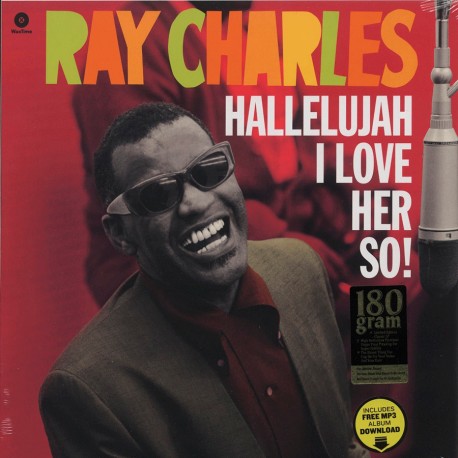
Ray Charles – Hallelujah I Love Her So

This is one of those songs where I could listen to it on a loop and be happy. Ray Charles wrote this song with a gospel feel to it. It was released in 1956 and it peaked at #5 in the R&B charts.

He went to a state school for the blind in St. Augustine, Florida. He became a professional musician after leaving there in 1945, after the death of his mother. A piece of advice that Ray’s mother gave to him: “You’re blind, not stupid.”

He moved to Seattle because it was the farthest, he could get from Florida. Jack Lauderdale, one of the first black record label owners, signed Charles to the Downbeat label, for whom Charles had his first hit in 1949, Confession Blues. The recording session for it was noteworthy for another reason…Charles recorded it while there was a musicians’ strike. The union fined him $600,  his life savings at that point for the infraction.

Charles’ recording contract was sold to Atlantic Records in 1952, shortly after he moved to LA. He formed his own band in 1954 and started to release records.

This song was in the Quarrymen and early Beatles repertoire and a big influence. The first time I heard this song was on the Live! at the Star Club 1962 album released in 1977. The album was recorded in 1962 in the audience by “King Size” Taylor, lead singer of the Dominos. He claims he asked Lennon if that was alright and John verbally agreed to the group being recorded in exchange for Taylor providing the beer during their performances. It was recorded on a low-grade reel to reel in the audience. The Beatles tried to block the release but were unsuccessful. I for one am glad it wasn’t blocked.

It shows how raw they were in the early days. This was recorded right after The Beatles sacked Pete Best and Ringo was brought in.

The lead singer on the Beatles version was that famous Beatle named Horst Fascher. Actually, Horst was a protector of the band and the only favor he asked was to occasionally sing a song. Fascher meant a lot to the Beatles and he worked at the Hamburg clubs they played in.

According to Mark Lewisohn (author of Tune In)… Hamburg was very important to the Beatles. In their first trip to Hamburg, they accumulated around 415 hours of stage time. The Beatles had to be the most experienced rock group in the world, not just Liverpool. When they got back to Liverpool people were amazed and they were the number 1 band in their hometown from then on.

Eddie Cochran and George Jones made chart versions of this song.

Hallelujah I Love Her So

Let me tell you ’bout a boy (girl) I know
He(She) is my baby and he (she) lives next door
Ev’ry morning ‘fore the sun come up
He (she) brings my coffee in my fav’rite cup
That’s why I know, yes, I know
Hallelujah, I just love him (her) so
When I’m in trouble and I have no friends
I know hel’ll (she’ll) go with me until the end
Ev’rybody asks me how I know
I smile at them and say he (she) told me so
That’s why I know, yes, I know
Hallelujah, I just love him (her) so

Now if I call him (her) on the telephone
And tell him (her) that I’m all alone
By the time I count from one to four,I hear him (her) on my door
In the evening when the sun goes down
When there is nobody else around
He (she) kisses me and he (she) holds me tight
He (And) tells me “Baby, (Daddy) ev’ry thing’s all right”
That’s why I know, yes, I know
Hallelujah, I just love him (her) so

[Repeat]

Twilight Zone – The Gift

★★★  April 27, 1962 Season 3 Episode 32

If you want to see where we are…HERE is a list of the episodes.

This episode is slow moving but at times interesting . It contains elements that could have been a great Twilight Zone but the acting in this one is subdued and the story is slow. I did like the study of human nature at the end but the script was  uneven.

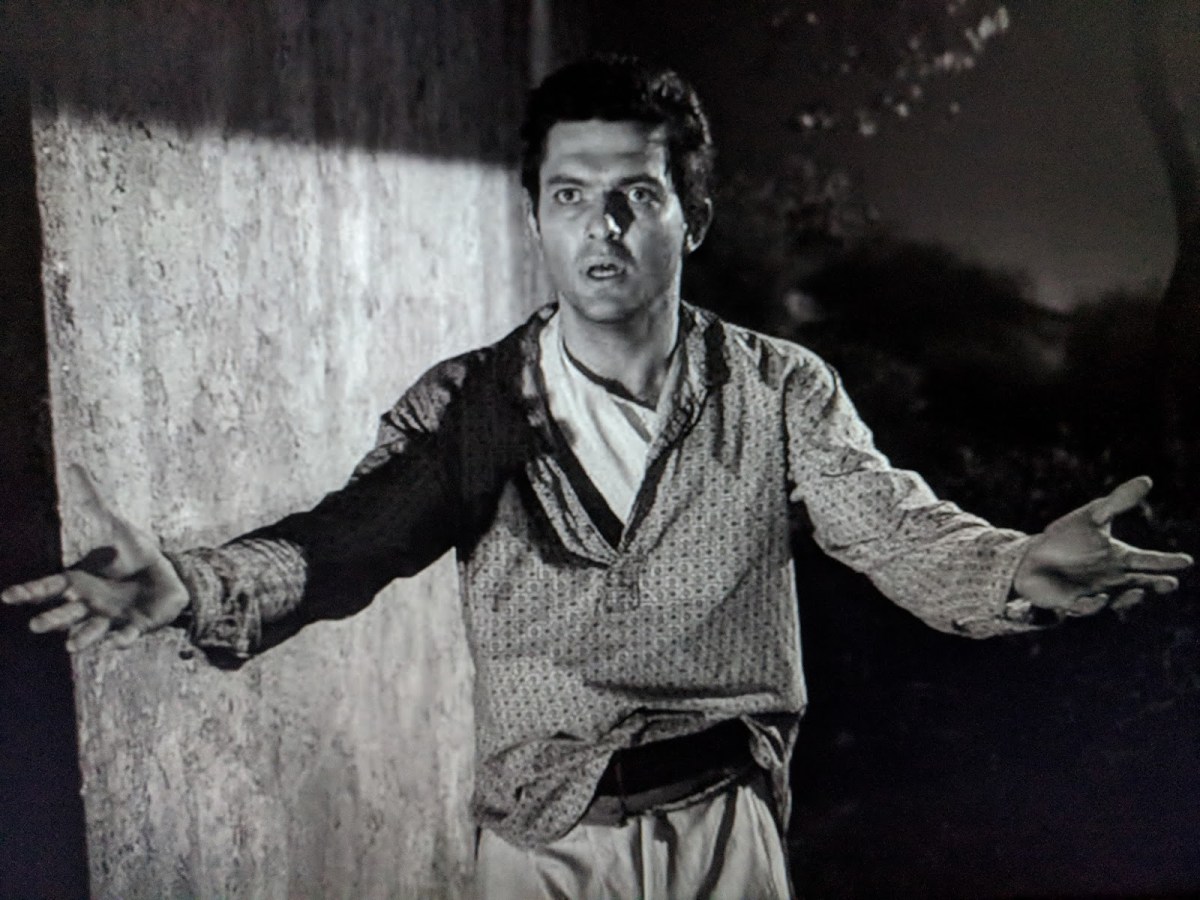
A Christ-like alien ventures into a small Mexican village. He comes into a bar after being shot and hurting. He bonds with a little boy named Pedro played by Edmund Vargas. A doctor looks at the alien and by all accounts should have been dead. Everyone was fearful of him and he is referred to as a creature with powers. The alien offers a gift but will the lack of trust in the new comer accept it?

I did like the musical score for this one. The Gift has a guitar score composed and performed by Laurindo Almeida, one of the great classical guitarists.This story was originally written as one of the series’ possible pilots, but was passed over for The Twilight Zone: Where Is Everybody?

This show was written by Rod Serling

Rod Serling’s Opening Narration: 

The place is Mexico, just across the Texas border, a mountain village held back in time by its remoteness and suddenly intruded upon by the twentieth century. And this is Pedro, nine years old, a lonely, rootless little boy, who will soon make the acquaintance of a traveler from a distant place. We are at present forty miles from the Rio Grande, but any place and all places can be the Twilight Zone.

Summary

The residents of a small Mexican village, just 40 miles or so south of the Rio Grande, panic when they learn a being from another planet may have crashed near by. As the result of an altercation with local police, one policeman is dead and the alien is severely wounded. A young boy, Pedro, quickly forms a friendship with the alien who says he has come in peace. He also says he has a gift for the people of the Earth, but the villagers’ fear means that mankind will never benefit from the alien’s generosity.

Rod Serling’s Closing Narration:

Madeiro, Mexico, the present. The subject: fear. The cure: a little more faith. An Rx off a shelf in the Twilight Zone.

CAST

Rod Serling … Narrator / Self – Host (uncredited)
Geoffrey Horne … Williams – the Alien
Nico Minardos … Doctor
Cliff Osmond … Manolo
Edmund Vargas … Pedro
Vladimir Sokoloff … Guitarist
Paul Mazursky … Officer
Henry Corden … Sanchez
Vito Scotti Vito Scotti … Rudolpho
Eumenio Blanco … Townsman (uncredited)
Carmen D’Antonio … Woman (uncredited)
David Fresco … Man (uncredited)
Lea Marmer … Woman (uncredited)
Joseph V. Perry … Man (uncredited)

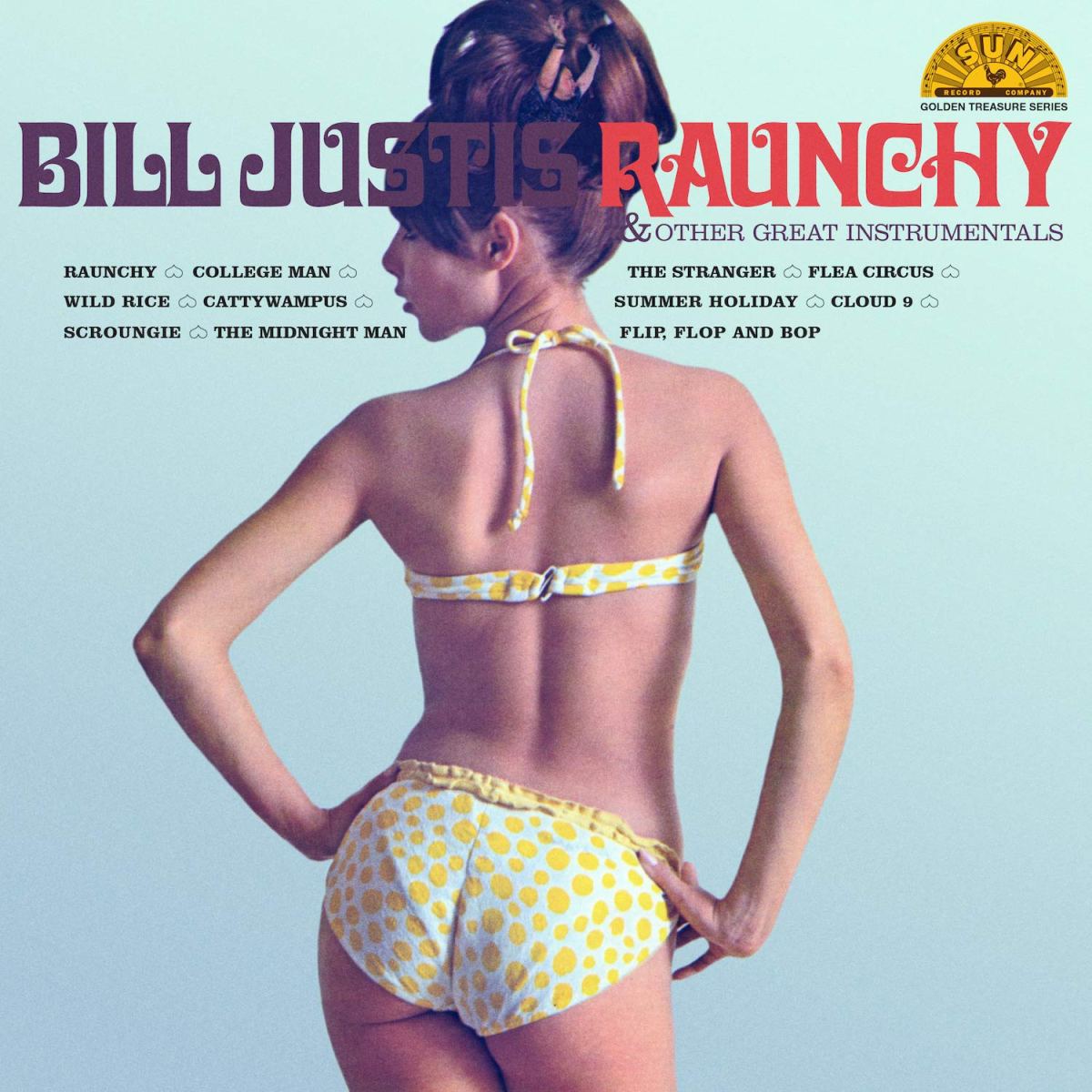
Bill Justis – Raunchy

This weekend will lean toward the 1950’s…we start it off with this instrumental. 

Back in 1950s Liverpool  a young John, Paul, and George were riding on a bus and Paul was trying to get George Harrison in the Quarrymen. George was much younger and John had his doubts about letting the kid join. Paul asked young George to get his guitar out and play the instrumental Rauncy right there on the bus. John was impressed and the rest…as they say is history.

This was originally called “Backwards.” Justis changed the title when he heard someone enjoying the tune say that it was “raunchy,” which meant “messy” or “dirty” in ’50s teenage slang.

The song was written by Bill Justis and Sidney Manker who played that riff on the song. 

Justis landed a job as musical director at Sun Records, run by Sam Phillips. During his time there, he arranged music for acts like Johnny Cash, Roy Orbison, Jerry Lee Lewis, and Charlie Rich. Meanwhile, he got the idea to record his own rock ‘n roll tune and enlisted some jazzmen and rock ‘n roll players for the session that produced “Raunchy.” When the sax player he hired fell ill, Justis stepped in. Although he’d long ago traded his trumpet for sax, he hadn’t played the instrument for a while, which resulted in a distinctive off tone that set the original instrumental apart from its many covers.

This instrumental peaked at #2 in the US Hot 100, #1 in the R&B Charts, and #6 in the Country Charts. 

Bill Justis: “I read about how much money he had made out of rock ‘n roll so I said, ‘That’s for me!'” “So, I immediately set out for a record store and bought $80 worth of the all-time rock ‘n roll hits. I studied the stuff and found it was so simple, yet basic and savage, that it was difficult to perform.”

From Songfacts

Ernie Freeman covered this. It was a reversal of the usual process as Freeman was black and Justis was white. Freeman’s version hit #4 while Justis’ hit #2. Although both did extensive session work, “Raunchy” remains each act’s sole Top 40 hit.

George Harrison played this on his guitar for John Lennon when he was auditioning to be a member of The Quarrymen.

While working for his father’s roofing business in his native Memphis, Justis made the rounds in local dance bands as a trumpet player. When the office’s closing left him without a job, Justis decided to pursue music full time as an arranger. An article about Buck Ram, a prolific songwriter and producer who was integral in the vocal group scene of the ’50s, turned him on to rock ‘n roll.

Justis and Freeman weren’t the only performers to have a hit with “Raunchy” in 1957. Billy Vaughn also released a version that went to #10. Several other acts covered the tune, including Santo & Johnny, The Ventures, Duane Eddy, Scotty Moore, Alex Chilton, and Booker T. & The M.G.’s, among others.

Justis recorded this two more times: in 1962 for the album Bill Justis Plays 12 More Big Instrumental Hits and in 1969 for the album Raunchy & Other Great Instrumentals.

This was used in the movies The Loveless (1981), Great Balls Of Fire! (1989), Nowhere Boy (2009), and Camp X-Ray (2014).


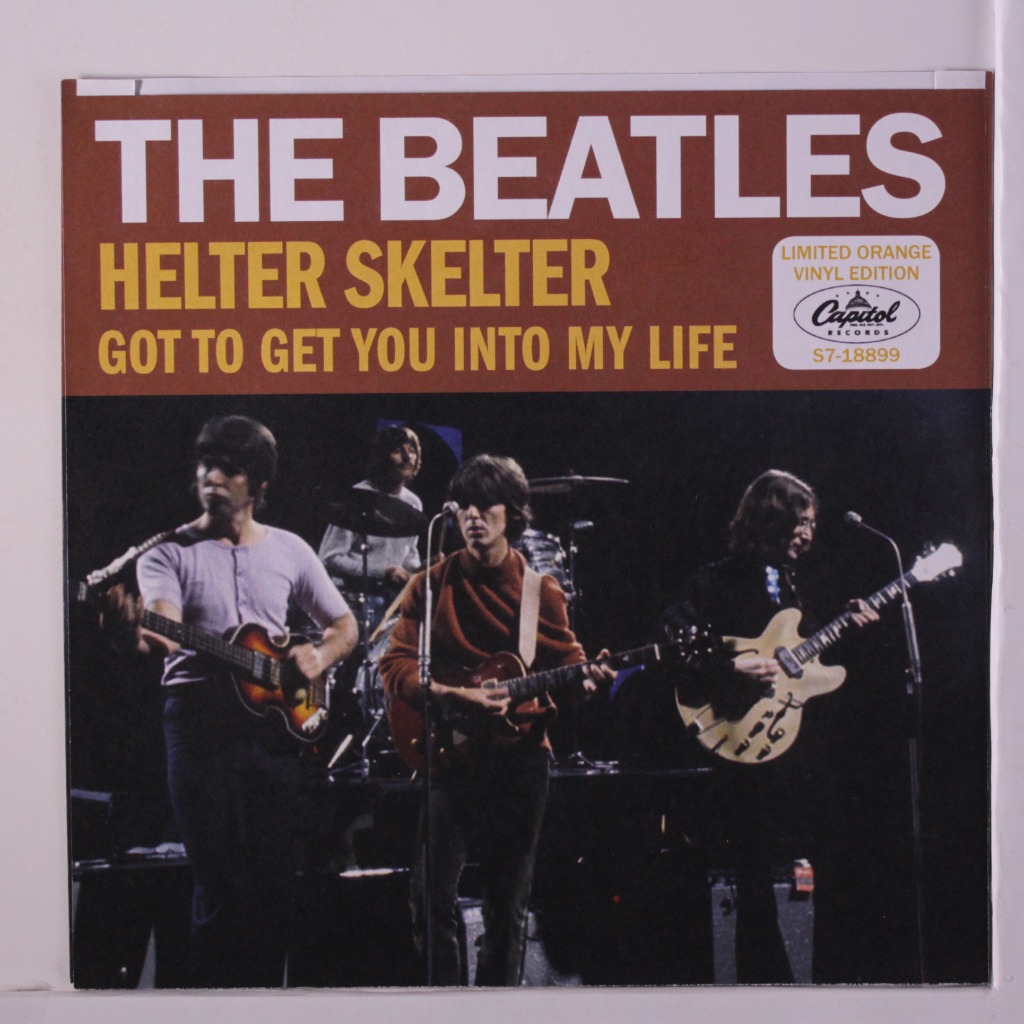
Beatles – Helter Skelter

This is my tenth and last song pick for Hanspostcard’s song draft. The Beatles Helter Skelter.

I want to thank Hans for hosting this draft and having me as one of the participants. Thanks everyone for the great songs. A Beatles song had to be in play in the draft for me. I didn’t pick my favorite Beatles song, but one that scared the hell out of me as a kid. This song gave me the creeps because it was so loud. That was before I saw the Manson TV movie.

Now, the sheer energy of it gets me every time. In 1964 they gave us I Want To Hold Your Hand and four years later we hear Helter Skelter…that is growing and versatility. This song was by the band I most admire and it was influenced by another band I admire…The Who…sort of.

The origin of the song…I’ll turn it over to Paul: “I was in Scotland and I read in Melody Maker that Pete Townshend had said: ‘We’ve just made the raunchiest, loudest, most ridiculous rock’n’roll record you’ve ever heard.’ I never actually found out what track it was that The Who had made, but that got me going, just hearing him talk about it. So I said to the guys, ‘I think we should do a song like that; something really wild.’ And I wrote ‘Helter Skelter.’”

The track that Townshend was talking is thought to be I Can See For Miles. Paul took the description and ran with it. Paul and George played the guitars while John played a six string bass…Mr blisters on his fingers played drums.

I’ve played this song at the different places I’ve worked (on cassette and computer) and I get inquiries…who is that? When I tell them who…they don’t believe me at first. A reply that I have got is… no that is NOT The Beatles…that is just not them. This is why I love the Beatles. They covered genres well.

The song has picked up evil vibes along the way because of Manson grabbing the title for his awful deeds. Some have said it was the first Heavy Metal song, but I don’t hear that. I do think it was a cog in the machine and influenced the harder bands though.

I’ve heard so many bands try to cover this song…even down to heavier bands and none match the intensity and energy of this recording. The secret is the punk rawness with it’s jagged edges showing. The only cover I like is U2’s live version on Rattle and Hum because it helped the song regain it’s reputation back and take it from Manson’s grasp to a then modern audience.

I’ve played this song with a band a few times and that little riff is so powerful and so much fun to play. I told the rest of the band…no distortion boxes…no processing…just pure loud overdrive (turn it up to 11 and beyond)…and it works.

The White Album…another reason I love it…you have Blackbird, Rocky Racoon, Dear Prudence, and Helter Skelter on the same album. The album is the very definition of eclectic.

Thank you all again for the songs.

Helter Skelter

When I get to the bottom I go back to the top of the slide
Where I stop and I turn and I go for a ride
Till I get to the bottom and I see you again

Do, don’t you want me to love you
I’m coming down fast but I’m miles above you
Tell me, tell me, tell me, come on tell me the answer
Well, you may be a lover but you ain’t no dancer

Helter skelter, helter skelter
Helter skelter

Will you, won’t you want me to make you
I’m coming down fast but don’t let me break you
Tell me, tell me, tell me the answer
You may be a lover but you ain’t no dancer

Look out
Helter skelter, helter skelter
Helter skelter
Look out, ’cause here she comes

When I get to the bottom I go back to the top of the slide
And I stop and I turn and I go for a ride
And I get to the bottom and I see you again, yeah, yeah

Well do you, don’t you want me to make you
I’m coming down fast but don’t let me break you
Tell me, tell me, tell me your answer
You may be a lover but you ain’t no dancer

Look out
Helter skelter, helter skelter
Helter skelter

Look out, helter skelter
She’s coming down fast
Yes, she is
Yes, she is
Coming down fast

(I’ve got blisters on my fingers)

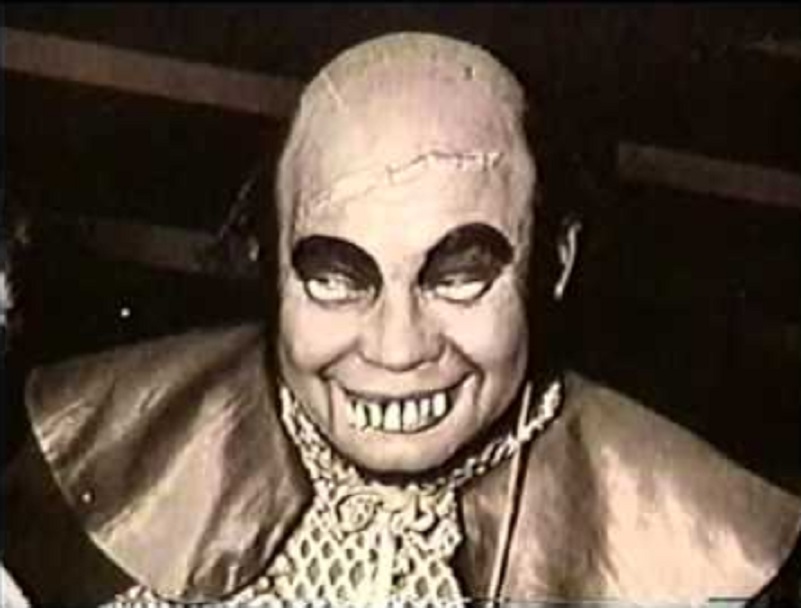
Creature Feature hosted by Sir Cecil Creape

No… this is not a goth punk band… but I will post a song from Han’s draft at 11 CST today.

This morning I wanted to share this memory of this fun local horror host. When I was a kid I thought Sir Cecil Creape was a little scary but a lot of fun. It was a gentle way for kids to be introduced to older horror movies.

If you didn’t grow up in Nashville in the 70s you will be thinking… who? I’m sure local stations in other areas had someone like this or maybe not. This was before cable, DVD’s, VHS, or personal computers.

Sir Cecil Creape was actually Russ McCown (film editor) playing the host that featured a  B horror movie from the 40s and 50s. The show was called Creature Feature and it was originally on between 1971-1973. They would rerun it through the seventies and that is when I caught him. It was on the NBC afflilate Channel 4 in Nashville. It would come on late at night. Creape would do different skits with a corny sense of humor and it worked. I thought the set was absolutely the coolest set I’d ever seen.

WSM (Channel 4) even created a Sir Cecil Creape Fan Club, which offered a poster and a cardboard mask perfect for terrorizing younger brothers and sisters, and the Boy Scouts of America Middle Tennessee Council issued a special “Sir Cecil’s Ghoul Patrol” patch.

They aimed the show at high schoolers and college students but soon children would want to stay up past their bedtime to watch it. I do remember t-shirts and buttons of Creape…and occasionally I still see a few around Nashville. Pat Sajak, long before hosting the Wheel of Fortune, assisted in the scripts.

In 1983 Russ McCown revisited Sir Cecil in the Phantom of the Opry on TNN for 13 episodes. I read where someone said he sounded like a Southern-fried Boris Karloff. That sounds right!

Dr. Gangrene's Mad Blog: Sir Cecil Creape T-shirt UpdatedDr. Gangrene's Mad Blog: Sir Cecil Creape - 1970s Nashville Horror Host

He was elected into the The official Horror Host Hall of Fame in 2015! Russ McCown passed away in 1998.

Twilight Zone – The Trade-Ins

★★★★1/2  April 20, 1962 Season 3 Episode 31

If you want to see where we are…HERE is a list of the episodes.

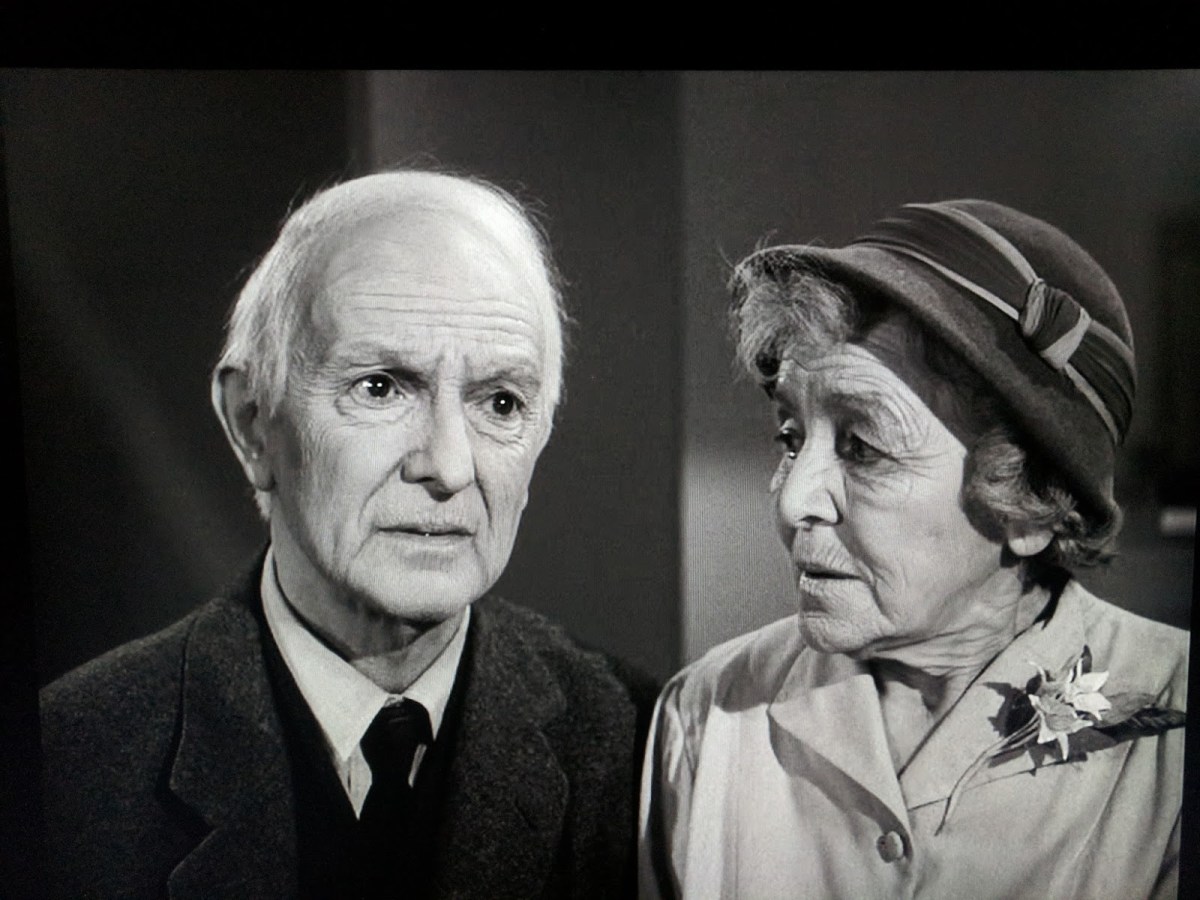
This episode is very poignant. The older we get we all start becoming aware of our mortality. Serling offers a way out with a choice.  What if one day when we all get old…we can go and get new bodies? You would not just be young again  but you pick the body you want. Joseph Schildkraut as John Holt was superb in this role. The show stays realistic through out the episode.

John and Marie Holt visit the New Life Corporation, hoping to transplant their personalities into youthful, artificial bodies. Unfortunately, they can only afford the procedure for one of them…but which one? The episode also touches on mercy from Theodore Marcuse who plays Farraday who ordinairly doesn’t hand it out daily.

Unbeknownst to all but those on the set, something terrible was happening to Schildkraut during the filming of the episode. Director Elliot Silverstein recalls, He was undergoing a tragedy at the time … his own wife was dying. As a matter of fact, in the middle of the three-day schedule, his wife did in fact die. And he insisted that we not stop production for him; the Schildkraut family was a great theatrical family in Europe he would finish the film and then mourn. He was in real tears, off-screen.

This show was written by Rod Serling

Rod Serling’s Opening Narration: 

Mr. and Mrs. John Holt, aging people who slowly and with trembling fingers turn the last pages of a book of life and hope against logic and the preordained that some magic printing press will add to this book another limited edition. But these two senior citizens happen to live in a time of the future where nothing is impossible, even the trading of old bodies for new. Mr. and Mrs. John Holt, in their twilight years, who are about to find that there happens to be a zone with the same name.

Summary

John and Marie Holt have been married for a great many years. Age is catching up with them and John is frequently in pain. They visit the New Life Corporation where they have the opportunity to have their consciousness transferred to new, younger bodies. They only have enough money to pay for one transformation however and once complete, a decision on their future life together must be made.

Rod Serling’s Closing Narration:

From Kahlil Gibran’s The Prophet: “Love gives not but itself and takes not from itself, love possesses not nor would it be possessed, for love is sufficient unto love.” Not a lesson, just a reminder, from all the sentimentalists in the Twilight Zone.

CAST

Rod Serling … Narrator / Self – Host (uncredited)
Joseph Schildkraut … John Holt
Noah Keen … Mr. Vance
Alma Platt Alma Platt … Marie Holt
Theodore Marcuse … Farraday (as Ted Marcuse)
Edson Stroll … Young John Holt
Terence de Marney … Gambler (as Terrence deMarney)
Sailor Vincent … Gambler (as Billy Vincent)
Mary McMahon … Receptionist
David Armstrong … Surgeon

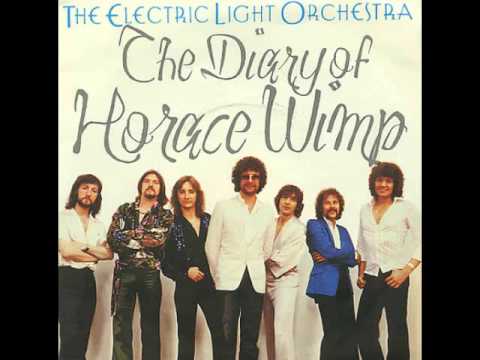
ELO – The Diary of Horace Wimp

This was a song off of the Discovery album released in 1979. I got this album from Columbia House. When I recieved the album this song first caught my attention because of the name and the song lived up to it.

This was recorded at the Musicland Studios in Munich, Germany. Jeff Lynne sang the lead vocals, played lead and rhythm guitar, the piano and the synthesizer.

Jeff stream lined ELO. He started by trimming the lineup to a foursome also featuring drummer Bev Bevan, keyboardist Richard Tandy and bassist Kelly Groucutt. Discovery became the first ELO project without an orchestral component.

ELO engineer Reinhold Mack suggested doing away with the choirs and strings that the production usually had. Jeff Lynn aso started to listen to the Bee Gee’s production and Voilà … ELO were venturing into disco.

The Diary of Horrace Wimp peaked at #8 in the UK Charts in 1979. The Album Discovery peaked at #5 in the Billboard Album Charts, #3 in Canada, #1 in the UK, and #2 in New Zealand.

Jeff Lynne: “I just lost my way, totally,””In the beginning, ELO was supposed to be very avant-garde, very off the wall. And then, once I started having hits, it drifted from that. Suddenly, the record companies and managers were clamoring for hits. And I tried to cater to the fuckers. And it grew into this monstrous thing that I didn’t want. I got to feel trapped, and I didn’t have a clue as to what was going on. It was a fuckin’ drag.”

Jeff Lynne: “Having a 30-piece string section was fine for the first three times, albums-wise,” Lynne told the Quietus in 2015. “I’d be going, ‘Oh great! Strings today!’ But after that, it became, ‘Oh, strings today. So fed up with these fucking strings.'”

The Diary of Horace Wimp

Late again today, he’d be in trouble though he’d say he was sorry, he’d have to hurry out to the bus

Horace was so sad, he’d never had a girl that he could care for, and if he was late once more, he’d be out

Don’t be afraid, just knock on the door,
Well he just stood there mumblin and fumblin’
Then a voice from above said-
Horace wimp,this is your life,
Go out and find yourself a wife,
Make a stand and be a man,
And you will have a great life plan

Horace met a girl, she was small and she was very pretty, he thought he was in love, he was afraid

Asks her for a date, the café dowm the street tomorrow evening, his head was reeling, when she said Yes, O K

Don’t be afraid, just knock on the door,
Well he just stood there mumblin’ and fumblin’
Then a voice from above said-
Horace wimp,this is your life,
Go out and find yourself a wife,
Make a stand and be a man,
And you will have a great life plan

Horace, this is it, he asks the girl if maybe they could marry, when she says gladly,
Horace cries

Everybody’s at the church, when Horace rushes in and says Now here comes my wife,for the rest of my life, and she did

Don’t be afraid, just knock on the door,
Well he just stood there mumblin and fumblin’
Then a voice from above said-
Horace wimp,this is your life,
Go out and find yourself a wife,
Make a stand and be a man,
And you will have a great life plan

Webb Wilder – Meet Your New Landlord

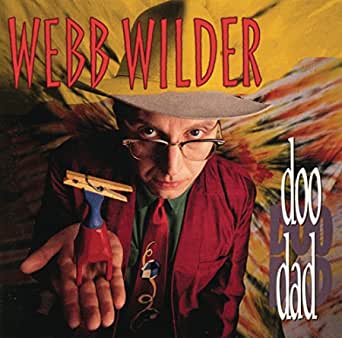
I first heard Webb Wilder in the late eighties with songs Poolside and Human Canon Ball. He looked and sounded different right away.

Webb Wilder looks like he dropped out of a 50’s black and white detective show. By 1991 I was walking through a street fair in Nashville and there he was playing with his band. He had just released an album called Doodad that got some local and national airplay. His music is a mixture of rock/country/rockabilly/punk and anything else he can throw in…including the kitchen sink.

He has described his music as “Swampadelic”, “Service-station attendant music”, “Uneasy listening”, “Psychobilly”…they all fit.

I purchased the Doodad album and this song is what I zero’d in on. The hit off the album was Tough It out which peaked at #16 on the Mainstream Charts.  It included guest appearances by Al Kooper and Sonny Landreth.

The guitar riff is instantly catchy and the first verse was about losing your house/land in a poker game. A great story telling song.

Wilder got some MTV exposure with Human Canon Ball and a lot of local play with a song caled Poolside. He is a fantastic performer to catch live. He has been an actor, disc jokey, and a great artist…a true original.

The two videos are the same version…some were getting video not found.

Meet Your New Landlord

Neon lights don’t never dim
In the kind of bars that never close
In a back room game T. Jim yells
“Saint Gabriel, I’m gonna steal the show.”
He slapped his cards down on the table
Said, “Boys, i got me a winning hand.”
But the sight that made old T. Jim tremble
Was the king that took his land

Mister, meet your new landlord
Heard you knockin’ upon my door
Mister, meet your new landlord
Plenty of room down on the floor

With a ticket burning in his hand
And the tip still ringing in his ear
Big Pete bet his whole life savings
As the race was drawing near

A shot was fired
The gates flew open
The years streaked right before his eyes
Too bad they were riding on a saddle
From the moment of ill advice

Mister, meet your new landlord
I heard you knockin’ upon my door
Mister, meet your new landlord
Plenty of room down on the floor

Other names and other places
Different rules but it’s all the same
Cause if that bug ever b***s you
The scar will bear you shame
Hey listen, son, you know you’re in trouble
When you wake up one morning in a daze
And as you peer into the mirror
The face leaning over says

Mister, meet your new landlord
I heard you knockin’ upon my door
Mister, meet your new landlord
Got plenty of room down on the floor

Mister, meet your new landlord
I heard you knockin’ upon my door
Mister, meet your new landlord
Plenty of room down on the floor

Hey, mister, meet your new landlord
Whooo

Twilight Zone – Hocus-Pocus And Frisby

★★★★  April 13, 1962 Season 3 Episode 30

If you want to see where we are…HERE is a list of the episodes.

What happens when a man that tells the tallest tales meets aliens that believe every word? I won’t tell you but I wll tell you that it’s a fun episode. Nothing phases this guy.

Andy Devine plays Somerset Frisby…it’s hard not to like Devine. He is a character actor that I have really enjoyed seeing in other shows and movies. He usually brightens up any scene his is in. Frisby is a good natured guy that loves telling tall tales that are fun but obviously not true. This episode is a re-telling of The Boy Who Cried Wolf but you root for Mr. Frisby. The episode is worth watching just for Devine.

Howard McNear is in this one and he plays Mitchell…McNear played Floyd Lawson (Floyd the Barber) on the Andy Griffith Show.  Dabs Greer plays Scanlan and he played Mr. Jonas on Gunsmoke and  Reverend Robert Alden on Little House on the Prairie.

Clem Bevans who played Pete is the earliest born actor of any Twilight Zone Episode…he was born 10-16-1879.

Clem Bevans — The Movie Database (TMDB)

He has all the drive of a broken camshaft and the aggressive vinegar of a corpse. Rod Serling

This show was written by Rod Serling and Frederick Louis Fox

Rod Serling’s Opening Narration: 

The reluctant gentleman with the sizable mouth is Mr. Frisby. He has all the drive of a broken camshaft and the aggressive vinegar of a corpse. As you’ve no doubt gathered, his big stock in trade is the tall tale. Now, what he doesn’t know is that the visitors out front are a very special breed, destined to change his life beyond anything even his fertile imagination could manufacture. The place is Pitchville Flats, the time is the present. But Mr. Frisby’s on the first leg of a rather fanciful journey into the place we call the Twilight Zone.

Summary

Somerset Frisby runs a country store and gas station and loves to tell tall tales to his friends. To listen to him he’s graduated from several universities and his advice to Henry Ford created the auto industry. His friends always have a good laugh but two patrons seem to take a interest in Somerset and his stories. They’re aliens who think they’ve found the perfect human specimen to take back to their home planet. Somerset wants nothing to do with and to his great surprising has the weapon he needs to make his escape in his pocket. It all should give him a good tale for his pals.

Rod Serling’s Closing Narration:

Mr. Somerset Frisby, who might have profited by reading an Aesop fable about a boy who cried wolf. Tonight’s tall tale from the timberlands of the Twilight Zone.

CAST

Rod Serling … Narrator / Self – Host (uncredited)
Andy Devine … Somerset Frisby
Milton Selzer … Alien
Howard McNear … Mitchell
Dabbs Greer … Scanlan
Clem Bevans … Pete
Rest of cast listed alphabetically:
John Albright … Alien (uncredited)
Larry Breitman … Alien (uncredited)
Peter Brocco … Alien (uncredited)
Bartlett Robinson … Alien passenger in convertible (uncredited)

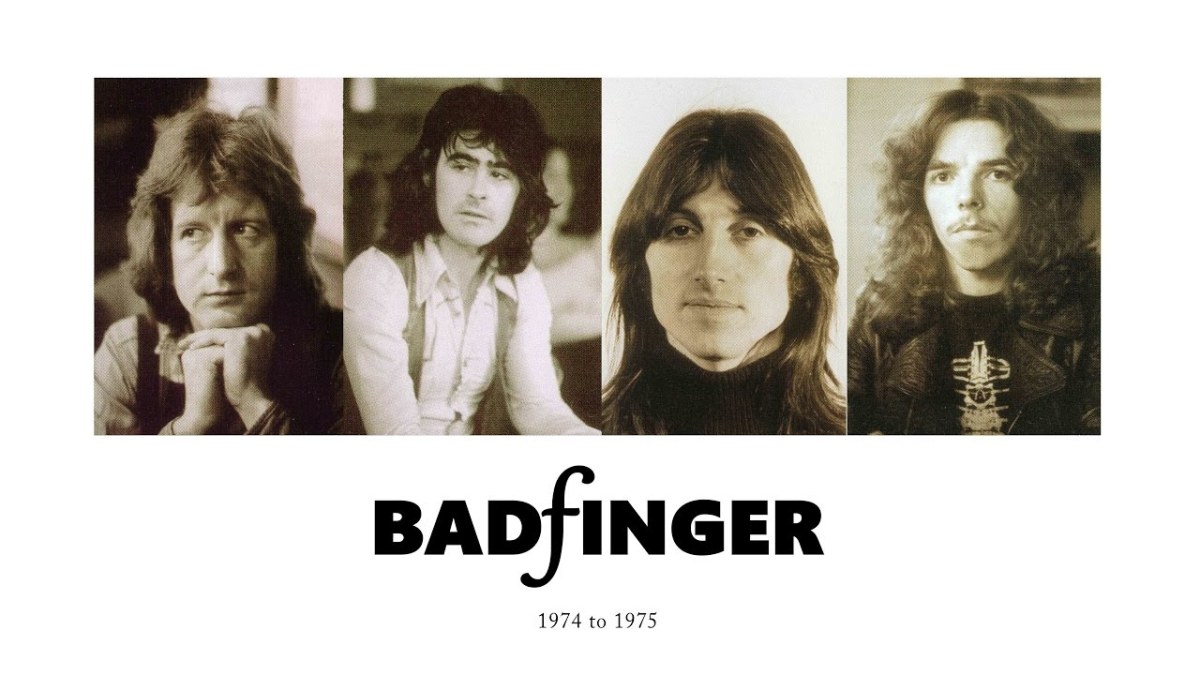
Badfinger – Lay Me Down

Lay Me Down was written by Pete Ham and is a wonderful pop/rock song. Another song that slipped through the cracks…I’ve heard Teenage Fanclub cover this one and I’ve liked it as well as their known hits.  I want to thank everyone who stuck with me through four Badfinger songs since Thursday.

The song was on the album Head First. Joey Molland had just quit and was replaced by Bob Jackson.

Badfinger’s management replaced Chris Thomas as producer because he didn’t think they should make an album so soon (6 months) after their last album Wish You Were Here. The band felt the same but they had no control… Kenny Kerner and Richie Wise was picked to produce them, Wise had just become successful by producing KISS.

They recorded Head First in December 1974 – January 1975 after Wish You Were Here with new member Bob Jackson. While recording the album Warner Brothers wanted to know where thousands of dollars went to that disappeared from an escrow account (in the managers pocket).

WB’s sought to attach the royalties due from their previous album Wish You Were Here. Consequently, WB suspended sales of Wish You Were Here.

Although the master tapes of Head First were delivered to and accepted by WB’s recording division in Los Angeles, WB’s publishing arm there refused to accept them because of the lawsuit. With a lack of publishing protection, the record division shelved the tapes and the album was not released.

The album was stuck in limbo for 26 years. It wasn’t released until 2000. I went out and bought this the day it was released at Tower Records. On a couple of songs, Hey Mr Manager and Rock and Roll Contract,  they are taking aim at their management and frustration. The songs that stand out to me are Lay Me Down, Hey Mr. Manager, Rock N’ Roll Contract, and Keep Believing. A good album and I wish it would have had a chance at the time it was recorded.

This song would have had a chance to chart.

This would be the last album released by Badfinger with Pete Ham. He would die 3 months after they finished the album. Tom Evans and Joey Molland would revive Badfinger in the late seventies and release two albums. They did have two minor hits.

Lay Me Down

Need your loving
Need your loving
Need your loving
It’s everything to me

Need your loving
Need your loving
Need your loving
It’s everything to me

Take me high take me low
Show me anything that you know
But tonight little lover lay me down
Make me laugh make me sigh tell me how and tell me why
But tonight lover little lay me down

Lay me down move me round
Let me hear your loving sound
In our mess we are blessed with our love
Take and give take and live all the love that we have found
And just send all our problems away

Play me fun play me sad
Tell me things that could make you glad
But tonight lover little Lay me down
Lay me down
Need you loving

Play to share play to care
You can play with me anywhere
But tonight lover little lay me down
But tonight lover little lover lay me down
Lay me down
Need your loving

Badfinger -Suitcase

This song was on their Straight Up album but it’s when they were live it came alive. They have a terrific groove going on and Pete wails on the solo. This was Badfinger live as they ventured out of power pop into a jam band. The live version of the band is much different than the studio version.

This song was going to be the B side to Name of the Game issued as a single but Apple never released it. The song has a power pop base but with hard electric on top and it changes the dynmaic of it.

Making the Straight Up album was no easy task. They started off with Geoff Emerick (he produced their last album and engineered several Beatle albums) producing them. The songs were rejected by the Apple’s head of US operations Allan Steckler. George Harrison thought a lot of Badfinger, especially Pete Ham and wanted Name of the Game to be released as a single before the album.  George then started to produce the band himself. He worked with them and they started to make progress. He played slide with Pete on the hit Day After Day and Leon Russell played piano.

They were making great progress but then the  Bangladesh concert came up and George was distracted. He handed off the producing to Todd Rundgren. The band and Rundgren didn’t mix well but he finished producing it in two weeks. The members were much happier with George who actually listened to their ideas.

It was a great album but one of the complaints from the band was it lost a lot of rawness and energy after Rundgren mixed it.

Going through three producers…it’s a wonder it’s as good as it is.

The Studio version is the second video but I would reccomend the live version…and I don’t do that a lot.

Suitcase

Suitcase, suitcase, follow me ’round
Bootlace, bootlace, tie me down
Money for fun, yeah, golden crown
It’s all inside a game we’ve been playing for so long

Driver, driver, go too fast
Miser, miser, make it last
Pusher, pusher, on the run
It’s all inside a game we’ve been playing for so long

And I’m sorry to be leavin’
Yeah, that’s all I get to say
‘Cause I’m sorry to be leavin’ today

[guitar solo (Pete Ham)]

Well I’m sorry to be leavin’
But that’s all I get to say
‘Cause I’m sorry to be leaving today

(Driver drive)

Driver, driver, go too fast
Miser, miser, make it last
Pusher, pusher, on the run
It’s all inside a game we’ve been playing so long

So long

Twilight Zone – Four O’Clock

★★ April 06, 1962 Season 3 Episode 29

If you want to see where we are…HERE is a list of the episodes.

First of all…it’s not a great episode but that doesn’t include Theodore Bikel’s acting job in this one…it’s good…maybe a little over the top. The character is an ordinary man with a god complex that borderlines on cartoonish. He conveys very well that this character is insane. I think Bikel does a good job out of what he had…which wasn’t much. Linden Chiles who plays Mr. Hall does a good job as the FBI agent that shows a great contrast to Bikel’s Mr Crangle.

It’s in my top five of least favorite episodes.  It’s the story that is weak to me. The origin of this story would be the McCarthy witch hunt of the 50s. Anyone that was different would be labeled a communist, subversive, and or thieves.

I love that Serling highlighted that awful period that but the script doesn’t live up to the outrage. I wish he would have hit the mark of McCarthy with a litte more. This is the lowest I have labeled an episode so far…but this is episode 94 so that is not bad since Serling was involved in writing every episode so far. It’s not the worse episode but it’s not up to Twiight Zone standards… which are very high. The ending…I won’t get into what happens but unlike many Twilight Zones…this one is too predictable.

Theodore Bikel, in real life, was a human and civil rights activist who ardently opposed blacklisting and McCarthyism during the 1950s.

This show was written by Rod Serling and Price Day

Rod Serling’s Opening Narration: 

That’s Oliver Crangle, a dealer in petulance and poison. He’s rather arbitrarily chosen four o’clock as his personal Götterdämmerung, and we are about to watch the metamorphosis of a twisted fanatic, poisoned by the gangrene of prejudice, to the status of an avenging angel, upright and omniscient, dedicated and fearsome. Whatever your clocks say, it’s four o’clock, and wherever you are it happens to be the Twilight Zone.

Summary

Oliver Crangle seems to like making other people miserable. He phones a young man’s employer to say that the man is a communist. He phone a school board to tell them a teacher is acting inappropriately with his students. He has a long list of people that he wants to tell on. He even arranges a meeting with an FBI agent and tells him that at 4 p.m. all of the nasty people in the world will undergo a transformation. The agent suggests he seek psychiatric treatment but it turns out he’s right.

Sorry there is not a small clip on youtube of this. Paramount has them locked down. 

Rod Serling’s Closing Narration:

At four o’clock, an evil man made his bed and lay in it, a pot called a kettle black, a stone-thrower broke the windows of his glass house. You look for this one under ‘F’ for fanatic and ‘J’ for justice in the Twilight Zone.

CAST

Rod Serling … Narrator / Self – Host (uncredited)
Theodore Bikel … Oliver Crangle
Phyllis Love … Mrs. Lucas
Linden Chiles … Mr. Hall
Moyna MacGill … Mrs. Williams

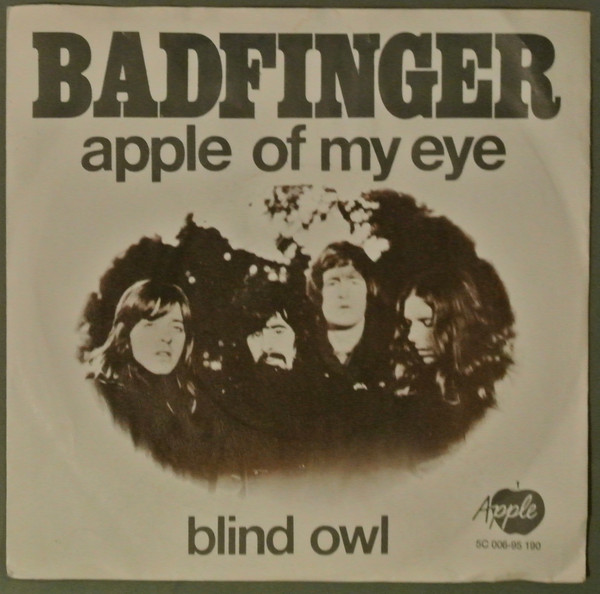
Badfinger – Apple Of My Eye …. Badfinger Long Weekend

The song was written by Pete Ham, produced by Chris Thomas and Badfinger, and released on Apple Records in 1973.

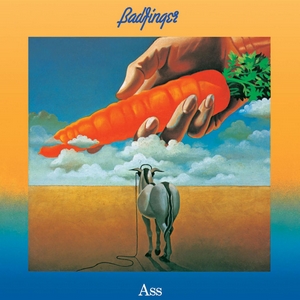
The song is about Pete Ham having regrets leaving Apple Records where the Beatles signed them but Stan Polley (the manager) was  pursuing a larger contract by moving to Warner Bros. Records. This is where Badfinger started their slide into hell. The album cover was about being led away from Apple.

Ass (album) - Wikipedia

Warner Bros offered them a huge contract. As it turned out they would never see the Warner Bros money as Polley took it out of escrow without telling the band. In the next few posts and little more info on this will be given.

The reason Polley wanted the band to leave Apple Records is because he could control everything with a new contract with Warners. He started to take all of the Apple royalities as well until the members stopped Apple from giving it to him. After that no one got the money (Apple held the money waiting for the courts to decide) and the band members were broke. It was held up in litigation until 1985 when some of the money was distributed.

The song peaked at #102 in the Hot 100 in 1973. Apple didn’t do a good job pushing this album because they knew Badfinger was leaving. This song ended up being the last non-ex-Beatles release on Apple Records.

In 1985 the band and family members finally got their money that had been tied up from Apple because of the lawsuits with Warners…all caused by a ruthless manager who really never got punished for his deeds and lived to be 87.

A movie was going to be made of their story…and still might be one day.

Apple Of My Eye

Oh, I’m sorry, but it’s time to move away
Though inside my heart, I really want to stay
Believe the love we have is so sincere
You know, the gift you have will always be

You’re the apple of my eye
You’re the apple of my heart
But now, the time has come to part

Oh, I’m sorry, but it’s time to make a stand
Though we never meant to bite the lovin’ hand
And now, the time has come to walk alone
We were the children, now we’ve overgrown

You’re the apple of my eye
You’re the apple of my heart
But now, the time has come to part

Oh, I’m sorry, but it’s time to move away
Though inside my heart, I really want to stay
Believe the love we have is so sincere
You know, the gift you have will always be

Now, the time has come to part
Now, the time has come to part.

Badfinger – Without You

Ever since I wrote about Baby Blue by Badfinger for Hanspostcard’s draft…I have been listening to them again and I wrote up a few posts so I thought I would make a weekend of it…so lets start the weekend a little early!

Most everyone knows this song by Harry Nilsson and some by Mariah Carey. Harry to me has the definitive version but Pete Ham and Tom Evans of Badfinger wrote it as a simple blues song. They never dreamed it would be turned around into an epic song.

The song was originally on the No Dice album released in 1970. The album peaked at #28 in the Billboard 100. The album spawned the hit No Matter What that peaked at #8 in 1970.

Badfinger - No Dice | Releases, Reviews, Credits | Discogs

Without you was not released as a single and it wasn’t meant to be. Pete and Tom put together two songs they were writing… Pete’s in the verses and Tom’s chorus. They always thought of it as a little blues song that was an album cut.

Badfinger were in the studio one night and Nilsson called them over to listen to what he had recorded. They had no clue he was recording their song…when they heard Harry’s version it blew them away. Over 180 artists have recorded the song since then. The band didn’t start getting royalities from this song or much of anything else until `1985 when the court case was settled. Their former manager tried to get his hands on it then but wasn’t successful. The two families of Ham and Evans…received some of the money for the late songwriters.

You can’t really compare the versions. Badfinger never meant it to be commercial sounding and who could sing like Harry Nilsson?

In a way…this song sums up Badfinger perfectly. 

Without You

Well, I can’t forget this evening
And your face when you were leaving
But I guess that’s just the way the story goes
You always smile, but in your eyes your sorrow shows
Yes, it shows

Well, I can’t forget tomorrow
When I think of all my sorrow
I had you there, but then I let you go
And now it’s only fair that I should let you know
What you should know

I can’t live, if living is without you
I can’t live, I can’t give any more
I can’t live, if living is without you
I can’t live, I can’t give anymore

Well, I can’t forget this evening
And your face when you were leaving
But I guess that’s just the way the story goes
You always smile, but in your eyes your sorrow shows
Yes, it shows

Oh

I can’t live, if living is without you
I can’t live, I can’t give any more
I can’t live, if living is without you
I can’t live, I can’t give anymore

I can’t live, if living is without you
I can’t live, I can’t give any more
I can’t live, if living is without you
I can’t live, I can’t give anymore

I can’t live, if living is without you
I can’t live, I can’t give any more
I can’t live, if living is without you
I can’t live, I can’t give anymore

I can’t live, if living is without you