Power Pop fan, Baseball, Beatles, Alternative music, old movies, and tv show fan. Also anything to do with pop culture in the 60s and 70s... I'm also a songwriter, bass and guitar player. Not the slightest bit interested in politics at all.
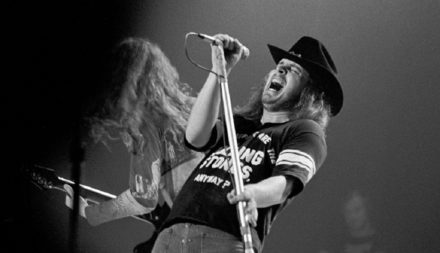
This band was known mostly for Sweet Home Alabama, Gimme Three Steps, Simple Man, and Free Bird for the most part. It’s a shame really because they have some outstanding album cuts.
I’ve had love-hate feelings with them because people automatically think you have to like them…if you are from the south. Our band would refuse to play their music for the longest time. Now I’m embarrassed we thought that way.
After a little time, I started to realize how great of a rock band they were…southern or not. Their influences were The Stones, Yardbirds, and most of all Cream…and it showed. At the time of their crash in 1977, Street Survivors had just been released 3 days and it was moving fast up the charts. This was going to be their big breakthrough album…and it was. They were a double-threat band…they could hit with singles and make superb rock albums. If not for the crash they would have been up in the stardom league of Aerosmith at least.
Ronnie Van Zant was a fantastic songwriter and a good singer. He is a singer who knew his limits and stayed within them. He would never write any words down…he would walk around the band during rehearsal and start to make up verses while hearing riffs and he would have a finished song.
I was really surprised by this song. I always liked it but…it sounded different from the other songs and I never knew why. I assumed that this song was recorded in 1977 but I was wrong. One More Time was recorded back in 1970 – 1971 when they were making demos and just starting their recording career. That was 2 years before they released their first album.
It was written by Van Zant and guitarist Gary Rossington. They worked on this album for a long time…they re-recorded every song on Street Survivors twice except this one. They dropped some other songs they worked on and pulled out this demo from the vaults and used it. The band re-mixed it and it blended in with the other new songs but I can hear now while listening to What’s Her Name and others on the album.
Street Survivors peaked at #5 in the Billboard Album Charts and #3 in Canada in 1977. The band has sold 28 million albums in the US since 1991 when Nielsen SoundScan started tracking sales, not including album sales for the band’s first 17 years.
His voice sounds a little different in this song because it was so early in their career and he was learning. Van Zant sings this song in a controlled cool while delivering this line.
So I’ll take the word of a liar One more time, one more time
One More Time
How can you stand there smilin’ After all you’ve done You know it seems to make you happy When you’ve hurt someone Twice before you fooled me With your deceivin’ and lyin’ Come in and close the door One more time, one more time
Yeah you’ve been gone so long No one knows where And you say that you still love me Then show me you care ‘Cause you got what it takes sweet mama To make a man feel fine So I’ll take the word of a liar One more time, one more time
Girl you’ve got me hungry Losin’ my mind I know I’m playin’ with fire Get burned every time Yes I’m a fool for you baby I can’t deny But I got to have your sweet love One more time, one more time
Girl you’ve got me hungry Losin’ my mind I know I’m playin’ with fire I get burned every time Yes I’m a fool for you mama I can’t deny But I got to have your sweet love One more time, one more time
Yes I’m her fool once more I can read her brown eyes But when the rooster crows tomorrow Well its her turn to cry I’m headed down that old road She lost her free ride So tonight I’ll take what I paid for One more time, one more time One more time
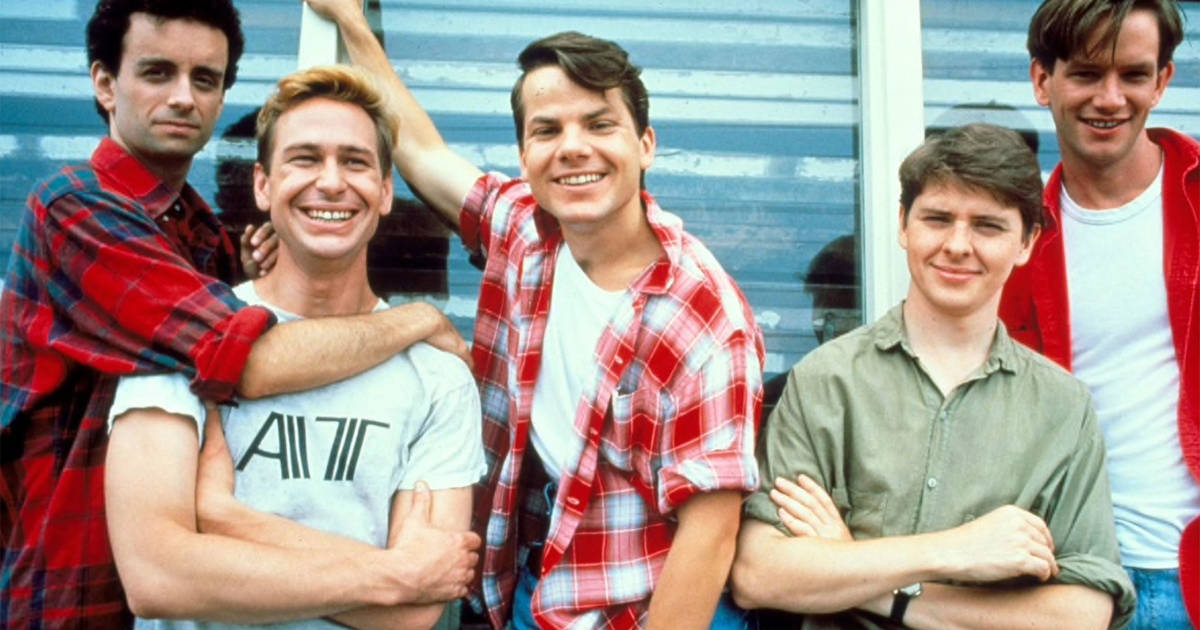
The Kids in the Hall are a sketch comedy troupe based out of Toronto, Canada. You could say they are the Canadian Monty Python. Or perhaps, the Canadian Saturday Night Live? Like Monty Python, they are an all-male group of 5 writer/performers (the Pythons had six) who create edgy sketch comedy often bordering on the absurdist, and frequently don wigs and dresses to portray female characters. Like Saturday Night Live, their show was produced by Lorne Michaels and performed in front of a live audience (albeit, it was not broadcast live). But at the heart of things, The Kids in the Hall are their own thing, creators of something outside the mainstream of comedy of the 1980s and 1990s and capturing the ethos of Generation X, paralleling the rise of alternative rock at the same time. A recently released documentary about the Kids calls them Comedy Punks.
Let’s meet the Kids!
Dave Foley (b. 1963) is the member of the troupe who feels most mainstream in his comedy approach, but that is on a relative scale. His boyish good looks were often contrasted with antisocial behavior, such as a surgeon who kills all his patients or an axe murderer, both of whom get away with it because of their charm. He was also considered the “hottest” of the Kids when dressed as woman. Not surprisingly, later in his career he starred in the American sitcom NewsRadio, and provided voices for the Pixar movies A Bug’s Life and Monsters University.
Bruce McCulloch (b. 1961) is probably the weirdest of the Kids in his comedy approach. Inspired by art movies, his surreal monologues and filmed pieces evoked a mood of absurdity rather than just telling jokes. Outside of the Kids in the Hall he has recorded music and directed several movies and tv shows.
Kevin McDonald (b. 1961) is probably a lovely person in real life, but has a talent for playing really annoying characters. A lot of his self-deprecating humor contains a dark undercurrent of the volatility of his childhood growing up with an alcoholic father. McDonald has provided his voice for the Disney movie Lilo & Stitch and its spinoffs and had a recurring role on That 70s Show.
Mark McKinney (b. 1959) specialized in creating characters and is probably the Kid most similar in comedy style to Saturday Night Live (and he did in fact join the cast of SNL from 1995 to 1997). His most notable characters include Mr. Tyzik the Headcrusher and the Chicken Lady. Outside of his work with the Kids he’s appeared in numerous movies and tv shows, the strangest of which is Guy Maddin’s The Saddest Music in the World.
Scott Thompson (b. 1959) performs comedy informed by his gay identity with a definite emphasis on using comedy to advance LGBTQ equality, which was very bold in the 1980s and 1990s. Most notably, he reclaimed the effeminate gay man stereotype through his character Buddy Cole who delivered hilarious monologues. He also frequently portrayed Queen Elizabeth II, one of the rare celebrity impersonations on The Kids in the Hall. His other work includes appearances in many movies and tv shows, including a regular role on The Larry Sanders Show.
Foley and McDonald met in the early 1980s in the Toronto comedy scene and became a writing and performing team. Their partnership is the strongest among all the Kids and has remained so throughout the troupe’s history. Meanwhile, McCulloch and McKinney met in Calgary where they performed with a group called The Audience. Moving to Toronto to expand their opportunities, McCulloch and McKinney met Foley and McDonald and in 1984 they formed The Kids in the Hall. The name came from an old Sid Caesar gag blaming bad jokes on the young writers who hung around the studio. Their shows in Toronto’s comedy clubs became a big attraction. Thompson saw them perform and pretty much willed himself into a spot in the group. Early sketches like “Reg” showcased their humor style at its most sick and twisted.
Saturday Night Live producer Lorne Michaels saw the Kids perform in 1985 and hired McKinney and McCulloch to come to New York to be writers. Eventually, Michaels determined that it would be better to keep the Kids together as a group and worked to get them their own show. The pilot for The Kids in the Hall broadcast on CBC Television in Canada and on HBO in the United States in 1988, followed by a full series of 20 episodes in 1989-1990. Enhancing the Gen X zeitgeist, the Toronto alternative rock band Shadowy Men on a Shadowy Planet provided the theme song, “Having an Average Weekend,” as well as the music to interstitials between sketches and performing live for the studio audience. The band’s music is described as instrumental surf rock, however since the Shadowy Men recorded a track called “We’re Not a F*****g Surf Band,” so we’ll have discover a new genre for them.
The Kids and the Hall had several recurring characters, but carefully avoided the SNL habit of overexposing them to please the fans. Characters appeared when they had a very good and very funny reason to be there. A number of sketches revolved around the company A.T. & Love with characters ranging from an incompetent boss (Foley), hard-pressed businessman Danny Husk (Thompson), and the secretaries Kathie (McCulloch) and Cathy (Thompson). These characters had the versatility to appear in sketches together, on their own, or with a completely different group of characters. Another series of sketches focused on rebellious Gen X teen Bobby Terrance (McCulloh), his more conservative parents (McKinney and Foley), and his best friend, the stoner Bauer (Thompson).
While Thompson was the only gay member of the troupe, sketches with LGBTQ characters were common, including scenes of men kissing men when that was taboo on American TV (one of the many things that got edited between CBC and CBS transmissions). The recurring sketch “Steps” featured three gay men discussing the issues of the day where the audience was laughing with them not at them. Despite the Kids being all men, they never saw dressing up in wigs and dresses as funny in of itself, unlike say Milton Berle. Instead they did their best to portray women as fully-formed characters and offer an honest female perspective. Dave Foley even has a good attitude toward menstruation.
After five seasons and 101 episodes, the Kids were ready to pack it in, physically exhausted and drained of ideas. The final episode broadcast on April 15, 1995 showed them being buried alive in a shared grave. The next step naturally appeared to be making movies, and in April 1996 they released Kids in the Hall: Brain Candy. The making of the film was a miserable experience for everyone involved and tensions ran high, especially toward Foley who everyone resented for signing a contract to star in NewsRadio while they were working on the film. The movie bombed although some fans consider it a cult classic (I am not one of them). The Kids went their own ways for a few years but with reruns of the show in constant rotation on Comedy Central, the troupe’s fan base grew bigger than ever.
By 2000, tensions had eased enough to bring the Kids back together, this time returning to the stage for a North American Tour. Performing in front of live audiences again energized the Kids creatively, and they were able to resume their close personal relationships as well. The Kids went on the road for more tours, introducing new sketches. In 2010, they returned to TV, stepping beyond sketch comedy for the first time in the darkly comic 8-part miniseries Death Comes to Town which aired on CBC. I hadn’t heard of this series until recently so I haven’t watched it yet but I hear it’s good. Just this May, seemingly out of nowhere, the Kids in the Hall TV series returned for season 6, with 8-episodes streaming on Amazon Prime. While the Kids have physically aged, they haven’t lost a step and the new episodes are as funny as ever. The final episode ends with the Kids getting buried again, but I think we’ll see the Kids in the Hall again soon! Until then, here’s one of my favorite sketches, “The Night of the Cow”
The Who’s Next album was released in 1971 and is one of the greatest classic rock albums ever released. This song is a song one clocking in at a short 2:11 and unlike most of the album…this one is softer. Pete Townshend originally wrote this for his Lifehouse project, where the character of Ray, a Scottish farmer, was intended to sing the song, which expresses the sentiment that love is meant to be shared.
The song was originally recorded several months prior to Who’s Next, as a four-minute electric version with Townshend singing lead and playing rhythm guitar, and the lead solos performed by Leslie West, the guitarist for New York power trio Mountain. The Who was recording at the Record Plant in New York, and Townshend reportedly didn’t want to spend time on overdubs, so West was called in to play on the track.
After a falling out with producer Kit Lambert, the band recorded an acoustic version that was used on the album. The Who often played the harder Rock version at their concerts. This version can be heard on their 1974 Odds & Sods album.
If two versions weren’t enough… Townshend’s original demo of the song appears on the six-disc Lifehouse Chronicles, songs from Townshend’s never fully-completed Lifehouse rock opera. This demo clocks in at 1:31, with no solo and Townshend taking advantage of the then-novel oscillator bank on his Arp synthesizer.
The album peaked at #4 in the Billboard Album Charts, #5 in Canada, and #1 in New Zealand in 1971.
Love Ain’t For Keeping
Layin’ on my back In the newly mown grass Rain is coming down But I know the clouds will pass You bring me tea Say “the babe’s a-sleepin'” Lay down beside me Love ain’t for keeping
Black ash from the foundry Hangs like a hood But the air is perfumed By the burning firewood The seeds are bursting The spring is a-seeping Lay down my darling Love ain’t for keeping Lay down beside me Love ain’t for keeping
Lay down beside me Love ain’t for keeping Lay down my darling Love ain’t for keeping
Welcome to the Hanspostcard TV Draft. I hope you will enjoy it! Today’s post was written by Mike at https://musiccitymike.net
Suits
Yes, it’s that show that featured Prince Harry’s American wife, actress Meghan Markle, now the Duchess of Sussex if she’s not yet been sent to exile for being so gripey. Let me just get it out of the way and say that she handled her acting duties about as well as she has her time as a member of the British Royal family. Nuff said.
After that odd intro, I’ll further confuse everyone by adding that I am also selecting a series that I quit on after Season 7 of its nine seasons. While that had to do mainly with the exit of some of the show’s best lead characters, it also can be said that Suits was a show that was great when it was good and awful when it was bad.
Suits is a New York City-based legal drama that follows the pursuits of Harvey and Mike. The former, played by Gabriel Macht, is a handsome, uber-confident, high-powered corporate attorney. The latter, played by Patrick Adams, is a young man with an eidetic memory who despite lacking the necessary credentials, works as an attorney alongside his boss Harvey. Keeping the truth about Mike hidden becomes as interesting to the story lines as do the cases and settlements that these two gents win together.
If reading this at all interests you in Suits, I highly recommend that you at least watch the fabulous debut episode whose storyline shows how Mike manages to get where he is working at a major NYC law firm without having a law degree or passing the Bar Exam on his resume.
Down the road however, the show’s writing had its ups and downs, likely due to the host USA Network’s inability to sport a steady team of writers. But great characters and strong acting really made this show what it was. Among the strong roles were Rick Hoffman as the eccentric but loveable attorney Louis, Sarah Rafferty as the drop-dead gorgeous and highly competent legal assistant Donna, and Gina Torres as the cunningly clever and insightful managing partner Jessica.
I guess Macht’s Harvey character is what I enjoyed most about Suits. He’s the kind of guy that’s easy to look up too. Highly driven and devotedly adept at his occupation, he doesn’t like to lose and usually doesn’t. And even though he works just about around the clock, he has this admirable wholeness to his personality. He’s the consummate New Yorker who knows the best hot dog cart and where to get a great cup of coffee. There are autographed Michael Jordan (presumably a one-time client) basketballs in his office along with a turntable and a huge collection of vinyl, Let’s just say that Harvey depicts “corporate cool” at its best.
Of the show’s flaws, it’s easy to spot that the Suits is not filmed in NYC (it’s Toronto) and it dove me crazy how in just two seconds flat someone is able to get the gist of a legal brief shoved in their face. These peeves aside, the legal squabbles are interesting as are their solutions. There are also interesting plot lines involving partnership in-fighting, Louis’s many neuroses, and Mike’s romance with Rachel (played by the future Duchess). However, every so often there was a script that was a dud, and after Mike left, the show lost its appeal.
So, while not a series I recommend watching from start to finish, there’s enough greatness in Suits to poke around a bit. I’m sure that my love for all things NYC and my once desire to be an attorney have something to do with my love for the show. Give it a try if you haven’t.
His sound, voice, and echo draws me in and keeps me there. The slow intro and then music kicks in. His voice goes with that slapback echo better than any other singer. His influence can be heard through the decades including Springsteen in Glory Days.
This was released in 1956 from their debut album of the same name. Like many of the songs on the record, it only came in at around two and a half minutes long… but those two and a half recordings rocked. This gem was written by Gene Vincent and Hal Levy. The song peaked at #16 in the UK in 1956.
Vincent was injured in a car accident on April 16, 1960…with Eddie Cochran in a taxi which killed Cochran. Vincent whose leg was weak due to a wound incurred in combat in Korea…was injured. He walked with a noticeable limp for the rest of his life. In 1962 he was in Hamburg and played on the same bill as the Beatles. The Beatles got close to him.
George Harrison told a story about going with a drunk Vincent to his hotel room. Vincent thought his girlfriend was cheating on him so he shoved a gun in Harrison’s hand. George was shocked and didn’t want any part of that.
The Beatles played at least 14 of Gene Vincent’s songs in their sets before they made it. A song like Somewhere Over The Rainbow that the Beatles would never think of covering until Gene Vincent covered it and gave the song his ok.
Paul McCartney: “I remember hearing Blue Jean Bop on an album that I think John had; going to a place near Penny Lane for the afternoon, having a ciggy, and just listening to records. Blue Jean Bop was always one of my favorites. The first record I ever bought was Be Bop-A-Lula. We loved Gene.”
Bluejean Bop
Bluejean baby, with your big blue eyes Don’t want you looking at other guys Got to make you give me, one more chance I can’t keep still, so baby let’s dance
Well the bluejean bop is the bop for me It’s the bop that’s done in a dungaree You flip your hip, free your knee Squeal on your heel baby, one to three Well the bluejean bop, bluejean bop Oh baby, bluejean bop, bluejean bop Oh baby, bluejean bop, baby won’t you bop with Gene (bop Blue Caps, bop)
Well bluejean baby when I bop with you Well my heart starts hoppin’ like a kangaroo My feet do things they never done before Well bluejean baby, give me more more more Well the bluejean bop, bluejean bop Oh baby, bluejean bop, bluejean bop Oh baby, bluejean bop, baby won’t you bop with Gene (rock again Blue Caps, go)
Well the bluejean bop, bluejean bop Oh baby, bluejean bop, bluejean bop Oh baby, bluejean bop, baby won’t you bop with Gene (Blue Caps, bop with Gene now, let’s go)
Well it’s, bluejean bop, bluejean bop Bluejean, bluejean bop Oh baby, bluejean, bluejean bop Bluejean, bluejean bop Bluejean, oh baby, won’t you bop with Gene
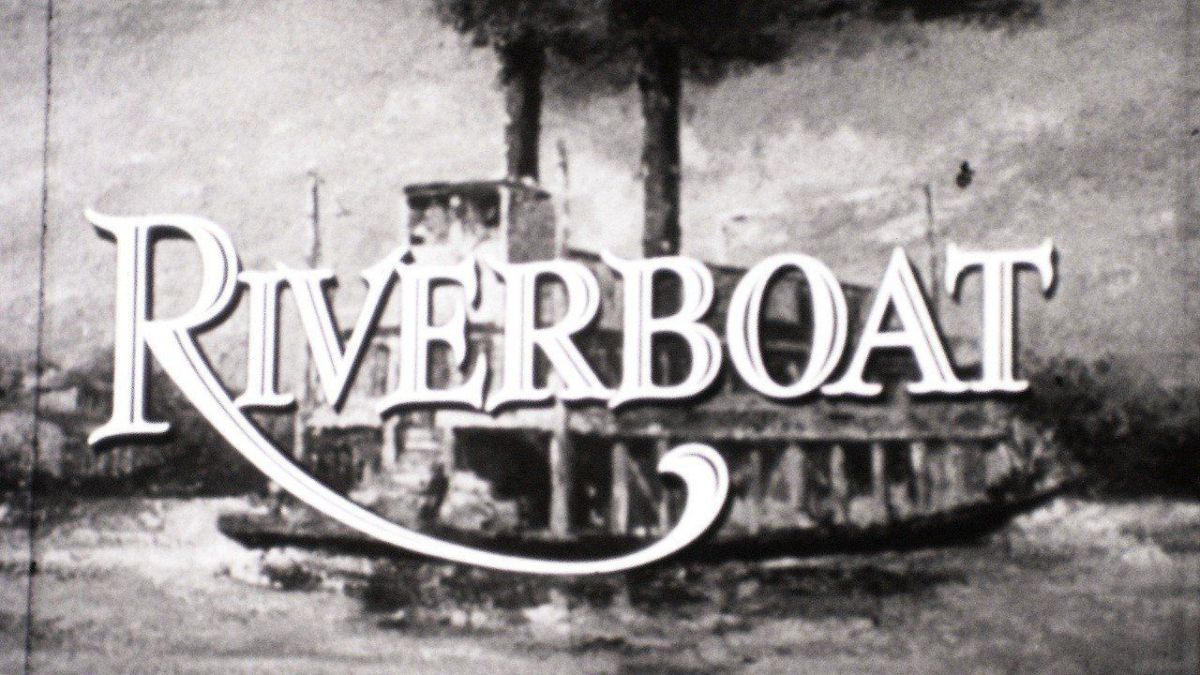
We have a religious broadcaster in Atlanta that dedicates much of its evening entertainment on its primary subchannel to ancient black-and-white television shows, from the 1950’s and early 1960’s. Some were syndicated shows, while others ran briefly on network TV. One such show was Riverboat, which originally ran on NBC for two seasons, from 1959 to 1961 (31 episodes in the 1959-1960 season and 13 in the 1960-61 season).
The best description I have found for the show is “Wagon Train on a riverboat.” Like Wagon Train, it was an anthology series, this one based around the captain and crew of the riverboat Enterprise. NBC bought into the show as a competitor to ABC’s Maverick, which had lost James Garner, who was replaced by Roger Moore.
The captain of the Enterprise was Grey Holden, played by Darren McGavin. The initial pilot of the boat was Ben Frazer, played by a young Burt Reynolds, who had been cast in an attempt to lure the female viewers of the show. Reynolds left the show after 20 episodes, unable to get along with McGavin; the second season featured Noah Beery Jr. as pilot Bill Blake. Other regulars were, according to Wikipedia:
Dick Wessel, as chief stoker Carney Kohler, was cast in 41 episodes, Jack Lambert was cast in 23 episodes as first mate Joshua MacGregor (having played a different character, Tony Walchek, earlier in the series), John Mitchum co-starred in 10 episodes as Pickalong, the ship’s cook, Michael McGreevey was cast in 17 episodes as cabin boy Chip Kessler, and William D. Gordon played first mate Joe Travis in 13 episodes before his character’s death.
It was considered a Western, even though most of the show’s action took place on the Ohio, Mississippi, and Missouri Rivers. It took place during the antebellum period of the South; of some concern was the fact that there were no African American characters or actors, this despite the fact that historically the majority of dock laborers were Black or Creole. The network and sponsors of the show didn’t want to upset the viewers, particularly those in the South. The writers and McGavin felt this was stupid, but that was life during that period.
The remainder of the weekly casts were made up of guest stars, such as Mary Tyler Moore, Elizabeth Montgomery, Jeanne Crain, Mercedes McCambridge, Ricardo Montalban, Vincent Price, Eddie Albert, and in one show Sandy Kenyon as a pre-presidential Abraham Lincoln. A full list of the guest stars can be found here.
The shows were well-written with an eye towards the history of that period. There are Indian conflicts, con men, beautiful women, stowaways, dangerous cargo, and plenty of fisticuffs. As Mary would say, it was better than the average schlock. When it went off the air, it was replaced by The Americans, a show set during the Civil War.
If you get a chance, it’s worth your time to see it.
I can imagine listening to this song floating down the river on a warm southern day. How could anyone not like that title? I first heard this song in the 80s from a friend’s brother who was a complete Dead Head.
Hello baby, I’m gone, goodbye Half a cup of rock and rye
While Robert Hunter and Jerry Garcia were writing the song, Garcia had a problem with one particular word in this line: Cueball’s made of styrofoam and no one’s got the time.
Robert Hunter said that Garcia argued: “This is so uncharacteristic of your work, to put something as time-dated” or whatever that word would be “as Styrofoam into it.” I’ve never sung that song without regretting I put that line in. Jerry also didn’t like songs that had political themes to them, and in retrospect, I think this was wise because a lot of the stuff with political themes from those days sounds pretty callow these days.”
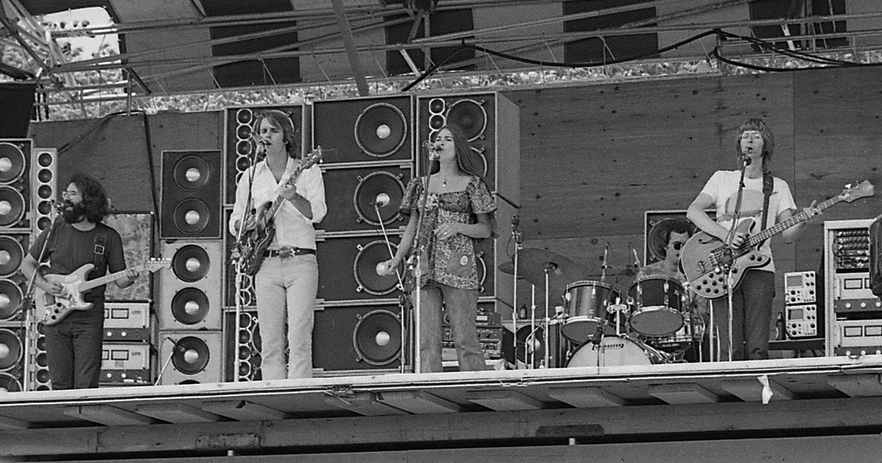
The song was a popular one in concert…It was performed over 230 times live by The Grateful Dead over the years.
The song was on the Wake of the Flood album released in 1973… but not without its problems. It came three long years after the Dead’s previous studio album, American Beauty. Now, this would be normal but back in the seventies that was a lifetime.
The Dead had just left Warner Bros and were without a record deal. Then manager Ron Rakow talked to Garcia about starting the label and soon it was agreed. They made a decision to start their own record label like The Beatles and Stones did…except for one thing. They had no one to distribute them. Phil Lesh said: “We already owned our own sound system. Booking and travel were in-house. It seemed as if being our own record company would be worth a try. No one could see a downside.”
Rakow talked for a while about distributing records by ice cream trucks. Yes…fans would place their order through the local ice cream truck vendor and you would pick up your album with… a snowcone I guess. The voice of reason soon prevailed and they eventually got United Artists to distribute their records.
Wake of the Flood was their first studio album released on their new Grateful Dead Records. They did release two singles before that. They had problems after the release. They took a call from one distributor… the copies he’d received of Wake of the Flood sounded so bad, he said, that kids were bringing them back to the stores. The Dead office thought it was a hustle…retailers wanting records sent to them for free until he asked yet another grousing store owner to send him a copy of the supposedly flawed record. What arrived in the mail at the Dead office was a truly fake Wake of the Flood… a cover that amounted to a mimeographed photo of the artwork and an LP with music that sounded as if it had been copied from a cassette, complete with hissing noises. They’d been bootlegged.
One source says the label was told in advance by shadowy figures in Brooklyn that any release on Grateful Dead Records would be bootlegged and that they would have no choice but to go along with it. Soon after that batch, the bootlegs stopped and it was over as quick as it started. The band lost up to 90,000 because of the bootlegs.
Soon after the album’s release, Warner Bros released a greatest hits album called Skeletons in the Closet. Wake of the Flood peaked at #18 in the Billboard Album Charts and #30 in Canada in 1973.
Garcia talked about the line: I lost my boots in transit babe A pile of smoking leather
“I was in an automobile accident in 1960 with four other guys… 90-plus miles an hour on a back road. We hit these dividers and went flying, I guess. All I know is that I was sitting in the car and there was this… disturbance… and the next thing, I was in a field, far enough away from the car that I couldn’t see it.
“The car was crumpled like a cigarette pack… and inside it were my shoes. I’d been thrown completely out of my shoes and through the windshield. One guy did die in the group. It was like losing the golden boy, the one who had the most to offer. For me it was crushing, but I had the feeling that my life had been spared to do something, to either go whole hog or not at all…That was when my life began. Before that I had been living at less than capacity. That event was the slingshot for the rest of my life. It was my second chance, and I got serious.”
Mississippi Half-Step Uptown Toodeloo
On the day that I was born
Daddy sat down and cried
I had the mark just as plain as day
which could not be denied
They say that Cain caught Abel
rolling loaded dice,
ace of spades behind his ear
and him not thinking twice
Half-step
Mississippi Uptown Toodleloo
Hello baby, I’m gone, goodbye
Half a cup of rock and rye
Farewell to you old southern sky
I’m on my way – on my way
If all you got to live for
is what you left behind
get yourself a powder charge
and seal that silver mine
I lost my boots in transit babe
A pile of smoking leather
Nailed a retread to my feet
and prayed for better weather
Half-step
Mississippi Uptown Toodleloo
Hello, baby, I’m gone, good-bye
Half a cup of rock and rye
Farewell to you old southern sky
I’m on my way – on my way
They say that when your ship comes in
the first man takes the sails
The second takes the afterdeck
The third the planks and rails
What’s the point to callin shots?
This cue ain’t straight in line
Cueball’s made of styrofoam
and no one’s got the time
Half-step
Mississippi Uptown Toodleloo
Hello baby, I’m gone, goodbye
Half a cup of rock and rye
Farewell to you old southern sky
I’m on my way – on my way
Across the Rio Grand-eo
Across the lazy river
Across the Rio Grand-eo
Across the lazy river
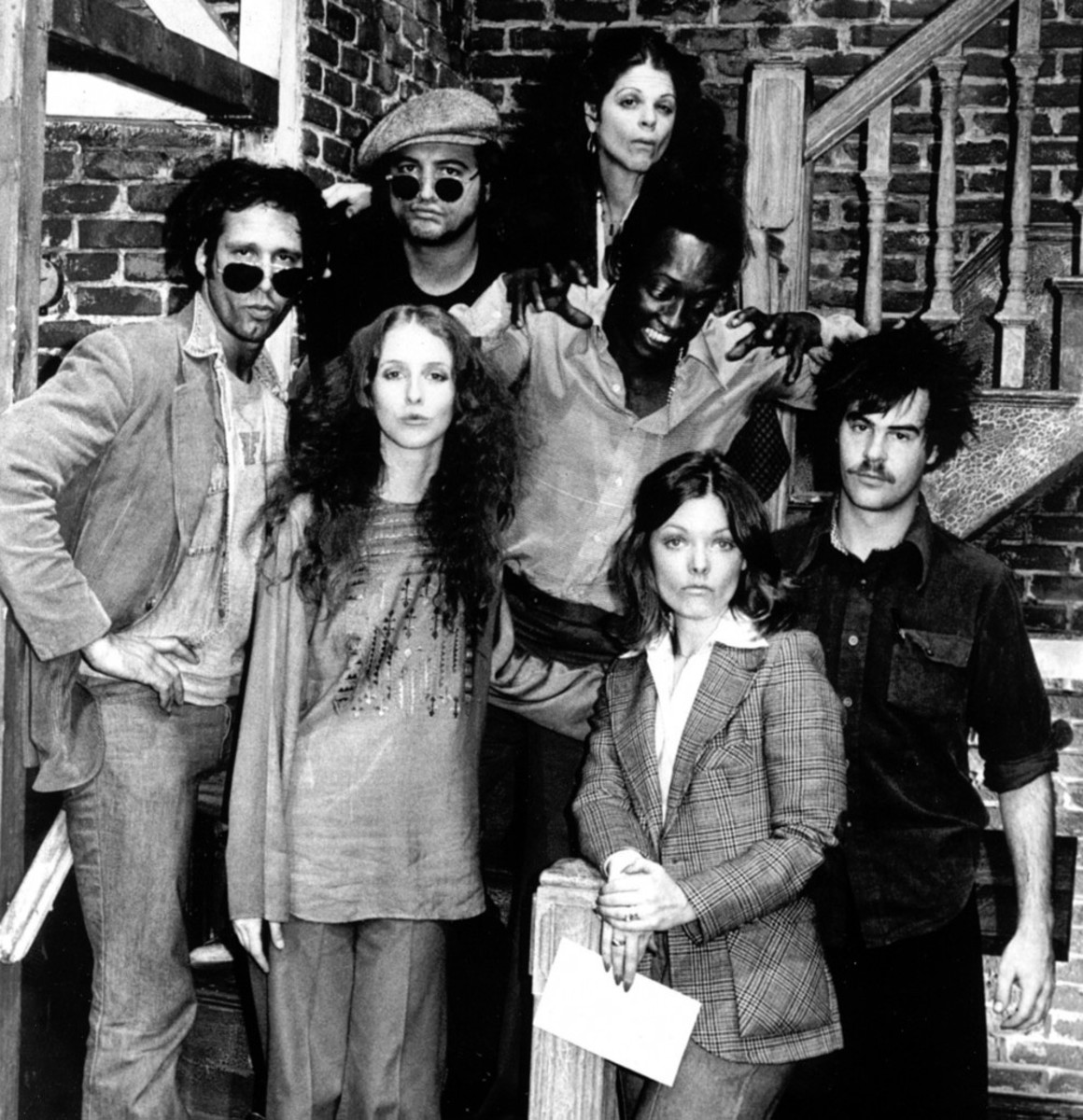
I wanted to do a more modern show other than Life On Mars…and this would qualify as it…kinda. It has been on the air since 1975… a whopping 47 years. It’s been on life support at times but has always pulled through. It’s an institution at this point. There is not enough room on a post to go over every cast. Everyone has their favorites some were extremely funny and some were extremely bad (1980 – 1981 cast) and they all make up the history of this show.
I’m going to concentrate on the original cast and how the show became SNL. Most of you have favorite different casts…usually, the one you grew up with.
Even if you don’t like this show or what it’s become…it was a cultural landmark and no one can deny that. It changed television forever. The show started because Johnny Carson wanted more time off. NBC had been airing reruns of Johnny Carson’s Tonight Show on the weekends to fill space in their lineup. This allowed them to double-dip on profits from Carson’s outrageously popular show without spending another dime on production costs. He told NBC he would only be making four shows a week, which meant that best-of Carson shows that had been airing on Saturday nights would now need to be moved to a weeknight.
NBC executive Herbert Schlosser sought to create a new show with an old format…a variety show to fill the slot on Saturday Night. He picked Lorne Michaels, a Canadian writer who only had a handful of credits to be the producer. Michaels started a show that was far different than Schlosser imagined but to his credit… Schlosser was behind it and pushed for it to be on the air. The first two shows were experiments but by the third show, they found the format they would keep to this day. The funny thing is…Johnny Carson never liked the show.
Lorne Michaels made the show to appeal to baby boomers with a touch of Avant-Garde and “guerrilla-style comedy.” It was a game-changer much like All In The Family was to sitcoms. Late-night was never again a wasteland. This show helped open the doors for David Letterman and other shows to follow it.
It started out as “Saturday Night.” The Saturday Night Live title belonged to ABC for a show hosted by Howard Cosell who was out of his league. After Cosell’s show was cancelled, ABC let Saturday Night have the “Live” part.
Who was the best cast through the years? This is a question that is debated over and over again. People argue and usually pick the cast they grew up with. I grew up in the Eddie Murphy and Joe Piscopo era. Personally, I always thought the original cast was the best era of the show. Yes, I thought the Murphy and Piscopo casts were very funny along with later casts that had Dana Carvey, Michael Myers, Chris Farley, Chris Rock, and many others that followed. The first five seasons had something extra that others would not and could not have. It had an underground feel that vanished after it became a pure comedy show. They had a massive amount of talent in that first class.
John Belushi, Dan Ackroyd, Chevy Chase (though I liked his replacement better…Bill Murray), Gilda Radner, Jane Curtin, Garrett Morris, and my favorite overlooked cast member Laraine Newman. They were the perfect cast for that time.
Why do I like the original cast the most? They tried new things and went out on a limb. Some of the skits succeeded some fell flat but they were different from anything on TV at that time…and also at this time. That cast pushed the envelope and made the network executives worry. The host each week was usually under the radar actors, writers, comedians musicians, and sometimes athletes. The musical guests were mostly rarely seen performers that weren’t on tv…prime time or otherwise. Frank Zappa, Leon Redbone, The Kinks, Patti Smith, Ry Cooder, Kinky Friedman, and others. You would have more popular musicians like Paul Simon but the show gave you a great variety.
No way would Michaels ever dream of that now…he usually gets whoever is the most popular to draw in ratings. He can no longer do what he did in the 70s because of that. He also used the complete ensemble. It was not Eddie Murphy, Joe Piscopo, and everyone else of the early eighties. It was about building an unknown cast and all of them having a shot…not a star-driven show that gave all the best bits to the big names. He made sure the entire cast had a lead in skits and parody commercials. Dick Ebersol who followed Lorne Micheals, was famous for getting stars in the cast and the show revolving around them.
A lot of the skits are now famous… Ackroyd’s Bassomatic, the Samurai, the uncomfortable but funny Word Association with Richard Pryor, The Killer Bees, The Mr. Bill Show, Weekend Update, Roseanne Rosannadanna, Land Shark, Bag of Glass, The Wild and Crazy Guys, the Coneheads, The Lounge Singer, Mr. Mike, The Blues Brothers and many more.
The writers for the show were not in the variety show comedy vein..they were not in the current SNL vein either. The style was more aggressive, especially with Michael O’Donoghue. He was a comedy trailblazer with National Lampoon and added black humor to SNL. Other writers were Franken and Davis, Rosie Shuster, Alan Zweibel, Marilyn Miller, Anne Beatts, Herb Sargent, Tom Schiller, and also Ackroyd and Chase.
The original group also did some serious skits along with comedy and trips into the bizarre (See the ultra-dark “Mr. Mike”). …It separated the original from any other cast.
I like the feel of the underground the first five years had but you can only be that for so long…popularity takes over. Those first 5 years (the first four were great…the fifth very good) set the foundation that holds to this day…just without the daring and danger.
Ann Beatts was one of the original writers who saw the popularity of the show rise beyond anything she ever imagined. She knew the risk-taking traits in the show would have to end because of it. “You can only be avant-garde for so long until you become garde.”
By the 5th season (1979-1980), it was a circus grown out of proportion. The cast by that time were usually bigger stars than the guest hosts. Everyone left after that season along with Lorne Michaels. The show went on without him until 1985 when he rejoined. It was never the same again. Sometimes it was funny and sometimes not but it was never the same experimental show it was at the start.
What other show would introduce “Acapulco Gold” and “Orange Sunshine” to a national television audience?
The Bassomatic…something you cannot explain with words.
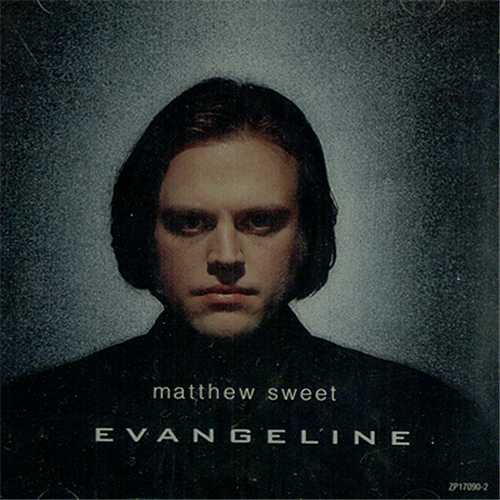
When I heard the song”Girlfriend” for the first time on the radio I liked it right away. Matthew Sweet is a great contemporary power pop artist that doesn’t get played enough.
The album peaked at #100 on the Billboard Album Charts in 1991. The album was ranked number 61 on Paste magazine’s list of “The 90 Best Albums of the 1990s.”
He was a huge fan of R.E.M in high school and began a pen-pal correspondence with Michael Stipe that brought him to Athens, GA. He ended up meeting Stipe’s sister Lisa through that relationship. Both Sweet and Lisa were students at the University of Georgia and he formed his first band with her. Sweet and Lisa eventually married after he was divorced from his first wife.
Sweet is also known for his Under the Covers series, done in collaboration with Susanna Hoffs, lead singer of Bangles. The series features the pair covering classic songs. The first Under the Covers focuses on music from the ’60s, while the second draws from the ’70s. They also made a third entry which was comprised of ’80s music.
Evangeline is not your average boy-girl song. It’s about a girl, but not a real one. The song is set in the realm of the comic book series Evangeline, which was published from 1987 to 1989. The comic is set in the 23rd century after humans colonized space. The character Evangeline is a weapon-wielding nun out to avenge those who have been victims of religious persecution on behalf of the Vatican.
Evangeline
She’s on another planet She’s in my dream She’s some kind of angel If you know what I mean Try her on She fits like a glove Too bad she only thinks about The lord above
Evangeline Evangeline I think I love you But Evangeline Evangeline I want you
Now if I called you up Do you think you Could deliver my soul? Won’t you take a drink Little darlin’ The cup is full
And every night I bow to pray But I’ll feel a whole lot better Once you’re coming my way
Evangeline Evangeline I think I love you But Evangeline Evangeline I want you
So come on down
So tell me how you want it Come on, tell me how you want it Just tell me how you want it
Just tell me how you want it We won’t be seen You can tell your father It was all a dream [try her on she fits like a glove] Too bad the only man you trust Is god above
Evangeline Evangeline I think I love you But Evangeline Evangeline I want you
Now Evangeline Evangeline I think I love you But Evangeline Evangeline I want you
She’s some kind of angel If you know what I mean Evangeline
Welcome to the Hanspostcard TV Draft. I hope you will enjoy it! Today’s post was written by Dave at https://soundday.wordpress.com/
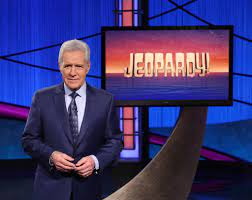
Today I’ll take “Great TV Shows” for $400. As you might have guessed the answer, and my next show to cover for this event, is Jeopardy!
Jeopardy! is a show so familiar it seems to hardly need any description. After all, it’s been around longer than many of its contestants, and longer than I (or many of the other columnists taking part here) have been. It’s been parodied on Saturday Night Live, sung about jokingly by Weird Al Yankovic and plays a part in the plot of Groundhog Day. Few and far between are those of us who’ve not at least seen part of an episode in passing somewhere along the line. Such an iconic part of the culture it’s become that even the opening theme with booming introduction – “this is JEOPARDY!” – is instantly identifiable by most. But that aside, let’s look at the show a little anyway.
Jeopardy! Is a long-running game show, in which three contestants play against each other trying to answer questions correctly to win. Or actually, answer “answers”…we’ll get to that. How long-running? It premiered in 1964, and has been running most of the time since, although in slightly different formats and shown on different providers. The current version has been running daily since 1984. Merv Griffin created it and also created the similarly-popular Wheel of Fortune which not coincidentally often runs right before or after Jeopardy! in many markets. Although he’s credited with creating it, and his name appears on the credits day after day, he credits his wife with being the one who had the basic idea.
Back around the end of 1963, he and his wife were sitting around, talking about his desire to create a game show for TV. She commented that quiz shows were popular and quite good, but there hadn’t been any since the 1958 “Game Show Scandal”, in which it was found certain contestants on the shows Dotto and Twenty-one had been given the answers so the producers could control who would win and come back, based on who they felt would be most popular with their viewers rather than their skill or even luck. The game idea was still good, but the concept had been tarnished. They wagered almost six years was enough time passed to give it another go. She then suggested the twist – why not give answers and have contestants guess the question. Merv recalled “she fired a couple of answers at me – ‘5280’ – and the question of course would be ‘how many feet in one mile?’” He liked it and quickly took the idea to NBC, who bought it sight unseen.
NBC ran it, filming in New York, weekdays from 1964 through ’75, and added a nighttime weekly version which they syndicated in 1974. All the time, Art Fleming was the host who introduced the contestants and asked the, err “answers.” It had finally run its course by summer ’75, but they resurrected it again for the ’78-79 season, again with Fleming at the helm in the Big Apple. That lasted just one season, but it didn’t stay gone too long. In 1984, a new version began, running daily (five days a week), still produced by Griffin’s company, but this time shot in L.A. and sold for syndication. It wasn’t exclusive to one network, but most local stations in the U.S. had an hour of free time to program what they wanted between the evening news and “primetime shows”, so in the vast majority of cities, (as well as in Canada), one station or another ran Jeopardy! The basic show was still the same, but this time there was a new host – big-haired, moustached Alex Trebek, a Canadian with limited experience as a game show host but a personality that fit.
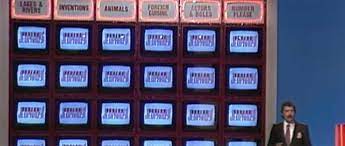
In case you’ve not seen it, the game is broken into three parts, “Jeopardy”, “Double Jeopardy” and “Final Jeopardy.” The first two take up most of the show, and consist of contestants picking mystery questions (or “answers”) from a board, which is made up of a grid of 30 boxes. There are six categories, and five question/answers in each. Each one is worth a certain value, in the first round being $200, 400, 600, 800 and 1000 and in “double Jeopardy” , you guessed it, double that amount. (If you didn’t guess it, you might not quite be Jeopardy! material.) Players who buzzed in first and gave the correct response for each won that amount of money…but if they were wrong, the amount was subtracted from their score. So it paid to be quick on the buzzer…and sure of your knowledge of the category. “Final Jeopardy” consisted of one answer all three would be given and had to answer (with the question) in 30 seconds. They could wager any or all of the amount of money they’d accrued so far in the game, and like the earlier bits, they’d win it if they were right, but lose it if wrong. Put together a run of correct answers and a bit of moxie in “Final Jeopardy” and you can do very well – James Holzhauer won a record $131127 in a 2019 episode. The game winner went home with that money, and got invited back to play the next day, whereas the second and third place finishers got a small consolation prize – typically $1000 and $2000 , which some bitterly noted didn’t pay their costs to actually go to L.A. and pay for a hotel … the show doesn’t pay expenses.
The game demands quick reflexes and a good, wide-ranging knowledge of…well, the more the better. While Art Fleming has criticized the “new” version (new as in the past 38 years), for being “dumbed down” by Hollywood, and it is true there are often some questions about pop culture, there are also still more about things like ancient history or American geography. Esquire tabulated many years of shows and found the most frequently-used categories were “Before and After”, “Literature”, “Science” , “Word Origins” and “American History” while the most-used ones for Final Jeopardy are “American Presidents” and “Word Origins.” Readers Digest compiled the ten that seemed to be hardest for contestants, and they included “Classical Music”,and “Canadian Cities” (sample : “Residents of this Saskatchewan city are called ‘Moose Javians’” , for question “What is Moose Jaw?”) . But it wasn’t only Canadian geography the mostly-American contestants had trouble with; so too did their own American because “States that Flow Together” also made the difficult list. That one had two states, with the last letter of one being the first of the next. Somehow no one could figure out “MissourI and Illinois” for the clue “one has St. Louis, the other has East St. Louis!” Of course, sometimes they like to have a little fun too, and at times the categories seem a little loopy – “Superb Owl” (all about owls on , yes Super Bowl week); “Songs for Your Cat,” “Hertz so Good” (about electricity)…
The show seems to hit the sweet spot between being so esoteric it requires a phD and so simple or celebrity-based anyone who watches Entertainment Tonight could run the board. Similarly, Alex Trebek hit the perfect spot as the host (for over 8000 episodes from ’84 until his death late in 2020; the final one he made aired in January ’21; until the final days of his illness he missed just one show…an April 1 edition where he traded places with Wheel of Fortune‘s Pat Sajak as an April Fool’s joke); warm and fatherly enough, with just enough self-deprecating humor to balance his occasional raised eyebrow and seeming hint of condescension when dealing with less-than-swift contestants. He won seven Emmys for it and became a household name and beloved celebrity; so much so that just who was going to replace him became headline news for months. So far, the answer appears to be Ken Jennings, who along with Big Bang Theory-alum Mayim Bialik have hosted the vast majority of post-Trebek shows. Jennings is an obvious choice, himself being the most famous, and by some accouts, most successful contestant ever on Jeopardy! Jennings won 74-straight shows in 2004, winning over $2.5 million and later won $1 million more on a “Greatest of All Time” tournament between past big winners. (From time to time, they have special tournaments, like ones for college students and “Celebrity Jeopardy!” where stars – mainly actors, but some athletes, writers, even politicians – try to win money for charity. Takeaway from those – no wonder Stephen King can cram so many details into his novels. The man seems to know everything!) Jennings turned his run on Jeopardy! Into several books, online and magazine columns and a rare level of celebrity based on…just being pretty darn smart!
The hype, for lack of a better word, surrounding Trebek’s unfortunate demise (losing a long battle to cancer) and picking his replacement has only helped Jeopardy! Its ratings have risen of late, with some of Trebek’s final episodes being watched by over 14 million at time or airing and many more later on streaming services; Entertainment Weekly reported this year that it currently is the most-watched “regular” TV show based on viewers watching it live…an amazing feat for a game show which through syndication doesn’t even necessarily play in every market. Maybe it’s Trebek and Ken Jennings, or maybe I hold out hope, it’s something different. At a time when everything seems to be being dumbed down from our news to our movies to our elected officials, maybe some of us are appreciating a show where it actually pays to be smart… to know a little about the Nile River or European history or great American literature.
Jeopardy! is a show I’ve enjoyed now and then since I was a kid and Trebek was young and had a huge Afro. As I got older and Trebek’s facial hair shrank, I actually found myself watching more, playing along. It was also one of the few shows my parents were both fond of too; my Mom sometimes would phone me up and ask in exasperation “did you see Final Jeopardy? How did they not know Dickens was the answer!!” or the like; when I spent about half a year living with my Dad as he got on in years, it became nearly a nightly routine for us to go down to the basement after dinner and watch Jeopardy!, trying to shout out the answers fastest. He never did well if it was about Lady Gaga or baseball, but he could rock the history and current events categories. Needless to say, I miss both my parents, and also Alex Trebek but I’m pretty glad I can still try to fit a bit of Jeopardy! in to the routine still and learn a little something with it. Memorable contestants, every topic under the sun, learning while playing… what is “great game show” Merv?
I remember this one off of their show. I like the vocals in the chorus with this one.
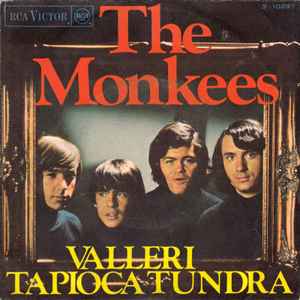
Valleri has an interesting history. This song was brought aboard at the very beginning of the Monkees…but it ended up being their last top ten hit. It was recorded with studio musicians at first and placed in a show but…not on an album because it was being saved for the second one. By the time the thought of using it came around…the Monkees had a new contract and per the contract… they had to play on and produce their album so this version of Valleri couldn’t be used.
When it was played in the show… the public wanted a record of it but now the Monkees would have to record it themselves because of the uprising they did to demand to play on their own records.
A couple of disc jockeys recorded the song off of the show and began to play it. They were playing this taped TV version on their radio shows, something that would happen many years later with the Friends theme. Listeners to the stations airing the rough mix of “Valleri” started writing the Monkees’ distributor Colgems Records, asking where they could buy a copy of the record that they had just heard.
Valleri was re-recorded and produced by the Monkees and Tommy Boyce and Bobby Hart the songwriters. It was released as a single in March 1968, 13 months after it was first performed on the TV show. Soon after the release, the Monkee’s TV show was canceled and they released their movie and LP Head. Peter Tork left the group in December 1968.
Valleri peaked at #3 in the Billboard 100, #1 in Canada, #4 in New Zealand, and #12 in the UK in 1968. The album The Birds, The Bees & The Monkees peaked at #3 on the Billboard Album Charts and #6 in Canada.
Valleri
Valleri I love my Valleri There’s a girl I know who makes me feel so good And I wouldn’t live without her, even if I could They call her Valleri I love my Valleri
Oh yeah, come on
She’s the same little girl who used to hang around my door
But she sure looks different than the way she looked before
I call her Valleri
I love my Valleri
Valleri I love my Valleri
I love my Valleri
I need ya, Valleri
I’ve read a few books about the Dead but this one is probably the best I’ve read. I just finished re-reading it after finishing it three years ago. It is their complete history from beginning to end. The book I enjoyed the most was Deal: by Bill Kreutzmann The Deads drummer. He has some great stories and Steve Parish’s book is good also…but as far as the history…this has been the best.
This is not like reading a book about the Beatles, Stones, Dylan, or even the Allman Brothers. The Grateful Dead were totally different in the way they came about and what path they took. They were such a hippy band but along the way they turned into a corporate organization…a different kind of organization but one all the same. Their crew was known to be loud and sometimes violent along with the Hells Angels by the mid-seventies and the craziness wore off on everyone around them.
I always thought of them as this loose ensemble that just loved playing. Yes, they loved playing but they weren’t above pointing fingers when something went wrong on stage. At one point Weir and Pigpen were “fired” although accounts differ on if they really were let go. In other words, they were human… like anyone else. They did however think differently and for a bunch of hippies…they were very ambitious.
Speaking of Pigpen (Ron McKernan)… that was a wonderful thing about this book…his importance is highlighted and you see how important he was to the Grateful Dead. Jerry wasn’t the key focus when they started…it was Pigpen. Although he looked like a biker…he was described as an incredibly nice and sensitive man. He was the showman of the band and Jerry commented that he was the best musician in the band in the beginning.
The book covers their entire career and along with the way, there are many twists and turns. They cover Garcia’s slide down until his diabetic coma in 1986 when he had to re-learn how to play guitar again. Less than a year later they were back on the road and then recorded the In The Dark album.
The band never had a big hit single and now…over 20 years of being together and touring they were suddenly huge with the song Touch Of Grey. They even agreed to play the game with the record company and they made a video. They were signed to Arista Records and the record company and band were at a meeting. Garcia suddenly asked, “I don’t have to do Dick Clark, do I?” With that, the executives laughed at the thought of the Grateful Dead appearing on American Bandstand.
There were points where it looked like Garcia would beat his addictions but the threat of him going back to heroin was always there. They also cover all the members rather well…Garcia wasn’t the only one with drug problems but his problem probably affected the band the most.
If you want to learn about their history…this is a really good read.
Some songs you don’t expect to hear a cover of…this is one of them.
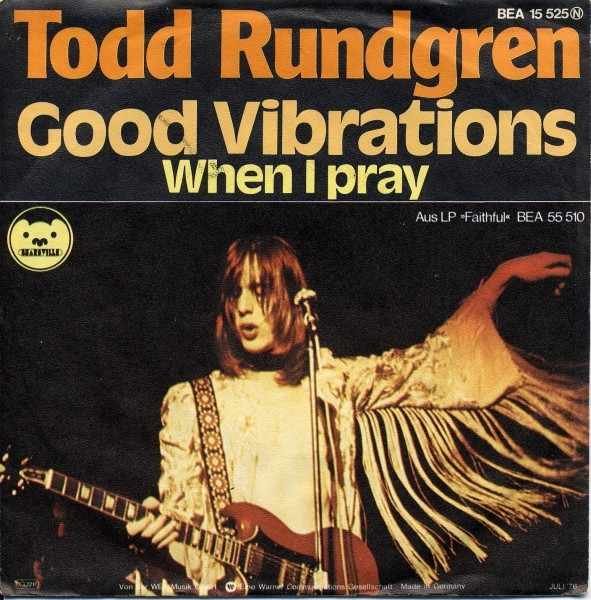
I bought this single in 1976 in a local record store we had in our small town called Sounds and Scenes (long gone but I love the name). I liked the song Good Vibrations and didn’t know at the time who did the original version. I was only 9 years old and thought I had the real thing.
He made an album called Faithful, full of covers and he performed them to the letter. I’ve listened to the album and they are close but this one is really on it. He did Rain, Strawberry Fields, If Six Was Nine, and Bob Dylan’s Most Likely You Go Your Way And I’ll Go Mine.
Todd’s version of the song peaked at #34 in the Billboard 100 and #28 in Canada in 1976. The album Faithful peaked at #54 in the Billboard Album Charts.
Todd Rundgren is very talented and I’m a fan of him. He did a fantastic duplicate version of this song. My question now is why? He got so close…you have to wonder why he did it in the first place. But…who am I to question Todd Rundgren?
I usually don’t like when an artist covers a song and changes it so much you cannot tell what the song is… not a problem with this one. Todd does exactly what he says in the album name… he was very faithful to these songs.
Later on, Todd was asked what he gained after doing this album of covers.
Todd Rundgren: Well, you gain an education. I haven’t done so many of those lately. In fact, I can’t recall anything since, for instance, The Ever Popular Tortured Artist Effect or a Small Faces song. Everything since then has been originals. In that particular instance, on Faithful, that was like 10 years after I had gotten into the music business and I was trying to give people who either had never experienced it or had forgotten it, a taste of what it was like to move through the culture at that time. What was on the radio, what they were playing in the boutiques or in the record stores, the kind of songs you would hear. So I took a cross-section of mostly songs that were popular in 1966 and did them as dead-on as I could. People were supposed to pretend that they were listening to ’66 radio or going from store to store in a hip neighborhood in 1966 and hearing what people were listening to then.
Good Vibrations
I love the colorful clothes she wears And the way the sunlight plays upon her hair I hear the sound of a gentle word On the wind that lifts her perfume through the air
I’m picking up good vibrations She’s giving me excitations Good bop bop, good vibrations Bop bop, excitations Good, good, good, good vibrations
Close my eyes, she is somehow closer now Softly smile, I know she must be kind When I look in her eyes She comes with me to a blossom world I don’t know where but she sends me there
Oh my my my, what a sensation
Oh my my, what elation
Got to keep those loving good vibrations Happening with her
The Stones were covering old blues songs at the start of their career. They needed a hit and one day they ran into two songwriters in 1963. Right in front of the Stones…John Lennon and Paul McCartney wrote a song that was in the Stone’s style. It was called “I Wanna Be Your Man” and became The Stones’ first UK top twenty record. Mick Jagger and Keith Richards were amazed at this display of songwriting prowess, which stuck with them.
The two bands stayed friends after that often coordinating releases so as not to release in the same week. Mick and Keith realized that if they were going to have staying power…they must start writing. Their manager Andrew Oldham locked them in a kitchen and told them they were not getting out until they wrote a song…obviously, it worked.
This was one of the first songs written by Mick Jagger and Keith Richards. The Stones manager gave it to a singer he also managed named Marianne Faithfull, who released it in 1964. It was going to be the B-side of her first single, but the record company decided to make it the A-side and it became her first hit. The Stones recorded it a year later. In 1966 Faithfull became Jagger’s girlfriend and that would last 3-4 years.
The original title was As Time Goes By but they changed it so it wouldn’t be confused with a song with the same title in Casablanca. The song peaked at #1 in Canada and #6 on the Billboard 100 in 1966. Marianne’s version peaked at #22 in Canada and #9 on the Billboard 100, and #9 in the UK in 1964.
This was released as a single in the US and Canada because ballads were popular there at the time. The release in England was delayed 6 months because they did not want to compete with Yesterday by The Beatles. When they finally did release it there, it was as the B-side of 19th Nervous Breakdown.
Marianne would record this three times. The original version in 1964, for 1987’s Strange Weather, and again on 2018’s Negative Capability.
Keith Richards: “suddenly, ‘Oh, we’re songwriters,’ with the most totally anti-Stones sort of song you could think of at the time, while we’re trying to make a good version of (Muddy Waters’) ‘Still A Fool.’ When you start writing, it doesn’t matter where the first one comes from. You’ve got to start somewhere, right? So Andrew locked Mick and myself into a kitchen in this horrible little apartment we had. He said, ‘You ain’t comin’ out,’ and there was no way out. We were in the kitchen with some food and a couple of guitars, but we couldn’t get to the john, so we had to come out with a song. In his own little way, that’s where Andrew made his great contribution to the Stones. That was such a flatulent idea, a fart of an idea, that suddenly you’re gonna lock two guys in a room, and they’re going to become songwriters. Forget about it. And it worked. In that little kitchen Mick and I got hung up about writing songs, and it still took us another six months before we had another hit with Gene Pitney, ‘ThatGirl Belongs To Yesterday.’ We were writing these terrible Pop songs that were becoming Top-10 hits. I thought, ‘What are we doing here playing the f–king blues, and writing these horrible Pop songs and getting very successful?’ They had nothing to do with us, except we wrote ’em. And it took us a while to come up with ‘The Last Time.’ That was the first one we came up with where Mick and I said, ‘This is one we can lay on the guys.’ At the time we were already borrowing songs from the Beatles – ‘I Wanna Be Your Man’ – because we were really hard up for singles. So they gave us a hand. In retrospect, during the ’60s the Stones and the Beatles were almost the same band, because we were the only ones in that position.”
Mick Jagger: “I wrote the lyrics, and Keith wrote the melody. It’s a very melancholy song for a 21-year-old to write: The evening of the day, watching children play – it’s very dumb and naive, but it’s got a very sad sort of thing about it, almost like an older person might write. You know, it’s like a metaphor for being old: You’re watching children playing and realizing you’re not a child. It’s a relatively mature song considering the rest of the output at the time. And we didn’t think of doing it, because the Rolling Stones were a butch Blues group. But Marianne Faithfull’s version was already a big, proven hit song… It was one of the first things I ever wrote.”
Marianne Faithfull: “a marketable portrait of me… a commercial fantasy that pushes the right buttons.”
As Tears Go By
It is the evening of the day I sit and watch the children play Smiling faces I can see But not for me I sit and watch As tears go by
My riches can’t buy everything I want to hear the children sing All I hear is the sound Of rain falling on the ground I sit and watch As tears go by
It is the evening of the day I sit and watch the children play Doing things I used to do They think are new I sit and watch As tears go by
I love B-sides and this is a good one. I liked You Can’t Do That much better than the A-side Can’t Buy Me Love.
John Lennon never liked his voice. He always wanted George Martin to add echo or anything else to cover it up. I never understood that…for me John was one of the best rock and roll singers out there. His thin nasal voice cut through the music and cuts into you.
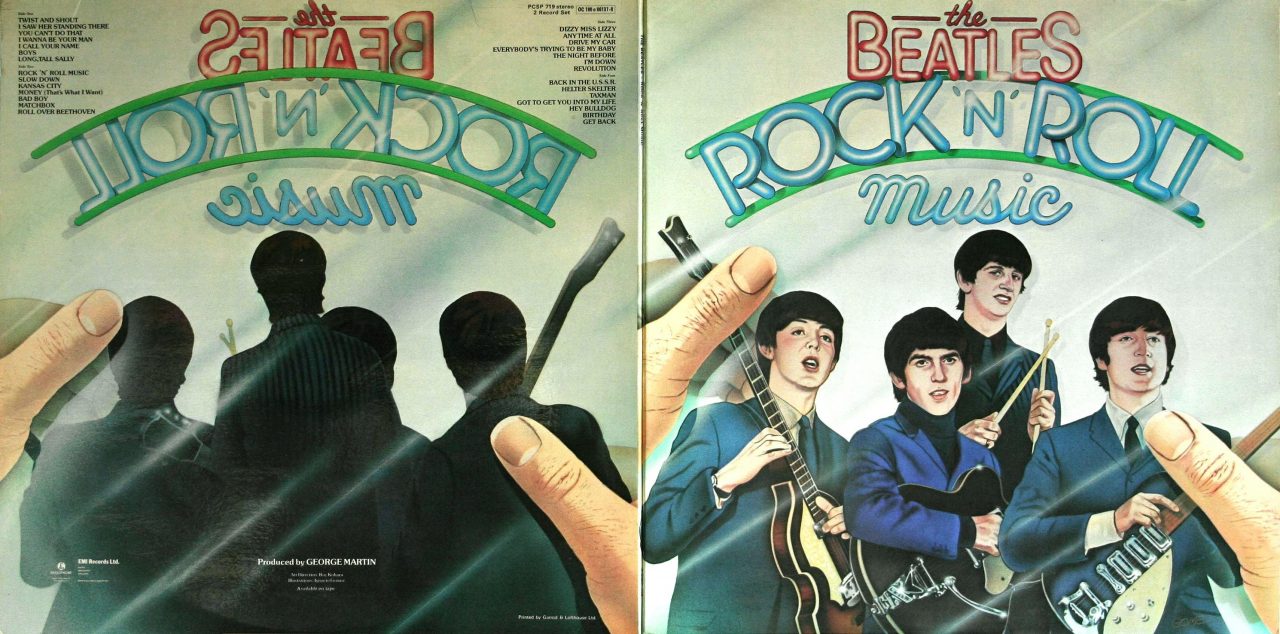
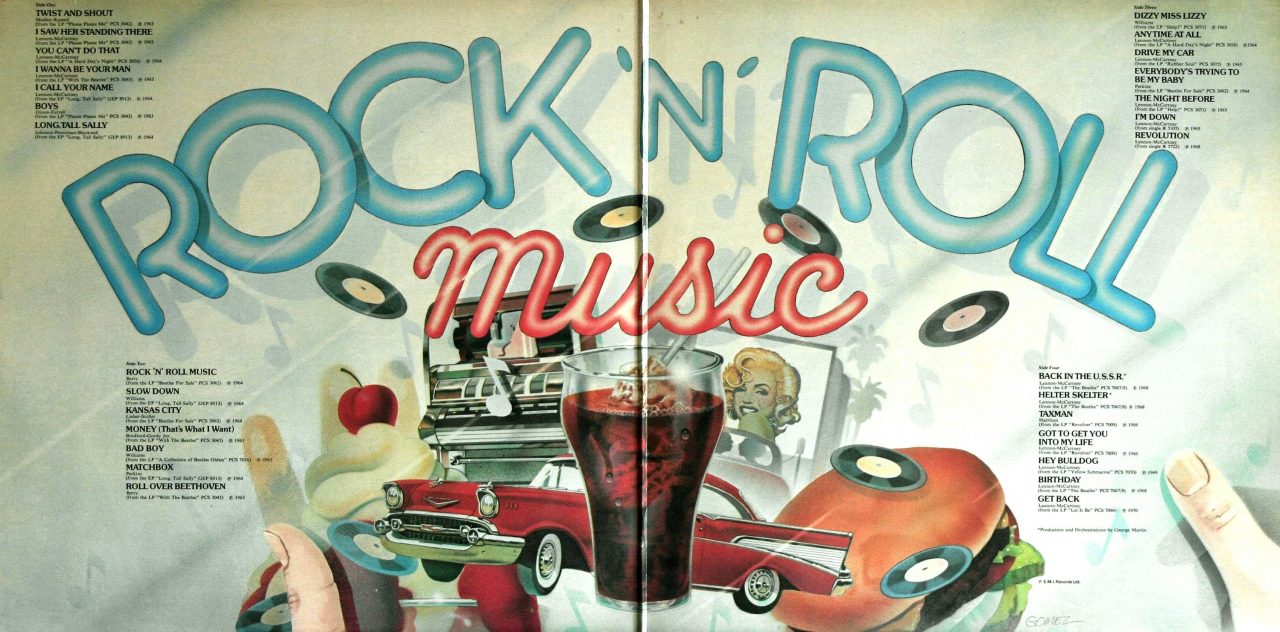
I first heard this song on a 1976 compilation album Rock and Roll Music. That was my second ever Beatles album. Capital put together one of the worse covers ever for that album.
The cover made the Beatles look like they were from the 50s. A very few of the songs on the album were covers of 50s songs. Ringo Starr said: “It made us look cheap and we never were cheap. All that Coca-Cola and cars with big fins was the Fifties!” John Lennon told Capitol that the cover looked like a Monkees reject. He offered to design the cover but was declined. That doesn’t mean the album didn’t contain great music…a double album full of some great songs.
You Can’t Do That helped popularized the two-measure guitar riff…. a guitar riff that opens a song and continues through it. It laid the foundation for modern rock… with artists such as The Stones to Nirvana. The Beatles would use this frequently in songs such as I Feel Fine, Ticket To Ride, Day Tripper, If I Needed Someone, Paperback Writer and I Want To Tell You. The Stones made a career of it.
The song originally appeared on the UK soundtrack of A Hard Days Night. They recorded this in nine takes on George Harrison’s 21st birthday (February 25, 1964). The song was the B side to Can’t Buy Me Love but managed to peak at #48 in the Billboard 100 and #33 in Canada in 1964. Harry Nilsson covered it in 1967 and that version peaked at #10 in Canada.
This was the first Beatles song on which George Harrison played a 12-string guitar… John played the lead. Lennon said that Wilson Pickett was an influence on this song.
You Can’t Do That
I got something to say that might ’cause you pain If I catch you talking to that boy again I’m gonna let you down And leave you flat Because I told you before, oh You can’t do that
Well, it’s the second time I’ve caught you talking to him Do I have to tell you one more time, I think it’s a sin I think I’ll let you down (let you down) And leave you flat (Gonna let you down and leave you flat) Because I’ve told you before, oh You can’t do that
Everybody’s green ‘Cause I’m the one, who won your love But if they’d seen You’re talking that way they’d laugh in my face
So please listen to me, if you wanna stay mine I can’t help my feelings, I’ll go out of my mind I’m gonna let you down (let you down) And leave you flat (Gonna let you down and leave you flat) Because I’ve told you before, oh, you can’t do that
You can’t do that You can’t do that You can’t do that You can’t do that You can’t do that
Everybody’s green ‘Cause I’m the one who won your love But if they’d seen You’re talking that way they’d laugh in my face
So please listen to me, if you wanna stay mine I can’t help my feelings, I’ll go out of my mind I’m gonna let you down (let you down) And leave you flat (Gonna let you down and leave you flat) Because I’ve told you before, oh You can’t do that









 PowerPop... An Eclectic Collection of Pop Culture