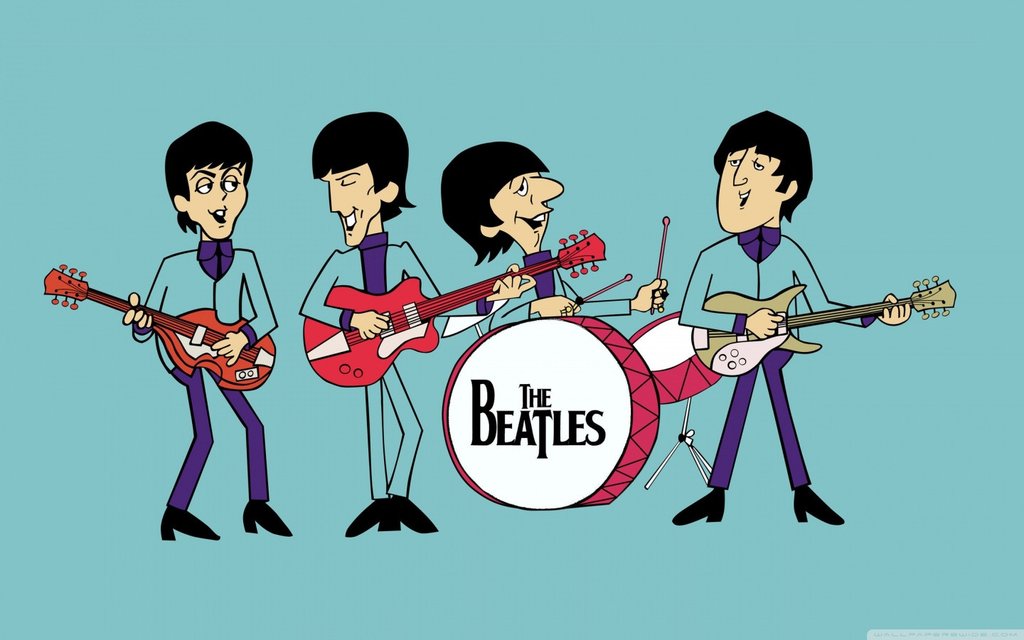
The Beatle Cartoon Series

I have all 39 episodes taken from VHS tape but you can view most on youtube. The cartoon reminds me of the style of Rocky and Bullwinkle.  John and George were voiced by Paul Frees who did the voice for Boris Badenov on Rocky and Bullwinkle. They ran on ABC from 1965-1969 though only 65-67 were first run episodes.

The show was made on the cheap and the cartoon Beatles were put in usual cartoon situations like a jungle, haunted house, or on a boat. The main thing was to play a Beatle song in the background while our heroes got out or into a jam.

They were a rating success. I watch them now and think…why not get actors with real British accents to voice them? They are silly and fun but George especially had no accent at all. The Beatles had nothing to do with them and didn’t really like them at first when they were first on air. They started to appreciate them more as time went on.

With season 3 you start seeing more pop art being incorporating in the episodes. They have segments where flower power framed the newer songs. Some of the segments looked really good but then they would go back to their younger selves. Some of the episodes could be considered so bad they are good…but I like them.

I never got to see these until the 1980s.

Below is some samples of it.

Below are the episodes descriptions from Wikipedia

Season 1 (1965–66)

1. A Hard Day’s Night / I Want to Hold Your Hand: The Beatles are in Transylvania rehearsing in a haunted house with “monstrous” visitors, including a vampire, a ghost, a werewolf, and a witch, with a parody of Boris Karloff; To hide from their fans, the Beatles run inside a diving bell which drops them into the ocean with a lovesick octopus. Sing Alongs: Not A Second Time / Devil In Her Heart

2. Do You Want To Know A Secret / If I Fell: The Beatles go to Dublin, Ireland for the weekend where they meet a leprechaun named Wilhelmina Morris; John is kidnapped by Dr. Dora Florahyde and Igor, both of whom want John’s brain for their monster. In the I Want To Hold Your Hand Sing Along, Ringo is shown inside a submarine. Sing Alongs: A Hard Day’s Night / I Want To Hold Your Hand

3. Please Mr. Postman / Devil In Her Heart: Ringo loses 15 rings he bought with all of the Beatles’ spendings and they are expecting a telegram from manager Brian Epstein for more money; Ringo wanders into the woods in Transylvania where he meets a witch who wants Ringo for a husband. Sing Alongs: If I Fell / Do You Want To Know A Secret

4. Not A Second Time / Slow Down: The Beatles abandon their flight and land in Africa while trying to get away from their fans, but three girls keep tracking them down. They later encounter a few crocodiles; The Beatles are on the way to the town Ringo Ravine (named after Ringo) until they encounter a donkey that smells gold named “Gold Nose”. Sing Alongs: Baby’s In Black / Misery

5. Baby’s In Black / Misery: Paul gets kidnapped by Professor Psycho who wants Paul to marry his creation Vampiress, half girl and half bat; The Beatles go to a wax museum where a vampire follows them. Sing Alongs: I’ll Get You / Chains

6. You’ve Really Got A Hold On Me / Chains: In Africa, Ringo asks a medicine maker named Jack to help fix the Beatles’ flat tire. He then turns a worm into a snake and it lusts for Ringo; After getting knocked out, Ringo dreams about himself as Captain William Bligh from the movie Mutiny on the Bounty (1962). Sing Alongs: Slow Down / Honey Don’t

7. I’ll Get You / Honey Don’t: The Beatles run into hunter Alan Watermain (a parody of Alan Quartermain) in Africa after escaping from their fans and go out hunting for a lion; Ringo is mistaken as a bull rider, and the cowboys send him to ride on a super-tough bull named Honey. Sing Alongs: You’ve Really Got A Hold On Me / Any Time At All

8. Any Time At All / Twist and Shout: The Beatles imagine themselves as the Three Musketeers (Plus One) while they are on a tour at a museum in France; The Beatles attend an art show where a girl tries to be like other artists. They inspire her with music. Sing Alongs: I’ll Be Back / Little Child

9. Little Child / I’ll Be Back: A Native American girl on a Texas Indian reservation wants to prove that girls are as good at trapping as boys are by trapping the Beatles; The mayor of a Texas town gives Ringo a golden guitar as a gift, only to be stolen by three men, prompting the Fab Four to hunt for the thieves and get the guitar back. (The song “Ticket to Ride” is heard at the beginning of this episode.) Sing Alongs: Long Tall Sally / Twist And Shout

10. Long Tall Sally / I’ll Cry Instead: The Beatles stay at a castle for the night during a fog. John and Ringo try on a couple of cursed armor suits and start to fight each other; After signing too many autographs in Japan, George’s hand gets swollen and suffers “autographitis”. His bandmates take him to a hand doctor but end up in a karate class by mistake. Sing Alongs: I’ll Follow The Sun / When I Get Home

11. I’ll Follow the Sun / When I Get Home: The Beatles’ car breaks down and they are captured by a highwayman who happens to be a car repair man; The Beatles explore the Notre Dame in France where they later meet its famous hunchback Quasimodo. Sing Alongs: I’ll Cry Instead / Everybody’s Trying To Be My Baby

12. Everybody’s Trying To Be My Baby / I Should Have Known Better: The Beatles, spending the night at a temple in Japan during a rainstorm, are mistaken for Japanese ancestors of four girls; The Beatles are in Rome trying to find a theater to rehearse. Their last resort is the Coliseum. Sing Alongs: I’m A Loser / I Wanna Be Your Man

13. I’m A Loser / I Wanna Be Your Man: In Hollywood, Ringo gets hired as a stuntman by Incredible Pictures Inc. and ends up in the hospital after getting pulverized in many scenes; In Rome, the Beatles buy a statue of the Goddess of Musica made from stolen gold coins melted down and sculptured. Sing Alongs: No Reply / I’m Happy Just To Dance With You

14. Don’t Bother Me / No Reply: In Rome, The Beatles are being followed by two spies who are after their songbook, “New Beatle Songs”, marked “Top Secret”. The Beatles movie Help! and Oddjob from the James Bond movie Goldfinger are spoofed; In Japan, The Beatles are warned by a Charlie Chanlookalike about a jewel thief named Anyface. Things become complicated when Anyface shows up disguised as Paul. Sing Alongs: It Won’t Be Long / I Should Have Known Better

15. I’m Happy Just To Dance With You / Mr. Moonlight: The Beatles are in a Roman Street Festival where Paul wins a dancing bear named Bonnie; The Beatles meet Professor Ludwig Von Brilliant who is on a mission to view an eclipse. After being adrift at sea, they escape from an island on a submarine. Sing Alongs: Don’t Bother Me / Can’t Buy Me Love

16. Can’t Buy Me Love / It Won’t Be Long: John is given a friendship ring from a Polynesian tribal chief, which means he must marry the chief’s New York-accented daughter who dislikes pineapples; While picnicking in Japan, John goes for a swim in a pond with shrinking potion in it and gets shrunk. The other Beatles think John is a Beatle doll and chase after him. Sing Alongs: Anna (Go to Him) / Mr. Moonlight

17. Anna / I Don’t Want To Spoil The Party: In Japan, Paul gets lured into a ghost ship called “Ah-Nah”. The other Beatles dash off to the rescue before they might lose Paul for good; Paul, George and Ringo sneak away from John and go to Greenwich Village for some fun time at a Beatnik party rather than going to a museum. Sing Alongs: Matchbox / Thank You Girl

18. Matchbox / Thank You Girl: In Hawaii, John buys a trailer for the group to stay in rather than staying at a hotel so many times. They later encounter a group of Hawaiians who are evacuating from a volcano; The Beatles sneak away from their manager to get something to eat at a French restaurant by enrolling in a cooking course. Sing Alongs: I Don’t Want To Spoil The Party / Help!

19. From Me To You / Boys*: In Hawaii, a surfer named Surf Wolf challenges George to a surfing duel; The Beatles participate in a Mr. Hollywood Contest in California. Sing Alongs: Please Mr. Postman / I Saw Her Standing There
Note: The opening title erroneously shows “With Love From Me To You”

20. Dizzy Miss Lizzy / I Saw Her Standing There: John and Paul secretly sign George up to an ice boat race, and he partners up with a girl named Lizzy; In Madrid, John and Paul visit a restaurant where John develops a hot foot with ashes in his boot. Rosita falls for John, and her boyfriend Jose challenges John to a duel. Sing Alongs: Ticket To Ride / From Me To You

21. What You’re Doing / Money*: The Beatles are on a fishing trip, and Ringo runs into gypsies. One of them falls for Ringo and wants to marry him. George comes in as a woman claiming he’s engaged to Ringo to get him back; John puts Ringo in charge to keep their money safe in his jacket pocket. Later Ringo is being followed by a mystery man at a carnival who is after the money. (The song “Help!” is heard at the beginning of this episode.) Sing Alongs: Dizzy Miss Lizzy / All My Loving

22. Komm Gib Mir Deine Hand* / She Loves You: The Beatles visit the Bavarian alps mission is to climb up a mountain with the dog Gunthar to put up their own flag on top; The Beatles are about to rescue a girl who they think is held as a prisoner on a ship. As a result, her boyfriend, a knife thrower, comes to her defense…with knives. Sing Alongs: Bad Boy / Tell Me Why

23. Bad Boy / Tell Me Why: The Beatles visit the Bavarian Alps. They encounter a runaway named Hans who wants to be a Beatle, prompting The Fab Four to run after him with their music (in which Paul plays the bass right-handed) and take him back home. (The song “Slow Down” is heard in the background); In Spain, Ringo is the jockey of a donkey that can run like a horse whenever she hears loud music. Sing Alongs: Please Please Me / Hold Me Tight

24. I Feel Fine / Hold Me Tight: Paul thinks Hollywood’s a phony. Actor Dick Dashing wants to prove Paul he is wrong by putting him in some different movie scenes; In New York, George and Ringo visit the Statue Of Liberty until they have spotted a man with a package which they think is a bomb. Sing Alongs: What You’re Doing / There’s A Place

25. Please Please Me / There’s A Place: In Madrid, a bull named El Taco gets knocked out, and the Beatles decide to help out with the bullfight with Ringo as the matador, and John and Paul as the bull; John’s sympathy helps a trained ape named Mr. Marvelous escape from the television studio and go out to explore the outside world. Sing Alongs: Roll Over Beethoven / Rock And Roll Music

26. Roll Over Beethoven / Rock and Roll Music: The Beatles are on their way home after visiting New York City until Paul gets grabbed by an elephant named Beethoven; The Beatles are invited to play at the Duke’s Palace, but they are mistaken for a string quartet. Sing Alongs: I Feel Fine / She Loves You

Season 2 (1966)

27. Eight Days A Week / I’m Looking Through You: A great movie lover named Lips Lovelace loses his ability to kiss. Paul decides to take his place in the studio with a leading lady who falls for him; The Beatles are in Egypt. They are wandering around in a pyramid until Ringo encounters a ghost who wants a body, and he chooses Ringo’s. Sing Alongs: Run For Your Life / Girl**

28. Help! / We Can Work It Out: Paul and Ringo go to a fashion show in Paris, but the designs are stolen by a thief named Jacques Le Zipper. Paul chases Jacques to the Eiffel Tower, and has trouble with heights; George becomes superstitious. The Beatles encounter the Lucky Wizard who is really a thief trying to give them bad luck and rob their money. Sing Alongs: The Night Before** / Day Tripper

29. I’m Down* / Run For Your Life: The Beatles are on a tour at a wine factory in France where Ringo accidentally knocks down a vat of wine. If it does not get fixed in two hours, the factory will go out of business; The Beatles are on a tour at the Palace of Versailles. Ringo gets knocked out by a statue, and dreams about the days of Marie Antoinette. Sing Alongs: Eight Days A Week / Paperback Writer

30. Drive My Car* / Tell Me What You See*: The Beatles help a young man and his girlfriend get their old jalopy running in a car race, the Popsville Hot Rod Race; While visiting “the man of a thousand faces”, The Beatles fool around with his makeup machine and change into different characters. (John briefly imitates Jimmy Durante and Swee’Pea from “Popeye” makes a cameo.) Sing Alongs: Yesterday** / We Can Work It Out

31. I Call Your Name* / The Word*: Ringo is convinced to release his pet frog Bartholomew in the swamp. Later a movie producer offers a filming deal to Ringo and the frog, and the Fabs have dashed off to find Bartholomew; The Beatles are being punished after gazing at the girls’ unveiled faces. The only way to get out of the situation is to say the password: “love”. Sing Alongs: She’s a Woman** (original broadcast, replaced with a repeat of I Feel Fine) / Wait

32. All My Loving / Day Tripper: The Beatles are in India where they learn how to charm an animal at an “Indian Charm Skool”. When the animal is revealed to be a tiger, they use music to tame it when it is about to claw John and Ringo (The song “Love You To” is heard in the beginning of this episode.); After watching the movie The Way Out Creatures From Planet Glom, the Beatles take a trip out into space with a beautiful woman who is actually an alien taking them on a one-way trip 23 billion miles from Earth. Sing Alongs: I’m Looking Through You / Nowhere Man

33. Nowhere Man / Paperback Writer: The Beatles walk into a cave for some exploring which is a home of a hermit who wants to be alone. He tries to get rid of them, but no luck; Each of the Beatles write fictional stories of how they met with Ringo as a theatre actor, Paul as a scientist, George as a secret agent, and John as a war pilot. Sing Alongs: And I Love Her** / Michelle**

Season 3 (1967)

34. Penny Lane / Strawberry Fields: In a spoof of James Bond, the Beatles are jealous of a detective named James Blonde who gets more attention from many women, so the Fab Four head to their hometown of Liverpool to stop a robbery on Penny Lane so they can be heroes; Traveling with their driver James, the Beatles use music to add color and happiness to the lives of the children at an orphanage, a reference to Strawberry Field in Woolton, a suburb of Liverpool. John sums up the experience with “It’s all in the mind, you know.” Sing Alongs: Good Day Sunshine / Rain**

35. And Your Bird Can Sing / Got To Get You Into My Life: The Beatles and a couple of hunters hunt for a rare bird called a green double-breasted tropical woosted that can sing anything, including “Hound Dog” and “She Loves You”; The Beatles are in India, learning how to escape from their bodies from Swami Rivers. It works, but the problem is that the souls’ bodies are moving by themselves, and they must get them before it’s too late. (“Love You To” is heard in the background) Sing Alongs: Penny Lane / Eleanor Rigby

36. Good Day Sunshine / Ticket To Ride: Ringo thinks he’s a jinx. When the Beatles arrive at Carney Island, it starts to rain. Their music turns the rainy day back into a sunny day which makes Ringo happy. (The song “Little Child” is heard at the end of this episode.); The Beatles each have their own hobby. Paul paints, George builds a three-eyed robot, John writes and Ringo collects “birds” which is an English slang term for girls. Paul releases the only one Ringo caught and he runs after her. Sing Alongs: Strawberry Fields Forever / And Your Bird Can Sing

37. Taxman* / Eleanor Rigby: The Beatles get knocked out while carrying tons of money to the bank, and dream about the days of Robin Hood. Paul exclaims: “It never happened”; A group of children claim that an elderly woman named Eleanor Rigby is a witch. The Fabs tell them the true story about Eleanor Rigby in a song. (The song “I Feel Fine” is heard at the end of this episode.) Sing Alongs: Got To Get You Into My Life / Here, There and Everywhere**

38. Tomorrow Never Knows*/I’ve Just Seen a Face*: The Beatles fall into a well and end up in the inner world with foreign natives. The chief wants the Fabs to marry his daughters, and they began to run away. (The song “Love You To” is heard during this episode.); Ringo loses his singing voice. For treatment, his three mates send Ringo to a haunted house to scare his voice back. Sing Alongs: She Said She Said** / Long Tall Sally (repeat)

39. Wait / I’m Only Sleeping*: The Prince of Krapotkin’s girlfriend is in grave danger. The Beatles help him to save her from the Prime Minister who wants to marry her; John falls asleep while telling a story to a couple of children. In his dream he volunteers to help King Arthur and Merlin slay a vicious dragon. However, John and his mates opt instead to play music to put the dragon to sleep. Sing Alongs: Penny Lane (repeat) / Eleanor Rigby (repeat)
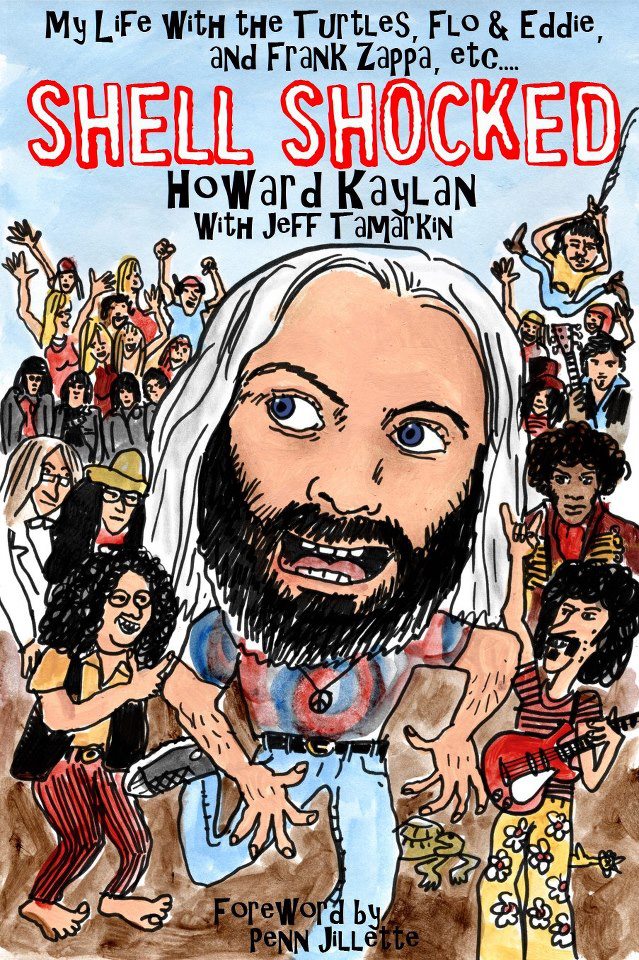


Shell Shocked: My Life with the Turtles

One of the most self-deprecating books I’ve ever read. Howard Kaylan goes through his career with the Turtles who never really took themselves too seriously. They wanted to be the American Beatles…just like every other band at the time but did it with a sense of humor. They were a singles band that had quite a number of top 40 hits. According to Howard, they lucked into most of it. They only wrote a couple of their hits.

Their hits included “Happy Together” #1, “It Aint Me Babe” # 8, “She’d Rather Be With Me” #3, Eleanor #6, “You Showed Me” #6 and many more.

After the Turtles broke up, he and Mark Volman went by the name “Flo and Eddie,” for legal reasons and made a career of unusual rock-comedy albums and developed a following. They immediately began playing with Frank Zappa and the Mothers of Invention and was there when Frank was pushed off the stage at the Rainbow. They were also in the Zappa movie 200 Motels.

After Zappa, they worked as a duo and released a lot of albums for many different labels.  They were more known for their live performances and they were a good opening act. Howard and Mark were columnists, radio hosts, session backup singers, talk show hosts, actors, composers, and anything else to make ends meet. They did the background vocals on Hungry Heart by Bruce Springsteen.

Howard and Mark wrote the Strawberry Shortcake theme and they wrote music for the Care Bears.

Another rock autobiography…big surprise! But unlike some of the others…Howard wasn’t rich and could not live off of royalties or constant touring like many of the other rock stars that have spilled it all recently.  After the breakup, The Turtles could not even tour as the Turtles until later on because of their label. They were broke many times but opportunities would pop up like being radio hosts and would help them make it to the next big thing.

Now they tour on the Happy Together tour with other artists and have been doing it since the eighties off and on.

They ended up owning their name and the master recordings from the 1960s because the label went broke and they were smart enough to get the rights… Howard and Mark were the first to sue rap artists for sampling their material without paying for it. They won and now everyone has to pay to sample anything from another artist. The Turtles were the first big artists with a catalog to sign with Rhino Record and helped the label to take off.

It may be the funniest of all the recent biographies. He ran into a lot of famous people and even made a movie out of meeting the Beatles and Jimi Hendrix in 1967 at the Speakeasy in London called “My Dinner With Jimi.”

It is a funny book with a lot of laughs but you have to scratch your head while reading about Howard making the same mistakes over and over. For Howard, it was drugs, women, marriage, drugs, a girlfriend, divorce, marriage and more drugs…maybe it’s not that much different from the richer stars after all.

I was never a big Turtle fan. I have an account with Audible and this was recommended. Overall I did enjoy it.

Below is an excerpt from the book about meeting The Beatles in 1967 and John Lennon being vicious toward Turtle rhythm guitar player Jim Tucker… Today Jim Tucker denies this ever happened. He said that John didn’t even say a word to any of them so who knows?

Paul said, “I really enjoyed your record.” And then, to me, “Great voice, man. Nice set of pipes.” I was bursting.
Then Lennon. “Yeah, that’s a lovely bit of Flower Power in the middle there with those ba-ba-bas.” And then all three of them sang the ba-ba-bas. And we were all beside ourselves with swollen pride.
“So, where did you learn to sing?” Paul asked me.
“High school choir, I guess. Then we formed the band and started playing local clubs, you know, a little bit of R&B stuff—”
“What kind of R&B stuff.”
“Oh, you know, ‘Money,’ ‘What’d I Say,’ ‘Justine’…”
“‘Justine’ by Don and Dewey? I love that song.”
And then Paul began to sing the Crossfires’ trademark soul song. I joined in on the answers and the chorus. Ringo played spoons on the tabletop while the customers watched and Lennon looked on as if bored to death. When we were done, there was a smattering of applause and Paul said, “That was great. I’d love to do that with my band some day. You sing great.”
“Oh my God, thank you,” I gushed.
“Still, it is a bit sappy on your record there when you sing ‘invest a dime’ with that cry in your voice. A bit light in the loafers, if you ask me.”

“What?” Yeah, I became defensive all right. “We’re just trying to be the American version of you!”
“Touché” said McCartney.
“Well, that’s not bloody likely, is it?” Lennon piped in. His eyes skipped from Turtle to Turtle, checking us out for the first time. “And what do you call that guy over there?” John pointed at Tucko, who was cowering in his wrinkled brown suit, thrilled just to be noticed.
“That’s Jim Tucker, our rhythm guitar player “
“Bad suit, son. And an even worse haircut. Did you tell your barber to give you a Beatle cut? It’s awful, man. You give rhythm players a bad name.”
Tucko, oblivious, stumbled for words. “You’re like a god to me, man. You guys changed my life.”
Much to his credit, Pons tried, in vain, to turn the conversation around. “We just heard Sergeant Pepper and I’ve got to thank you on behalf of the entire world for the greatest album of all time!”
Paul graciously nodded thanks and toasted us with his beverage. But John was not to be denied.
“Tucko, is it? I could have a lot of fun with that name. Let’s see… Tucko Tucko, bo bucko, banana fanna fo fucko…”
Tucker winced and Lennon saw the weakness and went in for the kill.
“There was a boy named Tucko, a very stupid fellow—”
Finally, Jim realized that he was the butt of Lennon’s abuse and could hold back no longer.
“What is your problem, man? You’re supposed to be the Beatles! I fuckin’ loved you guys and you turn out to be assholes.”
Lennon feigned shock and recoiled at the words.
“Tsk, tsk … such language. What would your mum say?”
“She’d say you were a dick, that’s what! Man, was I wrong. You’re a total shit! I’m sorry I ever met you!”
Lennon shook his head slowly, savoring every syllable. “You never did, son. You never did.”
And with that, Jim Tucker walked away from the table, up the stairs, and into a cab. And, following the few British shows we had lined up, Jim flew home and never played music again. The Turtles would continue on as a five-piece band from that time forward. The other guys followed Jim upstairs, and our goodbyes were a lot sadder than our hellos had been.


Walking Tall 1973

Living in the south during the 1970s I knew about the sheriff named Buford Pusser. Hollywood made some enhancements no doubt but… Many small towns in the south were crooked. The town I lived in blocked all restaurant and store chains from moving in…and a few other things. A man that lived in our town ended up writing a small pamphlet book about the place and all of the shenanigans going on and he ended up with a bad case of dead. At least that was the tale I was told when I was young.

I do remember hiking in the woods as a kid and running up on a copper contraption. It was older but it was no doubt on what it was used for…

The movie is not a great five-star flick but it’s a good entertaining film about what happened in McNairy County Tennessee with the big stick carrying Sherriff Buford Pusser. They definitely massaged the truth and you will not get the “Rock” in this one. I don’t really look at it as true or not…just an entertaining movie. It has more of a realism feel than the most current remake.

It’s a vigilante drama and a revenge fantasy that paces itself pretty well. Joe Don Baker is believable in this movie. If you hate violence this is not for you. The Sheriff almost single-handedly cleans up the town with the aid of a big stick. The film is cleaned up and not as grainy as I remembered. You will see the future 70s pinup singer Leif Garret as the Sheriff’s son…also future Rockford Files dad Noah Beery Jr. I watched the movie recently and it holds up better than I remembered.

The cast included Joe Don Baker, Elizabeth Hartley, Leif Garrett, Dawn Lyn, and Noah Beery Jr.

My wife and I traveled to Memphis to visit Graceland in the late 90s. On the way back home we got lost (pre-GPS and I have no sense of direction) and ended up in McNairy County. I remembered the name and we looked up we saw Pusser’s old home which was turned into a museum. We walked in and the lady working there was super nice. We sat on his couch, looked at his car, badges, guns, and uniforms. Before I left I could not resist…I just had to buy one of those big sticks…which was just an ax handle with his name and also a VHS tape of the Sherriff’s story. They may not allow so much freedom now.

It was pretty cool being able to touch and walk around freely after the “stay behind the rope!” mentality at Graceland…which I understand completely…Hey it’s the home of the big E. If you ever go to Graceland and if you have a couple of hours to spare, drive to this museum it is interesting… it’s like going back in time to the mid-seventies…it was just a fluke that we found it but it was fun.

Off topic of the movie again but Jimmy Buffet had a Buford Pusser story. I’ve heard this from different sources but this is from http://www.buffettworld.com… The movie was good but this would have been GREAT to see.

In 1974, Jimmy Buffett had a run-in with famed “Walking Tall” sheriff Buford Pusser. The story is referred to in “Presents To Send You” from the 1974 album A1A and also in “Semi-True Stories” from the 1999 album Beach House On The Moon.
In both songs, few details are mentioned. But at a show in 1974 at the Exit Inn in Nashville, just a few months after the incident, Buffett took some time to tell the crowd about the altercation:

“There were a lot of rumors circling around that I had an encounter with this young man. Which are true. We finished doing our recording over at Woodland Studio, real happy that the album had come out so well. All the lightweights had went out to get a few bottles of champagne and celebrate. Sammy Creason and Chuck Nease and I decided to go out and get a bottle of Cuervo Gold Tequilla and 3 straws. We went at it and in 15 minutes we were just knee-crawlin’ drunk. So we proceeded to the flashiest night spot in town, the roof of the King of the Road Hotel.

We’re there dining and dancing. Ronnie Milsap was on vacation. Sammy Creason was with me, so we provided just a gala of entertainment. Me on acoustic guitar so drunk I couldn’t hit the chords and him just pounding the drums out in 3-quarter time. Ran everybody out. We got the screaming munchies and we were going to Charlie Nickens to eat. And I couldn’t find my rent-a-car, which was parked somewhere amidst thousands of cars in the parking lot of the fabulous, plush King of the Road hotel. It was a little bitty car. It was hiding among many big ones there. And there was a Tennessee Prosecutors convention going on there. If they had made it to room 819 they would’ve had a closed door case.

So I stood on the hood of this car with a pair of… actually, they were old Ra Ra’s that I bought in Miami for 2 bucks. They were white and brown old Ra Ra’s but they were golf shoes so I had to take the cleats out but they still had the posts in them so they clicked a lot. I was standing on the hood of this particular car and as fate would have it it belonged to a rather large man who came up behind me and threatened my life real quickly. And I hadn’t been in a fight since junior high school on the city bus in Mobile. He came up and said “Son you stay right there, you’re under arrest”. So I politely turned around and said “You kiss my ass”. He didn’t. Instead he followed me over to the car which Sammy had found. I got in the driver’s side and Sammy got in the passenger’s side. My window was up, his was down and this fellow poked his head in and said “Would you like for me to turn this car over?”.

I was not scared of this individual. I just thought he was some ex-football player turned counselor. And Sammy said “look whatever damage we did ABC will pay for everything” which was awfully generous of Sammy since he didn’t have the authority to say so. Being a good company man I took up for my company and said “No they won’t. I’m still gonna beat your ass if you don’t leave us alone”. With that he pulled up then stuck his big head and his hand in and grabbed me by my hair until it separated from my head. I had a big bald spot on the back of it and I looked like a monk for about 3 months. Then he punched Sammy right in the nose. We knew he wasn’t kidding. So Sammy defended himself bravely with a big pen. He starts stabbing at this man’s arm trying to get it out of the window because we couldn’t start the car because with the new modern features of ‘74 automobiles you can not start your car unless your seat belt’s buckled and we were too drunk to get ours hooked up.

So we sit there while this man pounded the hell out of both of us. I looked over at Creason and I said “Sammy I don’t wanna die in a Gremlin.” Eaten by a shark, killed in a plane crash, but what’s my mother gonna say? Smashed to death in a Gremlin in the parking lot of the plush King of the Road hotel. Nope. So I mustered all the courage and energy I had and all the coordination I had left in my poor body and got the seat belt buckled and went to Charlie Nickens. We ordered our barbecue and on the way back we hit the Jefferson St. Bridge. Luckily there was no one around so we just backed up and headed for the hotel.

Got back, and we decided that this man may be lurking in the bushes or else may have been snorkeling around in the pool trying to scoop up coins that people threw in. So we decided to defend ourselves with a classic southern weapon: a tire tool. So we destroyed the back end of the Gremlin looking for the tire tool, found it. Walked through the lobby of these prosecutors, and we had caused a turmoil by this time. And got up to the 8th floor where we were staying and figured we were all safe. But I had forgotten my key.

So I had to go back downstairs and Sammy said well you take this I’m not going back down there. And he gave me the weapon, which I stuck in my back pocket. Walked down into the plush lobby of the plush King of the Road hotel, walked up to the desk and asked for the key to my room. This man snuck up behind me and took the tire tool out of my back pocket. I whipped around and I said “look you, that was for my protection and you started this whole thing. I didn’t mean to get on your car and I’m still gonna beat your ass if you don’t quit bothering me.” At this point, two detectives seized me, drug me into the elevator and said “son, we would call the police and have you arrested. You’ve caused quite a disturbance here tonight. But we figure your just lucky to be alive because that was Buford Pusser.” And I went “Oh. 8th floor please.”


The Byrds – Drug Store Truck Driving Man

This song is on the Dr. Byrds & Mr. Hyde album by the Byrds. It’s a really good song and the song’s origin is interesting. It was written in response to an on-air argument with Ralph Emery, who was an all-night country DJ on a country radio station at the time. It was written by Roger McGuinn and Gram Parsons. The song was an open letter to Emery.

Before I get into the song which I really like…I want everyone to know I’m not downing Emery because of this. I grew up with Ralph Emery on television in the 1970s. I was never a fan because his show wasn’t in my age group. To be fair to Ralph…he did invite Roger McGuinn on his show in 1985 when Vern Gosdin covered Turn, Turn, Turn and Roger played guitar. He was on there more than once so it was all in the past by that time. Times had changed so much by the 80s…rock and country went together by then but in the 60s Buck Owens touched on it but not many people were doing both…the Byrds with Gram Parsons were pioneers in a way with Sweetheart Of The Rodeo.

In 1968 The Byrds were in Nashville promoting their new country album Sweetheart of the Rodeo and got a cool reception at the Grand Ole Opry. They got into an argument with Emery on air when he said that “You Ain’t Going Nowhere” wasn’t country and then proceeded to call them long-haired hippies and would not play the record. He also didn’t understand what the song meant and Roger told him that Dylan wrote it…well that didn’t help!

Ralph Emery would not budge…It was the 1960s in a very fifties Nashville and Ralph could not get past the hair although they didn’t have excessively long hair. It would open up a bit in the early seventies with Outlaw country music by Willie Nelson, Kris Kristofferson, and Waylon Jennings. That movement would soon join traditionalists and the outlaw crowd together. They Byrds helped, in their own way, to make that happen.

The lyrics were about the narrow-mindedness of then certain segments of the country music industry. Lines like “He’s the all-American boy” and “he don’t like the way we play” reflect the hate that McGuinn and Parsons felt from some in Nashville. The title, “Drug Store Truck Drivin’ Man,” is a dig at Emery, suggesting that he was more of a conventional figure who could not appreciate or understand the Byrds’ approach to country music. But I’m glad it happened because we got a good country-rock song out of it.

Chris Hillman: “There was the funny story with Ralph Emery, the DJ in Nashville, where he had The Gilded Palace Of Sin tacked on the wall outside of his office, and with a big red pen it said, ‘This is not country music.’ Roger and Gram had gone to do an interview with him when we were all still with the Byrds, and Ralph was such a jerk to them then that they wrote that song “Drug Store Truck Driving Man”. A classic! I wish I’d written a part of that. But later, whenever I’d go on his show with the Desert Rose Band, Ralph would ask, “Did you write that song?” Finally, I had to say, “No, but I wish I had!” So when Roger was on later, Ralph would say, “Well, how is Gram doing?” and Roger would answer, “He’s still dead.” McGuinn was pretty darned quick in those situations!” 

I’m adding a live version and a hell of a story by Jason and the Scorchers…on how they played this song and it found a spot on Ralph Emery’s TV show in the early 80s.

Ralph Emery when he invited McGuinn on his show in 1985

Drug Store Truck Drivin’ Man

He’s a drug store truck-drivin’ man
He’s the head of the Ku Klux Klan
When summer rolls around
He’ll be lucky if he’s not in town

Well, he’s got him a house on the hill
He plays country records till you’ve had your fill
He’s a fireman’s friend he’s an all-night DJ
But he sure does think different from the records he plays

He’s a drug store truck-drivin’ man
He’s the head of the Ku Klux Klan
When summer rolls around
He’ll be lucky if he’s not in town

Well, he don’t like the young folks I know
He told me one night on his radio show
He’s got him a medal he won in the War
It weighs five-hundred pounds and it sleeps on his floor

He’s a drug store truck drivin’ man
He’s the head of the Ku Klux Klan
When summer rolls around
He’ll be lucky if he’s not in town

He’s been like a father to me
He’s the only DJ you can hear after three
I’m an all-night musician in a rock and roll band
And why he don’t like me I can’t understand

He’s a drug store truck-drivin’ man
He’s the head of the Ku Klux Klan
When summer rolls around
He’ll be lucky if he’s not in town

He’ll be lucky if he’s not in town

This one’s for you, Ralph

Roger McGuinn

Those glasses and Rickenbacker equals the sixties rock band. One of my favorite guitar players ever. I loved the jangling 12 string Rickenbacker that McGuinn is famous for… Roger heard George Harrison use one and then McGuinn took it to a new level in songs like Eight Miles High.

I was lucky to see him solo in 1987. He will not rip into a Hendrix solo but the sound he gets out of his 12 string Rickenbacker is great. On the songs, he did only on his 12-string acoustic he makes them sound full without a band.

His sound is the sound of the mid-sixties. He was a founder of the Byrds and was with them through all of their incarnations. The jangly pop, country rock, and the more rock music jamming faze in the early seventies.

The Byrds started in 1964 and lasted until 1973. McGuinn was the only member to remain with the band the entire run. Personally, I like all of the phases of the band. The last phase is probably the least well known but with Clarence White playing guitar with his B-Bender was fantastic. Songs like “Lover of the Bayou,”” Ballad of Easy Rider,” and “Chestnut Mare” are memorable.

McGuinn also collaborated with Bob Dylan on the soundtrack “Pat Garrett and Billy the Kid” and joined Bob in the mid-seventies on his Rolling Thunder Revue tour.

The Byrds influenced many artists like Elvis Costello, The La’s, Wilco, REM, and The Jayhawks but the one I think of the most is Tom Petty. Tom helped revive the jangly sound in the seventies with American Girl which sounded very close to McGuinn. This is Roger talking in 2014:

“When I heard ‘American Girl’ for the first time I said, ‘when did I record that?’ I was kidding but the vocal style sounded just like me and then there was the Rickenbacker guitar, which I used. The vocal inflections were just like mine. I was told that a guy from Florida named Tom Petty wrote and sings the song, and I said that I had to meet him.

Roger invited Tom to open up for him in 1976 and they were friends after that. Roger released an album in 1991 titled “Back To Rio” with help from Tom Petty, Elvis Costello, and others.

His solo career was never too successful until 1989 with a country hit “You Aint Going Nowhere” that made it to number 6 in the Country Charts. That was ironic after being told by Nashville disc Jockey Ralph Emery in 1968 that the song wasn’t country when the Byrds covered it. In 1991 he had his most commercial album “Back To Rio” that made it to #44 on the Billboard Charts and two singles “King of the Hill”#2 and “Someone To Love”#12.

Roger, Chris Hillman, Marty Stuart are currently doing a small tour for the 50th anniversary of Sweetheart of the Rodeo…I see the Ryman on there and I see me there.

The Byrds’ Co-Founders Roger McGuinn & Chris Hillman Announce ‘Sweetheart Of The Rodeo’ 50th Anniversary Tour


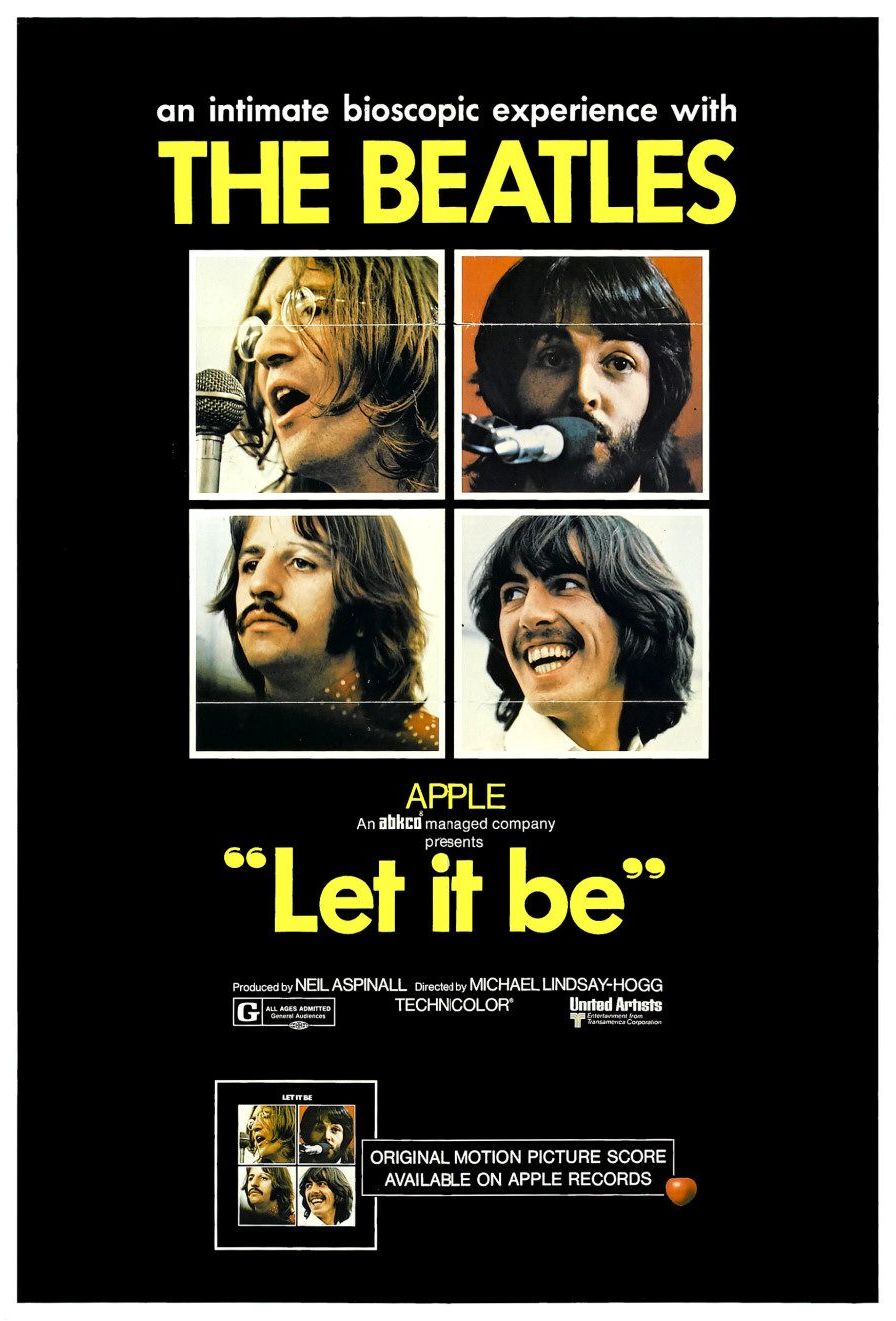
Let It Be movie 1970

This movie was released in May of 1970.

All of the Beatle movies have been remastered, cleaned up, and released except this one. Let iT Be was released on Laserdisc, Betamax, and VHS in the 1980s but that is it. It’s frustrating that all we have are old grainy copies of it.

I wrote briefly about this movie earlier but now that Yellow Submarine is being released in theaters…it’s past time for Let It Be to at least be cleaned up and released on Blue-Ray. I’ve read where there are thousands of feet of the film that has never been seen. This is historical now. From what I’ve read the Harrison and Lennon estate have held it up because of the acrimony between the members at that time. They act as if this is some secret not known to the public.

The acrimony in the movie is apparent between Paul and George during one scene, especially where Paul is directing George on how to play something. John is pretty laid back throughout the film with the presence of Yoko by his side. Ringo is…Ringo. All in all the film leaves out most of the bad feelings. Behind the scenes, George quit and John Lennon supposedly said they should call Eric Clapton to take Georges place or fill in because ““He’s just as good and not such a headache.” Of course, if this is true we don’t know for sure.

George did come back and participate and brought Billy Preston. That was a brilliant move on George’s part. You always act a little better when guests come over. Everyone was probably on their best behavior. Billy also added some great organ parts to their songs.

I have mixed emotions watching this as a Beatle fan. Yes, the end is coming but they would get together again in a few months and make one of the Hallmark albums of their career and one of the best albums ever with Abbey Road.

The film is not all doom and gloom. The first of the film was shot at Twickenham Studios starting each day early in the morning and you can tell the mood wasn’t good. After a little over 20 minutes into the film, they moved out of Twickenham to Apple and things picked up quite a bit.

The music. The soundtrack is not the Beatles best album but it is still a good album. When you have Let It Be, Get Back, The Long and Winding Road, Don’t Let Me Down and Across the Universe on an album how bad can it be? It would make another bands career to have 2 of those songs on their album. That is the quality of the Beatles.

You will hear the Beatles very raw. That was the whole idea of the movie in the first place.

The payoff of the film comes via the rooftop of Apple at the end. They all got together and played a mini-concert on the roof. We do not see everything they actually played on the roof. This would be the Beatles last public performance. It was a good performance considering it was cold in January in London at the time. They all seem to be having a good time. The performance was at lunchtime and stopped traffic and drew the police up to the roof to stop the music. If they sounded this good on the roof in January I can’t imagine what a tour what have sounded like…

Just release the movie guys. It’s past time to do it.

Paul McCartney interview for Rolling Stone magazine in 2016

You mentioned the Let It Be film. Is there any chance it will ever be rereleased?
I keep thinking we’ve done it. We’ve talked about it for so long.

What’s the holdup?
I’ve no bloody idea. I keep bringing it up, and everyone goes, “Yeah, we should do that.” The objection should be me. I don’t come off well.

Ringo Starr interview for Rolling Stone magazine in 2012

Are you thinking about releasing the Let It Be movie on DVD?
I think that’s also a possibility. One day that will come out. But we’re not talking about it right now. As you know, there’s very little that hasn’t come out. I’d forgotten that one though. You just mentioned the one thing that hasn’t come out. I’m too busy living now.

Loyal Roadies

Roadies have always been an important part of a band. Occasionally some will be rise above and become well known and some will end up as an executive in the band’s organization. Some will burn out like their bosses and below are a few famous roadies.

Neil Aspinall – Beatles

The first roadie the Beatles employed. He started to help the Beatles out by driving their van from gig to gig. He was soon their road manager and personal assistant. He ended up being the Chief Executive of The Beatles company Apple Corps until 2007. He passed away in 2008.

He was a trained accountant and knew George and Paul when they were kids. He was well trusted by all members. He stayed neutral in all of the arguments while he continued to run a prosperous Apple Corps to the end.

Mal Evans – Beatles

He was hired to help out Neil Aspinall as a roadie. Mal became their personal assistant after they stopped touring. After the Beatles broke up he did some producing…he produced the Badfinger’s single “No Matter What”. He also produced Keith Moon’s first album “Two Sides of the Moon” but was replaced midway through.

In the seventies, he still did work for some of the Beatles accompanying them on trips and odds and ends. He then separated from his wife Lil and after that, he started to have bad depression. While depressed and reportedly using downers, he was shot by LAPD while holding an air rifle and refusing to put it down. He was thought highly of by all the Beatles…See George’s quote below.

George Harrison on Mal Evans

, “Mal loved his job, he was brilliant, and I often regret that he got killed. Right to this day, I keep thinking, ‘Mal, where are you?’ If only he was out there now. He was such good fun, but he was also very helpful: he could do everything…He was one of those people who loved what he was doing and didn’t have any problem about service. Everybody serves somebody in one way or another, but some people don’t like the idea. Mal had no problem with it. He was very humble, but not without dignity; it was not belittling for him to do what we wanted, so he was perfect for us because that was what we needed.” 

Red Dog – Allman Brothers

Duane Allman befriended Joe Campbell (Red Dog) a Vietnam vet and Red Dog stayed with the Allman Brothers for three decades. He gave the band his disability checks to help them stay afloat at the beginning. He soon became a trusted member of the team. His picture with all the roadies is on the back cover of the At Fillmore East album.

Here is a quote from Cameron Crowe on Red Dog when he published his book.

“I’ll admit it right now. I am a big fan of Red Dog, and have been even before he allowed me to interview him back in 1973 for a story in Rolling Stone. Hell, he was already legendary back then. But now I just have to say that I am extremely jealous of the Great Dog, because I’ve just finished reading A Book of Tails. True rock, the kind that lasts forever, is about honesty and humor and love and chasing the elusive buzz of greatness.

Ramrod – Grateful Dead

Lawrence Shurtliff (Ramrod) joined on the Grateful Dead in 1967 and in the seventies became the President of the Grateful Dead board of directors until Garcia’s death in 1995.

Bob Weir on Ramrod

“When he did join up, it was like he had always been there. I won’t say he was the missing piece, because I don’t think he was missing. He just wasn’t there. But then he was there. And he always will be. He was a huge part of what the Grateful Dead was about.”


The Lovin’ Spoonful

This band was huge in the mid-60s. They were famous for jug band music but would have pop/rock success. The members were John Sebastion, Zal Yanovsky, Joe Butler, and Steve Boone. They started in the folk scene in the early sixties. They were signed in 1965 to Kama Sutra Records and released “Do You Believe in Magic” which reached #9 in the charts.

After that, the hits kept coming…You Didn’t Have to Be So Nice (#10), Did You Ever Have To Make Up Your Mind (#2), Daydream (#2), Summer in the City (#1), Rain on the Roof (#10), Nashville Cats (#8), Darling Be Home Soon (#15), Six O’ Clock (#18) and She Is Still a Mystery (#27). They had all of these hits between 1965-1968

In the 1980s I really got into this group. I purchased one of the many greatest hits of this band. I first heard of John Sebastion in the 70s when he wrote and sang the theme song of  TV show Welcome Back Cotter called “Welcome Back” that went to #1.

The Lovin’ Spoonful were considered by producers to be in a television show but they were dropped over a conflict of song publishing rights. It’s probably a good thing that happened or they would not have been taken seriously. The producers were the ones that a short time late started the Monkees.

Their songs are grounded in folk, jug music,  and blues. I don’t know if it is possible to be in a bad mood while listening to them. Their songs are now staples on oldies radio stations.

Zal Yanovsky left in 1967 after being dissatisfied with John’s more personal songwriting and a pot conviction. John Sebastion left the group on 1968 and with him gone the hits dried up.

A fun band to listen to. You won’t hear rock operas or rocking solos but you will hear a band that sounds like they are having a good time.

They reunited in once in 1979 and for their Rock and Roll Hall of Fame induction in 2000.


Brian Jones: The Making of the Rolling Stones

A biography about Brian Jones who founded the Rolling Stones written by Paul Trynka. This is more of a sympathetic look on Brian than other books I’ve read. Trynka digs deep with meticulous research. He tries to be fair and Brian isn’t always shown as the nicest guy in the world but he also isn’t always the person that Mick and Keith seem to remember when they actually remember him at all.

This book is not just a rehash of the best-known things about Jones and the Stones. Some instances that Stones fans know like the period where Keith ran off with Brian’s girlfriend Anita Pallenberg, we get more information on what happened. He researched Brian’s childhood and adult life thoroughly and you feel like you know the man before the book is over.

This is not only a good book on Brian but also the birth of the Stones. After reading what I’ve read about Brian in past books, I had to wonder to myself, is this author trying to make Brian look better than he was? After reading more I didn’t think so. He interviewed over 100 people for this biography and many of them were either close friends or knew Brian. He was fair about the good and bad.

When you think of Brian Jones you can’t help but think of the way his life ended. Paul Trynka doesn’t miraculously find the definite answer to Brian’s death but he gives you the most recent events that have been uncovered and basic common sense answers to a mystery that probably will never be solved.

The Rolling Stones had three different lead/rhythm guitarists. Brian Jones, Mick Taylor, and Ronnie Wood. I make no secret of loving the Taylor period of the Stones. Saying that I will admit during the Brian Jones era they were more creative and tried different things. He was very important to their sound. Under My Thumb, Paint It Black, No Expectations, The Last Time, and Ruby Tuesday would not have been the same without Brian.

The book deals with the complicated relationship between Brian, Mick, and Keith. George Harrison and Brian Jones became friends and they had a lot in common. They were in a similar situation in their respective bands. The big difference was George had more of a support system than Brian did in his band. John and Paul had a monopoly on the songwriting but they would help George and he was given a chance to grow as a songwriter within the group. The Stones didn’t work that way.

Brian could be his own worst enemy and had a hard time handling fame but he was a very talented musician. Maybe the best musician in the band. Keith and Mick learned a lot from Brian. His musicianship, image, and outlook on life rubbed off on the more inexperienced Mick and Keith.

I would recommend this book to any Stones fan. You get a better picture of the earlier days. It is a reminder that it took more than Keith and Mick to get the Stones rolling.


A very good professional review of the book by Larry Rohter of the New York Times

Brian Jones is to the Rolling Stones what Leon Trotsky was to the Russian Revolution: organizer, ideologist and victim of a power struggle. Jones founded the group, gave it its name and recruited the schoolboys Mick Jagger and Keith Richards, who then marginalized him, eventually expelling him from the band. Since his death in 1969, a month after he was forced out, Jones has largely been airbrushed from the group’s history.

Paul Trynka’s biography “Brian Jones: The Making of the Rolling Stones” challenges the standard version of events, focused on Mr. Jagger and Mr. Richards, in favor of something far more nuanced. Though Mr. Trynka sometimes overstates Jones’s long-term cultural impact, his is revisionist history of the best kind — scrupulously researched and cogently argued — and should be unfailingly interesting to any Stones fan.

Specifically, “Brian Jones” seems designed as a corrective to “Life,” Keith Richards’s 2010 memoir. Mr. Trynka, the author of biographies of David Bowie and Iggy Pop, and a former editor of the British music magazines Mojo and Guitar, has interviewed Mr. Richards several times over the years and obviously likes him, but also considers his memory of events highly unreliable.

“History is written by the victors, and in recent years we’ve seen the proprietors of the modern Rolling Stones describe their genesis, their discovery of the blues, without even mentioning their founder,” Mr. Trynka remarks in the introduction. Without naming Mr. Richards, he also expresses his distaste for an assessment that appears in “Life,” that Brian Jones was “a kind of rotting attachment.”

The portrait of Jones that Mr. Trynka offers here is bifurcated. Though he is impressed with Jones’s “disciplined, honed sense of musical direction” and his dexterity on guitar and many other instruments, he does not hesitate to point out his subject’s more unpleasant personality traits: He was narcissistic, manipulative, misogynistic, conniving and dishonest about money. It’s not accidental that this book is called “Sympathy for the Devil” in Britain.

Mr. Trynka attributes Jones’s downfall to a conjunction of factors, some related to those character flaws but others external to him. Much has been written about the drug busts that swept up Mr. Jagger and Mr. Richards in the mid-1960s and their court battles, though Jones seems to have been even more of a target, because he was such a dandy and so successful with women.

But as Mr. Trynka tells it, Jones did not receive strong legal advice or fight charges as hard or as successfully as the Jagger-Richards team. After his first arrest, he pleaded guilty, which drove a wedge between him and other band members, who feared it would mean they could no longer tour abroad, all of which left him feeling crushed, isolated and vulnerable. That, in turn, increased his consumption of drugs and alcohol and made him less productive as a musician.

Nevertheless, Mr. Trynka demonstrates convincingly that the original Rolling Stones were Jones’s band and reflected his look, tastes and interests, not just the blues but also renaissance music and what today would be called world music. (He recorded the master musicians of Joujouka in the mountains of Morocco.) In “Life,” Mr. Richards describes his discovery of the blues-tinged open G guitar tuning, familiar from hits like “Honky Tonk Women” and “Start Me Up,” as life changing, and says it came to him via Ry Cooder in the late 1960s. But Mr. Trynka notes that Jones often played in that tuning from the band’s earliest days and quotes Dick Taylor, an original member of the Stones, as saying, “Keith watched Brian play that tuning, and certainly knew all about it.”

Some of Mr. Trynka’s account is not new, having appeared in “Stone Alone,” the often overlooked 1990 memoir of the Rolling Stones bassist Bill Wyman, or other books written by band outsiders. What makes Mr. Trynka’s book fresh and interesting, and gives it credibility, is the length he has gone to find witnesses to corroborate and elaborate on those stories.

It’s not just that Mr. Trynka has sought out those who worked with the band on the creative side, such as the singer Marianne Faithfull, the arranger Jack Nitzsche and the recording engineers Eddie Kramer, Glyn Johns and George Chkiantz. He has also interviewed those with more of a worm’s-eye view: drivers, roadies, office staff, old girlfriends and former roommates like James Phelge, whose surname the band would appropriate to designate songs that were group compositions rather than Jagger-Richard numbers.

“Brian Jones was the main man in the Stones; Jagger got everything from him,” the drummer Ginger Baker, who played in the band at some of its earliest shows and went on to become famous as a member of Cream, says in the book. “Brian was much more of a musician than Jagger will ever be — although Jagger’s a great economist.”

Citing those present at the creation, Mr. Trynka contends that Jones had a hand in composing some well-known Stones tracks, including “Paint It, Black” and “Under My Thumb.” He also claims that “Ruby Tuesday,” a No. 1 hit early in 1967, is actually a Jones-Richards collaboration — written not by Mr. Richards in a burst of inspiration and heartbreak in a Los Angeles hotel room, which is how the story is told in “Life” and elsewhere, but, according to Ms. Faithfull and Mr. Kramer, “labored over” by the pair in London for weeks.

“I used to say to Brain, ‘What on earth are you doing?’ ” Stan Blackbourne, the accountant for the Rolling Stones at their mid-1960s peak, recalls in the book. “ ‘You write some of these songs, and you give the name over as if Mick Jagger has done it. Do you understand, you’re giving ’em thousands of pounds!’ All the time I used to tell him, ‘You’re writing a blank check.’ ”

Mr. Trynka also looks into the circumstances of Jones’s death, on July 3, 1969, in the swimming pool at his home in East Sussex, once owned by A. A. Milne, but after all the Sturm und Drang that has come before, the subject is somewhat anticlimactic. In numerous books and in films like “Stoned,” it has been suggested that Jones was murdered, but Mr. Trynka painstakingly examines the flaws in each of the theories, and ends up close to the official verdict, “death by misadventure,” because of drug and alcohol consumption.

“The official coroner’s verdict on Brian’s death was perfunctory and lazy,” Mr. Trynka concludes. Nonetheless, “I’ve come to share their belief that Brian’s death was most likely a tragic accident” and to believe that “many of the existing theories that his death was in fact murder rely on unreliable witnesses.”

In the end, with the advantage of 45 years’ perspective, Mr. Trynka maintains, it is Jones’s music that matters. “It’s understandable why the survivors resent Brian Jones beyond the grave,” given his founder’s role, he argues, and also writes: “Brian Jones got many things wrong in his life, but the most important thing he got right.”


Everclear

In the late-1990s I started to listen to this band. They were formed in the early 90s by lead singer, guitarist, and songwriter Art Alexakis. Art’s dad left his mom and family and they had to survive in rough neighborhoods in LA. Some of the songs he wrote like “Father of Mine” relates that.

I must admit I know more of their radio songs but I have listened to their older albums and they are mostly solid. The album that caught my attention was “So Much For The Afterglow” with songs “I Will Buy You A New Life,””Everything to Everyone,” and “Father of Mine.” When I heard “I Will Buy You a New Life” on the radio I was hooked and got the album.

My favorite song by them is “Wonderful” that was released in 2000 on the album “Songs from an American Movie Vol. One: Learning How to Smile.” It’s about a divorce through a child’s eyes. I can relate to that so the song hit home in a lot of ways.

They also perform a good cover of Van Morrison’s “Brown Eyed Girl.”

One song off the album is a tribute to the 1970s called “AM Radio.” That one of course I love. Art grew up in the 70s and has said he was influenced by The Beatles, Led Zeppelin, Merle Haggard, Motown, Otis Redding, and Punk Rock in general. He knows how to write good hooks that will stay with you.

The AM radio video is hilarious.

Here is “Wonderful”

I want the things that I had before
Like a Star Wars poster on my bedroom door
I wish I could count to ten
Make everything be wonderful again


AM Radio


You can hear the music on the AM radio

The VCR and the DVD
There wasn’t none of that crap back in 1970
We didn’t know about a World Wide Web
It was a whole different game being played back when I was a kid

Wanna get down in a cool way
Picture yourself on a beautiful day
Big bell bottoms and groovy long hair
Just walkin’ in style with a portable CD player
No, you would listen to the music on the AM radio
Yeah, you could hear the music on a AM radio

Flashback, ’72
Another summer in the neighborhood
Hangin’ out with nothing to do
Sometimes we’d go drivin’ around
In my sister’s Pinto 
Cruisin’ with the windows rolled down
We’d listen to the radio station
We were too damn cool to buy the eight-track tapes
There wasn’t any good time to want to be inside
My mama wanna watch that TV all goddamn night

I’d be in bed with the radio on
I would listen to it all night long
Just to hear my favorite song
You’d have to wait but you could hear it on the AM radio
Yeah, you could hear the music on a AM radio
I can still hear Mama say ?°Boy turn that radio down!?±

?°Aw, Mom. Not that show again! I don’t wanna watch that show! 
Can’t we watch Good Times or Chico and the Man or something cool? 
Turn it off!”

Things changed back in ’75
We were all growing up on the in and the outside
We got in trouble with the policeman
We got busted gettin’ high in the back of my friend’s van

I remember 1977
I started going to concerts and I saw the Led Zeppelin
I got a guitar on Christmas day
I dreamed that Jimmy Page would come from Santa Monica 
and teach me to play
Teach me to play…

There isn’t any place that I need to go
There isn’t anything that I need to know
I did not learn from the radio

Yeah when things get stupid and I just don’t know
Where to find my happy
I listen to my music on the AM radio
You can hear the music on a AM radio

I like pop, I like soul, I like rock, but I never liked disco
We like pop, we like soul, we like rock, but we never liked disco…

No I never liked disco…


The Raspberries

A powerpop group from Cleveland Ohio in the early to mid-70s. They were influenced by the Beatles, Small Faces, The Who and The Beach Boys. They had some of the same problems as Badfinger, being too hard for pop and too soft for rock. Badfinger was overall more successful but the Raspberries had some top 40 hits.

“Go All The Way” (1972 #5),  I Wanna Be With You (1972 #16), Lets Pretend (1973 #35), and Overnight Sensation (1975 #18). They were too clean cut for rock fans to embrace. Matching suits and a teenybopper image. Unhip or uncool is what was many critics of that time wrote about them but their songs are melodic and fun.

Most bands have one song that is above the rest of their catalog. Many would probably say the Raspberries best song was Go All The Way but to me, it was Overnight Sensation. That song is their masterpiece. The song tells of the frustrations of trying to have a hit song on the radio with a heavy Who, Beach Boys, and Beatle sound.

After their album “Starting Over” in 1975 they broke up. If they could have stayed around a few more years they may have fit nicely with Cheap Trick, The Cars, The Knack, and Blondie.

Many artists list them as an influence and are fans such as KISS, Courtney Love, and oddly enough Bruce Springsteen and Axl Rose have mentioned them.

John Lennon was a fan of them and was in the studio when they made “Starting Over.”

Eric Carmen had a very successful solo career after the breakup but he stuck with pure pop in his music. He finally got the elusive hits he sang about in Overnight Sensation with All By My Myself, Never Gonna Fall in Love Again, and some songs off of the Dirty Dancing soundtrack. I never thought they were as good as his Raspberries songs.

The Raspberries reunited in 2004 and did a tour. I have watched some video of one of the shows and they were really tight.

If you want to get a cd that covers their career get “The Raspberries Greatest”

rasp great.jpg


The original members were

Eric Carmen (Volcalist, Guitar, Pianist, Bass)
Dave Smalley (Bass, Guitar)
Wally Bryon (Guitar)
Jim Bonfanti (Drummer)


Alias Smith and Jones

This television show only last three seasons from 1971-1973 and from reading the reviews of the day it attracted young viewers because of the young male leads Pete Duel and Ben Murphy. It’s a western comedy about two reformed non-violent bank robbers who are trying to go straight.

The Governor has promised them amnesty if they stay out of trouble for a while but no one can know so, they are still wanted. The episodes are humorous and different from the two big westerns at the time…Gunsmoke and Bonanza. The episodes tended to be uneven though but overall it was a good show.

Pete Duel was going through problems in his life at the time. During the first season, he was driving drunk and pulled into the path of an oncoming car. Two people were injured and one hospitalized. This would haunt him till his death and he would fight a drinking problem to the end.

Pete and Ben are in about every shot of the series. They both worked 12-14 hour days 6-7 days a week. Pete was never happy with the show. He was restless and wanted to do different things. When the second season started he was put on 2-year probation for the accident and lost his drivers license.

One quote from him around this time about being in a TV series was “It’s a big fat drag to any actor with interest in his work. It’s the ultimate trap.” He was very environmentally conscious and often spoke out on issues like pollution.

After being driven home from the set on December 30, 1971, he died of a self-inflicted gunshot wound in the early hours of December 31, 1971.

The show continued on with Roger Davis taking over Duel’s character in the series. It lasted only 17 episodes after Duel’s departure.

This is from Wikipedia… it’s a sad commentary

Upon learning of Duel’s death, executive producer Jo Swerling, Jr., initially wanted to end the series, but ABC refused.  Swerling later stated:

ABC said, “No way!” They said, “You have a contract to deliver this show to us, and you will continue to deliver the show as best you can on schedule or we will sue you.” Hearing those words, Universal didn’t hesitate for a second to instruct us to stay in production. We were already a little bit behind the eight ball on airdates. So, we contacted everybody, including Ben (Murphy), and told them to come back in. The entire company was reassembled and back in production by one o’clock that day shooting scenes that did not involve Peter — only 12 hours after his death.

The Intro

Narrator: Hannibal Heyes and Kid Curry – the two most successful outlaws in the history of the West. And in all the trains and banks they robbed, they never shot anyone. This made our two latter-day Robin Hoods very popular – with everyone but the railroads and the banks.

Jed ‘Kid’ Curry: There’s one we thing we gotta get, Heyes.

Hannibal Heyes: What’s that?

Jed ‘Kid’ Curry: Out of this business!

Sheriff Lom Trevors: The governor can’t come flat out and give you amnesty now. First you have to prove you deserve it.

Hannibal Heyes: Ah. So all we have to do is just stay out of trouble till the governor figures we deserve amnesty.

Jed ‘Kid’ Curry: But in the mean time, we’ll still be wanted.

Sheriff Lom Trevors: Well, that’s true. Till then only you, me and the Governor will know about it. It’ll be our little secret.

Hannibal Heyes: That’s a good deal?

Jed ‘Kid’ Curry: I sure wish the governor’d let a few more people in on our secret!

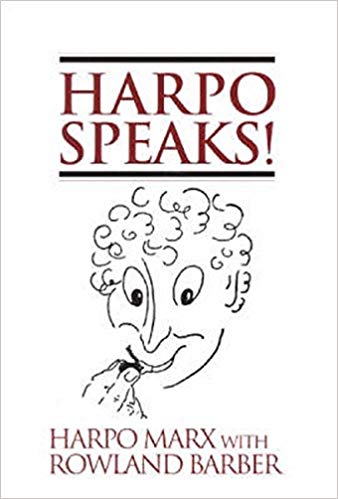
Harpo Speaks

I have mentioned this book before but not in detail. It is my favorite autobiography I’ve ever read. He starts off in his childhood in the late 1800s and ends up in the 1960s. I have read this book at least 7-10 times. It’s always my traveling companion on trips just in case I need something else to read. I’ve read books by and about Groucho and others written about the Marx Brothers but this book that Harpo and Rowland Barber wrote tops them all. He doesn’t go through all of the movies by detail but he packed so much living in his life that his life was full enough without much info about the movies.

He was always himself no matter what. The Brothers never would conform to anyone’s standards. He was counterculture before counterculture. Harpo jumped out of the window in 2nd grade and never came back but ended up hanging out with some of the best-known intellectuals of the 20th century and was a member of the Algonquin Round Table but yet he could hardly spell. He frequently stayed at William Randolph Hearst’s super-estate San Simeon. He called himself a professional listener…the only one of the bunch.

He taught himself the harp and played with an unorthodox style. Professional harp players would ask him to show them how he played some of the things he did…

Harpo was a good friend of Alexander Woolcott and Wolcott would invite Harpo and a select few to Neshobe Island in Lake Bomoseen in Vermont that Woolcott owned for the summers to play games and hang out every day. Harpo could make life interesting in the dullest of surroundings. He was friends with Robert Benchley, Salvador Dali, Dorothy Parker, Charles MacArthur, Alice Duer Miller, George Bernard Shaw,  Beatrice Kaufman, and Ruth Gordon.

Wolcott also arranged for Harpo to tour Russia in the 1930s. Harpo actually did a bit of Spy work for the American government at the time…transporting some papers on his leg out of Russia to America.

If you read this just to read about the Marx Brothers movie career…don’t…if you want to know what they went through to get where they did…then yes read it. This book tells what old-time Vaudeville was really like. Not a romantic version of it by some old timers that told their story after they retired. Awful boarding houses, spoiled food, and harassment by promoters.

He never seemed to age in spirit. He kept up with new things and was not stuck in the past.

His son Bill Marx wrote a book later on about his life with Harpo. When the Beatles came out Bill…who studied jazz and played piano, hated them. Harpo told him in 1964 that he better start liking them because their songs would last through time. He said this in 1964 before the Beatles matured. The guy had been around George Gershwin, Oscar Levant, and Irving Berlin. Bill said in 1970 he was playing piano in a club somewhere and what was he playing? Let It Be… “Dad was right.”

Harpo married Susan Flemming when he was 48 in 1936. George Burns asked him in 1948 how many children did he want to adopt? Harpo said “I’d like to adopt as many children as I have windows in my house. So when I leave for work, I want a kid in every window, waving goodbye.”

Harpo was known to wake one of his children up in the middle of the night if he worked late just to play games with them.

They ended up adopting 4 children…below was the house rules for the kids…

  1. Life has been created for you to enjoy, but you won’t enjoy it unless you pay for it with some good, hard work. This is one price that will never be marked down.
  2. You can work at whatever you want to as long as you do it as well as you can and clean up afterwards and you’re at the table at mealtime and in bed at bedtime.
  3. Respect what the others do. Respect Dad’s harp, Mom’s paints, Billy’s piano, Alex’s set of tools, Jimmy’s designs, and Minnie’s menagerie.
  4. If anything makes you sore, come out with it. Maybe the rest of us are itching for a fight, too.
  5. If anything strikes you as funny, out with that, too. Let’s all the rest of us have a laugh.
  6. If you have an impulse to do something that you’re not sure is right, go ahead and do it. Take a chance. Chances are, if you don’t you’ll regret it – unless you break the rules about mealtime and bedtime, in which case you’ll sure as hell regret it.
  7. If it’s a question of whether to do what’s fun or what is supposed to be good for you, and nobody is hurt whichever you do, always do what’s fun.
  8. If things get too much for you and you feel the whole world’s against you, go stand on your head. If you can think of anything crazier to do, do it.
  9. Don’t worry about what other people think. The only person in the world important enough to conform to is yourself.
  10. Anybody who mistreats a pet or breaks a pool cue is docked a months pay.


If you are looking for an autobiography…get this book.

Here is a small portion of Chapter 1 of Harpo Speaks!

I’ve played piano in a whorehouse. I’ve smuggled secret papers out of Russia. I’ve spent an evening on the divan with Peggy Hopkins Joyce. I’ve taught a gangster mob how to play Pinchie Winchie. I’ve played croquet with Herbert Bayard Swope while he kept Governor Al Smith waiting on the phone. I’ve gambled with Nick the Greek, sat on the floor with Greta Carbo, sparred with Benny Leonard, horsed around with the Prince of Wales, played Ping-pong with George Gershwin. George Bernard Shaw has asked me for advice. Oscar Levant has played private concerts for me at a buck a throw. I have golfed with Ben Hogan and Sam Snead. I’ve basked on the Riviera with Somerset Maugham and Elsa Maxwell. I’ve been thrown out of the casino at Monte Carlo.
Flush with triumph at the poker table, I’ve challenged Alexander Woollcott to anagrams and Alice Duer Miller to a spelling match. I’ve given lessons to some of the world’s greatest musicians. I’ve been a member of the two most famous Round Tables since the days of King Arthur—sitting with the finest creative minds of the 1920’s at the Algonquin in New York, and with Hollywood’s sharpest professional wits at the Hillcrest.
(Later in the book, some of these activities don’t seem quite so impressive when I tell the full story. Like what I was doing on the divan with Peggy Hopkins Joyce. I was reading the funnies to her.)
The truth is, I had no business doing any of these things. I couldn’t read a note of music. I never finished the second grade. But I was having too much fun to recognize myself as an ignorant upstart.
 
 I can’t remember ever having a bad meal. I’ve eaten in William Randolph Hearst’s baronial dining room at San Simeon, at Voisin’s and the Colony, and the finest restaurants in Paris. But the eating place I remember best, out of the days when I was chronically half starved, is a joint that was called Max’s Busy Bee. At the Busy Bee, a salmon sandwich on rye cost three cents per square foot, and for four cents more you could buy a strawberry shortcake smothered with whipped cream and a glass of lemonade. But the absolutely most delicious food I ever ate was prepared by the most inspired chef I ever knew—my father. My father had to be inspired because he had so little to work with.
I can’t remember ever having a poor night’s sleep. I’ve slept in villas at Cannes and Antibes, at Alexander Woollcott’s island hideaway in Vermont, at the mansions of the Vanderbilts and Otto H. Kahn and in the Gloversville, New York, jail. I’ve slept on pool tables, dressing-room tables, piano tops, bathhouse benches, in rag baskets and harp cases, and four abreast in upper berths. I have known the supreme luxury of snoozing in the July sun, on the lawn, while the string of a flying kite tickled the bottom of my feet.

I can’t remember ever seeing a bad show. I’ve seen everything from Coney Island vaudeville to the Art Theatre in Moscow. If I’m trapped in a theatre and a show starts disappointingly, I have a handy way to avoid watching it. I fall asleep.
My only addictions—and I’ve outgrown them all—have been to pocket billiards, croquet, poker, bridge and black jelly beans. I haven’t smoked for twenty years.

The only woman I’ve ever been in love with is still married to me.

My only Alcohol Problem is that I don’t particularly care for the stuff.

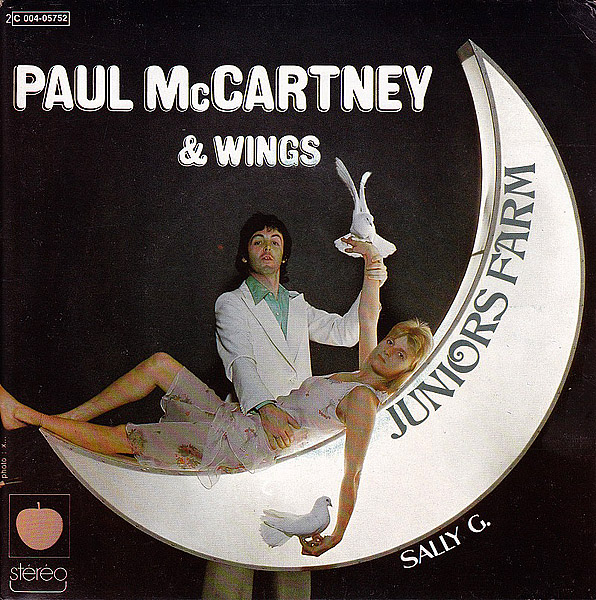
Juinor’s Farm/Sally G. by Paul McCartney and Wings

Juinor’s Farm/Sally G. single by Paul McCartney and Wings.

I had this single as a kid. Juinor’s Farm and Sally G were both partially recorded in Nashville during Paul’s six-week stay there in 1974. Juinor’s Farm is one of my favorite songs by Paul McCartney. The song rocks and the solo was performed by a 21-year-old Jimmy McCulloch. The song reached #3 in America. The band stayed at a farm in Lebanon TN around 30 miles from Nashville. I remember at the time it being big news that Paul McCartney was going to record in Nashville. I was seven years old and remember seeing Paul on the local news.

Jimmy McCulloch was a guitar prodigy… He was playing in a band when he was 11. He was in a band supporting The Who when he was 14 and in the band Thunderclap Newman in 1969 when he was 16. He went on to play with John Mayall (That guy knew how to pick guitar players) and Stone the Crows… He then went to play with Paul McCartney and Wings in 1974. He gave Paul’s songs an edge and I wish he would have stayed in Wings longer.

He left Paul to play with the reformed Small Faces in 1977.  In 1979 died of heart failure due to morphine and alcohol poisoning. You have to wonder how much better this guy could have been…

The B side was Sally G. and it hit #17 on the Billboard charts and even #51 on the country charts. This song has stayed with me through the years. When I listen to it…I think, now this is more of a what a country song should sound like. I really hate modern country music. No pickup trucks or tractors in this song. Modern country music could learn a lot by listening to country songs in this period and earlier. Paul composed the song after visiting a club in Printer’s Alley in Nashville.

This was McCartney’s last release on Apple Records

sallyg.jpg

This is from the Tennessean about Paul’s 1974 visit to Nashville. It was written by Dave Paulson

1974
Paul McCartney touched down at Metropolitan airport with his family on the evening of June 6, 1974, emerging from the plane wearing a green battle jacket and flashing a peace sign. The Tennessean reported that Paul answered questions “briefly but willingly” and even humored a group of kids who were amused by his British accent (he said the word “elevator” at their request).
The music superstar told a crowd of about 50 fans and members of the press that he’d come to Nashville for his three Rs — rehearsing, relating and riding. Music producer and executive Buddy Killen, who would act as the McCartneys’ Music City guide during their six-week stay here that summer, greeted the family upon their arrival.
The McCartneys rented a 133-acre farm just outside of Lebanon from songwriter Curly Putman (“Green, Green Grass of Home”) for $2,000 a week. They had requested a farm within 50 miles of Nashville that had horses and swimming facilities.
“I’ve got a farm in Scotland,” McCartney told reporters during an informal press conference on the farm. “You’re not the only people who have farms, you know. Back in Scotland, we’re country people in our own way.”
During their stay, the family visited the homes of Johnny Cash and Chet Atkins and even took in a few movies at their local drive-in.
McCartney and his family caused quite a stir when they joined the audience at Opryland for the third annual Grand Masters Fiddling Contest on June 16, 1974. During the intermission, Porter Wagoner and Dolly Parton performed their final show together before Parton embarked on her solo career. Linda McCartney got out of her seat several times to take photos of the duo. The McCartneys went backstage to meet with Wagoner and Parton, and then escaped into a waiting automobile.
McCartney told Nashville reporters that he was raised on country music, and he tried his hand at a bit of country songwriting while he was in town: He wrote the song “Sally G.” after a trip to Printer’s Alley.
McCartney drove around on a newly purchased motorcycle during the family’s Nashville visit. When a group of reporters waited at the Putman farm gate for a “highly informal” press conference, Paul and Linda rode past, smiling and waving.
Linda told The Tennessean she was “not much into materialism anymore,” though she had made a recent trip to Rivergate to purchase gifts for her family. Another big machine Paul loved — the Mellotron synthesizer — was not readily available in Tennessee at the time, to his chagrin.
As his time in Tennessee came to a close, McCartney told a group of local reporters that he hoped to mount a U.S. tour the following year, and that if it happened, Music City would definitely be on the itinerary.
“We just couldn’t skip Nashville,” he said. “We have too many friends here.”
McCartney continued to skip Nashville for the next 36 years.

When Paul did come I was there in 2010… he also came back in 2013 and I was there again. Three hours of one favorite after another…

New Musical Express Winners 1965 Concert

I have the video of this show. First, the lineup to this event included

  • The Moody Blues
  • Freddie and the Dreamers
  • Georgie Fame and the Blue Flames
  • The Seekers
  • Herman’s Hermits
  • The Ivy League
  • Sounds Incorporated
  • Wayne Fontana and the Mindbenders
  • The Rolling Stones
  • Cilla Black
  • Donovan
  • Them
  • The Searchers
  • Dusty Springfield
  • The Animals
  • The Beatles
  • The Kinks

Think about the talent on that stage. To see the Stones, Animals, Van Morrison with Them, The Kinks and The Beatles all in the same day on the same stage. This would be a dream concert. Jimmy Saville hosted the event. It’s hard to watch the guy knowing what we know now about him.

It’s great to see The Rolling Stones with Brian Jones but you can tell the Beatles were THE Band of the day and were clearly the most anticipated.

You see a young Van Morrison fluff a line in “Here Comes The Night” but his voice comes through loud and clear. It’s a wonder you have a sound at all. In between songs you see roadies roll out amps and drums for the next band. They did quite well and it was never a long break between bands.

The sound quality is not the greatest but it’s good enough to watch considering the hectic way they had everyone perform.

The next year the Who, Rolling Stones, and the Beatles would play but The Beatles and Stones would not let their segments be recorded.

As far as I know, there is not an official release of this video…You can watch it on Youtube or order a bootleg DVD on various sites.