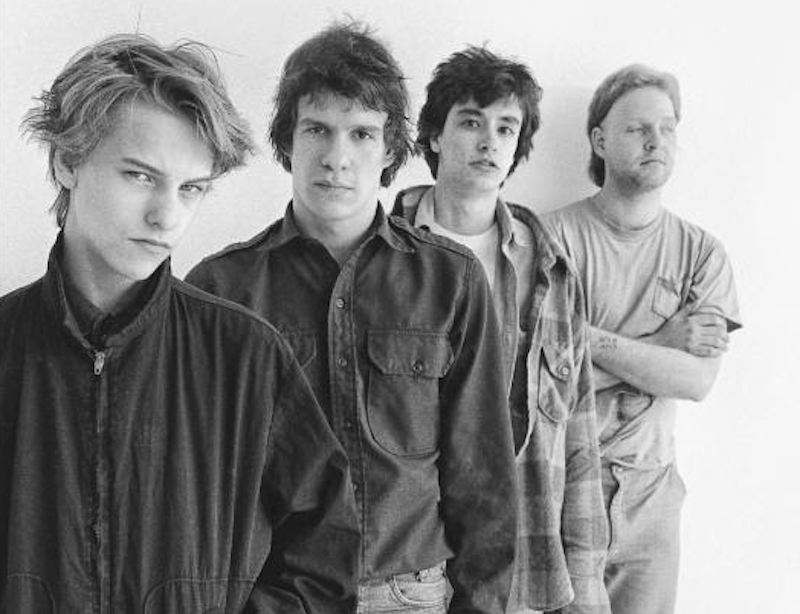
This Replacements song was inspired by U2’s I Will Follow. Paul Westerberg had seen U2 perform on April 1981 at bar named Sam’s, where they actually played the song twice in their set.
He liked the sound of “I Will Follow,” but he balked at what he considered its unrealistic message. The kids he knew weren’t going blindly forth, their faith steadfast, their belief unwavering in the face of adversity.
They were still in their punk phase but on the next album they would start expanding their sound. I’ve been listening to their albums in order and the first three I wasn’t as familiar with but I’ll be posting at least one song off of each album as I go.
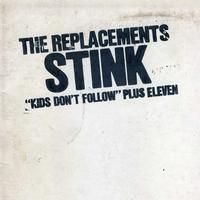
The song was on their second release…an ep called Stink. It was released in 1982 on Twin/Tone Records.
The intro to the song was not made in the studio, it was a real party where the police was called because of the noise.
The Replacements were playing at a rent-party for visual artist Don Holzschuh, opening for the the band Warheads. It was a massive multi-keg affair attended by a lot of underage kids. The Replacements’ noise levels drew a visit and warning from the local police. Not long after they’d finished their set, the Minneapolis police decided to end the fun entirely.
As a uniformed officer took the microphone to disperse the crowd, Replacements’ soundman Terry Katzman pressed record on his tape player. “This is the Minneapolis Police . . . the party is o-ver,” he announced, to a collection of boos.
Future Soul Asylum singer Dave Pirner was at the party and he was one of the kids harassing the police. He has taken credit for being the one to yell “Hey, f**k you, maaaan!” starting at around 7 seconds below on the song.
Don Holzschuh talks about the party where the intro came from…
Kids Don’t Follow
Go home…..this is the Minneapolis police….the party’s over…if you all just grab your stuff & leave there won’t be any hassle..the party’s been closed….etc.
One, two, three, four
Kids won’t listen To what you’re sayin’ Kids ain’t wondering Kids ain’t praying Mo says he’s worried He says talk away He says yeah I’ve been cured
I need some attention No house of detention I’d love some attention Don’t start again
Kids don’t need that Kids don’t want that Kids don’t need nothing of the kind Kids don’t follow
What you’re doin’ In my face out my ear Kids won’t follow What you’re sayin We can’t hear
Can’t stop looting Can’t stop smoking Kids ain’t wondering Can’t stop choking Kids won’t stand still Kids won’t shut up Kids won’t do it You talk to ’em now
Kids don’t follow What you’re doin’ In my face and out my ear Kids won’t follow What you’re saying We can’t hear
Kids won’t follow What you’re saying In my face out my ear Kids don’t follow What you’re sayin’ We can’t hear What you say Not tomorrow Not today
Besides having one of the most unique names in the history of rock songs…this one is a really cool song off of Abbey Road. It’s always one of my favorite songs of the medley.
It’s in the medley on side 2 for those of you who have the vinyl album. I always wondered who that was coming through the bathroom window. Paul wrote the song about a fan, thought to be Diane Ashley. She said that there was a ladder in Paul’s garden and bunch of girls put it against the wall and Diane climbed up and went through the bathroom window when Paul was at the studio. I seriously doubt if she was the only one…more probable…They All Came Through Paul’s Bathroom Window. The girls that hung out waiting for the Beatles were called “Apple Scruffs” by the Beatles.
Now married with four children, Diane keeps a framed photo of herself with Paul on her kitchen shelf and looks back on her days as an Apple Scruff with affection: “I don’t regret any of it. I had a great time, a really great time.” It shows you how different of a time that was compared to now.
Margo Bird was on of the girls who Paul negotiated with to get some of his property back…he didn’t care if they got small souvenirs but when pictures went missing, Margo helped him track them down.
This was credited to Lennon/McCartney but seems to be all McCartney. The Beatles ran through it a few times earlier in the year in the Let It Be sessions. They were going to feature it in their rooftop concert but didn’t feel confident in it.
The song fit nicely between Polythene Pam and Golden Slumbers in the medley. Joe Cocker covered this song also.
Apple Scruff Margo Bird: “They rummaged around and took some clothes. People didn’t usually take anything of real value but I think this time a lot of photographs and negatives were taken. There were really two groups of ‘Apple Scruffs’ – those who would break in and those who would just wait outside with cameras and autograph books. I used to take Paul’s dog for a walk and got to know him quite well. I was eventually offered a job at Apple. I started by making the tea and ended up in the promotions department working with Tony King.”
From Songfacts
Paul McCartney wrote this about a fan who broke into his house. Diane Ashley claims it was her. “We found a ladder in his garden and stuck it up the bathroom window which he’d left slightly open,” she said. “I was the one who climbed up and got in.”
Landis Kearnon (known at the time as Susie Landis) gave us the following account:
Here, all this time I thought this song was written about me and my friend Judy. What a surprise to learn there was someone named Diane Ashley who put a ladder up to Paul’s house and climbed in through the bathroom window. This and the bit about “quit the police department” being inspired by an ex-cop taxi driver in NYC tells me something I already know about songwriting, which is that many songs are composites. This one obviously was because Diane wasn’t the only person having a profound effect on Paul McCartney by crawling in a bathroom window in 1967 (maybe ’68 in her case). Judy and I were paid $1500 by Greene & Stone, a couple of sleazy artist managers driving around the Sunset Strip in a Chinchilla-lined caddy limo, to “borrow” the quarter-inch master of “A Day In The Life” off of David Crosby’s reel-to-reel, drive it to Sunset Sound studios in Hollywood where Greene & Stone duped it, then put it back where we found it at Crosby’s Beverly Glen Canyon pad. Crosby was playing with the Byrds that day in Venice so we knew his house was empty. This was the day after a major rainstorm so the back of his house was one big mudslide. We climbed up it, leaving 8-inch deep footprints and, you guessed it, gained access via the bathroom window, leaving behind footprints and a veritable goldmine of forensic matter. We were really nervous and did not make clear mental notes of how the master reel was on the player, but did have the sense to leave Crosby’s front door unlocked while we drove across town and back. After the tape was back on the machine (badly) we changed out of our muddy shoes, drove to the Cheetah in Venice, and hung out with the Byrds into the evening, thinking we were awfully clever and cute. We did not know why Greene & Stone would pay so much money for a copy of a Beatles song, other than the fact that is was a groundbreaking and mind-blowing piece, but found out the next day when we heard “A Day In The Life” on KHJ, I think it was. Greene & Stone had used it as payola to get one of their groups, The Cake, singing “Yes We Have No Bananas,” on the air. Which they did, and it sucked, but oh well. By the following day “A Day In The Life” was no longer on the air. And just a day or two after that there was a front page blurb in the LA Times about “A Day In The Life” getting aired one month prior to the release date of the single and the Sgt. Pepper LP, which apparently cost the Beatles plenty and they were suing Capitol or Columbia, whichever the label was, for $2 million… and McCartney was flying in from London to deal with the mess. Oops. Judy and I nearly sank through the floor. Though we were active “dancers” in the various nightclubs on the Sunset Strip, we lay low for a while, not knowing what to expect. In fact, other than a song being written and a GREAT cover by Joe Cocker, nothing happened. We got our money, spent it on groovy clothes, of course (what else was there?) and never heard a word about it.
“I knew what I could not say” and “protected by a silver spoon” seemed to explain why there were no repercussions. My dad was a TV director who had already threatened to bust and ruin David Crosby for smoking pot with and deflowering his daughter; he had clout and David was afraid of him. Judy was from money and influence too. I feel that David knew exactly who had broken in and borrowed the tape but couldn’t press charges. He probably wasn’t supposed to be playing the master for all his friends and hangers-on, so there must have been hell to pay for him. I always felt bad for the cred it must have cost him with his friend Paul McCartney.
Oh, the bit about “Sunday’s on the phone to Monday, Tuesday’s on the phone to me” – that was somebody named Sunday, maybe a detective, I can’t remember now, calling the producer Billy Monday about the break-in and song leak. Billy Monday, knowing she was a friend of McCartney’s, called Tuesday Weld, and it was she who called Paul in London and told him the news. Well, I guess I didn’t make this very short after all. But you can’t tell me that this incident didn’t feed into the overall inspiration for the song. I’m just glad it turned out so cool and hope it made a heap for them in compensation for the publicity costs at the outset.
It was interesting and exciting then, that’s for sure. Even though I came of age into that scene and had nothing to compare it to, I still had a sense at the time of being at the epicenter of something big. Some of that was attributable to the hubris of youth, but some of it turned out to be real, as it happened. Now, present time, it makes my day to come across someone who still finds it interesting or even knows what or whom I’m talking about. By the way, I never did get to meet the Beatles, though I was invited to party where they were staying once, when I was 17. My mother wouldn’t let me go! I never forgave her.
I lived in LA until 1987 where I was a model, actress, (groupie, but that wasn’t professional), marching band manager, religious (Buddhist) leader, newspaper columnist, secretary, copywriter, copy editor, account executive, screenwriter, songwriter, band leader, session singer, textile designer, artist. Since then, in the Santa Fe area and now, since 1992, in Tucson, I continued my artistic and musical endeavors, ran a fabric-painting factory, was a jazz singer for several years (which has mutated to something more individual and artistic of late), have worked numerous odd jobs from pizza delivery to bookstore management, and am now close to completing my first novel, which is set in a Buddhist cult in the early ’70s.
In the ’70s I traveled halfway around the world on a square-rigged cargo ship, lived and sang in Europe for three years, and, as of 1991, am a mother of one though I never married.
Subsequent to the bathroom window event, my friend and partner in crime, as it were, Judy, went off with a Dick Clark Productions road show (can’t remember the name of it but it was something timely) as “Irma the Dancing Girl.” Her job, nightly, in each new town, was to put on a bikini, dance, and paint wild, acid abstract canvases with her extremely long blond hair. I, on the other hand, joined a Buddhist cult, which was like living on another planet entirely, and completely disappeared from view, as far as the “scene” was concerned. Judy and I didn’t hang out much after we realized the impact of our little romp. We didn’t talk about it, but we may have decided at some level that we pushed our combined wildness a bit too far on that one and moved on to “safer” friends. I saw her once in the early ’70s. She had been married and divorced, was the mother of one, and that was the last contact we had.
The Beatles recorded this as one song with “Polythene Pam.”
The Beatles gave this to Joe Cocker, who released it in 1969. The Beatles released their version first. Cocker’s version was used on the soundtrack to the movie All This and World War II, released in 1976. A strange mix of World War II documentary footage set to the music of the Beatles, the movie bombed and has barely been heard of since. Others who covered The Beatles on the soundtrack include Peter Gabriel, Elton John, Tina Turner, Leo Sayer, Frankie Laine and the Bee Gees.
This is part of a suite of songs at the end of Abbey Road. They used bits from many songs they never finished to put the suite together.
McCartney played lead guitar and Harrison played bass. It was usually the other way around.
McCartney said in a documentary shown February 6, 2002 in England that part of the lyric was inspired by sitting in the back of a New York cab. The drivers name was on display (Quitts) saying “Ex Police Department,” which inspired the line: “And so I quit the Police Department and got myself a steady job…”
She Came In Through The Bathroom Window
She came in through the bathroom window Protected by a silver spoon But now she sucks her thumb and wanders By the banks of her own lagoon
Didn’t anybody tell her? Didn’t anybody see? Sunday’s on the phone to Monday Tuesday’s on the phone to me
She said she’d always been a dancer She worked at fifteen clubs a day And though she thought I knew the answer Well, I knew what I could not say
And so I quit the police department And got myself a steady job And though she tried her best to help me She could steal but she could not rob
Didn’t anybody tell her? Didn’t anybody see? Sunday’s on the phone to Monday, Tuesday’s on the phone to me Oh yeah
This song peaked at #69 on the Billboard 100, and it was on ZZ Top’s second album “Rio Grande Mud.” This was their first hit and the only single off of the album.
The song was written by Steve Perron and Kenny Cordray. They were not given credit for many years, and they received little or no royalties for decades.
ZZ Top are still together and one of the reasons they lasted so long was their long time manager Bill Ham. he produced or co-produced all of their albums up through 1996’s Rhythmeen as well as being their manager. They parted ways in 2006. He passed away in 2016 at 79.
Frank Beard:“I truly think the band would have broken within three years if Bill hadn’t been involved. He was the guy that smoothed things out whenever we got our feathers ruffled with each other and who always encouraged us no matter what. He was our father figure, simple as that.”
Billy Gibbons on the album: It was the first record that brought us into step with the writing experience. We started documenting events as they happened to us on the road; all of these elements went into the songwriting notebook. As we went along, we were keeping track of skeleton ideas as they popped up. The craft was certainly developing.
Francine
Got a girl, her name’s Francine, finest thing you ever seen. And I love her, she’s all that I want. And I need her, she’s all that I need.
Well, Francine, oh Francis, why do you love me and make me cry? How I love her, she’s all that I want. How I need her, she’s all that I need.
If I ever caught her with Stevie P I’d throw her back in the Penitentiary, now. And if I caught her with my mother’s son I’ll call her daddy and get my gun.
My Fancine just turned thirteen, she’s my angelic teenage queen. And I love her, she’s all that I want. And I need her, she’s all that I need. And I love her, she’s all that I want. And I need her, she’s all that I need. And I love her, she’s all that I want. And I need her, she’s all that I need.
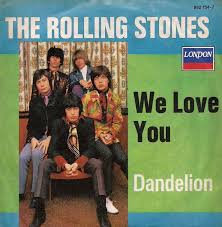
This song was recorded in 1966 but not released until the summer of 1967. The psychedelic sound fit in perfectly with the summer of love. The song was written by Mick Jagger and Keith Richards.
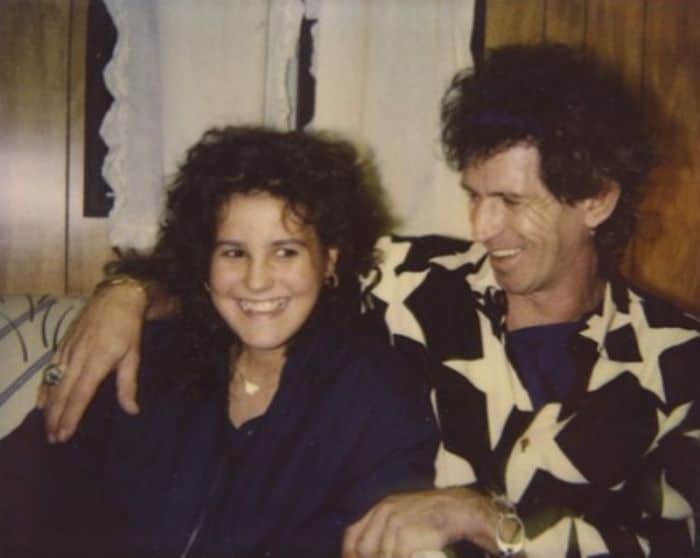
Later on Keith named his first daughter Dandelion but she decided later to use her middle name “Angela” instead…Her mom was the late Anita Pallenberg.
The Stones had some nice psychedelic pop songs in the mid-sixties that you don’t hear as much now. Personally I wished this period would have gone on a little longer. This song made #49 in Rolling Stone magazine rating the top 100 Rolling Stones songs.
Because of their drug bust at Keith’s home Redlands the Stones were not as involved in the summer of love as other bands. The song peaked at #9 in Canada and #14 in the Billboard 100 in 1967.
Keith Richards:“We didn’t have a chance to go through too much flower power because of the bust. We’re outlaws.”
Dandelion
Prince or pauper, beggar man or thing Play the game with ev’ry flower you bring Dandelion don’t tell no lies Dandelion will make you wise Tell me if she laughs or cries Blow away dandelion
One o’clock, two o’clock, three o’clock, four o’clock chimes Dandelions don’t care about the time Dandelion don’t tell no lies Dandelion will make you wise Tell me if she laughs or cries Blow away dandelion, blow away dandelion
Tho’ you’re older now its just the same You can play this dandelion game When you’re finished with your childlike prayers Well, you know you should wear it
Tinker, tailor, soldier, sailors lives Rich man, poor man, beautiful, daughters wives Dandelion don’t tell no lies Dandelion will make you wise Tell me if she laughs or cries Blow away dandelion, blow away dandelion
Little girls, and boys come out to play Bring your dandelions to blow away Dandelion don’t tell no lies Dandelion will make you wise Tell me if she laughs or cries Blow away dandelion, blow away dandelion
I didn’t get into the Sex Pistols at the time they came out. They were not as big over here as they were in the UK. I did find them later on. I can’t say I’m a huge fan but I do recognize that the Ramones and Sex Pistols help start the Punk rock movement… and they stirred up the rock music industry when it needed stirring up.
This was originally called “No Future.” The band played it live and recorded a demo version with that title, but changed it when lead singer Johnny Rotten got the idea to mock the British monarchy.
The U.K. Parliament threatened to ban all sales of the single. Despite the controversy, as major retailers like Woolworth refused to sell “God Save The Queen,” the record was selling up to 150,000 copies a day.
“God Save the Queen” peaked at #1 on the NME charts, but only peaked at #2 on the UK Singles Charts right behind Rod Stewart’s I Don’t Want To Talk About It. Many people have claimed since that
It was released right before Queen Elizabeth’s Silver Jubilee though drummer Paul Cook has said it wasn’t written specifically for the Queen’s Jubilee. He claimed they weren’t aware of it at the time… it wasn’t a contrived effort to go out and shock everyone.
Johnny Rotten:“There are not many songs written over baked beans at the breakfast table that went on to divide a nation and force a change in popular culture.”
“You don’t write ‘God Save The Queen’ because you hate the English race. You write a song like that because you love them, and you’re fed up with them being mistreated.”
From Songfacts
This song is about rebelling against British politics. A lot of young people felt alienated by the stifling rule of the old-fashioned royal monarchy, and the Queen (Queen Elizabeth), was their symbol.
“It was expressing my point of view on the Monarchy in general and on anybody that begs your obligation with no thought,” lead singer John Lydon (Johnny Rotten) told Rolling Stone. “That’s unacceptable to me. You have to earn the right to call on my friendship and my loyalty.”
The British national anthem is called “God Save The Queen.” This mocks it in a big way, which did not go over well with English royalty.
Sex Pistols manager Malcolm McLaren released this to coincide with The Queen’s Silver Jubilee, a celebration commemorating her 25th year on the throne. The Sex Pistols and their fans detested the monarchy and this celebration.
The Queen’s Silver Jubilee took place on June 7, 1977. On that day, The Sex Pistols attempted to play this song from the Thames river, outside of Westminster Palace. It was a typical Malcolm McLaren promotional stunt, as they played up how the band was circumventing a “ban” by playing on the river instead of setting foot on ground. The performance never took place, as they were thwarted by authorities.
God Save The Queen
God save the Queen The fascist regime, They made you a moron A potential H-bomb
God save the Queen She ain’t no human being There is no future And England’s dreaming
Don’t be told what you want Don’t be told what you need There’s no future No future No future for you
God save the Queen We mean it man We love our Queen God saves
God save the Queen ‘Cause tourists are money And our figurehead Is not what she seems
Oh God save history God save your mad parade Oh Lord God have mercy All crimes are paid
When there’s no future How can there be sin We’re the flowers In the dustbin We’re the poison In your human machine We’re the future You’re future
God save the Queen We mean it man We love our Queen God saves
God save the Queen We mean it man There is no future And England’s dreaming
No future no future no future for you No future no future no future for me No future no future no future for you No future no future for me
There was a time that I wouldn’t listen to the song because I was tired of it. Now after hearing it in a few movies…the love has come back. The guitar in this doesn’t mess around. There are not many bands…be it heavy metal, hard rock, or just rock bands that have such a vicious sound on guitar. Leslie West was a great guitar player who went for the throat.
Corky Laing (drummer) started working on this song with David Rea, who was a friend of the band and frequent songwriting partner…he and Mountain bass player Felix Pappalardi were in Ian & Sylvia’s band.
The reason Vicksburg is mentioned in the song is because Laing asked him if he knew any cities in the state…which Rea mentioned Vicksburg. Vicksburg is a small city on the Mississippi River known as the site of a famous Civil War battle in 1863.
The song peaked at #21 in the Billboard 100 in 1970…their highest charting single and only top 40 hit. The songwriters were Leslie West, Corky Laing, Felix Pappalardi, and David Rea.
Leslie West: When Corky (Laing, drummer) brought me the idea, it was a one-chord dance song. We got real high, took out a napkin, and I came up with the main riff and the chords. Then we fit the words over the sound.” Laing says of the song: “I was madly in love with The Band, and I decided to put a ‘Cripple Creek’ feel behind it. Later on, I told Levon Helm that I felt bad about ripping him off, but he said that he didn’t hear any similarity between the two songs, and that we didn’t owe them any money!
From Songfacts
The song is about a seductive woman who teaches the singer a thing or two about the ways of love, but with the success of “Proud Mary” a year earlier, it almost sounds like this could be another song about a riverboat. In 1976, the “Mississippi Queen” riverboat was put into service by the Delta Queen company, taking its last cruise in 2008.
This is one of the most famous cowbell songs of all time, but the band didn’t envision the instrument in the song. In a Songfacts interview with Leslie West, he explained: “The cowbell in the beginning was just in there because Felix wanted Corky to count the song off. So we used the cowbell to count it off – it wasn’t put in there on purpose. And it became the quintessential cowbell song.”
Mississippi is a special place for Leslie West not only because of this song, but because it’s where he had part of his leg amputated. On June 18, 2011, the day after playing a show at the Hard Rock Cafe in Biloxi, West’s right leg began to swell and he was taken to the emergency room in a Biloxi hospital, where it was amputated below the knee to save his life (West is diabetic). West told Songfacts: “When I play ‘Mississippi Queen’ now, I think about Jesus Christ. Of all places to lose my leg, it was Mississippi.”
TV, movie and video game uses of this song include:
The title of a episode of the anime series Cowboy Bebop The Simpsons in the 1996 “Homerpalooza” episode The Dukes of Hazzard movie in 2005 Guitar Hero III in 2007 Rock Band in 2007 The Expendables movie in 2010 Regular Show in “Weekend at Benson’s,” 2012
This was used in a popular commercial for Miller Genuine Draft beer where some guys traveling in a jungle open a bottle of the beer to magically freeze the body of water separating them from some lovely ladies who beckon.
This song got a music video for the first time on Aug 27, 2020, when Mountain posted a collage-style animated clip on YouTube.
Mississippi Queen
Mississippi Queen You know what I mean Mississippi Queen She taught me everything
Went down around Vicksburg Around Louisiana way Where lived the Cajun Lady Aboard the Mississippi Queen
You know she was a dancer She moved better on wine
While the rest of them dudes were gettin’ their kicks Boy, I beg your pardon, I was gettin’ mine
Mississippi Queen If you know what I mean Mississippi Queen She taught me everything
This lady she asked me If I would be her man You know that I told her I’d do what I can
To keep her lookin’ pretty Buy her dresses that shine
While the rest of them dudes were makin’ their friends Boy, I beg your pardon, I was loosin’ mine
You know she was a dancer She moved better on wine
While the rest of them dudes were gettin’ their kicks Boy, I beg your pardon, I was gettin’ mine
It’s funny how we find music, movies, and TV Shows. As I’ve said before I first watched a TV show in 2007-2008 called Life On Mars and not only was the show great but I also found some music I never heard before. The show was about Sam Tyler…a 2006 cop that got hit by a car and woke up in 1973. It remains one of my favorite shows of all time.
Life On Mars was based on a UK seventies cop show… this show… called The Sweeney. It took me a few years but I decided to check The Sweeney out. I love it. It’s gritty, dirty, and realistic. No cop shows at the time in America could be compared to this one. Shows like Kojak were more sanitized than The Sweeney. Filmed right on the streets of London, with plenty of graphic violence, the series nearly defines the expression “gritty drama.”
Many episodes had a bittersweet ending, with perhaps one villain caught, but justice rarely served for everyone, and plenty of loose ends as the credits rolled. And you could count on the heroes getting a pretty good thrashing in most episodes, though they gave as good as they got in fights.
The two main characters were Jack Regan (John Thaw) and George Carter (Dennis Waterman). Jack was Detective Inspector Regan who had little regard for protocol and would not think twice about getting criminals legally or otherwise. Detective Sargant George Carter worked under Regan and tended to go more by the rules and was sometimes Regan’s conscious…when he listened.
As the series went along you could see the characters grow and even Regan started to go more with the guidelines. It’s a great show and the writing from episode to episode is consistent.
The show ran from 1974 through 1978 with 54 episodes plus two full length movies released in 1977 and 1978. Although it was extremely popular, a combination of high production costs and creator burnout meant that it only lasted for four years.
For those of you who have seen Life On Mars…Gene Hunt was Regan…Hunt was more bombastic but the thread is there between the two. I could even draw comparisons to Sam Tyler and Carter trying to convince their boss to do the right thing. Life On Mars even used a Ford Capri as The Sweeney did.
This show would probably be an HBO series now if it were produced today…give it a try.
I remember this song as a teenager by George Thorogood. Bo Diddley was a little funkier than his rock and roll peers. He developed that wonderful riff that will live on forever where ever rock and roll is played. I could play this over and over on the guitar and never get tired of it. You can be a beginner at guitar but once you learn this…it sounds better than any other riff you can play…you can play it soft or loud…it doesn’t matter. The riff or beat has been called “The Bo Diddley Beat.”
The rhythm to this version is just infectious. Bo Diddley (Ellas McDaniel) wrote this song. It was released in 1956 but did not reach the charts…that boggles the mind.
In 2004, Rolling Stone magazine ranked Bo Diddley’s original song at number 133 on their list of the “500 Greatest Songs of All Time.”
You can be cool… but not Bo Diddley playing his square guitar cool… great guitarist and showman.
I always loved his square guitar. He built a guitar that looked like no other. He designed and constructed a custom built square shaped guitar for himself, he then commissioned Gretsch Guitars and Kinman Guitar Electrix to build further custom built square shaped models for him.
From Songfacts
The title is a play on the word “Hoodoo,” which is a folk religion similar to Voodoo and also popular in the American South. Many blues musicians mentioned Hoodoo in their songs and like Diddley, conjured up images of the skulls, snakes and graveyards.
George Thorogood And The Destroyers recorded a popular cover on their 1978 album Move It On Over. In 1982, Diddley appeared in Thorogood’s video for “Bad To The Bone.” It was good timing, since MTV was new didn’t have many videos.
British blues rockers Juicy Lucy had a #14 hit in the UK in 1970 with their version of this song.
Who Do You Love?
I walk forty-seven miles of barbed wire I use a cobra snake for a necktie I got a brand new house on the roadside Made from rattlesnake hide I got a brand new chimney made on top Made out of a human skull Now come on take a walk with me, Arlene And tell me, who do you love?
Who do you love? Who do you love? Who do you love? Who do you love? Who do you love?
Tombstone hand and a graveyard mind Just twenty-two and I don’t mind dying
Who do you love? Who do you love? Who do you love? Who do you love?
I rode a lion to town, used a rattlesnake whip Take it easy Arlene, don’t give me no lip
Who do you love? Who do you love? Who do you love? Who do you love?
Night was dark, but the sky was blue Down the alley, the ice-wagon flew Heard a bump, and somebody screamed You should have heard just what I seen
Who do you love? Who do you love? Who do you love? Who do you love?
Arlene took me by my hand And she said ooo-wee, Bo, you know I understand
Who do you love? Who do you love? Who do you love? Who do you love?
I’m going to write about my top 10 favorite TZ episodes in the next few weeks…Most of the Twilight Zones are like songs to me…to be enjoyed over and over. The Twilight Zone is not really an ordinary TV show. It’s THE TWILIGHT ZONE. This is my personal choice for #8 on my list.
Probably one of the creepiest Twilight Zones. The way it ends keeps you thinking after the show is done. This was the final episode of The Twilight Zone to be filmed, although two episodes filmed earlier were aired afterwards.
Rod Serling Intro:Mr. Floyd Burney, a gentleman songster in search of song, is about to answer the age-old question of whether a man can be in two places at the same time. As far as his folk song is concerned, we can assure Mr. Burney he’ll find everything he’s looking for, although the lyrics may not be all to his liking. But that’s sometimes the case – when the words and music are recorded in the Twilight Zone.
Richard Donner wrote this episode. This one wasn’t rated as high as some of the others but it stuck with me for a long time. The desperation in Mr. Floyd Burney is something to remember.
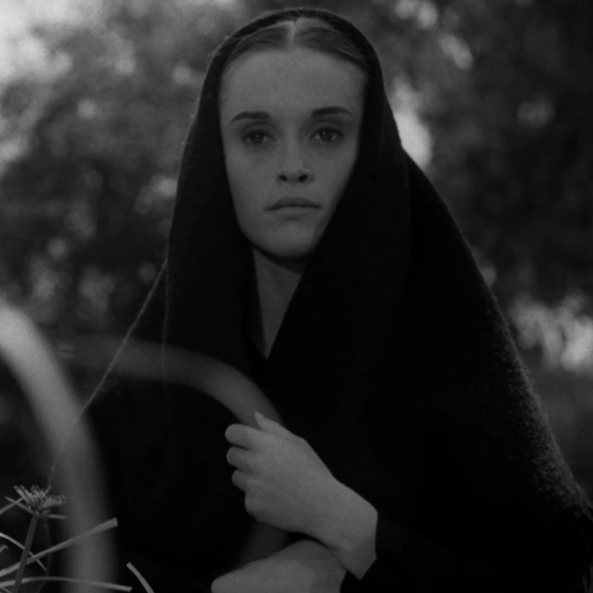
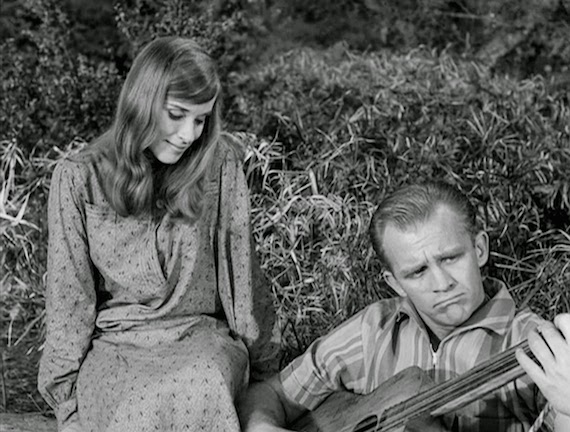
Come Wander With Me: Singer Floyd Burney, a rockabilly singer, goes deep into the back woods hoping to find a folk song to buy and release. As soon as he arrives he hears a beautiful singing voice which draws him deeper into the woods. He eventually meets Mary Rachel who tells him the song he heard belonged to someone and that she’s forbidden to tell anyone about it. When she finally reveals it to him, Floyd learns that his future might be preordained. And the outcome might make him wish he never roamed into this strange place.
Gary Crosby (Bing Crosby’s son) plays Floyd Burney and is very realistic as a fast talking rockabilly singer. Bonnie Beecher is the mystery of this show. She didn’t do much acting after this…her voice was used for the main song and it was beautiful. She ended up marrying Hugh Nanton Romney Jr. (Wavy Gravy) who was an entertainer and peace activist and was seen on the film Woodstock.
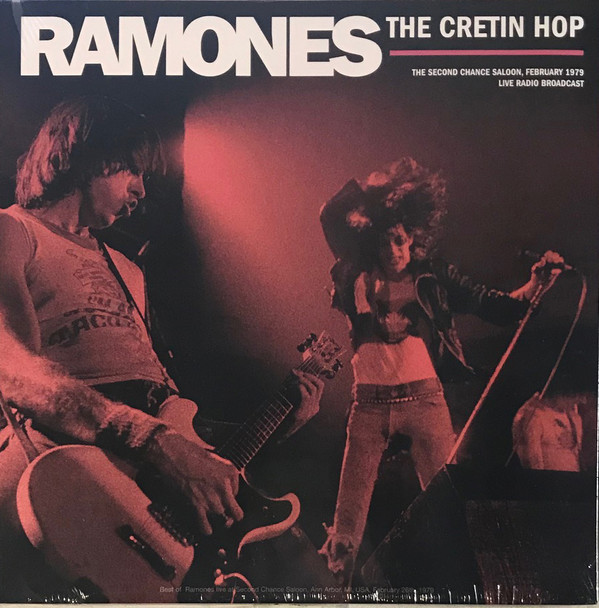
In 1977 you had disco nearing it’s peak and slick pop going on everywhere…and you also had the Ramones. They bucked the trend of radio at the time. When they were recording the album they first heard the Sex Pistols album.
Rocket to Russia was the album this song was on. They had a bigger budget on this album. Johnny Ramone had just heard the Sex Pistols album and wasn’t happy. He said: “These guys ripped us off and I want to sound better than this.” They recorded most of the album in one take so the rest of the money went toward production.
The album peaked at #49 in the Billboard 100, #36 in Canada, and #60 in the UK in 1977.
Joey Ramone: “‘Cretin Hop’ came from when we were in St. Paul, Minnesota. We went some place to eat and there were just all these cretins all over the place. And there was a Cretin Avenue, where we drove into the city.”
From Songfacts
The Ramones bucked the trends of the ’70s with simplistic rock songs, often about freaks and deviants. It didn’t make them rich, but it appealed to core group of fans that fell in with this culture. This being the disco era, songs like “Cretin Hop” were completely at odds with what was getting airplay. The Ramones were later rewarded for their skewed view and stewardship of their genre when they were inducted into the Rock and Roll Hall of Fame in 2002.
Cretin Hop
There’s no stoppin’ the cretins from hoppin’ You gotta keep it beatin’ for all the hoppin’ cretins
Cretin, cretin I’m gonna go for a whirl with my cretin girl My feet won’t stop doin’ the Cretin Hop Cretin, cretin
One-two-three-four, cretins want to hop some more Four-five-six-seven, all good cretins go to heaven
There’s no stoppin’ the cretins from hoppin’ You gotta keep it beatin’ for all the hoppin’ cretins
Cretin, cretin I’m gonna go for a whirl with my cretin girl My feet won’t stop doin’ the Cretin Hop Cretin, cretin
One-two-three-four, cretins want to hop some more Four-five-six-seven, all good cretins go to heaven
Johnny always needs more than he takes
Forgets a couple of chords, forgets a couple of breaks
And everybody tells me that Johnny is hot
Johnny needs something, what he ain’t got
Almost anything off of a Replacements album is going to be an album cut. This one is off of their debut album Sorry Ma, Forgot to Take Out the Trash. The album was released on the small Minneapolis, Minnesota label Twin Tone in 1981.
I listened to them in the mid 80s but lost touch until recently. I’m going through all of their albums so I will be post some from every album coming up. I never knew their first album too much but I like it a lot. It’s punkish, rock, raw, with some great lyrics by Paul Westerberg. On this one Bob Stinson’s guitar playing feels like it may break down at anytime but stays on course and I love what he plays.
This song is about punk guitarist Johnny Thunders (John Anthony Genzale) who was a founding member of the New York Dolls. He also played with the punk band The Heartbreakers. He was in Minneapolis in 1980 with his band Gang War playing in a bar. The Replacements desperately wanted to open, but were beat out for the gig by Hüsker Dü.
He was physically struggling through the show, while battling an audience hurling objects, Thunders had been rendered a prisoner of his own addictions and cult infamy. Westerberg was in the audience and wrote this song about him.
You don’t see this happen everyday…I mean writing about “Johnny’s Gonna Die” when the guy is alive. Thunders did live a little longer…he died in 1991.
Paul Westerberg on watching Johnny Thunders: “He was frightening and beautiful and mean at the same time,” he said. “Like a child.”
“When Johnny was playing, it looked like he was walking dead, It was pitiful, like watching a guy in a cage.”
Johnny’s Gonna Die
Johnny always takes more than he needs Knows a couple chords, knows a couple leads Johnny always needs more than he takes Forgets a couple of chords, forgets a couple of breaks And everybody tells me Johnny is hot Johnny needs something that he ain’t got
And Johnny’s gonna die Johnny’s gonna die Johnny’s gonna die
Everybody stares and everybody hoots Johnny always needs more than he shoots Standing by a beach and there ain’t no lake He’s got friends without no guts, friends that never ache In New York City, I guess it’s cool when it’s dark There’s one sure way Johnny you can leave your mark
And Johnny’s gonna die Johnny’s gonna die Johnny’s gonna die
A few days ago this song has come up in conversation with a friend of mine. We talked about it and then my friend Dave from A Sound Day posted about it a few days later.
I love the power of the song and I’ve learned it on guitar but as a southern person… I think Neil generalized too much. Even Neil thinks that now. His quote on the song now is “I don’t like my words when I listen to it. They are accusatory and condescending, not fully thought out, and too easy to misconstrue.” Are there people like that in the world? Certainly but they are not all located in the south.
Lynyrd Skynyrd replied to this song with their biggest hit Sweet Home Alabama. Neil was quite happy with “Sweet Home Alabama.” He said, “They play like they mean it, I’m proud to have my name in a song like theirs.”
Young is mentioned in the line “I hope Neil Young will remember, a Southern man don’t need him around anyhow.” Lynyrd Skynyrd were big fans of Young. “Sweet Home Alabama” was meant as a good-natured answer to this, explaining the good things about Alabama. Skynyrd lead singer Ronnie Van Zandt often wore Neil Young T-shirts while performing and he was thinking of covering a Young song called Powderfinger before his death in the crash.
The song was on “After the Gold Rush” released in 1970.
Neil Young: “Oh, they didn’t really put me down! But then again, maybe they did! (laughs) But not in a way that matters. S–t, I think ‘Sweet Home Alabama’ is a great song. I’ve actually performed it live a couple of times myself.”
From Songfacts
In the liner notes for his greatest hits album Decade, Young wrote: “This song could have been written on a civil rights march after stopping off to watch Gone With The Wind at a local theater.”
Young was backed by his band Crazy Horse on this track:
Danny Whitten – guitar Jack Nitzsche – piano Nils Lofgren – guitar Billy Talbot – bass Ralph Molina – drums
Nils Lofgren, a guitarist by trade, played piano on this song, an instrument he never played before After The Gold Rush. Young tasked Lofgren with playing piano as a “special trial,” according to Jimmy McDonough’s Shakey.
In trying to get the piano down, Lofgren tapped into his background with accordion. “I used to be an accordion player, and accordion’s all ‘oompah oompah,'” he said. “So I started doin’ the accordion thing on piano.”
To Lofgren’s surprise, Young loved it.
“That’s the sound I was looking for,” Young said. “I didn’t want to hear a bunch of f–kin’ licks. I don’t like musicians playing licks.”
Director Jonathan Demme first cut the opening sequence of his movie Philadelphia to this song in an effort to get Young to write a song like it for the film. Young gave him “Philadelphia,” which he used over the end. Bruce Springsteen’s contribution, “Streets Of Philadelphia,” was used over the open.
Young was married to his first wife, Susan Acevedo, when he wrote this song in his Topanga Canyon studio. They were not getting along, and Young’s foul mood translated into this track, which he described as “an angry song.”
Randy Newman felt that “Southern Man” was one of Young’s least interesting songs. “‘Southern Man,’ ‘Alabama’ are a little misguided,” he said. “It’s too easy a target. I don’t think he knows enough about it.”
During a filmed performance of this song at London’s Hammersmith Odeon, Crazy Horse’s Billy Talbot and Frank “Poncho” Sampredro dropped acid. “I can vividly remember ‘Southern Man,'” Sampredro’s said in Shakey. “It was wildly out of control – fast, slow, up, down, everywhere. At the end we were singing, I had my eyes closed and I hear this little tiny voice and I turn around and it was just me. Everybody else had quit even playing.”
Southern Man
Southern man, better keep your head. Don’t forget what your good book said. Southern change gonna come at last. Now your crosses are burning fast.
Southern man.
I saw cotton and I saw black. Tall white mansions and little shacks. Southern man, when will you pay them back?
I heard screamin’ and bullwhips cracking. How long? How long?
Southern man, better keep your head. Don’t forget what your good book said. Southern change gonna come at last. Now your crosses are burning fast.
Southern man.
Lily Belle, your hair is golden brown. I’ve seen your black man comin’ round. Swear by God, I’m gonna cut him down!
I heard screamin’ and bullwhips cracking. How long? How long?
I’m asked quite a bit…Max what is your favorite Beatle song? It’s hard to tell you because it changes from day to day. I would have to say A Day In The Life if I had to give one answer… but on certain days…this one would be it. Lennon to me was one of the best all time rock singers. He could do rock and pop/rock with ease. He never liked his voice and always wanted the producer George Martin to cover it up with echo or some effect.
The story behind this one is known to Beatle fans. They were in India with the Maharishi and were asked to meditate all day. Mia Farrow and her sister Prudence was there. Prudence was taking this very seriously and would not come out of her quarters and John wrote this song to cheer her up.
American flautist Paul Horn, who was also with them in Rishikesh said that Prudence was a highly sensitive person, and by jumping straight into deep meditation, against the Maharishi’s advice, she had allowed herself to fall into a catatonic state.
Horn stated, “She was ashen-white and didn’t recognize anybody. She didn’t even recognize her own brother who was on the course with her. The only person she showed any slight recognition towards was Maharishi. We were all concerned about her and Maharishi assigned her a full-time nurse.”
The song was on their massive double album album “The Beatles” or better known as the White Album released in 1968. On this album you get a little bit of everything. 20’s style music, pop, folk, Avant Garde, rock, to hard rock.
Donovan was also there and taught John and Paul and guitar picking style called “clawhammer.” The clawhammer style, is played with the strumming hand formed into a claw, using the backs of the fingernails to strum down on the strings.
The song was not released as a single but remains a favorite album track.
Donovan: “He was so fascinated by fingerstyle guitar that he immediately started to write in a different color and was very inspired” “That’s what happens when you learn a new style.”
Prudence Farrow:“They were trying to be cheerful, but I wished they’d go away. I don’t think they realized what the training was all about.”
From Songfacts
While Mia Farrow inspired such men as Andre Previn, Frank Sinatra and Woody Allen, her sister Prudence left her mark on John Lennon. According to Nancy de Herrera’s book, All You Need Is Love, Prudence met The Beatles on a spiritual retreat with their guru, Maharishi Mahesh Yogi, in India, which she attended with Mia. When Prudence, suffering depression, confined herself to her room, Lennon wrote this song hoping to cheer her up. It did.
Prudence Farrow wanted to “Teach God quicker than anyone else,” according to John Lennon. She would lock herself in her room trying to meditate for hours and hours. From A Hard Day’s Write, by Steve Turner: “At the end of the demo version of Dear Prudence John continues playing guitar and says: ‘No one was to know that sooner or later she was to go completely berserk, under the care of Maharishi Mahesh Yogi. All the people around were very worried about the girl because she was going insane. So, we sang to her.'”
Ringo had left the group as the White Album sessions got very tense, so Paul McCartney played drums. When Ringo came back a short time later, there were flowers on his drum kit welcoming him back.
According to the singer-songwriter Donovan, who was on the retreat in India with The Beatles, he taught John Lennon a “clawhammer” guitar technique that he used on this track.
John Lennon’s handwritten lyrics were auctioned off for $19,500 in 1987.
Lennon considered this one of his favorites.
Siouxsie And The Banshees covered this in 1983. Their version went to #3 in the UK and became their biggest hit.
“Dear Prudence” was the second Beatles song that the Banshees had covered from their White Album. Previously, they’d recorded a version of “Helter Skelter” for their 1978 LP The Scream.
“Helter Skelter was very much part of our live show before we recorded it,” mused Siouxsie Sioux to TeamRock. “The great thing was that the two Beatles songs we chose – ‘Helter Skelter’ and ‘Dear Prudence’ – were not originally singles by The Beatles, so it wasn’t necessarily a surefire: ‘Oh, they’re doing a Beatles song.’ And it was also a bit irreverent as well, I suppose. A good test of doing a cover version is when people think that you’ve written it. Quite a lot of people thought Dear Prudence was an original.”
This song was in the movie Across the Universe, which was based on The Beatles music. In the movie, Prudence (played by T.V. Carpio) locked herself in a closet after discovering that Sadie and JoJo were together when she thought she loved Sadie. Lucy (Evan Rachel Wood), Jude (Jim Sturges), Sadie (Dana Fuges) and Max (Joe Anderson) sing this to make her feel better. It gets her out of the closet and they end the song at a anti-Vietnam War rally.
Siouxsie and the Banshees’ take on the song added to The Beatles’ simple original arrangement. “It was kind of an undeveloped song on the White Album,” Siouxsie said. “and so there was a lot of scope to put in your own stuff, really. What did I want to bring? Oh, some psychedelic transformation there [laughing].”
“No, I think that actual track’s fairly restrained, simple and understated on the White Album,” she added. “I was listening to singles like Itchycoo Park by the Small Faces, so I think it was wanting to capture the 60s, and all that kind of phasing. Also, it was where we were at the time.”
Dear Prudence
Dear Prudence, won’t you come out to play? Dear Prudence, greet the brand new day The sun is up, the sky is blue It’s beautiful and so are you Dear Prudence, won’t you come out to play?
Dear Prudence, open up your eyes Dear Prudence, see the sunny skies The wind is low, the birds will sing That you are part of everything Dear Prudence, won’t you open up your eyes?
Dear Prudence, let me see you smile Dear Prudence, like a little child The clouds will be a daisy chain So let me see you smile again Dear Prudence, won’t you let me see you smile?
Dear Prudence, won’t you come out to play Dear Prudence, greet the brand new day The sun is up, the sky is blue It’s beautiful and so are you Dear Prudence, won’t you come out to play?
I found out about Webb Wilder in the late eighties early nineties. There is a thread through his music that attaches with The Blasters, Red on Green, those rockabilly, punk, rock bands. His web site mentions his music as “”Swampadelic”, “Service-station attendant music”, “Uneasy listening”, and”Psychobilly.”
It also has elements of the 80s cowpunk music and just good rock and roll. I saw him twice through the nineties and he was excellent each time I saw him. This song was released in 1986 and it was on the album It Came From Nashville.
This song I first heard on our local then rock radio station WKDF in Nashville. Poolside is what first drew me in. After I saw him in Nashville at a street fair I was a fan for life. I like unique…and Webb is unique…God bless him…
Webb Wilder:“I came to Nashville as kind of a hunch, an educated guess that it would be a good place for me. Rock ‘n’ roll and country have more in common than not. We don’t have the typical Nashville country sound, but we thought we could use that to our advantage. It’s sorta like we’re a roots band for rock ‘n’ roll fans and a rock band for roots fans”
Poolside
I got a nice apartment, got a window with a view I get up every morning and I go down to the pool Everybody’s pretty, everybody’s nice Everybody’s got a little something on ice I never go swimming, cause that ain’t cool But every day you’re gonna find me hanging round the pool
Poolside baby, laying in the sun With my dark sunglasses, and the radio on Sittin’ in a chaise lounge, greased down, turning brown Let it hit a hundred and three I’ll be poolside, if you’re lookin’ for me
Every woman in the place, has got a novel in her face You know they didn’t come here to read Now they’re looking for a man, with a dark suntan And every now and then I catch them looking at me
I got a little white styrofoam cooler I got an ice cold beer in my hand You know I really got it made Nobody puts me in the shade I got a full-time job, working on my tan
Poolside baby, laying in the sun With my dark sunglasses, and the radio on Sittin’ in a chaise lounge, greased down, turning brown Let it hit a hundred and three I’ll be poolside, if you’re lookin’ for me
Ah yeah, look at me, I’m luxurating now, aw it’s too good
Now it’s a wonderful world we live in Just a few basic common sense rules: No running, no pushing, no profanity And no dogs, no dogs, no dogs, no dogs. At
Poolside, laying in the sun With my dark sunglasses, and the radio on Sittin’ in a chaise lounge, greased down, turning brown Let it hit a hundred and three I’ll be poolside, strictly on the cool side Baby, I’ll be poolside, if you’re lookin’ for me I’ll be poolside, strictly on the cool side Baby, I’ll be poolside, if you’re lookin’ for me I’ll be poolside, if you’re lookin’ for me
For me…this was one of those landmark songs that started a change in music. I liked it because it was a guitar players dream and it was raw without much of the 80’s production. I never was a big fan of them but I did like the throw back to the more rawer rock.
The song peaked at #7 in the Billboard 100 and #24 in the UK in 1988. When this was released as a single in 1987, it charted in the UK but flopped in America. It finally became a hit in the US when they re-released it in 1988 after “Sweet Child O’ Mine” hit #1.
The album Appetite for Destruction was huge. It peaked at #1 in the Billboard Album Charts, #3 in Canada, and #5 in the UK.
The video was shot at Park Plaza and 450 South La Brea in Hollywood. The band’s first video, it was very successful, winning at the 1988 MTV Video Music Awards for Best New Artist Video. Guns N’ Roses performed the song on the show.
Slash:“I was at my house and I had that riff happening and Axl came over and he got those lyrics together, and then the band sort of arranged it. We got an arrangement for the whole band, ’cause that’s how we work. Someone comes in with an idea and someone else has input and in that way everyone’s happy. That came together really quickly too, that was arranged in one day.”
From Songfacts
This song is about Los Angeles. It exposes the dark side of the city many people encounter when they go there to pursue fame. Guns N’ Roses knew this side of the city well: in 1985, they lived in a place on Sunset Boulevard in Los Angeles that they called “Hell House.” The house was often filled with drugs, alcohol and groupies.
Axl Rose wrote the lyrics when he was in Seattle, which gave him some perspective on the size of Los Angeles.
In 2007 Rolling Stone magazine ran a feature on the 20th anniversary of Appetite For Destruction. They explained that a famous lyrics from this song originated when Axl Rose spent a night in a Queens schoolyard before joining the band. Said Rose: “This black guy said, ‘You’re in the jungle! You gonna die.'”
On 93.1 WIBC FM, a radio station in Indianapolis, Indiana, Jake Query, a friend of Axle Rose, gave a different account, saying: “When Axl Rose hitchhiked to Los Angeles, California, on the last leg, a truck driver drove him to Los Angeles, and when Rose got out of the truck, the truck driver said, ‘Welcome to the Jungle.” >>
This was used in the 1988 Clint Eastwood movie The Dead Pool, where the band makes a cameo. It also plays in the opening sequence of the 1989 film Lean On Me, about an inner-city high school reformed by principal Joe Clark. Other movies to use the song include:
The Lego Ninjago Movie (2017) How to Be Single (2016) The Interview (2014) Megamind (2010) Selena (1997) The Program (1993)
This was the second UK single and third US single from Appetite For Destruction. The first single, “It’s So Easy,” was a flop.
Numerous college and pro sports teams use this to intimidate their opponents at home games. The Cincinnati Bengals of the NFL were probably the first. The Norwegian Soccer team Lillestrom SK uses this song before every home game.
This was the first track on Appetite For Destruction, which caused controversy because of its cover, a drawing of a robot apparently raping a woman.
The album was a raging success, selling 18 million copies in America by 2008, making it the best-selling debut album in history until 2018, when the RIAA certified Cracked Rear View by Hootie & the Blowfish at 21 million.
Slash re-recorded his guitar parts as he was dissatisfied with his first attempts. To produce the vicious yet pure tone, the Guns N’ Roses gunslinger used a Les Paul ’59 replica plugged into a Marshall JCM, aided most likely by some Jack Daniel’s.
This was used in the 2017 movie Jumanji: Welcome to the Jungle and the next installment, Jumanji: The Next Level (2019). The films are set in a virtual jungle.
When Axl says “my serpentine,” he’s describing his famous dance, which he copied from Richard Black, lead singer of the band Shark Island.
Slash left the band in 1996, leaving Axl Rose firmly in control. Rose kept the band going with new members and in 2001 got in yet another dispute with Slash when producers of Black Hawk Down wanted to use “Welcome To The Jungle” in the movie. According to Slash, Axl refused unless he could re-record it with the current members of Guns N’ Roses, meaning Slash and the rest of the Appetite For Destruction lineup would have lost out on royalties.
The song never made it into the film, which tells the story of an ill-fated US raid on Mogadishu in 1993. It was going to be used in a scene where Army Rangers are preparing for the raid – in real life, they really did blast the song before heading out. The Faith No More song “Falling To Pieces” was used in its place.
Guns N’ Roses made a surprise appearance at the 2002 MTV Video Music Awards where they performed this song. At the time Axl Rose was the only original member in the band, but there was great anticipation for their album Chinese Democracy, which was expected soon. The album finally appeared in 2008.
This song is used in the soundtrack to the Playstation 2 game Grand Theft Auto: San Andreas. Axl lends his voice to one of the radio stations.
In 2007, three teens at Booth Free School in Roxbury, Connecticut (one of them a janitor), were messing around with the public address system when one of them sang some lyrics to this song, including “You’re in the jungle baby; you’re gonna die.” This freaked out one teacher, who thought it was a threat, barricaded herself in a classroom and called the police, who came in and detained the three teens until they could clear up the misunderstanding.
A line from this song became a bit of a catch phrase for Axl Rose, who began screaming at crowds when performing it at shows, “Do you know where the f–k you are!?” Axl said it in 2006 when he introduced The Killers at the MTV Video Music Awards.
Guns N’ Roses opened for Aerosmith in the summer of 1988, culminating in a show on September 15 at the Pacific Amphitheatre in Costa Mesa, California. At this final show, Aerosmith’s road crew had some fun by dressing up in gorilla costumes and messing around on stage when G N’ R performed this song. It was all in good fun, as the bands got along great, with Axl expressing his admiration for Aerosmith at every show. When Aerosmith took the stage that night, they had Guns N’ Roses join them for an extended jam of “Mama Kin,” a song Guns often covered.
By the end of the tour, Guns N’ Roses was the hotter band – “Sweet Child O’ Mine” hit #1 the week the tour ended.
Slash’s gear for the entire Appetite For Destruction album was a Kris Derrig-built 1959 Les Paul replica guitar, and a rented S.I.R. (known to S.I.R. as Stock #36) Marshall 1959 Superlead Metal Panel modded by Frank Levi and Glenn Buckley (based on Tim Caswell’s modification to Stock #39).
This soundtracked a 2016 Super Bowl commercial for the Taco Bell Quesalupa featuring basketball player James Harden, soccer star Neymar, actor George Takei and “Texas Law Hawk” Bryan Wilson. In the spot, we learn that the cheesy treat will be bigger than Tinder, drones, and possibly even football.
Welcome To The Jungle
Welcome to the jungle We’ve got fun ‘n’ games We got everything you want Honey, we know the names We are the people that can find Whatever you may need If you got the money, honey We got your disease
In the jungle Welcome to the jungle Watch it bring you to your Knees, knees I wanna watch you bleed
Welcome to the jungle We take it day by day If you want it you’re gonna bleed But it’s the price you pay And you’re a very sexy girl That’s very hard to please You can taste the bright lights But you won’t get them for free
In the jungle Welcome to the jungle Feel my, my, my, my serpentine I, I wanna hear you scream
Welcome to the jungle It gets worse here everyday You learn to live like an animal In the jungle where we play If you got a hunger for what you see You’ll take it eventually You can have anything you want But you better not take it from me
In the jungle Welcome to the jungle Watch it bring you to your Knees, knees I’m gonna watch you bleed
And when you’re high you never ever wanna come down, so down, so down, so down, yeah!
You know where you are? You’re in the jungle, baby You’re gonna die
In the jungle Welcome to the jungle Watch it bring you to your Knees, knees
In the jungle Welcome to the jungle Feel my, my, my, my serpentine
In the jungle Welcome to the jungle Watch it bring you to your Knees, knees
In the jungle Welcome to the jungle Watch it bring you to your…








 PowerPop... An Eclectic Collection of Pop Culture