This music is about Summer, fun, fun…and did I mention fun? Musically I loved the surf drummers and musicians. They were good and very fast.
I first found out about Jan and Dean when I was a kid. There was a TV movie in 1978 about them.
Jan and Dean were William Jan Berry, and Dean Ormsby Torrence, who formed in Los Angeles and 1958. They helped to shape the California Sound and vocal surf music. Jan and Dean had over 20 charting songs and going strong until Jan Berry was in a horrendous car crash that left him brain damaged and severely handicapped for the rest of his life in 1966.
After numerous brain operations, Jan spent six weeks in coma and awoke severely brain damaged, unable to speak, and completely paralyzed on his right side. He fought back and was able…although tremendously handicapped to return to the recording studio the next year to work on material for an unreleased Jan & Dean project that was not to be released until 2010 called Carnival of Sound. He still could not sing well enough to perform.
Dean would go on to be a graphic artist and make album covers for Harry Nilsson, Steve Martin, the Nitty Gritty Dirt Band, Dennis Wilson, Bruce Johnston, the Beach Boys, Diana Ross and the Supremes, Linda Ronstadt, Canned Heat and more.
Jan and Dean performed again in 1976…10 years after the accident. Jan and Dean continued to tour through the 80’s to the 2000’s. Jan died in 2004.
This song was released in 1964 and it peaked at #4 in the Billboard 100.
For those who have time…below is the 1978 movie in its entirety.
It’s the little old lady from Pasadena
It’s the little old lady from Pasadena…
The little old lady from Pasadena (Go granny, go granny, go granny, go) Has a pretty little flowerbed of white gardenias (Go granny, go granny, go granny, go) But parked in a rickety old garage Is a brand-new, shiny red, super-stock Dodge
And everybody’s sayin’ that there’s nobody meaner Than the little old lady from Pasadena She drives real fast and she drives real hard She’s the terror of Colorado Boulevard
It’s the little old lady from Pasadena…
If you see her on the street, don’t try to choose her (Go granny, go granny, go granny, go) You might drive a goer, but you’ll never lose her (Go granny, go granny, go granny, go!) Well, she’s gonna get a ticket now, sooner or later ‘Cause she can’t keep her foot off the accelerator
And everybody’s sayin’ that there’s nobody meaner Than the little old lady from Pasadena She drives real fast and she drives real hard She’s the terror of Colorado Boulevard
It’s the little old lady from Pasadena…
Go granny, go granny, go granny, go Go granny, go granny, go granny, go
The guys come to race her from miles around But she’ll give ’em a length, then she’ll shut ’em down
And everybody’s sayin’ that there’s nobody meaner Than the little old lady from Pasadena She drives real fast and she drives real hard She’s the terror of Colorado Boulevard
It’s the little old lady from Pasadena… Go granny, go granny, go granny, go (repeat until end and fade)
The Walrus was Paul! I never knew that John. This song was written by John and Paul but mostly a John song. The song was about people trying to analyze the lyrics to Beatle songs.
Lennon mentioned other Beatles songs in the lyrics: “Strawberry Fields,” “I am the Walrus,” “Lady Madonna,” “The Fool on the Hill,” and “Fixing a Hole.” One phrase in the song is “cast iron shore,” which is actually a nickname for a coastal area of south Liverpool also known by the locals as “The Cazzy.”
John had started the song during their spring 1968 visit to Rishikesh, India to study Transcendental Meditation with the Maharishi. Most of the songs written in India ended up on the terrific White Album. The most eclectic album The Beatles ever did.
A new name was needed for a newly signed Apple band called The Iveys. John suggested Glass Onion…this was rejected, along with another Lennon suggestion “Prix.” The band went with the working title for the Beatles song With A Little Help From My Friends… Bandfinger Boogie. They shortened it and became the great power pop band Badfinger.
John Lennon: “I was having a laugh because there had been so much gobbledegook about ‘Pepper,’ play it backwards and you stand on your head and all that.”
Paul McCartney:“He and Yoko came round to Cavendish Avenue and John and I went out into the garden for half an hour, because there were a couple of things he needed me to finish up, but it was his song, his idea…It was a nice song of John’s. We had a fun moment when we were working on the bit, ‘I’ve got news for you all, the walrus was Paul.’ Because, although we’d never planned it, people read into our songs and little legends grew up about every item of so-called significance, so on this occasion we decided to plant one. What John meant was that in ‘Magical Mystery Tour,’ when we came to do the costumes on ‘I Am The Walrus,’ it happened to be me in the walrus costume. It was not significant at all, but it was a nice little twist to the legend that we threw in. But it was John’s song. I’d guess I had minor input or something as we finished it up together…We still worked together, even on a song like ‘Glass Onion’ where many people think there wouldn’t be any collaboration.”
From Songfacts
John Lennon used meaningless lyrics to confuse people who were reading too much into his songs. He got a kick out of people trying to analyze his lyrics.
A glass onion is a coffin with a see-through lid. Because of this, it became a big part of the “Paul is Dead” hoax. Another clue for those who believed the hoax: Lennon sang, “The Walrus is Paul.” In many European countries, a walrus represents death.
Lennon wanted to name one of the bands they signed to Apple Records “Glass Onion.” They chose “Badfinger” instead.
One theory is that “Glass Onion” refers to Lennon’s opinion of the yogic concept of the lotus with its layered petals (layers of consciousness to be stripped away, much like an onion, through meditation) as a bunch of transparent bull used by the Maharishi to manipulate and seduce. He’s also saying the Maharishi’s whole shtick stinks and is a crying shame.
When Lennon sings about the “Cast Iron Shore,” he’s referring to what was an area of beach at Liverpool, that is now partly built over. This area of Liverpool is called Otterspool.
According to Mojo magazine, the Beatles recorded 34 takes of the song’s basic rhythm track on Wednesday September 11, 1968, then returned the next day to overdub Lennon’s vocal and again on Friday and the following Monday for further overdubs. On October 10th George Martin, after returning from holiday, added the string section.
Lennon explained to Rolling Stone in a 1971 interview why he said “The Walrus is Paul.” Said Lennon: “‘I Am The Walrus’ was originally the B side of ‘Hello Goodbye.’ I was still in my love cloud with Yoko and I thought, well, I’ll just say something nice to Paul: ‘It’s all right, you did a good job over these few years, holding us together.’ He was trying to organize the group, and organize the music, and be an individual and all that, so I wanted to thank him. I said ‘the Walrus is Paul’ for that reason. I felt, ‘Well, he can have it. I’ve got Yoko, and thank you, you can have the credit.'”
Glass Onion
I told you about strawberry fields You know the place where nothing is real Well here’s another place you can go Where everything flows.
Looking through the bent-backed tulips To see how the other half live Looking through a glass onion.
I told you about the walrus and me, man You know we’re as close as can be, man Well here’s another clue for you all The walrus was Paul.
Standing on the cast iron shore, yeah Lady Madonna trying to make ends meet, yeah Looking through the glass onion
Oh yeah, oh yeah, oh yeah Looking through the glass onion.
I told you about the fool on the hill I tell you man he’s living there still Well here’s another place you can be Listen to me.
Fixing a hole in the ocean Trying to make a dove-tail joint, yeah Looking through a glass onion.
As with the Buzzcocks…I had friends with Jam albums and that is how I found out about them.
This was their first single and introduction to the Jam and singer/guitarist and Jam songwriter Paul Weller. Weller wrote this song and borrowed the title from a Who single I’m A Boy with the B side In The City.
It was released in 1977 and peaked at #40 inn the UK Charts. This was their first Top 40 single and the beginning of their streak of 18 consecutive Top 40 singles. The single came off the album of the same name. The album peaked at #20 in 1977.
The song’s opening bassline re-appeared a few months later on the Sex Pistols’ single “Holidays in The Sun.” Weller had a fight with Sex Pistols bassist Sid Vicious in the Speakeasy Club over stealing the riff.
Paul Weller:“We had a different sort of birth to a lot of the bands, our contemporaries of that time. Because we’d been playing for five years – pubs and working men’s clubs and anywhere that would have us really. I’d been plating since I was 14, sort of semi-pro if you like. So I never got the thing about not turning your guitar.”
“I wrote this after I’d seen the Pistols and The Clash and I was obviously into my Who phrase. I just wanted to capture some of that excitement.” “It was a big tune for us. We’d open our set with it, we’d probably play it at the end and if we could get an encore, we’d play it again. The reaction it got from the audience, we knew it was a big tune.”
“I’m not sure about some of the lyrics in … I was 17, 18 man. But it was a good youth anthem, I thought.”
From Songfacts
While only a minor hit on the charts, this mod/punk number is well remembered for serving as England’s first introduction to singer/guitarist and Jam songwriter Paul Weller. The song’s #40 chart position when the song was first released marked the beginning of his band’s streak of 18 consecutive Top 40 singles. After their breakup in 1982, Weller would continue to notch up chart entries well into the 21st century firstly with Style Council, then under his own name.
Weller was only 18 when he penned this celebration of youth in the big city. He recalled writing this song to Q magazine April 2011: “It was the sound of young Woking, if not London, a song about trying to break out of suburbia. As far as we were concerned, the city was where it was all happening; the clubs, the gigs, the music, the music. I was probably 18, so it was a young man’s song, a suburbanite dreaming of the delights of London and the excitement of the city. It was an exciting time to be alive. London was coming out of its post-hippy days and there was a new generation taking over. The song captured that wide-eyed innocence of coming out of a very small community and entering a wider world, seeing all the bands, meeting people, going to the clubs, and the freedom that it held.”
The single has the particular distinction of reaching the UK Top 50 on four different occasions. The song originally peaked at #40, then when “Going Underground” became the group’s first #1 single three years later, Polydor decided to re-issue all nine of the group’s prior singles and “City” was the only one to make the Top 40 again, peaking at #40 for a second time. After the group’s breakup at the end of 1982, the record company re-issued every single of the band’s career in early 1983 and this time “City” peaked at #47. Finally, in May 2002, Polydor decided to commemorate the 25th anniversary of The Jam by re-releasing their debut single in its original packaging, in its original 7″ vinyl record format, and at its original price of 75 pence. The limited pressing sold out immediately, this time peaking at #36, higher than it ever did in its original release and two subsequent reissues.
In The City
In the city there’s a thousand things I want to say to you But whenever I approach you, you make me look a fool I want to say, I want to tell you About the young ideas But you turn them into fears
In the city there’s a thousand faces all shining bright And those golden faces are under 25 They want to say, they gonna tell ya About the young idea You better listen now you’ve said your bit-a
And I know what you’re thinking You still think I am crap But you’d better listen man Because the kids know where it’s at
In the city there’s a thousand men in uniforms And I’ve heard they now have the right to kill a man We want to say, we gonna tell ya About the young idea And if it don’t work, at least we said we’ve tried
In the city, in the city In the city there’s a thousand things I want to say to you
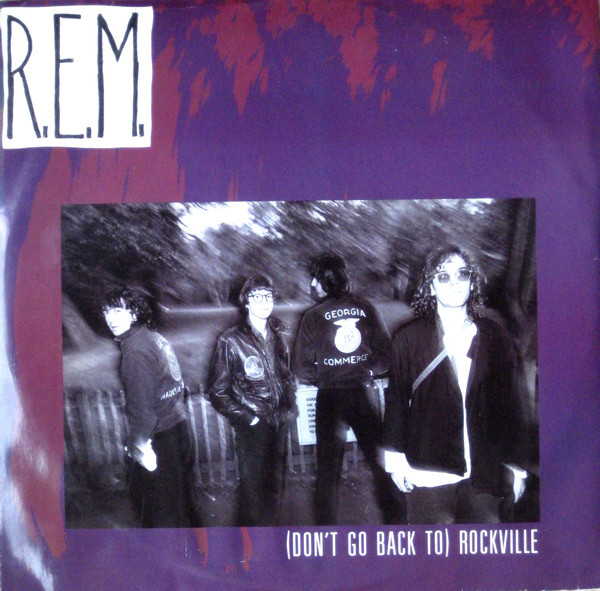
This is one of the first songs I remember hearing from R.E.M. A buddy of mine had the Reckoning album and wore it out. It is up in the top ten of my favorite REM songs.
This song is about Ingrid Schorr, a girl the band knew at the University of Georgia whose hometown was Rockville, Maryland. She got a lot of attention on campus as classmates lamented her departure.
Don’t Go Back To Rockville is a R.E.M. song that bass player Mike Mills wrote most of the lyrics but as always with R.E.M. credited to the entire band. Mills exaggerated in the song and he wasn’t a boyfriend to Ingrid…only good friends but he saw a good song in the story.
The orginal version of the song was really fast like a Ramones kind of punk rock song. They slowed it down to a country tinged feel as a nod to their manager Bertis Downs, who really loved the song.
This was the second single from the album Reckoning released in 1984. The song didn’t chart but the album peaked at #27 in the Billboard Album Charts, #23 in New Zealand, and #91 in the UK.
Mike Mills:“There was a girl Ingrid Schorr. We were seeing each other and we really liked each other, but we were not boyfriend and girlfriend. She was going back to Rockville for the summer. And I thought that ‘going back to Rockville’ just screamed song, right there. As I wrote it, it turned into what if we were in love and she was leaving and never coming back. And that’s how it turned into ‘(Don’t Go Back To) Rockville.’ It just morphed as it went along.”
Mike Mills:“I remember sitting at the kitchen table on Little Oconee Street in Athens, (Georgia),” Mills explains. “There’s a turnaround in the song that’s inspired by part of a Simon & Garfunkel song (“Mrs. Robinson”) that I heard, and I started building the song around that. Sometimes the first line is the hardest line and once I got that first line (‘Looking at your watch a third time/Waiting in the station for a bus’), the rest of it flowed naturally.”
From Songfacts
The band had already been playing this song in a much faster, punk-like style for a long time and didn’t even consider it for the Reckoning album until their legal advisor, Bertis Downs, begged them to “at least do one take of it for me … please!?!?”
Drummer Bill Berry remembers tweaking the song to mess with Downs: “To playfully suggest to him that the song wasn’t in contention, we recorded a much slower version than he was accustomed to hearing and we sprinkled it with a Nashville twang to drive the point home. It started out silly, but when Mike added piano, the tune took on new light. Thanks, Bert!”
Don’t Go Back To Rockville
Looking at your watch a third time Waiting in the station for the bus Going to a place that’s far So far away and if that’s not enough Going where nobody says hello They don’t talk to anybody they don’t know
You’ll wind up in some factory That’s full time filth and nowhere left to go Walk home to an empty house Sit around all by yourself I know it might sound strange but I believe You’ll be coming back before too long
Don’t go back to Rockville Don’t go back to Rockville Don’t go back to Rockville And waste another year
At night I drink myself to sleep and pretend I don’t care if you’re not here with me ‘Cause it’s so much easier to handle All my problems if I’m too far out to sea But something better happen soon Or it’s gonna be too late to bring you back
Don’t go back to Rockville Don’t go back to Rockville Don’t go back to Rockville And waste another year
It’s not as though I really need you If you were here I’d only bleed you But everybody else in town only wants to bring you down and That’s not how it ought to be I know it might sound strange, but I believe You’ll be coming back before too long
Don’t go back to Rockville Don’t go back to Rockville Don’t go back to Rockville And waste another year
Don’t go back to Rockville Don’t go back to Rockville Don’t go back to Rockville And waste another year
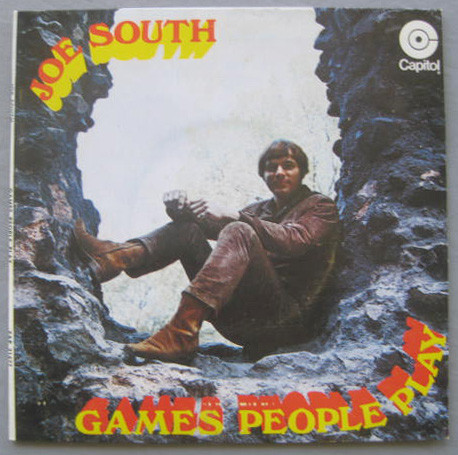
I had this single when I was a kid that was passed down from a cousin. Joe South was a great songwriter. He wrote songs such as Hush, Rose Garden, Walk A Mile In My Shoes, and Down in the Boondocks.
Joe South did not record any more hits, but he did write and record the original version of Rose Garden, which three years later became a hit for the country artist Lynn Anderson.
He was originally a session man, and among the hits he played the guitar on are Aretha Franklin’s “Chain Of Fools,” Tommy Roe’s “Sheila” and Simon & Garfunkel’s “The Sound Of Silence.” He also played on Bob Dylan’s Blonde On Blonde album.
The Games People Play album was one of the first to be multitracked. Joe South performed all the vocal and instrumental parts himself, and some consider it the first ever Country-Soul album.
South won Grammy Awards for Song of the Year and Best Contemporary Song for this.
From Songfacts
Written by Joe South, this song is about how people can go through life preoccupied with negative thoughts. Instead of living lives of service and accomplishment, they deceive others in an effort to get ahead, which ultimately leads to unhappiness.
It was originally released in 1968 as Introspect before being reissued as Games People Play when the title track became a hit.
Mel Tormé recorded a notable cover version of this song later in 1969 which appeared on his A Time for Us album. The prominent bass in his version was performed by Carol Kaye, who was one of the studio musicians behind hits for The Monkees, The Beach Boys, Joe Cocker and many others. In a Songfacts interview with Carol Kaye, she talked about this session: “There was one time when I overplayed on bass to try to wake up a drummer. The drummer was in on tour and he was sleeping. You could tell that. And it was a big band. He was slowing down in the parts and the part that I was playing was slow according to the tune. The tune required just a few notes on my part, so somebody in the band said, ‘Do something, Carol.’ So I played a lot of notes and it woke up the drummer. And I walked in the booth after the take, and I said, ‘Now we can do a take.’ And they looked at me and laughed and said, ‘That was the take.’ I said, ‘Oh, no, that’s a bass solo.’
The bass part that I invented is a test now at schools around the world. And he’s just going, ‘La di da’ and here’s all this bass and stuff coming in. I thought, That’ll never be a hit. And it was a big smash hit for him.”
Now look here People walkin’ up to you Singin’ glory hallelujah, ha-ha And they try and to sock it to you In the name of the Lord
They’re gonna teach you how to meditate Read your horoscope, cheat your fate And furthermore to hell with hate Come on, get on board Whoa-ah
La-da-da, da-da-da, da-da La-da-da, da-da da, da-dee Talkin’ ’bout you and me And the games people play
Now, wait a minute Look around tell me what you see? What’s happenin’ to you and me? God grant me the serenity To just remember who I am Whoa-ah
‘Cause you’ve given up your sanity For your pride and your vanity Turn you back on humanity Oh, and you don’t give a Da, da, da, da, da
La-da-da, da-da-da, da-da La-da-da, da-da da, da-dee I’ll keep a-talkin’ ’bout you and me, brother And the games people play now, now
La-da-da, da-da-da, da-da La-da-da, da-da da, da-dee Gonna talk ’bout you and me Oh, and the games people play I wonder can you come out and play? Early in the mornin’, whoa yes Talkin’ ’bout you and me And the games people play now
These guys were in the Paisley Underground movement in the 1980s. They should be a classic band but they never broke through to the masses.
The Paisley Underground Scene had many different types of bands. The sound they all had was not united. Bands like Green on Red more of a country-ish/stones rock and roll, Rain Parade more of a Beatles type, The Bangles were more of a pop/rock band. The scene had about any thing you would want except major hits…The Bangles are the ones that really broke through.
Death and Angels
In the event (In the event) Of sudden disaster (sudden disaster) Just look into a face (look into a face) That matters
Death and angels (death and angels) On the ground (on the ground) Death and angels (death and angels) I swear Fly around (fly around)
(ahh ahh) In the case of a sudden (ahh ahh) Point of view (ahh ahh) (ahh ahh) Just listen to your heart (ahh ahh) I swear (ahh ahh) That’s what’s true (ahh ahh)
Death and angels (ahh ahh) On the ground (ahh ahh) I swear Death and angels (death and angels) Flying (fly around)
Seems so dark and lonely Seems … Feels so cool Oh no — The lack of compassion (in the world) in our world
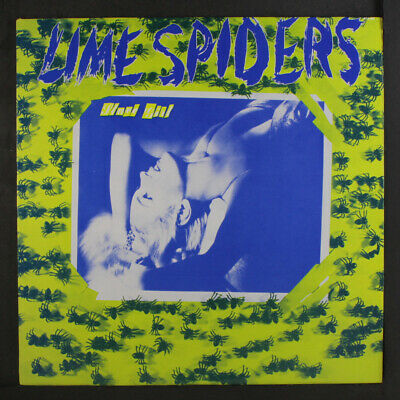
This is garage rock/punk and hits you right between the eyes. The Lime Spiders formed in 1979 in the Liverpool area (not that Liverpool) of Western Sydney Australia around a core of vocalist Mick Blood and guitarist Darryl Mather.
They played a mixture of blend of power pop, psychedelia and 60s garage punk and they won a lot of fans in Australia.
Allmusic has this to say… Lime Spiders were an Australian post-punk unit resurrecting the trashier elements of ’60s garage and psychedelic rock with willful abandon. Bless them for that! And more power to them for doing it in the middle of the 80s. Rolling Stone magazine once described them at times as The Sex Pistols on acid…that about sums it up.
In 1988 they released the Weirdo Libido single, which appeared on the soundtrack to an Australian film called Young Einstein but after that they broke up. They did reunite in 1992 and again in 1997…they were together in some form or another until 2009. They last released an album in 2007.
They released 12 LP’s and EP’s all together with several singles. This one was released in 1984 as a single only at the time.
Slave Girl
Let me tell you ’bout a girl I know I drag her around wherever I go This little woman drives me insane She’s tied to my ankle with a ball and chain
For sixteen years she’s been hangin’ around Try’n’ to bury me in a hole in the ground Well I think it’s time that I even the score There’s only room for one in this cage of yours
Don’t save me when I’m startin’ to drown Don’t use me when you don’t want me around Just be my slave girl ’cause that’s all I need So take a little step back to the stone age with me. Go!
Well I hear a strange noise as I lie in my bed I feel a lotta water drippin’ on my head I look around tried to see through my hair You left me alone, but do you think I care?
‘Cause you moved me when I was takin’ my time You abused me when I’m outta line You tried to warn me of the danger sign So watch out, go
Well, you got me in the bondage of another age You drive me to distraction in a primitive way I can’t control my instincts when I hear her say “Just come around and see me if you lose your way”
So join my chain gang play along with me I’ll be your caveman, it’s basic as can be I’m not insane, man, I’m just outta my dream
The rock opera Tommy tells the story of a “deaf, dumb, and blind” kid who becomes a Pinball Wizard and then a spiritual leader. The double album was The Who’s break though album. They performed the album in concert halls and opera theaters.
On their second album A Quick One, they were short of material, Kit Lambert (manager) encouraged Pete to create a mini-opera called A Quick One, While He’s Away by combining a suite of song snippets. By 1968 he was developing a full-album concept called Deaf, Dumb And Blind Boy, inspired by Indian spiritual mentor Meher Baba.
When the album was released to the world it was a huge hit… It was their first album to get into the top ten or the top forty for that matter in America. It wasn’t for the lack of trying. They released some great albums that only the UK enjoyed..they also had singles that rivaled the Kinks, Beatles, and Stones but were not heard here until the compilation album Meaty Beaty Big and Bouncy was released in 1971.
I like the Tommy album although it’s not my favorite Who album…that would be Who’s Next. I always thought the album sounded thin compared to the live version they played in 1969 and 70.
Unlike other bands such as the Stones…Townshend encouraged the others to write because he carried most of the burden. Entwistle was the most prolific writer next to Townshend. Daltrey and Moon only wrote occasionally.
All of them contributed vocals to this one.
From Songfacts
“Tommy Can You Hear Me?” is the sixth track on the first side of the second album (third side overall) and acts as a transition between two narratively important songs, “Go To The Mirror!” and “Smash the Mirror.”
In “Go to the Mirror!” a doctor (played by Jack Nicholson in the film version) tells Tommy’s parents that their son’s lifelong handicap is entirely psychosomatic, basically meaning it’s all in his head. That song leads into “Tommy Can You Hear Me?” In this track, the lyrics are meant to be the words of Tommy’s mother, who is extra frustrated by Tommy’s inability to hear her now that she knows it’s all in his head.
“Tommy Can You Hear Me” leads into “Smash the Mirror,” in which Tommy can indeed see his own reflection, but still doesn’t register seeing his mother, which enrages her so much, she shoves Tommy through a mirror. This scene leads to Tommy’s eventual awakening as a spiritual figure..
Bob Dylan references this song in “Murder Most Foul” with the lyric, “Tommy, can you hear me? I’m the Acid Queen.” That line also mentions “The Acid Queen,” which is another track on Tommy.
Tommy Can You Hear Me
Tommy can you hear me? Can you feel me near you? Tommy can you see me? Can I help to cheer you? Ooooh Tommy Tommy Tommy Tommy
Tommy can you hear me? Can you feel me near you? Tommy can you see me? Can I help to cheer you? Ooooh Tommy Tommy Tommy Tommy
Tommy can you hear me? Can you feel me near you? Tommy can you see me? Can I help to cheer you? Ooooh Tommy
The vocals on this song won me over when I heard it. Keyboard player Nickey Barclay nails the vocals on this song. She goes from 0 to 100 and she turns into a Janis Joplin. It builds up slowly and then Barclay wails the vocal while June Millington breaks out on the slide guitar at the end to a huge crescendo. The drummer Alice de Buhr does a really cool rhythm pattern for this song…
There have been a few all female rock bands (not enough) but this one…to me is the most talented one I’ve heard. They were not a “girl group”…they were a full fledged rock band. They didn’t have the pop song to take them over the top but for what they did…they didn’t need it.
The live version I have on the Midnight Special is much better than the studio cut. This song was written by Randy Newman and it has such wonderful lines in it.
I saw a vampire, I saw a ghost Everybody scared me, but you scared me the most In the dream I had last night
From all the clips I’ve seen of Fanny live…their live sound just wasn’t caught in the studio and they were much better live. BTW…love the eye-shadow or glam-shadow (thanks Vic)…what ever it is…another reason to love the seventies.
Last Night I Had A Dream
Last night I had a dream You were in it, and I was in it with you And everyone that I know And everyone that you know was in my dream I saw a vampire, I saw a ghost Everybody scared me, but you scared me the most In the dream I had last night In the dream I had last night
In my dream
Last night I had a dream Scared me before you know I woke up screaming Saw all of my in-laws and whole lot of outlaws In my dream I saw the wolfman Jack and saw the mummy too
In the dream I had last night In the dream I had last night In that dream
It started out in a barnyard at sundown And everyone was laughing And you were lying on the ground
You said, “honey, can you tell me what your name is?” “Honey, can you tell me what your name is?” I said, “damn damn what your game is”
You know what my game is
In the dream I had last night In the dream I had last night
I saw a vampire, I saw a ghost Everybody scared me, but you scared me the most In the dream I had last night In the dream I had last night
In the dream I had last night, in my dream In the dream I had last night, in my dream
Last night I had a dream You were in it, and I was in it with you And everyone that I know And everyone that you know was in my dream I saw a vampire, I saw a ghost Everybody scared me, but you scared me the most In the dream I had last night In the dream I had last night, in my dream
The bass in this song punches you like a heavy weight fighter and will roll you like wholesale carpet…the timing is absolutely perfect. I hear some Otis and Wilson Pickett in this song and it will make you move. I wanted to touch on the seventies R&B/funk side in the draft…I can’t do any better than this one.
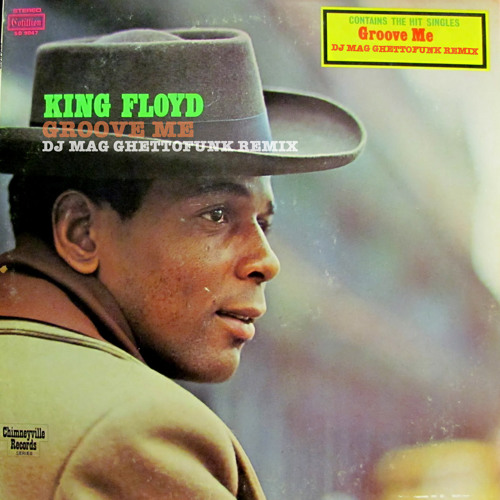
Floyd takes almost a full minute to build up to the chorus and it’s well worth the wait when he kicks it in. Also wanted to mention that a musician named Vernie Robbins plays the bass in this song…the bass along with Floyd carries the song…and the horns don’t hurt either.
This was the B side to a song called What Our Love Needs and DJ’s played a role in making this a hit after spinning this side more. They started to play this song in the New Orleans region and it took off nationally… something that would not happen today.
This was recorded at the same session as Jean Knight’s “Mr. Big Stuff.” In the 80s I heard this song and was hooked on the first listen. Back then it took me a while to track it down…but track it down I did at Tower Records. I get all misty eyed when thinking of pulling into the parking lot of Tower or Port O’ Call Records. .
This is a song that has not been worn out…in fact we need it more. I love the dynamics going on in the chorus when it kicks in. The song was released in 1970 and peaked at #6 in the Billboard Hot 100.
On how Floyd wrote this song… He was working at a box factory and noticed a woman there:She’d just watch me and smile at me all day. When I went to the water fountain, she would make it her purpose to come up to the water fountain. But, I was so shy. So, I decided one day that I was gonna write this poem and give it to her and I wrote ‘Groove Me.’ Believe it or not, after I finished it she never came back to work. It blew me away. So, I never gave her the poem. Man, I’d sure like to meet her one day just to thank her!”
Groove Me
Hey there sugar darlin’ Let me tell you something Girl, I’ve been trying to say, now You look so sweet And you’re so doggone fine I just can’t get you out of my mind You’ve become a sweet taste in my mouth, now And I want you to be my spouse So that we can live happily, nah-nah In a great big ol’ roomy house And I know you’re gonna groove me, baby Ahh, yeah, now You make me feel good inside Come on, and groove me, baby I need you to groove me Ahhh, yeah, now, now, darling Uhh! Come on, come on! Hey! Uhh!
Hey there, sugar darlin’ Come on, give me something Girl, I’ve been needing for days Yes, I’m good, good loving With plenty, plenty hugging Ooh, you cute little thang, you Girl, between you and me, nah-nah We don’t need no company No other man, no other girl Can enter into our world Not as long as you groove me, baby Ahh, come on Make me feel good inside Come on and groove me, baby Move me, baby Ahh, sock it to me, mama Uhh! Ahh, I like it like that, baby Uhh! Groove me, baby! Hey! Uhh! Groove me, darling! Come on, come on I need you to sock it to me, mama Come on and groove me, baby Hey! Uhh! Good, God! It makes me feel so good inside, mama Now, come on, come on, and uhh Groove me, baby, groove me, baby Ahh, sock it to me Sock it to me Rock it to me Come on, come on! Come on! And uhh Groove me, mama, I want you to Groove me!
Great up tempo power pop song. Three O’Clock came from the Paisley Underground movement in the 80s. They were a mixture of 60s psychedelia and early 80s pop sensibilities.
The Three O’Clock was a rock group associated with Los Angeles’ Paisley Underground scene in the early 1980s. Lead singer and bassist Michael Quercio is credited with coining the term “Paisley Underground” to describe bands such as Dream Syndicate, Rain Parade, Green On Red and the Bangles from the area. The Three O’Clock was originally formed under the name The Salvation Army in 1981 but then changed it’s name to Three O’Clock when legal problems with the actual Salvation Army forced the band to change their name.
This song was on the EP called Baroque Hoedown released in 1982. They later had a college hit with a song called Jet Fighter.
After signing with I.R.S. Records they got MTV play with a song called Her Head’s Revolving. After that Prince signed them to his own Paisley Park Records and they made one album and vanished. They did record a song Prince wrote for them called Neon Phone.
They had a reunion of the classic line-up, Michael Quercio (vocals/bass), Louis Gutierrez (guitars) & Danny Benair (drums) — were joined by new member Adam Merrin (keyboards). The group played both weekends of the Coachella festival, and also played on Conan on April 10, 2013.
They later embarked on a mini-tour, and released several archival recordings that same year. The final show at the time was at a record store in Long Beach California in June of 2013.
As of 2018 they reunited band remained active touring around California.
This album was quite different than the other two Big Star albums. This song has a wonderful melody but it sounds like the world is collapsing around him when he sings it.
This song was on their 3rd album “Third/Sisters Lovers.” By this time the bands founder Chris Bell had been gone since the debut album was released and bassist Andy Hummel quit after their second album Radio City. There were only two original members on the album…Alex Chilton and drummer Jody Stephens. This album sometimes has been looked at as an Alex Chilton solo album…Jody did contribute a song and brought in a string section that was used in other songs.
They used different Memphis musicians on the album. Alex was dating Lesa Aldridge (who would go on to form a punk band calle The Klitz) and she helped with the album also.
Jim Dickinson produced this album and he got close to Chilton and encouraged him to try new things. Alex sometimes cut tracks late at night, then presented them to Jim the following day. After the two had been discussing the producer’s role, Alex showed up with “Like St. Joan,” possibly referencing the martyred Joan of Arc, which morphed into “Kanga Roo.”
Jim jumped into action, adding electric guitar feedback, strings via a Mellotron, and his own amateurish drums—since Jody wasn’t there that day—including a very loud cowbell. Inspired, Alex grabbed a drumstick to use as a bow on his Strat, creating an eerie sound. Effects were added to Alex’s drowsy vocals, which presumably related the story of his and Lesa’s love affair:
Jim Dickinson:“Alex came in one morning and he had this little evil grin on his face,” “He said, ‘Lesa and I cut something last night I want you to hear.’ Okay, so he plays me ‘Like a Kangaroo’ [its second title], which is acoustic twelve-string and vocal on one track [making it difficult to separate the sounds]. I said, ‘Yeah, Alex, what do you hear on that?’ And with the evil grin, he says, ‘Well, why don’t you produce it, Mr. Producer?’” “I first saw you, you had on blue jeans / Your eyes couldn’t hide anything . . . Thought you were a queen, oh so flirty.” Alex later said of the lyrics that he was spewing things out loud, just song after song. . . . The whole process was kind of automatic, free association.” “I think of Alex as a collaborator. He allowed me to collaborate with him.
Kanga Roo
I first saw you You had on blue jeans Your eyes couldn’t hide anything I saw you breathing, oh I saw you staring out in space
I next saw you You was at the party Thought you was a queen Oh so flirty I came against
Didn’t say excuse Knew what I was doing We looked very fine ‘Cause we were leaving
Like Saint Joan Doing a cool jerk Oh, I want you Like a kanga roo
This song is absurd and hilarious. Paul wrote this song and got right to the point. Do what in the road Paul? We might never know. Well actually at the bottom of the post he does explain it…but a warning…you cannot un-see what you read.
I’ve always liked it because it is fun. Some people try to take it seriously but it’s not meant to be…a song with two lines to the complete song…that is being a minimalist or little lazy. The first rumor I read about this song was that Paul was desperate for the Beatles to tour again and this was his message to the band…Why don’t we do it in the road? It turned out to be not true…it was inspired by two monkeys…not Monkees…see the Paul quote on down.
It’s a fun song that sounds more like a John song than a Paul. It will never win a best Beatle song award but it’s fun and fits like a glove on the eclectic White Album. That is what I love about the White Album. Listening to the album you never know what is coming next. It still has a sound that threads all the songs together though.
Paul and Ringo were the only two playing on this song. John Lennon liked the track but later he said he felt hurt when Paul would leave him out on a track and just do something himself. Paul’s voice is outstanding on this one…very aggressive. This is not the “Yesterday” Paul.
This is interesting…The Beatles were not touring when this was released and Paul McCartney didn’t play it live until October 8, 2016 when he performed it at the Desert Trip festival with Neil Young.
Paul McCartney:“The idea behind ‘Why Don’t We Do It In The Road’ came from something I’d seen in Rishikesh, I was up on the flat roof meditating and I’d seen a troupe of monkeys walking along in the jungle and a male just hopped on to the back of this female and gave her one, as they say in the vernacular. Within two or three seconds he hopped off again, and looked around as if to say, ‘It wasn’t me,’ and she looked around as if there had been some mild disturbance but thought, ‘Huh, I must have imagined it,’ and she wandered off.”
“And I thought, ‘Bloody hell, that puts it all into a cocked hat.’ That’s how simple the act of procreation is, this bloody monkey just hopping on and hopping off. There is an urge, they do it, and it’s done with. And it’s that simple. We have horrendous problems with it, and yet animals don’t. So that was basically it. ‘Why Don’t We Do It In The Road’ could have applied to either f*cking or sh*tting, to put it roughly. Why don’t we do either of them in the road? Well, the answer is we’re civilized and we don’t. But the song was just to pose that question. ‘Why Don’t We Do It In The Road’ was a primitive statement to do with sex or to do with freedom really. I like it, it’s just so outrageous that I like it.
Paul McCartney and Neil Young…doing it in the road. A very rare live performance.
Why Don’t We Do It In The Road
Why don’t we do it in the road? Why don’t we do it in the road? Why don’t we do it in the road? Why don’t we do it in the road?
No one will be watching us Why don’t we do it in the road?
Why don’t we do it in the road? Why don’t we do it in the road? Why don’t we do it in the road? Why don’t we do it in the road?
No one will be watching us Why don’t we do it in the road?
Why don’t we do it in the road? Why don’t we do it in the road? Why don’t we do it, do it in the road? Why don’t we do it in the road?
No one will be watching us Why don’t we do it in the road?
This 1993 song has a sixties feel to it. The lead singer Shannon Hoon did a great job on this track.
Blind Melon bass player Brad Smith wrote this song before he formed the band. He had moved from Mississippi to Los Angeles, where he fell into a down period. He said that the song is about not being able to get out of bed and find excuses to face the day when you have nothing. At the time he was dating a girl who was going through depression and for a while he told himself that he was writing the song from her perspective. He later realized that he was also writing about it himself.
The video was very popular. It has a very intriguing video featuring a girl dressed in a bee costume. The bee girl, Heather DeLoach, was 10 years old when she starred in it, creating one of the most enduring images on MTV.
The concept for the video was inspired by the Blind Melon album cover, which features a 1975 photo of Georgia Graham, the younger sister of Blind Melon drummer Glenn Graham. DeLoach was the first to audition for the role, and because she resembled Graham’s sister so much, director Samuel Bayer (who also directed Nirvana’s “Smells Like Teen Spirit”) chose her.
This song peaked at #1 in Canada, #20 in the Billboard 100, #17 in the UK, and #15 in New Zealand in 1993.
Blind Melon’s songs, were credited to the entire band even when one member wrote most of the song, as Brad Smith did with this one. Brad says that even though he wrote it, lead singer Shannon Hoon took it to a new level with his vocal.
The video made #22 on MTV’s Greatest Videos Ever Made countdown at the end of 1999.
From Songfacts
The bee girl parlayed the role into a credible acting career, appearing in the movie Balls of Fury, a remake of the Shirley Temple film A Little Princess and the TV shows ER and Reno911. She got married in 2017. DeLoach recalled to MTV News her audition for the bee girl: “They told me Sam didn’t look at any other tapes. I went in with my hair in braids and wearing those chunky glasses, because they said to look nerdy. My mom said we had to find some glasses before we went in, so we ran to a local mall right before the audition and bought them, and Sam liked them so much they’re the same ones I used in the video.”
This was a hit on a variety of formats. It reached #1 on the AOR (classic rock), modern rock and metal charts.
The first performances of this song were on Venice Beach, where Brad Smith would do his busking. “That’s where the lyric and the song was inspired from, is just having to write songs,” he said. “Then being in the state of mind I was in and having to come up with material to go play down on the beach for change. I played that song on the beach for change for over a year before Shannon Hoon actually joined the band and really made that song a hit.”
The band didn’t always appreciate this song. When they opened some shows for The Rolling Stones in 1994, they left it off their setlist. Their tour manager, Paul Cummings explained: “They had become one of those bands that hate their hit – at least at that point. I couldn’t understand it, but it’s not my call. That probably would have been the only song that crowd would have recognized.”
A hallmark of Brad Smith’s lyrics a feeling of melancholy, which doesn’t always match the music he puts to the song. He describes the music to this song as a “jaunty little happy halfway island beat,” which sounds like “Don’t Worry, Be Happy.” He explained: “A lot of my songs come from a darker place. And if you just met me walking down the street, you’d say, ‘Oh, you’re such a happy guy, Brad. Why the dark songs?’ I’m like, ‘I don’t know.’ For me, it just has more meaning if you can get inside someone’s soul and identify with them on a heavier level and try to connect with them on that level. Because when you’re sad and you’re down, you’re the most vulnerable, and you feel the most alone.”
In 1993, Heather DeLoach reprised her role as Bee Girl in the Weird Al Yankovic video for “Bedrock Anthem” (a parody of “Give It Away” by the Red Hot Chili Peppers).
The inertia described in this song sounds typical of the stoner ennui like that described in “Because I Got High,” but you can blame this one on the herb. “I wasn’t even on drugs or drinking,” Brad Smith told us. “It was just a tough point in my life. And the cool thing about that song, I think a lot of people do interpret those lyrics properly and can connect with it on that level, where ‘I don’t understand why I sleep all day and I start to complain that there’s no rain.’ It’s just a line about, I’d rather it be raining so I can justify myself by laying in the bed and not doing anything. But it’s a sunny day, so go out and face it.”
In 2003, this was used in a commercial where a girl in a hot dog costume meets a guy in a Pepsi costume. Love blooms.
Pearl Jam has a song called “Bee Girl” that they first performed in 1994. With lyrics like, “Bee girl, you’re gonna die. You don’t wanna be famous, you wanna be shy,” the track was seen as a very accurate warning to Shannon Hoon that he was on a path of destruction. The song can be found on their Lost Dogs rarities album.
In 2016, the pop singer Mandy Jiroux released a song called “Insane” using many elements of “No Rain,” including the signature riff. Her song has similar but different lyrics, for instance:
All I can say is that my life’s not really plain
I like dancing in puddles that gather rain
In places where Shannon Hoon sang “no rain,” Jiroux substituted “insane.”
This prompted Blind Melon to file a lawsuit using the same lawyer who won big bucks for Marvin Gaye’s estate in the “Blurred Lines” case. Had Jiroux simply covered the song, it wouldn’t be an issue, but Blind Melon claimed that she created a “derivative work” that requires licensing.
The suit is unusual in that the plaintiff is trying to prove that the defendant didn’t make the song similar enough.
This song was featured in the 2004 comedy movie Without A Paddle.
No Rain
All I can say is that my life is pretty plain I like watchin’ the puddles gather rain And all I can do is just pour some tea for two And speak my point of view but it’s not sane It’s not sane
I just want someone to say to me, oh I’ll always be there when you wake, yeah You know I’d like to keep my cheeks dry today So stay with me and I’ll have it made
And I don’t understand why I sleep all day And I start to complain that there’s no rain And all I can do is read a book to stay awake And it rips my life away but it’s a great escape Escape, escape, escape
All I can say is that my life is pretty plain You don’t like my point of view, you think that I’m insane It’s not sane, it’s not sane
I just want someone to say to me, oh I’ll always be there when you wake, yeah You know I’d like to keep my cheeks dry today So stay with me and I’ll have it made, I’ll have it made, I’ll have it made Oh, no, no, you know, I really wanna, really gonna have it made You know, I’ll have it made
For everyone that follows me on the weekend…I’m working on a home project and I will only post one Twilight Zone each day with no music posts this weekend. Have a great weekend.
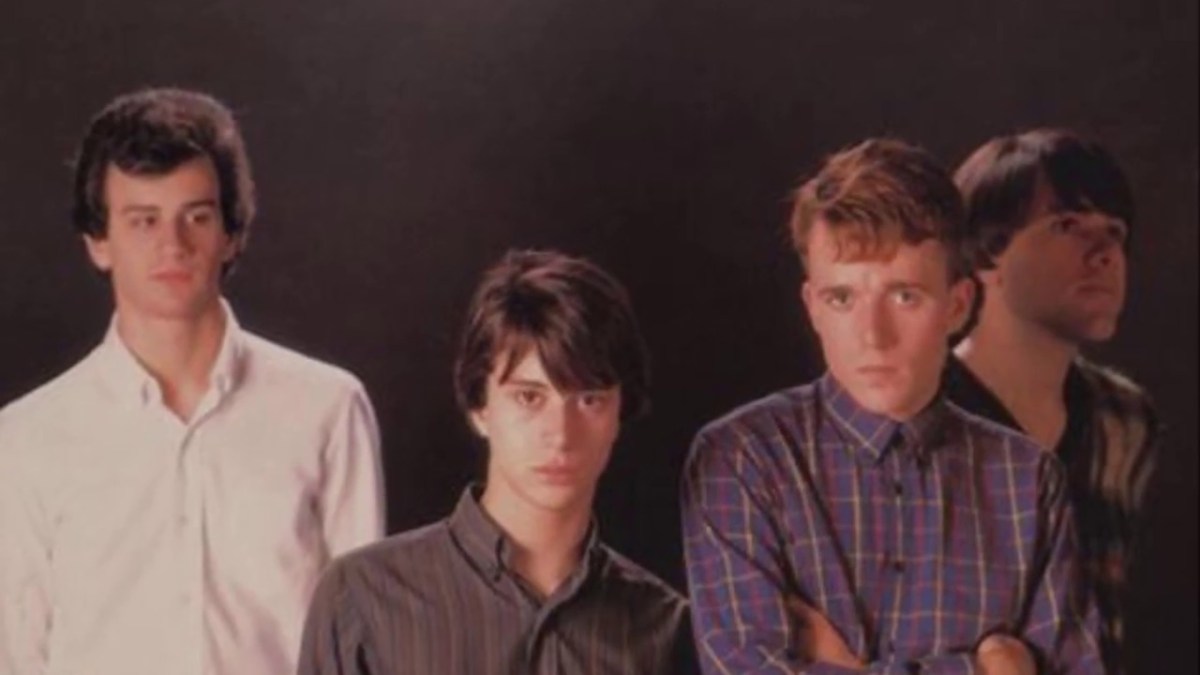
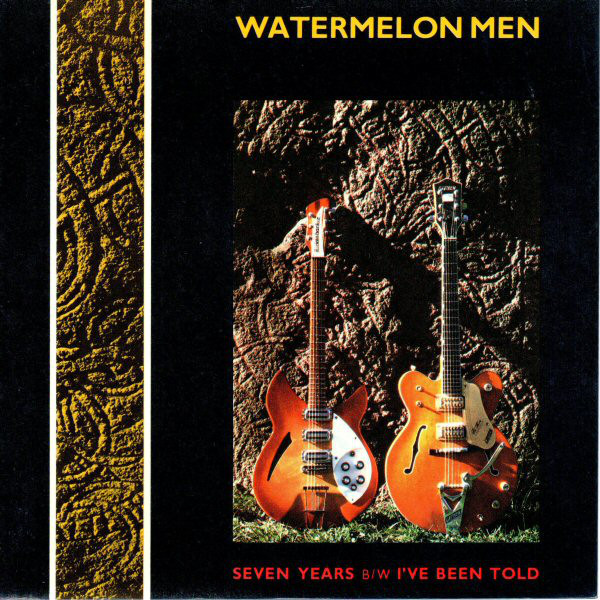
This song was released in 1985 on the Watermelon’s album Past, Present and Future.
The Watermelon Men were a Swedish five piece band that were around from the mid Eighties up till 1994. They had quite a following in Sweden, Germany, England, among other places.
The band is still popular over ten years after they ceased. They are praised in power pop circles in Europe. They were mostly known for garage rock and brought good melodies with jangly guitars in a lot of their music.
When they were together they released three albums, an Ep, and three singles. One album remains unreleased…it’s up in the air on if it will come out.
The guitar player Imre von Polgar died in the tsunami disaster in Khao Lak in 2004. Shortly after, the band reformed for a one time show in his memory.
Seven Years
If the man can’t choose which way to go If the girl don’t know where she belongs Then you’re apt to say all the love can’t kill the pain Till they meet, he’ll be a traveling man When his hope was buried in the ground In tears she left her man behind The you’re apt to think seven years has passed today Till they meet, she’ll dream her life away
You won’t feel, you’ll meet her someday And in his arms, she’ll always stay But it’s the story No one ever fades
In surprise they think When they both run from themselves Till they meet, the story has no end
You won’t see, you’ll meet her someday And in his arms, she’ll always stay But it’s the story No one ever fades






 PowerPop... An Eclectic Collection of Pop Culture