CSN&Y – Carry On

Crosby, Stills, Nash, and Young were making their second album…the 1970  Déjà Vu and Graham Nash realized something was wrong. He told Stephin Stills they needed another song like Suite: Judy Blue Eyes on this album. Stills was listening, he went back to his hotel room and put together two unfinished songs, and came up with another suite…Carry On. 

He took the song back to Graham Nash and he could not believe it. They had the song the album needed. 

The album was hard to make because of the state that David Crosby was in. His girlfriend at the time, Christine Hinton, was taking their cat to the Vet and died in a car crash. Graham and others have said that Crosby was never the same after that accident. It started his slide into harder drugs that would end up with jail time and his liver replaced. 

“Carry On” has the distinction of appearing on three different US #1 albums. It was first released on Déjà Vu, which hit the top spot on May 16, 1970. Then it appeared on the CSN&Y live album 4 Way Street, #1 on May 15, 1971. Finally, it showed up on the compilation So Far, the #1 album on November 2, 1974.

The second part of the song is taken from Questions, a song Stills wrote for his band Buffalo Springfield. 

Stephen Stills:  “I went back to my room in this horrifying hotel and the next morning I knocked on Graham’s door and said, ‘OK, how’s this?’ And I played him ‘Carry On’ and he went nuts. So we got everybody together in the studio and recorded it.”

Graham Nash: After that tragedy, we somehow continued to make Déjà Vu, but David often wound up in tears in the studio. Drugs helped him mourn—or so he thought—but, of course, they only made things worse. He was inconsolable, falling apart. The love and sunshine that was in the first Crosby, Stills & Nash album had disappeared from Déjà Vu because, in one way or another, we were all tormented, all miserable, all coked out of our minds.

Drummer Dallas Taylor: “The song was written in the middle of the Deja Vu sessions, when Nash told Stephen they still didn’t have an opener for the album. It was something of a message to the group, since it had become a real struggle to keep the band together at that point. Stephen combined two unfinished songs and stuck them onto a jam we’d had out in the studio a few nights before, me on drums and Stephen on a Hammond B-3 organ. As the track begins I’m playing bass drums and high hat, and Graham is playing congas. Then we go into a 6/8 groove, which is rather obscure – Stephen loved to change gears that way. The sessions would go on all night, sometimes three or four days non-stop. The thing I loved about the studio was you could never tell if it was day or night, and we hid all the clocks so no one knew what time it was.”

Carry On

One morning I woke up and I knew
You were really gone
A new day, a new way, and new eyes
To see the dawn.
Go your way, I’ll go mine and
Carry on

The sky is clearing and the night
Has cried enough
The sun, he come, the world
To soften up
Rejoice, rejoice, we have no choice but
To carry on

The fortunes of fables are able
To sing the song
Now witness the quickness with which
We get along
To sing the blues you’ve got to live the dues and
Carry on

Carry on
Love is coming
Love is coming to us all

Where are you going now my love?
Where will you be tomorrow?
Will you bring me happiness?
Will you bring me sorrow?
Oh, the questions of a thousand dreams
What you do and what you see
Lover can you talk to me?

Girl when I was on my own
Chasing you down
What was it made you run?
Trying your best just to get around.
The questions of a thousand dreams
What you do and what you see
Lover can you talk to me?
Allman Brothers – Trouble No More

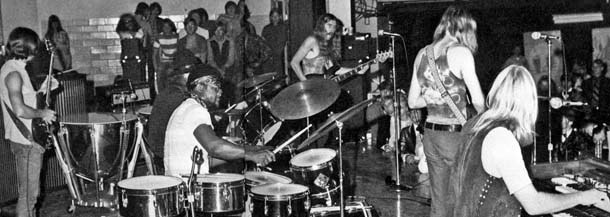
Gregg Allman sounded like an old man in his early twenties and when he WAS an older man. He could sing like he lived every bit of the blues he was singing about. This was the first song the Allman Brothers ever played in front of an audience.

It’s hard to believe that their first two albums didn’t go anywhere in the charts. The first two were made up of many of their classic songs. Their first album The Allman Brothers Band contained Whipping Post, Trouble No More, It’s Not My Cross To Bear, and one of their signature songs Dreams.

Their second album Idlewild South contained In Memory of Elizabeth Reed, Midnight Rider, and Hoochie Koochie Man. It took their third album At Fillmore East to kickstart their career to the top. Many of those songs on the first two albums would be classic now thanks to the live treatment they were given on the double live album.

After Duane was killed on a motorcycle on October 29, 1971 the band finished up the album that was started a few months before. Eat A Peach was released in 1972 with studio cuts and some live cuts that were left over from the At Fillmore East album including Trouble No More. The album was a massive hit and a perfect followup to At Fillmore East. The album had radio-friendly songs plus great live versions of songs they had been playing in their set.

This was a popular Muddy Waters song. It’s based on a 1935 song called “Someday Baby Blues” by a country-blues singer named Sleepy John Estes. Waters transformed the song with his Chicago blues style, adding a much more prominent guitar. On the Muddy recording….Little Walter played the harmonica and Jimmy Rogers played the guitar.

The Allman Brothers did their own interpretation of blues songs and usually with an extra charge. The first time they played the song was on May 11, 1969, when they played at Piedmont Park in Atlanta at a free festival sponsored by an underground newspaper… the paper gave them a glowing review and put them on the map outside of Macon.

On October 28, 2014, the band played their final show, the farewell concert at the Beacon Theater in New York City. Their final song was Trouble No More.

Trouble No More

Don’t care how long you gone
I don’t care how long you staying
But, good kind treatment
Gonna bring you home someday
But someday baby
You ain’t gonna trouble poor me anymore

You just keep on betting
That the dice won’t pass
Well you know, darling
You are living too fast
But someday, baby
You ain’t gonna trouble poor me anymore

I’m gonna tell everybody
In your neighborhood
That you’s a sweet little girl
But, you don’t mean me no good
But someday baby
You ain’t gonna trouble poor me anymore

Well, I know you’re leavin
Well, you call that gone
Well, without love
You can’t stay long
But someday baby
You ain’t gonna trouble poor me anymore

Well, goodbye baby
Come on, shake my hand
I don’t want no woman
You can have a man
But someday baby
You ain’t gonna trouble poor me anymore

Sam Cooke – Bring It All Home To Me

I started this post out as an Animals post but I had to switch the headliner to Sam Cooke. Cooke could sing the phone book and sound great. The man was unfair… he had everything. He was a terrific singer, writer, and this track shows that his skills as a producer and arranger have been undervalued.

I first heard the song through the Animals. They took the song and made it sparse with Burdon’s voice carrying it. This was the gritty B side to House of the Rising Sun. I bought the single for House of the Rising Sun and I turned it over and loved what I heard. I bought the single sometime in the early eighties.

The Animals version peaked at #32 on the Billboard 100, #7 in Canada, and #7 in the UK in 1965.

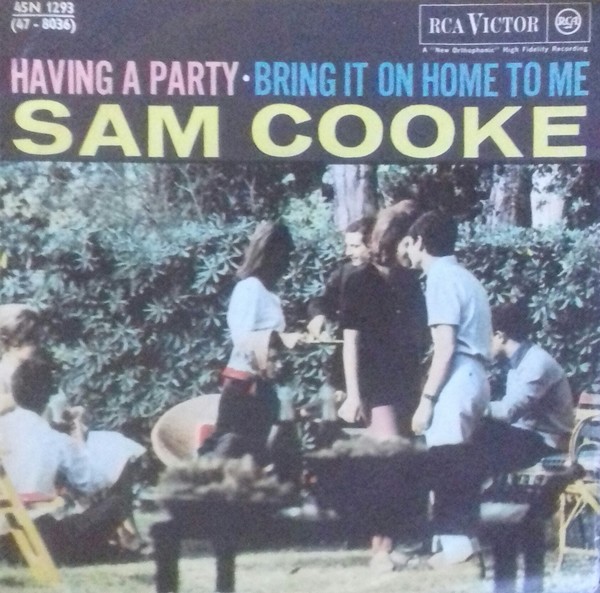
Cooke’s version was released as the B-side of “Having A Party,” and both songs became hits. Both tracks featured background vocals by Lou Rawls, who does the call-and-response with Cooke. Both songs were written while Cooke was on tour for Henry Wynn.

This song has a gospel feel to it and I love the call and response parts with Lou Rawls. The song peaked at #13 on the Billboard 100 Charts and #2 in the Billboard R&B Charts in 1962 for Sam Cooke.

In 1964, Cooke was shot and killed by the manager of a motel (Hacienda Motel) in Los Angeles, California. After a police investigation, courts concluded that his death was a justifiable homicide, though Cooke’s family never accepted the conclusion, nor the alleged circumstances around his death.

Bring It On Home To Me

If you ever change your mind
About leaving, leaving me behind
Oh, oh, bring it to me
Bring your sweet loving
Bring it on home to me
Yeah (yeah) yeah (yeah) yeah (yeah)

I know I laughed when you left
But now I know I’ve only hurt myself
Oh, oh, bring it to me
Bring your sweet loving
Bring it on home to me
Yeah (yeah) yeah (yeah) yeah (yeah)

I’ll give you jewelry and money too
That’s not all, all I’ll do for you
Oh, if bring it to me
Bring your sweet loving
Bring it on home to me
Yeah (yeah) yeah (yeah) yeah (yeah)

You know I’ll always be your slave
‘Till I’m buried and buried in my grave
Oh, honey bring it to me
Bring your sweet loving
Bring it on home to me
Yeah (yeah) yeah (yeah) yeah (yeah)

One more thing
I tried to treat you right
But you stayed out, stayed out at night
But I forgive you, bring it to me
Bring your sweet loving
Bring it on home to me
Yeah (yeah) yeah (yeah) yeah (yeah)
Yeah (yeah) yeah (yeah)

Grateful Dead – Ripple

Ripple is one of the best-known songs by the Dead and just a beautiful song to listen to. A big brother to a friend of mine was a pure dead head so I got a full education in the 80s. At that time I hardly ever heard them on radio. I do remember this song in the movie Mask in the scene where Rocky dies. Lately, I’ve been reading and listening to their discography again and I’ve listened to them a bit closer.

The song was written by Robert Hunter and Jerry Garcia. Hunter was not a performing member of the band but wrote the lyrics to many of their songs. Many of them were framed by Garcia’s wonderful melodies. His words can be poetic and lend themselves to interpretation…much like some of Dylan’s lyrics.

The song was on their album American Beauty album. The album peaked at #30 in the Billboard Album Charts in 1971. It was reissued for its 50th anniversary and peaked at #19 in 2020.

I’ve been wanting to post this song for a couple years after seeing Jim cover it. The post is here. The Grateful Dead was primarily known as a live band for good reason. Sometimes live versions sound better than their studio cuts. This one though, I don’t think anyone can top the studio version of this song including them. They only performed the song around 40 times in their career.

While playing softball with members of Jefferson Airplane in 1970. Garcia saw his musician friend David Grisman and asked him to play mandolin on Ripple. Grisman agreed and is on the final studio version. He also plays mandolin in Friend Of The Devil.

They performed an electric version of Ripple in Landover, Maryland, on September 3, 1988. According to the book A Long Strange Trip,  Bob Weir got a request for Ripple from a man who was dying of an illness. Upon getting the request, Weir bet Garcia $10 that he wouldn’t be able to remember the lyrics. Garcia took the bet and won. Weir, however, never paid up.

Dennis McNally the author of Long Strange Trip also notes that about 30 friends and neighbors, all untrained singers, were brought in to sing the final chorus, “just like a church service almost anywhere.

Ripple

If my words did glow with the gold of sunshine
And my tunes were played on the harp unstrung
Would you hear my voice come through the music
Would you hold it near as it were your own?

It’s a hand-me-down, the thoughts are broken
Perhaps they’re better left unsung
I don’t know, don’t really care
Let there be songs to fill the air

Ripple in still water
When there is no pebble tossed
Nor wind to blow

Reach out your hand if your cup be empty
If your cup is full may it be again
Let it be known there is a fountain
That was not made by the hands of men

There is a road, no simple highway
Between the dawn and the dark of night
And if you go no one may follow
That path is for your steps alone

Ripple in still water
When there is no pebble tossed
Nor wind to blow

You who choose to lead must follow
But if you fall you fall alone
If you should stand then who’s to guide you?
If I knew the way I would take you home

Doors – The End

There is one thing I think of when I hear this song, and that is Apocalypse Now. The intro to the song really sounds like the end is coming. Robby Krieger’s use of slighty off notes adds to it.

Ray Manzarek: “To sit back in an audience and hear ‘The End’ come on at the beginning of Apocalypse Now, it’s absolutely thrilling.”

The song was on their self-titled debut album released in 1967. It ranked at number 336 on 2010 Rolling Stone magazines list of The 500 Greatest Songs of All Time.

The Doors developed this song during live performances at the Whisky a Go Go, a Los Angeles club where they were the house band in 1966. They had to play two sets a night, so they were forced to extend their songs in order to fill the sets. This gave them a chance to experiment with their songs.

They always played The End as the last song, but Morrison decided to play it early in the set, and the band went along. When they got to the part where he could do a spoken improvisation, he started talking about a killer, and said, “Father, I want to kill you. Mother, I want to f–k you!” The crowd went nuts, but the band was fired right after the show. The Doors had recently signed a record deal and they had established a large following, so getting fired from the Whisky was not a crushing blow.

Morrison sang this live as F–k the mother, rather than “Screw the mother.” At the time, the band couldn’t cross what their engineer Bruce Botnick called “the f–k barrier,” so they sanitized the lyric on the album. When Botnick remixed the album for a 1999 reissue, however, he put Morrison’s “f–k”s back in, which is how the song was intended.

Jim Morrison's Heartbreaker: Mary Werbelow's Abandoned Notebook - GonzoToday

“The End” began as Jim Morrison’s farewell to Mary Werbelow, his girlfriend who followed him from Florida to Los Angeles. It developed into an 11-minute  epic. Doors drummer John Densmore has said that Morrison wrote Crystal Ship about Mary also. That song was another goodbye song also. Werbelow and Morrison broke up in 1965 but saw each other off and on until she moved to India in 1969. He reportedly told her that the first four Doors albums were about her…Manzarek has said that parts of them were.

Mary Werbelow is a mystery to many. People still want to know if she is still alive. She gave a short interview in 2005 but has not been heard from since. She said in that interview that she never wants to talk about Jim again. Mary says she is tired. She has trouble sleeping. She says she’s not sure if she has done right by talking so much. She’s worried that others will seek interviews that she does not want to give. She wants that made clear: She does not want to talk about Jim anymore.

On July 3, 1971, Pamela Courson reported that she found him dead in the bathtub of their apartment in Paris. The cause of death was listed as heart attack; drugs were suspected. There was no autopsy. The coffin was sealed before his family or the American Embassy were notified. It was not until six days later that the Doors’ manager announced Morrison’s death to the world.

The End

This is the end
Beautiful friend
This is the end
My only friend, the end

Of our elaborate plans, the end
Of everything that stands, the end
No safety or surprise, the end
I’ll never look into your eyes again

Can you picture what will be?
So limitless and free
Desperately in need
Of some stranger’s hand
In a desperate land

Lost in a Roman wilderness of pain
And all the children are insane
All the children are insane
Waiting for the summer rain, yeah

There’s danger on the edge of town
Ride the King’s Highway, baby
Weird scenes inside the gold mine
Ride the highway west, baby
Ride the snake, ride the snake
To the lake, the ancient lake, baby
The snake, he’s long, seven miles
Ride the snake
He’s old and his skin is cold
The west is the best
Get here and we’ll do the rest
The blue bus is calling us
Driver, where you taking us?

The killer awoke before dawn
He put his boots on
He took a face from the ancient gallery
And he walked on down the hall
He went into the room where his sister lived, and then he
Paid a visit to his brother, and then he
He walked on down the hall, and
And he came to a door
And he looked inside
“Father?” “Yes, son?” “I want to kill you”
“Mother? I want to…”

Come on baby, take a chance with us
And meet me at the back of the blue bus
Doin’ a blue rug, on a blue bus, doin’ a
Come on yeah
Fuck, fuck-ah, yeah
Fuck, fuck
Fuck, fuck
Fuck, fuck, fuck yeah!
Come on baby, come on
Fuck me baby, fuck yeah
Whoa
Fuck, fuck, fuck, yeah!
Fuck, yeah, come on baby
Fuck me baby, fuck fuck
Whoa, whoa, whoa, yeah
Fuck yeah, do it, yeah
Come on!
Huh, huh, huh, huh, yeah
Alright
Kill, kill, kill, kill, kill, kill

This is the end
Beautiful friend
This is the end
My only friend, the end

It hurts to set you free
But you’ll never follow me
The end of laughter and soft lies
The end of nights we tried to die
This is the end

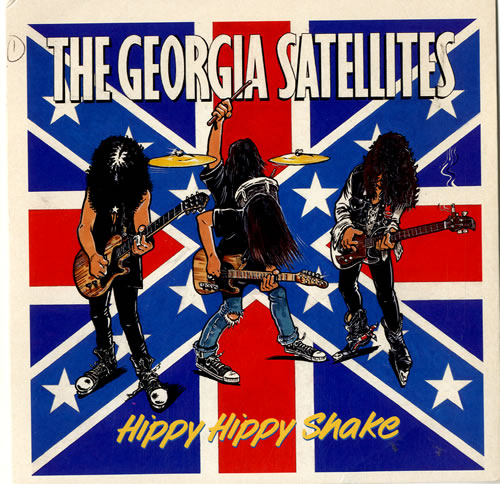
Georgia Satellites -Hippy Hippy Shake

I have to give Deke credit for this post. He did a review of “LIGHTNIN’ IN A BOTTLE” …a live Satellite show in 1988 that was released in 2002. This song was in a movie called Cocktail…I wasn’t a fan of the movie but it did have some good music. Deke mentioned Hippy Hippy Shake and I’ve always liked this song.

The Georgia Satellites came out of nowhere with a number 2 hit in 1986 called Keep Your Hands To Yourself. At the time of Madonna and synth-driven songs, it was great to hear this band out of Georgia that played raw roots rock and roll without the big production.

I remember being a senior in high school and watching one of my buddy’s band play in a talent show right before us. They played “Keep Your Hands To Yourself” and it sounded great. That song was made for a rock band…any rock band and I asked him if they wrote it. He said no they had an advance copy of the song or bootleg. I’ve liked this band ever since. They were a no-frills raw rock band in the middle of the sometimes overproduced 80s…a band I followed until they broke up.

I always thought their timing was a bit off. If they would have come out in the late eighties along with the Black Crowes and Guns and Roses… they could have had more staying power.

This song is a little different for them. Their lead singer Dan Baird didn’t sing it. The lead guitar player Rick Richards did the vocals on this one as well as their hit  Battleship Chains.

Chan Romero was just 17 when he wrote this song. According to his entry in the Rockabilly Hall of Fame, he was inspired by the song “Come On, Let’s Go” by Ritchie Valens. The Swinging Blues Jeans cover was a hit in 1963 when the song peaked at #2 in the UK, #2 in Canada, and #24 on the Billboard 100. The Beatles covered it on their Live At The BBC album.

The Satellites version peaked at #45 in the  Billboard 100 and #65 in Canada.

Some of the movies this has appeared in include Uncle Buck, Austin Powers International Man of Mystery, and Cocktail. 

Hippy Hippy Shake

For goodness sakes
I got the hippy hippy shakes
yeah I got the shakes
I got the hippy hippy shakes
I can’t sit still
with the hippy hippy shakes
yeah I get my fill now
with the hippy hippy shake
yeah it’s in the bag
the hippy hippy shake

well I’ve been shakin’ to the left
shakin’ to the right
you do the hippy shake shake
with all of your might
oh baby yeah come on shake
oh it’s in the bag
the hippy hippy shake

well I’ve been shakin’ to the left
shakin’ to the right
you do the hippy shake shake
with all of your might
of baby yeah come on shake
oh it’s in the bag
the hippy hippy shake

Freedy Johnston – Love Grows (Where My Rosemary Goes)

I had the original single in my collection by Edison’s Lighthouse. I heard this on Lightning 100 back in the 1990s in Nashville. Johnston did a good job updating it.

Freedy Johnston was an artist that I found in the late 90s. I first heard him on an alternative radio station I would listen to. They would play cuts off of his Never Home album. I bought that album and fell for a song called Seventies Girl. A few years later they played this song off his 2001 Right Between the Promises album. I grew up with this song and although it leans heavily toward bubblegum…I’ve always liked it. Freedy did a good version of it.

Johnston has never burned up the charts but he did have a minor his in 1994 with the song Bad Reputation which peaked at #54 on the Billboard 100. This song got some airplay on alternative stations. Love Grows peaked at #25 in the Billboard Adult Contemporary chart in 2001.

The Edison Lighthouse version was the original back in 1970.

The British producers Tony Macaulay and Barry Mason wrote this song with Sylvan Mason, who was Barry’s wife at the time. Sylvan is often uncredited, but her divorce agreement provides hard evidence that she co-wrote this song and the Tom Jones hit “Delilah.”

Macaulay and Barry Mason recorded the song using session musicians. When it became a hit, they put together a band from members of the group Greefield Hammer in order to perform it live. McCaulay eventually put together another group using the Edison Lighthouse name.

A session singer named Tony Burrows sang lead. He was the voice of several studio groups, including White Plains, The Pipkins, Brotherhood Of Man, First Class (“Beach Baby”), and the Flowerpot Men (“Let’s Go To San Francisco”). He famously appeared on one UK TV show three times in one night when three different groups (all fronted by him) were due to perform their current chart hits.

The Edison Lighthouse version peaked at #5 on the Billboard 100, #3 in Canada, and #1 in the UK.

Slyvan Mason: “Tony [Macaulay] came over with a melody and rough idea for a song, which title originally was ‘It’s My Heart You’ll Be Breaking Apart,’ but he said he wanted to put a girl’s name in the title because that’s what sold records in those days. The girl’s name Rosemary fitted with the title so we started the song from scratch merely using the name Rosemary.”

Love Grows (Where My Rosemary Goes)

She ain’t got no money
Clothes are kinda funny
Hair is kinda wild and free
Oh, but love grows where my Rosemary goes
And nobody knows like me

She talks kinda lazy
People say she’s crazy
And her life’s a mystery
Oh, but love grows where my Rosemary goes
And nobody knows like me

There’s something about her hand holding mine
It’s a feeling so fine
That I just gotta say
She’s really got a magical spell
And it’s working so well
That I can’t get away

I’m a lucky fella
And I just gotta tell her
That I love her endlessly
Oh, cause love grows where my Rosemary goes
And nobody knows like me

Yeah, I’m a lucky fella
And I just gotta tell her
That I love her endlessly
Oh, cause love grows where my Rosemary goes
And nobody knows like me

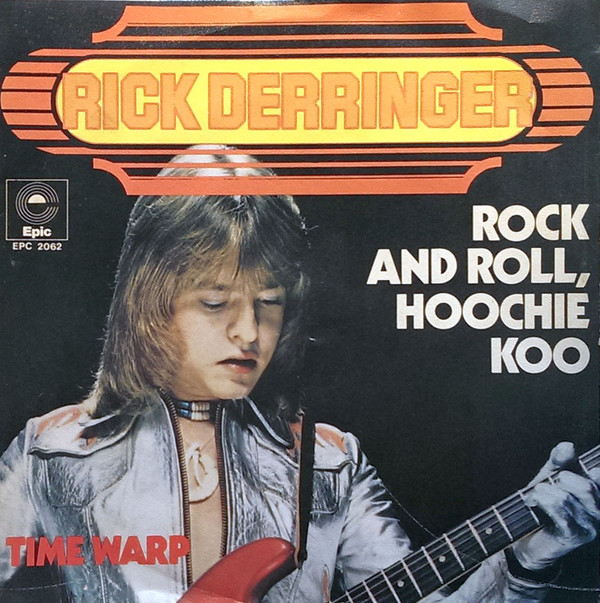
Rick Derringer – Rock and Roll Hoochie Koo

A hard rock hit back in 1974. The song has a cool guitar riff and solo by Rick Derringer. The song was written by Derringer in 1970 and Johnny Winter had a go at it earlier.

This was Derringer’s only top 40 hit. The song peaked at #23 on the Billboard 100 in 1973. I like both versions. Johnny Winter’s version is a little more laid back and Derringer’s is a little more edgy and uptempo. Hoochie Koo is short for Hoochie Koochie, which is sexual slang that was made popular by Muddy Waters in his song “Hoochie Coochie Man.

Rick Derringer was in a band called The McCoys who had a pop/rock/ bubblegum hit called Hang On Sloopy back in 1965. The McCoys combined forces with Johnny Winter on the album Johnny Winter And in 1970. It was going to be Johnny Winter and The McCoys, but that band had a bubblegum reputation they wanted to shake but Johnny felt it better to leave The McCoys name out of it entirely. Rick wrote the song for Johnny to bring in more of a rock and roll song to him rather than blues.

Later in 1973, Rick released his solo album All American Boy and released the single. Music critic Cub Koda (also singer/songwriter in Brownsville Station) wrote of the album “this is simply Rick Derringer’s most focused and cohesive album, a marvelous blend of rockers, ballads, and atmospheric instrumentals”, adding it was “one of the great albums of the ’70s that fell between the cracks.”

In 1972 Johnny joined Rick and Edgar to sing it on Edgar’s live album, Roadwork.

Rick Derringer: “The first thing I wanted to do was bring more of a rock ‘n roll way of thinking to Johnny, but Johnny didn’t want to change and become in any way bubblegum. So I wanted to write a song specifically for Johnny that he would be able to speak the lyrics in his vernacular and feel comfortable about saying the words he was saying, but I also wanted to bring a little more of a pop kind of sensibility to the whole thing. So I wrote ‘Rock ‘n Roll Hoochie Koo’ trying to follow those guidelines and it came out like it is.”

Rock ‘n’ Roll, Hoochie Koo

Couldn’t stop moving when it first took hold
It was a warm spring night at the old town hall
There was a group called, “The Jokers” they were layin’ it down
Don’t ya know I’m never gonna lose that funky sound?

Rock and Roll Hoochie Koo (Rock and Roll Hoochie Koo)
Lord and mama, light my fuse (light my fuse)
Rock and Roll Hoochie Koo (Rock and Roll Hoochie Koo)
Drop on out and spread the news

Skeeters start a buzzin’ ’bout this time a year
I’m goin’ ’round back, said she’d meet me there
We were rollin’ in the grass that grows behind the barn
When my ears started ringing like a fire alarm

Rock and Roll Hoochie Koo (Rock and Roll Hoochie Koo)
Lord and mama, light my fuse (light my fuse)
Rock and Roll Hoochie Koo (Rock and Roll Hoochie Koo)
Drop on out and spread the news

Yeah, did somebody say keep on rockin’?

Hope you all know what I’m talkin’ about
The way they wiggle that thing really knocks me out
Gettin’ high all the time, hope you all are too
C’mon little closer gonna do it to you

Rock and Roll Hoochie Koo (Rock and Roll Hoochie Koo)
Lord and mama, light my fuse (light my fuse)
Rock and Roll Hoochie Koo (Rock and Roll Hoochie Koo)
Drop on out and spread the news

Rock and Roll Hoochie Koo (Rock and Roll Hoochie Koo)
Lord and mama, light my fuse (Rock and Roll Hoochie Koo)
Rock and Roll Hoochie Koo (Rock and Roll Hoochie Koo)
Jump on out and spread the news, yeah
That I’m tired of payin’ dues (Rock and Roll Hoochie Koo)
Done said goodbye to all my blues (Rock and Roll Hoochie Koo)
Lord and mama, light my fuse

Boz Scaggs – Loan Me A Dime

An awesome blues song that shows what Boz Scaggs was all about before the hits came. He had been playing with Steve Miller and in 1969 he made this self-titled album Boz Scaggs. He spent some time down south getting this together. He also made a self-titled album (Boz) in 1967 and released it in Europe for the record.

Jann Wenner, the founder of Rolling Stone magazine, was producing Boz’s first U.S. solo album, and he took him to Jerry Wexler at Atlantic Records, who suggested recording in the South. They had a choice of studios…Stax in Memphis, Phil Walden’s studio in Macon, or Muscle Shoals Sound, a new studio founded by the rhythm section from FAME Studios. Boz and Jann listened to everything that was coming out of those studios and they soon knew they wanted the Muscle Shoals Rhythm Section, and they wanted Duane Allman.

Duane Allman - Boz Scaggs - LOAN ME A DIME - YouTube

Boz didn’t know a lot about Duane, but he got a good sense of his stature by spending that week with him at Muscle Shoals Sound. Duane’s work with Wilson Pickett and Aretha Franklin had preceded him, but Boz was most struck by who Duane was to the players at the studio. They lit up when Duane walked in the room…their respect for him was clear.

Boz Scaggs: “Duane had a profound effect on that album. One of the real revelations to me was Duane’s character, seeing him in the South hanging out with those guys. In his appearance, he looked like he was from New York or L.A., with long hair. It was a brave statement in itself in redneck America. You could get in trouble just driving around in his car. It was an occasion and a homecoming. They held him in very high esteem. He was the dude. He was the natural leader, and he made everyone laugh. It was a side I didn’t see in Macon, where he was much more serious and focused.”

Duane set up his amp in the bathroom at the studio on this recording. He liked to do that so his guitar wouldn’t bleed through on the other instruments. This song has some of Allman’s best playing.

Scaggs and his girlfriend Carmella settled into Macon Georgia and were part of the Allman Brothers Band extended family for a time, enjoying the musical energy and experience in Macon. By this time Macon was host to a lot of different musicians. Boz went fishing and played poker with the Allmans late into the night, drinking beer, and telling stories.

This song is usually listed in the top 5 of Boz Scaggs’s songs. It is not as well known but a great blues track. The track was written by Fenton Robinson.

Boz Scaggs“The first time we did it, it lasted twenty-five minutes and everyone thought it was such a gas, they trouped back in and did it again and we ended up with about forty minutes of ‘Loan Me a Dime’ and we wanted to use at least twenty minutes of it, but we had to use the shorter version, but that music is in the can somewhere in Muscle Shoals, and Duane was really rockin’ out.”

Loan Me A Dime

Somebody loan me a dime
I need to call my old time used to be
Somebody loan me a dime mmm
I need to call my old time that used to be

Little girl’s been gone so long
You know it’s worrying me
Hey it’s worrying worrying me

I know she’s a good girl
But at that time I just didn’t understand
I know she’s a good girl
But at that time I just didn’t understand
Oh no I didn’t

Somebody loan me a dime
You know I need.. I need a helping hand

Oh… she’s a good girl
But at that time I just didn’t understand
Ooooh I know she’s a good girl
But at that time I just could not understand
Oh no

Somebody better loan me that dime
To ease my worried worried mind.. oh
Now I cry.. I just cry
Just like a baby all night long.. oooh
You know I cry I just cry
Just like a baby all night long.. oooh
Somebody better loan me that dime
I need my baby
I need my baby here at home.. oooh YES

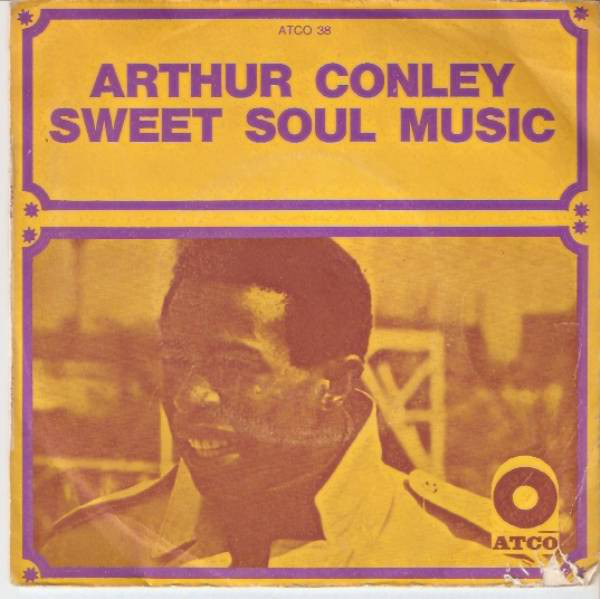
Arthur Conley – Sweet Soul Music

When I heard Conley shout out “Do you like good music” I knew this song was for me. Sweet Soul Music makes me mourn where digital recording has gone now. Such an in-your-face narrow tight song with a perfect sound.

Redding discovered Arthur Conley, a singer who sounded remarkably like himself. Redding became Conley’s mentor… the second release on Jotis Records was Conley’s “I’m a Lonely Stranger,” which Redding produced. It was not too successful and soon the record company folded.

Redding believed in Conley’s talent. In January 1967 Redding and his managers, Phil Walden (future ABB manager) and his brother Alan Walden (future Lynyrd Skynyrd manager) brought Conley to producer Rick Hall’s FAME Studios in Muscle Shoals, Alabama. Conley recorded two singles at FAME Studios but they were not successful and Hall did not want to work with Conley anymore.

By this time Otis was fed up and took Conley himself to FAME and used his own band. With Jimmy Johnson engineering they recorded Sweet Soul Music. It was a million-selling single. It peaked at #2 on the Billboard 100, #2 in the R&B Charts, and #7 in the UK in 1967.

It was written by Conley and Otis Redding. It was based on “Yeah Man” by Sam Cooke and was a tribute to soul singers. The songs mentioned in this song are “Going To A Go-Go,” “Love’s a Hurtin’ Thing,” “Hold On I’m Coming,” “Mustang Sally” and “Fa-Fa-Fa-Fa-Fa (Sad Song).” The artists mentioned are Otis, Wilson Pickett, Sam and Dave, James Brown, and Lou Rawls.

The opening horn intro sounds very similar to Elmer Bernstein’s score for The Magnificent Seven, popularly known as the Marlboro cigarette ad theme.

Conley could not duplicate the success he had with this record. He settled in the Netherlands and in 1980 legally changed his name to Lee Roberts — his middle name and his mother’s maiden name. Conley promoted new bands through his Art-Con Productions company and continued to record and perform, fronting Lee Roberts and the Sweaters.

Sweet Soul Music

Do you like good music
That sweet soul music
Just as long as it’s swingin’
Oh yeah oh yeah

Out here on the floor now
We’re going to a go go
Ah dancin’ to the music
Oh yeah oh yeah

Spotlight on Lou Rawls y’all
Ah don’t he look tall y’all
Singin’ loves a hurtin’ thing now
Oh yeah oh yeah

Spotlight on Sam and Dave now
Ah don’t they look boss y’all
Singin’ hold on I’m comin’
Oh yeah oh yeah

Spot light on Wilson Pickett
That wicked picked Pickett
Singing Mustang Sally
Oh yeah oh yeah

Spotlight on Otis Redding now
Singing fa fa fa fa fa fa fa fa
Fa fa fa fa fa fa fa fa
Oh yeah oh yeah

Spotlight on James Brown now
He’s the king of them all yeah
He’s the king of them all y’all
Oh yeah oh yeah

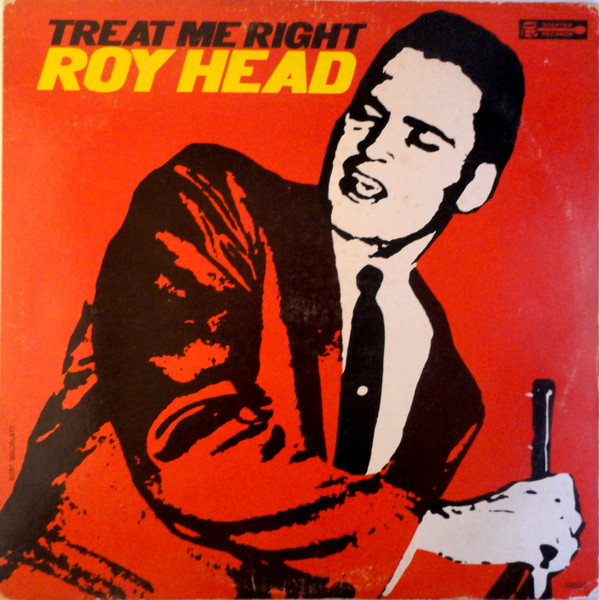
Roy Head – Treat Her Right

During my recent travels, my son had this song on his playlist. I had forgotten about it for the longest. Treat Her Right has had a resurgence in popularity because of the movie Once Upon A Time in Hollywood. There is a groove to this that is irresistible. Tarantino, much like Scorsese, knows how to pick the right songs for the right scenes.

This song has that sixties cool that others didn’t have. It’s that R&B groove that separated it from others. I’m not a guy that dances but if I was…this would be high on my list.

The song was released in 1965 and it peaked at #2 on the Billboard 100, #8 in Canada, and #2 on the Billboard R&B Charts. Roy would have 3 more top 40 songs but none that reached the top 20 on the Billboard 100. The song was written by Roy Head and Gene Kurtz

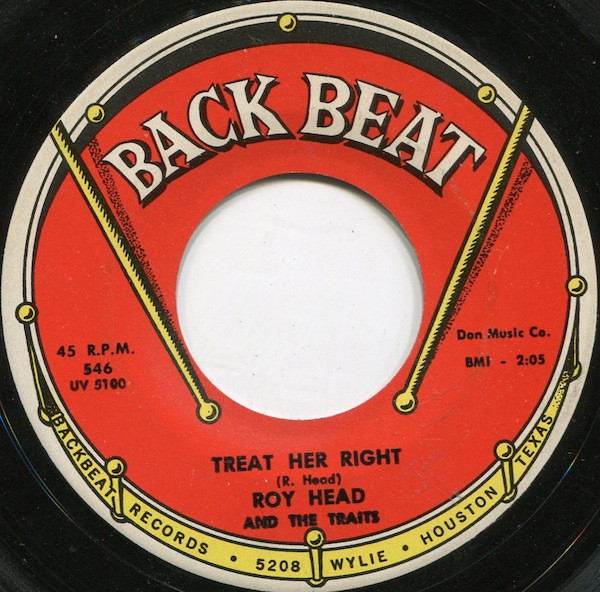
Roy Head And The Traits – Treat Her Right / So Long, My Love (1965, Vinyl)  - Discogs

Roy Head recorded for the small Back Beat record label. This was one of the few big hits it had. Back Beat records started in 1957 and ended in 1973 when ABC bought its parent label and discontinued Back Beat. Carl Carlington was about to release the hit Everlasting Love on the label but ABC decided just to issue it on their own label.

In 1974 Roy started to record country songs and released over 24 singles that charted in the top 100 but were not any major hits in the US. He did have two top 10 Canadian Country hits.

It’s been covered by Jimmy Page, Bruce Springsteen, Jerry Lee Lewis, Bon Jovi, Chris Farlowe (under the title “Treat Her Good”), and both Mae West and Barbara Mandrell under the title of “Treat Him Right”. Even Bob Dylan, Sammy Davis Jr., and Tom Jones had covered it live.

Head died of a heart attack on September 21, 2020, at the age of 79. His son Sundance Head has had some success in Country Music with 2 top twenty hits in 2016.

Bruce Springsteen: The song has magic in it…magic in it I tell you

Treat Her Right

I wanna tell you a story
Every man oughta know
If you want a little loving
You gotta start real slow
She’s gonna love you tonight now
If you just treat her right

Oh, squeeze her real gentle
Gotta make her feel good
Gotta tell her that you love her
Like you know you should
And if you don’t treat her right
She won’t love you tonight

Now if you practice my method
Oh, hard as you can
You’re gonna get a reputation
As a lovin’ man
And you’ll be glad every night
Now that you treated her right

Hey hey hey
Alright, hell yeah, every night, heck, alright, heck, hey, heck, heck

If you practice my method
I said as hard as you can
You’re gonna get a reputation
As a lovin’ man
And you’ll be glad every night
That you treated her right, hit me back

Hey hey hey
Alright, hell yeah, alright, heck, hey, heck, heck

Derek and the Dominos – Little Wing

Damn…this is such a great song. Duane Allman came into the Derek and the Dominos sessions and made a suggestion to record a Jimi Hendrix song, Little Wing. This is what he did in the Wilson Pickett sessions with the song Hey Jude.

After the Layla sessions were completed, Clapton returned to England with a rare left-handed Fender Stratocaster, a gift for Jimi Hendrix. He wanted him to hear the Dominos’ recording of Hendrix’s Little Wing, a tribute he and Duane had recorded for him. They both greatly admired Hendrix and Duane planned to meet him when Jimi came back from Europe. On the morning of September 18, 1970, Jimi Hendrix was found unconscious in a Notting Hill apartment in London. He died that afternoon at the hospital, having apparently suffocated while under the heavy sedation of sleeping pills.

The album peaked at #16 in 1970 on the Billboard 100. Although Derek and the Dominos were poised to record a follow-up album in 1971… tensions and drug abuse among the band members, along with the tragic death of Duane Allman ended that idea.

Jimi wrote this song and it was inspired by the 1967 Monterey Pop Festival, a concert held for 3 days in 1967. It was attended by around 200,000 music fans, it happened 2 years before Woodstock. Jimi wrote about the atmosphere at the festival as if it was a girl. He described the feeling as “Everybody really flying and in a nice mood.” He named it “Little Wing” because he thought it could just fly away.

The song was on Axis: Bold as Love released in 1967. The album peaked at #3 on the Billboard 100 in 1968.

Bobby Whitlock keyboard player: We had two leaders then. We had Eric and Duane. Eric backed up and gave Duane a lot of latitude, a lot of room, so he could contribute up to his full potentiality, and Duane was full of fire and ideas. He’d just go, “Hey, how about we try ‘Little Wing’?”—that was completely his idea and he came up with the intro by himself. He just started playing it.

Duane was very, very good in the studio. Working with the finest musicians and engineers on the planet really paid off for him. When he had the opportunity to be thrust into that environment, he absorbed what was right and righteous and then used it to killer advantage.

Little Wing

Well, she’s walking through the clouds
With a circus mind that’s running around
Butterflies and zebras and fairy tales
That’s all she ever thinks about

And when I’m sad, she comes to me
A thousand smiles she gives to me free
Said it’s all right, take anything you want from me
(Anything you want, babe) (Anything)

Well, she’s walking through the clouds
With a circus mind that’s running around
Butterflies and zebras and fairy tales
That’s all she ever thinks about

And when I’m sad, she comes to me
With a thousand smiles she gives to me free
Said it’s all right, take anything you want from me, baby
(Anything you want) (Anything)

Whoo…
Fly on little wing
Baby, baby

Beatles – Savoy Truffle

I love the horns in this song. It wasn’t George Harrison’s best on the album…that would be While My Guitar Gently Weeps but this one is fun.

George was good friends with Eric Clapton and was watching his friend with toothaches and getting dental work. Clapton’s weakness was candy and he would eat all of it until it was gone.

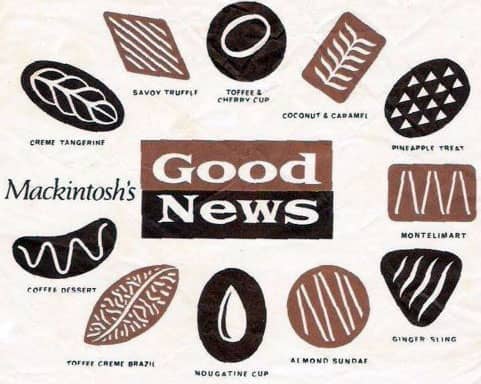
Harrison got the lyrics for this from the inside lid of a box of chocolates. Montelimar, Ginger Sling, Cream Tangerine, and Coffee Dessert were names of candies in the Mackintosh “Good News” assortment. The names “Cherry Creme” and “Coconut Fudge” were invented by George, however, to round out the verses.

Press agent Derek Taylor came up with the line  ‘You know that what you eat you are‘.

Derek Taylor: “George said, ‘We need a bit here, da da, da da da da, da da,’ and I thought again of my good friend, Alan Pariser. He had done a film called ‘You Are What You Eat,’ which was a very pippy thing; ‘Don’t eat meat, man, or you’ll be filled with the adrenaline of frightened animals.’ So I said to George, ‘You know that what you eat you are.’

good-news-chocolates

The MacIntosh’s Good News box where George got some of the lyrics.

Harrison wrote the line “We all know Obla-Di-Bla-Da” as an in-joke with the band. McCartney had pushed Obla-Di-Bla-Da so much that the band played endless versions of it and were not happy about it.

The White Album was released in 1968 and peaked at #1 in the Billboard Album Chart, #1 in Canada, #1 in the UK, and #1 about everywhere else…and it would be #1 as well on my list.

The White Album is as diverse as you can get… Pop, Rock, Country, Folk, Reggae, Avant-Garde, Blues, Hard Rock, and some 20’s British Music Hall thrown in the mix. It has plenty of songs that you have heard of and many that the masses have not heard. The Beatles more than many bands could bend to a style of music and play that style well.

Some critics said they should have taken the best of the two albums and slimmed it down to one. I understand that argument but as a Beatle fan…Nahhhhh. It’s the Beatles White Album!

George Harrison: “At that time he had a lot of cavities in his teeth and needed dental work. He always had a toothache but he ate a lot of chocolates – he couldn’t resist them, and once he saw a box he had to eat them all. He was over at my house, and I had a box of ‘Good News’ chocolates on the table and wrote the song from the names inside the lid: ‘Creme Tangerine, Montelimart’…” 

“He’d got this real sweet tooth and he had just had his mouth worked on. His dentist said he was through with candy. So, as a tribute, I wrote ‘You’ll have to have them all pulled out, after the Savoy Truffle.’ The truffle was some kind of sweet, just like all the rest, ‘crème tangerine,’ ‘ginger sling,’ just candy, to tease Eric.” 

Savoy Truffle

Creme tangerine and montelimar
A ginger sling with a pineapple heart
A coffee dessert, yes you know it’s good news
But you’ll have to have them all pulled out
After the Savoy truffle

Cool cherry cream, a nice apple tart
I feel your taste all the time we’re apart
Coconut fudge, really blows down those blues
But you’ll have to have them all pulled out
After the Savoy truffle

You might not feel it now
But when the pain cuts through
You’re going to know, and how
The sweat is going to fill your head
When it becomes too much
You shout aloud

You’ll have to have them all pulled out
After the Savoy truffle

You know that what you eat you are,
But what is sweet now, turns so sour
We all know Obla-Di-Bla-Da
But can you show me, where you are?

Creme tangerine and montelimar
A ginger sling with a pineapple heart
A coffee dessert, yes you know it’s good news
But you’ll have to have them all pulled out
After the Savoy truffle
Yes you’ll have to have them all pulled out
After the Savoy truffle

Rolling Stones – Claudine

You won’t find this song on one of their original studio albums. They recorded it for Some Girls but could not include this on that 1978 album because of legal issues. It’s a cool country-sounding song covering a grim subject. The song’s official release date was November 21, 2011. It appears as track number 1 on the 2011 deluxe edition of the Stone’s Some Girls album.

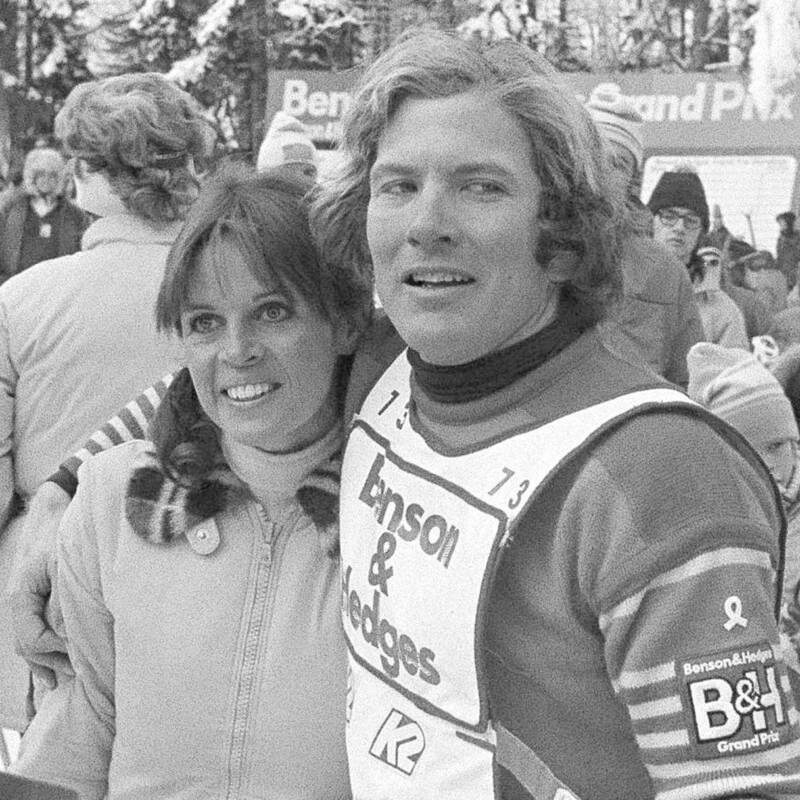
Claudine Longet: The Singer Who Killed Her Olympian Boyfriend

Claudine Longet and Spider Sabich

Claudine Longet was charged with fatally shooting her boyfriend, Olympic skier Vladimir “Spider” Sabich on March 21, 1976. At the trial, Longet claimed the gun discharged accidentally as Sabich was showing her how it worked. Throughout the whole court case, her former husband, the singer Andy Williams was by her side as she told her story.

 Sabich was one of the most well know American ski racers in the late 60s and early 70s. Claudine claimed that she was showing the gun to him when it went off.  She informed detectives that their relationship was under no duress. Friends of the couple said he was about to leave her at the time. Claudine Longet and Spider Sabich met in 1972. Claudine was a well-known French actress and singer…likely most famous for her marriage and subsequent divorce to Andy Williams. They were the Aspen celebrity couple.

Longet was only charged with a felony of reckless manslaughter which resulted in spending just a few weeks in jail, at her convenience. This was because she had children from her previous marriage and the judge didn’t want her to be away from her children for too long. With that, Longet spent most of her jail time over weekends. She took years to serve her sentence of 30 days.

Cocaine was alleged to have been found in her system, and details in her diary allegedly contradicted what she had told the police about her and Spider’s relationship. However, in a blow to the prosecution, the blood and diary were deemed inadmissible to the case because they were apprehended without a warrant.

At the time Saturday Night Live also got on board with this story with a skit called The Claudine Longet Invitational

You had the SNL announcers describing someone skiing down a hill and then…

Uh-oh! He seems to have been accidentally shot by Claudine Longet! Yes.. and I’m afraid Helmut Kindle is out of this race!

Longet’s lawyer wasn’t laughing, and he sent SNL a cease-and-desist letter. In the following week’s episode, the announcer Don Pardo read a statement on air…the show’s first public apology: “It is desirable to correct any misunderstanding that a suggestion was made that, in fact, a crime had been committed. The satire was fictitious and its intent only humorous. This is a statement of apology if the material was misinterpreted.”

Claudine is 80 years old now and stays out of the news.

Keith Richards: I wished, and I think all of us did at the time, that that should have been on the original album, but there was some legal difficulties and stuff. But otherwise, she was a perfect ‘Some Girl.’

Claudine Longet: He was my best friend

Claudine

Claudine’s back in jail again
Claudine’s back in jail again, Claudine

Claudine’s back in jail again
She only does it at weekends
Claudine

Now only Spider knows for sure
But he ain’t talkin’ about it anymore
Isn’t it, Claudine?

There’s blood in the chalet
And blood in the snow
She washed her hands of the whole damn show
Claudine

She shot him once right through the head
She shot him twice right through the chest
The judge says ruled it was an accident Claudine
Accidents will happen

And Claudine’s back in jail again
Claudine’s back in jail again
Claudine’s back in jail again, Claudine

Claudine’s back in jail again
Claudine’s back in jail again, Claudine

Hey go baby
Go baby

Claudine’s back in jail again
Claudine’s back in jail again, Claudine
Oh Claudine
Oh Claudine
Oh Claudine

Now I threaten my wife with a gun
But I always leave the safety on
I recommend it, Claudine

Yea she pistol-whipped me once or twice
But she never tried to take my life
What do you think about that
Claudine

Claudine’s back in jail again
She only does it at weekends Claudine

Oh Claudine
Oh Claudine
Oh Claudine

What about the children, Claudine?
Poor, poor children
You’re prettiest girl I ever seen
Only see you on the movie screen
Hope you don’t try to make a sacrifice of me Claudine
Don’t get
Don’t get too trigger happy with me Claudine
Itchy fingers

Yeah Claudine’s back in jail again
Claudine’s back in jail again
Claudine’s back in jail again Claudine

Yeah Claudine’s back in jail again
Claudine’s back in jail again Claudine
Uh uh Claudine
Poor, poor, poor Claudine

Chuck Berry – Back In The USA

What better way to celebrate July 4th than to play a Chuck Berry song. It’s nice to be back to music. I’m traveling today so I may not be able to comment until later on.

Chuck’s guitar playing got most of the publicity but his storytelling of his time is what I like best. Was it poetry? I’m not qualified to answer that but his words flowed like water and he puts you in the lunch room, classroom, dance hall, and riding in a coffee color Cadillac.

Music critic and opera composer Gregory Sandow calls him “a poet of the practical life.” John Lennon reports that Berry’s lyrics influenced his own and calls him “the greatest rock and roll poet.” Keith Richards invokes the tradition of troubadour to emphasize the poetic qualities of Berry’s lyrics. In the end, I don’t guess it matters but what we get are self-contained stories that live on today.

This was a double A-sided single…the B side was Memphis Tennessee. The song peaked at #37 on the Billboard 100 and #16 in the Billboard R&B Charts.

This song has the same sound as Roll Over Beethoven but I can’t blame Chuck for sounding like Chuck. If he could have sued everyone that ripped off his riffs…he would have lived in a courtroom.

When Berry wrote this… he was returning to the United States following a trip to Australia and witness the living standards of Australian Aborigines. This song inspired Paul McCartney to put a twist on it and he wrote Back In The U.S.S.R. on the White Album.

Linda Ronstadt covered this in 1978. Her version went peaked at #16 on the Billboard 100, #8 in Canada, #24 in New Zealand.

Chuck and Linda played the song in the highly entertaining Hail! Hail! Rock and Roll and Linda’s voice is just incredible.

Back In The USA

Oh well, oh well, I feel so good today
We touched ground on an international runway
Jet propelled back home, from over the seas to the U.S.A.

New York, Los Angeles, oh, how I yearned for you
Detroit, Chicago, Chattanooga, Baton Rouge
Let alone just to be at my home back in ol’ St. Lou

Did I miss the skyscrapers, did I miss the long freeway?
From the coast of California to the shores of Delaware Bay
You can bet your life I did, till I got back to the U.S.A.

Looking hard for a drive in, searching for a corner cafe
Where hamburgers sizzle on an open grill night and day
Yeah, and a jukebox jumping with records like in the U.S.A.

Well, I’m so glad I’m livin’ in the U.S.A.
Yes, I’m so glad I’m livin’ in the U.S.A.
Anything you want, we got right here in the U.S.A.