I remember hearing about this Canadian band but I didn’t start listening to them until recently. Deke and Dave my Canadian friends have mentioned them while following their blogs. Teenage Head was sometimes known as Canada’s answer to the Ramones.
They are from Hamilton, Ontario and met in Hamilton Weston High school… friends Frank “Venom” Kerr and Gord Lewis formed the group in 1975 with bassist Steve Mahon (later changed his last name to Marshall) and Nick Stipinitz on drums. They took their name from a Flaming Groovies song title and quickly gained a loyal following on the Ontario club circuit for their raw energy, highlighted by Lewis’guitar work and front man Venom’s antics and natural charisma on stage.
Signing with Attic Records, Teenage Head issued their sophomore effort, Frantic City, in early 1980.
They played a show at the Ontario Place Forum, a prominent outdoor venue situated in a Toronto park. Over 15,000 people showed up but they venue wasn’t large enough to hold them. A drunken crowd tried to storm the entrances, sparking a battle with the police officers on hand…multiple injuries and arrests followed. The band woke up the next morning with their name in the papers. They lost some gigs but the publicity pushed “Frantic” up the charts and to gold status.
Teenage Head released Let’s Shake in 1980 and it made it to #88 in Canada.
Let’s Shake
OOH
Give me that opener, pass me that beer C’mon move your ass on out of here Well I guess you know I need some money But you are just too fat and ugly
Well you can’t dance, can’t keep up the beat Well that’s because you got size twelve feet Well don’t make me run, well don’t make me blush You’re just that girl I hate to touch
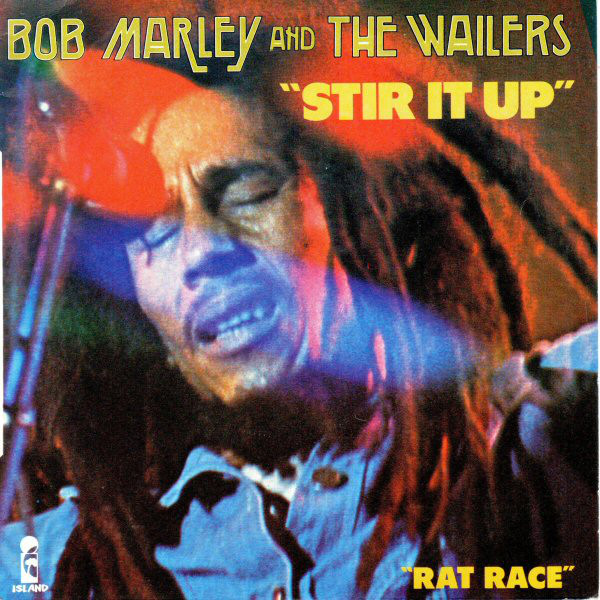
This song got me into Bob Marley. He wrote this song in 1967 and recorded it that year and released it as a single. It was later covered by Johnny Nash in 1972 and it peaked at #12 in the Billboard 100 for Johnny.
Bob Marley and the Wailers re-recorded it in 1973 for the “Catch the Fire” album. The Nash version was Bob’s first success outside of Jamaica.
It has been said that Bob Marley wrote this song for his wife Rita.
Bob Marley on Johnny Nash
“He’s a hard worker, but he didn’t know my music. I don’t want to put him down, but Reggae isn’t really his bag,” he said. “We knew of Johnny Nash in Jamaica before he arrived, but we didn’t love him that much: We appreciated him singing the kind of music he does – he was the first US artist to do reggae – but he isn’t really our idol. That’s Otis or James Brown or Pickett, the people who work it more hard.”
From Songfacts
Texas-born singer-songwriter Johnny Nash released his final US hit as a follow-up to his signature tune “I Can See Clearly Now.” Both singles were infused with the reggae sound he brought back from a 1967 trip to Jamaica, where he met up-and-comer Bob Marley. Not only was Marley an assistant producer on Nash’s album, but he also contributed a handful of tunes, including “Stir It Up,” a love song about stirring up desire that Marley wrote for his wife, Rita.
Nash’s version would become Marley’s first hit outside of Jamaica, but he originally recorded it with his own group, The Wailers. After Nash’s success, The Wailers recorded it again for their 1973 album, Catch a Fire. Marley’s version came to the forefront when it appeared on his greatest hits collection Legend in 1984, three years after his death.
In the UK, this was released as the first single, followed by the Nash-penned “I Can See Clearly Now.”
On this track, Nash is backed by the reggae band the Fabulous Five Inc.
A year before the album was released, Marley and Nash collaborated on the score for the Swedish film Vill sa garna tro, which cast Nash in a starring role – but things didn’t go as planned, mainly because no one could find Marley. John “Rabbit” Bundrick, Nash’s keyboardist and co-composer on the score, recalled in the liner notes for Marley’s Songs of Freedom: “I really don’t know what happened to Bob. All I do know is that his air ticket, Johnny’s guitar, and Johnny’s tape recorder all disappeared, along with Bob. Johnny never forgave him for taking his guitar. Bob disappeared as magically as he had arrived.”
Nash put his anger aside when “Stir It Up” became a hit, and invited Marley on a tour of the UK to promote the album.
Diana King covered this for the 1993 comedy Cool Runnings, about a Jamaican bobsled team competing in the Winter Olympics.
In the 2007 movie I Am Legend, Will Smith plays a Bob Marley-obsessed virologist who has survived a zombie apocalypse. When he finally meets another non-infected human, he is horrified to learn she’s never heard of Marley, so he puts on the Legend CD (note the album and movie titles), tells her it’s the best album ever made, and plays “Stir It Up.” Marley’s music is a theme throughout the film, as Smith’s character draws on it for faith. In the film, his daughter is named Marley.
“Stir It Up”
Stir it up; little darlin’, stir it up. Come on, baby. Come on and stir it up: little darlin’, stir it up. O-oh!It’s been a long, long time, yeah! (stir it, stir it, stir it together) Since I got you on my mind. (ooh-ooh-ooh-ooh) Oh-oh! Now you are here (stir it, stir it, stir it together), I said, it’s so clear There’s so much we could do, baby, (ooh-ooh-ooh-ooh) Just me and you.
Come on and stir it up; …, little darlin’! Stir it up; come on, baby! Come on and stir it up, yeah! Little darlin’, stir it up! O-oh!
I’ll push the wood (stir it, stir it, stir it together), then I blaze ya fire; Then I’ll satisfy your heart’s desire. (ooh-ooh-ooh-ooh) Said, I stir it every (stir it, stir it, stir it together), every minute: All you got to do, baby, (ooh-ooh-ooh-ooh) Is keep it in, eh!
(Stir it up) Oh, little darlin’, Stir it up; …, baby! Come on and stir it up, oh-oh-oh! Little darlin’, stir it up! Wo-oh! Mm, now, now.
Quench me when I’m thirsty; Come on and cool me down, baby, when I’m hot. (ooh-ooh-ooh-ooh) Your recipe is, – darlin’ – is so tasty, When you show and stir your pot. (ooh-ooh-ooh-ooh)
So: stir it up, oh! Little darlin’, stir it up; wo, now! Come on and stir it up, oh-ah! Little darlin’, stir it up! — [Guitar solo] — Oh, little darlin’, stir it up. Come on, babe! Come on and stir it up, wo-o-a! Little darlin’, stir it up! Stick with me, baby! Come on, come on and stir it up, oh-oh! Little darlin’, stir it up. [fadeout]
Blind Faith was a Supergroup made up of Eric Clapton, Steve Winwood, Ginger Baker, and Ric Grech. They released just one album… The album peaked at #1 in the Billboard Album Chart, Canada, and the UK in 1969.
It was written by Steve Winwood with acoustic guitar playing by Eric Clapton and percussion by Ginger Baker. Many artists have covered this song but I’ve never heard anyone that can match the original.
Winwood wrote this and sang lead. Many critics thought that Blind Faith sounded a lot more like Traffic than Clapton’s Cream, which is what Clapton was going for.
This song was on the “Blind Faith” album in 1969. Blind Faith was only together for this album, a debut concert in Hyde Park, a Scandinavia and USA tour and then broke up shortly afterwards.
In concert they performed Cream and Traffic songs, which delighted the crowd and annoyed Eric Clapton greatly. These audiences preferred their older material instead of the newer Blind Faith songs.
Clapton began spending more time with opener Delaney Bramlett and less time with his own band, which prompted a 21-year-old Steve Winwood to take a more driving role in the band. Eventually, Clapton left the group following their final show in Hawaii.
This song never gets old to me.
From Songfacts
Clapton played acoustic guitar on this track, which is something he rarely did. In his previous group, Cream, he played long, intense solos, something he wanted to get away from with Blind Faith.
The album was released in the UK with a cover photo of an 11-year-old girl named Mariora Goschen. The cover photo because as famous as the album itself, since it showed Goschen naked and holding a model spaceship (a different cover with a band photo was used in the US and for stores that wanted an alternative in the UK).
Bob Seidemann came up with the concept and took the photo, which represents humankind’s relationship with technology (this was when the mission to put a man on the moon was big news). The band wasn’t yet named, and when Seidemann took the photo, he called it “Blind Faith.” Clapton decided that should be the name of the band.
Clapton sometimes plays this at his concerts, with a member of his band singing. His bass player Nathan East would often sing it.
A common misconception is that Eric Clapton and Steve Winwood reunited at the Crossroads Guitar Festival, July 28, 2007, however, the first true live reunion occurred two months earlier at an event called Countryside Rocks at Highclere Castle, Hampshire, UK on May 19, 2007. Steve Winwood performed his set and Eric came on later as a guest. Together they played this song as well as “Watch Your Step,” “Presence of the Lord,” “Crossroads,” “Little Queen Of Spades,” “Had to Cry Today” and “Gimme Some Lovin’.”
The band House of Lords covered this on their 1990 album Sahara. Other artists to record it include Joe Cocker, Yvonne Elliman, Gilberto Gil and Widespread Panic.
Can’t Find My Way Home
Come down off your throne and leave your body alone Somebody must change You are the reason I’ve been waiting all these years Somebody holds the key
Well, I’m near the end and I just ain’t got the time And I’m wasted and I can’t find my way home
I can’t find my way home But I can’t find my way home But I can’t find my way home But I can’t find my way home Still I can’t find my way home
And I’ve done nothing wrong But I can’t find my way home
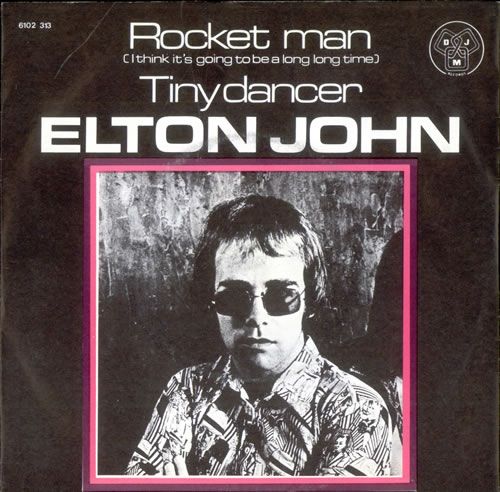
Great single by Elton John released in 1972. It was off of his album Honky Château. Like Bennie and the Jets there are some words that I had no clue in what he was singing. The most commonly misheard lyric in this song is “Rocket Man, burning out his fuse up here alone.” I would mumble words through that until I caught a word somewhere down the line.
The inspiration for Bernie Taupin’s lyrics was the short story The Rocket Man, written by Ray Bradbury. The sci-fi author’s tale is told from the perspective of a child, whose astronaut father has mixed feelings at leaving his family in order to do his job. It was published as part of the anthology The Illustrated Man in 1951.
This was produced by Gus Dudgeon, who worked with David Bowie on his 1969 song “Space Oddity.” Both songs have similar subject matter. Elton practically owned the early seventies. Elton had 9 No. 1 Hits, 7 Top 10 Hits, and 67 Songs in the Billboard 100 so far.
The song peaked at #6 in the Billboard 100, #8 in Canada, and #2 in the UK in 1972.
From Songfacts
Space exploration was big in 1972; the song came out around the time of the Apollo 16 mission, which sent men to the moon for the fifth time.
Bradbury’s story was the basis for another song called “Rocket Man,” which was released by the folk group Pearls Before Swine (fronted by Tom Rapp) in 1970. Taupin says that song gave him the idea for his own “Rocket Man” (“It’s common knowledge that songwriters are great thieves, and this is a perfect example,” he said). In the Pearls Before Swine song, a child can no longer look at the stars after his astronaut father perishes in space.
The opening lyrics came to Bernie Taupin while he was driving near his parents’ house in Lincolnshire, England. Taupin has said that he has to write his ideas down as soon as they show up in his head, or they could disappear, so he drove though some back roads as fast as he could to get to the house where he could write down his thought: “She packed my bags last night, pre-flight. Zero hour, 9 a.m., and I’m gonna be high as a kite by then.”
From there he came up with the song about a man who is sent to live in space as part of a scientific experiment.
The song can be interpreted as a symbol of how rock stars are isolated from their friends, family and from the real world by those with power in the music industry. Some lyric analysis as part of the rock star isolation theory:
“I’m burning out his fuse up here alone” – Rocketing through space on stage.
“Higher than a kite” – Feeling outside the box called normal.
“Mars” – “The place he is when he’s high; don’t need to be raising children when you’re an addict. It’s a “cold” place, being an addict and larger than life when you want to be “Normal” and a “Rocketman” at the same time.
“Rocket Man” became a nickname for Elton John. As song-based nicknames go, it’s a good one, and Elton embraced it (Madonna hates the “Material Girl” moniker). In 1973, he started a record company called Rocket Records, which was the label that released Neil Sedaka’s comeback songs. In 2019, a biopic (billed as a “musical fantasy”) called Rocketman was released starring Taron Egerton as Elton John.
Around the 2:20 mark, some synthesizer comes into the mix, accentuating the space motif. Elton didn’t dabble in synths, so a studio engineer named Dave Hentschel played it. Hentschel operated an ARP 2500 synthesizer at Trident Studios in London, where producer Gus Dudgeon did overdubs and mixing for the album. When Dudgeon found out they had the synth, which was introduced in 1971, he had Hentschel play it and ended up using it in the final mix.
Hentschel got the call again on the Goodbye Yellow Brick Road album when Dudgeon had him create the opening section to “Funeral For A Friend / Love Lies Bleeding” on the ARP. In the 1977 movie Close Encounters Of The Third Kind, an ARP 2500 plays the notes that summon the aliens.
When Elton played the Soviet Union in 1979, this was listed on the program as “Cosmonaut.”
This was Elton’s biggest hit to that point, outcharting his first Top 10 entry, “Your Song.” It had a huge impact on his psyche, as it gave him the confidence to know that he could sustain his career in music.
Baseball pitcher Roger Clemens’ nickname was “The Rocket,” which led to lots of highlight videos of him pitching in slow motion with this song playing in the background. He earned the nickname because of his outstanding fastball, but later came under scrutiny when the league learned that his rocket fuel may have been steroids. Clemens denied the allegations and was never convicted of steroid use.
Kate Bush covered this in 1991 for an Elton John tribute album called Two Rooms (a reference to John and Taupin writing separately). Her version hit #12 in the UK.
Bush told NME that this is one of her favourite songs of all time. “I remember buying this when it came out as a single by Elton John,” she said. “I couldn’t stop playing it – I loved it so much. Most artists in the mid seventies played guitar but Elton played piano and I dreamed of being able to play like him.”
When years Elton and Bernie Taupin asked Bush to record one of their songs for Two Rooms, she chose “Rocket Man.” They gave her complete creative control which was both exciting and a bit daunting for the singer. “I wanted to make it different from the original and thought it could be fun to turn it into a reggae version,” she said. “It meant a great deal to me that they chose it to be the first single release from the album.”
William Shatner performed a spoken-word version of this song at the 1978 Science Fiction Film Awards, for which he was the host. Bernie Taupin did the introduction.
At a show in Anaheim, California on August 22, 1998, Jim Carrey joined Elton for a duet of this song. Carey gave a real performance before sitting at the piano and bashing his head into the keys.
On an episode of the television show Family Guy, Stewie does a spoken version of this song.
This was used in a 2017 commercial for Samsung’s Gear VR where an ostrich learns to fly after using the flight simulator on the device.
Speaking at the United Nations on September 19, 2017, American president Donald Trump excoriated North Korean leader Kim Jong Un, referring to him as “Rocket Man” because of his missile program. “Rocket Man is on a suicide mission for himself,” Trump declared. This song immediately began trending.
This wasn’t the first time the phrase was used in this context: The Economist put Kim Jong Un’s father, Kim Jong Il, on the cover of their July 8, 2006 issue with the headline “Rocket Man.”
American country group Little Big Town covered the song for the 2018 Elton John tribute album Restoration. Their version features sounds from NASA’s Mission Juno. The Juno project explored the planet Jupiter unlocking some of the secrets of the planet and the sounds from Juno’s Waves radio instrument were weaved throughout Little Big Town’s harmonies.
“One of the main reasons why we chose ‘Rocket Man’ was because we were so intrigued by not just, of course, Elton John, but by using the sounds from the Juno project so we had all these Jupiter noises,” said Little Big Town’s Karen Fairchild.
Rocket Man
She packed my bags last night pre-flight Zero hour nine AM And I’m gonna be high as a kite by then I miss the earth so much I miss my wife It’s lonely out in space On such a timeless flight
And I think it’s gonna be a long long time ‘Till touch down brings me round again to find I’m not the man they think I am at home Oh no no no I’m a rocket man Rocket man burning out his fuse up here alone
And I think it’s gonna be a long long time ‘Till touch down brings me round again to find I’m not the man they think I am at home Oh no no no I’m a rocket man Rocket man burning out his fuse up here alone
Mars ain’t the kind of place to raise your kids In fact it’s cold as hell And there’s no one there to raise them if you did And all this science I don’t understand It’s just my job five days a week A rocket man, a rocket man
And I think it’s gonna be a long long time ‘Till touch down brings me round again to find I’m not the man they think I am at home Oh no no no I’m a rocket man Rocket man burning out his fuse up here alone
And I think it’s gonna be a long long time ‘Till touch down brings me round again to find I’m not the man they think I am at home Oh no no no I’m a rocket man Rocket man burning out his fuse up here alone
And I think it’s gonna be a long long time And I think it’s gonna be a long long time And I think it’s gonna be a long long time And I think it’s gonna be a long long time And I think it’s gonna be a long long time And I think it’s gonna be a long long time And I think it’s gonna be a long long time And I think it’s gonna be a long long time
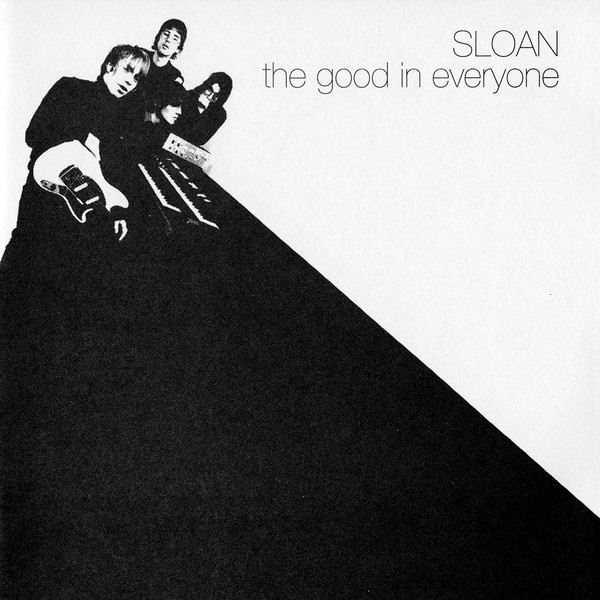
Jim told me about a Canadian theme coming up and I wanted to make sure I didn’t miss this one. Sloan is a great power-pop band that my two Canadian friends Deke and Dave told me about. The band never made a big impact on America and that was our loss. They formed in 1986 and still have the same band members.
When I found this song…the song and video are great. The video is a takeoff…a very good takeoff on the movie Easy Rider…the part where they buy the drugs at the airport from the Phil Spector character.
The song peaked at #6 in Canada in 1996.
It was released as the lead single from the band’s third studio album, One Chord to Another.
The music video for “The Good In Everyone” was filmed at Toronto Pearson International Airport. Band members Andrew Scott playing Billy (Dennis Hopper), Chris Murphy playing Wyatt (Peter Fonda), Jay Ferguson playing Connection (Phil Spector) and Patrick Pentland playing the Bodyguard. The entire introductory scene before the music begins is longer than the song itself.
Sloan
First off, here’s what you do to me You get rough, attack my self-esteem It’s not much, but it’s the best I’ve got And I thought you saw the good in everyone
Ooh, the good in everyone You see the good in everyone You see the good in everyone
I close my eyes, I can’t give it up I close my mind, I can’t get enough I’m in no shape, I gotta turn it off Just let it play The Good In Everyone
Ooh, the good in everyone You see the good in everyone You see the good in everyone You see the good in everyone Ooh, the good in everyone
Joe Walsh’s career was slowing down when this came out. It was Walsh’s first album of entirely new music since Got Any Gum?
In 1990, Walsh reunited with former Barnstorm drummer Joe Vitale to co-produce Ordinary Average Guy. This album also features vocal and writing contributions by former Survivor lead vocalist Jimi Jamison as well as backing vocals by Ringo Starr.
This wasn’t Walsh’s best release by a long shot but the song was enjoyable. The song was written by Joe Walsh and Joe Vitale.
Walsh wrote this about his mid-life crisis. It deals with escaping the fame and fortune associated with the life of a rock star. This is a parody of Walsh’s previous release, “Life’s been Good to Me,” which is about rock star excess.
The song was off of Ordinary Average Guy and it peaked at #112 in the Billboard Album Charts in 1991. The song peaked at #3 in the Billboard Mainstream Rock Tracks.
Ordinary Average Guy
I’m just an ordinary average guy My friends all are boring And so am I We’re just ordinary average guys
We all lead ordinary average lives With average kids And average wives We all go bowling at the bowling lanes Drink a few beers Bowl a few frames We’re just ordinary average guys Ordinary average guys
And every Saturday we work in the yard Pick up the dog doo Hope that it’s hard (woof woof) Take out the garbage and clean out the garage My friend’s got a Chrysler I’ve got a Dodge We’re just ordinary average guys Ordinary average guys
Ordinary average guy(3x) Ordinary average average guys
Ordinary average guy(3x) Ordinary average average average guys
The Ramones always seem to brighten my day. No pretentious songs or long drawn out solos. They get to the point and fast. This song is a little different their previous songs and it was one of their biggest hits.
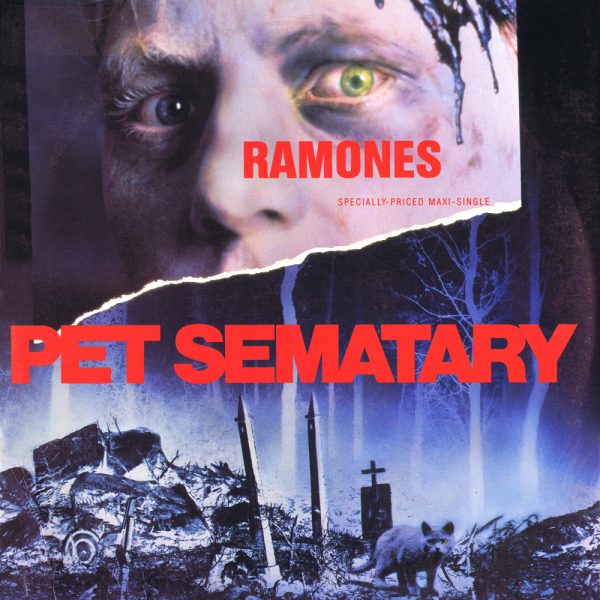
Dee Dee Ramone and producer Daniel Rey wrote this song for the 1989 Stephen King movie Pet Sematary. Another Ramones song, Sheena Is A Punk Rocker, also appears in the film.
Stephen King was a big Ramones fan and even mentioned them in the book.
The music video for Pet Sematary was filmed at the Sleepy Hollow Cemetery in New York village…it was filmed in 1989. The video features cameos by Debbie Harry and Chris Stein of Blondie.
The song peaked at #4 in the Billboard Modern Rock Charts in 1989. The song was on the album Brain Drain.
Marky Ramone:“Stephen King is a big Ramones fan. … He’s a great guy, very tall, very intense-looking. His eyes are very intense, you can see he read a lot … and we hit it off. He asked us to do a song for the movie soundtrack. … He gave Dee Dee the book to read; he read the book and wrote the song in 40 minutes. I’m forever grateful I met the guy. He wrote a nice quote in the book about me. So thank you, Stephen.”
This is a link for more info on the song and video.
Under the arc of a weather stain boards Ancient goblins, and warlords Come out the ground, not making a sound The smell of death is all around And the night when the cold wind blows No one cares, nobody knows
I don’t want to be buried in a pet cemetery I don’t want to live my life again I don’t want to be buried in a pet cemetery I don’t want to live my life again
Follow Victor to the sacred place This ain’t a dream, I can’t escape Molars and fangs, the clicking of bones Spirits moaning among the tombstones And the night, when the moon is bright Someone cries, something ain’t right
I don’t want to be buried in a pet cemetery I don’t want to live my life again I don’t want to be buried in a pet cemetery I don’t want to live my life again
The moon is full, the air is still All of the sudden I feel a chain Victor is grinning, flesh is rotting away Skeletons dance, I curse this day And the night when the wolves cry out Listen close and you can hear me shout
I don’t want to be buried in a pet cemetery I don’t want to live my life again I don’t want to be buried in a pet cemetery I don’t want to live my life again, oh, no, oh, no I don’t want to live my life, not again, oh, no, oh, oh I don’t want to live my life, not again, oh, no, no, no I don’t want to live my life, not again, oh, no, no, no
This is a great sounding song. He mentions historical figures by first name…I think John Lennon, Jerry Garcia, Vincent Van Gogh are among them and includes more…I love the guitar sound. I would recommend checking them out. Thanks to Hanspostcard for pointing them out.
This is a local band out of Pittsburgh that formed in the mid 80s at Indiana University of Pennsylvania where most of them were enrolled. They started out as a cover band and soon began playing original songs.
They were on their own label while making their first albums and then MCA took notice. They signed with them in 1996 but MCA started to pay more attention to their label mate Blink – 182 and didn’t push The Clarks. They signed with Razor & Tie after MCA and achieved success locally but not nationally.
The Clarks who play Power Pop have released 12 studio and live CDs selling nearly quarter of a million copies. they have built a fan base from over 20 years of performances an they sell out 7,500 seat venues in Pittsburgh and venues in the East coast and Mid-West.
This song was on the Let It Go album released in 2000.
It originally appeared on singer Scott Blasey’s 1999 solo album, Shine, but was then reworked by the entire band for its appearance on this album.
Dave Marsh Rock Critic: “They’ve got first-rate songs, they play together the way only bands who’ve truly lived with each other’s chops can, they can sing, and as far as I can tell, at the end of the story, they get the girl. What more do you want?”
Born Too Late
Vincent will you teach me how to paint Teresa will I ever be a saint John I really think your songs are great I was born too late
William will you teach me how to write Cassius will you show me how to fight Thomas A. I think I see the light I was born tonight
I’ve had a hard time leaving this town I’ve been losing everything that I’ve found I’m gonna search the sky, kiss the ground Build it up and tear it back down
I’ve had a hard time leaving this place I’ve been counting all the lines on my face I’m gonna curse the sky, hit the ground What goes up comes tumbling down
Jimi show me how you play that thing Elvis will I ever be a king and Jerry all the joy and love you bring I was born to sing
Martin Luther King show me the way Jesus Buddha teach me how to pray Christopher I think I see the bay I was born today
Whenever I hear this song I think of a story that Dick Cavett told. He said he met Janis in a restaurant and a Janis song was playing on a jukebox while they sat down. Cavett asked Janis what the name of it was…and she said “Down On Me.” Dick said “Wow, I guess that is one you cannot sing on television”…Janis smiled and said “Dick, it’s a gospel song.”
It was a traditional gospel song from the 20s that Janis reworked. The song was on the debut album of Big Brother & the Holding Company featuring Janis and the album had the same name. The song peaked at #43 in the Billboard 100 in 1967. The album was sloppy…Big Brother and the Holding Company were really raw with no polish. On their second album “Cheap Thrills” they would improve but Janis left after the that album to work with better musicians.
This is not the best Joplin song but I do like it.
Down On Me
Down on me, down on me, Looks like everybody in this whole round world They’re down on me.
Love in this world is so hard to find When you’ve got yours and I got mine. That’s why it looks like everybody in this whole round world They’re down on me.
Saying they’re down on me, down on me. Looks like everybody in this whole round world Down on me.
When you see a hand that’s held out toward you, Give it some love, some day it may be you. That’s why it looks like everybody in this whole round world They’re down on me, yeah.
Lord, they’re down on me, down on me, oh! Looks like everybody in this whole round world Is down on me.
Believe in your brother, have faith in man, Help each other, honey, if you can Because it looks like everybody in this whole round world Is down on me.
I’m saying down on me, oh, down on me, oh! It looks like everybody in this whole round world Down on me!
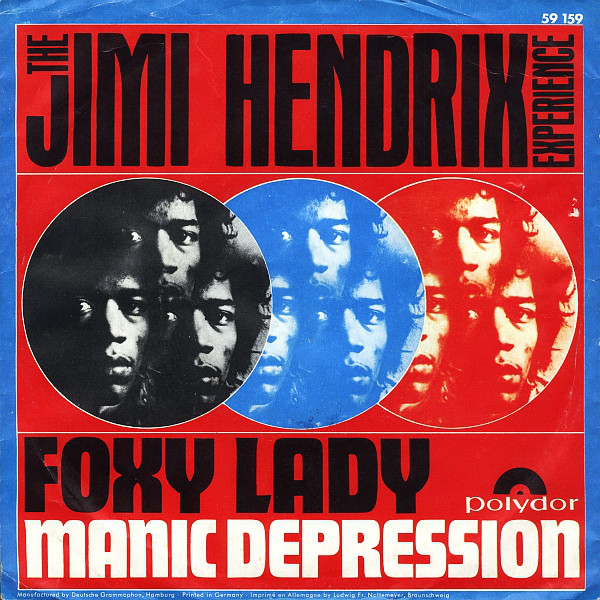
This is one of the most remembered songs from Jimi. According to Hendrix biographer Harry Shapiro, the song was probably inspired by Heather Taylor, who eventually married Roger Daltrey, the lead singer for The Who.
Kathy Etchingham, Jimi’s girlfriend at the time, also claimed to be one of many inspirations for “Foxy Lady.” I’m sure there are/were a lot of claims.
Hendrix recorded this on December 13, 1966. That same day, he made his first TV appearance on the British show Ready Steady Go. The Jimi Hendrix Experience had been together only 2 months at that point, but things moved very quickly. Three days later, their first single, “Hey Joe” was released.
Rolling Stone magazine placed the song at number 153 on its list of the “500 Greatest Songs of All Time.”
The song was on the Are You Experienced album released in 1967. It peaked at #5 in the Billboard Album Charts, #15 in Canada and #2 in the UK
Foxy Lady peaked at #67 in the Billboard 100.
From Songfacts
Hendrix opened for The Monkees on their 1967 tour. When he played this, the young girls who came for The Monkees and had no interest in Hendrix shouted “Davy!” when Hendrix sang “Lady,” resulting in “Foxy Davy,” and turning it into a tribute to their idol, Monkees lead singer Davy Jones.
This was featured in the movie Wayne’s World. It is used in a scene where Garth (Dana Carvey), sings it while thinking about his dream woman, played by Donna Dixon.
In the booklet for the Experience Hendrix CD, Hendrix was quoted as saying this was the only happy song he had ever written. He said that he usually just doesn’t feel happy when writing songs.
The title of this song has two alternate spellings: “Foxey Lady” (for release in America) and “Foxy Lady” (for release in the UK).
Foxy Lady
Foxey, foxey You know you’re a cute little heart breaker, ha Foxey, yeah And you know you’re a sweet little love maker, ha Foxey
I want to take you home, haha yeah I won’t do you no harm no, ha You got to be all mine, all mine Ooh foxey lady, yeah Foxey, foxey
Now-a I see you come down on the scene Oh foxey You make me want to get up and a scream Foxey, oh baby listen now I’ve made up my mind Yeah, I’m tired of wasting all my precious time You got to be all mine, all mine Foxey lady Here I come Foxey
Yeah I’m gonna take you home I won’t do you no harm no You got to be all mine, all mine Foxey lady Here I come baby, I’m commin’ to get ya
Ooh foxey lady yeah yeah You look so good foxey Oh yeah foxey Yeah give us some foxey Foxey foxey lady Foxey lady
Rick Danko conveys so much hurt, loneliness and heartache in this song. You can feel his pain with every word he sings. It’s one of the best vocals of pure suffering I’ve ever heard. He sounds like a man at the end of his tether because of a hopeless love affair.
The Band’s later material sometimes gets neglected since their first two albums were so good. This song was on the Northern Lights – Southern Cross album released in 1975.
The album peaked at #26 in the Billboard 100 and #27 in Canada.
Robbie Robertson: “I thought about the song in terms of saying that time heals all wounds,” he said. “Except in some cases, and this was one of those cases.”
Robbie Robertson: “I wrote this song specifically for Rick to sing, and when we first started discovering the possibilities, it kept expanding to more levels of emotion. What Garth and I could add to finalize the statement of this song was purely instinctual.”
From Songfacts
This was included on the soundtrack to The Last Waltz, a 1978 documentary about The Band directed by Martin Scorsese, named after the group’s 1976 concert at the Winterland Ballroom in San Francisco. The group also performed the song during the concert, which was a basis for the film.
This was included on the sound Solomon Burke covered this on the 2005 album Make Do With What You Got. Other covers include My Morning Jacket on the 2007 album Endless Highway: The Music of The Band and the 2012 album Love for Levon, and Over the Rhine on the 2013 album Meet Me at the Edge of the World.
It Makes No Difference
It makes no difference where I turn I can’t get over you and the flame still burns It makes no difference, night or day The shadow never seems to fade away
And the sun don’t shine anymore And the rains fall down on my door
Now there’s no love As true as the love That dies untold But the clouds never hung so low before
It makes no difference how far I go Like a scar the hurt will always show It makes no difference who I meet They’re just a face in the crowd On a dead-end street And the sun don’t shine anymore And the rains fall down on my door
These old love letters Well, I just can’t keep Cause like the gambler says Read ’em and weep And the dawn don’t rescue me no more
Without your love I’m nothing at all Like an empty hall it’s a lonely fall Since you’ve gone it’s a losing battle Stampeding cattle They rattle the walls
And the sun don’t shine anymore And the rains fall down on my door
Well, I love you so much It’s all I can do Just to keep myself from telling you That I never felt so alone before
God have mercy on the man Who doubts what he’s sure of
I was 20 years old when I heard that lyric for the first time and a chill went through me. Brilliant Disguise I would play over and over again.
Springsteen sings this from the viewpoint of a man who is conflicted over a romantic relationship. Although he claims the song is not directly about him, Springsteen was having problems in his marriage to his first wife, Julianne Phillips, and they divorced soon after.
This was the first single off Tunnel Of Love, an album Springsteen recorded in his home studio in New Jersey. Tunnel of Love is one of my favorite albums by Springsteen. The album peaked at #1 in the Billboard Album Charts, Canada, and the UK.
The song peaked at #5 in the Billboard 100, #9 in Canada, and #20 in the UK in 1987.
Bruce Springsteen: “I guess it sounds like a song of betrayal – who’s that person sleeping next to me, who am I? Do I know enough about myself to be honest with that person? But a funny thing happens: songs shift their meanings when you sing them, they shift their meanings in time, they shift their meanings with who you sing them with. When you sing this song with someone you love, it turns into something else.”
Brilliant Disguise
I hold you in my arms As the band plays What are those words whispered baby Just as you turn away I saw you last night Out on the edge of town I wanna read your mind To know just what I’ve got in this new thing I’ve found So tell me what I see When I look in your eyes Is that you baby Or just a brilliant disguise
I heard somebody call your name From underneath our willow I saw something tucked in shame Underneath your pillow Well I’ve tried so hard baby But I just can’t see What a woman like you Is doing with me So tell me who I see When I look in your eyes Is that you baby Or just a brilliant disguise
Now look at me baby Struggling to do everything right And then it all falls apart When out go the lights I’m just a lonely pilgrim I walk this world in wealth I want to know if it’s you I don’t trust ‘Cause I damn sure don’t trust myself
Now you play the loving woman I’ll play the faithful man But just don’t look too close Into the palm of my hand We stood at the alter The gypsy swore our future was right But come the wee wee hours Well maybe baby the gypsy lied So when you look at me You better look hard and look twice Is that me baby Or just a brilliant disguise
Tonight our bed is cold I’m lost in the darkness of our love God have mercy on the man Who doubts what he’s sure of
The song was written by Chips Moman and Bobby Emmons. Waylon Jennings was in Moman’s American Studios in Nashville recording Luckenbach, Texas when Willie Nelson happened to drop by for no particular reason.
Jennings saw him and asked him to sing with him on this. So Willie ended up adding his voice to the final verse, providing a couple of lyrical changes in the process.
Chips Moman used reverse psychology on Waylon to get him to record this song. Chips told him “here’s a song that you can’t cut because I’ve got it promised to someone else, but can I get your opinion on it?” It worked, Waylon took the bait and told Moman “I’m gonna cut that song.”|
Suddenly the tiny town of Luckenbach was besieged by network reporters and camera crews. Over one hundred city-limit signs have been stolen from the town since Jennings’ famous record was first released in 1977, and ironically neither Waylon nor the song’s writers Chips Moman and Bobby Emmons ever made their way to Luckenbach, Texas.
The song peaked at #1 in the Billboard Country Charts, #25 in the Billboard 100, and #1 in the Canadian Country Charts, and #46 in the Canadian RPM Charts in 1977.
Luckenbach Texas
Let’s go to Luckenbach, Texas With Waylon and Willie and the boys This successful life we’re livin’ Got us feuding like the Hatfields and McCoys Between Hank Williams’ pain songs and Newbury’s train songs and “Blue Eyes Cryin’ in the Rain” Out in Luckenbach, Texas, ain’t nobody feelin’ no pain
So baby, let’s sell your diamond ring Buy some boots and faded jeans and go away This coat and tie is choking me In your high society, you cry all day We’ve been so busy keepin’ up with the Jones Four car garage and we’re still building on Maybe it’s time we got back to the basics of love
Let’s go to Luckenbach, Texas With Waylon and Willie and the boys This successful life we’re livin’ got us feudin’ Like the Hatfield and McCoys Between Hank Williams’ pain songs and Newbury’s train songs and “Blue Eyes Cryin’ in the Rain” Out in Luckenbach, Texas, ain’t nobody feelin’ no pain
Let’s go to Luckenbach, Texas Willie and Waylon and the boys This successful life we’re livin’s got us feudin’ Like the Hatfield and McCoys Between Hank Williams’ pain songs And Jerry Jeff’s train songs and “Blue Eyes Cryin’ in the Rain” Out in Luckenbach, Texas, there ain’t nobody feelin’ no pain
Last Train to London was on the Discovery album released in 1979. Dave (A Sound Day) covered this album and he has some great trivia on who the model was on the cover. Click on there and see who it was…it will probably surprise you.
I had this album and there are two songs I really liked off of it other than the big hits. One of them is this one and the other was The Diary of Horace Wimp.
Jeff was happy to admit that he appreciated disco. Shine a Little Love and Last Train To London certainly pointed that way.
This album generated four top-ten UK singles, a successful new milestone in spite of the fact that this was the first which the group did not support with a tour.
Last Train To London peaked at #39 in the Billboard 100, #28 in Canada, and #8 in the UK.
Discovery peaked at #5 in the Billboard Album Chart, #1 in the UK and #3 in Canada.
Jeff Lynne: “I love disco. I love it and I always have loved it, ever since I first heard that ‘bang, bang, bang, bang!’ And I realized, ‘Wow! You just keep the bangs in and fill the holes in with something else.’ And it worked. I mean Shine A Little Love is the perfect example, right there. And Last Train To London. I really enjoyed doing disco.”
Last Train To London
It was 9-29, 9-29 back street big city The Sun was going’ down, there was music all around It felt so right
It was one of those nights One of those nights when you feel the world stop turning You were standing there, there was music in the air I should have been away, but I knew I’d have to stay
Last train to London, just heading out Last train to London, just leaving town But I really want tonight to last forever I really wanna be with you Let the music play on down the line tonight
It was one of those nights One of those nights when you feel the fire is burning Everybody was there, everybody to share, it felt so right
There you were on your own Looking like you were the only one around I had to be with you, nothing else that I could do I should have been away, but I knew I’d have to say
Last train to London, just heading out Last train to London, just leaving town But I really want tonight to last forever I really wanna be with you Let the music play on down the line tonight
Underneath a starry sky Time was still but hours must really have rushed by I didn’t realize, but love was in your eyes I really should have gone, but love went on and on
Last train to London, just heading out Last train to London, just leaving town But I really want tonight to last forever I really wanna be with you Let the music play on down the line tonight
One of the great guitar riffs in rock…very melodic and sounds great on a guitar.
John Lennon said he borrowed from the song “Watch Your Step” by the American blues musician Bobby Parker. I Feel Fine was released in late 1964. It was the A side of the single with She’s A Woman on the B side.
The first note of this song marked the first time feedback was used on a major release. It was created when John Lennon leaned his electric guitar against an amplifier and Paul McCartney played a note on his bass, creating a strangely appealing feedback loop.
The band thought it sounded great, but in this pre-Hendrix era, feedback was considered a technical malfunction and not an artistic enhancement.Producer George Martin was always open to new ideas and agreed to insert it at the beginning of the song. Paul would say that he let them experiment.
The song peaked at #1 in the Billboard 100, Canada, UK, and New Zealand in 1965.
From Songfacts
An early Beatles track, “I Feel Fine” lyrically is a simple love song about a guy who is crazy about his girl. It’s not Shakespeare, but it’s effective:
She’s so glad, she’s telling all the world
That her baby buys her things, you know
He buys her diamond rings, you know
The refrain is typical of Lennon’s songwriting, with the three long notes: “I’m so glad.” The sudden explosive refrain in harmonies is similar to Giovanni Gabrieli’s grand concerto “In ecclesiis,” an early baroque-music-piece.
There is a very faint sound at the end of the song that was rumored to be barking dogs. It’s actually just McCartney goofing around.
The Beatles included this in their setlist when they toured the US in August 1965. Prior to their famous Shea Stadium appearance on August 15, they taped a performance of this song and five others for an Ed Sullivan Show episode that aired September 12.
The group made two music videos for this song as part of a one-day shoot where they banged out takes for four others as well. These were not high-concept films: just the band having some fun while lip-synching the tracks. The first “I Feel Fine” video got pretty goofy, with Ringo riding a stationary bike. For the second, the band simply sits down and eats lunch. This later version wasn’t released until 2015 when it was included on the 1+ collection.
The Ventures incorporated the riff into their surf rock instrumental version of “Rudolph The Red-Nosed Reindeer” on their 1965 Christmas album.
In America, this knocked “Come See About Me” by The Supremes from the top spot. “I Feel Fine” stayed for three weeks, at which point “Come See About Me” returned to bump it off.
I Feel Fine
Baby’s good to me, you know She’s happy as can be, you know She said so I’m in love with her and I feel fine
Baby says she’s mine, you know She tells me all the time, you know She said so I’m in love with her and I feel fine
I’m so glad that she’s my little girl She’s so glad, she’s telling all the world That her baby buys her things, you know He buys her diamond rings, you know She said so She’s in love with me and I feel fine
Baby says she’s mine, you know She tells me all the time, you know She said so I’m in love with her and I feel fine
I’m so glad that she’s my little girl She’s so glad, she’s telling all the world That her baby buys her things, you know He buys her diamond rings, you know She said so She’s in love with me and I feel fine She’s in love with me and I feel fine, mmm









 PowerPop... An Eclectic Collection of Pop Culture