Pink Floyd – Astronomy Domine

Lime and limpid green, a second scene
Now fights between the blue you once knew

I’m loving this early Pink Floyd music.

This was the opening song on The Piper At The Gates Of Dawn…which  was Pink Floyd’s first album; the title came from a chapter heading in The Wind In The Willows, a children’s book written by Kenneth Grahame and published in 1908.

The song was written by founding member and original band leader Syd Barrett. The song starts with some  Morse Code  and it turns out to be a catchy pop tune. You can hear the future of Pink Floyd in parts of this song.

In the UK, the album was a hit, reaching #6 in 1967. Pink Floyd got some attention when they toured with Jimi Hendrix in 1967.

Pink Floyd drummer Nick Mason: “This is such a great drum track in an interesting time signature. It’s a fantastic bit of ’60s philosophy mixed with a sort of psychedelic lyric.”

From Songfacts

“Astronomy” is the study of celestial bodies, and to “domineer” is to control something in an arrogant way. So “Astronomy Domine” means to control space for personal needs. This probably represents the space race between the United States of America and the Union of Soviet Socialist Republics during the Cold War era. 

This was written by Syd Barrett, who was the group’s primary songwriter at the time. A founding member of Pink Floyd, his mental health started deteriorating a short time after this was released, and by 1972 he was out of the band, doing gardening instead of leading one of the foremost bands in Britain. Pink Floyd went on to far greater success without him, but the songs he wrote represent some of the more adventurous music of the era and show sparks of the genius many believe he could have become.

Oberon, Miranda and Titania” are all moons of Uranus and are also characters in Shakespeare’s plays (Oberon and Titania, King and Queen of the Fairies in A Midsummer Night’s Dream; Miranda, daughter of Prospero in The Tempest). “Titan” is the largest moon of Saturn. 

Regarding the lyrics, “Stairway scare, Dan Dare, who’s there?” Dan Dare is a British science fiction comic hero created by illustrator Frank Hampson, and is referenced in this song with obvious references to Space, planets, and their moons. Syd Barrett’s guitar is also suggestive of the brass motif from “Mars, the Bringer of War” in Gustav Holst’s The Planets.

There is some Morse code at the beginning of this song, which was a way to transmit messages using a series of long and short tones. Plenty of people tried to decipher the code in this song, only to realize it was just a random series of tones with no meaning.

Astronomy Domine

Lime and limpid green, a second scene
Now fights between the blue you once knew
Floating down, the sound resounds
Around the icy waters underground
Jupiter and Saturn, Oberon, Miranda and Titania
Neptune, Titan, stars can frighten

Blinding signs flap,
Flicker, flicker, flicker blam, pow, pow
Stairway scare, Dan Dare, who’s there?

Lime and limpid green, the sounds around
The icy waters under
Lime and limpid green, the sounds around
The icy waters underground

Rolling Stones – 19th Nervous Breakdown

You better stop, look around
Here it comes
Here comes your nineteenth nervous breakdown

I like this period in Rolling Stones history. Between 1964-67 they released some great music. Brian Jones added a lot of texture to this period.

The song was written by Mick Jagger and Keith Richards during their 1965 tour of the United States. The song was recorded during the Aftermath sessions. They got the title from Mick Jagger in the middle of the tour.

During the song Brian Jones is playing a lick that he got from Diddley Daddy…an old Bo Diddley song.

This song peaked at #2 in the Billboard 100, #9 in Canada, and #2 in the UK in 1966.

Mick Jagger: “We had just done five weeks hectic work in the States and I said, ‘Dunno about you blokes, but I feel about ready for my nineteenth nervous breakdown.’ We seized on it at once as a likely song title. Then Keith and I worked on the number at intervals during the rest of the tour. Brian, Charlie and Bill egged us on – especially as they liked having the first two words starting with the same letter.”

Mick Jagger: “Things that are happening around me – everyday life as I see it. People say I’m always singing about pills and breakdowns, therefore I must be an addict – this is ridiculous. Some people are so narrow-minded they won’t admit to themselves that this really does happen to other people besides pop stars.”

From Songfacts

There are some drug references in this song:

On our first trip I tried so hard to rearrange your mind
But after awhile I realized you were disarranging mine

Many turned on listeners picked up on this, but most didn’t, especially since the lines are mixed low into the background. Over the next few years, the Stones drug use became more apparent, and it was reflected in their songs. British authorities took note, leading to a series of arrests and run-ins among band members and their associates.

Mick Jagger: “That’s a very Los Angeles period, I remember being in the West Coast a lot then. 19th Nervous Breakdown is a bit of a joke song, really. I mean, the idea that anyone could be offended by it really is funny. But I remember some people were. It’s very hard to put yourself back in that period now – popular songs didn’t really address anything very much. Bob Dylan was addressing it, but he wasn’t thought of as a mainstream Pop act. And anyway, no one knew what he was talking about. Basically his songs were too dense for most people. And so to write about anything other than the normal run-of-the-mill love clichés was considered very outre and it was never touched. Anything outside that would shock people. So songs like “19th Nervous Breakdown” were slightly jarring to people. But I guess they soon got used to it. A couple years after that, things took a sort of turn and then saw an even more dark direction. But those were very innocent days, I think.” 

This was one of three songs The Stones performed on their Ed Sullivan Show appearance on February 13, 1966, the first time they were broadcast in color on US television.

Mick Jagger had been dating an English model named Chrissie Shripton when he wrote this song. Theirs was a tumultuous relationship that began in 1963 and ended three years later amid allegation of Mick’s philandering (he began seeing Marianne Faithfull). According to Philip Norman’s biography of Mick Jagger, Shrimpton overdosed on sleeping pills in December 1966 after Jagger stood her up when they were supposed to go on vacation together. While Jagger didn’t write this song about Shrimpton, her overdose drew parallels to the pill-popping character in the song. It was rumored that the line “On our first trip” is a reference to the first time Jagger dropped acid with Shrimpton.

19th Nervous Breakdown

You’re the kind of person you meet at certain dismal, dull affairs
Center of a crowd, talking much too loud, running up and down the stairs
Well, it seems to me that you have seen too much in too few years
And though you’ve tried you just can’t hide your eyes are edged with tears

You better stop, look around
Here it comes, here it comes, here it comes, here it comes
Here comes your nineteenth nervous breakdown

When you were a child you were treated kind
But you were never brought up right
You were always spoiled with a thousand toys but still you cried all night
Your mother who neglected you owes a million dollars tax
And your father’s still perfecting ways of making sealing wax

You better stop, look around
Here it comes, here it comes, here it comes, here it comes
Here comes your nineteenth nervous breakdown

Oh, who’s to blame, that girl’s just insane
Well nothing I do don’t seem to work
It only seems to make matters worse, oh please

You were still in school when you had that fool who really messed your mind
And after that you turned your back on treating people kind
On our first trip I tried so hard to rearrange your mind
But after a while I realized you were disarranging mine

You better stop, look around
Here it comes, here it comes, here it comes, here it comes
Here comes your nineteenth nervous breakdown

Oh, who’s to blame, that girl’s just insane
Well nothing I do don’t seem to work
It only seems to make matters worse, oh please

When you were a child you were treated kind
But you were never brought up right
You were always spoiled with a thousand toys but still you cried all night
Your mother who neglected you owes a million dollars tax
And your father’s still perfecting ways of making sealing wax

You better stop, look around
Here it comes
Here comes your nineteenth nervous breakdown

Byrds – Turn! Turn! Turn! (To Everything There Is a Season)

I love to feature a Byrd’s song because it’s time to break out the Rickenbacker 12 string guitar and hear the magical jangle and ringing tone.

This was written by Pete Seeger, an influential folk singer and activist. He recorded a demo of the song around 1961, and included a live version on his 1962 album The Bitter And The Sweet with just voice and guitar.

The lyrics were taken from a passage from the book of Ecclesiastes (3:1-8) in The Bible. They were rearranged and paired with Seeger’s music to make the song.

When The Byrds started working on this song, McGuinn and David Crosby devised a new arrangement of Seeger’s original, but it took the band over 50 tries to get the sound right. The song was released on the Turn, Turn, Turn album in 1965. The album peaked at #17 in the Billboard Album Charts and #11 in the UK.

The song peaked at #1 in the Billboard 100, #26 in the UK, and #3 in Canada in 1965.

Ecclesiastes (3:1-8)

To every thing there is a season, and a time to every purpose under the heaven:

A time to be born, and a time to die; a time to plant, and a time to pluck up that which is planted; A time to kill, and a time to heal; a time to break down, and a time to build up; A time to weep, and a time to laugh; a time to mourn, and a time to dance; A time to cast away stones, and a time to gather stones together; a time to embrace, and a time to refrain from embracing; A time to get, and a time to lose; a time to keep, and a time to cast away; A time to rend, and a time to sew; a time to keep silence, and a time to speak; A time to love, and a time to hate; a time of war, and a time of peace.

From Songfacts

Seeger: “I got a letter from my publisher, and he says, ‘Pete, I can’t sell these protest songs you write.’ And I was angry. I sat down with a tape recorder and said, ‘I can’t write the kind of songs you want. You gotta go to somebody else. This is the only kind of song I know how to write.’ I pulled out this slip of paper in my pocket and improvised a melody to it in fifteen minutes. And I sent it to him. And I got a letter from him the next week that said, ‘Wonderful! Just what I’m looking for.’ Within two months he’d sold it to the Limelighters and then to the Byrds. I liked the Byrds’ record very much, incidentally. All those clanging, steel guitars – they sound like bells.” (this appears in Zollo’s book Songwriters On Songwriting)

A folk trio called The Limeliters released an upbeat, banjo-based version in 1962.

Before he recorded this song with The Byrds, Jim McGuinn (who later went by Roger) played acoustic 12-string guitar on Judy Collins’ 1963 version, which appears on her album Judy Collins #3. He also worked up the arrangement with Collins.

Judy Collins’ version was released as a single in 1969 when it was included on her album Recollections. It reached #69 in the US, the only Hot 100 appearance of the song besides The Byrds’ rendition.

Dolly Parton covered this on her 1984 album of cover songs The Great Pretender, and again in 2005 on Those Were The Days

Roger McGuinn teamed up with country artist Vern Gosdin, who was once a member of Chris Hillman’s bluegrass band The Hillman and one half of The Gosdin Brothers (who occasionally opened for The Byrds), for a cover of this song on Gosdin’s 1984 album There Is A Season. McGuinn played the same 12-string Rickenbacker that he used on The Byrds’ recording of the song. In 1994 a previously unreleased version that was originally remixed in 1984 for an anticipated single was included on the The Truly Great Hits Of Vern Gosdin

This was used in the movie Forrest Gump as Forrest says goodbye to Jenny, who is leaving for Berkeley.

I love Roger’s glasses…I did track down a pair of them in the 80s…I then lost them and bought some off of Ebay…they are not easy to find.

Turn Turn Turn

To everything (turn, turn, turn)
There is a season (turn, turn, turn)
And a time to every purpose, under heaven

A time to be born, a time to die
A time to plant, a time to reap
A time to kill, a time to heal
A time to laugh, a time to weep

To everything (turn, turn, turn)
There is a season (turn, turn, turn)
And a time to every purpose, under heaven

A time to build up, a time to break down
A time to dance, a time to mourn
A time to cast away stones, a time to gather stones together

To everything (turn, turn, turn)
There is a season (turn, turn, turn)
And a time to every purpose, under heaven

A time of love, a time of hate
A time of war, a time of peace
A time you may embrace, a time to refrain from embracing

To everything (turn, turn, turn)
There is a season (turn, turn, turn)
And a time to every purpose, under heaven

A time to gain, a time to lose
A time to rend, a time to sew
A time for love, a time for hate
A time for peace, I swear it’s not too late

Lindsey Buckingham – Holiday Road

I found out long ago
It’s a long way down the holiday road

This song is super likable…when I hear it..it makes me want to see Vacation…again. It’s hard to believe this wasn’t a larger hit.

This is a great road song, Lindsey Buckingham wrote “Holiday Road” for the 1983 Chevy Chase movie National Lampoon’s Vacation, where it plays over the opening credits.

This song was used in all of the Vacation sequels… National Lampoon’s European Vacation (1985), Vegas Vacation (1997) and Vacation (2015). In 2015 movie, three different versions are used: the original, and a cover by Matt Pond, and a version by The Zac Brown Band.

The song peaked at #82 in the Billboard 100 in 1983.

Lindsey Buckingham: Obviously, I knew it had to be somewhat uplifting and a little bit funny, which it is, but somehow we nailed it beyond his expectations certainly. He was like, “Holy crap.” A lot of that was just luck. Then when I got asked to do the title song for Ghostbusters, I said, “Nah, you know, I did this really well once. It’s not something I want to get into as a repetitive part of my identity.” 

From Songfacts

National Lampoon’s Vacation follows the misadventures of the Griswold family as they set out from Illinois to California in the trusty station wagon en route to Wally World. The film did very well, helping to popularize this song.

In his work with Fleetwood Mac and as a solo artist, Buckingham wrote songs of depth and meaning. “Holiday Road” allowed him to step outside of these constraints to compose a simple, jaunty song with no relation to his other work. He kept it simple; the chorus is simply the words “holiday road” repeated four times, and the verses are very basic:

I found out long ago
It’s a long way down the holiday road

Jack be nimble, Jack be quick
Take a ride on the West Coast kick


I found out long ago
It’s a long way down the holiday road

Buckingham could come off as serene (as he was portrayed on Saturday Night Live), but this song showed he had a healthy sense of humor.

Fleetwood Mac was on hiatus when Buckingham released this song. He had already released one solo album, Law and Order (1981), which contains the #9 hit “Trouble.” His next album, Go Insane, was released in 1984 with a title track that reached #23. But ask just about anyone to name one of his solo songs, and they will likely recall “Holiday Road,” which thanks to the Vacation movies became his most popular song.

In 2015, this was used in a commercial for the Infinity QX60 that spoofs a scene where Chevy Chase ogles Christie Brinkley who drives past him in a convertible. In the spot, Brinkley is a passenger in the family car, and she chastises her husband for checking out a girl who drives past him. “Honey, a blonde in a convertible, seriously?,” she says.

Holiday Road

I found out long ago
It’s a long way down the holiday road
Holiday road
Holiday road

Jack be nimble, Jack be quick
Take a ride on the West Coast kick
Holiday road
Holiday road
Holiday road
Holiday road

I found out long ago
It’s a long way down the holiday road
Holiday road
Holiday road
Holiday road
Holiday road

Ramones – Now I Wanna Sniff Some Glue

This song was released in 1976 on the Ramones debut album. I first heard this album in the early 80’s…and was struck by the economical way they produced their songs. Rapid fire songs one after the other…

I would NOT recommend what the Ramones are stating here. Bass player Dee Dee Ramone wrote this song, which is about sniffing glue, a cheap and easy way to… well to kill some brain cells. This is a pastime of bored teenagers with very bad judgment.

Running just 1:34, no one will accuse the Ramones of ripping off Bob Dylan. The song consists of these lyrics repeated, rinsed and washed.

Now I wanna sniff some glue
Now I wanna have somethin’ to do
All the kids wanna sniff some glue
All the kids want somethin’ to do

The Ramones didn’t really want folks to sniff glue. Tommy Ramone said: “I have a feeling Dee Dee was talking about his childhood, how he actually thought it was some kind of release when he was a kid. I thought of it as a parody. He might have been a little more serious.”

Johnny Ramone: “We couldn’t write about love or cars, so we sang about this stuff, like glue sniffing. We thought it was funny. We thought we could get away with anything.” 

This is one of the tracks on the Ramones debut album. On their follow-up, they included a song called “Carbona Not Glue,” which is about graduating to cleaning solvent for a cheap high.

Now I Wanna Sniff Some Glue

Now I want to sniff some glue
Now I want to have somethin’ to do
All the kids want to sniff some glue
All the kids want somethin’ to do

1-2-3-4 Now I want to sniff some glue
Now I want to sniff some glue
Now I want to have somethin’ to do
All the kids want to sniff some glue
All the kids want somethin’ to do
One-two-three-four-five-six-seven-eight

Now I want to sniff some glue
Now I want to have somethin’ to do
All the kids want to sniff some glue
All the kids want somethin’ to do
Now I want to sniff some glue
Now I want to have somethin’ to do
All the kids want to sniff some glue
All the kids want somethin’ to do

John Lee Hooker – Boom Boom

I wanted to throw some blues in this morning. I first heard Hooker’s version of the song while watching the Blues Brothers. I became an instant fan the second I heard it. It was written by John lee Hooker.

Boom Boom was the song that crossed over, marking his only entry on the US Hot 100 and becoming his signature song.

The song was released in 1962 and peaked at #16 in the Billboard  R&B Charts and #60 in the Billboard 100.

Hooker recorded for Vee-Jay but members of Motown’s house band…The Funk Brothers… played on this. The Funk Brothers were great musicians and played on hundreds of hit records, but Motown didn’t pay them very well, so they would take gigs at other labels in the Detroit area to make extra money.

In 1992, this was used in a UK ad for Levi’s jeans. It was re-released that year and peaked at #16 in the UK charts and #24 in New Zealand.

In 1964 the Animals took the song to #43 in the Billboard 100 and #14 in Canada.

John Lee Hooker: “I used to play at this place called the Apex Bar in Detroit. There was a young lady there named Luilla. She was a bartender there. I would come in there at night and I’d never be on time. Every night the band would beat me there. Sometimes they’d be on the bandstand playing by the time I got there. I’d always be late and whenever I’d come in she’d point at me and say, ‘Boom Boom, you’re late again.’ And she kept saying that. It dawned on me that that was a good name for a song. Then one night she said, ‘Boom boom, I’m gonna shoot you down.’ She gave me a song but she didn’t know it.

I took that thing and I hummed it all the way home from the bar. At night I went to bed and I was still thinking of it. I got up the next day and put one and one together, two and two together, trying to piece it out – taking things out, putting things in. I finally got it down right, got it together, got it down in my head. Then I went and sang it, and everybody went, Wow! Then I didn’t do it no more, not in the bar. I figured somebody would grab it before I got it copyrighted. So I sent it to Washington, D.C., the Library of Congress, and I got it copyrighted. After I got it copyrighted I could do it in the bar. So then if anybody got the idea to do it I had them by the neck, because I had it copyrighted. About two months later I recorded it. I was on Vee-Jay then. And the record shot straight to the top. Then, after I did it, the Animals turned around and did it. That barmaid felt pretty good. She went around telling everybody I got John Lee to write that song. I gave her some bread for it, too, so she was pretty happy.”

From Songfacts

John Lee Hooker first recorded in 1948, and the next year released his classic “Boogie Chillen,” which eventually sold over a million copies. In the ’50s, he recorded under several different names (“Delta John” and “Birmingham Sam” among them) and refined his craft with constant live performances. By 1962, he was signed to Vee-Jay Records, who teamed him up with seasoned session players and tried to bring his music to a wider audience.

Hooker performed this when he appeared in the 1980 movie The Blues Brothers. It was the only movie Hooker ever appeared in.

Many blues bands have covered this over the years, including The Animals and The Yardbirds. It has become a blues standard.

Hooker didn’t play this live for a long time because he feared that he wouldn’t do it justice. He finally played it in his last two shows before his death.

This was used in a 2002 commercial for The Gap. In the ad, it was performed on roller skates by Baba Oje, a former member of Arrested Development. The advertising campaign, dubbed “For Every Generation,” used a variety of artists, including Willie Nelson, Ryan Adams, and Natalie Imbruglia.

Boom Boom

Boom, boom, boom, boom
I’m gonna shoot you right down
Knock you off of your feet
And take you home with me
Put you in my house
Boom, boom, boom, boom

Ow ow ow ow ow
Hmm hmm hmm
Hmm hmm hmm hmm
I love to see you strut
Up and down the floor
When you’re talking to me
That baby talk
I like it like that
Oh yeah

Talk that talk
Walk that walk

Won’t you walk that walk?
And talk that talk
And whisper in my ear
Tell me that you love me
I love that talk
When you talk like that
You knock me out
Right off my feet
Ho ho ho ho

Well, talk that talk
And walk that walk
Oh yeah
Oh yeah
Talk that talk, babe

Steve Miller – Heart Like A Wheel

Many Steve Miller songs I have heard too many times. This one hasn’t been worn out…at least not to me. Heart Like a Wheel came out in 1981 on the Circle of Love album. A great thin guitar sound on this song. The guitar makes the song to me.

Steve started his career more blues-oriented but with “The Joker” in 1973 started in a more pop/rock direction. If you listen to his music in the late sixties and early seventies it sounds completely different than this.

This song peaked at #24 on the Billboard 100 and #17 in Canada in 1981. Steve’s lyrics won’t ever be confused with Bob Dylan’s but the man can write a catchy pop/rock hook.

“Heart Like A Wheel”

I’ve got a heart like a wheel
Feel like I got to roll
Ooohh

Heart like a wheel
I told you so
And I’ve been loving you for so long
You are the one
Heart so real
I love you so

Well, I can give what I take
And you know I want to give you my love
Babe I ain’t faking
You know I want to give you my love

I’ve been loving you for so long
You are the one
Heart so real
I love you so
Come on and roll

I’ve been loving you for so long
You are the one
Heart so real
I love you so

It takes two to make love
It takes love to make a family real
I got to know what you need
I got to know what you really feel

And I’ve been loving you for so long
You are the one
Heart so real
I love you so
Come on and roll

You know it’s such a pity
If you’re going to get the summertime blues
Lovers everywhere are pairing off two by twos

And I’ve been loving you for so long
You are the one
Heart so real
I love you so

I’ve been loving you for so long
You are the one
Heart so real
I love you so

I’ve got a heart like a wheel
I love you so

I’ve got a heart like a wheel
I’ve got to roll

The Records – Teenarama…. Power Pop Friday

When I started Power pop Friday I started with The Records song Starry Eyes back in July of last year.

I really like this song…you have a crunchy brit sound guitar open it up with another great rhythm guitar intertwining with it.

Mutt Lange produced 4 songs on this album (Shades in Bed) including this one when he had to leave the album for prior commitments. the rest of the album was produced by Tim Friese-Greene. The last song recorded, “The Phone,” was a late addition to the album and was produced by Huw Gower.

Music City Mike reviewed this album here.

The Records were an English powerpop band formed in 1978. Teenarama was off their debut album Shades in Bed. The band included John Wicks – rhythm guitar, vocals, Huw Gower – lead guitar, vocals, Phil Brown – bass guitar, vocals, and Will Birch – drums, vocals.

AllMusic called the album “a pure pop masterpiece”

Teenarama

I wanted a holiday
You sure had a lot
To say every night
I thought that a younger girl
Could show me the world
That was right
Co-co-co-cola
Is all you ever drink
The way you smile
The way you wink

Teenarama
Is what you’re givin’ me
(What you’re givin’ me)
Teenarama
Injections in the knee
(Injections in the knee)
Teenarama
All that mellow drama
Gimme gimme gimme gimme
Gimme gimme
Teenarama

I wanted a change of style
To be with a juvenile
For a week
So I rented an apartment
Then you went and lost the key

Sugar candy
Is all you ever eat
You’re so skinny
You’re so sweet

Repeat Chorus

Monday
School day
You wait
Weeks late
Dirty star
Coffee bar
First bra
Too far
Ahhhh
Co-co-co-cola
Is all you ever drink
The way you smile
The way you wink

Repeat Chorus

Gimme 15x

Teenarama 

Elton John – Levon

Great song by Elton that I heard early on in my life.

This was the first US single from Madman Across The Water, Levon runs 5:22 minutes and Elton would not let his record company cut it down for radio play. As a result many radio stations ignored it. The song didn’t chart high but proved to be an enduring song, earning airplay on classic rock and adult contemporary radio for decades to come.

The song peaked at #24 in the Billboard 100 and #6 in Canada in 1971.

The next single from the album was Tiny Dancer, which is even longer, at 6:12. Like Levon, that one fared poorly on the chart (#41) but… also became a classic. Neither song was issued as a single in the UK.

I always wondered if the song had anything to do with Levon Helm, but Bernie Taupin says that he simply made the name up because he likes it, and the song has nothing to do with Helm.

From Songfacts

In Susan Black’s book Elton John in His Own Words, Elton says of “Levon”: “It”s about a guy who just gets bored doing the same thing. It’s just somebody who gets bored with blowing up balloons and he just wants to get away from it but he can’t because it’s the family ritual.”

When Rolling Stone asked Taupin about the song in 2013, he insisted that he has no idea what he intended as the meaning. “It was a free-form writing,” he said. “It was just lines that came out that were interesting.

This is a great example of Taupin’s intricate, nuanced writing style that leads to many different interpretations. For instance, the “cartoon balloons” that Levon blows up all day could be balloons with cartoon characters printed on them, or perhaps something more figurative, like thought bubbles that appear in comic strips, indicating the thoughts that are constantly rising out of his consciousness.

Taupin and John made a great team because Elton could interpret his lyrics very well, giving life to the characters in the songs with a curious ambiguity that encouraged further listens. In many cases, Elton didn’t know what Taupin had in mind when he wrote the lyrics – when asked he would often reply, “you’ll have to ask Bernie.”

The actual New York Times page 1 headline that included the phrase “God Is Dead” is dated March 24, 1968; the full headline read, “‘God Is Dead’ Doctrine Losing Ground to ‘Theology of Hope’.”

The phrase also appeared in a major (page 3) article on January 7, 1970. Smaller pieces dated January and April 1966 that feature the phrase in their headings can also be found. None were on Christmas Day, but the January ones are close! 

Jon Bon Jovi covered this for the tribute album Two Rooms. Elton played piano on some of Bon Jovi’s recordings. 

Sir Elton and his partner David Furnish became parents to a son born on Christmas Day 2010 to a surrogate mother in California. They named him Zachary Jackson Levon Furnish-John, which is how the baby boy ended up in this Songfact. It is assumed the name “Levon” was chosen because of the song’s line, “He was born a pauper to a pawn on a Christmas day.”

Levon

Levon wears his war wound like a crown
He calls his child Jesus ’cause he likes the name
And he sends him to the finest school in town

Levon, Levon likes his money
He makes a lot they say
Spends his days counting
In a garage by the motorway

He was born a pauper
To a pawn on a Christmas day
When the New York Times
Said God is dead and the war’s begun
Alvin Tostig has a son today

And he shall be Levon
And he shall be a good man
And he shall be Levon
In tradition with the family plan
And he shall be Levon
And he shall be a good man
He shall be Levon

Levon’s sells cartoon balloons in town
His family business thrives
Jesus blows up balloons all day
Sits on the porch swing watching them fly
And Jesus, he wants to go to Venus
Leave Levon far behind
Take a balloon and go sailing,
While Levon, Levon slowly dies

He was born a pauper
To a pawn on a Christmas day
When the New York Times
Said God is dead and the war’s begun
Alvin Tostig has a son today

And he shall be Levon
And he shall be a good man
And he shall be Levon
In tradition with the family plan, woo
And he shall be Levon
And he shall be a good man
He shall be Levon

And he shall be Levon
And he shall be a good man
And he shall be Levon
In tradition with the family plan, woo
And he shall be Levon
And he shall be a good man
He shall be Levon

Crosby, Stills, Nash, and Young – Teach Your Children

This song was climbing in the charts in the top twenty when it was pulled. It was pulled because of the Kent State shootings and Neil Young wrote Ohio and CSN&Y wanted it released as soon as possible. Teach Your Children probably would have peaked in the top ten if not pulled.

The song peaked at #16 in the Billboard 100, #8 in Canada, and #19 in New Zealand in 1970.

Graham wrote this song while he was still playing with the Hollies but he never recorded it with them. He played it to Stephen Stills and Stills suggested a country arrangement which turned it into a hit.

Jerry Garcia performs the pedal steel guitar part of this track. He had been playing steel guitar for only a short period of time. Crosby told Nash he should ask Jerry to play steel guitar on the song. Garcia played on this song and Crosby, Stills, Nash, and Young worked with the Grateful Dead on harmonies for their acoustic albums Workingman’s Dead and American Beauty.

I would say it worked out well for both bands. Jerry told Graham Nash who wrote the song that he made a mistake but Graham wanted that take.

It was on the album  Déjà Vu which peaked at #1 in the Billboard 100, Canada and #5 in the UK.

Graham Nash: I’d heard Jerry had just started playing pedal-steel guitar and asked if he would add a pedal track to my song. After the first take, I said, “Thanks, Jerry, you’re done.” “No, no,” he protested, “I fucked up that part when we go right into the chorus. Can I do another?”“Absolutely, do it,” I told him, “but I’m never going to use it. The first one was exactly what I wanted.”

And, of course, his pedal steel was one of the defining elements in that recording.

From Songfacts

Graham Nash wrote this song. The lyrics deal with the often difficult relationship he had with his father, who spent time in prison.

 Graham Nash (from the liner notes of their 1991 boxed set): “The idea is that you write something so personal that every single person on the planet can relate to it. Once it’s there on vinyl it unfolds, outwards, so that it applies to almost any situation. ‘Teach’ started out as a slightly funky English folk song but Stephen (Stills) put a country beat to it and turned it into a hit record.”

Deja Vu was the first album the band recorded with Neil Young, but Young did not play on this.

According to the 2019 book Crosby, Stills, Nash & Young, Nash wrote the song while under the influence of hash. He taught it to the rest of the band in one day in the studio.

In Laurel Canyon: The Inside Story of Rock and Roll’s Legendary Neighborhood, Graham Nash is quoted as saying, “When I wrote ‘Teach Your Children’ and ‘Our House,’ we didn’t know what we were doing. ‘This sounds pretty fun, we can sing this, let’s do it!’ And then all of a sudden people are singing it back to me forty years later.”

An updated version with a new arrangement was used in a 1985 TV commercial for the Apple II computer. Bill Siddons, then manager for CSNY, told BAM magazine: “The whole idea of the spot was to show how to prepare your kids for the modern world, which is part of what ‘Teach Your Children’ is about.”

Shortly after writing this, Nash visited an art gallery and saw two photographs that crystallized the meaning of the song: Diane Arbus’ “Child with Toy Hand Grenade in Central Park” and Arnold Newman’s portrait of German industrialist Alfried Krupp. The singer told the news website Truthdig: “I put the ‘Hand Grenade’ photograph next to a picture of Krupp, who was the German arms magnate whose company was probably responsible for millions of deaths. It was an eerie photograph, a portrait, and the lighting is weird and his eyes are dark – a great image. And looking at them together I began to realize that what I’d just written [‘Teach Your Children’] was actually true, that if we don’t start teaching our children a better way of dealing with each other we’re f–ked and humanity itself is in great danger.”

At the end of The Office episode “Take Your Daughter To Work Day” (2006), Michael and Dwight perform this for the staff and their kids.

Teach Your Children

You who are on the road
Must have a code that you can live by
And so become yourself
Because the past is just a good-bye.
Teach your children well,
Their father’s hell did slowly go by,
And feed them on your dreams
The one they picks, the one you’ll know by.
Don’t you ever ask them why, if they told you, you will cry,
So just look at them and sigh
And know they love you.

And you, of tender years,
Can’t know the fears that your elders grew by,
And so please help them with your youth,
They seek the truth before they can die.

Teach your parents well,
Their children’s hell will slowly go by,
And feed them on your dreams
The one they picks, the one you’ll know by.

Don’t you ever ask them why, if they told you, you will cry,
So just look at them and sigh and know they love you.

Lenny Kravitz – Are You Gonna Go My Way

Love the guitar riff, the vibe, and the artist. To my surprise this was not released as a single in the US, but in 1995 a live version was used as the B-side of Kravitz’ “Rock And Roll Is Dead” single.

I first learned of Lenny Kravitz in 1989 with Let Love Rule which is probably my favorite song by him. I do like this one because it’s aggressive and right in your face.  The song was released in 1993. 

The song is about Jesus Christ, whom Lenny referred to as “the ultimate rock star.” It’s about how God gives choice to man about where to turn. 

Lenny Kravitz: “I thought the subject matter was really interesting, because it’s coming from the mouth of Jesus Christ, as I thought. So basically, ‘Are you gonna go my way?’ meaning ‘my way of love.’ I had no idea that that song would become what it became. No idea. There was nothing on the radio like that. And the recording is so raw, it’s ridiculous.”

The music video, directed by Mark Romanek, finds Kravitz and his band performing beneath a brilliant chandelier. The clip earned him the MTV Video Music Award for Best Male Artist.

From Songfacts

. The opening lines spell it out:

I was born long ago
I am the chosen I’m the one
I have come to save the day
And I won’t leave until I’m done 

Kravitz played this on Saturday Night Live in 1993. 

In an interview posted on his website, Kravitz explained the origin of this song: “We were just jamming in the studio. You know, I was jamming with Craig Ross, who I wrote the song with. It was one of those songs that happened in 5 minutes. We were jamming. I thought there was something happening. I told Henry to turn the tape machines on, and we played it. And that was it. And then I went and wrote the lyrics on a brown paper bag, I remember at my loft on Broome Street at the time. Went in and sang it the next day. And that was it.” 

This was a #2 hit on the Modern Rock chart. Because it was released as an airplay-only single in the US, it wasn’t eligible for the Hot 100. At the time, many record labels chose to only release promo singles to radio stations so listeners would have to buy the whole album to hear the song. While the strategy worked for album sales, it also kept artists off the chart until the rules changed in 1998.

Are You Gonna Go My Way was Kravitz’ first Top 20 album in the US, where it peaked at #12. It hit #1 in the UK, Switzerland, Canada, and Australia.

This earned Kravitz Grammy nominations for Best Rock Vocal Performance, Solo and Best Rock Song. He lost to Meat Loaf for “I’d Do Anything For Love (But I Won’t Do That)” and Dave Pirner for Soul Asylum’s “Runaway Train,” respectively.

Tom Jones recorded this for the 1995 comedy The Jerky Boys. It’s also been covered by Robbie Williams, Mel B, and Adam Lambert.

This was used in the 1994 movie I Love Trouble, starring Julia Roberts. It also showed up on The Simpsons (“How I Spent My Strummer Vacation” – 2002) and Sex and the City (“Ghost Town” – 2001).

A remixed version was used at the opening theme to the 2001 video game Gran Turismo 3.

Are You Gonna Go My Way

I was born long ago
I am the chosen I’m the one
I have come to save the day
And I won’t leave until I’m done

So that’s why you’ve got to try
You got to breath and have some fun
Though I’m not paid I play this game
And I won’t stop until I’m done

But what I really want to know is
Are you gonna go my way?
And I got to got to know

I don’t know why we always cry
This we must leave and get undone
We must engage and rearrange
And turn this planet back to one

So tell me why we got to die
And kill each other one by one
We’ve got to love and rub-a-dub
We’ve got to dance and be in love

But what I really want to know is
Are you gonna go my way?
And I got to got to know

Are you gonna go my way?
‘Cause baby I got to know
Yeah

REM – Losing My Religion

I hope everyone is having a happy Monday…at least as happy as it can be.

I heard early REM albums from friends. They really made an impact with college kids and built a following. Then they released The One I Love and the dam burst. This song took it a step higher.

Peter Buck has commented that after this song’s success that the bands popularity soared. He mentioned that R.E.M. went from a respected band with a cult following to one of the biggest bands in the world.

This song was released in 1991 and on their Out of Time album. The song did very well. It peaked at #4 in the Billboard 100, #6 in Canada, #19, and #16 in New Zealand in 1991.

The title is based on the Southern expression “lost my religion,” meaning something has challenged your faith to such a degree you might lose your religion or cool.

REM was surprised when their record label chose this song as the first single from Out Of Time. Running 4:28 with no chorus and a mandolin for a lead instrument, it didn’t seem like hit material, but it ended up being the biggest hit of their career.

Michael Stipe revealed the lyrics about obsessional love were heavily influenced by The Police’s “Every Breath You Take,” which he called “the most beautiful, kind of creepy song.”

This won the Grammy in 1991 for Best Pop Performance by a Duo or Group with Vocal.

Peter Buck: “The music was written in five minutes. The first time the band played it, it fell into place perfectly. Michael had the lyrics within the hour, and while playing the song for the third or fourth time, I found my self incredibly moved to hear the vocals in conjunction with the music. To me, ‘Losing My Religion’ feels like some kind archetype that was floating around in space that we managed to lasso. If only all songwriting was this easy.”

From Songfacts

R.E.M. lead singer Michael Stipe wrote the lyrics, which he has said are about “obsession” and “unrequited love,” which is powerful and dangerous combination. Throughout the song, he is baring his soul, searching for hidden meaning and hopeful signs, but driving himself mad in the process.

“I love the idea of writing a song about unrequited love,” he told Top 2000 a gogo. “About holding back, reaching forward, and then pulling back again. The thing for me that is most thrilling is you don’t know if the person I’m reaching out for is aware of me. If they even know I exist. It’s this really tearful, heartfelt thing that found its way into one of the best pieces of music the band ever gave me.”

This song has its origins in guitarist Peter Buck’s efforts to try learn to play the mandolin. When he played back recordings of his first attempts, he heard the riff and thought it might make a good basis for a song. Explaining how the song came together musically, Buck told Guitar School in 1991: “I started it on mandolin and came up with the riff and chorus. The verses are the kinds of things R.E.M. uses a lot, going from one minor to another, kind of like those ‘Driver 8’ chords. You can’t really say anything bad about E minor, A minor, D, and G – I mean, they’re just good chords.

We then worked it up in the studio – it was written with electric bass, drums, and mandolin. So it had a hollow feel to it. There’s absolutely no midrange on it, just low end and high end, because Mike usually stayed pretty low on the bass. This was when we decided we’d get Peter (Holsapple) to record with us, and he played live acoustic guitar on this one. It was really cool: Peter and I would be in our little booth, sweating away, and Bill and Mike would be out there in the other room going at it. It just had a really magical feel.

And I’m proud to say every bit of mandolin on the record was recorded live – I did no overdubbing. If you listen closely, on one of the verses there’s a place where I muffled it, and I thought, well, I can’t go back and punch it up, because it’s supposed to be a live track. That was the whole idea.”

The video was directed by Tarsem Singh, who also did En Vogue’s “Hold On” and the Jennifer Lopez movie The Cell. It’s a very ambitious video filled with striking, vivid, biblical imagery.

The concept is based in part on Gabriel Garcia Marquez’ A Very Old Man with Enormous Wings. The novel tells the story of an angel who falls down from heaven and is displayed for profit as a “freak show.” Michael Stipe is a big Marquez fan and the whole idea of obsession and unrequited love is the central theme of the author’s masterpiece, Love in the Time of Cholera. The first line of that novel is: “It was inevitable: the scent of bitter almonds always reminded him of the fate of unrequited love.” 

Michael Stipe’s dancing ties the video together as he moves like he is in the throes of revelation, a contrast to all the other characters who are barely moving. He wasn’t supposed to dance: The treatment had him singing lines from various poses, but when they shot it that way, it didn’t work at all. This put director Tarsem Singh’s grand production in jeopardy; he was so upset, he went to the bathroom and threw up. When he emerged, Stipe said, “Let me try to dance.”

There was no choreography – Stipe just let the spirit move him, and the results were sublime. He says his dancing is a mashup of Sinead O’Connor’s moves in her “The Emperor’s New Clothes” video and David Byrne’s gyrations in his “Once In A Lifetime” performances.

Stipe remembers being hot and bothered when recording his vocal. His heartfelt lyric needed a certain feel that was hard to achieve in the studio, so he recorded a lot of takes. He wasn’t happy with the engineer, who seemed out of it. “I was very upset,” he told Top 2000 a gogo. “I also got really hot because I was all worked up, so I took my clothes off and recorded the song almost naked.”

This was given the working title of “Sugar Cane” when the band demoed it in July 1990 at a studio in Athens.

A common misinterpretation of this song is that it was about John Lennon’s death, with the lyrics, “What if all these fantasies come flailing around” being a reference to Lennon’s last album Double Fantasy.

Michael Stipe took a laid-back approach with this song: “I remember that I sang this in one go with my shirt off. I don’t think any of us had any idea it would ever be … anything,” he noted in Part Lies, Part Heart, Part Truth, Part Garbage 1982-2011. Peter Buck added that Warner Bros. didn’t even want the song as a single, and everyone was surprised when it took off. “It changed our world. We went from selling a few million worldwide with Green to over 10 million. It was in that area where we had never been before which isn’t bad,” he said.

Peter Buck recalled to Uncut: “I bought a mandolin on tour in ’87, I think. It became a good songwriting tool. It never occurred to me to play mandolin in a bluegrass style. For me it was a rock instrument.”

Producer Scott Litt recalled his contribution to Mojo: “I remember mixing ‘Losing My Religion’ at Paisley Park. I had Bill (Berry, drums) nudging up to me and saying, ‘You know, I think the drums could be louder’, and he was spot on. The strings and the vocals are maybe more memorable, but the drums are really important. He’s even doubling the mandolin figure at the beginning. The last mix on that song was ‘drums boosted’ and that became the track.”

When introducing the song during an appearance on MTV Unplugged, Stipe pointed to the audience and said, “This is about you.” Mojo asked him what he meant. He replied shrugging, “No idea. It’s something I said on a night in 1991. I have no idea why I said it. Of course we attach the narrative in a song to the person with the voice, which is me. And so I get that. But it was not autobiographic.”

Artists to cover this song include Tori Amos, Lacuna Coil, Trivium and Swandive. Two versions have charted in America: the Glee Cast took it to #60 in 2010, and Dia Frampton’s version went to #54 in 2011.

The video was the big winner at the MTV Video Music Awards, winning six moonmen, including Video of the Year and Breakthrough Video.

Losing My Religion

(One, two, three, four, one, two)

Oh, life is bigger
It’s bigger
Than you and you are not me
The lengths that I will go to
The distance in your eyes
Oh no, I’ve said too much
I set it up

That’s me in the corner
That’s me in the spotlight
Losing my religion
Trying to keep up with you
And I don’t know if I can do it
Oh no, I’ve said too much
I haven’t said enough

I thought that I heard you laughing
I thought that I heard you sing
I think I thought I saw you try

Every whisper
Of every waking hour
I’m choosing my confessions
Trying to keep an eye on you
Like a hurt lost and blinded fool, fool
Oh no, I’ve said too much
I set it up

Consider this
Consider this
The hint of the century
Consider this
The slip
That brought me to my knees
Failed
What if all these fantasies
Come flailing around
Now I’ve said too much

I thought that I heard you laughing
I thought that I heard you sing
I think I thought I saw you try

But that was just a dream
That was just a dream

That’s me in the corner
That’s me in the spotlight
Losing my religion
Trying to keep up with you
And I don’t know if I can do it
Oh no, I’ve said too much
I haven’t said enough

I thought that I heard you laughing
I thought that I heard you sing
I think I thought I saw you try

But that was just a dream
Try, cry
Fly, try
That was just a dream, just a dream, just a dream

Bob Marley – Jammin’

I got into Bob Marley and the Wailers a little later but better late than never. Jammin’ is on their ninth studio album Exodus. The album peaked at #20 in the Billboard Album Charts, #8 in the UK, and  #46 in Canada.

In Jamaica, the word “jamming” refers to getting together for a celebration. Although it can also mean an impromptu musical session.

Marley wrote the song in exile in Nassau after the 1976 attempt on his life.

On December 3, 1976 several men raided Marley’s house and shot three included Marley but all survived. It was politically motivated…Marley and his band was rehearsing for a show that some viewed as Marley supporting the Prime Minister and his democratic socialist People’s National Party. Marley claimed he was neutral not supporting anyone. In the song Marley wrote the lyric No bullet can stop us now, we neither beg nor we won’t bow.

The gunmen were all captured and executed. The song peaked at #9 in the UK in 1977.

A detailed account of the assassination attempt is here.

https://www.theguardian.com/music/2006/jul/16/urban.worldmusic

Jammin’

Ooh, yeah! all right!
We’re jammin’:
I want to jam it wid you.
We’re jammin’, jammin’,
And I hope you like jammin’, too.

Ain’t no rules, ain’t no vow, we can do it anyhow:
I’n’I will see you through,
‘Cause everyday we pay the price with a little sacrifice,
Jammin’ till the jam is through.

We’re jammin’ –
To think that jammin’ was a thing of the past;
We’re jammin’,
And I hope this jam is gonna last.

No bullet can stop us now, we neither beg nor we won’t bow;
Neither can be bought nor sold.
We all defend the right; jah – jah children must unite:
Your life is worth much more than gold.

We’re jammin’ (jammin’, jammin’, jammin’)
And we’re jammin’ in the name of the lord;
We’re jammin’ (jammin’, jammin’, jammin’),
We’re jammin’ right straight from yah.

Yeh! holy mount zion;
Holy mount zion:
Jah sitteth in mount zion
And rules all creation.

Yeah, we’re – we’re jammin’ (wotcha-wa),
Wotcha-wa-wa-wa, we’re jammin’ (wotcha-wa),
See, I want to jam it wid you
We’re jammin’ (jammin’, jammin’, jammin’)
I’m jammed: I hope you’re jammin’, too.

Jam’s about my pride and truth I cannot hide
To keep you satisfied.
True love that now exist is the love I can’t resist,
So jam by my side.

We’re jammin’ (jammin’, jammin’, jammin’), yeah-eah-eah!
I want to jam it wid you.
We’re jammin’, we’re jammin’, we’re jammin’, we’re jammin’,
We’re jammin’, we’re jammin’, we’re jammin’, we’re jammin’;

Hope you like jammin’, too.
We’re jammin’, we’re jammin’ (jammin’),
We’re jammin’, we’re jammin’ (jammin’).
I want to (i want to jam it wid you) – I want to –

I want to jam wid you now.
Jammin’, jammin’ (hope you like jammin’ too).
Eh-eh! I hope you like jammin’, I hope you like jammin’,
‘Cause (i want to jam it wid you). I want to … wid you.

I like – I hope you – I hope you like jammin’, too.
I want to jam it;
I want to jam it.

The Replacements – Skyway

I’ve been listening to the Replacement recently after I read a post on them by Aphoristical. I listened to them quite a bit in the eighties but lost touch at the end of the decade…

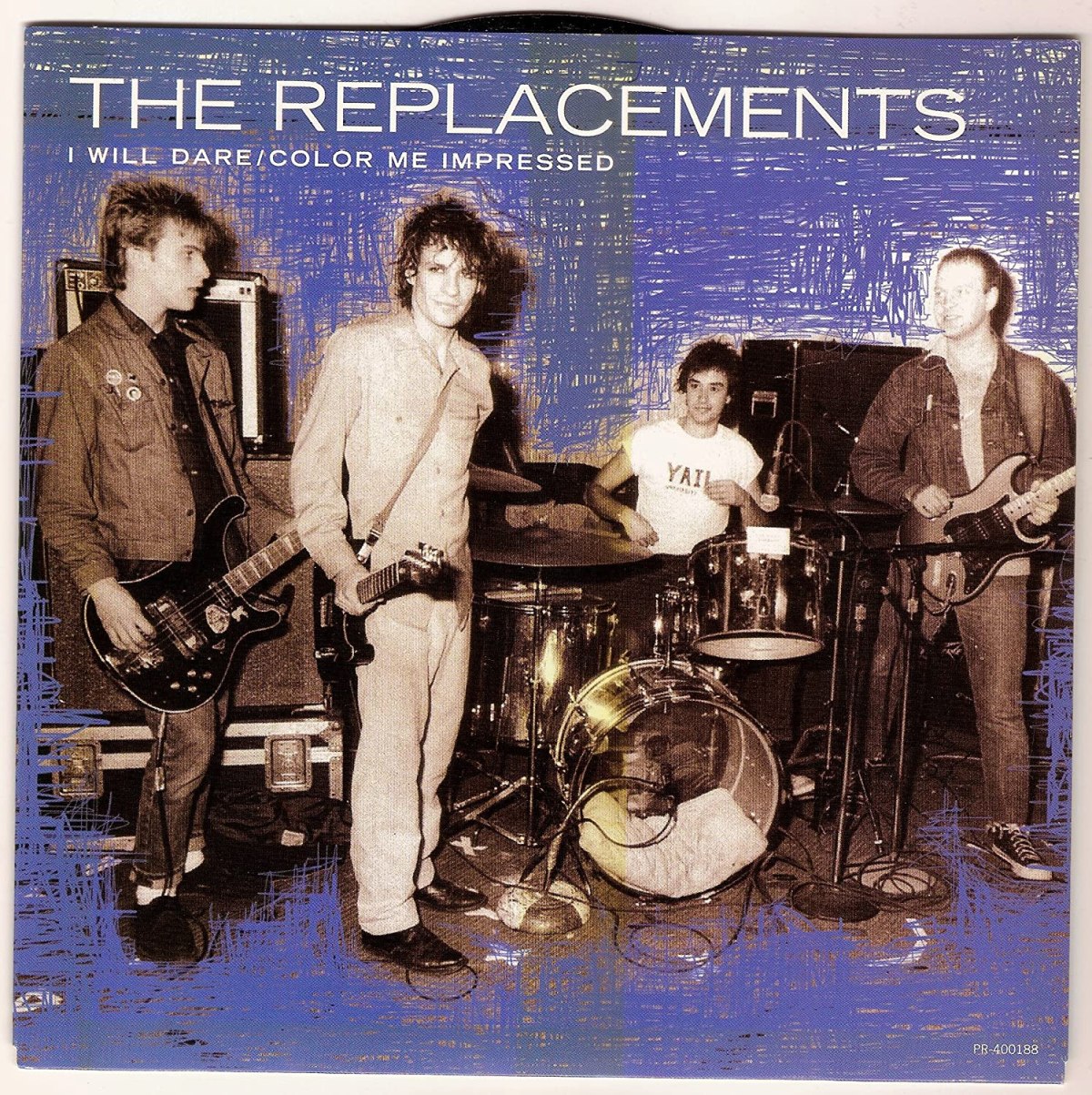
This song is on the band’s 1987 album Pleased To Meet Me. The band was formed in band formed in Minneapolis, Minnesota in 1979. Skyways are one of Minneapolis’s signature features. They are second-story pedestrian bridges between buildings that are called skywalks or skybridges.

The album peaked at #131 in the Billboard Album Charts in 1987. It’s a gorgeous song…

Paul Westerberg: It’s our own little private song for Minneapolis. They’re basically the sidewalks above the streets, because it’s too cold in the winter to walk, and the businesses, y’know, feel they won’t get people to come downtown. It’s like you can walk for miles and not ever go outside. You can walk around the whole city through the skyway system. And it’s generally the people who are shoppers and [who] work. And so this song was sort of written from the point of a guy who’s like myself who — I don’t go up in the skyways, y’know. [laughs] What do I have to do up there? I never go shopping or anything. So I sit down there and watch the people walk by. 

Skyway

You take the skyway, high above the busy little one-way
In my stupid hat and gloves, at night I lie awake
Wonderin’ if I’ll sleep
Wonderin’ if we’ll meet out in the street

But you take the skyway
It don’t move at all like a subway
It’s got bums when it’s cold like any other place
It’s warm up inside
Sittin’ down and waitin’ for a ride
Beneath the skyway

Oh, then one day, I saw you walkin’ down that little one-way
Where, the place I’d catch my ride most everyday
There wasn’t a damn thing I could do or say
Up in the skyway

Skyway
Skyway (sky away)

John Lennon – I’m Losing You

Yesterday was John’s birthday 80th birthday…that just doesn’t seem right. He has been gone for 40 years…the same amount that he lived. 

I’m Losing You is on the Double Fantasy album released in 1980.

There are two versions of this song that are well known. Co-producer Tom Douglas brought Rick Nielsen and Bun E. Carlos of the band Cheap Trick to play on this song, but it was eventually re-recorded with the studio musicians. That is the version that ended up on the album.

The Rick Nielsen and Ben E. Carlos version was included years later on the John Lennon Anthology Collection released in 1998.

Some say the edgier track with Nielsen and Carlos wasn’t used because Yoko didn’t like the version, the recording didn’t fit in with the rest of the album, or it sounded a little too much like Cold Turkey…a previous song by Lennon. If I had to guess I would say it was because the track would have stood out against the others. Personally I would have went with the Nielsen and Carlos version anyway.

While on vacation in Bermuda during the summer of 1980, Lennon tried to call Yoko Ono but couldn’t get through to her and wrote this song based on his frustration.

Double Fantasy peaked at #1 in the Billboard Album Charts, Canada, and The UK in 1981.

From Songfacts

This is a track from Double Fantasy, Lennon’s final album during his lifetime, released only three weeks before his murder. The song resulted from John’s inability to get Yoko on the phone at a time when he feared for their relationship.

Yoko Ono told Q November 2010 that this is one of her favorite Lennon songs. She said: “I’m Losing You is an incredible song. I think as a songwriter, that tops it all. Some of the songs I’m in. But it’s almost like Picasso drawing a lot of his wife because his wife was around. And I was very lucky I was his wife.”

Director Jay Dubin, whose work at the time included commercials for Crazy Eddie’s, was called in to shoot a music video to promote the Double Fantasy album. On August 10, 1980, he brought his team to the Hit Factory studio and captured Lennon performing this song, along with “I’m Moving On” and some cover tunes. The video was abandoned after Lennon’s death a few months later and the footage has never materialized.

Here are the two versions

I’m Losing You

Here in some stranger’s room
Late in the afternoon
What am I doing here at all?
Ain’t no doubt about it
I’m losing you
I’m losing you

Somehow the wires have crossed
Communication’s lost
Can’t even get you on the telephone
Just got to shout about it
I’m losing you
I’m losing you

Well, here in the valley of indecision
I don’t know what to do
I feel you slipping away
I’m losing you
I’m losing you

Well now you say you’re not getting enough
But I remind you of all that bad, bad, bad stuff
So what the hell am I supposed to do?
Just put a band-aid on it?
And stop the bleeding now
Stop the bleeding now
Well…

I’m losing you
I’m losing you

Well, well, well
I know I hurt you then
But hell, that was way back when
Well, do you still have to carry that cross? (Drop it!)
Don’t wanna hear about it
I’m losing you
I’m losing you

Don’t wanna lose you now
Well…
No, no, no, no…