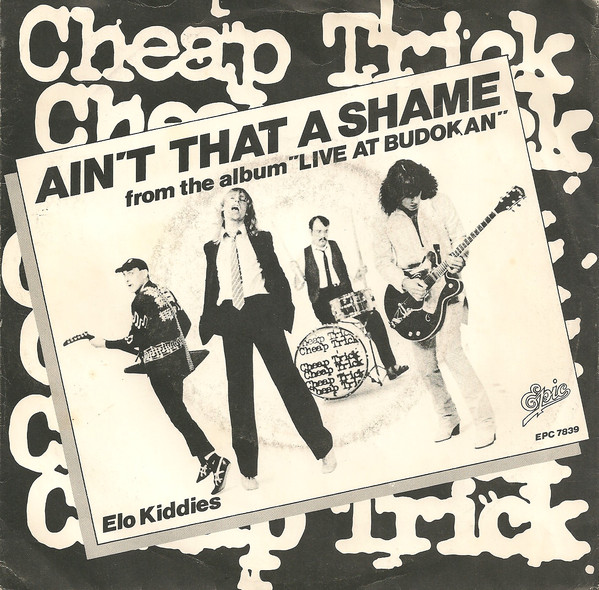
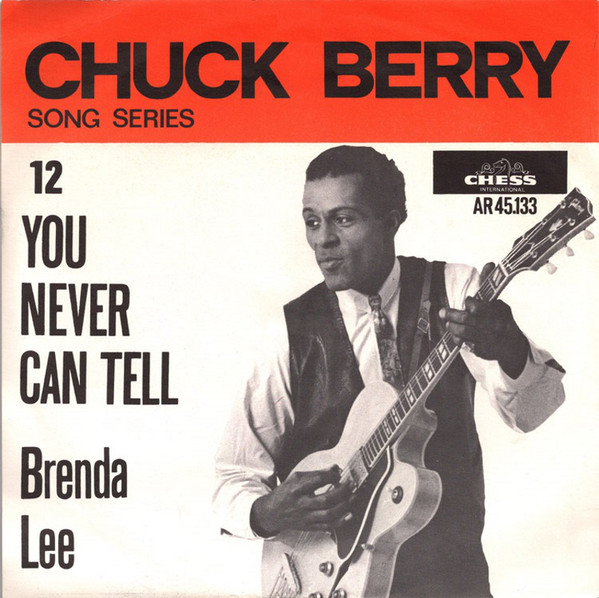
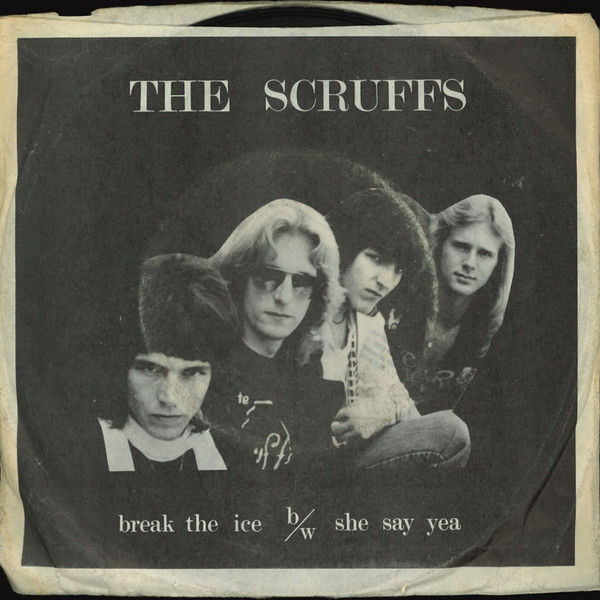
When I think of certain some songs I can still see their label spinning while on the turntable. Many singles came in nice picture sleeves and they were cool…but I also liked the record company label art. When I see one and I automatically think of certain artists.
No, they are not in the same league as album cover art but they do bring back a lot of memories. The labels I remember the most are Dial, Capitol, Apple, Motown, Tamla, Epic, MCA, and Elektra but it’s the smaller record labels that had some cool designs like Kama-Sutra, Capricorn, Roulette and Hot Wax.
Here are a few that I remembered and the more I looked the more I found that I remembered.
Paul is great at combining songs together. These three different songs blended together.
The song was recorded in two parts, in different sessions. The first two were taped in Lagos while the third section was recorded in October 1973 at AIR Studios in London. Paul was robbed at knife point in Lagos, Nigeria and they took the tapes that he had at the time. They were never recovered and Paul figured they recorded over them.
The song was off the album Band On The Run which was I think Paul’s best solo album. The album peaked at #1 in the Billboard 100, Canada, and the UK in 1974.
McCartney drew inspiration out of something George Harrison said in a lengthy Apple Board meeting “If we ever get out of this house” which Paul changed to “here” and put it in the song.
The song peaked at #1 in the Billboard 100, #1 in Canada, and the #3 in the UK.
I’ve read about other possible inspirations for the song other than the George Harrison line.
One source said it was about a metaphorical prison we all find ourselves in at times.
The other was bands like the Wings were running trying to escape the law because of pot convictions. Paul said: “We were being outlawed for pot … And our argument on [‘Band on the Run’] was ‘Don’t put us on the wrong side … We’re not criminals, we don’t want to be. So I just made up a story about people breaking out of prison.’”
Paul McCartney:It was symbolic: “If we ever get out of here … All I need is a pint a day” … [In the Beatles] we’d started off as just kids really, who loved our music and wanted to earn a bob or two so we could get a guitar and get a nice car. It was very simple ambitions at first. But then, you know, as it went on it became business meetings and all of that … So there was a feeling of “if we ever get out of here”, yeah. And I did
From Songfacts
Shortly after the Band On The Run album was released, McCartney told Melody Maker: “The basic idea about the band on the run is a kind of prison escape. At the beginning of the album the guy is stuck inside four walls, and eventually breaks out. There is a thread, but it’s not a concept album.”
McCartney recorded the album in Lagos, Nigeria along with his wife Linda and guitarist Denny Laine. The other Wings decided not to make the trip, which worked out fine in the end: McCartney considers the album his best post-Beatles work. He told Word in 2005: “I was on drums and guitar a lot, mainly because the drummer decided to leave the group the night before and one of the guitar players decided not to come! So we got that solo element into an otherwise ‘produced’ album.”
Paul was asked if this was a reference to Wings escaping from the shadow of The Beatles…he replied “Sort of – yeah. I think most bands on tour are on the run.”
This song was used to nice effect in the movie The Killing Fields, where a young woman with a transistor radio listens to this in the wake of a brutal US bombing of a Cambodian village when suspected rebels are being rounded up and shot. The song exemplified the contrast between the sort of druggy, frivolous Pop culture of the 1970s West and the stark realities of the Third World at the same time.
Paul McCartney explained the song’s meaning to The Mail on Sunday’s Event magazine: “I wrote it as a story to sum up the transition from captivity to freedom. When the tempo changes at (sings), ‘The rain exploded with a mighty crash,’ I do that in my concert and that always feels like a freeing moment.”
Band on the Run
Stuck inside these four walls, Sent inside forever, Never seeing no one Nice again like you, Mama you, mama you.
If I ever get out of here, Thought of giving it all away To a registered charity. All I need is a pint a day If I ever get outta here If we ever get outta of here
Well, the rain exploded with a mighty crash As we fell into the sun, And the first one said to the second one there I hope you’re having fun.
Band on the run, band on the run. And the jailer man and sailor Sam Were searching every one For the band on the run, Band on the run Band on the run, Band on the run.
Well, the undertaker drew a heavy sigh Seeing no one else had come, And a bell was ringing in the village square For the rabbits on the run.
Band on the run, Band on the run. And the jailer man and sailor Sam Were searching every one For the band on the run, Band on the run
Yeah the band on the run, Band on the run Band on the run Band on the run
Well, the night was falling as the desert world Began to settle down. In the town they’re searching for us everywhere But we never will be found.
Band on the run, Band on the run. And the county judge who held a grudge Will search for evermore For the band on the run, Band on the run Band on the run Band on the run
Paul McCartney came to Nashville in 1974 to record some and promised he would be back to actually play live…well he did although it was 36 years later. 2010 was his first Nashville concert ever. The closest the Beatles got to Nashville was in Memphis in 1966.
A year after he came to Nashville in 1974 I became a very young Beatles fan. Read everything, listened to everything that I could get my hands on, and saw what limited things I could. In the 80s I got to see some of the rooftop Let It Be concert on MTV. It was like the pictures I’d seen coming to life…it made it real…or as real as it got to me.
When the Paul McCartney concert was announced in spring of 2010… I bought tickets right away. I just knew something would happen. The concert would be postponed or something awful would happen…there was no way I was going to see him. My wife, my son Bailey, and I had tickets. Sure enough…on the night of the concert…just a couple of hours before it started… a tornado did damage in Nashville (no injuries) and a warning was out for downtown. While we were there and I just knew…so this is how it’s all going to end…me with a McCartney ticket in my hand.
Waiting at the venue…McCartney came on an hour late to wait for all the warnings to die down. When he came on I was pretty much in shock…all the years reading, watching, and listening to the guy…he wasn’t yet real until he broke into “Venus and Mars” an old Wings song. I was 43 and I felt like a 12 year old kid and I was full of emotion. When he started his first Beatles song of the night…All My Loving…it was even more emotion. This is the man who played with Lennon, Harrison, and Starr at the Cavern Club, Hamburg, and all over the world.
I always was jealous of my friends who liked modern bands…who could just go and see them in concert when we were younger and buy their new records. Most of the bands I grew up liking had broken up or changed years ago.
The concert was worth the wait.
This was Bailey’s first concert…his second was Ringo, third was Paul McCartney again, and fourth was The Who…I told him he was lucky…my first concert was REO Speedwagon…no offense to them but there is no comparison. Jennifer actually got to see Elvis for her first concert…when she was a small child in 1976 in West Virginia…
Paul played around three hours of solo, Wings, Fireman, and of course Beatles songs. With as many songs as Paul has…he could have played most of the night without repeating a song. I saw him again in 2014 and again he was great and added a few more songs… but nothing will beat that first time.
Setlist for July 26, 2010
Venus and Mars
Rock Show
Jet
All My Loving
Letting Go
Got to Get You Into My Life
Highway (The Fireman Song)
Let Me Roll It
The Long and Winding Road
Nineteen Hundred and Eighty-Five
Let ‘Em In
My Love
I’m Looking Through You
Tequila (The Champs cover)
Two of Us
Blackbird
Here Today
Dance Tonight
Mrs. Vanderbilt
Eleanor Rigby
Ram On
Something
Sing the Changes (The Fireman song)
Band on the Run
Ob-La-Di, Ob-La-Da
Back in the U.S.S.R.
I’ve Got a Feeling
Paperback Writer
A Day in the Life / (With Give Peace A Chance Snippet)
Let It Be
Live and Let Die
Hey Jude
Encore:
Day Tripper
Lady Madonna
Get Back
Encore 2:
Yesterday
Helter Skelter
Sgt. Pepper’s Lonely Hearts Club Band (Reprise)
The End
David Bowie wrote this after seeing the 1968 Stanley Kubrick movie 2001: A Space Odyssey. Space Oddity is a play on the phrase “Space Odyssey.”
Space Oddity was released in 1969. It peaked at #5 in the UK but only #124 in the Billboard Charts. The song was released as a single but also on the UK David Bowie album.
In 1972, the album was re-titled Space Oddity and re-issued in the US after Bowie achieved modest success in America with the singles “Changes” (#66) and “The Jean Genie” (#71). The newly released “Space Oddity” single made #15, becoming Bowie’s first US Top 40.
In 1980, Bowie released a follow-up to this called “Ashes To Ashes,” where Major Tom once again makes contact with Earth. He says he is happy in space, but Ground Control comes to the conclusion that he is a junkie.
As it says in the Bowie quote below…British TV picked up on the song during the moon landing. There was a fear that if the missions in space didn’t go well, this song would suddenly become inappropriate.
David Bowie:“In England, it was always presumed that it was written about the space landing, because it kind of came to prominence around the same time. But it actually wasn’t. It was written because of going to see the film 2001, which I found amazing. I was out of my gourd anyway, I was very stoned when I went to see it, several times, and it was really a revelation to me. It got the song flowing. It was picked up by the British television, and used as the background music for the landing itself. I’m sure they really weren’t listening to the lyric at all (laughs). It wasn’t a pleasant thing to juxtapose against a moon landing. Of course, I was overjoyed that they did. Obviously, some BBC official said, ‘Oh, right then, that space song, Major Tom, blah blah blah, that’ll be great.’ ‘Um, but he gets stranded in space, sir.’ Nobody had the heart to tell the producer that.”
From Songfacts
This was originally released in 1969 on Bowie’s self-titled album and timed to coincide with the moon landing. Released as a single, the song made #5 in the UK, becoming his first chart hit in that territory. In America, the single found a very small audience and bubbled under at #124 in August 1969.
In 1975, back in the UK, the song was once again released, this time on a single which also contained the songs “Changes” and “Velvet Goldmine.” Promoted as “3 Tracks for the Price of 2,” the single leapt to the top of the charts, earning Bowie his first #1 in the UK.
In 1983, the German electro musician Peter Schilling released a sequel to “Space Oddity” called “Major Tom (I’m Coming Home).” Set to a techno beat, it tells the story of Major Tom in space. That song reached #14 in the US, outcharting Bowie’s original.
In 2003, K.I.A. released another sequel called “Mrs. Major Tom,” which is told from the point of view of Major Tom’s wife.
In the line, “And the papers want to know whose shirt you wear,” ‘whose shirt you wear’ is English slang for ‘what football team are you a fan of?’. The thinking here being that if you can make it into space then your opinions on football matter. (Note to Americans- in this case, by “football” we mean “soccer.”)
An early version of this song is performed by David Bowie in Love You Till Tuesday, a promotional film made in 1969 which was designed to showcase the talents of Bowie. You can watch it here.
Three different videos were made of this song by three different directors. The first, directed by Malcolm J. Thomson, shows Bowie as an astronaut and appears in his 1969 promotional film Love You Till Tuesday.
The next one came in 1972 when Mick Rock directed Bowie singing the song with an acoustic guitar surrounded by mission control imagery. Rock, who was primarily a still photographer, was doing a lot of Bowie’s videos around this time; he also shot “Life On Mars?” and “The Jean Genie.”
The third version Bowie filmed with David Mallet in 1979 for air on the New Year’s Eve show The Will Kenny Everett Ever Make It To 1980?, which Mallet directed. Bowie recorded a new version of the song for this version with Hans Zimmer on piano.
Nita Benn’s handclaps can be heard on this recording. She is the daughter-in-law of the British socialist politician Tony Benn and the mother of Emily Benn, who at the age of 17 became the youngest ever person chosen to fight an election when she was selected in 2007 as the Labour candidate for East Worthing and Shoreham.
This was originally written by Bowie as a guitar song. It was the producer Gus Dudgeon who turned it into an epic.
Session musician Herbie Flowers (“Walk On The Wild Side,” “Diamond Dogs”) played bass on this track. He recalled his experience working on this to Uncut magazine June 2008: “The first time I played with Bowie was on the session for ‘Space Oddity.’ Dear Gus (Dudgeon) was quaking in his boots. It might have been the first thing he ever produced. ‘Space Oddity’ was this strange hybrid song. (Keyboardist) Rick Wakeman went out to buy a little Stylophone for seven shillings from a small shop on the corner where Trident Studios was. With that and all the string arrangements, it’s like a semi-orchestral piece.”
Jimmy Page told Uncut magazine June 2008: “I played on his records, did you know that? His very early records when he was Davy Jones & The Lower Third. The Shel Talmy records. I can think of two individual sessions that I did with him. He said in some interview that on one of those sessions I showed him these chords, which he used in ‘Space Oddity’ – but he said, ‘Don’t tell Jim, he might sue me.’ Ha ha!”
In 2009, a sound-a-like version was used in commercials for Lincoln automobiles. This version was by the American singer-songwriter Cat Power, the stage name of Charlyn “Chan” Marshall.
The session players on the song were Rick Wakeman (mellotron), Mick Wayne (guitar), Herbie Flowers (bass) and Terry Cox (drums), plus string musicians. They were paid just over £9 each.
Bowie’s birth name was David Jones. He changed his name before the movie came out, but the name he picked is similar to the main character in the film: Dave Bowman. There was speculation that he got the name from the book The Sentinel, which the movie is based on, but Bowie has claimed that his moniker came from the Bowie knife.
In 1969, this song was awarded the coveted Ivor Novello Award alongside Peter Sarstedt’s “Where Do You Go To (My Lovely)?”
The Canadian astronaut Chris Hadfield recorded this song during his stay at the International Space Station in 2013, using a guitar that stays on the station. The female singer/songwriter Emm Gryner, who was part of Bowie’s live band in 1999-2000, put the song together, adding additional tracks and incorporating space station sounds that Hadfield had posted to his Soundclound account. A video was compiled using footage of Hadfield performing the song in space, complete with shots of planet Earth, his floating acoustic guitar, and a weightless Hadfield. The sublime compilation was posted on May 12, 2013; it quickly racked up millions of views on YouTube and got the attention of Bowie, who posted about it on his social media accounts, calling it “quite possibly the most poignant version of the song ever created.”
Hadfield changed a few of the lyrics – he left out the part where Major Tom loses contact and drifts away.
Releasing a cover song recorded in space poses myriad legal challenges, since jurisdiction is unclear. The original agreement was for one year, so the video was removed on May 13, 2014. By this time, Hadfield was back on Earth and worked to negotiate a new deal with the song’s publishers. In November 2014, an agreement was reached and the video went back up.
When Bowie was recording the song, he decided that he wanted real strings and Mellotron together. However, the musicians struggled to play the electronic keyboard instrument. It was Tony Visconti who suggested Rick Wakeman as somebody who could keep the Mellotron in tune. Wakeman recalled to Uncut:
“David said, ‘Get him.’ I was rehearsing with a 17-piece band in Reading, so I drove up. It was a doddle to do, to be honest. I loved the song, and I’m also credit has to go to David and Tony as I don’t think anyone else at that particular time would have heard Mellotron on that piece, where it came in. There would have been other things more obvious to do. It was clever.”
Space Oddity
Ground Control to Major Tom Ground Control to Major Tom Take your protein pills and put your helmet on
Ground Control to Major Tom (ten, nine, eight, seven, six) Commencing countdown, engines on (five, four, three, two) Check ignition and may God’s love be with you (one, liftoff)
This is Ground Control to Major Tom You’ve really made the grade And the papers want to know whose shirts you wear Now it’s time to leave the capsule if you dare
“This is Major Tom to Ground Control I’m stepping through the door And I’m floating in a most peculiar way And the stars look very different today
For here Am I sitting in a tin can Far above the world Planet Earth is blue And there’s nothing I can do
Though I’m past one hundred thousand miles I’m feeling very still And I think my spaceship knows which way to go Tell my wife I love her very much, she knows”
Ground Control to Major Tom Your circuit’s dead, there’s something wrong Can you hear me, Major Tom? Can you hear me, Major Tom? Can you hear me, Major Tom? Can you hear
Here am I floating ’round a tin can Far above the Moon Planet Earth is blue And there’s nothing I can do
Keith would sometimes call out for this song in Who concerts. The reason for that would be because he sings parts of the song along with Roger. Keith lays on the cockney voice well in this song and talks/sings it.
The song was on Quadrophenia released in 1973. The album peaked at #2 in the Billboard Album Charts, #2 in the UK, and #2 in Canada.
After the song was dropped from the set…either Keith or the crowd would request it much to Townshend’s chagrin at times.
The album was a concept album about the mod culture in the UK in the early 60s that features a character named Jimmy.
Pete Townshend:He meets an old Ace Face who’s now a bellhop at the very hotel the Mods tore up. And he looks on Jimmy with a mixture of pity and contempt, really, and tells him, in effect, ‘Look, my job is shit and my life is a tragedy. But you – look at you, you’re dead!’
From Songfacts
This is Keith Moon’s song on Quadrophenia, which centers on a character with four personalities, each one representing a different member of The Who. “Bell Boy” is about the main character Jimmy meeting an old mod “Ace Face,” or leader. However, he finds out that the Ace Face has given up music, and now he works at a hotel (as a bell boy) that a mod gang happened to destroy a few years back. Keith Moon does some of the vocals on the song.
Keith Moon’s drumming is prominent on this track. Ron Nevison, the engineer on Quadrophenia, told Songfacts what it was like recording him. “The biggest problem with Keith on the drums was finding a place to put the microphones,” he said. “He had so many drums – two hi-hats, two kick drums, six or eight tom-toms – it was challenging just to get in there to get the snare drum covered.”
Bell Boy
The beach is a place where a man can feel He’s the only soul in the world that’s real Well I see a face coming through the haze I remember him from those crazy days Crazy days, crazy days
Ain’t you the guy who used to set the paces Riding up in front of a hundred faces I don’t suppose you would remember me But I used to follow you back in sixty-three
I’ve got a good job, and I’m newly born You should see me dressed up in my uniform I work in hotel, all gilt and flash Remember the place where the doors were smashed?
Bell Boy, I got to get running now Bell Boy, keep my lip buttoned down Bell Boy, carry this baggage out Bell Boy, always running at someone’s pleading heel You know how I feel Always running at someone’s heel
Some nights I still sleep on the beach Remember when stars were in reach I wander in early to work Spend my day licking boots for my perks
A beach is a place where a man can feel He’s the only soul in the world that’s real
Well I see a face coming through the haze I remember him from those crazy days (crazy days, crazy days, crazy days, crazy days)
Ain’t you the guy who used to set the paces Riding up in front of a hundred faces I don’t suppose you would remember me But I used to follow you back in sixty-three
People often change But when I look in your eyes You could learn a lot from A job like mine The secret to me It ain’t flown on a flag I carry it behind This pretty little badge What says
Bell Boy I got to get running now Bell Boy, keep my lip buttoned down Bell Boy, carry the bloody baggage out Bell Boy, always running at someone’s heel You know how I feel Always running at someone’s heel
This 1979 song is off of their Reggatta de Blanc album.
The song peaked at #1 in the UK, #65 in Canada, #8 in New Zealand, but did not chart in the Billboard `100.
This was the second #1 UK hit for The Police. Their first album was released in 1978 but took a while to catch on. When it did, it was only a few months before this one was released. The lead single was Message in a Bottle, which gave them their first UK #1.
The song is set in space, but it’s an allegory for how Sting felt when he was on the road, confined to hotel rooms and stages as the world kept turning.
The song’s video was shot at the Kennedy Space Center in Florida on October 23, 1979. Stewart Copeland took the opportunity to drum on a Saturn V rocket that served as backdrop. It was directed by Derek Burbidge, who did all of their early videos.
The Police’s drummer Stewart Copeland used a Roland RE-201 Space Echo unit on this track, which allowed him to create another track of delay that accentuates the moon theme.
Sting:“I came up with a melody that felt light and airy – in fact, lighter than air” “Nine years before, Neil Armstrong had walked on the moon and said the famous words that everyone misquotes. ‘Giant Steps’ is also one of my favorite John Coltrane tunes. Songs are built by whimsy, faulty memory, and free association.”
From Songfacts
Sting was visiting the German avant-garde composer Eberhard Schoener in early 1979. One night they went out on a schnapps drinking session. Sting returned to his Munich hotel room drunk, slumped on his bed when this song’s riff came into his head. He got up and starting walking around the room to try to clear his head muttering to himself, “Walking round the room, walking round the room.” The next morning he wrote down the riff and decided that “Walking round the room” was a stupid title so he changed it to an even more stupid one, which was “Walking On The Moon.”
“Each repeat is not a repeat of the immediate note preceding it, it’s a repeat of the note before that, which gives it this interesting kind of wobbling rhythmic effect,” he explained in a Songfacts interview. “I was doing that on the drums, and Andy was doing that on the guitar, and we figured that out. Years later, everybody’s doing it – check in with U2 and part of their sound is that delay line effect.”
The Space Echo units were some of the goodies they bought at Manny’s Music in New York City when the money came in from their first hit, “Roxanne.”
In America, it was a slower climb: “Message in a Bottle” stalled at #74 and “Walking On The Moon” failed to chart. Their third album, Zenyatta Mondatta, was their US breakthrough.
Acknowledging the reggae roots of this song, Sting performed it at the 2013 Grammy Awards in a tribute to Bob Marley that also included Bruno Mars, Rihanna, Damian Marley and Ziggy Marley.
The Ohio-based rock group Walk The Moon, best known for their 2014 hit “Shut Up And Dance,” took their name from this song.
Walking On The Moon
Giant steps are what you take Walking on the moon I hope my legs don’t break Walking on the moon We could walk forever Walking on the moon We could live together Walking on, walking on the moon
Walking back from your house Walking on the moon Walking back from your house Walking on the moon Feet they hardly touch the ground Walking on the moon My feet don’t hardly make no sound Walking on, walking on the moon
Some may say I’m wishing my days away No way And if it’s the price I pay Some say Tomorrow’s another day You stay I may as well play
Giant steps are what you take Walking on the moon I hope my legs don’t break Walking on the moon We could walk forever Walking on the moon We could be together Walking on, walking on the moon
Some may say I’m wishing my days away No way And if it’s the price I pay Some say Tomorrow’s another day You stay I may as well play Keep it up, keep it up
I was going to pick the At Fillmore East live album but I also wanted some studio tracks…you get both with this one. This is the last album that Duane Allman worked on before a motorcycle crash took his life. He died a few weeks into making the album. The album also included live tracks that were not used on At Fillmore East like One Way Out, Trouble No More, and a 33 minute “Mountain Jam” that was built off a riff from a Donovan song “There is a Mountain.”
They had some sort of chemistry live that was incredible. I’m usually not a fan of long endless live songs but they keep intensity up…plus with this album you get the best of both worlds.
25 years ago I would not have picked this album…I’ve learned more about them in the past few years and have become a huge fan of the classic lineup. When I listen to the Allman Brothers I listen to the music as a whole more than just the songs. They clicked so well as a band that they blended perfectly when at their best.
Their best albums to me are At Fillmore East, Eat A Peach, and Brothers and Sisters. They have been labeled and credited as starting “Southern Rock” but they were totally different than most of their peers. The Allmans were more blues/jazz oriented who happened to be from the south.
The two guitar players were Duane Allman and Dickey Betts…two of the best around at the time. They also had two drummers Butch Trucks and Jai Johanny Johanson (Jaimoe) (who played with Otis Redding). Their bass player was from Chicago…Berry Oakley (who would die in a motorcycle crash a little over a year after Duane) who was amazing. Gregg Allman would write and sing lead on many of the songs and as he said…pushed the gravy on the meat…he added texture with his Hammond Organ.
They started to work on this album in September of 1971 and laid down the basic tracks to for “Blue Sky,” “Stand Back” and “Little Martha.” Duane Allman died on October 29, 1971. So those tracks have Duane playing on them and of course all of the live material features him on guitar. After he died the band went back to the studio and recorded the rest and it was finished in December.
The album was released on February 12, 1972 and it peaked at #4 in the Billboard 100 and #12 in Canada. The original name was going to be “Eat A Peach for Peace.”
The opening song is my favorite one on the album. Ain’t Wasting Time No More…it was Gregg Allman’s song working through the grief of his brother’s death and about soldiers coming home from Vietnam. Last Sunday morning, the sunshine felt like rain,the week before, they all seemed the same
Blue Sky is a Dickey Betts song that I never get tired of. The soaring guitars and the few verses that it has are happy and upbeat. Betts initially wanted the band’s lead vocalist, Gregg Allman, to sing the song, but guitarist Duane Allman encouraged him to sing it himself… “Man, this is your song and it sounds like you and you need to sing it.” Dickey Betts wrote this about his Native Canadian girlfriend, Sandy “Bluesky” Wabegijig.
Melissa is probably the most remembered song off of this album. It’s a great song that Greg had written years before…he couldn’t think of the right woman’s name until he heard a lady in a grocery store yell for her daughter… Melissa.
One Way Out is some of the live feel that I wanted with Fillmore East and I get it on this album along with the above studio cuts. One of their best known songs.
I thought the island needed a southern touch so the Allmans will do just fine. I’ll just sit back with soul food, listen to Allmans, and watch the tide.
It’s hard to believe this was recorded at the beginning of the Beggars Banquet album. It sounded like it belonged in 1967 than in 1968…the two years in music were drastically different.
This song was the B side to Jumping Jack Flash. The Stones made a video of it and it’s probably my favorite video they ever made. It was shot in Black and White and Color and showed the Stones in a horror/sci fi setting acting as if they are guarding a road…prepared not to let anyone pass. It feels like Children of the Damned meets a little of Lord of the Flies.
The song was never released on a studio Stones album except for compilations. I usually don’t say this but the video really helps this song…it’s a chill about this video.
In the 1960s The Stones and Beatles had power… Beatles toyed with the idea of doing Lord of the Rings and The Beatles signed a petition for Mick Jagger to play “Alex” in A Clockwork Orange…this is before Kubrick was involved.
Child Of The Moon
The wind blows rain into my face The sun glows at the end of the highway Child of the moon, rub your rainy eyes Oh, child of the moon Give me a wide-awake crescent-shaped smile
She shivers, by the light she is hidden She flickers like a lamp lady vision Child of the moon, rub your rainy eyes Child of the moon Give me a wide-awake crescent-shaped smile
The first car on the foggy road riding The last star for my lady is pining Oh, child of the moon, bid the sun arise Oh, child of the moon Give me a misty day, pearly gray, silver, silky faced Wide-awake crescent-shaped smile
One of Van the Man’s best songs. The jazz and bouncy feel of this song hooks you. I really started to notice the song in the movie An American Werewolf in London.
The song was the title track to the Moondance album released in 1970.
Van didn’t release the song as a single until 1977…over seven years after it was first released. The song peaked at #92 in the Billboard 100 in 1977.
“Moondance” started as a Jazz saxophone instrumental, and Van played that original sax solo he wrote for the song. Van had said he used to play this sax number over and over, anytime h picked up his horn.
The song was listed as #226 in Rolling Stone magazine’s December 2004 feature “The 500 Greatest Songs of All Time”.
From Songfacts
Van Morrison comes up with songs many different ways, sometimes a lyric or title idea sparks a song, and other times it’s a melody.
That Rolling Stone quote is about all you’re going to get from Van regarding the song. He is notoriously fickle when it comes to speaking about his music, as he feels that the songs should speak for themselves. The liner notes to the Moondance album were written by his girlfriend Janet Planet, and instead of a traditional explanation of the recording process or a list of thank-you’s these notes are a fable, telling the story of an artist in ancient times who has a great gift but keeps it to himself. When his wife gets sick, he cures her using his gift of song. She then asks, “But who will ease your pain, who will save you?”
The flute is a big part of this song. It was played by Collin Tilton, who replaced John Payne on the instrument for the Moondance album.
This song plays throughout the sex scene in the 1981 movie An American Werewolf in London (Director John Landis also asked Cat Stevens for the use of “Moonshadow,” but was turned down). It was also used in a 2002 episode of the TV series The West Wing.
Pianist and organist Jeff Labes recalled the recording of the track to Uncut: “I remember ‘Moondance’ itself was a big question mark. It was jazzy, and didn’t seem to belong to the pack. The first time we recorded it, it came out really well, but Van thought there must be a catch. So we did it about a dozen times, and ended up going back to the first one, He liked to sing live along with the track, because Sinatra did that. He loved having a first-take vocal. He was looking for the magic.”
Moondance
Well, it’s a marvelous night for a moondance With the stars up above in your eyes A fantabulous night to make romance ‘Neath the cover of October skies And all the leaves on the trees are falling To the sound of the breezes that blow And I’m trying to please to the calling Of your heart-strings that play soft and low And all the night’s magic seems to whisper and hush And all the soft moonlight seems to shine in your blush
Can I just have one more moondance with you, my love Can I just make some more romance with you, my love
Well, I want to make love to you tonight I can’t wait ’til the morning has come And I know now the time is just right And straight into my arms you will run And when you come my heart will be waiting To make sure that you’re never alone There and then all my dreams will come true, dear There and then I will make you my own And every time I touch you, you just tremble inside And I know how much you want me that you can’t hide
Can I just have one more moondance with you, my love Can I just make some more romance with you, my love
Well, it’s a marvelous night for a moondance With the stars up above in your eyes A fantabulous night to make romance ‘Neath the cover of October skies And all the leaves on the trees are falling To the sound of the breezes that blow And I’m trying to please to the calling Of your heart-strings that play soft and low And all the night’s magic seems to whisper and hush And all the soft moonlight seems to shine in your blush
Can I just have one more moondance with you, my love Can I just make some more romance with you, my love
One more moondance with you in the moonlight On a magic night La, la, la, la in the moonlight On a magic night Can’t I just have one more dance with you my love
Great riff, singing, mood, and song. Creedence was just pumping out the songs in their short window of existence.
The song was inspired by the classic movie “The Devil and Daniel Webster” where a hurricane wipes out most of the town. The song is great and by the way…so is the movie.
Another great CCR single…released in 1969, this was the lead single from Green River and the B-side was Lodi. The song peaked at #2 in the Billboard 100, #1 in the UK, #1 in New Zealand, and #5 in Canada.
I have to bring it up…. One lyric in particular has been misheard by many people. The line “There’s a bad moon on the rise” is often heard as “There’s a bathroom on the right.” John Fogerty has fun with this line at times and will sing “There’s a bathroom on the right”live sometimes. He will sometimes point to a nearby bathroom from the stage when he gets to the famous line.
From Songfacts
The song reached its US chart peak of #2 (one of five CCR songs to place that this position – they never got to #1) on July 28, 1969, eight days after the Apollo 11 moon landing. The song has nothing to do with space travel, but the title was somewhat apropos, especially after the mission succeeded.
This was used in two science-fiction movies of the 1980s: An American Werewolf In London (1981) and Twilight Zone: The Movie (1982). In the former, it plays as the main character is awaiting a full moon and wondering if he will turn into a werewolf.The music makes this sound like a happy song, but the lyrics are very bleak, describing events that indicate a coming apocalypse.
As a result of this song, American football player Andre Rison’s nickname was “Bad Moon,” as in “Bad Moon Risin’.” Rison was an all-pro wide receiver, but is also famous for having his house burned down by Lisa (Left Eye) Lopes, a singer with TLC who was his girlfriend at the time.
This has been covered by Nirvana, Bruce Springsteen, Bo Diddley, Jerry Lee Lewis, Emmylou Harris, The Reels, The Meteors, Thea Gilmore, Ann Wilson with Gretchen Wilson, Type O Negative, 16 Horsepower, Reels, Spitballs, Blue Aeroplanes, Lagwagon, Battlefield Band, Ducky Boys, Acoustic Shack, Ventures, Meteors, and Rasputina.
Argentine soccer fans came up with a new version of this song after their team advanced to the World Cup finals in 2014 while the host country, Brazil, was eliminated in the semifinal. Set to the tune of this song, Argentines chanted, “Brasil, decime qué se siente tener en casa tu papa,” which means “Brazil, tell me how it feels to be bossed around in your own home.”
Even the team members were heard singing this taunt, but in the end Argentina did not take home the trophy, as they lost in the final to Germany, the team that beat Brazil.
This became the theme song of the demonstrators during the People’s Park riots in Berkeley, California, in 1969.
During his VH1’s Storytellers performance, Fogerty said that he was quite aware of the contradiction between the song’s lyrical content and its bouncy sound (though he offers no explanation for this). He then recounted how, during many performances, the audience would sing back at him “There’s a bathroom on the right” during the final lyric, which actually says “There’s a bad moon on the rise.” Fogerty has also used the “bathroom” line during some live performances.
In 2010, Jerry Lewis recorded a version of this song with John Fogerty for Lewis’ Mean Old Man album, which also featured performances with Keith Richards, Kid Rock, Willie Nelson, and many others.
During a benefit for the Berkeley Hall School, a Vietnam veteran approached Fogerty and told him that he and his squad, who called themselves the Buffalo Soldiers, would blast “Bad Moon Rising” in their camp before going into the jungle on a mission. It was their way of getting pumped up for combat, but also their way of instilling fear in the enemy. In Fortunate Son: My Life, My Music, Fogerty expresses admiration for the man’s courage, and regret that he cannot remember his name.
“Bad Moon Rising” is the signature walkout song for UFC fighter Jim Miller.
Fogerty performed this song for Howard Stern at Stern’s 2014 Birthday Bash.
In his memoir, Fogerty said he borrowed the guitar lick for this song from Scotty Moore’s work on Elvis Presley’s “I’m Left, You’re Right, She’s Gone.” Fogerty stresses that he wasn’t trying to hide that he’d borrowed the lick and was instead openly “honoring it.” In 1986, at an unspecified awards get-together, Moore grabbed Fogerty from behind and said, “Give me back my licks!”
Bad Moon Rising
I see a bad moon a-rising I see trouble on the way I see earthquakes and lightnin’ I see bad times today
Don’t go ’round tonight It’s bound to take your life There’s a bad moon on the rise
I hear hurricanes a-blowing I know the end is coming soon I fear rivers over flowing I hear the voice of rage and ruin
Don’t go ’round tonight It’s bound to take your life There’s a bad moon on the rise
I hope you got your things together I hope you are quite prepared to die Look’s like we’re in for nasty weather One eye is taken for an eye
Well don’t go ’round tonight It’s bound to take your life There’s a bad moon on the rise Don’t go ’round tonight It’s bound to take your life There’s a bad moon on the rise
This 1980 song is from a Vancouver punk band called The Modernettes.
I ran across this song searching for power pop songs. This one is VERY Ramones like. It’s a fun song. They did play more than punk… they ventured into power-pop recordings.
There is a documentary about the Vancouver punk rock scene in the late 70s and early 80s with Henry Rollins and Duff Mckagan that includes the Modernettes called Bloodied and Unbowed…this is the trailer but the documentary is on there also.
The Modernettes were formed in 1979, with John Armstrong, aka Buck Cherry, and Mary Armstrong, aka Mary-Jo Kopechne (yea tasteless). John formed the Modernettes soon after drafting drummer John McAdams and Mary to form the three-piece lineup.
In 1980, the Modernettes recorded the debut EP Strictly Confidential. It was released under the Quintessence Records label. A second EP, Teen City, followed quickly. It included the band’s strongest and probably most popular song, “Barbara.” Though the group pulled together a strong following, true success eluded them.
The Modernettes only completed one full album, Get It Straight.
Barbra
there’s a new little girl in my home class you know i’m talking about barbra and everybodys thinks that she’s such a gas b-a-r-b-r-a barbra
shes the girl i love forever we’ll spend our lives together barbra
well the dogs are gonna slide so she can pass you know i’m talking about barbra and everybodys looking and thats such a gas b-a-r-b-r-a barbra i envy the guy she kiss last i just wanna skip class with barbra
there’s a new little girl in my home class you know i’m talking about barbra and everybodys thinks she’s such a gas b-a-r-b-r-a barbra
shes the girl i love forever you know im talking about barbra talking about barbra talking about barbra talking about barbra
This is one of McCartney’s best written songs. Like a lot of other great songs it builds… from McCartney’s lone voice and piano to a giant sing a long at the end. Hey Jude is one of the most famous songs in rock history.
This was their debut single for their new record company Apple. The A side was Hey Jude and the B side was Revolution. That is a great way to start. This was one of the best double A side singles ever.
The song was not on an album at the time. Hey Jude peaked at #1 in the Billboard 100, UK, Canada, and New Zealand in 1968.
Paul McCartney wrote this as “Hey Jules,” a song meant to comfort John Lennon’s 5-year-old son Julian as John and Cynthia were getting a divorce. The change to “Jude” was inspired by the character “Jud” in the musical Oklahoma! Paul went to visit Cynthia and Julian when the divorce was happening and he composed most of it then.
John wanted Revolution released as a single right away but when he heard this song he agreed to have Revolution as the B side.
It was the Beatles longest single, running 7:11. George Martin was afraid radio stations would not play it but John said ‘They will if it’s us.” When this became a hit, stations learned that listeners would stick around if they liked the song, which paved the way for long songs like “American Pie” and “Layla.”Disc jockeys loved it…they got a break.
The Beatles filmed a promotional video for this song, which was directed by Michael Lindsay-Hogg who directed Let It Be. He had the Beatles sing the song (the music was on a backing track) in front of an audience of about 100 people, who sang it with them. This was the closest the Beatles had come to a live performance since they had stopped touring two years earlier.
The clip first aired on the UK program The David Frost Show in 1968, and was quickly picked up by other shows, giving the song a big promotional push.
Paul McCartney:“I thought, as a friend of the family, I would motor out to Weybridge (John’s former home with Cynthia) and tell them that everything was all right: to try and cheer them up, basically, and see how they were. I had about an hour’s drive. I would always turn the radio off and try and make up songs, just in case…I starting singing: ‘Hey Jules – don’t make it bad, take a sad song, and make it better…’ It was optimistic, a hopeful message for Julian: ‘Come on, man, your parents got divorced. I know you’re not happy, but you’ll be OK.’ I eventually changed ‘Jules’ to ‘Jude.’ One of the characters in ‘Oklahoma’ is called Jude, and I like the name.”
Cynthia Lennon: “During the divorce proceedings, I was truly surprised when, one afternoon, Paul arrived on his own. I was touched by his obvious concern for our welfare and even more moved when he presented me with a single red rose accompanied by a jokey remark about our future. ‘How about it, Cyn? How about you and me getting married?’ We both laughed at the thought of the world’s reaction to an announcement like that being let loose. On his journey down to visit Julian and I, Paul composed the beautiful song ‘Hey Jude.’ He said it was for Julian. I will never forget Paul’s gesture of care and concern in coming to see us. It made me feel important and loved, as opposed to feeling discarded and obsolete.”
Paul McCartney:“I finished it all up in Cavendish (Paul’s home) and I was in the music room upstairs when John and Yoko came to visit and they were right behind me over my right shoulder, standing up, listening to it as I played it to them, and when I got to the line ‘The movement you need is on your shoulder,’ I looked over my shoulder and I said, ‘I’ll change that, it’s a bit crummy. I was just blocking it out,’ and John said, ‘You won’t, you know. That’s the best line in it!’ That’s collaboration. When someone’s that firm about a line that you’re going to junk, and he says, ‘No, keep it in.’
John Lennon:“He said it was written about Julian…but I always heard it as a song to me. If you think about it, Yoko’s just come into the picture. He’s saying: ‘Hey, Jude – hey, John.’ I know I’m sounding like one of those fans who reads things into it, but you can hear it as a song to me. The words ‘go out and get her’ – subconsciously he was saying, ‘Go ahead, leave me.’ But on a conscious level, he didn’t want me to go ahead. The angel inside him was saying, ‘Bless you.’ The devil in him didn’t like it at all, because he didn’t want to lose his partner.”
John Lennon:“Well, when Paul first played ‘Hey Jude’ to me…I took it very personally. ‘Ah, it’s me,’ I said, ‘it’s me.” He said, ‘No, it’s me!’ I said, ‘Check, we’re going through the same bit.’ So we all are. Whoever is going through a bit with us is going through it. That’s the groove.”
From Songfacts
This was named as the song most often referred to in literature in a list compiled by culture interpretation website Small Demons. Amongst the 55 books the site says it’s mentioned in are Stephen King’s Wolves of the Calla (“Why do people over here sing Hey Jude? I don’t know”) and Toni Morrison’s Paradise (“Soane had been horrified – and he drove off accompanying Hey Jude on his radio”).
Elvis Presley’s “Heartbreak Hotel” was runner-up on the list and Led Zeppelin’s “Stairway To Heaven” came in third place
In 1987 Julian ran into Paul in New York City when they were staying at the same hotel and he finally heard Paul tell him the story of the song firsthand. He admitted to Paul that growing up, he’d always felt closer to him than to his own father. In Steve Turner’s book The Stories Behind Every Beatles Song, Julian said: “Paul told me he’d been thinking about my circumstances, about what I was going through and what I’d have to go through. Paul and I used to hang out quite a bit – more than Dad and I did… There seem to be far more pictures of me and Paul playing at that age than me and Dad. I’ve never really wanted to know the truth of how Dad was and how he was with me. There was some very negative stuff – like when he said that I’d come out of a whisky bottle on a Saturday night. That’s tough to deal with. You think, where’s the love in that? It surprises me whenever I hear the song. It’s strange to think someone has written a song about you. It still touches me.”
The Beatles inner circle was shifting when Paul McCartney wrote this song. John Lennon had recently taken up with Yoko and cast off his first wife, Cynthia; McCartney had broken off his engagement with his longtime girlfriend Jane Asher. He was the only Beatle to reach out to Cynthia and Julian at this time.
The drive to the Lennon home in Surrey was one of reflection for McCartney, who thought about Julian and how difficult life could be as a child of divorce. He wrote the line, “Don’t make it bad, take a sad song and make it better” thinking about how he could encourage the boy.
Paul was conditioned to think up songs on this trip, as he used to drive to the home for songwriting sessions with John – there were instruments and recording equipment in the attic.
In a 2018 interview with GQ, Paul McCartney talked about how he came up with the idea for this song: “John and his wife Cynthia had divorced, and I felt a bit sorry for their son, who was now a child of a divorce. I was driving out to see the son and Cynthia one day and I was thinking about the boy whose name was Julian – Julian Lennon, and I started this idea, ‘Hey Jules, don’t make it bad, it’s gonna be OK.’ It was like a reassurance song.
So that was the idea that I got driving out to see them. I saw them and then I came back and worked on the song some more. But I like that name, Jude.”
This was the first song released on Apple Records, the record label owned by The Beatles. It was recorded at Trident Studios, London, on July 31 and August 1, 1968 with a 36 piece orchestra. Orchestra members clapped and sang on the fadeout – they earned double their normal rate for their efforts.
Paul McCartney on his songwriting partnership with John Lennon in Observer Music Monthly October 2007: “I have fond flashbacks of John writing – he’d scribble it down real quick, desperate to get back to the guitar. But I knew at that moment that this was going to be a good collaboration. Like when I did ‘Hey Jude.’ I was going through it for him and Yoko when I was living in London. I had a music room at the top of the house and I was playing ‘Hey Jude’ when I got to the line ‘The movement you need is on your shoulder’ and I turned round to John and said: ‘I’ll fix that if you want.’ And he said: ‘You won’t, you know, that’s a great line, that’s the best line in it.’ Now that’s the other side of a great collaborator – don’t touch it, man, that’s OK.”
This song hit #1 in at least 12 countries and by the end of 1968 had sold more than 5 million copies. It eventually sold over 10 million copies in the United States, becoming the fourth-biggest selling Beatles single there. Factoring in the price of records in 1968 vs. 1964, when the top-seller “I Want To Hold Your Hand” was released, “Hey Jude” might be the biggest earner.
When McCartney played this song for John Lennon and Yoko Ono, John interpreted it as being about him; he heard the line “You were made to go out and get her” as Paul imploring him to leave his first wife and go after Yoko (“I always heard it as a song to me,” said Lennon). This was one of Lennon’s more narcissistic moments, as he failed to grasp that the song was written for his son.
This was going to be the B-side to “Revolution,” but it ended up the other way around. It is a testament to this song that it pushed “Revolution” to the other side of the record.
George Harrison wanted to play a guitar riff after the vocal phrases, but Paul wouldn’t let him. Things got tense between them around this time as McCartney got very particular about how Harrison played on songs he wrote.
Julian Lennon didn’t find out that this song was written for him until he was a teenager. It was around this time that he reconnected with his dad, whom he would visit in New York from time to time until his death.
In terms of songcraft, this is one of the most studied Beatles songs. It starts with a vocal – Paul’s voice singing “Hey” – then the piano comes in (an F chord). The song gradually builds, with McCartney alone playing on the first verse, then the sounds of George Harrison’s guitar, Ringo’s tambourine, and harmony vocals by George and John. The drums enter about 50 seconds in, and the song builds from there, reaching a peak of intensity with McCartney delivering the “better… better… better” line punctuated by a Little Richard-style scream, then the famous singalong resolution.
The “na na na” fadeout takes four minutes. The chorus is repeated 19 times.
“Jude” is the German word for “Jew,” but nobody in the Beatles camp knew that. In 1967 and 1968, the group owned a retail store on Baker Street in London called the Apple Boutique, which they closed around the time this song was released. On the shuttered building, an employee scrawled the words “Revolution” and “Hey Jude” to promote the new Beatles single. Without proper context, this proved offensive to Jewish residents, who read it as hateful graffiti.
Wilson Pickett recorded this shortly after The Beatles did. His version hit #16 UK and #23 US and provided the name for his album. Duane Allman played on it and got a huge career boost when the song became a hit. He spent the next year as a session guitarist for many famous singers and then formed The Allman Brothers, who are considered the greatest Southern Rock band of all time.
Thanks to the communal nature of this song, it is sometimes used to pay tribute to those who have passed. When Paul McCartney and Ringo Starr appeared on the 2014 CBS special The Night That Changed America: A Grammy Salute to the Beatles, Paul dedicated the song John Lennon and George Harrison. Musicians who performed earlier in the show joined on stage for the ending, which closed the telecast.
In America, an album called Hey Jude (originally titled “The Beatles Again”) was released in 1970 containing this and several other Beatles songs that were released as singles or B-sides. The album has not appeared as a CD because Apple Records made the decision to copy only the British LP releases onto CD. In the ’60s the American record company managed to get extra LPs off the British releases by cutting down the number of tracks, then putting them out with singles and B-sides as additional albums.
As discussed in the DVD Composing the Beatles Songbook, while Paul wrote this song for Julian, in a lot of ways McCartney wrote this song about his brand-new relationship with Linda Eastman.
After the “Oh” in the crescendo, McCartney sings “YEAH!” in a non-falsetto voice. The note he hits is F Natural above male High C, a very difficult note for a male to hit in a non-falsetto voice.
The original 1968 version was recorded in mono, and many listeners find it far superior to the stereo remake from 1970, which is much more heavily produced.
On The Beatles Anthology 3, there is a version of this song with an introduction spoken by John and Paul: “From the heart of the black country: When I was a robber in Boston place You gathered round me with your fine embrace.”
“Boston place” (mentioned by Paul) is a small London street where The Beatles’ company Apple had just installed an electronics laboratory. In a more familiar scene, Boston Street was that street in which The Beatles ran for the title sequence of their film A Hard Day’s Night. John spoke of the “Black Country,” which was the name of the old smokestack industrial region in the middle of England.
Richie Havens played this at Woodstock when he opened the festival in 1969.
If you listen at about 2:55, you hear a sound from John Lennon while Paul keeps singing. It sounds like “Ohh!” at first, but it is really him saying “…chord!” You can barely hear it, but if you listen really closely, you can hear him say “Got the wrong CHORD.” He says “chord” much louder than the other words. And about two or three counts later, you can hear McCartney say “F**king hell.”
The song debuted at #10 in the Hot 100, and in doing so it made history by becoming the first ever single to reach the top 10 in its first week on the chart.
When the Beatles music was made available for download for the first time – on iTunes November 16, 2010 – “Hey Jude” was the most downloaded Beatles song that day.
McCartney played this at the 2005 Live8 concert in London. He started with “The Long and Winding Road” and flowed it into the end of “Hey Jude,” which closed out the Live8 concert.
Paul McCartney played this at the 2005 Super Bowl halftime show. He performed the year after Janet Jackson’s breast was exposed on stage, causing an uproar. McCartney was deemed a safe and reliable choice for a nudity-free performance.
Sesame Street did a parody of this (and tribute to healthy eating) called “Hey Food.”
With hundreds of crowd favorites to choose from in his catalog, Paul McCartney mixes up his setlists when he plays live, but this one always seems to stick. “I’ll switch up the songs, but I’ve got to do ‘Hey Jude’ because it is such fun and it’s great handing that over to the audience,” he told GQ. The greatest thing is, you feel this sense of community, and in these times when it’s a little dark and people are separated by politics and stuff, it’s so fantastic to see them all come together singing the end of ‘Hey Jude.’ I’m very happy about that, so I keep it in the show.”
This appears frequently throughout Stephen King’s The Dark Tower series, including the first installment, The Gunslinger (1982). The fantasy western is set in a parallel universe where a lone gunslinger is on a quest for revenge. King explained the significance of the song in a 1988 interview with The Guardian: “I see the gunslinger’s world as sort of a post-radiation world where everybody’s history has gotten clobbered and about the only thing anybody remembers anymore is the chorus to ‘Hey, Jude.'”
Hey Jude
Hey Jude, don’t make it bad Take a sad song and make it better Remember to let her into your heart Then you can start to make it better
Hey Jude, don’t be afraid You were made to go out and get her The minute you let her under your skin Then you begin to make it better
And anytime you feel the pain Hey Jude, refrain Don’t carry the world upon your shoulders For well you know that it’s a fool Who plays it cool By making his world a little colder Na-na-na, na, na Na-na-na, na
Hey Jude, don’t let me down You have found her, now go and get her (let it out and let it in) Remember to let her into your heart (hey Jude) Then you can start to make it better
So let it out and let it in Hey Jude, begin You’re waiting for someone to perform with And don’t you know that it’s just you Hey Jude, you’ll do The movement you need is on your shoulder Na-na-na, na, na Na-na-na, na, yeah
Hey Jude, don’t make it bad Take a sad song and make it better Remember to let her under your skin Then you’ll begin to make it better Better better better better better, ah!
Na, na, na, na-na-na na (yeah! Yeah, yeah, yeah, yeah, yeah, yeah) Na-na-na na, hey Jude Na, na, na, na-na-na na Na-na-na na, hey Jude Na, na, na, na-na-na na Na-na-na na, hey Jude Na, na, na, na-na-na na Na-na-na na, hey Jude (Jude Jude, Judy Judy Judy Judy, ow wow!) Na, na, na, na-na-na na (my, my, my) Na-na-na na, hey Jude (Jude, Jude, Jude, Jude, Jude) Na, na, na, na-na-na na (yeah, yeah, yeah) Na-na-na na, hey Jude (yeah, you know you can make it, Jude, Jude, you’re not gonna break it) Na, na, na, na-na-na na (don’t make it bad, Jude, take a sad song and make it better) Na-na-na na, hey Jude (oh Jude, Jude, hey Jude, wa!) Na, na, na, na-na-na na (oh Jude) Na-na-na na, hey Jude (hey, hey, hey, hey) Na, na, na, na-na-na na (hey, hey) Na-na-na na, hey Jude (now, Jude, Jude, Jude, Jude, Jude) Na, na, na, na-na-na na (Jude, yeah, yeah, yeah, yeah) Na-na-na na, hey Jude Na, na, na, na-na-na na Na-na-na na, hey Jude (na-na-na-na-na-na-na-na-na) Na, na, na, na-na-na na Na-na-na na, hey Jude Na, na, na, na-na-na na Na-na-na na, hey Jude Na, na, na, na-na-na na (yeah, make it, Jude) Na-na-na na, hey Jude (yeah yeah yeah yeah yeah! Yeah! Yeah! Yeah! Yeah!) Na, na, na, na-na-na na (yeah, yeah yeah, yeah! Yeah! Yeah!) Na-na-na na, hey Jude Na, na, na, na-na-na na Na-na-na na, hey Jude Na, na, na, na-na-na na Na-na-na na, hey Jude Na, na, na, na-na-na na Na-na-na na, hey Jude
Bowie wrote this with the intention of giving it to Elvis Presley, but he reportedly refused the song. Elvis died two years later.
I’m a fan of Bowie but I do favor his seventies releases the most. Like Bob Dylan and Neil Young, Bowie could shed a persona and adopt another …and do it well. His persona on this was The Thin White Duke.
Bowie performed Golden Years on Soul Train. Soul Train was a big deal to Bowie because he grew up listening to many of the American R&B who appeared on the show. He reportedly got a little drunk beforehand to take the edge off…footage does appear to show him stumbling over his lyrics.
The song was on the album Station to Station that peaked at #3 in the Billboard 100, #5 in the UK, and #2 in Canada in 1976.
Golden Years peaked at #10 in the Billboard 100, #17 in Canada, and #8 in 1976.
From Songfacts
Angela Bowie claims this was written for her. Bowie does appear to be addressing someone specific in this song, encouraging them to revel in their “golden years”: “Don’t let me hear you say life’s taking you nowhere, angel, come get up my baby, look at that sky, life’s begun, nights are warm and the days are young.”
Bowie made an appearance on Soul Train singing (actually, lip synching) “Golden Years” and “Fame” on November 4, 1975. Few white performers had appeared on the show, but host Don Cornelius gave him a warm welcome, introducing him as “one of the world’s most popular and important music personalities.”
Producer, Harry Maslin, said he achieved the “round” quality of the backing voices by using an old RCA microphone.
Station to Station saw Bowie adopt The Thin White Duke persona. Dressed in a white shirt, black trousers and waistcoat, The Thin White Duke was described by Bowie as “a nasty character indeed.” Throughout this period, Bowie was consuming a large amount of cocaine, which added to the alienated feel of the character.
Golden Years
Golden years, gold whop whop whop Golden years, gold whop whop whop Golden years, gold whop whop whop
Don’t let me hear you say life’s taking you nowhere, angel Come get up my baby Look at that sky, life’s begun Nights are warm and the days are young Come get up my baby
There’s my baby, lost that’s all Once I’m begging you save her little soul Golden years, gold whop whop whop Come get up my baby
Last night they loved you, opening doors and pulling some strings, angel Come get up my baby In walked luck and you looked in time Never look back, walk tall, act fine Come get up my baby
I’ll stick with you baby for a thousand years Nothing’s gonna touch you in these golden years, gold Golden years, gold whop whop whop Come get up my baby
Some of these days, and it won’t be long Gonna drive back down where you once belonged In the back of a dream car twenty foot long Don’t cry my sweet, don’t break my heart Doing all right, but you gotta get smart Wish upon, wish upon, day upon day, I believe oh Lord I believe all the way Come get up my baby
Run for the shadows, run for the shadows Run for the shadows in these golden years
There’s my baby, lost that’s all Once I’m begging you save her little soul Golden years, gold whop whop whop Come get up my baby
Don’t let me hear you say life’s taking you nowhere, angel Come get up my baby Run for the shadows, run for the shadows Run for the shadows in these golden years
I’ll stick with you baby for a thousand years Nothing’s gonna touch you in these golden years, gold
Golden years, gold whop whop whop Golden years, gold whop whop whop Golden years, gold whop whop whop Golden years, gold whop whop whop Golden years, gold whop whop whop Golden years, gold whop whop whop Golden years, gold whop whop whop Golden years, gold whop whop whop Golden years, gold whop whop whop Golden years, gold whop whop whop
There are two stories on where the phrase came from…Doris Troy said that Stephen Stills’ girlfriend was in America while he was in London. Stills was at a party in London and feeling lonesome and started to talk with Doris. Troy said “Love the one you’re with, Sugar!” Stills loved the expression and asked if she minded if he used it in a song. She agreed.
Another version of the story is Billy Preston always said the phrase “If you can’t be with the one you love, love the one you’re with” and Stills asked him if he could use it and Billy agreed…either way Stephen had the biggest solo hit of his career out of it.
The song peaked at #14 in the Billboard 100, #6 in Canada, and #37 in the UK in 1971.
John Sebastian, Rita Coolidge, Priscilla Jones, David Crosby and Graham Nash provided the backing vocals on this track.
From Songfacts
An Isley Brothers cover in 1971 (#18 US) transformed this from a song with a free love ethos into one about a Higher Love. Other notable versions include ones by Aretha Franklin on her 1971 Live At Filmore West album, British pop act Bucks Fizz, who peaked at #47 in 1986 with their cover and UK Pop Idol winner Will Young on his 2003 album Friday’s Child.
Photographer Henry Diltz, who photographed the album sleeve for Stephen Stills, wrote in his California Dreaming: Memories And Visions Of LA 1966-1975 about the story behind the LP cover: “After Deja Vu, CSN went on a bit of a hiatus and Stephen invited me to join him in Colorado. Gold Hill was way up in the Colorado mountains. While we were there Stephen received word that Jimi Hendrix had passed away so everybody was very sad. We sat up the whole night talking, telling stories and remembering him. When dawn came up the next morning it had snowed overnight and everything was blanketed in white. I grabbed my camera and Stephen grabbed his guitar, we ran outside and I started taking pictures of him sitting on a chair in the middle of the snow. Some time later this (session) was chosen for his first album cover.”
In the 2012 movie Prometheus, which is set in the year 2093, the spaceship’s captain, portrayed by Idris Elba, sings a bit of this song after revealing that the accordion he had been playing once belonged to Stephen Stills.
Love The One You’re With
If you’re down and confused And you don’t remember who you’re talking to, Concentration slips away Cause you’re baby is so far away
[Chorus] Well there’s a rose in the fisted glove And the eagle flies with the dove And if you can’t be with the one you love honey Love the one you’re with, Love the one you’re with, Love the one you’re with, Love the one you’re with.
Don’t be angry, don’t be sad Don’t sit crying over good times you’ve had There’s a girl right next to you And she’s just waiting for something to do
[Chorus]
Love the one you’re with,Love the one you’re with, Love the one you’re with,Love the one you’re with,
Turn your heartache right into joy Cause she’s a girl and you’re a boy Get it together, make it nice You ain’t gonna need anymore advice
Thank you to everyone who tuned in all week to read about these songs…I really appreciate it.
It’s possibly the most popular rock song of all time. Stairway To Heaven wasn’t a chart hit at the time because it was never released as a single to the general public. Radio stations did received promotional singles which quickly became collector’s items. Zeppelin refused to let it be edited down for a single release.
This song was the absolute peak of Led Zeppelin. It was the crown jewel in their catalog. They would have some great albums and songs after this but this is what they were all about. The light/heavy format is what they worked for…and Zeppelin reached it’s perfection with Stairway To Heaven.
The song gradually builds from a lonely guitar and organ to the full band and then explodes along with a perfect solo from Jimmy Page…then the song ends quietly with Robert. Although I’ve heard it many times I always look forward to one part…”If there’s a bustle in your hedgerow” and that is John Bonham’s cue to makes his entrance. That part is magical to me.
Robert Plant wrote the lyrics and he has said that he drew inspiration from the works of the Scottish writer Lewis Spence, notably from his book Magic Arts in Celtic Britain.
The song eventually picked up a lot of controversy through the years. In the 80s it was rumored that the band had hidden messages in the song. Someone decided to play it backwards and probably because of Pages infatuation with Aleister Crowley, found satanic messages. Who would even think of playing a record backwards?
The song was on their album Led Zeppelin IV and the album peaked at #2 in the Billboard Album Charts, #1 in Canada, and #1 in the UK.
Robert Plant: “I was holding a pencil and paper, and for some reason I was in a very bad mood. Then all of a sudden my hand was writing out the words, ‘There’s a lady who’s sure all that glitters is gold/And she’s buying a stairway to heaven.’ I just sat there and looked at the words and then I almost leapt out of my seat.”
Robert Plant (about the backward masking):“‘Stairway To Heaven’ was written with every best intention, and as far as reversing tapes and putting messages on the end, that’s not my idea of making music. It’s really sad. The first time I heard it was early in the morning when I was living at home, and I heard it on a news program. I was absolutely drained all day. I walked around, and I couldn’t actually believe, I couldn’t take people seriously who could come up with sketches like that. There are a lot of people who are making money there, and if that’s the way they need to do it, then do it without my lyrics. I cherish them far too much.”
Jimmy Page:To me, I thought ‘Stairway’ crystallized the essence of the band. It had everything there and showed the band at its best… as a band, as a unit. Not talking about solos or anything, it had everything there. We were careful never to release it as a single. It was a milestone for us. Every musician wants to do something of lasting quality, something which will hold up for a long time and I guess we did it with ‘Stairway.’ Townshend probably thought that he got it with Tommy. I don’t know whether I have the ability to come up with more. I have to do a lot of hard work before I can get anywhere near those stages of consistent, total brilliance.”
Andy Johns (sound engineer): “This song arrived completed. The arrangements had been done before the band entered the studio. We recorded the main tracks upstairs, in Island, with Jimmy on acoustic guitar, John Paul on a Hohner electric upright piano, and Bonham behind his kit. I tried to have a left hand sound coming out of the Hohner piano, in order to have something to re-record afterwards. As soon as we added the bass parts and Page started recording the overdubs, we could already tell it would be awesome. I knew it was a really special track and I was proud to take part in it. I didn’t have the least idea, however, that it would become a f–king hymn for three generations of kids!”
From Songfacts
On Tuesday November 13, 2007, Led Zeppelin’s entire back catalog was made available as legal digital downloads, making all of their tracks eligible for the UK singles chart. As a result, at the end of that week the original version of “Stairway To Heaven” arrived in the UK singles charts for the first time. Previously, three covers had charted: the multinational studio band Far Corporation reached #8 with their version in 1985, then reggae tribute act Dread Zeppelin crawled to #62 in 1991 and finally Rolf Harris’ reworking outdid the other two, peaking at #7 in 1993.
Robert Plant spent much of the ’70s answering questions about the lyrics he wrote for “Stairway.” When asked why the song was so popular, he said it could be its “abstraction,” adding, “Depending on what day it is, I still interpret the song a different way – and I wrote the lyrics.”
The lyrics take some pretty wild turns, but the beginning of the song is about a woman who accumulates money, only to find out the hard way her life had no meaning and will not get her into heaven. This is the only part Plant would really explain, as he said it was “a woman getting everything she wanted without giving anything back.”
Led Zeppelin started planning “Stairway” in early 1970 when they decided to create a new, epic song to replace “Dazed And Confused” as the centerpiece of their concerts. Jimmy Page would work on the song in an 8-track studio he had installed in his boathouse, trying out different sections on guitar. By April, he was telling journalists that their new song might be 15-minutes long, and described it as something that would “build towards a climax” with John Bonham’s drums not coming in for some time. In October 1970, after about 18 months of near constant touring, the song took shape. Page and Plant explained that they started working on it at a 250-year-old Welsh cottage called Bron-yr-Aur, where they wrote the songs for Led Zeppelin III. Page sometimes told a story of the pair sitting by a fire at the cabin as they composed it, a tale that gives the song a mystical origin story, as there could have been spirits at play within those walls.
Page told a different story under oath: When he was called to the stand in 2016 as part of a plagiarism trial over this song, he said that he wrote the music on his own and first played it for his bandmates at Headley Grange in Liphook Road, Headley, Hampshire, where they recorded it using a mobile studio owned by The Rolling Stones. Plant corroborated the story in his testimony.
Headley Grange may not be as enchanting as Bron-yr-Aur, but the place had some character: It was a huge, old, dusty mansion with no electricity but great acoustics. Bands would go there to get some privacy and focus on songwriting, as the biggest distractions were the sheep and other wildlife.
This is rumored to contain backward satanic messages, as if Led Zeppelin sold their souls to the devil in exchange for “Stairway To Heaven.” Supporting this theory is the fact that Jimmy Page bought Aleister Crowley’s house in Scotland, known as Boleskine House. In his books, Crowley advocated that his followers learn to read and speak backwards.
This runs 8:03, but still became one of the most-played songs on American radio, proving that people wouldn’t tune out just because a song was long. It was a perfect fit for FM radio, which was a newer format challenging the established AM with better sound quality and more variety. “Stairway” fit nicely into what was called the “Album Oriented Rock” (AOR) format, and later became a staple of Classic Rock. By most measures, it is the most-played song in the history of American FM radio. It has also sold more sheet music than any other rock song – about 10,000 to 15,000 copies a year, and more than one million total.
Jimmy Page has a strong affinity for this song, and felt Robert Plant’s lyrics were his best yet. He had him write all of Zeppelin’s lyrics from then on.
This was the only song whose lyrics were printed on the album’s inner sleeve.
Many novice guitarists try to learn this song, and most end up messing it up. In the movie Wayne’s World, it is banned in the guitar shop where Wayne (Mike Myers) starts playing it. If you saw the movie in theaters, you heard Wayne play the first few notes of the song before being scolded and pointed to a sign that says “NO Stairway To Heaven” (Wayne: “No Stairway. Denied.”). Because of legal issues – apparently even a few notes of “Stairway To Heaven” have to be cleared, and good luck with that – the video and TV releases of the movie were changed so Wayne plays something incomprehensible. This novice guitar Stairway cliché later showed up on an episode of South Park when the character Towelie tries to play the song in a talent show and screws it up.
Zeppelin bass player John Paul Jones decided not to use a bass on this because it sounded like a folk song. Instead, he added a string section, keyboards and flutes. He also played wooden recorders that were used on the intro. Bonham’s drums do not come in until 4:18.
Robert Plant is a great admirer of all things mystic, the old English legends and lore and the writings of the Celts. He was immersed in the books Magic Arts in Celtic Britain by Lewis Spence and The Lord Of The Rings by J.R.R. Tolkien. The Tolkien inspiration can be heard in the phrase, “In my thoughts I have seen rings of smoke through the trees,” which could be a reference to the smoke rings blown by the wizard Gandalf. There is also a correlation between the lady in the song and the character from the book, Lady Galadriel, the Queen of Elves who lives in the golden forest of Lothlorien. In the book, all that glittered around her was in fact gold, as the leaves of the trees in the forest of Lothlorien were golden.
Dolly Parton covered this on her 2002 album Halos and Horns – Robert Plant said he liked her version. Other artists to cover this include U2, Jimmy Castor, Frank Zappa, The Foo Fighters, Dave Matthews Band, Sisters of Mercy, Ann and Nancy Wilson of Heart, Zakk Wylde, Elkie Brooks, Pardon Me Boys, White Flag, Jana, Great White, Stanley Jordan, Far Corporation, Dixie Power Trio, Justin Hayward, Leningrad Cowboys, Dread Zeppelin, Tiny Tim, piano virtuoso Richard Abel, and Monte Montgomery. Neil Sedaka had an unrelated Top 10 hit with the same title in 1960.
Many critics trashed this song when it came out: Lester Bangs described it as “a thicket of misbegotten mush, and the British music magazine Sounds said it induced “first boredom and then catatonia.”
Led Zeppelin played this for the first time in Belfast on March 5, 1971 – Northern Ireland was a war zone at the time and there was rioting in nearby streets. John Paul Jones said in an audio documentary that when they played it, the audience was not that impressed. They wanted to hear something they knew – like “Whole Lotta Love.”
The song got a better reception when the band started the US leg of their tour. In an excerpt from Led Zeppelin; The Definitive Biography by Ritchie Yorke, Jimmy Page said of playing the song at an August 1971 show at the Los Angeles Forum: “I’m not saying the whole audience gave us a standing ovation – but there was this sizable standing ovation there. And I thought, ‘This is incredible because no one’s heard this number yet. This is the first time hearing it!’ It obviously touched them, so I knew there was something with that one.”
Jimmy Page considers this a masterpiece, but Robert Plant does not share his fondness for the song. Plant has referred to it as a “wedding song” and insists that his favorite Led Zeppelin song is “Kashmir.” After the band broke up, Plant refused to sing it except on rare occasions, including Live Aid.
Clarifying his position in a 2018 interview with Dan Rather, Plant said: “It belongs to a particular time. If I had been involved in the instrumentation I would feel that it’s a magnificent piece of music that has its own character and personality. It even speeds up in a similar way to some pieces of more highbrow music. But my contribution was to write lyrics and to sing a song about fate and something very British, almost abstract, but coming out of the mind of a 23-year-old guy. It landed in the years of the era of 23-year-old guys.”
This was the last song the remaining members of Led Zeppelin performed when they reunited for Live Aid in 1985. Bob Geldof organized the event, and did his best to get many famous bands to play even if they had broken up. Unlike The Who, Geldof had an easy time convincing Plant, Page, and Jones to play the show. They played the Philadelphia stage with Tony Thompson and Phil Collins sitting in on drums.
The acoustic, fingerpicking intro is very similar to the song “Taurus” from the band Spirit, who toured with Led Zeppelin when they first played the US. “Taurus” is a guitar instrumental written by the group’s guitarist, Randy California, and included on their debut album in 1968. It was part of the band’s set and Jimmy Page admitted that he owned the album.
Randy California never took any legal action against Led Zeppelin or sought compensation from them. A mercurial man who drowned in 1997 at age 45, he was described by his bandmate Mark Andes as “kind of a pathetic, tortured genius.”
The “Stairway” connection is just a small piece of the Spirit story. California was a guitar prodigy who at age 15 joined Jimi Hendrix in the group Jimmy James And The Blue Flames. Three months later, Hendrix went to England. He wanted to take California with him, but Randy’s age made it impossible.
Randy played with future Steely Dan founder Walter Becker in the Long Island band Tangerine Puppets, then moved to Los Angeles, where he formed Spirit with three friends and his stepfather, Ed Cassidy, who played drums. They got some gigs at the Whisky a Go Go, and Lou Adler signed them to his label, Ode Records. Their first album was a modest success that mustered one minor hit: “Mechanical World.” Written by band members Mark Andes and Jay Ferguson, it stalled at #123 US. California set out to write a hit for their second album, The Family That Plays Together (1969), and came up with “I Got A Line On You,” which made #25.
It would be their biggest hit. The band declined an invitation to Woodstock and fractured in 1972, with California’s already volatile mental health ravaged by drug use. The band reunited from time to time, but never got their due. By the time of California’s death, few remembered “Taurus” and its connection to “Stairway To Heaven,” but in 1999, Songfacts went online and the discussion was revived.
In 2002, a former music journalist named Michael Skidmore came into control of California’s estate, and 2014 he began proceedings against Led Zeppelin. In 2016, Jimmy Page testified in the case and said that the first time he heard of the controversy when a few years earlier when his son-in-law told him that a debate had been brewing online. Page insisted he had never heard “Taurus” before, and that it was “totally alien” to him.
The jury didn’t buy the argument that Page never heard “Taurus,” but still ruled in favor of Led Zeppelin, deciding that the chord progression in “Taurus” was common to many other songs dating back decades, and therefore, in the public domain. In 2018, the case was sent back to trial on appeal, but the ruling was upheld two years later. Here’s a timeline of the case.
Pat Boone released an unlikely cover on his album In a In a Metal Mood. Boone wanted to see how it would turn out as a jazz waltz, and opened and closed the song with soft flute playing. In a subtle reference to his Christian faith, Boone changed the line “All in one is all and all” to “Three in one is all and all” – a reference to the Christian Trinity (the Father, Son, Holy Spirit).
Before recording the song, he scanned it for devilish references. “I kept looking for allusions to witchcraft or drugs,” he said in a Songfacts interview. “And even though there were strange images, like ‘in the hedgerows’ and all these things, there were no specific mentions of Jimmy Page’s involvement in witchcraft or anything like that.”
Another notable cover was by an Australian performer called Rolf Harris, who used a wobbleboard (piece of quite floppy wood, held at both sides, arched slightly and wobbled so the arch would continually invert) and changed the line “And it makes me wonder” to “Does it make you wonder.”
In the ’90s, Australian TV host Andrew Denton had a show on which various artists were asked to perform their version of this song. Their versions were released on an album called The Money or the Gun: Stairways to Heaven. Artists performing it included Australian Doors Show, The Beatnix, Kate Ceberano and the Ministry of Fun, Robyne Dunn, Etcetera Theatre Company, The Fargone Beauties, Sandra Hahn and Michael Turkic, Rolf Harris, Pardon Me Boys, Neil Pepper, The Rock Lobsters, Leonard Teale, Toys Went Berserk, Vegimite Reggae, The Whipper Snappers, and John Paul Young. In reply to Rolf Harris’ version, Page and Plant performed his song “Sun Arise” at the end of another Denton TV show.
In January 1990, this song was added to the Muzak playlist in a solo harp version. Unlike the original, the Muzak version, arranged and recorded to provide an “uplifting, productive atmosphere” and “counteract the worker-fatigue curve in the office environment,” did not do so well, as even this sanitized version drew a lot of attention to the song, thus undermining the intention of the Muzak programming.
The band performed this at the Atlantic Records 40th anniversary concert in 1988 with Jason Bonham sitting in on drums for his late father. Plant did not want to play it, but was convinced at the last minute. It was sloppy and Plant forgot some of the words. This was not the case when Jason joined them again in 2007 for a benefit show to raise money for the Ahmet Ertegun education fund. They performed this song and 15 others, earning rave reviews from fans and critics.
Zeppelin’s longest ever performance of this song was their last gig in Berlin in 1980. It clocked in around 15 minutes long.
Gordon Roy of Wishaw, Scotland had all of the lyrics to this song tattooed on his back. He did it as a tribute to a friend who died in a car accident.
In the late ’90s, the radio trade magazine Monday Morning Replay reported that “Stairway” was still played 4,203 times a year by the 67 largest AOR (album-oriented rock) radio stations in the US. ASCAP, the American Society of Composers, Authors and Publishers, refuses to release exact figures on how many times it has been played since its release, but figure that on each AOR station in America, the song was played five times a day during its first three months of existence; twice a day for the next nine months; once a day for the next four years; and two to three times a week for the next 15 years. There are roughly 600 AOR and Classic Rock stations in the US, which means that “Stairway” has been broadcast a minimum of 2,874 times. At 8 minutes per spin, roughly 23 million minutes – almost 44 years – have been devoted to the song. So far.
On January 23, 1991, under the direction of owner and general manager John Sebastian, the radio station KLSK (104.1 FM) in Albuquerque, New Mexico played this song over and over for 24 hours, confounding listeners who weren’t used to hearing Led Zeppelin on the station. The song played over 200 times, with many listeners tuning in to find out when it would end. It turned out to be publicity stunt, as the station was switching to a Classic Rock format.
Explaining his guitar setup for the solo, Jimmy Page told Guitar Player magazine in 1977: “I was using the Supro amp for the first album, and I still use it. The ‘Stairway to Heaven’ solo was done when I pulled out the Telecaster, which I hadn’t used for a long time, plugged it into the Supro, and away it went again. That’s a different sound entirely from the rest of the first album. It was a good, versatile setup.”
The Foo Fighters did a mock cover of this song, and their version was to say that nobody should try to cover the song because they will screw it up. Dave Grohl intentionally carried the intro on way too long, asked his drummer and audience for lyrics, and when it came time for the guitar solo, he sang Jimmy Page’s part. This was done purely as a joke, and to tell people not to cover the song, as Grohl is a huge Zeppelin fan, and lists Zeppelin’s John Bonham as a major influence.
Rolling Stone magazine asked Jimmy Page how much of the guitar solo was composed before he recorded it. He replied: “It wasn’t structured at all [laughs]. I had a start. I knew where and how I was going to begin. And I just did it. There was an amplifier [in the studio] that I was trying out. It sounded good, so I thought, “OK, take a deep breath, and play.” I did three takes and chose one of them. They were all different. The solo sounds constructed – and it is, sort of, but purely of the moment. For me, a solo is something where you just fly, but within the context of the song.”
Mary J. Blige recorded this in 2010 backed by Travis Barker, Randy Jackson, Steve Vai and Orianthi. Blige told MTV: “Once you get lost in the rock-and-roll moment of it, all you can do is scream to the top of your lungs or go as low as you need to go. It’s not a head thing – it’s a spirit thing.” She added: “I am a Led Zeppelin fan. I’ve listened to their music since I was a child, and it’s always moved me, especially ‘Stairway To Heaven.’ I make songs my own by going deep inside myself and translating them to ‘what would Mary do.'” The song is included as a bonus track on the UK re-issue of her album Stronger With Each Tear and made available for download. Blige performed the song on the April 21, 2010 episode of American Idol.
In solo work or with other groups, Jimmy Page would not let anyone but Robert Plant sing this, but he did play it as an instrumental on occasion.
The ending of this song is distinctive in that is closes out with just Robert Plant’s voice. According to Jimmy Page, he wrote a guitar part to end the song, but decided to leave it off since the vocal at the end had such an impact.
Jimmy Page often called “In The Light” from Physical Graffiti a follow-up to this song.
Regarding the composition of the track, Jimmy Page told Rolling Stone: “I was trying things at home, shunting this piece up with that piece. I had the idea of the verses, the link into the solo and the last part. It was this idea of something that would keep building and building.”
Stairway To Heaven
There’s a lady who’s sure All that glitters is gold And she’s buying a stairway to heaven When she gets there she knows If the stores are all closed With a word she can get what she came for Oh oh oh oh and she’s buying a stairway to heaven
There’s a sign on the wall But she wants to be sure ‘Cause you know sometimes words have two meanings In a tree by the brook There’s a songbird who sings Sometimes all of our thoughts are misgiving
Ooh, it makes me wonder Ooh, it makes me wonder
There’s a feeling I get When I look to the west And my spirit is crying for leaving In my thoughts I have seen Rings of smoke through the trees And the voices of those who standing looking
Ooh, it makes me wonder Ooh, it really makes me wonder
And it’s whispered that soon, If we all call the tune Then the piper will lead us to reason And a new day will dawn For those who stand long And the forests will echo with laughter
If there’s a bustle in your hedgerow Don’t be alarmed now It’s just a spring clean for the May queen Yes, there are two paths you can go by But in the long run There’s still time to change the road you’re on And it makes me wonder
Your head is humming and it won’t go In case you don’t know The piper’s calling you to join him Dear lady, can you hear the wind blow And did you know Your stairway lies on the whispering wind
And as we wind on down the road Our shadows taller than our soul There walks a lady we all know Who shines white light and wants to show How everything still turns to gold And if you listen very hard The tune will come to you at last When all are one and one is all To be a rock and not to roll And she’s buying the stairway to heaven