I forgot to post this yesterday with Heartbreaker so I thought I would get it in today.
I’ve always liked this song tacked on the end of Heartbreaker. This is a song about a groupie who bothered the band in their earlier days. She was a much older woman claiming and acting like she was really young. Radio stations would usually play both of these together. This was released as the B-side of “Whole Lotta Love.”
Zeppelin never played this song live because Jimmy Page hated it. Robert Plant played it on his solo tour in 1990.
The album Led Zeppelin II peaked at #1 in the Billboard 100, the UK, and Canada in 1969.
It was rare when Jimmy Page did backup vocals…he did on this song.
And both together
Livin’ Lovin’ Maid (She’s Just A Woman)
With a purple umbrella and a fifty cent hat, Livin’, lovin’, she’s just a woman. Missus cool rides out in her aged Cadillac. Livin’, lovin’, she’s just a woman.
*Come on, babe on the round about, ride on the merry-go-round, We all know what your name is, so you better lay your money down.
Alimony, alimony payin’ your bills, Livin’, lovin’, she’s just a woman. When your conscience hits, you knock it back with pills. Livin’, lovin’, she’s just a woman.
* Chorus
Tellin’ tall tales of how it used to be. Livin’, lovin’, she’s just a woman. With the butler and the maid and the servants three. Livin’, lovin’, she’s just a woman.
Nobody hears a single word you say. Livin’, lovin’, she’s just a woman. But you keep on talkin’ till your dyin’ day. Livin’, lovin’, she’s just a woman.
I talk about this a lot but this guitar riff is great and makes the song for me. I like how they ease into Livin’ Lovin’ Maid (She’s Just a Woman).
Heartbreaker was ranked number 328 in 2004 by Rolling Stone magazine, in their 500 Greatest Songs of All Time. The song was credited to all four members of the band, “Heartbreaker” was produced by Jimmy Page and engineered by Eddie Kramer.
The solo is something different in this song. Jimmy Page does not play it with the band. He plays it by himself in a break in the song. Page didn’t find out until years later that the solo was in a different pitch than the rest of the song…but it sounded great.
The album peaked at #1 in the Billboard 100, the UK, and Canada in 1969.
Eddie Van Halen:I think I got the idea of tapping watching Jimmy Page do his “Heartbreaker” solo back in 1971. He was doing a pull-off to an open string, and I thought wait a minute, open string… pull off. I can do that, but what if I use my finger as the nut and move it around? I just kind of took it and ran with it.
Jimmy Page:“The interesting thing about the solo is that it was recorded after we had already finished ‘Heartbreaker’ – it was an afterthought. That whole section was recorded in a different studio and it was sort of slotted in the middle.”
Eddie Krammer: “I met Page for the first time in Pye studios when I was working on sessions of The Kinks. Page had earned a certain reputation as a studio guitarist. I also worked with John Paul Jones on a few sessions, and we became friends. Jones was a brilliant musician. He wrote arrangements for chord orchestras and he could play many instruments extremely well. Before I left England to work with Jimi Hendrix at Record Plant studio in New York, in April 1968, Jonesy had invited me at his place to have me listen to a few demos of his new group, Led Zeppelin. I remember it sounded very heavy, and I was surprised that Jimmy Page played guitar because I didn’t know they were friends. Jonesy was very proud of John Bonham, an ex-mason from the north of England who could hit it hard on the drums, as well as of Robert Plant, their wild singer. While I wasn’t convinced by the name they had chosen, I wished them good luck. Then in ’69, I was working at Electric Lady studios when I received a call from Steve Weiss, Jimi’s right-hand man, saying that Led Zeppelin was in town. Page called later to tell he wanted I help him release what they had recorded and to make a few more tracks. Led Zeppelin had been a major success for Atlantic and they were urging Jimmy to finish the second album. Their schedule however wasn’t very arranging. So we ended up listening, doubling, recording and mixing in many different studios around New York, including Groove Sound, a nice R&B 8-track studio.
From Songfacts
This opens Side 2 of Led Zeppelin II and goes right into “Livin’ Lovin’ Maid (she’s just a woman)” on the album. Radio stations usually play them together, but “Maid” was never performed live by Led Zeppelin.
A crowd favorite, Led Zeppelin sometimes opened live shows with it.
At concerts, Jimmy Page would stretch out the guitar solo and incorporate bits of other songs, like “Greensleeves,” “The 59th Street Bridge Song (Feelin’ Groovy),” and Bach’s “Bouree in C minor.”
Robert Plant, Jimmy Page, and John Paul Jones performed this at the Atlantic Records 40th anniversary concert in 1988 with Jason Bonham sitting in on drums for his late father.
Led Zeppelin opened many of their live shows in 1971 and 1972 with “Immigrant Song,” followed by a segue right into this.
Eddie Kramer, sound engineer on Led Zeppelin II, told Guitare & Claviers in 1994 how he ended up working on the album:
Heartbreaker
Hey fellas have you heard the news? You know that Annie’s back in town? It won’t take long just watch and see How the fellas lay their money down
Her style is new but the face is the same As it was so long ago But from her eyes a different smile Like that of one who knows
Well it’s been ten years and maybe more Since I first set eyes on you The best years of my life gone by Here I am alone and blue
Some people cry and some people die By the wicked ways of love But I’ll just keep on rollin’ along With the grace of the Lord above
People talkin’ all around ’bout the way you left me flat I don’t care what the people say, I know where their jive is at One thing I do have on my mind, if you can clarify please do It’s the way you call me by another guy’s name when I try to make love to you, yeah
I try to make love but it ain’t no use Give it to me, give it
Work so hard I couldn’t unwind Get some money saved Abuse my love a thousand times However hard I tried
Heartbreaker, your time has come Can’t take your evil way Go away heartbreaker Heartbreaker Heartbreaker Heartbreaker
The imagery flows like water with Greetings From Ashbury Park, Bruce’s debut album in 1973… It’s not very polished but that adds to it. The songs have a stream of consciousness feel to them. It was critically praised but did not have huge sales. The album only peaked at #60 in the Billboard Album Charts.
I was around 19 (1986) or so when I found this album, or when the album found me, and I was going through an angry young man phase. I had just bought a 1976 Fender Musicmaster guitar (I still have it) and a black leather jacket. This album fit my mood at the time perfect. I wasn’t really angry but just realized I was considered a man now in the world but wasn’t sure what that meant and where I fit in. I listened to the album and it just seemed right.
I had this album picked and almost presented it with the 3rd or 4th pick but something told me to go with Big Star and the Zombies and wait. I originally bought this album in fall so it seems right that this pick will be my first pick in fall…if only I still had that leather jacket.
Now on to the album…Bruce’s manager Mike Appel (who is another story) and John Hammond (who signed Bruce, Dylan and many others) wanted a more singer songwriter album, while Springsteen and Jimmy Cretecos (co-producer) preferred a band dominated album. A compromise was reached but when Clive Davis listened to the album he said there wasn’t a commercial single…Bruce wrote a couple of songs to include on the album. Blinded By The Light and Spirit in the Night. They were no doubt band oriented songs…so the album swung that way…but it still is very sparse with instruments. No big screaming guitars or anything like that. The melodies and lyrics are the focus.
Springsteen picked out the musicians who would help him out on this album. David Sancious, Gary Tallent, Vini Lopez and Steve Van Zandt were a few. However, Van Zandt barely participated because of a prior commitment to tour as a member of The Dovells backing group. Other musicians who would help out were Clarence Clemons, Richard Davis, and others.
I hear Dylan and a very strong Van Morrison influence on this album. It is rough and raw and unpredictable. When we first started this draft I knew this album would be in it either by me or someone else. I feel luck y that it fell this far down.
The most famous song on the album is “Blinded By The Light” which was covered later by Manfred Mann Earth’s Band that peaked at #1 in 1977. I just want to say…Bruce’s lyrics were “cut loose like a deuce, another runner in the night” a “deuce” is a hot rod car…that is all I’ll say… Well I jumped up, turned around, spit in the air, fell on the ground, Asked him which was the way back home, He said take a right at the light, keep goin’ straight until night, and then boy, you’re on your own
“It’s Hard to be a Saint in the City” is another great track and one of the most powerful songs he ever wrote. The devil appeared like Jesus through the steam in the street, Showin’ me a hand I knew even the cops couldn’t beat I felt his hot breath on my neck as I dove into the heat
“Does This Bus Stop At 82nd Street?” is a journey through an enjoyable play of words. This song is about as wordy and catchy as you can get. It was written about a bus journey to a girlfriend’s house. I listened to it so many times that I know every word to this day. I was surprised to see that he still plays this in concert every now and then…but you can’t beat the studio version. Wizard imps and sweat sock pimps, interstellar mongrel nymphs Oh, Rex said that lady left him limp, love’s like that (It sure is)
My personal favorite is “Spirit of the Night.” This song hints at some of the characters and places that start populating Bruce’s musical world. Well, Billy slammed on his coaster brakes, And said, “Anybody wanna go on up to Greasy Lake? It’s about a mile down on the dark side of Route 88 I got a bottle of rosé so let’s try it
This is a crazy good debut album. His first two albums were building up to everything that was crystallized in his third…Born to Run. That doesn’t make the first two any less. Greetings doesn’t “sound” as well as Born To Run but Bruce delivers.
After his second album The Wild, the Innocent & the E Street Shuffle, Bruce made his career making album Born To Run. He never has returned to the free form lyrics of his first two albums. I do wish he would try a song or two like these again…but maybe you have to be a certain age to write these types of songs and free of life distractions…After Blonde on Blonde, Dylan also left this style of song behind and he was 25 years old. Bruce was 24 in 1973 when he released Greetings from Ashbury Park and The Wild, the Innocent & the E Street Shuffle.
I really love the albums on the island and with this one I’ll enjoy the characters of Crazy Janey, Mary Lou, Broadway Mary, Wild Billy, Hazy Davy, and Killer Joe. All these characters grew up through his albums and we knew our own versions of these people… they matured in front of our eyes and ears…much like Bruce did and we all grew together…and this album was the beginning of the story that we are still following.
Blinded By The Light
Growin’ Up
Mary Queen Of Arkansas
Does This Bus Stop At 82nd Street?
Lost In The Flood
The Angel
For You
Spirit In The Night
It’s Hard To Be A Saint In The City
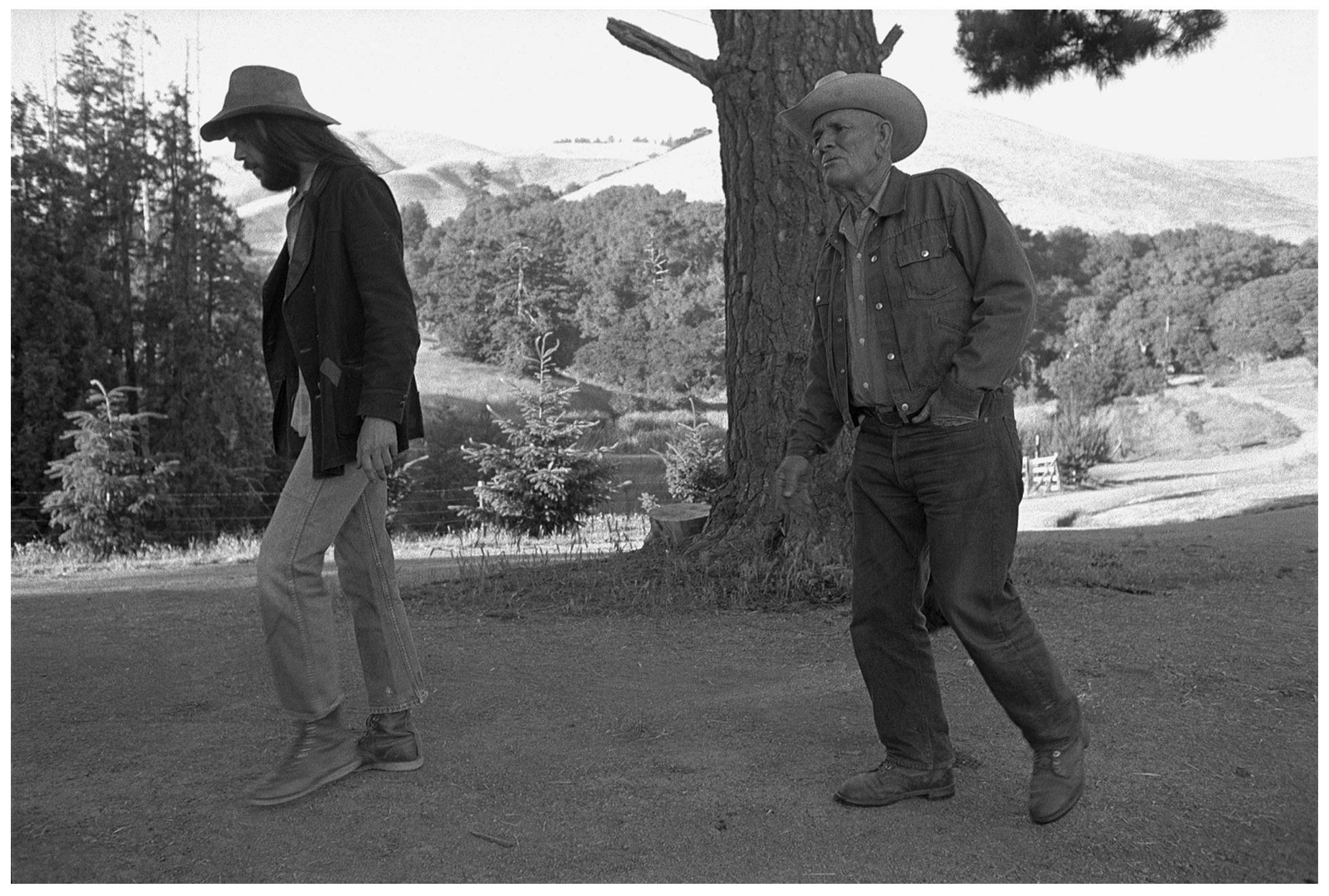
Neil Young wrote this about the caretaker of the ranch he bought in 1970.
His name was Louis Avila. The ranch was the Broken Arrow Ranch, purchased for $350,000 in 1970 (I have to wonder what it would cost now). Reportedly, Avila was giving Young a tour of the place and asked him how a young man like him could afford a place like this. Young, aged 25, replied “Well, just lucky, Louie, just real lucky.’ And Louis said, ‘Well, that’s the darndest thing I ever heard.’
Linda Ronstadt and James Taylor sang backing vocals on Old Man and another Harvest track, Heart of Gold. James Taylor played six-string banjo.
Old Man peaked at #31 in the Billboard 100 and #4 in Canada in 1972. Looks like Canada got this right.
Linda Ronstadt: “I can’t remember why Neil wanted me to sing with him – I guess he just figured I was there and could do it but we went in there and they were doing ‘Heart of Gold’ and ‘Old Man’ and I thought they were such beautiful songs. I loved them.
And I knew how to do harmonies. I’d listened to the Buffalo Springfield harmonies and I knew how to get that 7th they always used. I don’t think we started until midnight and it was dawn when we came out, and it was snowing – we came out to this beautiful snow storm in the rising sun. It was really exciting. I just thought I’ve been part of something really wonderful.”
Neil Young:About that time when I wrote (Heart of Gold), and I was touring, I had also — just, you know, being a rich hippie for the first time — I had purchased a ranch, and I still live there today.
And there was a couple living on it that were the caretakers, an old gentleman named Louis Avala and his wife Clara. And there was this old blue Jeep there, and Louis took me for a ride in this blue Jeep. He gets me up there on the top side of the place, and there’s this lake up there that fed all the pastures, and he says, ‘Well, tell me, how does a young man like yourself have enough money to buy a place like this?’
And I said, ‘Well, just lucky, Louie, just real lucky.’ And he said, ‘Well, that’s the darndest thing I ever heard.’
From Songfacts
This was the first song recorded for the Harvest album. Neil Young arranged the session the previous night when he was at a party held at Quadrafonic Studios in Nashville (he was in town to record a segment for Johnny Cash’s TV show). The studio owner Elliot Mazer was also a producer who had worked with a band Young admired called Area Code 615. Young asked if he could record there the next day, and Mazer complied, supplying not just the studio, but also the musicians.
The session took place on Saturday, February 6, 1971 with a group of Music City studio pros: Ben Keith on pedal steel guitar, Tim Drummond on bass and Kenny Buttrey on drums.
It was never the metric on which he wanted to be judged, but “Old Man” was the second-biggest hit for Neil Young as a solo artist, reaching #31 on the Hot 100. His biggest hit, by far, was his previous single, the Harvest track “Heart of Gold,” which went to #1.
There was some conflict over a hi-hat when Young recorded this song. When drummer Kenny Buttrey played it, Young told him not only to refrain from the hi-hat, but to only play with his left hand, which Buttrey thought was ridiculous. The drummer complied, however, literally sitting on his right hand to resist temptation. Buttrey later quipped: “He hires some of the best musicians in the world and has them play as stupid as they possibly can.”
It was immediately after the success of “Old Man” and the Harvest album that Danny Whitten, central to Young’s band Crazy Horse, passed away. Young invited Whitten to audition for his backing band the Stray Gators on the condition that he cleaned up his substance abuse. Young gave him a trial, but it looked to be the same old story with Whitten, so he fired him. Whitten promptly went home and overdosed, found dead with Valium and alcohol in his system.
Young got the call that night, and was devastated. Whitten’s death was part of the darkening of Neil Young’s act during the time following “Old Man;” it wasn’t just the success or being “headed for the ditch.”
Young told Jimmy McDonough that the line “Does it mean that much to me, to mean that much to you?” is meant to be directed towards the audience.
James Taylor is credited with playing “guitar-banjo” on this song. Taylor, who along with Linda Ronstadt was in the studio recording vocals, saw the banjo and started playing it. The instrument belonged to Young; it was a called a “guitar-banjo” because it was a banjo tuned like a guitar.
Bob Dylan covered this song throughout his 2002 tour.
This song has appeared in various films over the years, including Due Date, Lords of Dogtown, and Wonder Boys.
2015 The Voice champion Sawyer Fredericks covered the song during the show’s finale. The following week his version reached #63 on the Hot 100.
In 2018, a 72-years Young said during a concert in Chicago: “It’s hard to do ‘Old Man’ now. It’s like, ‘Old man take a look at my life, I’m a lot like I am.”
At the memorial service for actor Heath Ledger, “Old Man” was chosen as the song to play over a slideshow showing his various roles and life.
Old Man
Old man, look at my life I’m a lot like you were Old man look at my life I’m a lot like you were
Old man, look at my life Twenty four and there’s so much more Live alone in a paradise That makes me think of two
Love lost, such a cost Give me things that don’t get lost Like a coin that won’t get tossed Rolling home to you
Old man, take a look at my life, I’m a lot like you I need someone to love me the whole day through Ah, one look in my eyes and you can tell that’s true
Lullabies, look in your eyes Run around the same old town Doesn’t mean that much to me To mean that much to you
I’ve been first and last Look at how the time goes past But I’m all alone at last Rolling home to you
Old man, take a look at my life, I’m a lot like you I need someone to love me the whole day through Ah, one look in my eyes and you can tell that’s true
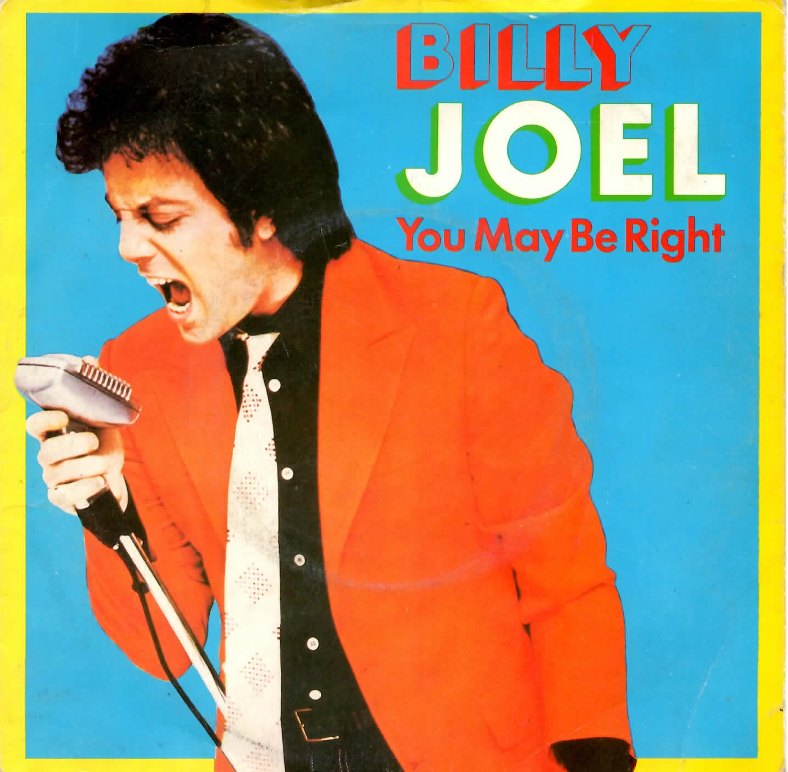
You May Be Right was released on the Glass Houses album in 1980. I liked this song…it was more of a rock song from Joel.
Glass Houses was more of a rock album than his previous albums. He did that on purpose because he wanted something different than his previous albums The Stranger and 52 Street.
The album peaked at #1 in the Billboard 100, #1 in Canada, #9 in the UK and #6 in New Zealand.
This is the opening track to Billy Joel’s album Glass Houses. Right before the song, there is the sound of shattered glass, to match the cover picture of Joel throwing a rock into the window of an all-glass house…it was a parody of the saying “People who live in glass houses shouldn’t throw stones.” This was Joel’s statement to his critics.
Stephen Thomas Erlewine of AllMusic wrote: “It may not be punk — then again, it may be his concept of punk — but Glass Houses is the closest Joel ever got to a pure rock album.”
You May Be Right was the first single released from Glass Houses…The song peaked at #7 in the Billboard 100, #6 in Canada, and #23 in New Zealand in 1980.
Billy Joel: “I could have come out with a record that would have guaranteed a certain amount of sales – just by repeating either The Stranger album or the 52nd Street album, by doing something similar,” Frankly, I would have been bored to do that. I would have been a dead duck, career-wise. You have to discard an audience to pick up another one.”
“It’s a definite temptation to repeat a successful formula. But I have never done the same thing twice. I don’t care what anybody says,” “After Stranger, I could have done Son of Stranger, but I’ve never done that. To keep me interested, there always has to be something new, something different.”
From Songfacts
In this song, Joel takes the persona of a guy who is told he is reckless. Joel confirms the suspicion, admitting that he is crazy and extolling the virtues of a more carefree, but dangerous existence.
This was used as the theme song to the TV show Dave’s World, which ran from 1993-1997 on CBS. Like Joel’s “My Life,” Billy didn’t sing the version used on the show. The version of “You May Be Right” on Dave’s World was sung by Southside Johnny.
The Chipmunks covered this song on their 1980 album Chipmunk Punk. Joel says he thought it was great.
Joel tends to prefer his more obscure songs over his hits, but “You May Be Right” is one of his favorites. Speaking with Stephen Colbert in 2017, he listed it as one of his Top 5.
In The Office episode “WUPHF.com” (2010), Michael sings this after Pam tells him Ryan is taking advantage of him. It was also used on Glee (“Movin’ Out” – 2013) and in the movies Girl Most Likely and The Edge Of Seventeen (2016).
You May Be Right
Friday night I crashed your party Saturday I said I’m sorry Sunday came and trashed me out again I was only having fun Wasn’t hurting any one And we all enjoyed the weekend for a change
I’ve been stranded in the combat zone I walked through Bedford Stuy alone Even rode my motorcycle in the rain And you told me not to drive But I made it home alive So you said that only proves that I’m insane
You may be right I may be crazy But it just may be a lunatic you’re looking for Turn out the light Don’t try to save me You may be wrong for all I know But you may be right
Remember how I found you there Alone in your electric chair I told you dirty jokes until you smiled You were lonely for a man I said take me as I am ‘Cause you might enjoy some madness for a while
Now think of all the years you tried to Find someone to satisfy you I might be as crazy as you say If I’m crazy then it’s true That it’s all because of you And you wouldn’t want me any other way
You may be right I may be crazy But it just may be a lunatic you’re looking for It’s too late to fight It’s too late to change me You may be wrong for all I know But you may be right
You may be right I may be crazy But it just may be a lunatic you’re looking for Turn out the light Don’t try to save me You may be wrong for all I know You may be right You may be wrong but you may be right You may be wrong but you may be right You may be wrong but you may be right You may be wrong but you may be right You may be wrong but you may be right You may be wrong but you may be right You may be wrong but you may be right You may be wrong but you may be right You may be wrong but you may be right
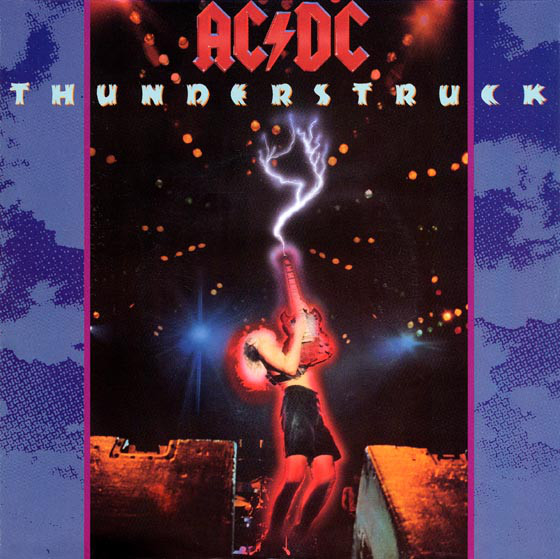
One of the best intros ever! We tried a little tenderness with Otis Redding this morning so now lets all insert some ear plugs and turn it up.
Brothers and guitarists Angus and Malcolm Young wrote this song. This led off The Razors Edge album, but in America it wasn’t sold as a single, which helped propel the album sales. The more radio-friendly Moneytalks was the US chart hit from the album, peaking at #23 in the Billboard 100.
Thunderstuck peaked at #13 in the UK and #20 in Canada in 1990. The Razors Edge peaked at #2 in the Billboard Album Charts, #4 in the UK, and #1 in Canada.
A side note to this song. In 2012 a couple of Iranian uranium-enrichment plants were hacked and their computers shut down but not before blasting Thunderstruck at maximum volume like you are probably doing right now or will be soon.
The album was recorded with producer Bruce Fairbairn at his Little Mountain Sound Studios in Vancouver, where he also produced Bon Jovi’s Slippery When Wet and the Aerosmith albums Permanent Vacation and Pump. It was the group’s first time working with Fairbairn.
Angus Young:“It started off from a little trick that I had on guitar. I played it to Mal and he said, ‘Oh I’ve got a good rhythm idea that will sit well in the back.’ We built the song up from that. We fiddled about with it for a few months before everything fell into place.
Lyrically, it was really just a case of finding a good title, something along the lines of ‘Powerage’ or ‘Highway To Hell.’ We came up with this thunder thing and it seemed to have a good ring to it. AC/DC = Power. That’s the basic idea.”
From Songfacts
According to The Story of AC/DC: Let There Be Rock, Angus Young created the distinctive opening guitar part by playing with all the strings taped up, except the B. It was a studio trick he learned from his older brother George Young, who produced some of AC/DC’s albums and was in a band called The Easybeats.
This song marked a return to form for AC/DC, whose previous three albums didn’t generate any blockbusters. It was the song that set the tone for the album, a truly thunderous track that electrified the crowd as the opening number on The Razors Edge tour. The apostrophe-free album title gels with the song: Australians call the dark clouds of an approaching storm “the razor’s edge.”
AC/DC shook Iran all night long when a computer virus infected nuclear establishments there in July 2012. One of the effects of the worm was that the machines were forced to play this track at full volume during the small hours.
David Mallet, who directed the video for “You Shook Me All Night Long,” returned to work with the band on this clip. Mallet wanted to create the “ultimate performance video,” showcasing AC/DC’s live energy. It was shot at Brixton Academy in London with some innovative camera work. Mallet had Angus do his duckwalk over plexiglass to get footage from underneath, and small cameras were placed on the guitar and on one of the drumsticks.
The Croatian cello duo 2Cellos released an instrumental version of the song in February 2014. The pair are best known for their cover of “Smooth Criminal,” which was performed on the Michael Jackson-themed episode of Glee.
The song was featured in the film Varsity Blues during one of the games when the team is hungover from the night before. AC/DC charged a massive $500,000 for its use, the biggest deal that music supervisor Thomas Golubic (Breaking Bad, The Walking Dead) has ever brokered. “I remember being absolutely horrified when I heard that number,” Golubic recalled to Variety. “And we spent a lot of time coming up with what we thought were great alternates, but there was going to be no budget on that, and they had money so they paid for it.”
In 2004, an Australian movie called Thunderstruck was released. It’s a comedy about five guys who go to an AC/DC show in 1991 and agree to bury the first one who dies next to Bon Scott.
In Australia, this was used in commercials for the Holden Commodore SS Ute. The commercials were about an Australian Built Ute making a storm in the outback. >
Thunderstruck
Thunder, thunder, thunder, thunder I was caught In the middle of a railroad track I looked round And I knew there was no turning back My mind raced And I thought what could I do And I knew There was no help, no help from you Sound of the drums Beating in my heart The thunder of guns Tore me apart You’ve been Thunderstruck
Rode down the highway Broke the limit, we hit the town Went through to Texas, yeah Texas, and we had some fun We met some girls Some dancers who gave a good time Broke all the rules Played all the fools Yeah yeah they, they, they blew our minds And I was shaking at the knees Could I come again please Yeah them ladies were too kind You’ve been Thunderstruck
I was shaking at the knees Could I come again please
Thunderstruck, Thunderstruck, Thunderstruck, Thunderstruck It’s alright, we’re doin’ fine It’s alright, we’re doin’ fine, fine, fine Thunderstruck, yeah, yeah, yeah Thunderstruck, Thunderstruck Thunderstruck, baby, baby Thunderstruck, you’ve been Thunderstruck Thunderstruck, Thunderstruck You’ve been Thunderstruck
Transcontinental Pop Festival… better known as the Festival Express. Great idea on paper… rounding up musicians in 1970 and placing them on a train going across Canada and stopping along the way to play festivals. What could go wrong? Actually, I would have loved to have been on that train.
The lineup:
The Band
The Grateful Dead
Janis Joplin
Buddy Guy Blues Band
The Fly Burrito Brothers
Sha Na Na
Delaney & Bonnie & Friends
There were artists that were not in the film like Traffic, Ten Years After, Tom Rush, Ian & Sylvia, Mountain and more.
A DVD was released of this in 2004. All these musicians on a train full of liquor and an assortment of drugs… liquor was the popular choice among the musicians on this ride. The tour was to have events in Montreal, Toronto, Winnipeg, Calgary, and Vancouver. The Montreal event was canceled as was Vancouver. In Toronto, protesters were saying the festival promoters were price gouging so The Grateful Dead played a free concert in a park nearby to ease tensions with the protesters.
There are some very good performances on the film. My favorite is Buddy Guy and Janis Joplin’s performance. I also like the Dead’s “Don’t Ease Me In” with Pigpen on blues harp. The festival lost money and the film was thought lost for over 30 years. Janis would be gone a few months after this but her performance of Cry Baby is electrifying.
The train was where the fun was at. They actually stopped at a liquor store and bought out the complete store…including the giant display bottles. The Dead’s crew even dosed some of the liquor…and cake with LSD as you will see below… on board. When watching the film you can see the performers are having a ball jamming with each other because they didn’t get a lot of chances to do that on the road.
Bill Kreutzmann (drummer for the Dead) from his book “Deal”
We celebrated Janis Joplin’s birthday at the last stop the traditional way: with birthday cake. In keeping with our own kind of tradition, somebody—within our ranks, I would imagine—had secretly infused the cake with a decent amount of LSD. So it quickly became an electric birthday celebration. Allegedly, some generous pieces of that birthday cake made it to the hands and mouths of the local police who were working the show. “Let them eat cake!” (To be fair, I didn’t have anything to do with that … I was just another cake-eating birthday reveler, that night.) And that was it for the Festival Express. It was a wonderful time and I think what really made it great was the level of interaction and camaraderie among the musicians, day and night, as we were all trapped on this train careening across the great north. It probably helped that we were all trashed the entire time. Whiskey was in the conductor’s seat on that ride.
I would recommend getting the DVD of this event. It’s a great time capsule of that time in music and culture.
Lets mellow out this morning and try a little tenderness by Otis Redding. I first heard this song by Three Dog Night who I like a lot but I have to go with Otis.
This song is a standard recorded by many artists, including crooners Frank Sinatra, Mel Torme and Bing Crosby. It was written by Jimmy Campbell, Reg Connelly and Harry Woods, and first published in 1933.
Otis recorded this song for Stax Records in Memphis. The house band was Booker T. & the M.G.’s and they backed him up on this recording…
Redding did not want to record this song, but Stax Records executives and his friends wore him down with a constant barrage of requests.
When he finally recorded it, he did it with a pleading vocal that he was sure would not be released. The ploy didn’t work. Redding’s version of “Try a Little Tenderness” became his biggest selling record released before his death.
The song peaked at #25 in the Billboard 100 and #46 in the UK in 1966.
From Songfacts
Campbell and Connelly were a British songwriting team who often collaborated with a third composer, which in this case was the American Harry Woods.
In 1962, Aretha Franklin recorded the song, charting at #100 in the US at a time when most of her singles failed to get much higher. Her arrangement was similar to that of the previous crooner versions and her vocal relatively restrained; it was Otis Redding who did the definitive soulful version of the song, complete with horns, organ, and an uninhibited vocal that builds in intensity as the song progresses.
Sam Cooke’s version of this was a big influence on Redding. It was never released as a single but was one of high points of his live “Sam Cooke at the Copa” LP (1964) as part of a medley that started with “Tenderness” (followed by “Sentimental Reasons” and “You Send Me”). Redding idolized the man, particularly after Cooke’s death, but he did not want to record “Tenderness.” He caved in after tremendous pressure from his friends and (according to one source) a family member – but he didn’t want to record it like Cooke (in fact, he considered his version a “joke” to quiet the people who wanted him to record it). The rest is history.
Three Dog Night recorded this as a tribute to the late Otis Redding. Their version became their first Top 40 hit in 1968. Their first Top 10 hit, “One,” written and originally recorded by Harry Nilsson, soon followed.
For Three Dog Night, it was a staple of their live shows throughout the 1980s. They would often stretch the song to the 15-20 minute mark.
In the movie Bull Durham, erratic young pitcher Nuke LaLoosh, played by Tim Robbins, sings this on the team bus but butchers the lyrics, much to the dismay of Crash Davis, the veteran catcher played by Kevin Costner. Instead of “Young girls they do get wearied” he sang “Young girls they do get wooly.”
This was one of two songs Aretha Franklin performed when she made her TV debut on American Bandstand August 2, 1962. A cover by her peaked at #100 on the Hot 100 the same year.
Jon Cryer’s character Duckie lip-synchs this to Molly Ringwald’s character Andie in the 1986 movie Pretty In Pink. The film’s director Howard Deutch chose the song because he wanted something that would express the heartbreak Duckie feels as he tries to make inroads with Andie.
In 2015, Cryer re-created the scene on The Late Late Show with James Corden.
This was covered by Florence and the Machine for their 2012, MTV Unplugged – A Live Album. Speaking with Nicole Alvarez of LA radio station 106.7 KROQ, Florence Welch said it was hard choosing an acoustic cover for the show. “I almost didn’t do ‘Try A Little Tenderness’ because it’s my favorite song and I thought, ‘I can’t do this,'” she admitted. “I didn’t know how to do it the same, but I just thought, ‘I’ve got to slow it down.'”
The Otis Redding version was used in 2015 commercials for McDonald’s Chicken Select Tenders. Because, you know, “tender” is in the song title.
Try A Little Tenderness
Ooh, she may be weary And young girls, they do get wearied Wearing that same old shaggy dress, yeah But when she gets weary Try a little tenderness, yeah, yeah
You know she’s waiting Just anticipating The thing that she’ll never, never, never, never possess, yeah, yeah But while she’s there waiting, and without them Try a little tenderness That’s all you gotta do
It’s not just sentimental, no, no, no She has her grief and care, yeah yeah yeah But the soft words, they are spoke so gentle, yeah
It makes it easier Easier to bear, yeah
You won’t regret it, no no Young girls, they don’t forget it Love is their whole happiness, yeah
But it’s all so easy All you got to do is try, try a little, tenderness yeah All you’ve gotta do is, man Hold her where you want her Squeeze her, don’t tease her Never leave her, get to her Just try, try a little tenderness, y-y-yeah You got to love and kiss her, man Got to, got to, got to, don’t lose her, no, no You got to love her, tease her, don’t you leave her Got to try, now, now, now Try, tru a little tenderness Yeah, watch the groove now, you gotta know what to do, man…
I was lucky to see Robin Trower in Clarksville Tennessee in the early nineties. In a three week span I went to three concerts…Santana, Eric Clapton, and I wrapped it up Robin Trower in a club called the Cannery…three really good guitar players in that three week span.
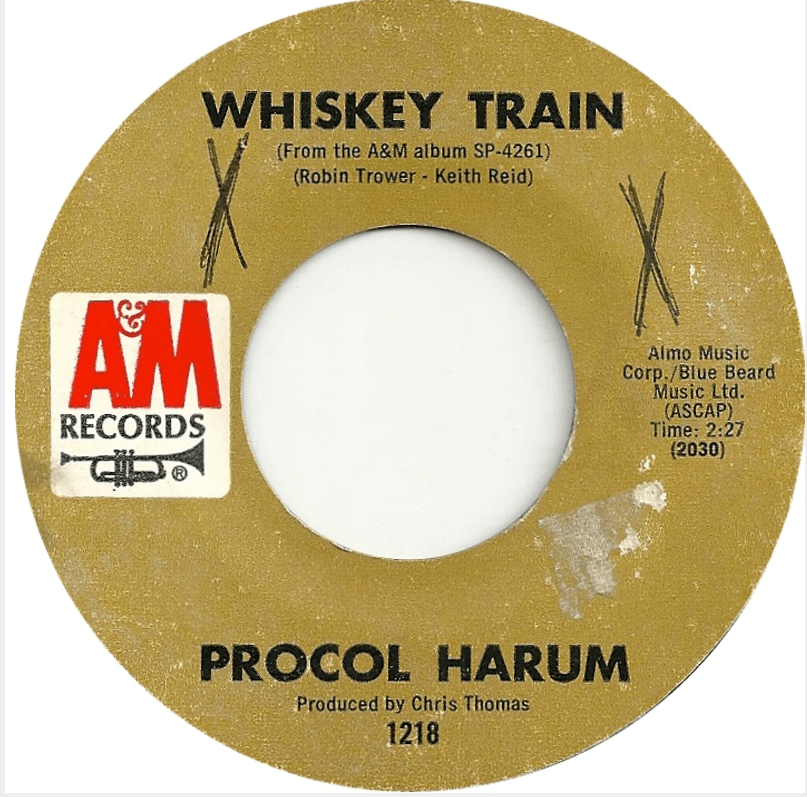
This song was released in 1970 and the opposite of their best-known hit “A Whiter Shade Of Pale.” The band had some personnel changes by this time. This wasn’t a big hit or a hit at all but I’ve always loved it as a rock and roll song. The riff is a classic guitar riff.
The song was on the album Home released in 1970. The album peaked at #34 in the Billboard Album Charts and #49 in the UK.
Whiskey Train was written by guitarist Robin Trower and Keith Reid. Great rock and roll song. Leslie West and Blackfoot also covered this song but I’ll stick with the original.
Whiskey Train
Ain’t gonna ride that whisky train Ain’t gonna burn up no more flame Throw away my bottle down the drain Ain’t gonna ride that whisky train To think that I could be so wrong To be so sick and still go on The way I drink it’s been too long Don’t see much point in carrying on I’m gonna lose these drinking blues I’m gonna find a girl to make me choose Between lovin’ her and drinking booze I’m gonna lose these drinking blues Ain’t gonna ride that whisky train I’m tired of burning in the flame Throw away my bottle down the drain Ain’t gonna ride that whisky train
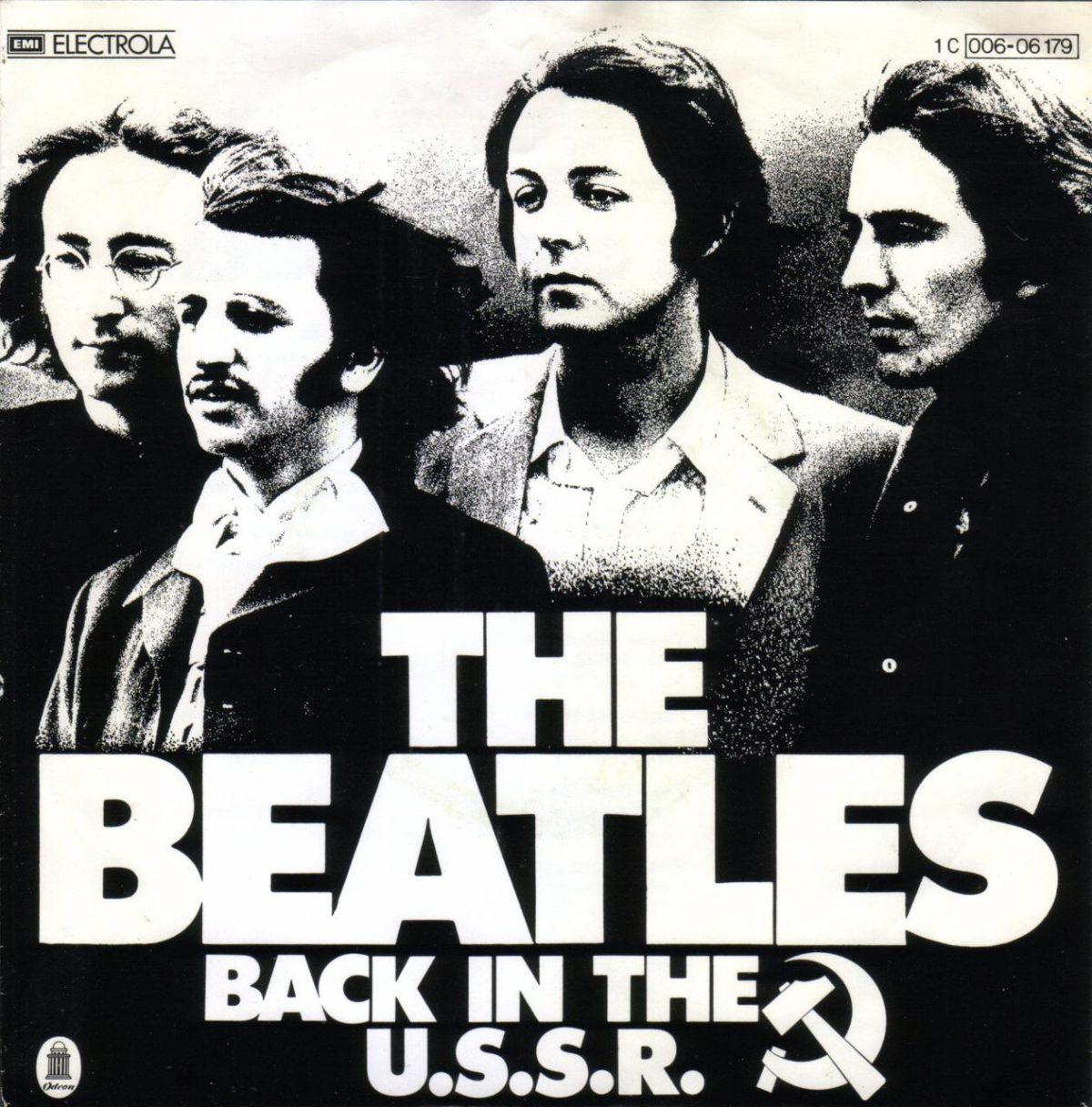
I always liked this rocking song by the Beatles. They threw a little Beach Boy feel in it also.
The song was written during the band’s visit to Rishikesh, India is early 1968, the intention being to study and practice Transcendental Meditation with the Maharishi.
In early 1968, the British government launched the “I’m Backing Britain” campaign to rally enthusiasm and boost their economy. McCartney was inspired by this and Chuck Berry’s Back In The U.S.A. The working title was I’m Backing the UK.
This song was on the double White Album released in 1968. The album peaked at #1 in the Billboard Album Chart, Canada, and the UK. There was tension between the members on this album.
Following an argument with McCartney over the drum part for this song, Ringo walked out on The Beatles. He flew to Sardinia for a holiday to consider his future. While there he received a telegram from his bandmates saying, ‘You’re the best rock ‘n’ roll drummer in the world. Come on home, we love you.’ On his return, he found his drum kit covered with flowers. A banner above read, ‘Welcome Back.’
Paul did end up playing drums on the track. It is credited to Lennon/McCartney but it is a McCartney written song.
This song caused some controversy with conservative America, because it came out during Vietnam and the Cold War and it appeared to be celebrating the enemy. The John Birch Society accused The Beatles with promoting communism.
Paul McCartney:“Chuck Berry once did a song called ‘Back In The U.S.A,’ which is very American, very Chuck Berry, you know. He was ‘serving in the army and, when I get back home, I’m gonna kiss the ground,’ you know, ‘can’t wait to get back to the States.’ It’s very much an American thing, I always thought. So, this one, ‘Back In The U.S.S.R.’ was about, in my mind, a spy who has been in America for a long, long time. Some fellow who’s been in America for a long time and he’s picked up and he’s very American, but he gets back to the U.S.S.R., and he’s, sort of, saying ‘Leave it till tomorrow, honey to disconnect the phone,’ and ‘come here, honey,’ with Russian women, and all that.”
From Songfacts
The story of this song begins in Hrishikesh, India, where The Beatles were on a retreat learning Transcendental Meditation from their guru, Maharishi Mahesh Yogi. Also on the retreat was Mike Love of The Beach Boys, who told us: “Paul (McCartney) came down to the breakfast table one morning saying, ‘Hey, Mike, listen to this.’ And he starts strumming and singing, ‘Back in the U.S.S.R.,’ the verses. And I said, ‘Well, Paul, what you ought to do is talk about the girls around Russia, Ukraine girls and then Georgia on my mind, and that kind of thing.’ Which he did.
So I think it was the fact I was there, which caused Paul to think in terms of Beach Boys, and then my suggestion for what to do on the bridge, he took that suggestion and crafted, like only Sir Paul can, a really great song.”
McCartney was impressed with the idea and used some Beach Boys’ elements in this song: Instead of “California Girls” it was “Moscow Girls.” Plus, the definitive Beach Boy “Oooeeeeoooo” in the background harmonies.
The title was inspired by Chuck Berry’s “Back In The U.S.A.” The Beach Boys had been influenced by that song and also “Sweet Little Sixteen” to come up with “California Girls” and “Surfin’ U.S.A.”
Things were tense when they were working on this album, and Ringo walked out during recording, briefly quitting the band. Paul McCartney played drums in his place.
The line “Georgia’s always on my mind” in a play on the Ray Charles song “Georgia On My Mind.” It has a double meaning, since Georgia was part of the U.S.S.R.
Elton John performed this song when he toured Russia in 1979, and he got a huge response. This was the year before Moscow hosted the Summer Olympics, which the United States boycotted. Elton told Q magazine: “The first night as an encore I did ‘Back In The U.S.S.R.’ And they went apes–t. It was like playing ‘Philadelphia Freedom’ in Philadelphia. You just noticed that the people there were as ordinary and as good as the people you’d notice anywhere else.”
Billy Joel got a similar reaction when he played the song in Moscow in 1987.
This opens with the sound of an airplane flying from left to right across the speakers. Stereo was relatively new, so this was very innovative for the time.
Paul McCartney told Mojo magazine October 2008 that the song’s middle-eight was a spoof of the Beach Boys leading up to Pet Sounds. He added: “The rest is (sings first bars of the melody line of the opening verse) more Jerry Lee (Lewis). And the title is Chuck Berry, Back In The U.S.A., and the song itself is more a take on Chuck. You’d get these soldiers back from Korea or Vietnam, wherever the hell, and Chuck was picking up on that. I thought it was a funny idea to spoof that with the most unlikely thing of way back in Siberia.”
There was a rumor in the Soviet Union that The Beatles had secretly visited the U.S.S.R. and given a private concert for the children of top Communist party members. They believed the song was written because of the concert. Actually, some fans still believe so.
The wafer-thin actress and model Twiggy claimed that this song was written for her to sing on a tour of Russia that didn’t materialize. She and McCartney had met to discuss a film project, but it’s unlikely this song was written for her.
Paul McCartney used this as the title to an album he released only in Russia in 1989. In 2002, McCartney called his US tour the “Back In The US” tour.
In Stephen King’s 1979 novel The Dead Zone, a serial killer hums this tune as he contemplates his first murder.
Back In The U.S.S.R
Flew in from Miami Beach BOAC Didn’t get to bed last night On the way the paper bag was on my knee Man, I had a dreadful flight I’m back in the USSR You don’t know how lucky you are, boy Back in the USSR, yeah
Been away so long I early knew the place Gee, it’s good to be back home Leave it till tomorrow to unpack my case Honey disconnect the phone I’m back in the USSR You don’t know how lucky you are, boy Back in the US Back in the US Back in the USSR
Well the Ukraine girls really knock me out They leave the west behind And Moscow girls make me sing and shout That Georgia’s always on my my my my my my my my my mind Oh, come on Hu hey hu, hey, ah, yeah Yeah, yeah, yeah I’m back in the USSR You don’t know how lucky you are, boys Back in the USSR
Well the Ukraine girls really knock me out They leave the west behind And Moscow girls make me sing and shout That Georgia’s always on my my my my my my my my my mind
Oh, show me round your snow peaked Mountain way down south Take me to your daddy’s farm Let me hear your balalaika’s ringing out Come and keep your comrade warm I’m back in the USSR Hey, you don’t know how lucky you are, boy Back in the USSR Oh, let me tell you, honey
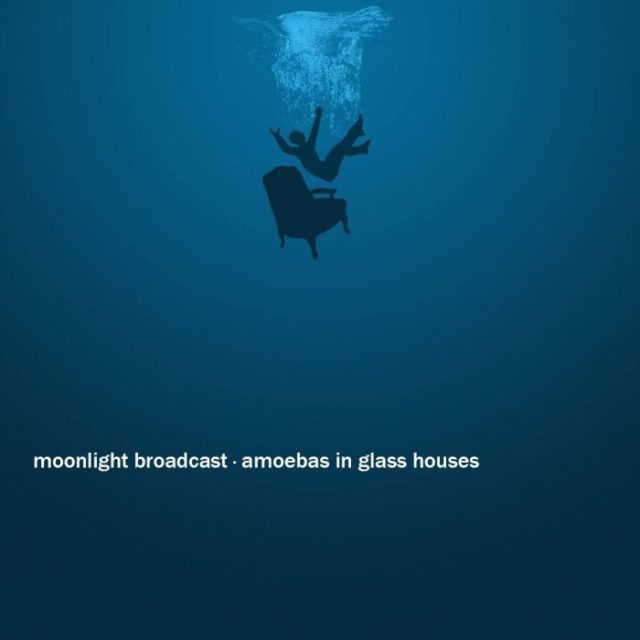
I like to feature Power Pop on Fridays…here is one from blogger ECLECTICMUSICLOVER…It’s a great song by Moonlight Broadcast and the song is “Amoebas in Glass Houses” that I think you will like. It’s a great power pop song and an excellent writeup.
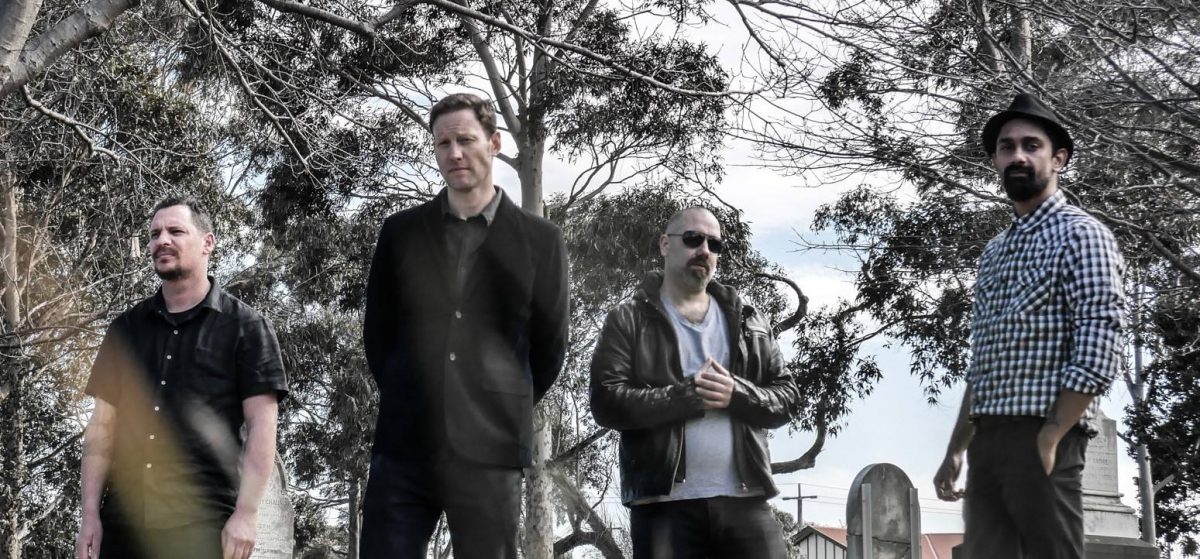
Moonlight Broadcast is an alternative rock band hailing from beautiful Melbourne, Australia. Influenced by such greats as Crowded House, The National and Death Cab for Cutie, they write songs with memorable guitar-driven melodies and poignant lyrics about (in their own words) “the winding, bumpy road we’re all travelling on.” The band is comprised of Cameron (lead vocals), Adi (guitar), Craig (bass, backing vocals) and Ash (drums & mojo). They released their excellent debut EP A Cynic’s Guide to Dying Happy in February 2018 (you can read my review here), and after a two and a half year break, the guys are back at last with a terrific new single “Amoebas in Glass Houses“.
The song has a bouncy melody and lively mix of jangly guitars, humming bass and punchy drumbeats, creating a pleasing, upbeat vibe that contrasts with the rather depressing and brutally honest lyrics. Cameron says…
A great “Keith” song on the great Stone’s album Some Girls released in 1978. Some of the lyrics make me laugh because of how honest they are. Maybe one of the best lines in Rock “I wasn’t looking too good but I was feeling real well”… It doesn’t get much more straightforward than that.
Some of the others are not so fun such as “Booze and pills and powders, you can choose your medicine, Well here’s another goodbye to another good friend.” In the world Keith was living in, it rang true. I’ve read that this line was about Keith’s good friend Gram Parsons who had died of a heroin overdose in 1973.
Richards recorded the song in five days without sleeping in March of 1978, a year after he was busted for heroin in Canada.
This and Happy are my favorite Keith Richards songs with the Stones. You Got the Silver is up there also. This is a Jagger/Richards song but Keith wrote most if not all of this one.
Great raw Rock and Roll song.
Keith Richards:“For sheer longevity – for long distance – there is no track that I know of like ‘Before They Make Me Run.’ That song, which I sang on that record, was a cry from the heart. But it burned up the personnel like no other. I was in the studio, without leaving, for five days… I had an engineer called Dave Jordan and I had another engineer, and one of them would flop under the desk and have a few hours’ kip and I’d put the other one in and keep going. We all had black eyes by the time it was finished… That’s probably the longest I’ve done. There have been others that were close – ‘Can’t Be Seen’ was one – but ‘Before They Make Me Run’ was the marathon.”
From Songfacts
This is about the rock and roll lifestyle that got Keith Richards in trouble. The song was recorded while he was out on bail after getting caught with heroin and arrested for drug trafficking in Toronto in 1977. He was found guilty of the lesser charge of heroin possession, and sentenced to probation.
Richards sang lead and did the majority of the work on this song. With Keith’s drug charges pending, Mick Jagger took a lot of control on the album, but this song was pretty much all Keith.
The original title was “Rotten Roll.”
Richard’s vocals were double-tracked to make them stand out.
A member of The Byrds, Parsons died in 1973 at age 26 after taking an overdose of alcohol and morphine. His corpse was stolen and burned in the Mojave Desert.
An engineer named Dave Jordan helped mix this song. He went on to work with groups like The Specials and The Pogues.
Before They Make Me Run
Worked the bars and sideshows along the twilight zone Only a crowd can make you feel so alone And it really hit home Booze and pills and powders, you can choose your medicine Well here’s another goodbye to another good friend
After all is said and done Gotta move while it’s still fun Let me walk before they make me run After all is said and done I gotta move, it’s still fun I’m gonna walk before they make me run
Watched my taillights fading, there ain’t a dry eye in the house They’re laughing and singing Started dancing and drinking as I left town Gonna find my way to heaven, ’cause I did my time in hell, oh yeah I wasn’t looking too good but I was feeling real well
Oh after all is said and done I gotta move I had my fun Let us walk before they make us run
After all is said and done I did alright, I had my fun But I will walk before they’ll make me I will walk before they’ll make me (run) I will walk before they’ll make me (run) I will walk before they’ll make me run
So if it’s all been said and done I gotta move I had my fun Let me walk before they make me run
So let me walk before they make me run I want to walk before they’ll make me run
I remember hearing about this Canadian band but I didn’t start listening to them until recently. Deke and Dave my Canadian friends have mentioned them while following their blogs. Teenage Head was sometimes known as Canada’s answer to the Ramones.
They are from Hamilton, Ontario and met in Hamilton Weston High school… friends Frank “Venom” Kerr and Gord Lewis formed the group in 1975 with bassist Steve Mahon (later changed his last name to Marshall) and Nick Stipinitz on drums. They took their name from a Flaming Groovies song title and quickly gained a loyal following on the Ontario club circuit for their raw energy, highlighted by Lewis’guitar work and front man Venom’s antics and natural charisma on stage.
Signing with Attic Records, Teenage Head issued their sophomore effort, Frantic City, in early 1980.
They played a show at the Ontario Place Forum, a prominent outdoor venue situated in a Toronto park. Over 15,000 people showed up but they venue wasn’t large enough to hold them. A drunken crowd tried to storm the entrances, sparking a battle with the police officers on hand…multiple injuries and arrests followed. The band woke up the next morning with their name in the papers. They lost some gigs but the publicity pushed “Frantic” up the charts and to gold status.
Teenage Head released Let’s Shake in 1980 and it made it to #88 in Canada.
Let’s Shake
OOH
Give me that opener, pass me that beer C’mon move your ass on out of here Well I guess you know I need some money But you are just too fat and ugly
Well you can’t dance, can’t keep up the beat Well that’s because you got size twelve feet Well don’t make me run, well don’t make me blush You’re just that girl I hate to touch
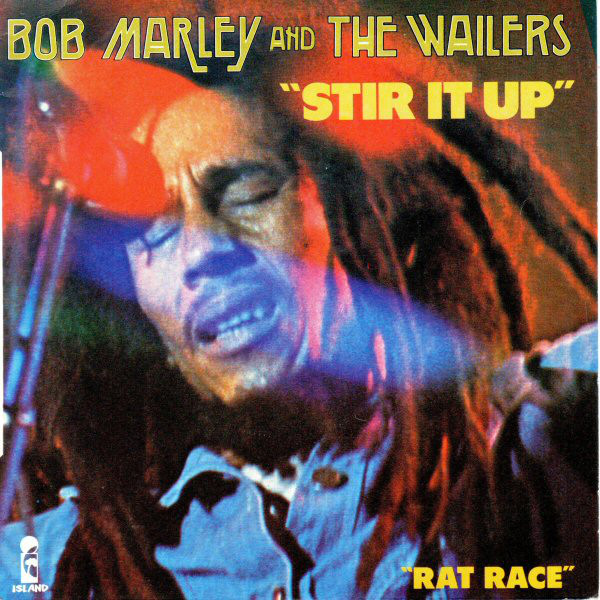
This song got me into Bob Marley. He wrote this song in 1967 and recorded it that year and released it as a single. It was later covered by Johnny Nash in 1972 and it peaked at #12 in the Billboard 100 for Johnny.
Bob Marley and the Wailers re-recorded it in 1973 for the “Catch the Fire” album. The Nash version was Bob’s first success outside of Jamaica.
It has been said that Bob Marley wrote this song for his wife Rita.
Bob Marley on Johnny Nash
“He’s a hard worker, but he didn’t know my music. I don’t want to put him down, but Reggae isn’t really his bag,” he said. “We knew of Johnny Nash in Jamaica before he arrived, but we didn’t love him that much: We appreciated him singing the kind of music he does – he was the first US artist to do reggae – but he isn’t really our idol. That’s Otis or James Brown or Pickett, the people who work it more hard.”
From Songfacts
Texas-born singer-songwriter Johnny Nash released his final US hit as a follow-up to his signature tune “I Can See Clearly Now.” Both singles were infused with the reggae sound he brought back from a 1967 trip to Jamaica, where he met up-and-comer Bob Marley. Not only was Marley an assistant producer on Nash’s album, but he also contributed a handful of tunes, including “Stir It Up,” a love song about stirring up desire that Marley wrote for his wife, Rita.
Nash’s version would become Marley’s first hit outside of Jamaica, but he originally recorded it with his own group, The Wailers. After Nash’s success, The Wailers recorded it again for their 1973 album, Catch a Fire. Marley’s version came to the forefront when it appeared on his greatest hits collection Legend in 1984, three years after his death.
In the UK, this was released as the first single, followed by the Nash-penned “I Can See Clearly Now.”
On this track, Nash is backed by the reggae band the Fabulous Five Inc.
A year before the album was released, Marley and Nash collaborated on the score for the Swedish film Vill sa garna tro, which cast Nash in a starring role – but things didn’t go as planned, mainly because no one could find Marley. John “Rabbit” Bundrick, Nash’s keyboardist and co-composer on the score, recalled in the liner notes for Marley’s Songs of Freedom: “I really don’t know what happened to Bob. All I do know is that his air ticket, Johnny’s guitar, and Johnny’s tape recorder all disappeared, along with Bob. Johnny never forgave him for taking his guitar. Bob disappeared as magically as he had arrived.”
Nash put his anger aside when “Stir It Up” became a hit, and invited Marley on a tour of the UK to promote the album.
Diana King covered this for the 1993 comedy Cool Runnings, about a Jamaican bobsled team competing in the Winter Olympics.
In the 2007 movie I Am Legend, Will Smith plays a Bob Marley-obsessed virologist who has survived a zombie apocalypse. When he finally meets another non-infected human, he is horrified to learn she’s never heard of Marley, so he puts on the Legend CD (note the album and movie titles), tells her it’s the best album ever made, and plays “Stir It Up.” Marley’s music is a theme throughout the film, as Smith’s character draws on it for faith. In the film, his daughter is named Marley.
“Stir It Up”
Stir it up; little darlin’, stir it up. Come on, baby. Come on and stir it up: little darlin’, stir it up. O-oh!It’s been a long, long time, yeah! (stir it, stir it, stir it together) Since I got you on my mind. (ooh-ooh-ooh-ooh) Oh-oh! Now you are here (stir it, stir it, stir it together), I said, it’s so clear There’s so much we could do, baby, (ooh-ooh-ooh-ooh) Just me and you.
Come on and stir it up; …, little darlin’! Stir it up; come on, baby! Come on and stir it up, yeah! Little darlin’, stir it up! O-oh!
I’ll push the wood (stir it, stir it, stir it together), then I blaze ya fire; Then I’ll satisfy your heart’s desire. (ooh-ooh-ooh-ooh) Said, I stir it every (stir it, stir it, stir it together), every minute: All you got to do, baby, (ooh-ooh-ooh-ooh) Is keep it in, eh!
(Stir it up) Oh, little darlin’, Stir it up; …, baby! Come on and stir it up, oh-oh-oh! Little darlin’, stir it up! Wo-oh! Mm, now, now.
Quench me when I’m thirsty; Come on and cool me down, baby, when I’m hot. (ooh-ooh-ooh-ooh) Your recipe is, – darlin’ – is so tasty, When you show and stir your pot. (ooh-ooh-ooh-ooh)
So: stir it up, oh! Little darlin’, stir it up; wo, now! Come on and stir it up, oh-ah! Little darlin’, stir it up! — [Guitar solo] — Oh, little darlin’, stir it up. Come on, babe! Come on and stir it up, wo-o-a! Little darlin’, stir it up! Stick with me, baby! Come on, come on and stir it up, oh-oh! Little darlin’, stir it up. [fadeout]
Blind Faith was a Supergroup made up of Eric Clapton, Steve Winwood, Ginger Baker, and Ric Grech. They released just one album… The album peaked at #1 in the Billboard Album Chart, Canada, and the UK in 1969.
It was written by Steve Winwood with acoustic guitar playing by Eric Clapton and percussion by Ginger Baker. Many artists have covered this song but I’ve never heard anyone that can match the original.
Winwood wrote this and sang lead. Many critics thought that Blind Faith sounded a lot more like Traffic than Clapton’s Cream, which is what Clapton was going for.
This song was on the “Blind Faith” album in 1969. Blind Faith was only together for this album, a debut concert in Hyde Park, a Scandinavia and USA tour and then broke up shortly afterwards.
In concert they performed Cream and Traffic songs, which delighted the crowd and annoyed Eric Clapton greatly. These audiences preferred their older material instead of the newer Blind Faith songs.
Clapton began spending more time with opener Delaney Bramlett and less time with his own band, which prompted a 21-year-old Steve Winwood to take a more driving role in the band. Eventually, Clapton left the group following their final show in Hawaii.
This song never gets old to me.
From Songfacts
Clapton played acoustic guitar on this track, which is something he rarely did. In his previous group, Cream, he played long, intense solos, something he wanted to get away from with Blind Faith.
The album was released in the UK with a cover photo of an 11-year-old girl named Mariora Goschen. The cover photo because as famous as the album itself, since it showed Goschen naked and holding a model spaceship (a different cover with a band photo was used in the US and for stores that wanted an alternative in the UK).
Bob Seidemann came up with the concept and took the photo, which represents humankind’s relationship with technology (this was when the mission to put a man on the moon was big news). The band wasn’t yet named, and when Seidemann took the photo, he called it “Blind Faith.” Clapton decided that should be the name of the band.
Clapton sometimes plays this at his concerts, with a member of his band singing. His bass player Nathan East would often sing it.
A common misconception is that Eric Clapton and Steve Winwood reunited at the Crossroads Guitar Festival, July 28, 2007, however, the first true live reunion occurred two months earlier at an event called Countryside Rocks at Highclere Castle, Hampshire, UK on May 19, 2007. Steve Winwood performed his set and Eric came on later as a guest. Together they played this song as well as “Watch Your Step,” “Presence of the Lord,” “Crossroads,” “Little Queen Of Spades,” “Had to Cry Today” and “Gimme Some Lovin’.”
The band House of Lords covered this on their 1990 album Sahara. Other artists to record it include Joe Cocker, Yvonne Elliman, Gilberto Gil and Widespread Panic.
Can’t Find My Way Home
Come down off your throne and leave your body alone Somebody must change You are the reason I’ve been waiting all these years Somebody holds the key
Well, I’m near the end and I just ain’t got the time And I’m wasted and I can’t find my way home
I can’t find my way home But I can’t find my way home But I can’t find my way home But I can’t find my way home Still I can’t find my way home
And I’ve done nothing wrong But I can’t find my way home