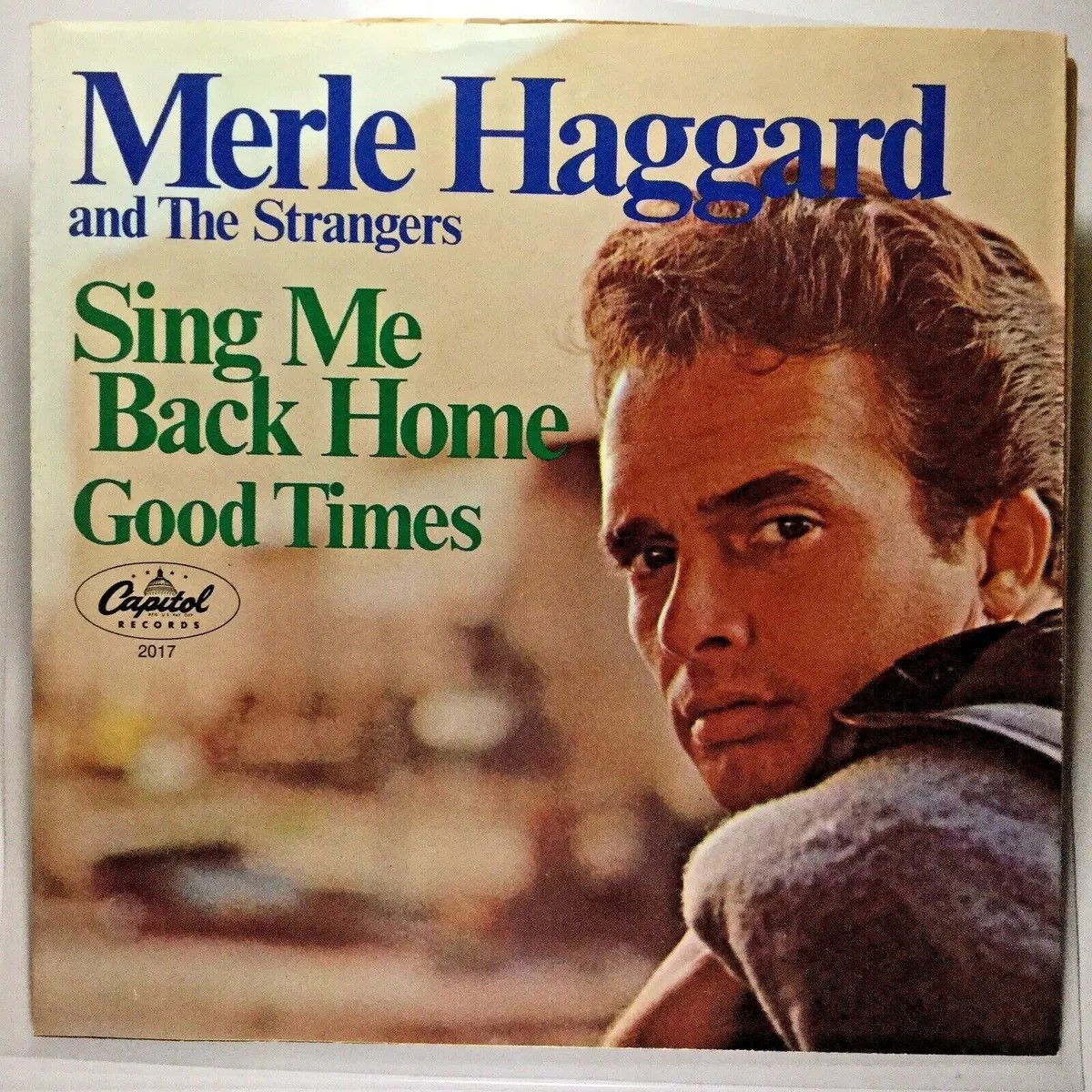
One of the many Haggard songs that my dad would play. This one along with a song called Sam Hill I heard a lot when I was a child. Sing Me Back Home was released in 1967, and it became one of Haggard’s most enduring hits.
Most people know that he spent his early adulthood behind bars for a failed attempt at robbery. While in San Quentin State Prison, Haggard wrote many songs while dreaming of freedom and life beyond the bars of a cell.
Sing Me Back Home was inspired by his fellow inmates James Rabbit and Caryl Chessman. Rabbit was executed in 1961 for killing a California Highway Patrolman, and Chessman was the first modern American executed for a non-lethal kidnapping.
Haggard and James Rabbit hatched a plan one night to escape (they would hide inside a desk he was building in the prison furniture factory), though at the last moment, Rabbit advised Haggard not to take part in the plan. Rabbit escaped, was recaptured, killed an officer, and was brought back to San Quentin to be executed. It was the first of many events to change something in Haggard’s criminal ways.
It is an incredibly sad song and you get it with the first two lines of the song. The warden led a prisoner down the hallway to his doom, I stood up to say goodbye like all the rest. The song was on his Sing Me Back Home album released in 1968. The album peaked at #1 on the Billboard Country Album Charts. The song peaked at #1 on the Billboard Country Charts and #7 on the Canadian Country Charts.
Merle Haggard: “Something happened to me there, I came to the fork in the road and took it, you might say. And I kind of started back in the other direction, trying to make something out of myself rather than to dig myself in a deeper hole.”
Sing Me Back Home
The warden led a prisoner down the hallway to his doom I stood up to say goodbye like all the rest And I heard him tell the warden just before he reached my cell Let my guitar playing friend, do my request
Let him sing me back home with a song I used to hear Make my old memories come alive Take me away and turn back the years Sing me back home before I die
I recall last Sunday morning a choir from ‘cross the street Came to sing a few old gospel songs And I heard him tell the singers There’s a song my mama sang Can I hear once before we move along?
Sing me back home, the song my mama sang Make my old memories come alive Take me away and turn back the years Sing me back home before I die
This song has to have a world record attached to it… song most used in pep rallies. I heard the na na na parts from elementary to high school. It was high school before I heard the actual song.
The original version was by Chris Kenner, a New Orleans R&B singer and songwriter, first recorded and released “Land of 1000 Dances” in 1962 and it only made it to #77 on the Billboard 100. Kenner wrote the song as well. He promised Fats Domino a writing credit if he recorded it…Fats did but it didn’t go anywhere. On some copies, he is listed as a co-writer.
This song has been covered a lot. Secondhandsongs says it has 150 cover versions which is very good. Cannibal and The Headhunters covered it in 1965 and they peaked at #30 on the Billboard 100 but Wilson Pickett had the highest charting position for the song. It’s no telling how many times it’s been played live by famous and nonfamous artists.
Land of 1000 Dances peaked at #6 on the Billboard 100, #6 in Canada, and #22 in the UK in 1966 for Pickett. The sound of this record is great…it has a raw edge that only Stax had at the time.
Land of 1000 Dances
One, two, three
One, two, three
Ow! Uh! Alright! Uh!
Got to know how to Pony
Like Bony Moronie
Mash Potato
Do The Alligator
Put your hand on your hips, yeah
Let your backbone slip
Do the Watusi
Like my little Lucy
Ow! Uh!
Na, na-na na-na
Na-na na-na
Na-na na-na na-na
Na-na na-na
Need somebody help me say it one time!
Na, na-na na-na
Na-na na-na
Na-na na-na na-na
Na-na na-na
Wow!
Ow!
Uh!
You know I feel alright?
Hah!
Feel pretty good, y’all
Uh-hah!
Na, na-na na-na
Na-na na-na
Na-na na-na na-na
Na-na na-na
C’mon y’all, let’s say it one mo’ time!
Na, na-na na-na
Na-na na-na
Na-na na-na na-na
Na-na na-na
Ohh!
Dancin’ in the alley
With Long Tall Sally
Twistin’ with Lucy
Doin’ the Watusi
Roll over on your back
I like it like that
Do that Jerk, oh
Watch me work, y’all
Ow! Do it!
Wow! Do it!
Watch me do it
Ohh, help me!
Ohh, help me!
Ohh, help me!
Ohh, help me!
When I started this blog…I had no idea that I would concentrate on single songs. I was going to cover pop culture and I did at the beginning more. I would like to get one in every now and then.
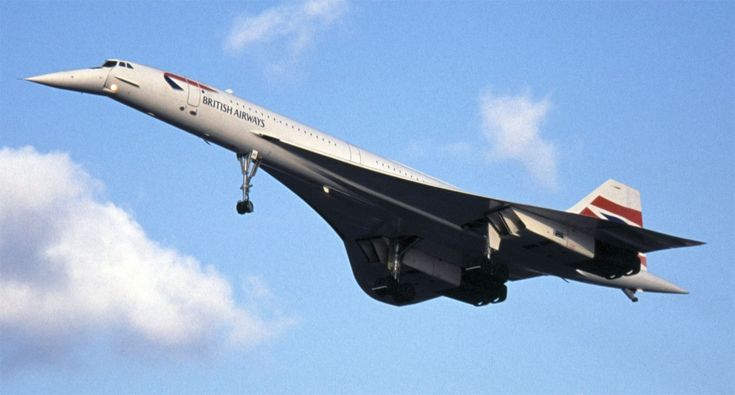
Today… everything seems to be bigger, stronger, and faster. That isn’t true though with a certain passenger airplane. A flight from New York to London now will take around 7 hours and 35 minutes to 8 hours and 10 minutes long. How fast would that flight be in the 1970s on the Concorde? That would take you a cozy three-and-a-half hours. The fastest flight was two hours and fifty-two minutes. It would travel at 1,354 mph. It was more than twice the speed of sound.
I’m not a huge airplane guy but this aircraft fascinated me and I always wanted to ride on one. The nose cone would come down so the pilots could see the runway…it looked like something from a Scifi movie. It would reach Mach 2 between London and New York. I would see pictures of it as a kid or on the news and I thought it was the coolest plane I’d seen. I probably still do. I do remember complaints about the sonic boom.
In November 1962, the British and French governments signed a treaty to jointly develop the Concorde. The Concorde prototype made its maiden flight on March 2, 1969. After some more prototypes, they tested and made modifications, including addressing issues with noise, fuel efficiency, and environmental impact. received its airworthiness certificate in 1975, with the first commercial flights beginning on January 21, 1976, by British Airways and Air France.
There was a plan for a Concorde-type supersonic plane in the US called a Boeing 2707. It would have gone 3 times the speed of sound and held 277 passengers compared to the 100 passengers the Concorde held. It was too expensive to build and was called “the most expensive aircraft never built.” Here is a picture of a 1966 mock-up of the 2707.
Boeing 2707
In 1977, it cost £431 to fly one way onboard Concorde between London and Washington. Adjusted for inflation, that’s about £2,200 ($2,800) in today’s money. However, fare prices gradually went up, and by 1996, a roundtrip across the Atlantic would generally be priced at around $12,500 in today’s money. So it was very expensive. The meals and service were great but it was cramped inside compared to other airplanes at the time. It was also noisy…
All together… two prototypes, two pre-production aircraft, two development aircraft, and 14 production aircraft for commercial service. All of them except the two pre-production builds are preserved in museums.
This all leads us to why the Concorde is in museums now and not in the sky. The price, noise, and it was so expensive to operate. Every hour in the sky had to have 22 hours of maintenance. Also on July 25, 2000, the Concorde crashed. It was shortly after takeoff and 109 people died onboard plus 4 on the ground. That was its only crash. They did go on until 2003 but officially retired the plane that year.
A New York Times writer wrote this about the food served. “What followed the coffee was a breakfast of fresh papaya, guava, pineapple, strawberries and mangoes, croissants and brioche that might have come from a Paris bakery, a pretty good approximation of eggs benedict and a soufflé Gruyère, all washed down with Piper‐Heidsieck Cuvée Diplomatique. The china, of course, was Limoges.”
This video shows the take-off from inside the plane by a passenger.
I have so many songs I want to have on here. I read the original post I did and re-read the comments and took some songs from your suggestions and used them. I haven’t got to all of them…so the others probably will be on the next one. I picked one song and you all picked the rest. Some will be in the next edition that I couldn’t fit in this one.
I hope you are all having a great Sunday.
Jackie Brenston and his Delta Cats – Rocket 88
CB mentioned this one and it should have been on the first one…since this is often said to be the first rock and roll song. It’s only fitting that it was about a car. The recording session happened on March 3, 1951, at Sam Phillips’ Memphis Recording Service in Memphis, Tennessee, which would later become the legendary Sun Studio.
The song was written by Ike Turner and Jackie Brenston. The Delta Cats were actually Ike Turner’s band Turner’s King of Rhythm.
A review from Time Magazine in 1951
Rocket 88 was brash and it was sexy; it took elements of the blues, hammered them with rhythm and attitude and electric guitar, and reimagined black music into something new. If the blues seemed to give voice to old wisdom, this new music seemed full of youthful notions. If the blues was about squeezing cathartic joy out of the bad times, this new music was about letting the good times roll. If the blues was about earthly troubles, the rock that Turner’s crew created seemed to shout that the sky was now the limit.
Commander Cody and His Lost Planet Airmen – Hot Rod Lincoln
The main thing I like about the song is the guitar. It has a slight Chuck Berry feel to it and I like the fills the guitar player throws in. Of course, I like Commander Cody’s (George Frayne) vocal sound as well.
The band signed with Warner Brothers and the label wanted a soft country sound but the band refused to change its raw style.
Hot Rod Lincoln was originally written by Charlie Ryan. It was first recorded and released by Charlie Ryan and The Livingston Brothers in 1955. Commander Cody and His Lost Planet Airmen were a County-Rock group formed at the University of Michigan. Commander Cody is the lead singer and piano player George Frayne. This would be their only top-ten hit. Another song that is well-known by them is Smoke Smoke Smoke.
The Renegades – Cadillac
Fellow blogger HotFox63 mentioned this song when I did a Clash post on Brand New Cadillac so I thought it would be perfect for this. Very cool song that I knew nothing about.
The Renegades were a British rock band formed in Birmingham in 1960. The original lineup consisted of Kim Brown (vocals, guitar), Denys Gibson (guitar), Ian Mallet (bass), and Graham Johnson (drums). Cadillac was released as a single in 1964. The song quickly became a hit in Finland, reaching #1 on the charts. Its success in Finland helped the band gain a substantial following in Scandinavia, and the song’s popularity also spread to other parts of Europe, including Italy.
Rosanne Cash – Black Cadillac
Obbverse mentioned this one. It’s a song from 2005 from an album with the same name. The black Cadillac in the song symbolizes both a funeral car and a connection to her father, who owned a black Cadillac…and about loss, memory, and mourning.
She wrote the album about dealing with the death of her father.
“It certainly crossed my mind that I was opening myself to questions about how much [of the album] was documentary and how much was poetry, I certainly did think about it. But, at the same time, I think that the themes are so universal that it almost doesn’t matter what’s particular to my life. … People can bring their own lives to this subject very easily.”
Beach Boys – 409
Christiansmusicmusings and Halffastcyclingclub both mentioned this one by the Beach Boys. The Beach Boys would be an endless supply of cars and endless summers. This song was written by Brian Wilson, Mike Love, and Gary Usher and was released in 1962.
Thanks to Dave for posting this on his site. Below is the request that we got to write about. “There are many great songs about music, so let’s highlight them. Pick a song you like either about music itself (eg, ‘I love Music’ and so on) or about the life of a musician making music . Or anything else you can think of about music… about music! “
I sometimes go for the B sides or ones that aren’t heard as much. Not this time!
I remember when I was 5-6 years old and listening to this song. The verses I ignored at the time and enjoyed the chorus immensely going around singing it and being told to shut up already by my sister. I guess a six-year-old singing Bye, bye Miss American Pie, Drove my Chevy to the levee but the levee was dry, And them good ole boys were drinking whiskey and rye, Singin’ this’ll be the day that I die, This’ll be the day that I die… would get old but hey…I had good taste anyway (better than my sister).
It’s a song that I don’t get tired of…ever. When I think of it I think of my childhood and also a big dose of pop culture. We all know that the day the music died was pointing to the Buddy Holly, Ritchie Valens, and The Big Bopper plane crash. The rest builds up and between the lines, he sings about a lot of events and artists.
Where do I begin with this one? The song has so many references that it acts as a pop culture index by itself. I have read about college classes just on this song. It has been inspected and dissected since its release. Long after Don McLean leaves this earth…the song will be inspected and dissected again and again.
We do know the song was inspired by Buddy Holly… What does it all mean? While being interviewed in 1991, McLean was asked for probably the 1000th time “What does the song ‘American Pie’ mean to you?,” to which he answered, “It means never having to work again for the rest of my life.” Now that is a great and honest answer by Mclean.
In 2015 he opened up about the song and sold the original lyrics for 1.2 million dollars. This time he answered the question seriously. “It was an indescribable photograph of America that I tried to capture in words and music.” He also said that American Pie was Buddy Holly’s airplane that crashed…it was a made-up name by McLean because the company that owned the plane didn’t name any of them. “People ask me if I left the lyrics open to ambiguity, of course, I did. I wanted to make a whole series of complex statements. The lyrics had to do with the state of society at the time.”
In later years I would buy the single and try to figure out who he was talking about. Some of the lyrics include references to Karl Marx (or Groucho Marx), Vladimir Ilyich Lenin (or John Lennon), the Beatles, Bob Dylan, Buddy Holly, The Byrds; James Dean; Charles Manson; the Rolling Stones; the “widowed bride,” Jackie Kennedy, Jimi Hendrix, the Vietnam War, The Fillmore East, and more.
This song peaked at #1 in the Billboard 100, #1 in Canada, #1 in New Zealand, and #2 in the UK in 1972. If you want more… here is a website PDF that breaks down the song line by line of their interpretation.
I’ll let Don McLean talk about the song: “For some reason, I wanted to write a big song about America and about politics, but I wanted to do it in a different way. As I was fiddling around, I started singing this thing about the Buddy Holly crash, the thing that came out (singing), ‘Long, long time ago, I can still remember how that music used to make me smile.’
I thought, Whoa, what’s that? And then the day the music died, it just came out. And I said, Oh, that is such a great idea. And so that’s all I had. And then I thought, I can’t have another slow song on this record. I’ve got to speed this up. I came up with this chorus, crazy chorus. And then one time about a month later I just woke up and wrote the other five verses. Because I realized what it was, I knew what I had. And basically, all I had to do was speed up the slow verse with the chorus and then slow down the last verse so it was like the first verse, and then tell the story, which was a dream. It is from all these fantasies, all these memories that I made personal. Buddy Holly’s death to me was a personal tragedy. As a child, a 15-year-old, I had no idea that nobody else felt that way much. I mean, I went to school and mentioned it and they said, ‘So what?’ So I carried this yearning and longing, if you will, this weird sadness that would overtake me when I would look at this album, The Buddy Holly Story because that was my last Buddy record before he passed away.”
American Pie
A long long time ago
I can still remember how
That music used to make me smile
And I knew if I had my chance
That I could make those people dance
And maybe they’d be happy for a while
But February made me shiver
With every paper I’d deliver
Bad news on the doorstep
I couldn’t take one more step
I can’t remember if I cried
When I read about his widowed bride
Something touched me deep inside
The day the music died
So
Bye, bye Miss American Pie
Drove my Chevy to the levee but the levee was dry
And them good ole boys were drinking whiskey and rye
Singin’ this’ll be the day that I die
This’ll be the day that I die
Did you write the book of love
And do you have faith in God above
If the Bible tells you so?
Now, do you believe in rock and roll?
Can music save your mortal soul?
And can you teach me how to dance real slow?
Well, I know that you’re in love with him
‘Cause I saw you dancin’ in the gym
You both kicked off your shoes
Man, I dig those rhythm and blues
I was a lonely teenage broncin’ buck
With a pink carnation and a pickup truck
But I knew I was out of luck
The day the music died
I started singin’
Bye, bye Miss American Pie
Drove my Chevy to the levee but the levee was dry
Them good ole boys were drinking whiskey and rye
And singin’ this’ll be the day that I die
This’ll be the day that I die
Now, for ten years we’ve been on our own
And moss grows fat on a rolling stone
But, that’s not how it used to be
When the jester sang for the king and queen
In a coat he borrowed from James Dean
And a voice that came from you and me
Oh, and while the king was looking down
The jester stole his thorny crown
The courtroom was adjourned
No verdict was returned
And while Lennon read a book on Marx
The quartet practiced in the park
And we sang dirges in the dark
The day the music died
We were singin’
Bye, bye Miss American Pie
Drove my Chevy to the levee but the levee was dry
Them good ole boys were drinking whiskey and rye
And singin’ this’ll be the day that I die
This’ll be the day that I die
Helter skelter in a summer swelter
The birds flew off with a fallout shelter
Eight miles high and falling fast
It landed foul on the grass
The players tried for a forward pass
With the jester on the sidelines in a cast
Now the half-time air was sweet perfume
While the sergeants played a marching tune
We all got up to dance
Oh, but we never got the chance
‘Cause the players tried to take the field
The marching band refused to yield
Do you recall what was revealed
The day the music died?
We started singin’
Bye, bye Miss American Pie
Drove my Chevy to the levee but the levee was dry
Them good ole boys were drinking whiskey and rye
And singin’ this’ll be the day that I die
This’ll be the day that I die
Oh, and there we were all in one place
A generation lost in space
With no time left to start again
So come on Jack be nimble, Jack be quick
Jack Flash sat on a candlestick
‘Cause fire is the devil’s only friend
Oh, and as I watched him on the stage
My hands were clenched in fists of rage
No angel born in Hell
Could break that Satan’s spell
And as the flames climbed high into the night
To light the sacrificial rite
I saw Satan laughing with delight
The day the music died
He was singin’
Bye, bye Miss American Pie
Drove my Chevy to the levee but the levee was dry
Them good ole boys were drinking whiskey and rye
Singin’ this’ll be the day that I die
This’ll be the day that I die
I met a girl who sang the blues
And I asked her for some happy news
But she just smiled and turned away
I went down to the sacred store
Where I’d heard the music years before
But the man there said the music wouldn’t play
And in the streets the children screamed
The lovers cried, and the poets dreamed
But not a word was spoken
The church bells all were broken
And the three men I admire most
The Father, Son, and the Holy Ghost
They caught the last train for the coast
The day the music died
And they were singing
Bye, bye Miss American Pie
Drove my Chevy to the levee but the levee was dry
And them good ole boys were drinking whiskey and rye
Singin’ this’ll be the day that I die
This’ll be the day that I die
They were singing
Bye, bye Miss American Pie
Drove my Chevy to the levee but the levee was dry
Them good ole boys were drinking whiskey and rye
Singin’ this’ll be the day that I die
I was talking to a friend of mine who is reading a Gram Parsons book and I learned something from him that I didn’t know about this song. This song is a tragic song about three friends. Linda Ronstadt also appears on this one. The song is credited to Parsons and Harris.
The song is structured as a series of verses recounting the stories of three real individuals, each meeting a tragic end. The first verse of this song is about actor/musician Brandon deWilde. Parsons was friends with deWilde in the sixties and early seventies. He was in films and TV shows such as Shane, The Virginian TV Series, Hawaii Five-O, and many others. He started a music career and Gram Parsons helped him out in the sixties. Some have said no one could sing harmony better with Gram than deWilde excluding Harris.
In 1972 he was in Denver doing a stage production of Butterflies Are Free and he was killed in a camper van that hit a guardrail, truck, and then rolled. He was 30 years old.
The second verse was about Byrds’ extremely gifted guitar player Clarence White. An incredible country guitar player who co-invented with Gene Parsons the B-Bender that Telecasters use. He joined the Byrds around the time that Gram was leaving. He and his brother Roland White were loading equipment in their car and a drunk driver killed Clarence but Roland survived.
The third person was Sid Kaiser, a talent agent and producer in Los Angeles. He died of a heart attack a few days after Clarence White. Gram would pass on a few months after Keiser.
The sessions for “Grievous Angel” took place in 1973, primarily at Wally Heider Studios in Los Angeles. Parsons worked with renowned musicians, including members of Elvis Presley’s TCB Band: James Burton (guitar), Glen D. Hardin (piano), and Ronnie Tutt (drums), among others.
Rock critic Ben Fong-Torres: “Because Gram never lived to see through the details of the album including the order of songs…’Darkness’ was placed at the end of the second side, partly because it made sense, and partly because it could easily be read as a song about Gram himself, in particular, the lines he wrote for Clarence:”
In My Hour of Darkness
In my hour of darkness In my time of need Oh Lord, grant me vision Oh Lord, grant me speed
Once I knew a young man Went driving through the night Miles and miles without a word With just his high beam lights Who’d have ever thought they’d build Such a deadly Denver bend To be so strong, to take so long As it would ’til the end
In my hour of darkness In my time of need Oh Lord, grant me vision Oh Lord, grant me speed
Another young man safely strummed His silver string guitar And he played to people everywhere Some say he was a star But he was just a country boy His simple songs confess And the music he had in him So very few possess
In my hour of darkness In my time of need Oh Lord, grant me vision Oh Lord, grant me speed
Then there was an old man Kind and wise with age And he read me just like a book And he never missed a page And I loved him like my father And I loved him like my friend And I knew his time would shortly come But I did not know just when
In my hour of darkness In my time of need Oh Lord, grant me vision Oh Lord, grant me speed
I believe I first heard this by Eric Clapton in the late seventies when I was a kid. I always liked the song but this version is great as well. It’s the cool rhythm that draws me in. One of the best and most copied rhythms in rock.
In some circles, Otis was known as “the godfather of rhythm and blues.” He was a multi-talented musician, known primarily as a drummer, vibraphonist, pianist, singer, and composer. He led his own band, the Johnny Otis Orchestra, which played a significant role in the development of West Coast rhythm and blues.
He earned that title. He helped in discovering and promoting such musicians as Etta James, Big Mama Thornton, and Jackie Wilson. Otis was a white musician who immersed himself in black music and culture. He was accepted in that community and became an advocate for racial integration and civil rights. Otis was also a popular radio DJ, hosting shows that showcased rhythm and blues music and spreading the word of that genre.
Johnny wrote this song and released it in 1958. It peaked at #1 on the Billboard R&B Charts and #9 on the Billboard 100. It’s one of the most catchy rhythms in rock and roll next to the Bo Diddley rhythm or Who Do You Love…it very well could be called a variation of Bo Diddley.
When he played this live his audience would mimic a dance and clap they had to the song. Some had said that the song was about masturbation…something that Johnny Otis denied until he passed away in 2012 at the age of 90. I think some people spend their lives trying to find something controversial in everything. I guess I’m guilty of it at times.
According to secondhandsongs.com there are 69 versions of this song. Artists that covered the song include Cliff Richard, The Crickets, Sonny Burgess, The Gentrys, The Tremeloes, New Riders of the Purple Sage, Fleetwood Mac, Eric Clapton, George Thorogood, and I’ve heard The Grateful Dead do it live on a few clips I’ve seen.
Willie and the Hand Jive
I know a cat named Way-Out Willie He got a cool little chick named Rockin’ Billie Do you walk and stroll with Susie Q And do that crazy hand jive too?
Papa told Willie “you’ll ruin my home You and that hand jive has got to go” Willie said “papa, don’t put me down Been doin’ that hand jive all over town”
Hand jive, hand jive Hand jive, doin’ that crazy hand jive
Mama, mama, look at uncle Joe, look at him He’s doin’ that hand jive with sister Flo Even gave baby sister a dime, hey, hey Said “do that hand jive one more time”
Well, a doctor and a lawyer and a indian chief They all dig that crazy beat Way-Out Willie gave them all a treat, yeah When he did the hand jive with his feet
Hand jive, hand jive Hand jive, doin’ that crazy hand jive, hey, hey Come on, sugar, yeah!
Well, Willie and Billie got married last fall They had a little Willie Junior and that ain’t all You know that baby got greatness and it’s plain to see, hey, hey Doin’ that hand jive on T.V., come on
Hand jive, hand jive (Why don’t you) hand jive, doin’ that crazy hand jive
High wire fencing on the playground High rise housing all around High rise prices on the high street High time to pull it all down
I’ve heard of this band…Dave posted something before but I never listened to a lot of their songs. CB sent me a link and off I went. The Tom Robinson Band was a British rock band formed in 1976. The band was named after its frontman, Tom Robinson, a singer-songwriter and bassist. Their music was influenced by punk rock and new wave, and they were associated with the punk scene in London during the late 1970s.
Truth is…I could have picked MANY songs but this one talked to me. It’s fairly well known and since I always like to pick a song that would ring a bell for the first song of an artist I never posted before…I picked this one. He did have a top 10 hit in the UK in 1977 with 2-4-6-8 Motorway. More than punk or new wave…he reminds me a lot of Springsteen, Joplin, and Phil Lynott…spitting out words like his life depended on it. You can see, feel, and hear the intensity as he sings. These are the kind of artists that I like… the ones that give you everything they have. Robinson not only gave everything but is a hell of a writer on top of that.
He often addressed political and social issues, including themes of anti-racism, LGBT rights, and other causes. Tom Robinson himself was openly gay in the 1970s, and this was reflected in his music, making him an important figure in that community at the time.
This song was inspired by actual events, particularly the “Battle of Lewisham” in 1977, where anti-fascist protesters clashed with members of the National Front during a march. The song captures the tension and conflict between protesters and police.
This song was on his album Power in the Darkness album released in 1977. Robinson and Roy Butterfield wrote this song. The album peaked at #4 in the UK and #144 on the Billboard Album Charts. One note about the album which I think is brilliant. They included a stencil much like the album cover but with a warning…”This stencil is not meant for spraying on public property!!!”
The song peaked at #33 in the UK in 1978.
Up Against The Wall
Darkhaired dangerous schoolkids Vicious, suspicious sixteen Jet-black blazers at the bus stop Sullen, unhealthy and mean Teenage guerillas on the tarmac Fighting in the middle of the road Supercharged FS1Es on the asphalt The kids are coming in from the cold
Look out, listen can you hear it Panic in the County Hall Look out, listen can you hear it Whitehall, up against a wall Up against the wall…
High wire fencing on the playground High rise housing all around High rise prices on the high street High time to pull it all down White boys kicking in a window Straight girls watching where they gone Never trust a copper in a crime car Just whose side are you on?
Look out, listen can you hear it Panic in the County Hall Look out, listen can you hear it Whitehall, up against a wall Up against the wall… Against the wall
Consternation in Brixton Rioting in Notting Hill Gate Fascists marching on the high street Carving up the welfare state Operator get me the hotline Father can you hear me at all? Telephone kiosk out of order Spraycan writing on the wall
Look out, listen can you hear it Panic in the County Hall Look out, listen can you hear it Whitehall, up against a wall Look out, listen can you hear it Panic in the County Hall Look out, listen can you hear it Whitehall, up against a wall Up against the wall Up against the wall
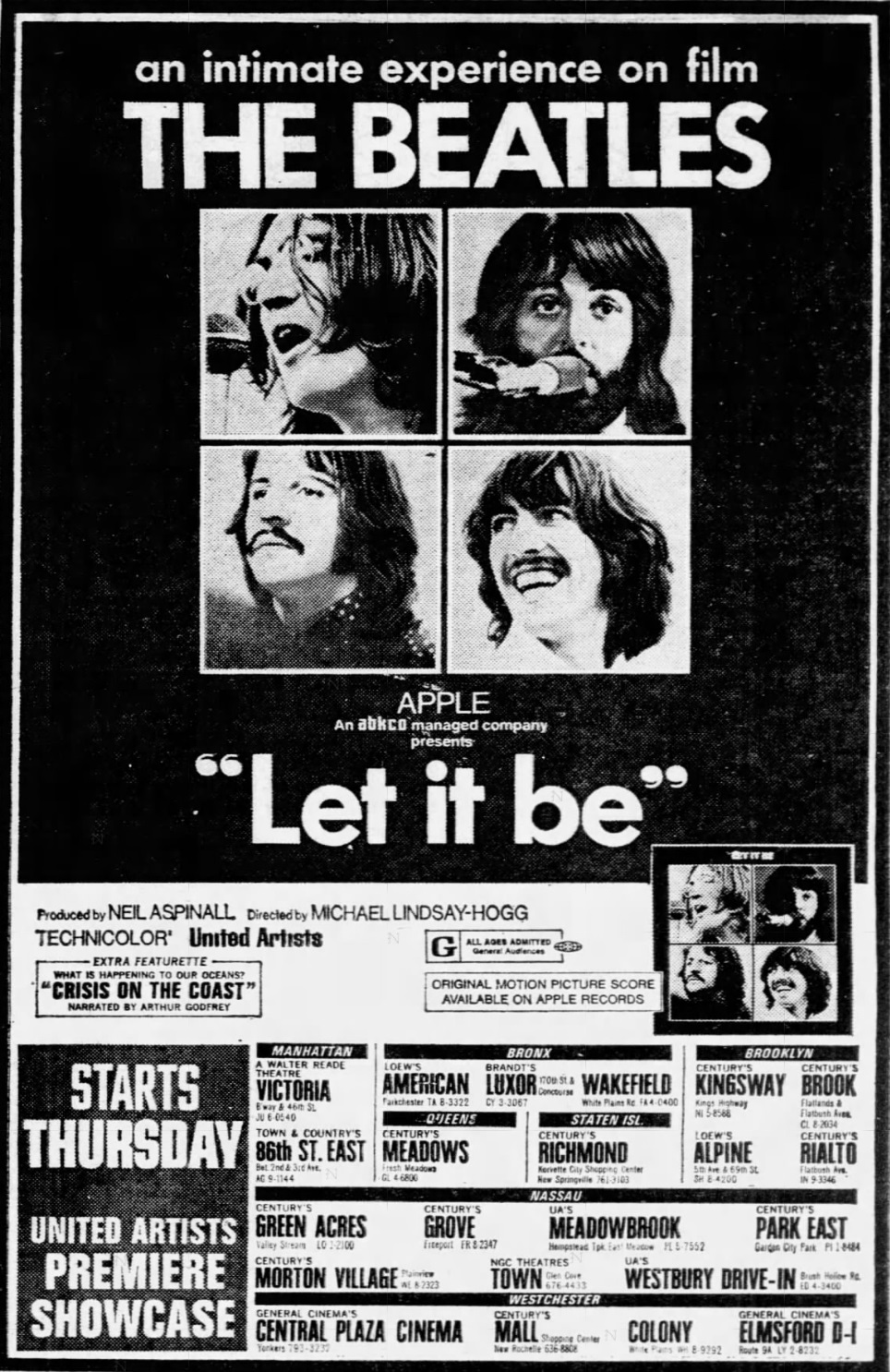
Apple has released a clean version of the Let It Be film. Today they dropped a new video of the song Let It Be. I have had this movie since the 80s but you could only get a terrible quality version. This video shows how clear it will be as in The Get Back film a few years ago.
My only complaint is I wish the Let It Be version would have included George’s distorted solo.
This is the video of the title song they just released today.
When I first saw the Michael Myers character Austin Powers I automatically thought of Peter Asher. I learned about them in the 80s while listening to an oldies channel at where I used to work. Peter and Gordon were Peter Asher and Gordon Waller.
The first song I remember hearing and liking from them was I Go To Pieces. They were part of the British Invasion to come in after The Beatles. Peter Asher had a secret weapon. His sister was going out with Paul McCartney and McCartney was living at the Ashers at this time in a room beside Peters.
McCartney first gave the duo a song called A World Without Love that John Lennon rejected because of the first line he didn’t like (Please lock me away). The record was huge… it peaked at #1 in the US, Canada, New Zealand, and the UK in 1964. Paul wrote “World Without Love,” Nobody I Know,” “I Don’t Want To See You Again,” and “Woman” for the group. Woman though was different than the others.
Paul didn’t want the Lennon/McCartney name on this song. People were saying they were only hits because of who wrote the song. Peter and Gordon were told they were only jumping on the Beatle bandwagon. When this song was released it first got credited to A. Smith and then Bernard Webb. The song was rising up the charts but only after two weeks, it was traced back to Lennon and McCartney’s publishing company Northern Songs so it was exposed.
The song was a hit regardless peaking at #14 on the Billboard 100, #1 in Canada, #28 in the UK, and #7 in New Zealand in 1966. The duo would have other hits not written by McCartney like I Go To Pieces and Lady Godiva. They had a longer career than I first thought. Their success lasted until 1967 but not before they amassed 10 top 40 hits in America alone.
Peter Asher would later become head of A&R for Apple Records in 1968. He signed, produced, and managed James Taylor. After Allen Klein destroyed what was left of Apple Records, Asher packed up and moved to California. He took James Taylor with him and produced him through the seventies. He also picked up another artist and produced her…Linda Rondstadt. He also produced albums by J. D. Souther, Andrew Gold, and Bonnie Raitt. He also worked with Cher and 10,000 Mainiacs.
He became Senior Vice-President, of Sony Music Entertainment in 1995 and held that job until 2002 when he went back to artist management. .
Peter and Gordon reunited in 2005 and played concerts when they had time. They did this up until Gordon’s death in 2009 of a heart attack. Peter would go on to Sirus Radio doing a Beatle show on their Beatles channel called “From Me To You. ”
He also wrote a book on The Beatles called The Beatles From A to Zed. I just read it and it is really good. It’s not a biography on the Beatles or any dirt though…it’s a fun book and he goes through the alphabet and names Beatles songs, places, things, and etc corresponding to whatever letter he is on.
Woman
Woman, do you love me?
Woman, if you need me then
Believe me I need you
To be my woman
Woman, do you love me?
Woman, if you need me then
Believe me I need you
To be my woman
And should you ask me how I’m doing?
What shall I say? Things are okay
But I know that they’re not
And I still may have lost you
Woman, do you love me?
Woman, if you need me then
Believe me I need you
To be my woman
I guess you’ll take your time and tell me
When we’re alone, love will come home
I would give up my world
If you’ll say that my girl is my woman
I’ve got plenty of time (I’ve got plenty of time)
Time just to get through it
Once again you’ll be mine (once again you’ll be mine)
I still think we can do it
And you know how much I love you
Woman, don’t forsake me
Woman, if you take me then
Believe me I’ll take you
To be my woman
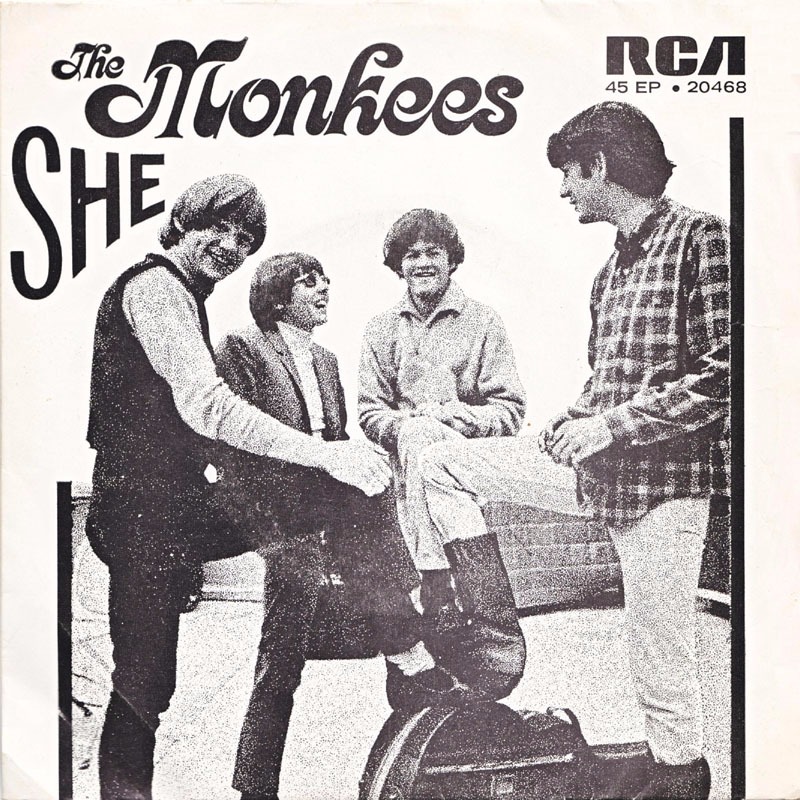
As a 6-year-old I watched the Monkees show in re-runs intently dreaming of one day forming a band and living all together. Most of that dream came true except the all living together…which we probably wouldn’t still like each other if that had happened. This song was popular with me because I remember the TV show and liked this song. The Monkees had their own MTV before MTV…their show would not only play videos of hits but album cuts as this was…and it’s a good one.
This song was written and produced by Tommy Boyce and Bobby Hart with lead vocals by Mickey Dolenz. He had one of the best pop voices in the sixties. “She” was on The Monkees’ second album More of the Monkees. This album was the last one they would not have much control over. The album was released without the band’s knowledge. They discovered it while they were in Cleveland, Ohio on tour. They were not happy at all. This album’s release was the key moment that started Mike Nesmith’s fight for control.
After the album was released Nesmith and the others met with Don Kirshner (the show and music creator). They met him in the Beverly Hills Hotel and Nesmith punched a hole in the wall and told Kirshner and his lawyer…“That could have been your face!” After that Nesmith was told to read his contract so Nesmith did the only thing he could do to break free from the control…he threatened to quit.
Kirshner refused to allow them to play instruments on their records, hiring seasoned studio musicians instead…although Nesmith and Tork did get to play some instruments on their first two albums. After Nesmith threatened to quit…the executives took notice. They dropped Kirshner from The Monkees completely. After he was dismissed from the Monkees…he created the Archies…because he said “I want a band that won’t talk back.”
Four months after More of the Monkees was released…The Monkees released their album Headquarters in May of 1967. This time they were in control and played their own instruments with no Kirshner to be found.
More of the Monkees peaked at #1 on the Billboard 100, in Canada, and The UK in 1967. Their first album with them playing everything…Headquarters peaked at #1 on the Billboard 100, #1 in Canada, and #2 in the UK. It tops some people’s Monkee album lists.
By the way…their next album after Headquarters, again playing most of the instruments themselves Pisces, Aquarius, Capricorn & Jones Ltd. also peaked at #1 on the Billboard 100 in 1967. So for those who are keeping score…that is three #1 albums released in 1967.
Here are quotes about the Rock and Roll Hall of Fame by each member of the Monkees.
Peter Tork: [Wenner] doesn’t care what the rules are and just operates how he sees fit. It is an abuse of power. I don’t know whether the Monkees belong in the Hall of Fame, but it’s pretty clear that we’re not in there because of a personal whim. Jann seems to have taken it harder than everyone else, and now, 40 years later, everybody says, ‘What’s the big deal? Everybody else does it.’ [Uses studio artists or backing bands.] Nobody cares now except him. He feels his moral judgment in 1967 and 1968 is supposed to serve in 2007.
Michael Nesmith:“I can see the HOF (Hall of Fame) is a private enterprise. It seems to operate as a business, and the inductees are there by some action of the owners of the Enterprise. The inductees appear to be chosen at the owner’s pleasure. This seems proper to me. It is their business in any case. It does not seem to me that the HOF carries a public mandate, nor should it be compelled to conform to one.”
Davy Jones:“I’m not as wealthy as some entertainers, but I work hard, and I think the best is yet to come. I know I’m never going to make the Rock and Roll Hall of Fame, but maybe there’s something else for me in show business. I’ve been given a talent—however big or little—that has given me many opportunities. I’ve got to try to use it the best way I can. A lot of people go days without having someone hug them or shake their hand. I get that all the time.”
Micky Dolenz:“As far as the Rock & Roll Hall of Fame I’ve never been one to chase awards or anything like that; it’s never been very important to me. I was very proud to win an Emmy for The Monkees, having come out of television as a kid. When we won the Emmy for best TV show in ’66 or ’67 that was a huge feather in my cap. But I’ve never chased that kind of stuff. I’ve never done a project and thought, ‘What do I do here to win an award?’ Specifically as far as the Rock & Roll Hall of Fame I’ve been very flattered that the fans and people have championed the Monkees. Very flattered and honored that they do. If you know anything about the organization, and I’ve done charity work for the foundation, the Hall of Fame is a private club.”
She
She, she told me that she loved me,
And like a fool I believed her from the start.
She, she said she’d never hurt me,
But then she turned around and broke my heart
Why am I standing here,
Missing her and wishing she were here.
She only did me wrong;
I’m better off alone.
She, she devoured all my sweet love,
Took all I had and then she fed me dirt.
She, she laughed while I was cryin’.
It was such a joke to see the way it hurt.
Why am I standing here,
Missing her and wishing she were here.
She only did me wrong;
I’m better off alone.
And now I know just why she
Keeps me hangin’ ’round.
She needs someone to walk on,
So her feet don’t touch the ground.
But I love her,
I need her,
I want her.
Yea! Yea! Yea! Yea! Yea! Yea! She!
[Instrumental]
Why am I standing here,
Missing her and wishing she were here.
She only did me wrong now;
I’m better off alone.
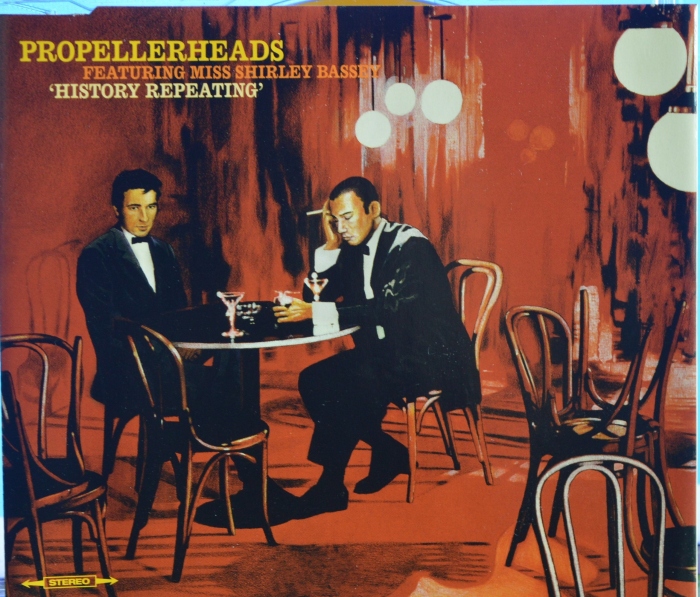
This song just drew me in…not the type of song that would normally do that but it just does. Bassey is a little over the top but she’s not at the same time…she makes the song move. I have to listen whenever I hear it played….hey it swings.
Alex Gifford from Propellerhead wrote this song and he had Shirley Bassey in mind when he wrote it. Shirley Bassey said: “He said he was asleep, and he thought about me, and these words came out. And I asked, what’s a 35-year-old man doing thinking about a grandmother? I couldn’t imagine!”
They sent her a demo and she liked the song but she told them that Tina Turner would probably fit more. They argued that they wrote it for her so she decided to do it. Gifford said: We approached her last summer when our profile was rising and we felt confident enough to try a few mad ideas. The song was written specifically for her and she recognized we weren’t taking the mickey. We couldn’t expect her to come to our hovel in Bath so we booked a London studio, got the champagne and roses in and wore our best shirts.” The song got a lot of help from the movie There’s Something About Mary because it was on the soundtrack.
The song took off and peaked at #19 in the UK, #10 on the Billboard Dance Charts, #32 in New Zealand in 1997. I didn’t find any Canadian chart position. It was on their album Decksandrumsandrockandroll. The album peaked at #6 in the UK, #56 in Canada, #29 in New Zealand, and #100 on the Billboard Album Charts.
The cover of this single was a homage to Nat King Cole.
Bassey making the video
History Repeating
The word is about, there’s something evolving,
Whatever may come, the world keeps revolving…
They say the next big thing is here,
That the revolution’s near,
But to me it seems quite clear
That’s it’s all just a little bit of history repeating.
The newspapers shout a new style is growing,
But it don’t know if it’s coming or going,
There is fashion, there is fad
Some is good, some is bad
And the joke rather sad,
That it’s all just a little bit of History repeating.
And I’ve seen it before
And I’ll see it again
Yes I’ve seen it before
Just little bits of history repeating
Some people don’t dance, if they don’t know who’s singing,
Why ask your head, it’s your hips that are swinging
Life’s for us to enjoy
Woman, man, girl and boy,
Feel the pain, feel the joy
Aside set the little bits of history repeating
Just little bits of history repeating
And I’ve seen it before
And I’l see it again
Yes I’ve seen it before
Just little bits of history repeating
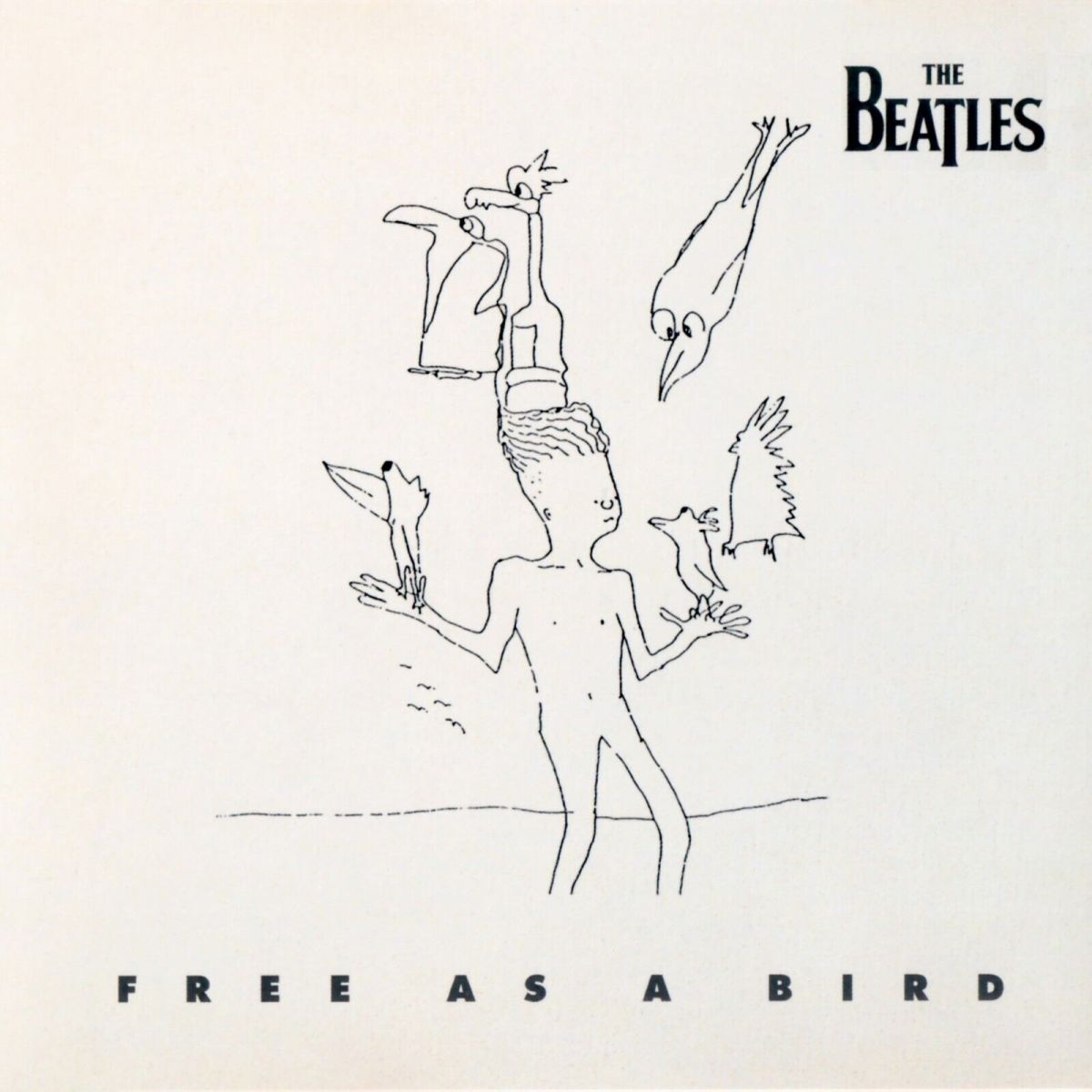
We have come to the end of the line for Max Picks. I decided to draw the line this year. What a year it was for me in music. I was 2 when the Beatles stopped playing music. I never got to experience a new Beatles song and this was it. It’s still a favorite of mine. I’m going to work up a few Missed Max Picks because of the songs I missed. I want to thank ALL of you for the support and your comments on this series. It was a fun one to do. We started this on June 23, 2023!
Beatles – Free As A Bird
In the 1990s I kept reading about the Beatles Anthology coming out and the three surviving Beatles getting back together to release old never heard before music as well as new. They were going to take a John Lennon demo and add something to it. This was beyond exciting for me. I was too young to remember a new Beatles song coming out.
It had an older feel but sounded modern at the same time. George Harrison’s distorted slide guitar playing brought an edge to it. It even had a strange ending like some of their other songs.
I got an early release of the Anthology CD from a friend of mine who worked in a record store and he said…don’t tell anyone. I sat glued to Free As a Bird because for once I was listening to a new Beatles song… I was one year old in 1968 so I missed them when they were originally out. I liked the song and still do. I have talked to Beatles fans who don’t really like it that much but the song has stuck with me. .
Was Free As a Bird the best song in the Beatles catalog? No not even close but just to hear something new was fantastic. The Anthology videos and CDs jump-started their popularity all over again…and it hasn’t stopped since then. I had cousins who were teenagers at the time who were never interested in them until Anthology came out. All I could say to them was…I’ve told you for years.
Also…my favorite music video of all time
Jayhawks – Blue
This song would rank high among my favorite songs. The Jayhawks were an Alt-Country band with a pop/folk sound formed in Minneapolis–Saint Paul in 1985 and played alternative country rock. They have released 10 studio albums and are worth checking out.
The song was on the album Tomorrow the Green Grass.
They recently backed Ray Davies on his albums Americana and Our Country – Americana Act II. Their 2016 album Paging Mr. Proust was produced by Peter Buck of REM.
They combine country, folk, rock, and pop with good harmonies.
Oasis – Wonderwall
This song is awash in sixties influence…which isn’t surprising by Oasis. It caught my attention in the 90s seeing that it had a mod mid-sixties influence.
This song was supposedly about Noel Gallagher’s then-girlfriend Meg Mathews, who is compared with a schoolboy’s wall to which posters of footballers and pop stars are attached. He said: “It’s about my girlfriend. She was out of work, and that, a bit down on her luck, so it’s just saying, ‘Cheer up and f—in get on with it.’” Noel later married and then divorced Meg Mathews.
Noel also said… “The meaning of that song was taken away from me by the media who jumped on it. And how do you tell your Mrs. it’s not about her once she’s read it is? It’s about an imaginary friend who’s going to come and save you from yourself.”
Everclear – Santa Monica
With my big black boots and an old suitcase I do believe I’ll find myself a new place
Those lyrics hit me for some reason as did the song. It was my first introduction to the band and I loved it. This is one of the few new bands at the time that I followed.
Art Alexaskis formed Everclear in Portland, Oregon, in 1991. Portland in the early 90s had a huge music scene. Everclear broke out first with this song nationally. Many bands there didn’t think Everclear deserved it over everyone else…there was a lot of competition there at that time.
Santa Monica is a seaside town in California where Everclear lead singer Art Alexakis grew up. He describes it as Like LA but on the coast.
The song peaked at #1 on the Mainstream Rock Charts, #4 in Canada’s Alternative Charts, #27 in New Zealand, and #40 in the UK in 1996.
It was on the 1995 album Sparkle and Fade. John at 2 Loud 2 Old Music reviewed all of their albums in this article. It’s a great review of their recording career.
Ramones – I Don’t Want To Grow Up
This came off of the Ramones’ last album Adios Amigos. This song is a Tom Waits cover. This song actually made the top 30 for the Ramones. Their reputation grew through the years. They probably got more popular after they broke up than they were when they were together. It’s a shame that many of their songs didn’t hit bigger at the time. Their songs are short, to the point, and usually very catchy. You would have thought radio would have loved them.
The album is really good and it was a good way to go out for them.
BONUS PICK… I’m going to break my own rule about only 5 songs since this is the last Max Picks…and I’m breaking another rule by featuring a band twice in one post. Which band should it be?
Beatles – Real Love
This was the second “new” song by the Beatles to be released in the 1990s and it was on the Anthology 2 album. I liked the song but it didn’t resonate with me like Free As A Bird did. Real Love sounded more like a Lennon solo song with the Beatles backing him…but I love Lennon’s solo output so I did like it but it wasn’t as “Beatle-ly” to me as Free As a Bird.
The song was more fully realized than Free As a Bird and didn’t take as much input by the other three shaping it. This is the only Beatles song where the songwriting credit is John Lennon alone instead of Lennon-McCartney or all four Beatles.
Paul McCartney did his best John Lennon’s imitation to help the lead vocal because the recording of John’s voice was low and spotty in some places. The lead vocal is actually a John and Paul duet.
We are nearing the end of Max Picks…we still have one more year to go.
R.E.M. – What’s The Frequency Kenneth?
This song along with Fall On Me is my favorite REM song.
REM really let loose on their album Monster. I love the tone on Peter Bucks’s guitar and the loud in-your-face production. Peter Buck played the late Kurt Cobain’s Fender Jag-Stang, which he plays upside-down because Cobain was left-handed. This to me…is very close to having a REM and Replacements song all in one.
This song is about an incident that took place on October 4, 1986, when the CBS news anchor Dan Rather was attacked on a New York City sidewalk by a crazed man yelling “Kenneth, what is the frequency.” The man turned out to be William Tager, who was caught after he killed a stagehand outside of the Today Show studios on August 31, 1994. Tager, who was sentenced to 25 years in prison, said he was convinced the media was beaming signals into his head, and he was on a mission to determine their frequencies.
Lead singer Michael Stipe says this is an attack on the media, who overanalyze things they don’t understand.
After this song I lost contact with REM’s music for a long time…the same with The Replacements. Those two bands represented the best of the 80s for me.
Weezer – Buddy Holly
This was released to radio on September 7, 1994, which would have been Buddy Holly’s 58th birthday.
The video for this song hooked me for not only the mention of Buddy Holly, Mary Tyler Moore but also the Happy Days set… Plus its a fun song.
Spike Jonze directed the video. Vintage Happy Days footage was intercut with shots of Weezer performing on the original Arnold’s Drive-In set. Al Molinaro, who played the diner’s owner on the series, made a cameo appearance in the video. One of the most popular clips of 1995, it scored four MTV Video Music Awards, including Breakthrough Video and Best Alternative Music Video, and two Billboard Music Video Awards, among them Alternative/Modern Rock Clip of the Year.
Pretenders – I’ll Stand By You
Chrissie Hynde wrote this with Tom Kelly and Billy Steinberg. “I’ll Stand by You” was released as the second single from the 1994 album Last of the Independents. It’s a beautiful song that has been covered a few times.
For Hynde, working with outside songwriters was different, as she was used to writing on her own. It ended up being a very positive experience that led to more collaborations.
Chrissie had said she was uncomfortable about having such a hit but felt better after Noel Gallagher said “he wished he’d written it.”
Chrissie Hynde:“When I did that song, I thought, Urgh this is s–t. But then I played it for a couple of girls who weren’t in the business and by the end of it they were both in tears. I said, OK, put it out.”
Green Day – When I Come Around
This was my first introduction to Green Day. The more albums they released the more I liked them. American Idiot is probably my favorite album but this song was a good introduction to the band for me.
Billie Joe Armstrong, Mike Dirnt, and Tré Cool are listed as writers of this song. It was not released as a single, which was a strategic move by Green Day’s label Reprise to up the sales of the album.
When performing this song at Woodstock ’94, a fan threw a clump of mud on stage and Billie Joe stuck it in his mouth. This caused the fans to keep throwing mud and started the infamous mud fight. Many fans look back at Woodstock ’94 fondly, calling it “Mudstock ’94” largely because of this incident.
Nirvana – The Man Who Sold the World
This version has a charm about it I like. Cobain did a great job on this.
David Bowie liked this cover saying, “I was simply blown away when I found that Kurt Cobain liked my work, and have always wanted to talk to him about his reasons for covering ‘The Man Who Sold the World’.”
What he didn’t like were the kids that came up after his show and said, ‘It’s cool you’re doing a Nirvana song.’ And I think, ‘F**k you, you little tosser!”
Nirvana performed it on the MTV Unplugged episode a few months before Cobain died…it was released on the MTV Unplugged album in November of 1994.
Again…a big thank you again to Phil Strawn who gave me the necessary information so the story could be told and much of it from a personal view.
One of the performers in The Big D Jamboree was Ronnie Dawson. He was from Dallas Texas and was nicknamed “The Blonde Bomber.” His father Pinkie showed him how to play the mandolin, drums, and bass guitar. Dawson attended Southwestern Bible Institute in Waxahachie but was expelled. After that, he appeared regularly on the Big D Jamboree Radio Show in Dallas in 1958 as Ronnie Dee and the D Men. Dawson was known to be highly energetic on stage. Many thought he got it from Elvis but he said no, he learned it from the dynamic Pentecostal revivals he attended.
The Jack Rhodes song “Action Packed” was Dawson’s first release in 1958 on the Backbeat label. After that came the 1959 Rockin’ Bones and this time it was on the Rockin’ Records label. It was issued under Ronnie’s own name with “The Blond Bomber” added. Though Ronnie toured nationally with Gene Vincent and appeared on TV, his records gained no more than regional airplay.
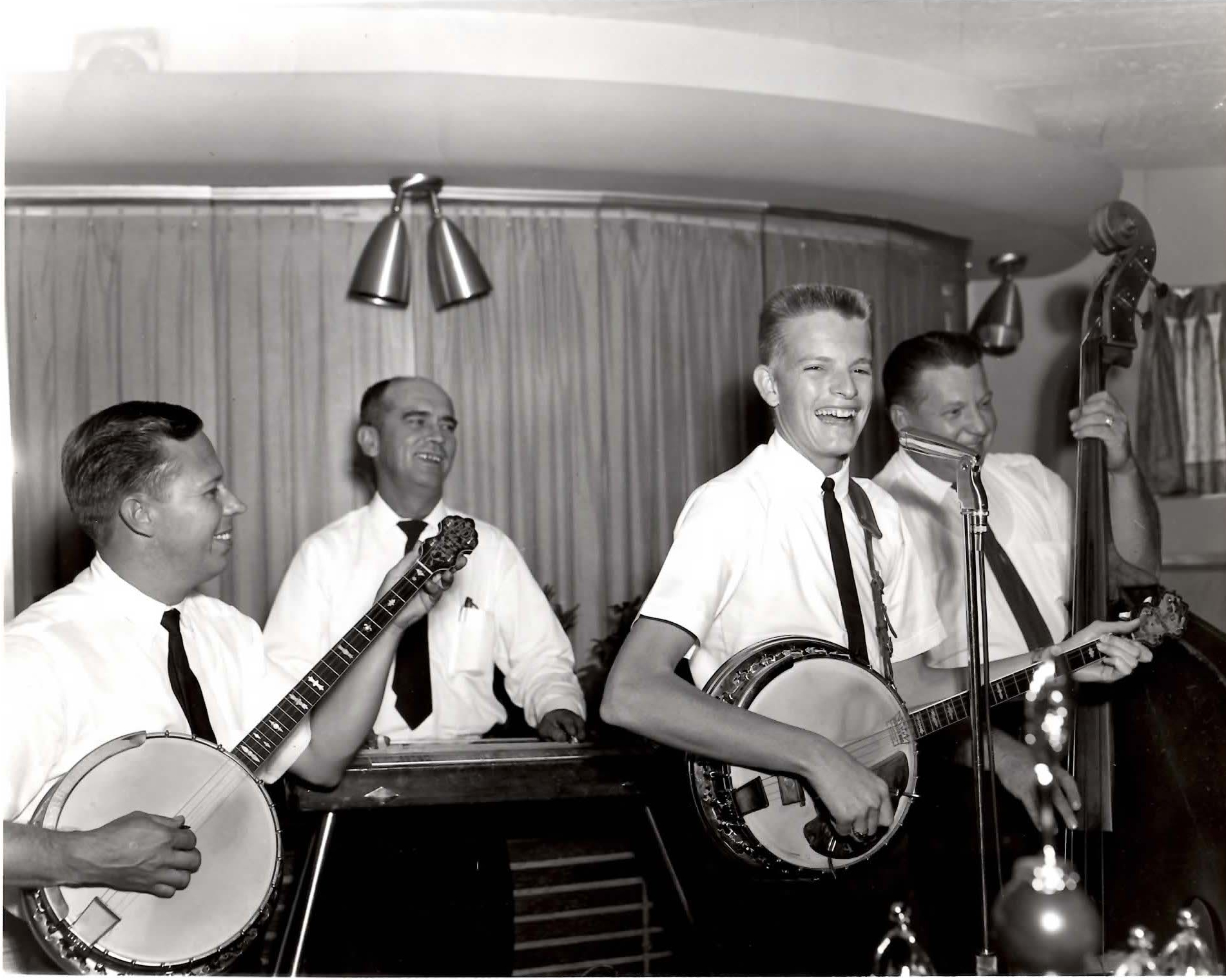
The next 3 paragraphs are from Phil. Back in the early ’60s, there was a club on Mockingbird Lane in Dallas called The Levee. It was a sing-along Dixieland place that was popular at the time. The band was banjos, a doghouse bass and a clarinet and sax. Burgers and pitchers of beer made up the menu. Southern Methodist University was two blocks away, across Highway 75, so most of the clientele were students and couples in their twenties. The famous Egyptian Lounge was next door. It served the best Italian food in Dallas and was a known hangout for the Dallas Mafia and other wise guys.
At a Levee Singers gig at the Adolphus Hotel in Dallas, around 1961 or 62. Phil’s dad is also playing a tenor banjo, as is Ronnie.
Smokey Montgomery, the banjo player for the Light Crust Doughboys, started the Levee with Ed Burnett, who was also his partner in Summit Sounds, a well-known recording studio on Greenville Ave. Ronnie was playing with the Doughboys, so Smokey asked him to play with the banjo band in order to add some youth to the mix. He was a huge hit, and the business tripled. The coeds loved him; their boyfriends hated him. The Levee bounced along all through the 60s until the fad went flat. In the mid-70s, Ronnie was into the progressive country music scene and started a band called The Steel Rail. I don’t remember the drummer, lead, or bass players’ names, but the legendary Tommy Morrell played the pedal steel while Ronnie sang and tore up his Strat.
The old Levee club was empty, so Ronnie leased the space and opened a club called “Aunt Emma’s,” a nod to his favorite aunt. On opening night, Ronnie asked my dad to come down and add some fiddle to the band, which he did. I took my guitar, just in case he needed another player. The place was full up, with a line down past the Egyptian. Around 11 pm, Johnny Paycheck strolled in the door. He had finished a gig in Dallas and heard about Ronnie’s new club, so he stopped by to sit in. Of course, he did all of his hits and played for at least an hour. After that, word got around that Aunt Emma’s was the place to go for the new outlaw country; it out-drew Willie Nelson’s Whiskey River which was a few blocks away on Greenville Ave.
He made several singles in the early sixties with Dick Clark’s Swan Records. He also did some session work. He played on Paul & Paula’s “Hey Paula. After Elvis died rockabilly started to make a comeback.
Dawson’s career experienced periods of obscurity. However, he continued to perform and record music throughout his life, earning a cult following among rockabilly enthusiasts. In the 1980s and 1990s, he experienced a resurgence of interest in his music, performing at festivals and recording new albums.
In the 1980s Ronnie was just beginning. A fifties revival was happening in the UK and he became popular there. This led Dawson to tour Britain for the first time in 1986. He was blown away by the audience’s reception. Dawson sounded purer than most of his peers from the 1950s and he put on a more energetic show.
He recorded new material for No Hit Records, the label of British rockabilly fan Barry Koumis, which was leased in the USA to Crystal Clear Records. No Hit Records also reissued his recordings from the 1950s and early 1960s on a 16-track LP called “Rockin’ Bones” and an extended 2-CD version of which was released by Crystal Clear in 1996.
Ronnie was still performing until the early 2000s when health problems started. He passed away in Dallas on September 30, 2003, at the age of 64.
Phil Strawn:He was a great guy and close friend. After his death from lung cancer, which shocked us all because he never smoked cigarettes but did partake of other smokable plants, his wife, Chris, held a wake at the Sons of Herman Hall in Deep Ellum. You couldn’t stir the musicians and rock stars with a stick; the ballroom on the second floor was packed. I remember Billy Joe Shaver, Ray Wylie Hubbard, Michael Martin Murphy, Robert Earl Keen, and Robert Duvall being there. George Gimarc, a noted Texas music historian, has a treasure trove of photos and reel-to-reel recording tapes of Ronnie dating back to the Big D Jamboree and American Bandstand. He refuses to share or part with any of his collections. I told him, that’s okay, leave a few to me when you bite the dust. There is no need for me to approve of your article; you write great music history, and Ima sure this one will also be stellar.
Ronnie Dawson:“At that point in my life, I was so ready to get out of Dallas. I was really ready to go, and I just blew up when I got over there. … I couldn’t believe it. All these people started embracing me. I was in heaven. I didn’t want to go home.”
He was inducted into the Rockabilly Hall of Fame, in 1998.










 PowerPop... An Eclectic Collection of Pop Culture