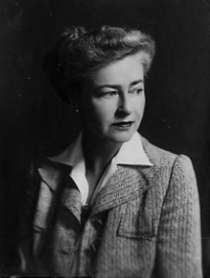
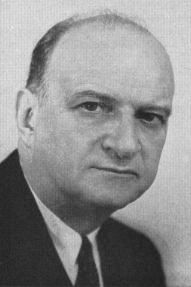
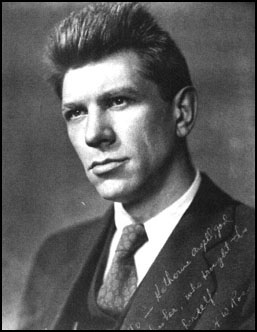
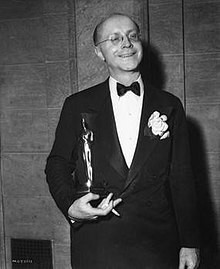
I discovered Neysa McMein through Harpo Marx’s autobiography “Harpo Speaks” and I looked up her artwork. I’ve seen her art plenty of times by reading and collecting 20’s and 30’s magazines but never knew the artist. She was also a member of the famed Algonquin Round Table.
She was born Marjorie Frances McMein in 1888 but after seeing a numerologist she changed her name to Neysa. Neysa had musical, acting, and artistic talent. She had a brief stint as an actress in 1913 but then started to work as an illustrator and portrait painter who studied at The School of The Art Institute of Chicago and Art Students League of New York.
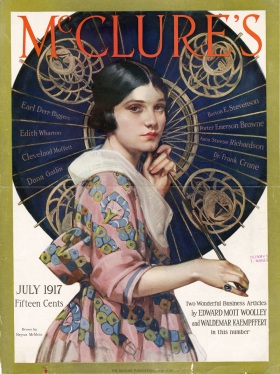
She sold millions of magazines with her covers for McCall’s, Saturday Evening Post, Collier’s, McClure’s, Woman’s Home Companion, Photoplay, Liberty, Associated Sunday Magazine, Ladies World. Ad work: memorably for Palmolive; also Cadillac, Lucky Strike, Adam’s Gum, Coke, Hummingbird Hosiery, Gainsborough Hair Nets, Colgate.
She painted portraits of two sitting presidents, Warren G. Harding, and Herbert Hoover.
She also created the first Betty Crocker and updated her through the years.
During World War I, she traveled across France entertaining military troops with Dorothy Parker and made posters to support the war effort.She was made an honorary non-commissioned officer in the United States Marine Corps for her contributions to the war effort.
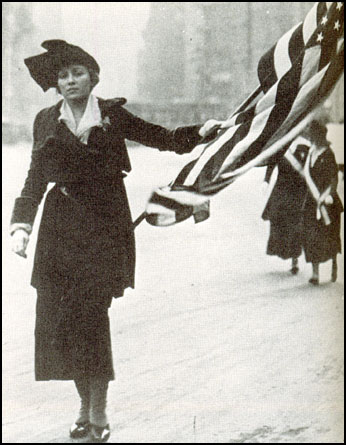
Neysa marching in 1917 in a Suffrage Parade.
Harpo Marx said this about Neysa: The biggest love affair in New York City was between me—along with two dozen other guys—and Neysa McMein. Like me, Neysa was an unliterary, semi-illiterate gate-crasher at the Algonquin. But unlike me, she was beautiful and bursting with talk and talent. A lot of us agreed she was the sexiest gal in town. Everybody agreed she was the best portrait and cover artist of the times.
She taught Harpo Marx how to paint and according to Harpo she only had one failing as a teacher: Neysa had one failing as an art instructor. It was, as far as I knew, her only failing, period. That was her passion for fires. If a siren or bell should sound during one of our late-night seminars, that was the end of the seminar. Neysa was such a fire buff that she once dashed to Penn Station and jumped on a train when she heard there was a four-alarm fire burning in Philadelphia.
The Harpo quotes are from his autobiography “Harpo Speaks.”
Neysa died in 1949 and was inducted into the Society of Illustrators’ Hall of Fame in 1984.
When this show premiered in 1972, there were only 12 paramedics in North America. By 197,7 50% of the US Population was within 10 minutes of a paramedic unit. Former Fire Chief P. Michael Freeman said, “Watching Johnny and Roy in action on Emergency! was a reflection of how early Los Angeles County Fire Department paramedics really worked; it redefined the scope of the fire service. It was truly one of America’s first reality shows.”
Of course, this show wasn’t the purpose of the increase..but the show did influence a generation of kids to be paramedics and firefighters.
Emergency! was created by Jack Webb, Robert A. Cinader, and Harold Jack Bloom. Webb and Cinader also created the police dramas Adam-12 and Dragnet.
Adam-12 Webb and Cinader would go to great lengths to make everything as authentic as possible, sometimes using real case files. Randolph Mantooth explained how series co-creator and producer Robert A. Cinader asked the writing staff to pull all the rescues to be portrayed on the show from a real fire station’s logbook. “He told them it didn’t have to come from just LACoFD or Los Angeles or even California, but it did have to come from someone’s logbook.”
Fire Station “51” was where they were based. At that time, there was no Station 51 in Los Angeles. In 1995, when Universal City needed a fire station, they opened one, and it became 51 in honor of the show.
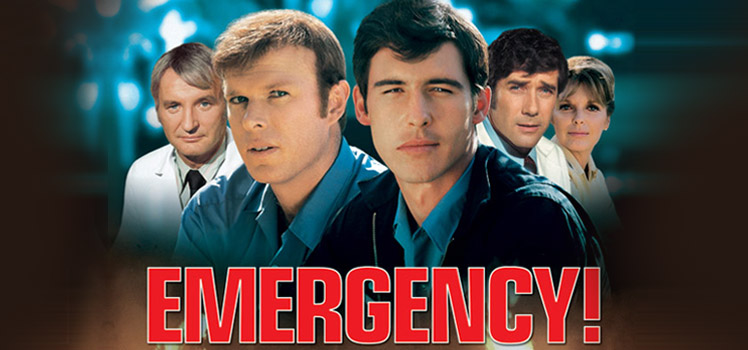
The show followed two firemen-paramedics who would get calls for car wrecks, earthquakes, fires, and any kind of emergency taking place. The show starred Randolph Mantooth as John Roderick “Johnny” Gage and Kevin Tighe as Roy DeSoto. The hospital staff included Julie London as Dixie McCall, Bobby Troup as Dr. Joe Early, and Robert Fuller as Dr. Kelly Brackett.
Adam 12 and Emergency! would sometimes cross over to each other’s shows.
There were a couple blink-and-you ”ll-miss-it crossovers between Emergency! and the motorcycle patrol show CHiPs. Squad 51 can be seen responding in the season one episode “Cry Wolf,” while in season two’s “MAIT Team,” Engine 51 and Squad 51 show up to the scene of a horrific pile-up.
I liked Emergency! as a kid…I prefer Adam-12 because of the 30-minute format compared to the hour-long Emergency! But it’s a good show.
Everyone’s list will be different but classic rock radio has just overplayed these songs. It does not mean I don’t/didn’t like the song to begin with…some I didn’t…some I did… There are more than this but I kept it at 20. No need for me to post youtube links…just turn on a classic rock station and they will come to you.
I’ve tried to keep it one per band or artist. The order of these is not really important…you could pull them out of a hat and be just as well. Sometimes the artists have other hits that you don’t hardly hear but no… they stick to the old reliables.
Radio has ruined these for me. Yes, I’m older and have heard them more than some other people but my 18-year-old son suggested a few of them.
Taking Care of Business – Bachman Turner Overdrive – I liked this song at one time…Now I would pull a hamstring getting up to turn it off.
Hotel California – Eagles – I still like the solos at the end with Joe Walsh and Don Felder but the rest I can do without.
More Than A Feeling – Boston – At one time it was refreshing and different. Radio has worked this song like the town pump.
In The Air Tonight– Phil Collins (just one of many) His songs saturated the market so much in the 80s that is was enough for 3 lifetimes
Jukebox Hero – Foreigner – I know huge Foreigner fans but I’m not one of them. This one I know more than I should.
Feel Like Making Love– Bad Company – Not a well-written song to begin with…it doesn’t get better with more spins. They have good songs…Painted Face, Crazy Circles but they don’t get played as much.
Don’t Stop Believing– Journey – Yes it’s catchy and an eighties theme…it fit at the end of the Sopranos…but I can do without it.
Start Me Up – Rolling Stones – Oh how I loved this song when it was released. I liked it a decade later…until Microsoft used it and since then you would think it was the Stones only song.
Tom Sawyer – Rush – See number 5
The Joker – Steve Miller – Hanspostcard says it all.
Money – Pink Floyd – Great band and they have so many others they could play.
Roundabout – Yes – When I hear the octave on the guitar I spin the dial like a top to another station.
Sweet Home Alabama – Lynyrd Skynyrd – In the south where I live this song is required listening…. over and over and over…They have better songs…
Sharp Dressed Man – ZZ Top – I loved the video, the car, and the girls in the video but the song no more. How about the older ZZ Top?
Bad to the Bone – George Thorogood & the Destroyers – In high school alone I heard it enough.
Old Time Rock and Roll– Bob Seger – The first 5 times I heard it…I liked it…but after the 1, 855th time…no more.
Stairway to Heaven – Led Zeppelin – It’s been played backward, forward and sideways…and the hidden message is the same…a worn out masterpiece.
Barracuda – Heart – This and Magic Man are like the bookends of worn out songs.
Black Water – Dobbie Brothers – I’ve never bought a record by them and they had great musicians in that band…but this is nauseatingly overplayed
You Give Love a Bad Name – Bon Jovi – Not for me the first time or the many times after…in cars, shopping centers, and grocery stores.
To be fair…there are songs that are worn out but yet I still listen to… Who Are You, Baba O’Riley, Hey Jude, Lola, Paint It Black, Brown Eyed Girl…
In the early 70s Television was going through a bout of criticism by the public because of its violence, there was the fear of government intervention and censorship. CBS decided to make the “Homecoming” into a series. Their reasoning was that once this family-oriented series aired and if it proved a failure, they would have shown they tried to put out a show that the public wanted. But the show did not fail. It took a little time, but it found its audience and CBS unexpectedly found itself with a smash hit on its hands.
The Waltons have been made fun of through the years. Other shows such as Good Times took shots at it for being too wholesome. I watched it when it was originally on. I liked the show and my mom thought I loved the show so she got me a Waltons Lunchbox. So while my buddies had the Superfriends, Evel Knievel, and cool lunchboxes I had the Waltons…yea my buddies got some mileage out of that but it was ok…I would love to have that lunchbox now.
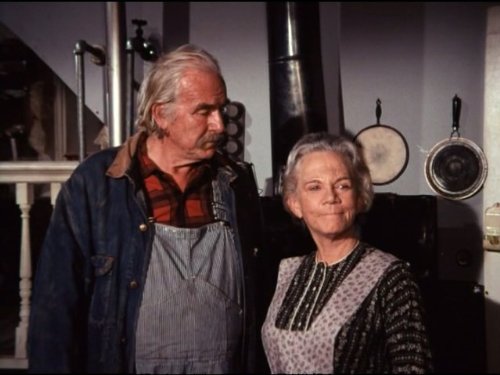
A few years ago I got the complete DVD set and started to watch them again. The series had such quality scripts and the children were believable but the ones who made the show to me were Will Geer and Ellen Corby.
Will Geer’s grandpa was a grandpa everyone would love to have. Johnboy (Richard Thomas) was the lead to the show but when he left it remained solid to me. When Will Geer died the show missed him terribly. Ellen Corby’s grandma could be spicy and cantankerous and she helped balance the show from the sometimes sugary episodes.
The show ages well because it was set in the depression era and that is what you get until later on in the show’s run. The show remained a quality show in part because writer Earl Hamner Jr. remained with the show the nine years it was on. The show ended up winning 11 Emmy Awards…Good Night Johnboy became a catchphrase that you still hear today.
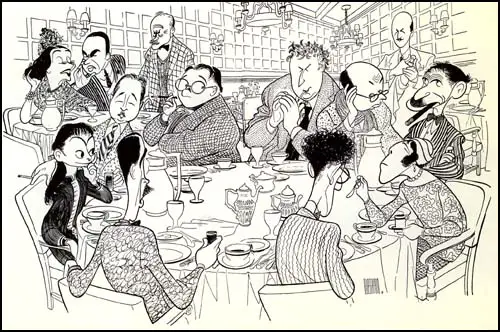
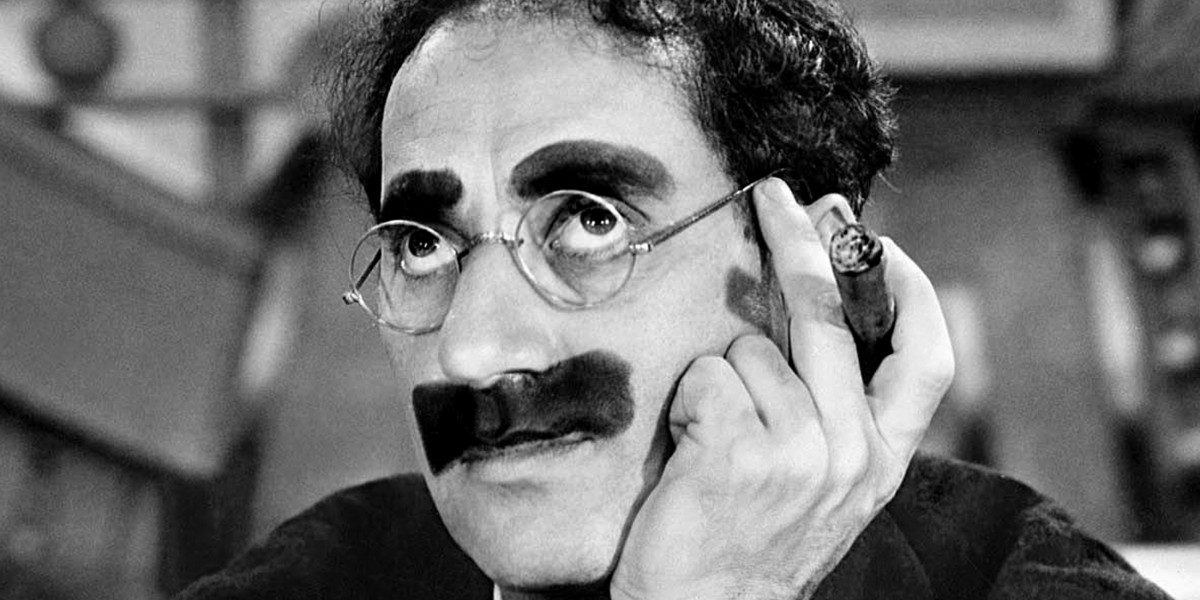
I’ve read about this gathering for years. Writers, Editors, Artists, Humorists, Actors, Actresses and Reporters would gather at the Algonquin Hotel for what has been known as the 10-year lunch. They would hold court jesting with each other about a number of topics. It was not the place for the thin-skinned. Groucho Marx, the king of insults never felt comfortable there. He once said, “The price of admission is a serpent’s tongue and a half-concealed stiletto.”
Round Tabler Edna Ferber, who called them “The Poison Squad,” wrote, “They were actually merciless if they disapproved. I have never encountered a more hard-bitten crew. But if they liked what you had done, they did say so publicly and whole-heartedly.” Their standards were high, their vocabulary fluent, fresh, and very tough. Both casual and sharp-witted, they had incredible integrity about their work and endless ambition. Some of the members of the Round Table came together to work on each other projects. They essentially networked with each other. George Kaufman teamed up with Edna Ferber and Marc Connelly on some of his stage comedies, including Dulcy and The Royal Family. Harold Ross of The New Yorker hired both Dorothy Parker as a book reviewer and Robert Benchley as a drama critic.
By 1925, the Round Table was famous. What had started as a private gathering became public. The country-at-large was now attentive to their every word—people often coming to stare at them during lunch. Some members began to tire of the constant publicity. The time they spent entertaining and being entertained took its toll on several of the Algonquin members. In 1927, the execution of Nicola Sacco and Bartolomeo Vanzetti, whose case had divided the country and the Round Table… seemed to cast a pall over the group’s antics.
Dorothy Parker believed strongly in the pair’s innocence, and upon their deaths, she remarked “I had heard someone say and so I said too, that ridicule is the most effective weapon. Well, now I know that there are things that never have been funny and never will be. And I know that ridicule may be a shield but it is not a weapon.”
As America entered the Depression, the bonds that had held the group together started to break. Many members moved to Hollywood for work or on to other interests. It didn’t officially end…it just faded. All in all, it lasted around 10 years.
The last gathering of the Algonquin Round Table was when Alexander Woollcott died in 1943. They all hadn’t met there in years…but the surviving members went straight there after the funeral for the last time.
Members and Part time-Members who would drop by
George S. Kaufman (1889–1961): Playwright, New York Times drama editor, producer, director, actor. Wrote forty-five plays (twenty-six hits), won two Pulitzer Prizes.
Alexander Woollcott (1887–1943): Drama critic for New York Times and New York World, CBS radio star as the Town Crier, model for the character of Sheridan Whiteside in Kaufman and Hart’s “The Man Who Came to Dinner”.
Beatrice B. Kaufman (1894–1945): Editor, writer, socialite. Married to George.
Harpo Marx (1888–1964): Actor, comedian, musician, card player.
Dorothy Parker (1893–1967): Vanity Fair drama critic, New Yorker critic. Celebrated poet, short-story writer, playwright. Wrote Hollywood screenplays. Champion for social justice.
Franklin P. Adams (1881–1960): Columnist at the New York Tribune, the New York World, and the New York Evening Post; wrote the “Always in Good Humor” and “The Conning Tower” columns. Always known as FPA.
Robert Benchley (1889–1945): Vanity Fair managing editor, Life drama editor, humorist and actor in short films.
Heywood Broun (1888–1939): Sportswriter at New York Tribune, columnist at New York World, author; helped found Newspaper Guild.
Marc Connelly (1890–1980): Newspaperman turned playwright; cowrote plays with George S. Kaufman. Won Pulitzer Prize for play The Green Pastures.
Edna Ferber (1887–1968): Novelist and playwright. Cowrote plays with George S. Kaufman, including Dinner at Eight. Won Pulitzer Prize for her novel So Big. Wrote Show Boat, Saratoga Trunk, Cimarron, and Giant.
Ruth Gordon (): American film, stage, and television actress, as well as a screenwriter and playwright. Later in life starred in Harold and Maude.
:
Margalo Gillmore (1897–1986): Actress and “the baby of the Round Table.” Starred in early Eugene O’Neill plays.
Jane Grant (1892–1972): First female New York Times general assignment reporter; co-founded The New Yorker with husband Harold Ross.
Ruth Hale (1887–1934): Broadway press agent, helped pass Nineteenth Amendment for women’s rights, married Heywood Broun.
Margaret Leech Pulitzer (1894–1974): Magazine short story writer turned serious historian. Married Ralph Pulitzer; after his death, she earned two Pulitzer Prizes in history.
Alice Duer Miller (1874-1942): A writer from the U.S. whose poetry actively influenced political opinion. Her feminist verses made an impact on the suffrage issue.
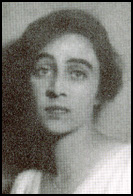
Neysa McMein (1888–1949): Popular magazine cover illustrator, painter. Wrote about party games.
Herman J. Mankiewicz (1897–1953): Press agent, early New Yorker drama critic; cowrote plays with Kaufman, produced Marx Brothers movies. Won an Oscar for co-writing Citizen Kane.
Brock Pemberton (1885–1950): Broadway producer and director. Wrote short stories.
Harold Ross (1892–1951): Founded The New Yorker with his wife, Jane Grant.
Arthur H. Samuels (1888–1938): Editor of Harper’s Bazaar.
Robert E. Sherwood (1896–1955): Vanity Fair drama editor, Life editor, author, playwright who won four Pulitzer Prizes. Won Oscar for writing The Best Years of Our Lives.
Laurence Stallings (1895–1968): Ex-reporter, editorial writer for New York World. Collaborated with Maxwell Anderson on What Price Glory?
Donald Ogden Stewart (1894–1980): Author, playwright, screenwriter. Won Oscar for The Philadelphia Story.
Frank Sullivan (1892–1976): Journalist turned humorist. longtime contributor to The New Yorker.
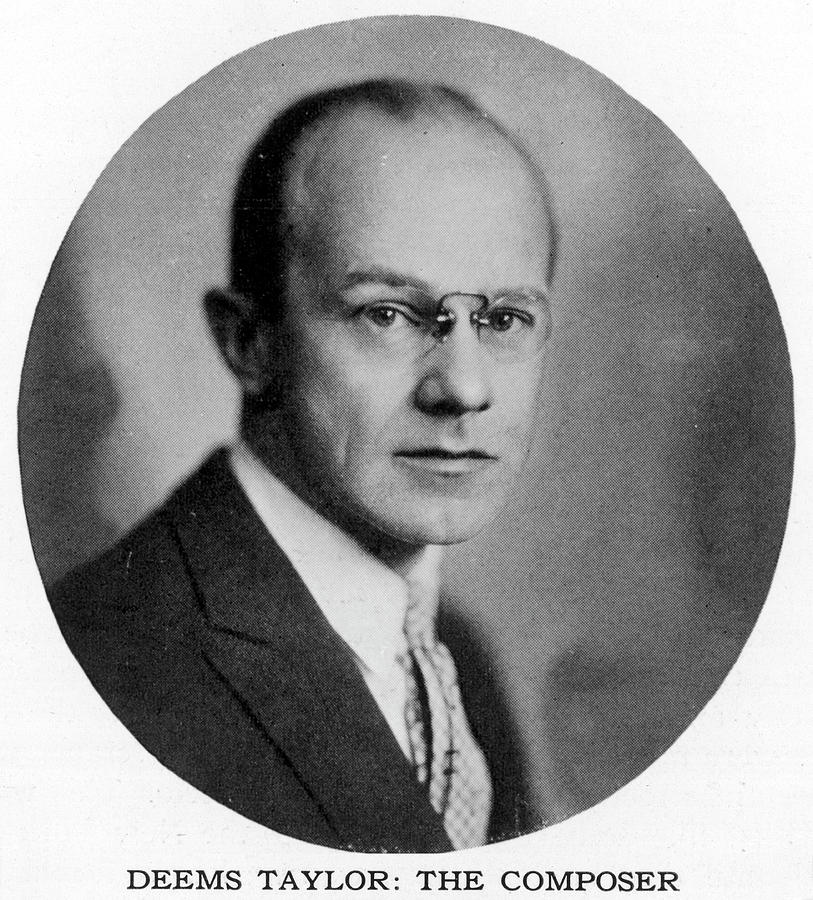
Deems Taylor (1886–1966): Music critic turned populist composer. Wrote libretto for The King’s Henchmen with Edna St. Vincent Millay. Started national concert series. Narrator of Disney classic Fantasia.
John V. A. Weaver (1893–1938): Poet who wrote in street vernacular, literary editor of the Brooklyn Eagle
Peggy Wood (1892–1978): Actress in musical comedies, plays, early TV star.
Describing the Marx Brothers in their Paramount movies is like describing a hurricane and a car wreck combined. The brothers were in vaudeville from the early 1900s to 1924 where they finally made it to Broadway in a play called “She Say’s It Is”. Broadway audiences had never seen anything like them. They literally tore up the stage with being so energetic. The brothers’ names were Julius (Groucho), Adolph (Harpo), Leonard (Chick-o) and Herbert (Zeppo). They had another brother that was not in the act Milton (Gummo).
Groucho was always in a power position in the plays and movies. Harpo and Chico would be there to take him down a few notches. Zeppo would be the straight man. Harpo, of course, would play the harp in a musical part, Chico would play the piano and Groucho would sometimes play the guitar…but the comedy is what everyone came to see.
They started movies around 1928 and again no one had ever seen anything like them on screen. The five movies they made for Paramount were Coconuts, Animal Crackers, Monkey Business, Horse Feathers and Duck Soup. These movies were anarchist chaos. After 1933 they signed a deal with MGM and their movies were tamed down to have more of a storyline and some were good but never matched the wildness of the Paramount movies where they had no respect for authority and lived and talked by their own rules. Groucho would say things that we would love to say in real life but we could never get by with it…he would say them in real life…and get by with it.
They are hard to compare to anyone else. The Three Stooges were not the same comedy whatsoever. In the 1970s college students were drawn to the Marx Brothers and their popularity went up with college students standing in lines around the block to see Animal Crackers in a theater. Their movies are still relevant today and can be enjoyed by every generation…
Harpo is my favorite…who never said a word in any film. He was a master of prop comedy and he could have been a big star in silent comedy. He was also a really good harp player also. He wrote one of the best autobiographies (Harpo Speaks!) I’ve ever read. For fans it’s great and for the average person, it’s an interesting read. The book is what first got me into the Marx Brothers.
Growing up in the seventies watching shows on Saturday morning was a wonderful experience and Sid and Marty Krofft could really be on the strange side….but a great strange.
It has been rumored that the brothers were inspired by hallucination drugs such as LSD and or pot. The brothers have always denied this claim. Shows with titles H.R Pufnstuf and Lidsville (Puff and a Lid) and the lyrics led to accusations.
H.R. Pufnstuf, who’s your friend when things get rough?
H.R. Pufnstuf, can’t do a little, ’cause you can’t do enough!
A quote from them…”We screwed with every kid’s mind,” says Marty Krofft of the loopy shows — such as H.R. Pufnstuf, Lidsville, and Land of the Lost — that he created with brother Sid in the early 1970s. “There’s an edge. Disney doesn’t have an edge.”…from Hollywoodreporter.
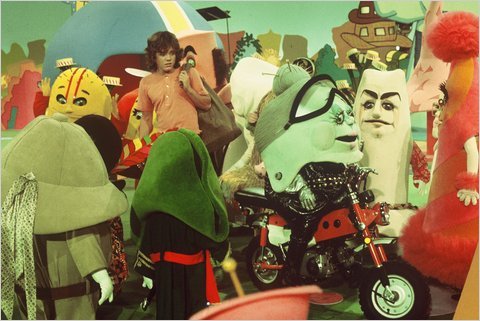
H.R. Pufnstuf – A boy with a talking flute got in a boat and then the skies turned gray and there in the sky was Witchiepoo… He ended up at a place with H.R. Pufnstuf (who has to be seen) his friends and talking trees…terrorized by Witchiepoo…. with a hint of psychedelic threw in…as was most of the shows they created. It’s awesome to know that kids watched this strange show… Give me this over Barney…
Lidsville – A boy falls down a large top hat at an amusement park and ends up in a land of Hats…there was also a genie named Weenie…who played Witchiepoo in HR Pufnstuf. The bad guy was Charles Nelson Reilly the magician and he would go around zapping people. The show is just plain bizarre…for me, it is the strangest show they did….and besides Land of the Lost my favorite.
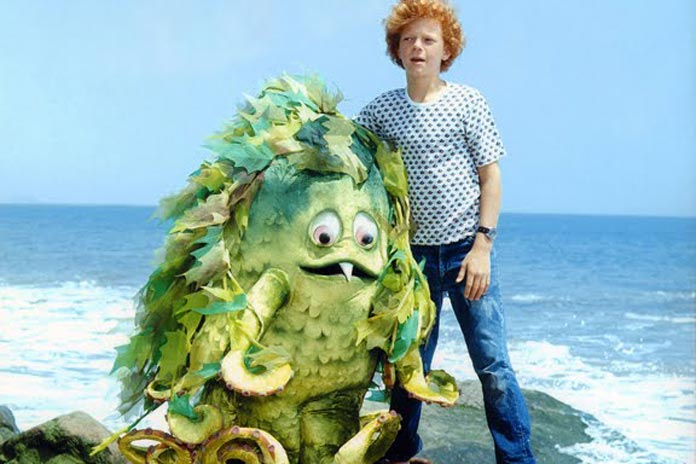
Sigmund and the Sea Monsters – A couple of boys find a friendly sea monster hiding from his mean family of sea monsters. the boys hide Sigmund from everyone else. This is probably the most normal one of them all…It was a popular Saturday morning show.
The Bugaloos – Singing insects…Watch it…Most boys had a crush on the Butterfly Caroline Ellis.
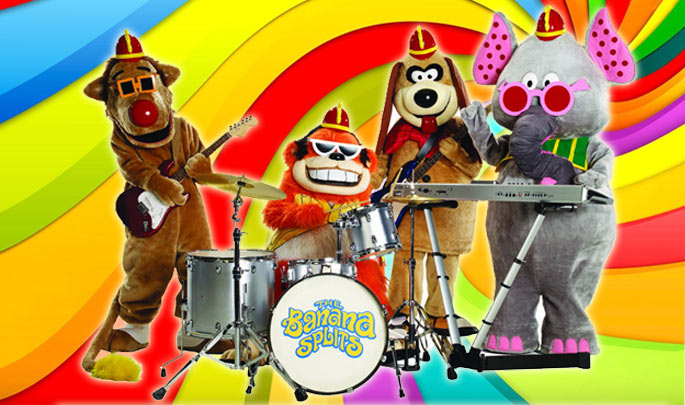
The Banana Splits – An animal rock group with a catchy theme song…which all of the earlier shows had a catchy theme. This show was made by Hanna-Barbera but the costumes were made by the Krofft brothers.
There were other shows like Electra Woman and Dyna Girl, The Space Nuts, The Lost Saucer and Wonder Bug but they were not in the same league as the top group. In these shows, the Krofft brothers moved away from the puppets…which they were known for… and the wild themes.
Sid and Marty Krofft also had an inside theme park in Atlanta
In 1976, a developer asked the Kroffts to develop a very cool amusement park for the new Omni International complex in downtown Atlanta. The World of Sid and Marty Krofft was the world’s first indoor amusement park, but due to poor attendance, it was closed after just six months. The Omni International building that contained the amusement park was renamed the CNN Center when the site was converted to the present CNN headquarters.
The brothers sued McDonald’s and won for ripping off H.R. Pufnstuf and Living Island. I can see a resemblance…
I posted this in 2017 when not many people knew I was here.
The questions:
Why did the professor bring that many books? Why did the Howells bring that much cash on a 3-hour cruise? How many dresses did Ginger pack? How many red/blue/white shirts did Gilligan, Skipper and the Professor own respectively? Why did they let Gilligan participate in getting rescued ploys? The Professor was a Macgyver times 20… He could make anything out of coconut shells, vines, and a spare part off of the SS Minnow…but he couldn’t build a raft or boat?
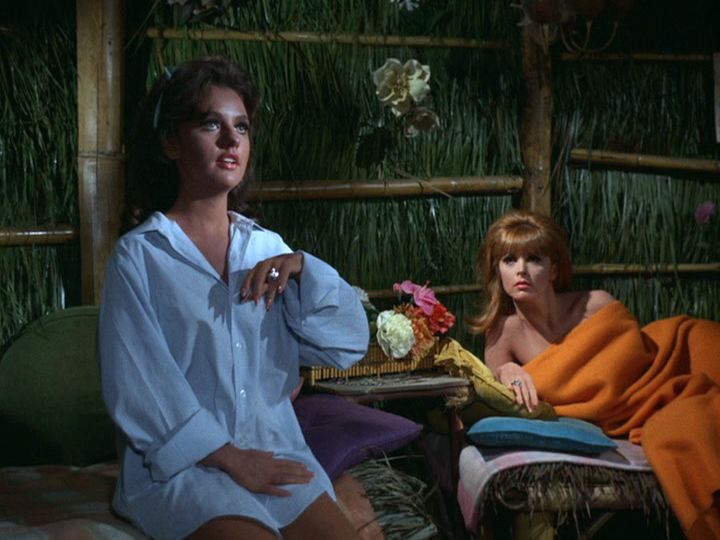
You tend to overlook that and just have fun. The network and critics hated the show. The public liked it and it has never stopped being broadcast because of syndication. Every day after school this was always on and I was always hoping as a kid for them to get off that island. I had no clue it was filmed years before I was watching it. They finally were rescued in some TV movies in the 70s long after the show had gone off the air. When I was a kid I went to a muscular dystrophy telethon and there she was…Dawn Wells standing there and I was 10 years old. She gave me an autographed picture and shook my hand…I didn’t wash that hand for at least a week…until mom made me. Sadly I lost the picture but I will never forget meeting her. She was down to earth and really kind.
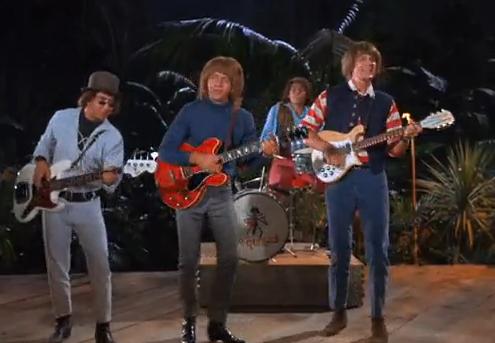
Gilligan’s Island was a fun slapstick comedy show. My favorite episode is the one with The Mosquitos rock band. The Mosquitos were really a group called the Wellingtons… they are the group that sang the theme song to Gilligan’s Island and Davy Crockett.
My son’s 14th birthday party happened a few years ago and we had a projector set up for a giant screen…what did 14-year-old kids want to see in 2014? Gilligan’s Island. One thing I noticed about the color shows…they are very vivid….the color jumps out at you.
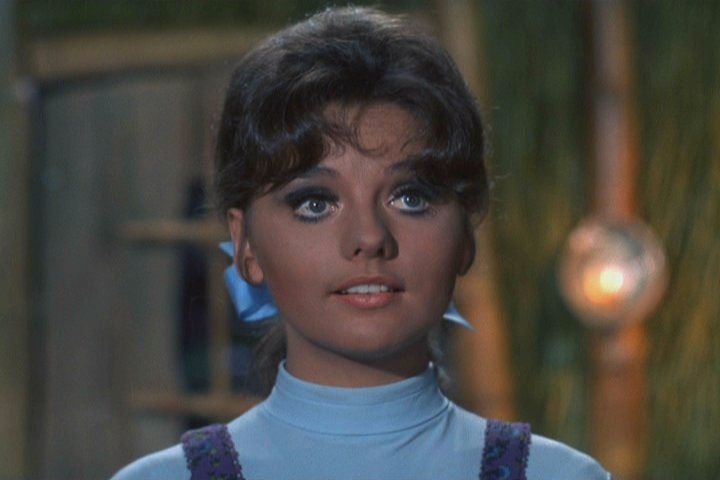
And THE question that gets asked… answer…Mary Ann!
Mary Ann
The Mosquitoes…Bingo, Bango, Bongo, and Irving.. love the glasses that Irving is wearing…in real life…the Wellingtons.
I’ve been music heavy lately and wanted to live up more to the “eclectic” part of the blog’s name.
In first grade…I found the wonderous invention called Play-Doh. I loved making things and the smell of play-doh… I had a friend in school named Kevin…he would eat Play-Doh at times…I didn’t go that far. Kevin would deny eating it but when he smiled the teacher would see yellow, blue, and red all between his teeth… He would also eat crayons…Lost touch with Kevin after second grade when I assigned to a different school in our area which was closer…maybe that was for the best…
Today if I ever walk by Play-Doh I have to pick it up and do something with it. When my son was a kid we would make all sorts of things. I always loved taking the top off of a new one and trying to keep the colors separated…
Kevin where ever you are now…this post is for you.
In the 1930s Noah McVicker created a substance that looked like putty out of flour, water, salt, boric acid, and mineral oil. His family’s soap company — Kutol Products — in Cincinnati, Ohio, marketed his creation as a wallpaper cleaner.
It wasn’t until after World War II that Noah McVicker’s nephew, Joseph McVicker soon realized that Kutol Products’ wallpaper cleaner also could be used as modeling clay. In 1955, he tested the product in Cincinnati-area schools and daycares. The following year, the Woodward & Lothrop Department Store in Washington, DC, began to sell the clay, which McVicker had named Play-Doh. Noah and Joseph McVicker applied for a patent for Play-Doh in 1958, but the United States Patent Office did not officially patent the clay until January 26, 1965.
Captain Kangaroo had a part in the popularity.
When it was just a new company with no advertising budget, Joe McVicker talked his way in to visit Bob Keeshan, better known as Captain Kangaroo. Although the company couldn’t pay the show outright, McVicker offered them two percent of Play-Doh sales for featuring the product once a week. Keeshan loved the compound and began featuring it three times weekly.
Today, Play-Doh is owned by Hasbro that continues to make and sell the product through its Playskool line. In 2003, the Toy Industry Association added Play-Dohto its “Century of Toys List,” which contains the 100 most memorable and creative toys of the last 100 years.
Since its “invention,” over 700 million pounds of Play-Dohhave been sold around the world!
When you see this you probably think of the seventies. More than one person has claimed they created it. I have a friend’s dad who was a graphic artist in the sixties and seventies who claimed he came up with it. This is one of the most iconic images in the world.
50 years ago in Worcester, Massachusetts Harvey Ross Ball, an American graphic artist, and ad man created it to raise the moral of an insurance company… he was paid 45 dollars for less than 10 minutes of work. The State Mutual Life Assurance Company made posters, buttons, and signs to lift the morale of their workers.
Neither Ball nor State Mutual tried to trademark or copyright the design. That was a mistake.
In Europe, In 1972 French journalist Franklin Loufrani became the first person to register the mark for commercial use when he started using it to highlight the rare instances of good news in the newspaper France Soir. He trademarked the smile, dubbed simply “Smiley,” in over 100 countries and launched the Smiley Company by selling smiley T-shirt transfers.
In the early 1970s, brothers Bernard and Murray Spain, owners of two Hallmark card shops in Philadelphia, came across the image in a button shop, noticed that it was incredibly popular, and simply used it.
The brothers knew that Harvey Ball came up with the design in the 1960s but after adding the slogan “Have a Happy Day” to the smile, the Brothers Spain were able to copyright the revised mark in 1971, and immediately began producing their own novelty items. By the end of the year, they had sold more than 50 million buttons and countless other products, turning a profit. Despite their acknowledgment of Harvey’s design, the brothers publicly took credit for icon in 1971 when they appeared on the television show “What’s My Line.”
In 1996, Loufrani’s son Nicolas took over the family business and transformed it into an empire. He formalized the mark with a style guide and further distributed it through global licensing agreements including, perhaps most notably, some of the earliest graphic emoticons. Today, the Smiley Company makes more than $130 million a year and is one of the top 100 licensing companies in the world. The company has taken a simple graphic gesture and transformed it into an enormous business as well as a corporate ideology that places a premium on “positivity.”
Loufrani isn’t convinced that Ball came up with the design…well of course.
In 2001, Charlie Ball tried to reclaim the legacy of his father’s creation from unbridled commercialization by starting the World Smile Foundation, which donates money to grass-roots charitable efforts that otherwise receive little attention or funding.
I remember most of these. Once in a while when I’m in a good mood at work…I will slip some of these in just to see the reactions. I’m in IT so I can get by with it…we are viewed as weird anyway. I never realized how much out of date slang there is out there. This doesn’t even scratch the surface.
Do Me a Solid – do me a favor
To the Max – I still use this one…it contains my name so it fits.
Disco Biscuits – Quaaludes
Cool Beans – Not a side dish but it’s cool
10-4 – good buddy – an understanding
Sweet! – very cool
Psyche – To fake someone out…love this one
Groovy – Everything is cool
Stop dipping in my Kool-Aid – Stop getting into my business
Do Me A Solid – Do me a favor
Catch you on the flip-side – See you later
Far Out – Cool and groovy
Can You Dig It – Do you understand
Wicked – Awesome
The Skinny – The lowdown
Good Night Johnboy – from the Waltons…a form of goodbye
Dy-no-mite! – JJ or Jimmy Walker from Goodtimes…something that is great.
Dream On – Saying something is unrealistic
The Man – Well this one is used today…the authority, corporations, police, government… the boss
Bitch’n – very cool
Gimme Five – This one has totally vanished…I’m updating this one…many do this with kids now…so I see a comeback.
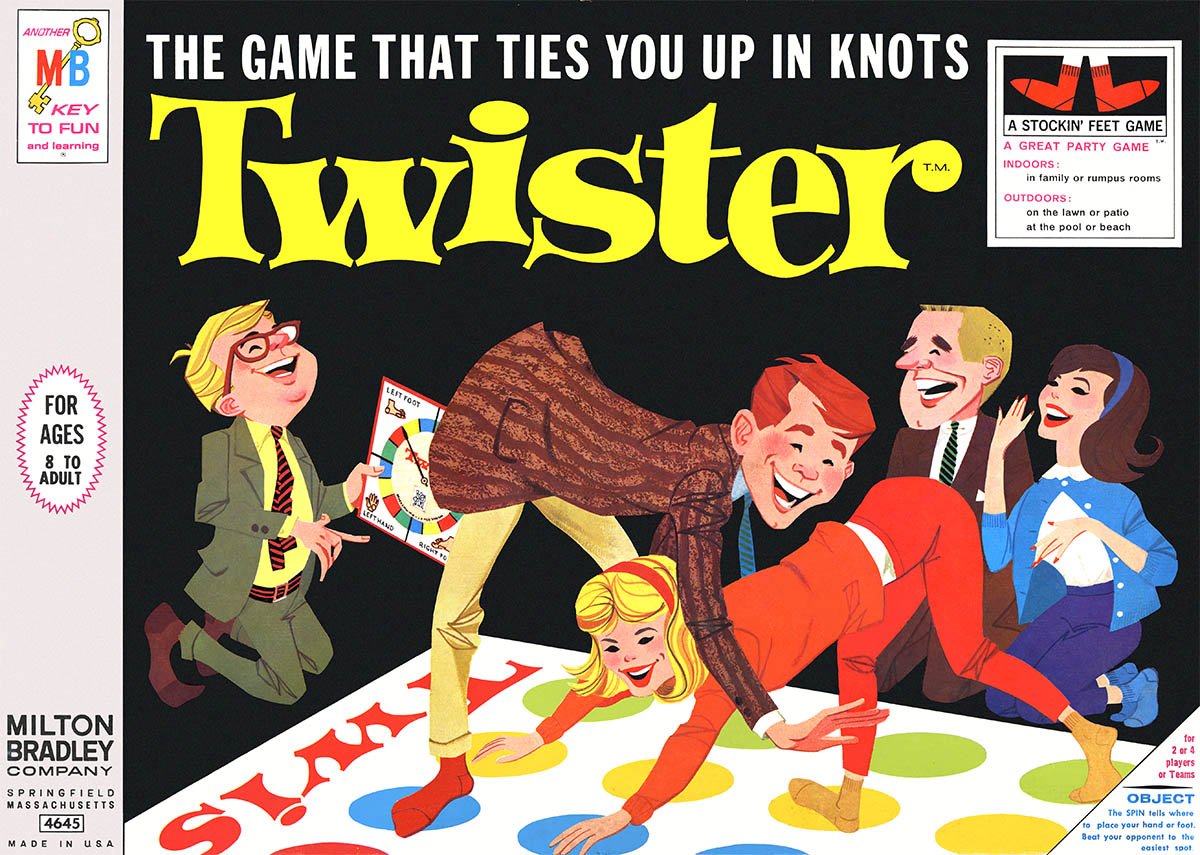
If not for Johnny Carson and Eva Gabor…Twister may not have been part of our culture.
In 1965 Reyn Guyer, of the Reynolds Guyer Agency of Design had been hired to do a promo display for a shoe polish company, and he was tinkering with colored polka dot paper for ideas. He was suddenly hit with inspiration for something much different…a board game where the pieces were people not plastic.
Reyn tested it with office workers who were divided into two teams and the game was called “Pretzel”. He showed it to 3M and they turned the game down.
Reyn took the game to the Milton Bradley Company in Springfield, MA where Mel Taft, the senior vice-president of R & D, chose “Pretzel” as the best of the eight-game ideas. Mel found there was a trademark problem, so he changed the game’s name to Twister, and Milton Bradley began to market Twister in 1966.
Milton Bradley’s competitors started to call the game “SEX IN A BOX” to destroy the game before it was marketed properly.
Milton Bradley discovered that stores were refusing to stock the game so they were going to pull it from the shelves. What they didn’t know was the public relations man they hired had made an arrangement to have the game played on The Tonight Show.
On May 3, 1966, Johnny Carson, the host of the show, was enticed by the “Twister” mat and demonstrated the game along with the beautiful Eva Gabor. That helped the game to say the least. Three million were sold the next year.
Twister was named “The Game of the Year” in 1967.
In 1985 Hasbro acquired the Milton Bradley Company, becoming Twister’s parent company. The Reyn Guyer Creative Group continues to work closely with Hasbro to develop and market new additions to the line of Twister products.
In the mid-seventies, I remember digital watches started to appear around our school. I thought they were really cool. I got one when the price came down. I had a friend named Paul who shunned me a little after I got it. He said he thought they were for only people would couldn’t tell time…no Paul.
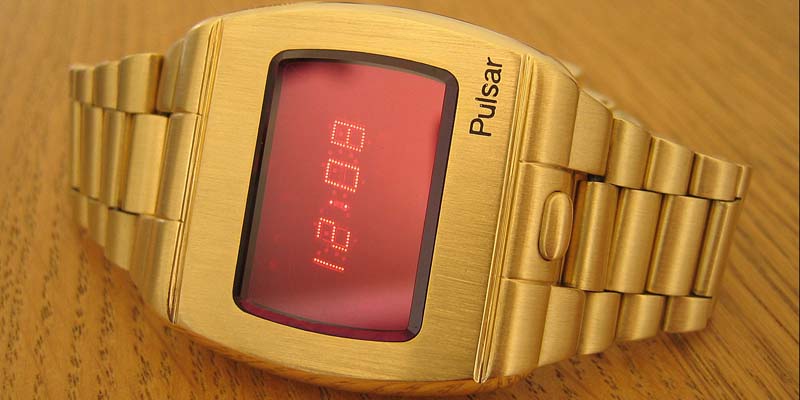
After Roger Moore was seen with one in Live and Let Die it was the thing to have. It’s hard to believe a watch could make me so excited back then with its red numbers that only lit up when you clicked it because it would drain the battery if it stayed lit.
Later on, in the early eighties, I went to the now-defunct Service Merchandise and my mom bought me a digital display wristwatch for my birthday that played the Beatles Hey Jude…midi style. I would give anything for that watch now.
In 1972, Hamilton introduced the world’s first commercial electronic digital wristwatch. It retailed for the pricey sum of $2,100. The Hamilton Pulsar P1 was encased in 18-carat gold.
Roger Moore as the one and only James Bond…his arm anyway. The Pulsar II
The very first liquid crystal display (LCD) watch was introduced in late 1972. These Dynamic Scattering LCDs were power-hungry and unstable, and the market soon moved on to TN Field Effect displays. The Seiko 06LC was one of the first to use the new effect display and it stuck for decades.
Hamilton Pulsar Calculator Watch came in 1976. The buttons were extra small but every model had an improvement.
By 1977 the watches really started to fall in price. Star Wars watches were everywhere and they were a more affordable 16.95. A long way from the 18-carat gold watches.
In 1982 the Seiko TV Watch was released. It allowed owners to view live broadcast TV on a tiny blue/gray LCD screen embedded into the watch face. But…and there is a but…an external tuning device had to be connected to the watch. I don’t remember these but it is incredible they had these in 1982… If you had one of these please comment…were they clear at all?
Now with Apple watches that can tell you your heart rate and bank account…they have come a long way.