Andy Lambros filmed the Oscar Mayer bologna commercial, “The Little Fisherman,” that made him a commercial icon. Andy said: “It only took me an hour to learn the song because my two (older) sisters helped me.”
This Oscar Mayer commercial first aired in 1974 and aired continually for at least a decade after that.
Originally the plan was to recruit dozens of kids who would each sing a little bit of the song. The idea was that it would show how everyone loved Oscar Mayer bologna, and they filmed that for the commercial. The film crew had a few minutes of daylight left and asked if there was anyone there who could sing the song from start to finish. Andy Lambros said he could and did…and that’s why he asks, “How’s that?” at the end. When they were reviewing the footage, they knew that was the commercial they needed to use.
After this happened they started to add ad-libs in more commercials.
My Bologna has a first name,
It’s O-S-C-A-R.
My bologna has a second name,
It’s M-A-Y-E-R.
Oh I love to eat it everyday,
And if you ask me why I’ll say,
Cause’ Oscar Mayer has a way with B-O-L-O-G-N-A!!!!
When WKRP show came on I knew it was different than any show before it. The show had a great cast and every character had their own unique personality. The show started when Andy Travis came in as a program director and change the stale station to Rock and Roll…the writers wisely made it an ensemble show.
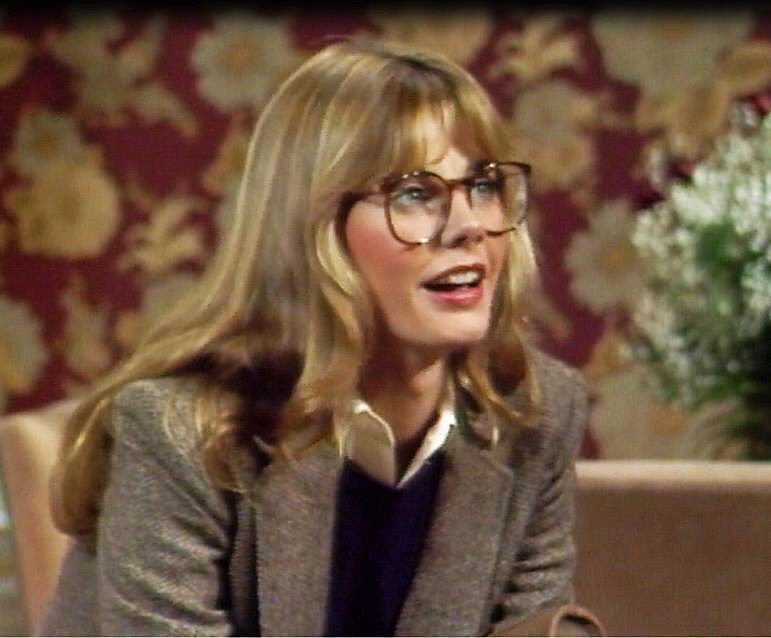
The two women on the show were smart and beautiful…Bailey Quarters and Jennifer Marlowe….played by Jan Smithers and Loni Anderson respectively.
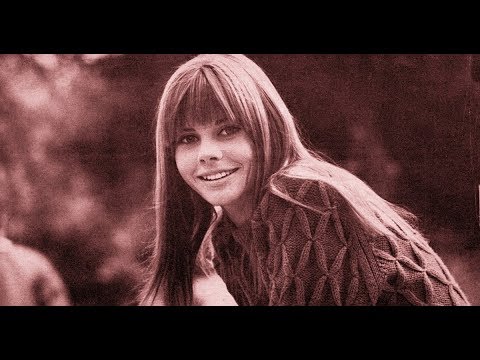
Jan was born Karin Jan Smithers, on July 3, 1949. She grew up in Woodland Hills, California.
Jan was in high school when one of her friends asked her to go for surfing. At the beach, while she was watching her friend surf, she was approached by two men who carried cameras. They told Jan about their search for a Californian girl for one of their articles. She agreed, and that changed her life forever.
Jan was featured on the cover of the March 21, 1966 edition ‘Newsweek. An article in the magazine, titled ‘The Teen-Agers: A Newsweek Survey of What They’re Really Like, profiled Jan and six more teenagers. Jan was the only one of all the teenagers featured in the article who became a famous personality later. The article pushed her modeling career, and her mother helped break into Hollywood.
Jan got her breakthrough role of ‘Bailey Quarters’ in the ‘CBS’ sitcom ‘WKRP in Cincinnati.’ She continued her role for 86 episodes, from 1978 to1982.
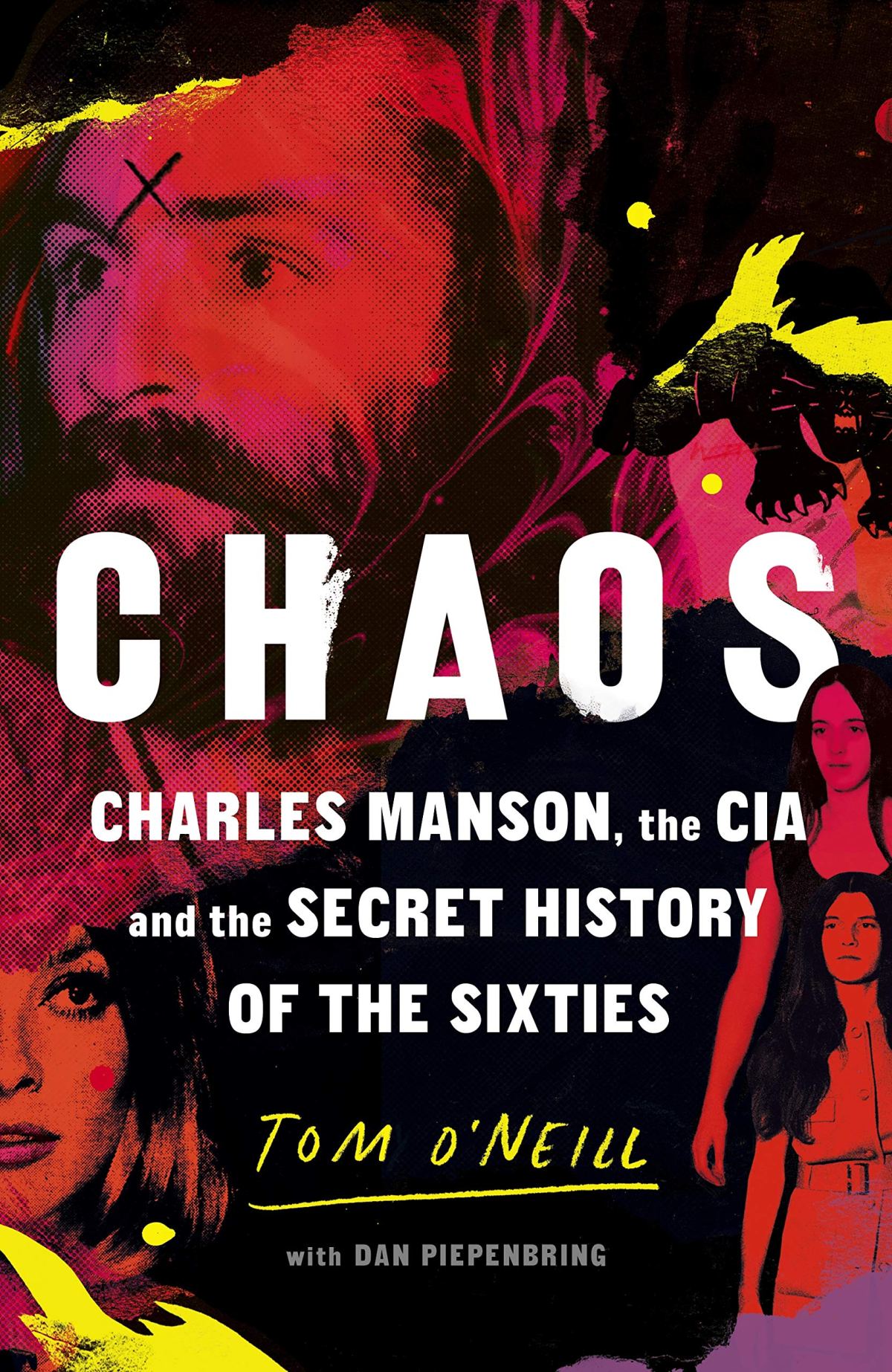
Hanspostcard had mentioned he was reading this book and from what he said I had to give it a try. I got the audible version. The author Tom O’Neill has an interesting quote that sums up the book… “My goal isn’t to say what did happen—it’s to prove that the official story didn’t,”
When I first started to listen I thought it was going to be a big conspiracy book but I was pleasantly surprised…Tom O’Neill took pains not to go there. He is pretty open that he does not find the “answer” to the murders. He also made it clear he wasn’t trying to clear the guilty parties of the Tate/Labianca cases. They are no doubt guilty but it was more about the circumstances around the question of why and the Helter Skelter theory brought by Vincent Bugliosi. Vincent was the prosecutor in the case and later wrote the book Helter Skelter…the best-selling true crime book ever.
Manson’s parole officer Roger Smith was really baffling. Manson was on parole through the late sixties and did everything he could to break his parole…Smith kept giving him a pass, protecting his family, and even fostering one of Manson’s kids. Manson must have had a hell of a rabbit’s foot or someone or some organization was looking out for him. If any of us would get caught with an underage girl, stolen cars, and narcotics… a trip to jail would be in our immediate future…even in the 1960s…much less being on parole at the time.
O’Neill has the documents to back up his claims. Bugliosi did suppress evidence and most around the case are still afraid to talk. Some of the evidence yes could have got by him but not to this extent. Tom interviewed a countless number of people… including tense interviews with Bugliosi.
Tom spent 20 years on this book. The story of him writing the book is just as interesting as the story. He became depressed and obsessed with the murders. In 1999 he was writing an article for Premier Magazine and kept extending the deadlines for the 30th anniversary of the murders. Then in 2009, it was going to be a book published by Penguin for the 40th…that didn’t work out because he kept finding new leads and information. Finally this year the book was released for the 50th anniversary of the murders.
What I found interesting also was the other subjects that were brought up…COINTELPRO, Operation CHAOS, and MKULTRA…goverment secret programs that could come into play. There is much more in the book than I’ve touched on…I would recommend getting it…it makes you think and question.
Anissa was on the popular family comedy called Family Affair. Everyone knew her as Buffy and her TV brother (Johnny Whitaker) as Jody. I watched the show in the early seventies. I watched in syndication and I grew up with Buffy and Jody. It seemed unreal in 1976 when I heard on the news that Anissa Jones had died at the age of 18.
At eight years old, Anissa was cast as Buffy on Family Affair, which aired from 1966 until 1971. Just a year before she started on Family Affair, her parents had gone through a terrible divorce with a long and bitter custody battle for her and her little brother. Sadly, her father died shortly after he was awarded custody in 1973.
She did appear in an Elvis movie “The Trouble With Girls” in 1969. Family Affair was the last thing she did besides a Dick Cavett appearance.
She was known to be a caring person as a kid up until she died. Earl Graham was the janitor on the set of the show Family Affair. When he passed away during the third year of the show, the cast and crew attended his funeral. By the following Monday, everyone was ready to get back to work. To Anissa, it seemed like everyone was acting like Earl had never existed at all. Anissa went to her mother and asked if she could take an ad out in Variety saying goodbye to her good friend. The ad cost Anissa $400.00. Anissa’s Mom said that was one of her proudest moments as a mother.
She was up for the Regan MacNeil part in The Exorcist but the director was fearful that people would think “Buffy” had been possessed. Her friends and family said she was relieved when she was turned down because she wanted to be with her friends in school. She was also invited to try out for “Easy” Steensma in Taxi Driver but turned it down. She was very intelligent but fell into the wrong crowd.
In 1975 she started to skip school and take drugs and ended up in a juvenile hall for a bit. She eventually dropped out of high school working at restaurants until she was 18 in 1976 and she gained control of 180,000 dollars she got from Family Affair. She fell into the drug culture.
On August 28, 1976, Anissa died of a drug overdose. It was ruled an accidental with cocaine, PCP, Seconal, and Quaaludes found in her system. She was at a party with friends. The coroner would call it one of the most massive overdoses he’d ever seen.
I can tell you what I was doing 42 years ago on August 16, 1977… I was ten years old and played some baseball with the neighborhood guys and went inside in the afternoon. I started to watch Gilligans Island and then the news interrupted the show. Elvis Presley had died.
It really didn’t affect me too much at the time until I saw my mom and stepdad react. My mom was somewhat upset and although I knew Elvis’s music, the impact just wasn’t there until the news items started to roll across. I called my dad and talked to him and it bothered him…he had just seen Elvis a few years before in Murfreesboro Tn.
I really wouldn’t know how they felt until December 8, 1980, when Lennon was killed. It’s a shame what happened to Elvis because he was trapped by his fame, manager, and by his own excesses. After reading about him more it seemed like it was inevitable…I just wished it could have been different.
I did Part 1 over a year ago and it was a fun post. I’ve been meaning to do this again. I remembered some of the lyrics suggested by my friends hanspostcard and allthingsthriller on the last post…I have added those to list. Thanks to both of you.
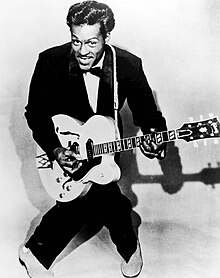
I saw her from the corner when she turned and doubled back, And started walkin toward a coffee colored Cadillac… Chuck Berry
Freedom’s just another word for nothin’ left to lose, And nothin’ ain’t worth nothin’ but it’s free… Janis Joplin/Kris Kristofferson
And I need you more than want you, And I want you for all time… Jimmy Webb
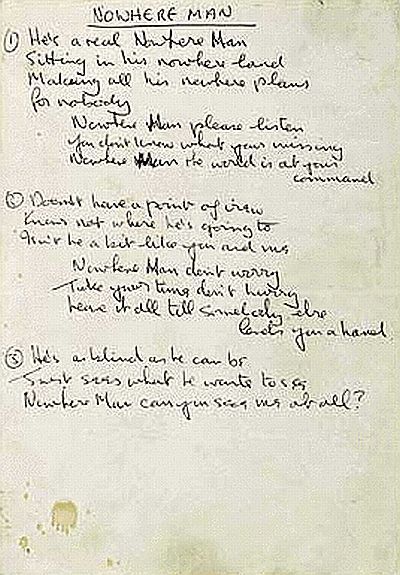
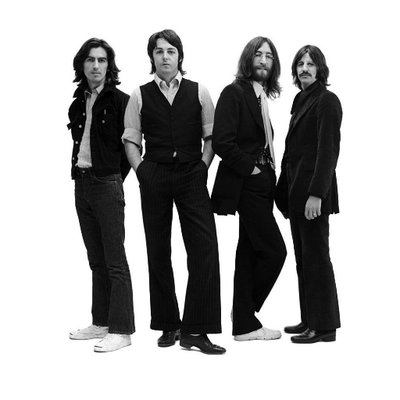
Doesn’t have a point of view / Knows not where he’s going to / Isn’t he a bit like you and me…The Beatles
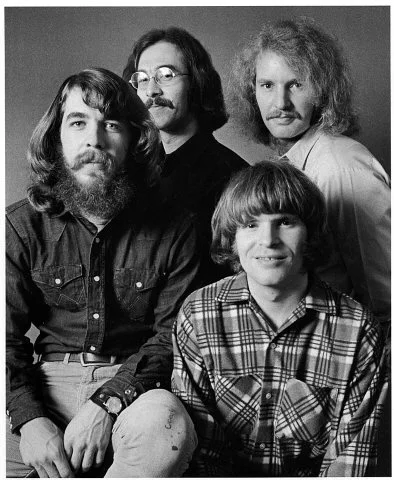
Met myself a coming county welfare line,I was feeling strung out, Hung out on the line…Creedence Clearwater Revival
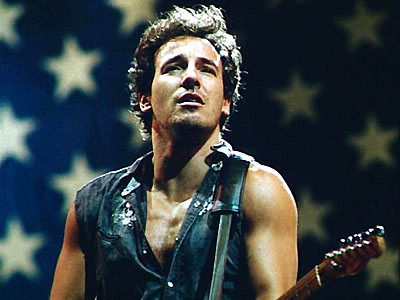
And you’ve got to learn to live with what you can’t rise above…Bruce Springsteen
He’d end up blowing all his wages for the week / All for a cuddle and a peck on the cheek…Kinks
Well it’s too late, tonight, To drag the past out into the light, We’re one, but we’re not the same, We get to carry each other, Carry each other…U2
You can blow out a candle but you can’t blow out a fire…Peter Gabriel
Living is easy with eyes closed,misunderstanding all you see…The Beatles
Where you drink champagne and it tastes just like cherry cola, C-O-L-A Cola…Kinks
It was gravity which pulled us down and destiny which broke us apart…Bob Dylan
A drunkard’s dream if I ever did see one… The Band
And the sign said, The words of the prophets, are written on the subway walls, and tenement halls… Simon and Garfunkel
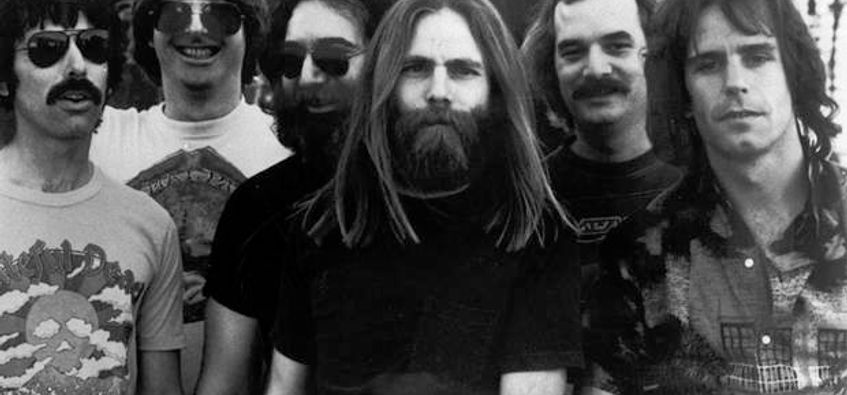
I lit up from Reno, I was trailed by twenty hounds, Didn’t get to sleep that night Till the morning came around…Grateful Dead
When I said that I was lying, I might have been lying…Elvis Costello
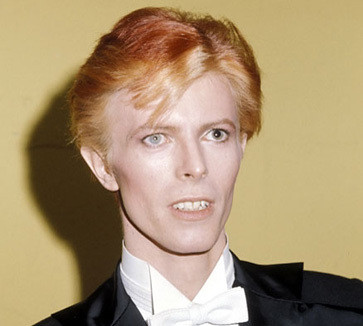
Though nothing will keep us together/We can be heroes/Just for one day…David Bowie
Lose your dreams and you. Will lose your mind…Rolling Stones
It’s a town full of losers, I’m pulling out of here to win…Bruce Springsteen
The motor cooled down, the heat went down, and that’s when I heard that highway sound…Chuck Berry
We were the first band to vomit at the bar, and find the distance to the stage too far…The Who
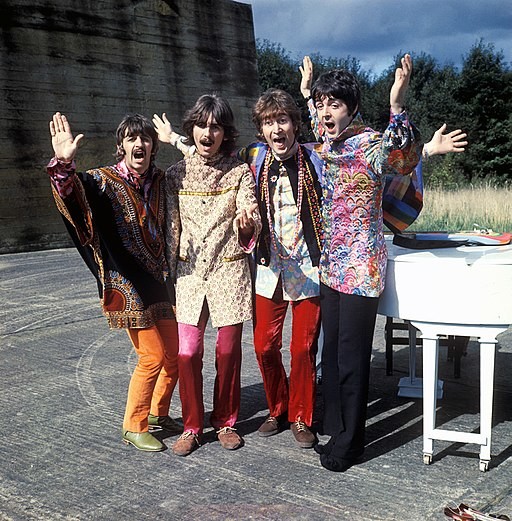
It was the decade of personalized T-Shirts. When I was 12 my mom took me to a T-Shirt store at the mall to get the iron-on transfer below put on a shirt. I picked it from different pics they had…It was my favorite shirt until it started to peel and the Beatles were no longer visible.
The origins of the t-shirt date back to the late 19th century, when laborers would cut their jumpsuits in half to keep cool in warmer months during the year. The first manufactured t-shirt was invented between the Mexican-American War in 1898, and 1913 when the U.S. Navy began issuing them as standard undershirts.
In 1950, Marlon Brando wore a white t-shirt as Stanley Kowalski in A Streetcar Named Desire, only to be followed by James Dean in 1955’s Rebel Without a Cause. Thanks to these two gentlemen, the popularity of the t-shirt as a stand-alone shirt became standard.
In the seventies, I remember seeing personalized T-Shirts everywhere. The punk movement popularized it also. Below are some of the fun ones.
I’m With Stupid, Keep On Trucking, and I’m a Pepper were quite popular…
Drug T-Shirts were popular…I’ve seen pictures of Keith Moon wearing the Rorer 714 shirt.
This wraps up the Mash posts…This is my least favorite period of Mash but I’m not knocking it. It was still better than some other shows at the time. Not many shows can go on this long without some lag. The episodes were hit and miss. The show had to grow up and the characters had to change to continue this long. Mash was an ensemble-based show but now more than ever the focus was on Hawkeye than the rest of the cast.
The biggest change was the atmosphere compared to the beginning. The desperate feeling from being 3 miles from the frontline seems to have disappeared. The characters seem comfortable…maybe too comfortable being there. The dirt of the earlier episodes is washed clean now.
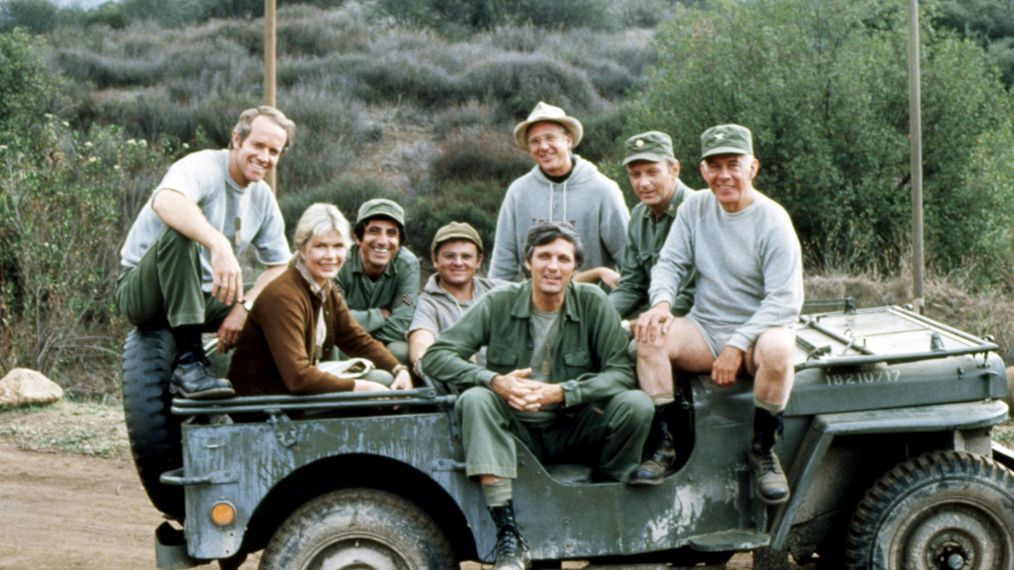
Characters from the from years 9-11.
Benjamin Franklin “Hawkeye” Pierce – Alan Alda – This is a period when a friend of mine called Alan Alda a Chatty Cathy doll. Pull the string and the puns would come out over and over. Hawkeye goes from a wisecracking skirt chaser to a sensitive person in these years. You see Hawkeye go through a mental breakdown in the last episode.
Captain B.J. Hunnicutt – Mike Farrell – BJ stays faithful to his wife and is known to be a practical joker. Like the other characters, we get to know BJ more in these seasons. Mash was really good at fleshing out the characters.
Major Charles Emerson Winchester III – David Ogden Stiers – By the end Charles was bearable. Winchester is often adversarial with Hawkeye and B.J. but joins forces with them if it is justified. He has a dry sense of humor and enjoys practical jokes as well as the occasional prank to get revenge on his bunkmates for something they did or for his own amusement.
Colonel Sherman T Potter – Henry Morgan – Sherman Potter became the father figure of the camp. He was their unquestionable leader. Henry Morgan did a great job with the role.
Major Margaret “Hot Lips” Houlihan – Loretta Swit – Of all the characters Margaret goes through the biggest change. She is now one of the gang and even defiant at authority at times. She is someone by now that you would love to know. She is still tough but far from the by the book person she was at one time.
Francis John Patrick Mulcahy – William Christopher – Mulcahy understands that many of his “flock” are non-religious or have other faiths, and does not overly preach at them. Rather than lecturing at people, he seeks to teach by example, or by helping someone see the error of their ways
Maxwell Klinger – Jamie Farr – Corporal Klinger who once tried to eat a jeep bolt by bolt just to get out of the army now seems happy to serve. When he took over Radar’s job he seemed quite content.
Stand out Episodes
Dreams – After long hours operating the episode gets into the subconscious of the 4077. Each cast member is shown dreaming.
Goodbye, Farewell and Amen – The last episode of Mash. The show was so strongly anticipated that commercial blocks were sold higher than for the Superbowl that year… from Wiki… It still stands as the most-watched finale of any television series, as well as the most-watched episode
Klinger: Rosie, I need a favor. Rosie: Five dollars. Klinger: I just wanna talk. Rosie: OK, three dollars.
BJ: Do you know how to make a cow say “ah”? Hawkeye: Not without getting emotionally involved.
PA System Announcer: Ladies and gentlemen, five minutes ago, at 10:01 this morning, the truce was signed in Panmunjon. The hostilities will end twelve hours from now at ten o’clock. THE WAR IS OVER!
Hawkeye: Look, I know how tough it is for you to say goodbye, so I’ll say it. Maybe you’re right. Maybe we will see each other again. But just in case we don’t, I want you to know how much you’ve meant to me. I’ll never be able to shake you. Whenever I see a pair of big feet or a cheesy mustache, I’ll think of you. B. J.: Whenever I smell month-old socks, I’ll think of you. Hawkeye: Or the next time somebody nails my shoe to the floor… B. J.: Or when somebody gives me a martini that tastes like lighter fluid. Hawkeye: I’ll miss you. B. J.: I’ll miss you, a lot. I can’t imagine what this place would’ve been like if I hadn’t found you here. [The two men hug, then Hawkeye boards the helicopter while B. J. mounts his motorcycle, where he shouts over the helicopter] I’ll see you back in the States—I promise! But just in case, I left you a note! Hawkeye: What?![B. J. rides off. Hawkeye gives the pilot the thumbs-up to take off. As the helicopter ascends, Hawkeye looks down and smiles as he sees a message spelled in stones: GOODBYE]
There are some great episodes during the middle run of Mash. We see Henry’s replacement in Colonel Sherman T Potter. He led the 4077 but let everyone be themselves. Potter was unquestionably a better leader than Henry was but I still missed Henry. We also see Frank Burns leave and Margaret change.
We see Trapper leave and BJ Hunnicutt take his place as Hawkeye’s friend and fellow Frank Burns tormentor. BJ was faithful to his wife unlike Trapper and was a little more level headed.
Frank Burns leaving left a hole in the show. I will admit sometimes the writers would go too far with Frank but he united Hawkeye and BJ. After Frank goes crazy attacking different women (off-camera) in Tokyo (thinking they are Margaret) he gets transferred to his hometown and promoted much to Hawkeye and BJ’s dismay.
His replacement is Charles Winchester III and he is a good foil for the show but balances out because he is such a good surgeon. It’s easy to dislike Charles but he is not Frank.
We also say goodbye to Radar in the 8th season.
Characters from the from years 4-8.
Benjamin Franklin “Hawkeye” Pierce – Alan Alda – Hawkeye was funny as always but a bit more serious in these years. After the 4th season
Captain B.J. Hunnicutt – Mike Farrell – BJ was a good partner with Hawkeye but in other ways opposite of Trapper John. BJ was faithful to his wife Peg in Mill Valley. He was more level headed than Trapper or Hawkeye.
Major Charles Emerson Winchester III – David Ogden Stiers – The snobby surgeon who was called into duty because he was owed money by a higher ranking officer so he was sent to the 4077. Charles replaced Frank and had a few unlikeable qualities but unlike Frank, he was a great surgeon, was intelligent, and could be kind at times.
Colonel Sherman T Potter – Henry Morgan – Sherman Potter was real Army but still had his fun side. He was a much better leader than Henry and took control of the 4077 but let everyone be themselves.
Major Frank Burns – Larry Linville – I love how they wrote for Frank’s character. Many times writers will soften the “bad” guys up but Frank stayed his annoying whiny self until he left the show in the 6th season. Frank starts going insane when Margaret gets engaged to Donald Penobscot.
Major Margaret “Hot Lips” Houlihan – Loretta Swit – When Margaret got engaged to Donald Penobscot and left Frank… The character started to change. She became a little more fun-loving and went with the flow of the camp much more. She respected Colonel Potter much more so than Blake and she was a little more understanding now.
Corporal Walter “Radar”O’Reilly – Gary Burghoff – We learn more about Radar during these seasons. One episode has his home movies and we meet his mom (Burghoff in drag) and his relatives. He also grows close to Colonel Potter and gives the Colonel a horse (Sophie) in one episode.
Francis John Patrick Mulcahy – William Christopher – His character was pretty consistent during the run of the show. He is a caring man who could very well be mistaken as a priest.
Maxwell Klinger – Jamie Farr – Corporal Klinger still dresses in women’s clothing and tries different stunts trying to get out of the army. When Radar leaves he has to take over the corporal duties and he starts being more of a conventional part of the team…though he always pulls his weight throughout the show.
Stand out Episodes
Welcome to Korea – Hawkeye gets back from Tokyo and finds out that Trapper John left that morning to go home. He wanted to say goodbye and grabbed Radar and went to the airport to catch Trapper before he left. He missed him but met BJ Hunnicutt coming in. After a few drinks, they become fast friends and bond and BJ gets action right away on the way to camp.
The Nurses – Margaret confronts her nurses and we learn a lot about her in this episode. She becomes much more of well-rounded character from this episode on…more of a human than previously explored.
The Interview – Real life war correspondent Clete Roberts interviews the gang at the 4077. The episode is shot in black and white and the jokes are kept at a minimum in this episode.
Good-Bye Radar – Radar reluctantly prepares to depart the 4077th. We see Klinger trying to do Radar’s job when he is off on R&R and Radar comes back to a mess. His Uncle Ed dies so Colonel Potter tells him he can go home and take care of his mom. He wasn’t going to go at first because he felt a responsibility to the camp.
BJ: Frank, weren’t you a Boy Scout? Frank: Yes. I was. Later, I was Scoutmaster. Hawkeye: Until those little ingrates set fire to his pants. Frank: Not true. That was a drill.
Margaret: Did you ever once show me any friendship? Ever ask my help in a personal problem? Include me in one of your little bull sessions? Can you imagine how it feels to walk by this tent and… [gasps and breaks down] hear you laughing and know that I’m not welcome? Did you ever offer me a lousy cup of coffee? Nurse: We didn’t think you’d accept. Margaret: Well, you were wrong.
Potter: We all know when the Good Lord passed out paranoia, Frank Burns got on line twice. Hawkeye: Three times; and the third time, he denied ever being in line!
Charles: (trying to find a place to sleep in Potter’s tent) I demand a space for my cot. Hawkeye: (picks up a small box) Hello, room service, send up a larger room.
This is a great documentary by Bruce Brown on surfing. I live in Tennessee and there are no beaches in sight but this 1966 documentary held my attention all the way through. Brown narrates this and keeps it tight and the pacing is good.
If you like surfing or not it doesn’t matter. This documentary will hold your interest as Brown goes around the world with surfers looking for the perfect wave. Brown filmed in Senegal, Ghana, Nigeria, South Africa, Australia, New Zealand, Tahiti, Hawaii, and California. The characters that surrounded the sport in that era are worth watching.
Bruce put up $50, 000 of his own money to make the film and it ended up making 30 million.
He would follow up with Endless Summer part II in 1994. I’ve watched both but I like1964 film better because of the people who followed the sport at the time. The 94 version has better camera action but I like the characters more in this one.
A few years later Bruce would work with Steve McQueen and make the documentary “On Any Sunday” about the impact of motorcycles in our culture.
Someone in 1987 hijacked the airwaves in Chicago and to this day no one has been identified.
On Sunday, Nov. 22, 1987, Chicago sportscaster Dan Roan was covering the sports highlights of the day like normal. This night would be different. At 9:14, Dan Roan disappeared from the screen. In fact, everything disappeared from the screen as it flickered into darkness. Then, 15 seconds later, a new figure appeared.
Someone with a rubber Max Headroom mask with just static…started bobbing his or her head on the screen. It only lasted around 20 seconds and Dan laughed and blamed it on the computer. The employees of the station thought it was an inside job but it wasn’t…they searched everywhere in the building but it did not come from inside the station. It was creepy but harmless…but whoever did it wasn’t finished yet.
Later on, viewers watching “Doctor Who” on WTTW-TV in Chicago got a big surprise. A 90-second hijacking of the airwaves, featuring the same person dressed as Max Headroom. This time it was a little more action. Headroom bobbed his head again and said a few things. The audio was hard to make out on one viewing. He held up a can of Pepsi while reciting the Coca-Cola slogan “catch the wave.” Max Headroom was, at the time, being used as a spokesperson for Coke. Near the end, he turned around and was spanked by a woman…There was more to it and both videos are below in the post.
Most of Chicago found this hilarious but…The FCC did NOT see the humor at all. They used all of their resources to see who hijacked the airwaves. They offered a reward for anyone knowing the people responsible. They released this message:
“I would like to inform anybody involved in this kinda thing, that there’s a maximum penalty of $100,000, one year in jail, or both,” Phil Bradford, an FCC spokesman, told a reporter the following day.
“All in all, there are some who may view this as comical,” WTTW spokesman Anders Yocom said. “But it is a very serious matter because illegal interference of a broadcast signal is a violation of federal law. ”
The hijacker was never found and to this day people still wonder who it was and why they did it. The FCC worked out how it could have been accomplished without expensive equipment…by placing his or her own dish antenna between the transmitter tower, the hacker could have effectively interrupted the original signal by good timing and positioning.
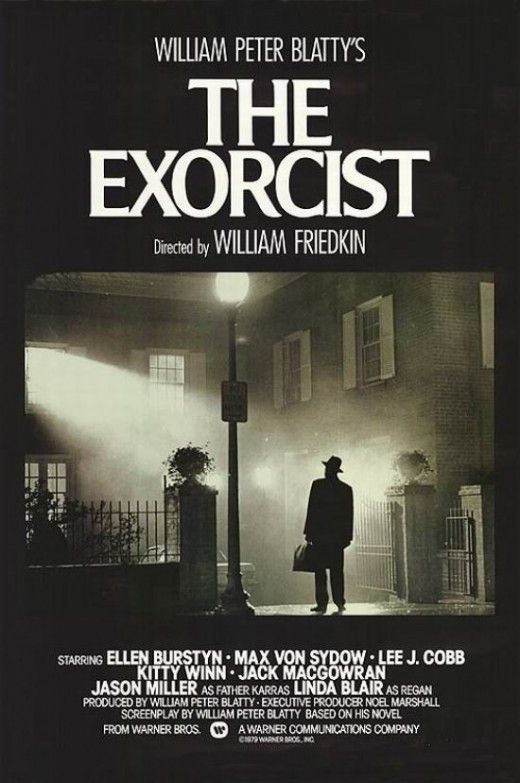
When I think of horror movies..this one tops the list. I don’t get scared easily and slasher films make me laugh more than anything. This film is different to me than other horror movies. It’s been copied with sometimes awful results.
I got to see this in a theater in 2000 on Halloween at the re-release of the director’s cut. It was an experience I’ll never forget. The place was full of teenagers who were scared even though they had seen more modern horror movies but this one still worked.
When it was released in 1973 it was a huge success. Lines wrapped around street corners waiting to get in to see this. It broke records across the nation in most theaters it opened. The Exorcist went on to gross $232.91 million (1.6 Billion adjusted to today) domestically. The Exorcist film has grossed over $441 million at the worldwide box office.
I remember firsthand how this was handled by theaters. My cousin was pregnant at the time this movie premiered in 1973 and they would not let her in to see the movie because they did not want to be liable.
People were fainting or becoming ill at almost every show. This movie has its place firmly in 70’s pop culture.
Stephen King: [The Exorcist] is a film about explosive social change, a finely honed focusing point for that entire youth explosion that took place in the late sixties and early seventies. It was a movie for all those parents who felt, in a kind of agony and terror, that they were losing their children and could not understand why or how it was happening.
Saturday night we had some guests over and we all played Yahtzee. It was the first time I’d played it since the 1980s at least. I had a good time and looked up the history of the game.
In 1954 a wealthy anonymous Canadian couple, who called it The Yacht Game invented the game to play aboard their yacht. They would invite friends and teach them. In 1956 they went to toy maker Edwin S. Lowe to make some games for their friends as Christmas gifts. Edwin liked the game so much that he wanted to buy the rights to it. The couple sold the rights for the amount of making them a 1000 games.
When Edwin released it on the market it did not do well in it’s first year. The game could not be explained easily in an ad. It had many nuances and interesting things about it and they can only be understood if the game was actually played.
Finally, Edwin tried a different approach. He started to have Yahtzee parties hoping to spread the news about the game by word of mouth. That started to work and Yahtzee got extremely popular. During Lowe’s ownership alone, over forty million copies of the game were sold in the United States of America as well as around the globe
In 1973 Milton Bradley Company bought the E.S. Lowe Company and in 1984 Hasbro, Inc. acquires the Milton Bradley Company and the game.
The origins of the game came from the Puerto Rican game Generala and the English games of Poker Dice and Cheerio. Another game, Yap, shows close similarities to Yahtzee.
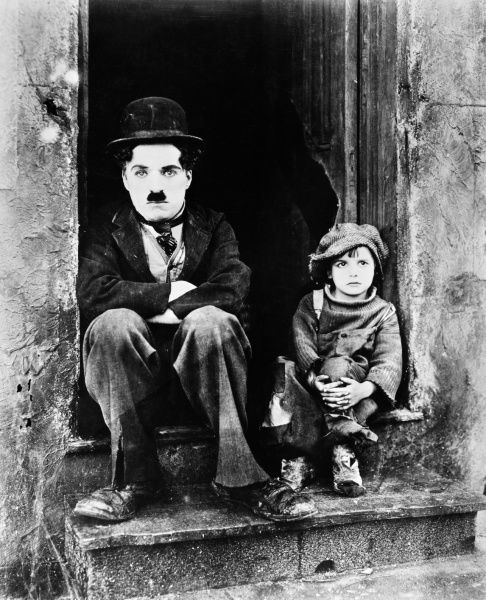
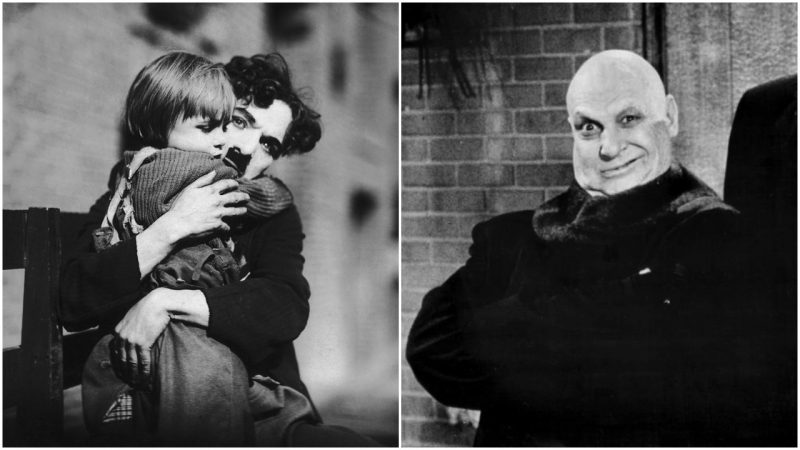
This 1921 movie by Charlie Chaplin teamed him up with young Jackie Coogan. You may remember the adult Coogan as Uncle Fester on the Addams Family. It’s a great film with some classic scenes between Chaplin and Coogan. This was Chaplin’s first feature film. He was finishing up his First National contract as he co-founded United Artists with Mary Pickford, Douglas Fairbanks, and D.W. Griffith.
The Jackie Coogan and Chaplin…Jackie Coogan as Uncle Fester
The story starts off with a woman (Edna Purviance) that abandons her baby in the back of an expensive car hoping that the owners will give her baby a life that she can not. The car is then stolen and the baby is left on the street. The Tramp (Chaplin) finds the baby and takes it home and raises him. Five years pass and he loves the kid and together they have a great scheme going on.
The kid goes around throwing rocks through windows and out of nowhere later on comes The Tramp who would just so happen to have glass and materials with him to fix the window for a price.
The authorities soon find out that the Tramp is not the kid’s father. While this is going on the mother who is doing really well now is looking for her child. The Tramp and Kid are pursued and in this film, Chaplin had some serious and tender moments combining comedy with pathos which at the time was a turning point. The movie was considered a masterpiece when it was released.
One scene that jumps out is the scene where social services are physically taking the child away and Chaplin fights…not comically but really fights to keep the Kid.
The film was written, directed, produced and starred… Charlie Chaplin. Edna Purviance makes her last appearance acting with Chaplin. She would be directed by him one more time in a drama as a leading lady. This movie kicked off Coogan’s very successful child acting career.
Jackie Coogan would become a star in the twenties. He earned 3-4 million dollars acting and when he turned 21 in 1935 he thought he was set for life only to find out the money was gone. His mother and step-father spent all of his money on furs, jewelry, and cars. His mom said that Jackie enjoyed himself acting and no promises were ever made to give him any of the money. Jackie sued his mom in 1938 and only received 125,000 dollars of his money.
Coogan had financial problems for a long while and even went to Chaplin for help which Chaplin gladly gave him money.
One good thing came out of it. The “Coogan Act” which made parents set aside at least 15 percent of their child’s earnings to a trust fund.
If you get a chance this is a great short entertaining movie.
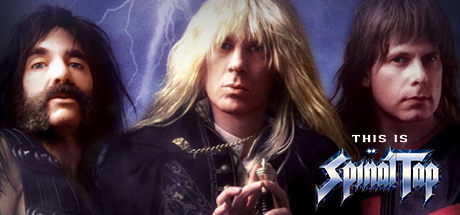
I remember seeing this movie with some buddies in the 1980s and we all loved it. A great mockumentary of the fictional rock group Spinal Tap and their dying drummers. There are many quotable lines in this movie and they have stayed with me since I saw it the first time. I’ve met some people who didn’t get this movie at all and some who loved it.
The movie starred Michael McKeon as singer/guitarist David Saint Hubbins, Christopher Guest as guitarist Nigel Tufnel (reminded me of Jeff Beck), Harry Shearer as bassist Derek Smalls, Tony Hendra as manager Ian Faith, David Kaff as keyboard player Vic Savage and R.J. Parnell as drummer Mick Shrimpton…also Rob Reiner as the Marty DiBergi the filmmaker.
Harry Shearer, Michael McKean, and Christopher Guest actually wrote, played, and sang the music.
The movie was released in 1984 and started slow but built a cult following. At first, some people thought it was about a real band and they would ask Reiner why he would do a documentary on a band no one had heard of.
Christopher Guest said he was inspired at an LA hotel in 1974 when a British band came in and the manager of the band asked the bass player if he left his bass at the airport. The bass player replied I don’t know if I left it…did I leave it? Do you get my bass at the airport? Guest said this went on for 20 minutes back and forth and it stuck with him.
They did have a basic story but the movie was ad-libbed with no script. They had over 100 hours of film and had to edit it down. They have regrouped many times and played live concerts as Spinal Tap.
This Is Spinal Tap was selected for preservation by the National Film Registry because it is a film that is considered “culturally, historically, or aesthetically significant” by the Library of Congress.
My favorite bits? Stonehenge, Nigel’s “Mach” piece, these go to 11, Nigel’s bread, you can’t dust vomit… there are too many to name them all. check the videos out at the bottom.
Some of it hits home according to some rock stars.
Quotes about the movie
The Edge – “It’s so hard to keep things fresh, and not to become a parody of yourself,”. “And if you’ve ever seen that movie Spinal Tap, you will know how easy it is to parody what we all do. The first time I ever saw it, I didn’t laugh. I wept. I wept because I recognized so much and so many of those scenes.”
Ozzy Osbourne reportedly thought it was a real documentary. ” “They seemed quite tame compared to what we got up to”
Joe Perry from Aerosmith – “It was great, every bit as brilliant as it was supposed to be, so good. Even then, we had been through it all six times. I told Steven the next day, ‘You’ve got to see this movie! It’s so good. It’s hilarious.’”
Steven Tyler from Aerosmith – “That movie bummed me out, because I thought, ‘How dare they? That’s all real, and they’re mocking it’
Pete Townsend – “Keith Moon “was ‘Spinal Tap incarnate.”